




Abstract
The objectives of a medicolegal autopsy must be fulfilled to an extent wherever possible after postmortem examination by forensic pathologist. One of these objectives is to estimate time after death the body is being examined. It is a challenging task to estimate time since death once putrefaction sets into a dead body due to external and internal factors that comes into play. The early postmortem changes though relatively less effected by external and internal factors are therefore considered to estimate time since death. Rigor mortis is one of the early postmortem changes. In this research article, the authors tried to determine the reliability of this tool to estimate time since death in tropical country like India.
Introduction
From the ancient era, the triad, algor mortis, rigor mortis, and liver mortis, has been the basis for ascertaining the time since death collectively. Till date it is still the important and most fascinating criterion to ascertain the time since death. This assessment covers the importance of the time since death from rigor mortis in forensic science. Among this triad, algor mortis is the cooling of body after death. The body temperature at the time of death is generally 37°C which falls to the temperature of surrounding by 12–18 hours after death. The liver mortis or postmortem staining generally appears over dependent parts of the body within ½–1 hour of death and gets fixed within 6–8 hours after death. Similarly, the rigor mortis, which is cadaveric rigidity, starts developing within 1–2 hours after death and takes around 12 hours after death for complete development and remains in the developed stage for further 12 hours and disappears in the next 12 hours generally. This can give the approximate time since death till 36 hours after death. Many other sophisticated techniques like biochemical studies of cerebrospinal fluid (CSF) vitreous humor, and aqueous humor, have been tried to reach the accuracy regarding time since death. The other methods such as study of decomposition changes and study of entomology are in practice to estimate time lapse after death. Since among these three criteria as described above, rigor mortis gives the longest estimation interval regarding the time since death. 1 Rigor mortis is also called as cadaveric rigidity; it is the stiffening of the muscles after death. Following death, muscles of the body pass through three phases, that is, primary flaccidity, which occurs immediately after somatic death as has been described earlier. Here the muscles are able to respond to electrical or chemical stimuli. 2
Rigor mortis is, at its simplest, a temperature-dependent physicochemical change that occurs within muscle cells as a result of lack of oxygen. The lack of oxygen means that energy cannot be obtained from glycogen via glucose using oxidative phosphorylation and so adenosine triphosphate (ATP) production from this process ceases and the secondary anoxic process takes over for a short time but, as lactic acid is a by-product of anoxic respiration, the cell cytoplasm becomes increasingly acidic, In the face of low ATP and high acidity, the actin and myosin fibers bind together and form a gel. The outward result of these complex cellular metabolic changes is that the muscles become stiff. However, they do not shorten unless they are under tension. It is clear from the short discussion above that if muscle glycogen levels are low, or if the muscle cells are acidic at the time of death as a result of exercise, the process of rigor will develop faster. Electrocution is also associated with rapidly developing rigor and this may be caused by the repeated stimulation of the muscles. 3
Time since death is a significant issue that plays key role in forensic medicine. The exact determination of time since death is found to be helpful in medicolegal investigation. Rigor mortis has been used for the calculation of time since death. Rigor mortis is measured as the most significant and interesting method to estimate the time since death. In this research, reliability of rigor mortis was tested in Indian scenario to estimate the time since death.
Objective
The aim of this study was to study the duration of the development of rigor mortis and its relation with time since death.
Materials and Methods
This study was conducted in the Department of Forensic Medicine at Pt. BD Sharma Post Graduate Institute of Medical Sciences, Rohtak, Haryana which includes 150 cases brought for medicolegal autopsy. The recordings related to rigor mortis were started as soon as the body reached the mortuary and subsequently every hour until the body was present at the mortuary. The time of appearance and disappearance of rigor mortis was noted. The sequence of appearance and disappearance in various muscle groups was noted.
Results
All cases examined between 30 minutes and 48 hours after death rigor mortis were found to present in almost whole body. Most of the cases were examined within 24 hours. In the cases examined during 24 hours after death rigor mortis was found to be present all over the body.
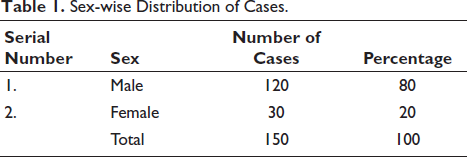
Table 1 and Figure 1 depicts that out of 150 victims, 120 victims were males (80%) and 30 victims were females (20%). The males outnumbered the females.
Sex-wise Distribution of Cases.
Sex Wise Distribution of Cases in %.
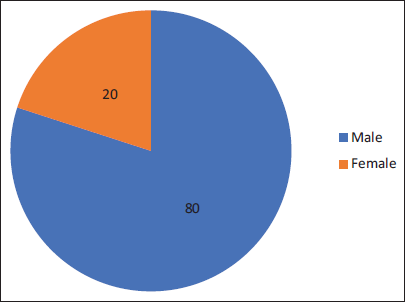
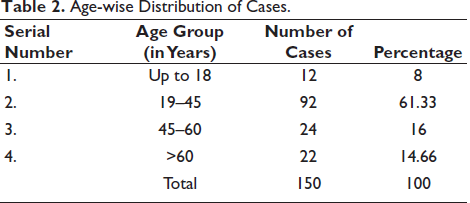
Table 2 and Figure 2 shows that out of 150 cases, 92 (61.33%) victims were from the age group of 19–45 years, followed by 24 (16%) cases of the age group 45–60 years, 22 (14.66%) cases were from the age group of above 60 years and 12 (8%) of the cases belonged to up to 18 years age group.
Age-wise Distribution of Cases.
Distribution as per Muscular State.
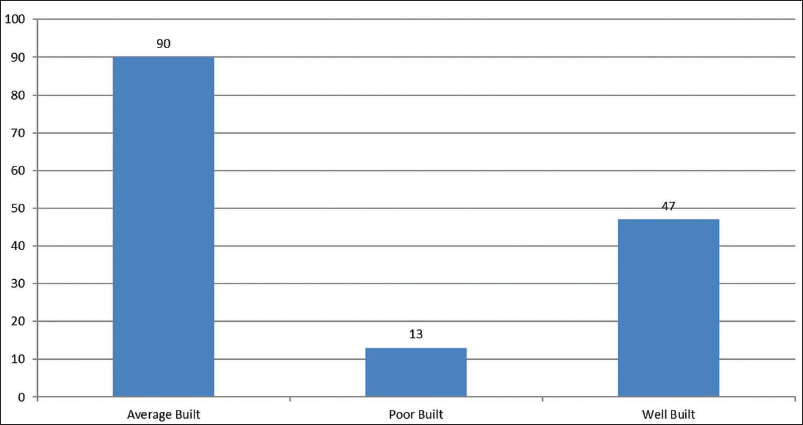
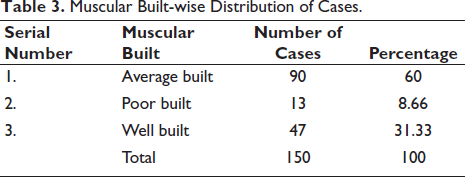
Table 3 and Figure 3 shows that out of 150 cases, 90 (60%) cases were average built, followed by 13 (8.66%) cases who were poor built and 47 (31.33%) cases who were well built.
Muscular Built-wise Distribution of Cases.
Showing Appearance of Rigor Mortis in Various Muscle Groups (n =150) in Hours.
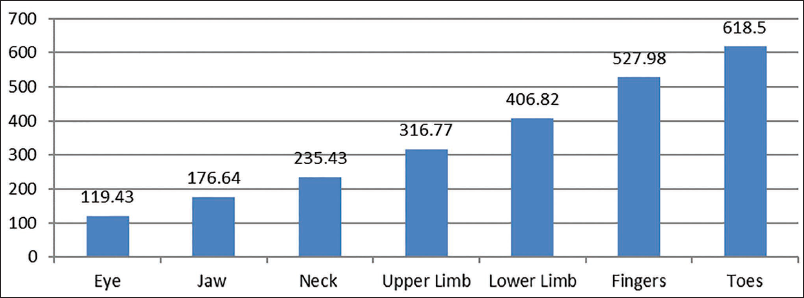
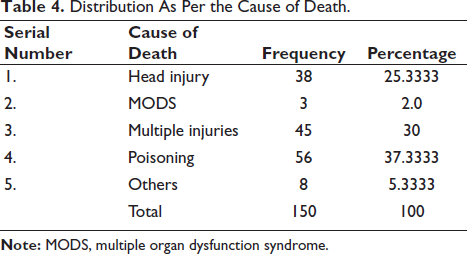
Table 4 and Figure 4 shows that out of 150 cases, 56 (37.3333%) victims were of poisoning, followed by 45 (30%) victims of multiple injuries, 38 (25.3333%) victims of head injury, and 8 (5.33%) of the victims of others causes.
Distribution As Per the Cause of Death.
Showing Disappearance of Rigot Mortis in Various Muscle Group (n = 150) in Hours.
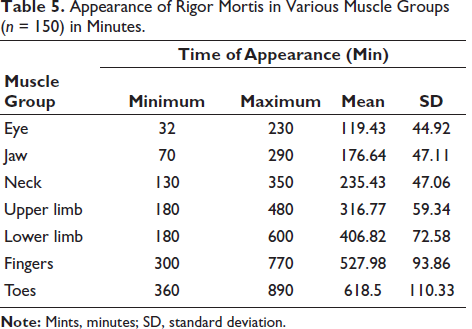
The course of rigor mortis in the study cadavers was observed according to muscle groups acting on various joints (Table 5 and Figure 5). It was observed that the mean time of appearance of rigor mortis in eyelid muscles was 119.43 minutes (1.99) with standard deviation (SD) of 44.92 (0.83), and the mean time of appearance of rigor mortis in jaw muscles was 176.64 minutes (2.94 hours.) with SD of 47.11 (0.78). The mean time of appearance of rigor mortis in neck muscles was 235.43 minutes (3.92 hours) with SD of 47.06 (0.78). The mean time of appearance of rigor mortis in upper limb muscles was 316.77 minutes (5.27 hours) with SD of 59.34 (0.98). The mean time of appearance of rigor mortis in lower limb muscles was 406.82 minutes (6.78 hours) with SD of 72.58 (1.20). The time of appearance gradually went on increasing from muscles of eyelid to muscles of toe in order of cranio-caudal fashion only to appear late in fingers of hands having mean time of 527.98 minutes (8.79 hours) with SD of 93.86 (1.56). It lastly appeared in muscles of toes having mean time of 618.5 minutes (10.30 hours) with SD of 110.33 (1.83).
Appearance of Rigor Mortis in Various Muscle Groups (n = 150) in Minutes.
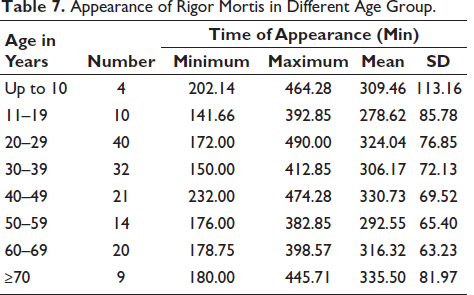
Showing Appearance of Rigor Mortis in Different Age Group.
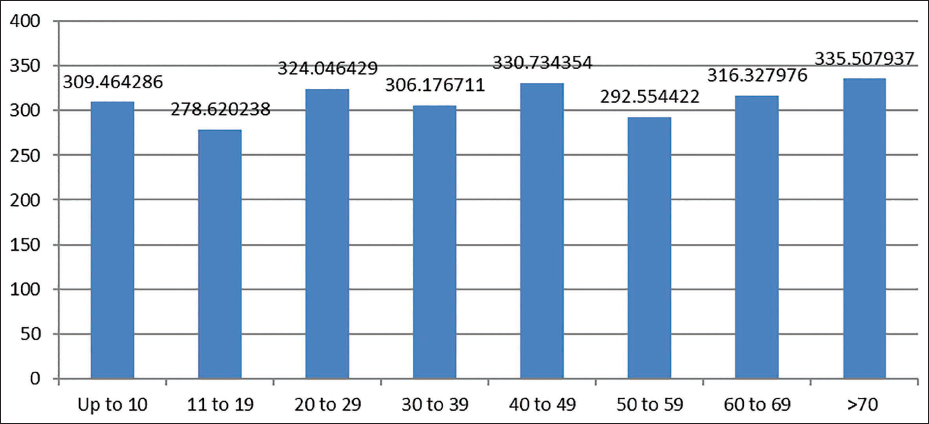
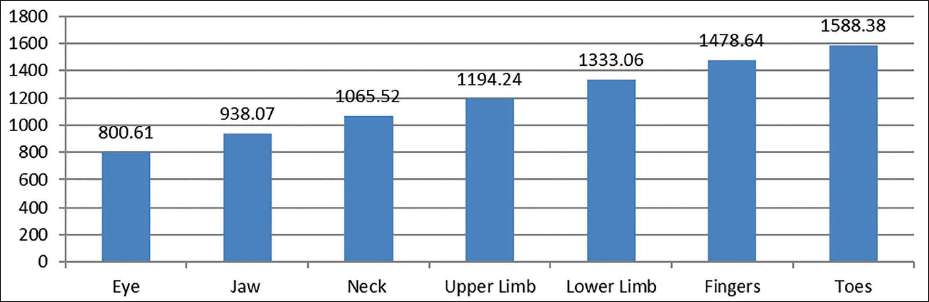
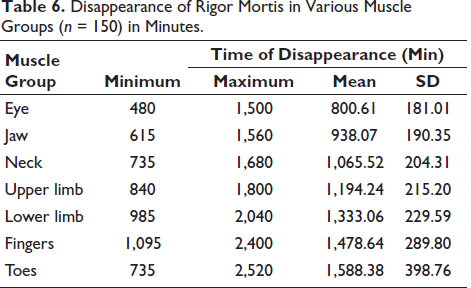
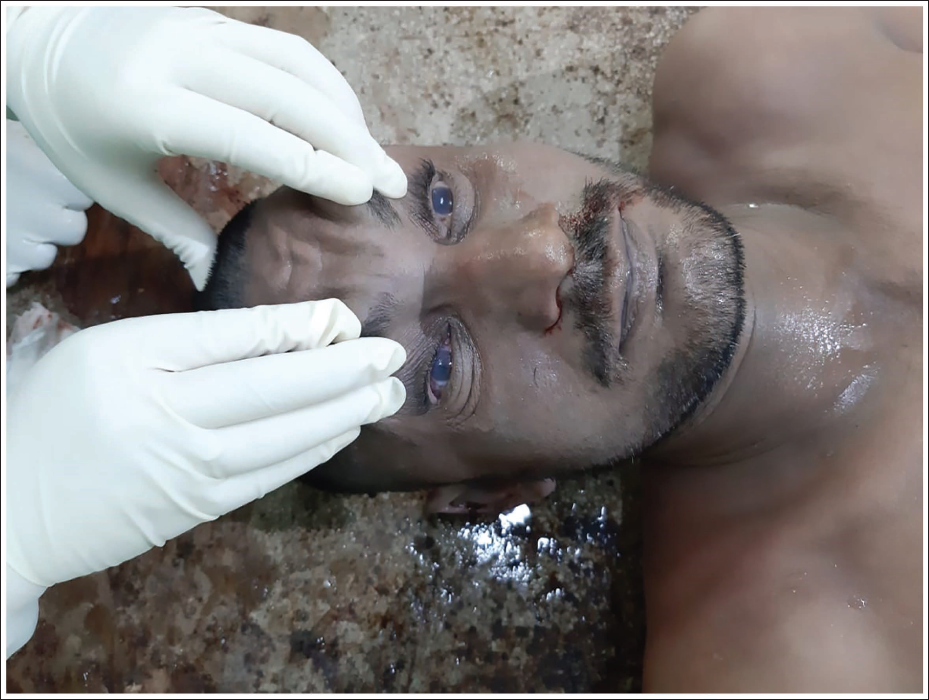
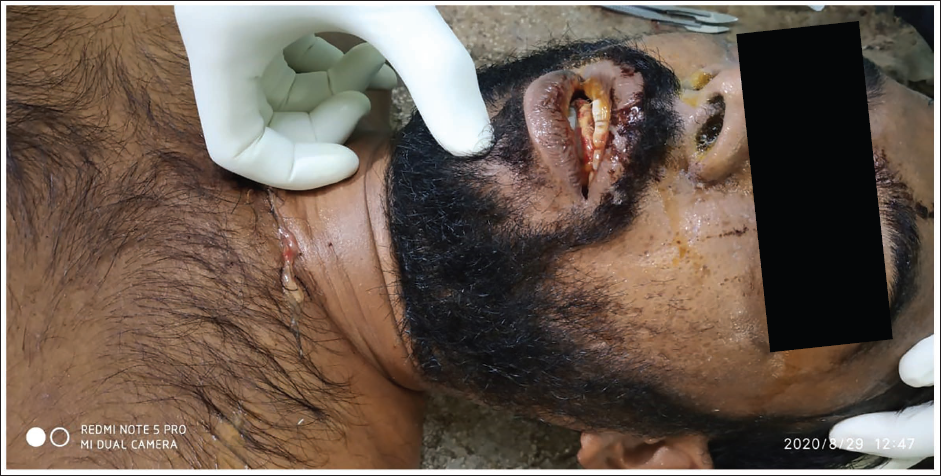
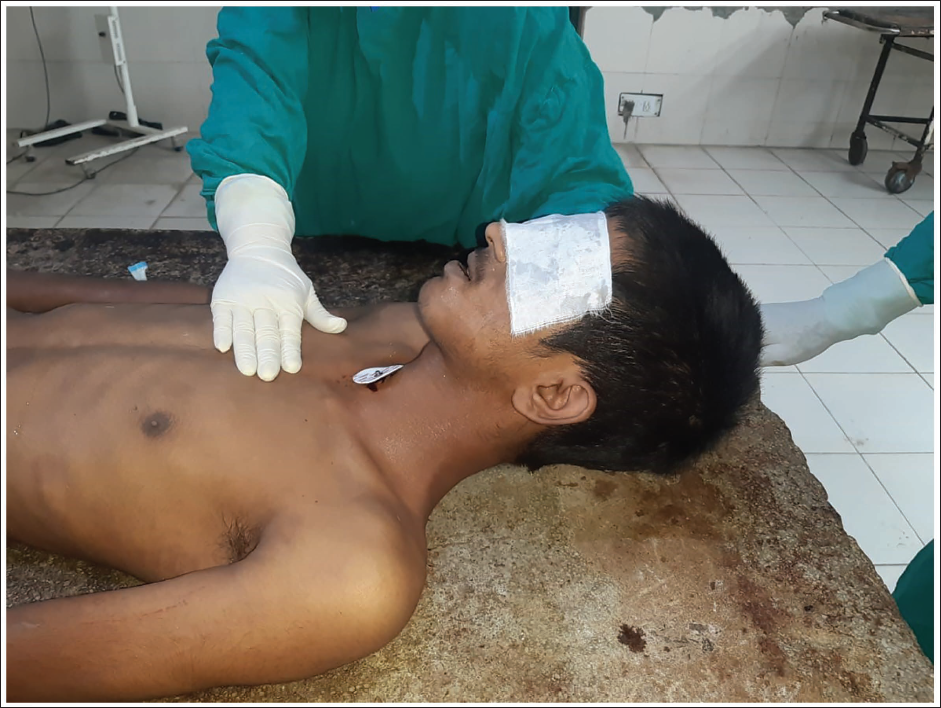
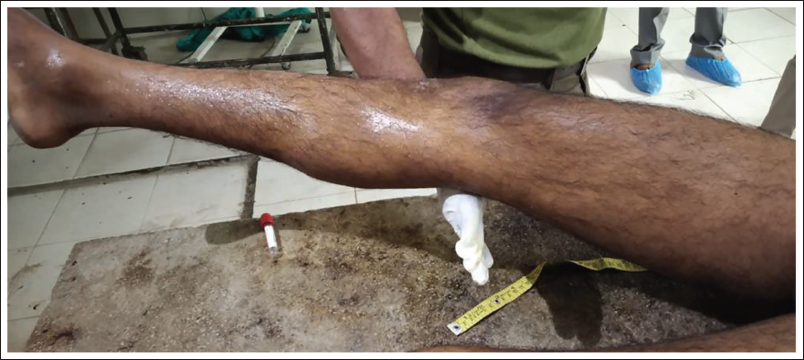
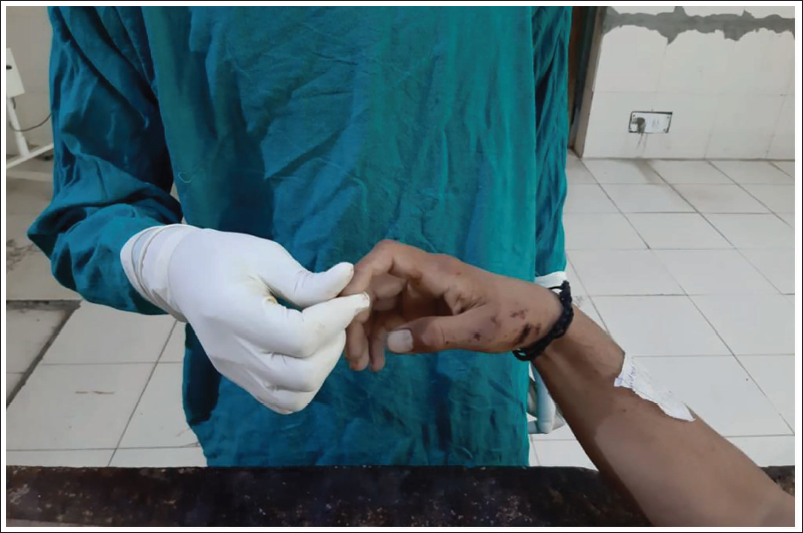
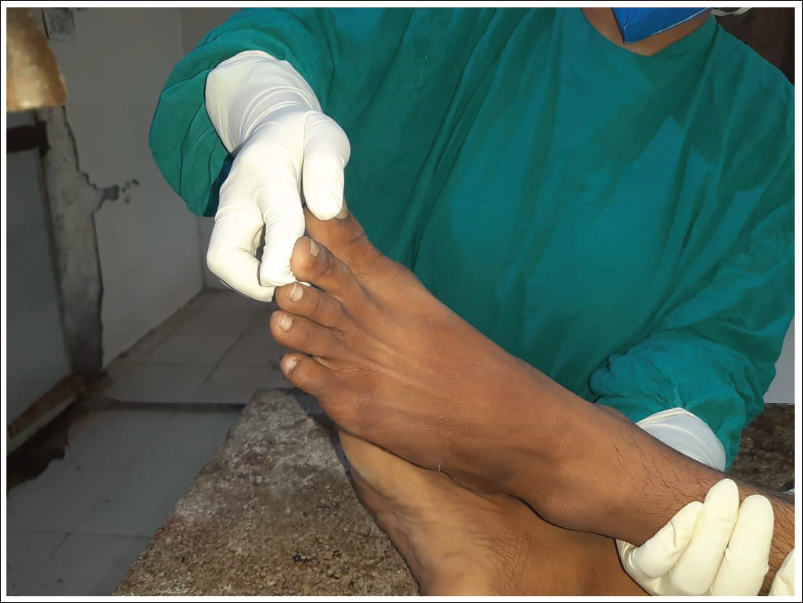
Table 6 and Figure 6 depicts the disappearance of rigor mortis from various muscle groups followed same course in increasing order of time as it followed for appearance of rigor. It disappeared from eye (Figure 7), jaw(Figure 8), neck (Figure 9), upper limbs (Figure 10), and lower limbs(Figure 11) having mean time of 800.61 (13.34 hours), 938.07 (15.63 hours), 1,065.52 (17.75 hours), 1,194.24 (19.90 hours), and 1,333.06 (22.21 hours) minutes, with SD of 181.01 (3.01), 190.35 (3.17), 204.31 (3.40), 215.20 (3.58), and 229.59 (3.82), respectively. It lastly disappeared from fingers (Figure 12) and toes (Figure 13) having mean time of 1,478.64 minutes (24.64 hours), with SD of 289.80 (4.83) and 1,588.38 minutes (26.47) with SD of 398.76 (6.64), respectively.
Disappearance of Rigor Mortis in Various Muscle Groups (n = 150) in Minutes.
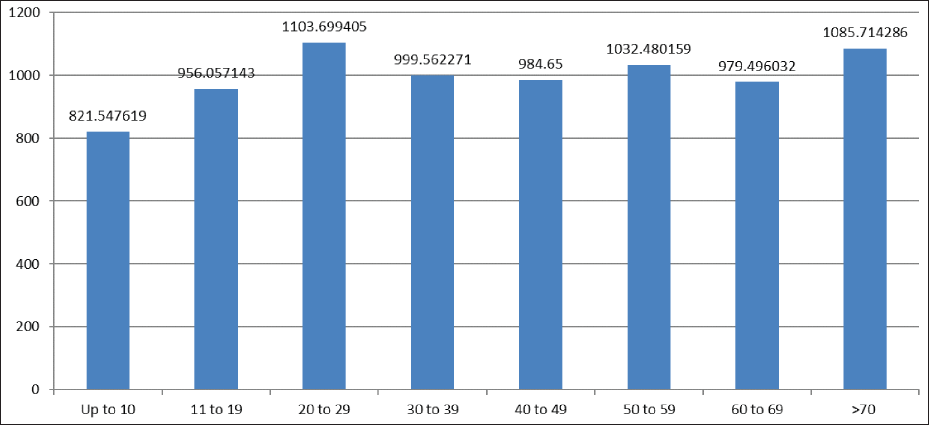
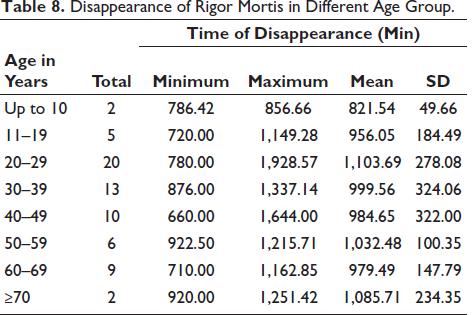
Showing Disappearance of Rigor Mortis in Different Age Group.
Rigor Mortis in Eyelid Muscles.
Rigor Mortis in Jaw Muscles.
Rigor Mortis in Neck Muscles.
Rigor Mortis in Upper Limb Muscles.

Rigor Mortis in Lower Limb Muscles.
Rigor Mortis in Fingers Muscles.
Rigor Mortis in Fingers Muscles.
While considering the age of the deceased in relation to appearance of rigor mortis (Table 7), it was observed that the minimum mean time of appearance of 278.62 minutes (4.64 hours) with SD of 85.78 (1.42) was observed in the age group of 11–19 years of age, while the maximum mean time of appearance of 335.50 minutes (5.59 hours) with SD of 81.97 (1.36) was observed in the age group of above 70 years of age.
Appearance of Rigor Mortis in Different Age Group.
While considering the age of the deceased in relation to disappearance of rigor mortis (Table 8), it was observed that the minimum mean time of disappearance of 821.52 minutes (13.69 hours) with SD of 49.66 (0.82) was observed in the age group of up to 10 years of age, while the maximum mean time of appearance of 1,103.69 minutes (18.39 hours) with SD of 278.08 (4.63) was observed in the age group of 20–29 years of age.
Disappearance of Rigor Mortis in Different Age Group.
Discussion
Time since death is an important topic that plays major role in forensic medicine. The accurate determination of time since death is found to be helpful in medicolegal investigation. Rigor mortis has been used for the assessment of time since death for long time. It is considered to be the most important and interesting method to estimate the time since death. In the medicolegal autopsies, apart from opining about the cause of death and mode of death one important question to be answered is the time elapsed between death and postmortem examination. Rigor mortis serves as the sole factor to resolve the mystery of death in unattended criminal cases.
In this study out of 150 cases, 80% cases were males and 20% cases were females. Alleged cause of death in 45% cases was multiple injuries, 56% deaths were due to poisoning, 38% victims had died due to head disease, multiple organ dysfunction syndrome (MODS) formed 3% of the share, and miscellaneous other causes contributed 8%. This study sample consists mostly the cases of accidents and poisoning which in combination represent maximum number of cases in the study.
In this study, it was observed that there was no significant difference as regard to appearance and disappearance of rigor mortis between male and female gender. It is observed that 92 (61.33%) cases were from the age group of 19–45 years, followed by 24 (16%) cases of the age group of 45–60 years, 22 (14.66%) cases were from the age group of above 60 years, and 12 (8%) of the cases were belonged to up to 18 years age group.
In this study, it was also observed that rigor mortis appearance was early in cases of poor-built deceased as compared with well-built and average-built deceased. Similar results were observed by Dalal et al. in study conducted in 2006 including 500 cases. The reason might be that more muscle mass in well-built deceased. 4
This study showed that minimum duration of appearance of rigor mortis in eyelid muscles was between 32 minutes and maximum was 3.8 hours with an average of 1.99 hours. Minimum duration of appearance in jaws was between 1.16 hours and maximum was between 4.83 hours with an average of 2.93 hours. Minimum duration of appearance in neck muscles was 2.1 hours and maximum was 5.8 hours with an average of 3.92 hours. Minimum duration of appearance in upper limbs was between 3 hours and maximum 8 hours with an average of 5.27 hours. In lower limbs, minimum duration was 5 hours and maximum 10 hours with an average of 8.79 hours. In fingers and toes, minimum duration was 5–6 hours and maximum was 12–15 hours with an average of 8–10 hours. Similar findings were observed in the studies conducted by Newman and McLemore (1999), Singh and Dewan (1996), Dake et al. (2015), Oberoi et al. (2015), and Kori (2018).4–8 Our findings were not consistent with the findings of Dalal et al. (2006) and Sivanandam and Shankar (2019).9, 10
In this study, it was observed that the rigor mortis first appeared in the muscles of the eyelids then the muscles of face, that is, lower jaw were involved then subsequently it appeared in the muscles of neck, upper limbs, and lower limbs. Lastly the muscles of finger and toes were involved in the process. The same course was followed for disappearance indicating the proximal–distal progression of rigor mortis. The sequence of appearance and disappearance of rigor mortis in this study was consistent with the literature of other authors Schleyer et al. (1975), Hossein (2002), Singh and Dewan (1996), Dake et al. (2015), Oberoi et al. (2015), Kori (2018), and Rajan et al. (2019).11–13
The reason for the craniocaudal progression may be that the rigor mortis is detectable early in small masses of the muscles much more easily than large masses. The late appearance of rigor in fingers and toes may be due to the reason that fingers and toes are attached to the limbs by means of tendons and ligaments extending from forearm and legs, respectively. The morphologic and dynamic features between joints might strongly affect the speed of progress of rigor mortis. Thus, the fingers and toes rigidity were fully appreciated when the formers became rigid. Also, these are relatively smaller and exposed parts of the body which get cooled early hence developing rigor late. Similar findings were observed by Newman et al. (1999) and Singh and Dewan (1996).4, 6
In this study, Table 6 shows that the rigor mortis was early to appear in 11–19 years of age groups and its duration was also shorter. Our findings were not consistent with the findings of other authors Kori (2018), Sugatha and Venkata (2019) 14 , and Sivanandam and Shankar (2019). The reason might be that less muscle mass in this group of age and the development of rigor mortis are affected by lean body mass. All cases examined between 30 minutes and 24 hours after death rigor mortis were found to present in almost whole body. In the cases examined during 24–36 hours after death rigor mortis was found to be present in all over the body. Our findings were consistent with the findings of Ranjan et al. (2019). 13
Conclusion and Summary
The time since death can be estimated with a reasonable degree of accuracy by observing the appearance and disappearance of rigor mortis in various groups of muscles. The progression of rigor mortis in various muscle groups has craniocaudal sequence. The gender of the cadaver does not affect significantly the course of rigor mortis. Development of rigor mortis occurs earlier in children up to 18 years and elderly >45 years as compared to adults in the age group of 18–45 years. Rigor mortis disappearance occurs earlier in children up to 18 years and elderly above 45 years as compared to adults in the age group of 19–45 years. Several factors also affect the progression of rigor mortis and investigators take these into account when estimating the time since death. Further research is needed to determine the role of various factors on which appearance and disappearance of rigor mortis depends.
Footnotes
Declaration of Conflicting Interests
The authors declared no potential conflicts of interest with respect to the research, authorship, and/or publication of this article.
Ethical Approval and Informed Consent
The ethical clearance has been obtained from the Institutional Ethics Committee.
Funding
The authors received no financial support for the research, authorship, and/or publication of this article.