




Abstract
Background
Minimal research has been done to determine how well European nursing students understand the core principles of academic integrity and how often they deviate from good academic practice.
Aim
The aim of this study was to find out what educational needs nursing students have in terms of academic integrity.
Research design
A quantitative cross-sectional study in the form of a survey of nursing students was conducted via questionnaire in the fall of 2020.
Participants
The sample was composed of 79 students in the BScN and MScN programs at Zürich University of Applied Sciences.
Ethical considerations
An application for a non-competence clearance was approved by the Ethics Committee in Zurich (BASEC No. Req-2020-00868). The survey was anonymous, and informed consent was obtained prior to participation.
Results
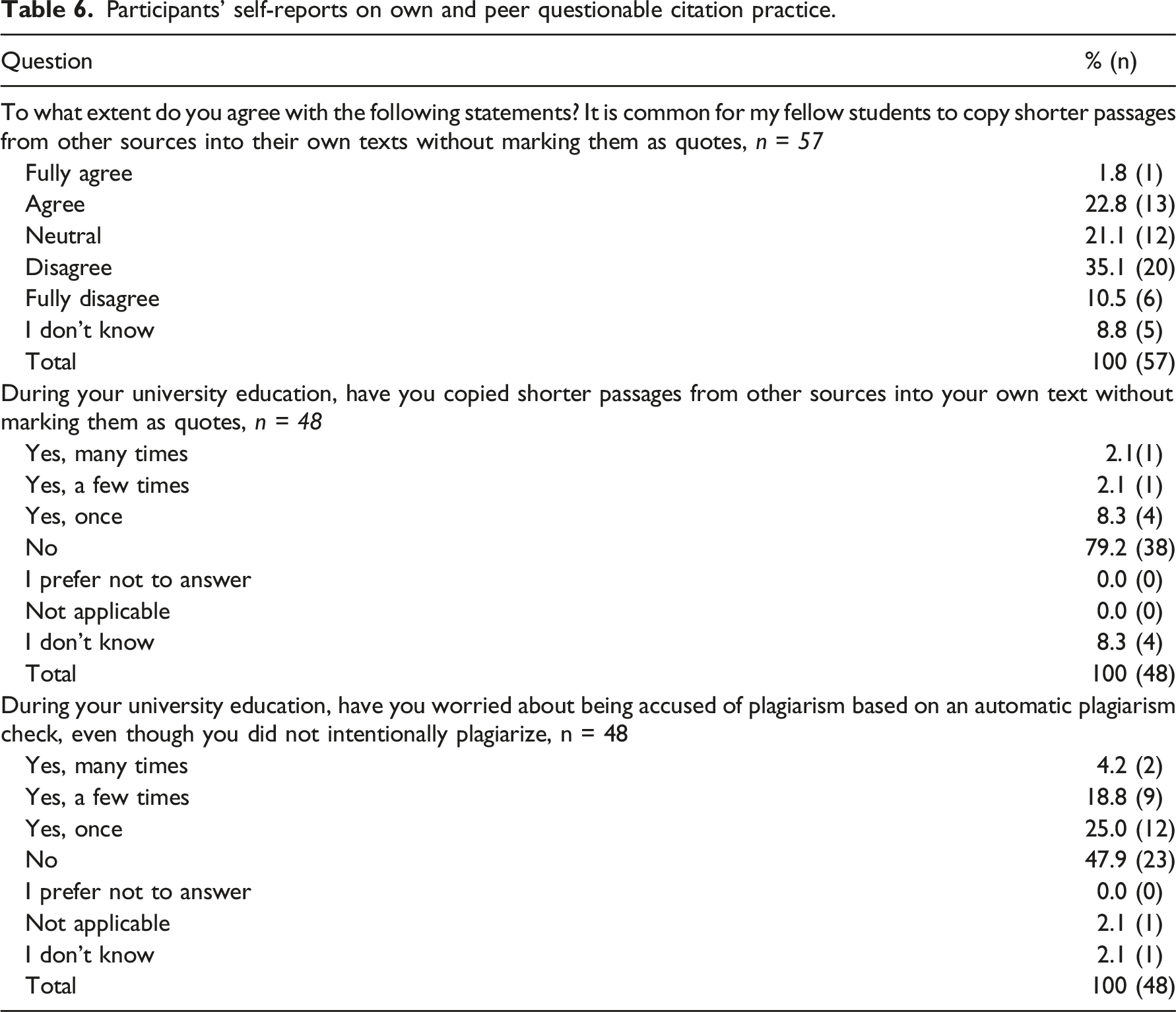
The participants had a high level of confidence in their own knowledge but were in many cases unable to correctly identify clear-cut examples of misconduct and to differentiate them from questionable practices. About 13% of the participants admitted that during their university education they had copied shorter passages from other sources into their own text without marking them as quotes.
Conclusions
The study documents extensive knowledge gaps among nursing students regarding both academic misconduct and questionable practices and indicates a need for improved academic integrity training.
Introduction
Clinical practice and research are guided by ethical values, such as reliability, honesty, confidentiality, equity, respect, accountability, fairness, and integrity, just to name a few. 1 In clinical practice, not acting upon these values can lead to various far-reaching patient safety violations, as demonstrated by the studies conducted by Allen, 2 Lovrić and Žvanut, 3 and Macale et al. 4 Recording vital signs that were never measured, documenting administration of medications that were never prescribed, misappropriation of dressing materials for personal use, or discussing patients with private individuals in public are just a few examples of these potential violations. Not following these values in the context of research leads to misconduct and endangers research groups, careers, or the credibility of research.
Not all deviations from academic integrity amount to misconduct. Many deviations from good academic practice, including questionable paraphrasing of text, free riding in group work, and deletion of a few deviating data points in a laboratory exercise, lie in the grey zone between good practice and misconduct. These grey zone practices are often difficult for students to identify as ethically problematic [BLINDED] and can lead to challenging dilemmas. This is because local rules and codes of conduct do not, and arguably cannot, provide clear action guidance, as there is often a high degree of context dependence in these situations.5,6
The prevalence of deviance from good academic practice among European nursing students is largely unknown. Other general surveys indicate that deviation from good academic practice is quite common among undergraduate students,7,8 and studies among American nursing students showed that more than half of the participants had engaged in some form of academic dishonesty during their studies, such as cheating or plagiarizing in class.7,9,10
To counteract and reduce deviations from academic integrity, it is important to understand nursing students’ behavior and knowledge of academic integrity. The extent of knowledge can, for instance, be used to design targeted interventions and teaching opportunities. 11 This knowledge base should cover not only clear-cut academic misconduct but also more complex deviations from good academic practice, given that these are generally neglected in the existing literature [BLINDED].12,13
Background
Lack of academic integrity among nursing students, that is, intentionally deviating from good academic practice during nursing education, may have far-reaching consequences for clinical practice, nursing research, and the nursing profession itself. Several studies have shown an association between unethical behavior as a practicing nurse and prior misconduct as a student4,14,15 and vice versa.3,14,17 Although the nature of this link is not fully understood, the clear connection between unethical conduct exhibited during training and in professional practice calls for nursing schools to address ethical issues.3,18
In order to tailor educational offerings to students’ needs, assessing nursing students’ understanding and uncertainties in relation to ethical behavior in research is, therefore, key to facilitate ethical behavior in research and clinical practice.
To begin the process of mapping the knowledge and behavior relating to academic integrity among European nursing students, this study focuses on Swiss nursing students, specifically, students in the Bachelor of Science in Nursing (BScN) and Master of Science in Nursing (MScN) programs at Zürich University of Applied Sciences (ZHAW). The Department of Nursing has 180 enrolled BScN and 60 MScN per cohort. 19 The aim of the study is to assess the educational needs of students in the Bachelor of Science in Nursing (BScN) and Master of Science in Nursing (MScN) programs at ZHAW relating to the topic of academic integrity.
We will operationalize this overall question by asking the following questions: • What are nursing students’ assessments of their own understanding of academic integrity? • How often have they been in doubt about what constitutes good practice? • What is their conception and understanding of the rules that apply to them? • What is their conception of their own behavior regarding questionable practices and the behavior of their peers?
Methods
Design
The research question was answered using a descriptive cross-sectional design.
Setting
ZHAW is a Swiss university of applied sciences that offers degree programs in nursing. It is one of three universities of applied sciences in the German-speaking region of Switzerland. The BSc program in nursing can be completed as an undergraduate program in either a full-time (FT, starting in fall) or a part-time (PT, starting in spring) program 20 and comprises theory modules as well as internships. Per cohort, 150 full-time equivalent (FTE) BSc students and 60 FT MSc students (FTE and PT) are enrolled at ZHAW. 21 Study programs include classroom training and internships.
BScN students learn the basics of academic integrity, ethical research, research methods, and science communication in various modules starting in the third semester. The topics are taught in face-to-face lectures. In addition, there are writing workshops where students practice writing papers. Through small practical exercises, students gain insight into the process of research tasks and deal with qualitative as well as quantitative studies. Building on this, MScN students receive further instruction on academic and scientific integrity and quantitative and qualitative research methodology, as well as being supervised by experienced faculty and researchers for their master’s thesis.
The ZHAW has program-wide regulations on academic integrity and clear sanctions for non-compliance. Citation rules apply to written work as well as in research courses and are part of the assistance that ZHAW offers to all students. Assistance includes guidelines for correct citation, gender-appropriate language, and research aids in the form of accessible documents. Furthermore, all students are introduced to various statistics and literature management programs, which they are allowed to use without license during their studies.
Sample
During the fall semester, BScN students (FT) in their 3rd and 5th semesters, BScN students (PT) in their 3rd, 4th, and 5th semesters, and all in the MScN program were invited to participate. BScN students (FT) in the 4th semester were in internship at that time and therefore were not contacted. Due to the low knowledge level, BScN students (FT and PT) in the 1st and 2nd semesters were not considered for participation. Data collection took place as a full survey from mid-September 2020 to the end of October 2020.
Data collection
To attract as many students as possible, the study was presented to all students who were attending classroom training prior to the actual survey phase. The questionnaire was available online, and students received information about the study and a link to the online questionnaire via email. A reminder email was sent to students 2 weeks after the link was sent.
Measuring instrument
The instrument is a nursing-specific adaptation of a questionnaire developed by the project [BLINDED]. One of the aims of the project was to assess students’ knowledge, knowledge gaps, and experiences regarding academic integrity. To achieve this aim, the project developed a questionnaire targeting students’ knowledge of and experiences with academic integrity issues. The questionnaire was developed on the basis of an explorative interview study [BLINDED] and was conceptually designed as an extension of a long tradition of surveys of academic misconduct among students (e.g.,
22
the questionnaire explores the three dimensions of academic integrity: • The use of texts written by others in one’s own work (citation and plagiarism). • Collaboration with others, assigning authorship, and getting help (collaboration and authorship). • Collection, analysis, and presentation of data.
In addition to background demographics and questions on the level of academic integrity training, the questionnaire contains questions on the respondents’ perceived knowledge, uncertainty, understanding, perception of peer transgressions, and own transgressions of norms in connection to the three dimensions of academic integrity.
Three different versions of the original questionnaire, which was designed for students of all fields of study, were designed, each targeting students on one of the three educational levels included in the study, that is, upper secondary, bachelor, and doctoral students. All questionnaires were developed in English and subsequently translated into seven other languages, including German. Lastly, the questionnaire was implemented on the platform SurveyXact ver. 12.9 (https://www.surveyxact.com/) to run as an anonymous online survey [BLINDED].
For this study, a few adjustments were made to the German version of the questionnaire targeting bachelor students. The purpose of the adaptations was to reduce the number of questions and to include new nursing-specific questions. Before the questionnaire was distributed to the participants, two pretests of the questionnaire took place. In the first pretest, five students were questioned in writing on the nursing-specific questions (two BScN and two MScN) and in the second pretest, two students (one BScN and one MScN) were interviewed on the entire questionnaire using the think-aloud method. The revised questionnaire (see Appendix A) has eighty-four questions, of which six are nursing-specific questions. Response options (see Appendix A) include dichotomous, single- and multiple-choice, and closed questions arranged on a Likert scale. The questionnaire was implemented on the SurveyXact platform to run as an anonymous online survey. The response time is approximately 25 minutes.
The adapted questionnaire opened by providing information about the study and obtaining informed consent. Participants were then asked to provide some sociodemographic information such as age, gender, BScN or MScN, semester, full- or part-time, and current role/expertise in nursing practice.
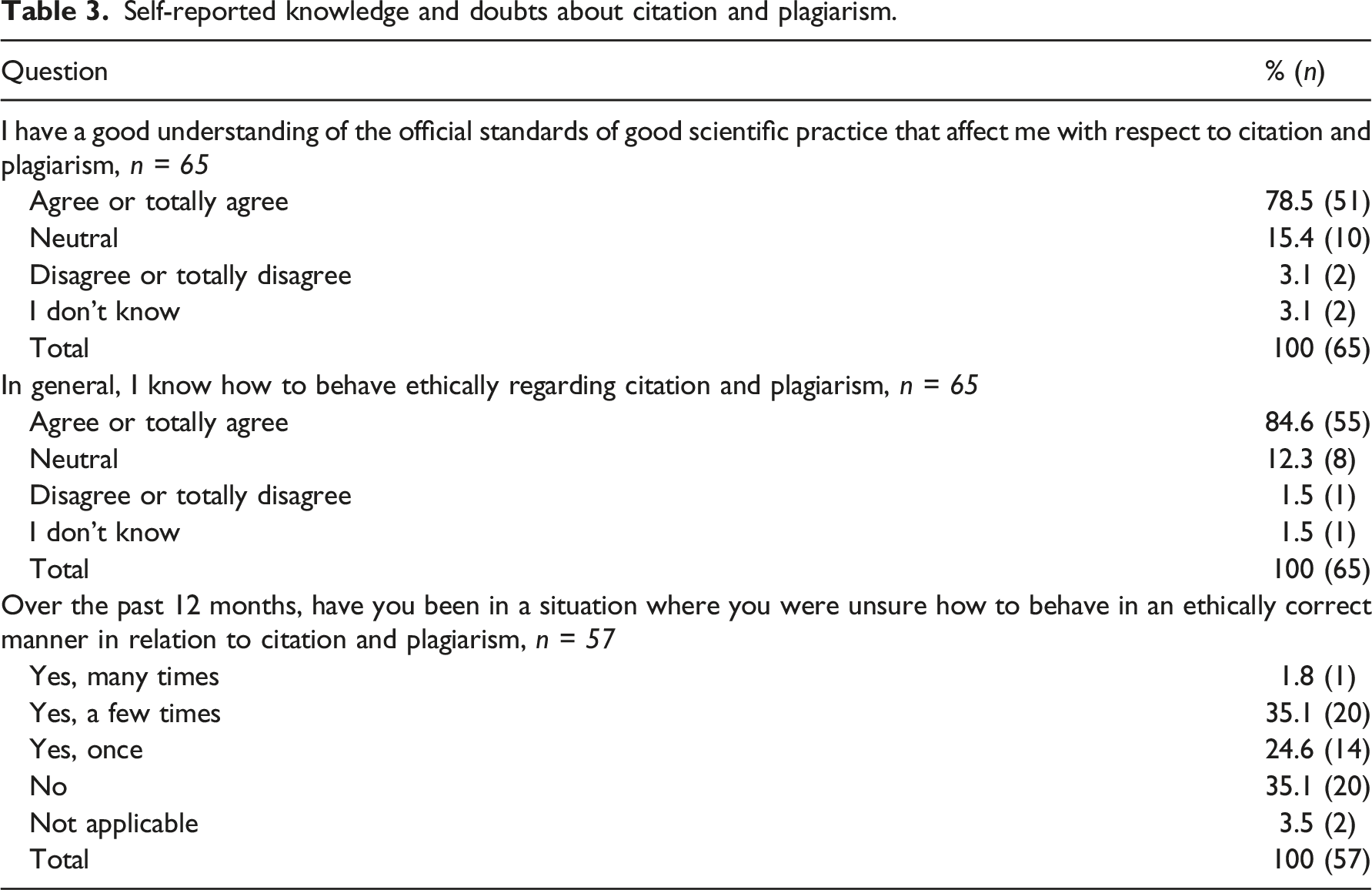
The main section of the questionnaire addressed the three dimensions of academic integrity mentioned above. For each dimension, the following topics were covered: 1. Self-reported knowledge: Using a 5-point Likert scale from “Fully agree” to “Fully disagree” with the opt-out-option “I don’t know,” participants were asked if they agreed with three statements. For the dimension “citation and plagiarism,” the statements are as follows: • “I have a good understanding of the official standards of good practice that apply to me in relation to citation and plagiarism.” • “In general, I know how to behave in an ethically correct manner in relation to citation and plagiarism.” • “In general, I know how to behave ethically regarding citation and plagiarism.”
For the other two dimensions, the phrase “citation and plagiarism” was replaced with “working with others and assigning authorship” and “collection, analysis, and presentation of data,” respectively. Additionally, for each of the three dimensions participants were asked if, over the previous 12 months, they had been in a situation in which they had been unsure of how to behave in an ethically correct manner. Here, the answer options were “Yes, many times,” “Yes, a few times,” “Yes, once,” “No,” and “Not applicable.” 2. Conception of rules: To test the participants’ conception of the rules, they were presented with eight different actions concerning citation and collaboration (Table 1). In addition, MScN were asked four questions about data collection and analysis which are not included here. For each action, participants were asked to indicate whether the action was against the rules and regulations that apply to them using the following six-answer options: “Yes, this is a serious violation,” “Yes, but it is not a serious violation,” No, it is not against the rules,” “The rules are unclear,” “It depends on the situation,” and “I don’t know.” Some of the actions presented to the participants were clear violations of rules, while others were grey-zone actions where a correct answer would be “The rules are unclear” or “It depends on the situation.” Participants were asked to evaluate four actions relating to citation and plagiarism, four relating to collaboration and authorship, and five actions relating to collection, analysis, and presentation of data. Items used to determine participants’ sensitivity to misconduct and questionable practices.
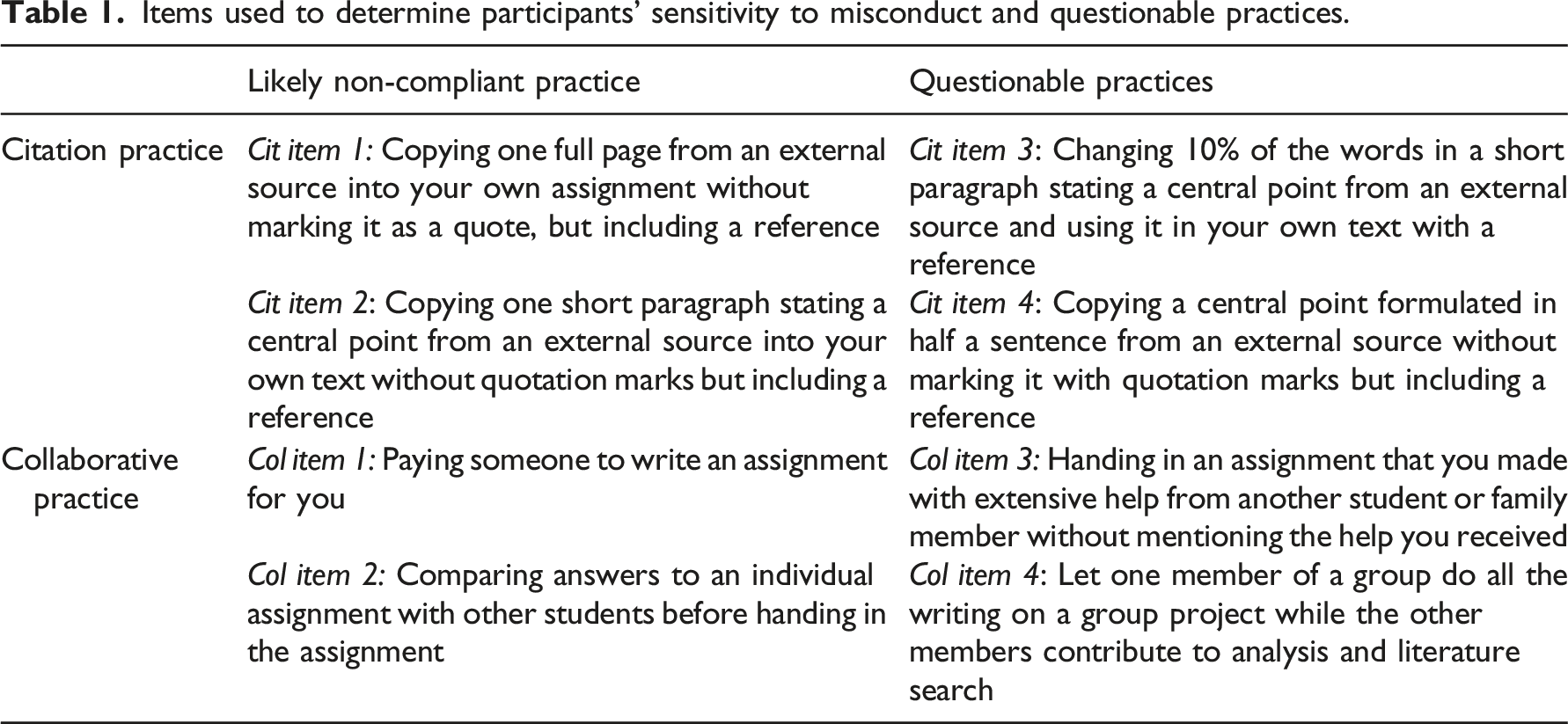
As an additional direct test of the participants’ citation practice competences, the questionnaire contained an original text and four paraphrased versions. For each paraphrase, participants were asked to rate its acceptability on a 5-point Likert scale from “Completely acceptable” to “Completely unacceptable” with the opt-out option “I don’t know.” The four versions can be described as follows: • Paraphrase 1: A direct copy of the original without quotation marks or reference. • Paraphrase 2: A slight rewrite of the original mainly by omitting or replacing a few words with synonyms. There are no quotation marks or reference to the original. • Paraphrase 3: Same as paraphrase 2, but with a reference to the original. • Paraphrase 4: A more substantial rewrite of the original including a reference. 3. Prevalence of questionable practices: The participants were presented with six questionable practices in order to investigate their perception of their peers’ practices, and for each they were asked if it is “common for their fellow students” to perform the action. Answers were given on a 5-point Likert scale from “Fully agree” to “Fully disagree” with the opt-out-option “I don’t know.” To examine the participants’ own behavior, they were presented with seven questionable practices and for each were asked if they had performed them during their university education. As one of the questions involved data analysis, these questions were only asked to participants who indicated that they had worked with data. The answer options were “Yes, many times,” “Yes, a few times,” “Yes, once,” “No,” “I prefer not to answer,” “Not applicable,” and “I don’t know.” Finally, participants were asked about the possible reasons students at their institution might offer for deviating from the rules. 4. Academic integrity training: To determine the amount and type of academic training the participants had received, they were asked if they had taken any dedicated courses, lectures, or e-learning sessions on rules and ethically correct behavior. They were also asked if they had received training in academic integrity in more informal settings such as in discussions with fellow students or through feedback from teachers.
Statistical analyses
Absolute and relative frequencies were calculated for nominal scaled variables. For ordinal variables, the median was also calculated, and for metric variables, the mean, standard deviations, and minimum and maximum values were calculated. All statistical analyses were performed using R software, version 1.2.5033. 23
Ethical considerations
This study was conducted in accordance with the current version of the Good Clinical Practice Guidelines of the International Council for Harmonization of Technical Requirements for Pharmaceuticals for Human Use, 24 the principles of research integrity of the International Singapore Declaration, 25 and all national legal and regulatory requirements of data protection. 26
Because the present study does not use health-related data, it is not covered by the Human Research Act. An application for a non-competence clearance was submitted to the Ethics Committee in Zurich and approved with BASEC No. Req-2020-00868. Informed consent was obtained from participants via the electronic questionnaire delivered online. The data collected were anonymized.
Results
A total of 343 students received the link to the questionnaire (258 BScN and 85 MScN students) and 79 responded (23% response rate). Of the questionnaires, 54 were completed in full and 25 were partially completed. The 25 partially completed questionnaires have been included in the results, other than the scenario on citation practice, where only participants who completed all four questions have been included to allow for comparison. A total of eight individuals were excluded, six due to not meeting inclusion criteria and three where only the first question was answered.
Description of the sample, % (n), (n = 79).
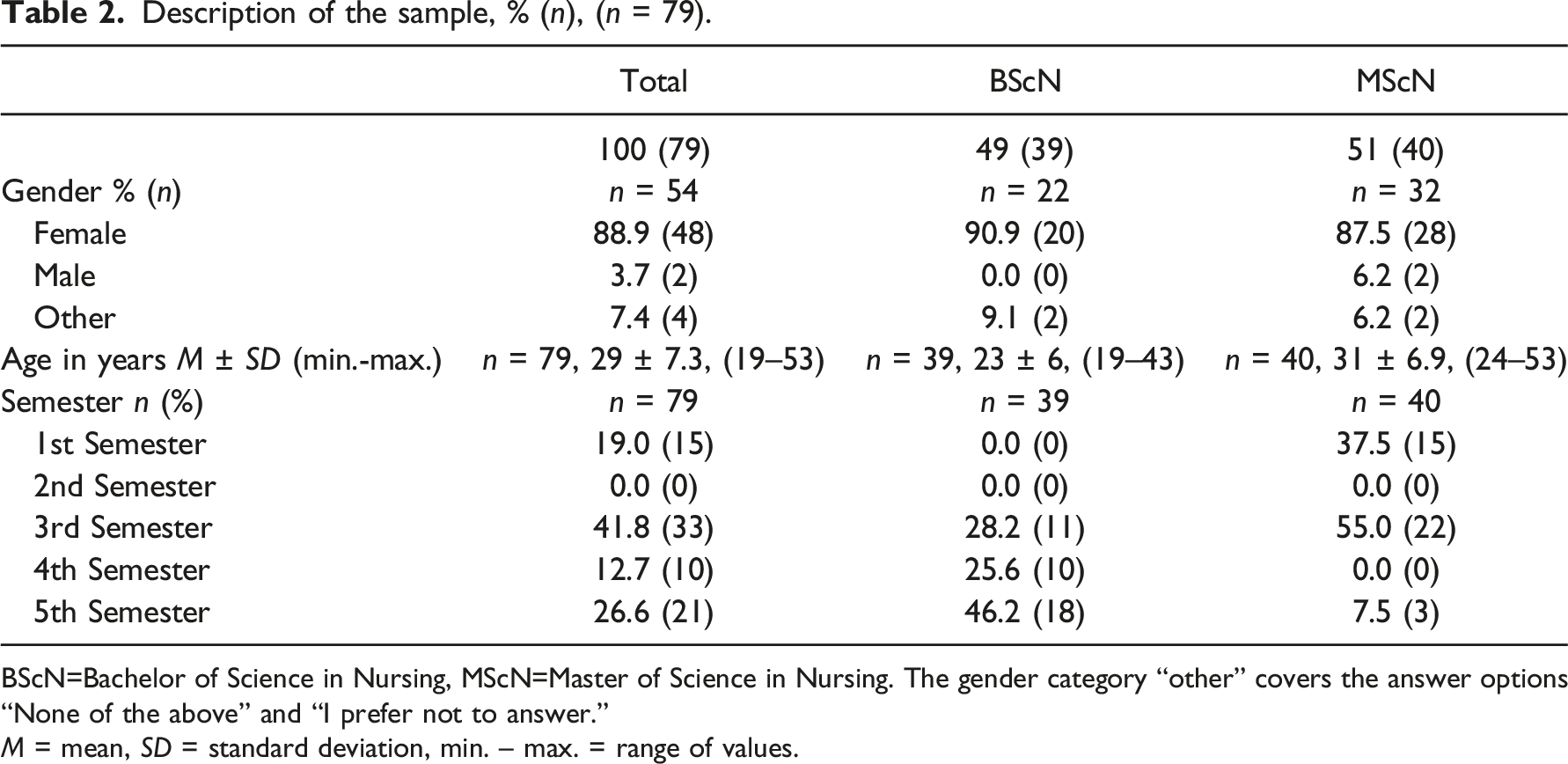
BScN=Bachelor of Science in Nursing, MScN=Master of Science in Nursing. The gender category “other” covers the answer options “None of the above” and “I prefer not to answer.”
M = mean, SD = standard deviation, min. – max. = range of values.
Preliminary analyses showed that the BScN and MScN groups answered the questions in fairly similar ways. Consequently, we report only the aggregated results. Detailed results are given in Appendix B.
Citation and plagiarism
Self-reported knowledge and doubts about citation and plagiarism.
Participant’s assessment of four questionable citation practices, % (n), n = 56.
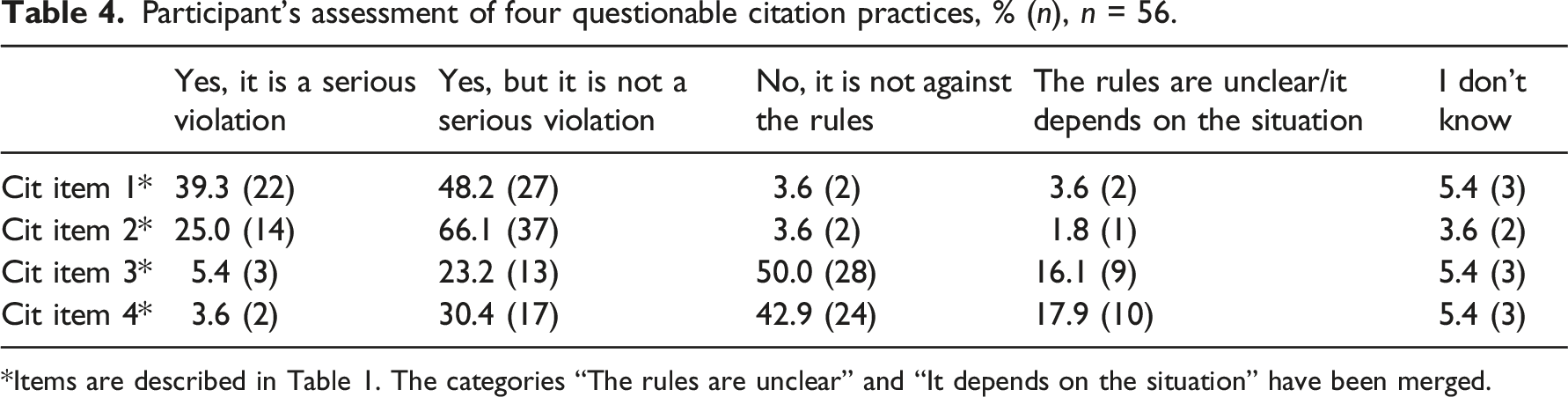
*Items are described in Table 1. The categories “The rules are unclear” and “It depends on the situation” have been merged.
Participant’s assessment of scenario on paraphrasing, % (n), n = 60.
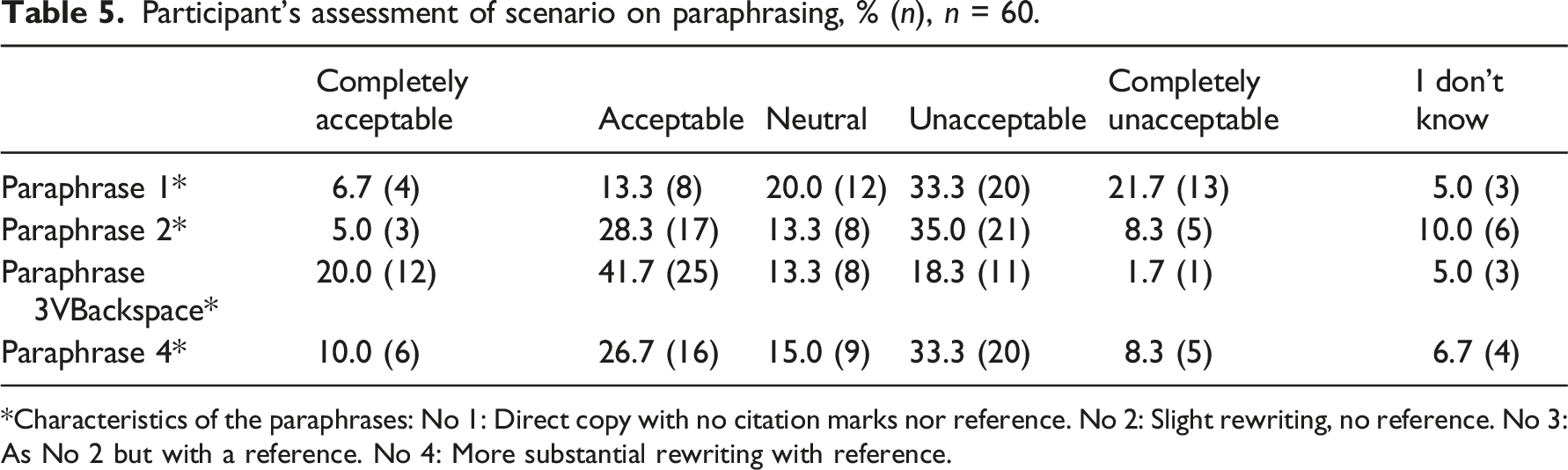
*Characteristics of the paraphrases: No 1: Direct copy with no citation marks nor reference. No 2: Slight rewriting, no reference. No 3: As No 2 but with a reference. No 4: More substantial rewriting with reference.
Participants’ self-reports on own and peer questionable citation practice.
Collaboration and authorship
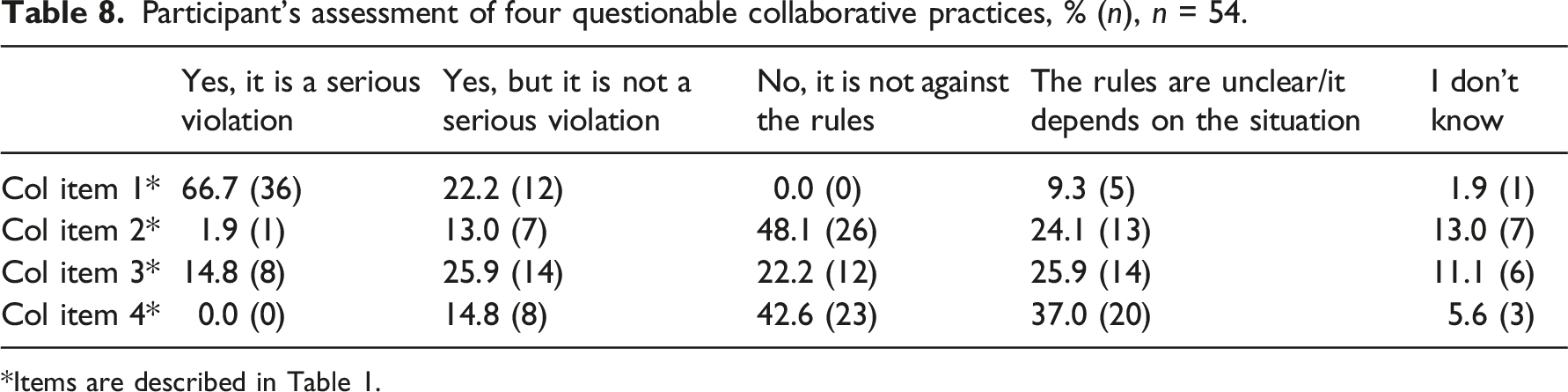
Self-reported knowledge and doubts about collaboration and authorship.
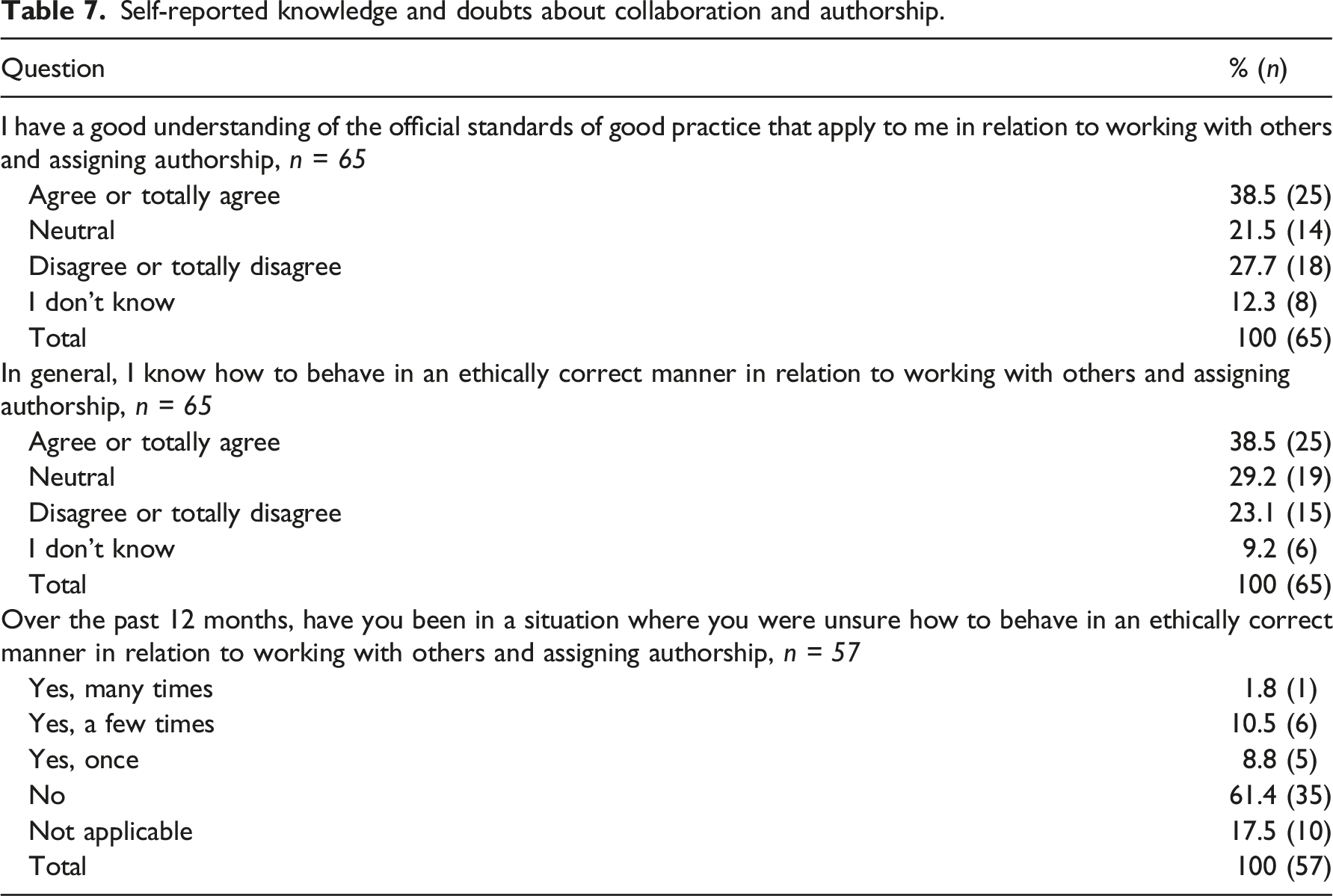
Participant’s assessment of four questionable collaborative practices, % (n), n = 54.
*Items are described in Table 1.
Participant’s self-reports on own and peer questionable collaborative practice.
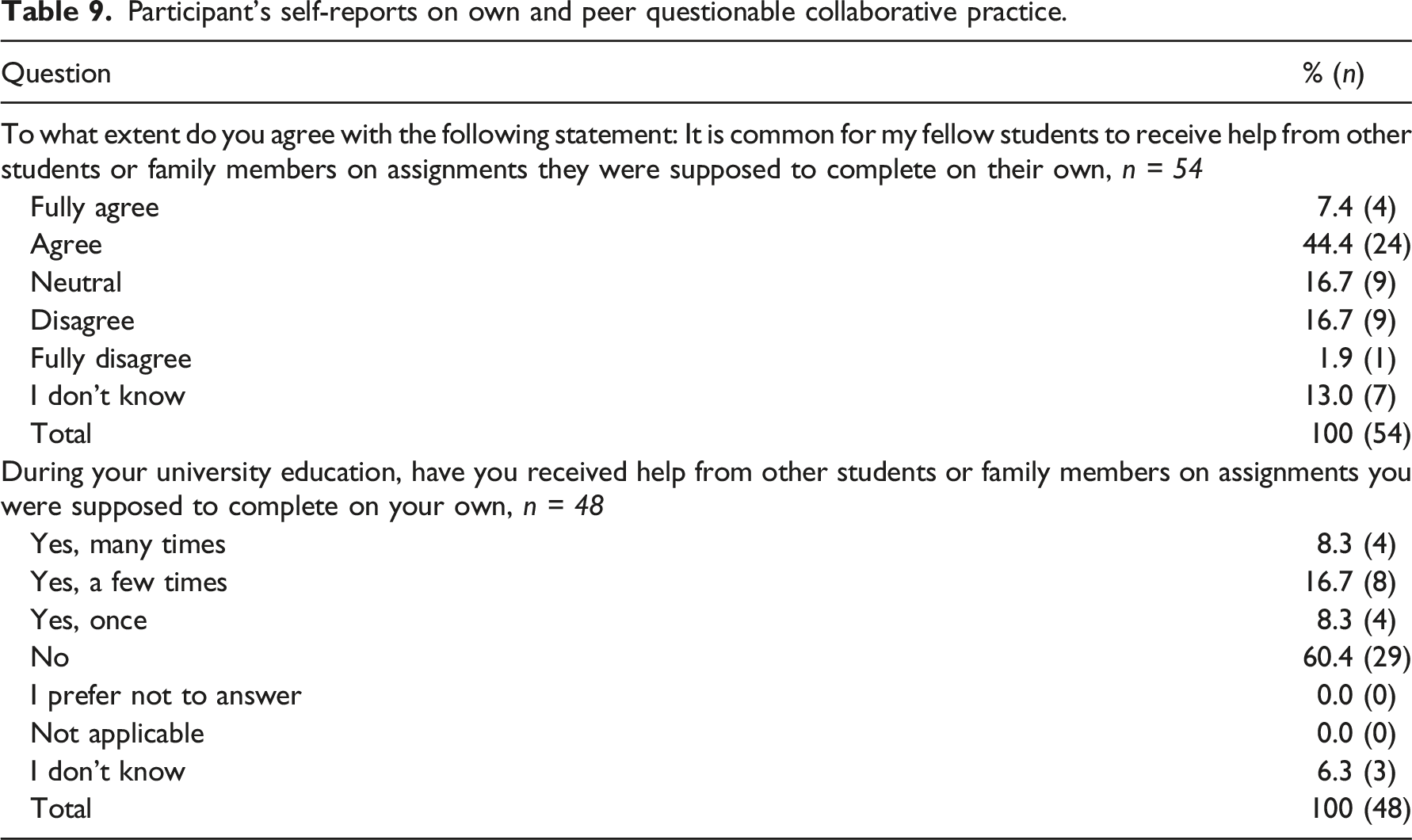
When asked the same question about their fellow students, 52% (n = 28) agreed or fully agreed that it was common for their fellow students to receive unauthorized help from family or fellow students.
Collection, analysis, and presentation of data
Self-reported knowledge and doubts about collection, analysis, and presentation of data.
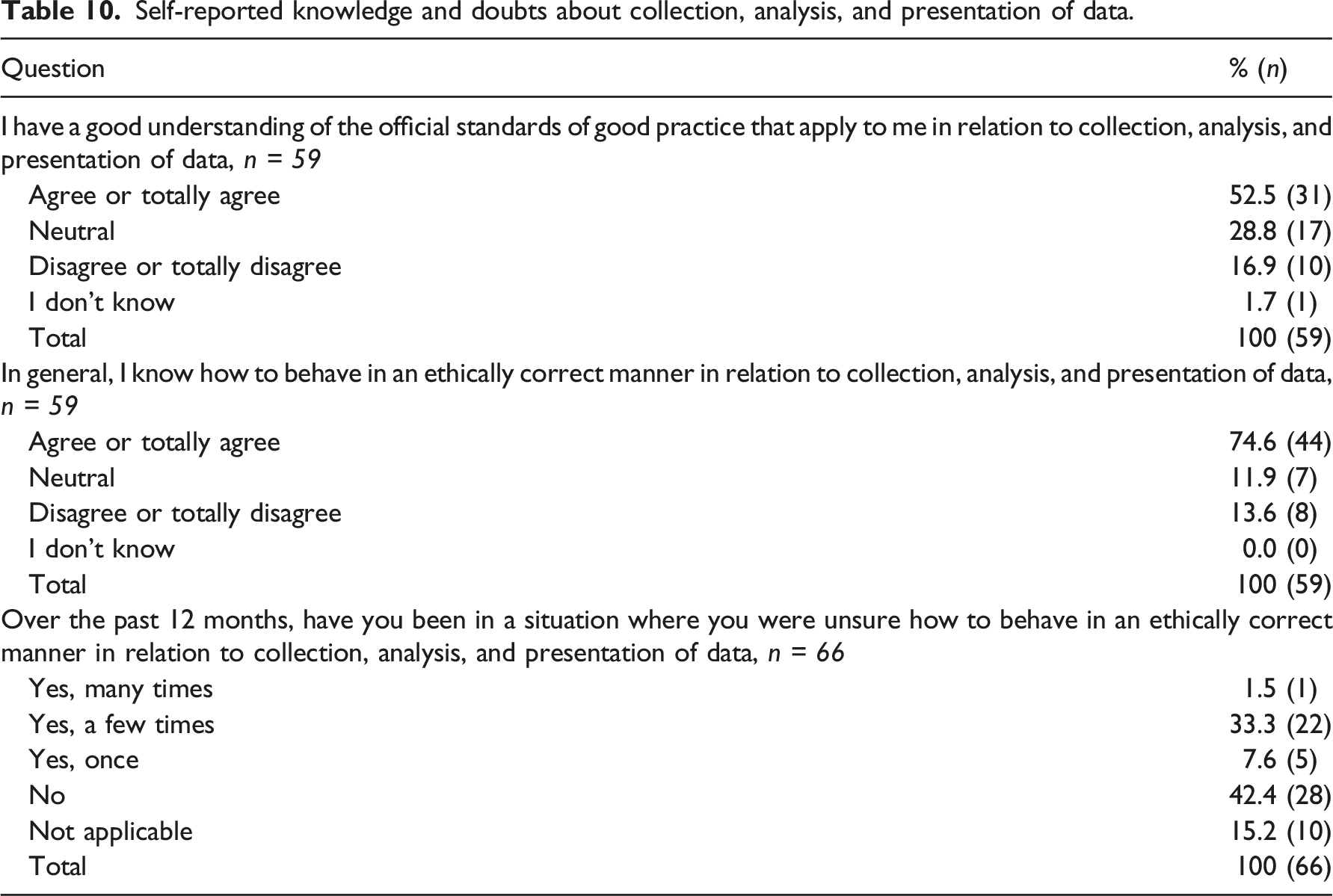
Participants’ self-reports on own and peers’ questionable practices in connection to collection, analysis, and presentation of data.
Academic integrity training
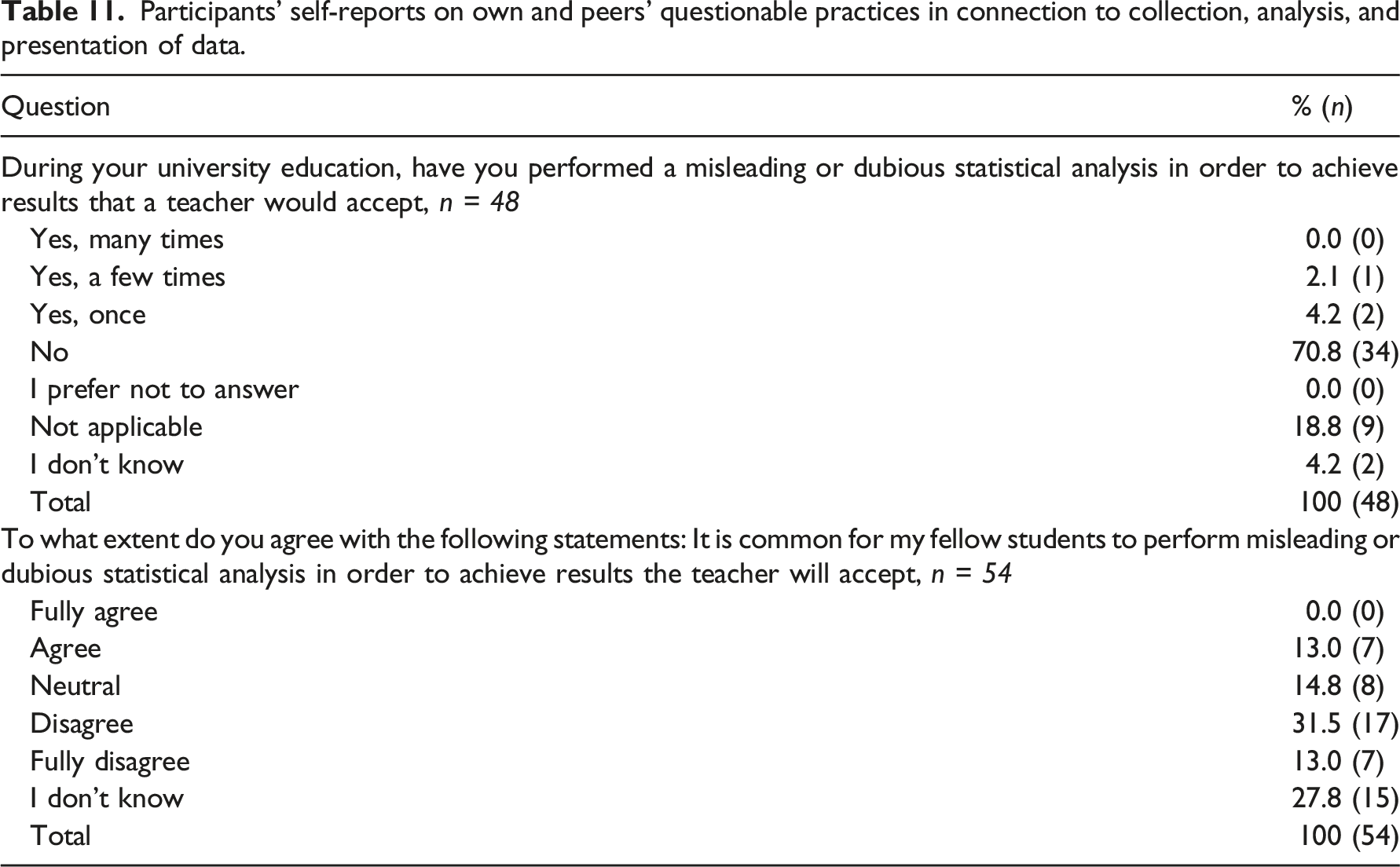
Academic integrity training.
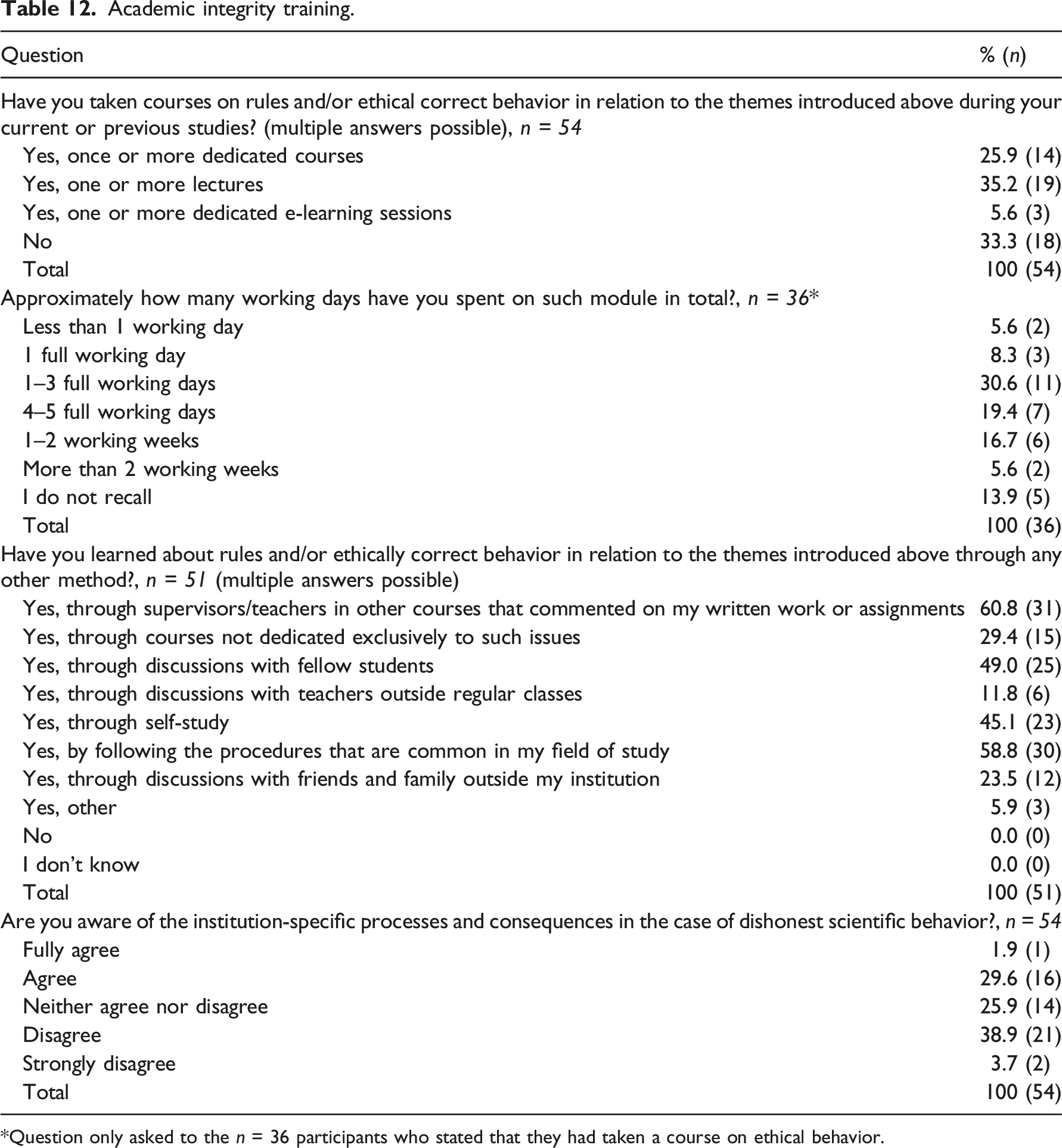
*Question only asked to the n = 36 participants who stated that they had taken a course on ethical behavior.
At the time of the survey, about one-third (31%) indicated that they were aware of the institution-specific processes and consequences for not following the guidelines. About 43% of participants were not aware of them.
Comparing BScN and MScN students
As noted above, we observed relatively few differences between the answers given by participants from the two different educational levels. The main instances were differences in terms of participants’ confidence in their own understanding of rules regarding collaborative practice and data handling, which seemed to be higher for the MScN students than for the BScN. However, we did not see any systematic patterns in the data suggesting important differences between the two groups. Complete results are described in Appendix B.
Discussion
We set out to investigate the educational needs of nursing students by exploring their confidence in their own knowledge on academic integrity, their doubts and knowledge of rules and principles, and their own behavior and perceptions regarding the behavior of their peers. We found that the participating students were generally very confident in their knowledge and understanding of the rules and standards that apply to them, but this confidence was not always supported by skills in correctly identifying examples of misconduct and questionable practices. Noticeably, 20% of the participants identified a clear example of plagiarism (Paraphrase 1) as acceptable or completely acceptable, and nearly one in ten (9%) did not identify paying someone to write an assignment for them as a violation of the rules that apply to them. Furthermore, a majority of the participants identified citation practices such as Cit items 3 and 4 as either against or compliant with the rules, and less than 20% saw them as context dependent. However, more of the participants seemed to be aware of the context dependency of questionable collaborative practices; more than 25% considered receiving extensive help in individual assignments (Col Item 3) as context dependent.
Given this, it is hard not to interpret the high frequency of doubts among the participants, particularly regarding citation practice and data handling, as being to a large extent an expression of their lack of knowledge. The context dependence of good academic practice means that it may be unclear, even to the very knowledgeable, what good academic practice is in a given situation. Therefore, while doubts may be an expression of a nuanced understanding of academic integrity [BLINDED], they may certainly also arise from a lack of knowledge, which seems to be the case for many participants in this study (see Reference 27 ).
Regarding the students’ self-reported practice, we found that nearly a large minority of participants had received unauthorized help on individual assignments. A much lower percentage indicated that they had engaged in questionable citation practice or questionable handling of data. However, participants regarded the practices as quite common among their peers. The discrepancy between self- and external assessment is well known and reported by Fanelli, 13 for instance, or Anderson et. al (2007), as cited in Fanelli. 13
The results from this study largely mirror those found in the much larger studies involving European (including Swiss) undergraduate and upper secondary students using a very similar questionnaire [BLINDED]. [BLINDED] also identified a major discrepancy between participants’ self-assessment of their own understanding of the rules applying to them and their actual ability to correctly identify instances of misconduct and questionable practice.
The lack of knowledge and awareness we saw in this study is in accordance with findings in the existing literature, where 40% of the participants did not know what plagiarism was and 70% had no knowledge of the legal consequences that such an offense might entail. 9 Similarly, Fanelli 13 found that students were not aware of the pitfalls of citations, paraphrasing, and plagiarism and did not recognize their behavior as misconduct.
Additionally, [BLINDED] found that when presented with explicit instances of plagiarism - as in the scenario - a very substantial percentage of undergraduate students are unable to identify relatively clear-cut examples of plagiarism like Paraphrases 1 and 2. This result is mirrored in the findings of this study and indicates that the results are robust across a very wide range of disciplines.
Regarding collaborative practices, [BLINDED] found a similar-sized minority of students who did not perceive paying someone to write an assignment for them as a violation of the rules that apply to them. However, for the questionable practices, participants in this study had a higher tendency to correctly identify the legality of Col items 3 and 4 as context dependent. Combined with the results above, this could indicate that nursing students have a more nuanced understanding of questionable collaborative practices, although more research is required to determine whether this is just the case for nursing students at ZHAW or if it applies more broadly.
A large minority (43%) of the participants indicated that they were not or were only partially aware of the institution-specific processes and consequences in cases of dishonest scientific behavior. Such a high percentage suggests that this topic is not discussed enough in the classroom. A majority of the participants (67%) indicated that they had participated in academic integrity modules. The responses of days involved in working in academic integrity modules varied greatly. This is probably because the students were in different semesters and educational levels at the time of the survey; for some, it might be the case that they have forgotten that they attended the classes or skipped them due to work overload.
The reasons for this uncertainty could be lack of knowledge, lack of application competence, unclear guidelines regarding violations of the institution ZHAW, or the fact that a sound evaluation is, indeed, not possible without knowing the context. Furthermore, the ZHAW leaflet on avoiding plagiarism 28 is unspecific, for example, which sequence of copied words would be seen as plagiarism. Unclear guidelines contribute, on the one hand, to student uncertainty, and on the other hand, might be an indication that the boundaries are in fact, not entirely clear. There may be grey zones where contextual knowledge is needed before an ethical evaluation of an action can be undertaken.
Implication and recommendation
Nurses operate based on a code of ethics, compiled and published by the International Council of Nurses. 1 Reliability, honesty, respect, and accountability are not only values of nursing practice but also core principles of research integrity. 29 There is emerging evidence that ethical behavior in research and practice are correlated. Therefore, promoting honesty and integrity by learning environments fostering these values is indispensable.2,3,16,17
Nursing students should be consistently confronted with ethical content from the beginning of their education. The results presented above showed that the participants generally had a low level of knowledge about the issues at hand. Furthermore, surprisingly few of the participants remembered the formal training they had received during their education, whereas more students remembered ethics training received in informal settings such as talks with teachers. These results emphasize the importance of promoting critical and ethical thinking whenever the opportunity arises. The results also indicate that the formal training may benefit from adjustments. Although more research is needed to fully understand, a more practice-oriented approach where students are taught how to handle realistic situations may be a possible improvement. This may also strengthen the transfer from training to clinical practice.2,3,16,17
Sample
The response rate in this study was 23.1% (15.1% for BScN students and 47% for MScN students), which according to Konrad 30 is satisfactory.
The high proportion of female participants in the survey reflects the high proportion of women in the nursing profession in Switzerland (84%). 34
The number of participants from the 4th semester BScN program was small, as expected, because this group was in internship at the time of the survey.
Measurement tool
The number of partially completed questionnaires (25 out of 79 returned questionnaires) was relatively high at around 30% and could indicate that the questions asked were too complex and too long or that the terminology used caused uncertainty among the students. 31 The length of the questionnaire could also have led to a decreased attention span, thereby negatively influencing the willingness to complete it. 31 In the four expert interviews that were conducted before the questionnaire was submitted, interviewees mentioned the length of the questionnaire and the complexity of the questions as a potential barrier to its completion. However, the responses of study participants did not show such a pattern, that is, students accepted the length of the questionnaire, with other reasons potentially leading to dropout.
Despite the high complexity of the questionnaire, no response tendencies were able to be observed, such as a tendency toward the middle or a yes-say tendency.
Limitations
The small sample size of participants recruited from a single institution clearly limits the generalizability of the results to the large population of nursing students. Instead, this study should be seen as a case study attempting to determine how earlier results obtained for students in other academic fields apply to nursing. Further studies are needed to map the perceptions of academic integrity among nursing students more generally before clear, detailed conclusions can be drawn. In addition, the self-reported frequencies of questionable practices among the participants were only asked to the sub-group of students who worked with data. This group may not be fully representative for the full population. Moreover, the adaption of questions to nursing and omission of some of the questions may impede comparisons with studies from other fields using the same questionnaire. However, as results are reported and used on item level, items may be comparable.
Conclusions
Our study of nursing students’ educational needs as related to academic integrity has shown that the knowledge gaps and misconceptions of these nursing students are in many ways comparable to those identified in undergraduate students from other areas. The educational needs also appear to be similar. Following recommendations from a recent meta study of effective training strategies, 32 there is a need to replace purely “legalistic” training 33 with training that challenges students to navigate grey zone cases aided by an understanding of central principles and guidelines. Such training needs a solid empirical founding in studies of nursing students’ perception of good academic practice, questionable practice, and the dilemmas they will face during their studies.
Supplemental Material
Supplemental Material - Academic integrity among nursing students: A survey of knowledge and behavior
Supplemental Material for Academic integrity among nursing students: A survey of knowledge and behavior by Isabelle Nortes, Katharina Fierz, Mads Paludan Goddiksen, and Mikkel Willum Johansen in Nursing Ethics.
Footnotes
Acknowledgments
We would like to thank all of the participants in the study and everyone who helped with recruitment. We disclosed receipt of the following financial support for the research, authorship, and/or publication of this article: This study was supported by the Zürich University of Applied Sciences.
Declaration of conflicting interests
The author(s) declared no potential conflicts of interest with respect to the research, authorship, and/or publication of this article.
Funding
The author(s) disclosed receipt of the following financial support for the research, authorship, and/or publication of this article: This study was supported by the Zürich University of Applied Sciences.

Supplemental Material
Supplemental material for this article is available online.
References
Supplementary Material
Please find the following supplemental material available below.
For Open Access articles published under a Creative Commons License, all supplemental material carries the same license as the article it is associated with.
For non-Open Access articles published, all supplemental material carries a non-exclusive license, and permission requests for re-use of supplemental material or any part of supplemental material shall be sent directly to the copyright owner as specified in the copyright notice associated with the article.
