




Abstract
Dr Mary T. Martin Sloop and Dr Eustace Henry Sloop shaped the landscape of healthcare and education for the small town of Crossnore in the mountains of Western North Carolina throughout the early- to mid-twentieth century. The duo of general practitioners founded the Crossnore School and the Garrett Memorial Hospital, later renamed Sloop Memorial Hospital before its closure in 1999. The Sloops provided medical care to an underserved Appalachian population and sought advice and assistance from key community stakeholders with every project they undertook, demonstrating their commitment to cultural assimilation. While the story of the Sloop family is one of success, patients in rural America are currently facing a dual crisis of healthcare access. Rural healthcare professional shortages contribute to difficulties establishing longitudinal relationships with primary care providers, which in turn decreases access to preventative medicine services. With over 106 rural hospitals closing since 2010, patients may face travel barriers to reach inpatient facilities with associated emergency services, and access to specialty services such as surgery is diminished. It is paramount to reflect on and learn from the stories of the past, highlighting the personal and professional fulfillment that can be found in embracing rurality through service and community integration.
Keywords
Background
Dr Mary Turpin Martin Sloop (1873–1962) was born in Davidson, North Carolina (NC). Though her story originates in the Piedmont region of the state, her life and legacy took root in the sparsely populated and underserved mountains of Western North Carolina. Mary Sloop dedicated her life to weaving healthcare, education, and financial independence for women into the societal fabric of small-town Crossnore in Avery County, NC alongside her husband, Dr Eustace Sloop (1878–1961), daughter, Dr Emma Fink (1909–2001), and nephew, Dr Eustace Smith (1920–2008). Mary Sloop seamlessly assimilated into her community during a time when medicine remained a male-dominated profession, which helped her build trust and longitudinal relationships with her patients and neighbors. Interested readers can learn more about Mary Sloop's life in the autobiography, Miracle in the Hills: The Lively Personal Story of a Woman Doctor's Forty Year Crusade in the Mountains of North Carolina (New York: McGraw Hill; 1953), co-written by North Carolina journalist and author LeGette Blythe. 1 Despite the respectable efforts of the Sloop family, Avery County currently faces a health crisis related to primary care health professional shortages. Surrounding rural hospital closures increase the difficulty for patients from this region to seek inpatient care and emergency services, and other rural areas across the United States are facing similar plights. Mary and Eustace Sloop exemplify the personal and professional fulfillment found in embracing the community one serves.
Education and meeting “Doctor”
Mary Sloop received her early education in a one-teacher school in Davidson, NC and later attended the “Statesville Female College for Women” (now Mitchell Community College). 2 Her path to becoming a physician began at the North Carolina Medical College, though Mary Sloop was prohibited from entering the second year of study because the school banned co-education enrollment in the human anatomy with cadaveric dissection course. 2 Though her time as a medical student in the North Carolina Medical College program was brief, she reconnected with a student named Eustace Sloop whom she had met during his time as a freshman at Davidson College in 1893. Eustace grew up on a rural farm near Mooresville, NC and voiced early aspirations to become a physician. 3 Undeterred by the gatekeeping and gender biases displayed by the North Carolina Medical College, Mary Sloop secured entry to the Women's Medical College of Pennsylvania in Philadelphia, where she won an award for excellence in anatomy despite being out of sequence for her anatomy coursework compared to her peers. 3 Upon graduating in 1906 with her medical degree, Mary Sloop completed her internship at the New England Hospital for Women and Children and her residency at Agnes Scott College in Georgia as the program's first resident physician. Eustace Sloop completed his training at Jefferson Medical College in the meantime. Soon after, the pair married and decided to settle in the mountains of North Carolina. Mary Sloop “always loved the mountains” and spent the summers of her childhood traveling there with her family; therefore, she and Eustace (“Doctor,” as Mary affectionately called him) elected to devote their lives to improving the health, wellness, education, and economic stability of a drastically underserved area in Western North Carolina. 4 When considering what it meant to serve the Appalachian population, Mary Sloop said, “We knew that was what we wanted to do – to live among them, seek to help them, enjoy them, learn from them, become a part of them. And never have we regretted our decision. We have helped them, Doctor and I; but, more than that, they have helped us.” 3 Photographs of Mary and Eustace Sloop near the beginning of their careers are shown in Figure 1(A) and (B), respectively.
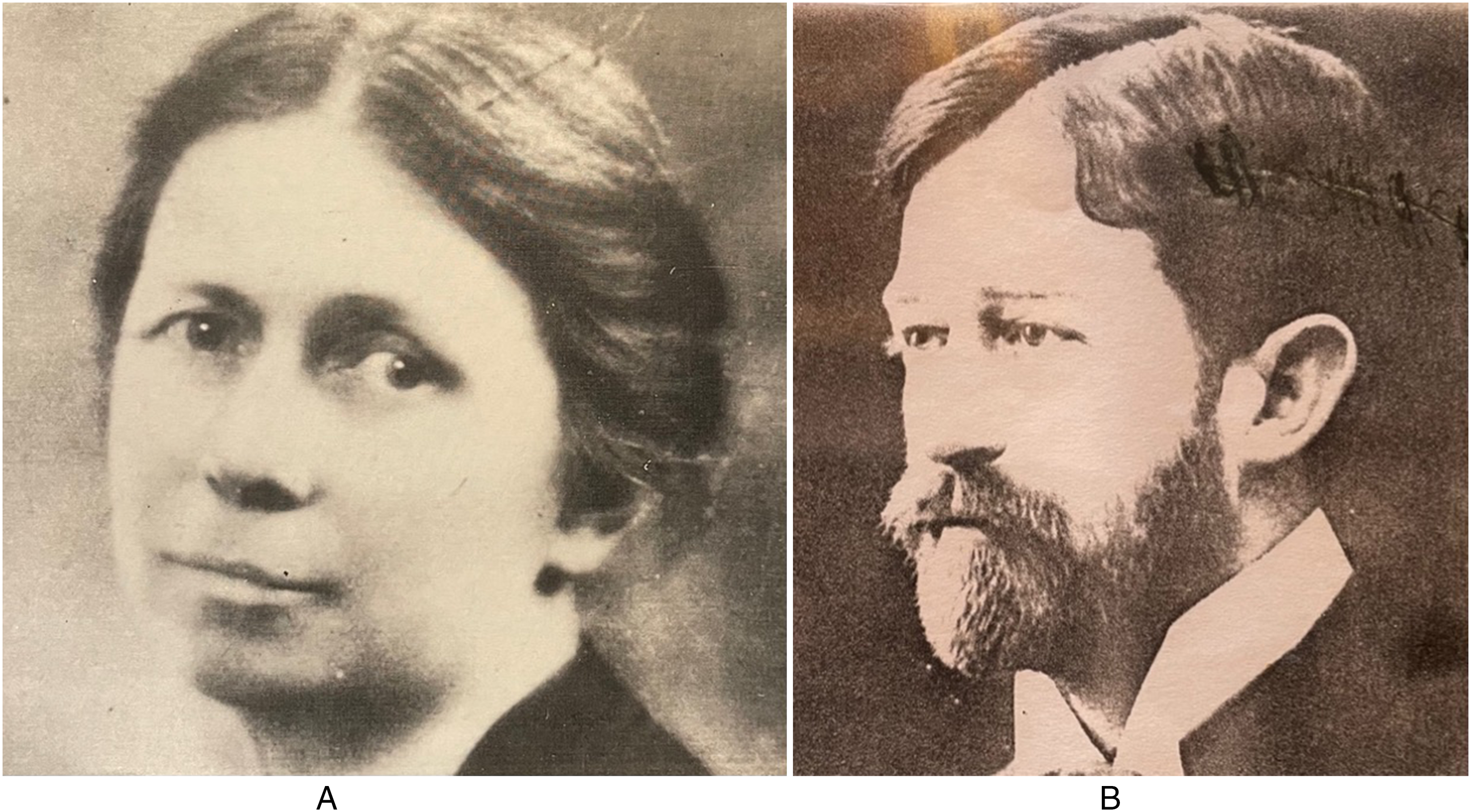
(A) and (B) Photographs of Dr Mary T. Martin Sloop and Dr Eustace Henry Sloop (undated). Reproduced with permission from the Avery County Historical Museum.
The Crossnore School: Then and now
The Sloops established their medical practice in the mountain town of Crossnore in Avery County, NC, which lacked many facilities considered essential today, including a formal school. 4 Mary and Eustace Sloop were instrumental in the founding of the Crossnore School, a boarding school with its first iteration completed in 1913. Mary Sloop tirelessly advocated for the expansion of the school, with her efforts securing funding from sources including Avery County and the Daughters of the American Revolution. As each financial source began to reach exhaustion, Mary Sloop appealed for more for the rapidly expanding student population. Her efforts eventually culminated in the chartering of the school. 5 The Wilson Library at the University of North Carolina at Chapel Hill houses a collection of three letters written by Mary Sloop between 1945 and 1946 along with two handwritten letters from a student at the Crossnore School. These letters document Mary Sloop's pleas for continued scholarship funding from Mrs. Florence Wyatt Sparger, Regent of the Davie Chapter of the Daughters of the American Revolution. 6 Mary Sloop discussed the flux of life in Crossnore following the end of World War II in the first letter dated October 3, 1945, noting the disruption of families and the plight of children left without stable home environments. She highlighted the need for a scholarship for a student named Ed McKinney in this letter. 6 In her second letter, written January 17, 1946, she advocates for shoes and clothing for Ed, stating “if ever a boy was without clothes, it was Ed McKinney.” 7 In her final letter in this collection, dated February 19, 1946, she offers Mrs. Sparger an update on the receipt of Ed McKinney's scholarship and his behavior at school. 8 Taken together, these letters demonstrate Mary Sloop's personal commitment to helping individual students in need secure the funding necessary to benefit from the housing and education provided by the Crossnore School.
The Crossnore School evolved and expanded over time to suit the needs of those it served, merging with the Crossnore Children's home on January 1, 2017, and most recently, rebranding as Crossnore Communities for Children in June of 2021. 9 The faith-based Crossnore Communities for Children is a 501(c)3 nonprofit organization offering a stable housing environment for children ages 1–21 at risk of entering the child welfare system or ageing out of the foster care system. The organization provides trauma-informed clinical services including therapy and on-site medical care, as well as access to the Williams Academy, a K-12 charter school serving all residents of the Crossnore Communities for Children. 9 To date, there are three locations of the Crossnore Communities for Children across North Carolina, with the two newest satellite locations serving the children of Winston-Salem, NC and Hendersonville, NC.
Mary Sloop was a fierce advocate for shepherding the children of Crossnore through the educational system, encouraging students to seek post-secondary educational opportunities including trade and nursing school. Some of these students would go on to return to Crossnore and work with the Sloops. Additionally, she crusaded for increasing the minimum age of school attendance and was instrumental in the passing of legislature raising the school attendance age to sixteen. 10
Medicine in the mountains
Life as a general practitioner in the remote mountains in the early twentieth Century entailed battling alcohol use disorder and, in Mary Sloop's case, exerting her moral authority to personally find and help dismantle moonshine stills. 11 Following construction of the Garrett Memorial Hospital, which began in 1928, the Sloops had access to space for twenty patients, a small outpatient operating room, and an X-ray suite. Additionally, the hospital had an upstairs room dedicated to housing visiting medical students, as Eustace Sloop was passionate about educating the next generation of physicians and instilling a desire for newly minted doctors to practice in rural areas. 11 Before enjoying the luxury of a dedicated operating room, however, the Sloops performed minor surgical procedures in the open air under what the community deemed the “Antiseptic Apple Tree,” as it had been asserted that no postoperative infections were ever reported following an operation under this tree. 12 An image of a minor operation being conducted by Dr Eustace Sloop with Dr Mary Sloop assisting is shown in Figure 2. 12
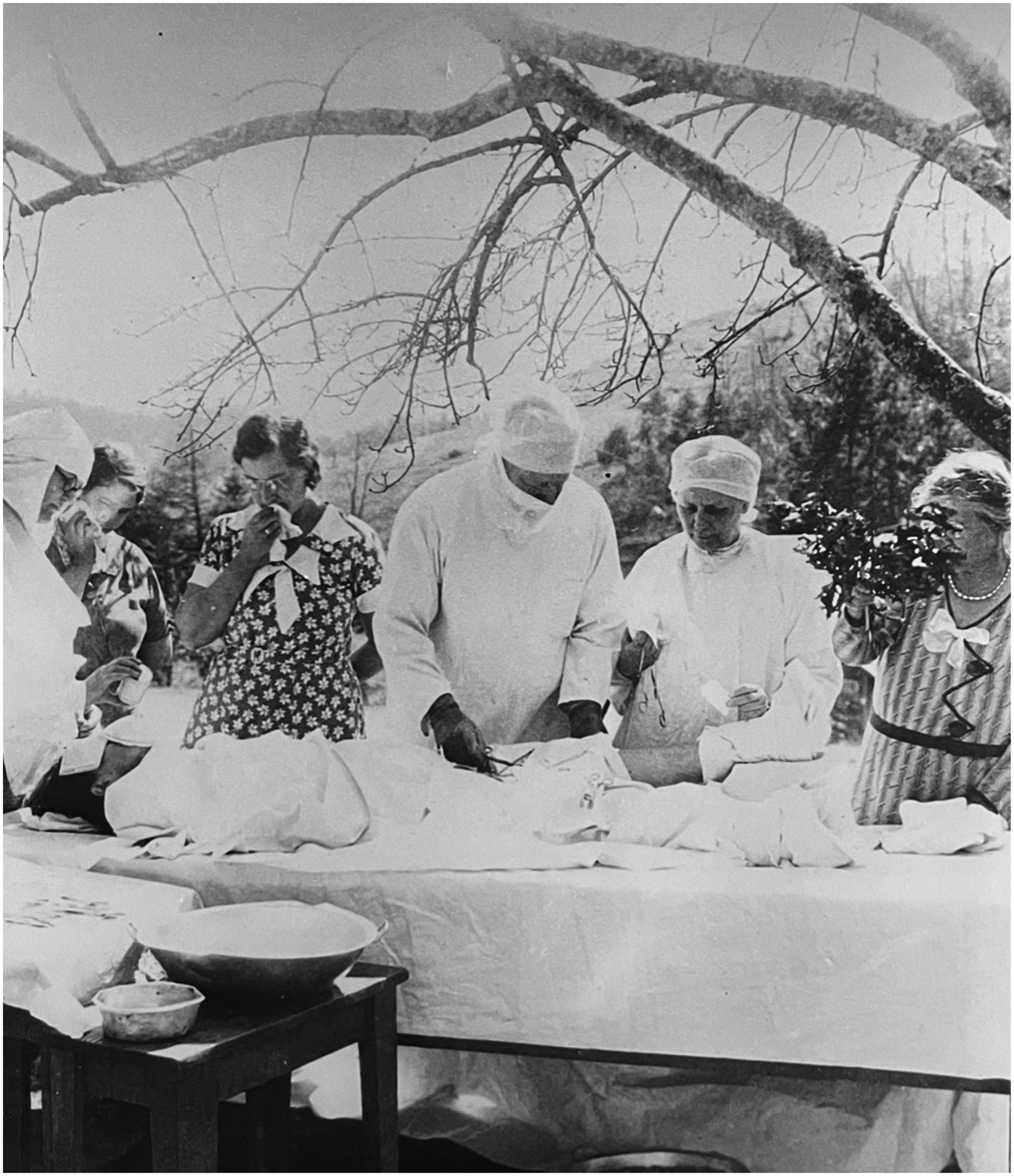
Dr Eustace Sloop (middle left, surgical attire) and Dr Mary Sloop (middle right, surgical attire) performing an unspecified procedure on a patient's lower extremity under the “Antiseptic Apple Tree” while family and community members observe. Reproduced with permission from the Avery County Historical Museum.
The Garrett Memorial Hospital was renamed Sloop Memorial Hospital in 1983. At the time of its closure in 1999, Sloop Memorial Hospital was a 38-bed facility with a surgical wing, outpatient clinic, intensive care unit, and laboratory, along with dedicated physical therapy, respiratory therapy, and dietary services. 13
Later life and legacy
Mary and Eustace Sloop remained committed to the people of Western North Carolina for the remainder of their careers and lives, instilling a similar love and commitment for the area in their family. Mary Sloop was awarded the American Mother of the Year Award in 1951, indicating a distinguished and lifelong commitment to community service. This award celebrated her work founding and expanding the Crossnore School, improving the infrastructure of her community through campaigning for paved roads and access to electricity, and advocating for the financial agency of mountain women by starting a successful weaving program. 14 An undated photo of Mary and Eustace Sloop later in life is shown in Figure 3.
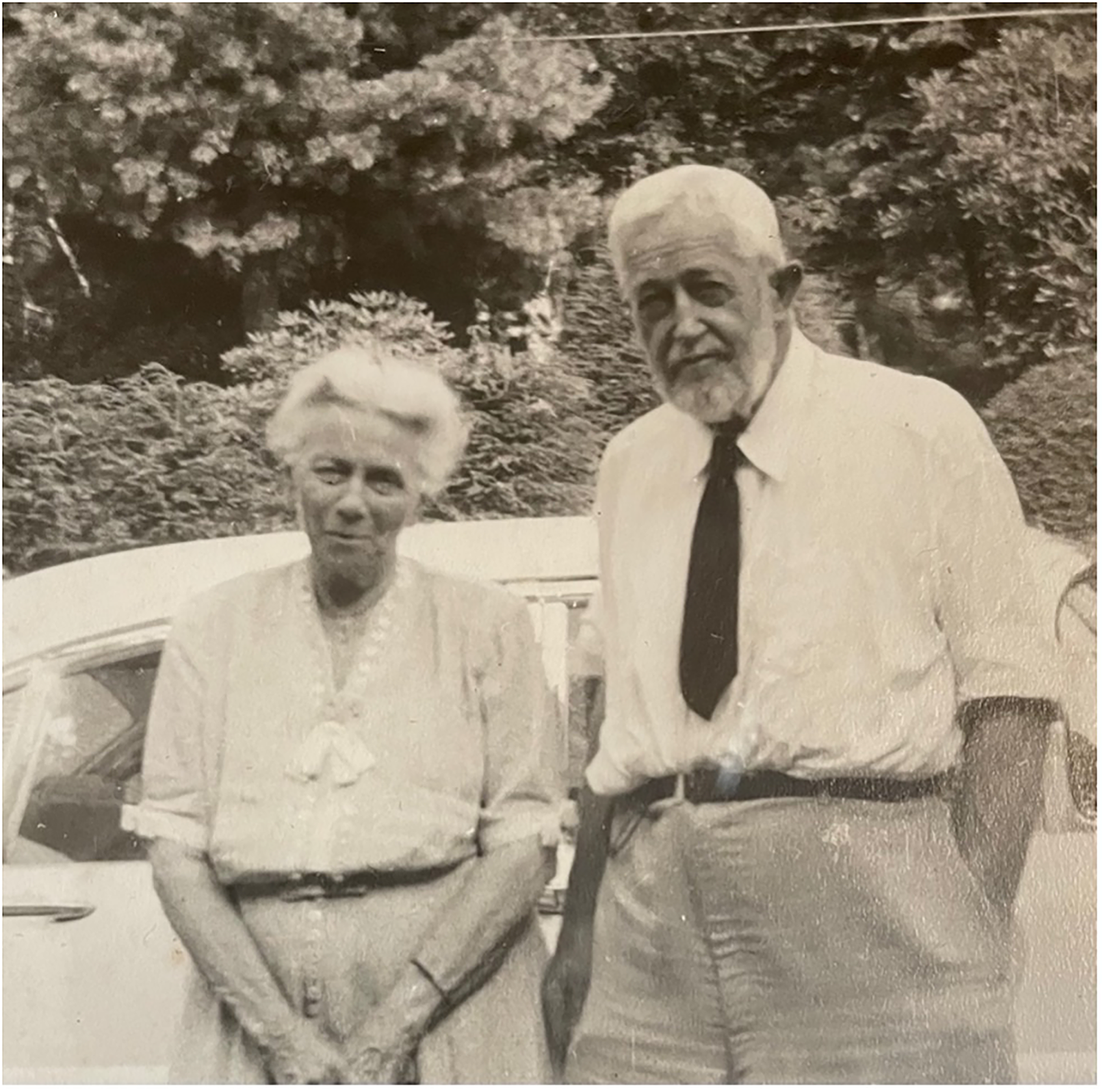
Dr Mary T. Martin Sloop (left) and Dr Eustace Henry Sloop (Right). Reproduced with permission from the Avery County Historical Museum.
Dr Emma Fink, the daughter of Mary and Eustace Sloop, worked alongside her father at the Garrett Memorial Hospital for 20 years after completing medical school, until Dr Eustace Sloop retired. Dr Emma Fink served the people of Crossnore from 1938 until her own retirement in 1990 for a total of 52 years of service. 13 Dr William M. Sloop, the son of Mary and Eustace Sloop and brother to Dr Emma Fink, devoted his life to dentistry and practiced for “half a century” in Crossnore. 13
Dr Eustace Smith, the nephew of Eustace Sloop, forged a career as a physician after funding his medical education by serving in the United States Navy, moving to Crossnore to work alongside his uncle in the Garrett Memorial Hospital in 1951 immediately after finishing residency. A firsthand account from Dr Eustace Smith's daughter, Catherine Smith Hartley, brings to light the unwavering spirit of service exemplified by both her father and Eustace Sloop, whom she affectionately refers to as “Uncle Doctor.” She recalls her father and great-uncle rushing to the Garrett Memorial Hospital to deliver babies, reducing minor fractures and applying casts, and essentially providing the services of an urgent care and emergency room during a period when traveling long distances proved difficult for patients and access to reliable transportation was a luxury.
Regarding the closure of Sloop Memorial Hospital in 1999, Ms. Hartley describes the sadness that emanated throughout the community; people had developed a trust and bond with the physicians, nurses, and staff at the hospital, and relished the ability to be only miles away from their loved ones when they were hospitalized. Losing this sense of proximity and security was a devastating blow to Crossnore. Upon interviewing Eva Palmer, who worked as a radiology technician at Sloop Memorial Hospital until its closure, a merger with the Cannon Memorial Hospital, now the Charles A. Cannon, Jr. Memorial Hospital in Linville, NC, left the Sloop Memorial Hospital with no choice but to divert their patients and resources to the new facility. Previous staff from the Sloop Memorial Hospital have hosted several reunions to reminisce on their time at the hospital, which is marked with a monument stating, “Garrett Memorial Hospital 1928–1983, Sloop Memorial 1983–1999, In the memory and honor of those who were born here, those who died here, those who were healed here, and those who served here.” 15
The Sloop mission: Modern rural healthcare challenges
Despite the Sloop family's significant impact on improving healthcare access and quality in Avery County, one of the principal challenges facing rural areas today remains a paucity of healthcare providers. While programs such as the National Health Services Corps, Public Service Loan Forgiveness, and Forgivable Educational Loans for Service exist to mitigate this shortage in North Carolina by financially incentivizing providers to practice either in the state as a whole or in a dedicated Health Professional Shortage Area (HPSA) depending on the program's stringency, many counties still lack adequate access to primary care services. According to 2020 data from the North Carolina Department of Health and Human Services, only 52 counties in North Carolina currently have facilities designated as primary care-based HPSA facilities, excluding Federally Qualified Health Center (FQHC) satellite sites and correctional facilities, which are designed to meet the needs of the most underserved communities and increase access to healthcare. 16 Avery County does not have a dedicated primary care HPSA facility as of 2020, with only one county in the Toe River Health District (Avery, Mitchell, and Yancey Counties, NC) having a primary care HPSA facility. Additionally, data from the Health Resources and Services Administration indicates a full-time equivalent provider shortage in Avery County of 1.50 as of July 28, 2021, meaning that the efforts of at least one full time and one half time primary care provider are needed in the county to meet the current needs of the population. 17 Furthermore, recruitment differs from retention; financial incentives including loan forgiveness in exchange for service-years may provide an initial burst of providers to areas in need, but retention poses different challenges, such as the need for further incentives and revised compensation and benefits packages, along with addressing and allaying concerns about high-volume patient panels, professional isolation, frequency of call, and difficulty scheduling time away from work. 18
Although Mary Sloop did not grow up in a rural area, she spent a great deal of time in the North Carolina mountains on family trips, affording her early exposure to life in early twentieth century Appalachia. Interestingly, a 2018 systematic review investigating predictors of healthcare providers’ geographic preferences following rural-focused training programs demonstrated that growing up in a rural area was the strongest predictor for choosing a rural practice location, with 30–52% of providers from rural backgrounds in the included studies electing to remain in a rural area for their career. 19 This systematic review did not find associations between provider race or completion of loan forgiveness programs and identified barriers such as perceived lack of spousal career opportunities as well as fewer avenues for engaging in continuing medical education. Exposure to rural populations during medical training, either during medical school or residency, also emerged as a promising method for later recruiting providers to rural areas. 19 A 2020 review further explored the effect of exposure to rural practice during undergraduate medical education, including through programs such as longitudinal rural health tracks, finding that this strategy is most effective for students entering medical school from rural backgrounds and further solidifying the predominant theme pervading current literature that recruiting health professional students who have prior, extended exposure to rural environments is the single most effective policy intervention identified to date. 20
Viewing the outpatient primary care shortage in rural areas in the context of rural hospital closures leading to decreased inpatient and specialty care access paints a particularly dire picture for rural patients. The 2018 Government Accountability Office (GAO) Report on Rural Hospital Closures documented 64 rural hospital closures from 2013–2017, noting that the number of closures more than doubled compared to the prior five-year period. 21 The Cecil G. Sheps Center for Health Services Research at the University of North Carolina at Chapel Hill reported 181 rural hospital closures since 2005 and 138 since 2010, with 83 closures resulting in a conversion to another type of healthcare facility. 22 The converted closure types include primary care clinics, skilled nursing facilities, or rural emergency services. 22 Southern states were disproportionately affected, accounting for over 60% of the closures.22,23 North Carolina ranked third for the highest number of rural hospital closures and losses of beds since 2005, with 11 hospital closures and 361 lost beds, outranked only by Tennessee (16 hospitals, 630 beds) and Texas (24 hospitals, 880 beds). 22 As was the case with the Sloop Memorial Hospital, mergers with larger hospitals can result in the absorption or closure of smaller rural hospitals. With rural areas battling against other socioeconomic barriers compared to their metropolitan counterparts, including higher percentages of uninsured patients, the need for further research and implementation of healthcare policy interventions becomes critical. 24
Though much work to improve rural health access rests on the shoulders of legislators via changes in policy, funding, and proposing evidence-based strategies for healthcare provider recruitment and retention, it is critical to reflect on and learn from the stories of the past. Dr Mary T. Martin Sloop, Dr Eustace Henry Sloop, Dr Emma Fink, Dr William M. Sloop, and Dr Eustace H. Smith are but a few of the noble healthcare providers and change agents who dedicated their lives to serving rural communities. Mary and Eustace Sloop integrated themselves into Crossnore society and helped build the education system from the ground-up, with their success in this pursuit embodied by the flourishing and expanding Crossnore Communities for Children organization. They provided access to high-quality healthcare while alleviating the need for patients to travel to distant clinics or hospitals, and arguably most importantly, built trust and love with their neighbors while doing so. The story of the Sloop family is revered in Avery County and its surrounding areas, with many of their original medical instruments, patient ledgers, written communications, and personal items on display in the Avery County Historical Museum. 13 In an era of hospital closures and healthcare provider shortages, it is paramount to highlight the personal and professional fulfillment that can be found in embracing rurality through service and community integration.
Footnotes
Acknowledgements
Special thanks to the Avery County Historical Museum for providing access to photographs and primary sources regarding the Sloop family history, to Marilyn Robinson for sharing her perspective on growing up in Crossnore, NC and providing contacts to interview for this article, to Catherine Smith Hartley for detailing her personal experience living in Crossnore and providing information about her father, Dr Eustace H. Smith, and to Eva Palmer for shedding light on her experience as an employee of Sloop Memorial Hospital.
Declaration of conflicting interests
The author(s) declared no potential conflicts of interest with respect to the research, authorship, and/or publication of this article.
Funding
The author(s) received no financial support for the research, authorship, and/or publication of this article.
IRB approval status
Reviewed and determined not to meet the definition of research by Duke University IRB: #00109966.
