




Abstract
In late 18th century Britain, typhus fever plagued the mass mobilisation of soldiers and posed a significant challenge to physicians of the time. Epidemic typhus was spread through highly infectious faeces of infected lice and carried a high mortality in patients and healthcare staff alike. Physicians James Carmichael Smyth (1741–1821) and Archibald Menzies (1754–1842) theorized that typhus fever was caused by infection of human exhalation. They trialled the use of vapourised nitrous acid to fumigate patients, their clothes and their bedspace, with apparent success. Despite this, typhus fever continued to ravage deployments of soldiers into the early 19th century, stimulating the continuing evolution of the understanding of typhus and its treatment.
Keywords
Introduction
“… It may be easily conceived that the space between [ship] decks was little else, during the passage at sea, than a steam bath of human exhalation.” 1
In early 2020, the cruise ship Diamond Princess carried 3,711 passengers and crew, more than 700 of whom would become infected with COVID-19 coronavirus. Small quarters and the isolation of the ship allowed it to become a container in which the virus spread. Despite medical and societal advances, this is a stark reminder that whenever there has been the movement of humans, their vessels have also carried invisible passengers – infecting organisms. The challenge of containing and facing the coronavirus pandemic in 2020 has been no less than confronting typhus fever was the late 18th century.
Typhus fever was no stranger to the British army in the late 18th century. The British Empire was not yet at its peak dominance, but it was an active participant in European wars on the continent. The cramped and dirty conditions of ships and barracks, coupled with the physical strain on soldiers, made them ideal propagators of infectious disease, including epidemic typhus, then known as “jail fever”, “hospital fever”, “ship fever”, and “camp fever”. Transmission occurred when lice infected with R. prowazekii defaecated highly infective faeces on a person’s skin or clothes; R. prowazekii was then introduced when a person scratched the louse bitten site or touched mucous membranes such as one’s conjunctiva. 2 Lice faeces could remain infective for 100 days, and thus human to human transmission occurred through sharing of clothes and the transfer of the infective lice faeces between humans. 3
This was a significant issue; as an island nation, sea travel was essential to British military and economic might. This presented an important challenge to physicians of that time. Though microorganisms had been seen down the microscope 100 years before, this was not yet attributed as causative to this disease. As such, doctors and surgeons of the time faced an invisible foe, without the armament of pathophysiological knowledge or the treatment of antibiotics. Medics of the late 18th century were inheritors of the scientific method from the Enlightenment, but predecessors to modern medicine: Jenner’s first vaccine in 1796, standardised anti-septic practice in the second half of the 19th century, and the first antibiotics in the 20th century.
Infectious fever was a terrifying enemy. Its victims had a “grim cloudy” countenance and a “wildly rolling eye, delirium, startings and threatenings of convulsion with the cerebral”. 1 Some succumbed within 12–24 h of their admission to hospital. 3 It seemed that feared complications of today, such as haemorrhage and encephalitis, were common. Despite the most rigorous treatment of the day, recurrence was commonplace, almost expected, and lethal. 1 , 4 Mortality was high amongst the affected as well as the nurses and attendants.
The Spanish soldiers in Winchester (1780)
Management of typhus was a direct result of the theories of infectious disease at the time. Typhus within the British military was documented by several physicians in this time period, including James Carmichael Smyth (1741–1821). In his 1780 account of the treatment of the “Jail Distemper” among Spanish prisoners in the King’s House in Winchester, Dr Smyth describes a prevailing theory of infectious disease (Figure 1).
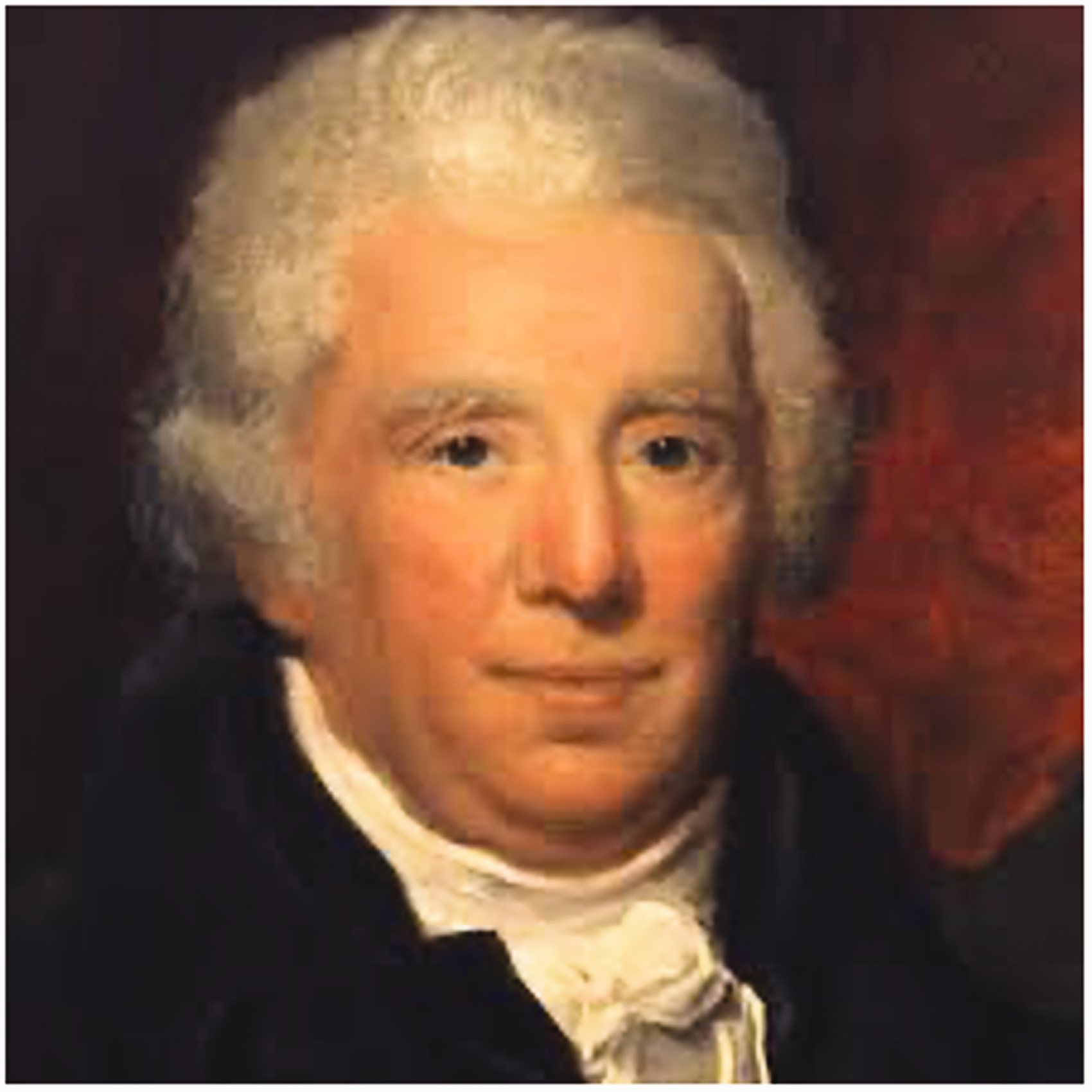
Portrait of James Carmichael Smyth (1741–1821) MD Edin (1764) LRCP (1770) FRS (1779) FRCP (1788). Dr Smyth was born in Perthshire and educated in Edinburgh, Scotland. After graduating, he attended lectures in medical schools in France, Italy and Holland, before settling as a physician in London. Dr Smyth received a Licentiate of the College of Physicians in 1770, and was admitted a Fellow of the Royal Society in 1779. In 1780, he was appointed to become physician to the prison and hospital at Winchester, where he would employ and write about the use of nitrous acid fumigation in treating epidemic typhus, which was rampant amongst its inmates. For his success, parliament would awarded him 5000 pounds and he was soon appointed Physician Extraordinary to King George III. The College of Physicians admitted him, speciali gratiâ, to the Fellowship, and he was Censor in 1788, 1793, and 1801; and delivered the Harveian oration in 1793. He was named an Elect in 1802. Following this, he retired from practice to spend his time at East Acton, and eventually Sunbury, where he died in 1821. His children included Sir James Carmichael-Smyth, 1st Baronet; a notable British Army officer and colonial administrator.
Infectious disease was understood to follow recruits from prisons and of poorer status or health. Physicians unanimously noted that infection spread rapidly in crowded congregations of people with poor air ventilation. Clothes and bedding were known deposits and vectors of disease. Transmission was acknowledged to be just as likely within the proximity of the sick or in prolonged exposure to their environment, as it was for those in direct communication with the sick. 4 These are in keeping with modern theory.
Where the belief of the time diverges is their theory of disease process. According to Dr Smyth, it was well known that all human secretions had a tendency to advance to “putridity”, which along with favourable conditions resulted in disease. Further, Dr Smyth postulated that of all secretions, the one most likely to become putrid was perspiration from the surface of the body and from the lungs. As a result, the advised prevention and treatment was to constantly renew and ventilate air. Perspiration would be thus carried off or prevented from its tendency to putrify. 4 It certainly follows that in the early 19th century, the concept of good health was tied to fresh air; as Jane Austen wrote about Jane Fairfax’s reason for returning to Highbury in the novel Emma (published in 1815), some fresh air was important “for the recovery of her health”! 5
In addressing the Spanish prisoners in Winchester, Dr Smyth applied two core principles: that every infectious disease has its virulence lessened and eventually “completely effaced” by exposure to open air; and that water had the same power. He therefore endeavoured to spread the Spanish prisoners between four wards; three that would contain the prisoners and one that would be purified in rotation. The bedding was removed for cleaning, and marine acid (a vapour derivative of hydrochloric acid) was used to clean the hammock poles and surrounding area. Then, the ward would be fumigated with vapourised nitrous acid. 4
Dr Smyth was an active promoter of the use of vapourised acid to combat putrid contagion. He noted that vapourised sulphuric acid had high efficacy, but it could not be used alone as it was deleterious to life. Nitrous acid, he believed, was just as effective as sulfuric acid in “destroying or diminishing virulence”, without the same effect on the breathing of the patients. This method was successful, he noted, with the Spanish prisoners in Winchester as well as in trials at Middlesex Hospital and in his private practice. 4
The nitrous acid vapour was allowed to circulate in the closed room for a few hours, then windows were opened to ventilate the room. This would be repeated for up to two to three times per day. The wards were then refurbished with fresh bedding. While this was being done, the prisoners were sent in groups of around a hundred to the river; to be stripped, washed and to have their clothes replaced or cleaned. Eventually, the Spanish prisoners were able to participate in the routine as well, and would take their bedding out during the daytime and spend the daylight hours outside of the ward when possible, so as to be out in open air. 4
Medical treatment supplemented fumigation. Physicians interpreted the gastrointestinal symptoms of typhus fever as meaning that the stomach was less equipped at rejecting the perceived toxin, and as such, clyster solution – an enema – was given to clear the bowels. Additionally, either antimon. cardiacus or Peruvian bark was given. Wine was “proper” at most stages of the disease, and the attending military surgeon dispensed wine on his daily rounds, to all men except those with potential encephalitis and the ill-behaved. The drink of the sick was to be marshmallow tea. Apparently, the Spaniards were particularly fond of this. 4
The result of this experiment was a general improvement of health in the hospital and prison. There was a marked difference in the success of Dr Smyth’s method over those previously employed. It is likely that nitrous acid fumigation worked as an effective insecticide against infected lice – nitric oxide fumigant has been proven as an insecticide, 6 to kill bacteria, 7 , 8 and cause apoptotic cell death.9–12 Regular cleaning and fumigation of clothes and bedsheets would have eliminated reservoirs of infection in the patient setting. Combined with ventilation, which potentially cleared aerosolised particles of dried lice faeces, these measures could indeed have efficaciously broken the cycle of infection. It is worthy of note that recurrence of typhus fever was common and often lethal – as such, preventing further spread and re-infection would have allowed recovery of the patients and contained the infection.
The experiment aboard the HMS union (1796)
Such was the success of Dr Smyth’s method, that it was used on British soldiers on board the hospital ship HMS Union in 1796. Dr Smyth documented an experiment conducted by Mr Archibald Menzies (1754–1842) 13 – a former surgeon aboard HMS Discovery – in which vapourised nitrous acid was employed to destroy jail fever in nearly two hundred soldiers who were quarantined in the cramped wards (Figure 2).
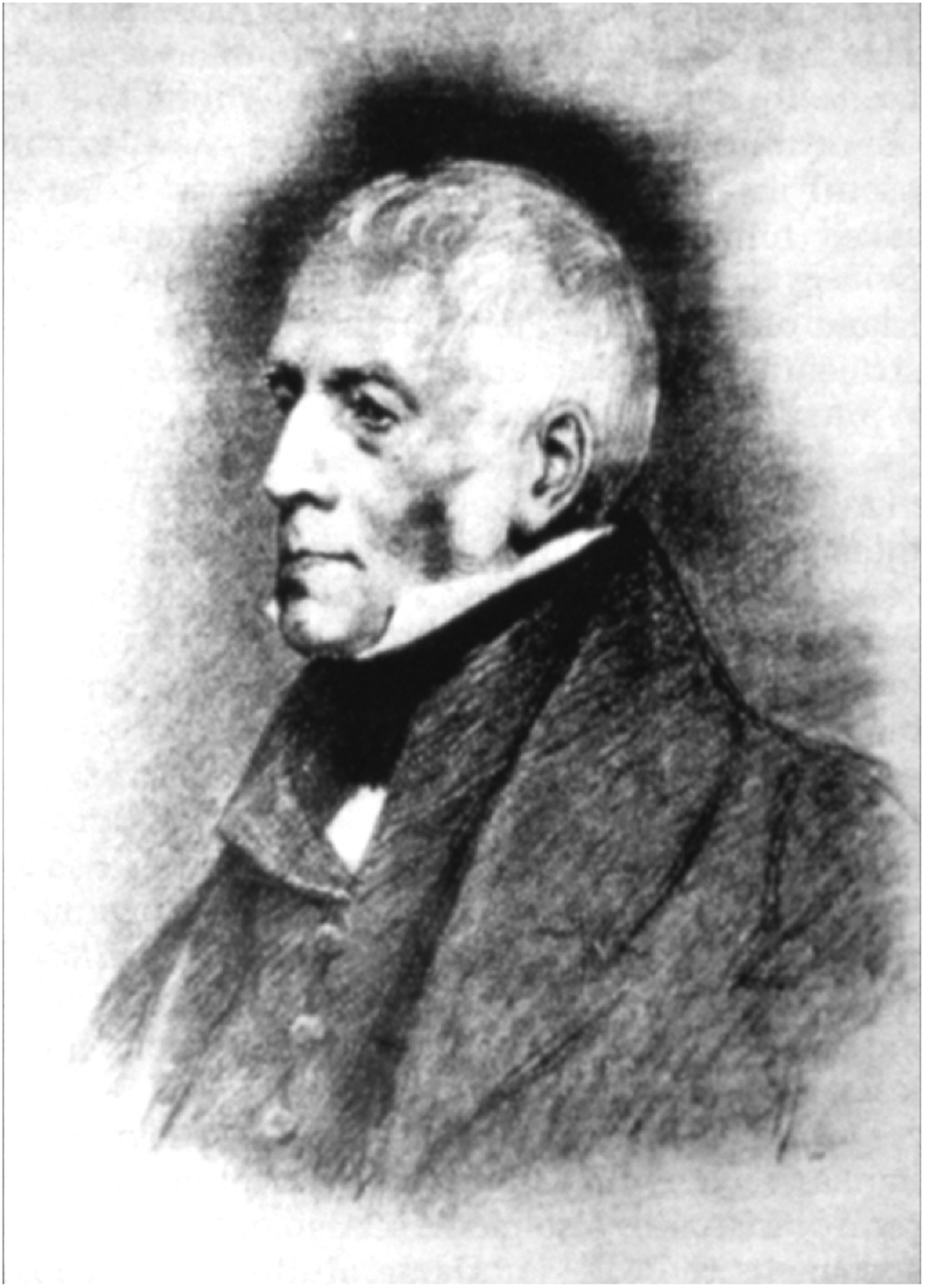
Scottish surgeon, naval officer and botanist Archibald Menzies (1754–1842) was born in Perthshire, Scotland. Young Menzies and his four brothers were gardeners, and he and his elder brother William worked in the Royal Botanic Gardens in Edinburgh. Here his talents drew the attention of Professor John Hope, who inspired Menzies to study at the University of Edinburgh. He went on to study medicine, surgery, chemistry and botany. He apprenticed to a surgeon in Wales, before joining the Royal Navy as an assistant surgeon in 1782. He served at the Battle of the Saintes (12 April 1782) in the West Indies. As a surgeon in the Royal Navy, his work took him to Halifax, Nova Scotia, the pacific coast of North America, Hawaii, as well as South America. He was in the party that made the first recorded ascent of Mauna Loa, Hawaii. During his many travels he collected various botanical specimens, many of which were sent to the Royal Botanic Gardens in Kew, London. He was elected to the Linnean Society in 1790; his portrait by Eden Upton Eddis hangs in its rooms at Burlington House, London. Mr. Menzies served in the Royal Navy until 1802, when he resigned due to asthma. He returned to London where he practiced medicine in Notting Hill and was highly regarded for his botanical knowledge of mosses and ferns. His collections had a lasting impact and contribution to botany. He was awarded an MD from King’s College, Aberdeen, in 1799. He retired in 1826, and died at the age of 88 in 1842.
The methodology was similar, except the operation was held within the confines of a ship. Sulphuric acid and nitrous acid were vapourised in teacups and set about the wards to fumigate the clothes and bedclothes of the sick. The patients, mostly bedbound, stayed in the ship during the fumigation and did not seem to suffer more than bouts of coughing due to the fumes. All clothes and linen were removed, washed, fumigated, and washed again. 14
After the first day, there was apparently such a noticeable difference in the quality of the air after the first fumigation that Mr Menzies walked through the wards and noted how much sweeter the air seemed. The difference was such that nurses and attendants approached patients more readily, and an unintended benefit was that the patients were better attended to. 14
The addition of sulphuric acid vapour may have had an antimicrobial effect on surfaces, as the agent by itself is very caustic to organic material. Again, the combination of the antibacterial nitrous acid fumigation, the antimicrobial sulphuric acid, and the practice of hygiene and air renewal within the wards would have had a positive effect. The practices were a very preliminary form of hygiene practice and ventilation as used in hospitals today.
Interestingly, the results were apparently so impressive that Admiral Hannikov, a Commander of the Russian squadron at the port, asked Mr Menzies to perform the same on his own ship of sick, in a display of good will between the two military powers. The trial was also given its blessing from the Admiralty and King George III, and was carried out on one of the Russian squadron’s ships which contained the greatest number of sick, the Pamet Eustaphia. Mr Menzies initiated the fumigation of several of their ships, and eventually left instructions with his Russian counterpart. 15
Mr Menzies noted that the Russians’ sheepskin shubs coats, while suited to the dry cold weather of Russia, were ill-suited to the wet British weather and had begun to floridly smell. He believed this housed disease and contributed to its virulence, consequently imploring the Russian captains to destroy the foul-smelling shubs. 15 As in his experiment aboard the HMS Union, smell was a source of important clinical information in his assessment of patients. Dr Smyth, whom Mr Menzies consulted regarding the treatment of the Russian ships, thought that foul smells were an effect of the exhalation of the ill, and that ridding the smell would create air that was purer and better suited for respiration. 4
Dr. Smyth’s successes brought him national acclaim: still more physicians wrote accounts of the success of his method, including Dr James McGrigor (1771–1858), 16 and he was compensated by parliament, who voted him 5000 pounds. Soon after, he was additionally awarded the appointment of Physician Extraordinary to King George III. 17
Typhus fever in the early 19th century
These ideas and practices carried into the early 19th century. Dr Robert Jackson (1750–1827) was a military doctor who chronicled “contagious fever” in various deployments from 1796 to 1809. Dr Jackson’s writing reflected many of the same conclusions as those of Dr Smyth and Mr Menzies. He, too, wrote about how the cramped and poor conditions created hotbeds of infection. Congregations of people could cause a flux of new cases, such as those he noted after excesses at the end of Lent. “Noxious” air continued to be correlated with infectious disease, and Dr Jackson believed that the disease entered through the mouth to first attack the gastrointestinal system. Much of the treatment that Dr Jackson highlights being used had not changed from Dr Smyth’s 1780 document (Figure 3): “emetics, blisters, steam baths … and long-continued gestation … in open air.” 1 , 4
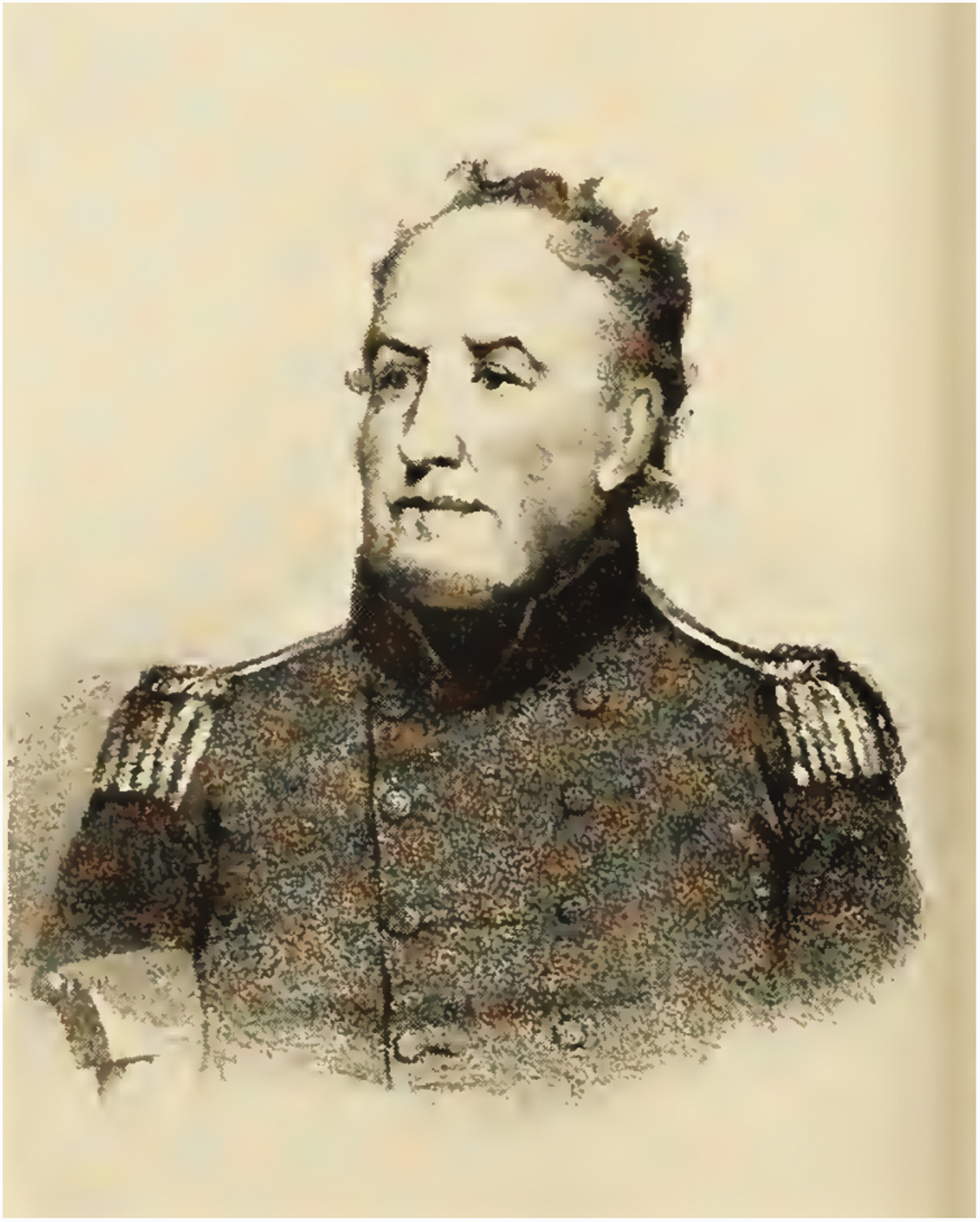
Robert Jackson (1750–1827), military physician-surgeon, author, and military reformer, was born in Lanarkshire, Scotland. He was apprenticed to a surgeon at Biggar for three years before joining medical classes at Edinburgh in 1768. However, he finished his studies without graduating, and went travelling as a physician through Jamaica and then New York, where he served as hospital mate during the American War of Independence. He travelled extensively on the Continent, often by foot, and later went to Leyden, Holland, where he received an M.D. in 1786. Upon the outbreak of war in 1793, he was appointed surgeon to the 3rd regiment (Buffs), on recommendation of his writing on West Indian fevers. Though Dr Jackson was initially ineligible for the title of army physician because he lacked connections with the College of Physicians of London, he was promoted through the personal intervention of the Duke of York in 1794. He opposed the traditional administration of the Army Medical Board, and campaigned for an open application system for the lowest to highest ranks of Army Medical Service, which came to fruition in 1810. He continued military service in Holland and in the West Indies throughout 1794 to 1798, which would provide ample material for his works. He was known for his contributions to the study of yellow fever and plague. He died of paralysis in 1827, in Thursby, near Carlisle.
However, it was clear that it was not enough to combat typhus. In his account of the journey of troops from England to Barbados, Dr Jackson noted that though it was expected for disease to remit in warmer weather, the disease had not abated despite entering a tropical climate. Despite cleaning the ship and scrubbing the sick with salt water and oatmeal, the contagion was not stamped out – indeed, it had recurred several times before arrival in Barbados. And in 1809, following the Battle of La Coruña (16 January 1809), an outbreak occurred that was so contagious and fatal as to kill one in four affected troops, one in seven of the medical staff, and an even greater proportion of hospital servants, without any successful mode of containment or treatment. 1 Dr Smyth and Mr Menzies’s methods found success in a controlled environment, with plentiful resources and time to continually clean and fumigate, but were not realistic to implicate on ships or in wartime. As a result, management of typhus continued to evolve.
For example, Dr Jackson did not believe that inflammation was an essential characteristic of contagious fever, and that instead it was caused by “cutaneous expansions”. He concluded that to reverse the cause, alternating warm and cold baths should be given to patients. 1 Some doctors advocated the use of mercury. Additionally, Dr Jackson was a great proponent of the practice of bloodletting in the treatment of typhus. He wrote:
“Blood-letting, which, twenty years ago, was reprobated as murder – direct or indirect, is now not only admitted among the remedies, but extolled above all remedies.” 1 Though Dr Jackson cites his own experience for supporting its purported success and safety in both endemic and epidemic fever, many contemporaries remained sceptical. Even those that agreed that bloodletting had a therapeutic effect doubted that it could be used as a panacea to fevers. 18 Opinion on treatment would remain divided for centuries.
Conclusion
In the absence of an effective cure or standardized prevention, typhus fever would continue to cause considerable morbidity and mortality into the 19th and 20th centuries in the shadow of military conflicts. It caused the deaths of many of Napoleon’s troops in the Russian campaign of 1812, 19 and led to an estimated 3 million deaths in the Soviet Union during World War I, the Bolshevik revolution, and its aftermath. 20 It is the beneficiary to “human stupidity and human brutality”, as Hans Zinsser said, and thought to have caused more deaths than all the wars in history. 21
Nevertheless, physicians of past centuries have managed to bring about some effective changes in management despite living in a time before the knowledge of causative organisms or powerful antibiotics, when typhus was once thought to be caused by malevolent perspiration. Their attempts at aetiological theories may seem bizarre nowadays, yet some of their observations were not unlike ones we would make today; and some do seem to echo modern ideas.
Whilst infectious disease is humanity’s permanent companion, history would suggest there is still optimism and benefit to be achieved even in the face of an enemy not fully understood.
Footnotes
Declaration of Conflicting Interests
The author(s) declared no potential conflicts of interest with respect to the research, authorship, and/or publication of this article.
Funding
The author(s) received no financial support for the research, authorship, and/or publication of this article.
