



Abstract
This study was designed to form an electrospun nanofiber membrane generated from different ratio of polyvinyl alcohol (PVA) and Glycyrrhiza glabra (licorice) extract. The electrospinning process was used to fabricate the nanofiber membrane using maximum amount of licorice extract solution. 90% licorice extract solution was successfully electrospun to fabricate nano membrane with 10% PVA solution. Antibacterial, cytotoxicity, scanning electron microscope (SEM) test were performed on resulted sample. The outstanding performance against Staphylococcus aureus (S. aureus) by forming inhibition zone of 15 mm was observed. On the vero cell line, cell cytotoxicity was found, with only a few numbers of cells (less than 5%) surviving after exposure to the material. SEM investigation reveals fiber production with a diameter of (245.54 ± 55.19) nm on average. Moreover, Fourier transforms infrared spectroscopy (FT-IR) and moisture management test were performed. FT-IR spectra analysis confirmed the presence of licorice components in the membrane. Moisture analysis proved it as a better absorbing material. Since the fabricated membrane were proven to have bacteriostatic activity, it can be employed as wound healing.
Introduction
Electrospinning is a multipurpose effective technique to fabricate nanofibers. A significant progress has been happened in nanofiber engineering that are widely accepted and potentially applicable in a number of areas including membrane, tissue engineering, layered fabric, reinforcement to wound healing etc. material preparation.1–4 Moreover, a number of processes on nanofiber membrane fabrication have been explored earlier.5–8 Nanofibers are basically produced by ejection of electrically charged jets resulting a high voltage in relation to the surface tension of an electro conductive solution.9–12 The electro conductive solution that resulted in nonwoven mat being culled in a drum called collector.13–15 Though, viscosity, molecular weight, feeding rate, conductivity, surface tension of the solution is important,16,17 additional machine parameters including heating power, applied voltage, tip to collector distance significantly influence the characteristics of nanofibers.1,7,18,19 Treatment of human skin using medicinal plants in case of wound and burn healing as well as antiviral, antibacterial and antifungal applications as aspect to skin infections has become an extensive history for primary level healthcare service.19–22 Nontoxic and environmentally sustainable natural antimicrobial compound can be a better substitute in place of synthetic nanoparticles like as silver, zinc etc. which are now being used in wound treatment. 14 Natural compound like gelatin, chitosan etc. are now studied for synthesizing nanomat in combination of suitable carrier polymers for numerous biomedical applications.1,5,18,21,23–42 A large amount of the commonly available drugs is produced mostly from natural resources like plants or herbs. In this context, the membrane of nanofibers made from maximum concentration of licorice extract would be considered as a new era in the field of medical textiles. According to this related theory, it can be concluded that polyvinyl alcohol (PVA)-licorice extract nanofiber membrane could be fabricated.
Glycyrrhiza glabra (G. glabra) is widely used as medicinal herb from the dawn of the ancient medicine. 43 The roots contain different bioactive compounds e.g., various sugars (up to 18%), glycyrrhizin (16%), polyphenols, flavonoids, saponins, polysaccharides, sterols, amino acids, gums and essential oils.44,45 Licorice contains a very important ingredient saponin known as glycyrrhizin (C42H6O16) which is consist of two main parts named as glycyrrhetinic acid and glucuronic acid. 46 Glycyrrhizin is sometimes known for its cooling effect having licorice flavor. It is relatively heat stable and inhibit against the growth of cytopathology for various DNA and RNA viruses.45,47 Moreover, it is traditionally used for the treatment of cough, sore throat, spleen, bronchitis, allergy, liver, ulcer and kidney. Licorice is also popular to control rheumatoid arthritis, osteoarthritis and arthritis, low blood sugar and also being used for addison’s disease and hence gives a number of medicinal uses including treatment of early addison’s disease, cough suppression, gastric, duodenal ulcer, liver disease and dyspepsia also. Since licorice has a great medicinal property and being used in primary treatment of some diseases, 48 it could find a potential application mainly for the purpose of wound dressing in the form of licorice extract nanomat. PVA is used as a carrier with licorice extract to make it more orderly and better nanomat as it is almost impossible when these are considered separately during fabrication.
Methodology
Materials
Licorice was acquired from Bangladesh being cleansed carefully using distilled water and then being cut into small pieces to ensure better penetration. PVA with 99% hydrolyzed granules, a degree of polymerization of 1700–1800, a molecular weight of 115,000 g/mol and a viscosity of 26–32 cps was collected from Loba Chemical (India). Methanol with a purity of 99% was bought from Merck in Germany. All of these compounds were applied in their natural state, with no additional purification.
Licorice extract preparation
The licorice roots (L) were chopped down to one inch in length and impregnated in liquid methanol (M) at a mass to volume ratio of 2: 25 (L: M) before being maintained at room temperature for 24 h for extraction. 39 The extracts were then filtered twice through a quadruple layer nylon mesh fabric, followed by evaporation at 70°C on a hot plate-cum-magnetic stirrer. This pure extract was stored at 4°C in a refrigerator for subsequent use. 33
Polyvinyl alcohol solution preparation
PVA granules were dissolved in 50% acetic acid by a hot plate-cum-magnetic stirrer at 90°C to produce a 10% PVA solution (by mass).
Preparation of electrospinning solutions
Prepared licorice extract and the PVA solution were mixed at different ratio for preparing final solutions for electrospinning. Then, the solution was stirred for around 3 h at an elevated (70°C) temperature for making homogenous mixture with minimal to zero aggregation. 33
Electrospinning setup and process
The nanofiber membrane was made with a Tong Li Tech Company, China, model TL-Pro BM electrospinning machine. This experiment was carried out with the machine having a setup of high voltage supply (−20 kV and +50 kV), heater of 0.50 kW, rotary drum diameter 15.8 cm and it’s speed of 500 rpm, a 30 mL syringe and a total of five needles of 22 gauge. 30 mL of prepared solution was taken into the syringe and this syringe was placed into the pump having a pipe being used to connect the needles. Trial-and-error method was followed to achieve the best spinning conditions having definite parameters that were about −12.2 kV, +22 kV, 0.35 kW, 2.5 mL/h flow rate at an ambient condition of 65% RH and a temperature at 27°C. On the surface of an aluminum foil, nanofiber membrane was collected and dried overnight. M1, M2, M3, M4, M5 nanofibers membranes were developed from the mixing ratio of PVA (40%, 30%, 20%, 10% and 100%) and licorice extract solution (60%, 70%, 80%, 90% and 0%)
Characterizations
Antibacterial assay and cytotoxicity
Fabricated nanofiber membrane sample was subjected to investigate the antibacterial efficacy by diffusion method against S. aureus bacteria. In the nourishing agar, a disk diffusion test was performed at a concentration of 1.5 × 10⁵CFU/mL of bacteria. A single colony was transferred to a tube with 9 mL of tryptone soya broth through a loop. PVA nanofiber membrane was used as control sample. In accordance with the 0.5 macFarland standard, the infected broth was incubated for 2 h at 45°C in a shaker incubator. The PVA-licorice extract membrane was pelletized and placed on an agar plate with a 6mm diameter disk in the incubator for 24 h at 37°C. The plates were placed on a black surface to assess the apparent zone of inhibition (ZOI).
To evaluate the cytotoxicity of generated samples, research employed a biological safety cabinet and CO2 incubator (Nuaire, USA), a trinocular microscope with camera and a hemocytometer. On the vero cell line, cell cytotoxicity was observed. An African green monkey’s kidney epithelial cells were cultured in Dulbecco’s Modified Eagles' medium containing 1% penicillin–streptomycin (1:1), 0.2% gentamycin, and 10% fetal bovine serum. The cells were seeded onto 48 well plates at 1.5104/100ul and incubated for 24 h at 37°C and 5% CO2. Each well was autoclaved the following day. After 48 h of incubation, cytotoxicity was assessed using an inverted light microscope in triplicate wells.
Structural analysis
With a 7.5K magnification, a scanning electron microscope (SEM), model SU 1510, Hitachi, Japan, was used to observe the diameter and orientation of nanofibers in the fabricated membrane of the sample. Moreover, chemical structure of PVA-licorice nanofiber membrane was characterized using Fourier transforms infrared spectroscopy (FT-IR) spectroscopy (IR Prestige21, Shimadzu, Japan) operating in range of 4000–500 cm−1 while spectra were recorded with a resolution of 4 cm−1.
Moisture management
Moisture is necessary for wound healing, even if the sight of fluid or exudate flowing from the sight gives the impression that something is unexpected. Because the exudate protects the nerve terminals, a moist environment aids wound healing. It lowers discomfort and the thickness of the skin layers, resulting in less scarring than in dry wounds. The moisture management properties were evaluated by moisture management tester (MMT) according to AATCC 195-2009 method. Model and brand of MMT were M 290, SDL Atlas UK respectively. Moisture management includes determining the absorption rate, wetting time, spreading speed, wetted area, accumulated one-way transport index (AOTI), and overall moisture management capacity (OMMC) of the subjected material.
Results and discussion
In vitro antibacterial assay and cytotoxicity
As regards biomedical applications, the antibacterial ability of nanofiber membrane plays an emergent role in parallel to other properties. The behavior of licorice extract membrane (M1) in terms of zone of inhibition against S. aureus bacteria at given concentration is exhibited in Figure 1(a). The developed sample shows an outstanding antibacterial counteraction with a measure of ZOI of 15 mm whereas PVA nanofiber membrane does not show ZOI value Figure 1(b). This could occur as a result of the methanolic extraction procedure, in which antibacterial components from licorice play a role. Formation of zone of inhibition in (a) Polyvinyl alcohol, (b) M1 sample and (c) mode of killing bacteria.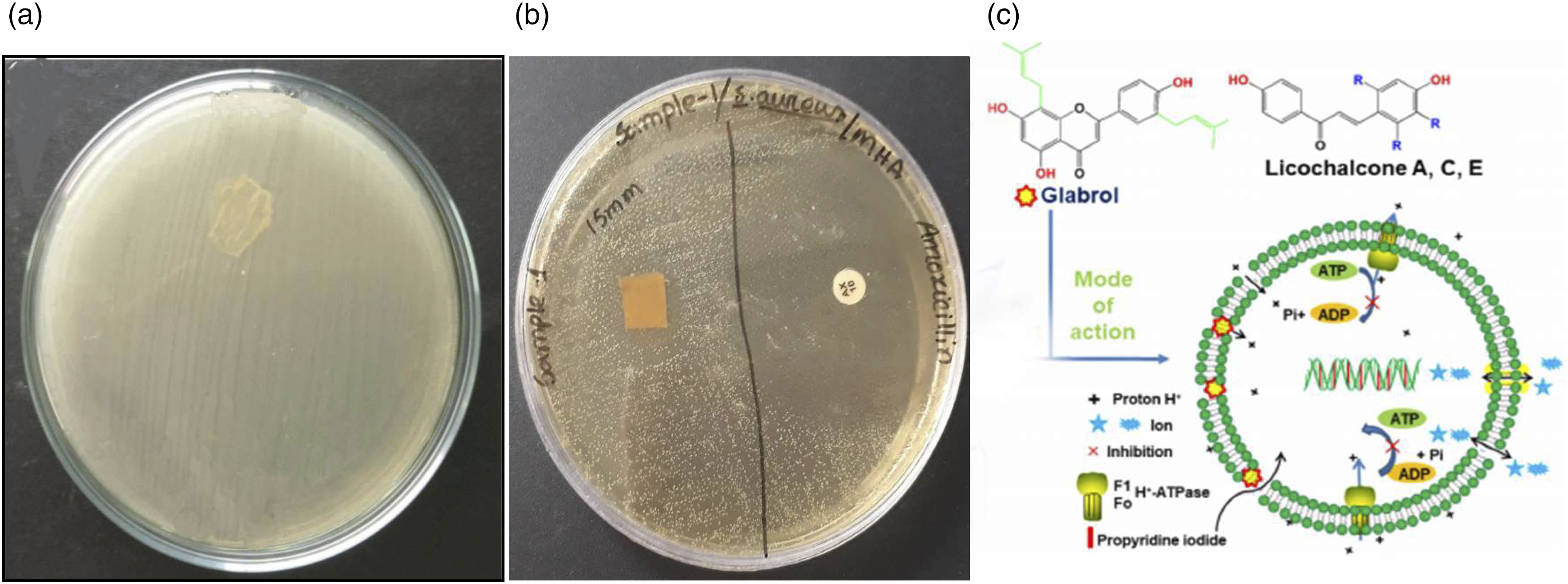
The major chemical compounds present in licorice are G. glabra and its derivatives, glabridin, 1,2-dihydroparatocaprin, formononetin, hemileiocaprin, hispaglabridin B, isoliquiritigenin, paratocaprin B, 4’-O-methyleglabridin and neolignan lipid esters. 49 Gabrin, glabridin, glabrene, glabrol, hispaglabridin B, hispaglabridin A, 3-hydroxyglabrol, and 40-methylglabridin are some of the chemical components extracted from Glycyrrhiza that have shown potential antibacterial action in vitro.50,51 As a result, the concentration of the extract solution is vital in the formation of ZOI, especially when the concentration in the mixer is higher. Besides, the developed membrane of nanofibers possesses mesh structure that can prevent bacterial infiltration because of tiny pores in it and thereby can potentially reduce the surrounding infection.52–54 The mode of killing gram-positive bacteria by the licorice extract has been shown in Figure 1(c).
In-vitro cytotoxicity assays, on the other hand, are cell culture-based measurement methods that are commonly employed for evaluating potential drug candidates or exploring the cytotoxic characteristics of specific biomaterials. It’s possible to test a large number of nanofiber membrane in a short time, and these methods of assay can provide the necessary information needed for future animal trials. Thus, the assessment of the cell viability was also important to determine biocompatibility of the nanofibrous mats being produced in this study. An African green monkey extracted kidney epithelial cell was cultured with the developed membrane of nanofibers and being incubated for 48 h in order to determine cytotoxic effect. Figure 2 indicates that the cell viability of the control and developed PVA-licorice membrane at ×10 magnification under microscope. Result reveals that if viable cell were less than 5% then PVA-licorice extract membrane was cytotoxic. This may have happened due to alcoholic extraction of licorice although control sample shows 100% cell viability. Microscopic images for test of cell viability of (a) Polyvinyl alcohol-licorice nanofiber membrane, (b) control sample and (c) comparison chart.
Structural analysis
Figure 3 shows a SEM image of the PVA-licorice extract nanofiber membrane, which proves that the average fiber diameter is 245.54 ± 55.19 nm at magnifications of 7.5K. It is noticeable that this property leads to allow skin breathability through the tiny pores of the PVA-licorice extract nanofiber membrane that it possess. Moreover, bacteria penetration would be restricted into wound area for its medicinal properties. (a) Scanning electron microscope image of polyvinyl alcohol-licorice extract nanofiber membrane and (b) distribution of fiber diameter.
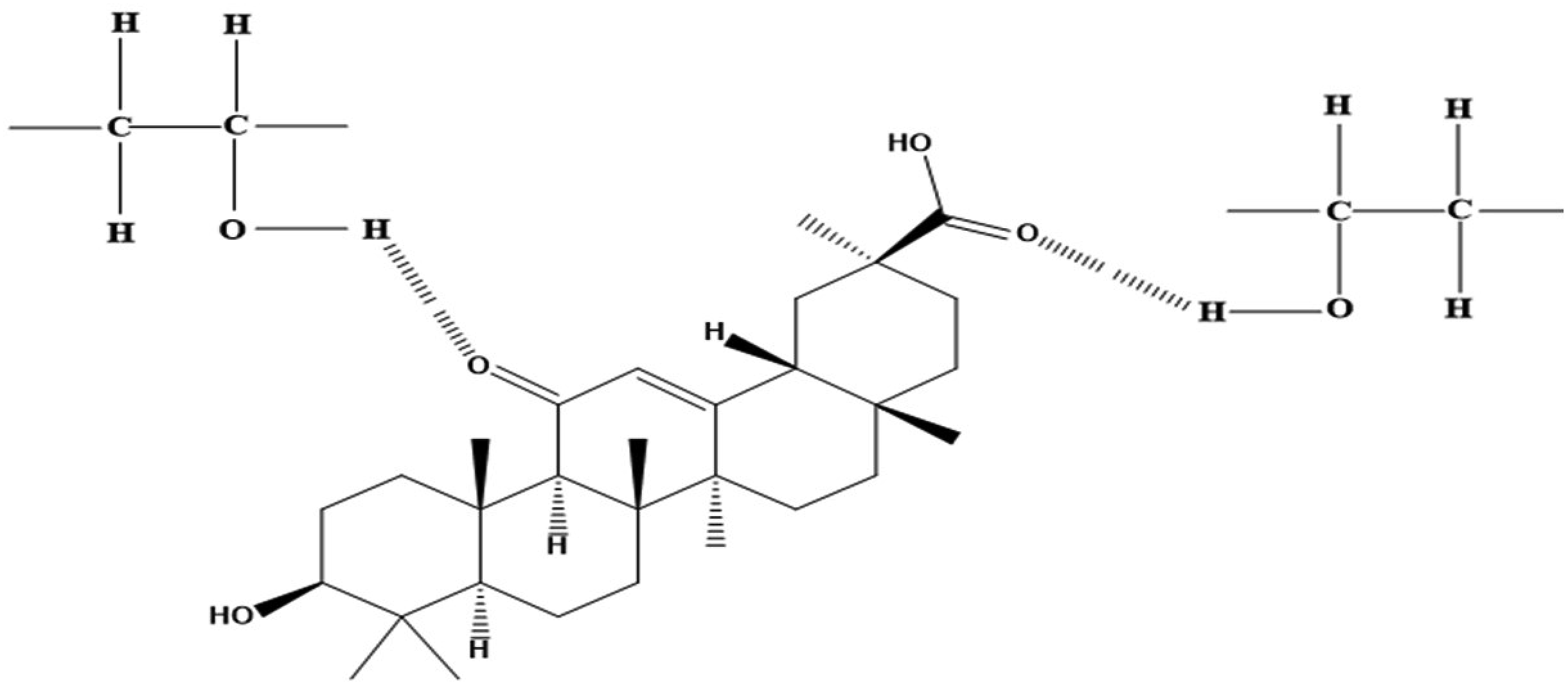
PVA-licorice extract Nanofiber membrane was characterized by FTIR spectroscopy and different functional groups were observed in the sample that are illustrated in Figure 4. FTIR spectra revealed the presence of phenolic and carbonyl groups, as well as C-H stretch and bends. Figure 4 shows that the extracts include a small amount of flavanoids and other phytochemicals. In FTIR spectra, the peaks of PVA polymer may be seen at 3284 cm−1 (O-H stretching), 2933 cm−1 (C-H stretching), and 1080 cm−1 (C-O-C stretching). The licorice extract’s distinctive peaks. At 1425 cm−1 (C=C stretching), 1080 cm−1 (C-O-C stretching), and 1600 cm−1 (C=O stretching), FTIR spectra have been identified. Figure 5 depicts the formation of a hydrogen bond between PVA and the -OH group of the licorice molecule in the PVA-licorice extract nanofiber membrane. Characteristic peaks of M1, M2, M3 and M4 in fourier transforms infrared spectroscopy spectra. Proposed hydrogen bonding between the polyvinyl alcohol and the licorice molecule.
Moisture management
It refers to the controlled transfer of liquid from one surface to another, which is particularly important for skin when it is exposed to the environment during wound healing. MMT machine was used to measure the moisture management. To get moisture or liquid transfer indices, this instrument monitors moisture in different orientations of the wound dressing material. One of the important parameters related to moisture management is wetted area. Maximum wetted area (top and bottom) of M1, M2, M3, M4 and PVA sample are shown in Figure 6. Wetted area of M1, M2, M3, M4 and polyvinyl alcohol samples.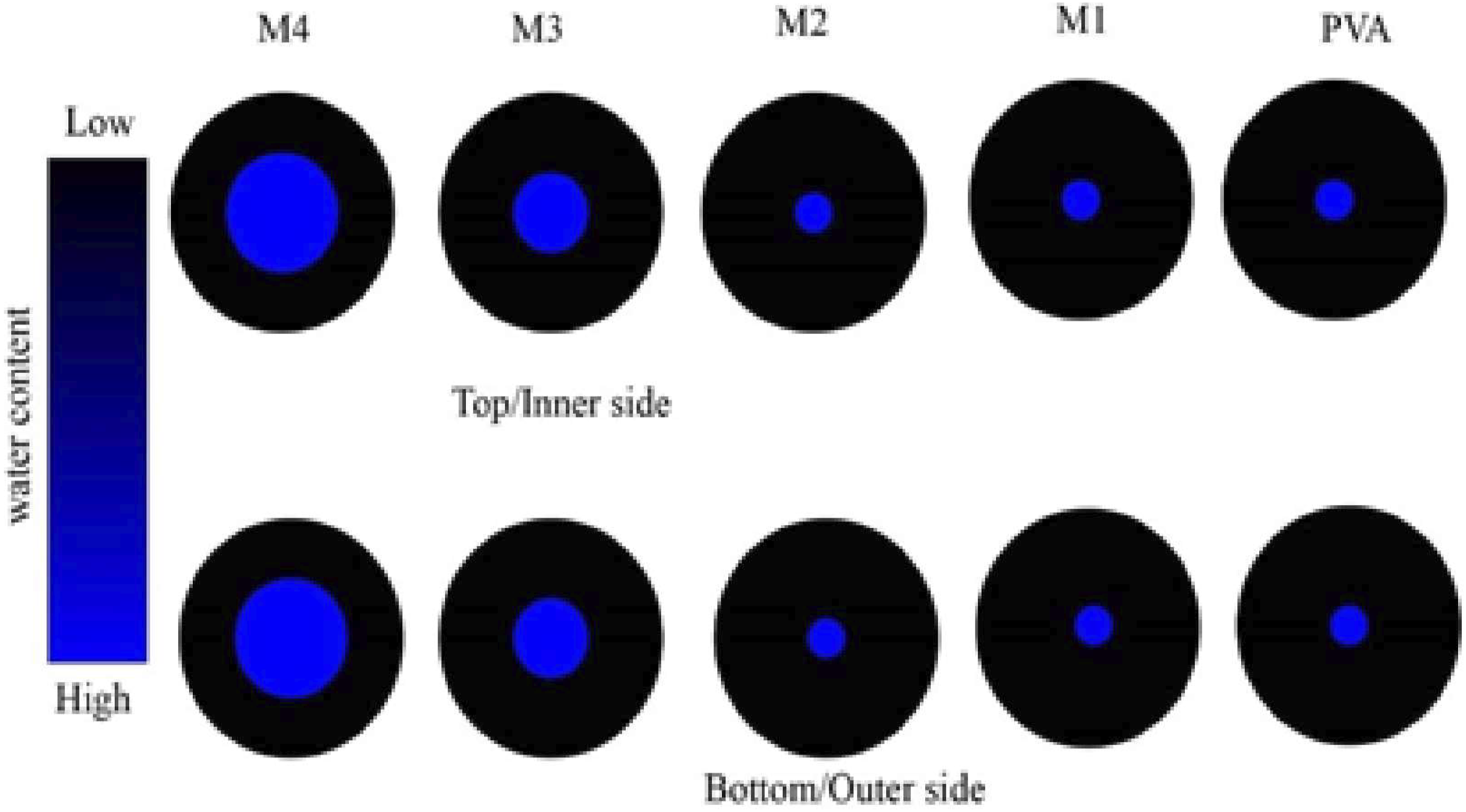
The presence of liquid on sample surface is indicated by a scale having blue and black color combination according to AATCC 195-2009 where blue color expresses the presence of liquid droplet and black color indicates the absence of liquid droplets in MMT. Fully black indicates that liquid cannot spread over the sample surface and hence the mat is commented as water proof. On the other hand, larger blue circle indicates the spreadabiliity of liquid on sample surface. Maximum wetted radius increasing with the increasing of licorice extract. The wetted radius of PVA, M1, M2, M3, and M4, samples were observed at 5 mm, 5 mm, 10 mm, and 15 mm respectively. This result is occurred due to the increasing of water absorbing group such as –OH added to the membrane. To determine the appropriateness of wound dressing purpose, wetting time (top and bottom), absorption rate (top and bottom), AOTI, and OMMC of M1, M2, M3, M4, and PVA were measured. Quantitative grading of M1, M2, M3, M4 and PVA samples are found considering all of these parameters that are shown in Figure 7. Here, M4 exhibits slow absorbing and slow drying nature which is supposed to be better absorbent properties of liquids and suitable transfer process to the external environment. Moisture management grading of (a) Polyvinyl alcohol, (b) M1, (c) M2, (d) M3 and (e) M4.
Conclusions
The last few years have seen a growing consumer demand for natural materials that can replace traditional synthetics in fields of pharmacy, medicine and cosmetics. The potentiality of nanostructure being in form of fibers through electrospinning spurs the development of biomimetic dressings with improved bioactivity. In this work, membrane of nanofibers has been fabricated by electrospinning process from the solution of PVA and amount of licorice extract following the optimum parameters of electrospinning process. Antibacterial, cytotoxicity, SEM and FT-IR to test were used to assess the characteristics of PVA-licorice extract electrospun membrane of nanofibers. Cell cytotoxicity was observed on vero cell line and it was observed that a very few numbers of cells were survived after treating in the sample. A potential antibacterial efficacy was observed by antibacterial test against S. aureus forming ZOI of 15 mm in the PVA-licorice extract sample. The average diameter of fibers was found to 245.54 ± 55.19 nm in PVA-licorice extract. The presence of licorice components in the produced sample was confirmed by the nanofiber membrane and FT-IR measurements. MMT also evaluated essential aspects such as moisture management, such as wetting time, absorption rate, spreading speed, wetted area, and overall moisture comments. As a result, the nanofiber membrane fabricated may be used in a biobased and biocompatible new material. Future research should focus on thermal and mechanical properties of nanofiber membranes to explore how they might be employed.
Footnotes
Declaration of conflicting interests
The author(s) declared no potential conflicts of interest with respect to the research, authorship, and/or publication of this article.
Funding
The author(s) received no financial support for the research, authorship, and/or publication of this article.
