



Abstract
Modern electronic devices need effective shielding from external Electromagnetic Interference (EMI) to function correctly. The Electromagnetic (EM) waves emerging from communication systems and medical devices must be isolated to safeguard humans from exposure. The mechanics of EMI shielding as well as several characterization methods are discussed in this paper. Existing trends and practices of designing, fabrication and use of polymer matrix composites for EMI shielding applications are covered. Several approaches and new solutions for fabricating composites either by modification of filler or matrix are discussed and prominent features of EMI shielding material are also discussed. Conducting polymers such as polyaniline, polypyrrole and polythiophene make them adept for EMI shielding applications. An assessment of the different factors affecting the performance of EMI shielding materials is also presented.
Keywords
Introduction
Innovation in technology has insisted a drastic transformation in the present electronic devices and enabling them to be used by people across all generations. Electronic devices increase pollution in the environment by emitting electromagnetic radiations. Exposure to electromagnetic emissions is detrimental to the health of living beings.1-3 Presently, electronic systems are used in automation industries health care, airports, automobiles, aviation sector, railways, satellites, home and offices. Extensive use of electronic control and communication devices in numerous fields emit EM radiations in a variety of frequencies and generate electromagnetic interference (EMI). EMI interferences affect the usual operation of electronic devices in the system. EM waves further produce noise owing to the intervention with critical electronic devices and affects their sensitivity. Radars, antenna systems, military control systems, security devices, and banking are some of the important organizations that are prone to electromagnetic interference. The performance of systems associated with networking devices and data center servers also degrade with the interference of EM waves. Therefore, for smooth operation of electronic devices in the system, it is necessary to develop effective EMI shielding materials.
Electromagnetic interference shielding materials must have good electrical conductivity and low magnetic permeability so that the permeation of EM waves is low.4-6 Although metals like steel, copper and aluminum are suitable for EMI shielding; higher density, corrosion, oxidation, high forming and material cost restrict the use of these materials in outdoor shielding applications. Innovative electronic systems apart from effective EM shielding demand properties such as ease of manufacturing, flexibility in material design, low thermal expansion coefficient, non-corrosiveness. Additionally, high strength to weight ratio, lightweight and reliable materials is required to meet the needs of advanced electronic systems. Presently, intrinsically conducting polymers like polyaniline and polypyrrole are majorly used for EMI shielding owing to their excellent electrical conductivity.7-11 Electrically conducting and magnetic fillers reinforced polymer composites are also widely considered for shielding purposes.12-14 Polymer composites reinforced with carbon nano tubes, graphene, carbon black and graphite are also extensively used for EMI shielding and other potential applications like lithium ion batteries, sensors, solar cells. Off late, polymer syntactic foams and fibers sandwiched with composites cores have gained significant interest in EMI shielding applications attributed to their high inbuilt porosity enabling them to undergo multiple reflections and effectively shield against EMI. 15 Most recent ingress as an effective shielding material is MXenes; a conducting transition metal 2D carbide similar to graphene.16,17
Ever increasing demands for high performance facilities with modern technology necessitates need for new materials. Achieving such enhanced performance standards with one material is a difficult and a challenging task. Thereby novel constituents are processed by mixing two or more materials called as composite materials to provide exclusive blend of properties that cannot be achieved from conventional materials. Composite materials offer advantages such as higher strength, enhanced modulus, better bending stiffness and corrosion and chemical resistance.
18
Additionally, light weightiness and good mechanical properties enable them to be used in applications of aeronautics and space sector.19-22 Polymer based materials are used in applications such as stealth technology wherein electromagnetic waves need to shield mainly through absorption. Furthermore, reinforcing suitable fillers in polymer composites apart from providing tailor made physical and mechanical properties; can also assist in achieving desired EMI shielding by tuning the permittivity, electrical conductivity and permeability based on the specific requirements. Polymer and polymer composites reveal immense capabilities to be a efficient EMI shielding, light weight, thermally stable material that can be used in a number of applications such as radars, electronic devices, aerospace and military applications and stealth technology (Figure 1). In the present review, focus is envisioned on polymer matrix composites that can serve as giant market for EMI shielding. Based on the various reinforcements, our study has been categorized into different types based on the type of fillers used in polymer matrix composites namely metallic fillers, intrinsically conducting polymers, magnetic particles and porous materials. Further, the different factors affecting the performance of EMI shielding materials are also discussed and finally, the prominent features of EMI shielding material are discussed. Schematic representation of various electromagnetic bands with applications.
23

Electromagnetic compatibility (EMC), measurement, methods and standards
Electromagnetic Compatibility has gained a significant importance owing to the tremendous increase in wireless devices. Electromagnetic compatibility allows several electronic devices to be used without common intervention when operated in confined vicinity. All the circuits of electronic devices are prone to gather radiation of undesirable electrical intervention that compromises the working of one or more circuits.
Electromagnetic compatibility definition: Electromagnetic compatibility is defined as capability of electronic systems and devices to perform without any errors and malfunctions when operating within a confined electromagnetic surroundings. Basically, electromagnetic compatibility is comprised of two components, namely emissions and susceptibility or immunity.
Electromagnetic compatibility standards
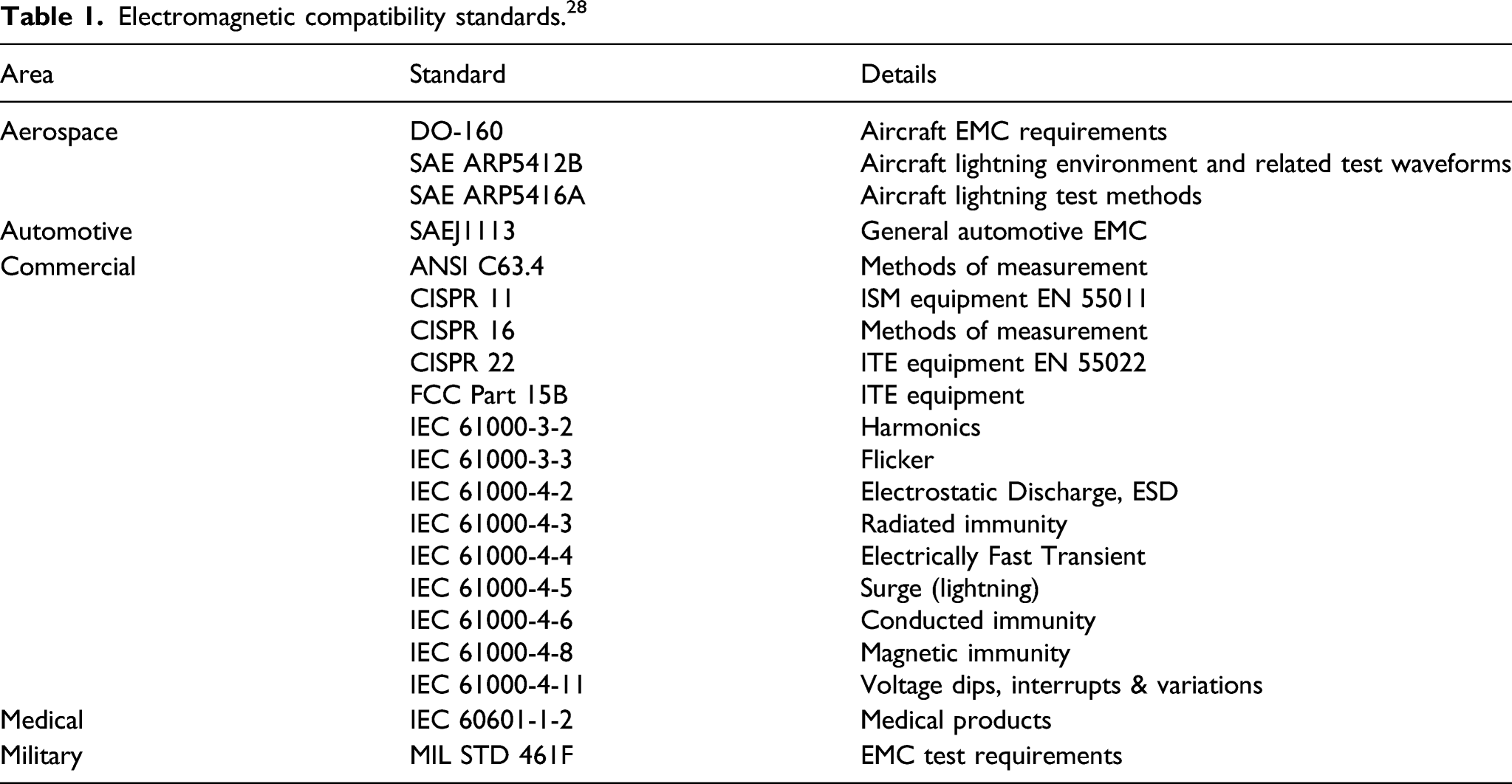
Electromagnetic compatibility standards. 28
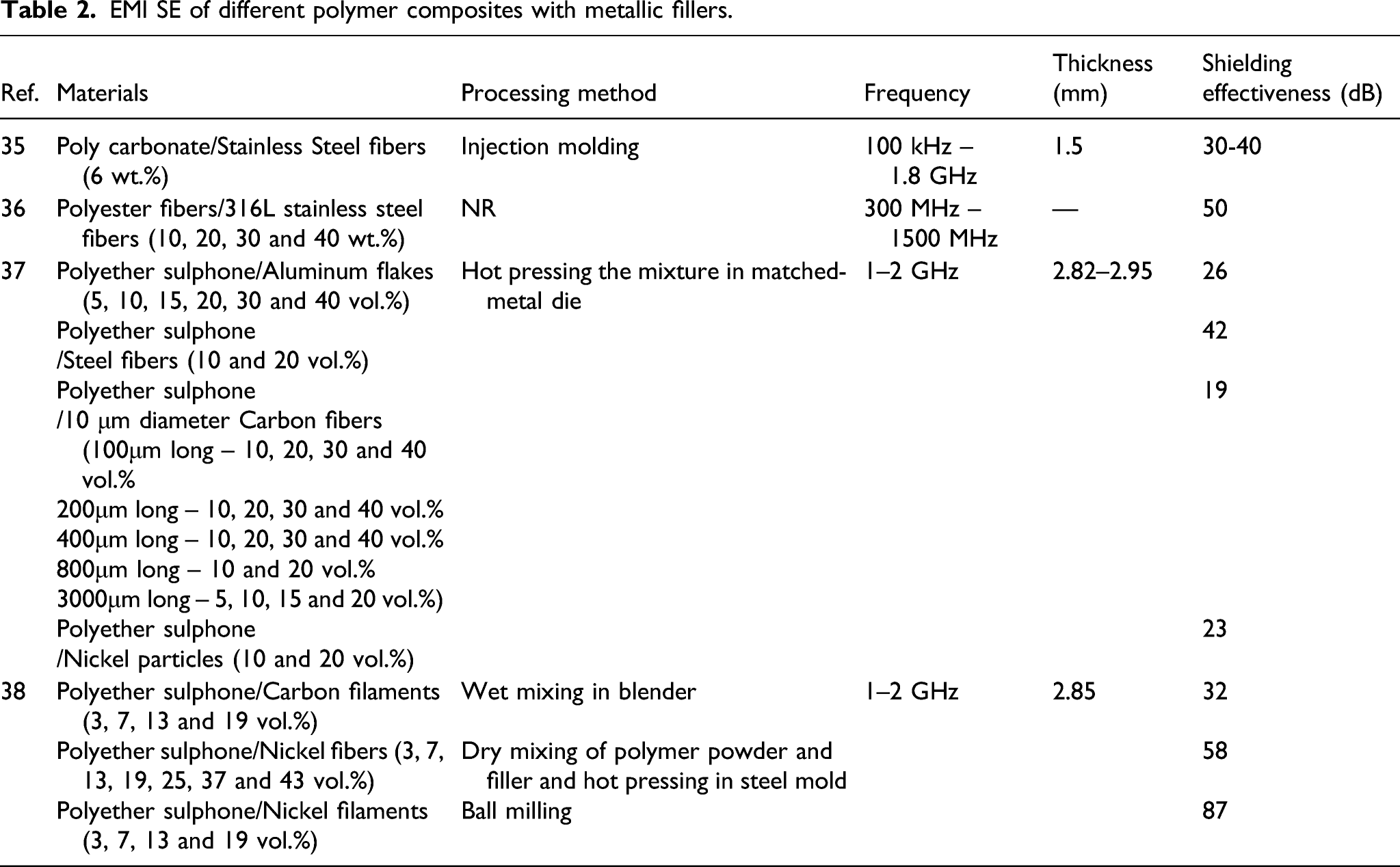
EMI SE of different polymer composites with metallic fillers.
EMI SE of different intrinsically conducting polymer composites.

Polymer composites having good EMI SE.

Additionally, several international establishments, national organizations, trade associations and insurance bodies have setup the regulations for electromagnetic compatibility, some globally known organizations are • International Electro technical Commission • Federal Communications Commission standard • European standard and • Military standard.
Electromagnetic interference, shielding mechanism and characterization methods
Electromagnetic interference, EMI
Electromagnetic radiation is a type of energy with the wave nature either emitted or absorbed by charging constituents. Presently artificial electromagnetic radiation created by electric appliances, radios, mobiles, TVs and mobile towers has started to emerge and accumulate in the environment. These radiations are termed as electromagnetic interference (EMI). Electromagnetic Interference is stated as the emission of conduct or radiated electromagnetic signals during operation that lead to inappropriate working of electrical devices and harm living creatures. 29 Such interferences need to be lowered so that different electronic equipment is compatible and function properly in the presence of each other. Numerous means are available through which electromagnetic interference is passed from one electronic device to other. Therefore, understanding these methods is very important to mitigate the effects of electromagnetic interference.
Electromagnetic interference can be broadly divided into two types, namely continuous and impulse interference.
Apart from knowing the form of interference, travelling path of interference from the transmitting device to receiving device also needs to be known. Inopportunely it is not easy to determine because defining the paths is a challenging task. Nevertheless good preliminary design can lessen several problems.
Shielding mechanism
The capacity of a shielding material is usually expressed in terms of shielding effectiveness (SE). Output is measured in decibel (dB) that depicts the extent of its opaqueness to an EM wave within a specified frequency bandwidth. Shielding effectiveness is the ratio of impinging energy to residual energy.
31
SE is defined as the ratio of incident EM waves entering (Ee) and departing (Ed) the material and is given by
Three primary interactions are observed within the material when an incident EM wave passes through the material, namely, absorption (A), reflection (R) and transmission (T)32,33 (Figure 2). Reflected wave comprises of reflection from the material surface and multiple reflection occurring within the material. For monolithic isotropic materials, absorption can be calculated by determining the transmittance and reflection and is given by Representation of various mechanism due to propagation of incident wave through the composite material.
34





ε – Permittivity of the medium
ε0 – Permittivity of free space
εrʹ - Real part of permittivity – represents electric charge storage capacity
εr″ - Imaginary part of permittivity – represents dielectric dissipation
μ - Magnetic Permeability
μ0 - Permeability of free space
μ’ - Real part of permeability– represents magnetic storage
μ” - Imaginary part of permeability– represents magnetic losses.
Further, the extent of losses can be measured from the tangent of dielectric loss and magnetic loss given by equation (7) and (8), respectively.

Characterization methods
The commonly used EMI shielding test methods are • Open field or free space method • Shielded box method • Shielded room method • Co-axial transmission line method.
The open field or free space method is used to measure the EMI shielding effectiveness of finished product as per the envisaged application (Figure 3(a)). This method mainly focusses on the shielding of the system and does not emphasis on the performance of a given material. The product to be tested is placed at a distance of 30 m from a receiving antenna and the radiated emissions are recorded as depicted in the figure. This method is not preferred for specimens made of different shielding materials.
This method is utilized for comparing measurements of test specimens made up of different shielding materials (Figure 3(b)). Test specimen is fixed at the periphery of the metallic box and a receiver antenna is placed inside to collect the generated EM waves. A transmitter antenna is located outside the metallic box to measure the transmitted EM waves from the shielding material. This method however has the following shortcomings • Difficult to attain good electrical connection between the test specimen and shielding box. • Operating frequency of the EM wave is limited to 500 MHz. • Results acquired from different test centers cannot be compared. • It is not possible to estimate EMI SE by reflection, absorption and transmission separately.
It is the most advanced method to measure EM shielding and is developed to overcome the shortcomings of the shielded box method (Figure 3(c)). The overall principle is similar to shielded box method, major difference is the isolation of the measuring system, signal generator, transmitter antenna, receiver antenna and recorder in separate shielded rooms to remove the probability of interference. Additionally, the antennas are situated in room sized sound absorbent chambers and the size of test specimen is significantly increased, typically around 2.5 m2 in area. Frequency range of the EM wave is greatly enhanced and the reproducibility of the data is significantly improved.
Coaxial transmission line method is the widely used method to measure EMI shielding owing to the numerous advantages. In this method, shielding effectiveness due to absorption, transmission and reflection can be resolved independently (Figure 3(d)). In addition, the results obtained from different test center can also be compared and this method is convenient for nano reinforced materials attributed to the comparatively small test specimen requirement. Co-axial transmission cables can generate EM waves over a larger frequency range with smaller losses than antennas.
Many standards are available to estimate the electromagnetic shielding effectiveness of materials namely • ASTM D4935-99 • ASTM ES7-83 • MIL-STD-188-125A • IEEE-STD-299-1991 • MIL-STD-461C and • MIL-STD-462.
Factors affecting the performance of EMI shielding materials
Electromagnetic interference shielding effectiveness of polymer composites are dependent on the electrical and magnetic properties of constituents. Manufacturing methods, filler content in the composites and physical properties of constituents also strongly influence the EMI shielding effectiveness. For designing a proper shielding material optimizing the volume/weight fraction of constituents, fabrication process parameters and methods are very important. In the following section an attempt is made to study the important factors that influence the EMI shielding effectiveness. To design an effective shielding material it is necessary to optimize the ingredients, manufacturing parameters and methods considering their influence (individual or synergetic) on shielding effectiveness. The factors such as influencing properties, methods of manufacturing, type, shape and quantity of ingredients, and type of composite by structure and architect mentioned as shown in Figure 4, are very important for designing effective EMI shielding materials. Factors affecting the performance of EMI shielding materials.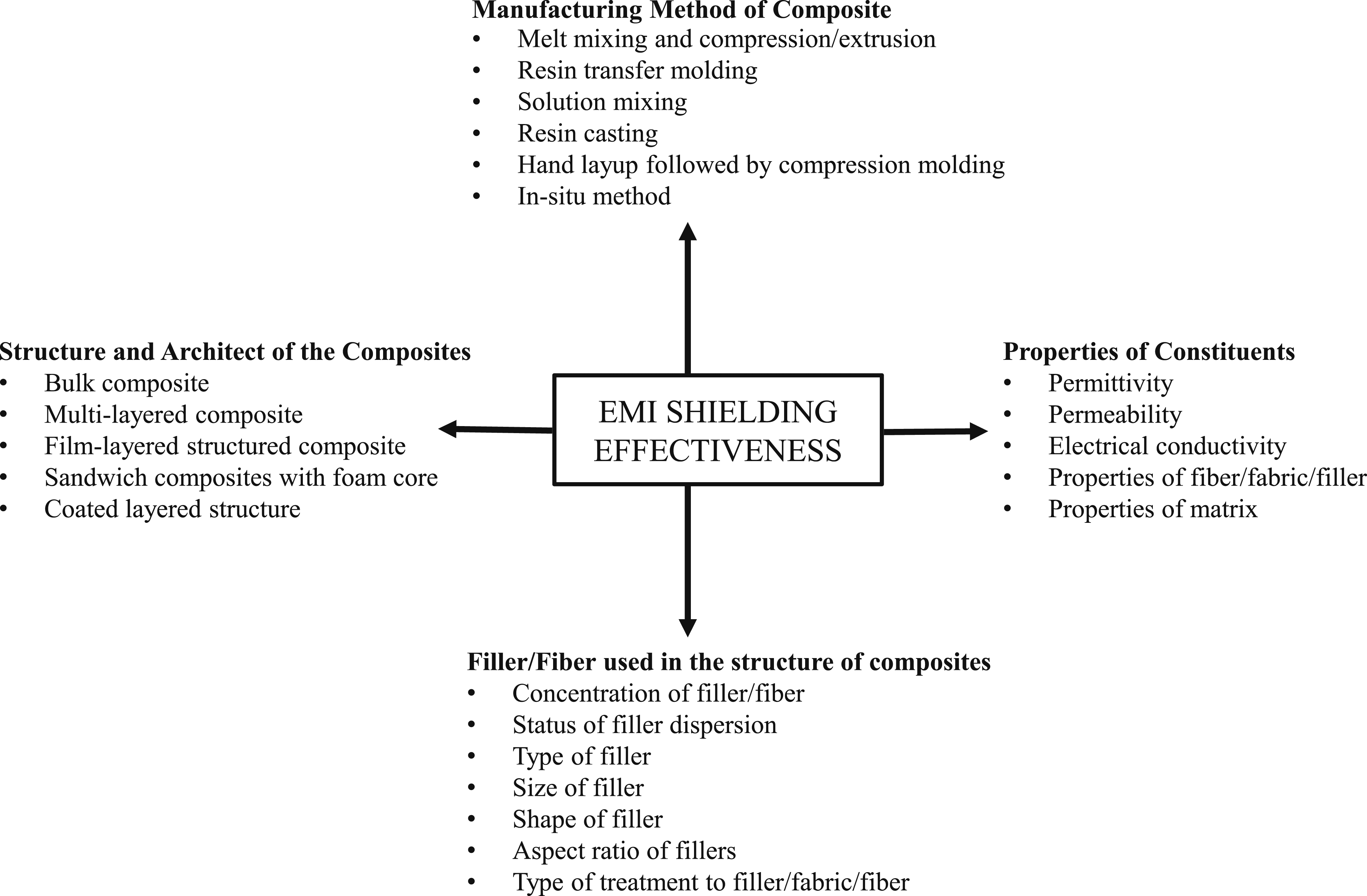
Polymer composites for EMI shielding
When modern electronic devices are designed, high performance EMI shielding materials are highly demanded. Additionally, lightweight is one additional important technical requirement for potential applications especially in the areas of automobile and aerospace. Polymer composites are widely employed for EMI shielding owing to the attractive properties offered in terms of low density and effective shielding. In this section, polymer based composites reinforced with inherent metallic fillers, intrinsically conductive polymers and porous materials are dealt in detail to know the effectiveness of these composites for EMI shielding.
Polymer-based composites containing metallic fillers
Polymer based composites reinforced with conductive fillers are seen as favorable and advanced EMI shielding constituents attributed to the innovation of insulating polymer that permits current flow through the conductive setup established by conductive fillers beyond the threshold percolation. Conductive composites offer advantages of low density, low cost, flexibility in design and processing ease. Further, reinforcing conductive polymers reduces the transparency of polymers to EM waves considerably by interacting with EM waves. Metal possess unique feature of reflecting incident EM waves, thereby enabling the metallic fillers to be ideally suited for EMI shielding. Metallic fillers possess large quantity of mobile charge carriers that interact with the incident EM wave. Metallic fillers in the form of fibers, micro and nano particles are used as reinforcement in polymer matrix to enhance the interactions with EM wave.
Attaining good dispersion with high density metallic fillers is a challenging and difficult task. Therefore, metallic fillers reinforced polymer composites are less popular.
Intrinsically conductive polymers-based composites
Polymers blends are reinforced with intrinsically conductive polymer to enhance their mechanical properties and electrically conducting constituent for interacting with the incident EM wave. Conductive polymers are conjugated polymers that exhibit electronic conductivity on doping. Unlike metallic fillers wherein electrical conductivity is distinctive feature, the molecular structure of polymer enables conductive polymers to be electrically conductive. The molecular structure of polymers is greatly affected by varying the parameters like chain size, level of doping, type of dopant and synthesis method and thus the shielding properties.
Polypyrrole and polyaniline are extensively used as intrinsically conducting polymers for EMI shielding purposes. Polypyrrole is the preferred one owing to its excellent properties of high conductivity, ease of processing, ecological stability and less toxicity whereas polyaniline is used for its various structures, distinctive doping mechanism, exceptional physical and chemical properties, stability and ease of availability.
In general, intrinsically conductive polymers possess good EMI shielding effectiveness as a result of reflection mechanism dominance during shielding attributed to the increasing level of impedance incompatibility with air. Additionally, lightweightness and availability of substrates increase the viability of these composites in envisaged applications. However, the main shortcomings associated with these composites are listed here • Most of the conducting polymers depict inferior mechanical properties. Therefore, a proper matrix material is essential for structural support • Conducting polymers exhibit inferior process capability due to insolubility and non-fusible features • High filler loadings are required for achieving suitable execution.
Polymer matrix based porous composites
In view of the stiff guidelines to meet economic concerns of using low fuel consumption in automobile and aerospace applications, lightweight EMI shielding materials with high EMI shielding effectiveness are favored. The specific EMI shielding effectiveness is defined as the ratio of the EMI shielding effectiveness to the density or both density and thickness. It is an apt criteria to relate the EMI shielding performance with other materials for applications demanding lightweightness.
Porous EMI shielding materials
Numerous methods are available to lightweight electrically conducting materials possessing higher EMI shielding abilities. Most polymer resins have densities in the range of 900 – 1200 kg/m3 that is substantial lower than conducting metals density like copper (8960 kg/m3). Reinforcing conducting fillers with polymer matrix will increase the density of the composites. Therefore, inventive methods have been established to incorporate porosity within the composite to reduce the composite density below the density of the neat resins and obtain effective EMI shielding.
Syntactic foam composites are lightweight, flexible and porous materials possessing high thermal and electrical conductivity. Syntactic foams structures are widely preferred for EMI shielding applications. Syntactic foams are a particular class of foam structure realized by mixing hollow spheres in a continuous polymer matrix. These foams are considered as closed cell foams for the porosity in these materials is enclosed within hollow particles (Figure 5). The closed-pore structure gives advantages of low density, low moisture uptake and excellent mechanical properties. The pore structure in foam composites helps energy absorption by electromagnetic wave scattering in the wall of pores in addition to contributing low weight. Syntactic foams are widely used in aerospace, automobile and flexible and portable electronics and wearable devices in defense. Syntactic foams are also being explored as multifunctional composite materials due to their attractive mechanical, electrical, and thermal properties. Microstructure of syntactic foam composites.
Many approaches are available to improve the EMI shielding effectiveness of syntactic foams. Hollow particles made of a conductive material Or Surface of hollow particles coated with conductive material
Hollow microspheres like glass microballoons and cenospheres can be metal coated via several techniques. These methods are broadly classified as • Chemical in-situ synthesis as metal coating followed by inner organic template removal • Chemical synthesis including precipitation on the microspheres and • Physical vapor deposition on the microspheres.
Several studies have suggested and demonstrated promising EMI SE by using metal coated hollow particles as fillers for making syntactic foam EMI shields. Panigrahi et al. 42 studied the electromagnetic shielding effectiveness of silver coated polypyrrole microballoons. Ultrasound aided emulsion polymerization technique was used to fabricate the nano-composites. In-situ chemical oxidative copolymerization of pyrrole was performed on the surface of sulfonated polystyrene microspheres. Further, hollow polypyrrole spheres were formed by liquefying sulfonated polystyrene inner core in tetrahydrofuran. Hollow polypyrrole spheres reinforced with 2,5 and 10 wt.% of silver were fabricated. The developed nano-composites were investigated for EMI shielding in the frequency range of 0.5–8 GHz. It is inferred in the study that occurrence of reflection mechanism is owing to the impedance difference between the corresponding layers of air and interacting medium while absorption mechanism is attributed to the transfer of electromagnetic energy to be dissolute as heat energy. Internal multiple reflections involve multiple reflections between the opposite layers of a material. Increasing the incident frequency decreases reflection in all the samples. Substantial decrease in reflection is observed for hollow polypyrrole spheres (−0.1 to −6 dB) as compared with polypyrrole (−0.02 to −2 dB). Electromagnetic waves penetrate through hollow polypyrrole spheres and cause arbitrary internal reflections. These trapped radiations further enhance the reflection as the probability of escaping the outer surface of hollow polypyrrole spheres decreases considerably. Reflection values of hollow polypyrrole spheres reinforced silver particles with 2, 5 and 10 wt.% lie in the range of −0.25 to −3.5, −0.15 to −2 and −0.35 to −3 respectively. Results show reflectance of hollow polypyrrole spheres reinforced with 5 and 10 wt.% silver particles are substantially high in comparison with other samples owing to the highly conducting silver particles coated on the outer surface of hollow polpyrrole spheres. Absorbance tests reveal that polypyrrole exhibit lowest absorption followed by hollow polpyrrole spheres and nanocomposites with 2, 5 and 10 wt.% of silver. Coating of silver particles is effective in reducing the absorbance of electromagnetic waves.
Electromagnetic shielding effectiveness of polypyrrole, hollow polpyrrole spheres and hollow polpyrrole spheres reinforced with 2, 5 and 10 wt.% of silver particles lie in the range of 20 to 5, 34.5 to 6, 36.5 to 11.5, 55.78 to 20 and 59 to 23 dB respectively. All nano-composites reinforced with silver particles reveal higher shielding effectiveness in comparison with polypyrrole and hollow polpyrrole spheres. Higher filler loading of silver particles ensures simultaneous contribution due to internal reflection and reflection from outer surface of spheres, thereby significant increase in shielding effectiveness. Such high EMI shielding capacity using conducting polymers are rarely reported.
Shielding effectiveness of epoxy/hollow carbon microballoons syntactic foam composites was investigated by Zhang et al.
43
Hollow carbon microballoons were coated with polydopamine by self-polymerization of dopamine to enhance the bonding between constituents and assist in uniform dispersion of fillers to have good stress transfer between the constituents. Silver nanoparticles were developed on hollow carbon microballoons by scattering polydopamine coated hollow carbon microballoons in varying concentration of silver nitrate solution (Figure 6). Silver nanoparticles get reduced on the polydopamine surface in different densities, producing silver nanoparticle coated HCMs (Ag-PDA-HCM). Shielding effectiveness of the syntactic foam increases by the deposition of silver nanoparticles on hollow carbon microballoons. Shielding effectiveness of polydopamine coated hollow carbon microballoons syntactic foams with 28.5 and 30.5 wt.% of silver nanoparticles investigated for a frequency range of 8–12 GHz is around 49.5 and 60.2 dB respectively. EMI SE of syntactic foams containing pristine hollow carbon microballoons and silver polydopamine hollow carbon microballoons with varying silver content. “Reprinted with (adapted) permission from,
43
Copyright 2014, American Chemical Society.”
Shielding effectiveness of nickel coated cenospheres through ultrasonic aided direct current magnetron sputtering technique was investigated by Xiaozheng et al. 44 Cenospheres having diameter in the range 20–100 μm are coated with nickel films in varying concentration by controlling the sputtering power (99, 142 and 187 W) to achieve layer thickness of 26, 42 and 85 nm respectively. Nickel coated cenospheres are mixed in molten paraffin matrix placed in a mold with dimensions of 150×60 mm. Composites developed at 187 W sputtering power reveal shielding effectiveness of around 25 dB tested over a frequency range of 80–110 GHz.Enhancement of shielding effectiveness is owing to the conductive nickel films deposited on cenosphere particles that effectually increase the electrical response of as received cenosphere particles. Usefulness of nickel coated particles even at low volume compositions for electromagnetic shielding interference is established in this study.
Zhang et al. investigated the EMI shielding effectiveness of carbon foam developed by direct carbonization of phthalnitrile. 45 Developed foams had very low density of 150 g/m3. EMI Shielding effectiveness of 51.2 dB was exhibited by the carbon foams tested over a frequency range of 8.2–12.4 attributed to conducting carbon matrix formed after full carbonization and the effects of polarization induced by the intrinsic nitrogen containing structure. The carbon foams offer an ultra-lightweight and high performance EMI shielding material that can be utilized for applications demanding mechanical integrity.
Composites with carbon fillers
Carbon reinforced polymer composite materials for EMI shielding applications. Invention of unique allotropic carbon forms such as carbon nanotubes, graphene, fullerene, graphite, etc. have etc. have racked up the area of advanced materials and have significantly contributed in the development of numerous fields of science and technology [19]. Carbon black, carbon nanofibers, carbon nanotubes, graphene, graphite are the widely used carbon fillers. Carbon black among all the aforementioned materials is considered as a primitive material utilized in EMI shielding applications.
EMI SE of carbon black, carbon fiber, single and multi walled carbon nanotubes and graphite reinforced polymer composites.

Challenges and future work
In the recent times, significant progress has been achieved in the field of electromagnetic shielding mechanisms. However, they are many challenges that need to be answered. Some of the critical challenges are listed below • Shielding by absorption has become the most enviable shielding mechanism as it can capably absorb electromagnetic wave and attenuate. Even though many materials and composites demonstrate high absorption, shielding is generally restricted to thin frequency range. Therefore, developing new composite materials with appropriate permeability, permittivity, conductivity, thickness and frequency characteristics is need of the hour and future trend. • The commercial range for composites shielding effectiveness is considered to be around 20–25 dB. Therefore, composite materials should be designed or prepared to meet the desired shielding effectiveness. • Materials like hydrogels, aerogels, multilayer 3D composite, and composite foams demonstrate high EMI shielding capabilities and therefore more research should be carried out to meet the specific needs of envisaged applications.
Conclusions
• Electromagnetic interference (EMI) shielding materials are required to relieve the increasing stress over electromagnetic pollution problems arising from the growing demand for electronic and electrical devices. • Commercial applications require EMI shielding of around ∼20 dB that is equal to or less than 1% transmittance of electromagnetic wave. Most of the polymer based composites with metallic fillers, intrinsically conducting polymer and porous fillers are efficient enough to meet the envisaged shielding. • High conductance and dielectric properties of conducting polymers such as polyaniline, polypyrrole and polythiophene reinforced with coated nanoparticles make them adept for EMI shielding applications. • Carbon nanotubes and graphene based composites provide excellent EMI shielding effectiveness. • Different factors that affect the performance of EMI shielding materials are also presented. Prominent features of EMI shielding material are also discussed.
Footnotes
Acknowledgements
The authors gratefully acknowledge the Deanship of Scientific Research, King Khalid University (KKU), Abha-Asir, Kingdom of Saudi Arabia for funding this research work under the grant number RGP.2/58/42.
Declaration of conflicting interests
The author(s) declared no potential conflicts of interest with respect to the research, authorship, and/or publication of this article.
Funding
The author(s) disclosed receipt of the following financial support for the research, authorship, and/or publication of this article: This study was supported by Deanship of Scientific Research, King Khalid University (KKU), Abha-Asir, Kingdom of Saudi Arabia for funding this research work under the grant number RGP.2/58/42.
