




Abstract
The main aim of this study is to investigate the effect of printed hierarchical-sinusoidal corrugated core patterns and the load direction on the flexural properties of the cotton/epoxy composites sandwich panels. For the cores, six sinusoidal corrugated structures were considered. Besides, possible arrangements (transvers or longitudinal wave, arch downward or upward) of the sinusoidal corrugated cores with respect to the loading direction were considered. Totally, 72 cores were fabricated using a 3D printer and poly lactic acid material. It was observed that for the transverse arrangement, the flexural strength of sandwich panels is significantly improved by changing the pattern from the simple form to the hierarchical patterns. In contrast, for the longitudinal pattern, improvement in the flexural properties was not obtained by changing the core pattern. It was also manifested that corrugated core arrangement has remarkable effect on the mechanical properties of the sandwich panels. For the transverse pattern core panel, the maximum values of normalized face-sheet bending strength (FBS), core shear ultimate strength (CSUS) and energy absorption were obtained as 7.17 MPa/kg, 223.91 MPa/kg and 114.56 J/kg, respectively. Besides, for the longitudinal pattern core panel, the maximum values of FBS, CSUS and energy absorption were obtained as 7.86 MPa/kg, 245.78 MPa/kg and 330.75 J/kg, respectively. Comparing the obtained results with the available data in the literature manifested that the flexural properties of the corrugated core sandwich structures are significantly improved by changing its core system from the other materials to the printed material.
Keywords
Introduction
Sandwich panels have been used in different industries for more than some decades due to their light weight, high flexural strength and fatigue properties. 1 Different materials such as foams, Nomex, Aluminum alloys, wood, laminated composites and polymers have been used to fabricate the core of sandwich panels.1–7 The choice of core material depends on the application of these structures, load life, availability and cost. 1 Recently, 3D printing technology has been considered to manufacture the cores with remarkable mechanical properties and various patterns.8–22 Some studies have been performed to identify the characteristics and behaviors of printed sandwich panels.8–22 For example, Yazdani Sarvestani et al. 8 studied the energy absorption of printed sandwich panels. Three types of core with hexagonal, rectangular and acoustic structures were designed and manufactured. The results showed that the sandwich panel with an acoustic core has higher energy absorption in compression with the other core structures. Dikshit et al. 10 explored the compressive strength of printed core sandwich panels with laminated composites face-sheets. Two models of truss-shaped cores were considered to be manufactured and tested. Brischetto et al. 11 studied the mechanical behavior of sandwich panels consisting of the honeycomb cores and the skins manufactured by a 3D printer. Two types of sandwich structures were fabricated. For the first type, both the core and skins were made of poly lactic acid (PLA). While, for the second type, the skins were made of polymer-acrylonitrile butadiene styrene and the PLA material was used for the core. Experimental results showed that the structures have different mechanical behavior under flexural loading. The sandwich panels with the skins and core made of PLA have significant flexural properties as compared to another sample. Man Chun and Kowalik 12 considered three types of lattice core, i.e., honeycomb, pyramidal trunk and hollow sphere to compare their mechanical properties under buckling loading condition. The samples were fabricated using a 3D printer. The results showed that the hollow spherical structure withstood the most buckling load. Lubombo and Huneault 13 investigated the tensile and flexural properties of sandwich panels with cellular cores. Five different geometric patterns, i.e., hexagonal, triangular, square, square-diagonal and reinforced square-diagonal, were designed and printed using a 3D printer. To print the sandwich panels, PLA material was used. These researchers observed that the square structure has the best tensile strength and modulus values, and the honeycomb structure has the best flexural properties. In addition, the acoustic emissions method was utilized to monitor damage initiation and propagation up to failure. The results displayed that the panels with lower core density had the best fatigue life. Lee and Wang 15 tested the sandwich panels with three types of printed cores. Truss cellular, conventional honeycomb and re-entrant honeycomb topologies were designed and printed. In order to manufacture the skins, the carbon fiber reinforced polymer was used. The results showed that the truss-shaped core has the best flexural properties. Besides, the sandwich panel with the re-entrant honeycomb core has the lowest flexural stiffness, the largest flexural deformation and the maximum energy absorption. Wu et al. 17 investigated the mechanical properties of sandwich panels with hierarchical lattice cores fabricated by 3D printer method. The samples were tested under shear, out-of-plane compression, in-plane compression and flexural loading conditions. Harland et al. 18 compared the mechanical properties of sandwich panels consisting of an aluminum honeycomb cores with the sandwich panels consisting of printed honeycomb cores. For manufacturing the skins of both sandwich panels, carbon/epoxy laminated composite was used. The specimens have been subjected to three-point bending test and their strength and stiffness have been obtained. Numerical and experimental studies showed that the mechanical properties of sandwich panels with 3D printing method are better than the conventional honeycomb panels.
It was observed in the published papers that the artificial fibers are mainly used as the reinforcement of laminated composites to fabricate the face-sheets of the sandwich panels with printed cores. The Hence, in this study a natural fiber reinforced laminated composites system was considered to fabricate the skins of printed core sandwich panels. Besides, in the current study, hierarchical-sinusoidal corrugated cores have been proposed. The cores were fabricated using a 3D printer. Cotton/epoxy laminated composites material was used as the skins of sandwich panels. Different patterns have been considered for the corrugated cores. The effect of core arrangement and loading direction on the flexural properties were investigated.
Experimental study
Test design

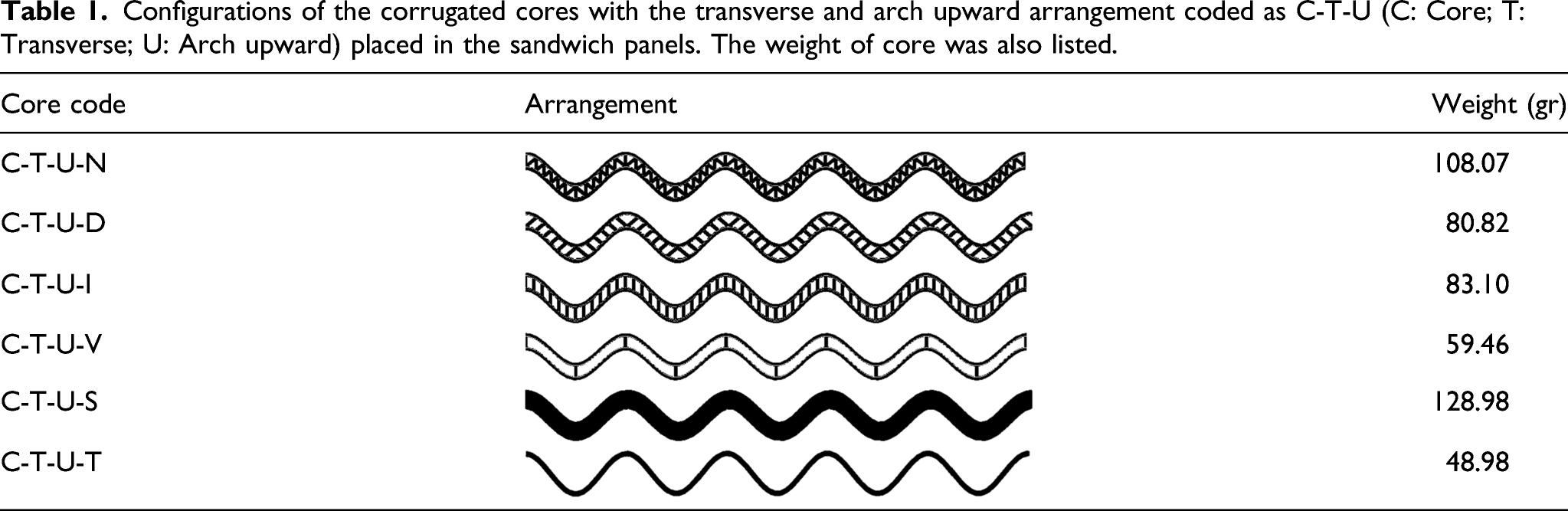
Configurations of the corrugated cores with the transverse and arch upward arrangement coded as C-T-U (C: Core; T: Transverse; U: Arch upward) placed in the sandwich panels. The weight of core was also listed.
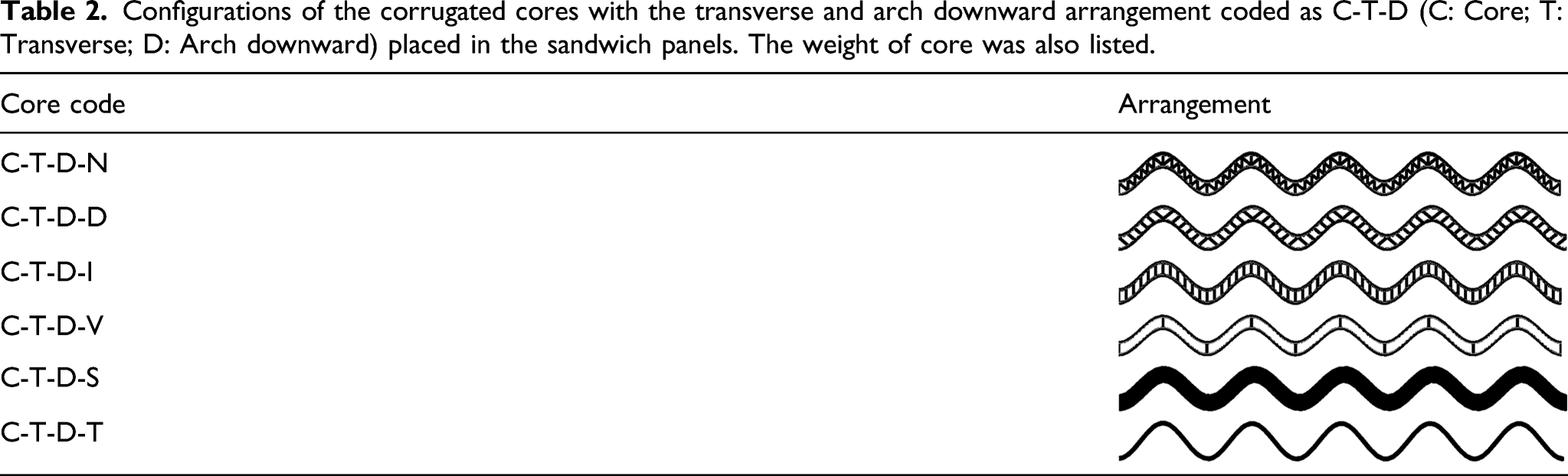
Configurations of the corrugated cores with the transverse and arch downward arrangement coded as C-T-D (C: Core; T: Transverse; D: Arch downward) placed in the sandwich panels. The weight of core was also listed.
Likewise, in order to generate the longitudinal cores, can be expressed as follows
Configurations of the corrugated cores with the longitudinal and arch upward arrangement coded as C-L-U (C: Core; L: Longitudinal; U: Arch upward) placed in the sandwich panels.

Configurations of the corrugated cores with the longitudinal and arch downward arrangement coded as C-L-D (C: Core; L: Longitudinal; D: Arch downward) placed in the sandwich panels.

The details of geometrical properties of different cores have been represented in Figure 1. It must be mentioned that the sandwich panels consisting of the corrugated cores represented in Tables 1–4 are coded by S instead of C. For instance, the sandwich panel with the core of C-T-U-N is encoded as S-T-U-N. The details of geometrical properties of (a) N-type, (b) D-type, (c) I-type, (d) V-type, (e) S-type and (f) T-type core patterns. All dimensions are in mm.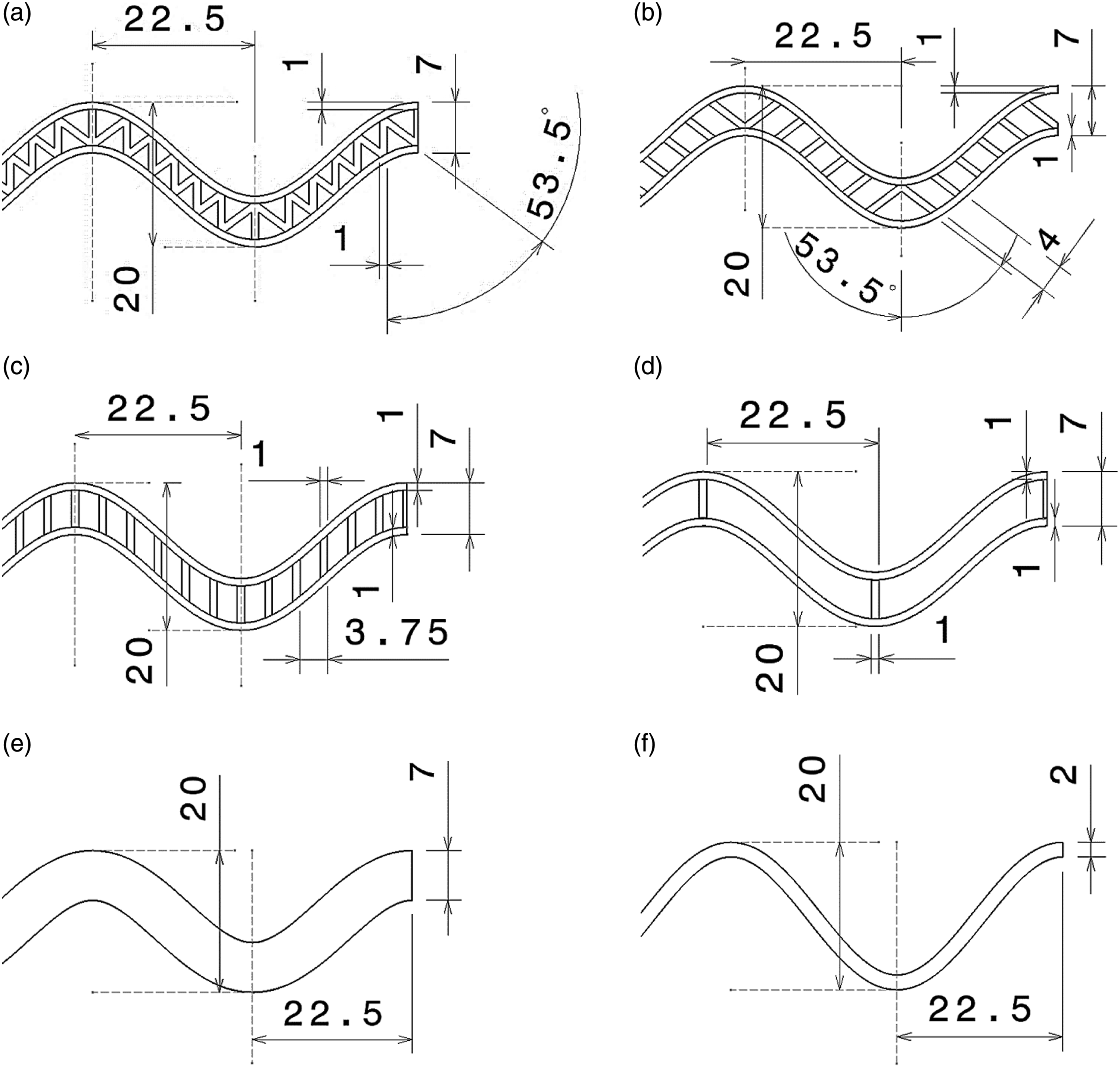
Materials selection
The mechanical properties of the cotton/epoxy laminates.

Many efforts have been done to increase the fiber volume fraction in the laminated composites reinforced by natural fibers and thus enhance the mechanical properties of this type of materials. 26 Hence, different materials such as sodium hydroxide, isocyanate, sodium alginate, etc. have been used to treat the natural fibers.26–28 In this study, the woven cotton fibers were placed in sodium hydroxide (NaOH) solution for 2 h with different percentages. For this reason, various NaOH solutions, i.e., 0, 5, 10, 20 and 30 wt%, were considered. Finally, it was obtained that the 20 wt% NaOH solution has the best results.
Samples fabricating
In the first step, a plate consisting of three cotton/epoxy layers were fabricated by hand lay-up method. The skins of sandwich panels were cut from the plate using a laser cutting machine. The dimensions of the face-sheets were selected as 75 × 225 mm2 according to ASTM C393. 29 The thickness of skins was obtained as 2.4 mm.
In order to fabricate the cores presented in section 2.1, some steps were carried out. First, different cores were modeled in Catia software. Then, using simplify software and an in-situ FDM printer, the cores were printed. Figure 2 shows some cores printed using the FDM printer. Different printed cores with transverse arrangement.
In order to bond the manufactured glass/epoxy skins to the printed core a two-part epoxy adhesive EP4000 (supplied by Chekad co.) was used. For each sandwich panel, 20 gr of the epoxy adhesive was applied.
Sample testing
In order to measure the mechanical properties of the sandwich panels, the specimens were tested under flexural loading (see Figure 3). The samples were tested under three-point bending loading and displacement control conditions based on ASTM C393 standard.
29
A universal testing machine Santam (STM-20) was used to record the load-deflection curve of the prepared sample. According to ASTM C393,
29
the quasi-static test with a crosshead speed of 2 mm/min was performed. In addition, a load cell with a capacity of 2 kN was used to record the load. For each configuration, at least three samples were manufactured and tested. The requirement setup for flexural testing of the sandwich panel.
Data reduction methods
For the sandwich panels under bending, the values of core shear ultimate strength, facing bending stress and flexural rigidity were determined. The core shear ultimate strength (CSUS) of a sandwich structure is computed by the following relation
29

Moreover, the face-sheet bending stress (FBS) is computed as follows
29

Energy absorption is another mechanical property mainly computed to compare different samples subjected to flexural loading. Therefore, the energy absorption of the sandwich panels was determined using trapezoidal integral method.

Results and discussion
Load-displacement curves
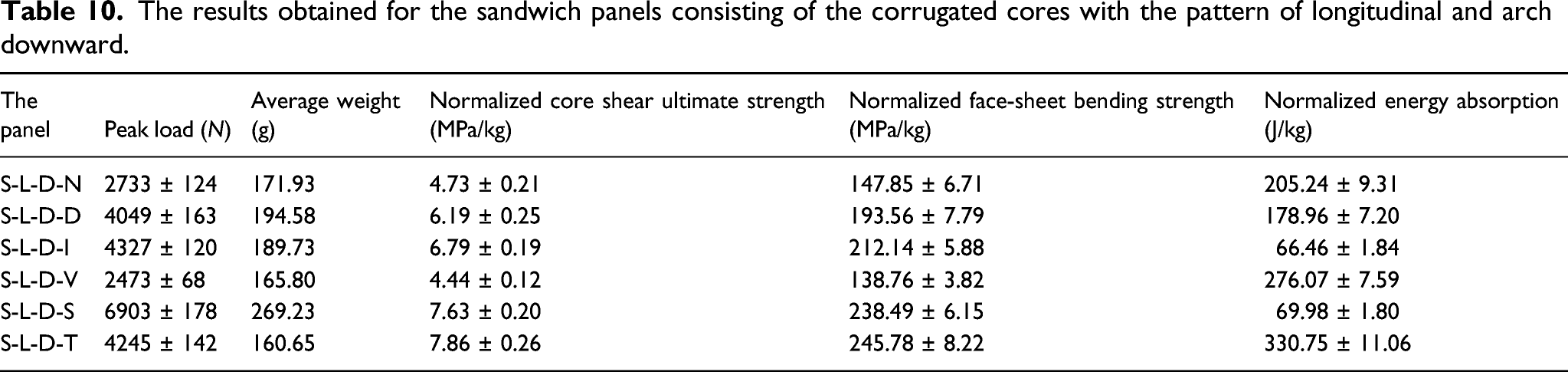
Figure 4(a) demonstrates the typical load-deflection curves of the sandwich panels having the core with longitudinal and arc downward arrangements. As observed, the panel consisting of the simple corrugated core with the thickness of 7 mm (S-L-D-S) has the biggest value of maximum load and the smallest value of deflection among the samples with longitudinal and arc downward arrangements cores. In contrast, the biggest value of deflection and the smallest value of maximum load is obtained for the S-L-D-V sample. For the sandwich shape core, by changing the pattern from the I-type to the D-type and the N-type, the maximum load and deflection are decreased and increased, respectively. Typical load-displacement curves of the sandwich panels consisting of core with (a) longitudinal and arch downward, (b) longitudinal and arch upward arrangements under flexural loading.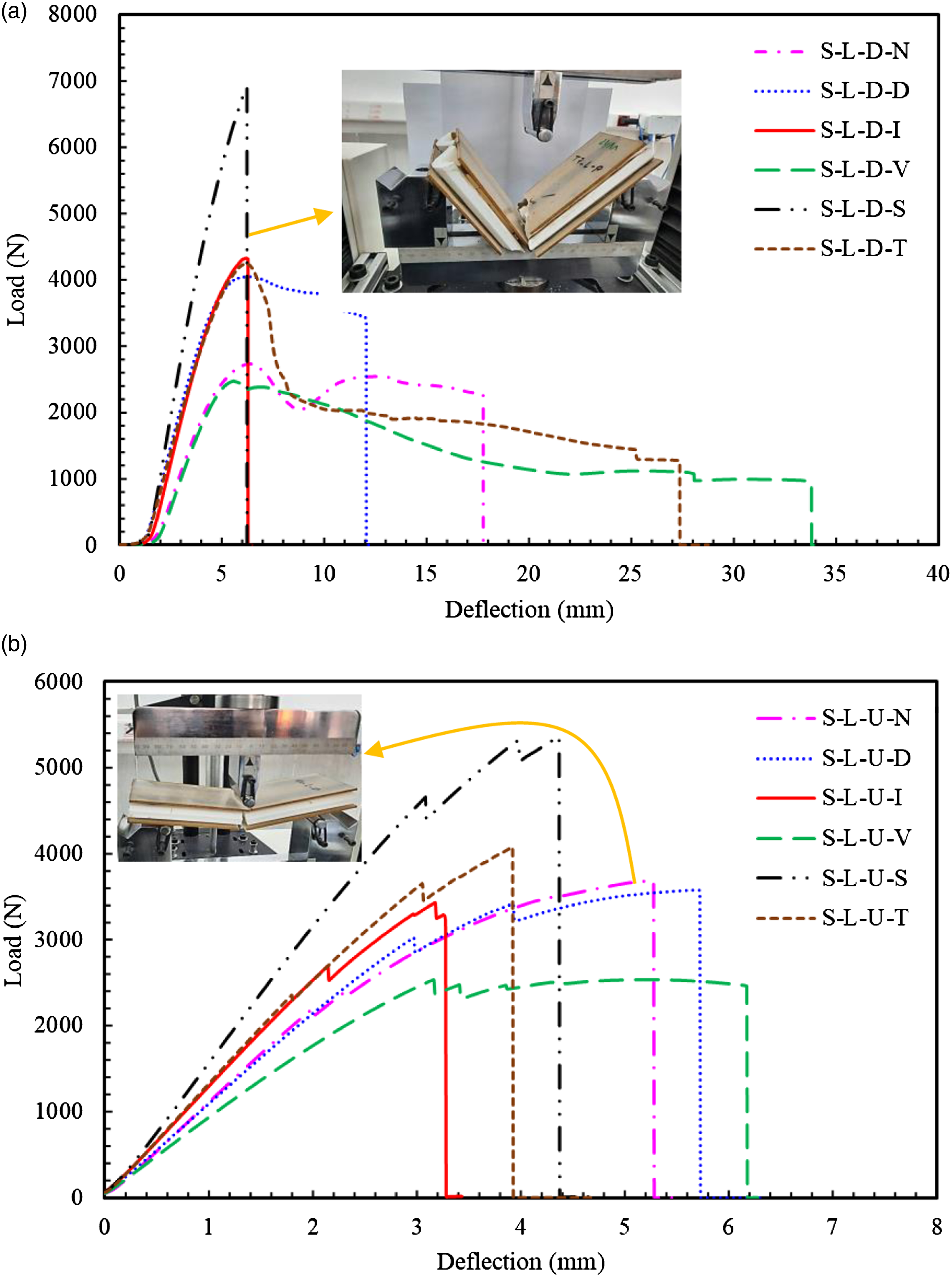
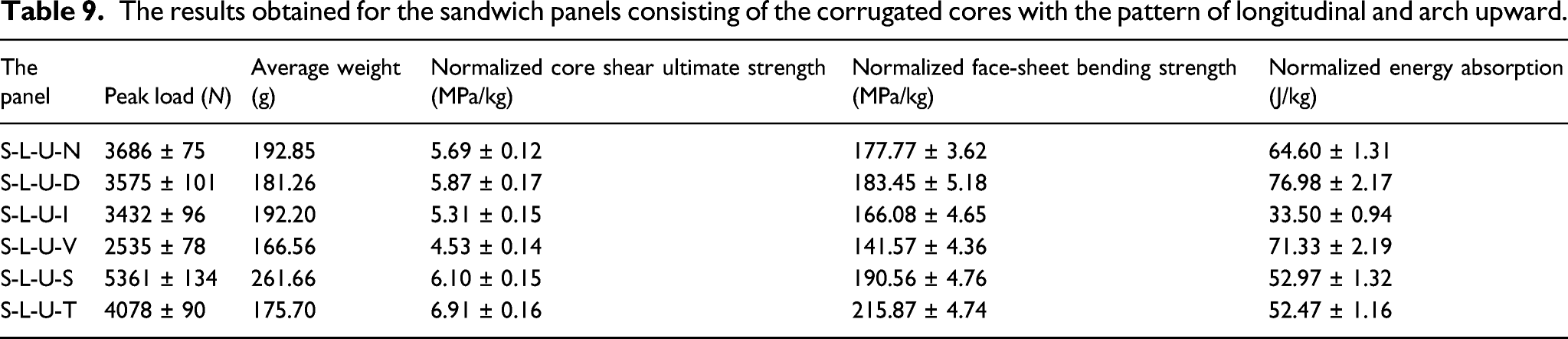
Typical load-displacement curves of sandwich panels having the core with the longitudinal and arch upward arrangement have been illustrated in Figure 4(b). It is observed that all structures have the same response under flexural loading. The highest peak load and deflection are related to the solid and hollow types, respectively.
Figure 5(a) displays the flexural response of the sandwich panels consisting of core with transverse and downward arrangements. It is well observed that the panels having the hierarchical-sinusoidal corrugated core with transverse and downward arrangements have a similar behavior under flexural loading. Besides, sudden drop in the load-displacement curves is represented for all samples. The core breaking is the main reason of this dropping. Typical load-displacement curves of the sandwich panels consisting of core with (a) transverse and arc downward, (b) transverse and arc upward arrangements under flexural loading.
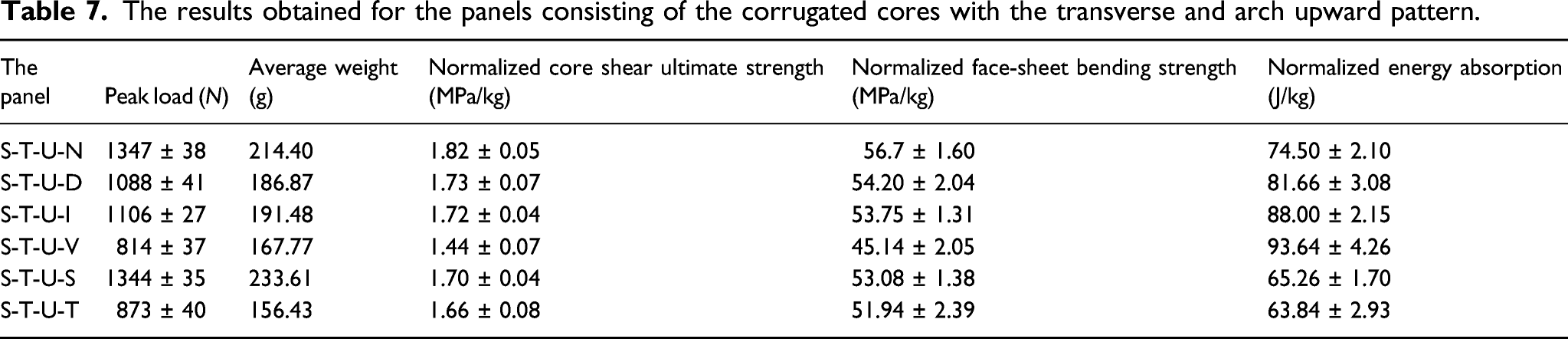
The typical load-displacement curve of the sandwich panels consisting of core with transverse and upward arrangements under flexural loading have been exposed in Figure 5(b). It is resulted that by changing the core pattern, the behavior of the sandwich panel under flexural loading is significantly affected. In this core arrangement, the upper skin is broken under flexural loading at the first step. Then, the upper skin and core are debonded. Finally, the cores are failed and the load is dropped significantly.
Flexural properties
The results obtained for the panels consisting of the corrugated cores with the transverse and arch upward pattern.
The results obtained for the sandwich panels consisting of the corrugated cores with pattern of transverse and arch downward.

The results obtained for the sandwich panels consisting of the corrugated cores with the pattern of longitudinal and arch upward.
The results obtained for the sandwich panels consisting of the corrugated cores with the pattern of longitudinal and arch downward.
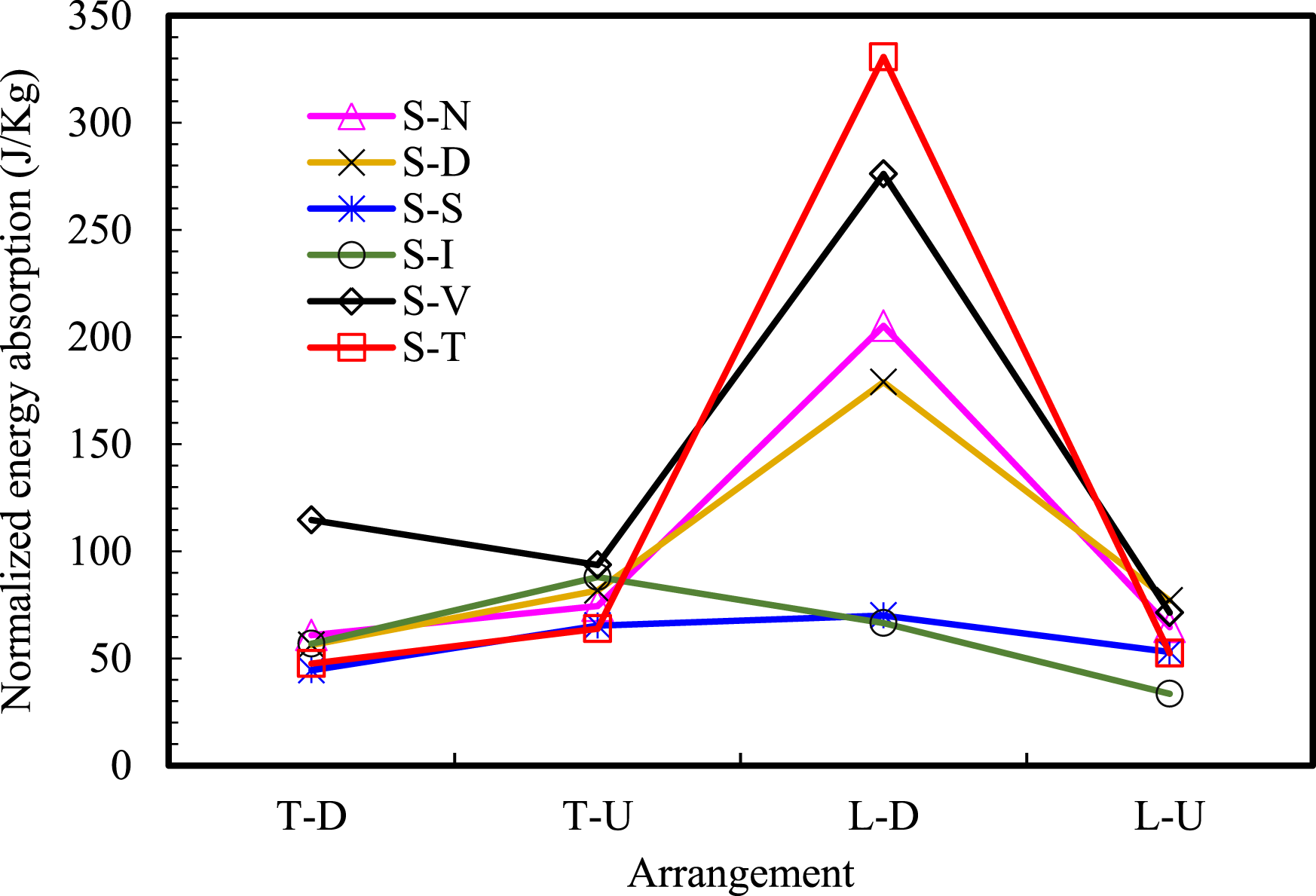
In order to compare different sandwich panels, Figures 6–8 have been illustrated. Figure 6 shows the CSUS of the core for different sandwich panels. As observed, the value of normalized CSUS of the transverse corrugated core panels is significantly decreased by changing the arrangement from the arch downward to upward. However, in the case of longitudinal arrangement, changing the arch downward arrangement to the upward does not have significant effect on the normalized shear strength. It is concluded that by changing the pattern of the core as well as the arrangement, the normalized shear strength of the core can be remarkably increased. The normalized core shear strength versus different core arrangements. In addition, the influence of core structure was evaluated. The change of normalized skin flexural strength of different sandwich panels with the core arrangements. The effect of core patterns was also shown. The normalized energy absorption versus different arrangements. In addition, the influence of core pattern was evaluated.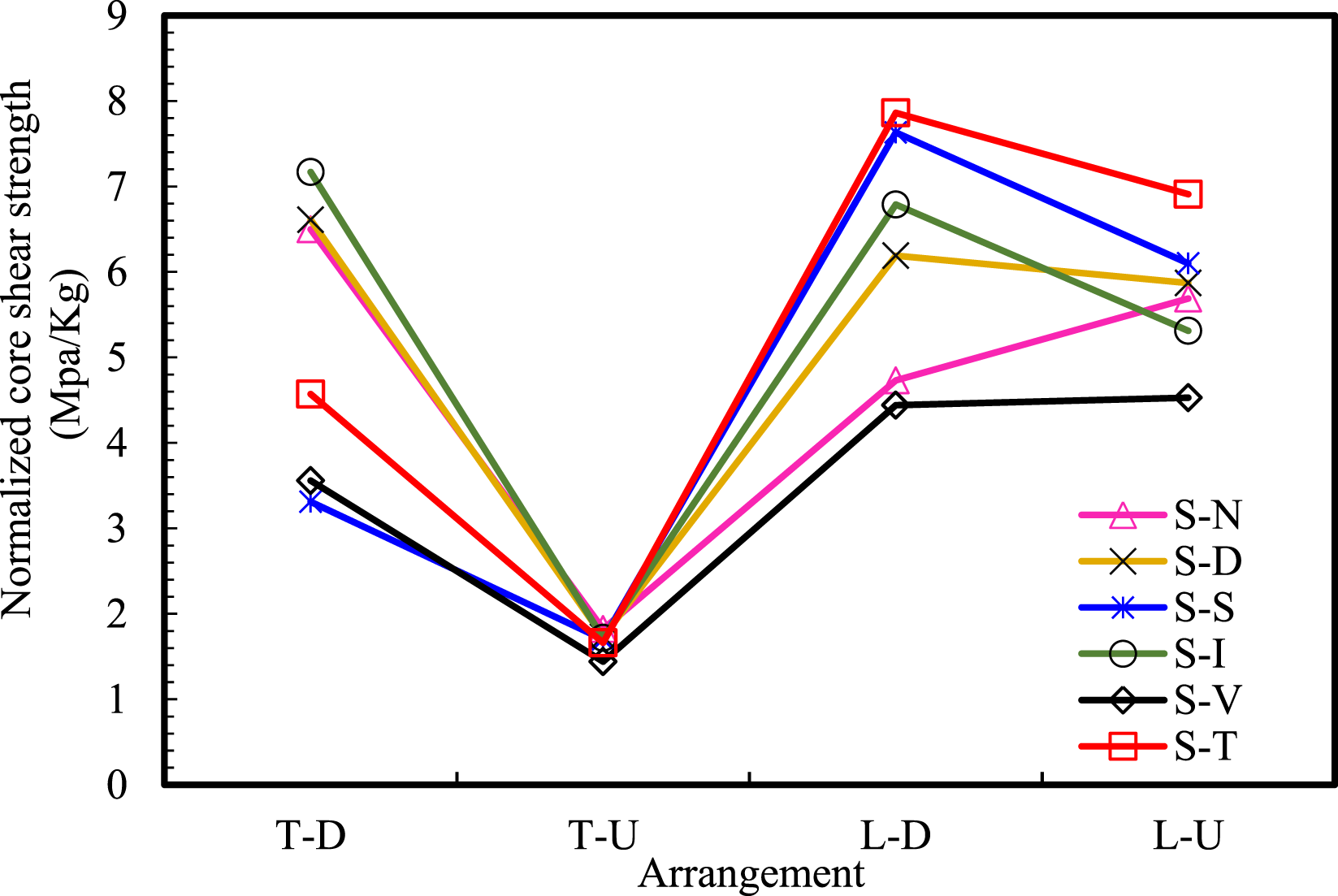

In order to investigate the effect of the core pattern and arrangement, the normalized FBS of different panels have been demonstrated in Figure 7. For the panels with transverse cores, the arrangement has a significant effect on the flexural strength values of the skins and it is decreased around 200% by changing the arrangement from the downward to the upward. However, in the case of longitudinal core panels, the FBS is not remarkably dependent on the core arrangement.
The normalized absorbed energy of the various sandwich panels with different arrangements has been compared in Figure 8. It is well observed that the longitudinal and arch downward arrangement core panels have the maximum normalized energy absorption among all arrangements. By changing the longitudinal core arrangement for the arch downward to the arch upward, the normalized energy absorption is increased around 400%. Whereas, for the transverse core panels, this value is not remarkable.
Results comparison with the available data in the literature
In order to evaluate the characteristics of sandwich panels with the printed corrugated cores, the obtained results were compared to the flexural properties of the other corrugated core sandwich panels. Heidari-shahmaleki and Zeinedini
30
studied the sandwich panels with the face-sheets and corrugated core made of cotton/epoxy laminates under flexural loading conditions. The flexural properties of two sandwich structures, i.e., D-type pattern (S-D) and the simple with the thickness of 2 mm (S-T) tested in this research have been compared with those sandwich panels studied in Ref. 30. It must be mentioned that for manufacturing the skins of both sandwich panels, the cotton/epoxy material was used. By comparing the normalized core shear ultimate strength obtained in this study and Ref. 30, it can be stated that using AM technology the strength of the sandwich panels is significantly improved (Figure 9(a)). Likewise, by changing the core material from the cotton/epoxy to the PLA, the normalized face-sheet bending stress is remarkably improved (Figure 9(b)). Comparison (a) the normalized core shear ultimate strength (MPa/kg) and (b) the normalized face-sheet bending stress (MPa/kg) of the tested sandwich panels and those presented in Ref. 30.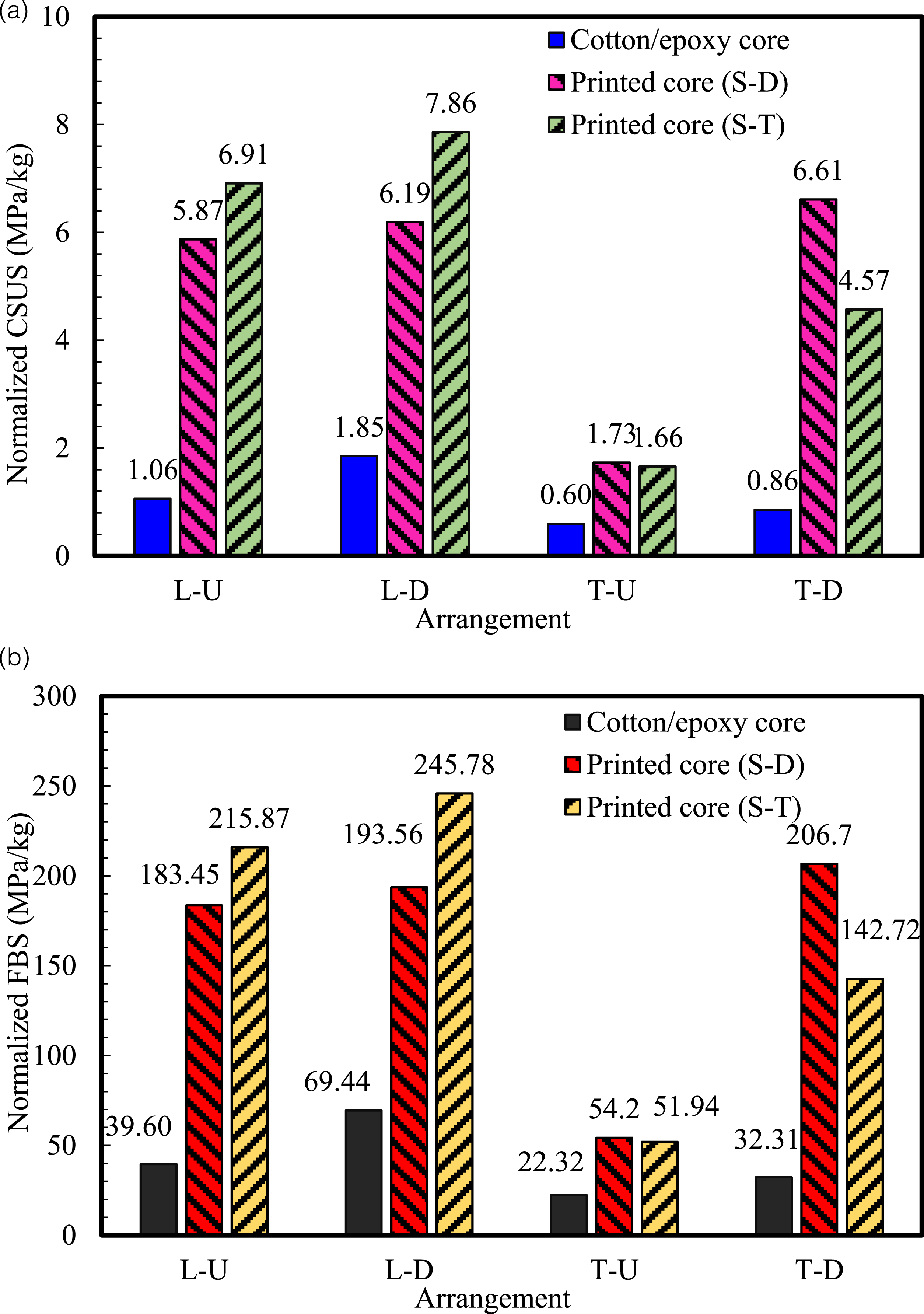
The normalized energy absorption of three types of sandwich panels have been compared in Figure 10. It is resulted that the normalized energy absorption of the sandwich panel with the printed core is greater than the normalized energy absorption of the sandwich panel consisting of the core made of cotton/epoxy layers expect for the longitudinal and arch upward arrangement. Comparison the normalized energy absorption (J/kg) of the tested sandwich panels and those presented in Ref. 30.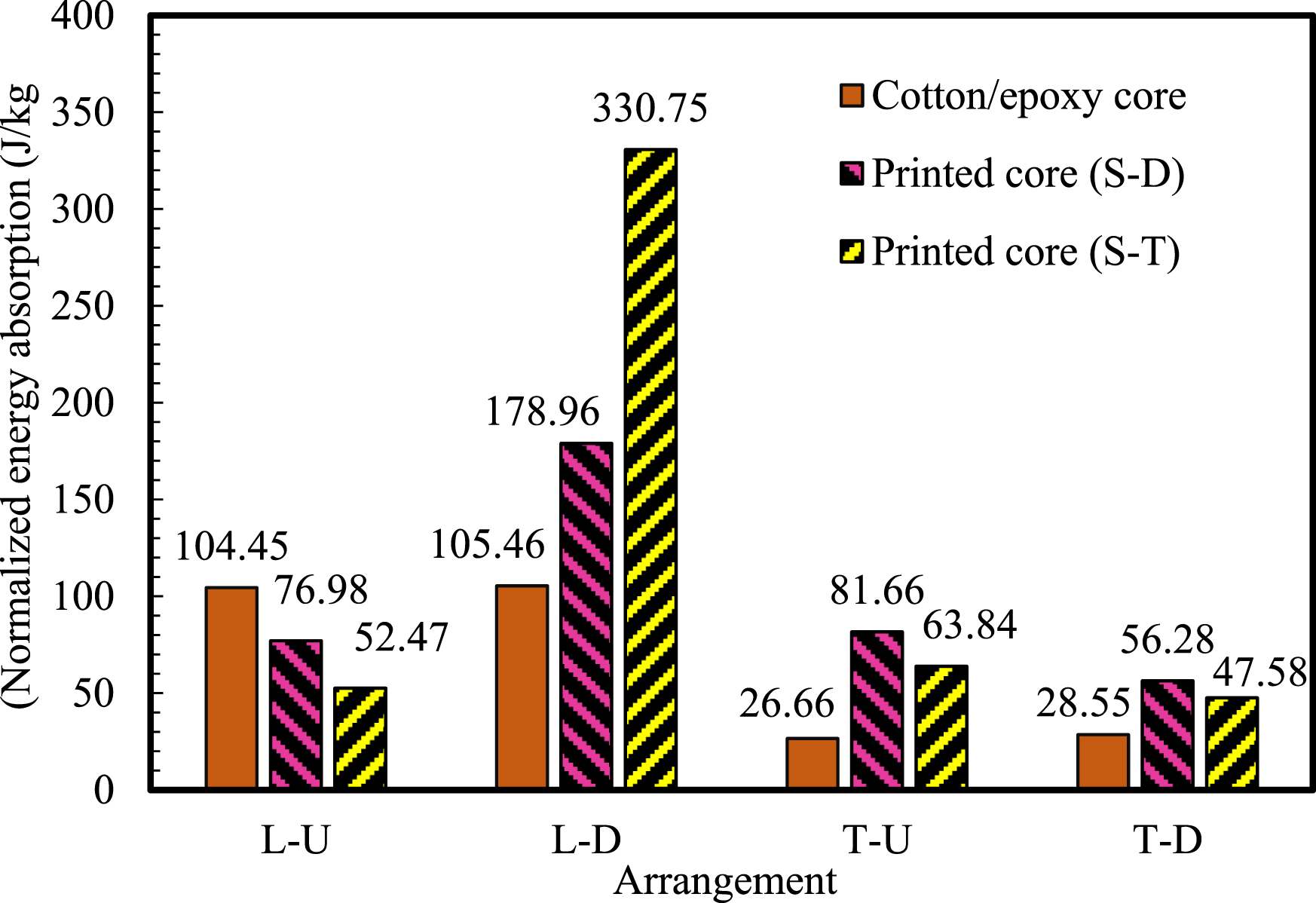
Conclusion
In this research, the mechanical properties of composite sandwich panels with various printed corrugated cores were experimentally investigated. Sandwich panels were loaded under three-point bending test at both downward and upward arrangements of the corrugated cores. The samples were tested at the longitudinal and transverse arrangements of the cores as well. The shear strength of the core, the maximum flexural stress of the skins and the energy absorption of the sandwich panels were measured. Some of the most important results are expressed as follows: 1. By changing the core arrangement from the transverse to the longitudinal and arch upward to the arch downward, the shear strength of the core and the flexural stress of the skins are significantly changed. 2. By changing the core pattern from the transverse to the longitudinal, the core ultimate shear strength and the skins flexural stress are significantly increased. 3. For the transverse and arch downward arrangements, the normalized core shear strength, skin flexural stress and energy absorption are significantly dependent on the core pattern. 4. For the transverse and arch upward arrangements, the normalized core shear strength, skin flexural stress and energy absorption are not affected by the changing of core pattern. 5. The maximum dependency of flexural properties on the core pattern was observed for the sandwich panels having the corrugated core with the longitudinal and arch downward arrangement. 6. For the longitudinal and arch upward arrangements, the normalized core shear strength, skin flexural stress and energy absorption are remarkably dependent on the core pattern. 7. Comparing the obtained results with the available data in the literature manifested that the flexural properties of the corrugated core sandwich structures are significantly improved by changing its core system from cotton/epoxy to the PLA material.
Footnotes
Declaration of conflicting interests
The author(s) declared no potential conflicts of interest with respect to the research, authorship, and/or publication of this article.
Funding
The author(s) received no financial support for the research, authorship, and/or publication of this article.
