



Abstract
This paper involves the utilization of waste fishing nets as one of the reinforcements in the manufacturing of fumed silica coated composite partition sheets. Hybrid Fishing Net Reinforced Plastic (HFNRP) composite sheets developed by sandwiching various layers of used fishing net between the two glass fiber layers and in-situ coated with the AEROSIL®200 nano powder, were tested for mechanical properties. Appreciable values for mechanical properties were seen for all the HFNRP sheets; more pronounced when the number of fishing net layers was increased. On the contrary, the light transmission through the sheets decreases. The nylon content of the fishing nets in the sheets increased the linear thermal expansion with highest value of 2.01 inches/100 feet (0.168%). Moreover, water absorbing properties of the coated HFNRP sheets revealed to be moisture resistant due to the coating of polyester/nano powder resin mixture. Thermogravimetric Analysis and Differential Thermal Analysis revealed the mass change and phase change for the various manufactured specimens. The wear analysis with the pin on disk experiment revealed the wear resistance through the allied action of the flexible fishing net nylon and the friction resistant nano coating over the specimens. These, low cost and less weight composite sheets were successfully developed and implemented as the partition sheets for affordable buildings and fishing nets were efficiently reused.
Keywords
Introduction
Industries produce enormous amount of wastes in terms of both solid and e waste, which do not decompose easily. But developed and developing countries thrive their economy mainly with the industrial products. 1 However, those countries who do not have proper disposal procedures of these wastes, not only pull back their development but also damage the environment.2,3 One such major setback is the use of non-biodegradable plastics which are being produced in millions of tons every year globally because of their diverse applications, low cost and easy manufacturing. In India, 8 million tons of plastics are produced annually in various forms for enormous applications, whereas more than 300 million tons were produced globally in 2010. 4 Even though some plastics are recyclable, this can only be done twice as their composition starts to deteriorate due to the thermal pressure formed between the molecules after some period of usage. 5 Plastics do not degrade naturally and their lifespan is estimated to be of hundreds of years. 6 These plastics are found in land, water and even air, in solid form, polluting and disturbing the nature’s beautiful forms of life. To keep our environment free from pollution, it is better to reuse the solid plastic wastes which are being embedded in the land, 7 since recycling of the plastics indulge more difficult processes and cause some serious environmental pollution (air pollution).8,9
Fishing net is a thermoplastic polymer, produced by condensation polymerization, transformed into Monofilament and Multifilament fishing nets, 10 the two mostly used forms of fishing nets. They are tough, possess high tensile strength, elasticity, highly resistant to abrasion and chemicals and high resistance to insects, fungi and animals.11,12 Fishing is done almost every day and therefore, after a certain number of fishing operations, fishing nets are generally discarded owing to minor wear and tear and it has been flung away along the seashore. This repeated dumping directly into the marine atmosphere leads to the pollution of the marine environment. In this work, fishing net is reused for composite partition sheets manufacturing, as one of the reinforcements, sandwiched between the E-glass fibers. E-glass fibers are relatively cheap of all commercially available glass fibers and their prime factors over other reinforcement agents easy handling, high tensile strength, high chemical resistance and insulating properties.13-15 Polyester is used as matrix in the manufacture of HFNRP partition sheets. It offers effortless handling, dimensional stability and correspondingly good mechanical, chemical-resistance and electrical properties. The polyester matrix binds the fiber together and provides a solid structure, of desired shape and size.16-18
Coating is usually done to improve desirable property of any material19,20 and here the coating is done in-situ with the manufacturing process. For this proper nano powders are to be chosen to move in viscous with the solvent and the complete dispersion of the nano particles will enable the chemical interactions between the solvent to be more stable which thence improves the mechanical properties of the coated material. 21 AEROSIL®200 was thus chosen for the best flow ability with the polyester. The hydrophilic fumed silica nano powder has better compatibility in making sheets with the polyester matrix. 22 Here, the main aim is to salvage the waste fishing nets as one of the reinforcing materials to develop HFNRP composite partition sheets, which is being dumped on the coastal lines. Thus, the novelty of this work is reuse of the waste fishing nets along with fumed silica nano powder coating over the HFNRP composite sheets which is therefore to be used as partition sheets with better attributes in buildings.
Experimentation
Raw materials
HFNRP composite sheets were prepared using waste fishing net, glass fiber and polyester matrix. Curing of the composites was done using Methyl Ethyl Ketone Peroxide (MEKP), the catalyst, and cobalt naphthenate, the accelerator, those were of Analytical Reagent grade chemicals. All these chemical raw materials have been purchased from Aiswarya Polymers, Coimbatore, India. The glass fiber is 300 g/m2 with random orientation, purchased from Leo Enterprises Kanyakumari, India, because of its easy infusion of the matrix and prevents unnecessary increase in thickness of the partition sheets. The fishing nets were collected from the coastal lines of Kanyakumari district, Tamil Nadu, India. In the locality, multifilament Gill net type of fishing nets have been widely used and for the composite partition sheet manufacturing, fishing nets with 8 mm mesh size is utilized. The collected waste fishing nets were cleaned properly, dried under sunlight and then stored in a room without any other temperature variations and weather conditions. Acrylic sheets were used as dies for excellent glossy finish on both sides of the composite sheets.
The nano powder, AEROSIL®200 (hydrophilic) having the specific surface area of about 200 m2/g (ratio of surface area to unit mass), supplied by EVONIK Industries, Germany, was utilized for in-situ coating. The average size of the nano powder is around 16 nm and the particles were loaded for 2% weight of the polyester solvent for coating over the composite sample sheets. 22
Composite preparation
The coated sheets were made with the improvised hand layup technique in which coating and manufacturing of composites were done simultaneously termed as in-situ coating. First, silicone oil (releasing agent) was applied over the acrylic layer, which acts as a die, placed over the working table. The slurry consisting of the UV stabilized polyester solvent and the fumed silica nano powder was prepared by complete dispersion of the nano particles to form the resin mixture (with accelerator and hardener) with the help of the dissolver blade of 50 mm diameter and at nearly 1140 rpm. Then the slurry is coated over the acrylic sheet, over which the glass fiber of single layer is placed gently with some infusion of the slurry entering into the reinforcement. The composites HFNRP 1, HFNRP 2 and HFNRP 3 were prepared according to that of the number of fishing nets. T90° orientation was maintained while placing the fishing nets, above which the final glass fiber is placed and then rolled using a iron roller in order to prevent air gaps between the reinforcements. Another acrylic sheet with the slurry coating on it was placed over the sandwich arrangement and then a vitrified tile equivalent to a constant load of 5 N, i.e. a solid of mass 0.5 kg was applied on the top, such that the polished surface presses the sandwich firmly. The samples were kept in the hot oven to cure for about 15 min at 80°C. Apart from all of the hybrid coated samples, a bare glass fiber composite was also prepared by using the same above procedure. The thickness of all the samples were measured to be 2.5 ± 0.5 mm. Some of the major processes while manufacturing the HFNRP 1 sheet is shown in Figure 1(a) to (d) and the schematic diagram for the whole process of manufacturing is given in Figure 2.
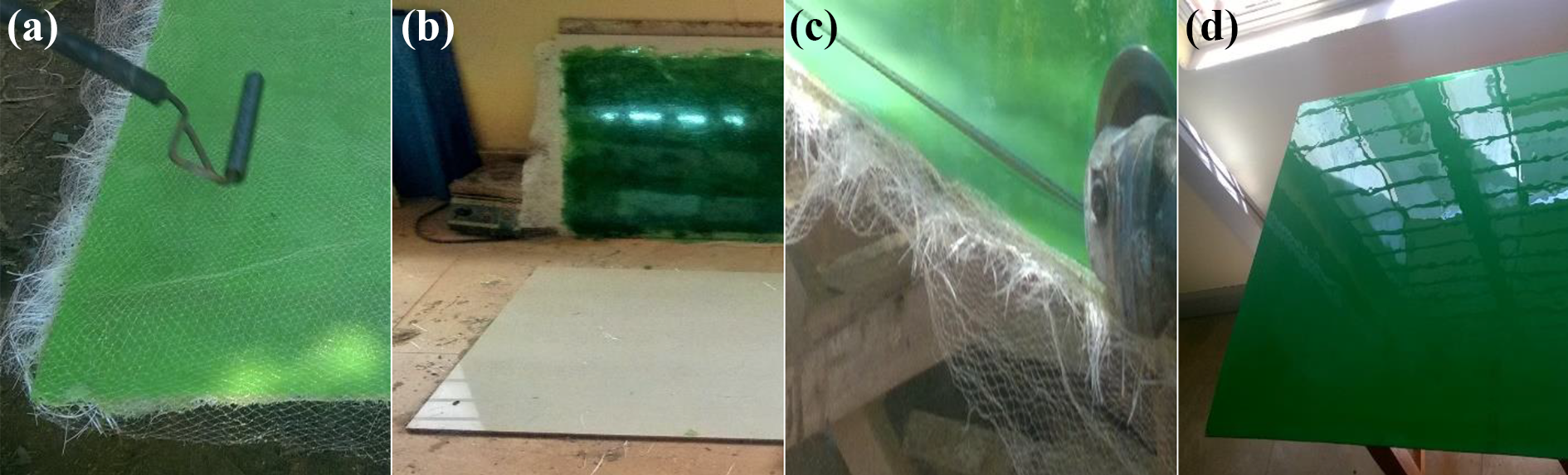
(a) Iron roller being used to prevent air gaps, (b) the tile used as load to be applied on top of the sandwich, (c) excess material is being cut off, and (d) finished HFNRP 1 sheet to be subjected for testing.
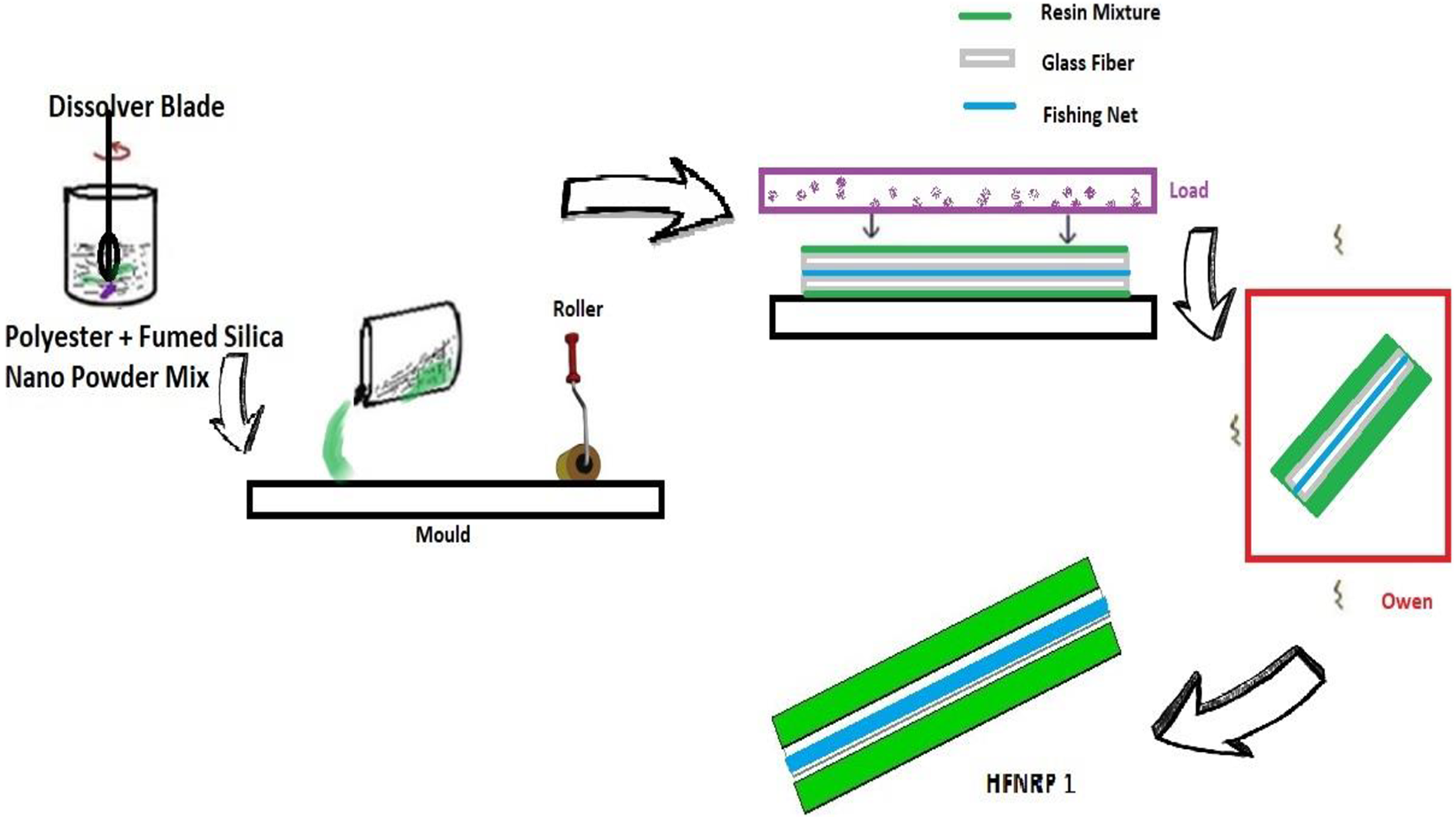
Schematic diagram for the detailed manufacturing process.
Mechanical testing
The tensile test and three point flexural tests of composites were carried out using the fully computerized Kalpak Universal Testing Machine (100 KN). The tensile test for the polymer matrix composite follows ASTM D 3039 (25 mm × 250 mm) and flexural test was performed using the standard ASTM D 790 with the specimen size of 13 mm × 125 mm. The cross-head speed maintained was 2 mm/min for both of the tests. ASTM D 256 (13 mm × 60 mm) was followed for impact behavior of the various samples prepared.23-25
All the above mentioned tests in triplicate were carried out at normal ambient temperature of 29°C, under tropical climatic conditions at the locality which is maintained near the machines with the average wind velocity of 4.3 m/s. The humidity was 66% and the pressure was found to be 1.011 bar, as measured at the time of testing.
Water absorption
The standard used for this test was ASTM D 570-98 (50 mm in diameter and 2.5 ± 0.5 mm in thickness). 26 Average of the five samples for each specimen subjected to this test is taken for accuracy. The samples were pre-conditioned by drying in open air until constant weight was obtained. The weighed samples were submerged in both fresh water (pH 7.8) and sea water (pH 8.4), collected from the locality, measured using a pH meter (Cyber pH) of Range: 0.0–14.0 pH and Accuracy: ±0.1 pH at room temperature of 26°C. The samples were then removed and the surface was cleaned with tissue paper before weighing at different intervals of time.
Optical and thermal analysis
Light transmission test was conducted by following the standard procedure ASTM D 1003-07 on the composite HFNRP materials. 27 The optical properties of the fabricated composites were determined by the percentage of light transmission through the composites. The specimen was cut to the length of 60 mm and a width of 60 mm. This test gives the amount of light that passes through a composite material.
The coefficient of linear thermal expansion (CLTE) is the change in length per unit length of the material per degree of change in the temperature. CLTE was performed by the standard test procedure, ASTM D 696-03. 28 The specimen is placed inside a silica tube and silica rod is inserted into the tube. The setup is kept in two different temperature baths (30°C and 60°C) during a certain period of approximately 2 hours and two baths are preferred to reduce the time required to bring the specimen to the desired temperature. Then the specimen is removed and measured at room temperature for the change in length.
Thermogravimetric analysis was performed using a Perkin Elmer thermal analyzer to observe the thermal stability of the fiber following ASTM E1131-08 standard. All the samples used is in powder form. The sample quantity was evenly distributed in an open pan of 6.4 mm diameter by 3.2 mm depth. Samples weighing about 5 mg each were heated up to 800°C with a heating rate of 25°C/min. The crucible material used was alumina and reference material is also alumina in powder form weighing nearly equal to that of the sample specimen powder. The phase changes are being observed in the DTA curves and not mass change as seen in TGA or DTGA.
Wear analysis
A pin on disc tribometer (ASTM G 99-95a) was employed for the wear analysis of the manufactured specimens. 29 It consists of a stationary “pin” (specimen), under an applied load and a rotating disc. Wear and Friction monitor (ED-201) causes the disk to revolve at 480 rpm about the disk center such that the sliding path traced by the pin is a circle on the disk surface.
Results and discussion
Mechanical tests
Figure 3 clears the fact that, glass fiber and increased layers of waste fishing nets in each of the nano coated composites significantly increases the overall tensile strength of the hybrid composites rather than the bare GFRP composite.22,30-32 The flexural strength of nylon is very high when compared to glass fibers.33-35 which is proved from the flexural results obtained. GFRP has less flexural behavior and among all the hybrid composites also a lower value is obtained in HFNRP 1 due to the single layer of fishing net between the glass fibers. As the fishing net layers moved on to three, there is a sudden increase in flexural strength as depicted in HFNRP 3. Fishing net, which is of nylon material, has good elastic property,35,36 which reflects in the impact test results obtained. The elasticity helps the composite HFNRP 3 to withstand more impact load when compared to the others. It is obvious that glass fiber is more brittle than nylon fiber that is soft and flexible, 36 therefore as the number of nylon fishing net layer increases, the impact resistance tends to increase, which is reflected from the fact that GFRP have little impact resistance when compared to others. In all the four composites, an appreciable spike in values of the mechanical properties was found in the case of HFNRP 3.

Comparison of mechanical properties of composites.
Figure 4(a) to (d) gives the microscopic view of the fractured HFNRP 2 specimen subjected to flexural test. The specimen is illuminated with light intensity of 800–1000 lux with the aid of the digital microscope of 800× capacity. The specimen is further stretched (Figure 4(c)) so that the clear images of the fishing net being sandwiched can be viewed and captured with the aid of the microscope. It is seen clearly from the images that the multifilament fishing net nylon, as seen from one twine being twisted with the other twine to form a single multifilament fishing net (Figure 4(a)), convincingly holds the composite together from fracturing completely. Multi filaments were chosen to increase the surface area which are expected to have better attachment in the composite sheet and less risk of pull-out which is evident from the microscopic images. As the fishing nets are engulfed by the matrix completely and the filaments of the fishing nets are twisted, the delamination is completely prevented as seen from Figure 4(c). The fractured portion of the nano slurry matrix tries to hold on but after the flexural operation, it is the whole function of the fishing net to comprise the whole specimen in to a single material without causing any complete damage to it when reinforced with the glass fiber (Figure 4(d)).
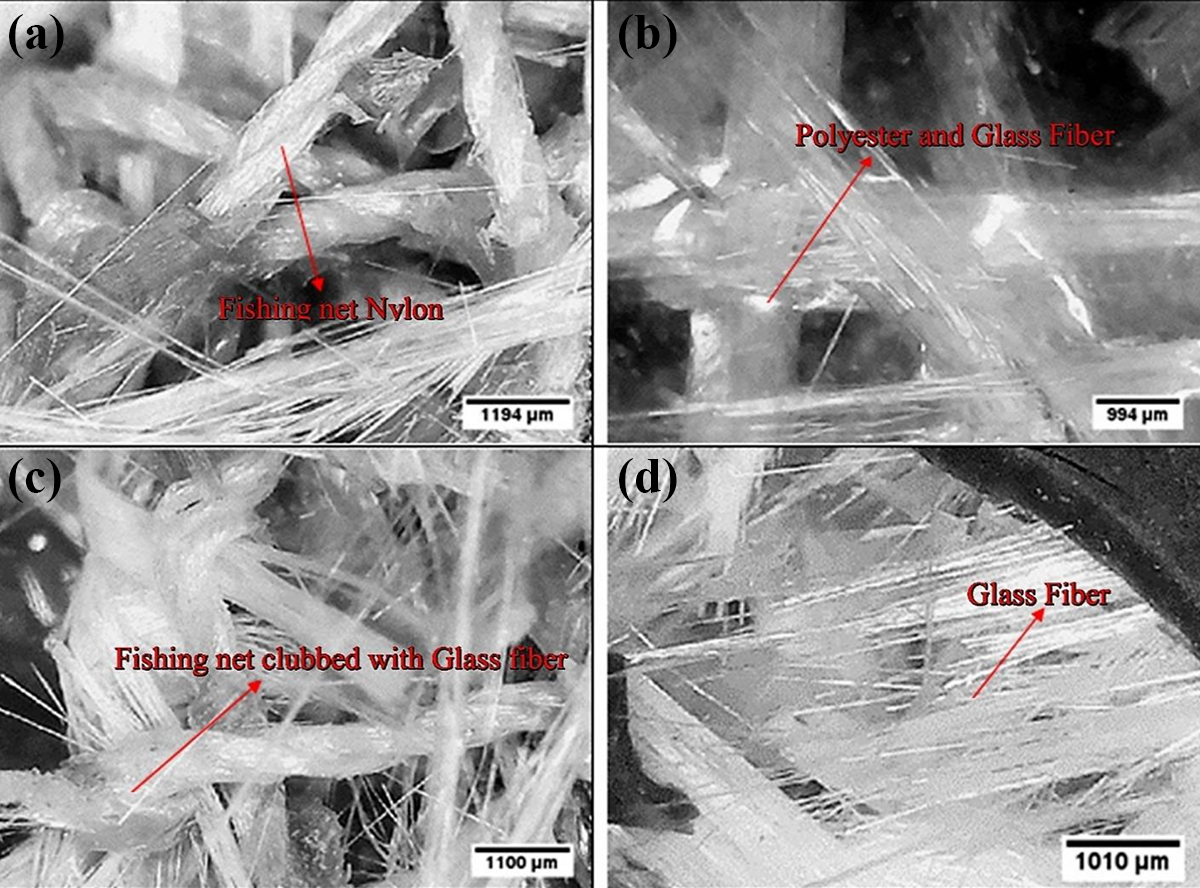
(a)-(d). Microscopic view of fractured HFNRP 2 specimen.
Water absorption
Sea water and fresh water, taken locally from bore well of Kanyakumari District, Tamil Nadu, India, were used to perform the water absorption test. The percentage of moisture content in the composites was calculated by weight difference between the samples immersed in water and the dry samples using the following equation.

where,
Mt is the moisture content in the specimen in percentage;
Wt is the weight of the specimen after immersion in g;
Wo is the weight of the specimen before immersion in g.
The above Figure 5, shown as bar graph, for the different types of composites manufactured shows the occlusion of water and has increased with the increase in time. The seepage of the water into the samples is mainly due to the increased layer of fishing nets which gives enough space for the water to enter, when subjected to a prolonged period of time.
35
The error bar is inconsistent which may be due to the underlying waste fishing nets with deformities. Also, it is conclusive that the increase in weight percentage increases with increase in fishing net layered specimens in both the waters. In addition, hydrophilic nature of fumed silica attracts the water molecules, which can interact with the polar reinforcements, particularly nylon of the composites. Thus, the increase in the percentage of both sea water and fresh water is due to the hydrophilic reinforcements, which are the major constituents of the hybrid composites.36,37 Water absorption.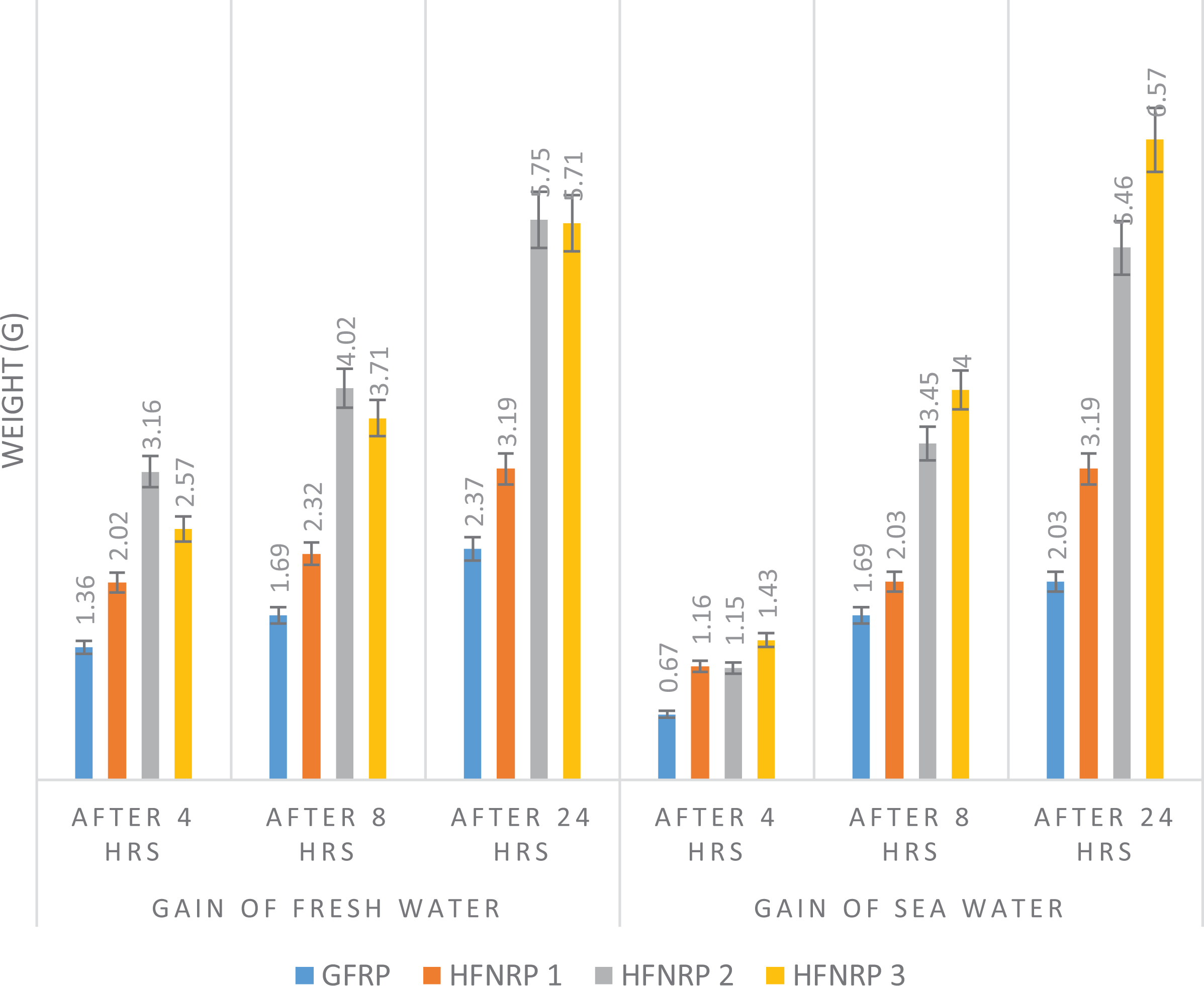
Polyester matrix, due to the complete polymerization with the level of cross linking, attributed to be hydrophobic, reflects the water and protects the composites before the degradation of the composites by the action of water.37,38 Figure 6(a) is the cross sectional image of the composite sheet which is cut for the water absorption test and the vacuum is seen from its microscopic image, which may be due to the air gap formed during the hand layup process. Figure 6(b) is shown to indicate that the matrix bonding with that of the reinforcements is reduced by the occluded water and the overall composite becomes weaker after the specimen is subjected to water absorption test. As seen from the above Figure 6(c), the microscopic image representing small air gaps, led to the start of damage of specimens by the weak interaction of matrix with the reinforcements.39,40 The last image Figure 6(d), gives the better binding of the matrix and fishing net nylon and glass fiber, with both side nano coating on it. The coating thickness is found to be varying between 0.17 mm and 0.26 mm, found with the image processing technique carried out using the ImageJ software with the cross-sectional images of the hybrid composites obtained using the computerized optical microscope. The absorption is more time consuming and also the difference between both the sea water and fresh water for all the composites are nearly equal, which thence concludes to the good capability of the composites to water absorption. Furthermore, these composite sheets have been mainly focused on its usage as partition sheets in buildings where its interaction cannot be over 24 hours and hence the test was carried out for only three intervals of time (4 hrs, 8 hrs and 24 hrs) and at room temperature of 25°C maintained during the whole test procedure.26,41-43
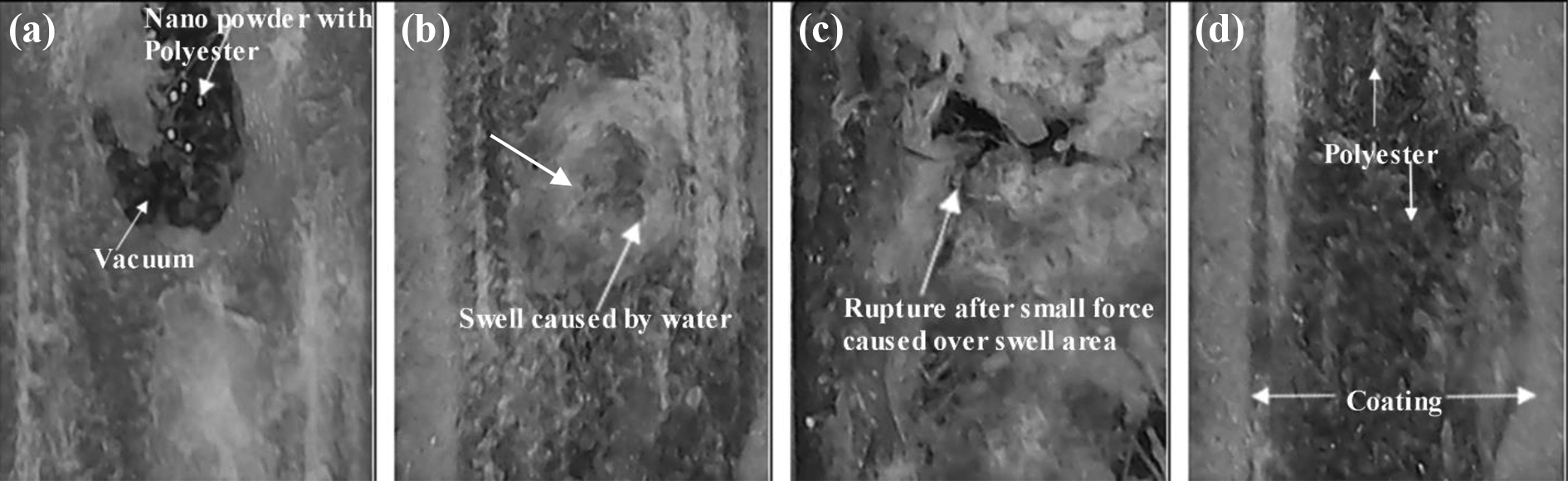
(a to d) Microscopic images of specimens for water absorption.
Optical and thermal analysis
The optical properties of the fabricated composites are determined by the percentage of light transmission through the composites. The reinforcement agents such as discarded nylon fishing net and glass fiber are translucent 44 and polyester matrix, however, is transparent. Also, the added nano powder quantity is comparatively very less. Therefore, it is sure that light transmission occurs to a certain extent in these composites. It is clearly depicted in the values obtained that; light transmission is less for the consecutive composites as the increase in the layer of fishing nets. HFNRP 1 has the maximum percentage of light transmission whereas the HFNRP 3 has the least due to the multiple fishing net layers in sandwich arrangement. It is possible to change the light transmission property of the HFNRP sheets by adding pigments. Any colored pigment can be added along with the manufacturing process to produce the composite material which can be deliberately made opaque as per the requirement.
The coefficient of linear thermal expansion (CLTE) is calculated in inches per hundred feet for the fabricated composites. CLTE values clearly indicates that the thermal expansion is relatively lower because glass fiber alone has the values coefficient of linear expansion as 6 × 10⁻⁶/°C 12 , which is very much lesser than nylon and polyester 34 and the increase in values for the manufactured composites are not exponential in response to the added fishing net layers. The rigidness of the composites was improved by the in-situ coating of the hydrophilic nano powder with polyester 22 and the highest value of coefficient of linear thermal expansion for the HFNRP 3 specimen is found to be 2.01 inches/100 feet. Thus, HFNRP composites have good resistivity for linear expansion as shown in Figure 7, which indicates the resistance to dimensional change upon temperature change for its use as partition sheets.
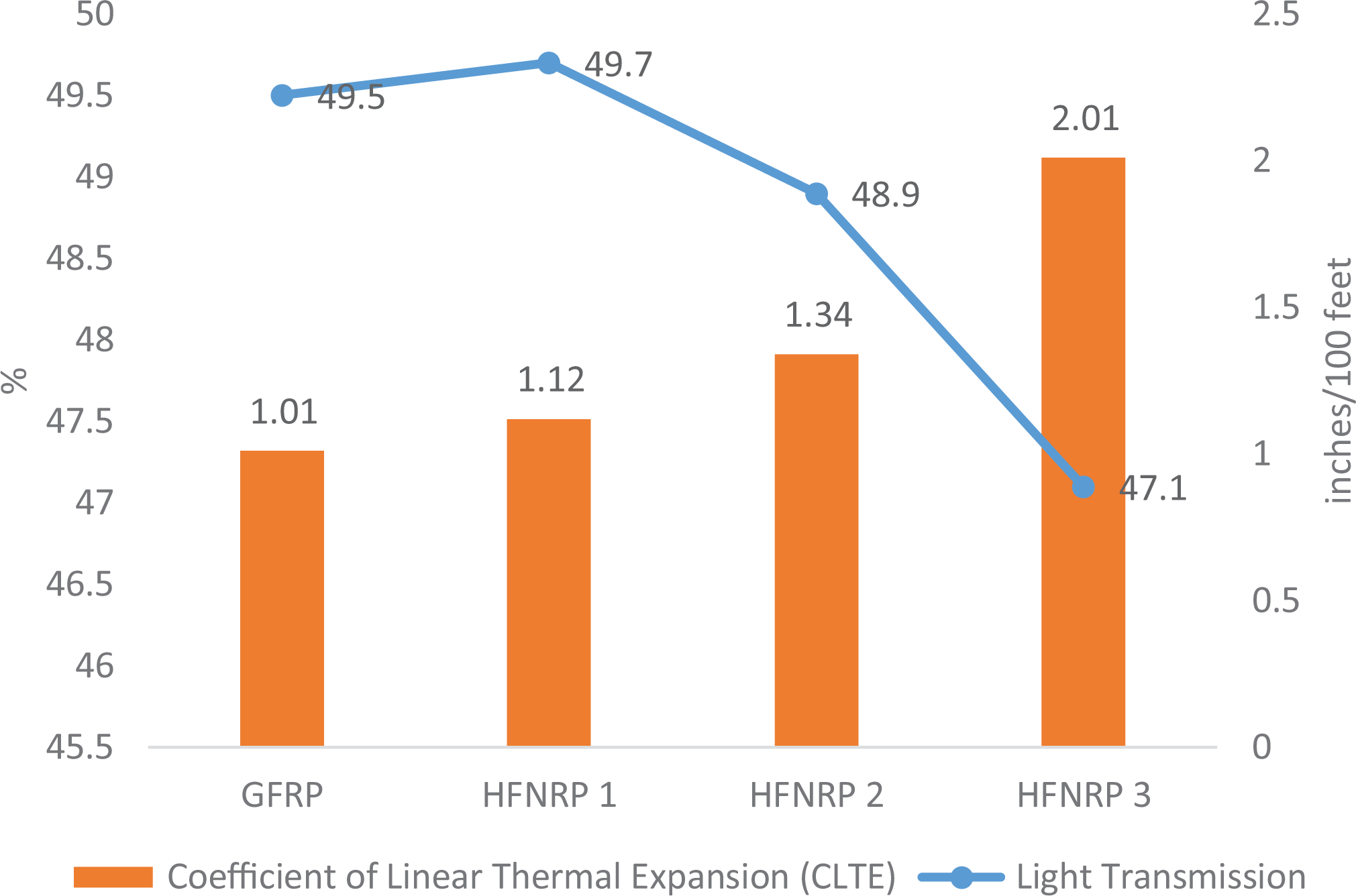
Light transmission and CLTE.
Figure 8(a) to (c) gives the thermogravimetric analysis of the specimens. The initial loss of water is found from the TGA graph at the temperature of 115°C, which is observed as a small drop for the GFRP specimen and then the disintegration of the material starts.45-47 The sharp point or the shoulder formed in the TGA (Figure 8(a)) are hardly seen but the DTG graph clearly depicts the values from the spike formed at the same temperature which is expressed in figure 8(b). From the TG graph, it can be inferred that all the composite is quite stable till 200°C as there is only 5% weight loss. The complete softness of polyester matrix is obtained around 240°C. 45 From 240°C to 450°C, there is a drastic decomposition of the sample which leads to nearly 50% weight loss of composite materials. 48 This is mainly due to the degradation of the polyester matrix as well as the reinforcements. 49 So, from TG plot for the composite, it can be decided that the mentioned composite is suitable for low temperature application below 340°C, obtained by the intersection of the slopes of TG curves formed. The degradation is more for the hybrid composites due to the nylon content in them even though they have fumed silica enriched nano powders coated over them, which has improved thermal resistance with polyester. 22 At the temperature of 800°C, HFNRP 1 degrades and the remains reaches to nearly 38%, HFNRP 2 however goes far down to 11% and HFNRP 3 even less, i.e. 2%.

(a) Comparison of TG % of various manufactured specimens, (b) comparison of DTGs of various manufactured specimens, and (c) comparison of DTAs of various manufactured specimens.
The DTG shown in Figure 8(b), clearly depicts the shoulder less GFRP specimen and shoulders in hybrid specimens between the temperatures 450°C to 600°C. The peaks are nearly the same for both HFNRP 2 and HFNRP 3 which proves the mass change is quite similar to both the hybrids. While the mass change in HFNRP 1 is slightly greater than that of GFRP’s, but all the composites produced peaks at 380–390°C.
The DTA curve from the Figure 8(c), shows the endothermic phase change peak of various composites. GFRP has its peak at 455°C, whereas the HFNRP 1, HFNRP 2 and HFNRP 3 has their peaks at 540°C, attributing to the presence of fishing nets. There is maximum temperature difference between sample and reference from 410°C to 580°C. Conversely, the results from DTA demonstrated that the differential weight loss is 1.3% at 300°C. 49 This is only because of the fumed silica nano powder coating over the hybrid specimens. But after 410°C, the nylon favors the endothermic reaction of the composites owing to the perfect decomposition of the HFRNP 3 (more fishing net layers). From the analysis, it can be concluded that the complete degradation temperature of the hybrid composites is about 580°C.
Wear analysis
Coefficient of friction is determined by the ratio of the frictional force to the loading force on the specimen. Figures 9(a) to (c) illustrates the coefficient of friction vs the distance traveled by the sliding GFRP specimen over the disk with the loads 5 N, 10 N and 15 N. It is clear that the coefficient of friction is more for the load carrying specimen with 15 N. The coefficient of friction has increased rapidly over the sliding distance of 1200 m. It is a general fact that the friction depends on the type of fiber, resin and also the fillers which are used in the manufacture of composites.50,51 The difference between the three samples is minimum when the applied load was less, but the difference is more prominent as the applied load was increased to 15 N. However, the coefficient of friction is more sensitive to the sliding distance than the load acting upon the sample.52,53
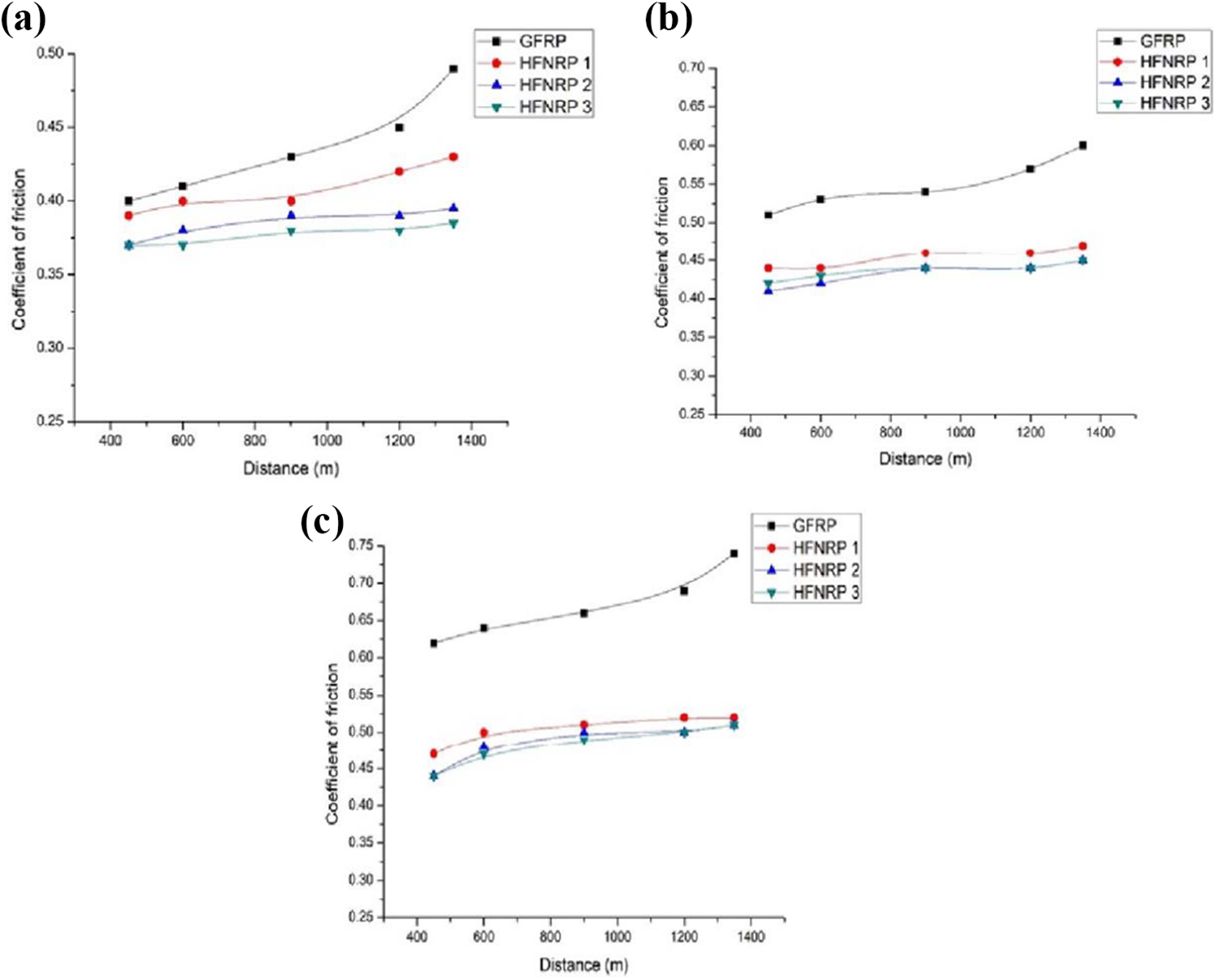
(a) Coefficient of friction vs sliding distance when applied load is 5 N, (b) coefficient of friction vs sliding distance when applied load is 10 N, and (c) coefficient of friction vs sliding distance when applied load is 15 N.
It is clear that the steep increase in coefficient of friction occurs with just GFRP specimen as the sliding distance is increased. At the load condition of 5 N, the difference in coefficient of friction is greater with the hybrid specimens as seen from the graph. The coating of the specimens provided additional mechanical strength which partly accounted for the difference in the coefficient of friction between them. The coefficient of friction is almost identical for both the HFNRP 2 and HFNRP 3 specimens at the load of 15 N. The combined action of both the fumed silica and the increased number of fishing nets, which are placed in T90° orientation, have thus contributed to the wear resistance of the hybrid specimens. 53 The cost of one square feet of the manufactured HFNRPs is less than $2, which is very much less than their counterparts, 54 as the major reinforcement is waste fishing net. Therefore, these sheets can be used as a partition sheet material in buildings, especially in multistoried apartments, to reduce the overall weight.
Conclusion
The mechanical properties of the hybrid composite sheets with fishing nets and glass fiber as reinforcements in combinations, along with polyester matrix, coated with fumed silica nano powders were appreciable especially pronounced in the flexural and impact behavior. Nevertheless, the water absorption through the various sheets is much less and had no significant difference in both the sea water and fresh water. Light transmission is almost negligible due to the reinforcements and fumed silica coating. Thermal analysis also gave the mass change and phase change of the composites at different temperatures with the help of the thermogravimetric analyzer. The multilayer addition of waste fishing nets coupled with the nano coating greatly reduced the wear of sheets, even at higher loads of 10 N and 15 N. Even though all of the HFNRPs have good properties, HFNRP 2 has comparatively better properties. HFNRP 2 was used in the construction of the model room for being used as partition sheets and thus can be manufactured and utilized as value added economically viable partition sheets in buildings.
Footnotes
Acknowledgment
The author(s) are grateful to the authorities of Anna University for all the support rendered.
Declaration of conflicting interests
The author(s) declared no potential conflicts of interest with respect to the research, authorship, and/or publication of this article.
Funding
The author(s) disclosed receipt of the following financial support for the research, authorship, and/or publication of this article: This research was supported by the Building Materials and Technology Promotion Council, a Central Governmental Organization of India (BMT/RESEARCH PROPOSAL/AR/2014 (P-5): dt 19-03-2015).
