




Abstract
Many investigations have demonstrated that the addition of nanoscale particles could affect in-plane shear properties of the laminated composites. Besides, a variety of testing procedures were introduced to evaluate the in-plane shear properties of the multiscale composite materials. In the current research, Iosipescu shear, double V-notched rail, and off-axis tensile testing methods were used to measure in-plane shear modulus and strength of the glass/epoxy and carbon nanofiber (CNF) as 0.25 wt% CNF/glass/epoxy laminated composites. In-plane shear properties of the CNF/glass/epoxy specimens were increased in comparison with the neat glass/epoxy specimens using all three testing procedures. However, the improvements were not identical for all the testing methods. The maximum improvements in the in-plane shear modulus and strength recorded using off-axis tensile test method were as 11% and 15.6%, respectively.
In the off-axis tensile test method, all in-plane stress components are activated in the fracture plane parallel to the fiber orientation which are responsible for the failure initiation and propagation. Consequently, enhancing the resin’s mechanical property and interface bonding quality using CNF could remarkably enhance the in-plane shear property of the CNF/glass/epoxy specimens. On the other hand, the special fiber orientation of the specimens in Iosipescu shear and V-notched rail methods prevents the reinforcing effects of the CNF particles to be effectively revealed.
Introduction
Glass fiber-reinforced plastics (GRPs) are extensively used in structural application due to their economic advantages. Recently, various types of nanoparticles have been incorporated in glass/epoxy composites to produce customized lightweight structures with improved mechanical and electrical properties. Nanoparticles have extraordinary mechanical properties, which make them excellent candidates to enhance the mechanical properties of GRP materials as additives without changing their structural weight. However, there has not been a notable improvement in the mechanical properties observed during monotonic loading. 1 The out-of-plane and in-plane shear properties of the fibrous composites are controlled by the properties of the matrix and the interface between the fibers and the matrix. 2,3 Hence, improving the mechanical properties of the matrix could indirectly result in improved mechanical properties of the nanocomposites in terms of strength and modulus.
Fiber–matrix debonding caused by the in-plane shear loading is one of the major failure modes of the laminated composites as a result of the stress concentration at the interfaces between the fibers and the matrix. 2,3 A comprehensive review of the available literature has been revealed that the addition of different types of nanoparticles can improve the shear properties of composites. The carbon-based nanofillers are used as reinforcing particles of composites in the three main groups, namely carbon nanotubes (CNTs), carbon nanofibers (CNFs), and graphite nanoplatelets (GNPs). Kim incorporated CNTs in the resin and impregnated woven carbon fiber composites to enhance their mechanical properties. 4 He reported that for the case of woven fabric composites, mechanical interlocking between the CNTs and the carbon fibers increased the resistance of the specimens to the shear failure. Furthermore, in this research, the CNT particles were functionalized by three different methods: air oxidization, reflux treatment in nitric acid, and treatment in a mixture of nitric and sulfuric acids, and the effectiveness of the functionalization methods was investigated. Fernández et al. reported that the shear properties of the glass fiber/epoxy composites filled with CNTs were not improved. 5 Kim and Hahn sprayed CNT particles between unidirectional carbon fiber prepregs and performed tensile tests on the [±45°] laminates to measure their in-plane shear properties. 6 Their experiments showed no enhancement of the shear properties of the nanoparticle-filled specimens.
Kurd et al. investigated the influence of CNTs on the fracture toughness of the epoxy-based composites. 7 They showed that the fracture characteristics of the composites filled with CNTs depend on the content and dispersion quality of the CNTs. Mechanical damping of composites reinforced by randomly distributed particles due to interfacial sliding is analyzed by He and Liu. 8 The investigation of Xiao et al. showed that the mechanical performance of CNT-reinforced polymer composites is primarily controlled by the dispersive capacity and interfacial shear strength of CNTs in polymer matrices. 9
In the second carbon-based group, CNFs were used as nanoreinforcements by some researchers to evaluate their effect on the shear properties of the composites. 10 -13 Taheri-Behrooz et al. 10 investigated the out-of-plane shear properties of the glass/epoxy composites filled with CNFs and revealed that the shear modulus and strength were improved by using only 0.25 wt% of CNF in glass/epoxy composites. Hossein et al. considered the effects of CNFs on the thermal and interlaminar shear responses of E-glass/polyester composites utilizing different amounts of CNF particles. 11 They evaluated the effects of CNF on the interlaminar shear strength of glass/polystyrene composites and found 49.5% improvement through better interfacial bonding between the fiber and the matrix, which was resulted from the presence of CNFs.
The in-plane shear strength of carbon fiber/epoxy composite specimens filled with functionalized GNPs was improved compared to the baseline composites without nanofillers. 12,13 Furthermore, a combination of Al2O3 and SiC as hybrid nanoparticles implemented in glass fiber-reinforced epoxy (GFR/E) laminates was studied by Khashaba. 14 The author reported that the results from off-axis flexural strengths of unidirectional (UD) GFR/E composites demonstrated a good fiber/nanophase–matrix interfacial bonding. Asi 15 investigated the shear properties of the glass/epoxy composites filled with different proportions of the Al2O3 particles and established that the shear strength of the composites decreased by increasing the Al2O3 particle content, whereas flexural strength was increased by increasing the Al2O3 particle content up to 10% beyond which it was decreased. Cao and Cameron 16 quantitatively showed that the flexural and shear properties of the glass/epoxy composites filled with silica particles were superior to that of a conventional fiber-reinforced polymer composite of the same material. Shinde and Kelkar 17 used tetraethyl orthosilicate (TEOS) electrospun nanofibers (ENFs), which were produced using the electrospinning method. They showed that the presence of TEOS ENFs in the epoxy resin enhanced the interlaminar shear stress of GRP by 15% with 0.6 wt% of TEOS ENFs.
A comprehensive survey of the literature revealed that the in-plane shear properties of the glass/epoxy composites filled with CNFs are not yet fully understood. To evaluate the in-plane shear properties of the laminated composites, a variety of test methods have been developed by the composite research community. The most popular of these shear test methods are short-beam shear test, 18 two-rail shear test, 19 ±45° tensile shear test, 20 Iosipescu shear test, 21 and the V-notched rail shear test. 22 Authors believe that various failure mechanisms may activate using different testing methods as a result of different fiber orientations and loading mechanisms in the test specimens. For instance, in the off-axis specimens, all in-plane stress components are responsible for the failure, while in the V-notch and Iosipescu specimens, that is not the case. So this question was raised, which one of those testing methods could effectively illustrate the reinforcing effect of the nanoparticles on in-plane properties of the laminated composites? The current research is performed to answer the abovementioned question in detail. In the present study, the in-plane shear properties are characterized using the Iosipescu, V-notched rail, and the 15° off-axis shear test methods for both 0.25 wt% CNF/glass/epoxy hybrid laminated nanocomposites and the neat glass/epoxy composites. Furthermore, the failure plane of the specimens is carefully investigated using scanning electron microscopy (SEM) equipment to precisely address the capabilities of each testing method to reveal the reinforcing potential of CNF particles on the in-plane shear properties of the laminated composites.
Materials specification
Epoxy resin
ML-526 (bisphenol-A) epoxy resin was used to fabricate the specimens due to its low viscosity and extensive industrial applications. The low viscosity of the matrix makes the dispersion of additives easier. The glass transition temperature, viscosity at 25°C, tensile modulus, and tensile strength of the ML-526 epoxy resin are 72°C, 1190 cP s, 2.6 GPa, and 60 MPa, respectively. HA-11 (polyamine) was used as the curing agent. The ML-526 resin and the HA-11 polyamine hardener were supplied by Mokarrar Company (Iran).
Nanoparticles
The CNFs were utilized as carbon-based nanofillers and were provided by Grupo Antolin SL (Spain). The physical properties of CNFs are presented in Table 1. These particles have an average diameter of approximately 20–80 nm with the length more than 30 µm.
CNF specifications.
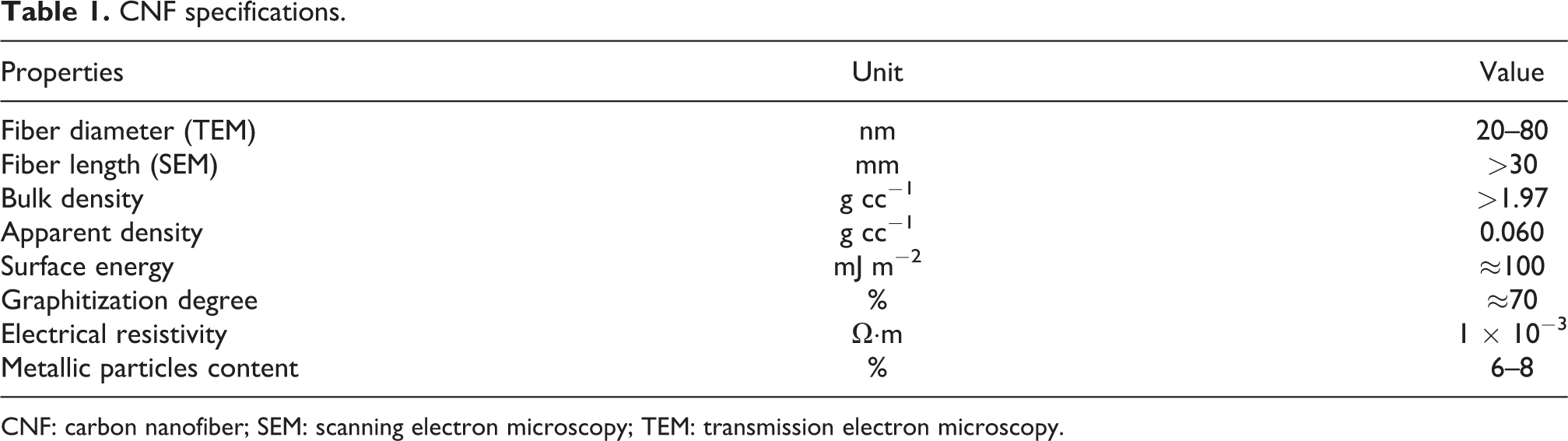
CNF: carbon nanofiber; SEM: scanning electron microscopy; TEM: transmission electron microscopy.
Glass fibers
The unidirectional E-glass fabric with an average areal density of 223 g m−2 and filled thread count of 17.8 in−1 was supplied by Interglass (Porcher Industries Germany GmbH, Germany).
Test equipment and methods
Static testing instruments
The universal testing machine STM-150 provided by Santam (Iran) was employed to perform in-plane shear tests. The fracture surfaces were gold sputtered, and field-emission SEM made by Zeiss Sigma Microscopes (Germany) was used to analyze CNF/glass/epoxy hybrid laminated nanocomposites and the fracture surfaces.
Data reduction
The objective of this section is to perform a brief review of data reduction procedures for the measurement of shear properties of composite materials using the Iosipescu shear, V-notched rail shear, and the off-axis tensile test methods.
Iosipescu shear test method
The Iosipescu shear test method covers the shear properties of composite materials reinforced by high-modulus fibers. Composite materials are limited to continuous fiber- or discontinuous fiber-reinforced composites. 21 The dimension of the test specimen used in this method is shown in Figure 1. The shear strains are measured using strain gauges bounded in the center of the specimen at +45° and −45° orientations with respect to their longitudinal axis. The average shear strain and stress in the principal material directions and at the notched section of the specimen is calculated by


where P is the applied force and A is the cross-sectional area of the specimen between the notches. The apparent tangential shear modulus, G, is calculated by the initial slope of the shear stress–shear strain curve. The specimens would be produced by stacking unidirectional fabrics either parallel or perpendicular to the loading direction according to the ASTM D 5379 standard. 20 Based on the observations in the failed specimens, failure starts from the edges at the root of the notch, parallel to the fiber direction, and propagates to the middle section of the specimens.
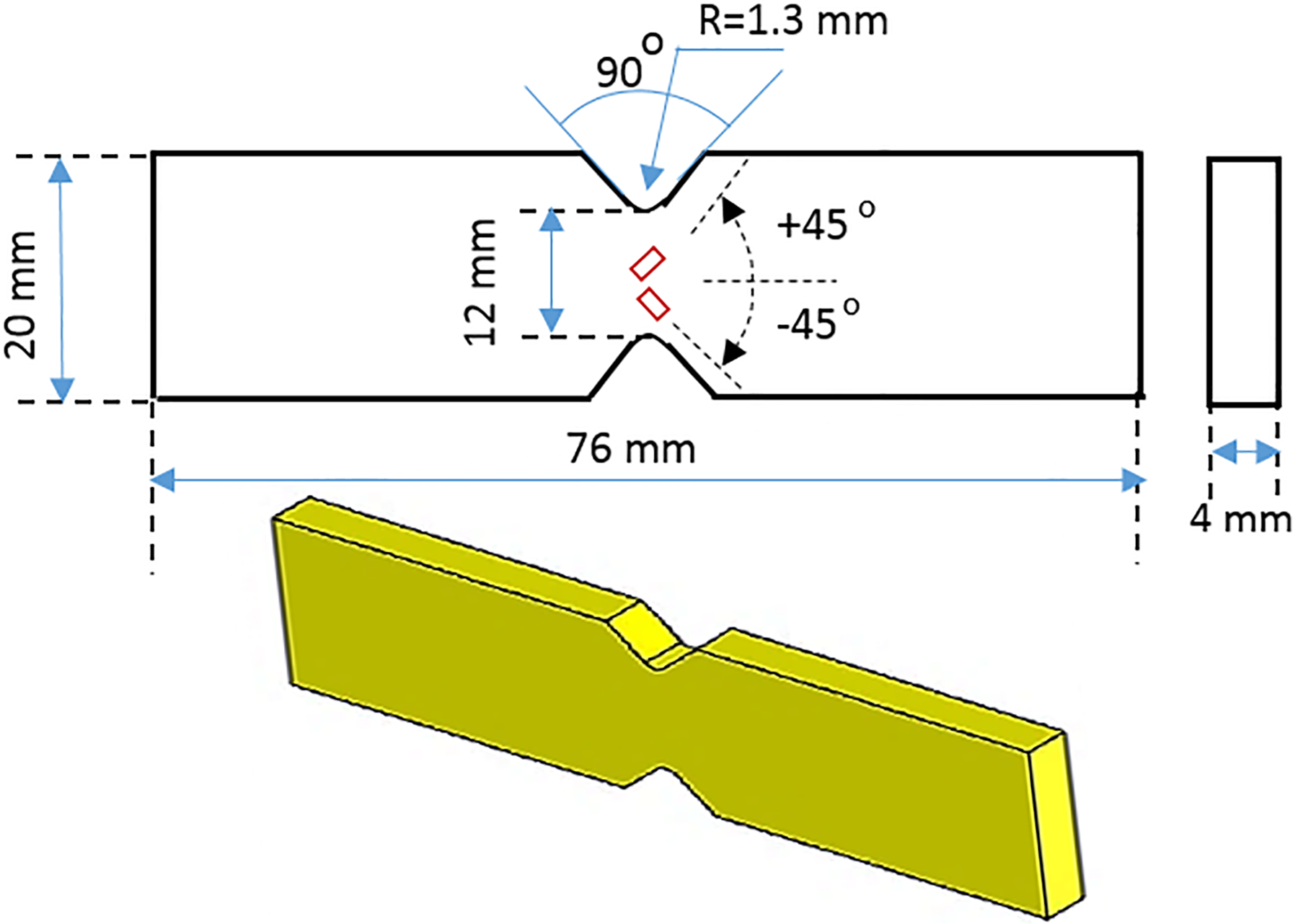
The Iosipescu specimen configuration.
V-notched rail shear test method
This test method covers the determination of the shear properties of high modulus fiber-reinforced composite materials by clamping the ends of a V-notched specimen between two pairs of loading rails. In-plane shear properties can be evaluated, depending upon the orientation of the material coordinate system relative to the loading axis according to the ASTM D7078 standard. 21 Dimensions of the test specimens are shown in Figure 2. The shear strains are recorded using strain gauges bounded in the center of the specimen at +45° and −45° orientations with respect to their longitudinal axis. The average shear strain and stress in the principal material directions and at the notched section of the specimen are calculated using equations (1) and (2).

The V-notched rail shear test specimen.
During tensile testing of the specimens, the rails introduce shear forces into the specimen through the specimen faces. In comparison, the specimen of the test method ASTM D5379 is loaded through its top and bottom edges. Therefore, face loading allows higher shear forces to be applied to the specimen if required. According to ASTM D7078, different specimens with [0], [90], and [0/90]s layups could be used to obtain in-plane shear strength and modulus of the unidirectional plies. Specimens with [0/90]s layup were used in the current research to prevent premature failure during testing.
Off-axis tensile test
In this method, a rectangular specimen with fiber orientation at a certain angle (α) with respect to the loading direction is tested under tensile loading to obtain in-plane shear properties. As shown in Figure 3, all in-plane stress components are active in the failure surface during testing.

The off-axis specimen configuration.
The shear strain is measured using rosette gauge fixed at the center of the specimen using the following expression:

where, εa, εb, and εc are the normal strains recorded along the grid directions a, b, and c, respectively. Moreover, stress components in the principal material axes are calculated as follows:
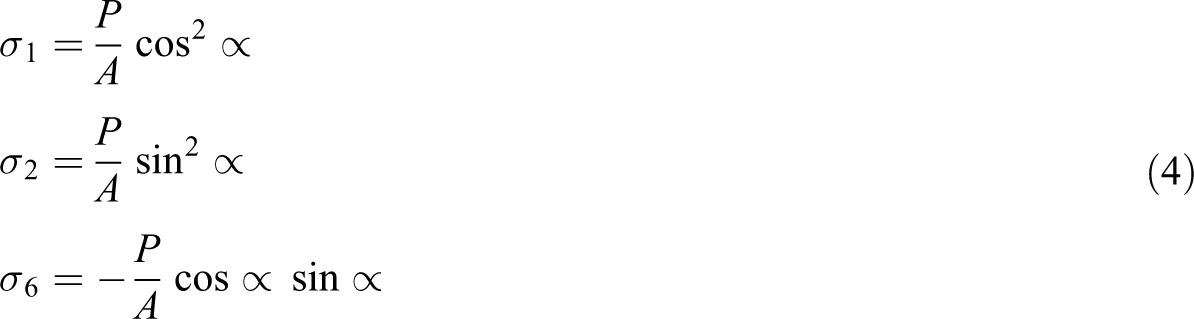
where A is the cross-sectional area of the specimen and P is the applied load to the off-axis specimen, which is recorded by the load cell.
Consequently, the in-plane tangential shear modulus is obtained by the following expression:

This testing procedure is the same as the method explained by the ISO 14129 or ASTM D 3518 standard.
Specimen preparation
Nanoparticles dispersion
To fabricate the multiscale CNF/glass/epoxy laminated composites, epoxy resin was mixed with 0.25 wt% CNF and stirred for 10 min at 2000 r min−1. Then, the mixture was sonicated via 14-mm diameter probe sonicator (Hielscher UP400S, Teltow, Germany) for 90 min. During the sonication, the mixture container was kept by the aid of an ice-bath to prevent the overheating of the suspension and to keep the temperature around 40°C. After sonication, the hardener was added to the mixture at a ratio of 15:100 and stirred gently for 5 min. Subsequently, it was vacuumed at 1 mbar for 10 min to remove any trapped air. The sonication time depends on the filler contents and has been defined based on available experiments. Shokrieh et al. 23 investigated the suitable sonication time versus contents of the filler and pointed out for 0.25 wt% CNF particles, and the optimum value for sonication time is 90 min via 14-mm diameter probe sonicator at an output power of 200 W and 12 kHz frequency.
Laminated composites fabrication
After providing the epoxy matrix with 0.25 wt% CNF fillers, vacuum-assisted hand layup technique was employed to fabricate laminated composite panels. Every set of the sample was cut from the same panel with a fixed fiber volume fraction. All panels were cured at room temperature for 48 h, followed by 2 h at 80°C and 1 h at 110°C for postcuring. Then the specimens were sized from the panel using a waterjet cutting machine. A burnout test was performed, and the fiber volume fraction of the composite panels was found to be 46 ± 2 according to the ASTM D 3171-99 24 standard for various panels.
Results and discussion
In-plane shear properties by the Iosipescu testing procedure
Six specimens were prepared from the fabricated composite panels and hybrid nanocomposite panels in accordance with the ASTM D 53879 standard. 21 The composite panels are 3.9-mm thickness and consist of 22 unidirectional plies oriented 90° with respect to the loading direction. The in-plane shear modulus and strength of both the glass/epoxy composites and 0.25 wt% CNF/glass/epoxy hybrid nanocomposite were measured during testing. Figure 4 demonstrates the manufactured test fixture and a sample of composite and nanocomposite specimens instrumented with strain gauges. A summary of the tangential in-plane shear modulus and in-plane shear strength recorded during the test is presented in Table 2.

Iosipecscu test: (a) modified fixture, 8 (b) glass/epoxy, and (c) CNF/glass/epoxy specimens.
In-plane shear strength and modulus of the Iosipescu shear tests.

CNF: carbon nanofiber; SDV: standard deviation.
The in-plane shear modulus and strength of the glass/epoxy composites were improved by 10.4% and 11.4%, respectively, at the presence of 0.25 wt% of CNF particles. This improvement could be explained through a better interfacial bonding between the fiber and the matrix due to the presence of the CNFs.
In-plane shear properties by V-notched rail shear procedure
The in-plane V-notched rail shear test was performed in accordance with the ASTM D7078 21 standard. The composite panels are 2.2 mm thick and consist of 12 unidirectional plies [0/90]s stacking sequence. The apparatus of the assembled fixture for the V-notched test with the pictures of the neat and hybrid nanocomposite specimens is shown in Figure 5. The achieved results for the in-plane shear modulus and strength using the V-notched rail shear test are presented in Table 3.

V-notched rail shear test: (a) apparatus assembled for the V-notched test, (b) glass/epoxy, and (c) CNF/glass/epoxy specimens.
In-plane shear strength and modulus of the V-notched rail shear test.

CNF: carbon nanofiber; SDV: standard deviation.
It was found that using 0.25 wt% of CNF particles increases the in-plane shear modulus and strength of the glass/epoxy composites by 6.7% and 7.5%, respectively. The influence of nanoparticles was positive in this case, but their effectiveness was less than the Iosipecu method. The face loading of V-notched rail method allows higher shear forces to be applied to the specimen through tests in comparison with the Iosipescu shear test.
In-plane shear properties by 15° off-axis tensile test procedure
Test specimens were cut from the manufactured glass/epoxy composites and 0.25 wt% CNF/glass/epoxy hybrid nanocomposites plates for 15° off-axis tensile test, as illustrated in Figure 6. The composite panels are 1.8 mm thick (10 unidirectional plies). Then, the in-plane shear modulus, strength of the glass/epoxy composite, and 0.25 wt% CNF/glass/epoxy hybrid nanocomposite materials were measured using the tensile test. The modulus measurements of the specimens were performed using three strain gauges, which were mounted on each of the specimens. The in-plane shear modulus and strength, which are presented in Table 4, are calculated using equations (5) and (6), respectively. As presented in Table 4, the shear modulus and strength were increased by 10.6% and 15.8%, respectively, by adding of 0.25 wt% of CNF into the glass/epoxy specimens.
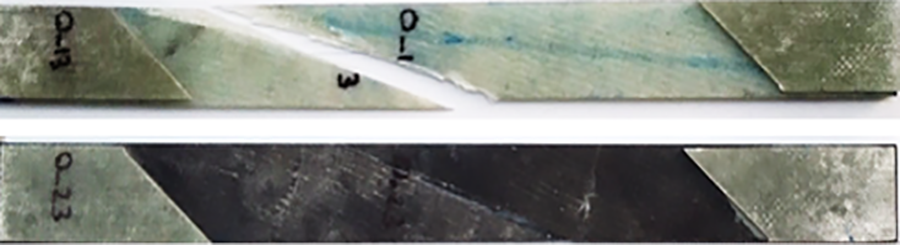
15° off-axis tensile test: glass/epoxy and 0.25 wt% CNF/glass/epoxy specimens.
In-plane shear strength and modulus of the 15° off-axis tensile test.

CNF: carbon nanofiber; SDV: standard deviation.
The presence of the CNF particles in the interface of the fibers and composite layer is the main source of this property improvement. The CNF particle-reinforcing effect was obtained using the off-axis tensile test method over the Iosipescu and the V-notched rail methods.
Failure surfaces assessment of Iosipescu, V-notched rail, and off-axis shear tests
In this section, the influence of three different testing methods on the in-plane shear modulus and strength of the reinforced glass/epoxy composite laminates reinforced by 0.25 wt % CNF is taken into consideration and compared in Figures 7 and 8.

In-plane shear strength improvement (%) in the Iosipescu, V-notched rail, and off-axis shear test methods.
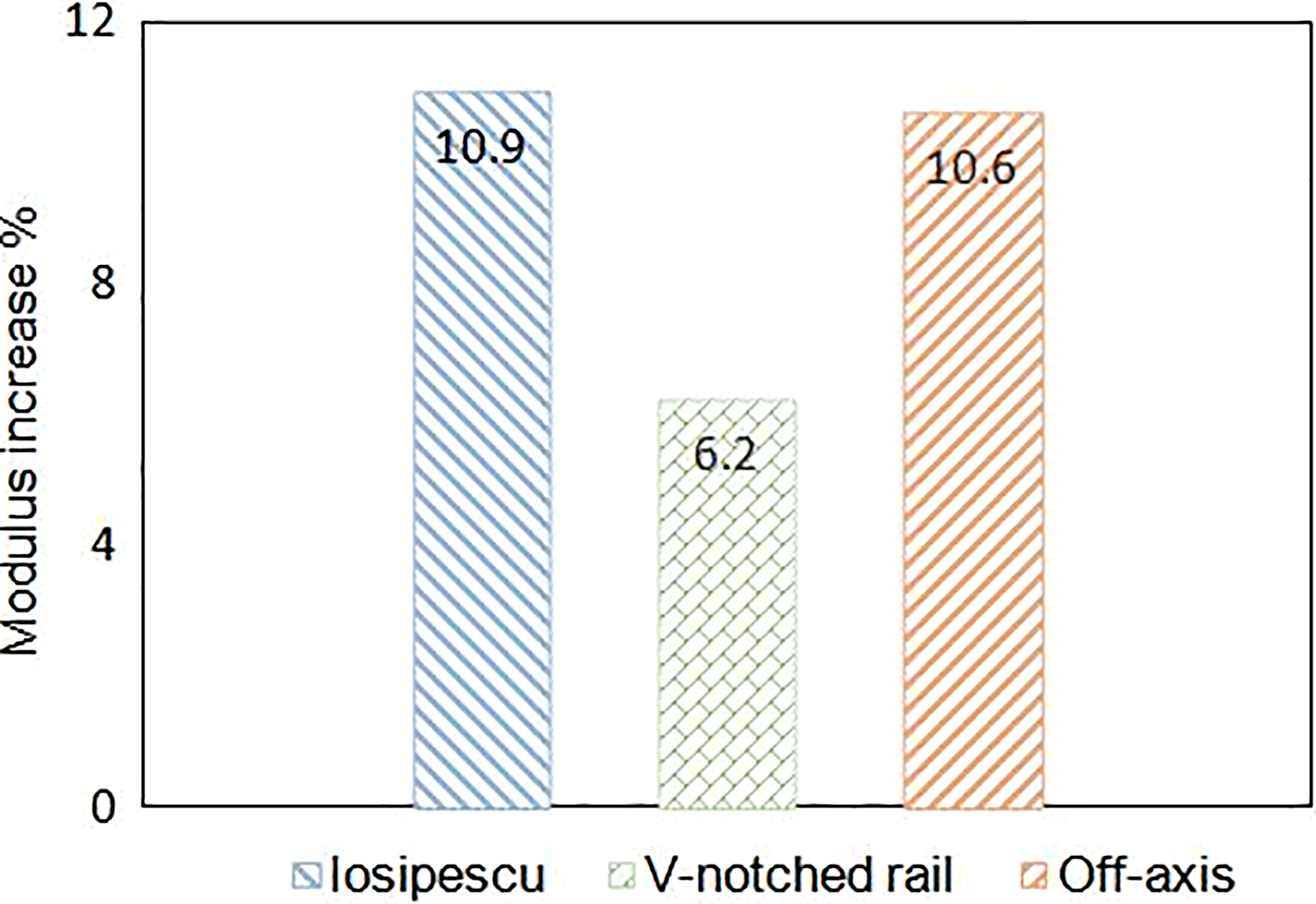
In-plane shear modulus improvement (%) in the Iosipescu, V-notched rail, and off-axis shear test methods.
The achieved results showed that the Iosipescu and the off-axis tensile shear test methods are more compatible and appropriate to obtain the in-plane shear properties. In the Iosipescu specimens, fibers were aligned perpendicular to the loading direction. Therefore, failures are initiated from the notched locations and are propagated to the middle part of the specimen, where the in-plane shear stress is uniform. Inspection of the fracture surface of the specimens using SEM confirmed the better quality of the bonding between the fibers and the resin in the specimens filled with nanoparticles (Figure 9). The toughening role of the CNFs increased the final strength and modulus of the nanofilled specimens compared to the neat glass/epoxy specimens. In addition, rough fracture surface in the nanofilled specimen (Figure 9(b)) confirms the contribution of the CNFs in toughness enhancement of the hybrid composite specimens.
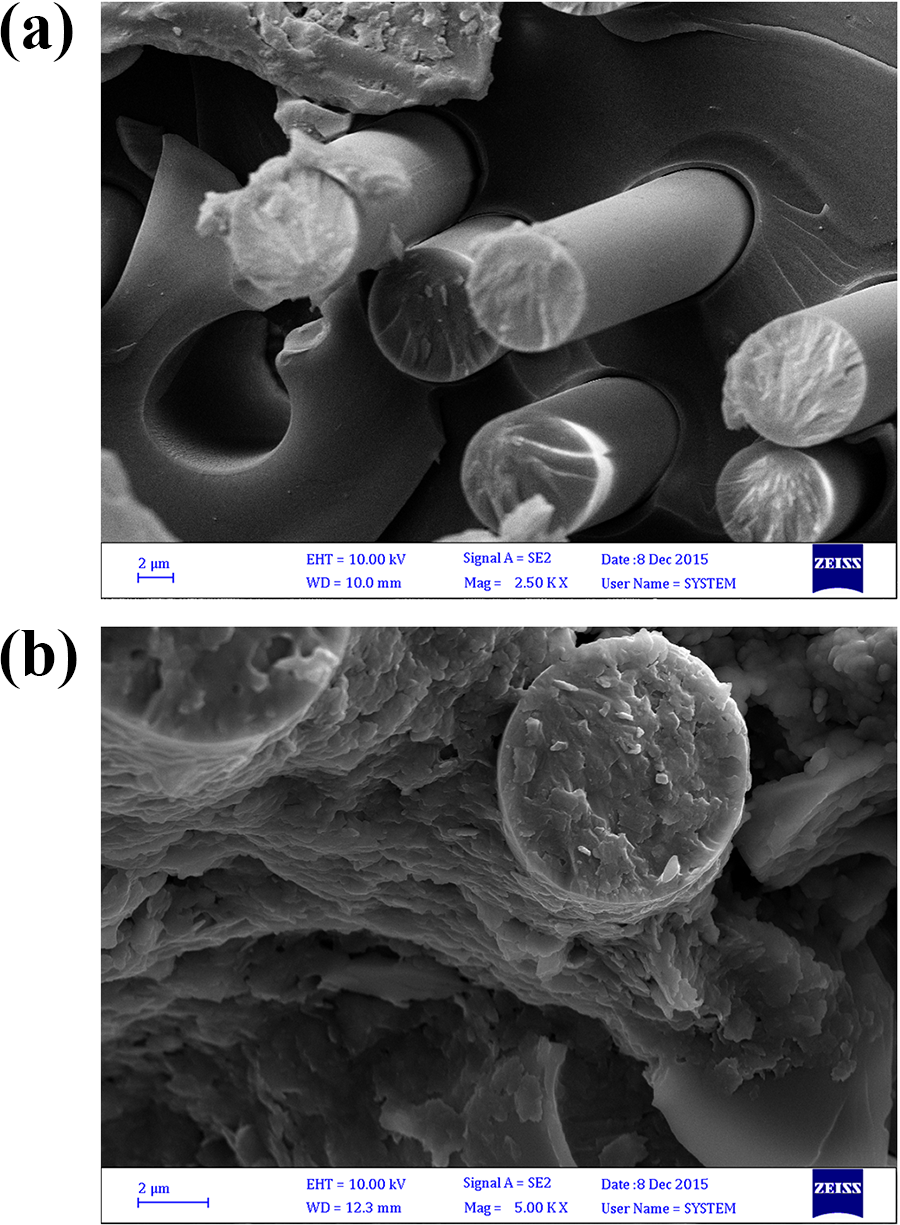
SEM photographs of failure cross-section of Iosipescu specimens (a) neat glass/epoxy and (b) 0.25 wt% of CNF/glass/epoxy specimens.
The V-rail testing method showed only 6.7% and 7.5% enhancement in the modulus and strength, respectively. This small amount of property enhancement could be explained by the specimen microstructures as follows. The V-rail specimens consist of unidirectional fibers aligned in 0 and 90° directions as cross-ply specimens. In the neat and nanofilled specimens, initial cracks initiated from the notches root in the 0° direction, which could be arrested by the fibers aligned in the 90° direction. Consequently, the reinforcing effect of the CNFs could not be clearly shown by this testing method (Figure 10).

SEM photograph of failure cross-section from V-notched rail shear specimen of glass/epoxy composites.
In the off-axis specimens, fibers are aligned in 15° with respect to the loading direction. In this case, as shown in Figure 6, all stress components are activated on the fracture surface and are responsible for the failure initiation and propagation. So enhancing the resin’s mechanical property and interface bonding quality could remarkably improve the in-plane shear property of the CNF/glass/epoxy specimens. Investigation of the fracture surface in the failed specimens confirmed the usefulness of the CNFs in increasing the in-plane shear properties of the glass/epoxy laminates in terms of modulus and strength. The interface debonding of the neat glass/epoxy composites and perfect bonding of 0.25 wt% of CNF/glass/epoxy hybrid nanocomposites are shown in Figure 11.
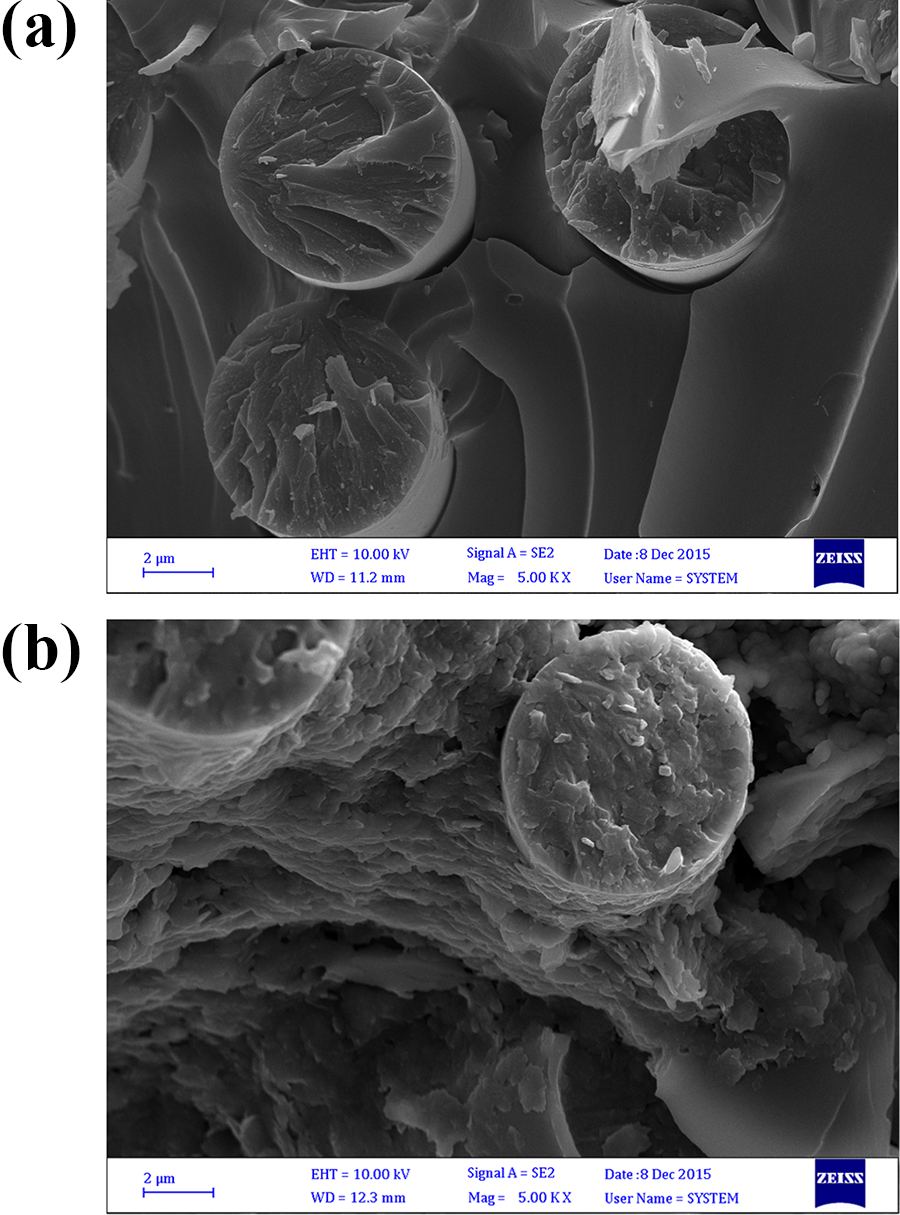
SEM photographs of failure cross-section of 15° off-axis tensile test specimens. (a) The interface debonding of neat glass/epoxy and (b) 0.25 wt% of CNF/glass/epoxy specimens.
Conclusion
In the present research, the effect of adding CNF on the in-plane shear properties of the glass/epoxy laminated composites was investigated using three different testing procedures. It has been shown that the in-plane shear properties of the laminated composites are considerably affected by the matrix property and the bonding characteristics of the fibers and matrix. Moreover, CNF particles can alter the matrix and interface property in the laminated composites. The in-plane shear properties are normally evaluated using different samples used proposed by different testing methods, such as Iosipescu, V-notched rail, and off-axis tensile test methods. The current research aimed to illustrate the effect of adding CNF particles on the in-plane shear properties of the laminated composites considering the various testing procedures that are commonly employed in the industry. The achieved results for the neat glass/epoxy composites and 0.25 wt% of CNF/glass/epoxy hybrid nanocomposites demonstrated that the Iosipescu and the off-axis tensile shear tests are more compatible and appropriate to obtain the in-plane shear properties of the laminated composites filled with nanoparticles.
Following major conclusions were drawn from the current research
The findings of the current research illustrated that the in-plane shear modulus and strength were increased using 0.25 wt% of CNF into the glass/epoxy composites by all three different testing methods, but the measurement of the shear property was not equal for all the methods. In other words: The off-axis tensile test method showed improvement in the in-plane modulus and strength by 15% and 10%, respectively. The Iosipescu test method showed enhancement in the in-plane modulus and strength by 10.4% and 11.4%, respectively. The V-notched rail test method showed improvement in in-plane modulus and strength by 6.7% and 7.5%, respectively.
According to the tests performed in the current research, the authors concluded that the off-axis tensile test method is the best experimental approach to demonstrate the capabilities of CNF particles in improving the shear properties of reinforced glass/epoxy composites.
Footnotes
Declaration of conflicting interests
The author(s) declared no potential conflicts of interest with respect to the research, authorship, and/or publication of this article.
Funding
The author(s) received no financial support for the research, authorship, and/or publication of this article.
