




Abstract
Polymer composite electrolyte based on polysulfone-sodium sulfonate (SPSU(Na)) blended with poly (polyethylene glycol methacrylate) (PPEGMA) using nano-sized hexagonal boron nitride (nano-hBN) as filler was fabricated using a solution casting technique for use in Na-ion batteries. Polysulfone was sulfonated by a post sulfonation method followed by ion exchange with sodium hydroxide. Fourier transform infrared spectroscopy was used to study SPSU(Na)/PEGMA blend and incorporation of hBN nanoparticle into the SPSU(Na)/PPEGMA blend. Thermal properties of the composites were studied with thermogravimetric analysis (TGA) and differential scanning calorimetry tests. X-ray diffraction was used to study phase change. The TGA curve showed two weight loss regions, where 30% weight loss occurred between 200°C and 350°C due to degradation of sulfonic acid groups, and the polymer backbone degradation occurs above 500°C. Surface morphology of the membranes was examined using scanning electron microscopy which reveals the homogeneous dispersion of the nano-hBN particles in the polymer matrix. Ionic conductivity was studied with impedance spectroscopy and the total ionic conductivity increases with increasing PPEGMA ratio. SPSU(Na)/PPEGMA(1:4) sample showed maximum ion conductivity of approximately 5.5 × 10⁻⁶ S cm−1 (5.5 × 10⁻⁴ S m−1) at 100°C because of the high content of PPEGMA.
Keywords
Introduction
Over the past decade, storage of energy has happened to an arising global worry due to a growth of smart grid’s needs in inexpensive and sustainable energy storage, 1 in conjunction with extreme rises for the cost of fuels and environmental aftermaths of using them. This raised the call for substitute sources for the generation as well as storage of energy. It is acknowledged that storage of energy technology such as a battery is going to be the key to future development of renewable energy. 2 Rechargeable lithium (Li)-ion batteries (LIBs), comprising of Li-ion conducting electrolyte and two Li insertion electrodes, have become prospering and sophisticated energy storage devices since the first commercialization of LIB (carbon/LiCoO2 cell) in 1991. 3 Li-based electrochemistry provides various attractive attributes: Li is the lightest metal with an exceptionally low redox potential (Li+/Li = −3:04 V vs standard hydrogen electrode), 4 this makes the cells having high energy density and voltage. Moreover, Li ion has a very small ionic radius which is advantageous for easy diffusion into materials. LIBs also have long cycle life with rate capability. These properties made Li-ion technology to confine the market of portable electronics. 5 Unfortunately, the scarceness of Li is a cause for concern. As Li is constantly mined from the natural deposits, the availability of it might likely exhaust to unsustainably depleted levels. This signifies that future LIBs may need backing up technologies to meet growing consumer need. Thus, it is crucial to seriously reckon the future political, economic, and social consequences of this global Li fixation. 6
Sodium (Na) is available in great abundance with a low cost: natural Na is more than 1000 times more abundant than Li, and it can be obtained from both deposits in Earth’s crust and salt water. 7 Na has very desirable redox potential (ENa+/Na = −2:71 V vs standard hydrogen electrode: only 0.3 V greater than that of Li) and also has electrochemical similarities with Li (which have been intensively explored). As such, by following the terminology of LIBs with the desirable properties of Na, Na-ion batteries (SIBs) can be the ideal alternative to LIBs. SIBs are the highly recommended alternative to LIBs, proposed due to its great sustainability without compromise in electrochemical performance. The accelerated SIBs development can be ascribed to the analogous behaviors already known from the studies of the LIBs. Like LIBs, SIBs have anode–cathode electrode pair, electrolyte, and porous separator in case of liquid electrolyte. A layered oxide with tertiary or greater transition metals has demonstrated to give the greatest performance among reported cathode materials. 7 Promising anodes are Na alloying metals composites and carbon. In SIBs, the paired electrodes comprise of a layered Na metal oxide cathode and carbonaceous anode, similar to the layered Li metal oxide cathode and carbon anode of LIBs. 7 In the case of liquid electrolyte, the electrolyte for both is a mixture of organic solvents with dissolved metal salt (approximately 1 M). However, the issues encountered within LIBs also happen within the SIBs including using liquid electrolytes where electrolyte leakage may occur and other safety-related concerns. 8 Due to these concerns, solid polymer electrolytes (SPEs) are an appealing alternative to replace liquid electrolyte systems.
In reality, the electrolyte that ionically links electrodes is an essential aspect that determines the battery’s performance. Liquid electrolytes are used for most of the research on battery in which usually metal salts (Li, Na, Mg, etc.) in different non-aqueous organic solvents are being used as the liquid electrolytes. 9 Conventional batteries (e.g. LIB) mostly comprise of liquid electrolyte that aids Li+ ion transport to and fro between anode and cathode. 10 This leads to the high probability of electrolyte leakage if at all holes are present, this is one of the foremost conventional batteries pulls back. Numerous research on Na-ion PEs has been reported, such as poly(ethylene oxide) (PEO) and polyvinyl alcohol-based polymer–salt complexes comprising NaPF6, NaClO4, NaTFSI, NaFSI, NaTf, Na2SO4, NaCF3SO3, and NaPO3 Na salts. 11 PEO is the most extensively studied polymer host for SPE applications. This is due to its high electrochemical stability in comparison with other polyethers, copolymers, or PEO-branched polymers. 8 SPEs for SIBs simply comprise an Na salt dissolved in a polymer matrix, the latter usually being PEO because of its effectiveness in dissolving alkali metal salts. Following the trend of sodium battery research, studies on sodium SPEs were performed since 1990s and have regained attention quite recently. 12 So far, different combinations of Na salts and PEO have been considered, mostly mimicking the much more researched Li-based SPEs.
Polymer nanocomposites have received interest for the past two decades because of their exciting bulk and surface properties. The hexagonal boron nitride (hBN) is basically an important material with a combination of unique properties. It has been used in the matrix of ceramic composites to decrease thermal expansion coefficient, improving thermal shock resistance of the composite and enhancing machinability. 13 A high performance and relatively low cost of hBN nanosheets, as compared to the very expensive graphene, give them great potential in serving as fillers for preparing high-conductivity composites. However, there is so far a lack of attempt to use hBN nanosheets in preparing composite thermal energy storage purpose. 14
In this work, polysulfone-sodium sulfonate (SPSU(Na)) was synthesized with a high degree of sulfonation using trimethylsilyl chlorosulfonate as sulfonating agent and blended with a different mole ratio of poly (polyethylene glycol methacrylate) (PPEGMA). The blended polymers were used as a matrix to prepare polymer composite electrolytes using nano-sized hBN (nano-hBN) as filler. Physical and chemical properties of the PEs were characterized using Fourier transform infrared (FTIR), X-ray diffraction (XRD), thermogravimetric analysis (TGA), differential scanning calorimetry (DSC), and scanning electron microscopy (SEM). Ionic conductivity of the polymer composite was investigated with an impedance analyzer at various temperatures.
Experimental
Materials
Polysulfone (PSU; 22,000 g mol−1) and trimethylsilyl chlorosulfonate (TMSCS) were purchased from Sigma-Aldrich (Japan). Dimethylformamide (DMF) and azobisisobutyronitrile (AIBN) were purchased from Merck (Canada). PEGMA (Mn = 360 g mol−1), acetonitrile (≥99.9%), and methanol were purchased from Sigma-Aldrich. hBN (approximately 70 nm) was purchased from BORTEK (Turkey).
Preparation of the samples
Preparation of PPEGMA
An amount of 4 g of PEGMA was dissolved in 10 ml of DMF and stirred for 10 min; 1% of AIBN initiator was introduced into the reaction flask to initiate the polymerization reaction. The mixture was stirred at 70°C under a nitrogen (N2) environment for 5 h. Then, the PPEGMA was washed with ethanol to remove the unreacted monomer and the remaining AIBN. Figure 1 shows the polymerization of PEGMA to PPEGMA.
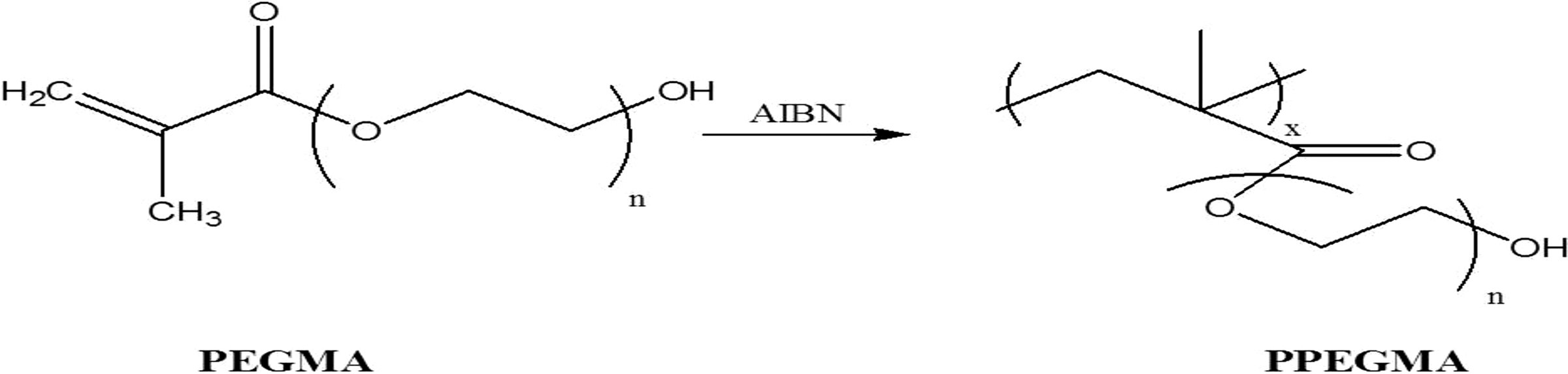
Polymerization of PEGMA.
Preparation of SPSU
Sulfonated polysulfone (SPSU) was prepared in accordance with the literature. 15 PSU was placed in 1,2-dichloroethane at 25°C and stirred for 5 h under an N2 environment. TMSCS, the sulfonation agent, was introduced into the reaction flask at 25°C. During the reaction, N2 was continuously purged through the reaction flask, and hydrochloric acid (HCl) was continuously produced and released out of the reaction flask together with N2. After 36 h, methanol was added to quench the reaction and also to cleave the silyl sulfonate moieties yielding SPSU. Dichloroethane, methanol, and water were removed by evaporation. Sulfonation of PSU is shown in Figure 2.
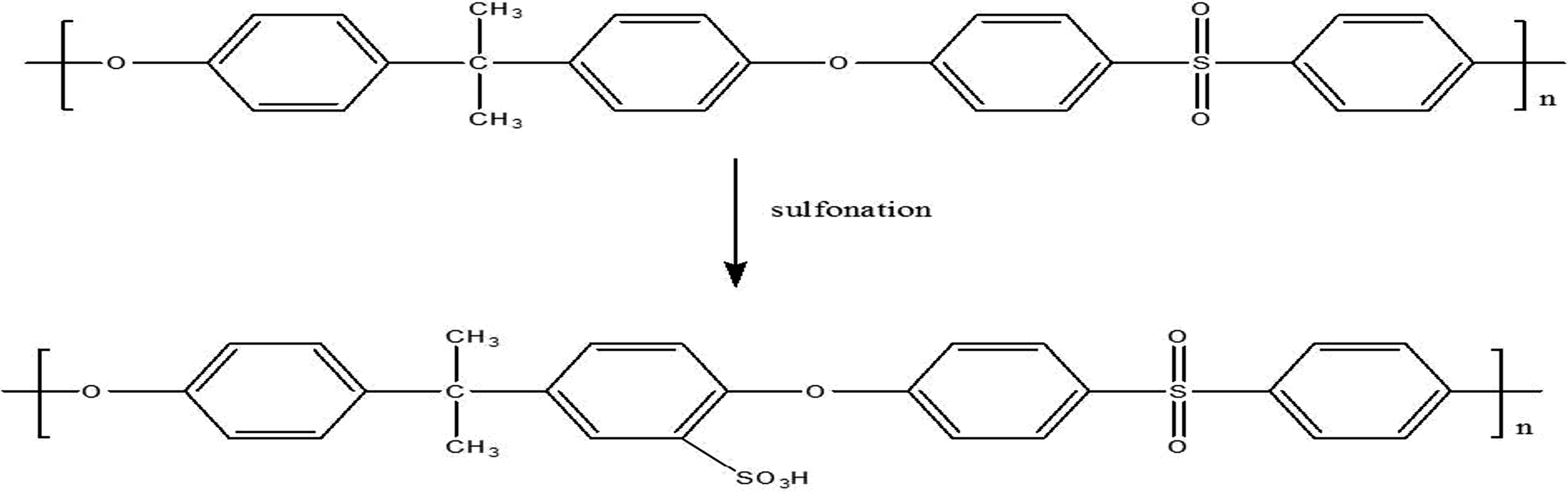
Sulfonation of PSU.
The degree of sulfonation was determined by titration: the sulfonated polymer was dissolved in DMF and titrated with 0.05 M sodium hydroxide (NaOH). The degree of sulfonation was found to be 150.14% (it is 100% if there is one sulfonate group per each repeating unit of PSU monomer).
Preparation of SPSU(Na)
SPSU(Na) was prepared by ion exchange: SPSU was soaked in 0.1 M NaOH for 24 h followed by filtration. The filtrate was titrated with 0.1 M HCl using phenolphthalein as indicator. Figure 3 shows the ion exchange between SPSU and NaOH, and ion exchange capacity (IEC) was calculated using the equation below

where B is the volume of acid used to neutralized blank solution (titrated with 0.1 M NaOH), P is the volume of acid used to neutralize SPSU(Na) filtrate, f is the ratio of the volume of SPSU(Na) filtrate used to neutralize sulfonated polymer to the volume taken for titration, and w is the weight of the sample (g). The weight used in this calculation was the weight of the dried SPSU(Na). The IEC was found to be 2.975 meq g−1.
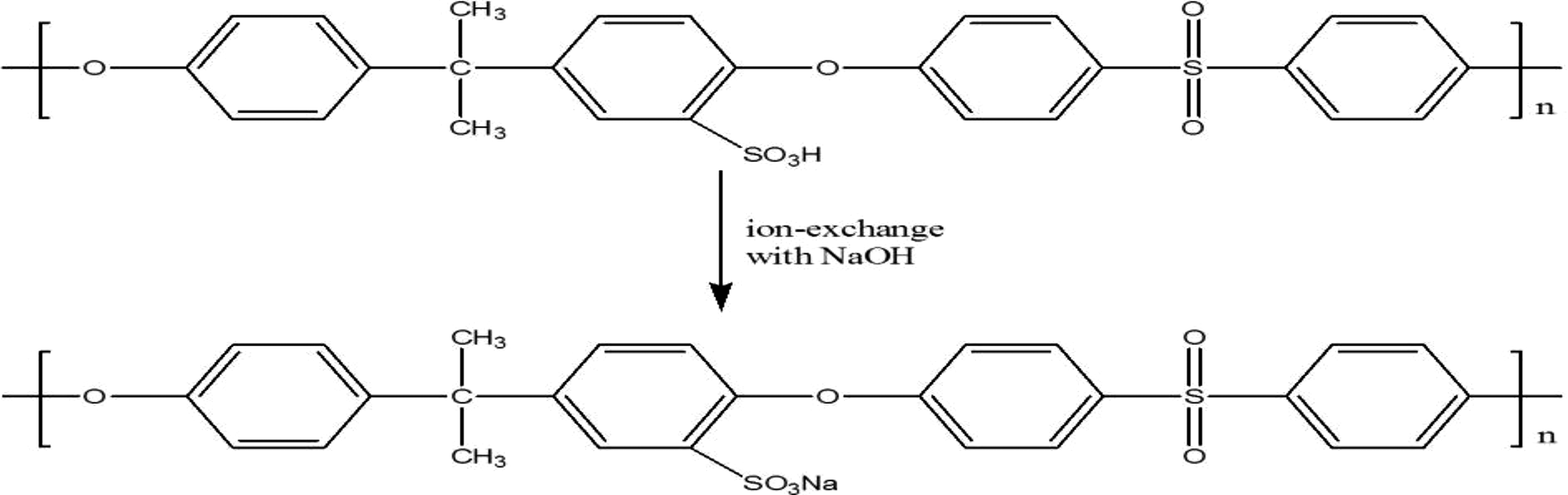
Preparation of SPSU(Na).
Preparation of the polymer composite electrolytes
The polymer composite electrolytes were obtained by blending SPSU(Na) with PPEGMA and 5% hBN (w/w) followed by solution casting at room temperature then placed in vacuum at 55°C for 24 h. Final composite electrolytes were named hBN-SPSU(Na)/PPEGMA(X:Y) and SPSU(Na)/PPEGMA(X:Y) for sample with hBN and without hBN, respectively, where (X:Y) denote the SPSU(Na) to PPEGMA ratio (i.e. 1:1, 1:2, and 1:4)
Characterization
A Bruker Alpha-P in attenuated total reflectance (ATR) was used to record FTIR spectra in the range of 4000–400 cm−1 in order to observe the functional group and their interaction in the system.
The PEs thermal stabilities were analyzed with Perkin Elmer STA 6000 Thermal Analyzer (USA). The samples were heated from 30°C to 750°C under an N2 atmosphere at a scanning rate of 10°C min−1.
In order to investigate thermal transitions of the PEs, Perkin Elmer JADE DSC (USA) was used. The samples (approximately 10 mg) were placed into aluminum pans. The sample and reference are heated in heat flux instruments and the temperature difference is measured. During the measurements, at first, the samples were heated from 0°C to 150°C and then cooled from 150°C to 0°C. Finally, the second heating was performed from 0°C to 250°C at a rate of 10°C min−1 under an N2 atmosphere.
Surface morphology of the samples was examined by SEM, JEOL-7001 FESEM (Tokyo, Japan). Prior to the SEM measurements, all of the samples were coated with gold for 150 s in a sputtering device.
XRD patterns of the PEs and pure hBN were obtained by XRD instrument, Rigaku Smart Lab Diffractometer operated at 40 kV and 35 mA using Cu-Kα radiation having a wavelength (λ) of 1.54059 Å. The XRD peaks were recorded in the 2θ range of 10–70°.
The ionic conductivity measurements were carried out using a Novocontrol dielectric-impedance analyzer. The membranes were sandwiched between platinum blocking electrodes, and the conductivities were measured in frequency range of 1 Hz and 3 MHz at 10°C intervals. The temperature was controlled with a Novocontrol cryosystem.
Result and discussion
Several polymer composite electrolytes based on SPSU(Na) with and without hBN were prepared by varying the PPEGMA ratio (1:1, 1:2, and 1:4). The PPEGMA was used to soften the SPSU to improve conductivity. For all composites, homogeneous and flexible films were obtained.
FTIR study
FTIR analysis was conducted in order to study SPSU(Na)/PEGMA blend and incorporation of hBN nanoparticle into the SPSU(Na)/PPEGMA blend. The FTIR results of the composite electrolytes both with and without hBN (i.e. hBN-SPSU(Na)/PPEGMA(X:Y) and SPSU(Na)/PPEGMA(X:Y)) were shown in Figure 4. The peaks observed at 1144, 1015, 1236, and 1476 cm−1 are assigned to asymmetric stretching of S–O bond of SO3Na groups, Ph–O–Ph, C–O, and C=C (aromatic), respectively. The peaks at 1728 and 1088 cm−1 represent C=O and C–O stretching vibrations, respectively, of the carboxylic ester from PEGMA and the wide band at 3441 cm−1 represents the O–H stretching vibration. The band at 2898 cm−1 is attributed to stretching vibrations of the aliphatic C–H groups and bands at 1452 and 1347 cm−1 are attributed to symmetrical and asymmetrical bending vibration C–H groups in CH and CH2, respectively. 16
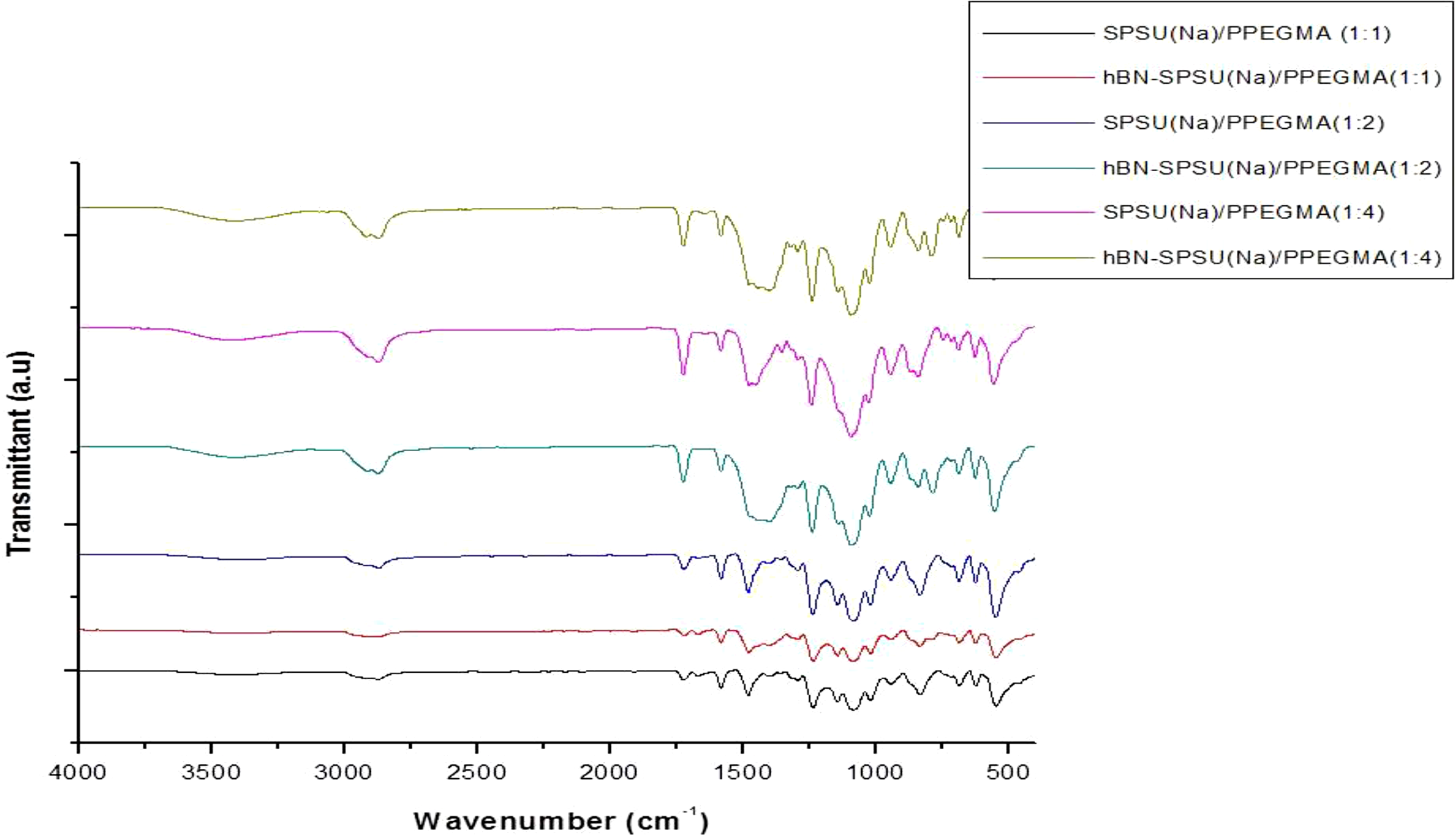
FTIR spectra of SPSU(Na)/PPEGMA(X:Y) and hBN-SPSU(Na)/PPEGMA(X:Y).
The SPSU(Na) to PPEGMA ratio can be estimated by comparing the C–O ether peak (1088 cm−1) intensity of the PEGMA. It can be seen from Figure 4 that the intensity of the peak at 1088 cm−1 increases as the PPEGMA content increased. And also, as the content of the PPEGMA increases, the O–H band becomes broader. Peak around 1336–1481 cm−1 broadens for samples with nano-hBN, which indicates the dispersion of the nano-hBN in the polymer blend because hBN has a characteristic broad band around 1336–1481 cm−1. 15
DSC analysis
DSC analysis was performed under an inert atmosphere at a scan rate of 10°C min−1 by a heating–cooling–heating cycle and the second heating curves were evaluated. The second heating curves of SPSU(Na)/PPEGMA(X: ) and hBN-SPSU(Na)/PPEGMA(X:Y) samples are given in Figure 5. From the literature, neat PSU is reported to have Tg around 185°C. 15 This Tg decreased to 81°C after sulfonation, but after ion exchange with NaOH (SPSU(Na)), the Tg increased to 93°C. When the polymer was blended with PPEGMA, the Tg decreased below 20°C, that is, SPSU(Na)/PPEGMA(1:1), hBN-SPSU(Na)/PPEGMA(1:1), hBN-SPSU(Na)/PPEGMA(1:2), and SPSU(Na)/PPEGMA(1:2) have Tg below 20°C. No Tg was observed for SPSU(Na)/PPEGMA(1:4) and hBN-SPSU(Na)/PPEGMA(1:4) within this range of temperature.
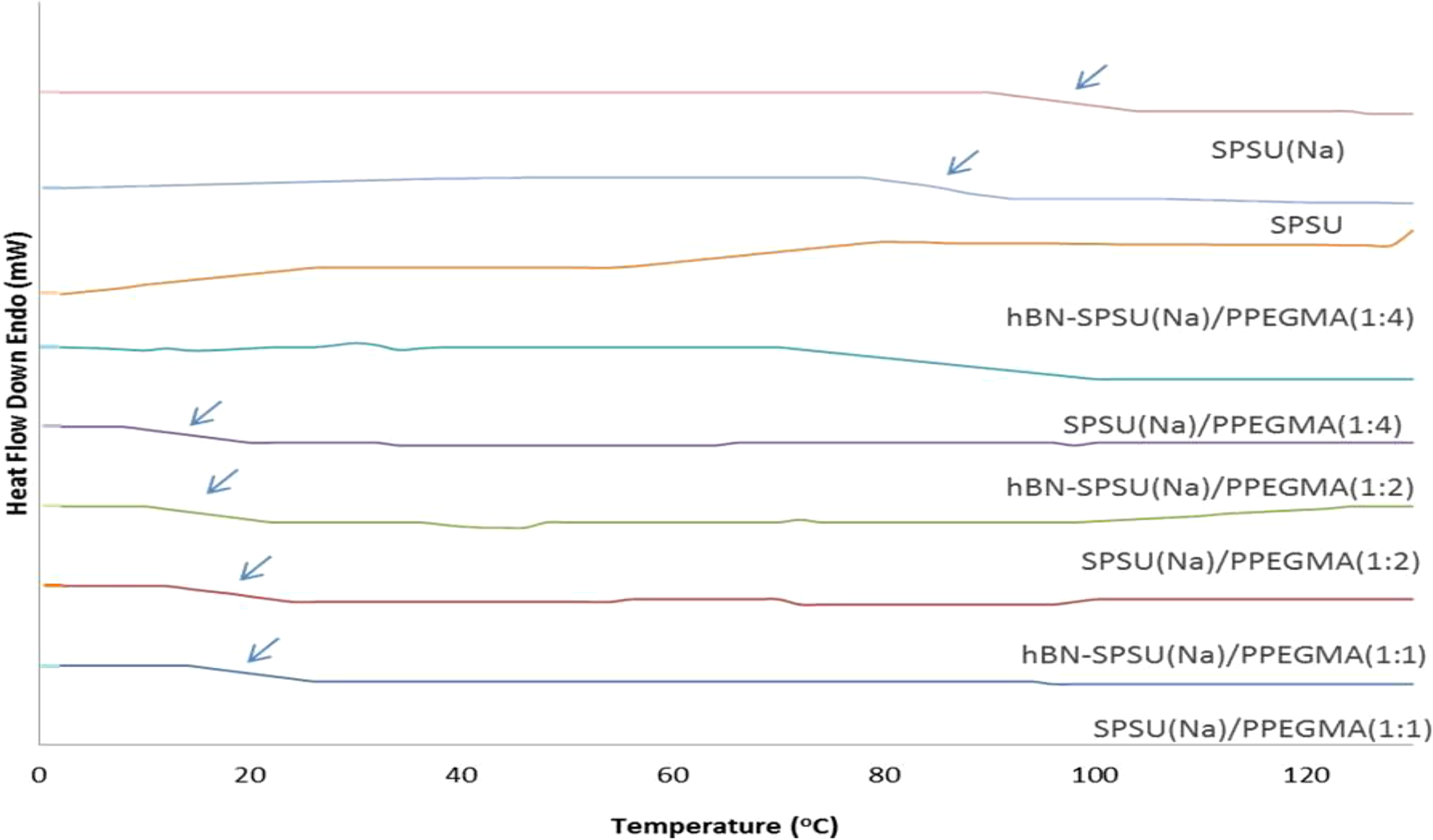
DSC result for hBN-SPSU(Na)/PPEGMA(X:Y) and SPSU(Na)/PPEGMA(X:Y).
Thermogravimetric analysis
hBN-TGA gives information about the possible physical and chemical changes that may happen during a thermal excitation in a PE when it is applied to working systems. 17 The electrolyte should possess good thermal stability at high temperature to meet the criteria for application. Thermal stability of neat pure PPEGMA, SPSU(Na)/PPEGMA(X:Y), and hBN-SPSU(Na)/PPEGMA(X:Y) was evaluated by TGA. Prior to the measurement, the samples were dried under vacuum at 55°C for 24 h.
Figure 6 presents the TGA of pure PEGMA, SPSU(Na)/PEGMA(xy), and hBN-SPSU(Na)/PEGMA composites. Pure PSU is reported to be thermally stable up to 500°C than major weight loss occurs due to degradation of the polymer backbone. 15 TGA curve of SPSU has two weight loss regions where 30% weight loss occurs around 200°C and 350°C due to degradation of sulfonic acid groups and the polymer backbone degradation occurs above 500°C. 15 SPSU(Na)/PPEGMA and hBN-SPSU(Na)/PPEGMA composites can be said to be thermally stable up to at least 190°C. The decomposition temperature increases a little with hBN content and it decreases a bit with increasing PPEGMA ratio.
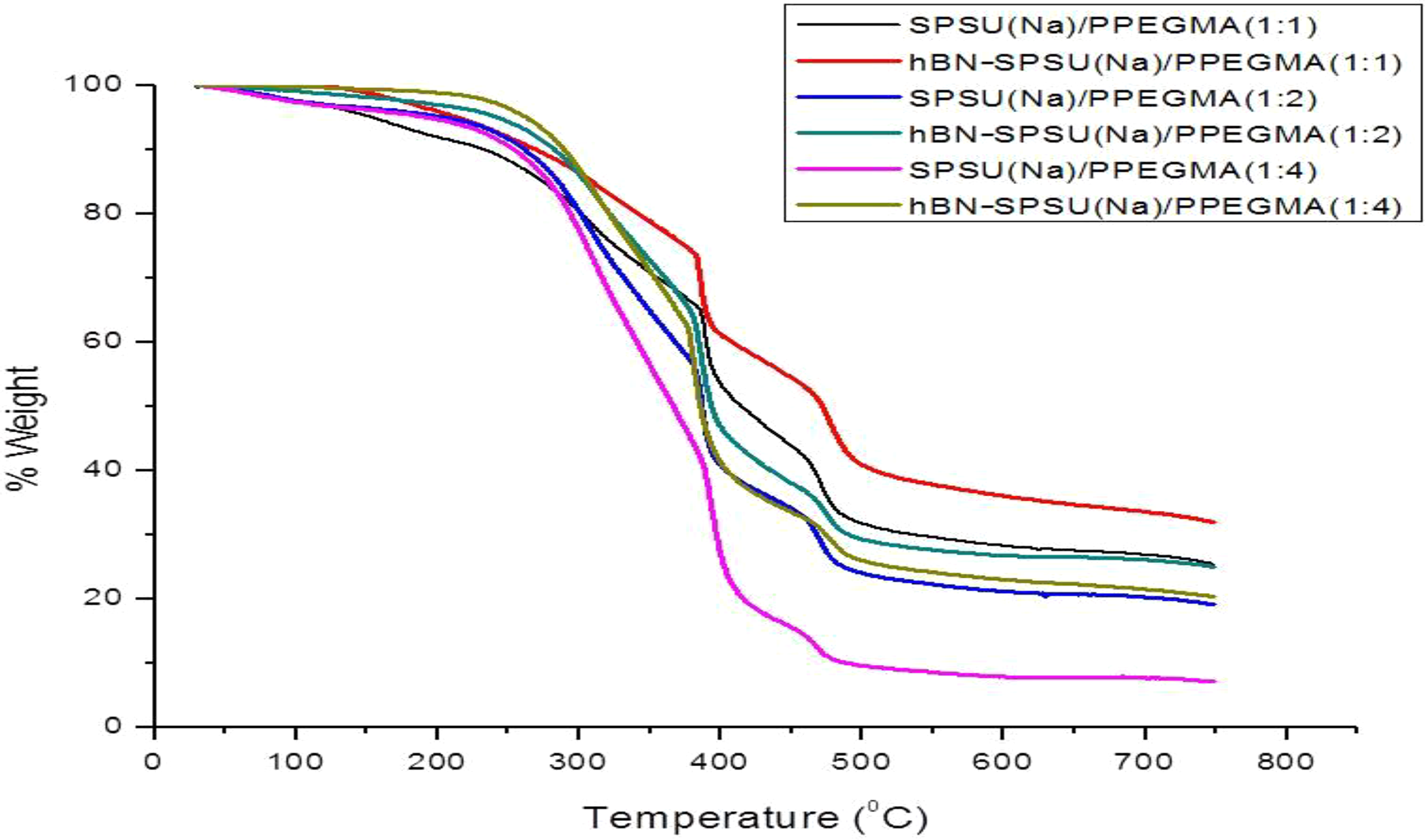
TGA curves of SPSU(Na)/PPEGMA(X:Y) and hBN-SPSU(Na)/PPEGMA(X:Y).
SEM analysis
Study of the morphology is important in order to confirm the homogeneity of polymer blends. SEM analysis provides detailed photographs that give important information about the surface structure which affirms the polymer blends homogeneity. 18 Several studies have reported the use of functionalized hBN; functionalization helps prevent agglomeration in various polymer matrices. 18,19 In this study, we used pure hBN directly and just sonication is enough in providing adequate blending. The morphology of hBN-SPSU(Na)/PPEGMA(X:Y) composites was investigated by SEM and the results are shown in Figures 7 to 9. As observed from the images, the composite films are homogeneous and display single-phase formation which indicates that hBN was uniformly distributed into the SPSU(Na)/PPEGMA matrix. It was also observed that the composites are becoming rougher with the increasing PPEGMA content.
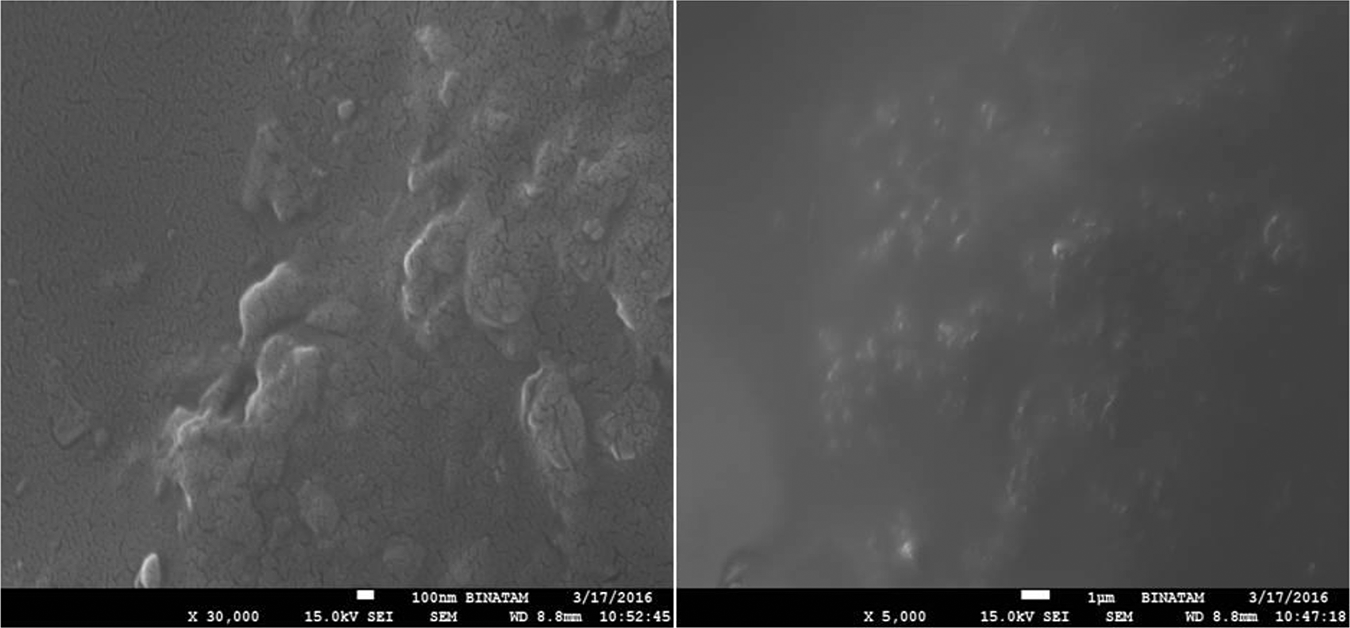
SEM images of hBN-SPSU(Na)/PPEGMA (1:1).
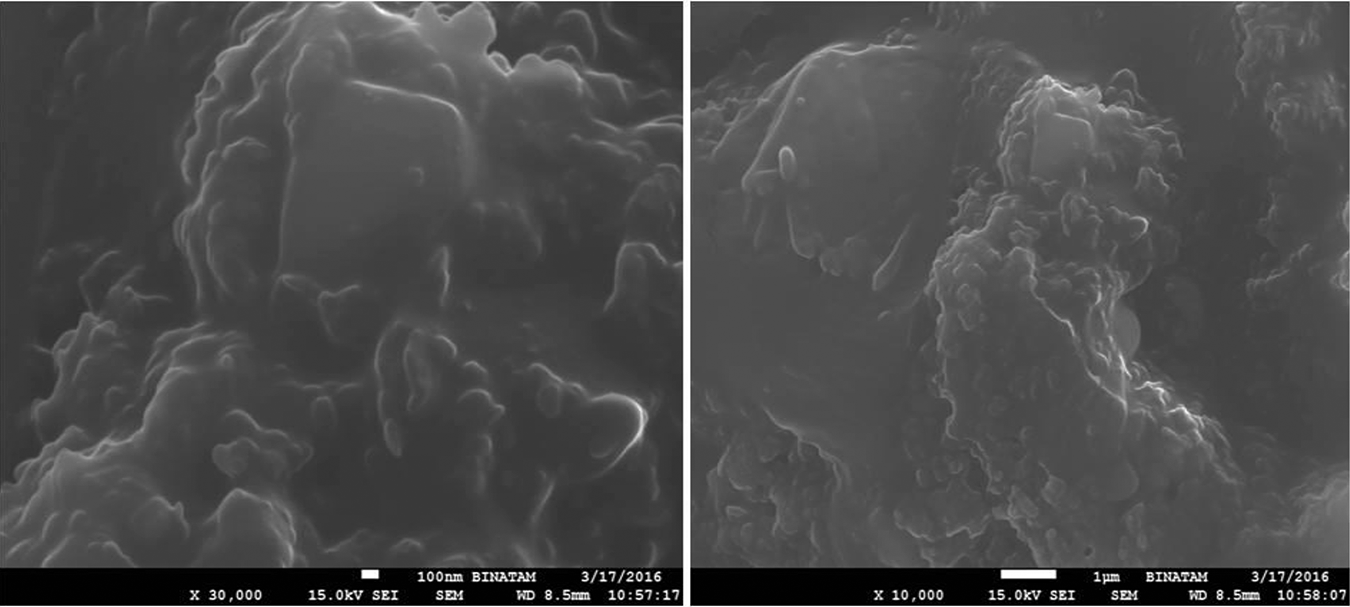
SEM images of hBN-SPSU(Na)/PPEGMA(1:2).
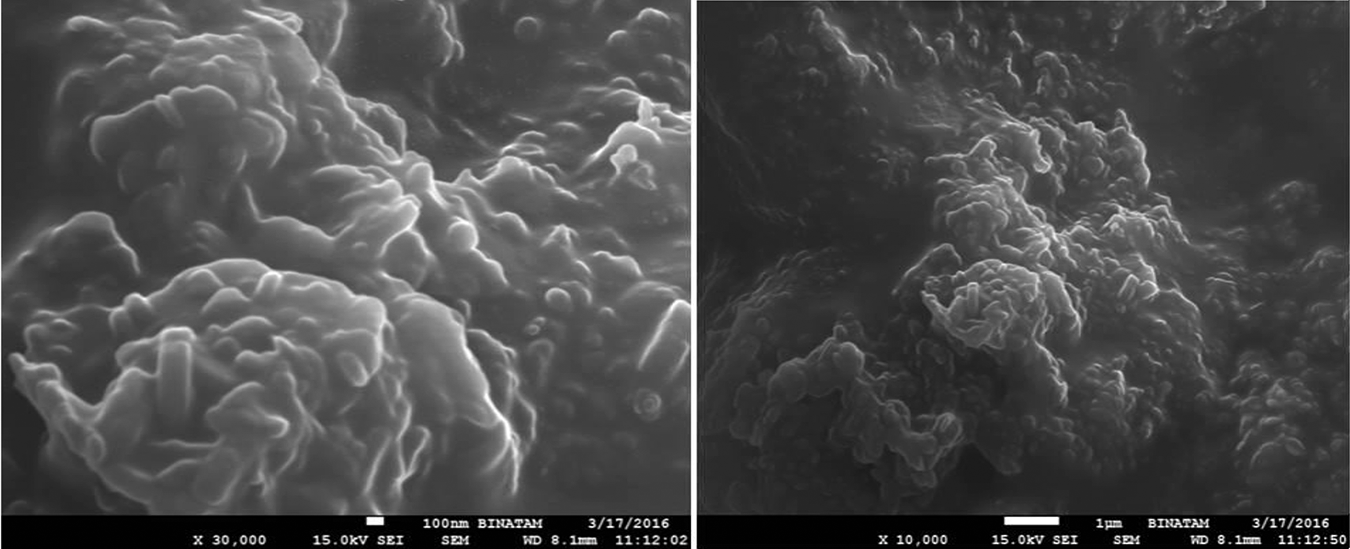
SEM images of hBN-SPSU(Na)/PPEGMA(1:4).
XRD analysis
XRD analysis is a non-damaging technique which is used to analyze the existence of any phase change or crystallinity changes after blending two different materials with different crystallinity. 15 Figure 10 shows the XRD pattern of SPSU(Na)/PEGMA(X:Y), hBN-SPSU(Na)/PEGMA(X:Y), and pure hBN. SPSU is an amorphous polymer without any crystalline phase. 15 All the peaks observed are due to PPEGMA and hBN. Around 2θ = 44, a peak was observed in hBN-SPSU(Na)/PEGMA(1:2), hBN-SPSU(Na)/PEGMA(1:4), and SPSU(Na)/PEGMA(1:2) which is attributed to PPEGMA part of the polymer. Peak around 2θ = 26 was observed in hBN-SPSU(Na)/PEGMA(1:2) and hBN-SPSU(Na)/PEGMA(1:4) which is attributed due to the incorporation of hBN into the host polymer and this peak was absent in SPSU(Na)/PEGMA due to the absent of hBN. For pristine hBN (Figure 10(d)), four peaks were observed at 26.68° for (002) plane, 41.50° for (100) plane, 43.13° for (101) plane, and 55.12° for (004) planes. 19
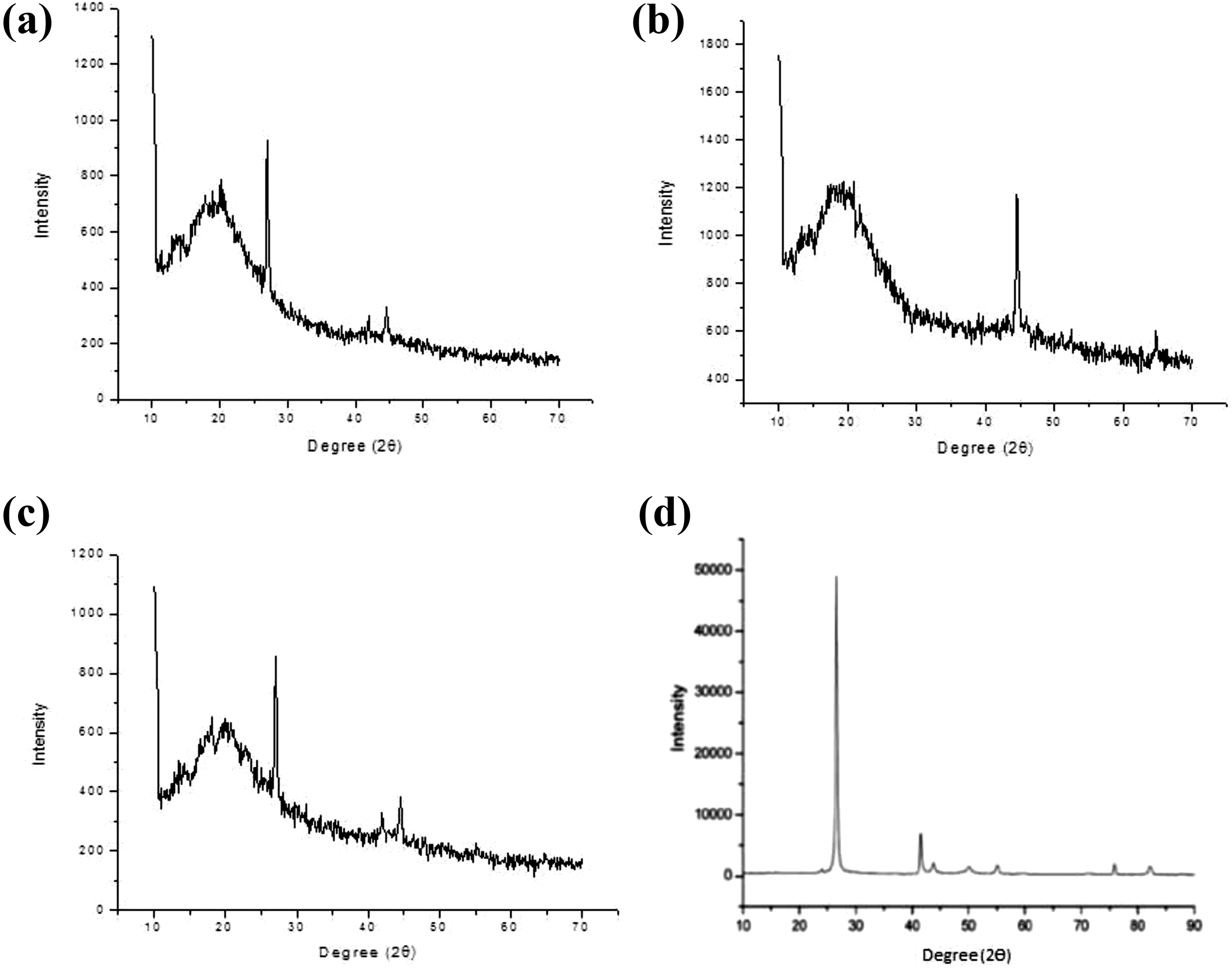
XRD pattern of (a) hBN-SPSU(Na)/PPEGMA(1:2), (b) SPSU(Na)/PPEGMA(1:2), (c) hBN-SPSU(Na)/PPEGMA(1:4), and (d) pure hBN.
Conductivity measurement
The ionic conductivity of hBN-SPSU(Na)/PPEGMA(X:Y) and SPSU(Na)/PPEGMA(X:Y) was examined with impedance spectroscopy. To eliminate the effect of humidity on the ionic conductivity, the measurements were carried out in a fully water-free system. The ionic conductivities were measured in the temperature range of 20–100°C. The frequency-dependent AC conductivities, σac (ω), of the composites were measured at various temperatures using impedance spectroscopy.

where σ′ (ω) is the real part of the conductivity, ω = 2πf is the angular frequency, εo is the vacuum permittivity (εo = 8.852×10⁻¹⁴ F cm−1), and (ε″) is the imaginary part of the complex dielectric permittivity (ε* = ε′− iε″). 15,18,19 Figures 11 and 12 show the frequency- and temperature-dependent AC conductivities (σac) of SPSU(Na)/PEGMA(1:4) and hBN-SPSU(Na)/PEGMA(1:4), respectively. There is an increment in conductivity with increasing of log frequency, which then becomes constant due to the polarization of electrodes. For all composites, ionic conductivity increases with increasing of temperature. The ions start to become faster as the temperature elevates which caused an increase in ionic conduction. 17 There are plateau regions in AC curves, that is, 101–102 Hz, and DC conductivity values (Figure 13) were derived by linear fitting of these plateau regions.
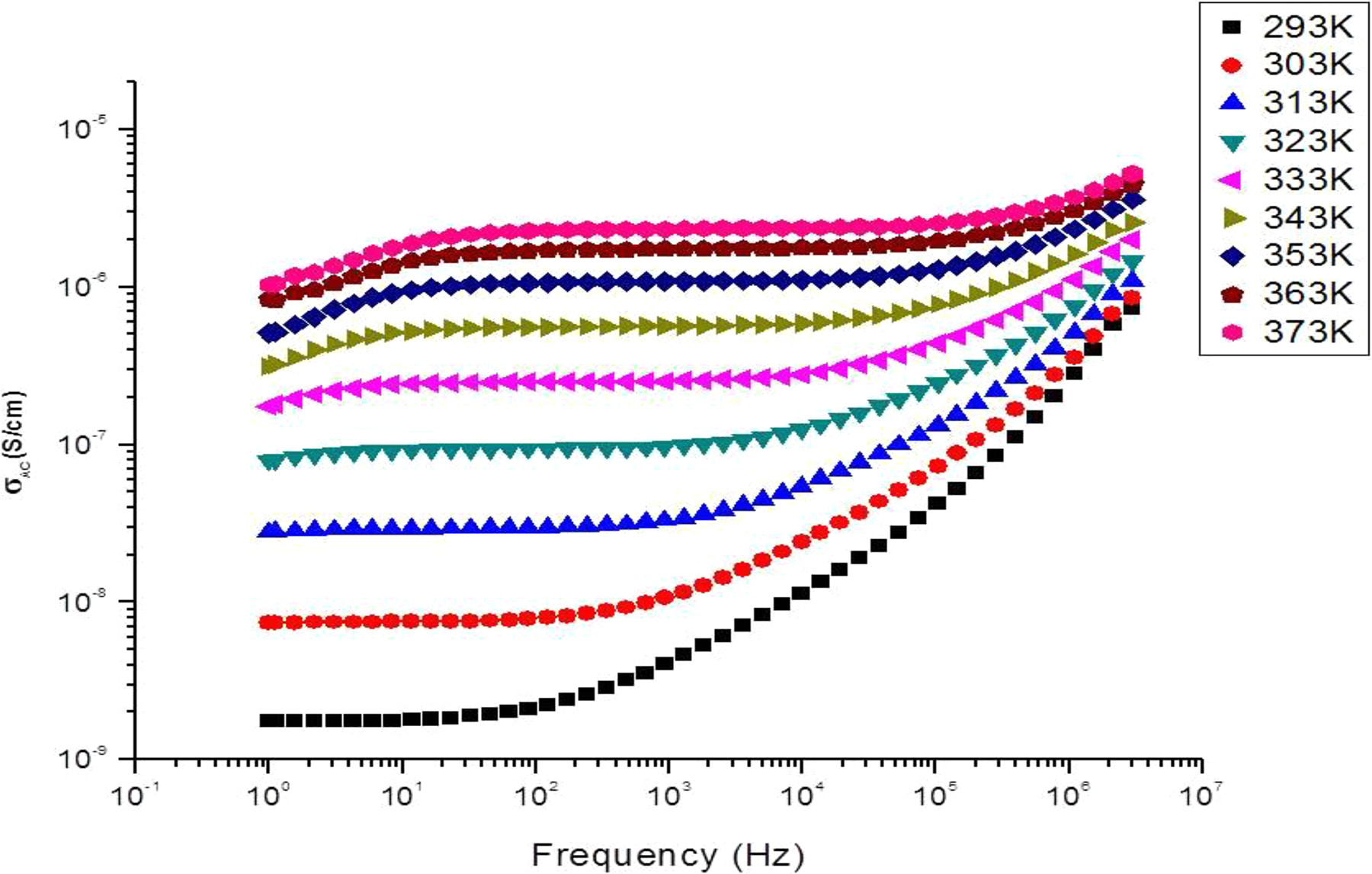
AC conductivity of SPSU(Na)/PPEGMA(1:4) versus log frequency (Hz) at various temperatures.
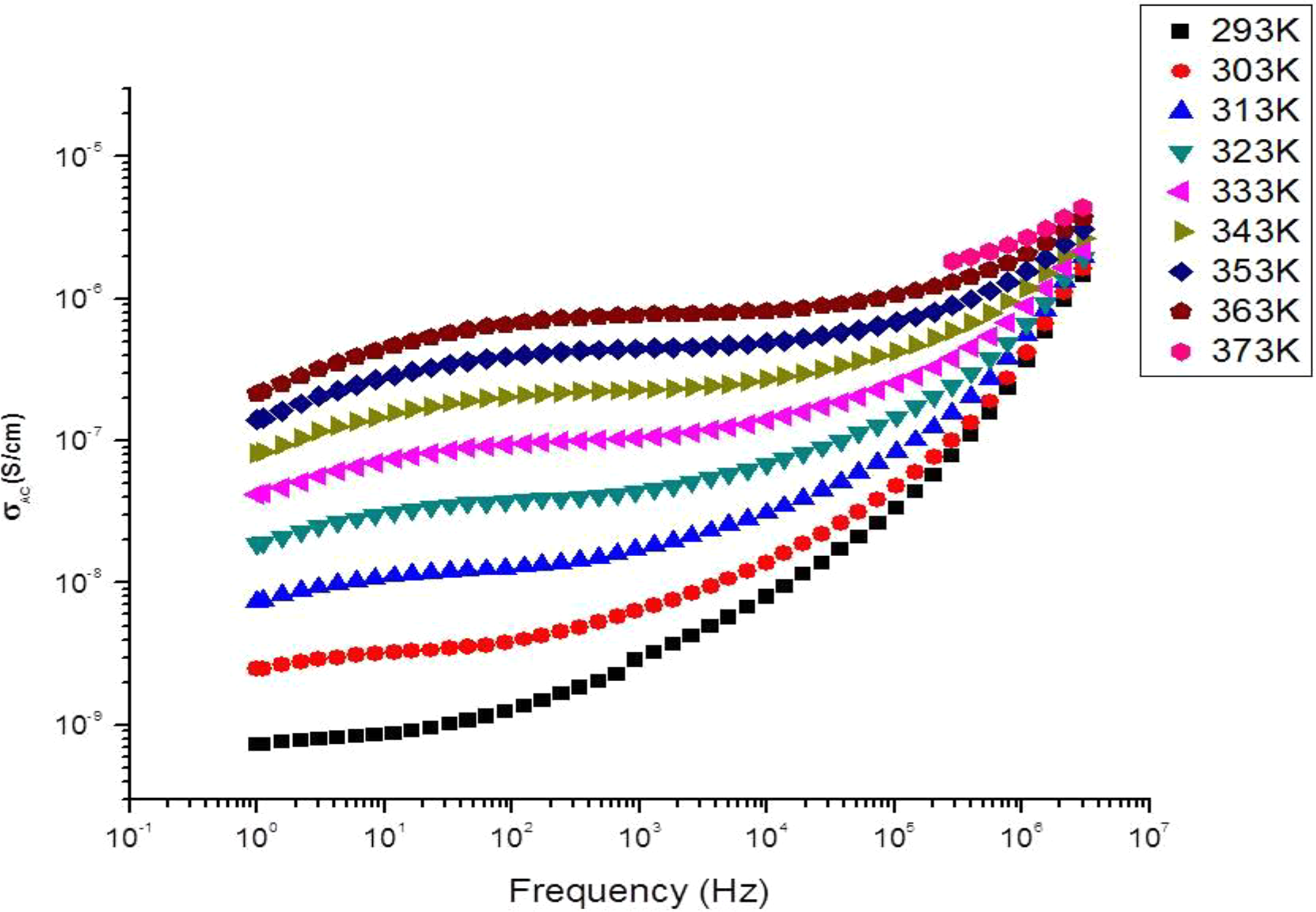
AC conductivity of hBN-SPSU(Na)/PPEGMA(1:4) versus log frequency (Hz) at various temperatures.
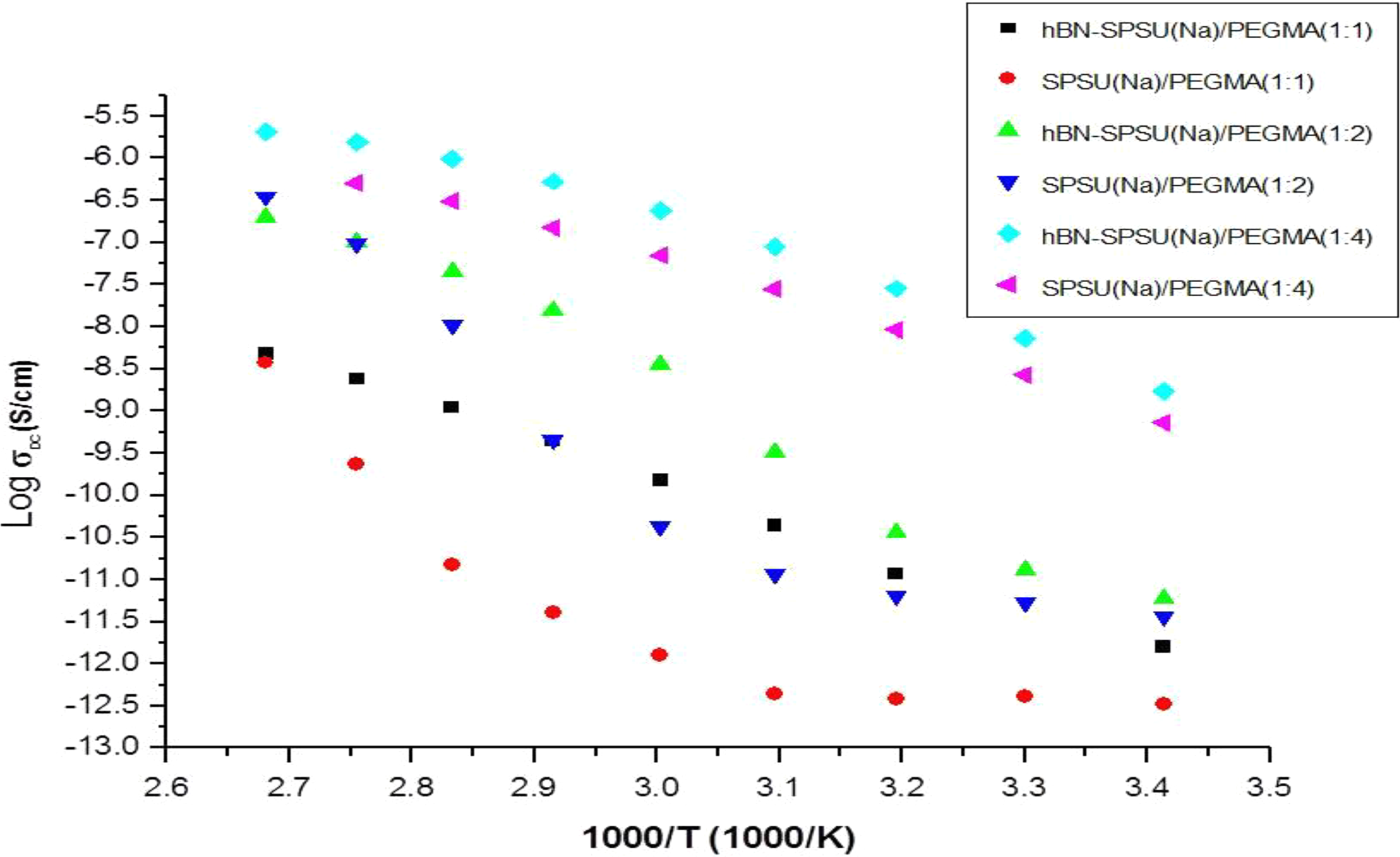
Conductivity of SPSU(Na)/PPEGMA(X:Y) and hBN-SPSU(Na)/PPEGMA(X:Y) composites as a function of reciprocal temperature.
The DC conductivity (σdc) of the samples was derived from the plateaus of σac versus log frequency by linear fitting of the data. DC conductivities of all the composites are compared in Figure 13. From the curve, as expected, the DC conductivity increases with increasing PPEGMA content, which is in agreement with DSC result (Figure 5) in which Tg decreases with increasing PPEGMA content. This is because the PPEGMA softens the polymer making it more flexible, which favors the motion of the ion in the system and the DC conductivity also increases with temperature. From the literature, hBN can enhance proton conductivity 19,20 and mechanical property. 21,22 But in this work, hBN decreased the ionic conductivity a little bit. This may be the enhancement of mechanical property by hBN making the polymer host less flexible. And this was also observed after solution casting, and the samples with hBN are more rigid.
Conclusion
Novel hBN-SPSU(Na)/PPEGMA(X:Y) and SPSU(Na)/PPEGMA(X:Y) composite electrolytes were successfully prepared. Sulfonation of PSU and ion exchange with NaOH were verified with FTIR results. The composite electrolytes were thermally stable up to at least 190°C. Increasing the PPEGMA ratio decreased Tg of the composite electrolytes and no Tg was observed for SPSU(Na)/PPEGMA(1:4) and hBN-SPSU(Na)/PPEGMA(1:4) within this range of temperature. Homogeneous dispersion of hBN within the polymer matrix was verified by SEM images. The total ionic conductivity depends on PPEGMA ratio, temperature, and incorporation of hBN. SPSU(Na)/PPEGMA(1:4) sample showed maximum ion conductivity of 7.26 × 10⁻⁷ S cm−1 (7.26 × 10⁻⁵ S m−1) and 5.5 × 10⁻⁶ S cm−1 (5.5 × 10⁻⁴ S m−1) at 20°C and 100°C, respectively. This is due to the high content of PPEGMA. With a little improvement of ionic conductivity, hBN–SPSU(Na)–PPEGMA composite can be a good candidate of SIBs PE.
Footnotes
Declaration of conflicting interests
The author(s) declared no potential conflicts of interest with respect to the research, authorship, and/or publication of this article.
Funding
The author(s) received no financial support for the research, authorship, and/or publication of this article.