




Abstract
With at least 150 million professional and amateur blogs on the Internet, blogging offers a potentially powerful tool for engaging large and diverse audiences with science. This article investigates science blogging practices to uncover key trends, including bloggers’ self-perceptions of their role. Interviews with seven of the most popular science bloggers revealed them to be driven by intrinsic personal motivations. Wishing to pursue their love of writing and share their passion for science, they produce content suitable for niche audiences of science enthusiasts, although they do not assume background scientific knowledge. A content analysis of 1000 blog posts and comparison with the most popular blogs on the Internet further confirmed this result and additionally identified key factors that affect science blog popularity, including update frequency, topic diversity and the inclusion of non-text elements (especially images and video).
Keywords
1. Introduction
Recent public surveys in the United States, Europe and the United Kingdom report an increasing reliance on online sources for information about current news, especially relating to science and technology (Castell et al., 2014; European Commission, 2013; National Science Board, 2014). While much of this attention concerns online versions of traditional media (such as newspapers and magazines), science blogs have been proposed ‘as spaces and objects that span and blur boundaries’ between science and diverse public groups (Shanahan, 2011: 904), breaking down hierarchies of expertise and overcoming issues associated with more traditional media formats (Colson, 2011; Wilkins, 2008). However, the aforementioned surveys also note that science blog readership is still relatively small: only around 4% of Americans reported using digital sources outside of online newspapers and magazines for current information about science and technology (National Science Board, 2014). Given that this figure aggregates all forms of social media, this suggests that science blogs currently constitute only a tiny proportion of science information sources. This result is somewhat surprising when contrasted with blog readership more generally: in 2011, 32% of Americans reported spending time online reading blogs (Pew Research Centre, 2011). These results would suggest that there is still room for growth in terms of uptake of science blogs within the ‘science media ecosystem’ (Fahy and Nisbet, 2011).
To facilitate further development within the genre, this research explores existing science blogging practice through combining bloggers’ own perceptions (obtained through interviews) with detailed analysis of their posts. We explicitly focus on the outputs of the most popular science bloggers, comparing their practices with those of the most popular non-science blogs. These findings clarify popular science bloggers’ motivations and target audiences and in the process discern key factors that affect science blog popularity.
Communicating science with blogs
Blogs are social media websites typically used to share thoughts, opinions, reports, user-created content and links to content found on other websites (Blood, 2002). While estimates vary (Helmond, 2008), in 2011 there were at least 150 million professional and amateur blogs on the Internet (BlogPulse, 2011; Royal Pingdom, 2010). Judging the ‘success’ of a blog is of course inherently linked to its intended purpose. Among the myriad of blog users at the time of this research, the most common measures of success were ‘personal satisfaction’ (62%), followed by ‘number of unique visitors’ (55%) (Technorati, 2011c). The former is a somewhat intangible quantity, making it difficult to compare objectively. Direct visitor data for individual blogs are also not available publicly; hence, we have used the ‘de facto success metric’ of popularity as measured by inbound links to compare the relative ‘success’ of different blogs (Du and Wagner, 2006: 791). While we acknowledge that some blogs may not aim to achieve large audience uptake as part of their ‘success’, by assuming that success is linked to blog popularity we are able to consider the state of the science blogosphere from a wider science communication perspective.
Relative popularity can be estimated using blog ranking services, although each service has its own advantages and limitations (Bross et al., 2011). At the time, our chosen service Technorati listed more than 6800 active science blogs (Technorati, 2011b). Such blogs are heterogeneous in nature (Kouper, 2010; Zivkovic, 2006). Their authors range from academics to science journalists to science enthusiasts (Blanchard, 2011; Riesch and Mendel, 2014), and their content can focus on anything from providing breaking science news to documenting life as a scientist (Masters, 2013; Shanahan, 2011; Zivkovic, 2006). As such, talking about ‘science blogs’ as a single homogeneous category is inadequate, and we recognize the wide diversity within the genre. Nevertheless, for the purposes of identifying useful areas for development, within this article we concentrate on the 10 most popular science blogs at the time, focusing on widely recognized design elements rather than aspects such as content, frame, style or publicity mechanism, which are much more type-dependent.
On initial inspection, it is clear that science blogs are in general less popular than many other forms of blogs. In early 2011, less than 20 science blogs ranked within the top 1000 blogs on the Internet, with less than 5 ranking within the top 100 on any given day (Technorati, 2011a). Of course, this could in part be due to the relatively small number of science blogs generally; at the time, Technorati tracked over 1.2 million categorized blogs (Technorati, 2011b), meaning blogs that had been explicitly identified as relating to ‘science’ represented only 0.5% of the total. However, political and consumer electronics blogs each made up over one-quarter of the top 100 blogs, despite representing only 0.8% and 1.9% of the Technorati blog directory, respectively (Technorati, 2011b). Outside of the blogosphere there is evidence of apparent interest in science in many countries: for example, in the United Kingdom at the time of this research, 82% of respondents to a national survey agreed that ‘science is such an important part of our lives that we should all take an interest’ (Ipsos MORI, 2011). It is therefore not unreasonable to argue that many science blogs could increase their popularity. This work thus compares science blogging practices with those in other fields in order to identify any differences in approach and to provide indications as to how science blog readership could be increased.
Through a series of semi-structured interviews, the blogging motivations and target audiences of seven writers for five of the most popular science blogs, as identified during a 1-week period in April 2011, were explored. This approach investigated whether successful science bloggers deliberately sought large, diverse groups that have varying degrees of interest in science or instead catered for more niche audiences in the ‘long tail’ of blog readers (Anderson, 2008).
Additionally, based on a wide literature analysis, six key content-associated factors were identified as influencing blog popularity: word count, blog update frequency, topic diversity, use of non-textual content, assumptions regarding prior knowledge and text reading difficulty. To provide key insights into existing blogging practice, a comparative analysis was made between the 10 most popular science blogs and the 10 most popular blogs (on any topic) on the Internet for each of the identified blog design elements. In combination, these investigations provide a synopsis of science blogging practice from both internal and external perspectives.
2. Methods
For the purposes of this study, a science blog is defined as any blog which has more than 50% of its content dedicated to science-related content (Zivkovic, 2006).
Factors affecting blog popularity
This study focused on determining how well the most popular science blogs make use of standard blog design elements that affect audience recruitment and retention. Other potential factors such as subject matter (Preston, 2011; Snell, 2007), the type of content presented (Rowse and Garrett, 2012) and the marketing strategy used (Palka et al., 2009) are more specific to the blog/post type (news, feature, personal, etc.) and thus less appropriate to this study. Achieving the greatest level of popularity within the blogosphere likely requires that most or all these factors contribute to popularity in a positive manner (Crum, 2009; Rowse and Garrett, 2012). Based on this assumption, the most popular blogs on the Internet have achieved their success at least in part because they make better use of blog design elements. Thus, a comparison was made between the most popular blogs (on any topic) on the Internet and the most popular science blogs in order to determine how well existing science blogs make use of these design elements.
Content analysis
To determine popularity, this study made use of Technorati, a ranking service that determined blog popularity based on the number of times other websites linked to them (Bross et al., 2011). At the time, Technorati was seen as the ‘ultimate guide to influence’ regarding the relative impact of any blogger (Gillette, 2014). Although not perfect, due in part to potential English-language bias (Tuinstra, 2006), it was one of the only wide-coverage blog ranking services which indexed blogs based on category (Bross et al., 2011) and which uniquely distinguished data from blogs that existed within the same blog aggregation sites (e.g. blogs.discovermagazine.com/notrocketscience/ vs blogs.discovermagazine.com/badastronomy/). In the absence of alternative mechanisms involving direct audience numbers (Bross et al., 2011), Technorati’s algorithm was chosen as being the most robust measure of blog popularity in existence at the time. In order to provide a feasible scope to the work, the number of blogs sampled in both categories was limited to the 10 most popular.
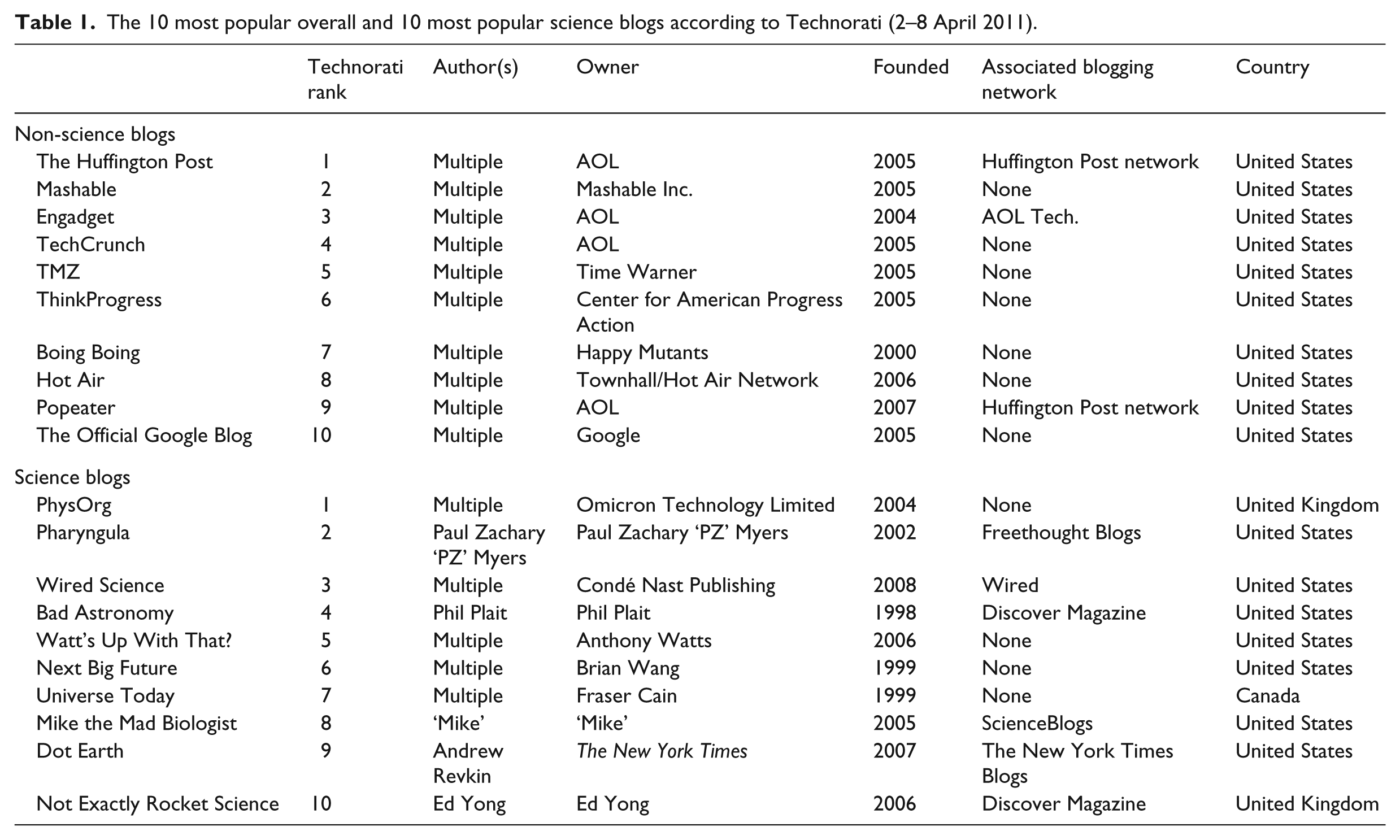
Technorati rankings were collected over a 1-week period. Rankings were monitored for the 11 most popular blogs on the Internet (BuzzFeed, part of the top 10, was rejected due to an inability to collect the necessary posts) and the 10 most popular blogs in the science category. Due to time constraints, a 1-week period (2–8 April 2011) was selected for identifying the appropriate blogs for further investigation, although once the case study blogs were isolated their blog posts were collated over a full 2 months (March and April 2011). All blogs that successfully remained in the top positions during the entire week were included in the analysis. This accounted for all blogs in the ‘most popular’ category and the top eight blogs in the science category. Over the 1-week period, the last two positions in the science category fluctuated between the three blogs. The remaining two science blog positions within the top 10 were therefore randomly selected from the three final science blogs in the list (see Table 1 for complete top 10 lists).
The 10 most popular overall and 10 most popular science blogs according to Technorati (2–8 April 2011).
Using an α error probability of .01, a power value (1–β error probability) of .85 and an effect size (Cohen’s d) of .2, G*Power 3 statistical software calculated that 50 random blog posts were required for each of the 20 blogs in order to enable appropriate statistical representation (Faul et al., 2007). These 50 posts were used for most aspects of the content analysis, with the exception of the blog update frequency calculation which utilized all blog posts over the months of March and April 2011.
Blog design elements that are likely to have an influence on audience recruitment and retention were identified from the existing literature (see section ‘Results’ for details). Inclusion and exclusion rules were developed to objectively code each blog’s implementation of these elements (Neuendorf, 2002). Subsequent inter-rater reliability values were calculated for 100 blog posts randomly selected from the entire sample (Neuendorf, 2002). For each variable, inter-rater reliability was found to be over 80% (Riffe et al., 2005).
Semi-structured interviews
All 18 writers of the 10 most popular science blogs were invited through email to participate in an interview (with subsequent reminders as appropriate). Seven bloggers representing five science blogs participated, representing both professional bloggers paid to write for corporations as well as amateur enthusiasts. Bloggers who were contacted but did not participate indicated that they did not have time or simply did not respond to interview inquiries. It is noticeable that the interviewee demographics are in contrast to other recent published investigations of science blogging (see, for example, Colson, 2011; Mahrt and Puschmann, 2014; Trench, 2012). Three of the seven interviewees were female. None identified themselves as working in academia, and the professional writers within the group saw blogging as core to their professional activity, not ancillary. While most had undertaken science-related studies at university, two of the interviewees talked about acquiring scientific knowledge outside formal learning, for example, as a self-taught hobby. Three of the interviewees hold science journalism or science writing degrees, and the majority consider themselves professional science writers, ranging from freelancers to a part-time writer/editor to a professional blogger, although one interviewee blogged purely as a hobby.
Approximately 25 standardized semi-structured interview questions – with relevant probes – delved into bloggers’ motivations, intended target audiences and the use of science communication techniques. Some questions were specifically derived from the content analysis findings (Barbour and Schostak, 2005).
All interviews took place during August 2011. To encourage participation (especially over multiple time zones and a mixture of professional and amateur commitments), the interviewees self-selected how they wished to contribute. Five of the bloggers participated in Skype interviews, while two chose email interviews. Audio-recorded interviews were transcribed and a preliminary analysis of the transcripts performed to identify recurring ideas and themes prior to the full coding analysis (Auerbach and Silverstein, 2003).
Appropriate ethical standards were maintained throughout, as approved by the University of the West of England Ethical Review process. Pseudonyms are used here to maintain interviewee anonymity.
3. Results
This section briefly summarizes the most popular science bloggers’ motivations and intended audiences before providing details from the content analysis of the blog posts. Where appropriate, respondents’ insights have been incorporated to clarify possible reasons behind the content analysis findings.
Blogging motivations
The most commonly reported motivation was intrinsic in nature, relating to personal interests and enjoyment. Blogging was related to a love of science and a love of writing. Julie noted, for example, that she ‘always had a great love of science and loved to read and write’. Similarly, Steven shared his inherent interest stating, ‘I like writing about science and I want to do something on my own terms’. Here, in addition to finding pleasure in writing about science, Steven perceives that blogging provides control over his outputs in a way that other media might not allow. Various other individual motivations also arose, relating, for example, to financial incentives and a desire for personal learning. No mention was made, however, of communicating science to promote scientific literacy, awareness of science, science engagement or some other institutional, governmental or societal agenda related to science. Rather, these bloggers find personal satisfaction in participating in an activity that they find inherently enjoyable.
While the concepts of ‘control’ over the media and personal enjoyment as key motivating factors have been identified previously (see, for example, Colson, 2011; Mahrt and Puschmann, 2014; Masters, 2013), the lack of overt extrinsic motivations is unique. These findings are also in contrast to those from other fields. For example, Ekdale et al. (2010) found popular political bloggers to have both intrinsic (e.g. for pleasure) and extrinsic motivations to blog. Specifically, they were pushing some sort of societal agenda and wanted to have that message reach a wide audience. In contrast, the science bloggers interviewed here, including both paid and unpaid and bloggers who work independently or as part of a team, do not see themselves as science communicators for large-scale audiences. They also did not mention interactivity or two-way communication with their audiences (e.g. through comments to their posts) as a motivating factor. This is not to say that their audiences were not important to them, but that unlike some other investigations (notably the preliminary work by Bell, 2012), the most popular science bloggers we interviewed do not see their work as a form of public engagement. The potential for science blogs to achieve what Shanahan (2011) eloquently describes as ‘boundary layer’ mixing between the worlds of science and public groups thus appears to be currently underdeveloped.
The most obvious explanation relates to the sampling approach used – these interviewees were selected explicitly for their ‘success’ in achieving high popularity within the science blogging genre. Popular science bloggers appear to be driven by their personal passion and interests; those blogging for more ‘worthy’ reasons apparently attract less audience attention. We acknowledge that the sample size is small, and these findings do not represent the attitudes of all science bloggers. However, given that these writers represent five of the most popular science blogs in the English language, it is noteworthy that these bloggers all emphasize intrinsic factors over strategic goals for achieving success.
Intended audience
When asked to describe to whom they target their writing, the science bloggers predominantly answered by describing their audiences’ shared personal interests. Specifically, all of the bloggers emphasized that a major characteristic shared by their readers was an inherent interest in science. Often, the science bloggers emphasized that this type of reader was much like themselves. Miguel indicated that his readers ‘share probably an interest in science’, while Julie described, ‘My intended target is the kind of mildly curious sort of science interested person like me’. Steven perceived a wider reach for his posts, but still likely skewed towards those with a background in science: The blog reaches a very wide variety of people including people who’ve never had an interest in science before […] to professional scientists. […] Probably the majority of people have some sort of scientific background but that’s not expected.
What is telling here is that although an interest in science was often assumed, readers were certainly not expected to be experts – interest rather than knowledge was seen to be the common factor. Maurice further explained this theme by arguing, ‘If I had a website about a video game, I would assume that the people who come to my website liked that video game. You have to assume that’. The same blogger did, however, believe that people who enjoy science are not rare: ‘… people are hungry for it … They love it. They want to talk about it. They want to consume more of it’. The experience of our interviewees regarding their audiences was thus on par with Henderson’s (2012) vision of online ‘science enthusiasts’.
Science blog use of key design elements
Regardless of the overall ‘mission’ of science blogs, the question remains whether current popular science blogs make optimal use (whether overtly or by accident) of standard blog design elements that have previously been proven to assist in attracting or maintaining audiences. The 10 most popular science and non-science blogs were therefore compared using six blog design elements we isolated from the wider literature as influencing audience recruitment and/or retention. It is noticeable that all 20 blogs contained advertisements, and the vast majority (including ALL of the 10 most popular blogs overall) originated from the United States, with a further two from the United Kingdom and one from Canada entering the top 10 science blogs, no doubt reflecting wider Internet usage patterns (Internet World Stats, 2012).
Blog update frequency
Professional bloggers and scholars agree that frequent updating is important to gain and retain an online audience, although there are continuing debates regarding an appropriate definition of ‘frequent’ (Freese, 2009; Rasmussen, 2010; Rowse and Garrett, 2012). Here, science blogs were found to have an overall update frequency seven times lower than the non-science blogs over the 2-month observation period (Figure 1).
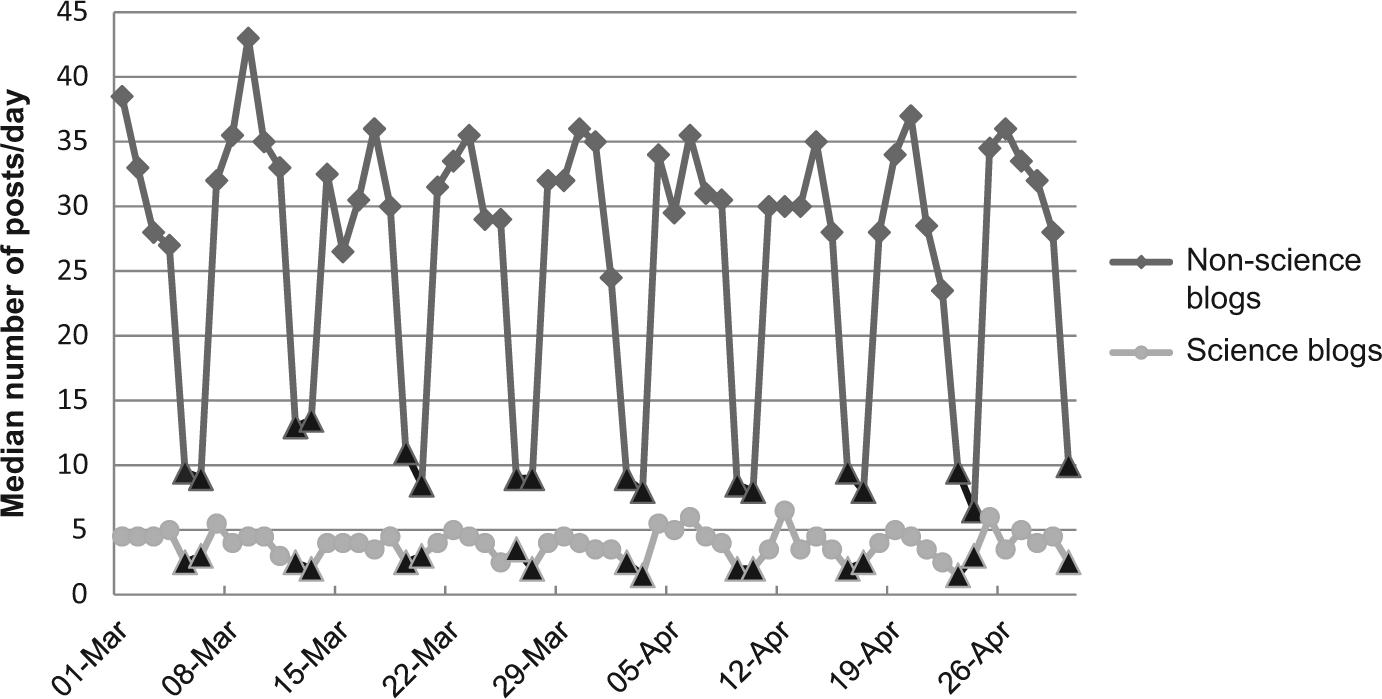
The most popular science blogs are updated less frequently than the most popular non-science blogs. All blog posts appearing on each of the 20 blogs were counted during the months of March and April 2011, and the daily median value for both categories of blogs was calculated. Black triangles indicate weekends. The median values were used because averages are not an appropriate measure for non-normal data (Zar, 1999).
There exist similarities, however, in the updating patterns of both types of blogs. Update frequency reduced on the weekends, with productivity peaking around mid-week. Across the board (and irrespective of their paid/voluntary basis), bloggers followed an overall 5-day work schedule. That said, all blogs, with the exception of Wired Science, did release content during weekends, most likely in response to developing world events or based on content produced during the week and uploaded over the weekend (Khan, 2012).
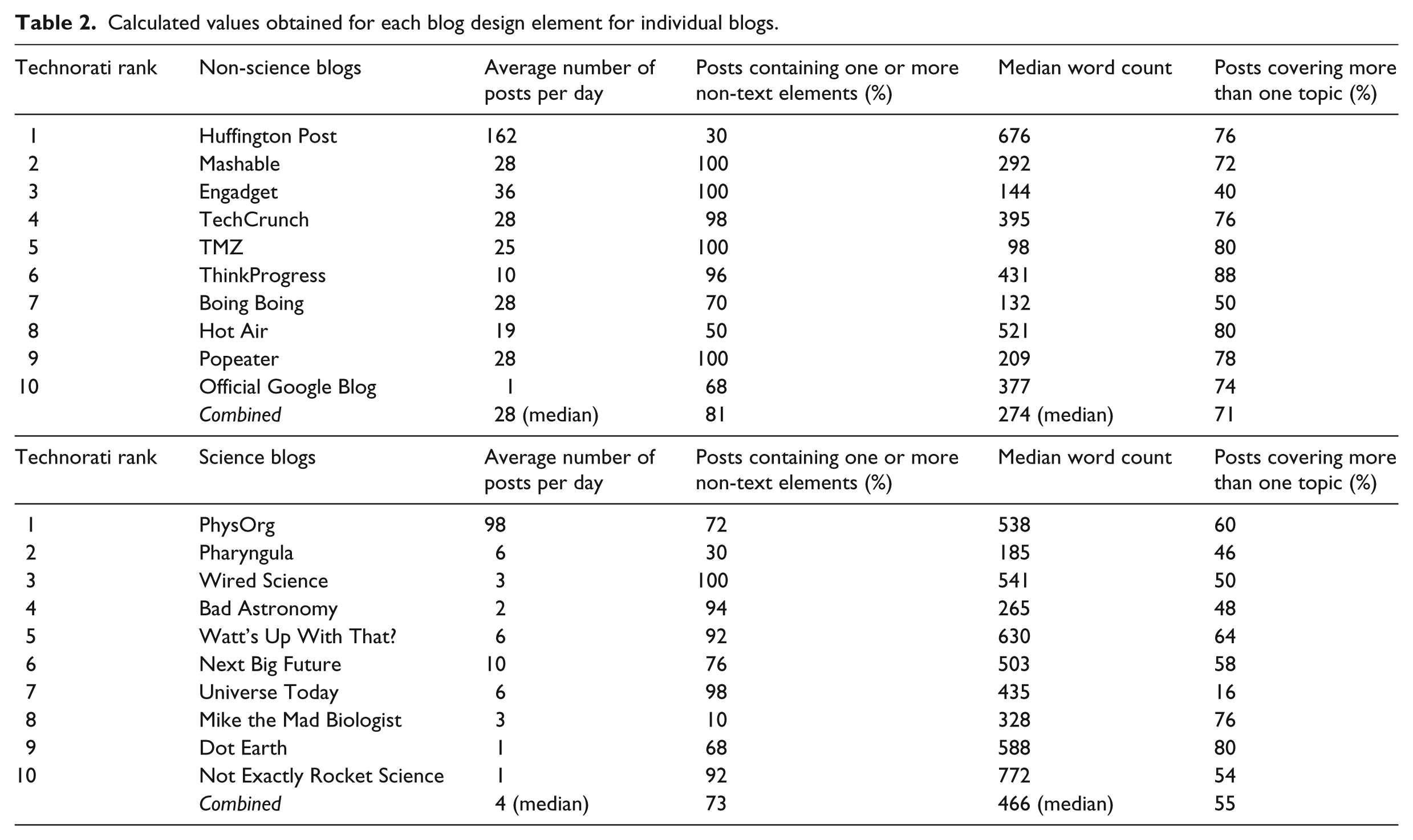
It is notable that a wide variation in post count occurred across the individual science blogs. PhysOrg, one of the five science blogs with multiple authors, was the most updated science blog with an average of 98 posts per day (Table 2). This average was higher than that of 9 of the 10 non-science blogs, all of which are multi-author. The update frequencies of all other science blogs, however, fell below the update frequencies of most of the non-science blogs.
Calculated values obtained for each blog design element for individual blogs.
This observed difference in update frequencies is unsurprising, given the aforementioned blogger motivations. If as discussed above, science bloggers write primarily for themselves rather than to attract large audiences, then there might not be a perceived need to produce large quantities of content. It is also likely related to the scales involved: most of the popular science blogs are written either by a small team or by a single individual. In contrast, the most popular blogs on the Internet operate within large corporations and often employ extensive writing teams. More bloggers contributing to a shared site typically makes producing larger quantities of content easier (Sharma, 2010). With more content, there is an associated increased opportunity to create social network–mediated viral marketing (Palka et al., 2009).
The use of non-text elements
Because Internet users often scan rather than read online content, being able to capture the user’s attention during an initial visit is critical in convincing them to return (Rowse and Garrett, 2012). Non-text elements such as images and videos are eye-catching and have been found to increase visitor numbers (see, for example, Djamasbi et al., 2010; Lindgaard et al., 2006). Furthermore, diversity in the way information is presented (e.g. a combination of text and images) has also been found to have a positive effect on audience retention (Singh et al., 2010).
In the interviews, the science bloggers felt that the use of images was an important aspect of blogging, but considered it non-essential. Chris stated, for example, that ‘imagery is really important in capturing [the audience’s] attention. We use all kinds of visual elements to break up big blocks of text and make it more parsable’. Steven, however, noted that he does not ‘actively seek to incorporate multimedia stuff … those can help but they’re not compulsory’. Again, these comments no doubt reflect on the audience involved: more specialized readers are less likely to require non-text elements to become interested.
Such differences in attitude held true statistically between the uses of non-text elements across the two types of blogs (Table 2). For each blog post, in both categories of blogs, the total number of images, videos, embedded audio files, polls, graphics, tables, figures and diagrams was counted. For statistical purposes, all individual blog posts were then characterized as having either ‘zero non-text elements’ or ‘one or more non-text elements’. Using a chi-square test, the science blogs were found to have significantly fewer blog posts containing at least one non-text element compared to the non-science blogs (73.2% vs 81.2%, χ2 = 9.09, p = .003). When looking at specific non-text elements, the science blogs were found to have significantly fewer blog posts with one or more images compared to the most popular non-science blogs (55.6% vs 68.1%, χ2 = 15.779, p = 7.12 × 10⁻⁵). The science blogs were also observed to have statistically fewer posts with one or more videos (11.8% vs 24.8%, χ2 = 28.259, p = 1.06 × 10⁻⁷).
However, in contrast to their use of images and videos, the science blogs used significantly more explanatory figures (e.g. graphics, tables) compared to non-science blogs (2% vs 13.4%, χ2 = 45.715, p = 1.37 × 10⁻¹¹). What is the impact of this? For one, providing in-depth content by making use of real scientific data is likely to attract the science enthusiast (Rowse and Garrett, 2012). Additionally, because splitting the reader’s attention by requiring them to understand both text and figures has been shown to negatively impact comprehension, the use of graphics and tables (rather than images or videos) could at the same time alienate non-science enthusiasts (Macedo-Rouet et al., 2003). These two elements again reinforce the notion of popular science blogs being designed for an already attentive audience.
Word count comparison
Various blogging guides and studies examining the effects of text length on reader attention and learning have recommended that writers limit the length of their online content (see, for example, Rowse and Garrett, 2012). Texts that are long to read and that require the reader to learn new concepts can lead to cognitive overload and consequently discourage the reader (Mein, 2005). Word count was therefore compared between both categories of blogs. Using a Mann–Whitney U test, blog posts from the most popular science blogs were found to possess a significantly higher word count than blog posts from the most popular non-science blogs (U = 92,432.5, n1 = 500, n2 = 500, p = 9.92 × 10⁻¹³; Figure 2).
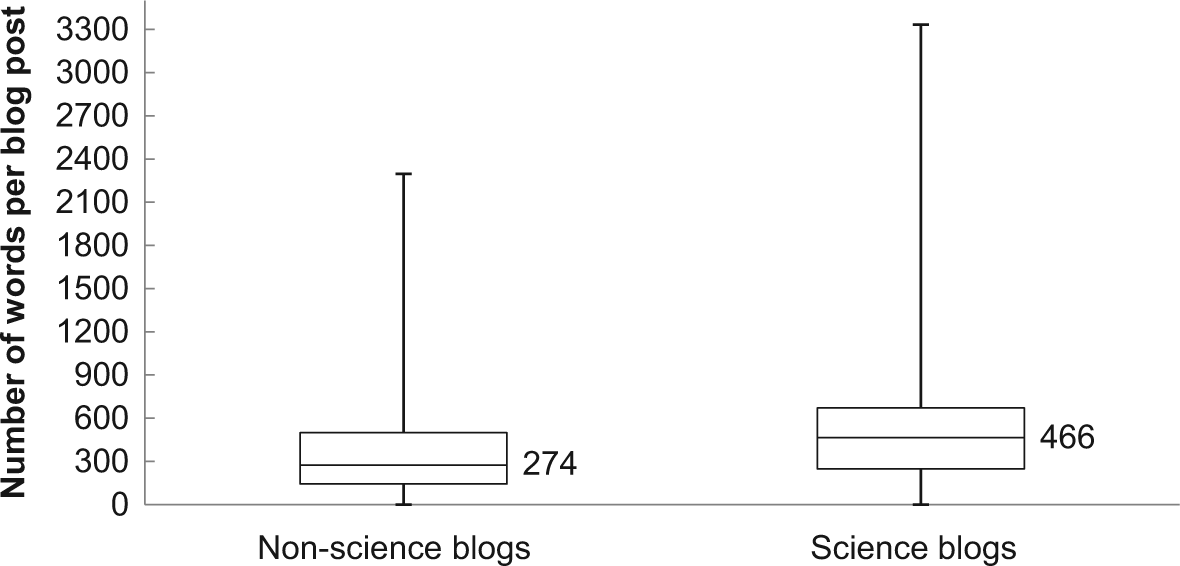
Posts from the most popular science blogs are longer than posts from the most popular non-science blogs (U = 92,432.5, n1 = 500, n2 = 500, p = 9.92 × 10⁻¹³). The number of words per post was determined for each of the sampled blog posts. The lines (described in order from bottom to top) represent the smallest observation, lower quartile, median, upper quartile and largest observation. The two values indicated are the medians.
With the exception of a short burst of commentary posts on Pharyngula, many of the science blogs provided long in-depth synopses on science-related topics. Arguably, these long posts reinforce the notion of the most popular science blogs targeting science enthusiasts and pushing away general audiences. There are two reasons for this. First, long posts specifically attract niche audiences looking for the type of in-depth content that cannot be found on more general topic short-post blogs (Rowse and Garrett, 2012). Second, long posts can have negative effects on comprehension and readership. If a reader is not familiar with a blog’s subject focus, then these types of in-depth posts could push general audiences away – not only lay people but also experts in other disciplines who are not specialists in a blog’s particular topic (Mein, 2005).
There was, however, disagreement among the interviewees on this issue: three indicated that they had no limit on the number of words that they used per post, while three deliberately took word count into consideration. Julie advised that ‘You should stop writing when you run out of things to say’, while Maurice indicated that ‘If a reader is entertained by what the writer has put up, then I don’t care how long it is’. In contrast, Steven felt that ‘the longer you make [posts] the harder you’ve got to work to keep your reader’s attention. So it’s got to deserve it’. This concept of ‘deserving’ content is insightful and suggests an explanation for the above disparity: shorter posts may be more effective generally, but for important issues of strong interest, post length is less important. Indeed, some expert bloggers recommend ‘mixing up’ post length to provide both ‘meaty’ content and shorter ‘newsy’ updates (Rowse and Garrett, 2012: 84). It is, however, remarkable that the most popular blog overall, the Huffington Post, had a higher median word count than almost all of the science blogs, despite arguably not covering ‘deserving’ issues in every post. The popularity of the Huffington Post, despite its long article lengths, thus calls into question word count as a significant factor in determining blog popularity.
Topic diversity comparison
Most people are interested in a variety of topics (Carpenter, 2010) and engage in variety-seeking behaviour to satiate their need for diversity (Fishbach et al., 2011). Singh et al. (2010) found this to specifically be the case for a group of blog readers who were observed to frequently switch between blogs in order to seek out content variety. Indeed, in one of the early commentaries on science blogging, Wilkins (2008: 411) noted that ‘to become a strong blogging presence, one cannot focus on science all the time’. From these findings, it is conceivable that a blog that offers more diverse contexts could retain an audience more easily.
Based on the Technorati (2011b) topic categories, the posts were allocated into one of the two groups for statistical purposes: ‘covering only one topic’ or ‘covering more than one topic’. Using this categorization, science blog posts were found to touch upon a significantly smaller number of topics at once (e.g. politics, business and religion, all in one blog post) compared to non-science blog posts (55% vs 71.4%, χ2 = 28.911, p = 7.58 × 10⁻⁸). However, as can be seen in Table 2, the majority of the 500 science blog posts analysed here did cover multiple topics at once.
The most popular additional topics were politics, business/finance, health and living (a broad category covering various subjects such as pets and education, Table 3). Note that three of these topic areas (politics, business and living) were major foci for some of the 10 most popular blogs on the Internet (e.g. TechCrunch, Engadget and Mashable covered business/company news; Hot Air and ThinkProgress covered political news). It is possible that these are topic areas which were the most popular with Internet users at the time and thus produced more traffic.
Distribution of topics covered by the science blogs.
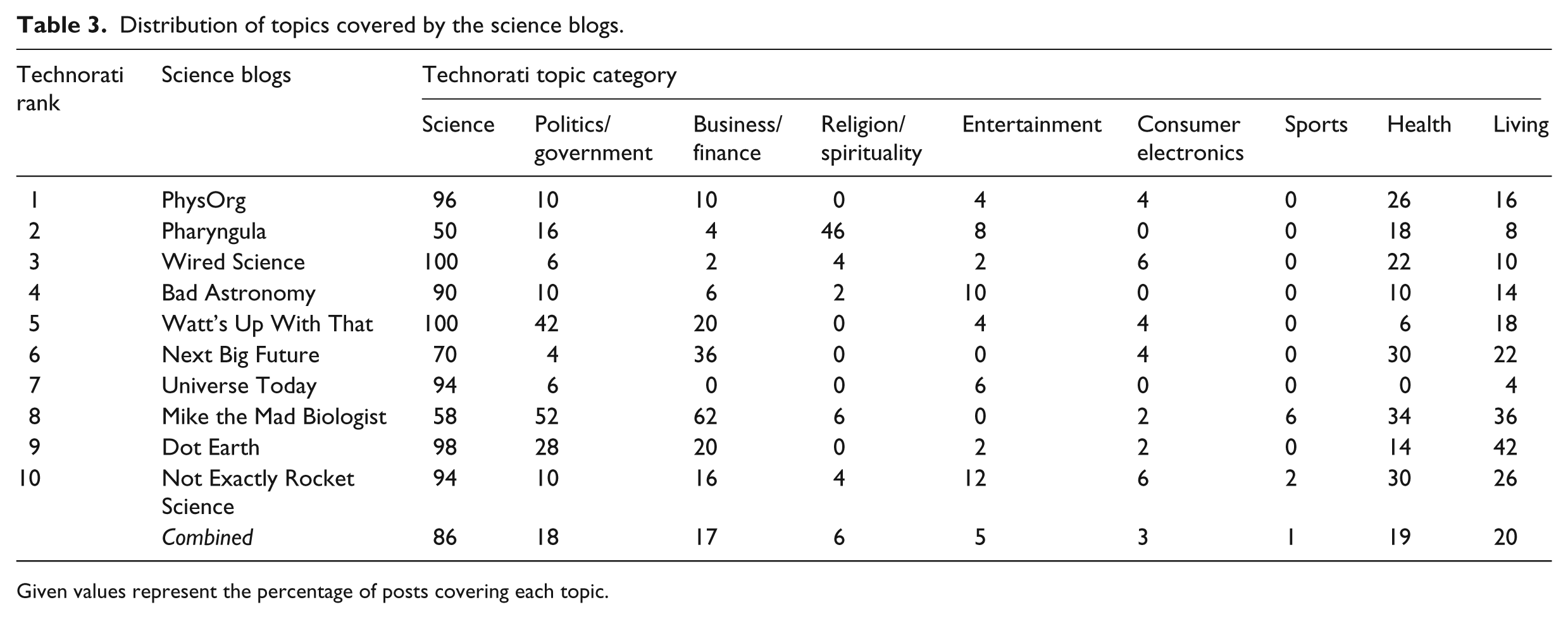
Given values represent the percentage of posts covering each topic.
Of the 10 science blogs, 7 focussed 90% or more of their content on science. Most of these blogs, however, had 50% or more of their posts covering more than one topic. The exception is Universe Today, which is much more science focused, with 94% of its posts covering science and only 16% of posts covering more than one topic. Pharyngula showed the second lowest level of topic diversity with only 46% of posts covering more than one topic. In contrast to Universe Today, however, only 50% of Pharyngula posts were science-focused – the remaining Pharyngula posts covered a variety of topics such as religion and scepticism. Politically oriented science blogs tended to show the highest level of topic diversity: 80% of posts from Dot Earth and 76% from Mike the Mad Biologist covered more than one topic (Table 2). As noted above, the high level of non-science contexts on some of these high-diversity science blogs is likely to be a major contributing factor to their raised popularity through attracting variety-seeking readers to become repeat visitors (Singh et al., 2010).
In the interviews, the bloggers were asked whether they preferred to write about science in isolation or to write about science within the context of other topics. Of the six bloggers who answered this question, only Julie indicated that she ‘[tries] to put the science in context’. Five of the remaining bloggers stated that they preferred to write about science in isolation. Reasons for this preference varied. Chris noted similarities to more traditional media when stating, ‘I have a journalism background. I try to avoid pandering and opinion’. This view ties in with that of many science bloggers who see themselves as science journalists making use of journalistic values of accuracy and transparency to create news pieces (Mooney, 2011; Yong, 2011). Similarly, Maurice expressed difficulty in linking science to other topics, noting, ‘[Although I’m not] afraid to take on those topics, it’s really hard to say what, you know, the God Delusion has to do with landing on the moon’. Steven made no apologies as to why he only blogs about science stating, ‘That’s what I’m interested in and that’s what I like to read’. Similar to science bloggers’ choices of word count and use of non-textual elements examined above, Steven makes a blogging choice that is blogger-centric rather than audience-centric, choosing to write about what he finds interesting. The resulting high popularity of his blog (in comparison with other science blogs) suggests that this is a positive approach in terms of audience recruitment within the science blogging genre, but that further variety in topic coverage could increase the reach of his work more generally.
These perspectives did, however, conflict with the results of the content analysis. Many of the bloggers who expressed reluctance to write about topics other than science were proven to frequently place science within a wider context. This disparity could be indicative of a lack of clarification regarding what ‘context’ meant. Alternatively, these bloggers might simply have been unaware of the extent to which they framed their posts within other topics. Although their intention was usually to write for other science enthusiasts, these bloggers might have inadvertently increased their popularity by creating posts that appealed to those interested in more than just science (Nisbet and Scheufele, 2009).
Reading level and prior knowledge requirements
To compare levels of complexity in the content presented, the Flesch–Kincaid measure of reading level (DuBay, 2004) and prior knowledge assumptions for both the science and non-science blogs were calculated. Both types of blogs were written at a grade level of 9.5 (Mann–Whitney U test: U = 118,001, n1 = 496, n2 = 477, p = .946), and there were also no significant differences in the prior knowledge requirements. An average of 5.04% and 4.79% words or concepts requiring the reader to have prior knowledge were identified per post for science and non-science blogs, respectively (Mann–Whitney U: U = 114,573.5, n1 = 500, n2 = 500, p = .022). As reported in detail elsewhere, this was a deliberate strategy by most of the science bloggers interviewed; they avoided jargon, used analogies and metaphors and deliberately wrote their content for non-specialists to read (Ranger and Bultitude, 2014). Despite including two of the same blogs (Wired Science and Pharyngula), these results are in direct contrast to previous criticisms of science blogs being ‘a virtual water cooler for graduate students, postdoctoral associates, faculty, and researchers’, without wider relevance to public audiences (Kouper, 2010: 8). Our findings instead suggest that the language and content of popular science blogs are no more complex than those found within the most popular English-language blogs on the Internet, which boast many millions of readers.
4. Discussion
Our results demonstrate that there is still significant room for development before science blogging becomes a truly ‘pluralistic, participatory and social’ element in the ‘science media ecosystem’ (Fahy and Nisbet, 2011: 778). The evidence suggests that most science blogs fall within the ‘niche’ area of Anderson’s (2008) ‘long tail’ phenomenon. Does the position of science blogs within the blog rankings imply that science is a niche topic? This is a question that many have argued for both sides and whose answer remains unclear (Mike the Mad Biologist, 2010; Schultz, 2010; Yong, 2010). In the case of the science bloggers interviewed here, their driving intrinsic motivations revealed little compulsion to extend their audience reach beyond those already interested in the topic. This is not to denigrate the likely impacts of science blogs as they stand: when acting en masse, niche audiences do have the potential to take on a far greater role, for example, achieving political action or influencing libel actions (Henderson, 2012; Riesch and Mendel, 2014). However, on an individual basis we suggest there are two lessons to be learned here. First, that science bloggers interested in raising their popularity could learn from wider blogging practices (such as using more images and videos and placing the science within a diversity of topic contexts) to increase their reach. Second, if we focus specifically within the genre of science blogging, we suggest that popular science bloggers attract high audience numbers precisely because they do follow their own passions and interests. It was remarkable that in contrast to other studies – especially those focusing on academic bloggers – the most popular science bloggers expressed a much narrower range of motivations. Strategic influences such as knowledge transfer or raising public awareness (Colson, 2011) were not mentioned, nor did they overtly describe blogging as a form of self-promotion or networking (Mahrt and Puschmann, 2014) or an institutional requirement (Riesch and Mendel, 2014). Our initial hypothesis based on these results is that science blog readers prefer to read posts that reveal a genuine passion and personal interest in a topic, rather than content that is considered ‘obligatory’ or strategy-driven.
Based on their responses, the most popular science bloggers we interviewed resembled ‘transmitters’ (rather than ‘engagers’) who seek satisfaction through sharing their passion with other like-minded individuals. However, this was not a classic deficit-model approach – the popular science bloggers were very much non-hierarchical in their language and certainly did not see themselves as filling the ‘knowledge vacuum in the scientifically illiterate general public’ (Miller, 2001: 116). Although aware of and interested in their audiences’ needs and insights, popular science bloggers appear to be mainly motivated by personal factors such as a passion for science and enjoyment of writing. Likewise, their blog posts use specific design elements (whether overtly or subconsciously) to attract an audience of science enthusiasts like themselves.
The science blogs investigated here do what they do very well. The evidence is that they intend to attract an audience already interested in science, and they succeed admirably in that regard. They are effective communicators who write at a similar level of complexity (in terms of both language and content) as the most popular English-language blogs on the planet. However, for science blogging, more generally, to live up to the rhetoric as a mass communication medium for engaging wider publics, there are valuable lessons to be learned from other successful blogging practices. With more mixed media, frequently updated and topically diverse content, the evidence from this work is that science blogs will consequently attract a wider following. There are also some indications that using shorter, more easily digestible posts might appeal to a wider range of readers, although there is continuing debate on this front.
Such adjustments to blogging practice will, however, prove challenging as more content, especially in complicated multimedia formats, requires more contributors. It is noticeable that the 10 most popular blogs on the Internet investigated here were all written by professional teams of bloggers, while many of the science blogs were produced by enthusiastic individual volunteers, making it much more difficult to create such additional content. It is evident that, as with other communication channels, for science blogging to be effective at reaching mass audiences, it must be appropriately resourced.
Limitations and further work
These interviews, while insightful, were limited in scope. Specifically, we acknowledge that the opinions and blogging approaches presented here do not necessarily represent those of all science bloggers and that the very nature of science blogging is heterogeneous, confusing attempts to draw generalizations across the entire genre. Further research with apparently less ‘popular’ but more overtly ‘audience-oriented’ bloggers (e.g. building on Bell, 2012) or exploring differences in content across different types of science blogs (Fahy and Nisbet, 2011; Riesch and Mendel, 2014) will provide further insights in terms of understanding nuances in science blogging practice.
Of course, the major absence in this – and most – investigations into science blogging is direct evidence from the blog readers themselves. While there are various methodological challenges to overcome – especially how to encourage the ‘lurkers’ to participate to ensure representativeness (Andrews et al., 2003) – this is an important and necessary perspective, especially if the transmissionist model of online science reporting is to be challenged (Fahy and Nisbet, 2011; Shanahan, 2011).
Additionally, while this study focussed on blog design, elements such as marketing strategies, types of posts and subject matter are likely to affect science blog popularity. Of particular interest, studying science bloggers’ use of social media and science blog networks to promote their blogs, and the influences of ‘trending’, are very relevant in the current climate of interconnectivity (Bell, 2012; Colson, 2011; Palka et al., 2009).
5. Conclusion
In summary, this study focused on examining existing science blogging practice, looking both at science bloggers’ self-reported perceptions and evidence synthesized across their blog posts. Bloggers from five of the most popular English-language science blogs were interviewed to explore their motivations, target audiences and blogging practices. Our cohort included three females (of seven interviewees), representing both professional and amateur science writers but no academics.
These popular science bloggers write not to promote a widespread science communication agenda but rather to share their love of science with like-minded individuals. Through a detailed content analysis of 1000 posts, we also found that whether intentional or not, many of the most popular science blogs make use of various blog design elements to encourage science enthusiasts, rather than more general audiences, to visit their blogs. Many of the popular science bloggers work on less frequently updated blogs that have longer posts with fewer non-textual elements and less topic diversity compared to some of the Internet’s most popular blogs. That said, the complexity of language and assumed background knowledge are both on par with popular non-science blogs, suggesting that popular science bloggers effectively communicate their material to non-specialists. Together, these findings suggest that popular science blogs are written for a science-interested audience, although not an expert one. The ‘science media ecosystem’ we observed was less participatory and more narrowly targeted than that suggested by Fahy and Nisbet (2011), but contained a passion and style of communicating that has proven highly popular with science-interested blog readers.
Footnotes
Acknowledgements
The authors would especially like to thank all the bloggers who participated in the study, as well as those who are active in continuing the debate around the sorts of issues that are raised in this work.
Funding
This research received no specific grant from any funding agency in the public, commercial or not-for-profit sectors.