



Abstract
While school library professionals work across many nations, supporting student learning and wellbeing, there is limited current research capturing shared issues faced by this educational workforce. The International School Library Workforce Survey collected insights from 971 respondents across 63 countries derived from analysis of both quantitative and qualitative data. Findings suggest that in an international context, school library professionals are experiencing notable issues that impact upon their morale and their ability to enact their professional roles. Respondents were more likely to disagree then agree that school library professionals were typically valued in their country. While the vast majority of respondents had strong collaborative relations with at least some colleagues, only 58.7% agreed that it was easy to build new collaborative relationships with classroom teachers, and analysis indicates that the classroom teacher is the key social agent to be won over if collaboration is to thrive between school library professionals and classroom teachers. Concerning levels of deprofessionalization were reported, with more than two thirds of respondents noting that retired school library professionals were often replaced by less qualified staff in their country. The majority of respondents (87.6%) had concerns about the future of the school library profession in their country. Current and future challenges at school and country level were related to funding and resourcing; training; policy and politics; and role clarity and valuing. Equity is an issue; less wealthy public schools are reported as being far less likely to have them than private schools in some countries. Inadequate staffing at school level may be related to limited initial training pathways at country level. Physical, economic and legal threats to school library professionals for providing access to diverse materials were raised. Findings highlight the need for immediate steps to secure workforce stability and growth into the future.
Keywords
Introduction and literature review
School library professionals (SLPs) work in contemporary schools across many nations, making a noteworthy contribution to students’ learning, engagement and wellbeing (Merga, 2019a; Webber et al., 2024). What it means to be an SLP may be perceived differently across nations, with library professional standards often depending on the varying accreditation standards and education pathways available in these contexts (Oguz et al., 2024). However, SLPs can, in general terms, be viewed as individuals working in school libraries, who identify as an SLP. These individuals may have established or be seeking to establish a career trajectory in school libraries, and may have undertaken post-school training or higher qualifications in school library related fields.
While this definition of SLPs is loose, and there is much to be said about the research-substantiated benefits of qualified staff (Dix et al., 2020; Lance and Kachel, 2018), in many contexts this qualification is not available, with training trajectories into an SLP role widely varying. For example, in Singapore, qualified librarians are not typically part of the typical library ecosystem. Instead, a qualified teacher (who is not professionally qualified as a librarian and does not have a degree in Library and Information Science) is appointed as a library coordinator (LC). (Loh et al., 2021: 554)
Furthermore, even within some nations (e.g., the USA) there can be considerable inconsistency around how an SLP is defined, and what their expected role may be (Ellis, 2024). This means that adoption of an inclusive and somewhat flexible definition for the purposes of research seeking to capture cross-contextual experiences of SLPs is needed; rigid definitions simply lack cross-contextual relevance in the current international school library environment.
There is a sense that the library and information science profession is subject to uncertainty (Dorner et al., 2017), and the extant research on the school library workforce suggests that SLPs may be facing significant challenges (e.g., Merga, 2022a). Failure to capture the emerging and future needs and issues faced by the profession can enhance its vulnerability. While there is a limited body of current workforce research specifically focusing on SLPs, concerns have been expressed about the greying of librarianship across a number of nations (e.g., Franks, 2012; Steffen and Lietzau, 2009; Weldon, 2016). In addition, researchers have raised concerns about the vulnerability of the profession related to factors both within and beyond the school. For example, Australian research found that . . .the teacher librarians interviewed did not typically feel secure in the knowledge that their profession is valued, identifying a range of factors that contributed to this perspective. Respondents often perceived a high level of vulnerability when comparing themselves to their classroom teacher colleagues. Staffing vulnerability, their status as educators outside the classroom, patchy teacher support, low administrator regard and understanding, and the decline of valuing of the profession over time were raised as potential issues influencing teacher librarians’ morale. (Merga, 2019a: 18)
Deeper enquiry with a focus on these internal and external factors is warranted given that without an understanding of current and future challenges, SLPs may be poorly equipped to mitigate them.
While local and national school library workforce projects begin to provide insights into current workforce challenges, little is known about the extent to which these workforce issues hold relevance across international contexts. There is value in focusing on international commonalities, given that a lack of knowledge of shared issues can be related to “an unstable or non-existent platform for advocacy” (Dorner et al., 2017). By identifying shared issues and perspectives on current and future workforce challenges, international advocacy can be galvanized around key emerging shared findings. Furthermore, it cannot be assumed that library resourcing is reflective of a country’s relative overall prosperity. For example, recent research on one province in the West of Ireland found that in most schools, the current resourcing “was more analogous to school library provision in developing countries” (O’Brien, et al., 2023: 54). As such, there can be unexpected similarities between high and low income countries.
Collaboration may notably influence SLPs’ experience of their role. SLPs may seek to extend their influence and meaningful connections beyond their libraries to enhance communication and collaboration with their classroom-based educator counterparts (Montiel-Overall and Hernández, 2012). Collaboration is a core expected component of SLPs in some contexts. For example, the vast majority of job descriptions for teacher librarians in Australia require collaboration and teamwork, including expectations such as a requirement to . . .partner with teachers to design and implement curriculum which integrates elements of deeper learning, critical thinking and digital literacy characterized by active use of technology. Collaborate with teachers to plan and implement information literacy and literature programs that connect with other curriculum initiatives and result in positive student learning outcomes. (Merga, 2020: 894)
Furthermore, research has linked collaboration with enhanced student performance. For example, “more frequent collaborative interactions with classroom colleagues (especially at the latter’s initiation)” is associated with higher scores on Reading and Language Arts assessments (Lance et al., 2010: 34). However, robust teacher and SLP collaborations may not be universal, with heterogeneity in colleagues’ willingness to engage, and the nature of collaborations even within a single Australian state (Merga, 2019b).
The International School Library Workforce Survey (hereafter the Survey) of SLPs across international contexts sought to capture challenges to the school library workforce that are both shared and contextually unique, with the expectation that findings could be used to support the real-world advocacy and best practice needs of school library professionals. As noted previously, “the Survey was sectioned into four separate and comprehensive blocks: reading engagement, workforce, wellbeing, and digital information literacy” (Merga and Mat Roni, under review). This paper is the first to report on the data from the Survey block on workforce. As well as capturing extant and projected challenges, the Survey also closely investigated known workforce issues relating to valuing and collaboration, given that the specific factors may be intrinsically linked to the wellbeing and efficacy of the profession (Merga, 2019a; 2019b).
The research questions (RQs) informing the enquiry reported on in this paper are as follows:
Do SLPs feel valued?
Is collaboration between SLPs and classroom teachers supported?
What are the current and projected future SLP workforce challenges at school and country levels?
Methods
Both qualitative and quantitative data were collected on the Survey, aligned with a single-stage approach to mixed methods, where the Survey tool primarily collected quantitative data, with explanatory qualitative data collected in some instances to allow for elucidation of quantitative findings, and to address more exploratory research objectives (e.g., RQ3) (Stentz et al., 2012). As the tool was created specifically for this project, it was subject to extensive iterative piloting and validation processes, and feedback from international pilot respondents led to an expansion of the original number of qualitative fields. While in the original version of the Survey, these fields were kept to a minimum to keep duration within reasonable parameters, reducing related risk of attrition, pilot respondents indicated that without embedding multiple opportunities to capture rich additional qualitative data, the Survey would be viewed as a missed opportunity by respondents. That the final Survey was estimated to take over 18 minutes to complete, and yet it had a very strong completion rate with the new qualitative fields added, highlights that negative effects of greater survey length can be greatly mitigated when a survey is being administered to a highly motivated and generous demographic who demand voice.
Furthermore, during the piloting process, certain key terms that held ambiguity were identified and then defined in the preamble to the Survey as follows.
For the purposes of this study, a The
As such, the Survey was carefully crafted to minimize variation in interpretation of key terms that could lead to issues with the data.
Data were collected “using a Qualtrics-hosted survey tool accessed via a hyperlink” (Merga and Mat Roni, in press), and . . . participants were recruited via online link distributed through LinkedIn, as well as by the International Association of School Librarianship (IASL), International Federation of Library Associations and Institutions (IFLA), International Board on Books for Young People (IBBY), and many other professional associations. On-sharing of the link was encouraged to enable the link to reach those not affiliated with professional associations. (Merga and Mat Roni, under review).
As such, survey distribution was strongly supported by the international school library community and related organizations.
It is impossible to provide comprehensive response rate information as the number of school library professionals in the world (and indeed, in many of the countries that comprise it) is not known and/or publicly available.
There is no known figure for the total number of SLPs worldwide, though it is known that the international professional association (IASL) had around 250 members in August 2024 (J. Branch-Mueller, personal communication, August 22, 2024). Communicative competence in the English language and internet access were both limiting requisites for survey completion. In the absence of a definite population size of SLPs meeting these requisites, GPower (Faul et al., 2009) was employed to estimate a minimum sample size. Using Cohen’s convention of a medium effect size threshold of .30 (Cohen, 2013), with a 95% confidence interval, the minimum sample size required was N = 138. (Merga and Mat Roni, under review)
Responses were collected between 12 July and 29 August, 2024, with a total of 971 responses recorded across 63 countries, greatly exceeding this minimum sample size. Figure 1 depicts school library workforce experience of respondents.
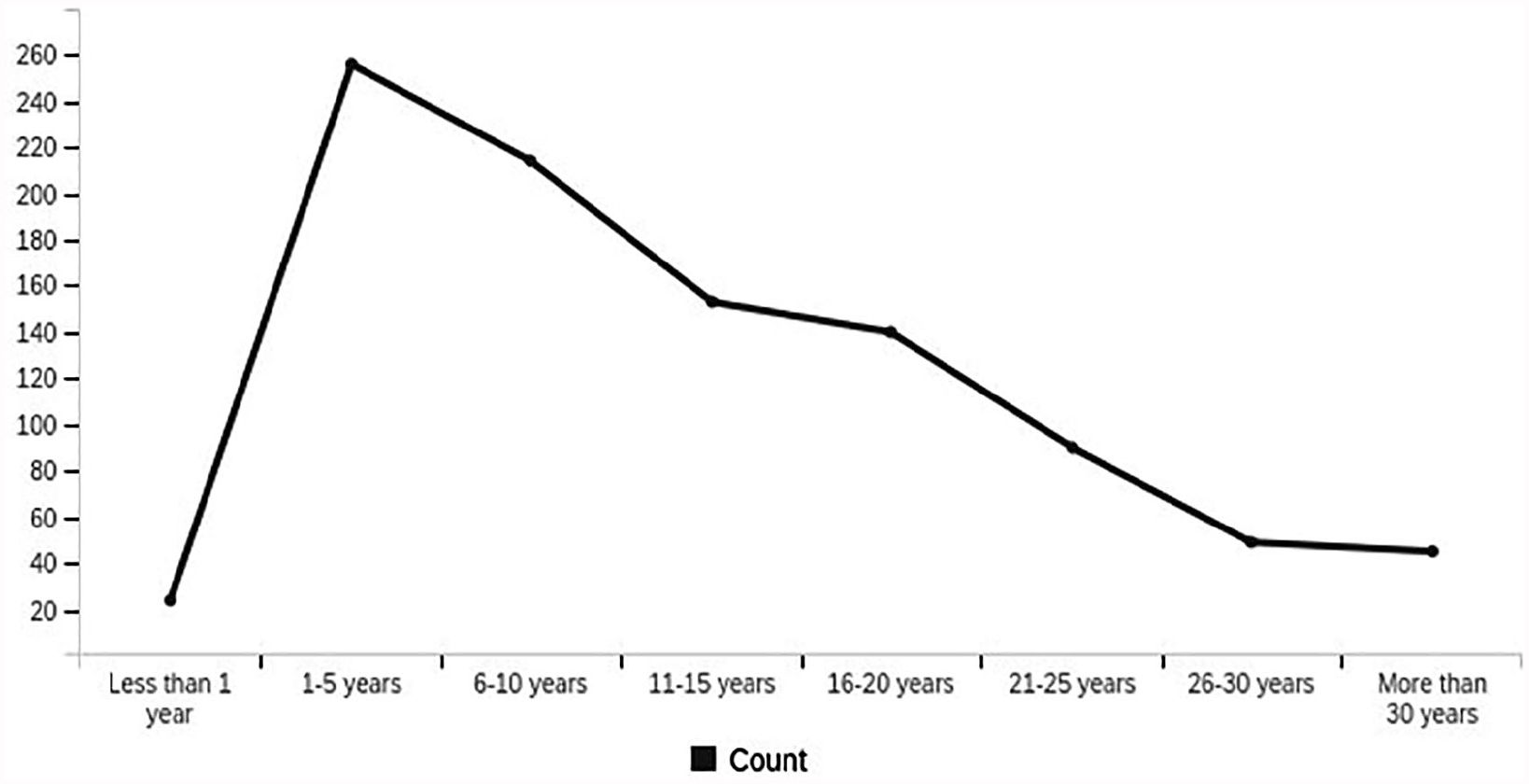
Respondent school library workforce experience (N = 971).
Data and analysis specific to RQs
Do SLPs feel valued? (Quantitative)
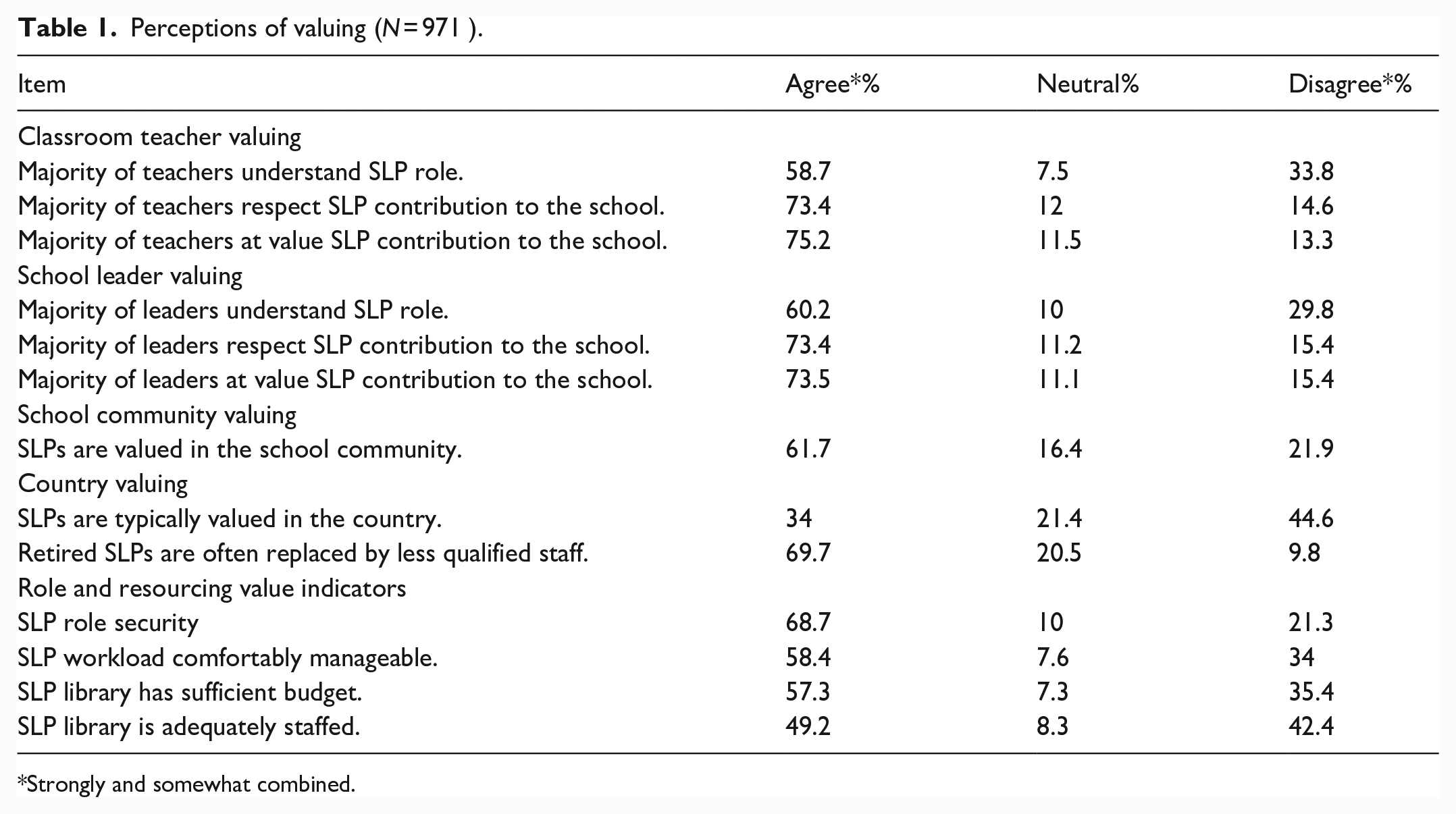
To address the findings relevant to this RQ, the Survey instrument collected quantitative data in relation to 13 questions on valuing SLPs and resourcing. Table 1 provides a summary of responses to these 13 items. The factor score of each item was extracted to build four latent constructs using principal component analysis. School community valuing was analyzed at its item level as this valuing dynamic was measured by a single question-item in the Survey instrument. Bivariate correlations were run on these variables.
Perceptions of valuing (N = 971 ).
Strongly and somewhat combined.
Is collaboration between SLPs and classroom teachers supported? (Quantitative/qualitative)
For this RQ, four question-items were included in the Survey which were later used to build the variable collaboration using the same principal component analysis approach. Only data from respondents who were expected to collaborate as part of their role were included in the analysis. This resulted in 796 valid responses. The resourcing and the valuing levels were later used to build a regression model as illustrated in this equation.

where,
α = intercept (constant)
β = regression coefficients
ε = error
teacher = classroom teacher valuing
leader = school leadership valuing
school = school community valuing
income = country income category based on World Bank classification (World Bank, 2024). This is a control variable.
While the response to this RQ is primarily directed by these quantitative data, to gather some further insights from contexts where collaboration was felt to be very low, respondents (n = 17) who indicated disagreement with the item “I have strong collaborative relationships with at least some of the teachers in my school” were directed by the Survey display logic to an open field beneath the following question: What are the barriers to collaboration with teachers in your school? These 17 responses were analyzed using a process of iterative thematic analysis (Braun et al., 2022).
What are the current and projected future SLP workforce challenges at school and country levels? (Qualitative/quantitative)
Due to the exploratory nature of this RQ, qualitative data were primarily collected across three optional open fields, though one question item collected quantitative data to determine the extent to which the sample held concerns about the future of the school library profession in their country (presented as percentages). The qualitative data were again subject to iterative thematic analysis (Braun et al., 2022), and given the focus on shared issues, only findings with relevance across at least three countries were reported on in this article.
Results and discussion
Do SLPs feel valued?
Table 1 provides the results related to agreement on questions on valuing SLPs and related resourcing.
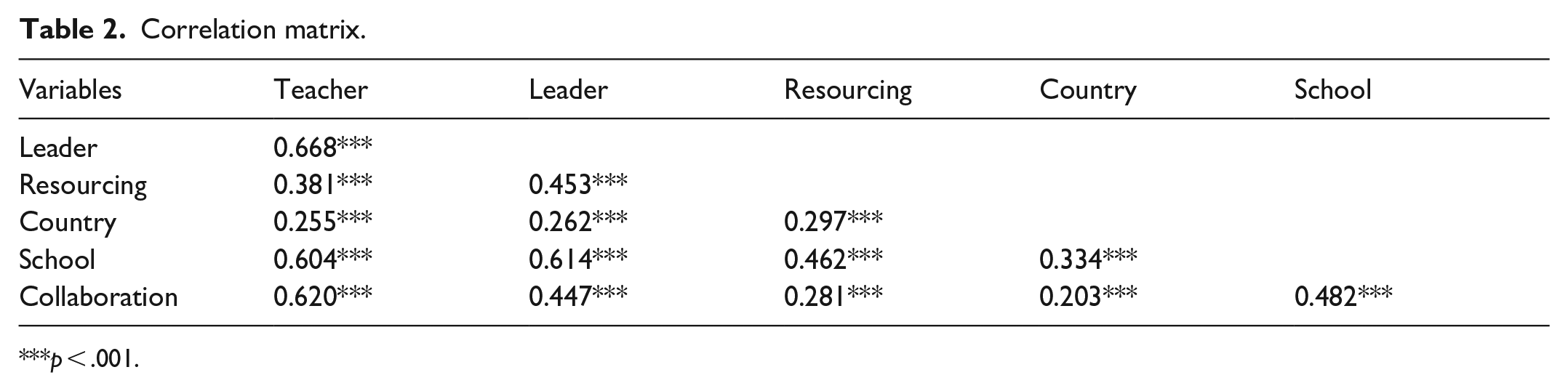
The bivariate Pearson’s correlation of the variables indicated that classroom teacher valuing and school leader valuing has the most notable correlation, (r = .67, p < .001), which may be interpreted as a moderate or strong correlation (Akoglu, 2018). This is followed by the teacher valuing-collaboration relationship, (r = .62, p < .001). Apart from teacher-leader, in terms of valuing, there are significant associations between school leader and school valuing (r = .61, p < .001), and teacher-school valuing (r = .60, p < .001). The bivariate correlation matrix of these variables is seen in Table 2.
Correlation matrix.
p < .001.
Is collaboration between SLPs and classroom teachers supported?
Quantitative findings: Ease of collaboration
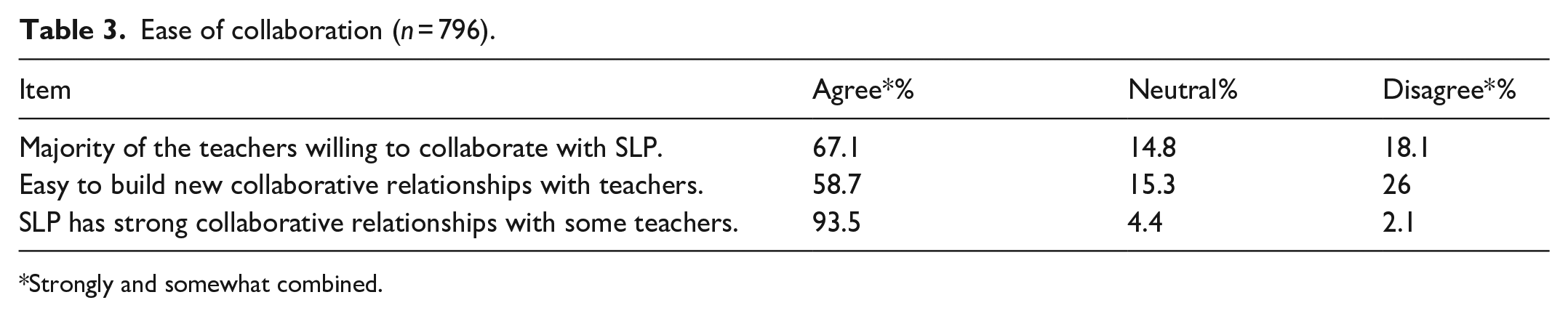
Table 3 shows levels of agreement with ease of collaboration. The regression result in Table 4, indicated classroom teacher valuing (β = .53, p < .001) and school valuing (β = .17, p < .001) of SLPs influence the collaboration between the SLPs and the teachers, with classroom teacher valuing having the strongest effect on collaboration.
Ease of collaboration (n = 796).
Strongly and somewhat combined.
Regression.
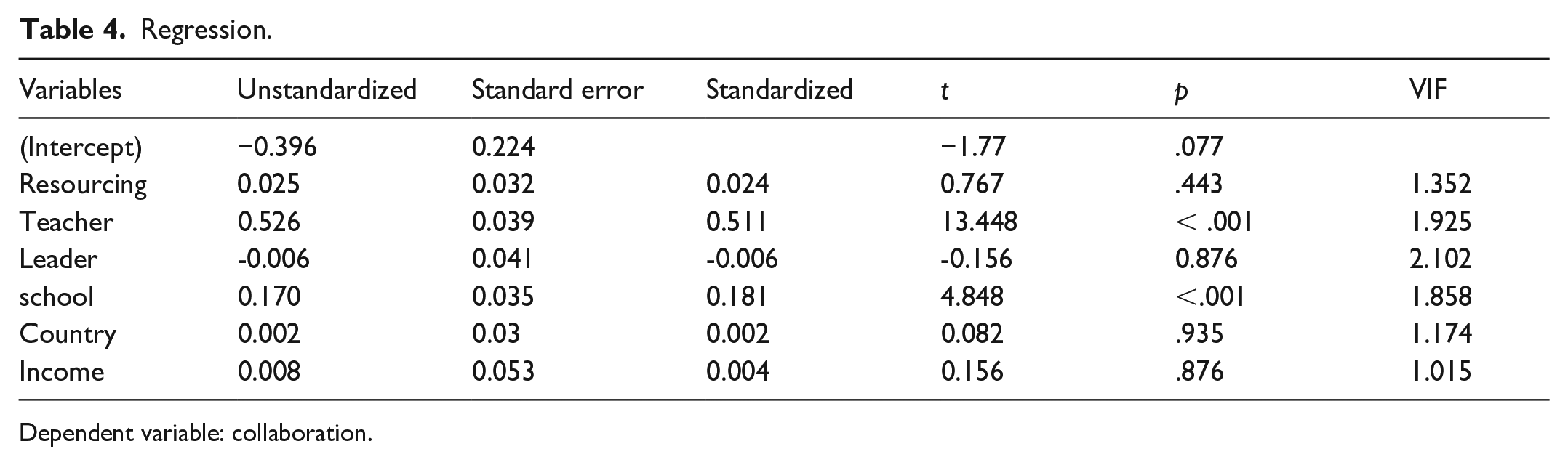
Dependent variable: collaboration.
Despite the correlation between collaboration and school leaders’ valuing and country level valuing as shown in Table 2, these associations do not influence the teacher-SLP collaboration. The regression model also indicates that resourcing does not affect collaboration although the correlation matrix shows that there is a statistically significant association (r = .38, p < .001) shown in Table 2.
Qualitative findings: Explaining barriers to collaboration
There were two key recurring common barriers as follows.
Lack of time, e.g., “főleg időhiány” (Hungary). This was also explained as “Time. To collaborate, teachers need time to plan. There is little to no time built into a teacher’s schedule for co-planning.” (Canada)
Lack of understanding or appreciation of what the SLP can contribute, e.g., “they don’t understand my role and feel my role is not needed” (Nigeria). Also relating to lack of time, this was further described as “many classroom teachers also see collaboration as unnecessary, or another ‘ask’ (and teachers do have so much on their plates already)” (USA).
What are the current and projected future SLP workforce challenges at school and country levels?
Quantitative findings: Generalisability of concerns
Most respondents (87.6% yes, 12.4% no) indicated concerns about the future of the school library profession in their country.
Qualitative findings: Nature of concerns at school and country level
Current school library workforce issues (school level).
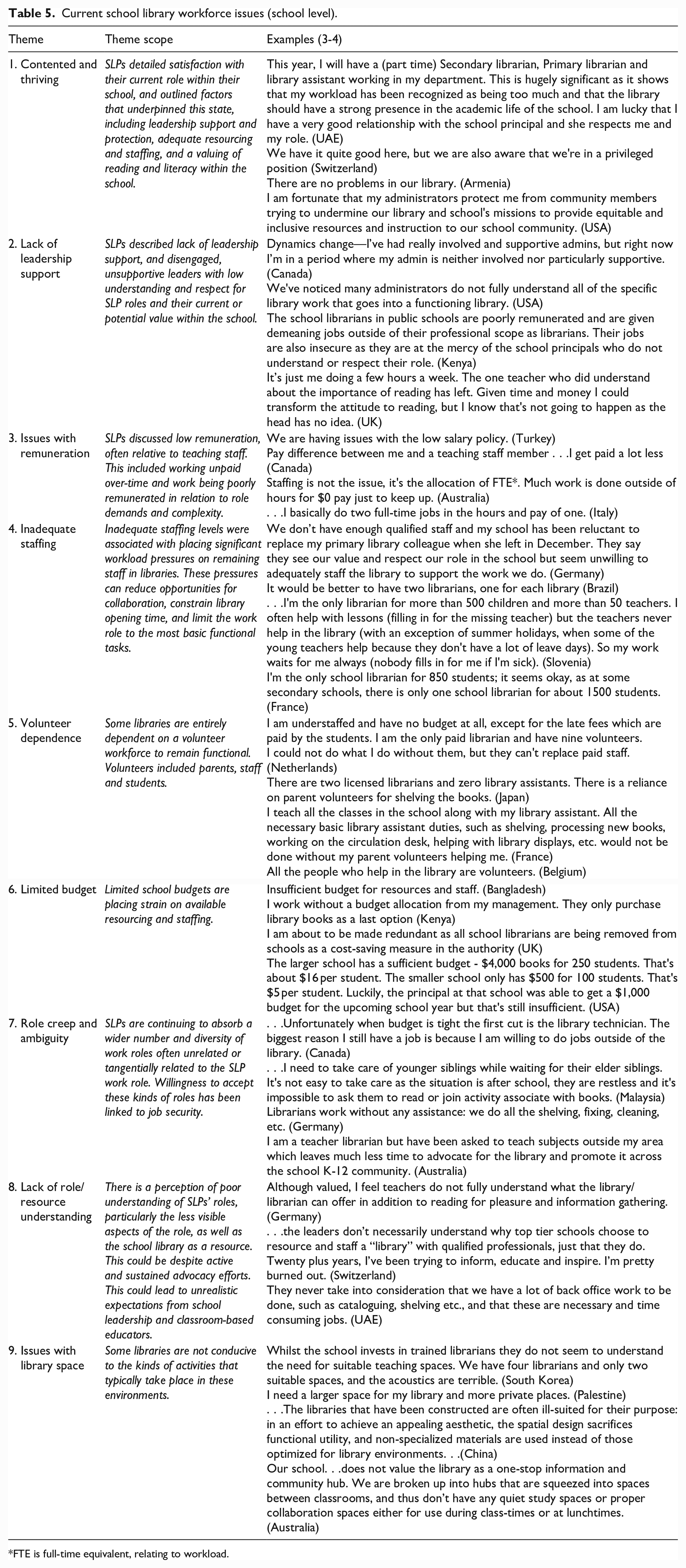
FTE is full-time equivalent, relating to workload.
Current and future school library workforce issues (country level).
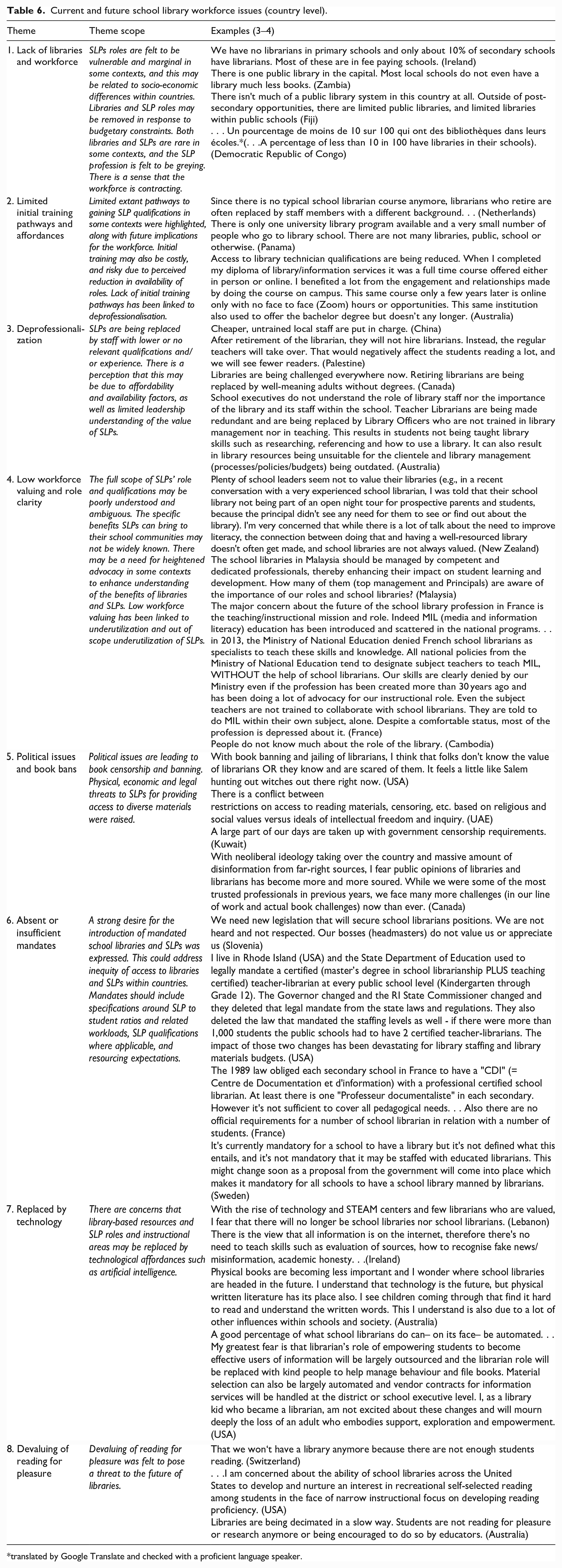
translated by Google Translate and checked with a proficient language speaker.
Discussion
Do SLPs feel valued?
Quantitative results suggest that in an international context, many SLPs are experiencing notable issues that impact upon their morale and their ability to enact their professional roles. Table 1 indicates that more than a third of respondents did not agree that the majority of teachers understand the SLP role. While leaders were felt to have slightly higher knowledge, there is clearly also room for improvement in this area. Respondents were more likely to disagree then agree that SLPs were typically valued in their country. More than one and five respondents lacked role security, and more than a third did not have a comfortably manageable workload. Lack of sufficient budget and adequate staffing were also notable issues. More than two thirds of respondents felt that retired SLPs were often replaced by less qualified staff in their country, indicating an alarming level of deprofessionalization.
While our correlation analysis needs to be interpreted with caution considering that causation cannot be implied, compelling findings were noted. We focus on the strong/moderate findings that are ⩾0.6 (Akoglu, 2018). These suggest that classroom teacher and school leader valuing are significantly and notably related: it is possible that leaders’ orientation toward the SLP influences teachers’ orientation, or the reverse, or that influence is bidirectional. Classroom teacher valuing was positively related to collaboration, suggesting that enhancing classroom teacher valuing could be key to addressing low uptake of collaboration. Both school leader and classroom teacher valuing were also positively related to school community valuing, suggesting that they may influence, or be influenced by this school community valuing. These correlations support the possibility of a flow-on impact; where valuing exists in one strata or social influence, the others can be reshaped or transformed.
Is collaboration between SLPs and classroom teachers supported?
Where expected, collaboration was not always easy to enact and establish. While the vast majority of respondents had strong collaborative relations with at least some colleagues, only 58.7% agreed that it was easy to build new collaborative relationships with classroom teachers, with only 67.1% agreeing that the majority of teachers were willing to collaborate with them.
It was interesting to note that the regression analysis suggest that classroom teacher valuing has the strongest influence on collaboration, and that school leader valuing may be notably less influential. As such, these findings suggest that the classroom teacher is the key social agent to be won over if collaboration is to thrive between SLPs and classroom teachers. The qualitative findings give insight into how this can be achieved. There needs to be active allocation of time to enable collaboration, and the SLP’s role needs to be clearly communicated and promoted to be valued.
What are the current and projected future SLP workforce challenges at school and country levels?
While as per Tables 5 and 6, some SLPs are contented and thriving in their schools, others are barely coping in an under-resourced library with high role precarity and ambiguity, with school and country level factors causing current challenges, and further projected challenges also foreseen.
Funding and resourcing
At country level, lack of libraries and workforce is a notable concern, and variation in resourcing within a nation can be considerable (Farmer and Safer, 2019). Equity is an issue; less wealthy public schools are reported as being far less likely to have them than private schools in both high and lower income countries (e.g., Ireland and Fiji among others). This reflects US findings reporting on a decline in SLP positions, with access to SLPs “strongly related to both race and ethnicity and either persists or is exacerbated when selected district characteristics—specifically poverty, locale, and enrolment—are considered” (Lance et al., 2023: 95). Similarly, findings from South Africa contend that “equal provision of wide-ranging information resources in all schools is not yet a priority for the new democratic government” (Mojapelo, 2018: 422). High income countries are not necessarily better at ensuring fair resourcing of school libraries and their staffing for less wealthy students.
Low funding and resourcing were captured as issues with remuneration, inadequate staffing, issues with library space and limited budget at school level, though it should be noted that issues with library space were also reported in relatively well-resourced library contexts, often due to questionable decision-making around library space use and allocation. In a related finding, while there has been prior anecdotal report of volunteer dependence in library workforce, this may be the first international study of its kind to demonstrate that this phenomenon is common across countries. Future research needs to capture the extent to which school libraries are dependent on volunteer workforce, which, while reducing burden on the budget, may be characterized as potentially unstable and low-skilled.
Training
The issue of inadequate staffing at school level may be related to limited initial training pathways and affordances noted at country level. That there is no current list of SLP tertiary training programs available across nations is concerning, as capturing expansions and contractions in these affordances is needed to determine sufficiency of initial training pathways both within and across countries. It is possible, given contractions in training opportunities occurring in some nations in recent times, that we may see a growing paucity of these training affordances. This work should be prioritized by international professional associations advocating for SLPs where funding permits.
Policy and politics
Furthermore, at country level, the proposition of absent or insufficient mandates was raised in relation to both the school library resource and its staffing. Mandates could be crucial to the future security of school libraries and SLPs as they struggle to compete for funding in some contexts, and recent US research found that “external factors such as district budgets and lack of state mandates continue to shape many principals’ visions of what school librarianship might be in their school” (Ellis, 2024: 142). However, as also captured in the findings, a mandate that lacks prescriptive detail and enforceability may not lead to the desired outcomes of role and resource security.
At country level, political issues and book bans were detrimentally impacting on the SLP role and role security in affected countries, and while there is a growing body of compelling essays and opinion pieces in this space (e.g., Lowery, 2023), there is an urgent need for research to be conducted that captures the actual and potential impact of book bans on SLPs, but also on student wellbeing and literacy. While not new (Pickering, 2023), the ramping up of book bans and political action constraining the SLP role in some contexts in recent times warrants greater attention; even countries where this is not currently an issue can face changes in government that may introduce relevance of this issue in the near future.
Role clarity and valuing
Lack of understanding and valuing of the SLP role was apparent in both school and country level factors, reflecting the quantitative data on SLPs’ sense of being valued in their country. These relate to the challenge “of getting others to understand why the work of a school librarian is important, and how it can contribute to fulfilling educational goals” (Centerwall, 2019: 144), with previous research exploring how school libraries and SLPs are often ignored or marginalized in school policies and reports in some contexts where they hold strong relevance (e.g., Merga, 2022b; Shenton, 2007). Role creep and ambiguity was noted as an issue at school level, with low workforce valuing and role clarity apparent as country-level concerns. The issue of deprofessionalization is a known concern, with unqualified staff in school library leadership roles, and school library professionals being replaced by less qualified and therefore cheaper staff in some contexts (Merga, 2022a; Dix et al., 2020), and both quantitative and qualitative Survey findings demonstrate that this is a serious issue resonating more broadly across nations.
Low valuing may in part be due to limited understanding. Research from Singapore has found that “principals and teachers may not know enough about the role of librarians or their school library” (Loh et al., 2021: 568), and lack of role/resource understanding was also identified as a notable issue in other countries in this international study. Lack of leadership support at school level, also highlighted in the quantitative data of this study, can have an adverse impact on morale.
Feeling valued in the library workplace was made up of non-monetary recognition and rewards, both from leadership and colleagues and from the work itself. The meaning one finds in one’s work is critical to any feeling of satisfaction, but meaning can be overshadowed by culture, colleagues, and leadership. (Martin, 2020: 377)
Given that the quantitative findings from our study also suggest that leadership and colleague valuing may be more strongly related to SLP morale then material resourcing, capturing the further supporting qualitative evidence was useful.
The future concern of SLPs being replaced by technology can also be seen to be related to this lack of understanding and valuing of the role, particular in relation to how SLPs deliver enduring value supporting students to navigate increasingly complex digital information landscapes (Merga, 2023a; Merga, 2024; Oddone and Garrison, 2024). This concern has been described elsewhere as “a perceived crisis for libraries as institutions, and for librarianship as a profession, due to the digital evolution.” (Dorner et al., 2017: 330). There may also be poor general understanding of the continued relevance and importance of sustained reading for pleasure for supporting key literacy skills (Merga, 2023b); this issue of devaluing of reading for pleasure appeared at country level.
Conclusion
Contemporary understanding of research and what it means to be a researcher allows for methodological reflexivity (Olmos-Vega et al., 2023), with acceptance that the researcher both shapes and is shaped by their research activities. The Survey data were disquieting and often uncomfortable to read and analyze, given the low morale and fears for the future that were sometimes articulated. This led to the researchers feeling a strong sense of responsibility in analysis and reporting, to ensure that the voices of these participants could be both captured and amplified.
Furthermore, instead of delivering the traditional summative conclusion, given the urgency underpinning the findings and discussion, we have chosen to focus on five steps that could be beneficial for immediate enaction to address some of the serious issues raised in this article.
While SLPs may be experiencing advocacy fatigue in many contexts due to their sustained efforts, this article highlights the importance of ongoing and strategic work to secure workforce stability and growth into the future in the face of shared substantial threats to the profession.
Footnotes
Acknowledgements
The researchers would like to thank the respondents and the professional associations who promoted the research project in order to secure the sample size.
Declaration of conflicting interests
The author(s) declared no potential conflicts of interest with respect to the research, authorship, and/or publication of this article.
Funding
The author(s) disclosed receipt of the following financial support for the research, authorship, and/or publication of this article: This project was funded by a 2024 Notre Dame University Australia Research Development Grant (2024-076F).
Ethical approval and informed consent statements
This article complies with ethics requirements.

Data availability statement
There is no data set associated with this article.