




Abstract
In 2023, academics from the School of Information and Communication Studies at Charles Sturt University completed a two-stage project documenting the published output related to Australian and New Zealand school libraries and teacher librarianship from 1900 to the present. The resultant output of the project was the Knowledge Bank of Australian and New Zealand School Libraries. This article discusses a preliminary analysis of the Australian corpus recorded in the Knowledge Bank and what the evidence provided in the corpus can tell us about the history, development and intellectual output associated with teacher librarianship and school libraries in Australia over time. This insight provides opportunities for further research and a broader understanding of the contribution of this sector to both education and librarianship internationally.
Keywords
This article discusses a preliminary analysis of the publications contained in the Knowledge Bank of Australian and New Zealand School Libraries (KBANZSL). 1 KBANZSL was developed in 2020–2022 by academics from the School of Information and Communication Studies at Charles Sturt University and launched in 2023. The team of Mary Carroll, Kasey Garrison, Simon Wakeling and Kay Oddone, assisted by information technology specialist Jo Kay and research assistant Dr Susan Reynolds, has cross-disciplinary expertise in education, history, librarianship, information systems and teacher librarianship. The overall aim of KBANZSL is to ensure that the published non-journal output on school libraries and teacher librarianship is recorded for future use. This has become an issue of some urgency, as the profession and education for it continue to be under pressure in Australia today. Retaining a record such as this has the potential to inform future policy through the preservation of a longitudinal body of knowledge, which currently does not exist. The project captures the output of, and about, Australian and New Zealand school libraries and teacher librarianship from 1900. The current corpus in KBANZSL is over 500 published works in all formats, professional associations and a small image archive that includes links to images that fell within the accepted use for this project. It is worth noting that KBANZSL is not a full-text repository and only records a few seminal individual journal articles, as the development team felt that journals are comprehensively indexed elsewhere. KBANZSL does include bibliographic records and/or location links for books, relevant organisations, reports and web pages in one searchable location. By gathering this information in one location, the development team aims to provide an opportunity for practitioners, researchers and policymakers to develop a longitudinal and holistic understanding of school libraries in Australia and New Zealand over time, and to ensure both current and historical perspectives are represented. The expected benefits of this research will be as a record of significant literature in the discipline, which will potentially provide users with the capacity to find and access critical information, retain the publishing memory of a discipline, and support ongoing research that allows users to evaluate the past, present and future of school libraries in Australia and New Zealand.
This article focuses on the publication output of Australia and explores the KBANZSL corpus for evidence of the development of this sector through its published output. While the current article looks only at Australia, opportunities to discuss the New Zealand landscape and comparisons between the two countries are expected in future analysis. The KBANZSL project was inspired by the recommendations of the 2010 Australian Senate enquiry into school libraries and teacher librarians and its resultant report, School libraries and teacher-librarians in 21st century Australia (House of Representatives Education and Employment Committee, 2011). The 2010 Senate enquiry into school libraries and teacher librarians was conducted in response to calls by professional associations, practitioners and academics for an investigation into the impact of the changing educational, technological and policy environments in which school libraries operated and concomitant concerns about the future of school libraries and the staffing of these libraries by formally qualified teacher librarians. The enquiry was also set against the backdrop of the global financial crisis and federal government stimulus initiatives, which included a large-scale infrastructure and refurbishment programme – Building the Education Revolution (BER) – worth AU$16.2 billion to modernise schools over three years. A substantial AU$14.2 billion of this was allocated to the Primary Schools for the 21st Century (2010) component, which was targeted with funding new and refurbished halls, libraries and classrooms (Australia House of Representatives Education and Employment Committee, 2011: 15). The result was the building of 2650 new primary school libraries in both government and non-government schools (see Table 1). While funds were made available for infrastructure, the staffing of these new facilities and education for school librarians did not keep pace.
Number of BER libraries in 2011.
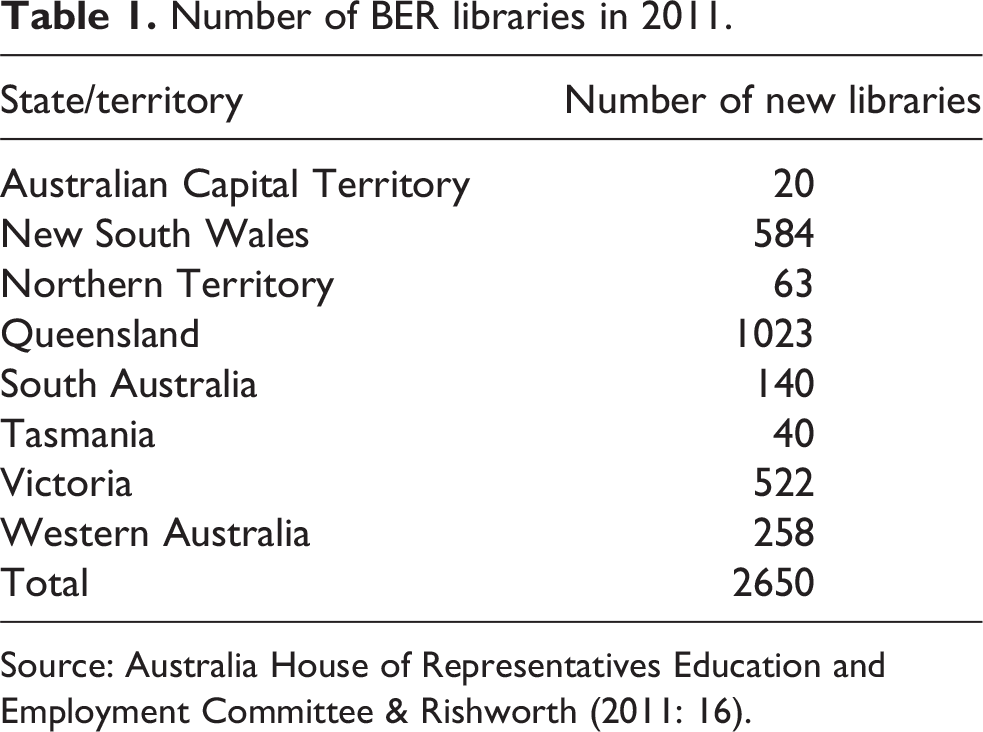
Source: Australia House of Representatives Education and Employment Committee & Rishworth (2011: 16).
There were also growing concerns in the profession about the removal of measurable benchmarks for existing service delivery in school libraries, declining government services to support school library staff, and a decline in teacher-librarianship education. For example, in the 1980s, all Australian state education departments had established centralised school library advisory and support services to assist those working in libraries in the areas of library management and curriculum (Ryan, 2017: 18). In the following decades, these state education department units were gradually closing, had closed, or were devolving into regional or local support units. By the early 2010s, all such services had ceased to exist, yet the government had facilitated 2650 new school libraries through the BER funding.
A number of critical factors informed the 2010 Senate enquiry. These included:
A need for greater understanding of the relationship between school libraries and educational equity;
The links between school libraries, qualified staff and improved educational outcomes;
The role of skilled and suitably qualified teacher librarians in promoting literacy and lifelong engagement with reading and reading for pleasure;
The role of skilled and suitably qualified teacher librarians in delivering key technological skills;
The increasing importance of critical and informed digital literacy amongst students of all ages.
In its final report, the Senate Committee considered the evidence provided in the hearings to be largely anecdotal, stating: The Committee has been struck by the breadth of anecdotal evidence that it received demonstrating the significant contribution to learning outcomes in primary and secondary schools that a fully resourced school library, when staffed by a fully qualified and active teacher librarian, can make. This supports the findings of Australian and international research in this area. It is also clear, at least anecdotally, that teacher librarians can play a vital role in educating future global citizens, who need to be not only technically savvy but also responsible cyber citizens, able to discern the value and merit of the overwhelming amount of information that they encounter online. that there is a fundamental need to collate some hard data to ascertain how many teacher librarians there are in Australia’s primary and secondary schools; to identify where the gaps are; and to start to extrapolate the links between library programs, literacy (especially digital literacy, which is as important as regular literacy and numeracy skills), and student achievement. (House of Representatives Education and Employment Committee, 2011: 118) Recommendation 5 The Committee recommends that the Commonwealth Government initiate an Australian-based longitudinal study into the links between library programs, literacy (including digital literacy) and student achievement, including their impact on improving outcomes for socioeconomically disadvantaged students.
Recommendation 8 The Committee recommends that the Commonwealth Government commission a thorough workforce gap analysis of teacher librarians across Australian schools. Recommendation 9 The Committee recommends that the Minister for School Education, Early Childhood and Youth, through the Ministerial Council for Education, Early Childhood Development and Youth Affairs, establish a national dialogue, including with tertiary providers, on the role of teacher librarians today in schools and into the future. The dialogue should include an examination of the adequacy of the pathways into the profession and ongoing training requirements. (House of Representatives Education and Employment Committee, 2011: xix)
Construction of KBANZSL
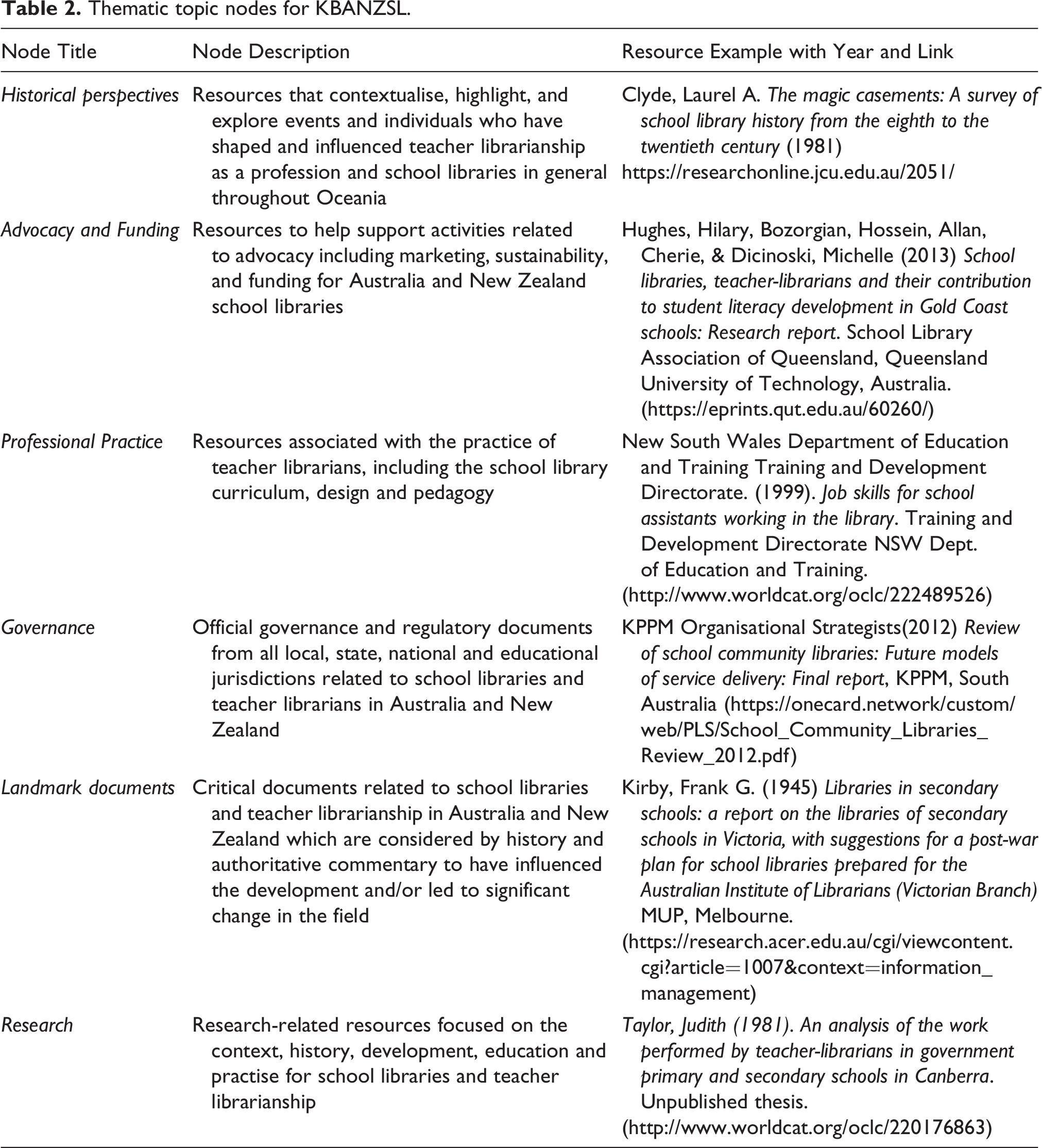
KBANZSL was constructed using a number of overarching nodes, which were scoped to ensure clarity and consistency in their use. This scoping work was part of the development phase of the project. The nodes are shown in the first column of Table 2. The second column provides the scope of the node and the third an example of a document that may fall within the node. These nodes allow for easy identification and aggregation of significant publication types – for example, landmark documents or those dealing with professional practice.
Thematic topic nodes for KBANZSL.
KBANZSL searches can be filtered and sorted by publication decade, file type, location, school level, school sector or resource descriptor – for example, ‘report’, ‘architectural plans’ or ‘policy documents’. These further filters allow for more granular searching and filtering, and are useful in historical perspectives on the publications. For an example of these more granular filters, see Figure 1, which shows ‘Jurisdiction by school sector’ and the further subtopics under this main filter.
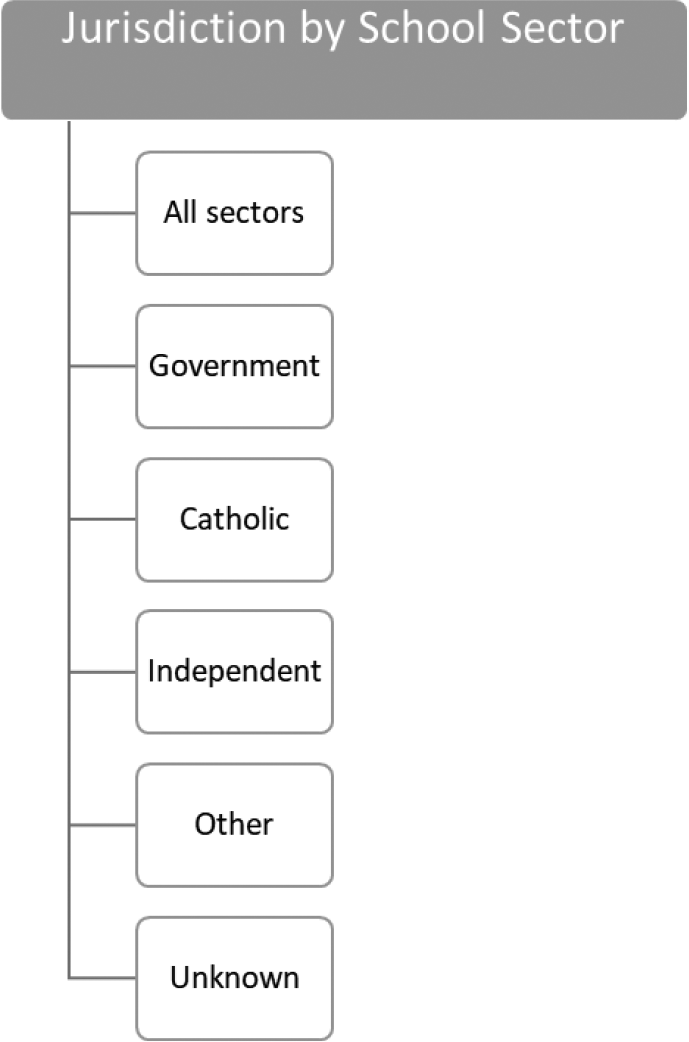
Example of subfields under the main filter of ‘Jurisdiction by school sector’.
Figure 2 provides an overview of all the top-level nodes, fields and filters within KBANZSL.
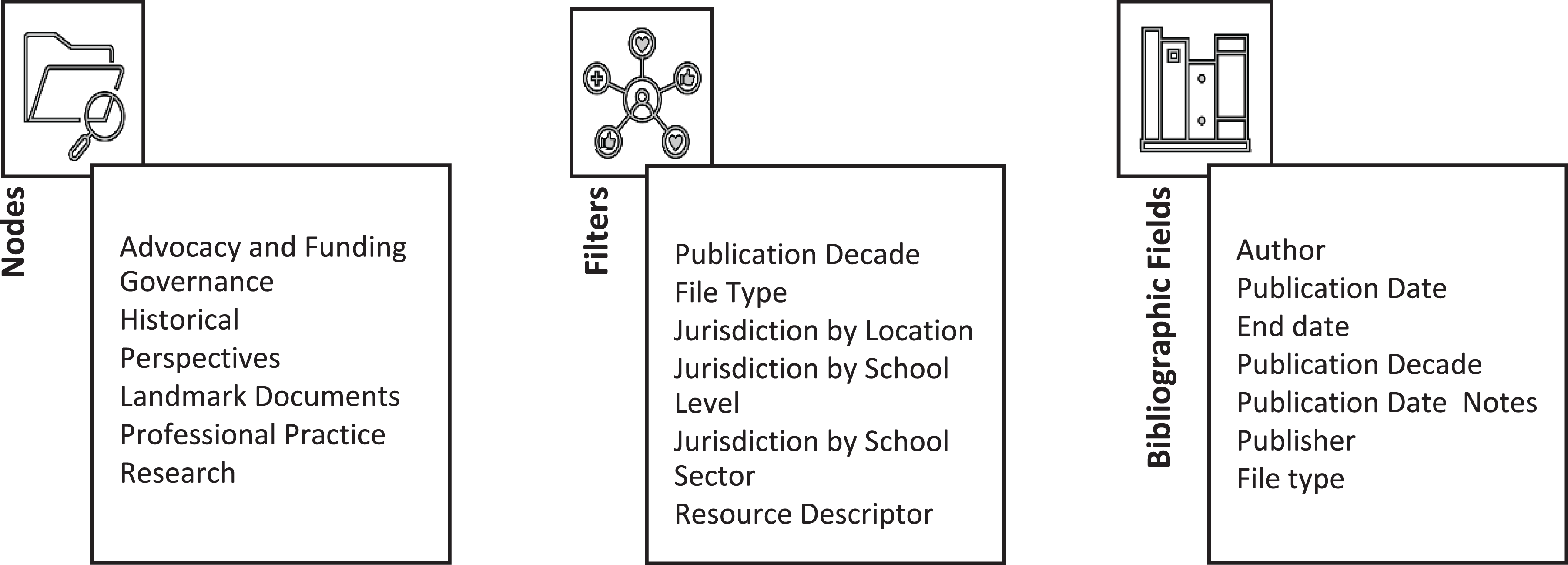
Top-level nodes, filters and fields.
KBANZSL also allows filtering and sorting using standard bibliographic fields such as author, title and publication date. 2
Analysis
Analysis of the existing KBANZSL corpus may provide some evidence on the development of the sector and the impact of various government interventions on the sector, the profession and education for it. This analysis was primarily conducted in Excel, using the full-coded data set that underpins KBANZSL. Standard Excel functions were used to generate descriptive statistics across a number of dimensions, including decade, node, location and combinations thereof. This stage of the analysis included cross references to these various dimensions, such as node frequency by decade both as a numerical output and as a percentage of the corpus, the number and percentage of the total corpus in each decade, and the numerical output and percentage of each geographic location included in the ‘Jurisdiction by location’ filter. As it is not a full-text resource, we also used the ‘Title’ field across KBANZSL to look at the title word frequency across decades. As will be discussed, this allowed the team to explore a number of aspects of the corpus, including publication output by decade, publication types across time and significant contributors to this published output. A step in this analysis included the identification of seminal or watershed publications through a review of the literature, as shown in Table 3. Table 3 is arranged chronologically. The publications listed were identified in the literature as being influential in shaping the Australian profession and school libraries. They also serve to provide touchpoints for some of the further analysis in this article. These significant publications were used for further contextual analysis of the corpus and have the potential to inform contemporary research into school libraries by providing a deeper understanding of the forces shaping the sector.
Significant publications on school libraries by decade.
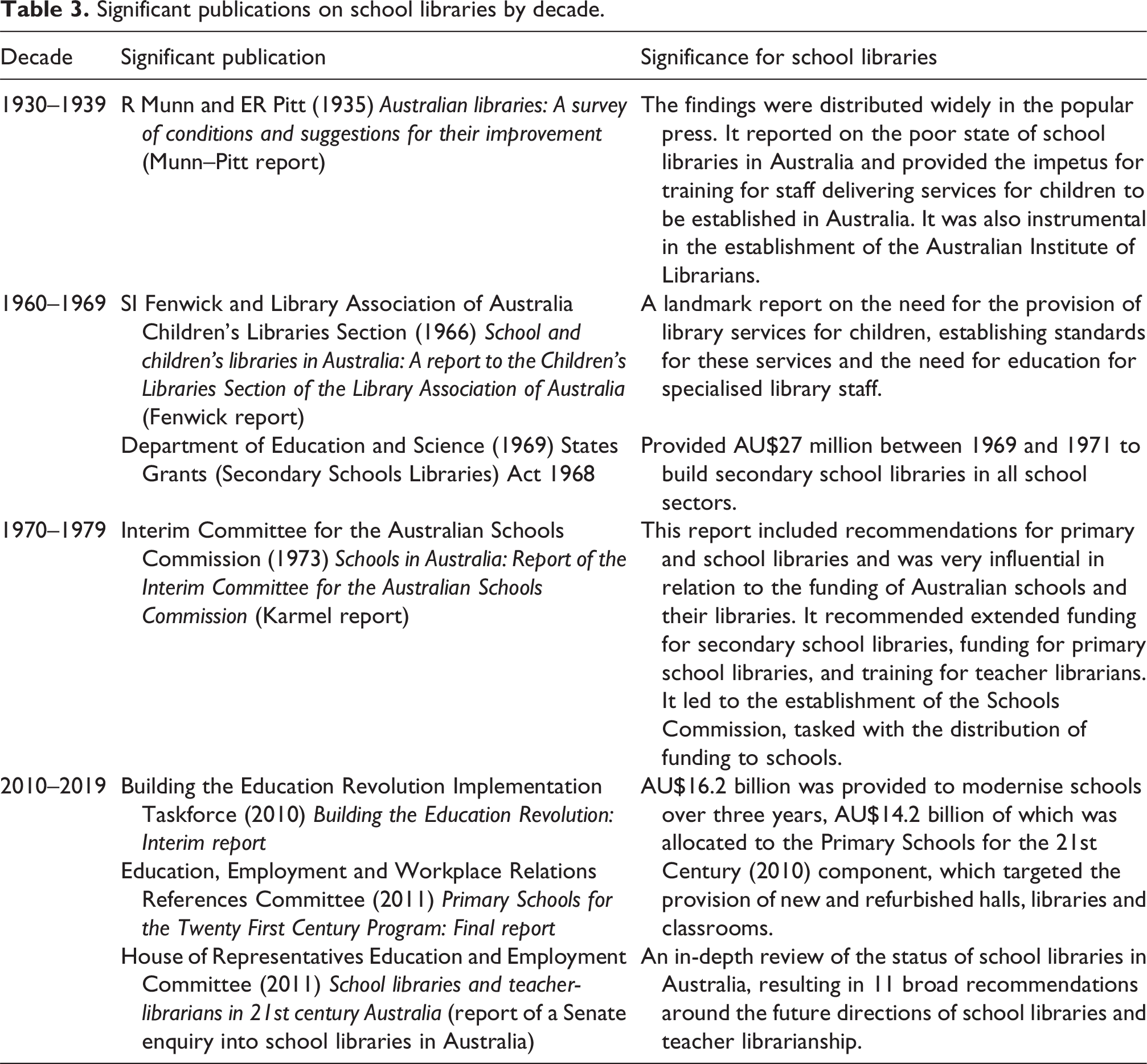
For example, we can see evidence of an increase in publishing activity around school libraries reflected in the publication outputs in KBANZSL in the late 1960s and the 1970s. This appears to align with the federal government interventions associated with the States Grants (Secondary Schools Libraries) Act 1968 (Department of Education and Science, 1969), which injected AU$27 million between 1969 and 1971 to build school libraries. This initiative, unlike BER in the early 2000s, also included substantial funding for education for teacher librarianship, and saw the establishment of many programs of study in tertiary institutions. Of all the publications recorded in KBANZSL, 42% occur between 1960 and 1989 (see Figure 3), with 1970–1979 accounting for 19% of that total. We also see an increase in publishing output in the period of BER and the Senate enquiry (2010–2019), at 18% of the total publishing output recorded in KBANZSL.
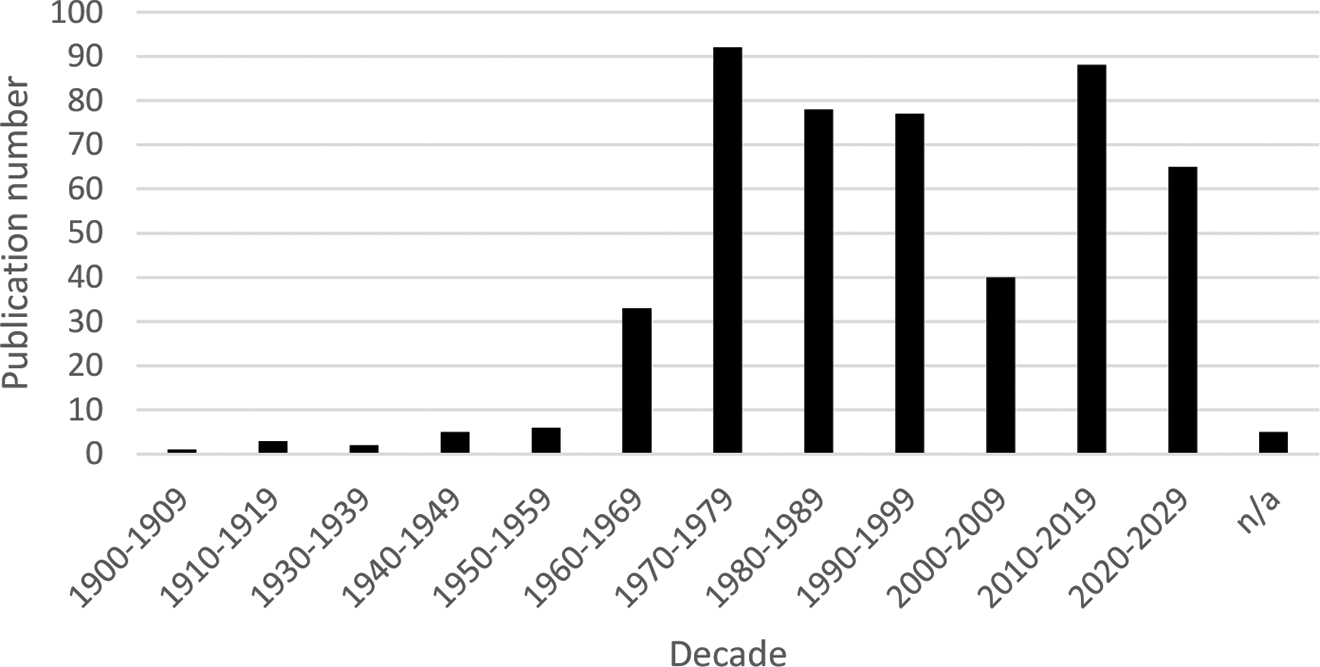
Number of KBANZSL resources by decade.
Government publications
The growth of tertiary education programs for school libraries in the 1970s and 1980s was a result of Australian federal government funding and saw an increase in the number of academics teaching and researching in this area. Prior to 1960, only one tertiary institution delivered education for school or teacher librarianship. By 1978, that number had increased to nine (Reid-Smith, 1978: 4). Over the decades, this number fluctuated as former teacher-training colleges amalgamated or were incorporated into other institutions – often universities. In the 1990s, there began a slow decline in the number of these programs as their existence as small teaching units in large and increasingly competitive universities put them under pressure. Today, only one program, at Charles Sturt University in New South Wales, delivers teacher librarianship education in Australia (and New Zealand).
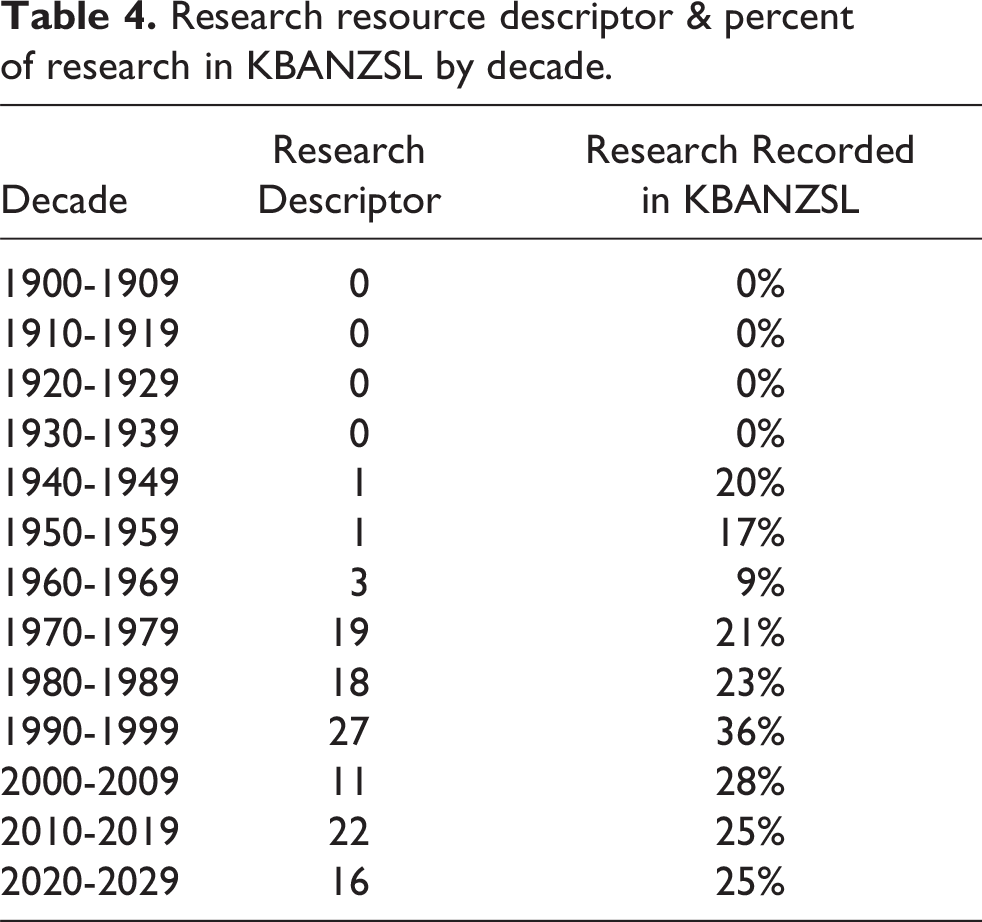
More generally, in the 1970s–1980s, there was a major shift in the tertiary education sector in Australia, with an increase in degree-conferring institutions, the emergence of new universities and the decline of teaching-only institutions such as teachers colleges. In Table 4, the second column shows the number of publications identified in KBANZSL as tagged ‘research’ in each decade, while the third column shows this number as a percentage of the total research output over all decades. This evidence suggests that the growth in research publications could be related to the growth in the associated academic community, although it may involve other factors, such as increased credentialism and the emphasis on research output for academics over time.
Research resource descriptor & percent of research in KBANZSL by decade.
Another key event in the 1960–1970 period was the introduction of federal funding for independent and Catholic schools in Australia, initially in the form of infrastructure grants through the States Grants Act 1968 and later a stable and systematic funding model for these sectors, provided for the first time to support non-government schools (Employment, Workplace Relations and Education References Committee, 2004). In particular, access to these funds allowed the Catholic school sector to provide extended educational opportunities and services, including school libraries and qualified library staff, to their students. An increase in publications from the Catholic school sector occurs post 1970 following the Schools Commission’s establishment of government funding to the Catholic school sector. This sector also continued to deliver central support services in a number of states for a longer period than its government counterparts, and there is evidence of the continued activities of these services in the publication outputs.
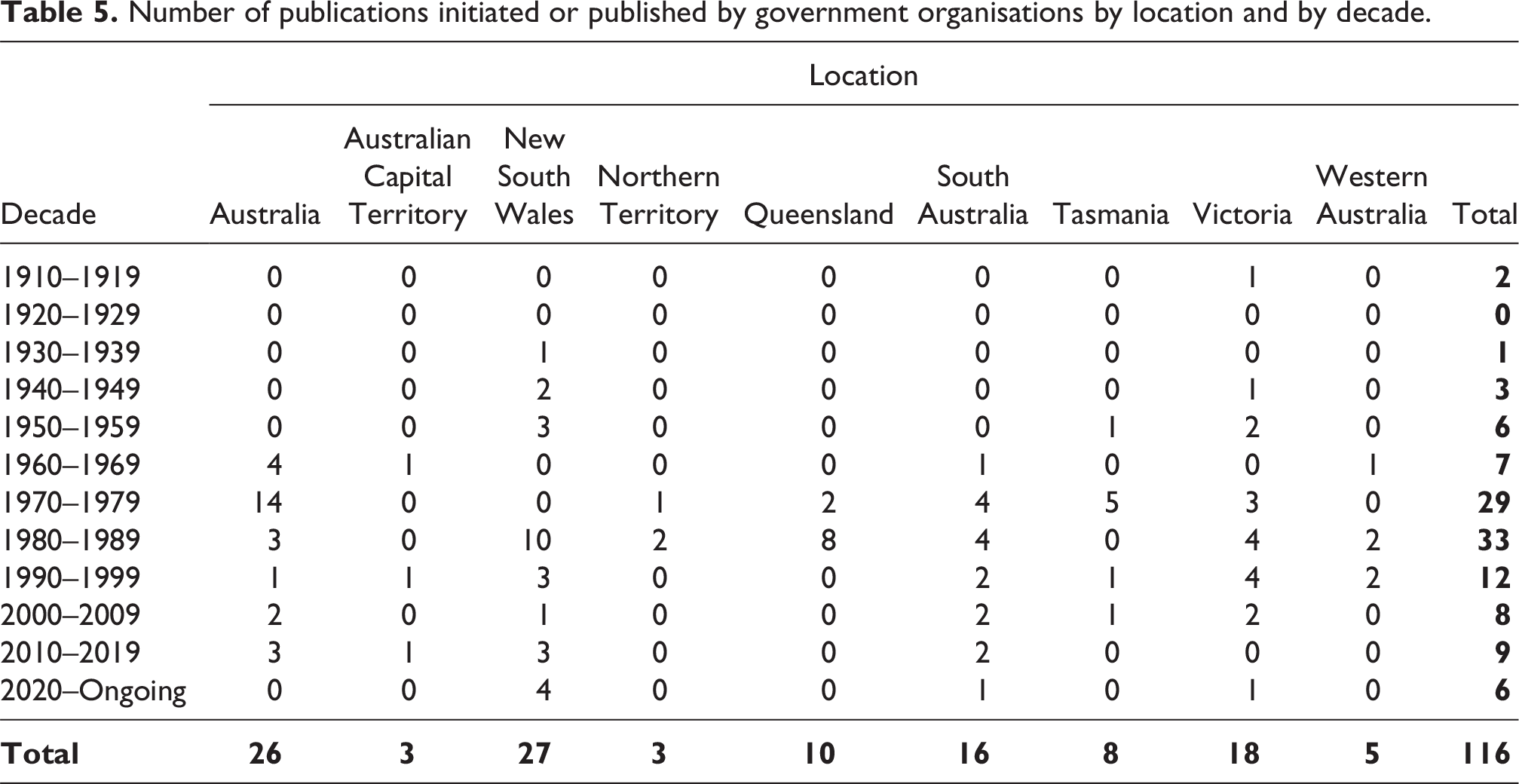
If we look at the number of publications initiated by governments or government agencies (such as education departments or state libraries) by decade (as shown in Table 5), there appears to be an obvious peak for federal government publications in the 1970s, with the number of state publications peaking in the following decade. It is notable that while publication numbers in 2010–2019 are second only to the 1970s, the number of government agency publications is not similar. The explanation may be found when reviewing these publications and authors, as there also seems to be evidence of a rise in the publications initiated by various professional library associations as government-initiated publications decline. Many of these association documents are various forms of advocacy, such as submissions to governments on various issues related to the sector.
Number of publications initiated or published by government organisations by location and by decade.
Publication patterns and nodes
As part of this initial analysis of the KBANZSL corpus, the thematic nodes used to organise and identify the publications were examined. These nodes, as indicated in Figure 4, are:
Advocacy and funding
Governance
Historical perspectives
Landmark documents
Professional practice
Research
Analysis of the thematic nodes in the KBANZSL corpus in the decades from 1960 onwards provided some preliminary evidence of the focus of publications over time and some indication of the prevailing climate and changing areas of interest in the discipline. The resources in the corpus could be assigned multiple nodes. It should be noted that the decision was made to exclude the decades prior to 1960 as there are too few publications to provide meaningful evidence, and the ‘historical perspectives’ node was excluded as many documents have been assigned this node if of historical interest, even if their focus is not historical. Of the remaining nodes, publications with a focus on professional practice have consistently had the largest output in each decade in KBANZSL (see Figure 4). If we look at the other nodes (see Figures 5 and 6), as the golden decades recede into the 2000s, there is an increasing emphasis on publications dealing with advocacy and funding, with the peak output between 2010 and 2019 – the decade following an extensive advocacy initiative by school library associations and teacher librarians around declining school library provision and staffing, as well as the 2010 Senate enquiry (Australia House of Representatives Standing Committee on Education and Training, 2011).
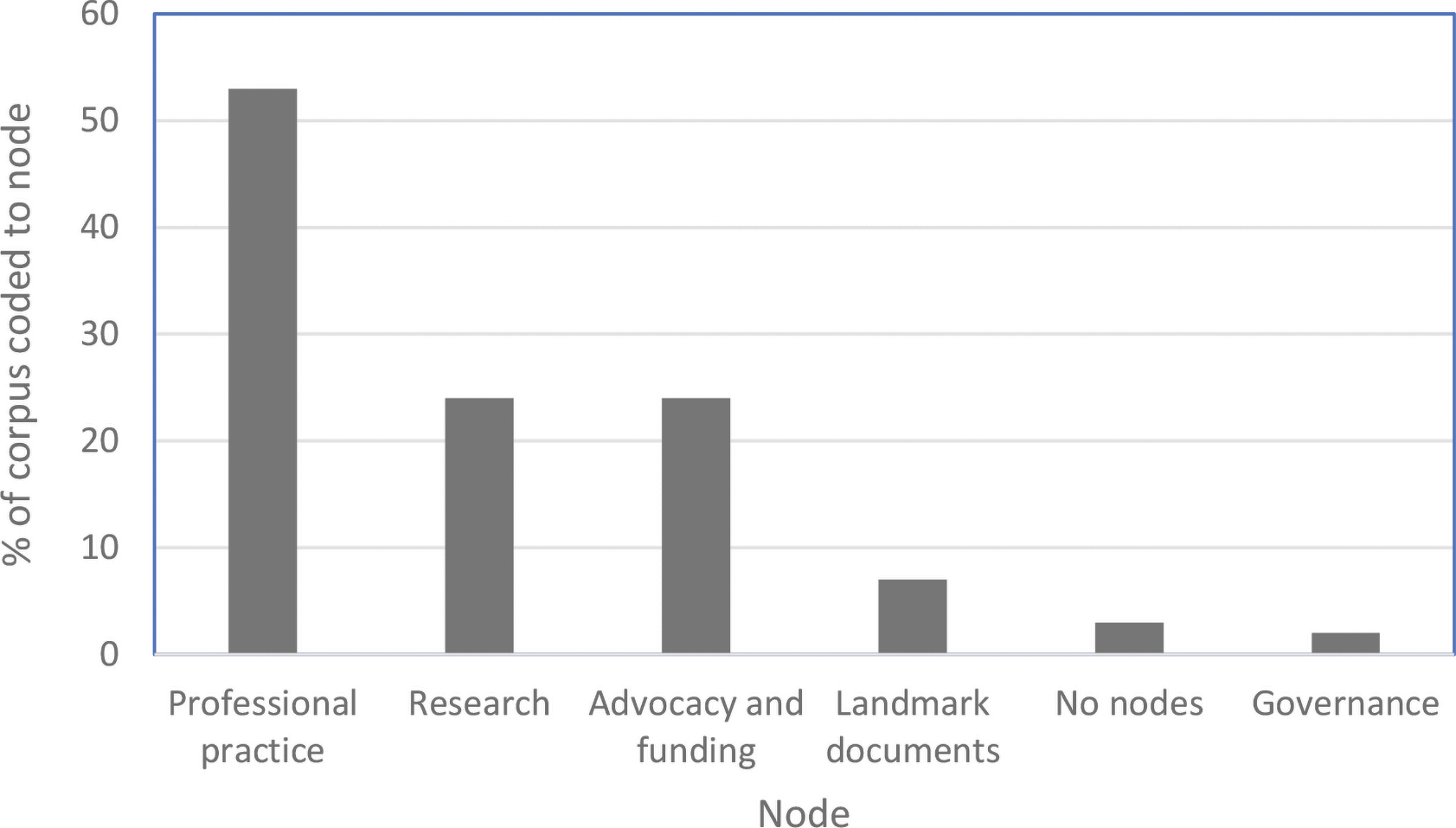
Percentage of corpus coded by node (excluding historical perspectives).
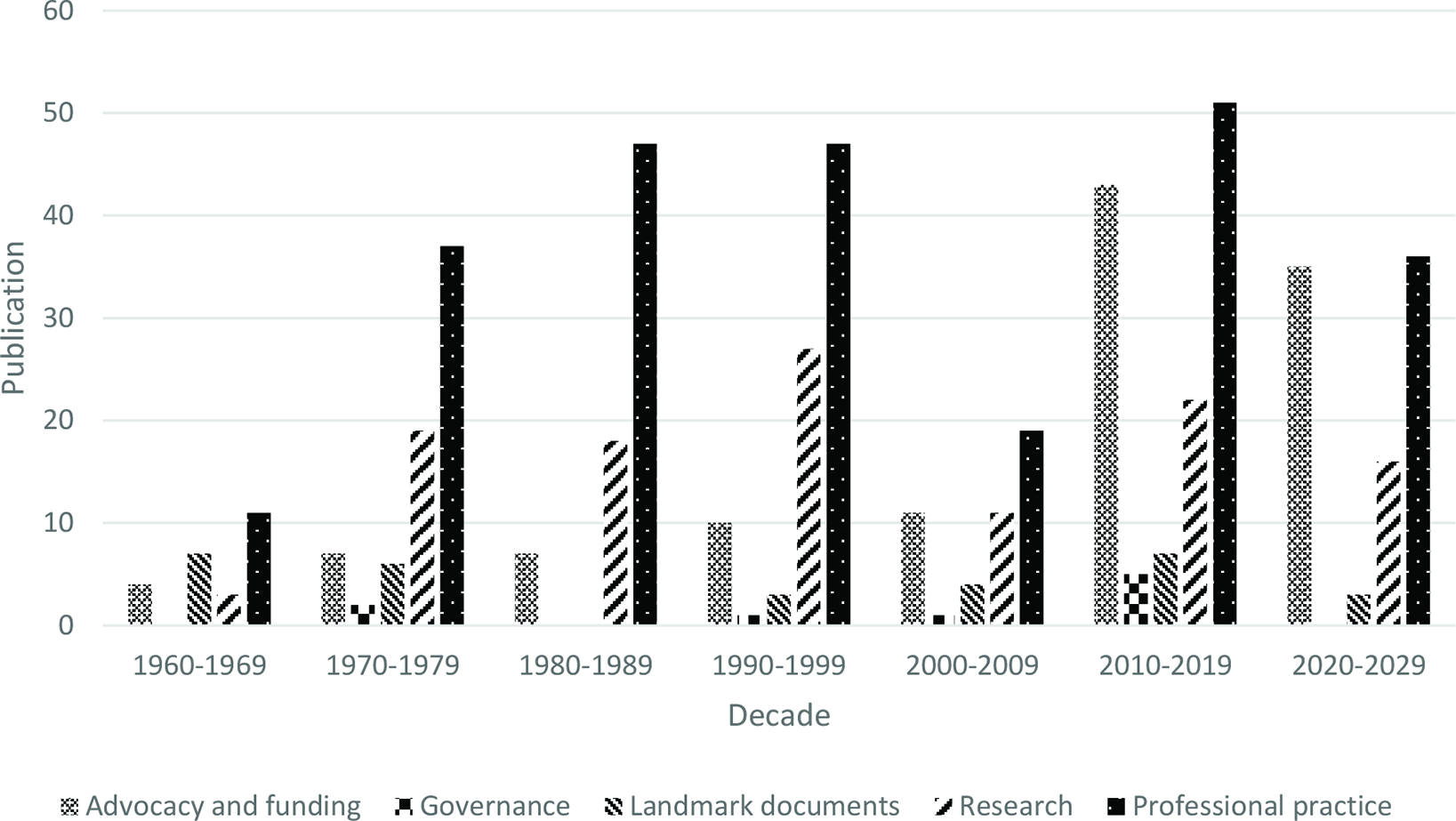
Corpus node frequency by decade by publications (excluding historical perspectives).
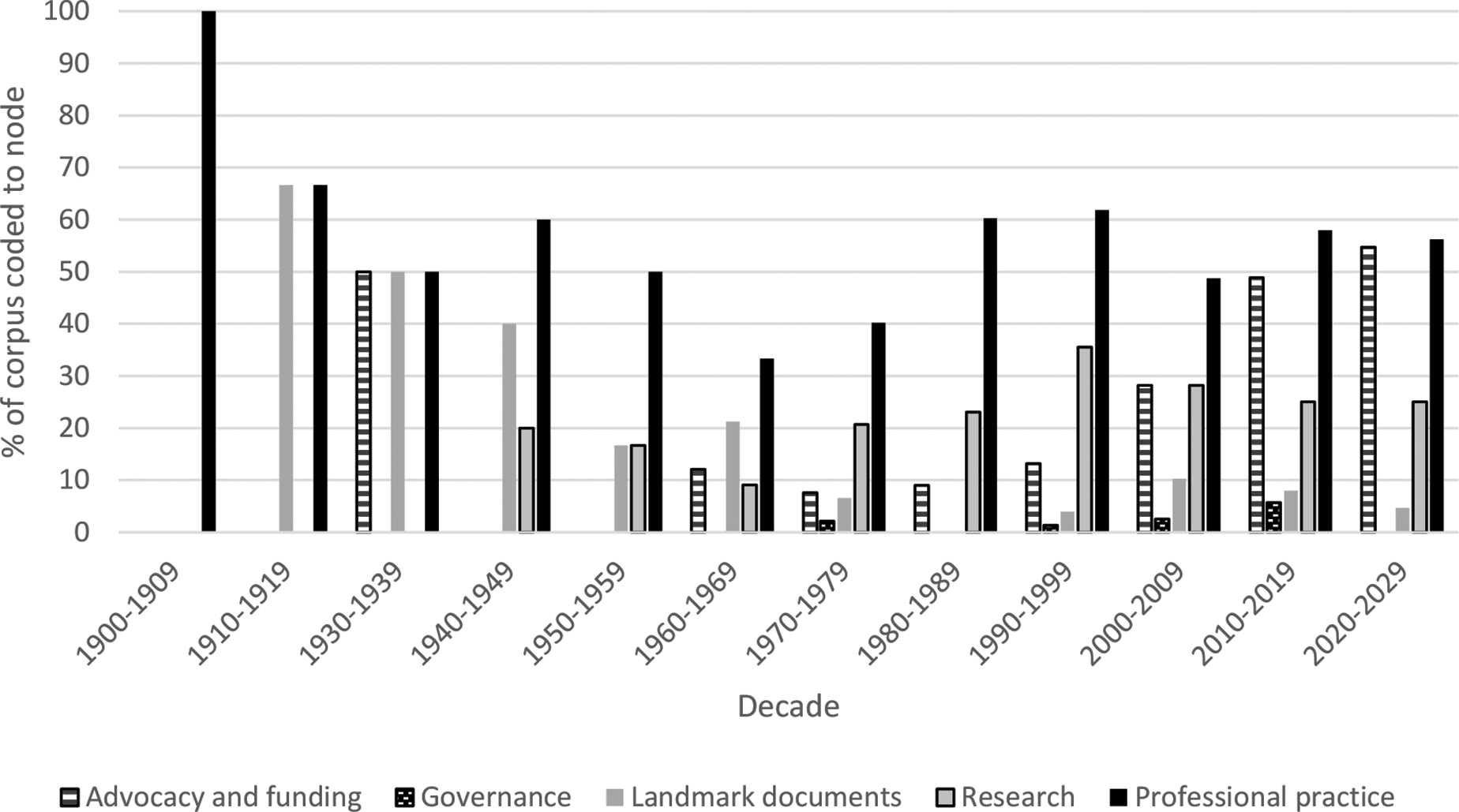
Node frequency by decade by percent (excluding historical perspectives).
Finally, a very preliminary analysis of the topics indicated in the corpus titles was undertaken. The corpus title keywords were organised by decade and then manually coded to identify significant (and/or reoccurring) professional words or phrases (and their synonyms) in each decade. The terms listed in the first column of Table 6 were identified in the corpus titles to be of professional significance. Once the terms had been identified, a search was conducted using the advanced title search in KBANZSL and the results were sorted by publication date to identify their first use in a title (see Table 6). Some consideration was given to contextual information in the title keywords. In the initial coding, for example, a distinction was made between ‘reading’ and ‘literacy’, with the latter reserved for works associated with the development of functional literacy skills and the former applied to those publications associated with the concept of reading more generally, such as titles associated with reading promotion or reading programs. Some evaluation of the publications, once retrieved, was required to make these distinctions. Manual intervention and judgement were also needed to ensure that titles reflected the researcher’s intention for the word or phrase. For example, the word ‘literacy’ was also used in works dealing with ‘information literacy’ and ‘management’ was used in works related to ‘subject management’ and ‘classification’.
First occurrence of professional words or phrases in KBANZSL.
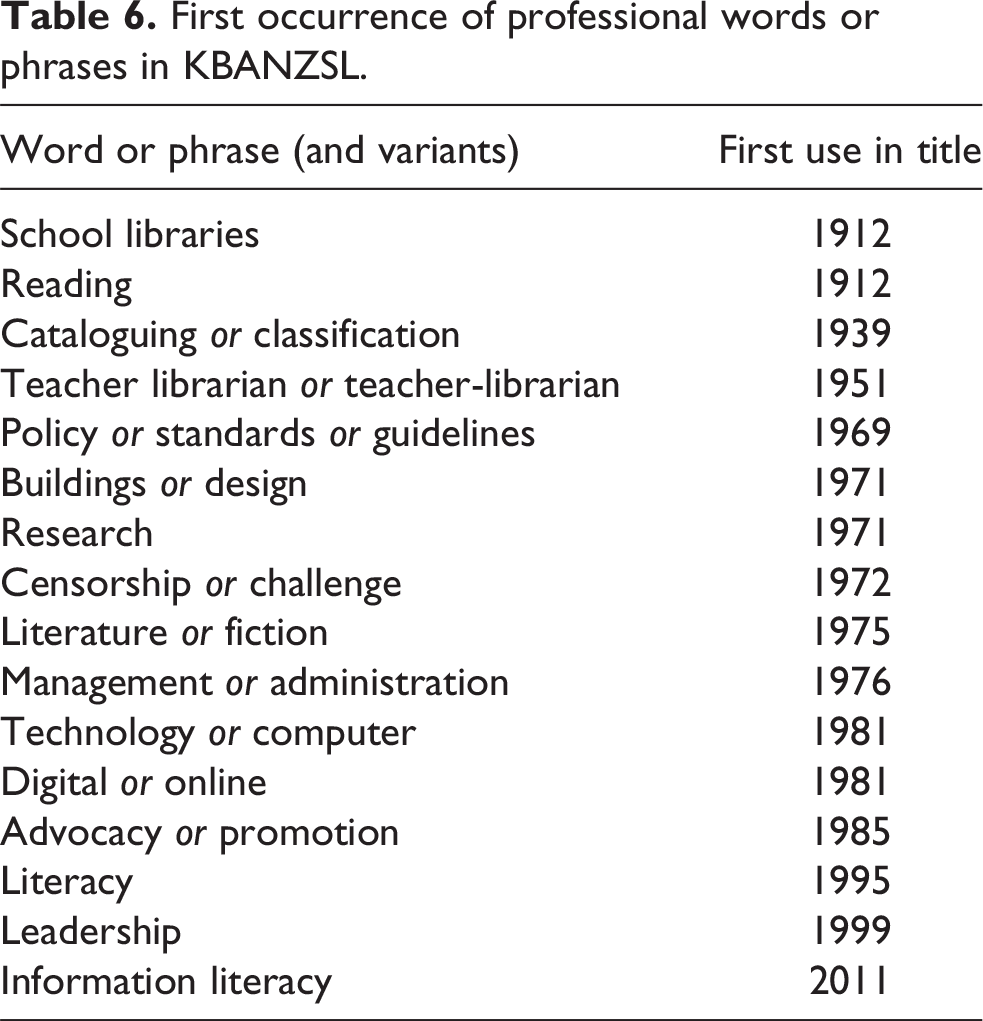
From Table 6, we can see that ‘education', ‘school libraries’ and ‘reading’ first appear in 1912 in two works by the librarian E Morris Miller (1912a, 1912b), Libraries and Education and School Libraries and Reading. The phrase ‘teacher-librarian’ first makes an appearance in 1951 in a work by Elizabeth Hill – ‘Training of teacher-librarians in Australia: A report based mainly on information gathered at the one-day conference of school and teachers’ college librarians, held as an additional session of the conference of the Library Association of Australia in Melbourne’. School library management first appears in the form of a 1978 guide produced for the Commonwealth Schools Commission, The School Library: A Guide to Selection, Purchase and Management of Resources (Bartle, 1978). It will be no surprise that the 1980s saw the first appearance of technology-based topics, including ‘computer’ and ‘online’. Information literacy does not make an appearance until 1999 in The Information Literate School Community 2: Issues of Leadership (Henri and Bonnano, 1999). We can see from the initial coding that these words and phrases are retained and recur in use in subsequent decades.
Conclusion
This article has discussed the preliminary findings of an analysis of the KBANZSL corpus. This analysis provides some initial evidence about the role of government interventions in professional activity. The evidence appears to suggest, not surprisingly, that the interest and funding of governments in the sector is reflected in the number of publications and the publication of various reports and projects. As the profession increasingly came under pressure in the early 2000, the number of publications with an emphasis on advocacy, marketing and ‘survival’ increased. As governments become increasingly removed from the school library agenda, professional bodies such as the Australian Library and Information Association appear to become more active, not only in advocacy but also in filling the vacuum left by the closure of government-supported services. Change and the adaptability of the sector in adopting new ideas and emerging trends is also evident in the literature from the earliest publications, and new ideas, concepts and technologies are reflected in the titles of works across the decades . KBANZSL also reveals a much longer history for school libraries in Australia and New Zealand than convention has allowed, with literature dating back to 1912. This may come as a surprise to many both within and outside the sector. However, this professional genealogy is important in maintaining the status of the profession in an increasingly challenging environment. Such a historical perspective provides evidence of an enduring professional foundation and set of values. Future research may include a deeper analysis of the corpus and a comparative analysis with the New Zealand publishing output. Such a comparative approach can identify both the local pressures that shape the sector and the broader international agenda that influences education and librarianship in Australia and New Zealand. As the corpus grows, some of these findings may, of course, change as new works are recorded and further older work is identified for inclusion. KBANZSL is a work in progress and there is further work to be done.
Footnotes
Declaration of conflicting interests
The authors declared no potential conflicts of interest with respect to the research, authorship and/or publication of this article.
Funding
The authors disclosed receipt of the following financial support for the research, authorship, and/or publication of this article: The KBANZSL project was funded by the Faculty of Arts and Education at Charles Sturt University.
