



Abstract
In recent years, academic journals have evolved to become a vehicle for scientific communication that is acknowledged by the official organizations that certify their quality. This enables assessments to be performed, determining how a discipline has evolved through the analysis of bibliometric indicators and the keywords used to index the articles. In the field of library and information science, it is particularly interesting to study the articles published in the journals specializing in this area but few studies have performed an in-depth analysis of the discipline. In order to gain a detailed view of the evolution of library and information science, we have carried out a bibliometric and thematic study of the journals Anales de Documentación (AD) and BiD textos universitaris en biblioteconomia i documentació (BiD) between 2000 and 2013. The analysis focuses on the number of articles and authors, the evolution of the sections and the contents. In addition, a thematic study determines the level of similarity between the two journals’ contents, the subject areas they belong to and whether there is any subject continuity during the period analysed. The results confirm that in BID, practitioner-focused subject matter is double that of the academic content, unlike AD, which shows a preference for academic content. The thematic study confirms that there is little similarity between the content of the two publications; that the subjects where there is overlap are basically concerned with information units, information technologies, auxiliary sciences and techniques, and library science; and that there is little continuity in the subjects covered during the period analysed.
Keywords
Introduction
Within the field of library and information science (LIS), it is particularly interesting to study the articles published in this field’s academic journals from different viewpoints and applying different methodological approaches. In general terms, these studies focus on individual journals and it is rare to find comparative studies performed between different journals with the aim of determining their evolution or transformation. In addition, the analysis of an extensive publication period can help us gain a clear picture of the trends in LIS research. The analysis of information sources other than the leading journals in the field is also of value, with the aim of shedding light on scientific output other than that published in the Anglo-Saxon countries (Bernhard, 1993).
The study reported here aims to fulfil these requirements by performing a comparative study of two journals in this academic field that have similar features as regards standing, size and scientific output, in order to obtain a detailed view of the focus of thematic interest in LIS. Specifically, the scientific output of the journals Anales de Documentación (hereinafter AD) and BiD: textos universitaris en biblioteconomia i documentació (hereinafter BiD) has been compared over the period 2000–2013. These two publications were chosen because they are in the same discipline, have a strong track record in publishing academic articles and use the same thesauri to index their articles, which enables us to make valid comparisons of their contents.
The primary goal of our study is to determine the evolution of this two academic journals and its correlation with the transformation that the discipline has undergone at local and international levels and, at the same time, whether the evolution of AD and BiD shows areas of divergence or convergence in any of the descriptors and keywords analysed. This primary goal is based on two hypotheses. In the first hypothesis, while acknowledging that BiD and AD both have an editor-in-chief and an editorial board that direct the published contents with their editorial policy, we argue that the prominence of certain trends, vogues and keynote subjects in the articles is a consequence of the evolution of the discipline itself. The second hypothesis leads us to presuppose that two generalist academic journals that specialize in the same area of knowledge could show similar behaviour with respect to the type of content they publish.
In order to address this goal and the baseline hypotheses, this article undertakes a bibliometric study of the journals, detailing the articles’ sections, the authors, scientific productivity and the institution they belong to, among other data. It also offers a thematic analysis of the journals BiD and AD, taking into consideration the keywords that have been used to index both the contents of both publications and compares the descriptors and subject areas that are common to both. In accordance with the goal and the baseline hypotheses, the rest of this article is organized as follows: In the second section, the article reviews the extant literature, focusing on the various studies that have been published about academic journals, the research methods used, their productivity or features. The third section describes the working methodology applied to carry out the research. The fourth section presents the results obtained from the bibliometric study and the thematic analysis of the publications studied. The fifth section is the discussion. Finally, the sixth section outlines the conclusions and future work.
Review of the literature
In the last four decades, a number of studies have been published that have focused on analysing scientific output in the field of LIS. Bernhard (1993) provides a very good summary of the study groups and methods. This author reviews the research articles and classifies them into five types of study: analysis of the content of the leading journals, analysis of the content of specific journals, review of doctoral theses, analysis of secondary journals and analysis of other sources. He also identifies 13 research methods that are used in this field of knowledge which correspond to bibliometrics, case studies, comparative studies, content analyses, Delphi method, ethnographic method, evaluation study, experimental research, historic research, information system design, operations research, survey and theory development.
Arquero and Rio (2002), EPI (2000), González Alcaide et al. (2008) and Ollé and Porras (2008) have all performed exploratory analyses of the contents published in a single journal, which offers an overview of the journal’s evolution together with information about its output. There are also a number of studies that go beyond the limits of the discipline (Castro and Jiménez, 2004; López Calafí et al., 1998) or analyse how a publication has evolved over a given period (Arquero and Rio, 2002; Revista Española de Documentación Científica, 2012).
From another viewpoint, there are researchers such as Järvelin and Vakkari (1993) or Chu (2015) who focus on analysing the publications’ content and the research methods used, where a leading author is detected in the content analysis, the surveys, and the theoretical approaches. Furthermore, a journal’s evolution over a period of time is analysed or a comparison is made between time periods during recent decades (Tuomaala et al., 2014) or journals from different countries are compared (Rochester and Vakkari, 2003).
There are approaches based on the productivity and features of journals that are included in the Web of Science or Scopus databases (Abrizah et al., 2013; Davarpanah and Aslekia, 2008), and also behavioural analyses taking into account the keywords or, specifically, the words written in the titles of articles (Milojevíc et al., 2011). There are also authors, such as Melero and Abad (2011), who focus on open-access journals, studying in depth their business models and features.
Most authors prefer a combination of some of the above approaches (Aharony, 2010; EPI, 2000; Greifeneder, 2014), that is, the use of mixed or multiple methods. In the case of El profesional de la información (EPI, 2000), a detailed overview is provided of the sections with the goal of guiding authors on the subject areas published. Arquero and Rio (2002) perform a general analysis of the evolution of the journal Documentación de las Ciencias de la Información, focusing on output, the level of scientific collaboration and the subject areas of the papers published. It should be highlighted that these authors include gender mainstreaming and output by autonomous region in the analysis variables, as distinctive elements.
Within the segment of communication journals, Fernández-Quijada (2012) performs a bibliometric count and a very extensive and detailed thematic analysis, based on UNESCO’s thesaurus, with the goal of ascertaining the main research subjects in communication from the body of the study and measuring the evolution of the subjects covered within the field of communication in Catalan over the last 20 years. Although its approach has certain similarities with our research, such as, for example, the use of the same thesaurus and the performance of a bibliometric study, it differs in the type of comparison, both as regards the number of journals to be compared and the time period chosen.
Finally, if we focus on literature that has already been published in the journals we analyse, we see that AD has already published a general analysis of the journal’s scientific output (González Alcaide et al., 2008). Furthermore, in the issue commemorating the 10th anniversary of the journal BiD: textos universitaris de biblioteconomia i documentació (BiD), an article was published that analysed the publication’s output (Ollé and Serrano, 2008).
Methodology
In our approach to the goal of this research and its baseline hypotheses, we performed a diachronic study of the contents published in the journals BiD and AD, encompassing the period between 2000 and 2013. The reason for studying this period is that both publications appeared at the end of the 20th century (1998), at a time of considerable expansion of scientific publications in all fields. By the year 2000, the journals had been publishing for two years and were now sufficiently known by potential authors. We chose 2013 as the cut-off year for the study because the articles published in AD are indexed until that date.
Initially, the journal AD was published once a year and the journal BiD was published twice a year. At present, both journals are published twice a year. Both journals are of acknowledged quality; they have been awarded the FECYT (Spanish Foundation for Science and Technology) quality seal as recognition of their editorial and scientific quality and both are indexed by Scopus. Both AD and BID have recently started to be indexed by the Emerging Sources Citation Index as well. Likewise, both journals have been published in electronic format from the beginning, although AD was also published in print during the first few years. Both journals are published by academic publishers; in the case of BiD, by the Universitat de Barcelona (UB) (starting in 2013, it has been co-published with the Universitat Oberta de Catalunya (Open University of Catalonia)), while AD is published by the University of Murcia. In both cases, there have been commemorative 10th anniversary publications that have provided certain average indicators for comparison. Both journals contain sections with articles, experiences, analyses, reviews or reports, and have a similar body of published articles, which avoids any significant bias in the comparison of scientific output. In addition, they also share the fact that most of their content is not in English, both have a Spanish version and, in the case of BiD, it also publishes articles in Catalan. Finally, both publications are open access, as they receive internal funding from the budget allocated to their respective universities.
Bibliometric study of the journals
The bibliometric study we performed analyses the data for both journals over the period 2000–2013 in order to determine whether each publication’s intrinsic features show any similarity and whether they have a decisive influence on the evolution of the discipline itself. We therefore compiled data referring to type of section, number of authors per article and per issue published, each author’s productivity and the institution he or she belongs to by means of SQL queries in the Temaria database, which is where the articles are stored. This selection of data has enabled us to make a distinction between academic vs. practitioner publications and the average number of authors per article. We used the authors’ professional affiliation and the articles’ subject matter to determine which group the authors are assigned to. In the case of BiD, it is easy to differentiate the articles in the sections ‘Resources’, ‘Experiences’ and ‘Tribune’; in AD, on the other hand, the contents are classified by articles, translations and reviews. The compilation of texts analysed consists primarily of articles and experiences, as these are the sections that are double-blind peer-reviewed and receive the most contributions of new knowledge. Thus, a total of 305 articles from the journal BiD and 234 from the journal AD have been analysed.
Thematic analysis of the journals
The articles published in the journals BiD and AD are indexed systematically in the Temaria portal of Spanish scientific journals which specializes in Information and Documentation. For indexing the articles related with the LIS area, a controlled language is used, specifically the Tesauro de Biblioteconomía y Documentación (Thesaurus of Library and Information Science) (Mochón and Sorli 2002). For indexing contents corresponding to other branches of knowledge, the generalist UNESCO Thesaurus is used. The use of thesauri enables the articles’ contents to be represented unequivocally and facilitates consultation and retrieval of this content (Slype, 1991). The concepts that are not available in either thesaurus are added as uncontrolled keywords, which means that the term in question can be retrieved even though it is not included in the thesauri.
In order to ascertain in detail the subject focus of the two academic publications and how they have evolved in recent years, we analysed the descriptors and keywords used to index the published articles between 2000 and 2013, and the frequency with which they appear during this period. In order to carry out the thematic analysis of the content, we automatically extracted from the Temaria database, using SQL queries, all the data corresponding to the articles published in both scientific journals during the period 2000–2013. This data includes the list of articles, the year of publication, the subject area to which they belong, and the descriptors and keywords associated with them and assigned during the article indexing process. In total, 364 articles from the journal BiD and 234 from the journal AD were analysed.
We also compared the volume of articles classified in each of the subject areas in the Temaria portal. Specifically, the articles are classified in 12 subject areas, as represented in Table 1.
Subject areas in the Temaria portal.
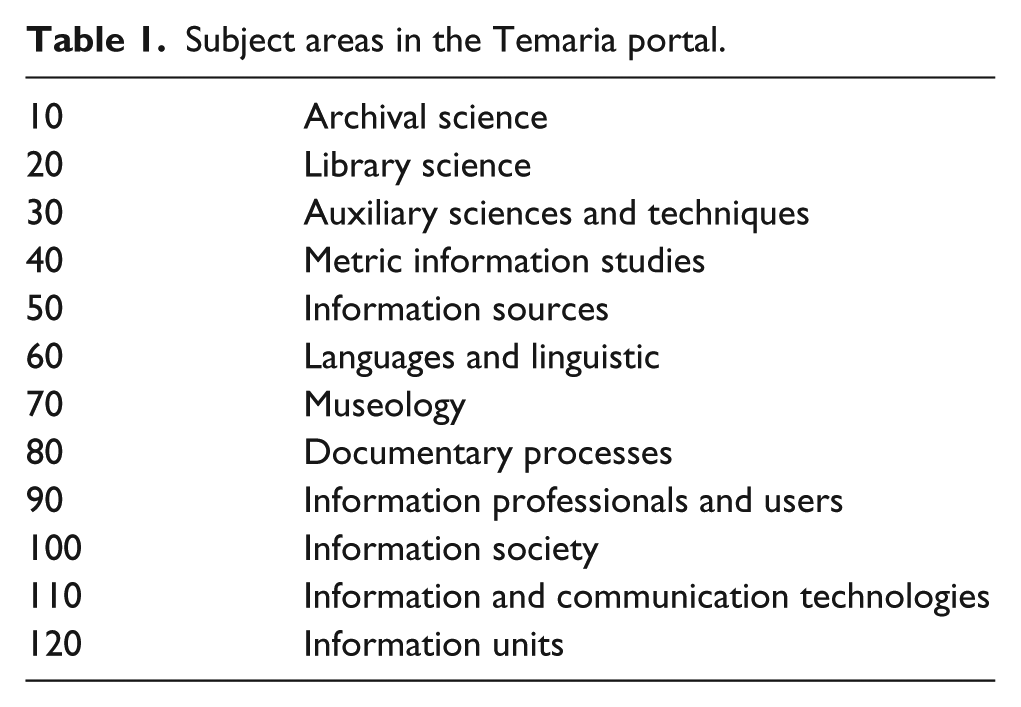
The analysis of the keywords used to index the contents of both publications and the comparison of the subject areas in which the articles analysed was completed with the analysis of the keywords that are common to both journals, with their evolution over time. This enables us to ascertain the level of content similarity in the articles published between 2000 and 2013.
Results
In this section, we describe the results obtained in the bibliometric study and thematic analysis of the articles published in BiD and AD. First of all, we present the results of the comparative and descriptive study. This is followed by the results related to the analysis of the descriptors and keywords used to index the content of the journals.
Evolution of the scientific output of BiD and AD
The results of the comparison of the scientific output of BiD and AD give fairly balanced data for BiD, with a total of 305 articles during the 13 years analysed and an average of 23 articles per year. Figure 1 shows an upward trend with two dips, in 2006 and 2011–2012.
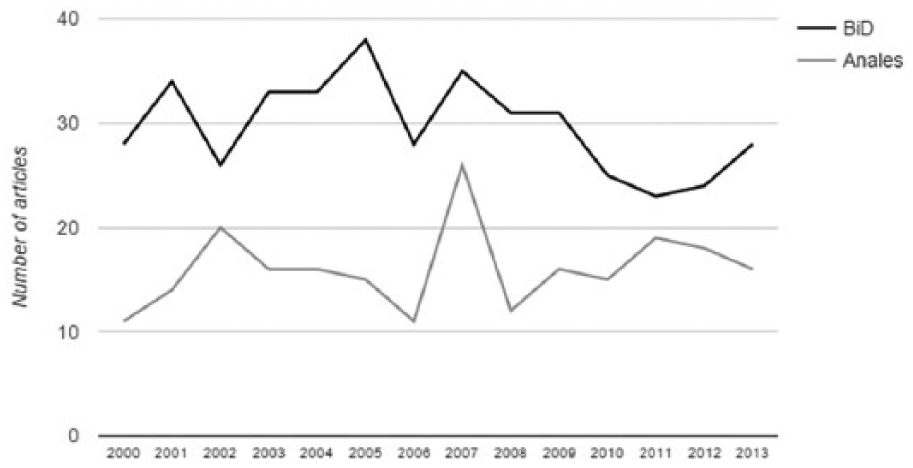
Evolution of the output of BiD and AD de Documentación (2000–2013).
In the case of AD, there are two years that are notably more productive than the mean, namely, 2002 and 2007. The annual average is 17 articles, which is below the results for BiD (Figure 2). The total is 234 articles.
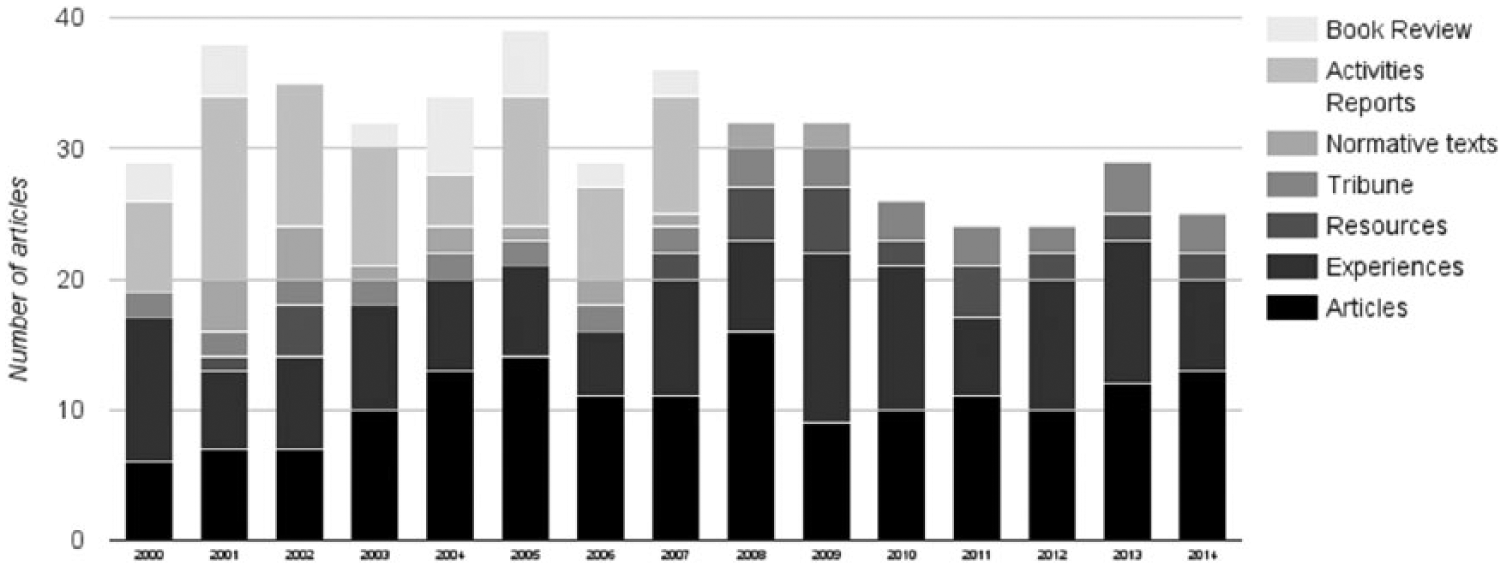
Evolution of the output of BiD (2000–2014) by type of article.
In overall terms, during the comparison period, BiD published a higher number of articles than AD, with the two journals accounting for 58% and 42%, respectively, with the latter journal publishing on average 6 articles fewer per year.
Comparison of articles by section type
We also compared the evolution of article output by type of article (Figures 2 and 3). In the case of BiD, there was a design change in 2003 which did not entail any change in contents. However, there was a change in 2008 with the disappearance of two sections that had been part of the publication’s structure since the beginning. In 2010, another section was removed, which marks the beginning of the current stage.
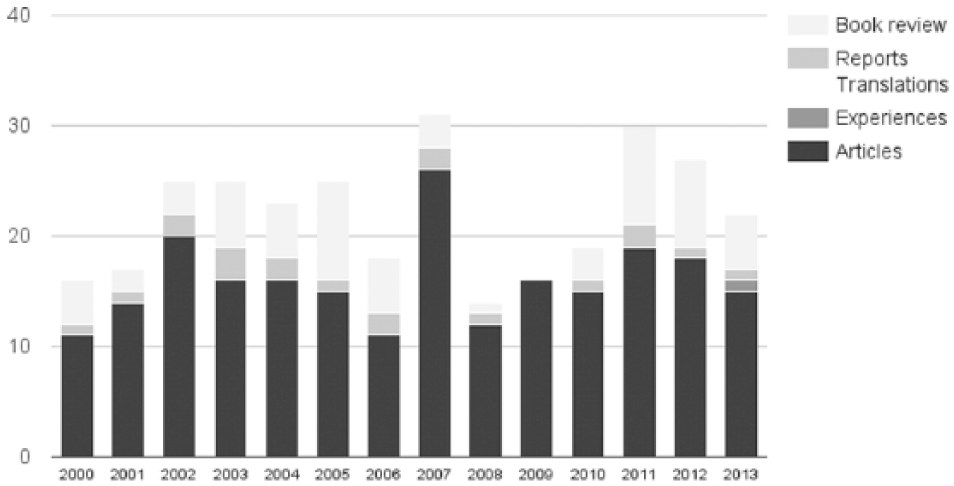
Evolution of the output of AD (2000–2013) by type of article.
As regards evolution of the sections, Articles and Experiences are very prominent in BiD, and the trend is for an increase in these sections, while the Resources section experienced a considerable contraction in 2012 and 2013. The Tribune section, given its features, remains stable. The introduction of the monograph has led to this change of weight in the sections and also the fact that the articles considered scientific have been reviewed by an external reviewer and, therefore, are taken into account for the researcher’s career.
In the case of AD, the major part of the publication is given over to articles, followed at some distance by reviews. Experiences and translations only have a residual presence. If we look at the sections as a whole during the period analysed, we find that they have followed a downward trend in recent years, so that the number of texts published in 2013 is almost the same as in 2010.
Historically, AD has maintained its three section typologies, with the addition of Experiences in 2013. Significant differences are seen in the number of articles, particularly in 2007, when output was almost triple that of 2000, 2006 and 2008.
Comparison of research articles with an academic or practitioner focus
The next step was to compare the article typology, as described in the methodology. When analysing this indicator, we found that the journals followed very different approaches. BiD has a significant proportion of articles targeting practitioners, although academic articles are also following an upward trend. In the case of AD, the percentage of practitioner-focused articles are predominantly testimonial and academic articles, with output peaking in 2007 followed by a gradual decline after 2011 (see Figure 4).
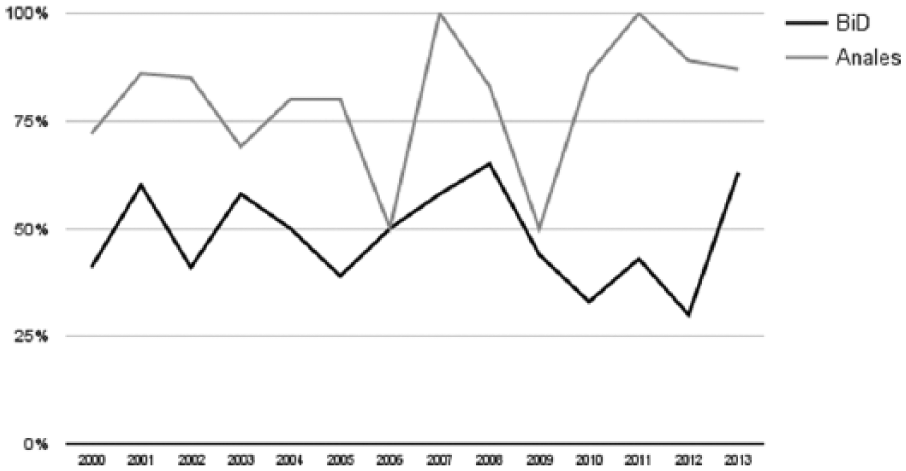
Evolution of the percentage of academic articles vs. practitioner-focused articles in BiD and AD (2000–2013).
Comparison of the number of authors per article
The average number of authors per article is similar in both journals, 1.7 in BiD, and 1.6 in AD (the median is 1 in both). See Figure 5. These values are quite a long way from the 2.8 authors per article (median of 3) for all articles with Spanish presence in the LIS area published in journals indexed in WoS (Ardanuy, 2011). A certain lack of consolidation is also seen in this growth, as shown by the downward trend of recent years.
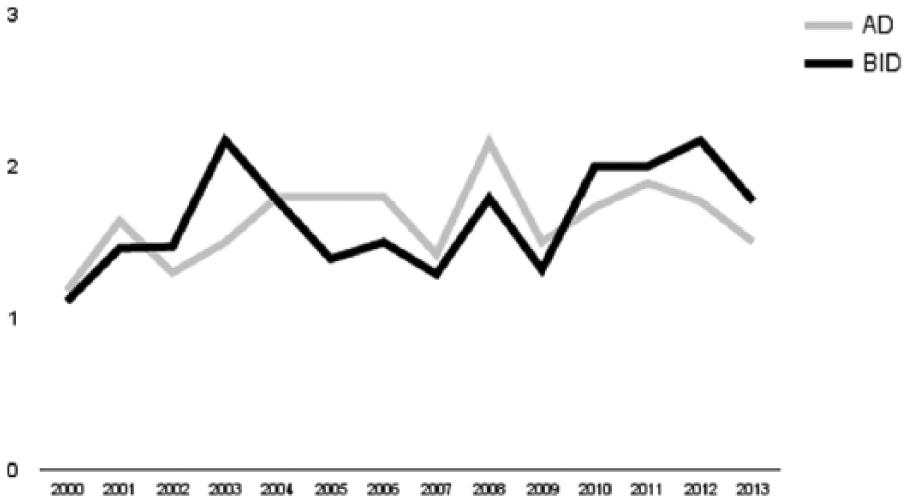
Evolution of the average number of authors per article in BiD and AD (2000-2013).
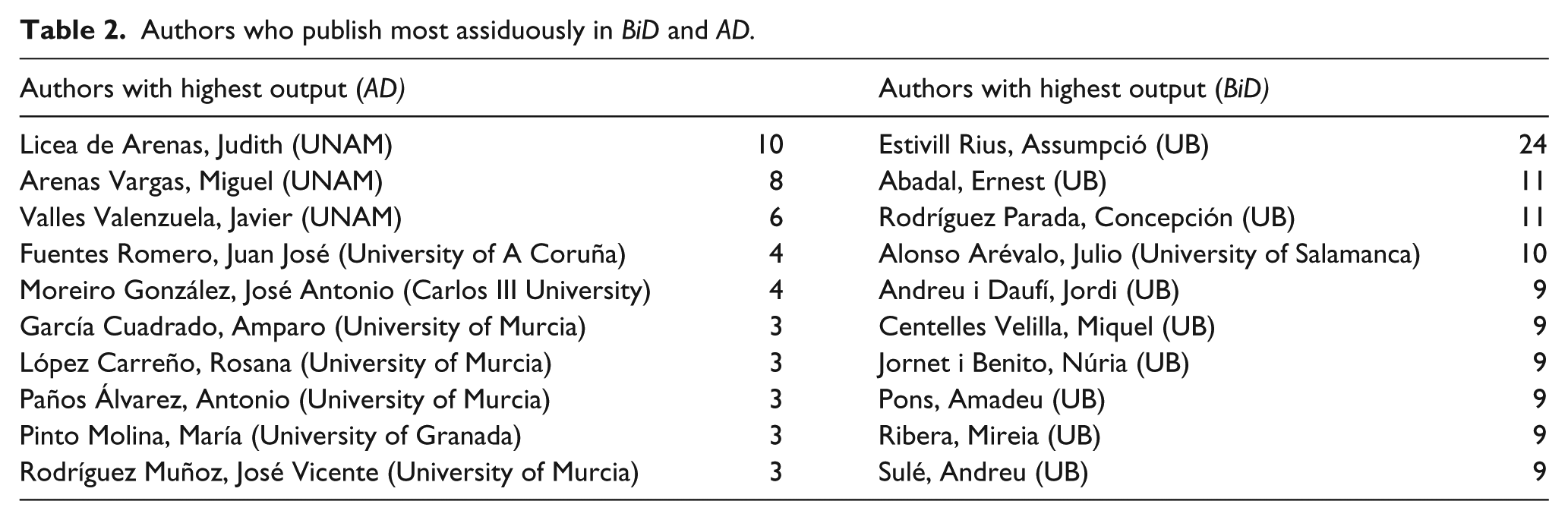
We also analysed the authors who have published most, obtaining the ranking shown in Table 2. In the case of BiD, almost all the authors are professors at the UB’s Faculty of Library and Information Science. It should be pointed out that, initially, the journal had a much stronger practitioner focus and catered particularly for a Catalan readership. In the case of AD, we do not have detailed knowledge of its internal functioning, but it is interesting to note the productivity and the division of the ranking between UNAM (Autonomous University of Mexico) and University of Murcia.
Authors who publish most assiduously in BiD and AD.
Analysis of results in terms of descriptors and keywords
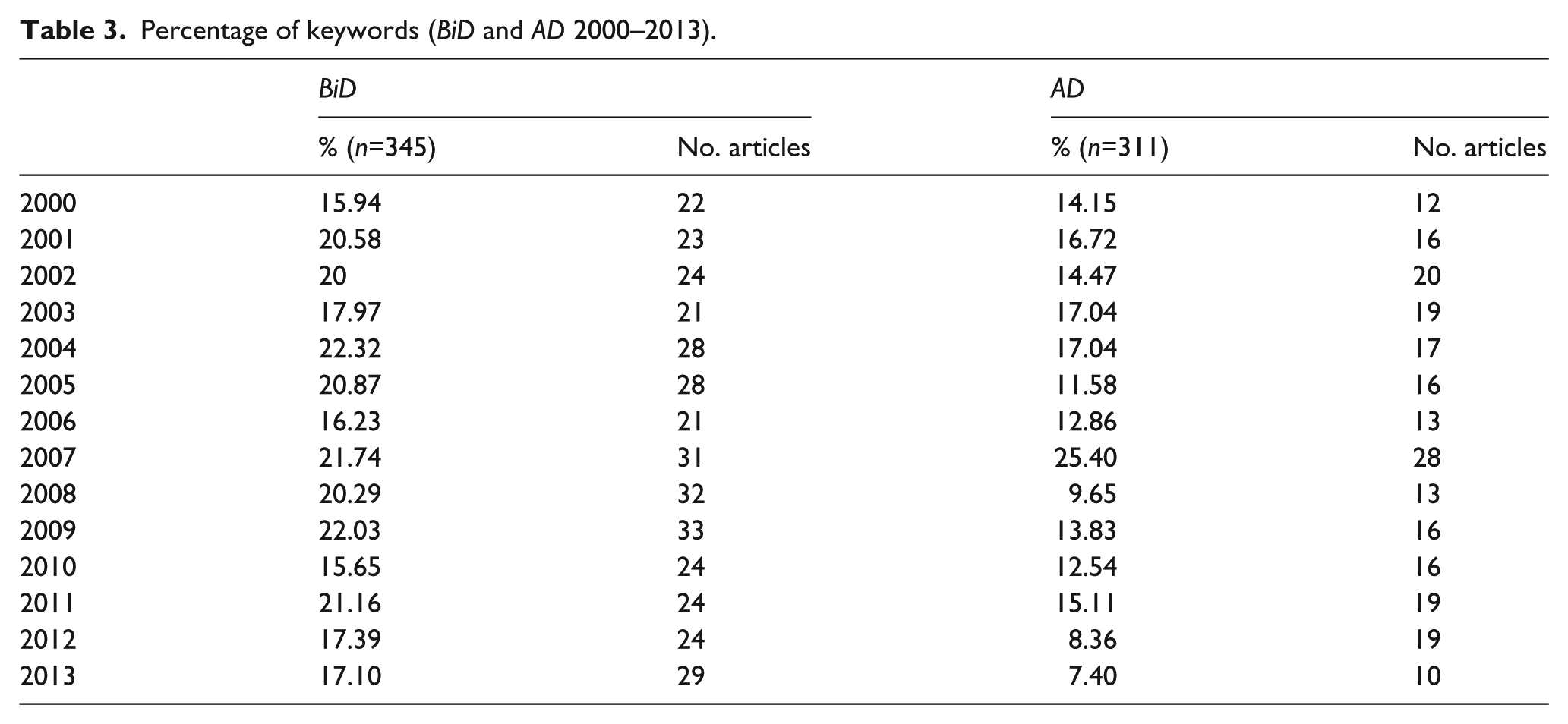
In this section, we performed a comparative study of the keywords that have been used to index the articles published in the academic journals BiD and AD during the period 2000–2013 in order to determine which subject areas feature in both publications and to establish correlations during this time period. Accordingly, first of all, we identified the descriptors and keywords associated with the academic articles published and also the number of articles published each year. Specifically, during the period analysed, we identified a total of 345 descriptors/keywords in the journal BiD and a total of 311 in AD. Table 3 gives the relative percentage of descriptors and keywords in both publications, together with the number of articles published each year. A greater number of published articles is observed in BiD and also a higher percentage of descriptors and keywords linked to the articles.
Percentage of keywords (BiD and AD 2000–2013).
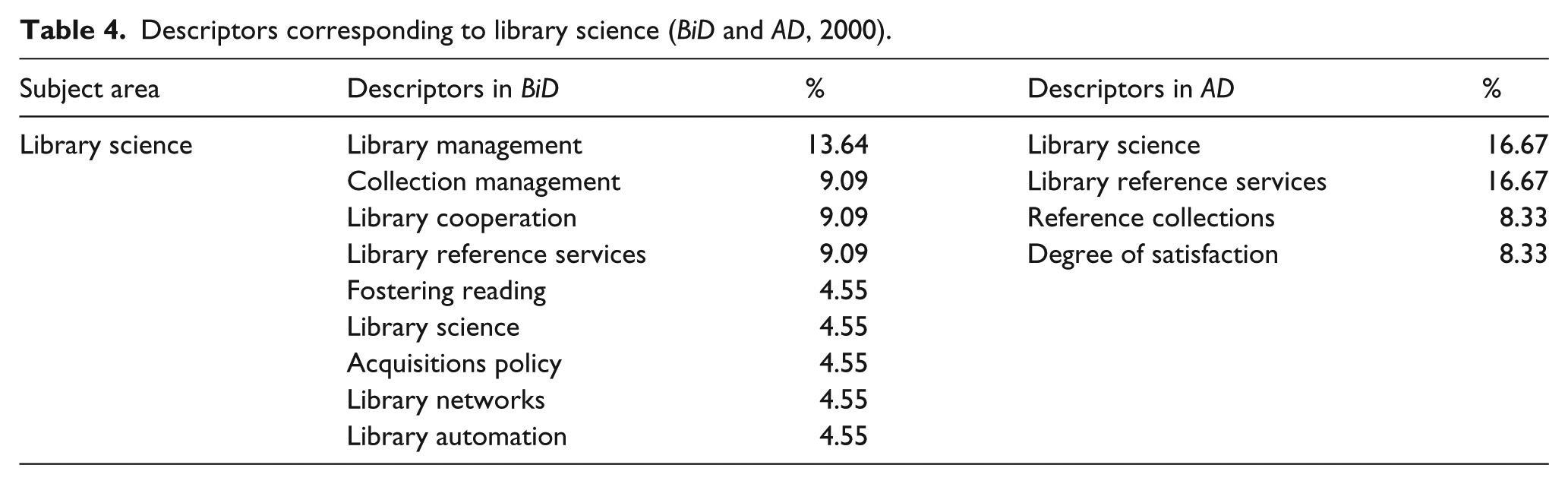
We also calculated the relative mention rate of the descriptors and keywords compared with the number of articles published each year in order to determine the subject areas featured in the two publications and their relevance with respect to the thematic evolution of articles. By way of example, Table 4 shows the descriptors used to index the articles in BiD and AD in the year 2000 for the subject area of library science and their mention rate in percentages. It is seen that only two of the 11 descriptors used to index the subject area of library science match the 22 articles published in BiD and the 12 articles published in AD in the year 2000.
Descriptors corresponding to library science (BiD and AD, 2000).
Out of a total of 345 descriptors used to index the articles in BiD during the period 2000–2013, we analysed those that have a minimum mention rate of 10% in one of these years, as below this threshold their mention rate falls significantly and contributes very little to our study. Thus, in the journal BiD we analysed a total of 28 (8.12%) descriptors and keywords (Figure 6) whose presence is fairly continuous during the entire period.
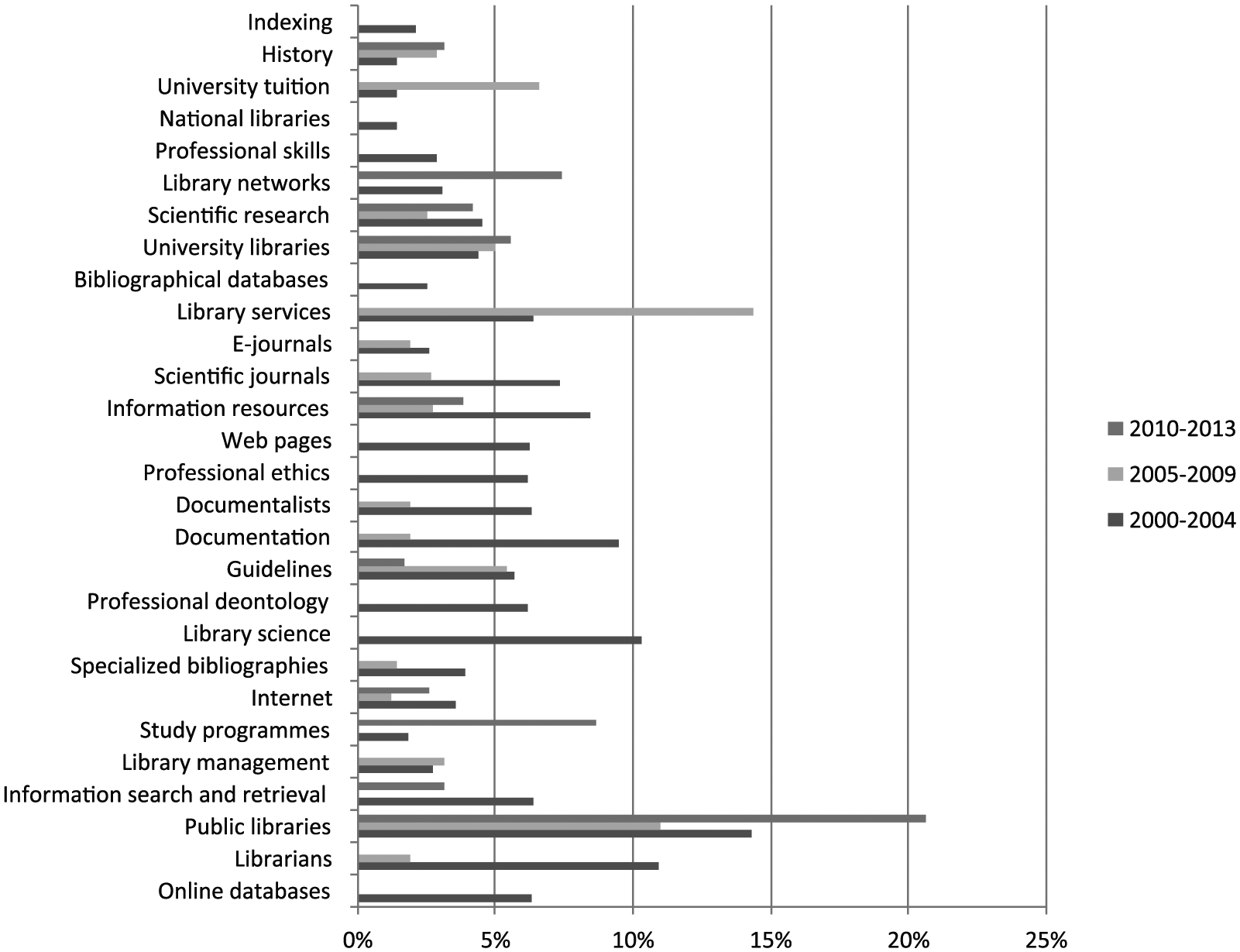
Keywords in the journal BiD (2000–2013).
The results show that, out of the 28 descriptors and keywords identified in the period 2000-2013, only seven are used consistently to index articles during this entire period (public libraries, Internet, guidelines, information resources, university libraries, scientific research, history). The remaining descriptors and keywords are either used only during the period 2000–2004 (online databases, library science, professional deontology, professional ethics, web pages, bibliographical databases, professional skills, national libraries, indexing), or are used in alternate periods (librarians, information search and retrieval, library management, study programmes, specialized bibliographies, documentation, documentalists, scientific journals, e-journals, library services, library networks, university tuition).
As we observed that not all the descriptors and keywords are consistently present between 2000 and 2013, we also analysed those used between 2005 and 2013 (Figure 7), giving a total of 24 (6.96%). Of these 24 descriptors and keywords, only five appear during the entire period (open archives, libraries, websites, access to information, publishing industry), eight only index contents between 2005 and 2009 (work depositing, dissemination of information, information services, universities, electronic archives, scientific communication, cataloguing, marketing) and eleven index contents during the period 2010–2013 (architecture, municipal libraries, digitalization, buildings, search tools, e-books, portals, documentary heritage, bibliographical heritage, collection development, user surveys).
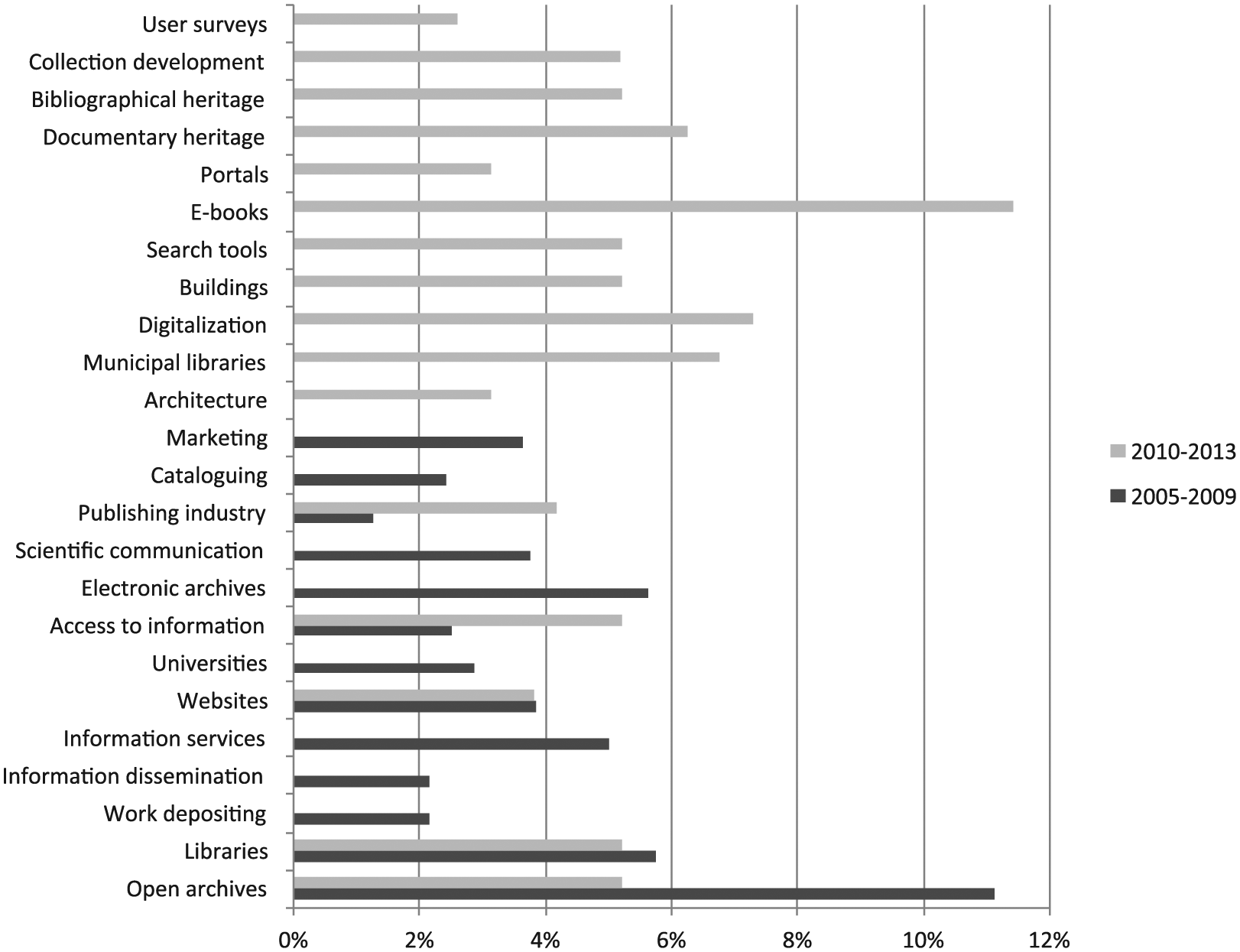
Keywords in the journal BiD (2005–2013).
In the journal AD, we analysed a total of 27 (8.68%) descriptors and keywords that index contents during the period 2000–2013 (Figure 8). Unlike the journal BiD, we were not able to identify any that are used consistently to index the journal’s contents between 2000 and 2013. However, it was noted that eight of the 27 keywords are used consistently to index articles during the period 2000–2009 (information and communication technologies, information management, user surveys, public libraries, university libraries, Internet, scientific research, information resources) and four descriptors and keywords are used to index contents during the periods 2000–2004 and 2010–2013 (documentation, digital libraries, university tuition, old books), indicating a partial return to the subjects that were considered to be of interest during the journal’s first years of publication. The remaining descriptors and keywords are only used to index contents corresponding to the first period (2000–2004).
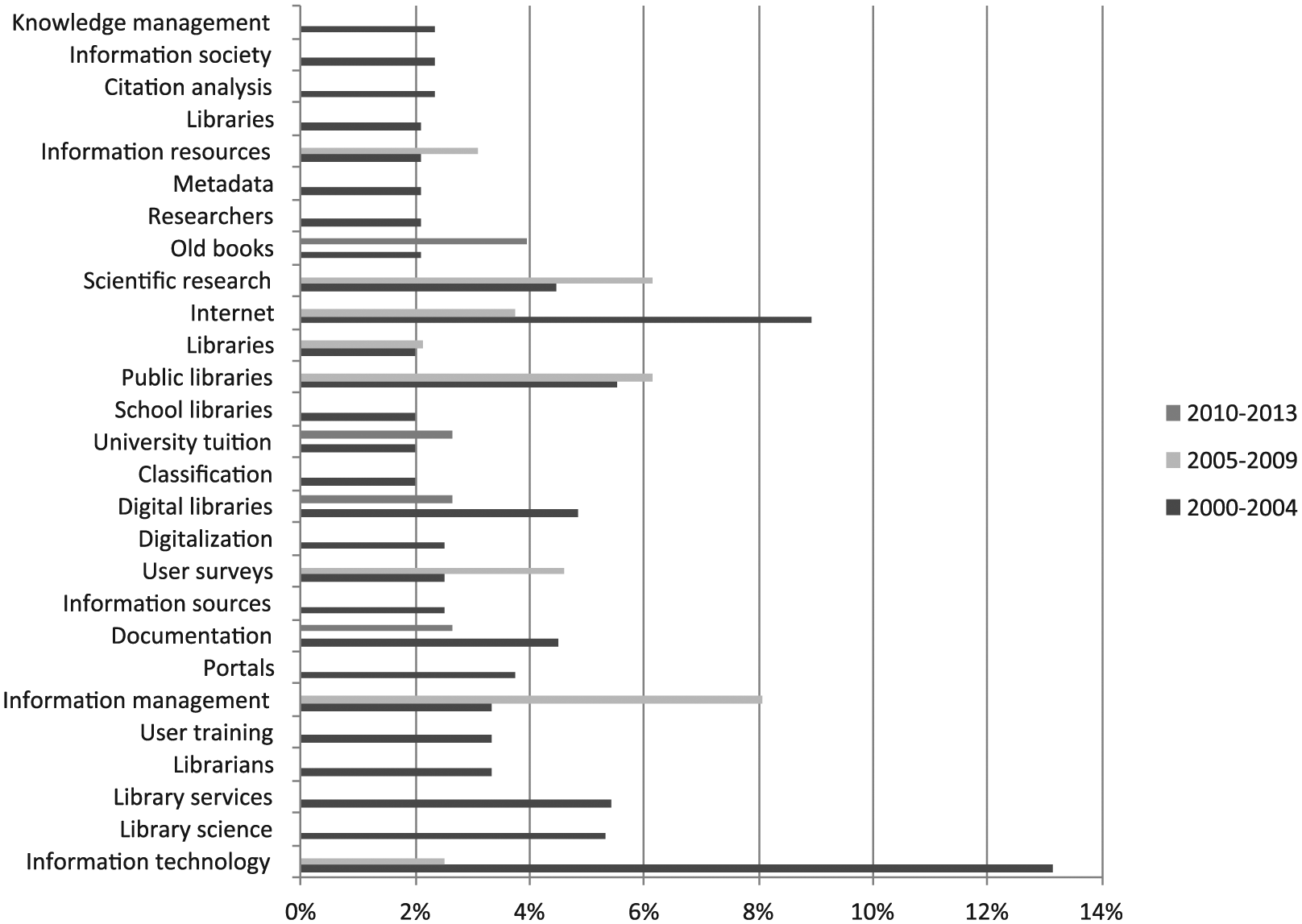
Keywords in the journal AD (2000–2013).
Likewise, we analysed the descriptors and keywords used to index the journal’s contents from 2005 until 2013 (Figure 9), giving a total of 31 (9.97%). The results obtained show a greater use of descriptors and keywords to index articles in AD versus BiD and, consequently, a greater subject diversity during this period. As Figure 9 shows, only three of the 31 keywords are used during the period 2005–2013 (bibliographical output, information literacy, terminology). Of the remaining keywords, six are used during the period 2005–2009 (scientific journals, public administration, digital divide, cooperation, questionnaires, bibliometric analysis) and twenty-two during the period 2010–2013 (written press, electronic images, keyword lists, professional profile, television channels, ontologies, image processing, access to information, bookbinding, scientific productivity, students, archival legislation, economic resources management, library planning, bibliography, marketing, scientific cooperation, scientific networks, visibility, e-books, manuals, maps).
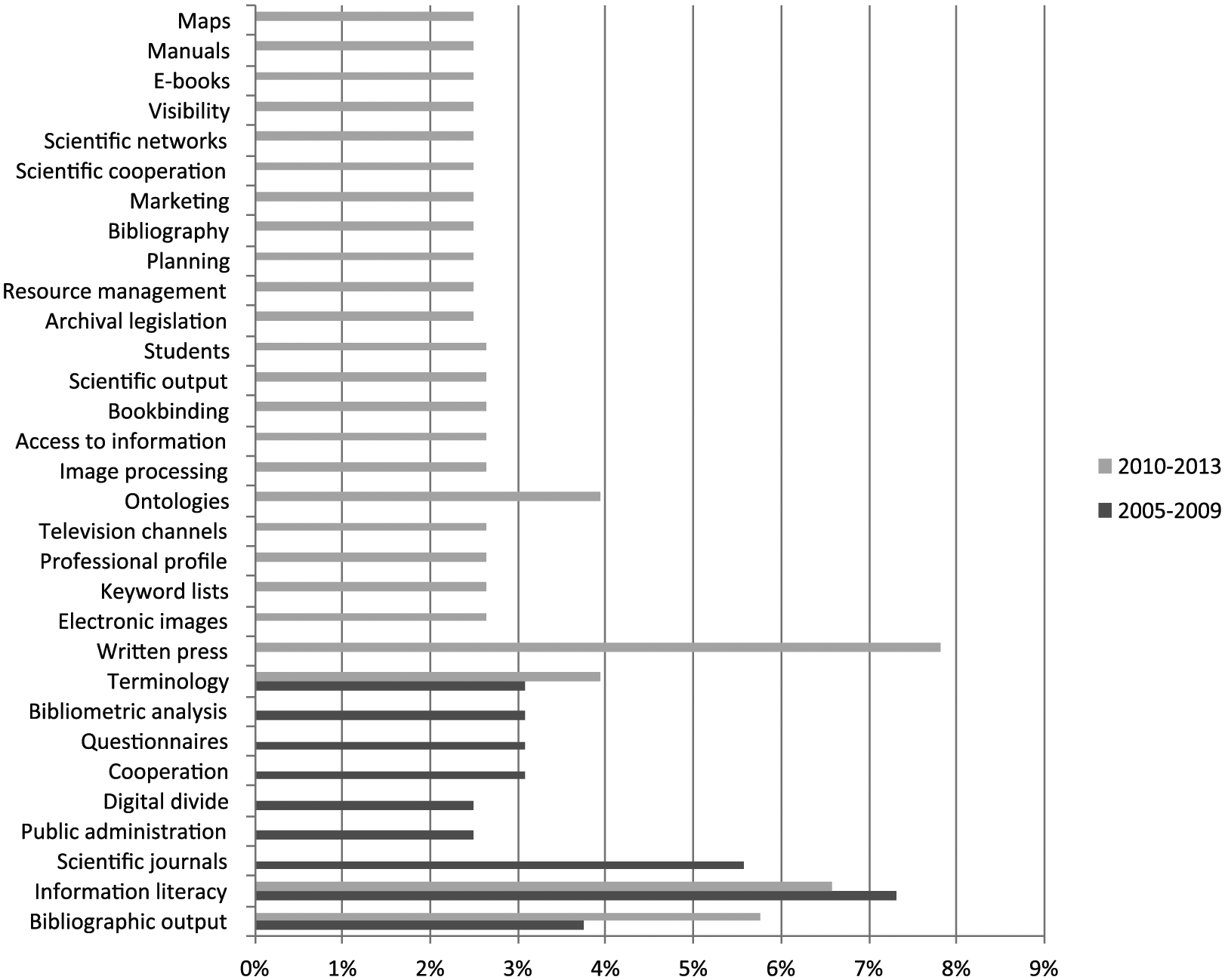
Keywords in the journal AD (2005–2013).
Analysis of results by subject areas
With the goal of enabling a comparison of the subject areas of the journals BiD and AD over the period 2000–2013, we analysed the number of articles indexed in each area. We calculated the frequency of articles in the different subject areas in order to determine in which areas the two publications’ articles are concentrated. By way of example, Table 5 gives the distribution of articles by subject areas for the year 2000. It can be seen that articles have been published in all of the subject areas, that the number of published articles varies depending on the subject, and that a balanced representation in number of articles is only found in a few subject areas, such as library science or information units, which are subjects that are relevant for both publications.
Distribution of articles by subject areas (BiD and AD 2000).
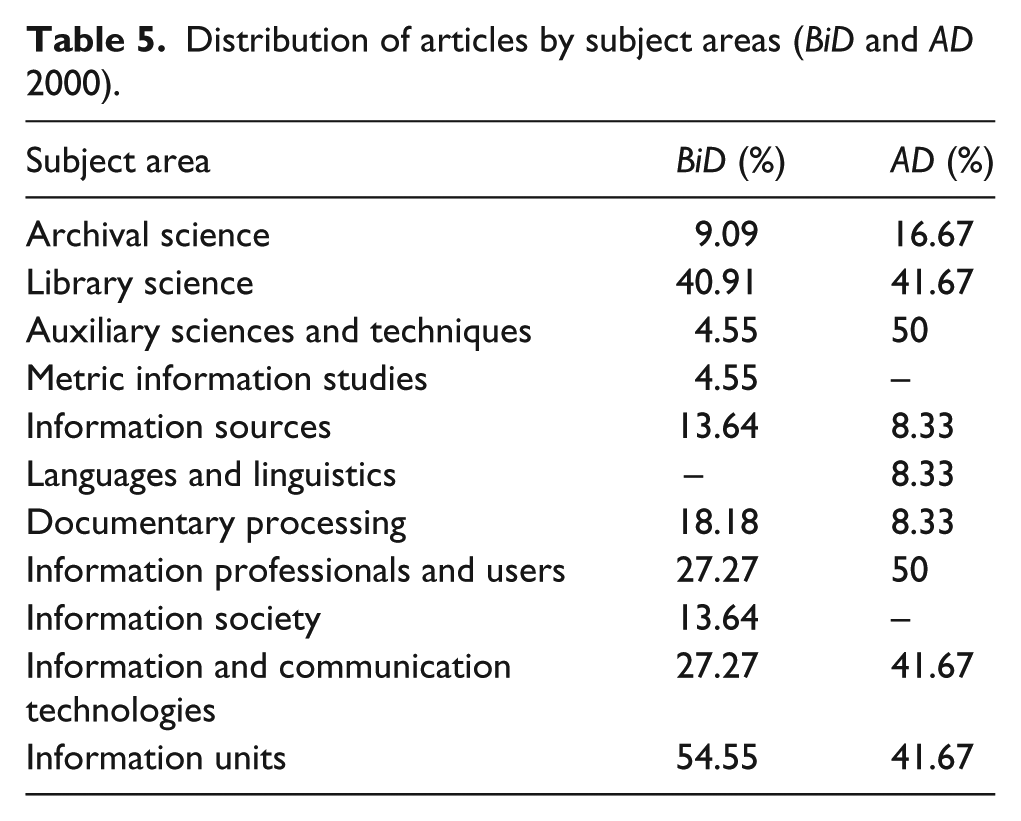
Complementing the table, Figure 10 shows the distribution of contents by subject areas. It is seen that the number of published articles in the subject area of archival science fell from 9.09% (BiD) and 16.67% (AD) in 2000 to 3.45% (BiD) and 10% (AD) in 2013. In both publications, the number of articles indexed in this category has been decreasing since the year 2000, except for 2011 (16.67%) and 2012 (29.17%) in BiD.
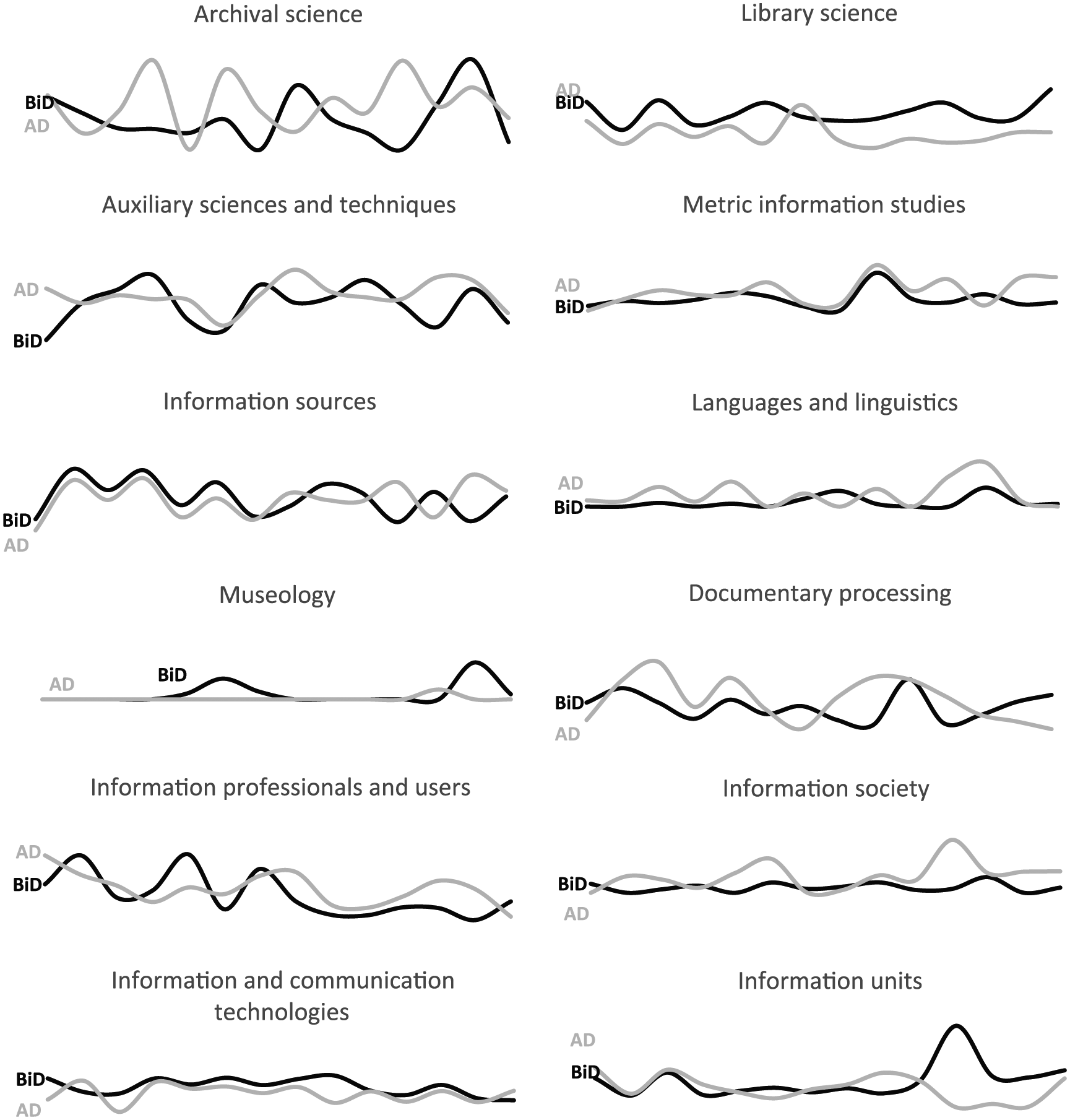
Distribution of articles by subject areas (BiD and AD 2000–2013).
In the subject area of library science, a increase in the number of published articles in this field is observed in BiD, from 41.91% (BiD) in 2000 to 62.07% (BiD) in 2013. The opposite is the case with the journal AD, as the percentage of articles corresponding to this section experienced a steady decline from 41.67% in 2000 to 10% in 2013.
In the case of auxiliary sciences and techniques, there has been an increase in the articles indexed in BiD corresponding to this field and a steady decrease in articles in AD, from 4.55% (BiD) and 50% (AD) in 2000 to 20.69% (BiD) and 20% (AD) in 2013.
With respect to metric information studies, very few articles classified in this area are identified in BiD, which decrease from 8.33% (BiD) in 2000 to 3.45% (BiD) in 2013, with the exception of 2008, when they accounted for 34.38% of the articles. In the case of AD, a steady increase in the number of articles is observed. While no articles are classified in this section in 2000, they account for 10% in 2013, peaking at 25% in 2005.
The subject area information sources has grown steadily in number of articles in both publications, from 13.64% (BiD) and 8.33% (AD) in 2000 to 34.48% (BiD) and 30% (AD) in 2013.
In the case of languages and linguistics, the number of articles has grown very modestly during the period analysed, from no articles at all in 2000 to 3.45% in 2013. In AD, in general terms, a larger number of articles indexed in this area is observed, increasing from 8.33% in 2000 to 15% in 2002 and 2008, peaking at 31.58% in 2011, although it has no articles indexed in this section in 2013.
In the area of museology, a very small number of articles is observed in BiD, with articles indexed in this category in only five of the 14 years analysed, including 2013 with 3.45% of the articles. In AD, the number is even smaller, with 12.5% of the articles in 2012 as sole record.
With respect to the subject area of documentary processing, a constant presence of articles indexed in BiD is observed, increasing from 18.18% in 2000 to 24.14% in 2013. However, the articles in AD have progressively lost presence in this area, from 8.33% in 2000 to no articles indexed in 2013.
For information professionals and users, the results range from 27.27% (BiD) and 50% (AD) in 2000 to 24.14% (BiD) and 10% (AD) in 2013, with a constant presence of articles in this domain in both publications.
In the case of the information society, a progressive decline in the number of articles indexed is observed in BiD, from 13.64% in 2000 to 6.90% in 2013. In general, the percentage of articles indexed in this category stays at a low level. In the case of AD, a steady growth of articles in this category is observed, from no article indexed in 2000 to 20% in 2013, peaking at 43.75% in 2010.
As regards information and communication technologies, the results range from 27.27% (BiD) and 41.67% (AD) in 2000 to 41.38% (BiD) and 50% (AD) in 2013, and indicate that a significant number of articles continue to be indexed in this subject area.
Lastly, for information units, the results indicate a consistent number of articles indexed in this area in BiD, increasing slightly from 54.55% in 2000 to 58.62% in 2013. A similar presence is observed with the articles indexed in AD, although here the percentage fell from 41.67% in 2000 to 30% in 2013. There were no articles indexed in this category in 2011 in either publication.
In general terms, we observe that the subject areas in which most of the articles have been published in both journals correspond to library science, auxiliary sciences and techniques, information sources, information professionals and users, information and communication technologies and information units. In order to identify specifically the subjects featured in each of the subject areas in BiD and AD, the following section analyses in detail the use of keywords associated with each article.
Comparison of descriptors and subject areas in both publications
After studying the descriptors and keywords used to index the articles in each of the journals individually, we analysed those that are used in both publications in order to determine the level of subject similarity in the journals’ contents and whether the topics of interest in both publications follow a similar course. Accordingly, we identified the number of descriptors, the number of articles in each journal, and we calculated the percentage match between the two publications (Table 6).
Percentage of matching keywords (BiD and AD 2000–2013).
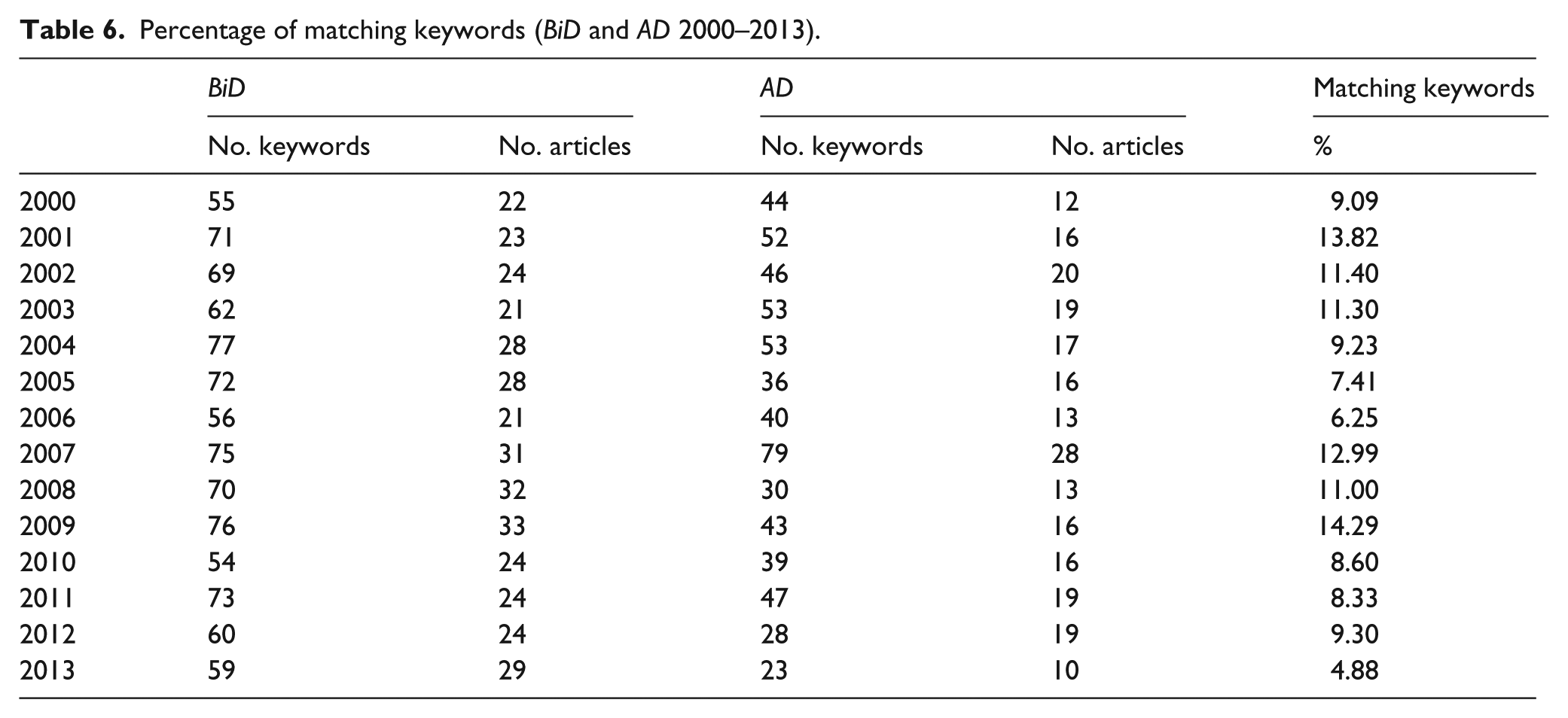
The data analysed show that the percentage match in descriptors and keywords used to index the articles in BiD and AD is low, which indicates that there is little subject overlap in the topics featured in the two publications. The periods when most subject overlap is observed (between 10% and 15%) correspond to 2001–2003 and 2007–2009. The percentage match is lower in the other years. As Table 6 shows, the level of match remains low even in the years when both journals published a similar number of articles (2003 and 2007).
If we analyse the descriptors and keywords appearing in both publications during the period 2000–2013, in most cases we see that this happens only once, which also confirms a very low level of similarity between contents. Accordingly, in performing this analysis, we only considered the descriptors and keywords that match in both publications on at least three occasions during a two-year period (Figure 11), in order to identify the core subjects highlighted in both journals. Thus, we found that 11 (13.2%) keywords used to index articles in both BiD and AD, out of a total of 83 matching descriptors and keywords. Likewise, the contents that featured concurrently in both publications address particular aspects related to libraries (digital libraries, university libraries, public libraries) and also library-related services (library services, bibliometric analysis), research (scientific research, scientific journals), documentation (information management, documentation, library science) and technology (information technologies).
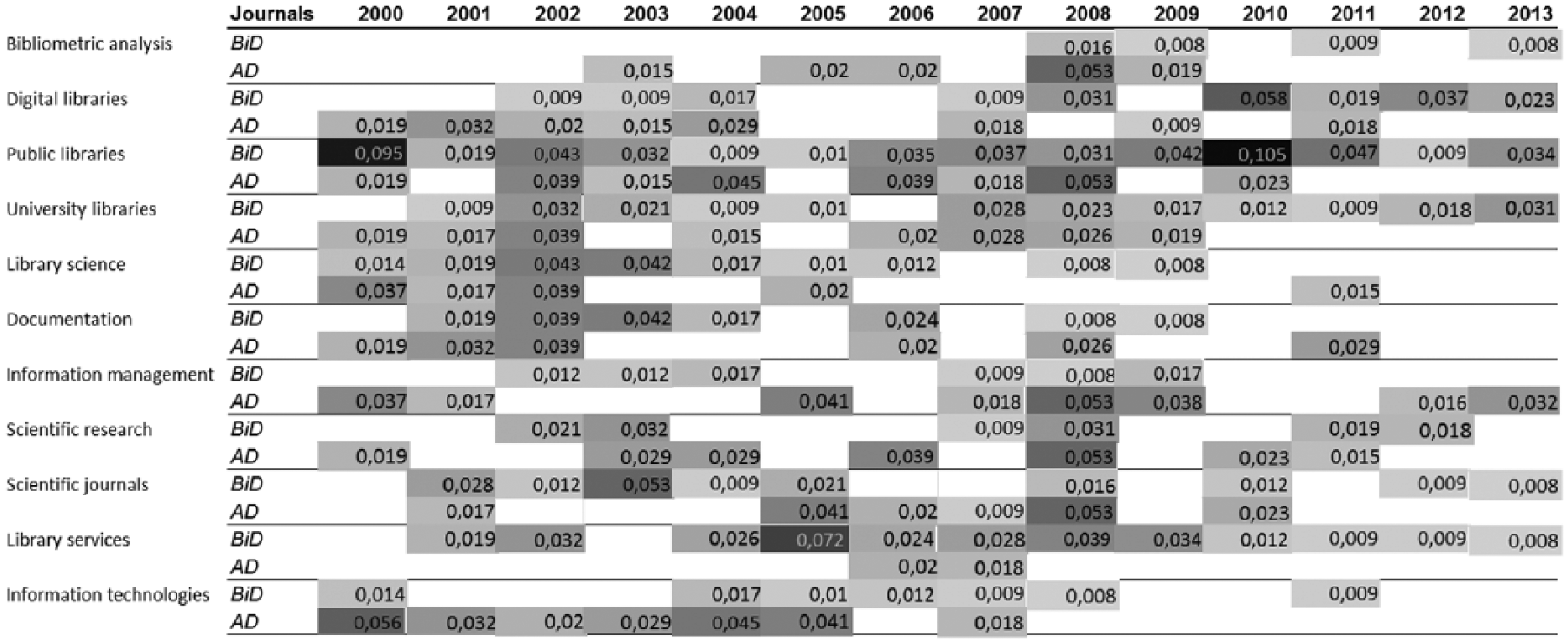
Matching keywords in BiD and AD (2000–2013).
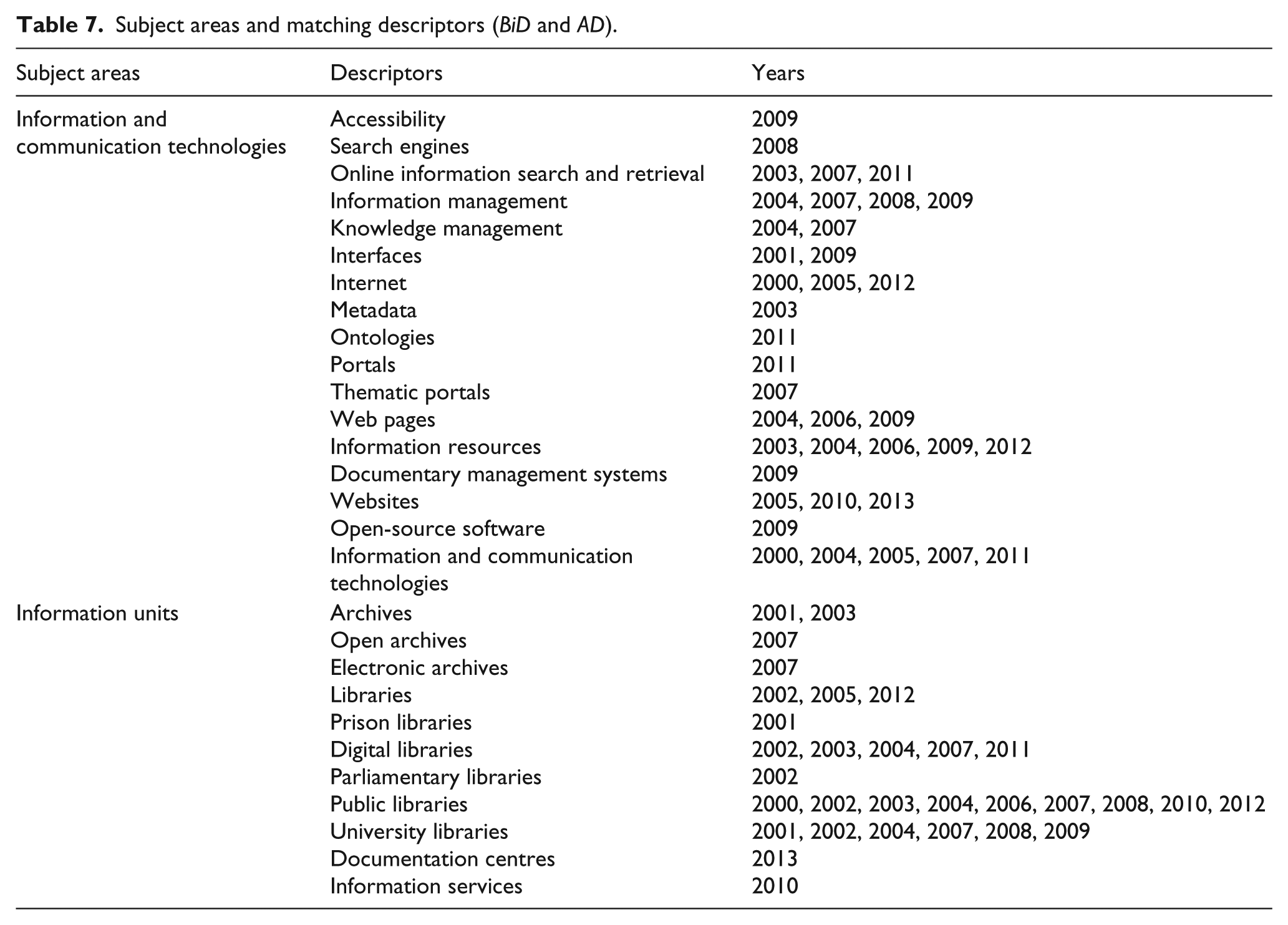
In order to complete the comparative study of the subjects that featured in both publications, we identified the subject areas to which the matching descriptors and keywords belong. Thus, we found that the subject areas of information and communication technologies and information units have a larger number of matching descriptors and keywords and, therefore, have a larger number of articles on similar subjects within these two areas (Table 7).
Subject areas and matching descriptors (BiD and AD).
In the subject areas of auxiliary sciences and techniques, information professionals and users and documentary processing, we found a second block of matching descriptors in both journals (Table 8).
Subject areas and matching descriptors (BiD and AD).
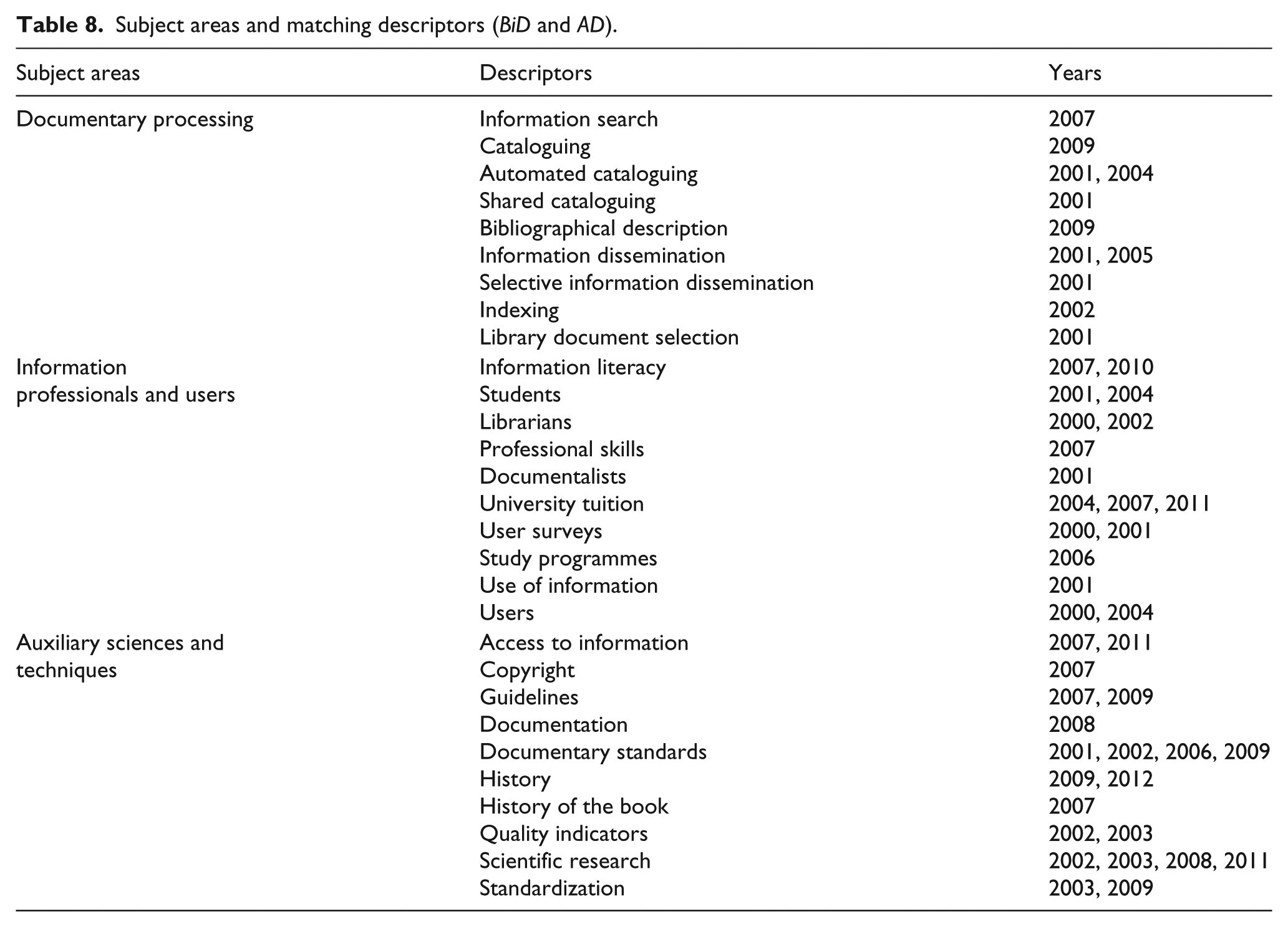
The subject areas of information sources, metric information studies, archival science, information society and languages and linguistics also share descriptors and keywords, although to a lesser degree.
In short, we observe that the two journals’ focus of subject interest is mainly on the discipline’s core subjects, related to LIS (public libraries, university libraries, digital libraries, library services, libraries, information management, bibliometric analysis, electronic resources, information resources, online information search and retrieval). Articles on information and communication technologies, Internet, web pages and websites also have a significant presence. Lastly, there are common topics related with scientific research, scientific journals and university tuition.
International trends of the discipline
In order to determine whether, on an international level, the LIS discipline addresses similar subjects to those identified in Spain through the analysis of the journals BiD and AD, we analysed the presence of the descriptor ‘public libraries’ in international publications belonging to the discipline indexed in Web of Science and Scopus during the period 2000–2013. This descriptor was chosen because it has a continuous presence in the contents of both publications during the period analysed.
Accordingly, we hypothesize that if there is a significant presence worldwide of contents related to public libraries during the period 2000–2013, it means that the discipline has evolved in Spain in correlation with the international trend.
The results of this analysis show that the presence of contents related to public libraries in the discipline’s journals indexed in Web of Science and Scopus has increased steadily since the year 2000. Specifically, the number of published articles in Web of Science has increased from 254 in the year 2000 to 555 in 2013. In the case of Scopus, 28 articles were published in the year 2000 and 137 in 2013. In both cases, there has been a progressive thematic evolution, with significant growth in recent years. Figure 12 compares the evolution of public library-related contents in Spain (top graph) with the international trend (bottom graph), showing a thematic correlation between the discipline within Spain and internationally, indeed, particularly in the case of BiD.
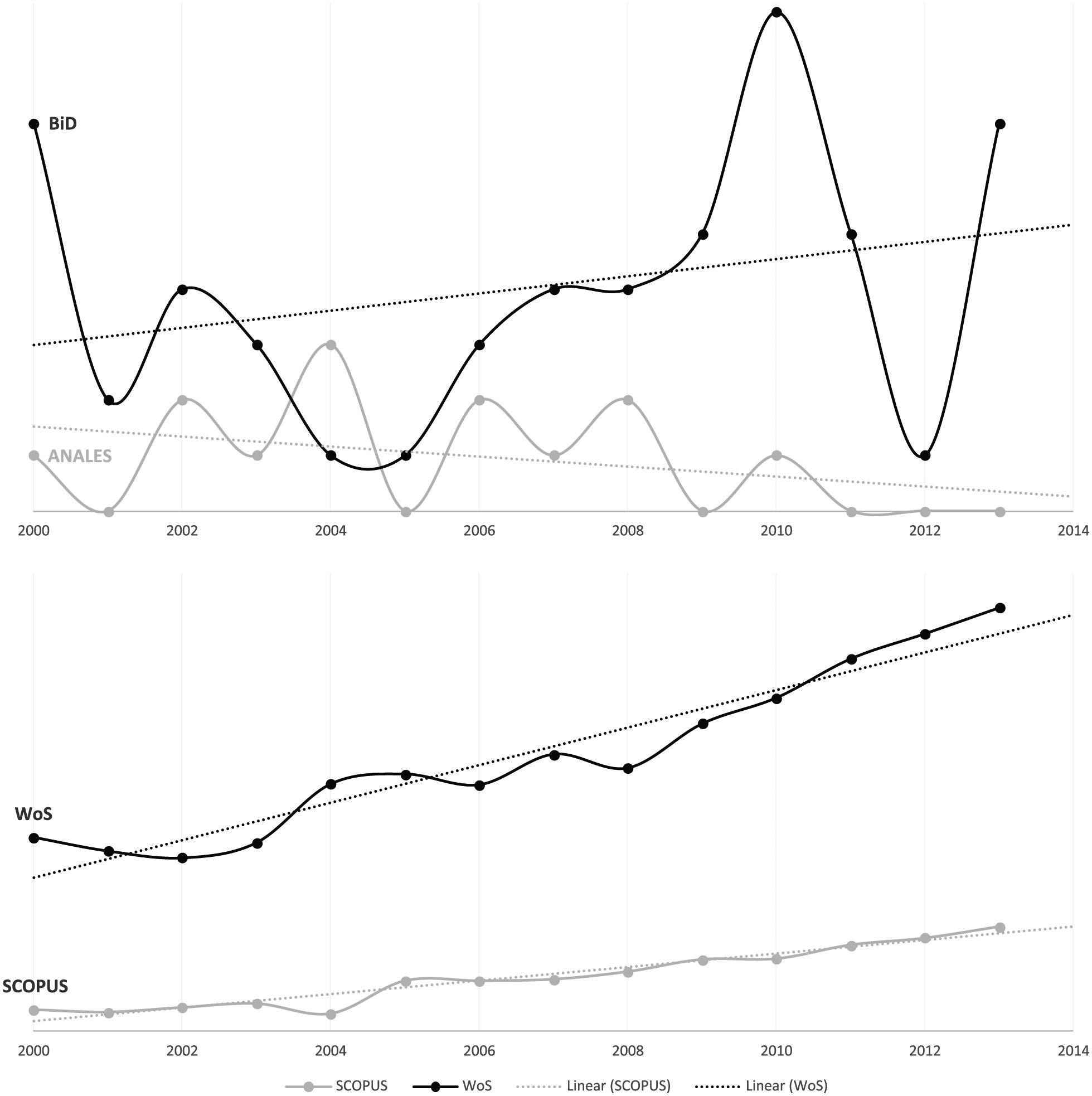
Evolution of public library-related contents in BiD and AD with the international trend (WoS and SCOPUS).
Discussion
The Spanish journals specializing in documentation science are irregular in their continuity and frequency of publication, as the studies performed by Delgado López-Cózar (2001) and Villagrá Rubio and Sorli Rojo (2003) have shown, with a lack of compliance in quality indicators, degree of openness and membership of the editorial committees and editorial boards. In spite of this, the journals AD and BiD have published continuously since they first appeared, showing a high level of regularity, with improvements in the indicators in both cases that enabled them to qualify for the FECYT seal (evaluation of the editorial and scientific quality of Spanish scientific journals) and be included in the Scopus and Emerging Science Citation Index of Science databases.
We found a fair number of similarities and points of convergence in the bibliometric study and the structure of the journals. The average number of articles published per year in the study of AD performed by González Alcaide et al. (2008) was 14 to 15.3 papers, now it is 17, and the proportion of single authorship has gone from 71% to 68.62% of the papers. The mean number of authors per paper or the signatures/paper ratio for AD (1.15) is similar to that found by Jiménez Contreras and Moya Anegón (1997), which was 1.3. As regards collaborative papers, papers written by two authors predominate. And with respect to the evolution of journal sections, we found that articles and reviews have considerable prominence in both publications, as they are indexed journals whose contents are reviewed by external reviewers. This enables them to be taken into account in the research or practitioner career of the author or authors writing the papers. In this respect, the publications have evolved to be less practitioner focused and have gained weight as academic vehicles.
In the case of BiD, we do not have an equivalent prior study. Although Ollé and Porras (2008) analysed the first 20 issues of the journal, considering the size of the different sections, the subject matter, the languages used in the texts and a large number of circulation-related parameters, comparing how long visitors stayed in the journal and where they came from, among other aspects, there was no study similar to that performed in the case of AD.
Accordingly, this study has enabled us to identify the subjects that are featured most frequently in the two journals analysed, BiD and AD. To identify the subjects that are covered in both publications and also the subject areas they belong to, we have established a correlation between subject areas, descriptors belonging to these subject areas and the year in which this subject overlap took place.
As a result, we have seen that there is a greater subject overlap between the two journals in the subject area of information units, as a result of the highly prevalent use of three descriptors: ‘public libraries’, which appears in 2000, 2002, 2003, 2004, 2006, 2007, 2008, 2012 and 2013; ‘university libraries’, which appears in 2001, 2002, 2004, 2007, 2008 and 2009; and ‘digital libraries’, which appears in 2002, 2003, 2004, 2007 and 2011.
In the subject area of information and communication technologies, we have also identified three overlapping subjects, focused on the descriptors ‘information resources’ (2003, 2004, 2006, 2009 and 2012); ‘information and communication technologies’ (2000, 2004, 2005, 2007 and 2011); and ‘information management’ (2004, 2007, 2008 and 2009). This confirms González Alcaide et al.’s study (2008), which indicates a growing interest in subjects related with the information and communication technologies and the Internet.
In addition, although with a lower subject presence in the 14 years analysed, we have identified a shared subject in library science, with the descriptor ‘library science’ (2000, 2001, 2002, 2005); and also in auxiliary sciences and techniques, with the descriptor ‘documentation’ (2001, 2002, 2006, 2008), and in information sources, with the descriptor ‘scientific journals’ (2001, 2005, 2008, 2010).
This correlation has enabled us to answer one of the questions raised at the start of this study, namely, whether the evolution of AD and BiD shows points of divergence or convergence in any of the descriptors or keywords analysed. In this respect, we can say that there is a small number of overlapping subjects that are featured in both publications, and those that are overlapping are concerned basically with issues related to the field of library and information science.
Turning to the question of which main subjects have featured in the journals BiD and AD during the period analysed, we can confirm that there is no subject continuity in either journal during the period 2000–2013, with the exception of public libraries. This subject maintains a stable presence during the entire period in both publications, except for the period from 2010 to 2013 in AD. With respect to the journal BiD, the most commonly featured subjects focus on LIS, information resources, scientific journals, library services, open archives, study programmes, library networks or e-books. For its part, AD addresses subjects concerned with information and communication technologies, Internet, information management, information literacy or written press, and, to a lesser degree, library science, library reference services, scientific research, scientific journals, bibliographic output or information literacy. Answering the main goal pursued by our research, we find that the thematic evolution of the two journals clearly shows the transformation that the discipline has undergone internationally and locally.
In addition, the thematic analysis of the journals BiD and AD has enabled us to see whether having a call for papers has any real influence on a publication’s contents. In this respect, only the journal BiD has a call for papers to guide the subjects presented in each issue’s monograph. The journal AD, on the other hand, is not structured in monographs and, in each issue, original articles, translations and reviews are published on any of the sectors and specializations of information, documentation and communication, so there are no calls for papers. This intrinsic difference between the two journals could be an indicator of the influence of BiD’s editorial board in choosing the subjects that are included. Thus, if we compare the calls for papers in 2011 (e-books and information retrieval) and 2013 (collections and information quality) with the descriptors and keywords used to index the articles during the period 2000–2013, we observe the following:
The subject e-books in the journal BiD is featured in 2010, 2011 and 2013, and in the journal AD, in 2010 and 2013, using the descriptor ‘e-books’. This descriptor corresponds to the subject area of information sources.
The subject information retrieval in the journal BiD is featured in 2000 with the descriptor ‘information search and retrieval’; in 2001, 2002, 2003, 2004, 2005, 2006, 2007, 2008, 2010 and 2011 with the descriptor ‘online information search and retrieval’; in 2001, 2002, 2006 and 2011 with the descriptor ‘information retrieval’; and in 2004 with the descriptor ‘information retrieval systems’. In the journal AD, it is featured in 2003, 2007, 2009 and 2011 with the descriptor ‘online information search and retrieval’, and in 2004 and 2008 with the descriptor ‘information retrieval’. These descriptors correspond to the subject areas of documentary processing and information and communication technologies.
The subject collections in the journal BiD is featured in 2000, 2003, 2008, 2010, 2011 and 2013 with the descriptor ‘collection management’; in 2001, 2006, 2011 and 2013 with the descriptor ‘collections’; in 2005, 2006 and 2012 with the descriptor ‘local collections’; in 2013 with the descriptor ‘collection development’; in 2010 and 2013 with the descriptor ‘collection evaluation’; in 2002 and 2008 with the descriptor ‘documentary collections’; in 2008 and 2013 with the descriptor ‘special collections’; and in 2013 with the descriptor ‘museum collections’. In the journal AD, it is featured in 2012 with the descriptor ‘collections’; in 2002 and 2004 with the descriptor ‘collection evaluation’; in 2011 with the descriptor ‘documentary collections’; and in 2000 with the descriptor ‘reference collections’. These descriptors correspond to the subject areas of archival science, museology and library science.
The subject information quality in the journal BiD is featured in 2009 and 2013 with the descriptor ‘information quality’; in 2001, 2002, 2003 and 2013 with the descriptor ‘quality indicators’; in 2007 and 2013 with the descriptor ‘service quality’; and in 2007 with the descriptor ‘quality management’. In the journal AD, it is featured in 2002, 2003 and 2004 with the descriptor ‘quality indicators’, and in 2011 with the descriptor ‘quality management’. These descriptors correspond to the subject area of auxiliary sciences and techniques.
Thus, the thematic distribution of the descriptors during the period 2000–2013 shows that the subjects proposed by BiD’s editorial board have, on the one hand, a low impact on the journal’s content, as we see that they are subjects that are featured consistently throughout the period and, on the other hand, a fairly similar thematic distribution to the journal AD, in spite of them being journals with a low level of similarity in their content. The lack of similarity in contents could be attributed to the fact that the two publications have different geographical contexts, which could influence the publication of subjects by the authors. Another constraint is the indexing of the journal in databases, which also influences the selection of articles for publication or the submission of articles by the authors, depending on a particular journal’s greater or lesser impact on the dissemination of research. Thus, answering the hypotheses proposed in this research, we find that the subjects proposed by the editorial board of the journal BiD are aligned with trends currently considered to hold most interest in the field of information and documentation.
To complete the thematic analysis of the two academic journals, we investigated whether the subjects that are particularly prominent in the two publications are also featured in publications having an international scope. Thus, we chose the descriptor ‘public libraries’, which has a large presence in BiD and AD, to verify what presence it has in international journals indexed in Web of Science and Scopus during the period 2000–2013. The results obtained show a thematic correlation in the evolution of the discipline’s contents within Spain and internationally.
Limitations of the research
The limitations of our research are related to the free access to the journals’ contents. Furthermore, content indexing is conditioned by the use of thesauri and the choice of keywords.
Conclusions
The comparative study between the journals AD and BiD suggests that in spite of sharing a fair number of similarities, such as their preferred geographical reach and being published by a university, each journal has a distinctive thematic approach and caters to a different researcher segment.
The results show that the scientific output of BiD and AD has evolved in parallel with their sections. In BiD, Articles and Experiences are very prominent; in the case of AD, most of the publication consists of Articles, followed by some distance by Reviews. Upon comparing academic and practitioner-focused research articles, it is concluded that the practitioner-related content in BiD is double the academic content; in AD, on the other hand, there is a clear preference for academic content. The comparison of the number of authors per article gives very similar values, with 1.5 authors in AD and 2 authors in BiD.
As regards the comparison of results by descriptors and subject areas, we see that the two publications have very few shared subjects. The shared subjects focus on aspects related with the classic areas of LIS, such as libraries, information resources, information management and also information technologies.
As regards the methodology used, we consider that this is a future avenue for research to compare a larger number of journals, not too large but large enough to gain an adequate view of the journals individually and of the discipline in general. This type of study is useful in disciplines that are still in the process of consolidating or to verify the existence and emergence of subdisciplines. The fact that both BiD and AD are indexed in Temaria facilitates an ordered treatment of the keywords and the subjects. Even so, we consider that this approach can also be applied to journals that do not share the same documentary language.
As a final proposal for future research, choosing journals with a longer publishing track record could enable the identification of watershed moments in the use of certain concepts and keywords. The richness of the language and vision of information and documentation science as a scientific discipline may enable these studies to be broadened to correlations of journals with different indexing languages.
Footnotes
Declaration of Conflicting Interests
The author(s) declared no potential conflicts of interest with respect to the research, authorship, and/or publication of this article.
Funding
The author(s) received no financial support for the research, authorship, and/or publication of this article.