




Abstract
Scientific publication is one of the main channels for disseminating research results and one of the most important means of determining the presence of women in scientific research. This article aims to conduct a bibliometric analysis in the Library and Information Science (LIS) field, from a gender perspective, by analysing Journal of Information Science (2015–2020). To reach this goal, the research has been developed in several stages (data collection, gender authors’ identification, validation of authorities, contact by email and analysis of results) to identify 326 contributions and 697 authors finally. Analysis patterns showed outcomes on gender (single and multiple authors), scientific collaboration, authorship time-course, authorship productivity as well as institutional and geographic affiliation. Some conclusions show that male and female authors are not equally represented in the journal, with a great difference in the case of collective authorship. Overall, there is a clear trend of single and multiple male authorship.
1. Introduction
Bibliometric studies are an important source of information on the state of research in a specific scientific discipline, as it is defined as ‘a discipline that statistically analyzes a specific scientific literature, its historical evolution, its fields and thematic developments, as well as its authors and uses’ [1, p. 18]. In the field of Library and Information Science (LIS), journal-based bibliometric studies can show the scientific productivity of the discipline in geographical terms and identify research trends, productivity and scientific collaboration among authors to determine ‘the characteristics of a journal compared to others’ [2, p. 58]. Based on this premise, they are also a good source of data to determine the presence of women in LIS research.
Our review of the scientific literature gave us insight into the real state of the issue, and clearly shows the existence of two types of contribution within the framework of gender studies and bibliometric studies of LIS journals. This characterisation is based on the purpose of the published research: on one hand, general bibliometric analysis of LIS journals (both individual and multiple authorship) in which gender pattern is a parameter or item of analysis along with other traditional parameters; and on the other hand, a small core of scientific contributions in which gender issues are the core purpose of the analysis of the LIS journals studied.
Contextualising the state of the matter in a scientific literature review, the first group of contributions would include the paper of González-Alcaide et al. [2] when saying that ‘there is a long tradition of bibliometric studies that analyse journals or Spanish scientific productivity in the field of Documentation’ (p. 58). An example of Spanish metric research can be found in the study performed by López-López et al. [3] on the Revista General de Información y Documentación between 1991 and 2000. The study, which includes a time-course analysis of productivity, identifies 224 authors and highlights the scarcity of scientific collaboration. The authors also classify the subject matter into 12 thematic groups, identify 63 productive institutions and analyse the quality of the journal using Latindex evaluation criteria.
Arquero-Avilés and Río-Sadornil [4] studied the productivity of the Spanish journal Documentación de las Ciencias de la Información to mark its 25th anniversary. The results showed a predominance of single over multiple authors, with a predominance of Spanish authors. Over half (60%) of the authors were men, and most were affiliated with institutions based in Spain, Brazil, the United States and Mexico. The authors also classified the institutional affiliations of the authors into seven large groups to facilitate systematisation.
Following this, Arquero-Avilés [5] evaluated scientific collaboration in studies published in Spanish LIS journals between 1975 and 1984.
A fourth example of bibliometric studies in Spanish journals is the analysis of the journal Anales de Documentación between 1998 and 2003 by Santillán-Rivero and Valles-Valenzuela [6]. The results showed that over 75% of authors were Spanish, and the remaining 25% came from Mexico, Argentina and Cuba. Authors were mainly affiliated with educational institutions (90.4%), with most studies were published by researchers from the University of Murcia (20.2%). Following on from this study, González-Alcaide et al. [2] performed athematic and bibliometric study of the same journal up to 2007.
The Revista Española de Documentación Científica is one of the leading LIS journals in Spain. It is included in the Journal Citation Report of the Social Science Citation Index, and the journal’s metric research has been the subject of many scientific articles. Some of the most important contributions in this regard are the studies published by Pérez Álvarez-Ossorio [7] and Ríos-Hilario [8], who analysed the journal up to 1999. Their research involved an analysis of cumulative indexes published in 1986 and 1997 – in the first case – and a metric study of the journal using variables that included methodology, sampling, study design or type of data analysed. This was followed by Jiménez-Hidalgo [9] and Ríos-Hilario and Travieso-Rodríguez [10], who studied time courses, research fields, analysis of methodological approaches, degree of experimentation used and data collection methods.
Many scientific studies based on bibliometric research in Latin American journals have also been published. Moya-Anegón and Herrero-Solana [11] analysed the references in the journal Investigación Bibliotecológica (1988–1998) and created a citations database to characterise the domain of LIS research in Mexico.
The domain analysis of the journal Referencias between 1994 and 2002 is an example of this type of research in Argentina [12]. The variables used included productivity, co-authorship, authors’ affiliation and nationality. The results showed that the most widely cited authors were Latin American, and the most widely cited articles were published in journals and special editions.
Dimitri [13] also published a bibliometric analysis of the Peruvian journal Biblios, while Pinto et al. [14] performed a citation analysis of the Brazilian journal Ciência da Informação (1995–2003). Some of the results were based on the number of citations received by authorship, the visibility of citations from ISI journals, and the visibility of journals indexed in databases.
In Cuba, two studies are representative of research in LIS. Vivero-Vivero et al. [15] carried out a content analysis and a qualitative study to identify the subject matter of the journal Cuba Bibliotecológica. The analysis of the Cuban journal Bibliotecas: Anales de Investigación, meanwhile, was based on impact, editorial management and scientific visibility [16].
Uribe-Tirado et al. [17] studied the visibility and impact of the Revista Interamericana de Bibliotecología (Colombia) using the journal’s Open Journal System, although a previous study by Restrepo-Arango [18] collected data based on four information blocks: authorities, article characteristics, article presentation and references.
Another important study involves a bibliometric analysis of the journal Electronic Library, which showed the journal’s research activity for the period 2000–2010 [19]. Barik and Jena [20] performed a bibliometric study of 10 open access LIS journals indexed in Scopus between 2001 and 2005 to determine authorship distribution and collaboration. Other similar bibliometric studies were performed on the journals Pakistan Journal of Library and Information Science [21], Pakistan Library & Information Science Journal [22] and Journal of Information Science, which concluded that ‘authorship trend is shifting towards multi authorship’ for the time frame 2005–2014 [23, p. 3].
Broader bibliometric studies allow researchers to study several journals together. Montilla-Peña [24] analysed archival science productivity (2001–2011) in the Network of Scientific Journals of Latin America and the Caribbean. The study was based on 117 relevant articles published by 159 authors from 16 countries in 50 different journals. A total of 91 institutions were identified, principally the La Salle University (Colombia), University of Extremadura (Spain) and the School of History of the University of Costa Rica.
In 2017, Guallar et al. [25] published a thematic and methodological study of seven Spanish LIS journals published between 2012 and 2014. Specifically, their research focussed on the percentage of research articles, their subject matter, methodological approach, research methods and techniques, in addition to a brief overview of the subject matter and methodology of each journal.
The second group of contributions is made up of bibliometric studies of LIS journals that focus primarily on gender. For example, Terry [26] reviewed authorship in the Journal College & Research Libraries from three basic perspectives: gender, institutional affiliation and scientific collaboration. Nearly a decade later, Håkanson [27] again analysed College & Research Libraries to ascertain the impact of gender on citations. The objective of this study was to analyse three prestigious scientific journals in the field of LIS (College & Research Libraries, Journal of Academic Librarianship and Library Quarterly) to ascertain the gender of signers and of the authors cited in the references between 1980 and 2000. The conclusions of these authors were compared by Reece-Evans [28], who used citation analysis ‘to measure patterns of gender, authorship and citation within the LIS e-journals LIBRES and Information Research’ (p. 1).
In another gender-based metric study, Gul et al. [29] analysed The Electronic Library for the period 2005–2014, focussing on collaboration, citation or research funding. One of the most recent studies was published by Bisaria [30], who analysed the influence of gender in the journal DESIDOC Journal of Library and Information Technology, evaluating gender issues ‘at individual and collaborative levels, professional engagement and citedness’ [30, p. 410].
Therefore, the literature review states that there is a lack of gender-based bibliometric research at LIS journals which highlights the importance of conducting gender-based bibliometric analysis at individual or collective LIS journals. In this sense, this article is intended to minimise this problem through the objectives and methodology implemented.
2. Objectives
This article aims to conduct a bibliometric analysis in the LIS field, from a gender perspective, by analysing Journal of Information Science (2015–2020). As Gurikar et al. [23] conducted a bibliometric analysis of the same journal for the period 2005–2014, the time frame of the current research is 2015–2020.
3. Method
3.1. Research question
For the purpose of this analysis, we formulated the following questions:
What is the current status of female and male authorship in Journal of Information Science?
What is the degree of gender-based collaboration, productivity and time course of authorship in Journal of Information Science?
Based on Gurikar et al. contribution [23], is the United Kingdom still the main country where authors work?
3.2. Research design
First stage: full-text papers retrieval from the journal website (https://journals.sagepub.com/home/jis). For the purpose of this research, only papers published between 2015 and 2020 will be considered.
Second stage: authors’ gender identification. This involved identifying authors ’nominal variants and determining the accepted form in order to eliminate any ambiguity in each signer’s name. This stage was completed by searching for authors in professional social networks (such as ResearchGate and GoogleScholar), personal and institutional websites as well as by emailing in some cases. We could validate 212 female authors and 485 male authors; however, 152 signers were not identified in multiple authorship.
Third stage: database design in a computerised programme.
Fourth stage: bibliometric items selection and papers bibliometric description.
3.3. Data collection tool
Once the papers were retrieved, authors created a computerised Access database (version 2010) in which the following main fields were highlighted: Article reference code, Title, Year of publication, Author, Gender, Type of authorship, No. of authors, Institutional affiliation, Type of institution, Geographic origin. Papers were described according to these indicators.
4. Results
4.1. Signer gender
This group of indicators was analysed to determine various core aspects of bibliometric studies in terms of their direct application to gender studies.
In the case of the first indicator, 69.58% (N = 485) of authors are male and 30.42% (N = 212) are female, both in single and multiple authorship (see Table 1). In addition, it should be noted that signer gender could not be determined in 152 cases (multiple authorship) despite sending emails two times, which weakens our research objective.
Authors, gender and type of authorship.

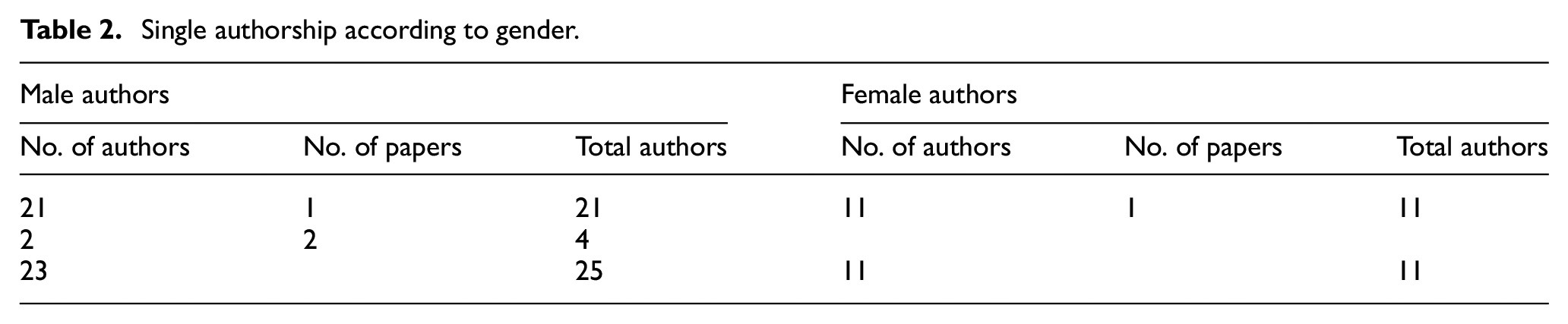
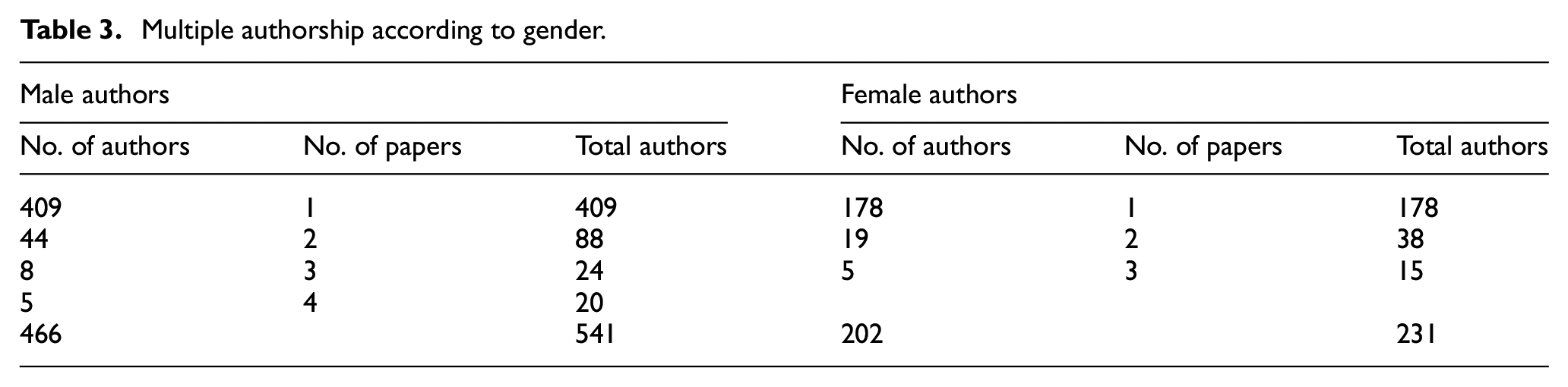
An analysis of signer distribution by gender and type of authorship showed that male signers are more likely to publish individual scientific articles (69.45%; N = 25) in comparison with female authors (30.55%; N = 11). Other relevant outcomes in favour of male multiple authorship show that the largest number of authors is concentrated in the least number of published articles (87.77% with a single paper); see Tables 2 and 3.
Single authorship according to gender.
Multiple authorship according to gender.
4.2. Scientific collaboration
An overall analysis of the source-articles shows that multiple authorship (88.96%; N = 290) exceeds single authorship (11.04%; N = 36). This means that scientific collaboration is the most common publication option in Journal of Information Science.
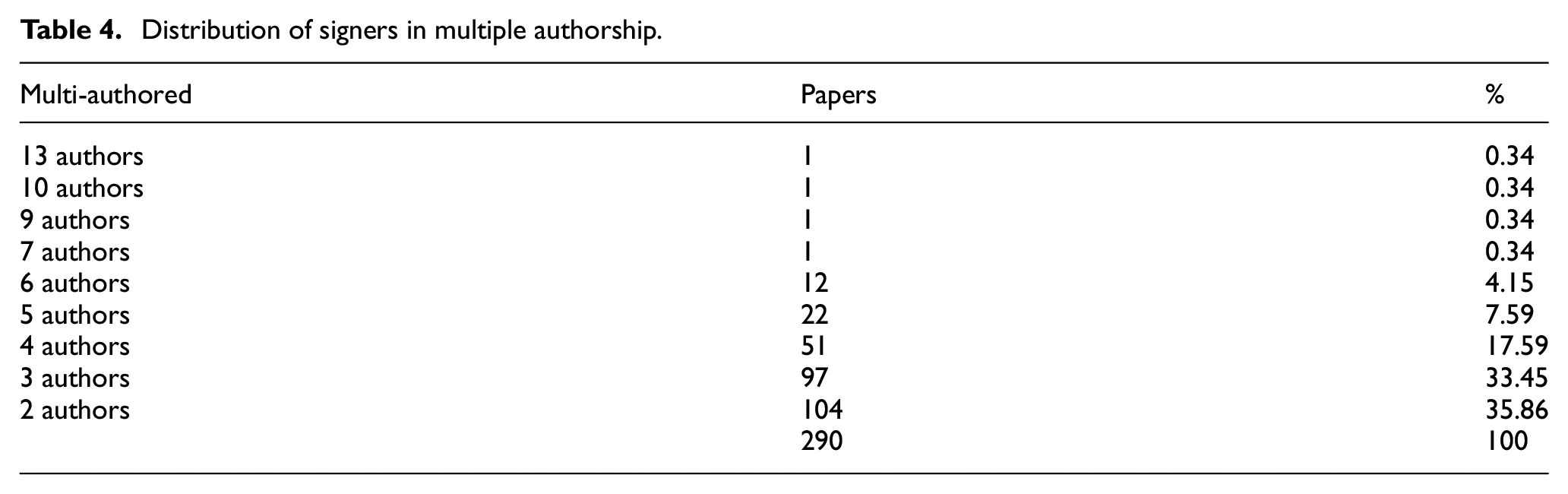
A detailed analysis of scientific collaboration showed that some articles have up to 13 signers, with most collaborative articles being signed by two authors (35.86%; N = 104). This is followed by articles signed by three (33.45%; N = 97), four (17.59%; N = 51) and five (7.59%; N = 22) authors. Table 4 shows the overall distribution of the number of signers in multiple authorship.
Distribution of signers in multiple authorship.
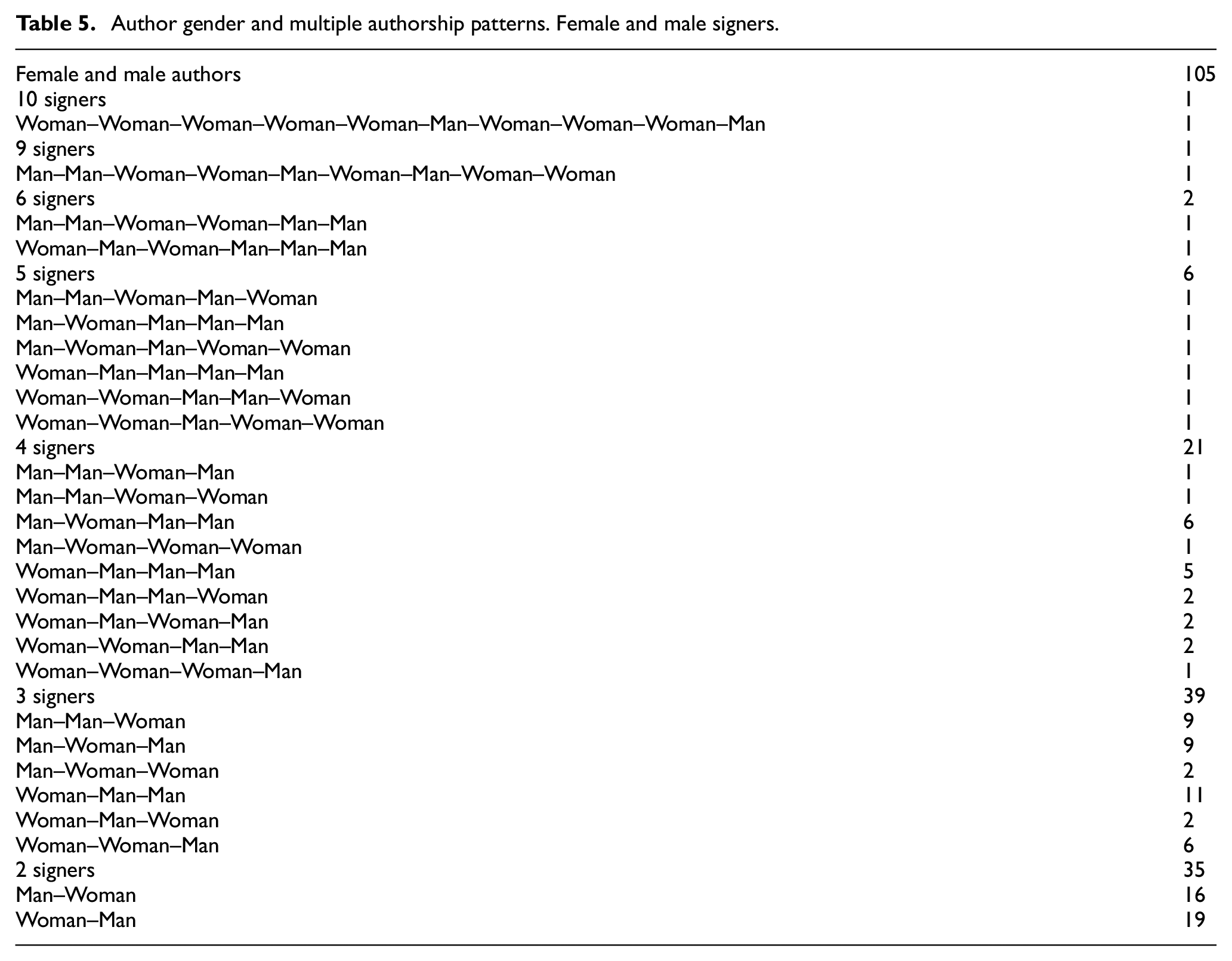
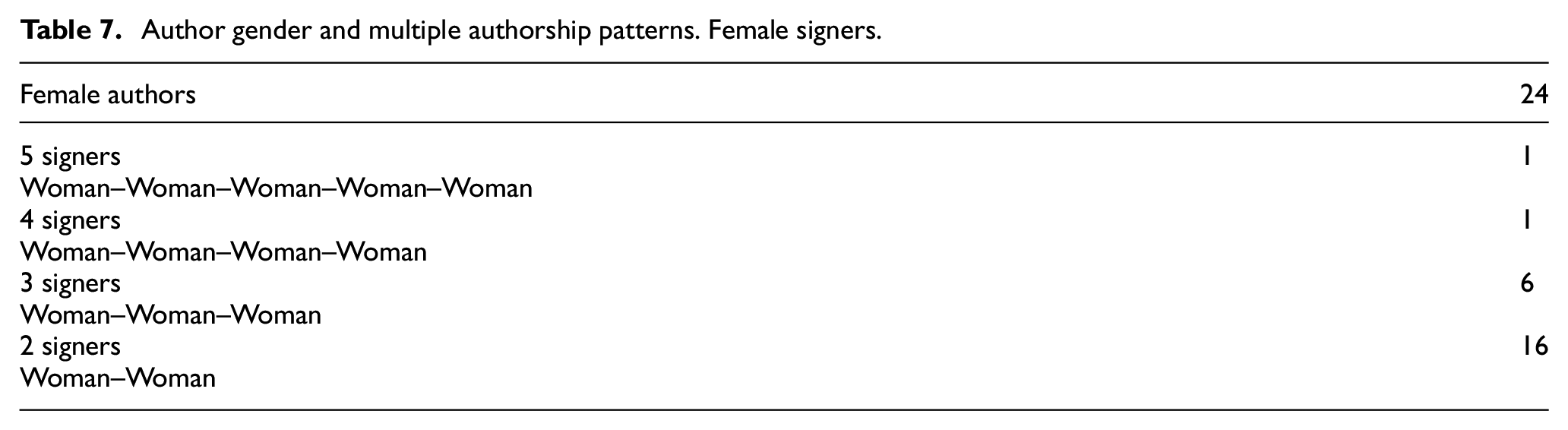
In terms of gender in multiple authorship, the analysis was conducted over those papers in which all authors could be identified according to their gender (72.07%; N = 209). In this line, papers were divided into three main gender-based categories with different authorship patterns: papers signed by female and male authors, papers signed by only male authors and, finally, papers signed by only female authors that represent 50.24% (N = 105), 38.28% (N = 80) y el 11.48% (N = 24), respectively. Tables 5–7 show the number of signers and the gender pattern of authorship in greater detail. Most articles are signed by two or three authors.
Author gender and multiple authorship patterns. Female and male signers.
Author gender and multiple authorship patterns. Male signers.
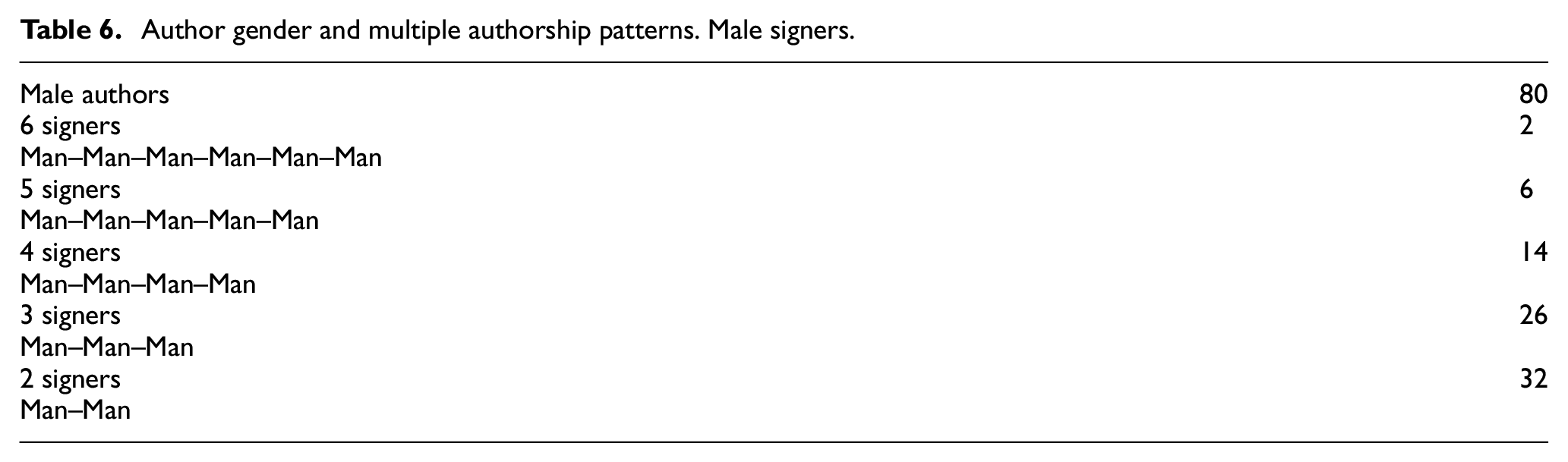
Author gender and multiple authorship patterns. Female signers.
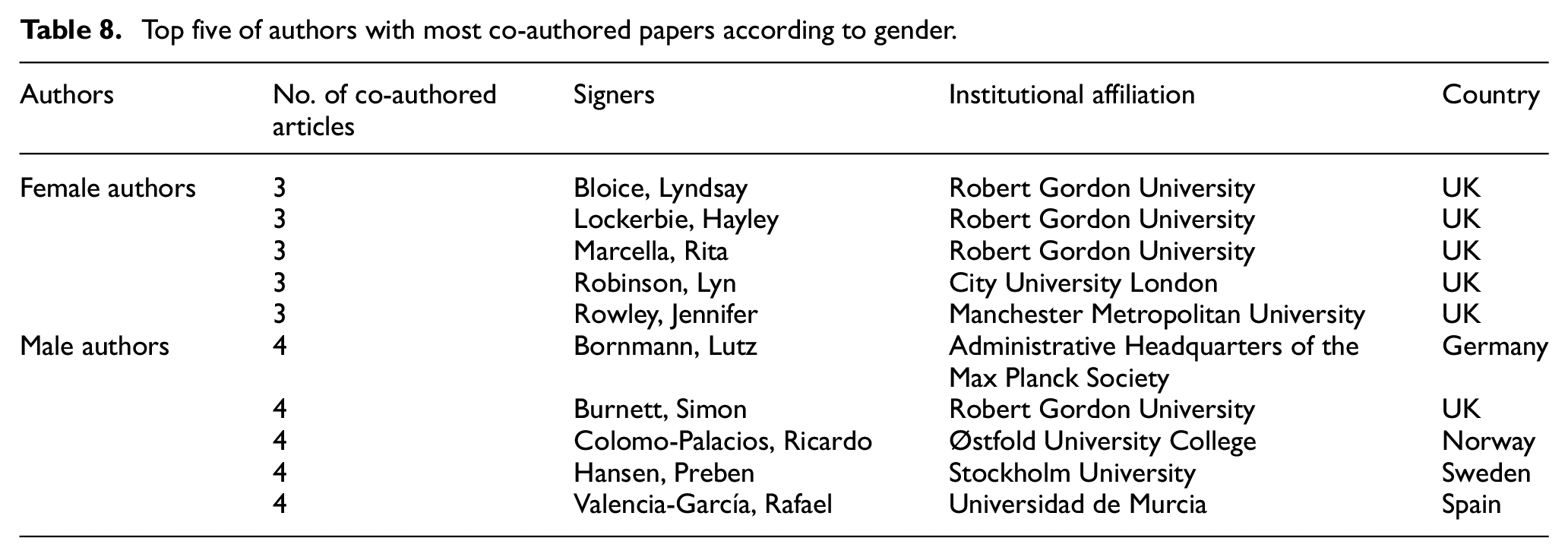
An overview of co-authored contributions also allowed us to categorise signers according to the number of multiple published papers from a gender perspective (Table 8). Authors working in European universities are remarkable cases, especially female authors from the Robert Gordon University.
Top five of authors with most co-authored papers according to gender.
4.3. Authors’ productivity and time course of authorship
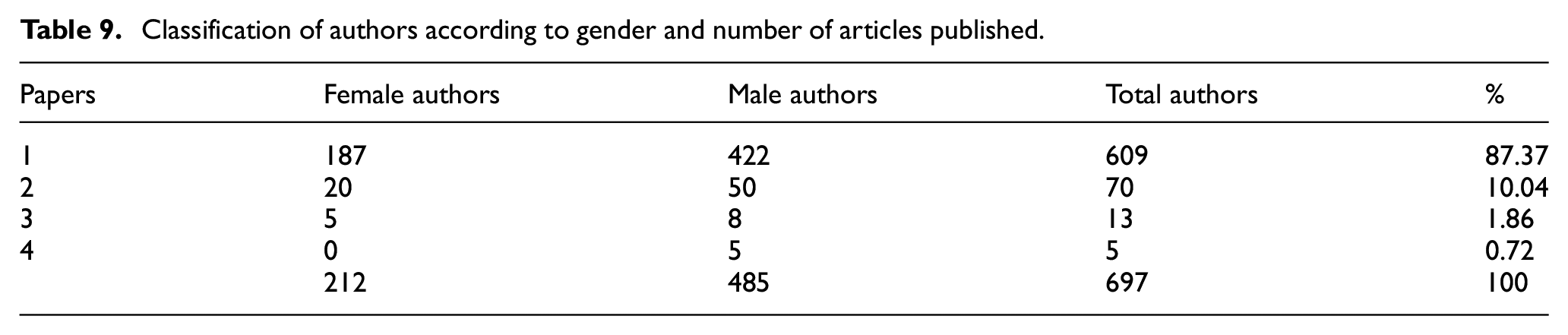
Ascertaining author productivity in the journal studied can provide further insight into LIS scientific publications from a gender perspective. Our results show that 87.37% of authors only published one article between 2015 and 2020, while the second largest group of signers published two articles (see Table 9). From here, the number of signers is reduced notably, highlighting the supremacy of male authors.
Classification of authors according to gender and number of articles published.
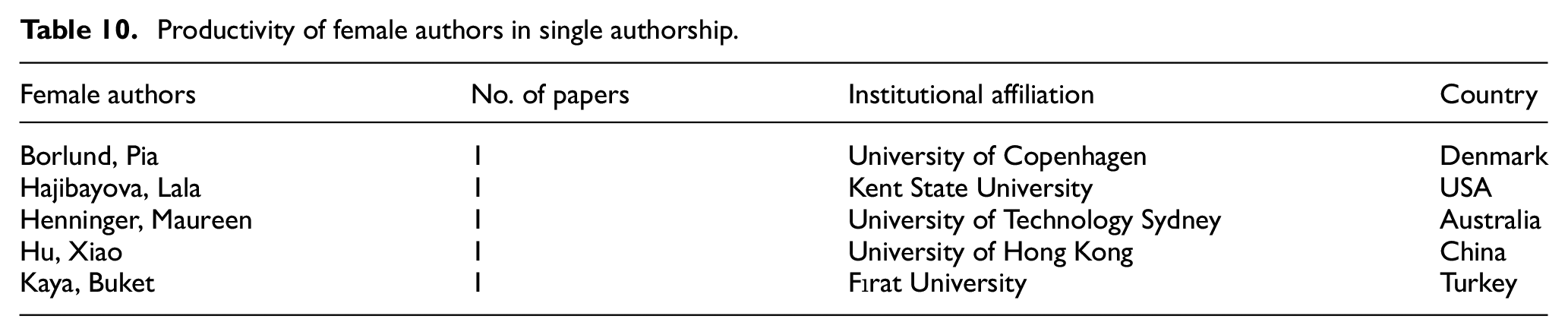
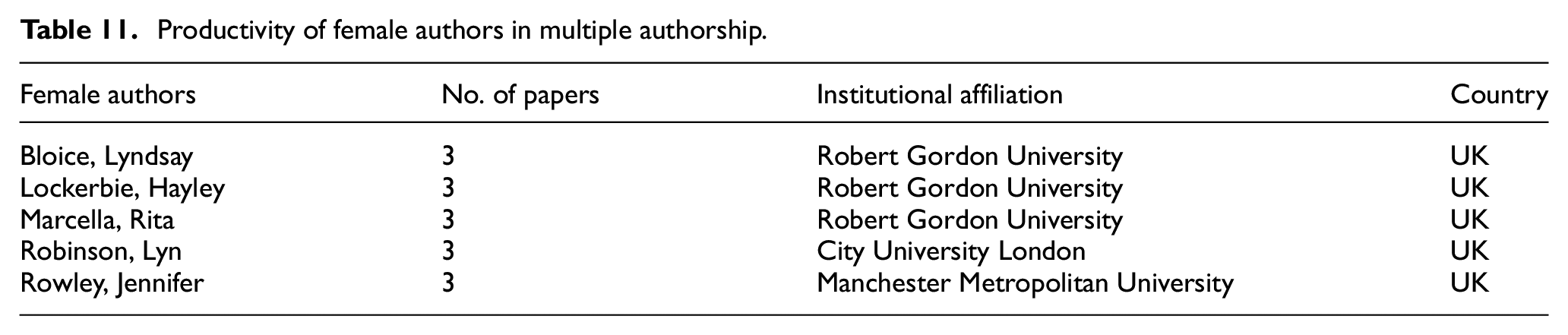
In this study, the following tables (Tables 10 and 11) show the productivity of female authors in single and multiple authorship.
Productivity of female authors in single authorship.
Productivity of female authors in multiple authorship.
With reference to the time-course bibliometric analysis and the gender studies, this research was conducted taking into consideration authors from a single or multiple authorship perspective. In the first case, male authors marked the highest productivity all years, except in 2020 when female signers reached the first position (Chart 1).
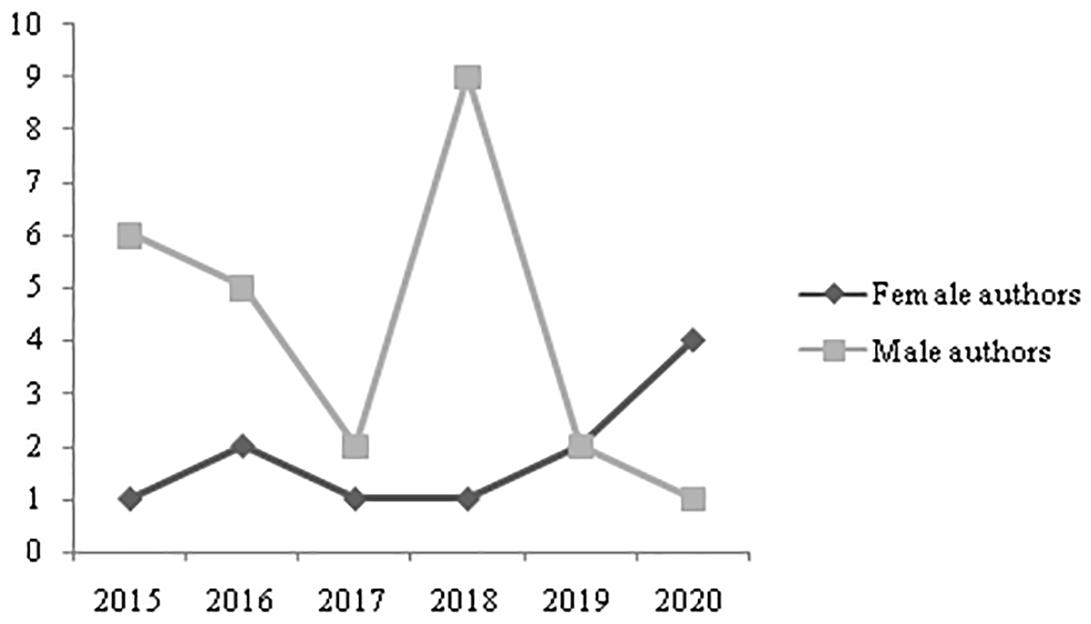
Time course of authorship according to gender.
In this line, a detailed analysis of multiple authorship includes a time-course analysis based on three patterns: papers signed by female and male authors, papers signed by only male authors and, finally, papers signed by only female authors.
As can be seen in Chart 2, papers signed by only female authors are not relevant enough by following practically the same evolutionary trend; in other words, an increase and recession pattern annually.
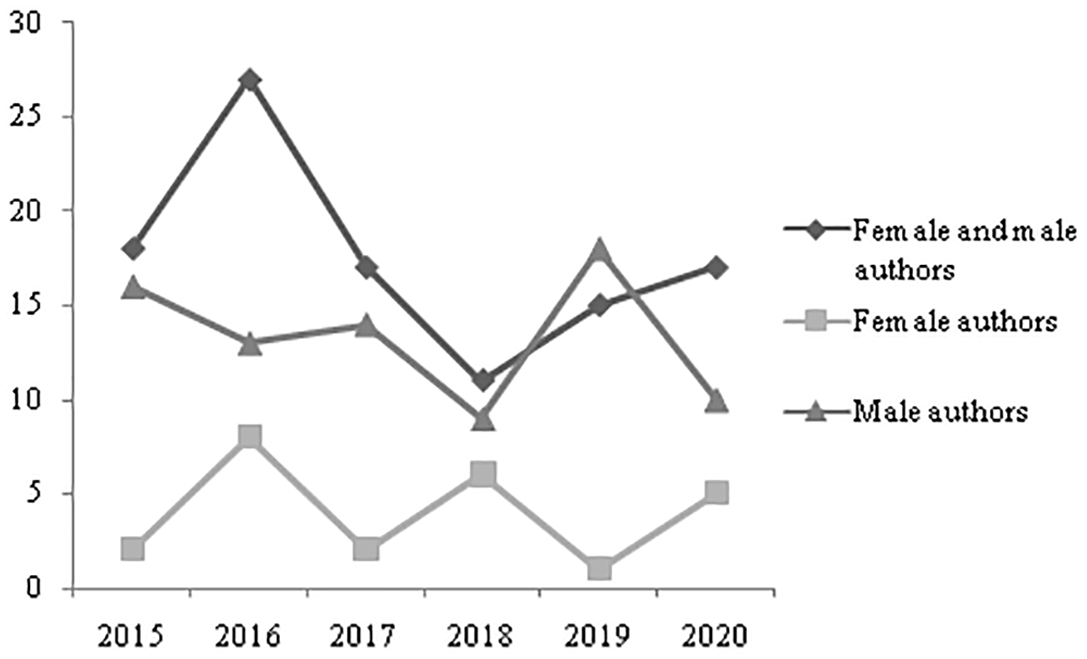
Time course of multiple authorship according to gender.
However, papers signed by female and male authors show a constant pattern for the period 2019–2020 that cannot be comparable to the period 2015–2017 (62 papers).
4.4. Authors’ institutional affiliation and geographical origin
A general analysis of institutional affiliation gives a comprehensive context in which to conduct our gender study. An overall analysis of the institutional affiliations listed in each article showed the total number of institutions, which were divided into three main categories: research institutes, universities and other centres (includes institutions that cannot be placed in the foregoing categories).
An analysis of the institutional origins of the papers showed that more than 80% are universities both in papers written by female authors (88.21%) and by male authors (89.28%). As can be seen in Table 12 and Chart 3, research institutes are 10%.
Authors’ institutional affiliation.

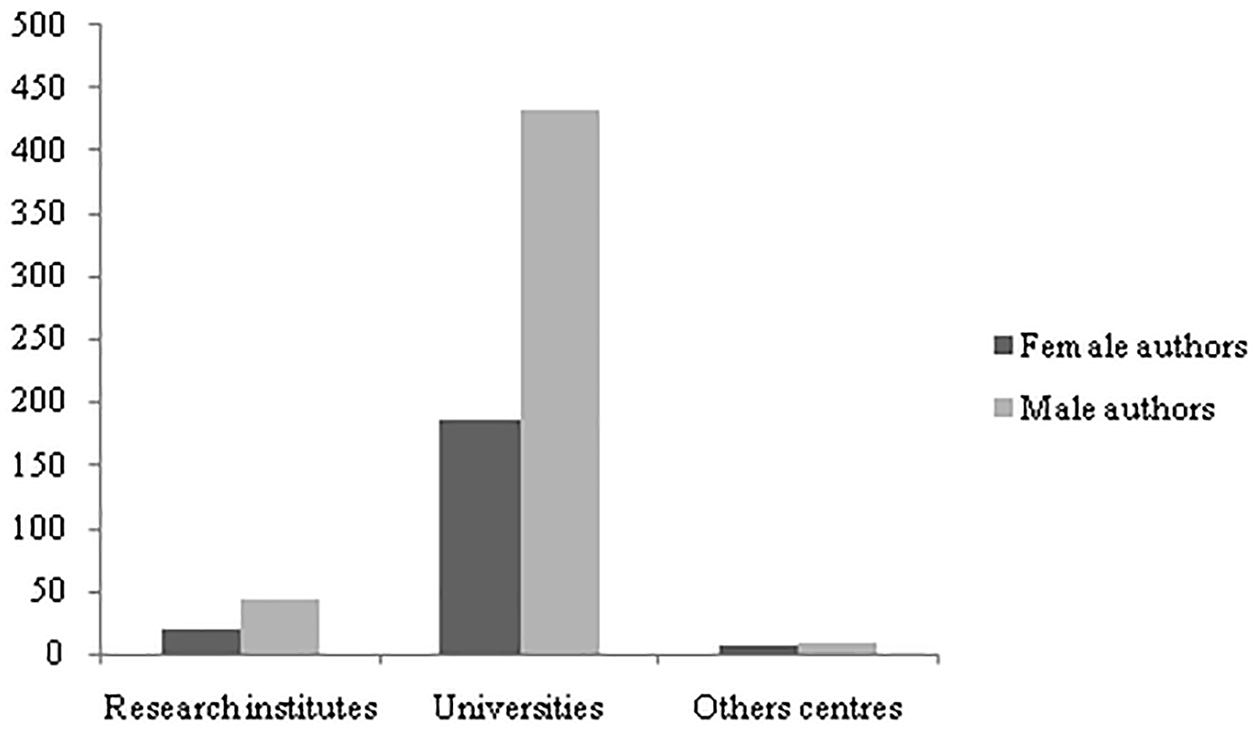
Authors’ institutional affiliation.
Among universities, a thematic analysis of schools and departments was implemented in depth to characterise the leading scientific fields. A general overview shows that female authors’ affiliation is Library and Information Science (LIS, 28.34%) and Computer Science (26.20%). Unfortunately, the school or department was not mentioned in 30% of the papers and other centres represent less than 5%. The following universities listed below are noteworthy institutions in the LIS field: The University of Sheffield (UK), University of British Columbia (Canada), University of Maryland (USA), University of Oulu (Finland), University of Washington (USA) and Wuhan University (China). In a lower position can be mentioned: Ionian University (Greece), Simmons University (USA) and Universiti Kebangsaan Malaysia (Malaysia).
Male authors usually work in the field of Computer Science (34.26%), LIS (10.88%) and Technologies and Communications (10.65%). In total, 21 scientific fields were identified and some of the most distinguished ones are: Business/Administration/Economics (6.25%), Medicine/Health Science (1.16%) and Engineering (2.08). The following universities listed below are important institutions in the LIS field: The University of Sheffield (UK), Ionian University (Greece), University of Tampere (Finland) and Wuhan University (China). In a lower position can be mentioned: Beijing Normal University (China), Robert Gordon University (UK), University of Kentucky (USA), University of South Carolina (USA) and University of Wisconsin–Milwaukee (USA).
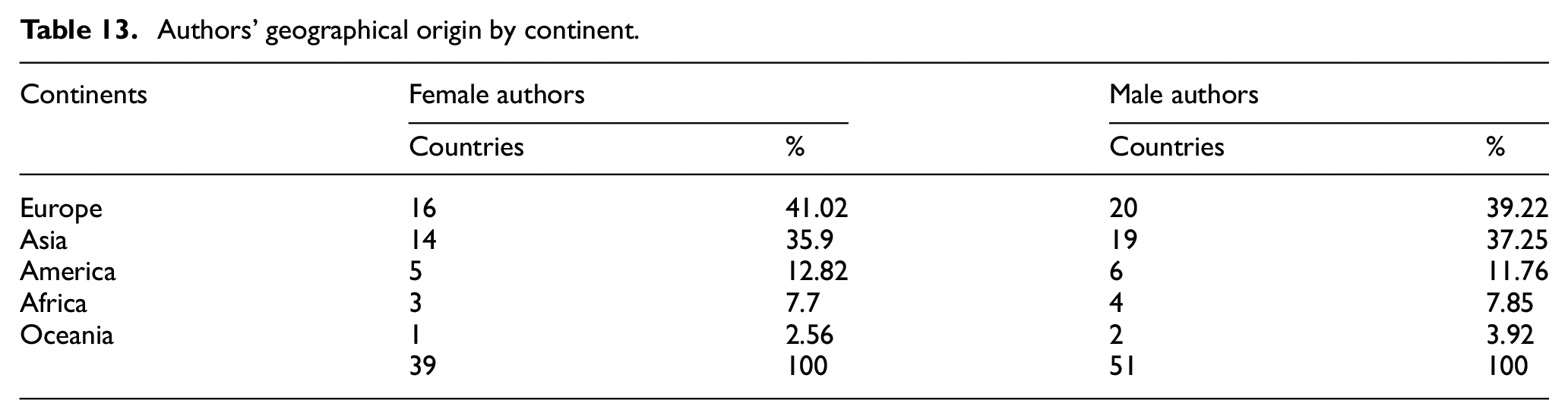
The geographical location analysis identified the countries where the authors of the source papers are located. This was calculated on the basis of the institutional affiliation of the scientific contributions. According to Table 13, we identified 39 countries (female authors) and 51 countries (male authors). Of these, the majority are located in Europe (40%) and Asia (36%).
Authors’ geographical origin by continent.
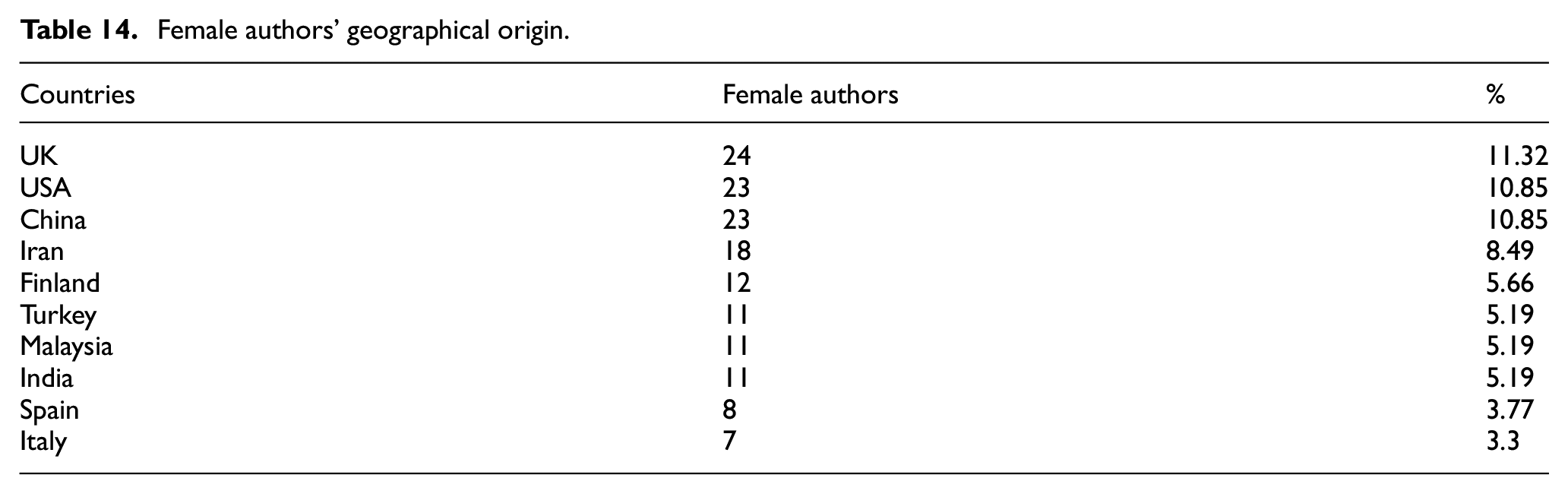
More specifically, the gender-based analysis of the geographical origin can be seen in Chart 4. Results have shown that the United Kingdom (11.32%), the United States (10.85%) and China (10.85%) are leading countries with the highest number of female authors. The top 10 countries are summarised in Table 14. These results support the Gurikar et al. [23] findings in their paper.
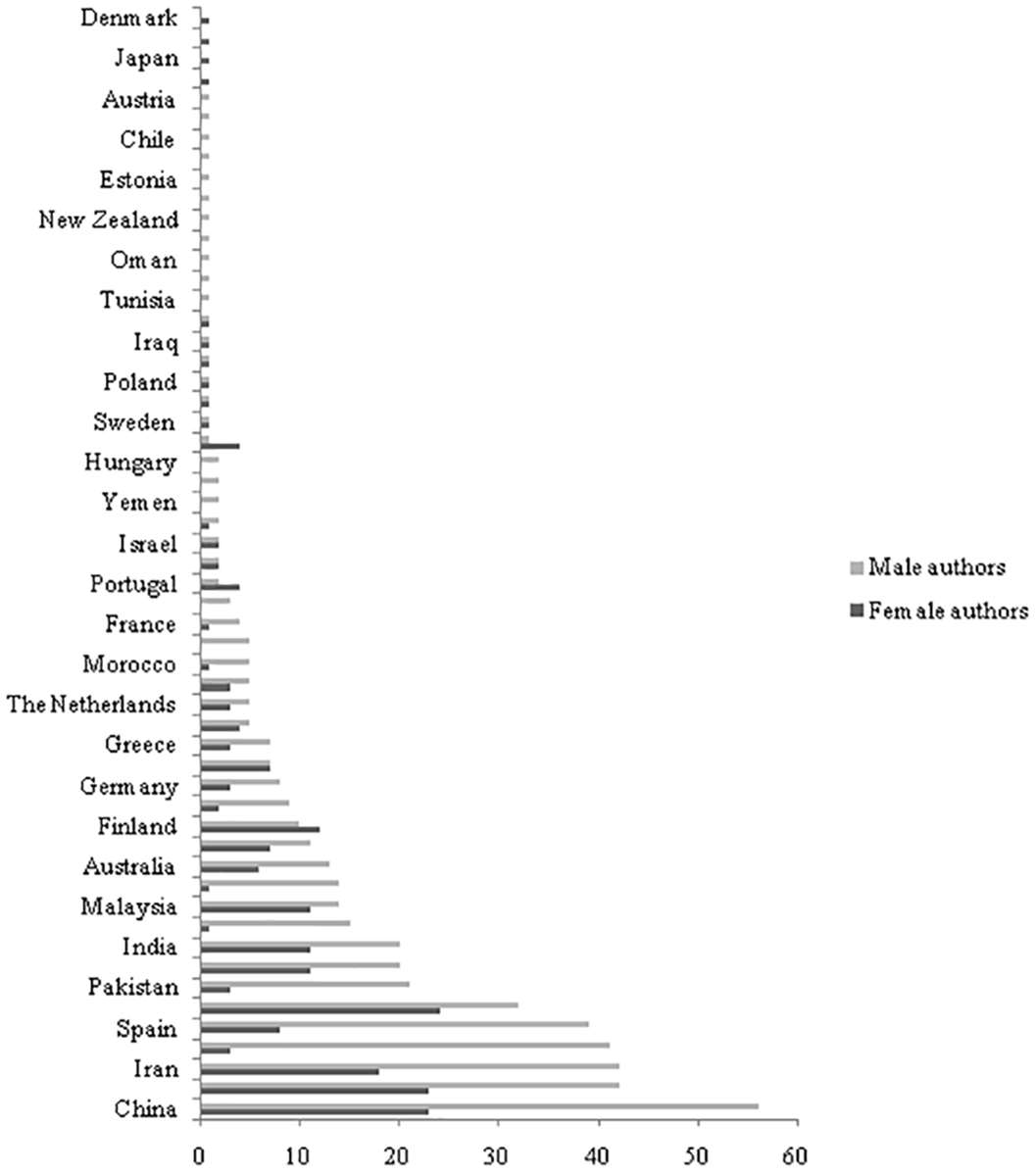
Authors’ geographical origin.
Female authors’ geographical origin.
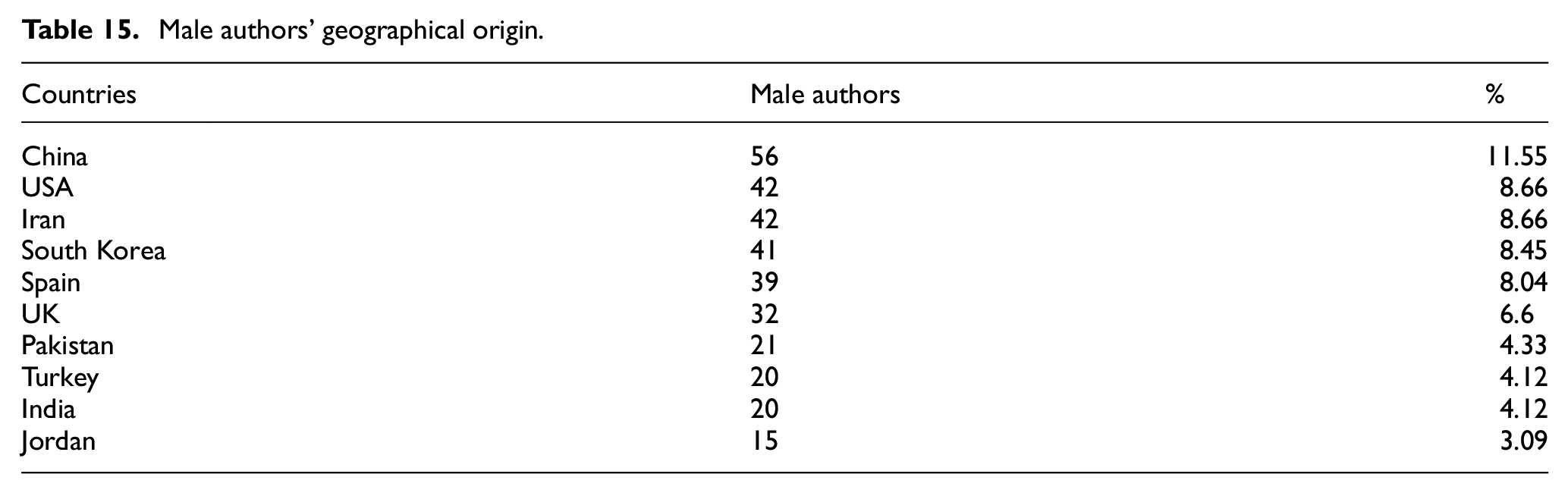
The gender-based analysis for male authors concludes that China (11.55%) is the leading country as the remaining countries account for less than 10% of the total. The top 10 countries are summarised in Table 15. As can be seen, 70% of the countries listed below are the same as those nations included in the female authors’ geographical origin.
Male authors’ geographical origin.
At the continental level, female authors’ distribution is presented in Table 16, which shows that the most remarkable countries are the following:
Female authors by continent.
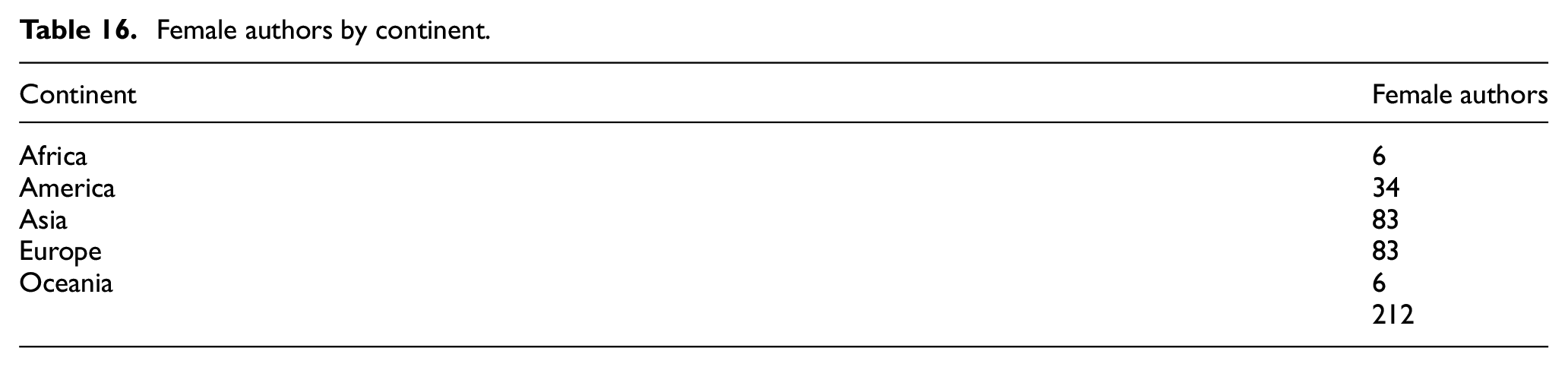
Africa: Algeria (4)
America: USA (23) and Canada (7)
Asia: China (23), Iran(18) and India (11)
Europe: UK (24), Finland (12), Turkey (11) and Spain (8)
Oceania: Australia (6)
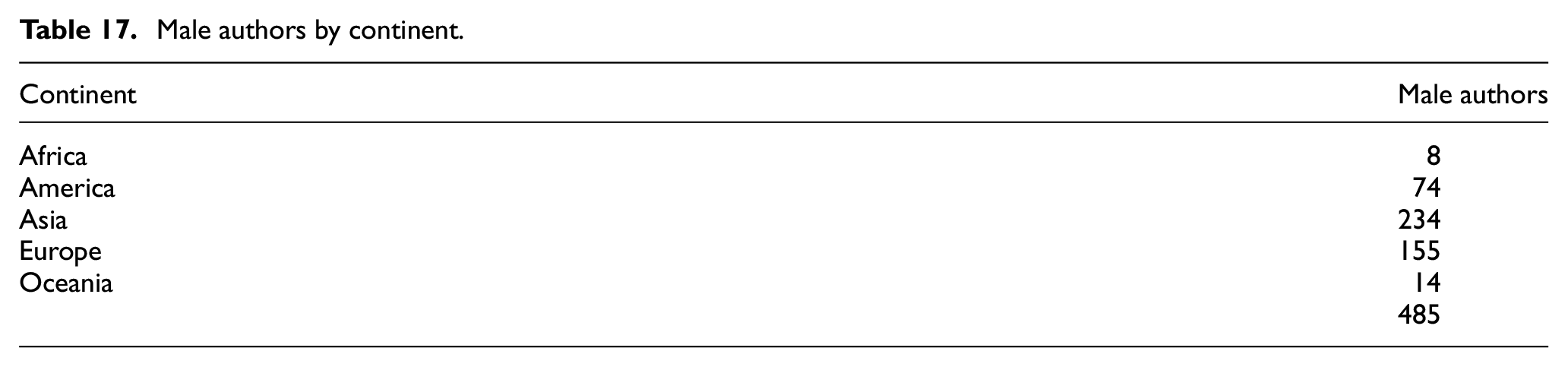
In line with male authors, Table 17 shows the continental distribution by highlighting the following countries:
Africa: Morocco (5)
America: USA (42), Brazil (14)
Asia: China (56), Iran (42), South Korea (41), Pakistan (21) and India (20)
Europe: Spain (39), UK (32) and Turkey (20)
Oceania: Australia (13)
Male authors by continent.
The strength of this type of research allows us to have a general perspective of LIS female researchers at Journal of Information Science despite of the limitations of authors’ identification in 152 cases.
5. Conclusions and recommendations
Our research into the state of affairs with regard to female LIS authors, based on a review of the scientific literature, has shown that few bibliometric studies have focused on gender issues.
It is recommended that scientific journals take editorial measures or introduce policies (such as ORCID codes, other permanent identifiers and the inclusion of the pronouns – she/her and he/his – in the authors’ section) to standardise signer names so that authors can be uniquely and exclusively identified. This recommendation is intended to avoid many authors who could not be identified and, consequently, not included in the bibliometric analysis conducted.
With respect to the author gender, our results in general show that male and female authors are not equally represented in the journal, with a great difference in the case of collective authorship that doubles the number of signers. There is a clear trend of single and multiple male authorship. However, nearly all signers belong to universities as main institutions.
It is concluded that there is a clear trend towards scientific collaboration or co-authorship whose papers are usually signed by 2–5 authors. This statement confirms one of the Gurikar et al. conclusions [23].
According to the gender-based scientific collaboration patterns, the predominant collaboration can be found in papers signed by female and male authors (105) that account for 10 signers for the period 2015–2020.
Outcomes of this research may infer a gender-based productivity profile. For female authors, their most relevant institutional affiliation is Robert Gordon University and these women tend to be located in the United Kingdom, confirming our third research question (see ‘ ’ ‘Objectives’ section). The United States and China are also key countries; however, Europe is the predominant continent for female signers.
Finally, it is recommended that more bibliometric analysis of Journal of Information Science be conducted in the forthcoming years to verify or detect new trends in the based-gender scientific publication patterns.
Footnotes
Declaration of conflicting interests
The author(s) declared no potential conflicts of interest with respect to the research, authorship and/or publication of this article.
