




Abstract
Objective:
This experimental study was conducted to elucidate the possible protective/therapeutic effects of quercetin against methotrexate (Mtx)-induced kidney toxicity with biochemical and histopathological studies.
Methods:
Twenty-four adult male rats were randomly divided into four groups, as follows: control group (saline intraperitoneally (i.p.), 9 days), Mtx group (20 mg/kg i.p., single dose), Mtx + quercetin group (50 mg/kg quercetin was orally administered 2 days before and 6 days after Mtx administration) and only quercetin group (50 mg/kg oral, 9 days). Structural changes were evaluated by hematoxylin–eosin and periodic acid–Schiff stainings. Apoptotic changes were investigated by terminal deoxynucleotidyl transferase dUTP nick end labeling assay and caspase-3 antibody. Superoxide dismutase (SOD) and malondialdehyde (MDA) levels were measured in tissue and plasma samples.
Results:
Mtx compared with the control group, there was significant increase in nephrotoxic tissue damage findings, in addition to apoptotic index (APOI) and caspase-3 expression (p < 0.05). Mtx + quercetin group revealed significantly lower histopathological damage and APOI and caspase-3 expression decreased when compared to Mtx group. MDA levels were increased in Mtx group compared to others, and by the use of quercetin, this increase was significantly reduced. SOD levels were higher in Mtx group than others. This increase was evaluated as a relative increase arising from oxidative damage caused by Mtx.
Conclusion:
As a result, Mtx administration may involve oxidative stress by causing structural and functional damage in kidney tissue in rats. Quercetin reduced the Mtx-induced oxidative stress through its antioxidant properties and so quercetin may be promising to alleviate Mtx-induced renal toxicity.
Introduction
Methotrexate (Mtx) is a folate antagonist and commonly used in the treatment from several autoimmune disorders to different malignant tumors through the anti-inflammatory and antiproliferative effects. 1 Mtx is used for autoimmune diseases such as rheumatoid arthritis and psoriasis at a low dose and also used in acute lymphoblastic leukemia and many types of cancers at a high dose. 2 Mtx is an antimetabolite drug, capable of blocking cell metabolism. 3,4 Because of inhibiting tetrafolate enzyme, Mtx indirectly prevents purine bases and protein synthesis necessary for the synthesis of DNA, RNA, and adenosine triphosphate. Thereby, cell regeneration becomes difficult and cell death occurs. 5 In addition, Mtx decreases adenosine deaminase, which is necessary for proliferation and differentiation of T lymphocytes by reducing the purine metabolism. 6
Changes in these metabolic pathways are responsible for therapeutic and toxic effects of Mtx. While Mtx is usually well tolerated by patients, in some cases it could cause side effects in different organs. In general, the severity and extent of side effects vary depending on the dose and frequency of administration. Side effects may be listed as hepatotoxicity, nephrotoxicity, bone marrow suppression, pulmonary fibrosis, and gastrointestinal mucosal damage. Nephrotoxicity is also one of the reasons, which prevents the treatment process. 7
In addition, Mtx makes cells vulnerable to reactive oxygen species (ROS) by reducing the production of nicotinamide adenine dinucleotide phosphate (NADPH) taking part in the antioxidant defense system. Accordingly, it can induce oxidative stress and tissue damage. 8 Renal injury caused by Mtx may occur in two general ways. One of them is that Mtx and its metabolite 7-hydroxy-Mtx directly lead to toxic effects on tubules. Mtx and its metabolites may precipitate in intratubular area and lead to renal tubular necrosis. Mtx can cause renal toxicity with increased serum creatinine levels, blood urea nitrogen, uremia, and hematuria in both human and animal models. 9
The other mechanism is that Mtx may cause oxidative damage disturbing the balance of oxidant–antioxidant status. Lately much attention has been given to the possible role of dietary antioxidants on protecting of the kidney against Mtx-induced nephrotoxicity. There are several studies confirming that Mtx induces the formation of ROS, which is responsible for side effects of Mtx therapy including nephrotoxicity. 8
Quercetin is a polyphenolic compound classified as a flavonol, generally found in edible plants, and is known for many beneficial effects on health such as antiallergic, anti-inflammatory, antihypertensive, antiviral, and antiproliferative activities. 10 Quercetin is also a potent oxygen-free radical scavenger with strong antioxidant properties and capable of preventing lipid peroxidation. It is reported that among homologous flavonoids, oxygen scavenging capacity increases as the total number of hydroxyl groups increases structurally. Quercetin is one of those which have hydroxyl groups. 11 In addition, multiple studies have been conducted about possible oxygen-free radical scavenger of flavonoids. 12,13
The aim of this experimental investigation was to evaluate whether or not quercetin has protective/therapeutic effects against Mtx-induced nephrotoxicity using rat kidney tissue as an in vitro model. For this purpose, kidney samples were examined for histopathological damage and apoptotic changes were assessed with terminal deoxynucleotidyl transferase (TdT)-mediated addition of labeled (X) deoxyuridine triphosphate nucleotide (X-dUTP) nick end labeling (TUNEL) method and caspase-3 antibody immunohistochemically. In addition, ROS scavenging properties of the quercetin were investigated by measuring oxidative stress biomarkers such as superoxide dismutase (SOD) and malondialdehyde (MDA) in serum and tissue samples.
Materials and methods
Animals and experimental protocols
Twenty-four male Sprague–Dawley rats weighing 200–250 g were used in this experiment. The animals were obtained from Animal House, Faculty of Medicine, Gazi University, Ankara, Turkey. Gazi University Animal Ethics Committee approved the design of the experiment. Animals were fed ad libitum on a standard diet and water under controlled temperature and light (24°C; 12 h light/12 h dark cycles, respectively). The rats were randomly divided into four experimental groups consisting of six animal each, as follows: control group (0.5 mL saline intraperitoneally (i.p.) for 9 days), Mtx-treated group (single dose 20 mg/kg i.p.), Mtx + quercetin group (50 mg/kg quercetin was orally administered 2 days before and 6 days after Mtx administration), and only quercetin-treated group (50 mg/kg orally for 9 days). Mtx (25 mg/mL injectable) was purchased from Hospira (UK) and quercetin (3,3′,4′,5,7-pentahydroxyflavanone, L21600) was from Enzo Life Sciences (Farmingdale, New York, USA). The optimal dosages and timing of Mtx were determined according to previous studies. 14,15
This dose (20 mg/kg) is closely related to high-dose Mtx used in human. This is a widely used regimen which is known to be leading to renal toxicity in humans. 16 Accordingly, in animal studies, a single dose of Mtx (25 mg/kg) is considered as high dose causing the nephrotoxicity. 17 The optimal dosages and timing of quercetin were determined according to previously published studies. 18,19
On the 10th day of the experiment, the rats were killed under anesthesia (xylazine 10 mg/kg i.p. and Ketalar 50 mg/kg i.p.), and kidney tissues were dissected and blood samples were collected. The right kidneys of rats were fixed in 10% neutral formalin for histopathological examinations. The left kidneys of rats were put into liquid nitrogen and then stored at −80°C, and blood samples were collected to determine SOD and MDA levels biochemically.
Biochemical examination
SOD and MDA enzyme activities were studied in serum and tissue samples. Collected blood samples were left to clot at room temperature for 10 min before centrifugation (3000–5000 r/min for 10 min at room temperature) to separate the serum and then aliquoted and stored at −80°C until analysis. Frozen tissue samples were weighed and homogenized (T18 Ultra-Turrax, IKA, Germany; 20% w/v) in saline. The homogenate were centrifuged at 4000g for 20 min. The protein concentrations of supernatants were determined by the Lowry method. 20 SOD and MDA activities were determined by spectrophotometric method in these supernatants. All the measurements were carried out using a spectrophotometer (Shimadzu, Japan).
SOD activity
SOD is an enzymatic antioxidant and indicator of antioxidant response, which was analyzed using the method of Sun. 21 The method is primarily based on reduction of nitroblue tetrazolium (NBT) compound. When superoxide radicals formed by xanthine/xanthine oxidase system cannot be eliminated by SOD, it is determined by measuring the NBT in the reaction medium. Accordingly, 1 unit (U) of SOD activity is defined as the enzyme amount causing 50% inhibition in the NBT reduction rate. Activity was expressed as units per milligram protein for tissue and units per milliliter for plasma.
MDA activity
Lipid peroxidation levels were measured with the thiobarbituric acid (TBA) reaction according to Dahle’s method. This method was used to measure the absorbance of TBA formed by reaction with MDA at 532 nm with a spectrophotometer. Levels were expressed as nanomoles per gram protein for tissue and nanomoles per milliliter for plasma. 22
Histopathological evaluation
Tissue samples were fixed in 10% neutral formalin, histologically processed and embedded in paraffin. Sections of 4–5 µm in thickness were taken and stained with hematoxylin–eosin (H&E) and periodic acid–Schiff (PAS), and then examined and photographed under light microscope (Olympus BX35, Olympus DP70, Japan). Renal damage was quantified by “tubular atrophy–necrosis,” “tubular vacuolar degeneration,” “glomerular fibrosis,” “narrowing of Bowman’s space,” and “vascular congestion.” Six different fields were examined in every slice. The results were scored according to degree of the damage 0 = no damage, 1 = mild damage, 2 = moderate damage, and 3 = severe damage. 23
TUNEL Assay
The TUNEL assay is based on the specific binding of TdT to 3′-OH ends of fragmented DNA. Following proteolytic treatment of histological sections, TdT incorporates X-dUTP at sites of DNA breaks. Terminal-modified nucleotides amplify the signal and allow the examination of labeled cells under microscope. 24
The assay was conducted according to the manufacturer’s protocol (GenScript; Piscataway, New Jersey, USA) in kidney samples. Briefly, the sections prepared on poly-
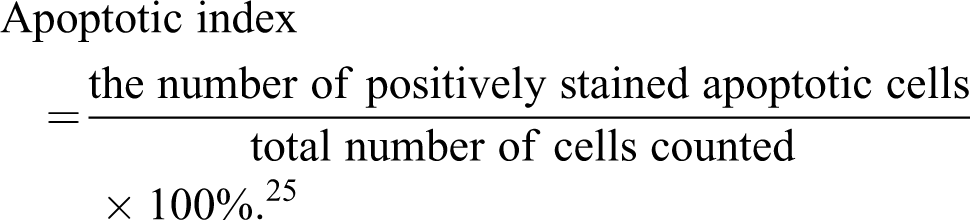
Immunohistochemical staining of caspase-3
Tissue samples taken to the poly-
Statistical analysis
All the data were analyzed using SPSS for Windows 16 commercial statistical analysis software. Kruskal–Wallis test and Mann–Whitney U test were used for analyzing difference between groups. The p value <0.008 was accepted as significant for histological damage parameters. The p value <0.05 was accepted as statistically significant for other data.
Results
Biochemical results
Serum SOD and MDA levels and tissue SOD and MDA activities were measured.
Serum and tissue SOD activity
While serum SOD activity was high in control and Mtx group, it was lower in Mtx + quercetin and quercetin groups. SOD levels were significantly increased in control and Mtx groups compared to Mtx + quercetin group (p = 0.010; p = 0.025 respectively). Tissue SOD activities were slightly higher in Mtx and Mtx + quercetin groups than control and quercetin groups and significant difference was not observed among these groups (Table 1).
Biochemical results of SOD and MDA.a

SOD: superoxide dismutase; MDA: malondialdehyde.
aData are expressed as mean ± SD. In each line, the difference between the means with the same letters is significant (p < 0.05).
Serum and tissue MDA activity
It was determined that the serum MDA levels were the highest in the Mtx group and the lowest in quercetin group. Serum MDA levels significantly increased in Mtx group compared to Mtx + quercetin and quercetin groups (p = 0.045; p = 0.020 respectively; Table 1). Tissue MDA activities were mildly higher in Mtx + quercetin group compared to those in others. Significant difference was not observed among the groups. In this regard, since oxidative stress is a pathological mediator of the renal damage induced by Mtx, we closely determined the antioxidant effect of quercetin.
Histopathological examinations
H&E and PAS staining results
Sections from the control group revealed normal morphology in glomerular and tubular area (Figure 1(a)). PAS-stained sections showed clear brush border of proximal tubules (Figure 2(a)). Tubular atrophy–necrosis and tubular vacuolar degeneration were prominently observed in Mtx-treated group. There was narrowing of Bowman’s space in glomeruli. Vascular congestion was evident (Figure 1(b)). Mild glomerular fibrosis and loss of brush border in proximal tubule epithelium were observed in PAS-stained sections in Mtx-treated group (Figure 2(b)). When Mtx group was compared with the control group, there was statistically significant increase in damage parameters of tubular atrophy and vacuolar degeneration, glomerular fibrosis, and narrowing of Bowman’s space in Mtx group (p < 0.008; Table 2). Mtx + quercetin-treated group showed lower histopathological degeneration in kidney tissue. Quercetin treatment along with Mtx reduced all damage parameters and when this group was compared with Mtx-treated group, quercetin administration significantly reduced damage parameters of narrowing of Bowman’s space and vascular congestion (p < 0.008; Table 2). Control and Mtx + quercetin groups had no significant difference in terms of histopathological changes (p > 0.008; Table 2). Quercetin alone group revealed few histopathological changes. When this group was compared with control group, there was no statistically significant difference of damage parameters between these two groups (p > 0.008; Table 2).

Representative photomicrographs of renal sections stained with H&E (×40, scale bar = 50 μm). (a) Control group showing normal structure of renal glomeruli and tubules. (b) Mtx-treated group demonstrated tubular damage, (hollow arrows) narrowing of capsular space (black arrow) and congestion (asterisks). (c) Mtx + quercetin-treated group showed lower damage of renal tubules (hollow arrow) and glomerular structure was observed better than Mtx group. (d) Quercetin alone group showed regular morphology similar to control group. H&E: hematoxylin–eosin.

Representative sections of the kidney from the experimental groups stained with PAS (×40, scale bar = 50 μm). (a) Control group revealed fine brush border of proximal tubules and fine glomeruli. (b) Mtx-treated group revealed deterioration in brush border of proximal tubules (hollow arrows) and mild glomerular fibrosis (black arrows). (c) Mtx + quercetin-treated group revealed less deterioration in brush border of proximal tubules (hollow arrows) and other tubules. (d) Quercetin alone group showed fine glomerular and tubular structure. PAS: periodic acid–Schiff; Mtx: methotrexate.
Histopathological changes of the groups.a

Mtx: methotrexate.
aThe values are expressed as mean ± SD. Kruskal–Wallis test was used for analyzing data and Mann–Whitney U test with Bonferroni correct was used for pairwise comparisons. In each line, the difference between the means with the same letters is significant (p < 0.008).
Apoptotic changes
Apoptosis has been repeatedly reported to occur in renal tubuli following Mtx administration. 9,14 We evaluated the possible effect of quercetin on the renal apoptosis induced by Mtx. For this purpose, we determined internucleosomal DNA fragmentation with TUNEL method and the caspase-3 expression located in irreversible step of apoptotic cell death.
Control group revealed small number of TUNEL-positive cells in renal cortex and medulla (Figure 3(b)). Regarding apoptotic index (APOI) of Mtx group, statistically significant higher values are observed compared with the other groups (p = 0.004; Table 3; Figure 3(c)). While TUNEL-positive cells were seen in glomeruli and proximal tubules, they were more intense in distal tubules and collecting tubules in Mtx group. Administration of quercetin along with Mtx significantly reduced APOI (p < 0.05; Figure 3(d)). Mtx + quercetin and quercetin alone groups revealed similar APOI values to control group and there was not any statistically significant difference among groups (Table 3).

Images from kidney samples stained with TUNEL method (×40, scale bar = 50 μm). Arrows refer to apoptotic cells. (a) Negative control staining of the kidney slide. (b) Control group demonstrated few apoptotic cell in tubular and glomerular area. (c) Mtx-treated group showed more apoptotic cells than other groups. (d) Mtx + quercetin-treated group showing less few apoptotic cells. (e) Quercetin-treated group showing a small amount of apoptotic cells. TUNEL: terminal deoxynucleotidyl transferase dUTP nick end labeling; Mtx: methotrexate.
APOI and caspase-3 expression of the groups.a

Mtx: methotrexate; APOI: apoptotic index.
aData are expressed as mean ± SD. Kruskal–Wallis test was used for analyzing data and Mann–Whitney U test was used for pairwise comparisons. In each line, the difference between the means with the same letters is significant (p < 0.05).
Immunohistochemical staining of caspase-3
The sections of control group revealed negative staining with caspase-3 antibody (Figure 4(b)). Mtx group demonstrated significant increase in the number of cells stained with caspase-3 compared to controls (p = 0.002; Table 3; Figure 4(c)). Expression of caspase-3 was evident especially in the medullar area of the kidney. Mtx + quercetin administration decreased the number of caspase-3-positive cells (Figure 4(d)). This decrease was not significantly altered by quercetin alone treatment compared to Mtx + quercetin group (Figure 4(e)). A small number of caspase-3 expressions were observed in medullar and tubular area in quercetin group. Finally, we observed that Mtx significantly increased caspase-3 expression in renal tissue, which was reduced by the treatment of quercetin.

Representative images of caspase-3 immunostaining from the experimental groups ×40, scale bar = 50 μm). Asterisks show tubular positivity of caspase-3. (a) positive control staining of lymph node (arrows refer to caspase-3 positivity). (b) Control group showed few caspase-3 staining in glomerular and tubular area. (c) In the Mtx group remarkably increased, the number of caspase-3-positive cells were observed. (d) Caspase-3 positivity was declined in Mtx + quercetin group compared to Mtx group. (e) Quercetin group revealed less caspase-3 immunopositivity than Mtx given groups. Mtx: methotrexate.
Discussion
Kidney is a major organ in excretion of drugs. Mtx is an antifolate agent generally used for autoimmune disorders and several cancers as a chemotherapeutic agent. Since Mtx is primarily (90%) excreted by kidney, renal toxicity is one of the most serious side effects of Mtx treatment. The severity of kidney toxicity depends on both the dose and frequency of administration. While there is not any significant kidney damage in very low doses of Mtx, high doses may cause acute renal failure. 26 The pathophysiology of kidney toxicity includes a number of mechanisms, which shows direct toxic damage due to precipitation of Mtx and metabolites in the tubules and increased oxidative stress. Oxygen radicals and hydrogen peroxides are linked with the development of several pathological process associated with adverse effects of Mtx in kidneys. Free oxygen radicals target cell lipids, nucleic acids, and protein caps and may lead to many morphological and functional changes.
Mtx decreases intracellular NADPH levels and thereby intracellular glutathione runs outs of. As intracellular glutathione decreases, which is a cytosolic antioxidant, cells become more susceptible to effects of free radicals. 8,15 Recent studies has focused on oxidative stress resulting in cellular injury as a cause of kidney toxicity induced by Mtx. 27,28 Peroxidation of membrane lipids, mediated by free radicals, and excessive apoptotic cell death are being listed as the contributing factors of Mtx-induced kidney toxicity.
This injury can be demonstrated by histopathological and biochemical findings. The experimental studies suggest that morphological changes in tubular and glomerular area after Mtx treatment. 29 Histopathological evidence of kidney injury includes degenerated and vacuolated tubules, tubular atrophy or necrosis, changes in Bowman’s space, vascular congestion, and glomerular fibrosis. At the same time, owing to the deterioration in the balance of oxidant–antioxidant mechanisms and shifting toward the oxidant status, changes in the levels of enzymes SOD and MDA can be observed. 30
SOD is an important enzyme in antioxidant defense. The function of SOD is to protect cells from harmful effects of ROS such as lipid peroxidation by turning superoxide radicals into hydrogen peroxide and water, respectively. 31 MDA is an indicator of free radical generation increases at the end of the lipid peroxidation. 32 Previous studies have shown that Mtx can lead to renal damage due to inducing oxidative stress and increasing apoptosis 4,14,33
Apoptosis is a type of cell death that may occur in both physiological and pathological conditions. It occurs at a certain balance in all tissues. However, when this balance deters in favor of increase or decrease, uneven apoptosis could be the cause of some pathologies. In this way, the changes of apoptotic balance aggravate cell injury. The presence of apoptosis can be determined by TUNEL assay in tissue samples. TUNEL is a method for detecting DNA fragmentation by labeling the terminal end of nucleic acids. 34 Caspases are essential effector molecules of apoptosis, assaying for cleaved caspases offers the detection of apoptosis in early stages. 35 Caspase-3 is a crucial protease that activates both the extrinsic and intrinsic apoptosis pathway and is the most important indicator of irreversible point of the apoptosis. 36 Therefore, we used TUNEL method and caspase-3 antibody to investigate apoptotic changes in kidney tissue after Mtx and quercetin treatments.
Antitumoral agents may deepen tissue damage by deteriorating the physiological apoptosis balance. Inhibition of overmuch apoptosis seems to contribute the nephropathy. Several substances that modulate apoptotic processes have been used in order to protect the kidney parenchyma. 34
Supporting the previous studies, the results of our study demonstrated that Mtx caused oxidative tissue damage by making histopathological changes along with causing excess apoptosis. In Mtx group, we observed tubular atrophy–necrosis, tubular vacuolization both proximal and distal tubules, loss of brush border in proximal tubules, and mild glomerular fibrosis in all samples. Mtx was shown to have proapoptotic effect via increasing the expression of caspase-3. Especially, APOI and caspase-3 expression significantly increased in distal and collecting tubules. Regarding biochemical results, we observed Mtx treatment caused increased serum activities of the antioxidant enzyme SOD. At the first step of oxidative stress, peroxidation injury will promote the antioxidant enzymes to protect the cells. Hence, the amount of increase in SOD in Mtx group was evaluated as a relative increase arising from oxidative damage caused by Mtx. Additionally, there was a slight increase in tissue SOD activity in Mtx given group compared to other groups. This may be an adaptive mechanism as a response to the increased oxidative stress. Serum MDA levels increased in Mtx group compared to others. This elevation in MDA levels was considered as an indicator of lipid peroxidation. There was no significant change among tissue MDA activities. Quercetin is generally known for its antioxidant, anti-inflammatory, and antiproliferative properties. 37 Quercetin protects cells from harmful effects of free radicals through various ways. One of the most important is the direct cleaning feature effect, quercetin reacts with the free radicals and then neutralizes hydroxyl (OH−) and superoxide radicals and terminates the lipid peroxidation by breaking down lipid peroxyl radicals. It also shows antioxidant property by chelating the metals. Also, the antioxidant efficacy of quercetin may be due to its high diffusion into cell membranes allowing it to scavenge oxyradicals. 38
There are several studies which support the claim that quercetin reduces oxidant status and prevents nonenzymatic lipid peroxidation. Moreover, both free quercetin and its metabolites can inhibit the peroxynitrite-mediated oxidation. 14,28 Another advantage of quercetin can be its safety for its potential use as a renoprotective agent. Pharmacokinetic studies have showed that quercetin has a quite large daily dose range in animals and humans. 39
Quercetin (50 mg/kg orally) administration after Mtx treatment prevented or reduced histopathological findings in the present study. Our results are matched with previous studies that quercetin alleviated tubular atrophy–necrosis, tubular vacuolization, and glomerular changes caused by Mtx in kidney tissue. In addition to its protective effects, quercetin alone was found to be safe. It was also determined reducing effects on excessive apoptosis. 40 Regarding the effect of quercetin on apoptosis rate in our study, it significantly reduced APOI caused by Mtx. Increased MDA levels after Mtx were evaluated as oxidative damage finding and this increase partially prevented by quercetin treatment. It was found SOD levels relatively increased by virtue of Mtx treatment, and this increase did not found Mtx + quercetin and quercetin groups.
Conclusion
The aim of this study is the investigation of the effectiveness of quercetin on Mtx-induced nephrotoxicity in terms of both histopathological variables and biochemical parameters. In our study, a single dose of Mtx (20 mg/kg) caused toxic effects on kidney tissue and quercetin alleviated these effects. In the light of findings, quercetin may be a renoprotective substance against Mtx toxicity by inhibiting the histopathological changes and excess apoptosis along with free radical scavenging properties. Effect of quercetin on mechanisms can be better understood if new studies are performed on quercetin with different timings and doses with further investigations.
Footnotes
Acknowledgment
We thank Mehmet Kaya, MD, for statistical assistance.
Declaration of Conflicting Interests
The author(s) declared no potential conflicts of interest with respect to the research, authorship, and/or publication of this article.
Funding
The author(s) disclosed receipt of the following financial support for the research, authorship, and/or publication of this article. This study was supported by Fatih University Scientific Investigation Committee (project number: P53011108_Y).