




Abstract
The present paper introduces a theoretical model that addresses the interplay between insecure attachment, internal narratives, and defensive behaviour. Drawing from attachment theory research, we conceptualize the “internalized defensive narrative” (IDN) as a mental representation associated with attachment-insecurity. The model illustrates how the unique IDN associated with attachment-anxiety and attachment-avoidance respectively invoke hyperactivating and deactivating defenses. In clinical contexts, the model’s application may possibly contribute to the development of more effective therapeutic strategies that target the root causes of a client’s defensive behaviour. By recognizing the IDN as a key factor in the maintenance of the insecure cycle, therapists can potentially help clients gain insights into the psychological mechanisms driving their behaviour and provide them with tools for change, leading to improved therapeutic outcomes for individuals struggling with these issues. Further research is needed to validate and elaborate on the proposed model and its implications for clinical practice.
Keywords
Attachment theory
Bowlby’s (1969, 1973, 1980, 1988) attachment theory is an influential theory of child development that continues to inspire discussion and longitudinal study (Fraley, 2019; Fraley & Roisman, 2019; Sroufe, 2005; Thompson et al., 2022). Certainly, the empirical study of attachment faces several challenges, including the complexity of influences. Multiple factors make it hard to isolate specific causal relationships, and bidirectional effects further complicate the understanding of attachment. Despite these challenges, the problems with empirical research can stimulate reflection and theoretical refinement, ultimately facilitating better theory creation. The empirical study of attachment has provided rich and consistent data that not only support the theoretical framework of attachment theory but also enhance its explanatory power, predictive validity, and clinical relevance. According to Thompson et al. (2022), attachment theory’s generativity lies in its richness, as its fundamental principles continue to foster dialogue and engender new perspectives.
Attachment theory proposes that early experiences with caregivers shape an individual’s personality, including social-emotional and defensive functioning. According to Bowlby (1980), an innate attachment behaviour system becomes activated during moments of perceived danger, including but not limited to the threat of separation. This system prompts the child to seek closeness, reassurance, and security from caregivers under such situations. Responsive caregiving promotes the development of secure attachment relationships, but insecure attachment can develop when the child’s emotional needs are not met.
Attachment-insecurity consists of two dimensions: attachment-anxiety and attachment-avoidance (Brennan et al., 1998; Fraley et al., 2000, 2015). Attachment-anxiety is characterized by worries about abandonment and rejection, and emotional clinginess within close relationships (Mikulincer & Shaver, 2016). Conversely, attachment-avoidance is characterized by the tendency to avoid emotional closeness and intimacy by withdrawing or maintaining emotional distance and self-sufficiency (Mikulincer & Shaver, 2016). While they are constructed as distinct dimensions, they often exhibit a weak correlation and overlap somewhat in their functioning (Cameron et al., 2012).
According to Bowlby’s (1988) theory of internalization, attachment patterns become integrated into personality (“a property of the child [them]self,” p. 126). Bowlby (1988) described these mental representations as internal working models, which are formed based on self-worth and beliefs about the availability, responsiveness, and reliability of others. For instance, when a child forms a secure attachment with their primary caregiver, they tend to develop a positive self-view as worthy and loveable, while perceiving others as trustworthy and supportive. Conversely, an insecure attachment relationship may result in the formation of negative working models, in which the child perceives themselves as unworthy or unlovable and others as untrustworthy or unreliable. The terms like “internal models” and “mental representations” are seen as cornerstones of attachment patterns (Fraley, 2019; Fraley et al., 2011).
The construct of internal working models bears conceptual similarity to other terms such as scripts, schemas, and narratives (Bosmans et al., 2010; Dallos, 2023; McAdams, 2021; Mikulincer et al., 2011; T. E. A. Waters et al., 2017; Young et al., 2003). According to Young et al. (2003), schemas reflect a broad, pervasive theme or pattern regarding oneself in the context of relationships that repeat throughout our life. People unconsciously regard their schemas as a priori truths and feel drawn to events that trigger their schemas. Schemas shape the processing of subsequent experiences. They significantly influence our thoughts, feelings, actions, and interactions with others. Paradoxically, these schemas can inadvertently lead to the recreation of childhood conditions in one’s adult life. Similarly, scripts are cognitive representations of action sequences guiding behaviour (T. E. A. Waters et al., 2017).
On the other hand, narratives refer to the story or the account that people construct to make sense of their experiences and communicate them to both others and themselves (McAdams, 2021). According to Dallos (2023), narratives are complex structures composed of multiple layers, including emotions, sensory details, semantics, and episodes (i.e., the stories we tell about events and our reflective thoughts on why and how things unfolded). Narratives are an active and ongoing process of construction, reconstruction, and revision and can also reflect defenses at play (McAdams, 1998).
Alongside internal working models, the secure-base concept is pivotal in attachment theory. Bowlby (1988) emphasized its significance in caregiving dynamics for fostering secure attachment. According to Woodhouse et al. (2020), “secure-base provision” entails a caregiver’s ability to fulfil a child’s needs for attachment and exploration. Bowlby proposed that a securely attached child views their primary caregiver, typically the mother, as a reliable and supportive base that enables them to confidently explore their environment. As time progresses, this supportive base cultivates confidence in negotiating relationships and meeting challenges, thereby laying the groundwork for a child’s future emotional and social development. Further to this, H. S. Waters and Waters (2006) posit that securely attached individuals internalize the secure-base experience as a cognitive framework that allows securely attached individuals to navigate their social environment. The secure-base script (SBS) is a theoretically developing concept (T. E. A. Waters & Roisman, 2019; T. E. A. Waters et al., 2017) and is supported by a growing body of evidence (e.g., McLean et al., 2014; Mikulincer, Shaver, Sapir-Lavid, & Avihou-Kanza, 2009; Psouni & Apetroaia, 2014; T. E. A. Waters et al., 2015).
Attachment patterns maintained by inner narratives
Extending Bowlby’s seminal work, Fraley et al.’s (2011) prototype model emphasizes a persistent, foundational aspect to attachment-related mental representations that explains the continuity of attachment patterns from infancy to young adulthood. According to this model, a system of representations, information processing rules, and behavioural strategies become established early in life. However, there is the potential for working models to undergo modifications over time. For instance, engaging with an alternative support figure or therapist who has contrasting attachment tendencies can encourage reevaluation and adaptation of one’s established working models, fostering growth and evolution (Saunders et al., 2011).
Correspondingly, attachment status stability can also be maintained via how people express their experience in narratives (Dallos, 2023; Graci & Fivush, 2017). According to Dallos (2023), narratives represent a continual process of building, rebuilding, and refining. For Graci and Fivush, (2017), attachment status is related to the patterns in narrative meaning-making whereby attachment and narrative meaning-making interact in predicting both psychological growth and responses to distress. The way attachment models are expressed in narrative reflects individuals’ interpretations of their roles and their perceptions about how to navigate relationships, thereby perpetuating a feedback loop of interpretation and experience.
Defense mechanisms
Given that attachment working models are related to how individuals perceive and manage stressors, they are implicated in the dynamics of defensive responses (Ein-Dor et al., 2011a; Simpson & Rholes, 2017). The theory that our minds use defense mechanisms such as repression, denial, and projection to shield us from uncomfortable thoughts and emotions originated with Freud (1894/2014). Today, defense mechanisms are conceived of as patterns of emotions, thoughts, or behaviours that occur automatically in response to internal or external stressors, conflicts, or cognitive dissonance (Vaillant, 2020). These mechanisms mitigate stress arising from intrapsychic conflict sources, including conscience, uncomfortable emotions, distressing events (e.g., trauma, accidents, health crises), and relationships (Vaillant, 2020). According to Vaillant (2020), other “people become a lodestar of conflict when we cannot live with them and yet cannot live without them” (p. 2), and our representations of significant others may persistently haunt us and contribute to conflict even after their passing.
Following Freud’s footsteps, Bowlby’s (1980) theory extended psychoanalytic theory and incorporated the role for psychological defense mechanisms as means of mediating attachment distress. Bowlby notes that mental conflict is particularly evident in cases of insecure attachment. Infants, due to their vulnerability, cannot survive without their primary caregivers, and so when caregivers are also a source of frustration and even fear, then the infant might find the caregivers to be a possible source of both comfort and distress. By adolescence, this uncertainty can manifest as cognitive dissonance, a discomfort stemming from conflicting beliefs and an internal loyalty conflict. To cope with these contradictory feelings, attachment-related defenses may be employed.
Attachment-Defenses theory
Bowlby (1980) introduced the concept of “defensive exclusion” within his attachment theory, which explains how attachment-related information associated with psychological distress can be filtered or distorted within perception, attention, and memory. Since Bowlby, Mikulincer and Shaver (2016) have been pivotal in advancing our understanding of attachment-related defensive processes. According to Mikulincer and Shaver, the secure attachment system uses proximity-seeking for emotional regulation. If this strategy fails, leading to insecure attachment, this gives rise to secondary strategies. The secondary strategy associated with attachment-anxiety entails hyperactivation of the attachment system as a defensive response and involves an exaggerated engagement in proximity-seeking behaviours. Meanwhile, the secondary strategy associated with attachment-avoidance entails deactivation and inhibits attachment behaviours (Main, 1990; Mikulincer & Shaver, 2016; Shaver & Mikulincer, 2002, 2005).
Social defense theory
Ein-Dor et al.’s (2010) social defense theory (SDT) claims that each of the three main attachment patterns (secure, anxious, and avoidant) have unique adaptive advantages that contribute to the group dynamic, thereby enhancing inclusive fitness. Ein-Dor et al. (2011a) suggest that attachment-anxiety is associated with a sentinel schema while attachment-avoidance is characterized by a rapid fight-or-flight schema. Ein-Dor et al. (2011b) tested predictions of SDT with a lab experiment that involved deception and a danger scenario and found evidence that attachment-anxiety is associated with quick detection of danger while attachment-avoidance is associated with speedier escape responses. There is also evidence that attachment-anxiety is associated with quicker detection of deceit (Ein-Dor & Perry, 2014) and that people high in attachment-anxiety are more effective in alerting others to threat (Ein-Dor & Tal, 2012).
Defenses and discourse
Developers of the Adult Attachment Interview (AAI), George et al. (1996) propose there is an interaction between attachment dynamics, defensiveness, and reflective functioning. By analysing the content and structure of narratives produced during assessments such as the AAI, researchers can discern patterns indicative of various defense mechanisms at play (Tanzilli et al., 2021; Tasca et al. 2023). The AAI evaluates signs of defense mechanisms as indicators of attachment “state of mind” by examining narrative discourse markers including communication patterns and mentalization processes (E. Hesse, 2016; Tanzilli et al., 2021). Mentalization involves reflective functioning and the imaginative capacity to understand and interpret both implicit and explicit behaviour in self and others and to consider intentional mental states, such as motives, affects, desires, beliefs, goals, and needs (Bouchard et al., 2008; Tanzilli et al., 2021). In the AAI, participants are prompted to reflect on their parents’ parenting styles and to consider how their childhood experiences with their parents may have influenced their personality development. Coherence, ease with the topic, and good reflective functioning are regarded as key indicators of secure attachment.
Discourse markers to identify preoccupied/enmeshed adult attachment behaviour (high attachment-anxiety) include implied or expressed anger (towards the caregiver), difficulty in articulating thoughts, and veering off topic (E. Hesse, 2016). These individuals present as overwhelmed by anxiety and negative emotions arising from childhood memories. In addition, as though absorbed into early childhood states or memories, they may inadvertently adopt a childlike manner of speaking. This behaviour and communication pattern aligns with the hyperactivating defense strategy linked to attachment-anxiety (Mikulincer & Shaver, 2016), characterized by feelings of frustration, tangled emotions, and lack of containment.
In contrast, discourse markers for the dismissing adult attachment category (high attachment-avoidance) include idealization of the speaker’s primary attachment figures, insistence on lack of memory for childhood, and derogation of attachment-related experiences and/or relationships (E. Hesse, 2016). The idealization scale assesses the lack of unity between the portrayal of the parents and inferred experiences such as extreme rejection or abuse. Defensiveness is evident when individuals insist on a lack of memory regarding their childhood, emphasizing phrases such as “I don’t remember.” Additionally, signs of dismissal of attachment-related experiences and their importance serve as another indicator of attachment-avoidance. These patterns are consistent with the deactivating defense strategy (Mikulincer & Shaver, 2016).
The present paper: Internalized defensive narrative theory
The present paper introduces the theory of the internalized defensive narrative (IDN). In line with Fraley et al.’s (2011) prototype model, which suggests a predictive link between infant attachment and adult relationship attitudes, and emphasizes the enduring impact of initial attachment experiences, IDN theory also acknowledges the lasting imprint of early attachment on adult behaviour. Furthermore, aligning with Sameroff’s (2009) transactional model of development, which underscores the dynamic interplay between individuals and their environments, the IDN model recognizes the intricate interaction of contextual factors over time. IDN theory posits that there exists a predictive association between one’s attachment disposition and the persistence of defensive attitudes in adulthood. This relationship is believed to be influenced by the internalization of defensive narratives, in addition to factors such as the quality of infant attachment, the ongoing influence of environmental factors, and the reinforcement of behavioural patterns through feedback from the environment.
Drawing on the SBS concept for attachment-security by H. S. Waters and Waters (2006), we turn our attention to the mental representations of attachment-insecurity. The insecure counterpart to the SBS remains a relatively less explored domain (Mikulincer, Shaver, Sapir-Lavid, & Avihou-Kanza, 2009). Based on attachment theory and the role of defenses in alleviating attachment distress, we hypothesize that insecure scripts are primarily defensive. We posit that in the absence of a fully internalized SBS, defense mechanisms are employed to compensate for such gaps in knowledge.
The IDN model relates to SDT and aligns with the theoretical framework of the AAI method. While the SDT model concentrates on group/community functioning and inclusive fitness (Ein-Dor & Hirschberger, 2016), the IDN model addresses the nuanced aspects of defensive functioning at the intrapsychic narrative level within an individual context, emphasizing its relevance for clinical intervention. We view narrative as distinct but related to schemas. Narrative encompasses the story and the corresponding inner dialogue related to the story, whereas schemas serve as a cognitive framework or perspective through which we interpret information. The AAI method examines defensive communication to determine attachment patterns, whereas our model focuses on how defensive narrative is constructed and internalized, playing a crucial role in maintaining attachment schemas. This understanding not only enhances theoretical models of attachment but also guides therapeutic interventions aimed at addressing maladaptive attachment patterns and promoting emotional well-being.
What narrative adds over and above what is already known
Dallos (2023) emphasizes the synergy of intertwining insights from both attachment and narrative perspectives, as exemplified in Attachment Narrative Therapy (ANT). Related to personality and identity, an internalized narrative can be seen as a story about one’s own life, complete with settings, scenes, characters, plots, and themes. Furthermore, defenses and narratives are intimately linked (McAdams, 1998). An inner narrative encompasses an internalized presence acting as the primary audience or critic for evaluating the story, and defenses operate in response to it. In this respect, McAdams (1998) argues that defenses influence narratives by enhancing the “tellability” of certain stories while restraining the expression of emotionally difficult accounts.
A unique contribution of the narrative lies in its applicability to the maintenance cycle and problem-maintaining circle (PMC) theory (Bakker, 2022). Problem-maintaining circles are self-sustaining processes at the psychological level that contribute to the perpetuation of clinical psychological problems. A negative feedback loop is created when defense mechanisms interfere with narrative construction and processing. According to Marshall and Frazier (2019), understanding the link between insecure attachment, defenses, and cyclic narratives is crucial in breaking the cycle of negative thoughts and behaviours in PTSD.
Consequently, interventions prioritizing education on self-perpetuating cycles, the SBS, and defense mechanisms have therapeutic potential for changing internal narratives.
The secure-base script and attachment security
Consistent secure-base support leads to the mental encoding of a well-consolidated and readily accessible script (H. S. Waters & Waters, 2006), fostering security, confidence, relationship trust, and coping abilities. Referring to Bowlby (1988), who asserted that “much of the time the role of the [secure] base is a waiting one but it is none the less vital for that” (p. 10), it is suggested that the availability aspect of the SBS encompasses the caregiver’s presence, involving the ability to interpret cues and decision-making on when to intervene. The availability of a secure-base can be seen as a standby position that encourages exploration. Correspondingly, in their narrative task study, Mikulincer, Shaver, Sapir-Lavid, and Avihou-Kanza (2009) found that attachment-security was associated with greater congruence with the SBS, as indicated by storytelling reflecting seeking support, finding relief, and expecting comfort. They also suggest the SBS includes implicit “if–then” emotional regulation strategies (see Figure 1).
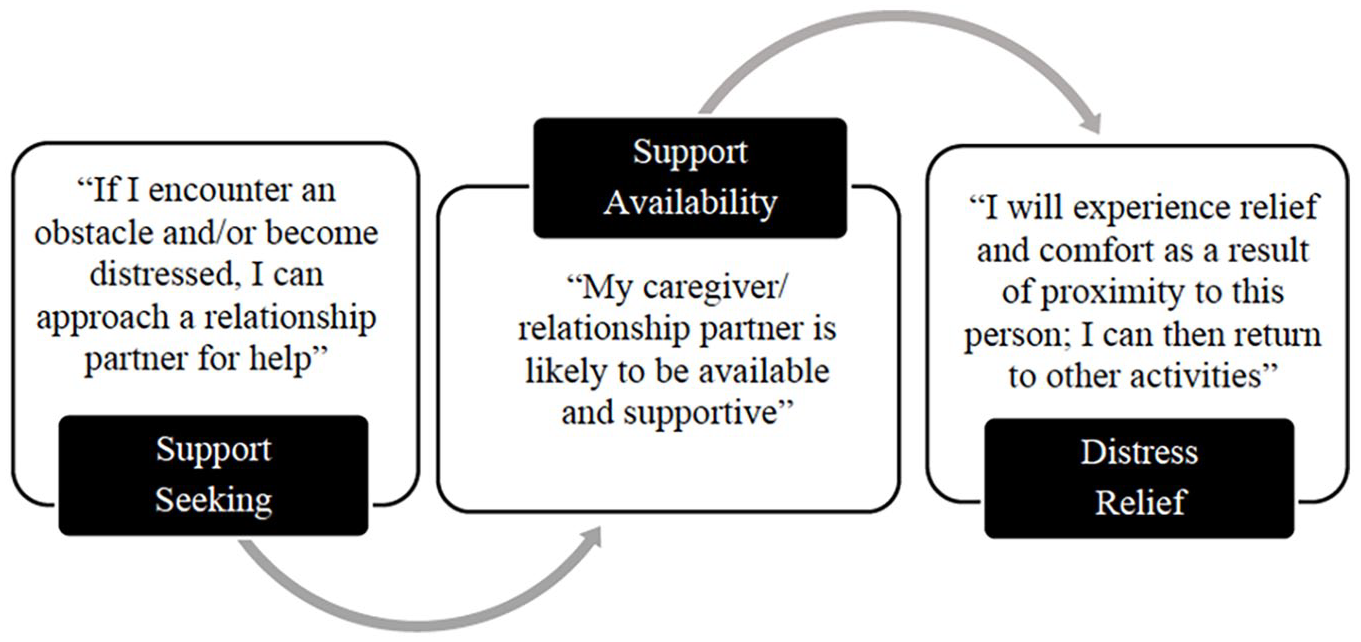
The components of the secure-base script based on Mikulincer and Shaver (2009a).
The secure-base script and attachment insecurity
While secure attachment is associated with greater secure-base “scriptedness” (Mikulincer, Shaver, Sapir-Lavid, & Avihou-Kanza, 2009), evidence suggests that SBS knowledge is negatively related to attachment insecurity (Psouni & Apetroaia, 2014; Steele et al., 2014). In Mikulincer, Shaver, Sapir-Lavid, and Avihou-Kanza’s (2009) narrative task, participants created stories from attachment-related images. Those with attachment insecurity showed fewer SBS themes, along with increased cognitive effort and less automatic processing of SBS information. The authors concluded that insecure attachment is associated with missing or diminished components of the SBS, with attachment-anxiety lacking the final step (relief) and attachment-avoidance lacking the initial step (support-seeking). In addition, McLean et al. (2014) identified a negative correlation between the SBS and early maladaptive schemas, which are enduring negative beliefs and thought patterns rooted in unaddressed childhood needs (Yalcin et al., 2022). Maladaptive schema themes such as emotional deprivation, emotional inhibition, social isolation, and perceived defectiveness indicate vulnerability in individuals lacking an internalized SBS. McLean et al. (2014) determined a correlation between attachment-avoidance and reduced SBS knowledge, while finding no link between attachment-anxiety and SBS content. Since the SBS does not seem to work well for attachment insecurity, it is a reasonable hypothesis that there is an alternative “script-like” model better suited for it. Hypothesizing the “if–then” expectancies with insecure attachment in the context of distress management and how these may differ between the two forms of insecure attachment is a logical next step.
A gap in the literature: The insecure script
There remains a gap in defining scripts reflecting internalized attachment insecurity. It is not unreasonable to expect that attachment insecurity would be characterized by more than simply a lack of secure script. Drawing from attachment theory and the defense mechanisms mitigating attachment-related distress, we propose that insecure scripts operate within a narrative framework, serving a self-protective function. As highlighted earlier, Mikulincer, Shaver, Sapir-Lavid, and Avihou-Kanza (2009) suggest that the SBS is underpinned by implicit “if–then” rules governing emotional regulation; a view that could be extended to insecure scripts as well. To develop this idea further, next we theoretically unpack the internalized defensive narrative, exploring its unique expressions in attachment-avoidance and attachment-anxiety.
A conceptual extension: The internalized defensive narrative
Mikulincer, Shaver, Sapir-Lavid, and Avihou-Kanza (2009) recognize that secure-base scripts fail to fully address insecure individuals and that further research is necessary to examine the cognitive aspects of insecure attachment orientations and the potential involvement of other script types or processes. In view of this, we propose the internalized defensive narrative as the mental structure that functions in the context of insecure attachment. To conceptualize the structure of the unique IDNs for attachment-anxiety and attachment-avoidance, we adopt the three components used to measure the SBS: support-seeking, support availability, and distress relief (Mikulincer, Shaver, Sapir-Lavid, & Avihou-Kanza, 2009). Our reflection focuses on how psychological defenses can compensate for an incomplete SBS, ultimately creating a cyclical pattern.
Stickgold (2002) suggests that for benign experiences, the specific episodic details of a memory are abstracted, leaving only the general content. Conversely, distressing experiences may disrupt memory processing, preventing the brain from assimilating the episodic memory into the semantic memory system, leaving the emotionally charged form. Applying this understanding, it is plausible that the information in the SBS, derived from positive attachment experiences, may ascend to the generalized semantic level. In contrast, the information composing the IDN, from disappointing and frustrating attachment experiences, might remain stalled at the episodic level, lacking integration into the semantic network. The implication of this is that the knowledge contained within the IDN remains unprocessed and vulnerable, lacking the procedural guidance that the SBS offers. Consequently, defenses emerge.
Here, we employ the term “default defenses” (Richardson et al., 2023) to describe automatic responses triggered by perceived threats, influenced by an individual’s attachment style. Attachment-anxiety default defenses arise from a hyperactivated attachment system, whereas attachment-avoidance defenses aim to deactivate it (Mikulincer & Shaver, 2016), often taking a preemptive approach (Fraley & Brumbaugh, 2007).
The internalized defensive narrative associated with attachment-avoidance
Aversion to support-seeking
In the model we present here, the IDN corresponding with attachment-avoidance (see Figure 2) represents a departure from the SBS in that there is an aversion to seeking support. The aversion to seeking support among individuals with attachment-avoidance is rooted in their historical encounters with unfavourable outcomes when attempting to seek support (Bosmans et al., 2020). This aligns with Bartholomew’s (1990) perspective that sees attachment-avoidance as a distortion in the balance between independence and dependence or individuation and connectedness.
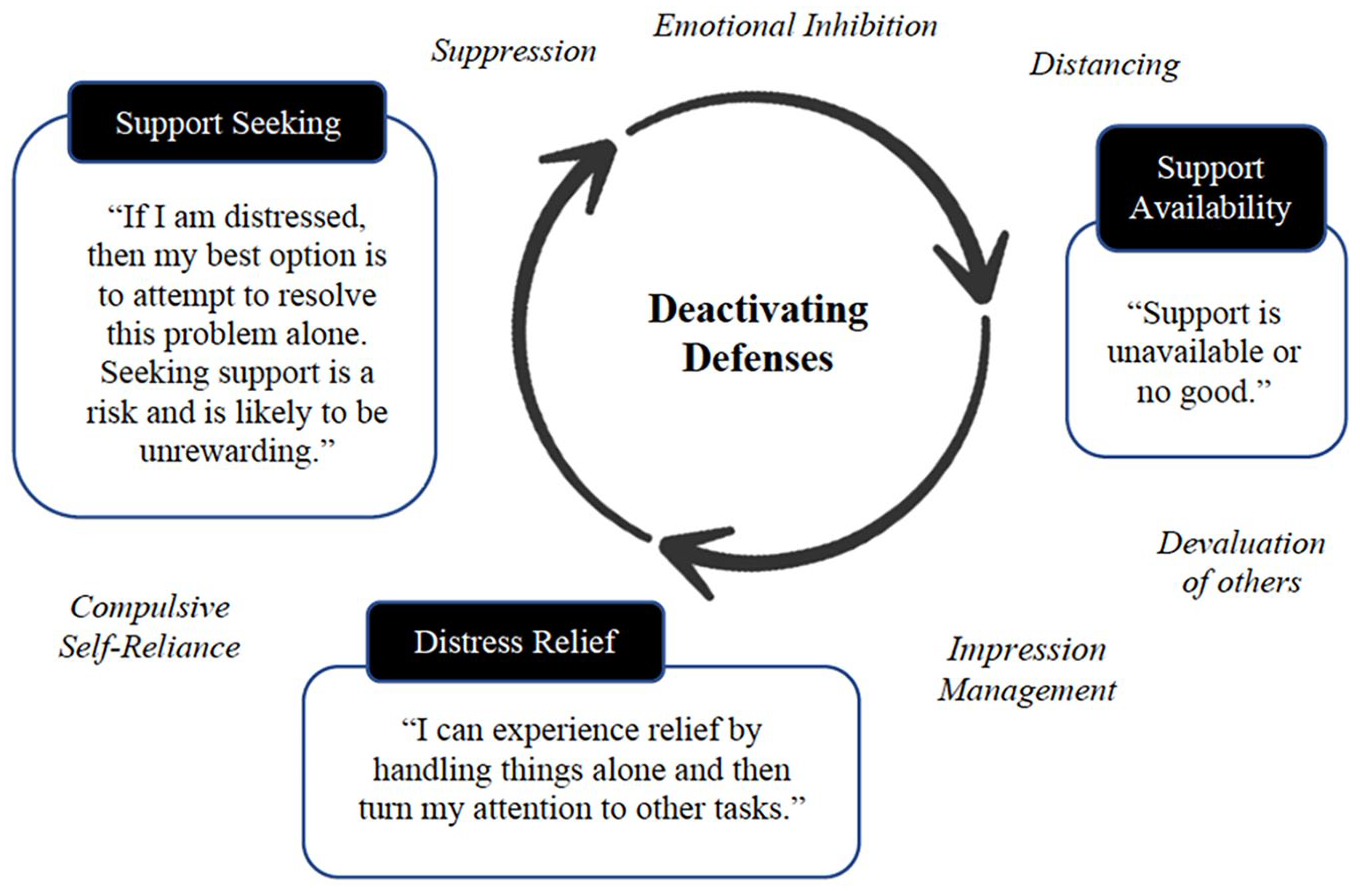
Diagram depicting the theorized connection between the internalized defensive narrative model and attachment-avoidance.
Research using narrative tasks to explore deviations from secure-base “scriptedness” shows that individuals with attachment-avoidance are less inclined to include support-seeking behaviour in their stories (Mikulincer, Shaver, Sapir-Lavid, & Avihou-Kanza, 2009). Other studies (Gillath et al., 2006; Holmberg et al., 2011; Lopez et al., 1998; Vogel & Wei, 2005) similarly find that individuals with attachment-avoidance often refuse help and avoid seeking support. For example, Holmberg et al. (2011) examined coping sequences influenced by stress severity and attachment styles. Consistent with the literature, they found that attachment-avoidance was negatively linked to generally seeking social support from partners and others. It also predicted earlier problem-focused coping, suggesting a desire to make the problem go away. For major stressors, attachment-avoidance predicted delayed partner support-seeking, suggesting it was a last-resort approach. The cited studies support the premise that support-seeking is a fragmented element, or a “script fracture,” within the IDN associated with attachment-avoidance.
Default defenses intervene to compensate for the script fracture. Suppression is a key defense mechanism utilized by individuals with attachment-avoidance instead of seeking support (Mikulincer & Shaver, 2016). Researchers have linked attachment-avoidance with the mental suppression of worries about closeness, emotional cut-off, and the emotional inhibition schema, which entails emotional restriction and suppression of the expression of emotions (McLean et al., 2014; Mikulincer et al., 2000; Wei et al., 2005). The strategy involves information-processing biases diverting attention away from threats and suppressing thoughts that could activate the attachment system and trigger a person’s need for social comfort or support (Andriopoulos & Kafetsios, 2015).
A strategy of distancing oneself and adopting a cold, aloof demeanour fills the gap where support-seeking ideas might otherwise reside. Indeed, a self-reliant mentality characterizes attachment-avoidance (Rom & Mikulincer, 2003). Studies have linked excessive coldness, aversion to touch, resistance to affection, restricted self-disclosure behaviour, and antisocial group behaviour all with attachment-avoidance (Bartholomew & Horowitz, 1991; Chopik et al., 2014; Garrison et al., 2014; Gillath et al., 2006; C. Hesse & Trask, 2014; Rom & Mikulincer, 2003; Saypol & Farber, 2010; Wei et al., 2005). This distancing is more oriented towards interpersonal relations than distraction (Holmberg et al., 2011). Indeed, these avoidant behaviours contrast sharply with the support-seeking behaviour fundamental to the SBS.
A negative expectation about support availability
Individuals with attachment-avoidance not only lack a support-seeking script in their inner narrative but may also harbour negative beliefs about support availability and others’ responsiveness. Supporting this, Mikulincer, Shaver, Sapir-Lavid, and Avihou-Kanza’s (2009) dream analysis study, aimed to understand deviations from the SBS at the unconscious or implicit level, and revealed an inverse relationship between attachment-avoidance and themes of support availability in dreams. Perceptions of inadequate support may stem from experiences of “disengaged parenting,” marked by distracted attention, disinterest, and psychological nonresponsiveness (Briere et al., 2017).
Indeed, a negative perception of support availability aligns with Bartholomew’s (1990) framework, suggesting that the dismissing pattern of attachment-avoidance involves a negative view of others. A narrative marked by cynicism about support can trigger a dysfunctional cycle, fostering distrust in help and leading individuals to adopt defensive strategies like devaluing others and creating emotional distance. These behaviours perpetuate avoidance and isolation, worsening the underlying issues. Mikulincer, Shaver, Cassidy, and Berant (2009) propose that the “negative others-model” is evident through the devaluation of others, fostering a “false distinctiveness bias” that accentuates perceived differences between oneself and others (Gabriel et al., 2005; Mikulincer et al., 1998).
Along with a negative-others model, dismissive attachment-avoidance is also marked by a positive-self model (Bartholomew, 1990). This possibly reflects the association between attachment-avoidance and “splitting” (Prunas et al., 2019). However, the positive-self model associated with attachment-avoidance may be a grandiose self-facade (Berant et al., 2005) masking vulnerability and relying on self-enhancement, impression management, and repressive coping as defense mechanisms (Diamond et al., 2006; Flynn et al., 2018; Gjerde et al., 2004; Mikulincer, Shaver, Cassidy, & Berant, 2009), potentially concealing emotions related to a history of caregiver indifference.
Self-Directed distress relief
The final component of the SBS is the proposition that relief and comfort will result from calling upon an attachment figure (H. S. Waters & Waters, 2006). This contrasts sharply with the avoidant IDN. Mikulincer, Shaver, Sapir-Lavid, and Avihou-Kanza’s (2009) research shows that participants with attachment-avoidance construct narratives that depict characters achieving relief without seeking or receiving support or help, indicating a self-reliant mentality. Consistent with this, Richardson et al. (2023) found attachment-avoidance to negatively correlate with defensive affiliation, suggesting a reluctance to seek help during stress. This resonates with Bowlby’s (1980) description of compulsive self-reliance: an avoidant defense tactic where individuals dismiss their attachment needs, mistrust others, and lean heavily on their own self-sufficiency to evade the disappointment and pain experienced before. The attachment-avoidant “rapid responder” schema facilitates swift self-protective measures and autonomous problem solving, eliminating the necessity for co-ordination with others (Ein-Dor, 2014; Ein-Dor et al., 2011a, 2011b).
The IDN associated with attachment-anxiety
Agitated support-seeking
In the IDN model (see Figure 3), the support-seeking element corresponding with attachment-anxiety is marked by agitation. One perspective is that this agitation arises from experiencing inconsistent responsiveness (Bosmans et al., 2020), producing an ambivalent attachment attitude (Beckes et al., 2017). There is intermittent reinforcement of support-seeking when caregiver attention is sporadic. In such cases, individuals may learn to intensify their attention to seeking care, thereby leading to the hyperactivation of the attachment system.
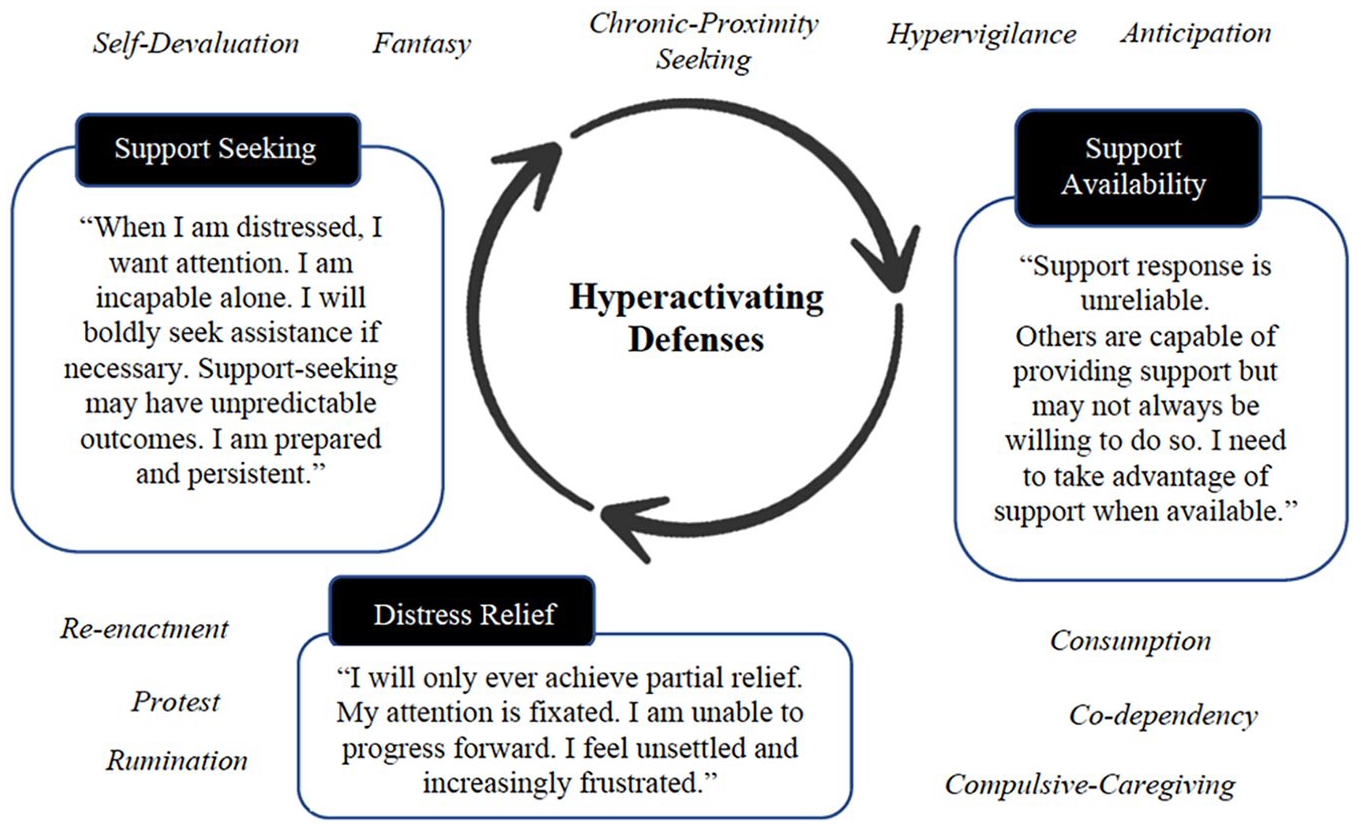
Diagram depicting the theorized connection between the internalized defensive narrative model and attachment-anxiety.
Holmberg et al. (2011) found that the support-seeking approach associated with attachment-anxiety involves an early adoption of emotion-focused coping, characterized by tendencies towards histrionic behaviour and wishful thinking. This includes behaviours such as expressing upset emotions, wishing to alter the upsetting event, self-blame, vocalizing distress, hoping for miracles, and desiring different feelings. Holmberg et al. (2011) propose that instead of assertively seeking support, individuals with attachment-anxiety may resort to indirect and passive-aggressive methods, such as displaying distress and waiting for their partners to approach them.
In this model, chronic proximity seeking is viewed as a defense mechanism linked to attachment-anxiety, involving constant pursuit of closeness. A consistently active attachment system indicates heightened vigilance (Mikulincer & Shaver, 2016). Mikulincer et al. (2002) found that even without an attachment figure present, thinking about them can provide internal comfort and security, serving as a distress-relief resource. They demonstrated attachment-style differences in activation and higher accessibility of attachment representations in those with attachment-anxiety, even in neutral contexts. Attachment-anxiety is also associated with phone dependence, indicating clinginess (Konok et al., 2016). They found that attachment style influences phone attachment, with higher anxiety predicting a greater “need for contact,” possibly stemming from fear of abandonment.
Attachment-anxiety also correlates with stalking behaviour and chronic jealousy (Patton et al., 2010; Sharpsteen & Kirkpatrick, 1997). Other manifestations include idealizing therapists (Daly & Mallinckrodt, 2009), excessive displays of distress like crying (Drenger et al., 2017), and attention-seeking on social media (Hart et al., 2015). During the COVID-19 pandemic, individuals with attachment-anxiety were also found to resist social-distancing regulations, possibly due to their strong urge for closeness and intense connection (Gruneau Brulin et al., 2022). Hyperactive proximity-seeking behaviour in individuals with attachment-anxiety may provide a sense of control, reinforcing their belief in actively pursuing intimacy and connection.
In this model, alongside chronic proximity seeking, the support-seeking stance of attachment-anxiety is characterized by defensive hypervigilance, sentinel behaviour, defensive anticipation, and fantasizing (Ein-Dor et al., 2011a; Prunas et al., 2019; Richardson et al., 2023). This behaviour entails predictive thinking, sharp alertness, ongoing surveillance of surroundings, and a heightened sensitivity to caregivers’ behaviours, facilitating quick detection of potential threats. Fantasizing serves as a form of defensive support-seeking, providing an outlet for emotional turmoil. It may involve significant distortion of reality or an escape from it. As a coping mechanism, it offers a sense of intimacy, albeit within one’s thoughts. According to Richardson et al. (2023), individuals with attachment-anxiety often prefer an imaginary world, finding more satisfaction in fantasies than real-life experiences, and using daydreaming to process issues and scenarios.
The model recognises the connection between attachment-anxiety and self-devaluation, potentially serving as a defense mechanism for seeking support (Mikulincer, Shaver, Cassidy, & Berant, 2009; Richardson et al., 2023). This link is reinforced by the association between attachment-anxiety and dependence/incompetence schemas (Simard et al., 2011). These schemas stem from the belief in one’s inability to handle emotional strains or navigate complex situations independently, leading to a persistent need for emotional reinforcement and assistance. Through self-devaluation, individuals may seek sympathy, affirmation, and support from others, sometimes expressed through self-deprecating humour (Mikulincer, Shaver, Cassidy, & Berant, 2009). Moreover, self-devaluation acts as a protective measure by moderating expectations, thus reducing the risk of rejection. By maintaining modest expectations, individuals create a safety net that insulates them from potential disappointments.
Confused expectations about support availability
Supported by research by Mikulincer, Shaver, Sapir-Lavid, and Avihou-Kanza (2009), a lack of an internalized sense of support marks the IDN associated with attachment-anxiety. Despite caregivers’ inconsistent responsiveness, leading to expectations of supporters as unreliable and unpredictable (Beckes et al., 2017), individuals with attachment-anxiety may still hold intense feelings of attachment towards their caregivers. One may develop an expectation that others are capable of providing support but may not always be willing to do so, fostering the belief that one is unworthy. Furthermore, as per Bosmans et al. (2020), the lack of caregiver encouragement for exploration among individuals with attachment-anxiety results in the praising of dependency while discouraging independence, potentially leading to the development of a narrative centered on proximity. In the more extreme cases this may entail enmeshment/underdeveloped-self schema (Young et al., 2003), giving rise to a codependent dynamic.
Influenced by their anticipation of inconsistent support availability, individuals with attachment-anxiety may respond with urgency to the offer of support. The IDN model associated with attachment-anxiety incorporates this via the defense mechanism “consumption” (Daly & Mallinckrodt, 2009). Driven by a sense of neediness and inner emptiness, individuals may intrusively seek attention, spurred by an internalized perception of support scarcity. Consumption is conceptually linked to projective identification and poor self–other differentiation, both associated with attachment-anxiety in prior research (Berant & Wald, 2009; Mikulincer & Horesh, 1999; Mikulincer, Shaver, Cassidy, & Berant, 2009; Richardson et al., 2023). Projective identification, as described by Roth (2017), is a blend of communication, primitive defense, and empathy-seeking. It blurs the lines between self and others and manifests a strong urge to control the other.
Furthermore, individuals who have internalized a sense of scarcity regarding support availability may develop a defensive pattern of compulsive-caregiving. Compulsive-caregiving can originate from personal experiences of inadequate caregiving, as well as pressures such as caring for a sick, anxious, or hypochondriac parent (Bowlby, 1980). The IDN model conceptualizes excessive caregiving behaviour as a compensatory “reaction formation” response, which is triggered by feelings of insecurity about the availability of support from attachment figures early in life. Reaction formation, a neurotic defense, substitutes an unwanted thought or emotion with one that is diametrically opposed (Minges et al., 2020). For instance, an individual might express love towards someone they fear or show care and concern towards someone they seek care from. Similarly, overzealous caregiving behaviour might be an overcompensation response to schemas like abandonment/instability or emotional deprivation, as outlined by Young et al. (2003). Mikulincer and Shaver (2016) suggest that individuals with attachment-anxiety might use obsessive caregiving to meet their deep-seated needs for closeness and acceptance. Such a defense mechanism can provide individuals with a sense of purpose and importance. Research indicates that attachment-anxiety is linked with controlling, compulsive-caregiving in relationships (Braun et al., 2012; Julal & Carnelley, 2012; Millings & Walsh, 2009; Shaver et al., 2010) and self-sacrificing behaviours, enmeshment schemas, and excessive emotional involvement (Bosmans et al., 2010; Karantzas et al., 2023).
Incomplete distress relief
For individuals with attachment-anxiety, the final stage of coping tends to involve the exacerbation of distress and high emotions (Holmberg et al., 2011). Indeed, research repeatedly indicates that emotional dysregulation is associated with attachment-anxiety (Berant et al., 2005; Brenning et al., 2012; Clear & Zimmer-Gembeck, 2017). Mikulincer, Shaver, Sapir-Lavid, and Avihou-Kanza’s (2009) research identified an inverse relationship between attachment-anxiety and dreamt experiences of distress relief. They also found that individuals with attachment-anxiety often depicted a distressed protagonist in narrative tasks, seeking but not finding relief. This suggests an expectation that distress will often remain unresolved, leaving one in a state of uncertainty or stagnation.
The difficulty in managing distress and emotions may stem from a caregiver’s inadequate modelling of conflict resolution. Attachment-anxiety, being associated with a dominating conflict style, means there is a need for complete control and a reluctance towards collaborative resolutions (Corcoran & Mallinckrodt, 2000), which could result in stubbornness and a resistance to relief when it entails compromise. Attachment-anxiety may further impede resolution and distress relief largely due to tendencies to catastrophize and ruminate, and struggles with detachment strategies such as suppression and forgiveness (Burnette et al., 2009; Caldwell & Shaver, 2012; Chung, 2014; Ciechanowski et al., 2003; Hirst et al., 2019; Joel et al., 2012; Kratz et al., 2012; Meredith et al., 2006; Mikulincer et al., 2004; Saffrey & Ehrenberg, 2007). Rumination, as repetitive thoughts about distressing emotional experiences (Nolen-Hoeksema, 2000), operates as a cognitive psychological defense mechanism serving as a form of problem solving and wishful thinking.
Despite receiving support, individuals experiencing attachment-anxiety may continue to feel dissatisfied, resulting in feelings of unresolved tension, resistance, and passive-aggressive behaviour when their attachment figures attempt to disengage or change activities. Research suggests that attachment-anxiety is associated with relationship dissatisfaction and passive-aggressive tendencies (Feeney & Karantzas, 2017; Richardson et al., 2023). Drawing on evidence of protest behaviour and guilt manipulation associated with attachment-anxiety (Drenger et al., 2017; Laan et al., 2012; Overall et al., 2014), the IDN model recognises protest actions as a defensive mechanism related to insecure attachment.
Furthermore, the model here considers reenactment processes in terms of defense mechanisms. A consistently activated attachment system could underlie Freud’s (1914) “repetition compulsion” concept—an unconscious drive to repeat past situations or a yearning to return to an earlier state. Van der Kolk’s (1989) concept of “re-enactment” involves the repetition of dynamics or situations where individuals encounter familiar circumstances or unconsciously repeat patterns, potentially leading to revictimization or self-destructive tendencies. There is a complex connection between attachment-anxiety and self-destructive behaviours, encompassing disordered eating (Faber et al., 2018), self-harm (Kuipers et al., 2016), and characteristics of borderline personality disorder (Smith & South, 2020). Furthermore, according to Bockers et al. (2014), attachment-anxiety can predict revictimization, suggesting that insecure attachment may predispose individuals to repeat patterns of victimization or engage in behaviours that increase their vulnerability to being victimized again. As a defense mechanism, reenactment seeks to rewrite personal history for a better outcome. However, it perpetuates distress until mastery, which may prove insurmountable.
Conclusion
Clinical implications and future directions
Addressing attachment-based defensive processes at the level of cognitive representation, we have presented the concept of the internalized defensive narrative, a proposition that encapsulates the secure-base experience but is interpreted through the lens of insecurity. A strong resistance to support-seeking marks the IDN corresponding with attachment-avoidance. At this stage, deactivating defenses such as suppression, emotional inhibition, and distancing are prominently in effect. At the stage of support-availability, deactivating defenses include impression management and devaluation of others. At the distress relief stage, defenses include compulsive self-reliance. This mechanism perpetuates the cycle.
Conversely, the defensive narrative that we link to attachment-anxiety demonstrates a hyperactive approach to seeking support guided by defenses such as persistent proximity seeking, fantasy, and hypervigilance. At the stage of support availability, defense mechanisms such as consumption serve to ensure that sources of support are fully exhausted. Codependence then functions as a safeguard against isolation. However, defense mechanisms like rumination impede the attainment of relief, perpetuating the cycle and keeping the attachment system chronically activated.
An attachment-focused approach to psychological defenses is a promising beneficial tool for clinical practice. By employing this approach, clinicians can better understand their client’s defenses and how they relate to their attachment history. Instead of labelling defenses as “immature” or “pathological,” an attachment-focused approach encourages therapists to view them as adaptive responses to attachment-related adversity. Clients may learn that while once necessary for coping, their defense mechanisms may no longer be valid or adaptive in their current circumstances, allowing them to gradually relinquish outdated defense mechanisms. As a result, clients can restructure their narratives and develop new perspectives for greater security.
The IDN model offers a way of understanding problem-maintaining circles (Bakker, 2022) related to attachment, highlighting the close interplay between attachment styles and defensive strategies, which becomes self-reinforcing over time. Clinicians can pinpoint intervention opportunities by examining the interplay of defensive behaviour, insecurity, and internalized narratives. Therapy interventions may target distinct facets of the attachment-avoidance and attachment-anxiety cycles. For individuals with attachment-avoidance, therapy might emphasize cultivating support-seeking abilities and receptiveness to assistance. Conversely, for those with attachment-anxiety, the emphasis may be on adopting a more constructive support-seeking approach. Additionally, they could learn strategies like mindfulness, emotion regulation, cognitive restructuring, problem solving, and assertiveness training to manage and resolve distress.
Exploring defensive functioning within the framework of attachment styles presents promising avenues for future research. Longitudinal studies could track the evolution of defensive mechanisms over time in individuals with different attachment patterns. Experimental designs could manipulate attachment-related variables to assess their impact on defensive responses. Neurobiological investigations could employ imaging techniques to uncover the neural underpinnings of defensive functioning within attachment contexts. Evaluating the efficacy of clinical interventions tailored to attachment styles could inform therapeutic approaches. Additionally, considering cultural influences on attachment and defense could enhance our understanding of cross-cultural variations in defensive functioning. By pursuing these directions, research can advance our comprehension of how attachment styles shape defensive processes and inform the development of more targeted interventions.
Footnotes
Funding
The authors received no financial support for the research, authorship, and/or publication of this article.
