




Abstract
This paper introduces Embodying Fatigue, an ongoing interdisciplinary project responding to the challenges of articulating and understanding the embodied realities of long-term or recurrent fatigue (LTF) experienced as part of a chronic health condition. Developed through collaboration between an academic (Lucy) and artist (Ellie), both of whom have LTF themselves, the project seeks to explore LTF beyond clinical and discursive framings, using creative methods to surface its emotional, relational, and material dimensions. Central to this work is the development of a novel method of embodied data generation: fatigue exploration kits. These kits, grounded in artistic, tactile practice, are designed to facilitate affective engagement, dialogue and create a sense of community with other individuals with fatigue. This paper outlines the background and aims of this ongoing project, details the conceptual and practical development of the kits, and introduces insights from a series of meetings and workshops with public and patient involvement and engagement (PPIE) contributors. Finally, we reflect on future possibilities for expanding and refining the kits as tools for research, care, and creative action.
…a strange, provoking, formless sort of figure, that seems to skulk about…
Charlotte Perkins Gilman, The Yellow Wallpaper (1892)
Background
Long-term and recurrent fatigue (LTF), defined as an overwhelming and debilitating sense of exhaustion experienced for 6 months or more (Jaime-Lara et al., 2020), is a pervasive symptom across many long-term, ‘invisible’ health conditions, including autoimmune conditions, such as rheumatoid arthritis, gut conditions, such as inflammatory bowel disease, and post-viral syndromes, such as long COVID. It is also a hallmark of historically contested conditions, such as myalgic encephalomyelitis (ME)/chronic fatigue syndrome (CFS). For many living with these conditions, fatigue persists even in the absence of objective markers of disease or other symptomatology (Borren et al., 2019), making LTF challenging to treat and even more challenging for those left to experience it with little recourse for treatment or cure (Jaime-Lara et al., 2020).
As co-authors of this paper and co-creators of the Embodying Fatigue project, we both have lived experience of LTF. Lucy, an academic and chartered psychologist, has had Crohn's disease and psoriatic arthritis for over 20 years. Over this time, she has experienced multiple flare-ups of LTF of varying severity, some clearly linked with active inflammation connected with her conditions and others experienced in isolation. Ellie, a performance maker and artist, has had post-viral chronic fatigue since the age of 11. Having ‘masked’ the condition for many years, she has only come to acknowledge and speak about her experience of LTF in recent times.
Our combined lived, anecdotal and academic experiences underscore the ‘slipperiness’ of LTF, both as a concept and as an embodied reality. Frequently mischaracterised by those without it as mere tiredness, LTF is consistently described by those who live with it as profoundly different: invisible, often debilitating and difficult to articulate (Eilertsen et al., 2015; Pilkington et al., 2020; Primdahl et al., 2019). This disconnect frequently leads to a significant chasm between individuals with fatigue (IwF) and healthcare professionals in terms of clinical management, and between IwF and their families and communities in terms of empathy and understanding (Kralik et al., 2005; Whitehead et al., 2016).
Furthermore, our own encounters navigating the medical system as women have been plagued with episodes of medical misogyny and gaslighting, and these, too, inevitably shape this project. Inspired by Charlotte Perkins Gilman's feminist classic The Yellow Wallpaper (2009, original 1892), a horror story drawn from her own experience of the devastating effects of enforced isolation during ‘treatment’ for chronic illness, we wish to draw attention to the historic feminisation and dismissal of LTF as a ‘women's illness’. Responses to conditions such as CFS/ME often echo the historical patterns of hysteria and delegitimisation of women's pain that Perkins Gilman's novella so hauntingly attests to. Media portrayals reinforce these gendered narratives; for example, frequently depicting women with CFS/ME as emotionally fragile and socially disrupted, while men are shown as physically robust until suddenly afflicted, with little attention paid to their emotional experiences (Murray et al., 2019).
With an emphasis on embodiment, materiality and affect, we therefore seek to foreground how people inhabit and negotiate fatigued bodies in everyday life. Using a feminist critical disability studies lens (Smith et al., 2025), we centre LTF not merely as a medical symptom, but as an experience shaped by social attitudes and structural barriers. Furthermore, we aim to surface the emotional and affective dimensions of LTF, exploring how experiences are shaped by social expectations, material conditions and care relationships. We recognise that language may at times prove inaccessible given that embodied sensations can exceed the limits of linguistic description. As scholarship on pain and chronic conditions demonstrates, words often falter in conveying visceral or affective states (Brown, 2019; Gameiro et al., 2018; Kirkham et al., 2015; Scarry, 1985). Furthermore, it can be difficult to express complex thought and feelings in words alone (Blodgett et al., 2016). Following Finlay (2015) and Brown (2019), who argue that human understanding is not purely linguistic but metalinguistic and embodied, we ask: how might non-verbal, embodied forms of communication and resistance offer alternative ways of knowing and being?
Fatigue exploration kits: The concept
To achieve this, we began with a small-scale collaborative project funded by the University of Leeds Cultural Institute's Ignite Fund to create ‘fatigue exploration kits’. The kits build on Ellie's previous work from 2017, The Crossing, an illustrated, boxed kit designed to help facilitate conversations about funeral and end of life planning (Harrison et al., n.d.). To extend on this work, ‘fatigue exploration kits’ were designed to not only engage with IwF and their communities, but to act as a novel method of qualitative data generation.
Drawing on Barbour's (2004) concept of embodied ways of knowing, the kits invite IwF to explore their lived experiences through tactile, sensory, and narrative means. In this sense, they are designed to help recipients attend to the ‘lived body’ as a site of sensation and agency (Grosz, 1994). This explicit centring of embodied knowledge aligns with feminist disability scholars’ insistence that disabled and chronically ill people's bodily experiences, such as pain and fatigue, must be treated as legitimate sites of knowledge, despite their historical marginalisation within both disability studies and psy practice (Liddiard & Lawthom, 2025; Thomas, 2002; Wendell, 1996). Hunt (2025) similarly argues that acknowledging these marginalised embodied knowledges is essential in the context of contested illness, foregrounding sensation and lived bodily realities as central to understanding the complexities of energy-limiting conditions.
Our long-term vision is that these kits will be sent to research participants in advance of workshops, interviews and/or focus groups to deepen embodied understandings and illuminate the broader social and relational implications of LTF. The kits will act not only as a means of creative elicitation (Bagnoli, 2009), but also as a catalyst for collective reflection and action, leading to the eventual curation and exhibition of LTF artefacts aimed at opening dialogues with the wider public. This broader level of community engagement has previously been achieved with kits from The Crossing (Harrison et al., n.d.), which have been used successfully in a number of community, health and social care contexts, as well as being distributed internationally. As Gill and Fox from Dead Good Guides noted, they belong in ‘every home, hospice… and even the local pub’, while a senior leader in adult social care described The Crossing as a model for cross-sector dialogue and innovation (both cited in The Grief Series, n.d.). Our fatigue exploration kits similarly aim to foster deep, creative engagement with those impacted by LTF, sparking reflection and public conversation.
Resisting the individualisation of health and illness typical of neoliberal and healthist discourses (Vera, 2020), then, we wanted the kits to centre relationships, community and context. The well-being of box recipients is key as we seek to create spaces where the emotional, social and material dimensions of LTF can be acknowledged, shared and reimagined (O’Riordan et al., 2023). As such, this work is grounded in a feminist ethics of care (J. Tronto, 1993; J. C. Tronto, 2013). Rather than abstractly theorising care and embodiment, however, the kits aim to enact it. Crafted by hand and personalised by the team in collaboration with performance designer, Bethany Wells, and photographer and access support, Matt Rogers, the kits (Figure 1) are intended to feel warm, relational and inviting. Inspired by other creative kits used in research settings, namely Ptolomey and Nelson's (2022) ‘engagement boxes’ and Brown's (2019) ‘identity boxes’, we designed the kits to function both as tools for creative data generation but also as gifts – gestures of reciprocity and solidarity to other IwF. Their intentionally human touch, with each kit personalised with a handwritten tag, resists the clinical sterility of institutionally produced artefacts, instead being designed to evoke a sense of tactility, togetherness and care (Bradley et al., 2025). This approach reflects feminist disability praxis that foregrounds interdependence, relationality, and mutual recognition (Liddiard & Lawthom, 2025).
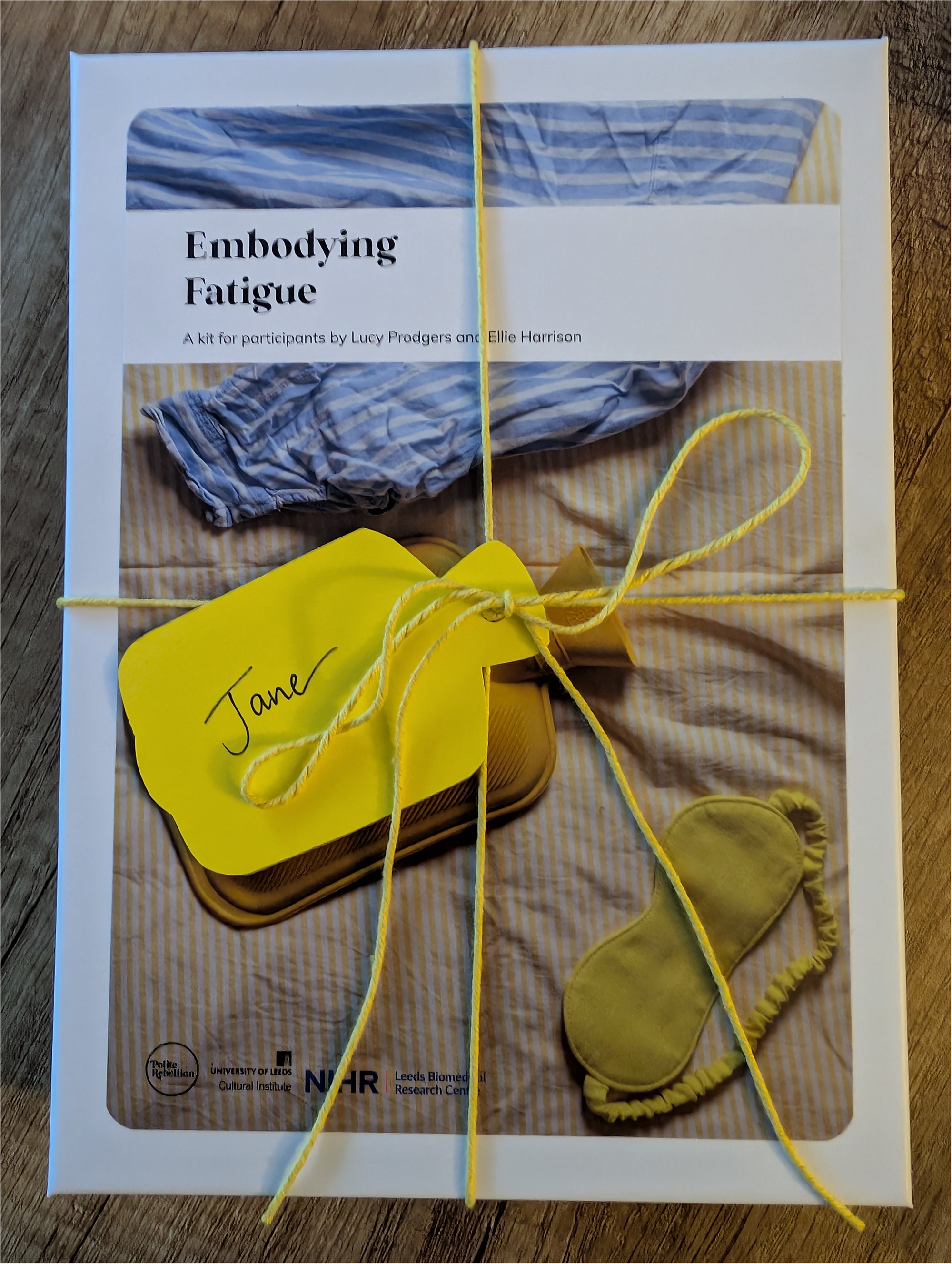
A fatigue exploration kit with handwritten tag.
Furthermore, the kits have been fabricated to prioritise the autonomy of recipients, offering flexible, open-ended materials that allow for playful, reflective and emotionally resonant engagement. In line with Balfour's (2019) ‘philosophy of being with’, we aim to offer opportunities to be present with recipients in the moment, even when physical presence is not possible, to create with them a sense of playfulness and lightness, and to co-create spaces where new meanings and possibilities can emerge. This includes visual and tactile media to allow for emotional and affective forms of communication that transcend verbal language (Bagnoli, 2009; Banks, 2018). Ultimately, the kits are designed to foster connection – between self and other, researcher, artist and participant, body and environment. They open up space for shared exploration, and for moments of lightness and creativity despite the potentially significant emotional weight of LTF as a topic.
Given the barriers many people have accessing cultural spaces, including those imposed by health and disability, Ellie has long been exploring taking creative encounters to the audience, whether at home or in community and unusual spaces (e.g. a park, a town square, in a layby). Inspired by Orhan Pamuk's (2014) approach to everyday objects and his ‘Modest Manifesto for museums’, which calls for a radical reimagining of museums that shifts away from monumental, state-aligned institutions toward smaller, more personal spaces centring individual lives and everyday experiences, the kits embody the idea of telling stories of culture at a human scale.
Fatigue exploration kits: The contents
In this first iteration, each kit contains the following items: a booklet explaining the kit contents and how they might be used, as well as a brief introduction to us and the project itself (Figures 2 and 3; Supplementary Booklet 1); a paper person with moving joints and three blank cardboard ‘beds’ (Figures 4, 5 and 6); a set of pencil crayons, a pack of question cards and an envelope of word cards (Figure 7). Unified by physical acts of doing, together the elements aim to engage with processes that go beyond text to generate meaning via making (Bradley et al., 2025).
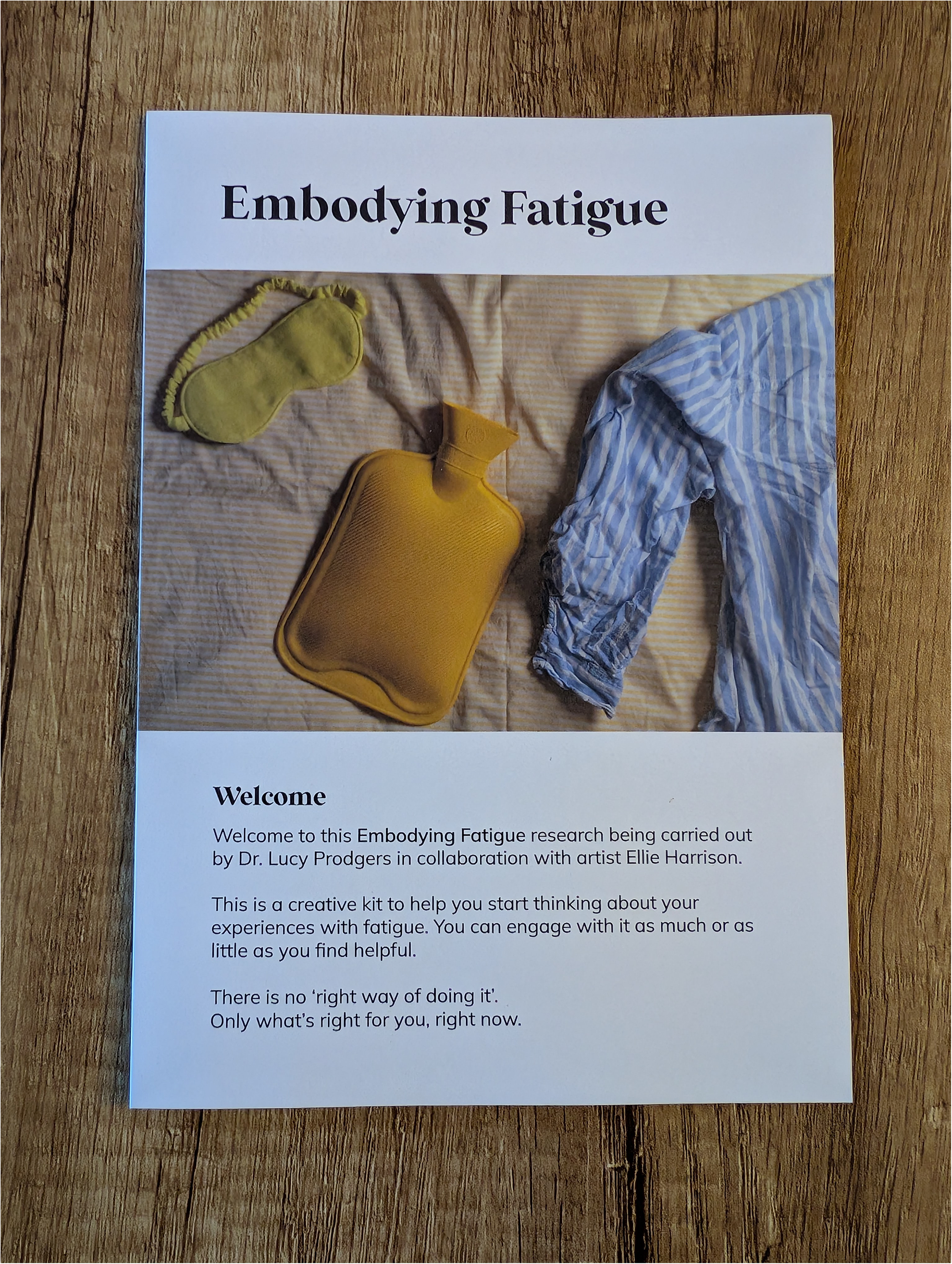
Fatigue exploration kit booklet (front cover).
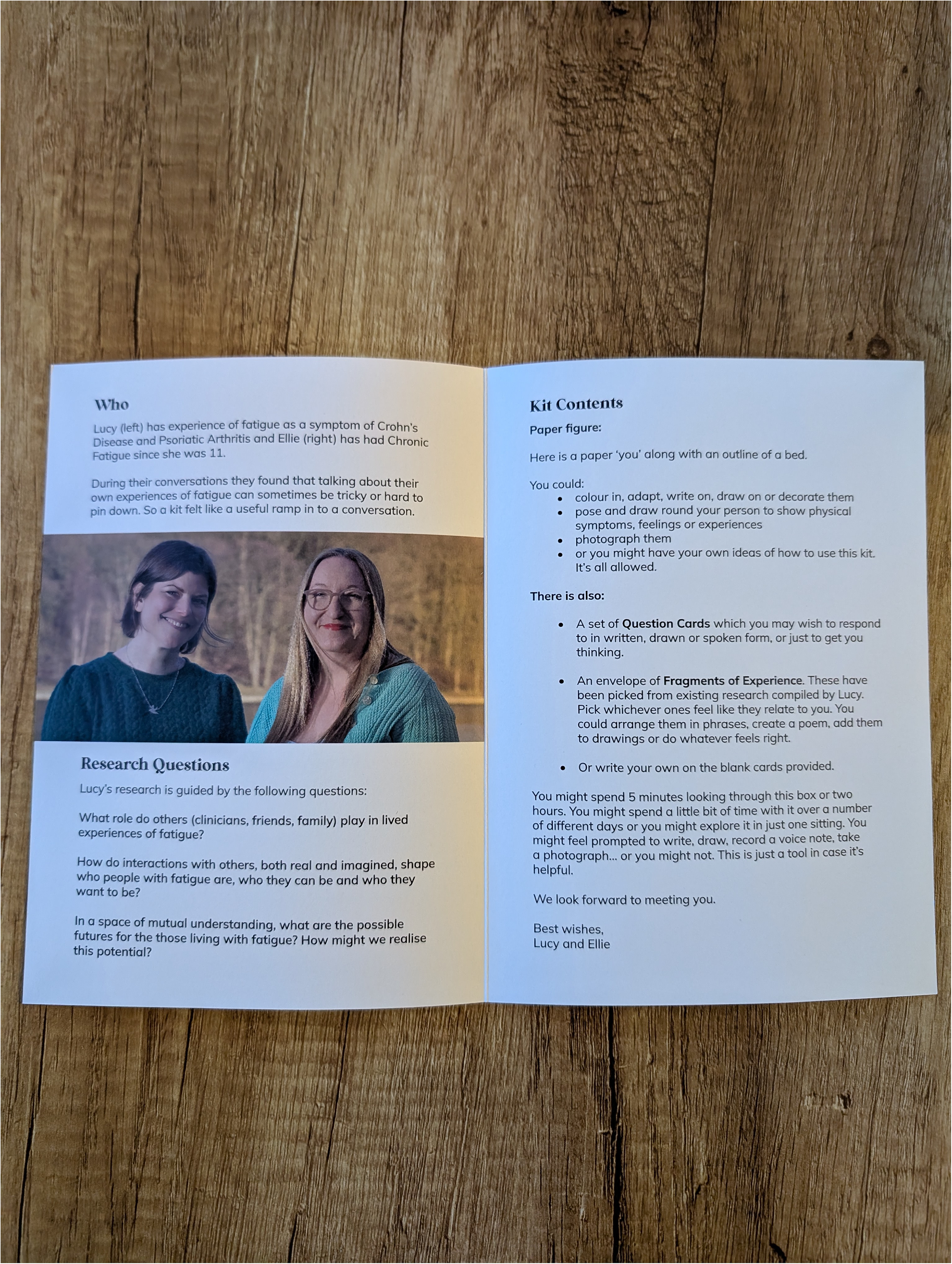
Fatigue exploration kit booklet (interior).
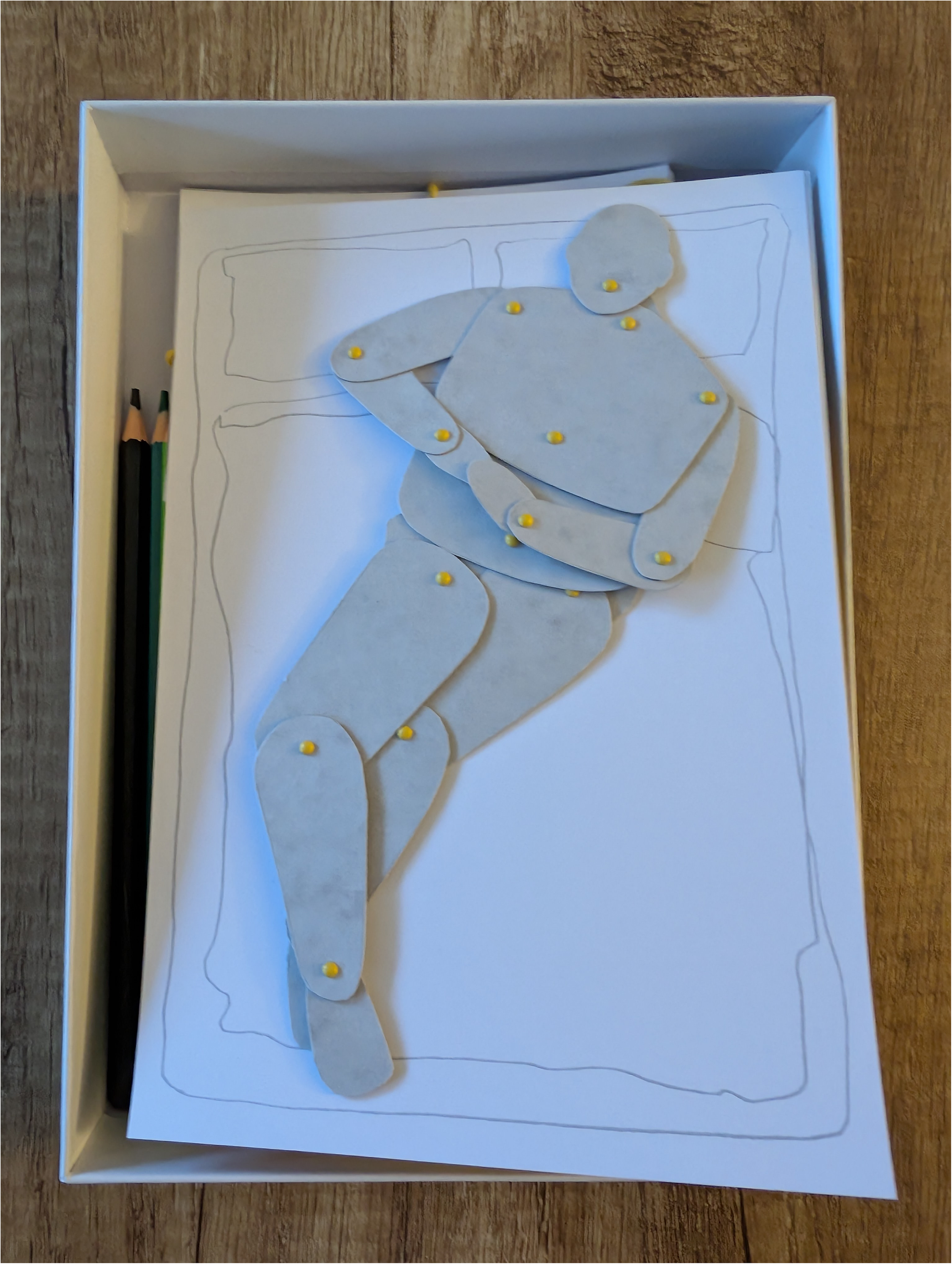
Posable paper person.
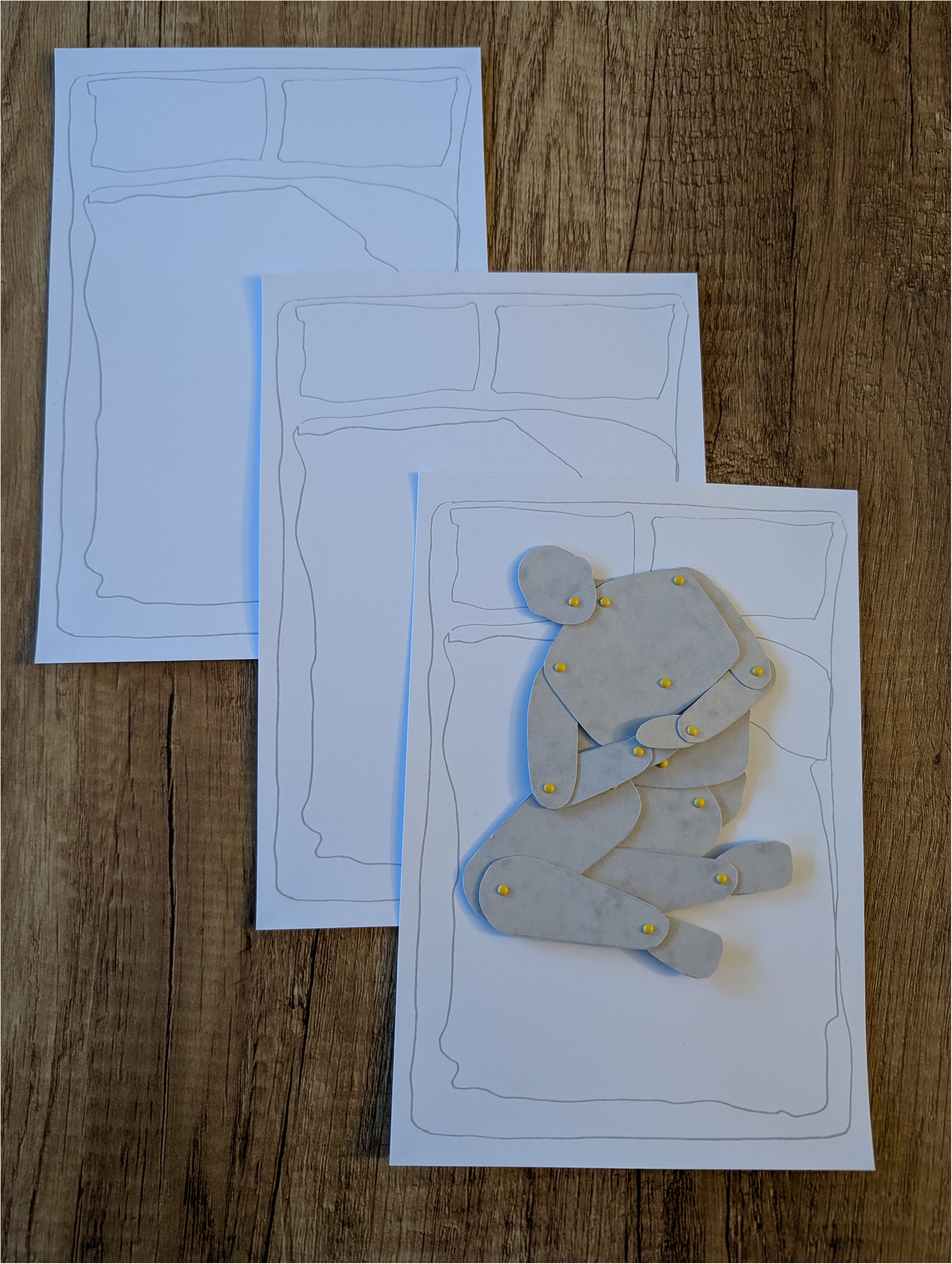
Posable paper person with beds.
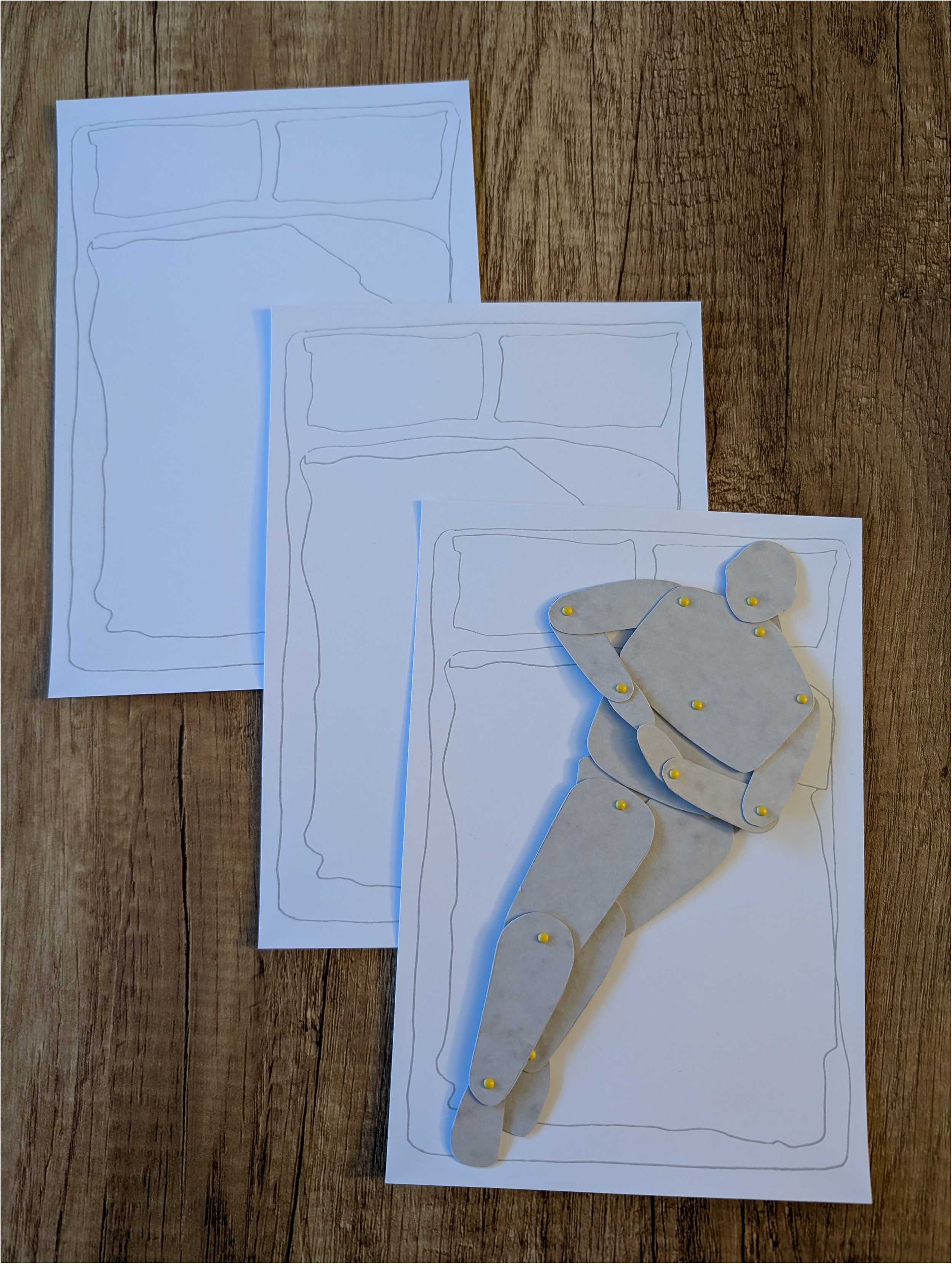
The posable person can be placed into different positions.
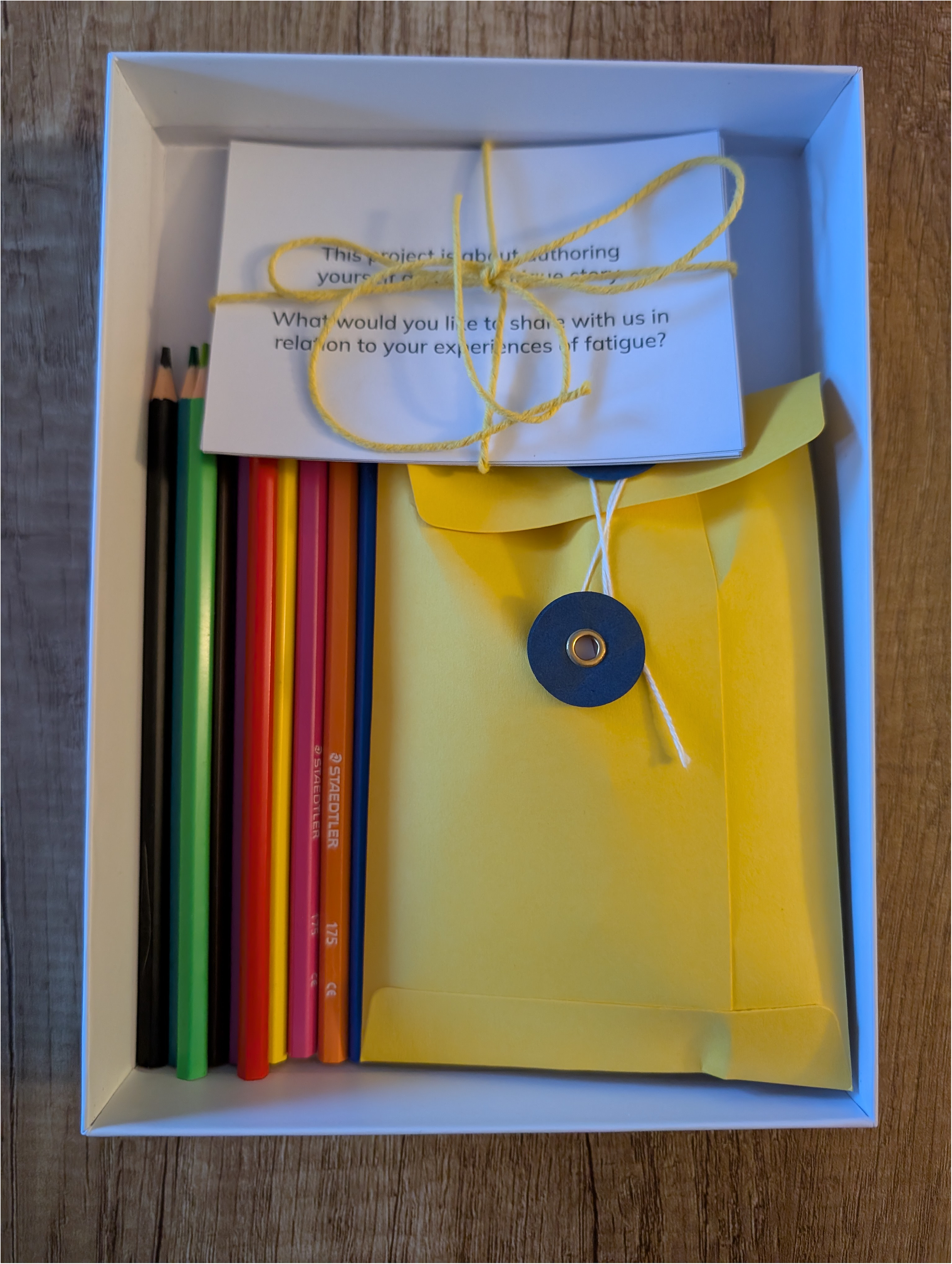
The inside of a fatigue exploration kit, with a set of pencil crayons, a pack of question cards and an envelope of word cards.
We now offer brief insights into each core element of the kits to outline the intentions behind them, situate them within wider academic and artistic contexts, and explore how they aim to generate embodied knowledge.
The paper person and beds
In health research to date, body mapping – a visual and participatory method that involves the application of drawings and words to an outline of a body on paper to explore health-related topics – has been used to achieve multiple ends (Gastaldo et al., 2018). Body maps are able to generate rich, contextual and biographical insights into participant stories, enabling them to shape and share those stories on their own terms and integrate various modes – visual, textual and oral – to convey often complex narratives (Gastaldo et al., 2018). This approach resonates with the work of artists such as Bobby Baker (2010), who has used drawing to challenge stigma and open up conversations around mental health via her own lived experiences, demonstrating how creative methods can make individual embodied realities both visible and socially meaningful. Building on these influences, our project introduces the posable ‘paper person’ (or paper ‘you’ as called in the fatigue exploration kit) and accompanying paper beds. We invite recipients to engage with these items in any way they choose; for example, by colouring, adapting, writing, drawing, decorating or photographing them. Recipients may choose to pose the person in different ways, spaces or places; they may trace around the figure on the beds to express physical symptoms, emotional states or lived experiences.
Through these embodied practices, our hope is that recipients can find meaningful ways to explore and express their affective and embodied experiences of LTF. These items are thus offered as a way for IwF to make sense of their bodies as bodies with fatigue, to imagine the spaces they can and cannot occupy, and to imagine new possibilities for living with and through those bodies. In so doing, the kits aim to resist psy-normative constructions of the ‘ideal’ rational, self-sufficient subject (Rose, 1998) and the broader neoliberal expectation that individuals continually work on themselves to meet such norms (Goodley et al., 2018), instead inviting alternative, situated understandings of disabled embodiment.
Question prompt cards
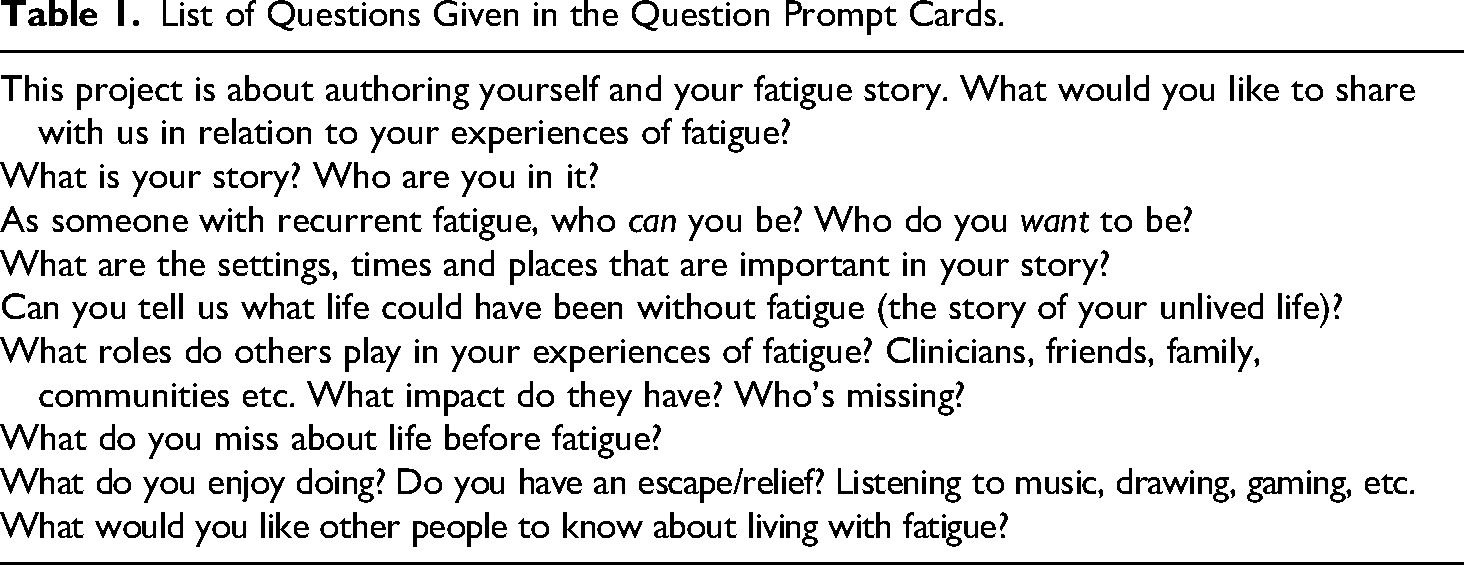
The question prompt cards (Figure 8) were created as an ‘emotional accessibility ramp’ (East Street Arts, 2021; 29:30) into the topic of fatigue, providing recipients with a gentle entry point for reflection and dialogue. They offer space for individuals to ask themselves questions, and to opt in or out of particular lines of enquiry in anticipated follow-up interviews, focus groups or workshops with researchers and others. In this sense, the recipient, rather than the researcher, ‘holds the cards’, and is able to choose which questions to engage with, to elaborate or extend, or to shut down and silence (East Street Arts, 2021; 29:50). This approach thus embodies the principle of asymmetrical reciprocity (Sevenhuijsen, 2003), recognising the irreducible subjectivities of IwF and the importance of respecting the plurality of lived experience.
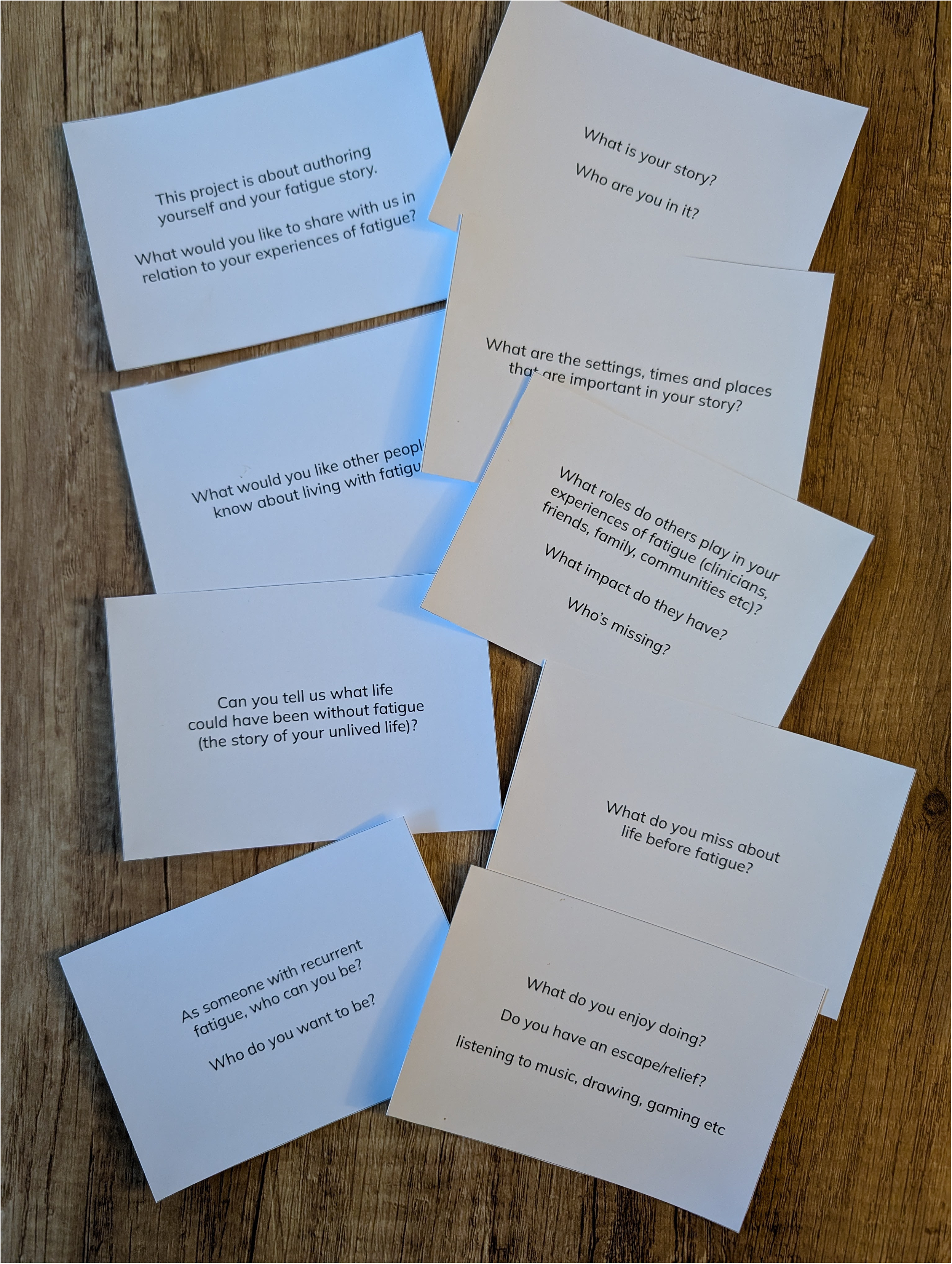
Question prompt cards.
The cards also serve as tools for pre-reflection, enabling recipients to explore their thoughts and experiences at their own pace in their chosen space. In this sense, we wish to challenge normative notions of research time and practice by ‘cripping’ them (Budworth, 2023): by providing prompts in advance, and encouraging recipients to engage with them in whatever way suits them, we disrupt the linear, continuous temporality often assumed in conventional research encounters and acknowledge the fragmented, unpredictable and fluctuating nature of chronic fatigue. This disruption of normative temporality reflects broader feminist disability scholarship that critiques neoliberal and ableist expectations of pace, productivity and bodily consistency (Ellis et al., 2025; Liddiard & Lawthom, 2025; Thomas, 2006).
The questions themselves (Table 1) are influenced by Bakhtin's (1981) concept of polyphony and multivoicedness, acknowledging the dynamic interplay between the voices of self and other, a concept that is particularly relevant in health research and healthcare communication in which the voices of professionals and patients often interpenetrate (Aveling et al., 2015). They also draw on Scott's (2022, 2023) sociology of nothingness, which explores how individuals make sense of themselves through reverse biographical narratives: what has not happened to me, who have I not become (but could have been). In this context, the prompts invite recipients to consider their bodies across different times and spaces, not only through thought, but through physical engagement with other elements in the kits and through relational reflection.
List of Questions Given in the Question Prompt Cards.
Word cards, or ‘fragments of experience’
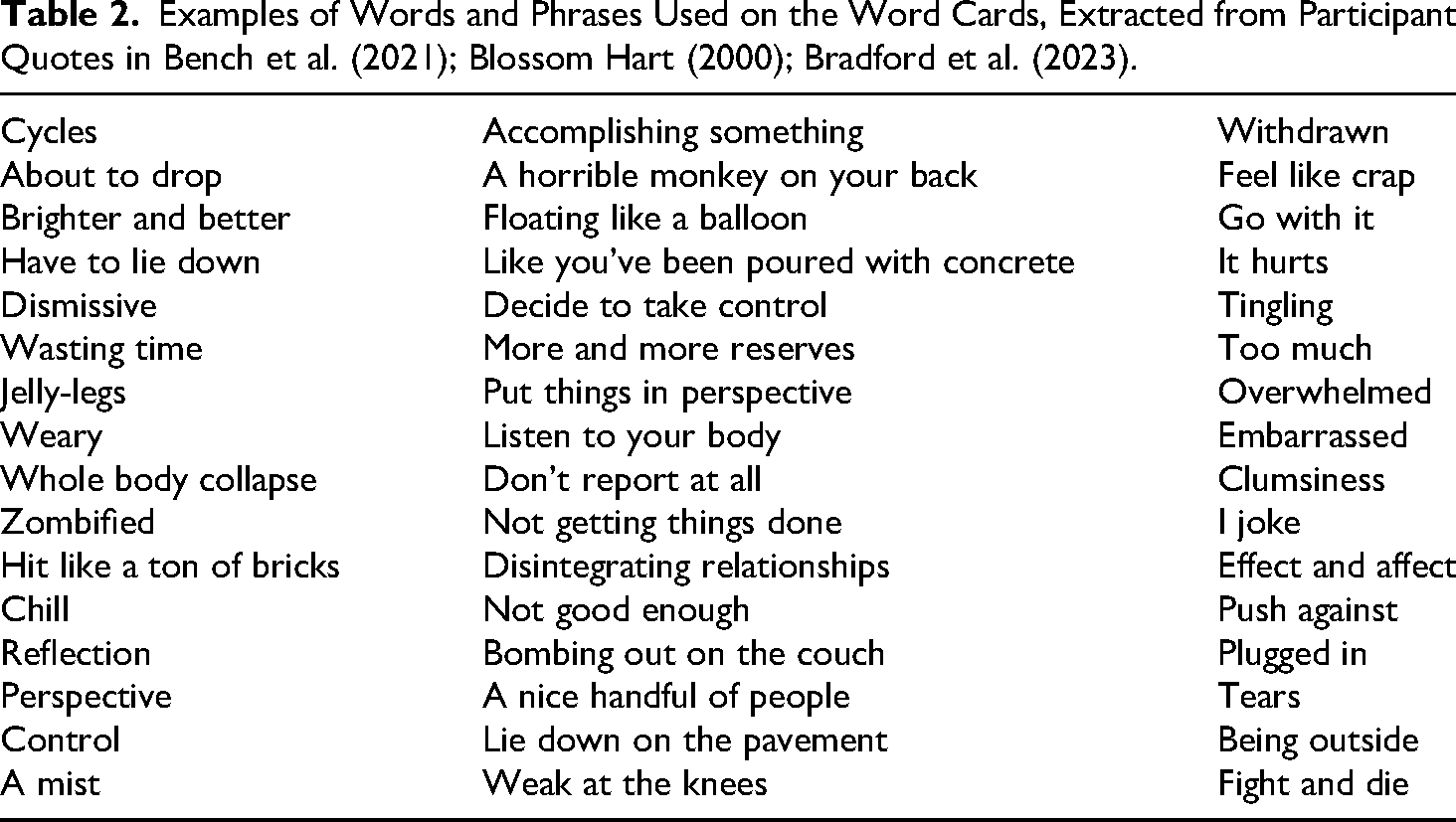
The word cards, or ‘fragments of experience’ (Figures 9 and 10) were created using words and metaphors extracted from participant quotes in existing published research into the lived experiences of LTF (Bench et al., 2021; Blossom Hart, 2000; Bradford et al., 2023). Recognising that many IwF are impacted by brain fog – difficulty concentrating, problems with memory and a sense of cognitive slowness – which can lead to further difficulty articulating the already nebulous experience of fatigue (Jaime-Lara et al., 2020; Newton et al., 2020), these fragments offer a potential way into thinking about and making sense of the embodied realities of LTF. With blank cards also included, allowing recipients to contribute their own words and phrases, we envisage the cards as a means to generate poetry, collage or engage with other forms of meaning-making (see Table 2 for example words and phrases).
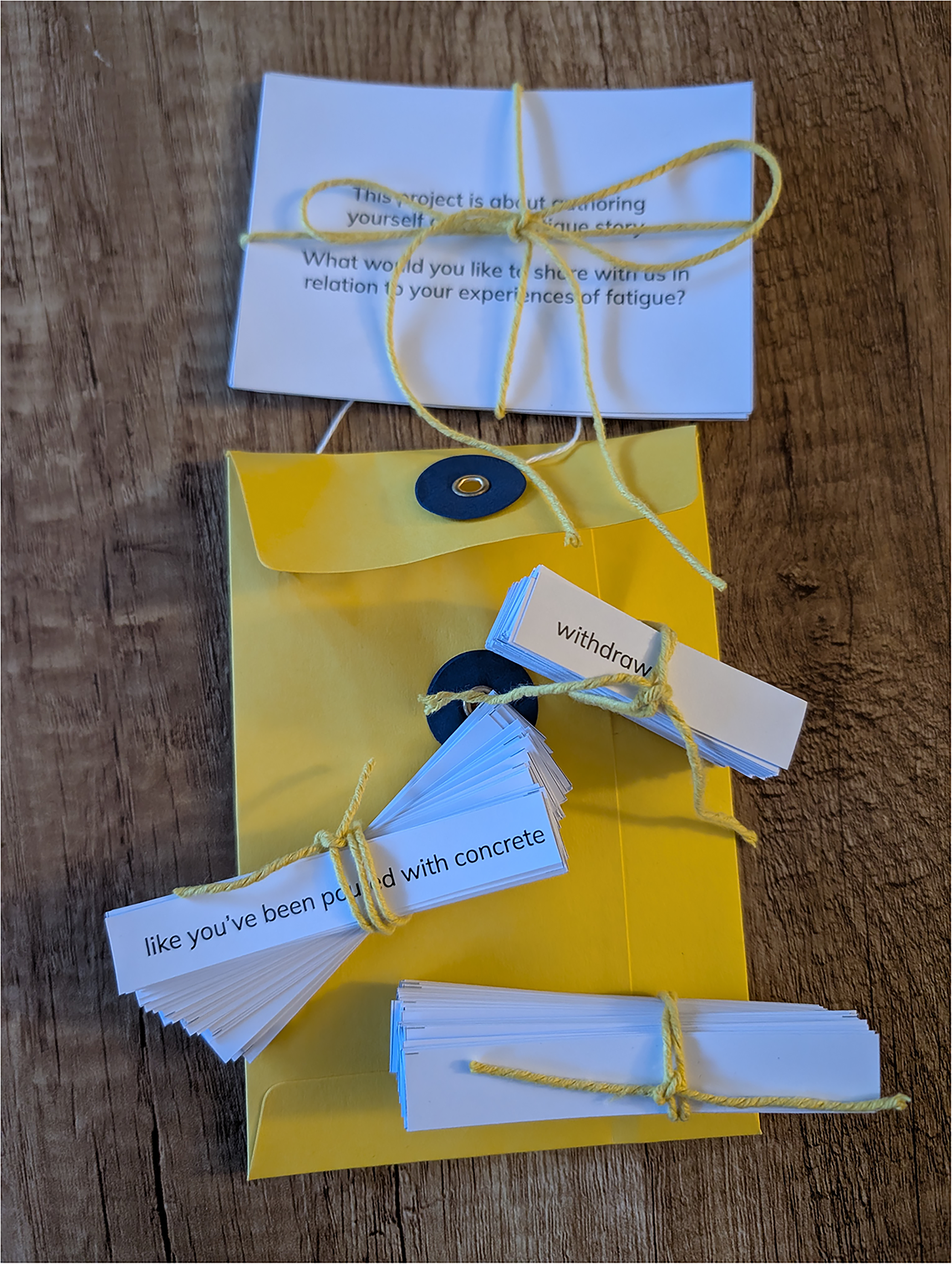
The word cards in bundles.
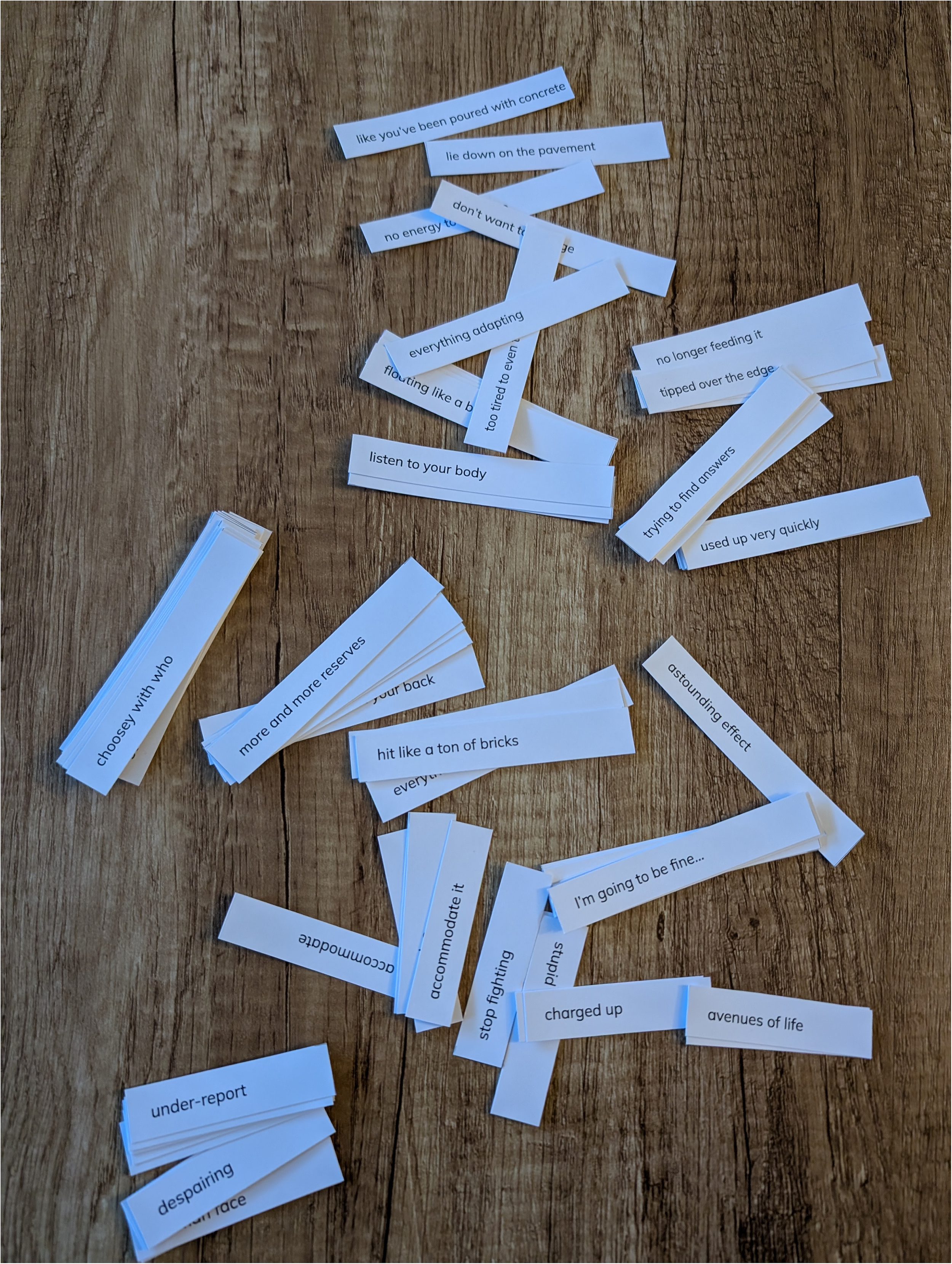
A selection of word cards.
Examples of Words and Phrases Used on the Word Cards, Extracted from Participant Quotes in Bench et al. (2021); Blossom Hart (2000); Bradford et al. (2023).
This idea is based on both that of found poetry, the arrangement of existing words and phrases from a text into poems to create a new meaning, and fridge poetry, a creative writing toy made of themed magnetic word tiles for composing poetry on a fridge, something which we both enjoyed in the 1990s and 2000s. While found poetry has been used previously in research to distil findings in more meaningful, profound and emotive ways (Reilly et al., 2018), by using previous participant quotes as our material, we aimed to use this technique to generate entirely new data. In this way, recipients of our kits can speak in unison with others with lived experience of LTF while retaining the uniqueness of their own lived truths. This resonates with Bakhtin's (1986) notion that, although words always come from a shared language and thus have been previously spoken, each utterance is a unique and unrepeatable event, infused with the speaker's distinctive intentions and context. It also links back to previous projects such as The Crossing (Harrison et al., n.d.), in which examples from others were included in the kit to help overcome the fear of the ‘blank page’, thus offering a form of dialogic permission that invites individuals to enter the conversation and contribute their own unique expressions.
While drawing on linguistic fragments from existing qualitative studies creates opportunities for resonance and shared entry points, we recognise that even short phrases or metaphors can risk reproducing dominant discourses around LTF. To mitigate this, we selected studies grounded in experiential and interpretivist methodologies, ensuring that the fragments we extracted emerged from first-person meaning-making rather than biomedical categorisation. Importantly, we worked only with brief fragments, not full quotes, precisely to avoid importing complete narratives. This approach is informed by Frank's (2012, p. 35) insight that ‘stories are composed from fragments of previous stories, artfully rearranged but never original’, itself drawing on Bakhtin's understanding of utterances as always dialogical. In this spirit, the fragments function not as definitive descriptors but as malleable, dialogic materials that participants can adapt, subvert or discard as they wish.
We also wanted the cards to support solidarity through knowing (Gastaldo et al., 2018), resisting the individualisation of illness by creating relational and communal spaces for reflection. A sense of isolation and of not being believed are common in IwF (Eilertsen et al., 2015; Kralik et al., 2005), whereas social support and a sense of community have been shown to ease the subjective burdens of the condition, helping individuals to adapt to new social realities and identities (Sanchez, 2019). By literally putting the words of other IwF into recipients’ hands, we hope to ease feelings of loneliness and social disconnection.
Metaphor also plays a central role here, offering a visceral and emotionally resonant means of accessing embodied experience. Card-sorting methods have been used previously to elicit participants’ ‘complex bodily worlds’ (Sutton, 2011), while metaphor elicitation has been recognised as a powerful tool for meaning-making in health research (Fletcher, 2013). By incorporating metaphors into our word cards, we hope to make space for engagement with the sensory, physical and emotional dimensions of LTF that often resist straightforward articulation due to their ambiguity. This practice aligns with feminist disability scholarship emphasising the importance of attending to ambiguous, fluctuating and hard-to-articulate embodied states, which are often excluded from dominant knowledge frameworks (Thomas, 2006; Wendell, 1996). By defying clear expression, these aspects of experience are often omitted from research (Carless & Douglas, 2016). In this context, poetic inquiry offers a valuable approach for engaging with slippery, complex topics (Yallop et al., 2010), enabling recipients to explore and communicate their experiences in ways that are emotionally connected, creative and deeply embodied.
Consultation process
To get a feel for the utility of the fatigue exploration kits as an embodied research method, we recognise the importance of engaging with IwF other than ourselves early on in the research process, as well as opening up dialogue with other academics and artists. The kits were presented by Lucy to an academic audience at the Qualitative Methods in Psychology conference hosted by the British Psychological Society in Leeds, UK (Prodgers, 2025, July 10) and Ellie's sister project, Iconic Fatigue, had its first exhibition at Sunny Bank Mills, Leeds, UK from 11 October to 24 December 2025. This immersive exhibition, led by Ellie and designer Bethany Wells in collaboration with print designers Hester Simpson and Charlotte Raffo, uses print design to boldly occupy the space in contemporary society that people with chronic illness are often excluded from, turning Perkins Gilman's The Yellow Wallpaper into ‘a protest for the post pandemic era’ (Polite Rebellion, 2025). We have also produced a public-facing podcast exploring the project and our collaboration (Harrison et al., 2025; Supplementary Podcast 1).
Most importantly, we held a series of in-person and online workshops in June 2025 with patient and public involvement and engagement (PPIE) groups, supported by the National Institute of Health Research (NIHR) Leeds Biomedical Research Centre, in addition to informal individual meetings with others with LTF who are known to us. 1 These sessions were designed to not only introduce the concept and intended use of the kits, but also invite IwF to engage physically and creatively with them, testing, adapting, and even ‘breaking’ them, as a way for us to learn how they might be developed further.
Initially, Lucy attended a 2.5-hour meeting of the Musculoskeletal PPIE group hosted by the NIHR Leeds Biomedical Research Centre at Chapel Allerton Hospital, Leeds, UK. The group included people with a range of musculoskeletal conditions, all of whom had lived experience of LTF either personally or as a carer. This meeting served as an initial exploration session to gain an early sense of how the kits were received and understood. In line with our intention to centre relationships, context and care, Lucy introduced the aims of the Embodying Fatigue project and presented the kits in a manner that invited curiosity rather than prescription. In-person attendees were able to handle and explore the kits directly, while online attendees were shown detailed views via camera. Subsequently, all attendees were sent additional written and photographic information to enable further exploration in their own time, reflecting our commitment to autonomy, accessibility and non-linear engagement.
Following this initial session, a separate group of lived experience contributors, again organised by the PPIE team at the NIHR Leeds Biomedical Research Centre, received the kits by post around two weeks before two 1-hour online workshops led by Lucy and Ellie. Consistent with our ethos of care, relationality and reciprocity, the kits were sent with a letter (Supplementary Letter 1) emphasising that they were gifts, theirs to keep and could be used in whatever way felt comfortable. The letter also acknowledged that some prompts might touch on sensitive or emotionally challenging aspects of fatigue, encouraging contributors to engage only with elements they felt able to and to give themselves space to process any feelings that arose. This approach embodied our feminist ethic of care (Tronto, 1993; Tronto, 2013) and our commitment to cripping research time (Budworth, 2023) by validating fluctuating capacity, emotional labour and non-engagement as meaningful. Contributors were also invited to post reflections, images or creations to an anonymised Padlet, a virtual noticeboard, should they wish to do so. The Padlet offered gentle, open-ended prompts about their experiences of exploring the kits, reflecting our desire to create decentralised, low-pressure spaces for connection, play and co-reflection.
The first workshop began with introductions and the development of a shared group agreement to support collaborative and safe working. Reflecting our resistance to hierarchical, extractive models of research, we sought to maintain an informal and flexible environment, encouraging contributors to come and go as needed. As facilitators, we shared aspects of our own lived experiences and the stories behind the development of the project, challenging traditional workshop power dynamics and modelling a form of relational openness aligned with our ethos of tactility, warmth and care.
The workshop then focused on: clarifying the aims of the research; discussing how the fatigue exploration kits related to these aims; and inviting initial responses to the kits. Notably, cripping time became visible here in practice. For example, one contributor explained that, although they found the kit beautiful, they had been unable to engage with it due to a sense of overwhelm. They expressed a sense of guilt at not having ‘done’ anything, echoing a common experience among people living with LTF, in which fluctuating capacity can become entangled with feelings of perceived inadequacy (Donoghue & Siegel, 2011). This is intertwined with healthist and neoliberal discourses that equate productivity with worth and compel individuals to continually ‘work on themselves’ to meet normative ideals (Goodley et al., 2018). We explored this gently, emphasising that not engaging with the kit was itself valuable feedback, and as meaningful as any creative output. This reassurance appeared to ease the pressure contributors felt and enabled them to participate fully in the dialogue about the kits and their fatigue experiences. In this moment, the workshop concretely enacted the ethos underpinning the kits: validating fragmented temporality, resisting productivity expectations, and fostering care-centred, relational engagement.
The second workshop centred on contributors’ experiences of using the kits between sessions. Contributors shared (only if they wished) any creations they had produced, reflected on their processes of engagement or non-engagement, and discussed how the kits might be adapted or refined for future use. This dialogic, exploratory format echoed our intention to treat the kits not only as tools for data generation, but also as relational artefacts, gestures of reciprocity and solidarity that open up space for shared meaning-making, playfulness and new connections. Through these practices, the workshops embodied the human-scale, care-oriented and context-sensitive ethos that shaped the design of the kits themselves.
Feedback
The response to date has been overwhelmingly positive: workshop sessions were oversubscribed and a waiting list opened, more sessions and presentation opportunities have opened up, and many have reached out to tell us of the importance of this work to them as IwF, underscoring the resonance of LTF as a topic as well as the appetite for creative, embodied approaches to exploring it.
The workshops themselves cultivated a strong sense of community and connection, with all attendees including Lucy and Ellie, sharing their own creations and experiences. This process also demonstrated the huge potential such workshops have as spaces for shared reflection, co-creation, and embodied exploration: the desire to connect with others with lived experience was palpable throughout. This mutual engagement, which is central to the ethos of the project, reinforces the value of arts-based methods in facilitating dialogue and emotional expression around invisible and complex conditions like LTF.
The kits were described as tactile, creative and validating – ‘like opening a hug’, as one attendee put it. Another shared how the kit unexpectedly became a playful bonding activity with her granddaughter, who ‘loved putting dolly in and out of bed’. These moments highlighted the kits’ potential not only as research tools, but also as catalysts for connection and storytelling.
At the same time, participants offered thoughtful and constructive feedback that we take forwards as we further develop this project (Supplementary Booklet 2). Key areas for refinement included clarifying abstract language, improving accessibility for those with visual or motor impairments, and providing more guidance on how and when to use the kits. Suggestions ranged from simplifying components and adding digital or sensory alternatives, such as music playlists, to expand on the potential for both emotional and somatic expression and exploration. These reflections connect with Titchkosky's (2011) argument that access is not a fixed endpoint but an interpretive, relational practice shaped through encounters with users. In this spirit, we recognise that accessibility is always partial and evolving and aim for future iterations of the kits to be tailored, where feasible, to participants’ sensory, motor or visual needs. Although full customisation will not always be possible given constraints of time, resources and our own embodied limitations, we position the work within an ethic of care that supports relational responsiveness and the ongoing, dialogic shaping of access.
Overall, this consultation process was a valuable and affirming step towards the future co-development of the kits. It reinforced their promise as an embodied method for participatory research and opened up exciting possibilities for their use in a larger arts-based project.
Future development
Looking ahead, we intend to develop this work in ways that more fully embody the critical–creative ethos that underpins the project. Our next phase involves: (a) refining the kits in response to the feedback gathered so far; (b) generating detailed multimodal, idiographic case studies that bring together participants’ creative artefacts, one-to-one participant-led interviews and optional online workshops to illuminate embodied, psychological, social, relational and sociocultural dimensions of LTF; and (c) translating these insights into accessible public-facing resources to support emotional, social and relational well-being for people living with LTF. Our aim is to work with other IwF throughout this process to ensure a multiplicity of perspectives are brought to the project.
Central to this development is a commitment to integrating creative artefacts not simply as elicitation devices, but as meaningful expressions of embodied and relational experience in their own right. Rather than using artworks only as prompts, then, we will analyse them as part of a participant's multimodal text (van Leeuwen, 2020): a unified analytical unit that brings together visual, material, narrative and dialogical forms of expression. This allows us to treat each participant's contributions as a coherent whole, acknowledging that the meanings of LTF unfold across modes and cannot always be captured through words alone. This approach builds on established arts-based and visual qualitative traditions (Brown, 2019; Leavy, 2020; Mannay, 2015) that conceptualise creative materials as forms of meaning-making that sit alongside, rather than secondary to, narrative accounts.
Analytically, we will integrate visual, material and narrative elements within a dialogical narrative framework (Frank, 2012; Prodgers et al., 2024; Sullivan, 2012). Here, artefacts, interview transcripts and (where relevant) workshop contributions will be read together as part of a multimodal story. Case studies will illuminate how individuals make sense of LTF across embodied, psychological, relational and sociocultural dimensions, while cross-case interpretation will trace shared motifs and divergences across participants. This multimodal, dialogical approach – aligned with feminist-informed visual methodologies that foreground reflexivity, participant agency and ethical sensitivity (Mannay, 2015) – offers a transparent and rigorous pathway for qualitative health researchers seeking to integrate creative methods throughout the research process.
Concluding remarks
In this paper, we have outlined the early stages of our ongoing interdisciplinary project that responds to the challenges of articulating and understanding the embodied realities of LTF via a novel method of data generation: our fatigue exploration kits. Grounded in a feminist ethic of care, we have set out to enact research that centres relational values of meaningful connection, reciprocity and solidarity, opens up spaces for shared reflection, and offers novel ways into the material and affective experience of LTF. This research continues, yet our work to date speaks to the generative potential of working across disciplinary boundaries, not only to access different kinds of knowledge, but also to challenge dominant epistemologies that often marginalise embodied and affective experiences.
Taken together, our early work suggests that non-verbal and embodied forms of communication offer alternative ways of knowing and being by making perceptible facets of LTF that frequently elude linguistic capture. Through materials that invite touch, arrangement, metaphor and play, the kits open up expressive possibilities that do not rely on cognitive clarity or verbal fluency, enabling participants to communicate sensory, affective and relational dimensions of fatigue that are otherwise difficult to articulate. These non-verbal modes not only broaden what can be known about LTF, but also function as subtle acts of resistance to reductive or biomedical narratives, allowing individuals to reclaim interpretive authority and craft meanings grounded in their own embodied realities. Although the full scope of this potential will emerge as the project progresses, our process to date indicates that creative, multimodal approaches can generate new forms of insight, connection and agency that challenge normative constraints on how illness is lived and understood.
In so doing, our approach responds directly to this Special Issue's animating questions. By treating creative artefacts as analytic materials, we harness psychology's empirical strengths – careful, systematic attention to evidence – while expanding what counts as ‘data’ in ways that centre embodiment, relationality and lived experience. At the same time, our critical–creative methodology enhances embodied inquiry for feminist psychology by providing a framework capable of holding complexity, ambiguity and multiplicity, enabling participants to express aspects of LTF that resist straightforward articulation. The fatigue exploration kits thus contribute to an emerging repertoire of rigorous, imaginative and ethically attuned methods that challenge normative epistemologies and open up new possibilities for understanding chronic illness.
To underscore the relevance of this work and its potential as a novel creative method, we wish to end not only with words, but also with artefacts. The following images and items (Figures 11–16) were created as part of our PPIE sessions by IwF, including Ellie and Lucy themselves. All have been reproduced with permission from the original creators. Not produced for analysis, but as part of the playful exploration we engaged in in our PPIE activities, we offer these artefacts to you without commentary as a way into understanding and opening up dialogues about the embodied realities of LTF, and into recognising the potential of such approaches.
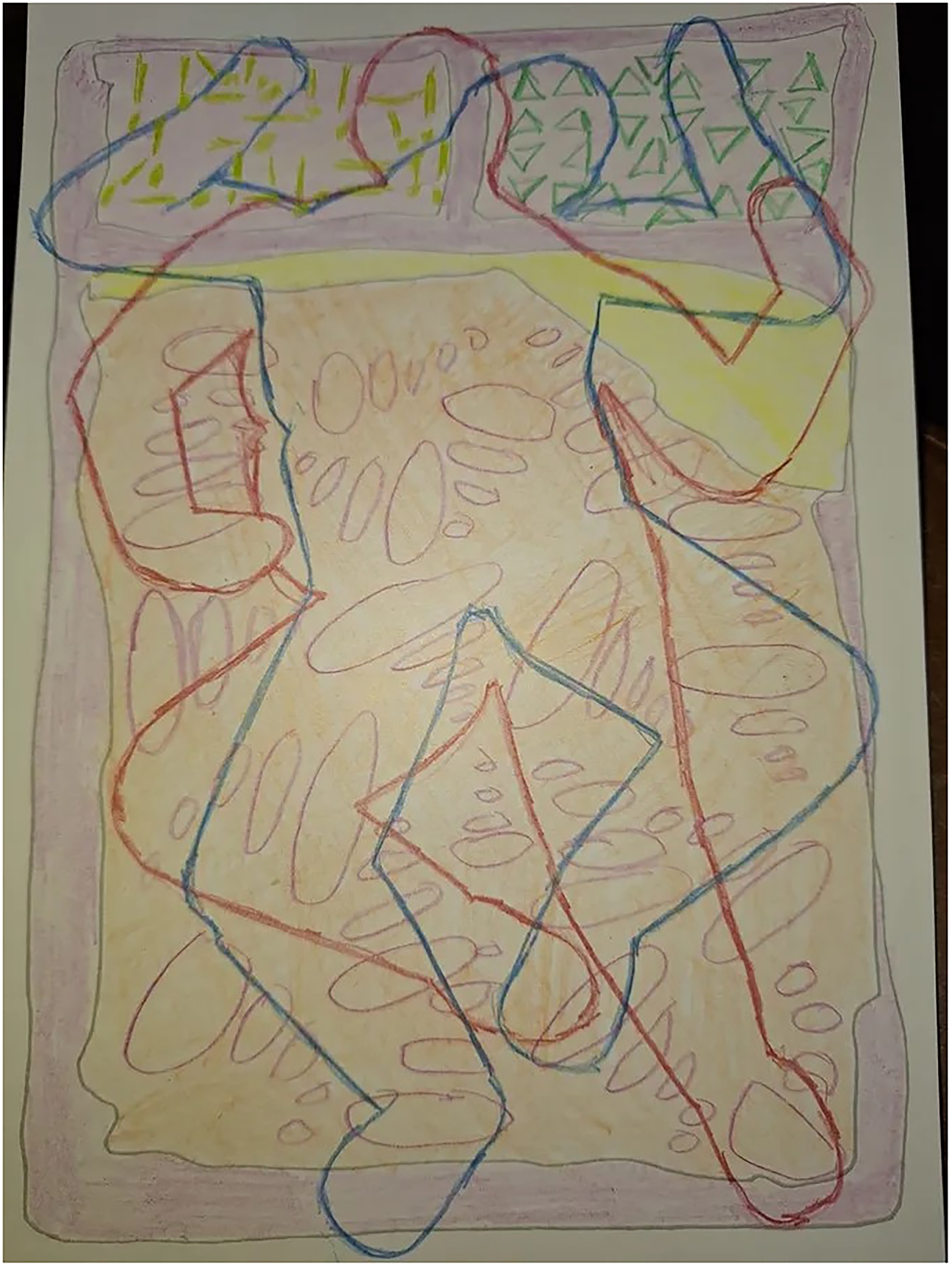
A paper bed decorated using pencil crayons and outlines of the posable paper person.
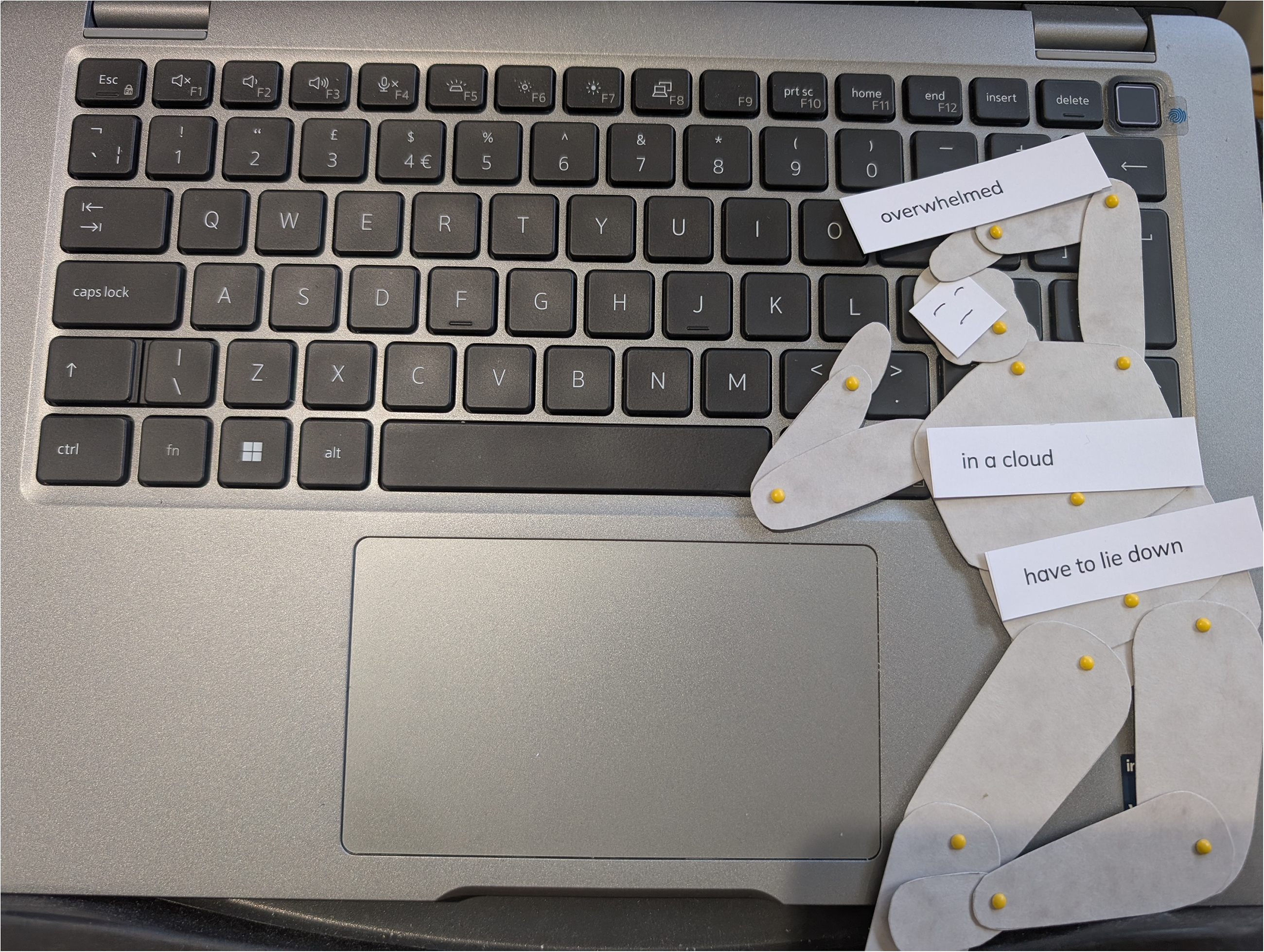
The posable paper person used in combination with the word cards and the PPIE member's own laptop.
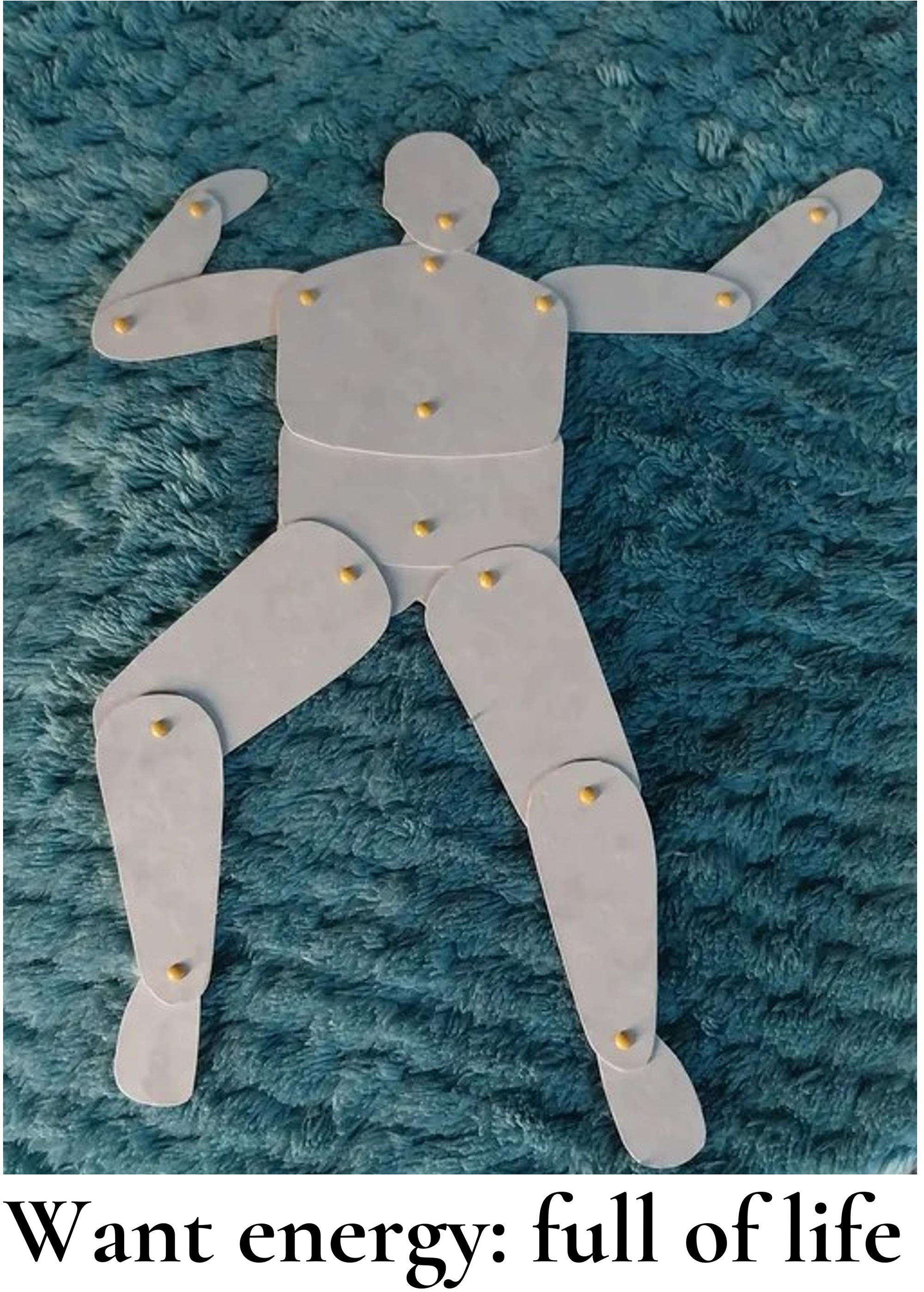
A posed paper person submitted with the accompanying text “Want energy: full of life”.
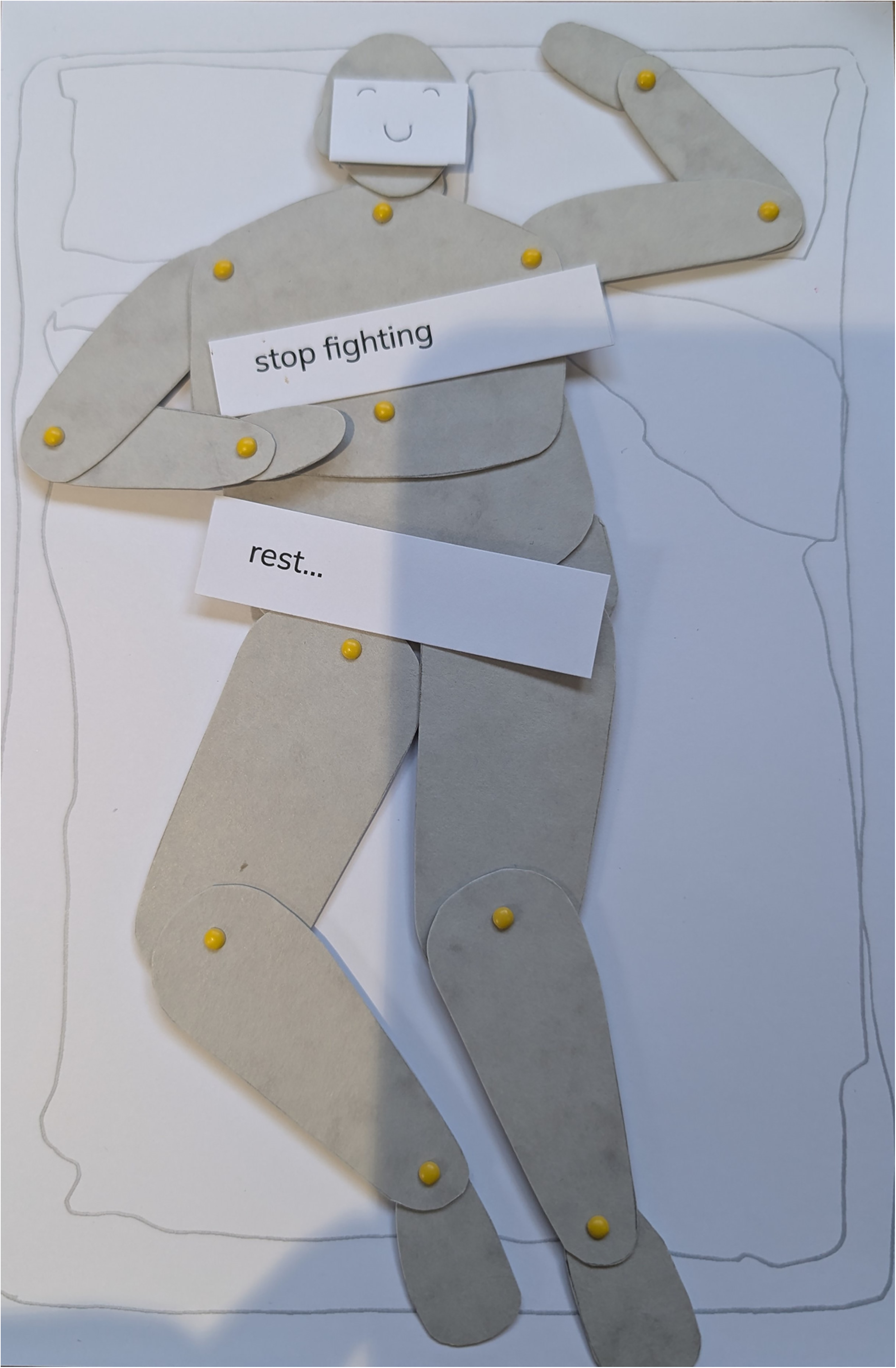
A posable paper person and bed used in combination with selected word cards.
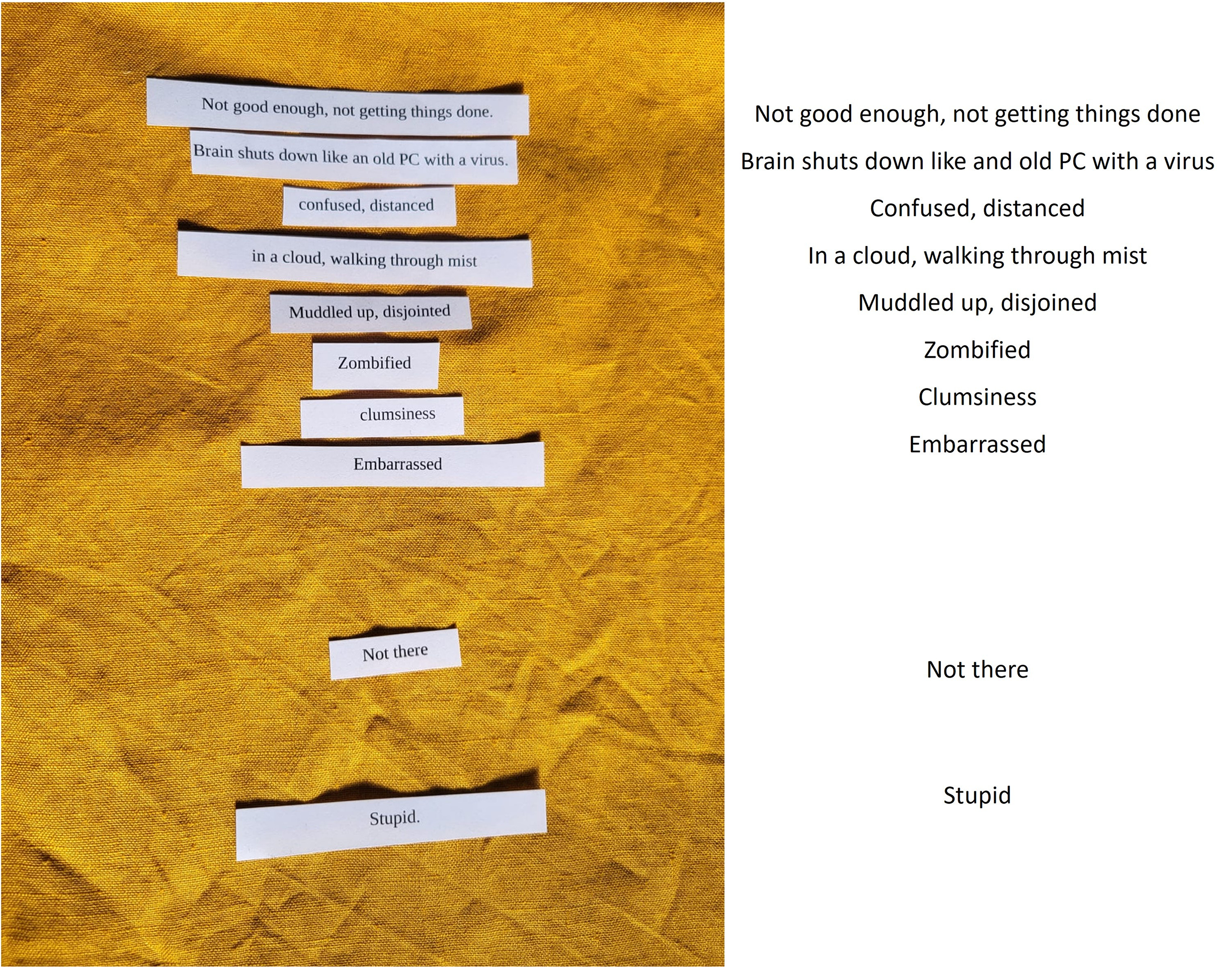
A poem created with word cards (text reproduced for accessibility purposes).
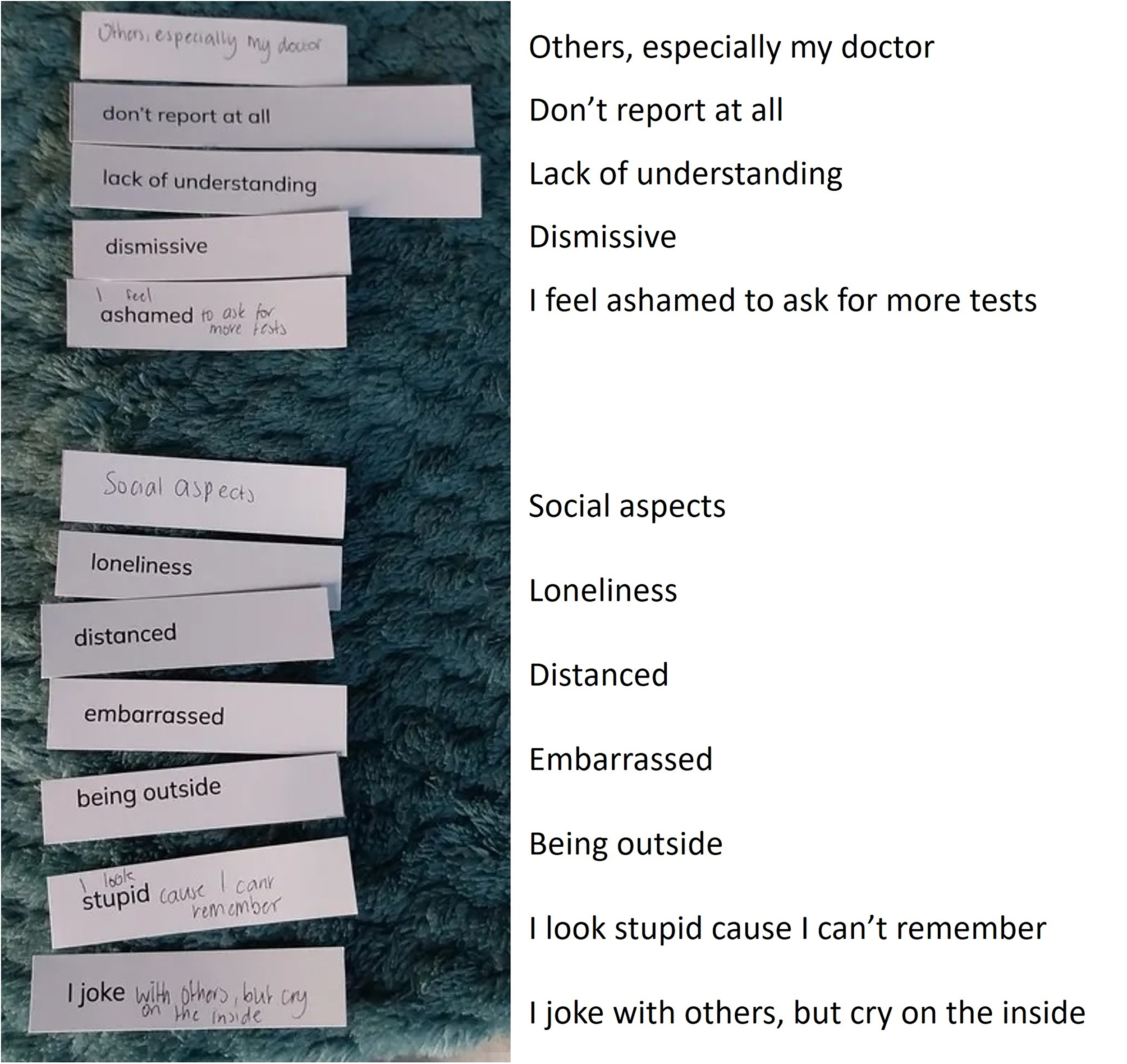
Another poem created with word cards (text reproduced for accessibility purposes).
Supplemental Material
sj-docx-1-fap-10.1177_09593535261429140 - Supplemental material for Creative exploration kits for embodying long-term fatigue: Developing a novel qualitative method through academic–artist collaboration and feminist praxis
Supplemental material, sj-docx-1-fap-10.1177_09593535261429140 for Creative exploration kits for embodying long-term fatigue: Developing a novel qualitative method through academic–artist collaboration and feminist praxis by Lucy Prodgers and Ellie Harrison in Feminism & Psychology
Supplemental Material
Supplemental Material
sj-mp3-2-fap-10.1177_09593535261429140 - Supplemental material for Creative exploration kits for embodying long-term fatigue: Developing a novel qualitative method through academic–artist collaboration and feminist praxis
Supplemental material, sj-mp3-2-fap-10.1177_09593535261429140 for Creative exploration kits for embodying long-term fatigue: Developing a novel qualitative method through academic–artist collaboration and feminist praxis by Lucy Prodgers and Ellie Harrison in Feminism & Psychology
Supplemental Material
sj-pdf-3-fap-10.1177_09593535261429140 - Supplemental material for Creative exploration kits for embodying long-term fatigue: Developing a novel qualitative method through academic–artist collaboration and feminist praxis
Supplemental material, sj-pdf-3-fap-10.1177_09593535261429140 for Creative exploration kits for embodying long-term fatigue: Developing a novel qualitative method through academic–artist collaboration and feminist praxis by Lucy Prodgers and Ellie Harrison in Feminism & Psychology
Supplemental Material
sj-pdf-4-fap-10.1177_09593535261429140 - Supplemental material for Creative exploration kits for embodying long-term fatigue: Developing a novel qualitative method through academic–artist collaboration and feminist praxis
Supplemental material, sj-pdf-4-fap-10.1177_09593535261429140 for Creative exploration kits for embodying long-term fatigue: Developing a novel qualitative method through academic–artist collaboration and feminist praxis by Lucy Prodgers and Ellie Harrison in Feminism & Psychology
Footnotes
Acknowledgements
We would like to thank the many people who have helped to shape this work to date. Our enormous gratitude goes to the brilliant Bethany Wells for her design prowess, and Matt Rogers for his skilful photography and access support; to the Cultural Institute for their backing of this project, in particular Yasmeen Soudani, for chairing our podcast with such care, and the wonderful Jo Nockels, without whom we would never have met – you will forever be the Embodying Fatigue midwife! We are also deeply grateful to Libby Atkinson, Amy Rebane and the PPIE team at the NIHR Leeds Biomedical Research Centre for your ongoing support, enthusiasm and belief in this work. Finally, and most importantly, we extend our heartfelt thanks to all those living with fatigue who have shared their insights, helped us play with these kits and ideas, and trusted us with their experiences. We couldn’t be here without you.

Ethical Approval
Ethical approval was not required for this study because no data has been generated with human participants to date.
Consent to Participate
Not applicable.
Consent for Publication
Where artwork was created as part of the Patient and Public Involvement and Engagement (PPIE) consultation process, informed consent for its reproduction in this paper was obtained from each individual contributor via email in advance of submission.
Author Contribution Statement
Lucy Prodgers: conceptualization (equal); funding acquisition (lead); methodology (equal); project administration (equal); writing – original draft preparation (lead); writing – review & editing (equal). Ellie Harrison: conceptualization (equal); funding acquisition (supporting); methodology (equal); project administration (equal); creative resources and design (lead); writing – review & editing (equal).
Funding
This project was kindly funded by the Cultural Institute at the University of Leeds (project development) and the NIHR Leeds Biomedical Research Centre (PPIE consultation).
Declaration of Conflicting Interests
The authors declared no potential conflicts of interest with respect to the research, authorship, and/or publication of this article.
Data Availability Statement
No datasets were generated or analysed during the current study. As this research is still in its design stages, there are no data available for sharing at this stage.
Supplemental Material
Supplemental material for this article is available online.
Notes
Author biographies
References
Supplementary Material
Please find the following supplemental material available below.
For Open Access articles published under a Creative Commons License, all supplemental material carries the same license as the article it is associated with.
For non-Open Access articles published, all supplemental material carries a non-exclusive license, and permission requests for re-use of supplemental material or any part of supplemental material shall be sent directly to the copyright owner as specified in the copyright notice associated with the article.
