




Abstract
This article examines antisemitism in Türkiye within the framework of the new media landscape. The objective of this study is twofold: firstly, to investigate antisemitic discourses on Twitter within the cultural and political context in contemporary Türkiye and, secondly, to scrutinize the role of Twitter in this context. The study centers on the tweets and replies of five Turkish-Jewish writers that were collected between 5 November 2021 and 30 January 2022, a period coinciding with the airing of the Netflix original series The Club, during which antisemitic discourses intensified. Finally, this study posits that despite a favorable portrayal of Jewish individuals in the series, the discourse surrounding the historical and political incidents targeting minorities, mainly Jews, that were depicted in the series gave rise to antisemitism. This was expressed on Twitter largely through rhetoric that reinforces the marginalization of the Jewish community in Türkiye.
The historical roots of antisemitism in Türkiye
Turks and Jews have lived in close proximity within the present-day borders of Türkiye for centuries. In 1492, tens of thousands of Jews fleeing Spain and Portugal migrated to the Ottoman Empire following the issuing of the Alhambra Decree. Within the Ottoman Empire, the Jewish populace was governed under the millet system, a framework that formally acknowledged their status as a religious minority and accorded them autonomous control over fiscal, religious, and educational matters (Barkey, 2008; Içduygu and Soner, 2006). According to Lamprou (2022: 34), the Ottoman Muslim elite actively portrayed Ottoman Jews as exemplifying unwavering loyalty to the state, serving as a striking juxtaposition to the perception of Ottoman Christians; thus, antisemitism within the Ottoman Muslim populace was virtually absent. However, in the aftermath of the establishment of the Republic of Türkiye in 1923, a notable shift occurred whereby Jews began to experience two contradictory phenomena: first, Jews came to be increasingly categorized alongside other non-Muslim groups, leading to discriminatory treatment; secondly, Jews were increasingly portrayed through antisemitic rhetoric as a fixed, universally defined entity (Lamprou, 2022: 34).
Before diving into the historical discussion of antisemitism in Türkiye, it is imperative to first grasp its conceptual framework and definition. According to the International Holocaust Remembrance Alliance (IHRA)’s (n.d) “Working Definition of Antisemitism,” antisemitism is defined as follows: a certain perception of Jews, which may be expressed as hatred toward Jews. Rhetorical and physical manifestations of antisemitism are directed toward Jewish or non-Jewish individuals and/or their property, toward Jewish community institutions and religious facilities. Antisemitism frequently charges Jews with conspiring to harm humanity, and it is often used to blame Jews for ‘why things go wrong.’ It is expressed in speech, writing, visual forms and action, and employs sinister stereotypes and negative character traits.
Moreover, IHRA lists several examples of antisemitism in public life and media. Some of them are significant to note in further examination of this study: for example, accusing the Jews as a people, or Israel as a state, of inventing or exaggerating the Holocaust; drawing comparisons of contemporary Israeli policy to that of the Nazis; accusing Jewish citizens of being more loyal to Israel, or to the alleged priorities of Jews worldwide, than to the interests of their own nations. In this regard, this paper has adopted the IHRA’s definition of antisemitism throughout the course of the analysis.
Since the early Republican era, antisemitism in Türkiye has exhibited diverse manifestations and expressions contingent upon the prevailing ideological currents of each respective era (Bali et al., 2021: 224–225). Animosity toward Jews has persisted as an inherent characteristic of Turkish nationalism, encompassing both verbal and practical manifestations, and has also been used as a tool to legitimize competing versions of Turkish nationalism (Lamprou, 2022: 33). Following the dissolution of the Ottoman Empire, the state’s quest for a shared language and identity detached from the imperial framework emerged. Following the signing of the Treaty of Lausanne in 1923, inhabitants of diverse religious and ethnic backgrounds within the country were classified as minorities based on their religious affiliation. Non-Muslim communities such as Greeks, Armenians, and Jews were designated as non-Muslim minorities, while other Muslim groups, including Kurds, Alevis, and Circassians, were excluded from minority status and categorized as ethnic groups. Although Islam as an element of Turkish national identity began to be excluded from official texts in the late 1920s in line with the promotion of the state’s secular identity, in practice religion remained an undeniable factor influencing the notions of similarity and difference among individuals (Lamprou, 2022: 41). Thus, the majority Sunni Muslim population was situated at the core of Turkish identity (Inceoğlu and Çoban, 2014: 9).
Several violent campaigns against Jews were orchestrated, sometimes by the state and often with the support of the press, throughout the early Republican era. In 1927, the murder of a young Jewish woman named Elza Niyego triggered a large public protest by the Jewish community in Istanbul, which in turn prompted the government to restrict Jews from traveling between Istanbul and Thrace for 1 year (Daniels, 2017: 369). Prominent Turkish newspapers such as Cumhuriyet, Son Saat, and Vakit, among others, disseminated false information leading to abhorrent attacks targeting Jews. As reported by Levi (2017: 64–66), the aforementioned newspapers asserted that Jews had politicized Niyego’s funeral as a protest directed against Türkiye, leading to accusations of alleged offenses against Turkish identity and the disturbance of public order.
During the nationalist campaigns in the 1930s and 1940s, several acts of violence targeting the Jewish community in Türkiye occurred. The press played a pivotal role in promoting antisemitism in the 1930s by endorsing discriminatory policies and negative portrayals of Turkish Jews (Bali, 2013: 309; Lamprou, 2022) that helped to escalate violence against the community, such as in case of the 1934 Thrace Incidents (Bali, 1999). In the summer of 1934, Turkish Muslim mobs carried out targeted acts of aggression against Jews in Eastern Thrace. These acts included looting Jewish-owned establishments, physical assaults, and urging Jews to leave the region (Bali, 1999; Daniels, 2017; Levi, 2017). Diverse perspectives exist regarding the motivations behind the events in Thrace, shedding light on prevalent antisemitic and influential contemporary discourses. Levi (2017) links the Thrace Incidents to Nazi discourse, in which derogatory descriptions of Jews were propagated by the press in the early 1930s. However, Daniels (2017: 366–367) argues that Thrace’s antisemitism had regional roots, driven by nationalist sentiments and the presence of antisemitic publications.
In the early years of the Turkish Republic, nationalist discourse in the region aimed to exclude “foreigners,” that is, non-Muslims, from the economy and promote those considered as “Turks” through antisemitic publications and expressions. Influential ultra-nationalist figures such as Nihâl Atsiz and Cevat Rıfat Atilhan, known for their antisemitic sentiments, provoked the Turkish Muslim population through their writings, such as those found in the latter’s magazine, İnkılâp, which portrayed Jews negatively through conspiratorial themes, depicting them as malevolent agents seeking global domination and control over the economy (Landau, 2003: 205–209; Lamprou, 2022: 35). Jews were subjected to harsh criticism employing antisemitic rhetoric, which portrayed Turkish Jews in a manner reminiscent of the Jewish stereotypes found in Nazi iconography (Bali, 2013: 309–310). Atsiz, a strong supporter of Nazi race theories, glorified the historical legacy of the Turkish people and emphasized the superiority of the Turkish race, advocating for their unification in a powerful state (Landau, 2003: 205, 209). These publications and expressions fostered the belief among Turkish Muslims that Jews held a dominant position in the economy, justifying the seizure of Jewish assets and their expulsion from the region in the name of Turkification (Daniels, 2017: 367–368, 389). Many chose to leave the Thrace region due to violence (Levi, 2017: 104–105; Köksal, 2016: 12–13). These antisemitic campaigns led to the migration of Jews from Thrace to Istanbul and Palestine, significantly impacting the Jewish population in contemporary Türkiye.
In the 1940s, the effort to nationalize the economy was reignited with Law No. 4305, known as the Wealth Tax, which was implemented on 11 November 1942. This significantly affected non-Muslim minorities, mainly the Jewish community. It was not difficult to garner public support for these policies due to the existing grudge against minorities and their negative portrayal in the media (Bali, 2013; Bali et al., 2021). According to Bali (2013: 309), this phenomenon can be elucidated through the popular perspective that non-Muslims did not engage in acts of sacrifice or bloodshed for their nation during World War I and the War of Independence but rather were augmenting their economic prosperity during this period. Consequently, there was a prevailing belief that the genuine progenies of the nation, namely Muslim Turks, should justifiably take control over trade and industry within the country from non-Muslim entrepreneurs and businessmen.
In this context, the imposition of the 1942 Wealth Tax targeting non-Muslim merchants, thereby facilitating their removal from the Turkish market, can be regarded as an outcome of the aforementioned ideology (Bali, 2013: 309). Prime Minister Şükrü Saraçoğlu’s parliamentary speech further substantiates the deliberate intent behind this tax measure: “This law is also a law of revolution. We are facing an opportunity that will give us economic independence. By thus eliminating the foreigners who dominate our market, we will put the Turkish market into the hands of the Turks” (Barutçu, 1977: 263, cited in Çetinoğlu, 2009: 84).
Of the 315 million liras collected under the Wealth Tax, 53% was covered by minorities holding most of the private capital in the country, 36.5% by Muslims, and 10.5% by non-citizens (Shaw and Shaw, 2002: 470). Istanbul treasurer Ökte (1951: 18), who was directly involved in the process, stated that the treasury received a document from the Ministry of Finance in 1942, underlining the “urgency of collecting data on people who have gained enormous wealth,” claiming that Greek, Armenian, and Jewish citizens were on a separate list. When Ökte was asked how the figures, including wartime estimates, were calculated, he stated that it was “just an estimate” (Ökte, 1951: 18). These lists were later used to collect taxes.
Bali et al. (2021: 225) critically analyze the tax policy, describing it as arbitrary and discriminatory toward non-Muslim minority communities that resulted in an unfair assessment of taxable wealth compared to their Muslim counterparts. Families were forced to sell their assets below market value to meet the high tax demands, with Muslim Turks being the primary buyers, thereby resulting in the transfer of goods and properties from minority groups to the Muslim population (Köksal, 2016: 13). Those unable to pay were forcibly relocated to Eastern Anatolia and subjected to labor camps (Bali et al., 2021: 225–226). Consequently, this discriminatory treatment of minorities can be understood as an endeavor to nationalize the economy (Bali et al., 2021; Çetinoğlu, 2009; Levi, 2017). Despite the tax’s abolition in 1944, individuals were not reimbursed. Minority groups bore the disproportionate burden of this tax.
During the mid-1950s, socio-political and economic disparities remained closely linked to ethno-cultural distinctions. Non-Muslim individuals were persistently viewed as “unreliable” and “undesirable” both by the authorities and the public (Aviv, 2022: 88). Minorities in Türkiye were viewed as aligned with external entities, leading to their reduced socio-political status and economic stability, especially during diplomatic disputes. The treatment of Jews during this period exemplifies this assumption.
When the conflict over Cyprus intensified in 1954, Türkiye adopted a confrontational foreign policy stance toward Greece. The Greek minority residing in Türkiye was accused of aligning themselves with the Greek Cypriots, leading to their categorization as “foreign” and as a potential threat to the nation (Aviv, 2022: 88). In 1955, the state falsely reported that Greeks had bombed the birthplace of Mustafa Kemal Atatürk in Thessaloniki. Subsequently, on 6–7 September 1955, the state sponsored violent acts targeting Greeks and other minorities in Istanbul and Izmir, including the burning of Jewish-owned businesses and the intimidation of Jews and Armenians. These incidents serve as a manifestation of the Turkish state’s discriminatory treatment toward religious minorities during this period (Kuyucu, 2005). In the aftermath of these events, the Turkish state failed to provide sufficient economic restitution to the affected minority members for the looting of their shops.
As the press’ role in inciting antisemitism during these historical incidents mirrors that of social media’s ability to incite antisemitism today, this article endeavors to examine antisemitism in contemporary Türkiye within the framework of the new media landscape. The objective of this study is twofold: first, to investigate antisemitic discourses on Twitter within the cultural and political contexts of contemporary Türkiye and, second, to scrutinize the role of Twitter in this context. Consequently, the research focuses on analyzing the tweets and replies of five Turkish-Jewish writers, specifically exploring their connection to Jewish identity and the state-led discrimination endured by the Jewish community. These tweets were generated between 5 November 2021 and 30 January 2022, a period coinciding with the release of both parts of the Netflix original series The Club (Kulüp in Turkish) when a noticeable rise in antisemitic discourses occurred on Twitter. This article will, first, explore the media environment in Türkiye today and its relation to antisemitic discourse. Second, it will examine the methodology behind the study of the dataset and then the main findings arising from it. Lastly, the study concludes that antisemitism in contemporary Türkiye has largely reemerged from the historical depictions and expressions of antisemitism in today’s new media environment, which reinforces the marginalization of the Jewish community in Türkiye.
Antisemitism and media in contemporary Türkiye
Throughout the Justice and Development Party (AKP) era, which commenced in 2003 with Recep Tayyip Erdoğan assuming the role of prime minister, the rise of Erdoğan has coincided with the escalating presence of antisemitism in Türkiye (Aviv, 2017: 175). Although antisemitic sentiment had already existed in Türkiye prior to Erdoğan’s emergence on the country’s political stage, nonetheless, over time Erdoğan’s assertions and expressions have increasingly taken on a more overtly antisemitic tone and character, such as comparisons of Israel’s acts to Nazi crimes (Bali et al., 2021: 228). According to Aviv (2017), it is undeniable that Erdoğan’s statements, which amplify and endorse antisemitic discourse, contribute to its proliferation. This has also coincided with a rise in antisemitic publications and public declarations during Erdoğan’s tenure. This, however, as Bali et al. (2021: 232) argue, is primarily due to the explosion of communication that accompanied Türkiye’s entry into the digital age. Therefore, the manifestation of antisemitism within Erdoğan’s “New Türkiye” differs in its nature compared to previous historical periods (Bali et al., 2021: 229–230).
The dissemination of antisemitic discourses and their incendiary impact has been significantly influenced by the media. Prior to delving into the role of the Turkish media in disseminating and provoking antisemitism, it is crucial to acknowledge the relationship between the Turkish media and the government. Some conservative newspaper columnists aligned with Erdoğan’s party, the AKP, have become increasingly emboldened to openly express antisemitic views. Aviv (2017: 176) suggests that the government under Erdoğan’s leadership facilitates an environment in which hatred finds legitimacy in Türkiye, which is then supported by certain Turkish media outlets, particularly during incidents in which a surge in antisemitic sentiment is witnessed. Aviv (2017: 140) highlights that within the Turkish press, sporadic publication of antisemitic articles occurs, predominantly within Islamist or nationalist right-wing newspapers such as Yeni Şafak, Yeniçağ, Milli Gazete, Bugün, and Vakit.
According to the Hrank Dink Foundation’s report on hate speech in the media in 2019, although these newspapers often precipitate antisemitic hate speech toward Jews in Türkiye, they mostly make such statements through exaggeration, attribution, or distortion. These newspapers employ various antisemitic motifs, including Holocaust denial, propagating hostility toward Israel, and drawing comparisons between Nazi atrocities and Israel’s actions against Palestine (Bali, 2013: 317). The term “Zionism” is prevalently used to denote any negative colonial act or ideology, particularly in alignment with the ideology depicted in the Protocols of the Elders of Zion, which portrays Zionist Jews as conspiring to dominate the world. The media frequently accuses Jews of emphasizing Hitler’s crimes while perpetrating even more egregious acts against Palestinians, simultaneously dehumanizing Israel (Aviv, 2017: 140).
Given the historical context and the enduring nature of antisemitism, it is understandable that Jews may perceive each instance of hostility as a continuation of the long-standing phenomenon known as “the oldest hatred” (Aviv, 2017: 141). Moreover, antisemitism frequently takes the form of targeting Israel and Zionism. In media discourse, the term “Zionists” is often utilized as a substitute for “Jews,” accompanied by derogatory adjectives. This approach aims to incite the public by selectively quoting Quran verses hostile toward Jews and fostering an environment conducive to violence (Aviv, 2017; Bali et al., 2021).
During Erdoğan’s tenure as prime minister, two major incidents precipitated the rise of antisemitism in Turkish media. The Mavi Marmara incident, which occurred on 31 May 2010, and refers to the Israeli military operation against a Turkish-led aid flotilla en route to Gaza, resulted in the loss of nine Turkish lives and severely strained the previously close relations between Türkiye and Israel. Consequently, the Mavi Marmara incident, primarily political in nature, swiftly catalyzed a campaign targeting Jews in general and Turkish Jews specifically, representing a definitive turning point in the deteriorating relationship between Israel and Türkiye (Aviv, 2022: 90). The Turkish media as a collective entity responded to the attack with a palpable sense of anger, which was particularly pronounced among religious conservative newspapers (Durna and Özçetin, 2012: 279).
Reports of the event were falsified in the Turkish press, with prominent figures such as IHH Humanitarian Relief Foundation deputy chairman Hüseyin Oruç stating that Turkish Jews fought on the deck of the Mavi Marmara arm in arm with Israeli defense soldiers (Aviv, 2017: 110). Moreover, the Turkish media called for a response from Şalom, the sole Jewish newspaper in Türkiye, regarding the sentiments of Turkish Jews in relation to the incident. The Chief Rabbinate issued a response expressing that Turkish Jews shared the same sense of sorrow for the loss of Turkish lives as the wider Turkish community (Hoff, 2013: 127; Aviv, 2022). This incident marked the “normalization of antisemitism” within the highest echelons of the state (Hoff, 2013: 186) as Turkish Jews were once again asked to prove their loyalty to Türkiye and the group was marginalized as “foreigners.”
Following this event antisemitism in the Turkish press only began to dissipate following President Erdoğan’s pronouncement dissociating the Jewish population of Türkiye from any involvement in the Mavi Marmara incident. Rather than blaming the country’s Jewish population for the incident, Erdoğan expressed his opposition toward the Israeli government. Only then did the Turkish media begin to adopt an anti-Israel orientation rather than target the country’s own Jewish population (Aviv, 2017: 108). In this regard, Durna and Özçetin (2012: 276–280) emphasize the conscious and intentional approach adopted by religious conservative newspapers in relation to the incident. These Turkish religious conservative newspapers made a concerted effort to avoid adopting an antisemitic stance while criticizing the Israeli assault. Their deliberate emphasis lies in the necessity of distinguishing between the Israeli people/Jews and the Israeli state/government, alongside calling for the condemnation of antisemitism as a crime against humanity (Durna and Özçetin, 2012: 276). In their condemnation of antisemitism as a crime against humanity, mirroring Erdoğan’s words on this issue, newspapers like Zaman exemplified a measured and moderate approach, urging their readership to calmly evaluate the issue. To achieve this objective, Zaman frequently quoted prominent figures from the Turkish-Jewish community and Jewish individuals who command international respect, such as Holocaust survivors and Jewish academics. Other newspapers, including Yeni Asya, attempted to distance themselves from antisemitism by reporting on Jewish responses to the attack (Aviv, 2017: 187).
For decades Türkiye has consistently shown sympathy toward the Palestinian cause, with this sentiment being voiced not only by Islamist groups but also by secular political figures such as former President Ahmet Necdet Sezer and former Prime Minister Bülent Ecevit (Aviv, 2022: 90). In 2014, Operation Protective Edge, also known as the 2014 Gaza Conflict, gave rise to a second distinct manifestation of antisemitism. This marked the first instance in Turkish history where the nation declared a 3-day period of national mourning specifically for the Palestinians. Alongside the dissemination of anti-Israel sentiments, members of the AKP also resorted to employing antisemitic rhetoric (Aviv, 2022: 92). During this military operation the dynamics between Türkiye and Israel were put to the test, creating repercussions for the Jewish minority in Türkiye (Aviv, 2022). Historical patterns persisted, whereby Jews faced accusations of being associated with Mossad and aiding Israel against Türkiye (Aviv, 2017: 123).
Despite antisemitism reaching new heights during Operation Protective Edge, there has also been a notable increase in efforts to denounce antisemitism and to establish a distinction between Turkish Jews and Israel, surpassing previous years’ campaigns. While Erdoğan drew Israel-Nazi comparisons during Operation Protective Edge, he also advocated for the protection of the Jewish community in Türkiye, stating, “I do not approve of any negative treatment toward our Jewish citizens in Türkiye, despite all of this. Why? Because they are citizens of this country” (Aviv, 2017).
However, despite the efforts of Erdoğan and certain media outlets to differentiate between Turkish Jews and Israel, social media platforms were utilized as channels for the dissemination of antisemitic content, thereby fostering calls for violence against Jews in Türkiye. Twitter played a pivotal role in this context, facilitating the rapid dissemination of antisemitic discourse and exerting influence on individuals and the broader political landscape. Certain tweets advocated for the burning of synagogues, proposed the destruction of all factories owned by Jews, and made explicit reference to the fact that Jews residing in Istanbul often spend their summers on the Princes’ Islands. The identification of the Jews’ specific location is particularly significant as it essentially serves as an incitement to attack them within the safety of their protected residences (Aviv, 2017: 119).
The propagation of explicit calls for harm toward Jews was not limited to social media platforms but also extended to newspapers such as Yeni Akit, which employed a clear intimidation tactic by alluding to the possibility of a repetition of the “1955 Incidents” (referring to 6–7 September Incidents or Istanbul Pogrom) targeting Jews in Türkiye (Köse, 2014). In an article titled “Istanbul’daki sinagog görevlilerinden küstah sözler [The rude utterances of the workers from the synagogue in Istanbul],” Yeni Akit (2014) called for an organized rally against synagogues. The newspaper claimed that some of the Ashkenazi synagogue officials in Istanbul justified the Israel Defense Forces’ operation in Gaza. Synagogues also became a target for protests. The most shocking manifestation of antisemitism in Türkiye during the Operation was an antisemitic rally in Istanbul, where participants yelled, “Jew, don’t forget, your turn will come,” resembling language used in Nazi Germany. This was the first rally of its kind to take place in Türkiye in the last decade (Aviv, 2022: 93). These antisemitic incidents were considered as one of the most serious threats to the Jewish community in Türkiye since the Neve Shalom Synagogue bombing in Istanbul in 2003.
Throughout the 2000s, several notable publications emerged that focused on conspiracy theories, some of which propagated antisemitic themes. For instance, the Efendi series by Soner Yalçn (2004 and 2006) gained significant popularity in the Turkish book market, indicating a trend toward the normalization of antisemitism within mainstream Turkish culture (Nefes, 2019: 400). The works of Yalçın highlight that Türkiye’s normalization of antisemitism lies not so much in a sense of national unity but more in alignment with support of the Palestinian minority and negative perceptions of Israel (Hoff, 2013: 1208). This normalization was further evident in films and television series such as Valley of the Wolves: Iraq (2006), Valley of the Wolves: Palestine (2011), and Separation: Palestine in Love and War (2009). These productions propagate derogatory stereotypes of Jews, portraying them as corrupt, greedy, and barbaric. They contribute to the fostering of animosity toward Jews by depicting Israeli soldiers solely as ruthless killers, particularly in reference to political incidents such as the Mavi Marmara incident.
Despite the prominence of antisemitism in Turkish media, limited research has been conducted on the subject of antisemitism in new media within the context of Türkiye. Perhaps the most inciteful of these studies is Nefes’s (2015) work, which explores antisemitism in the Turkish online forum “Ekşisözlük.” Nefes analyzes users’ comments on the online platform, which include comments such as that the Jews deserve Hitler and that Jews use the Holocaust to justify Israel’s crimes against Palestine. This study seeks to address this gap in the existing literature and make a valuable contribution to the field of contemporary antisemitism.
Following the release of the Netflix original production The Club (Kulüp in Turkish) in 2021/22, antisemitism in Türkiye has once again come to the fore. The series presents a distinct narrative compared to the aforementioned examples. The series revolves around the life of Matilda, a Sephardic Jew, and her daughter Rachel, set against the backdrop of Istanbul’s Beyoğlu district during the 1950s. Through the lens of a Jewish family residing in Türkiye during the 1940s and 1950s, The Club portrays the country’s cultural and political history.
Following its release, the series gained significant attention on Twitter, sparking controversy due to its depiction of politically charged events such as the Wealth Tax, labor camps, and the 6–7 September Incidents from the perspective of the victims. Consequently, these events have become subjects of discussion in the political sphere. The agenda created by The Club has led to the reopening of the discussion of Türkiye’s political history and discriminatory practices against minorities, in particular against Jews. The discourse that emerged on Twitter in response to the series is noteworthy as it provides a fertile ground for the propagation of antisemitic narratives in Türkiye, warranting further examination.
Methodology
Twitter, in comparison to other social media platforms like Facebook, Instagram, and TikTok, is characterized by its strong political orientation and has been subject to criticism for this reason (Kissas, 2020: 272). The distinctiveness of Twitter lies in its capacity to facilitate discussions about others through various layers of communication. Bruns et al. (2014) identify different “structural communication layers” within Twitter, including interpersonal communication (micro level), following individuals within a network (meso level), and the use of hashtags (macro level), each contributing to a unique form of sociability. These layers are not mutually exclusive, rendering Twitter a complex and evolving platform (Lievrouw, 2002). Consequently, users engage in the narrative by not only expressing their own thoughts through tweets but also by sharing hashtags, retweeting posts, and providing replies (Bennett, 2019; Trimarco, 2015). This phenomenon plays a pivotal role in integrating Twitter into users’ everyday discourses (Van Dijck, 2011).
Twitter functions as a significant platform for the dissemination of antisemitic content due to its rapid and ever-changing information flow. However, it would be incorrect to assert that Twitter is the sole breeding ground for antisemitic hate speech as these discourses originate and are reproduced through daily conversations before they are then amplified by media outlets (Van Dijk, 2008). The immediacy of sharing, live broadcasts, and the use of hashtags on Twitter contributes to the swift dissemination of antisemitic discourses. The platform also enables users to conceal their identities and freely express their anger and animosity toward various groups without any filter. This phenomenon occurs through both anonymous users and the utilization of troll and bot accounts, making it challenging to identify the perpetrators of antisemitic hate speech.
This study focuses on the Netflix original series The Club as a focal point for studying antisemitism on social media, given the observed escalation of antisemitic discourses from 5 November 2021 to 30 January 2022. This timeframe coincided with the release of both parts of The Club, making it an opportune context for examining the prevalence and dynamics of antisemitic discourse.
This research investigates the tweets, accompanying replies, referenced columns, and videos shared by five Turkish-Jewish writers on Twitter during the period between 5 November 2021 and 30 January 2022. The selected writers are prominent figures within the Jewish press in Türkiye and possess a considerable number of followers on Twitter (Table 1). The selection criteria for these writers were based on their follower count and their association with specific news platforms.
Writers’ profiles.
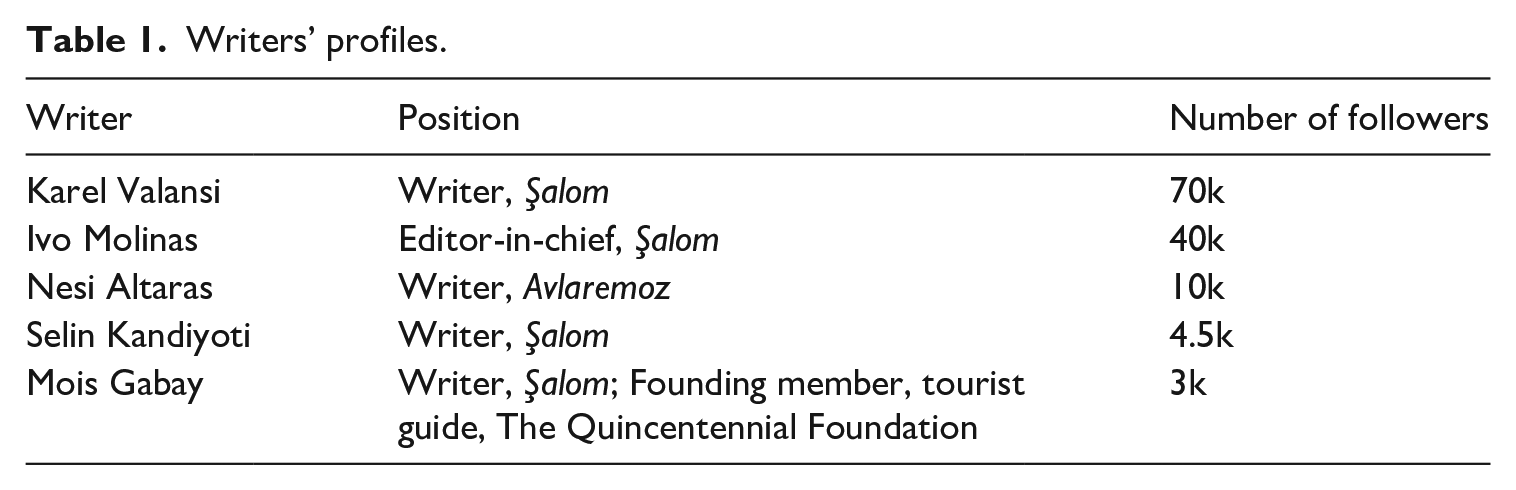
Avlaremoz, established in 2015, self-identifies as an online news and opinion platform with the aim of combatting against antisemitism while adopting a critical perspective in examining contemporary incidents. Despite its relatively limited reach on Twitter compared to the writers of Şalom, Avlaremoz’s articles pertaining to The Club were also included in the analysis so as to include more data in the study and to explore any differences in news making between these platforms. Conversely, Şalom, which celebrated its 75th anniversary in 2023, is a prominent weekly newspaper within the Turkish-Jewish community. It boasts a roster of established writers and holds the distinction of being the largest newspaper serving the Turkish-Jewish community today. In terms of its political stance, Şalom’s editor-in-chief, Molinas (2015) claims that the newspaper refrains from commenting on specific political issues. Although it often expresses concerns or discontent regarding Israel, the newspaper generally avoids discussing political matters in detail.
A comprehensive analysis was conducted on a total of 291 tweets, 785 replies, 27 news articles, and two YouTube videos, which comprised the dataset (Figure 1). These qualitative data sources were carefully analyzed, including the tweets and replies posted by journalists, as well as the columns referenced in their tweets.
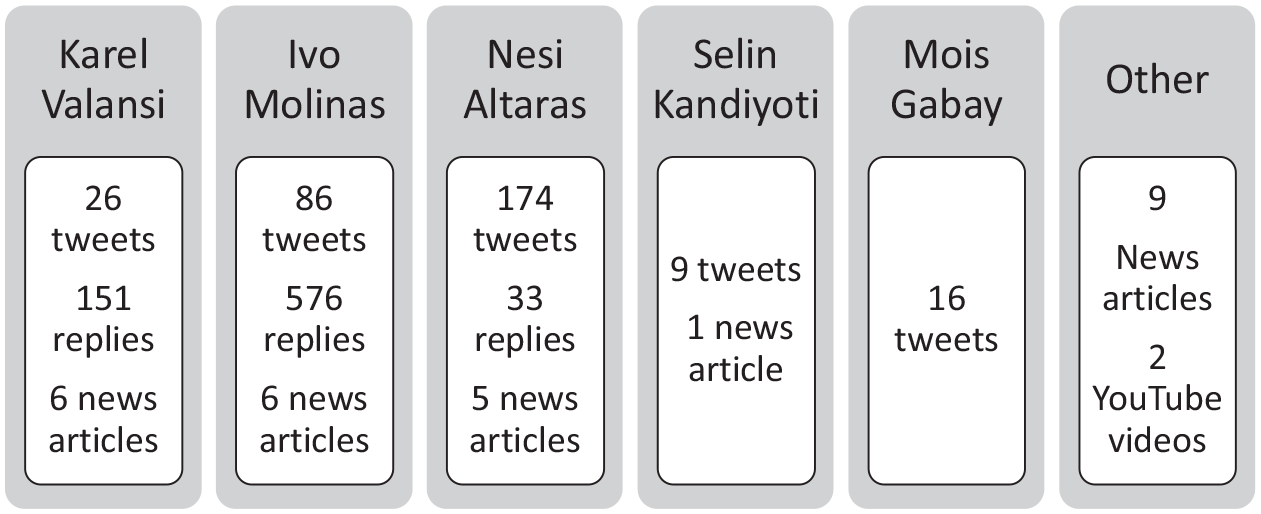
Twitter data of the selected Jewish writers in Türkiye.
The tweets of the selected writers over this 3-month period were found through Twitter Advanced Search. As a second control, tweets and replies for each writer were compared with the results of the Vicinitas database to avoid any deviations in the data, and no deviation was detected. Since Twitter does not provide retrospective data as a set, all the replies written below the tweets were manually accessed via Twitter Advanced Search and analyzed qualitatively. Only Turkish tweets related to Jewish identity and culture, its representation, and their discourse in the media were considered in this dataset. Tweets about other topics in the selected date range were not included. Retweets were not included.
Twenty-seven columns were accessed from the online websites of Avlaremoz and Şalom, and their analysis was carried out through the NVivo database. Similar to the analysis of the tweets, the columns were coded under four main topics: identity, politics, Jewish culture, and The Club.
Tweets, replies, and columns by Jewish writers from Türkiye were analyzed via critical discourse analysis (CDA). CDA reveals intertextuality and hidden ideologies and power practices within discourses. Additionally, it helps to analyze the discourses of groups or individuals who have suffered inequality while seeking answers to why and how such inequalities exist (Van Dijk, 1984). These discourses, which are at the center of daily conversations, help disseminate beliefs about others within society and reach wider masses through the media. As a result, antisemitic discourses proliferate throughout society.
Through the application of CDA, this study delves into the tweets and replies of the selected writers to uncover hidden meanings and shed light on the broader context in which antisemitism emerges. The findings provide valuable insights into the prevalent topics of discussion and aid in deciphering the nuanced meanings embedded within these contexts. Consequently, this analysis proved instrumental in identifying the underlying dynamics of antisemitic discourses and their multifaceted implications.
Findings and main analysis
The tweets and replies of the selected writers between 5 November 2021 and 30 January 2022 were organized under four main headings in the quantitative analysis: identity, Jewish culture, politics, and The Club. In terms of the most discussed topics among these writers on Twitter, 46% of the total 291 tweets were about politics. This is followed by identity (26%), Jewish culture (18%), and The Club (10%).
In 27 news articles and the two referenced YouTube posts, the topics of Jewish identity and the Wealth Tax were discussed the most. While 22 news articles talked about the Wealth Tax, 15 of them focused on discussions about Jewish identity. Historical discriminatory acts against both Jews and other minority groups were also reported in seven news articles. As The Club was the first Turkish production in which the Ladino language was used accurately, four articles talked about Ladino and the positive Jewish representation in this series.
The qualitative analysis is grouped under three topics: “Jewish culture and Ladino,” “Jewish Identity Revisited: Turkish or from Türkiye?” and “Politics: The Discourse of “Gratitude” as a Form of Antisemitism.” Sufficient findings were not reached for the topic “The Club”; therefore, it is not mentioned as a separate topic in the main findings presented below. The following topics were analyzed according to the number of tweets and replies and are presented here from least discussed to most discussed.
Jewish culture and Ladino
Within the discussion on Jewish culture (62 tweets), the most emphasized aspect was that Ladino was used correctly (22 tweets). Nesi Altaras, who publishes articles in Ladino to ensure that the Ladino language is not forgotten, tweeted the most about Ladino (22 tweets). Milliyet columnist Asu Maro (2021) also stated that the frequent use of Ladino, its proper pronunciation, and its correct usage helped to create social awareness of this endangered language.
The Jewish religion was the second most discussed topic (15 tweets). The places where Jews used to live, particularly in Istanbul, (8 tweets) and the Sephardic music in the series (10 tweets) were other sub-topics that stood out under the heading of Jewish culture.
Jewish identity revisited: Turkish or from Türkiye?
The most prominent subtopic on identity was defining the Jewish identity in Türkiye (70 tweets). This discussion was centered around the questions of “Is he/she a Turkish Jew, or is he/she a Jew from Türkiye?” (29 tweets, Figure 2). This was followed by discussions on representation (13 tweets) as contrary to historical examples from TV and cinema, a positive representation of Jewish identity was portrayed in The Club.
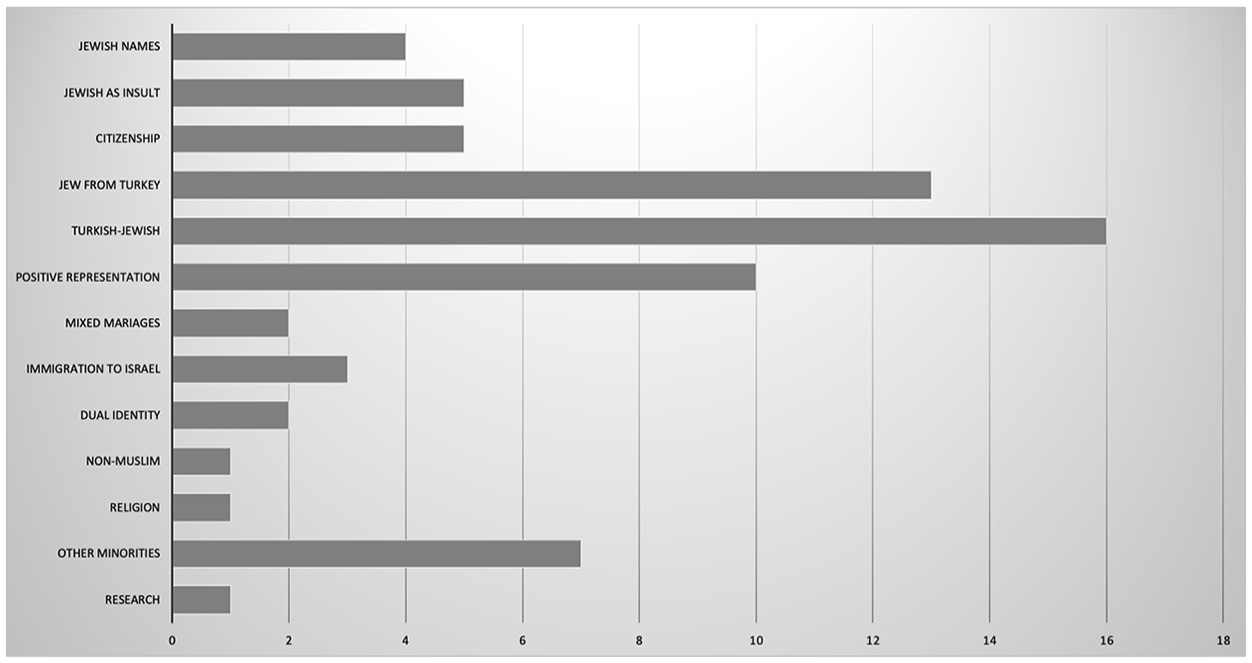
Number of tweets and subtopics coded under “identity.”
All writers agreed that the Jewish characters in the series were positively represented without any stereotypes and that the series accurately depicted their native language and culture. The reason why a positive representation of a Jewish character in Türkiye is so praised is that usually Jewish characters were and are still negatively stereotyped in mainstream television and cinema in Türkiye. Studies on representations of minorities in cinema and television in Türkiye show that Jews are depicted through negative lens and are often represented as money-lovers, misers, moneylenders, and cowards who have a broken family structure; this representation is similar to the portrayal of Jews in the early Republican era (Balcı, 2013; Lüleci and Nas, 2020; Önk and Selçuk, 2014).
When we look at cinematic representations of minorities in Türkiye after 1990, we see Jewish identity portrayed much less often than Greek and Armenian characters. In Tomris Giritlioğlu’s films such as Mrs. Salkım’s Diamonds (1999) and Pains of Autumn (2009), the Wealth Tax and 6–7 September Incidents are represented through Armenian and Greek characters. In Turkish cinema Greek and Armenian identities are much more prominent, while Jewish characters, especially female ones, are almost non-existent (Balcı, 2013). In general, the writers highlight that The Club abolished previous representations on television and presents the Jewish identity free of any stereotypes.
The main aspect on which the writers disagreed in their tweets was how the Jews who live in Türkiye should be referred to. In particular, this was centered around the debate between the terms “Turkish Jew” versus “Jew from Türkiye.” Altaras argues that the concept of Turkish Jew is the product of an assimilationist policy. While claiming that the concept of being a Turk includes only Sunni Muslims, he cites discriminatory practices against non-Muslim citizens to justify his claim. For this reason, he argues that the term a “Jew from Türkiye (Türkiyeli Yahudi)” is more inclusive: Saying all of them are Turkish means that, of course, they are all Muslims. No matter how much some assimilationist Jews tear up saying ‘we are Turkish,’ it is useless. The role of being a Turkish entrepreneur is to expel the non-Muslim from the market. This is also a story that fits with Barış Ünlü’s ‘Turkishness contract.’ (Altaras, 2021)
Barış Ünlü’s book Turkishness Contract (Turkish Türklük Sözleşmesi) deals with the concept of Turkishness as a Muslim and Turk and argues that in order to live a privileged life in Türkiye, it is necessary to be included in these two groups (Ünlü, 2018: 14–15). He explains that Turkishness is a state of mind and a form of seeing, hearing, perceiving, being informed/interested, feeling, and taking a stand rather than an ethnicity or culture (Ünlü, 2018: 13). The idea of Turkishness also includes ignoring or denying what is done to non-Turkish and non-Muslim citizens. In this context, Altaras refuses to use the term “Turkish” to define Jews in Türkiye.
In contrast, Ivo Molinas, the editor-in-chief of Şalom, asserts that everyone living in Türkiye is called Turkish, regardless of their ethnicity, and that the opposite would be a discrimination. He argues that “Turkish” refers to citizenship rather than nationality: Look, my brother, whoever is a citizen of this place is Turkish. Not in the context of ethnicity, but in the context of citizenship. What did Atatürk say? He didn’t say how happy is the one who is a Turk. He said, ‘How happy is the one who says I am a Turk.’ (Molinas, 2021a)
While Mois Gabay did not comment on this subject, Karel Valansi shared a link to Izel Rozental’s (a writer for Şalom) article in which he emphasizes the use of “Jew of Türkiye” (Rozental, 2022). Kandiyoti (2021) supported Molinas’ logic of the use of the “Turkish Jew” by arguing that her ancestors have lived in these lands for more than 500 years.
Politics: the discourse of “gratitude” as a form of antisemitism
Among the 134 analyzed tweets pertaining to the topic of “politics,” the Wealth Tax emerged as the most prominent subject of discussion, garnering 75 mentions. While the second part of the The Club emphasizes the 6–7 September Incidents, it did not generate as much discussion on Twitter as the Wealth Tax. This discrepancy may be attributed to the fact that the 6–7 September Incidents received relatively more attention through mainstream television and cinema in the past, whereas the Wealth Tax was not extensively covered on mainstream TV. Additionally, although the Wealth Tax was referenced in the film Mrs. Salkım’s Diamonds, it remained relatively unknown to the wider public before the release of The Club.
The discourses on Twitter related to antisemitism can be categorized into two distinct groups: those who seek to rationalize and legitimize discriminatory acts against Jews and other victims, and those who express solidarity with the victims of such incidents (Figure 3).
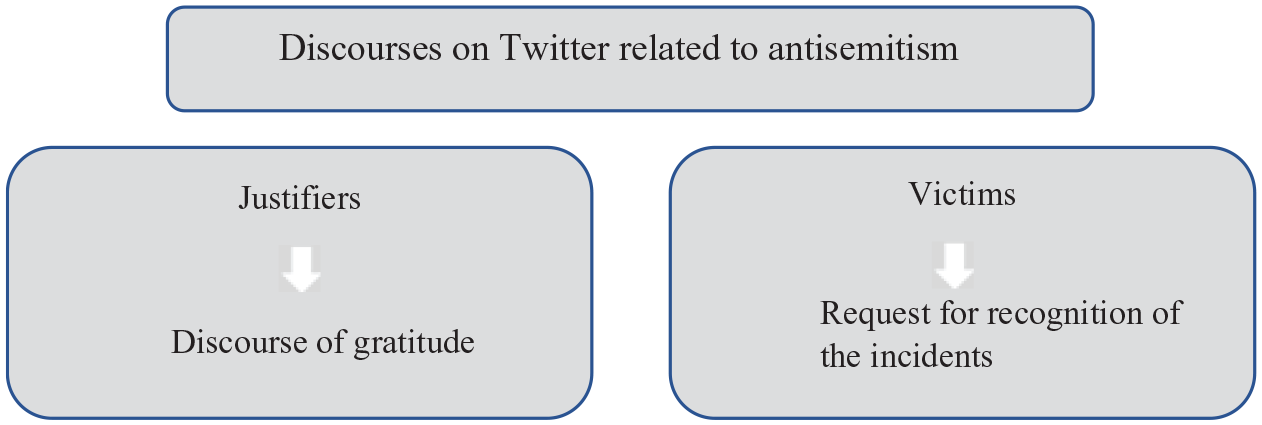
Discourses on Twitter related to antisemitism.
The victims of discriminatory acts often refer to two seminal works on the Wealth Tax, namely Faik Ökte’s The Tragedy of the Turkish Capital Tax (Varlık Vergisi Faciası in Turkish) (1951) and Ayhan Aktar’s Wealth Tax and Turkification Policies (2018 (Varlık Vergisi ve ‘Türkleştirme’ Politikaları in Turkish)), as evidence of antisemitism and to advocate for justice. Through the tweets they share, they also recount their personal experiences or those of their families. They emphasize the significance of a series that presents history from the perspective of the victims, as it helps give voice to these individuals. A common sentiment among these tweets is the need for authorities to acknowledge the unjust implementation of the Wealth Tax (Daglıoglu, 2022; Ibrahimzadeh, 2021; Molinas, 2021b). Rather than seeking mere tolerance, the victims and their supporters assert that their equal rights as citizens have been infringed upon, and that throughout Türkiye’s political history, these rights have been consistently undermined by certain practices and events (Vingas, 2021).
This debate about the Wealth Tax that emerged after the release of The Club also spread to the political arena. In late 2021, the People’s Democratic Party (HDP) Deputy Garo Paylan re-submitted to the parliament the party’s proposal concerning the acceptance of unfair treatment of victims of the Wealth Tax and compensation for the victims’ families to be paid by the government (Agos, 2021). In addition, the main opposition party, the Republican People’s Party (CHP), chairman Kemal Kılıçdaroğlu called for the process of “halalization,” which can be translated as to give and receive blessings, during his presidential campaign and emphasized that his office would be in contact with the victims and their families of the Wealth Tax following his election as president. Eleven tweets on the subject of halalization were analyzed in this study, and 66 replies were generated in response to these tweets. These tweets were largely critical of the proposed plan: Kemal Kılıçdaroğlu: The law is one thing; halalization is another. The state will pay compensation to the people, but on the other hand, we will give and receive blessings. . . We will ask for halal from the groaning minorities under the Wealth Tax and the victims of the 6-7 September Incidents. (Valansi, 2021)
From the opposite perspective, individuals categorized as “the justifiers” tend to rationalize historic events targeting minorities, such as the Wealth Tax, by asserting that Jews are regarded as guests in Türkiye, thereby marginalizing their presence. In response to criticisms of the unjust treatment of Jews during the implementation of the Wealth Tax, these individuals argue that the Ottoman Empire provided refuge to Jews expelled from Iberia, mainly from Spain, in 1492, enabling their survival. Consequently, they justify the discriminatory incidents through the discourse of “gratitude,” arguing that the Ottomans bestowed a homeland upon these Jews.
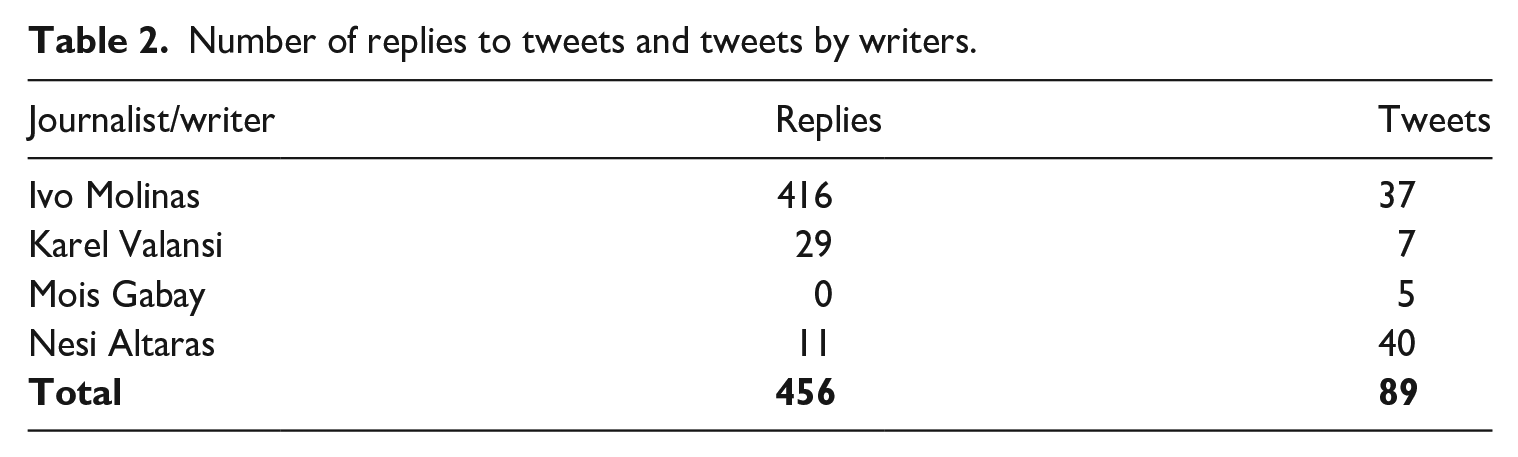
The “discourse of gratitude” refers to the idea that Türkiye is not a home for Jews but rather Jews can only be guests in Türkiye. It emphasizes that Jews are expected to be grateful to Türkiye because the Ottoman Empire welcomed and “saved” them when they were expelled from Spain in 1492. Antisemitism in Türkiye within the “discourse of gratitude” emerged in 456 replies responding to a total of 89 tweets by writers about the Wealth Tax and the 6–7 September Incidents. A total of 73 tweets and 456 replies about the Wealth Tax were examined, while the writers shared 16 tweets on the 6–7 September Incidents.
Most replies (302) responded to Molinas’ controversial tweet (2022), which stated, “You may miss the Wealth Tax and the September 6-7 Incidents in history books, but one day, someone will tell history with all its truth, and people will learn about the past with shame. That’s life. . .” Although Altaras tweeted the most on this subject, Molinas’ tweets received the most replies (Table 2). The reason behind this may be that Molinas has a higher number of followers than Altaras, as well as that the content of the tweet is provocative for the justifiers. Gabay and Kandiyoti did not share anything on the subject.
Number of replies to tweets and tweets by writers.
According to Van Dijk (1993, 2008), the “us versus them” distinction leads to the polarization of minority groups through stereotyping, which in turn forms the basis for discriminatory and racist discourses. We can clearly see this situation in the reactions of those who justify the Wealth Tax and the 6–7 September Incidents. When describing Jews, the justifiers shared the idea that Jews cannot be “our” friends and use expressions such as Jews live off the Turkish nation, Jews are unjustly rich, Jews welcome enemies with flags, and Jews are ungrateful (Oghuzboylu, 2022). As a result, it was observed that this group of people precipitated antisemitism through employing the “us versus them” distinction to marginalize the Jewish community in Türkiye.
Upon analyzing the replies, it became evident that these tweets often referred to specific historical incidents in Türkiye. One such incident pertains to assertions that non-Muslim citizens did not fulfill their military service obligations and evaded tax payments during the War of Independence. These claims were employed as a means to rationalize the implementation of the Wealth Tax: Well? Was he with us in the War of Independence? . . .Where were they when this nation put all its might and fought? . . .The army needed socks. I gave my sandal, I gave my father, I gave my brother, I gave my life. What did they give? Under these circumstances, can any Turk and non-Turk be equal? (@NeonMangudai, 2022)
The second form of othering observed in the discourse is characterized by the notion of “rich Jews, poor Muslims.” This discourse draws heavily from book War Türkiye Wealth Tax (Savaş Türkiye Varlık Vergisi in Turkish) by Cahit Kayra (2015), who was the last financial inspector involved in implementing the Wealth Tax. Kayra’s book serves as a prominent reference for the justifiers, who argue that Muslim Turks also fulfilled their tax obligations. In response to criticisms regarding the unjust implementation of the Wealth Tax, the justifiers on Twitter put forth counterarguments such as “Muslims paid more taxes.” Additionally, discourses highlighting disparities in wealth distribution, such as Kayra’s (2011) argument that the “Anatolian people suffer from poverty while non-Muslims unjustly thrive,” were also employed to position Muslims as victims: When Turks leave their possessions from the lands where they have lived for centuries and migrate to Türkiye with two suitcases, it is not talked about at all. . . Face it, let’s see if it’s your turn. (@belcantamvar, 2022) Nothing can be said about personal dramas, of course, but the drama of a child born in a geography where the Levantines got rich as a subcontractor of Western imperialism by stepping on the Anatolian Turks, of course, cannot find a place in popular culture in this environment. It’s social engineering. (@akurumog, 2022)
Kayra (2018: 295) argues that Muslims paid more taxes by recompiling the data that Ökte, the treasurer of Istanbul at that time, collected concerning the Wealth Tax and published in his book The Tragedy of the Turkish Capital. By referring to Kayra’s falsified data, the justifiers claim that the victims of the Wealth Tax have portrayed Türkiye in a negative light: For years, we tried to destroy the terrible perception of Türkiye created by the movie Midnight Express abroad, and now we have the Netflix series The Club. Beautiful scenery and music, with good actors, they managed to make the audience hate the Turks at the end of the series! (Sirene, 2022)
As in the case of the Mavi Marmara incident in 2009 and Operation Protective Edge in 2014, Twitter users represent Turkish Jews as guests in Türkiye; therefore, they argue that Turkish Jews should express gratitude toward the Turkish (Muslim) people. This discourse, serving as the third form of othering, found support in a tweet regarding the Wealth Tax shared by Saraçoğlu (2021), the grandson of Şükrü Saraçoğlu, the prime minister at the time of the implementation of the Wealth Tax. The tweet offered a source for those who defend the implementation of the Wealth Tax, stating: “. . . Those who enjoyed the Ottoman’s cream [i.e. the privileges of the Ottoman Empire] for years should eventually contribute to the Republic through taxation, right?”
When Turkish Jews criticize historical discriminatory practices against their community, they are accused of being spoiled and ungrateful to the country who saved them and gave them a home. Within this context, it was found that Muslim Turks who employ the “discourse of gratitude” often view themselves as superior to the Jews in Türkiye who have expressed discontent regarding the Wealth Tax or the September 6–7 Incidents. In this regard, the “discourse of gratitude” undermines the principle of equal citizenship, since it puts Muslim Turks in a superior position over Jews and creates a practice of superiority and thus marginalization. As a result, “the discourse of gratitude” reinforces individuals’ antisemitic representations of Jews from the early Republican period until today by normalizing negative representations and accompanying discriminatory discourse.
Concluding remarks
Antisemitism in contemporary Türkiye, more of the same
This study examined antisemitic discourses on Twitter after the release of the Netflix original series The Club. According to the aforementioned definition of antisemitism by the IHRA, the discriminatory discourses against Turkish Jews on Twitter can be considered as antisemitism as users encourage and justify their animosity through their expressions of nationalism and hostility against Turkish Jews. As a result, this research revealed that antisemitism in contemporary Türkiye reemerged following the release of the Netflix series The Club, which depicted historical incidents such as the Wealth Tax and the 6–7 September Incidents that targeted minority populations in Türkiye. In this regard, the findings shed light on Twitter’s role as a platform for the dissemination of both antisemitism in Türkiye and scholarly discussions on the subject.
This study has uncovered a multifaceted response to the representation of Turkish Jews in The Club. While Twitter users praised the Jewish community as a valued and esteemed community within Turkish society, this conversation shifted to antisemitic discourses when Jews criticized historical incidents targeting minorities such as the Wealth Tax and 6–7 September Incidents. The scope of antisemitism on Twitter extends beyond explicit acts of violence or overt expressions of antisemitism, primarily focusing on the perception of Jews within Turkish society. In this regard, the findings in this study demonstrate the reemergence of antisemitic discourses, similar to those used during the early Republican era, on new media platforms, particularly Twitter, within the discussion of prominent historical incidents targeting minorities in Türkiye. Within the contemporary discourse, the concept of “otherness” in relation to the Jewish community in Türkiye is seen through the utilization of antisemitic rhetoric on Twitter, where Jews in Türkiye are depicted as guests and associated with derogatory characteristics such as being portrayed as agents, unjustly rich, ungrateful, money-lovers, and cowards.
Today, new media has become a powerful tool for reflecting identity politics and changing representations of marginalized minorities in society. Thus, Twitter has helped to create an awareness of the Jewish identity in Türkiye and to shape the political agenda on social media. The Club paved the way for political events such as the Wealth Tax and the 6–7 September Incidents to be re-discussed. This becomes especially significant at a political conjuncture in which the court has considered it an insult to call President Erdoğan a “Jew” (Diken, 2021). The Club’s positive representation of Jews, its telling of history from the eyes of the victims, and its accurate representation of Jewish culture have provided a new pluralist perspective in television and cinema in Türkiye and have made society more aware of Türkiye’s political history in relation to minorities, especially Jews.
Finally, despite positive discourses toward Turkish Jews on Twitter, antisemitic sentiments persist in the country. This study contends that Turkish Jewry does not experience genuine acceptance within Turkish society when this group expresses criticism of the state’s past policies. While there may be instances of tolerance toward the shrinking Jewish community in Türkiye, this alone is insufficient evidence to support an optimistic view of overall tolerance in the country.
Footnotes
Declaration of conflicting interests
The author declared no potential conflicts of interest with respect to the research, authorship, and/or publication of this article.
Funding
The author received no financial support for the research, authorship, and/or publication of this article.
