




Abstract
In the context of the outbreak of the Covid-19 pandemic, female medical staff constituted a large proportion of frontline healthcare workers in China, with 50% of doctors and over 90% of nurses being women. In this paper, we aim to examine how these medical workers were represented at the start of the pandemic in online news reports posted on one of China’s most popular social media platforms, Weibo. In the paper, we draw upon corpus-based critical discourse analysis, comparing representations of female medical workers to those of medical workers in general. We observe that not only are female medical workers portrayed through a predominantly gendered lens, but they are also subordinated to the needs of the state. We consider the role played by state-controlled media in regulating the position of (working) women in society and probe into rhetorical means through which this is achieved.
Keywords
Introduction
News is a major discursive site for gendered assumptions to be (re)produced and circulated as natural and common-sensical. The news industry’s growing reliance on digital domains (for discussion, see Hölig et al., 2021; Newman, 2011) also allows such assumptions to be circulated faster and more broadly than ever before. In China, a popular form of online news is a short news post of about 100 words that is often followed by images or a short video. As this news post gets shared on China’s second most popular social media platform – Weibo, it becomes accessible to over half a billion active monthly users (DeGennaro, 2019; SinaTech, 2020; as cited in Tao, 2021). Because of the popularity of the platform and the news posts, the latter can be considered not only highly visible but also a potentially influential means of public opinion calibration, including in relation to issues surrounding gender (in)equality.
In this study, we examine how the aforementioned news posts represent female medical workers at the start of the Covid-19 pandemic in China. In doing so, we investigate the role played by online news in mobilising gender discourses, and the broader motivations for this. The study draws upon corpus-based critical discourse analysis, using corpus methods to establish salient themes and recurring lexico-grammatical patterns in the representation of female medical workers in the online news and critical discourse analysis to identify and interpret the gender ideologies embedded within them.
Working women in China
Within the last century, China has overseen some of the most dramatic changes to where women are positioned within the public sphere. In feudalist China, as argued by Luo and Hao (2007: 283), ‘[d]iscrimination against women was institutionalised within all the structures of society’. Women were not only constrained mainly to the domestic sphere but were also subordinated to men through feudal ethics such as ‘the three obediences’. With the inception of the People’s Republic of China (PRC) in 1949, the Marxist principles behind the new political system dictated a more even participation of women in society, this entailing also engagement in work. Aside from changes in legislation, the re-imagined vision of society in which women were meant to play a more active role economically and politically was also instigated rhetorically through slogans and forms of visual representation, such as Mao’s famous quote, ‘women hold up half the sky’, and the propagation of the image of ‘iron girls’ (Luo & Hao, 2007; Otis, 2007; Wallis, 2006). The take-up of this rhetoric was arguably positive as, within a decade since the establishment of PRC, women’s participation in the workforce increased 10-fold, to 7 million (Tsai, 1960). However, this increased participation of women in the workforce was relatively short-lived. The growing unemployment observed around the 1970s resulted in the government’s effort to get women to ‘return home’ to create vacancies for men (Jacka, 1990; Otis, 2007; Wallis, 2006). Women were again relegated to the domestic sphere and encouraged to follow more ‘feminine’ pursuits (Otis, 2007; Wallis, 2006), such as the consumption of fashion and beauty products. In the 1980s, the landscape of women’s participation in employment again shifted dramatically, with China displaying one of the highest rates of female participation in the labour market in the world (Wang and Klugman, 2020). However, since the 1990s this has been dropping steadily, leaving a 15% gap between the percentages of men and women who work in 2019 and demonstrating a reverse trend to that observed in other large economies elsewhere in the world (The World Bank, 2019). As argued by Wallis (2006: 95), ‘the changing status of Chinese women has been marked by both progress and reversals’.
While it is difficult to attribute the changing circumstances and conditions of women’s working lives to a single cause, aside from legislation, discourses around working women have certainly contributed to the regulation of the position of women within Chinese society. Here, it is important to recognise the great level of control that the Chinese state has over the country’s media, both traditional and digital. As argued by Schneider (2019), despite the introduction of market principles that have diversified the media landscape in China, the Chinese government exercises a level of control over the commercial media through incentives and other, indirect mechanisms. Han (2019: 380) argues that this is also the case for news dissemination on Weibo, claiming that ‘[s]tate authorities such as official institutions and media have found their way to social media platforms like Weibo, gaining a sophisticated grasp of their technical features and rules’. State-run media in turn provide a more immediate mechanism for opinion calibration, serving mainly as a mouthpiece for the government (Guo, 2020), with the government being critiqued for having a long track-record of using this type of media ‘to convey a national vision and mould its citizens’ (Guo, 2020; Wallis, 2006: 94). Despite the more participatory nature of online news, Nip and Fu (2016) importantly claim that it is still the state-run or controlled news organisations that play the principal role in driving online opinion expression. Because of this, ‘[a] major element in the ruling party’s political toolbox is its ability to manage symbols and shape discourses, and through this “cultural governance” try to align diverse interests with those of the leadership’ (Schneider, 2019: 458). In the context of discussions around women and work, Wallis (2006: 106) observes how ‘the ebb and flow of women’s position in the economy and in society is parallelled in their representation in the official press, according to the Chinese government’s strategy of either socialist reconstruction or market-driven economic development in what can be viewed as a case study of a mediated discourse of gender serving the nation’.
Working women in the (Chinese) news
Existing studies of the representation of working women in Chinese news (Wallis, 2006; Yang and Liu, 2021; Zhang and Jamil, 2015) shed light on reporting that moves beyond the focus on women’s work and which delves into non-professional, private affairs. Emphasis is placed here not only on the work that women do but also on their appearance and domestic life. In a study carried out by Wallis (2006), for example, the working women that form the object of news reporting are professionals, presented as the re-imagined, more individualistic version of the ‘iron girls’ – ‘steely women’. In this representation, Wallis (2006: 100) observes, ‘a woman’s looks are just as important as her ability’. Here, working women can be interpreted to be presented as carrying out both professional and ‘aesthetic’ labour. Such representation provides an important means of legitimating the state’s economic path and the construction of China as a modern, globalised and cosmopolitan society. This representation of working women can also be associated with the pursuit of the economic goals of the state through encouraging, on one hand, entrepreneurial behaviour and, on the other, a consumerist one. How much emphasis is placed on one or the other can differ. Zhang and Jamil (2015), for example, discuss how Chinese female athletes are represented in the news, also in comparison to their male counterparts. The study evidences how the female athletes are regularly framed through a patriarchal lens, being portrayed mainly through the prism of their looks, family relations or supposed passivity. Similar points are raised by Yang and Liu (2021), who, like the present study, examined the representation of female medical workers in news reporting. Yang and Liu (2021) argue such representations to have a clear gendered dimension, highlighting the emphasis that is placed on women’s beauty and domesticity. The discussion presented in both papers points importantly to how the representation of working women in the news diminishes their professional achievements while seldom focussing on their contributions to society.
The patriarchal lens visible in the representation of female workers in the aforementioned studies also demonstrates some similarities to that observed in other geographical contexts. For example, studies carried out in relation to the representation of female scientists in the context of the UK and the US press have highlighted a similar level of focus on the appearance of female workers. Attenborough (2011), for example, compares how two celebrity scientists – one male and one female – are portrayed in the British press. While the study identified a level of sexualisation in the representation of both, it is argued that, in the case of the female worker, ‘there was a definite tendency towards depicting her as a sexy body first, and only then, almost as an afterthought, as a scientist’ (Attenborough, 2011: 674). Such depiction, in turn, often entailed dissecting the female body and focalising on this through the eyes of the journalist. The male scientist, on the other hand, ‘was never made to stand in metonymically for his attractiveness’ (Attenborough, 2011: 674). Attenborough (2011: 665) pointed out that such findings were identified in other studies pointing to a ‘similarly asymmetrical trend, whereby women appear to “do” family relations, appearance and/or sexual allure whilst men appear to “do” science’. Chimba and Kitzinger (2010) arrive at similar conclusions regarding the emphasised focus on the physicality of female scientists in the British press but point also to their tokenisation. Shachar (2000) observes this also in the context of US news.
The aforementioned studies contextualise the forms of representation of female workers in news in China and other countries, painting an important picture of the landscape of the representation of female workers in these contexts. They do, however, predominantly constitute small scale studies or studies which draw upon methods of content analysis. The current study aims to build on this work by contributing not only a larger scale investigation of the representation of female medical workers but also, by drawing upon linguistic analysis, providing a detailed discussion of how this representation is discursively realised in Chinese online news.
Methodology
Data
To examine how female medical workers were represented during the Covid-19 pandemic in China, we assembled a collection of online news reports. The news posts analysed in this paper were taken from the two most followed news accounts on Weibo: 央视新闻 (CCTV News) and 头条新闻 (Headline News) which, at the point of data collection, had 100,000,000 and 92,120,000 followers, respectively. While the former (CCTV News) is managed by the state-run broadcaster under the same name, and constituting arguably a direct mouthpiece for the state, Headline News is a commercial account that sources and reproduces news content from a range of national and local official presses. Because of the level of control that the state has over the media in general, Headline News can nevertheless be considered state-controlled, albeit less directly than CCTV News.
Based on these news outlets, we constructed two corpora using the following procedure. First, an advanced search was carried out on the profile pages of the two news accounts to obtain news posts on medical workers. We used the search term 医护 (‘medical workers’) and gathered all qualifying posts dated between 1st January and 31st March 2020. This timeframe was intended to reflect the start of the Covid-19 pandemic in China, during which time a large number of news posts on medical workers were published.
Second, the news posts were then read through to make sure they were indeed all ‘about’ medical workers. News posts in which medical workers were judged to have only been mentioned in passing were deleted. To facilitate the analysis, the posts’ multi-semiotic elements, including images and videos, were saved as links in a separate spreadsheet.
Third, the news posts were sorted into two corpora: the study corpus, which contained news posts on female medical workers, and the reference corpus which contained news posts on male medical workers and medical workers in general (see Table 1).
Information on the two corpora.

Analytical framework: Corpus-based critical discourse analysis
The texts in the news posts were analysed using corpus-based critical discourse analysis (Baker et al., 2008). Corpus linguistics employs computational techniques and statistical measures to study large bodies of language data (Baker, 2006). Through frequency and probability measures, methods within corpus linguistics can be used to uncover how men and women differ systematically in the ways they are represented within vast collections of texts (Sunderland and Litosseliti, 2008: 6). While the ability of larger-scale, corpus linguistic analyses to capture more prevalent patterns of gender representation has been highlighted for some time now (Baker, 2008; Caldas-Coulthard and Moon, 2010), there is relatively little work that has been carried out in relation to this topic under a Chinese context specifically. A notable exception is the work of Yu (2019) who analyses the patterns of representation of ‘leftover women’ (single women over the age of 27) in Chinese English-language news. Our study aims to further the understanding of how Chinese women are represented in the news media, glimpsing specifically at how this is done in relation to their professional lives.
Our analysis started by generating keywords and their collocates as a way into the texts. The use of specialised, purpose-built corpora in this case, and the process of comparing them to one another, allowed us to isolate gender as a potential variable influencing the representation of medical workers in both sets of texts. Detailed analytical procedures and statistical choices are outlined in the next section.
Because we were interested in analysing how language choices in texts ‘produce a particular version of the world’ (Burr, 1995: 48), we combined corpus linguistic methods with Critical Discourse Analysis (CDA). CDA being concerned with the relationship between language use and social structures, and how power asymmetries are enacted, maintained and reproduced by texts (Fairclough, 1989), the approach is used to uncover gendered assumptions and power asymmetries between the state, women and men. The analysis draws from van Leeuwen’s (1996, 2008) socio-semantic approach to interpret the gendered assumptions embedded in the news. We then also assess the semantic prosody of these texts (Partington, 1998, 2004), examining the attitudinal meanings expressed in relation to the forms of representation that we observe.
The synergy between corpus linguistics and CDA has three main advantages. First, because – as argued by Fairclough (1989: 54) – the power of media discourse is cumulative and relies on its systematic tendencies in language choices, the scalability of corpus linguistics allows for the corpus-based critical discourse analyst to study larger bodies of texts in which such discourses take root. Such a combination of methods thus enables the identification of repeated language choices and the uncovering of hegemonic discourses from a more representative sample of texts (Baker, 2008: 76). Second, corpus techniques also afford greater levels of replicability and objectivity in the analysis (Baker, 2006). Third, corpus linguistics benefits also from CDA’s close engagement with the social conditions in which texts are produced, enriching particularly the interpretative stages of the analysis.
Analytical procedures and statistical choices
The tool LancsBox 5.1.2 (Brezina et al., 2015) was used to analyse the texts in the news posts. Keywords for the corpus containing news on female medical workers were generated. Keywords are words whose frequency is statistically salient in the study corpus compared to the reference corpus (Brezina, 2018). Keywords serve to direct researchers to the statistically salient patterns in the study corpus and can pave the way for further analysis (Baker, 2004). Log-likelihood (Dunning, 1993) was chosen as the measure for keyness, as it is considered relatively reliable for small corpora (Gabrielatos, 2018). Two thresholds were employed: first, keywords occurring in less than 5% of the news posts were excluded to ensure that they are reflective of recurrent patterns in the study corpus (also in keeping with the orientation of CDA); second, keywords with a Bayesian Information Criterion under 10 were excluded to ensure there is extremely strong evidence against the null hypothesis that the observed frequency difference is due to chance (Gabrielatos, 2018).
The analysis then moves on to examine the collocates and concordance lines of the keywords. Collocates of a keyword are words that co-occur with the keyword (Brezina, 2018), demonstrating a pattern of shared use. MI3 was chosen as the measure for association as it takes both exclusivity and frequency into consideration (Brezina, 2018). A span of 10 words on either side of a keyword and a frequency threshold of five were employed for the collocation analysis.
The keywords, their collocates and concordance lines are interpreted using van Leeuwen’s (1996) schema for representing social actors and social actions. We mainly draw from van Leeuwen’s different ways of categorising social actors: functionalisation represents social actors as what they do; classification represents social actors by major categories such as gender, age, ethnicity, etc.; relational identification represents social actors in terms of their personal relationship with one another (van Leeuwen, 2008: 42–45). Another means of representation that is important to this analysis is somatisation, in which social actors are objectified and referred to through a part of their body (van Leeuwen, 2008: 47). We also draw from different ways of representing social actions, including: actions and reactions; material and semiotic actions, which draw a distinction between ‘doing’ and ‘meaning’; deactivation, which represents actions less dynamically as though they were qualities or entities; abstraction, which presents social actions in a more abstracted way (van Leeuwen, 2008: 55–74).
Analysis
Overview
Twenty-three keywords were generated for the corpus containing news posts on female medical workers (see Table 2).
Keywords.
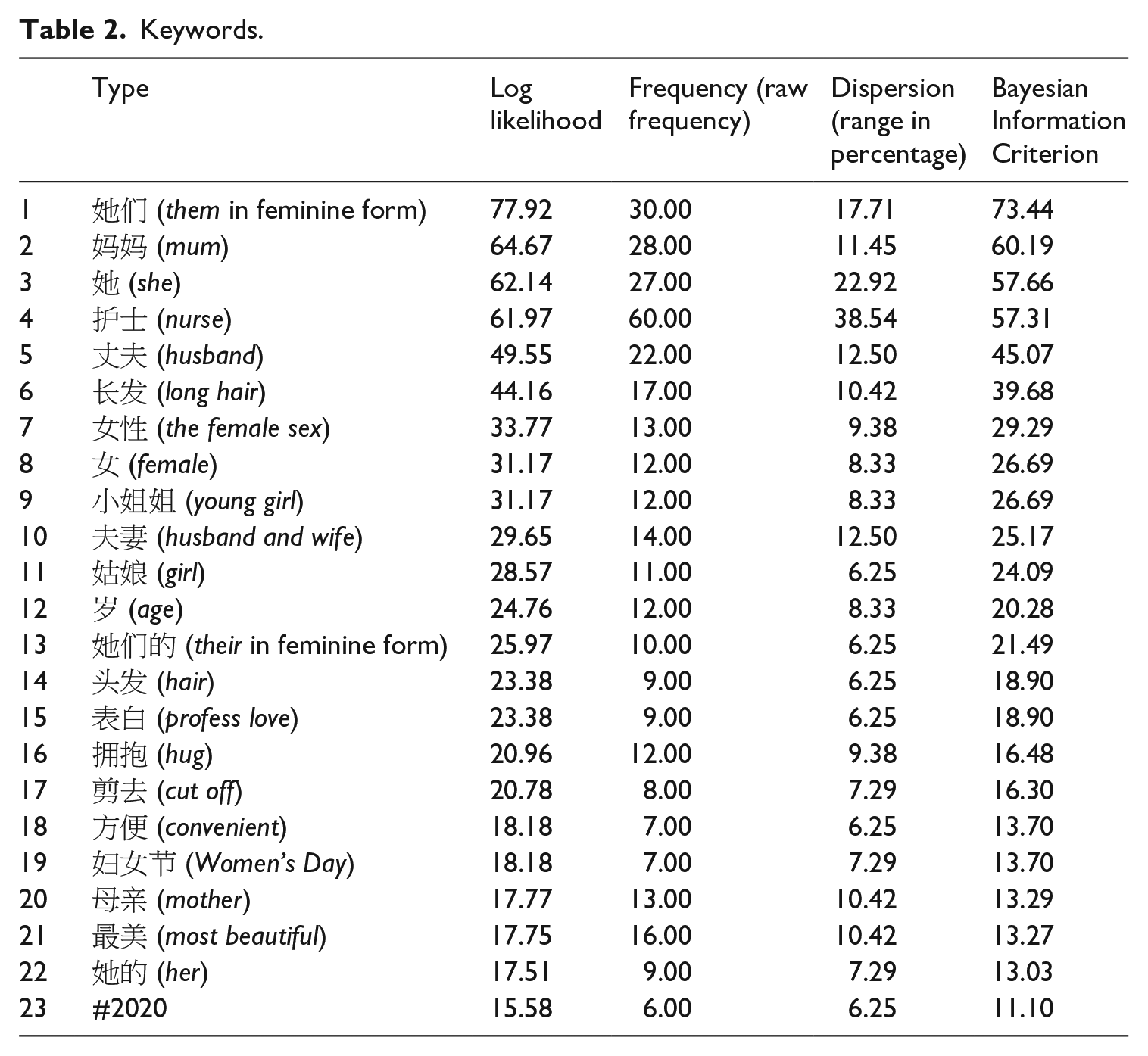
These can be sorted into three thematic categories: markers of gender, appearance and domestic relations. Some keywords do not readily lend themselves to a specific category when viewed in isolation, so all were viewed in their concordance lines to assign them to categories and then, where necessary, to refine those categories. Given that the study corpus consists of news posts on female medical workers, it is expected that markers of the female gender – including content words (‘the female sex’, ‘female’, ‘young girl’, ‘girl’), pronouns (‘them’ in feminine form, ‘she’) and possessive forms (‘their’ in feminine form, ‘her’) – are statistically salient in this corpus. The categories of appearance and domestic relations demonstrate that gendered assumptions were reproduced in the news posts. The former reveals a focus on female medical workers’ appearance (‘most beautiful’) and particularly narratives surrounding their hair (‘long hair’, ‘hair’, ‘cut off’, ‘convenient’). The latter reveals a focus on female medical workers’ domestic relations and particularly narratives surrounding their marital and maternal responsibilities (‘husband’, ‘husband and wife’, ‘mum’, ‘mother’, ‘age’).
Keywords that are markers of the female gender afford insight into the naming practices regarding the social actors, as well as general trends in their representations. The keywords 女性 ‘the female sex’ and 女 ‘female’ often occur as premodifiers to 医护 ‘medical workers’ in the phrases 女性医护 (7) and 女医护 (10), both translating broadly to ‘female medical workers’. But ‘medical workers’ can also act as a premodifier to gendered identity markers, framing medical workers primarily through the prism of their gender and/or age. This is visible, for example, in the case of 小姐姐 ‘young girl’ and 姑娘 ‘girl’, which often occur as heads in the phrases 医护小姐姐/姑娘 ‘(young) girl medical worker(s)’ (5), 护士小姐姐/姑娘 ‘(young) girl nurse(s)’ (7) and 前线姑娘 ‘frontline girl(s)’ (6). These phrases represent ‘(young) girl’ as the primary role of the social actors, with the premodifiers ‘medical worker’, ‘nurse’ and ‘frontline’ functionalising ‘(young) girl’ in terms of their occupations. Both ‘young girl’ and ‘girl’ are also used on their own to refer to female medical workers in five cases. Mentions of young age, emphasised in ‘young girl’ in particular, arguably also focus attention on female medical workers’ physical attractiveness (McLellan and McKelvie, 1993) and place them in a more subordinate role.
The pronouns ‘them’ in feminine form (30) and ‘she’ (27) – all referring to female medical workers – indicate that they are represented both as a homogenous group and as specific individuals in the news posts. The possessive pronouns ‘their’ in feminine form (10) and ‘her’ (9) both refer to female medical workers. The contexts in which these occur are consistent with the gendered assumptions uncovered in the thematic categories of the keywords. Whereas ‘their’ in feminine form mostly occurs in the phrases ‘their faces’ (6) and ‘their eyes’ (3), ‘her’ occurs in the hashtag ‘#her most beautiful smiling face’ (6) as well as the phrases ‘her husband’ (2) and ‘her daughter’ (1). The first three are realisations of somatisation, which focuses on female medical workers’ appearance and objectifies them by reducing focus on them to parts of their body. The rest are realisations of relational identification, which focuses on female medical workers’ domestic relations through the identification of their family members in uses of the possessive pronoun ‘her’. These are examined in detail below.
Appearance, long hair and narratives of sacrifice
The keyword ‘most beautiful’ was predominantly used to describe female medical workers (raw freq = 16, relative freq per 10,000 = 19.61). The contexts suggest that ‘most beautiful’ possesses a dual meaning: it is used as an evaluation of appearance but also as a virtue of female medical workers. This can be seen in the hashtag ‘#her most beautiful smiling face’ (6), in which female medical workers’ faces are depicted as most beautiful both in the sense of their appearance as well as their resilience and positivity in work. In contrast, ‘most beautiful’ was rarely used to describe medical workers in general (raw freq = 2, relative freq per 10,000 = 0.92) and never used to describe male medical workers.
Such a focus on appearance is reproduced in the somatisations ‘their faces’ (6) and ‘their eyes’ (3), zooming in on parts of female medical workers’ bodies. One context in which these phrases occur is in the comments on female medical workers, arguing that although we can’t see ‘their faces’ (3), ‘their eyes’ (3) are ‘bright’ and/or ‘beautiful’. The extracts presented below (a and b), are considered to be representative examples, as are the ones that follow.
(a) 现场,一名出院患者现场“ At the scene, a recovered patient ' (Headline News, February 23rd, 2020) (b) (CCTV News, February 1st, 2020)
In (a), the focus on appearance is articulated in an interview with a recovered patient. In the interview, instead of reporting on their responsibilities in treating patients, female medical workers are passivised and sexualised – they are not involved in any action and their appearance becomes the object of scrutiny. The somatisation present in the extract backgrounds female medical workers’ professional roles and reduces them to the appearance of their eyes. In (a), though the comparison of the eyes to the stars construes the nurses’ eyes as sources of strength and hope, it is still framed in terms of physical appearance and encourages its evaluation. The repeated use of ‘see’ and the perspectivisation realised in ‘their’ and ‘those’ also create the sense of an external gaze being placed upon the nurses.
Another context in which ‘their faces’ occurs is in descriptions of the female medical workers’ faces as having been left bearing marks from the facemasks, as exemplified in (b). In this case, the female medical workers’ appearance is again placed under scrutiny. Such representation is framed in a narrative of personal sacrifice, with the assumption that appearance forms an important part of female medical workers’ personal interest but such personal interest is eclipsed by the greater good of the nation. Female medical workers were then positively evaluated for such a sacrifice (in (b), this is realised in ‘the most beautiful in our eyes’ – an evaluation of their appearances and virtues) and positioned as exemplary in these news posts. This focus on the women’s appearance and its specific features is also visible in the video that accompanies (b), allowing for such representation to be further reinforced. Figure 1 (below) shows a still from this video, taken at a point in which a photo is displayed in the video. The photo forms part of a slide show of what appear to be non-professionally shot close-ups of the women’s faces that bear the marks of long-term facemask use. The close-ups allow the viewer to establish a more intimate relationship with those depicted in the images (Caple, 2013), but also allows for the female body to be somatised (through the partial depiction of the female worker). At the same time, the fact that we look at the person ‘from above’, provides means of a more disempowered representation of the medical worker and symbolically constructs a more asymmetrical power relationship between her and the viewer (van Leeuwen, 2008: 139).
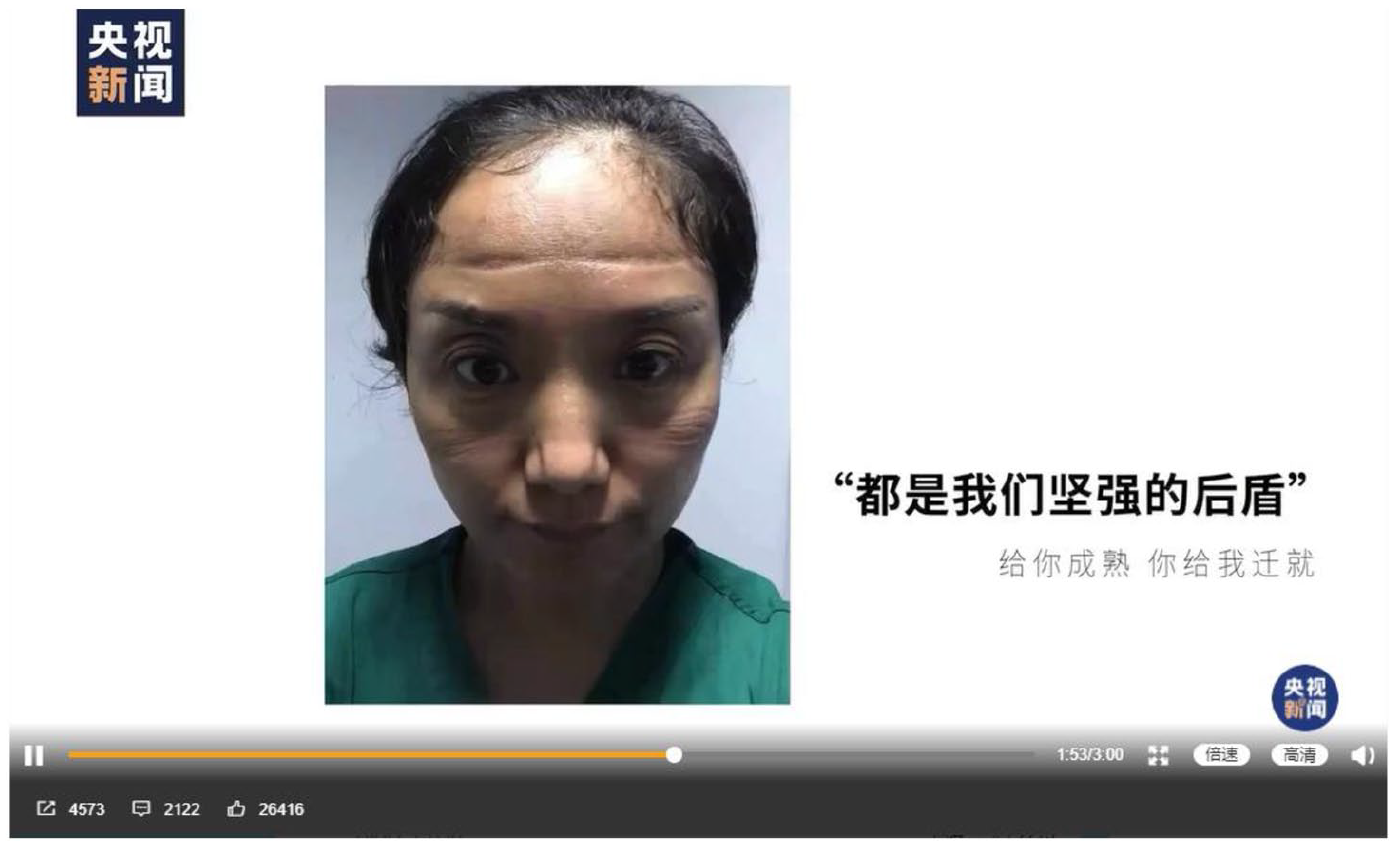
Screenshot of a video posted with (b) (CCTV News, February 1st, 2020) – text included in the screenshot translates to ‘[our family, government, hospital and leaders (from previous slide)] are all our strong backing’ and ‘provide you maturity, you give me compromise’ [fragment of a song featured in the video].
Closely tied to these cases of somatisation is the use of romanticised language. The choice of the word ‘professes love’ in (a), also a keyword and repeated in four other instances of comments on female medical workers’ appearance (3) or hard work (1), frames expressions of gratitude towards female medical workers in terms of romantic feelings. This further passivises and sexualises female medical workers by framing them as objects of romantic feelings. The word ‘profess love’ was never used in the context of medical workers in general. In contrast, the more neutral term 感谢 ‘thank’ (12) was frequently used as an expression of gratitude towards medical workers in general, but is absent in the context of female medical workers.
The social actions female medical workers were involved in further reinforces the scrutinisation of female medical workers’ bodies. In the sentences containing the keywords ‘their eyes’ and ‘their faces’ as exemplified by (a) and the sentences containing the keyword ‘profess love’, 7 out of 11 represent female medical workers as recipients of semiotic actions in which patients express their gratitude towards female medical workers. Such semiotic actions are accompanied by either quotes or renditions, specifying patients’ comments on female medical workers’ bodies. In ‘profess love’ in particular, female medical workers are also represented as provoking emotive reactions, which backgrounds their thoughts and feelings. Such passive representations continued in sentences exemplified by (b), in which female medical workers are constructed as the recipients of transactive material actions, with their faces ‘strapped’ by facemasks and left with marks.
The narrative of sacrifice continues in keywords relating to female medical workers’ hair, as can be seen in examples (c) and (d).
(c) 为了最大限度地降低风险,轻装战疫,很多女医护 To minimise the risk and the burden in the battle against the pandemic, lots of female medical workers (CCTV News, February 4th, 2020) (d) 一位医护小姐姐下意识的 In a subconscious attempt, a young girl medical worker tried to (Headline News, February 20th, 2020)
The keywords ‘long hair’ (17), ‘cut off’ (8) and ‘convenient’ (7) are also strong collocates of each other. As can be seen in (c), these keywords tend to be used in narratives of female medical workers’ ‘long hair’ being ‘cut off’ so that it is more ‘convenient’. This is based on the idea that long hair could add to the risk of infection and get in the way when the workers are wearing protective suits. In these narratives, long hair is not only construed as an intrinsic trait of female medical workers, but also a ‘risk’ and a ‘burden’, as can be seen in (c). The solution to this risk and burden is to remove the long hair. This leads to the surfacing of two concurrent discourses, one perpetuating the idea of long hair being a typically feminine attribute but also, importantly, a discourse which devalues this attribute by presenting it as burdensome, forcing the female medical workers to abide by what are implied to be male norms.
Like descriptions of female medical workers’ eyes and faces, the narratives surrounding their hair are also realisaions of somatisation. In contrast to the earlier representations, female medical workers are not entirely passive in these cases. In the 17 sentences containing ‘long hair’, 14 contained an abstracted action presented in the texts as female medical workers cutting off their long hair, as exemplified in (c). Contextual factors demonstrate that female medical workers were not cutting their own hair, but they made the decision to do so. The choice to present female medical workers as the grammatical agent of a transactive material action in the texts highlight their volition in the process. This thereby frames female medical workers as willingly sacrificing their appearance. Such sacrifice is repeated in news posts containing the keyword ‘hair’ (9). The keyword often appears in descriptions of a female medical worker’s failed attempt to ‘brush her hair’ (4) after forgetting her long hair was no longer there, as can be seen in (d). This material action, albeit activating female medical workers, focuses on their bodily gestures. Figure 2 (below) provides a depiction of how this textual representation in (d) is further reinforced by the visual content of the video accompanying the news report. Figure 2 depicts specifically a frame from a video showing a medical worker repeatedly trying to brush her hair with her hand only to discover that the long hair is no longer there. Because the medical worker is filmed ‘from the side’, seemingly unaware of being watched, this representation invites again an increased scrutiny from the detached observer-viewer (van Leeuwen, 2008: 140–141). The video then continues with recordings of hair shaving, portraying female medical workers as crying over their loss of long hair, accompanied by an emotive music overlay.
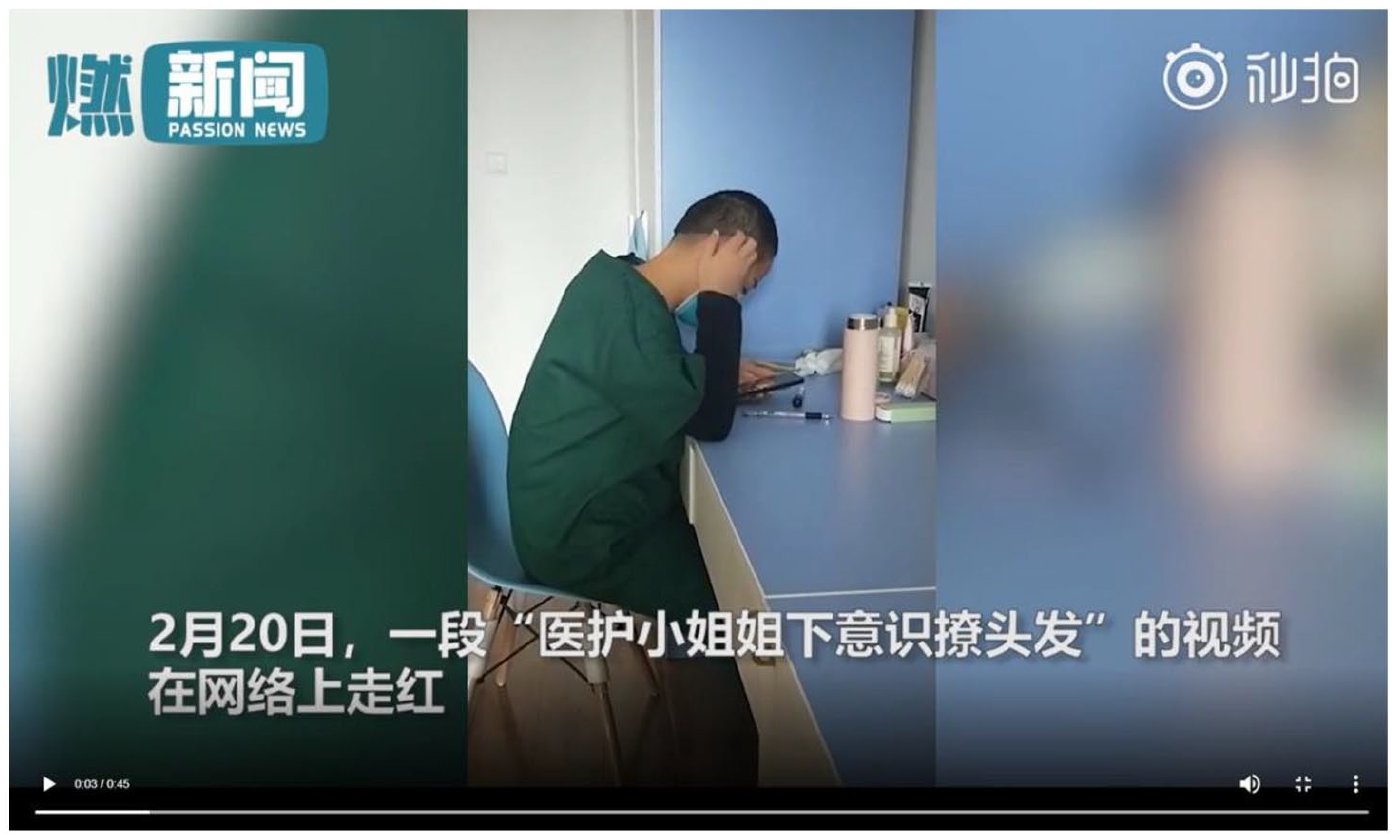
Screenshot of a video posted with (d) (Headline News, February 20th, 2020) – text in the screenshot translates to: ‘On February 20th, a video of “a young girl medical worker unconsciously tried to pull her hair up” went viral’.
Domestic relations, maternal responsibilities and narratives of sacrifice
Another prominent category of keywords contains those which denote the domestic relations and responsibilities of the female medical workers. In the uses of the keywords ‘mum’ (28) and ‘mother’ (13), five occurrences refer to female medical workers’ mothers and 36 occurrences refer to female medical workers as mothers themselves. These uses – alongside the keyword ‘husband’ (22), which refers to female medical workers’ husbands and the keyword ‘husband and wife’ (14), which refers to medical worker couples – constitute realisations of relational identification, suggesting that the representations of female medical workers often involve the domestic sphere.
What is visible in such references to motherhood is the functionalisation of the social actors in terms of their domestic roles as mothers, placing maternal responsibilities in the foreground. This is also prominent in cases where the words 护士 ‘nurse’, 医生 ‘doctor’ and 医护 ‘medical worker’ premodify 妈妈 ‘mums’ in the phrases 护士妈妈 ‘nurse mums’ (7), 医生妈妈 ‘doctor mums’ (2) and 医护妈妈 ‘medical worker mums’ (1), implying that mother is the primary role of the represented participants. In contrast, compared to the 36 references (relative freq per 10,000 = 44.12) to medical workers as ‘mum’ or ‘mother’, references to medical workers as ‘dad’ or ‘father’ are scarce, amounting to only six uses (relative freq per 10,000 = 2.76). The references to female medical workers as ‘mums’ follow a similar overarching narrative. This is reflected in the lexical collocates of ‘mum’ (see Table 3).
Lexical collocates of ‘mum’ with MI3 scores in brackets.
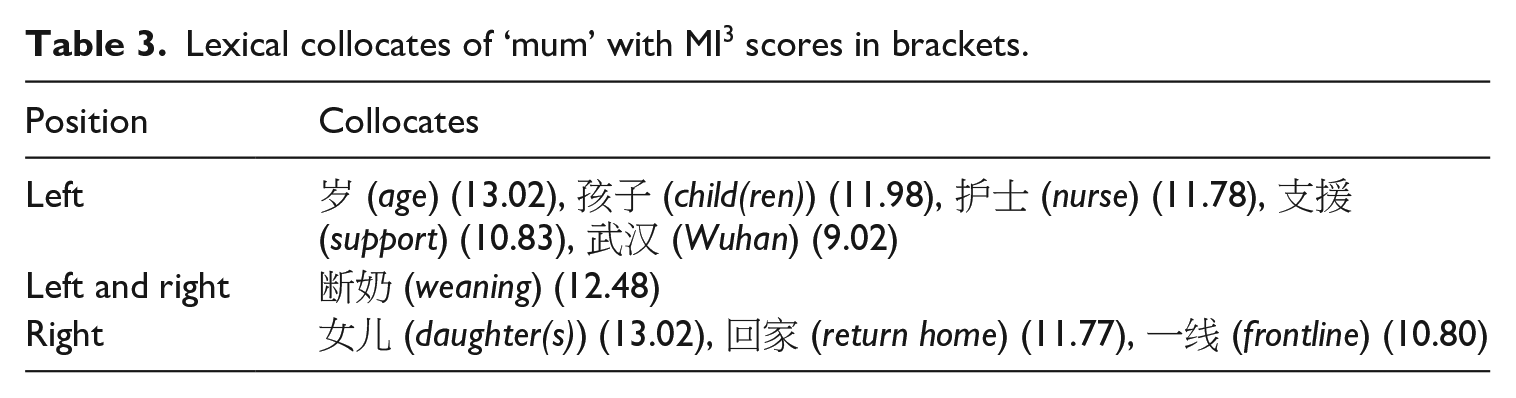
In these references, female medical workers went to ‘support the frontline’ of medical efforts to combat the pandemic – ‘Wuhan’, leaving behind their ‘child(ren)’ or ‘daughter(s)’, who long for their mother to ‘return home’. Such a narrative implies that female medical workers are the primary caregivers to their children and that such a role can only be compromised to serve the collective need in the face of exceptional circumstances – in this case, a pandemic. This is particularly visible in the use of ‘return home’ across the two corpora. In the case of female medical workers, all 12 occurrences of ‘return home’ denoted a return to family and childcare responsibilities. The domestic responsibilities of the female medical workers are foregrounded here, being represented as activities that have been ceased temporarily. Whereas in the case of medical workers in general, 8 out of 10 occurrences of ‘return home’ are used in phrases similar to 迎接英雄回家 ‘welcome heroes return home’. The medical workers in this case are framed not through their domestic roles and responsibilities but their position outside of the ‘home’. The collocate ‘support’ appears to connote a less important, supportive role for female medical workers. However, the fact that it is also used for medical workers in general shows that it is used in the sense of medical workers from other places supporting those at the frontline of the pandemic. A closer examination of the social actions in the concordance lines of ‘mum’ revealed an emphasis on female medical workers’ childcare responsibilities through ‘deactivating’ their work-related actions. In 24 out of 28 concordance lines, they were mainly represented as activated in interactions with their children in material or semiotic actions (18) or being mentioned by their children (6), in which all five occurrences of ‘support the frontline’ were included in embedded clauses. In two occurrences, it was used in the descriptive clause ‘mum who support the frontline’, with the main action in the sentence being a semiotic one in which the female medical worker urged her child to do homework through the phone. In the other occurrences, it was used in the embedded clause ‘when mom went to support the frontline’, with the main clause involving a semiotic action in which the female medical worker’s child was interviewed. Such representations thereby give priority to their childcare responsibilities and downgrades their role in the professional sphere.
Female medical workers’ maternal responsibilities are also emphasised in two of the strongest collocates of ‘mum’ – ‘weaning’ (MI3 = 12.48) and ‘age’ (MI3 = 13.02). The collocate ‘weaning’ constitutes a sub-narrative of female medical workers having to introduce solid food early to their children to be able to leave home for work. In all six occurrence, female medical workers were represented as agents in such material actions, emphasising their willingness to sacrifice the domestic sphere for the greater good. The collocate ‘age’ is also a keyword in the corpus. In the eight occurrences of ‘age’ as a collocate to ‘mum’, six appear beside the age of their child, which ranges from 4 months to 7 years. The focus on the young age of the children the ‘mums’ are looking after rhetorically serves as a means of warranting a more urgent ‘return home’ and emphasises the degree of their sacrifice, something exemplified in (e).
(e) 刘凤梅说,在这个时候断奶,自己可能不是一个合格的母亲,但是面对当前严峻的疫情,必须 According to Liu Fengmei, by weaning at this stage, she may not be a qualified mother, but when faced with the grim pandemic at present, it is necessary to (Headline News, February 7th, 2020)
In (e), the representation involves taking female medical workers out of the role of ‘qualified mother(s)’ and prescribing them the role of dedicated medical workers who sacrifice their maternal responsibilities and the interests of their children. In particular, the idiom ‘sacrifice the smaller family for the bigger family’ captures the essence of the rhetoric of sacrifice for the collective good, placing importantly the needs of the nation (‘the bigger family’) over the more immediate needs of the person’s direct relatives (‘the smaller family’). This dichotomy between the conflicting needs of the two is then also encapsulated in the imagery that accompanies the text (Figures 3 and 4). While Figure 3 depicts somebody who can only be assumed to be Liu Fengmei looking at the image of her child on the phone, Figure 4 provides a positive depiction of the medical worker’s professional work (i.e. the use of the ‘thumbs up’ gesture).
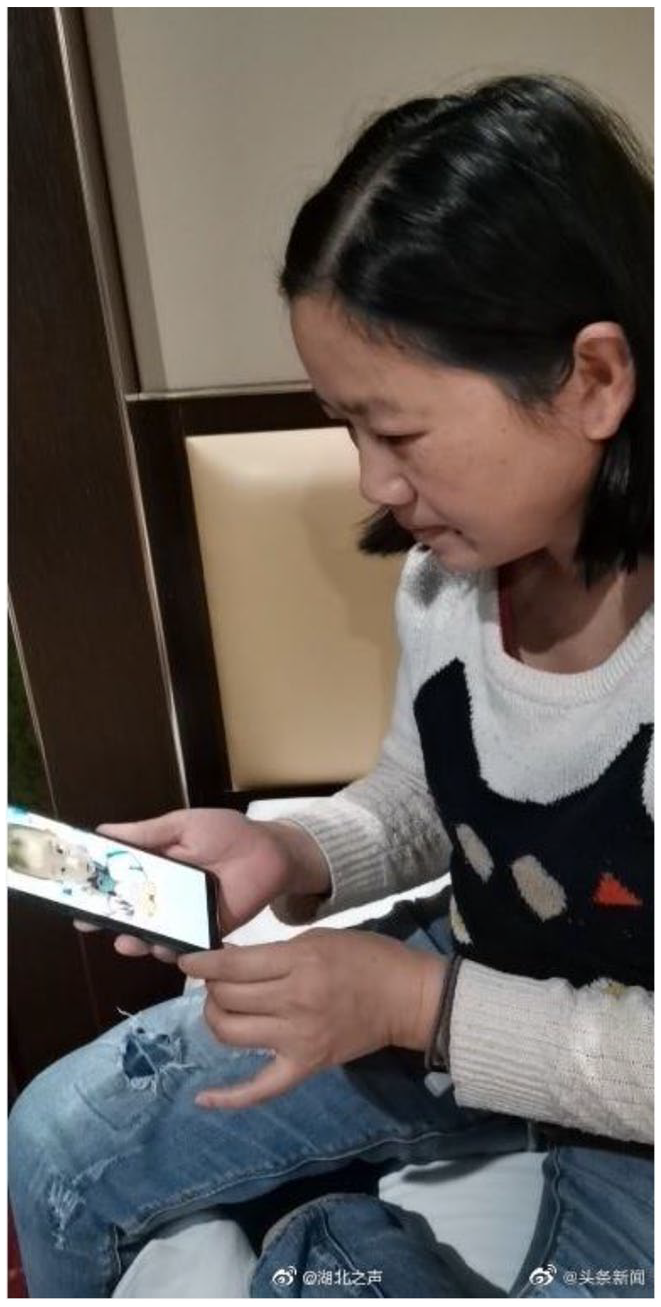
One of three photos posted with (e) (Headline News, February 7th, 2020).
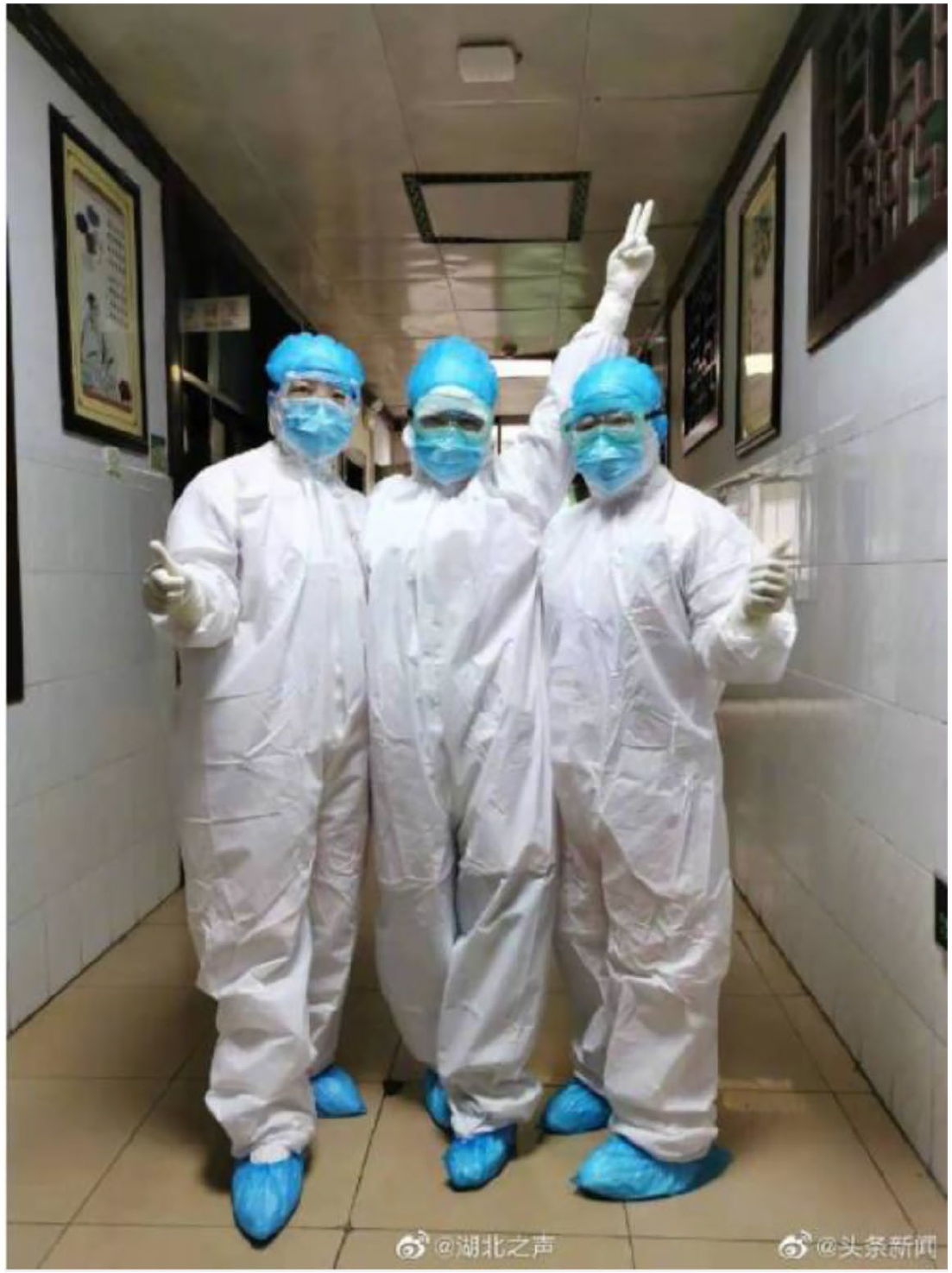
One of three photos posted with (e) (Headline News, February 7th, 2020).
Discussion
Our analysis of the representation of female medical workers in news posts at the dawn of the Covid-19 pandemic in China paints a complex picture of how this substantial part of the frontline healthcare workforce is represented. Of significance is the fact that a large number of news posts do in fact feature female medical workers as the main subject of the reporting, corresponding to the large proportion of women forming the frontline medical staff. At the same time, the representation often backgrounds the women’s professional work, instead focussing on other non-professional spheres of their lives, revealing what can be interpreted as a clear patriarchal lens through which such reporting is framed.
Gender assumptions are prevalent in the news posts we have examined. This can be seen in two of the main thematic categories of keywords that we identified in the news posts – appearance and domestic relations. These tie in with the gender ideology uncovered not only in the representations of working women in China, in Yang and Liu (2021) and Zhang and Jamil (2015), but also those in UK and US contexts, in Attenborough (2011) and Chimba and Kitzinger (2010), so may point to a more prevalent way of representing working women in the news. Further analysis of the keywords and their collocates in context demonstrated that when focussing on appearance, the news posts frequently somatise and scrutinise the bodies of female medical workers, zooming in on their eyes, faces and hair, whilst portraying them as passive or attending to their bodily gestures. When focussing on domesticity, the news posts position female medical workers within the domestic sphere, with frequent mentions of their husbands or children and references to them as ‘wives’, ‘mums’ or ‘mothers’. This is reinforced in the downgrading of their work-related actions in embedded clauses. Female medical workers’ frontline work is represented as a temporary interruption of their domestic responsibilities within a context of exceptional circumstances brought about by the pandemic, with roles of ‘mums’ and ‘mothers’ foregrounded as long-term identity markers of these women. Such emphasis on appearance and domesticity are markedly absent from more general discussions of medical professionals, demonstrating a clear operationalisation of gendered discourses within these news texts.
Both representations are framed through narratives of sacrifice. Marked faces and the loss of ‘long hair’ are framed as a sacrifice of appearance for the greater good. Similarly, being away from domestic, and particularly childcare, responsibilities is framed as a sacrifice of the domestic sphere. This has multiple implications. First, such a narrative ascribes cultural value to women’s appearance and more specifically ‘feminine’ attributes (e.g. ‘long hair’), with the loss of such attributes framed as partially negative (such as in (d), the loss of long hair was reported as inducing tears from female medical workers). It also ascribes cultural value to women’s roles as primary caregivers to their children, with the temporary interruption of such responsibilities rendering female medical workers ‘unqualified mothers’ (such as in (e)). This reinforces femininity norms as well as a gendered division of social roles between men and women. Within this representation also lies an inherent contradiction, as often what makes women ‘feminine’ (e.g. ‘long hair’) and carries a specific cultural capital is also framed as something that hinders their work. Second, related to the former, such a narrative represents female medical workers as inherently less competent or less well-suited than their male counterparts, requiring them to make sacrifices to abide by ‘male norms’ in work (e.g. cutting off long hair and taking on minimal childcare responsibilities). Third, a focus on sacrificing appearance and the domestic sphere renders female medical workers’ contribution trivial and backgrounds their professional achievements (as per the observations of Yang and Liu, 2021; Zhang and Jamil, 2015).
At the same time, in terms of semantic prosody, the tone of the news posts is often celebratory, presenting these women positively and heroically. The representation here serves to actively position women within the public workforce, yet only temporarily lifting their primary role at home due to the current needs of the state. Within the posts, we saw glimpses of the re-emergence of the ‘iron girl’ rhetoric, as discussed by Wallis (2006). Particularly reminiscent of the ‘iron girl’ imagery are the glorified depictions of female medical workers in protective suits in their immediate workplace environments (such as in Figure 4), both relying on the depiction of women in their gender-neutral workwear and at work. But despite some presence of the ‘iron girl’ imagery, something reliant on a complete rejection of femininity and a denial of any gender differences (see Wallis, 2006), there is a considerable departure from the ‘iron girl’ presentation throughout the analysed posts. This representation being, for most part, surrounded by the depiction of women that further entrenches rather than challenges gender division and norms as discussed above, even if it is often framed heroically. This representation interestingly moves away from the gendered lens observed across studies in different geographic contexts, with the focus turned from female workers’ beauty and domesticity to their loss in the name of the greater good.
Overall, this type of representation promotes the idea of a model citizen, the deployment of which has been historically prominent in China, serving as means of rhetorically moulding the nation (for discussion, see Croll, 1995; Wallis, 2006). We specifically observe what Croll (1995: 72) labels as ‘the promotion of model women [and, in this case, model female medical workers] displaying in their daily lives exemplary words and deeds’. In our study, this is particularly visible in cases where a female medical worker is singled out and her sacrifice exemplified (such as in (e)). The consideration of what actions the female medical workers are represented to be doing as well as what they are represented not to be doing, or what actions they are recipients of, is important in this respect. While, overall, the female medical workers are often passivised in the news reports, particularly when their representation concerns their looks, a more activated representation is visible in the discussion of female medical workers’ domestic work and also them ‘sacrificing’ their long hair and the domestic sphere. The passive representation associated with painting them as objects of external gaze and affection in the workplace, certainly subordinates women to men in the context of their professional lives. The opposite is the case in relation to the representation of domestic work. Finally, the more activated representation of the social action is visible in the discussion of female medical workers ‘sacrificing’ long hair and the domestic sphere. Such representation allows for female medical workers to be portrayed as willing agents in this sacrifice for the greater good, the nation. This representation of social action, combined with a consistent positive semantic prosody of the news reports, allows for such posts to play an important rhetorical and legitimating function in the construction of the aforementioned notion of model citizen, and specifically a model female medical worker.
Such presentation and such construction of a model female medical worker does have its implications, nevertheless. One the one hand, the female medical workers’ presentation seems to further entrench the idea of their unequal status in relation to men. On the other, it can be seen to lead to the subjugation of the needs of women to those of the state. While the former maintains unequal gender relations, the latter, particularly when depicting the role of working women as peripheral, sustains the downward trajectory of female engagement in the labour force.
While, as overviewed in the Background, the position of women in the public sphere in China can be attributed to a number of factors, in the past several decades at least, the shifts in the participation of women in the labour market coincided with their media representation and legislature. This ties in with Wallis’s (2006) assertion that the news serves an important role in rhetorically regulating the position of working women in society, this being dictated often by the needs of the state. A more balanced depiction of working women in the news could at least partially contribute to actions that could be taken to stop if not reverse the decreasing number of women at work.
Conclusion
Employing a corpus-based approach to critical discourse analysis, this study has unpacked the entrenched gender ideologies within constructions of female medical workers in news reports on Weibo during the Covid-19 pandemic in China. By doing so, this study has also demonstrated that the role of these female medical workers is represented as unequal to that of men and secondary to the needs of the state. There are a few directions that further study could pursue. First, a more detailed analysis of how medical workers in general and male medical workers more specifically are represented can further contrast and highlight the gendered representations in the news posts, as well as highlight some more general patterns of representation of medical workers. While considerable attention has been already given to the study of the mediated depiction of the Covid-19 pandemic, the representation of healthcare workers responding to this remains under-researched. Second, due to the focus of the current analysis, emphasis was placed on the analysts’ interpretation of the discourses emerging from the linguistic and audio-visual components of the corpora. We believe that it would be fruitful to also juxtapose such interpretations with reader responses, revealing the extent to which the latter correspond to the findings reported in this analysis. Particular focus could be placed here specifically on the agency and the responses of female medical workers to their representation in online news.
Footnotes
Acknowledgements
We would like to thank Gavin Brookes for his valuable feedback on this paper.
Declaration of conflicting interests
The author(s) declared no potential conflicts of interest with respect to the research, authorship, and/or publication of this article.
Funding
The author(s) received no financial support for the research, authorship, and/or publication of this article.