




Abstract
This research examines the interactions between fracture depth and crack location on a cantilever beam’s dynamic response under thermomechanical loads. The structure’s stiffness is significantly influenced by temperature, and changes in stiffness can alter the response’s damping, frequency, and amplitude. The basis for measuring damage to an Aluminium 2024 specimen under thermomechanical loads is provided by these variations. Cantilever beams are used in experiments that are carried out at elevated temperatures, such as 50°C, 100°C, 150°C, and 200°C, as well as at room temperature (non-heating). This analysis takes into account a cantilever beam with different initial fracture depths and positions. The outcomes of the experimental, analytical, and numerical work are found to be in good accord. This research mainly fill the gaps of recent techniques for structure health monitoring of metallic structures where the coupled loads exist. Dynamic response formulation is presented experimentally on beam for the first time under thermo-mechanical loads. The dynamic parameters vary with material stiffness, thus; this change is also investigated by introducing the temperature as a key variable using a specially designed temperature controller. A novel technique is presented for damage estimation in metallic structures using the experimental data that is currently accessible which is later compared with the neural network approach. This tool helps in finding out and quantifying damagesusing dynamic response, temperature along withfinding of subsurface cracks. The results establisha clearway of diagnosing the crack growth at any particular instant under thermo-mechanical loads within the operational condition.
Keywords
Introduction
The operation temperature of metal structures directly affects their mechanical properties like young’s modulus, ultimate tensile strength, and yield strength. When there is fatigue, a minor crack can start to form and eventually grow into a catastrophic failure. The expanded plastic zone near the crack tip caused by the high temperature may hinder crack spread. The amount of repeated loads and the characteristics of the material are critical to determine the plastic zone close to the fracture tip. It is quite challenging to reverse fatigue damage right away. Preventive maintenance is greatly facilitated if the fatigue crack growth is estimated correctly. Therefore, fatigue failuresare the most common failures in the field of mechanical structures, it effects profoundly the investigation of thermal loads. In many scenarios, the structure witnesses both dynamic as well as thermal loads such as gas turbine blades, reciprocating pistons and aircraft wings, etc. These components usually witness extreme loads hence causingsubstantial challenges pertaining to the structural integrity. History has convinced the researchers to work on finding the true potential of dynamic response parameters to quantify damages in metallic structures witnessing thermo-mechanical loadings.
Conventional techniques of non-destructive testing (NDT) incorporating structural vibration response are used to estimate the overall behavior of structures regarding damage assessment.1,2 It facilitates in maintenance of the structures and/or components by identifying the main reason of the faults. Established methods highlight that the vibration response helps to assess thepotential structurefailure well before it actually occurs. This timely warning of tentative damage helps to schedule effective preventive maintenance inthe industry. Stiffness of the structure dictate the characteristics of vibration response, likefrequency, mode shape and displacement. The stiffness of a structure tells the elastic properties of the material. 3 These properties depend on its microstructure. Therefore, a small damage in microstructure influencesthe whole dynamic response of the system. Majority researchesare conducted at ambient conditions considering only the mechanical loads being applied on the structures. Khorshidi et al. 4 suggested a method based on natural frequency to analyze the transverse crack in the beam. A massless rotational spring was used to represent the crack. Acorrelation between crack depth and natural frequency was developed using the Rayleigh quotient. Few other researches followed same footings and modeled the crack as massless rotational spring.5–10 Most researches simultaneously used analytical, numerical as well as experimental approaches. Natural frequency was used as input to quantify crack in the beam.11–18 They discuss changes in the natural frequency with respect to crack propagation. In case of smaller cracks the changes in natural frequency wereinconsequential. They suggested modificationsbased on natural frequency.
The frequency-dependent methods are flawed because the cracks with varying degrees of severity might result in changes at lower frequencies in two separate locations. The mode shapescoupled with natural frequency provide better resultsowing to predicting the damages but few limitations do exist. Many sensors are used to capture the changes in physical shapes of the structures. By measuring vibration amplitude, all these restrictions can be overcome. When compared to mode shape, amplitude and frequency may both be measured usinga single probe and are hence more useful.19–24 Coupled loading was considered when, Cheng et al., 25 employed the Monte-Carlo theory to test the dynamic response and sonic fatigue under a thermal-acoustic load. Diverse academics presented their findings on how environmental factors affect the modal behavior of diverse structures.26–38 Many researchers presented an algorithm which helped to study various aspects regarding health monitoring of the structures.39–41 They created a comprehensive monitoring system to evaluate the strength of bridges as well as turbine rotors under high temperatures. This method was mostly focused on how various sensors responded and how visual inspections performed with the aid of enhanced realistic deterioration models. Our recently submitted review paper also provides an overview of related studies. 42
Numerous researchers studied thermo-mechanical load fatigue. However, work is still needed to provide a reliable operational tool for damage assessment. Engrossed research that can use the reaction characteristics as input for assessing damage is necessary for the development of this technology. The discrepancy in the dynamic response owing to temperature was evaluated in all of the aforementioned study, which is restricted to a certain structure. Damage-related variations in response parameters were not explored. As a result, a strong tool that uses a variety of empirical and analytical methods, such as neural networks, and is equally adaptable to various metallic structures can be extremely helpful, especially for Aluminum 2024 that has the potential to be employed in aerospace applications.
The term neural network is the depiction of billions of neurons that works as a nervous system for human brain. The concept of nervous system functioning is used to arrange neurons across multiple layers to compute nonlinear data set is termed as artificial neural network (ANN). ANN consist of three layers namely input layer, hidden layer and the output layer. Each of these layers have number of neurons with bias value and these layers are interconnected with weightage factor. The input and output weight represent influence of each neuron over other neurons. 43 The neurons are activated by transfer function that can be continuous or discontinuous functions. There are different types of artificial neural network for instance, recurrent, probabilistic, feed forward and competitive. Feed forward is the most common type of artificial neural network that directly computes the output from the input in one direction, i.e. there is not any feedback involved to update the network. 44
The training of feed forward neural network is performed by using back propagation. In this method, the network is trained to first update the weights of the final layer and then calculation proceed to change the weights of the penultimate layer. The weight calculation and updating process continues until it reaches the first layer. The values move back and forth to update the network by minimizing the error function. The stopping threshold is set by user to stop the training of neural network. The duration of training depends on the regularization parameter that controls the weights in the neural network. The parameter regulate the step size; hence if it is large then it will affect the validity of formulation. The network can be stopped early to avoid loss of generalization. 44 The Selection of hidden neurons is an important parameter to approximate the nonlinear function. Furthermore, appropriate layout structure of neural network is an important concern, since the network architecture has influence on computational complexity. The problem still exist as there is no theory to estimate number of hidden neurons to approximate any function.45–51
The aforementioned research work had a main focus on assessing the damage quantification based on dynamic response only. The applications having the coupled loads such a mechanical and thermal are not addressed specifically. As a result, for the first time under thermo-mechanical stresses, empirical relations are created on the beam to demonstrate a relationship between dynamic response, its temperature, and fracture parameters using two alternative strategies. First is using analytical formulation/empirical relation and the other is neural network encompassing thermomechanical stresses. This research examines the modal behavior of the structures for their interdependencies, crack propagation and dynamic response. Both approaches use the actual experimental data collected from a designed set of samples. The actual data and the expected fracture progression are evaluated during experimental validation. The creation of a unique damage assessment tool is followed by its validation with experimental and neural network data. This tool uses temperature, amplitude difference and frequency drop as inputs to assess damage while it is operating. By eliminating the need for touching probes, this equipment foretells the future of NDT. It is a valuable addition to the damage assessment literature as a result.
Specimen preparation
Aluminum 2024 was chosen as the specimen’s material. Figure 1 displays all the parameters of specific shaped cantilever beams intended for the dynamics response. The specimen is 150 mm in length and 3.0 mm in thickness. For each specimen, these two dimensions are maintained throughout the experiment. Each cracked specimen only has one crack. With regard to the length of the beam, these cracks are produced at three separate points, i.e. at 5%, 10%, and 15% of the entire length. These areas were chosen such that the specimen’s fillet area would experience stress concentration. Because it was discovered using a numerical simulation that the highest stress concentration point migrated from the crack point (desired site) to the fillet pointbeyond thecrack location with respect to the fixed end, the crack can only extend 15% of the entire length i.e. 25 mm from fixed end. This change in the stress concentration point’s position will nearly completely stop fracture propagation, allowing the specimen to continue moving indefinitely without suffering a catastrophic collapse. Inset is showing the manufactured specimen, All Dimensions in mm.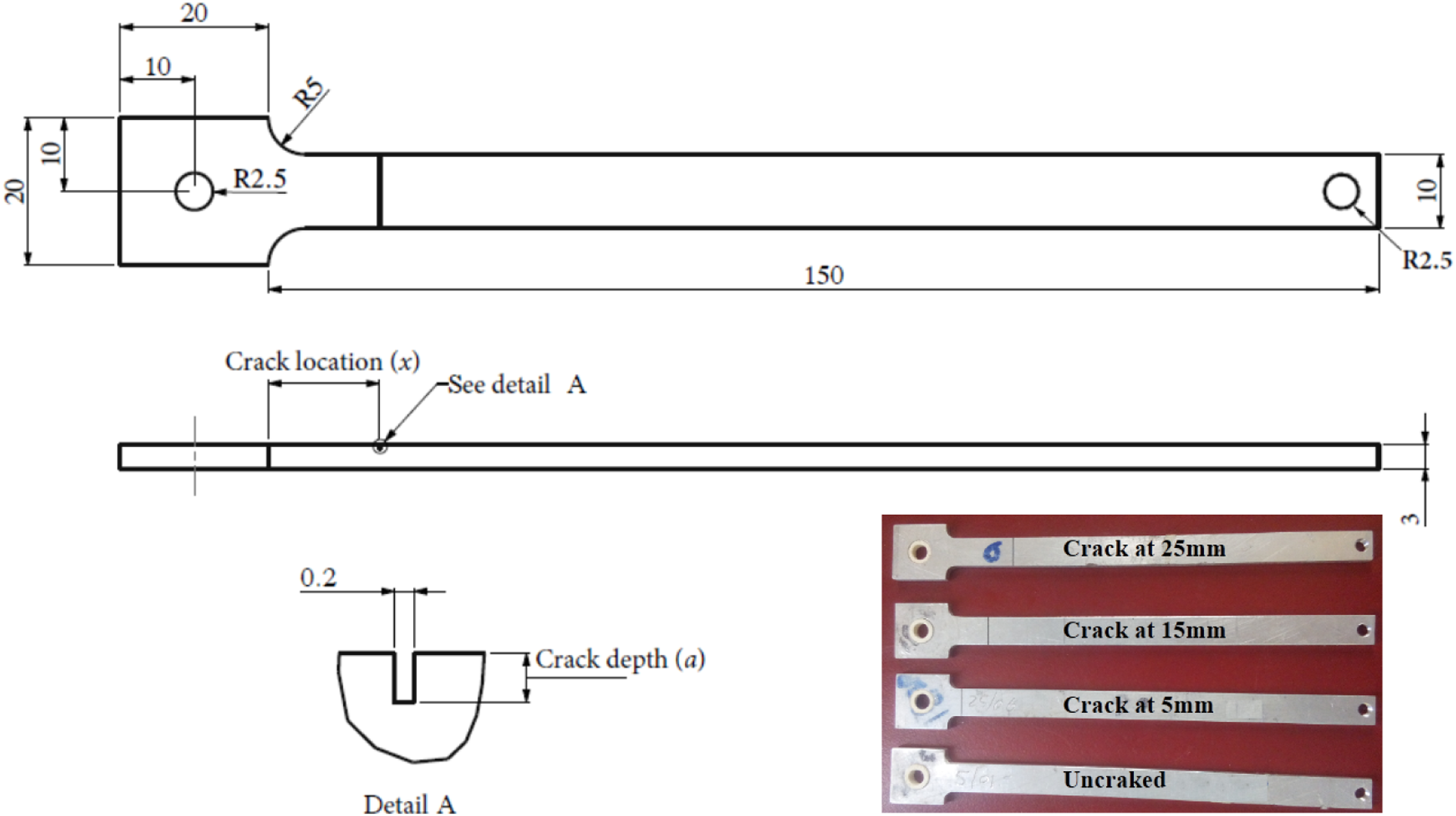
Each arrangement results in the induction of a fracture of a predetermined width which is 0.2 mm. Initial crack depth is given to be 0.5 mm, and it will grow with fracture propagation until it reaches a depth where it can cause catastrophic failure. To preserve the necessary dimensional precision, the specimens are produced using Computerized Numerical Control (CNC) wire cutting. To minimize experimental mistakes, each set of position and crack depth is represented by three separate samples.
Experimental setup
The specimen has 0.5 mm starting crack that naturally spreads under strain. Five distinct temperatures are evaluated on each configuration: room temperature, 50°C, 100°C, 150°C, and 200°C. The maximum temperature is selected to be significantly lower than half of Al-2024 melting point in order to prevent the potential of recrystallization.
As indicated in Figure 2, the entire experimental setup may be broken down into four components: vibrating setup, a heating setup, data gathering, last but not the least a propagation capture. A modal exciter (MS-100), a signal generating source (TENLEE 9200), and a power amplifier (MODAL LA-200) are utilized for the vibration setup. The specimen is subjected to a continuous displacement load of 5 mm thanks to MODAL LA-200 for producing a sine wave with a constant 5 V (peak to peak). Beam specimens with pre-selected fracture depths placed in same spotare installed on the modal exciter bearing fixed-free state. An accelerometer is fastened at specimen’s free end in order to gauge the dynamic response spread across a frequency spectrum. Entire system’s dynamic response driven predominantly by the movement of the specimen at it’s free end owing to resonance, can be calculated using any observable response because of the solid attachment between the exciter and the specimen. Experimental setup with schematic.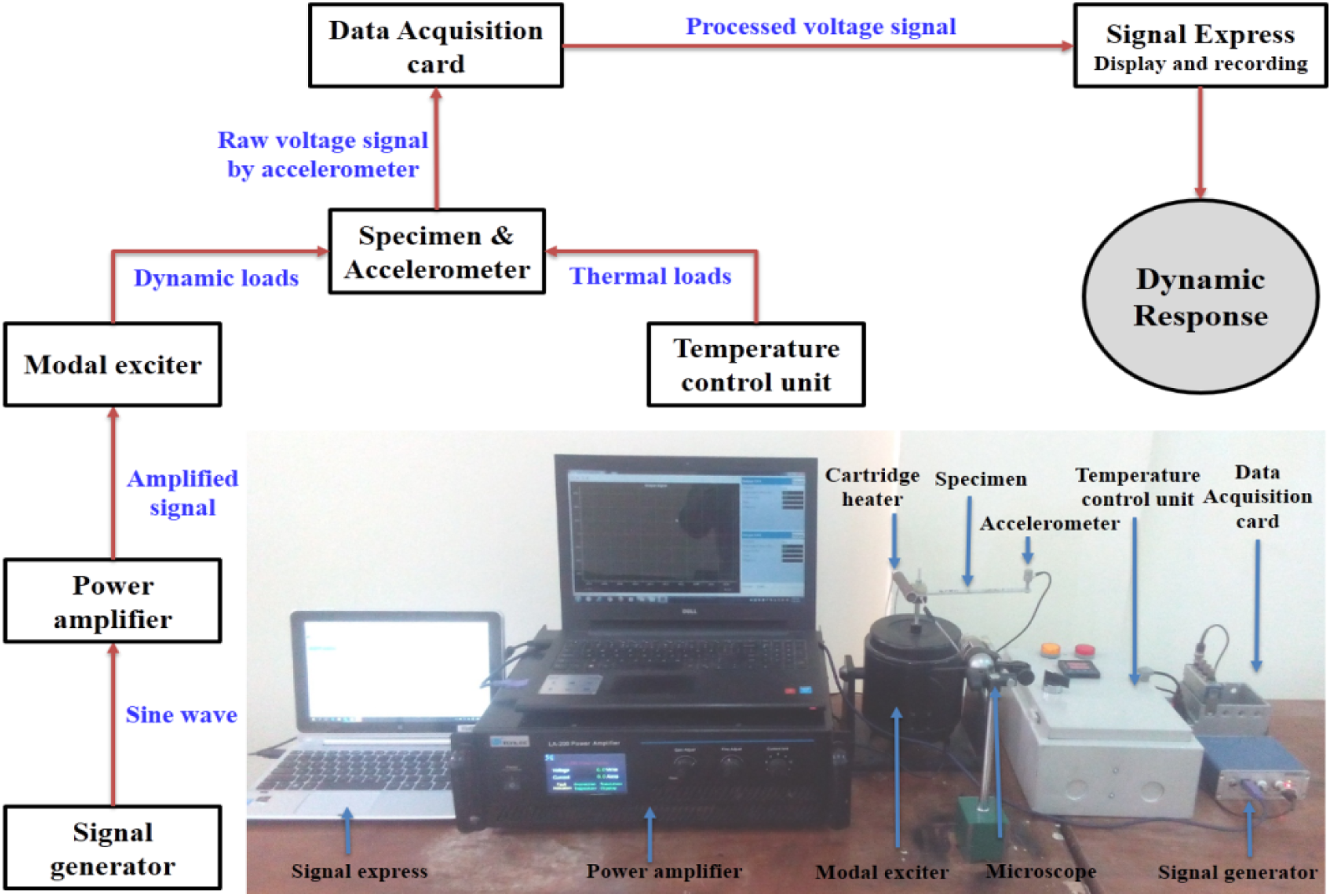
Using the power amplifier, the signal generator produces a sine wave of 5 V (peak to peak constant), which causes the specimen to experience a consistent 5 mm displacement loading. Beam specimens with pre-selected fracture depths placed in same spot are installed on a modal exciter bearing fixed-free state. At the specimen’s free end, an accelerometer is fastened in order to gauge the dynamic response spread across a frequency spectrum. Entire system’s dynamic response driven predominantly by the movement of the specimen at it’s free end owing to resonance, can be calculated using any observable response because of the solid attachment between the exciter and the specimen.
Measurements are collected based on time domain using National Instruments Signal Express and a DAQ (data acquisition) card NI-9174. In the Signal Express, under the analysis modules ‘Amplitude and Levels’ and ‘Power Spectrum’ are selected. In the first, the genuine response frequency amplitude is calculated while in the latter the real response frequency value is calculated. The frequency is steadily declining. The amplitude of vibration is similarly decreased in the frequency drop case. In order to obtain the shaker’s maximum amplitude, a new value lower frequency is chosen. Up until the subsequent frequency decrease, the specimen’s new fundamental frequency is maintained. Up to the specimen’s catastrophic breakdown, this process is repeated. When the specimen no longer shows amplitude at its free end, it has failed. A digital microscope (Dino-lite) with a magnification of 200x is used to determine the modal frequency and propagation fracture depth for each specimen. In Figure 3, a thorough experimental plan for fracture propagation is displayed. Experimental scheme elaboration.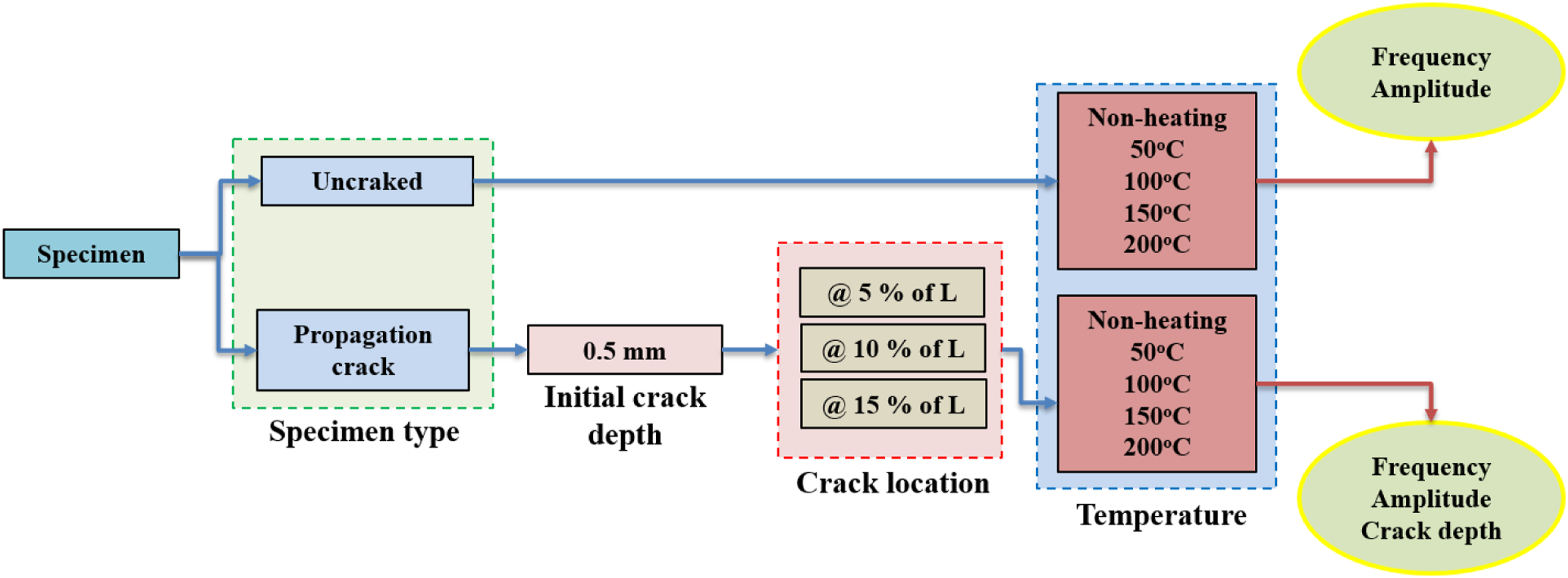
Methodology
Analytical formulation for thermo-mechanical loads
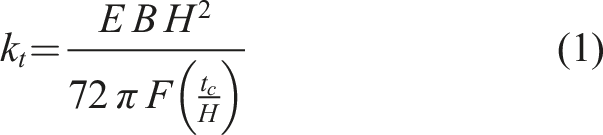
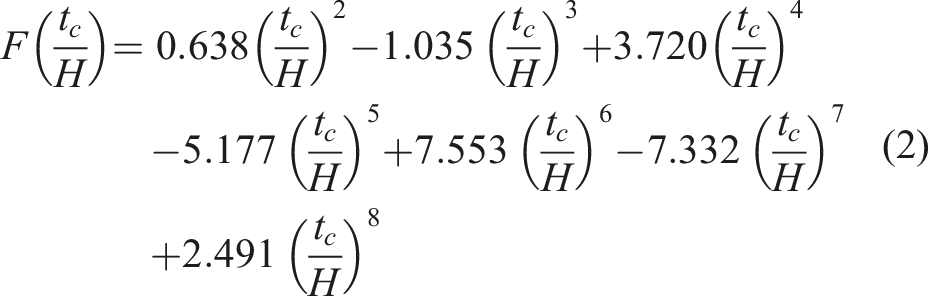
The influence of fracture depth is expressed analytically in this section as the decreased stiffness of a representative spring. As a result, such alteration in stiffness impacts on the structure’s general dynamic response to an external stress. Additionally, we introduced this formulation in our most recent works.52,53 Figure 4 illustrates the modelling of the crack as a massless torsional spring using a cantilever beam. Ostachowicz et al.’s
6
description of the torsional spring’s stiffness is illustrated in equation (1). The Rayleigh quotient is used to define the link between dynamic response and fracture depth in terms of natural frequency. Cantilever beam with a crack investigated as a mass less torsional spring.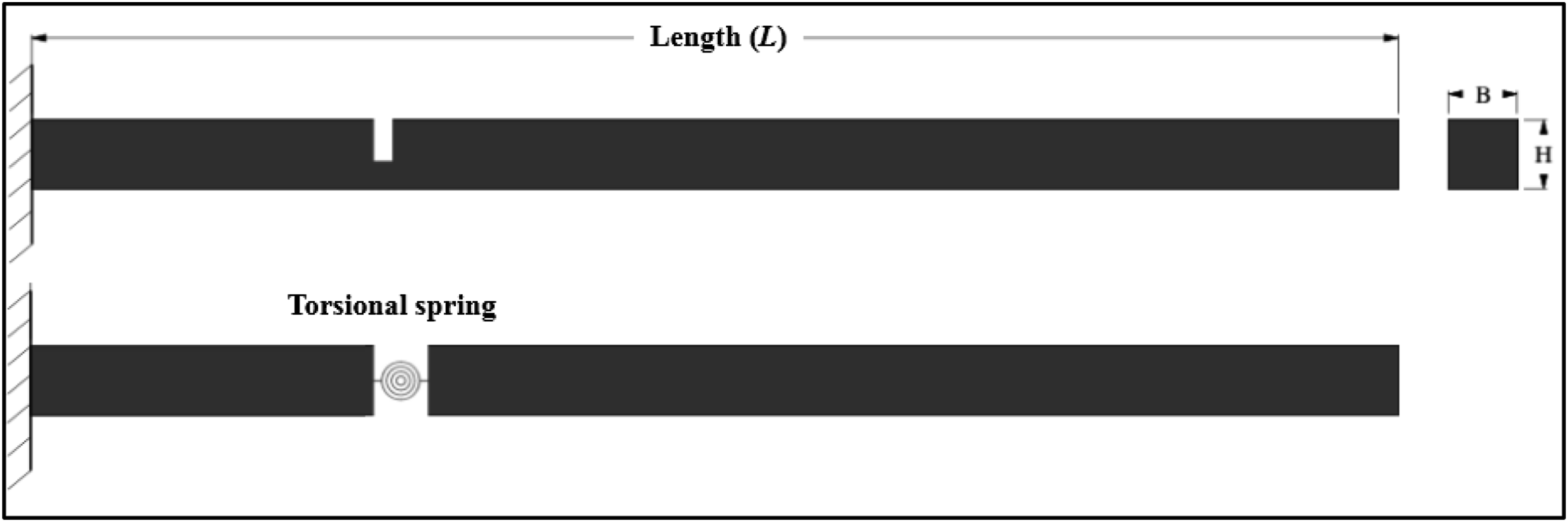










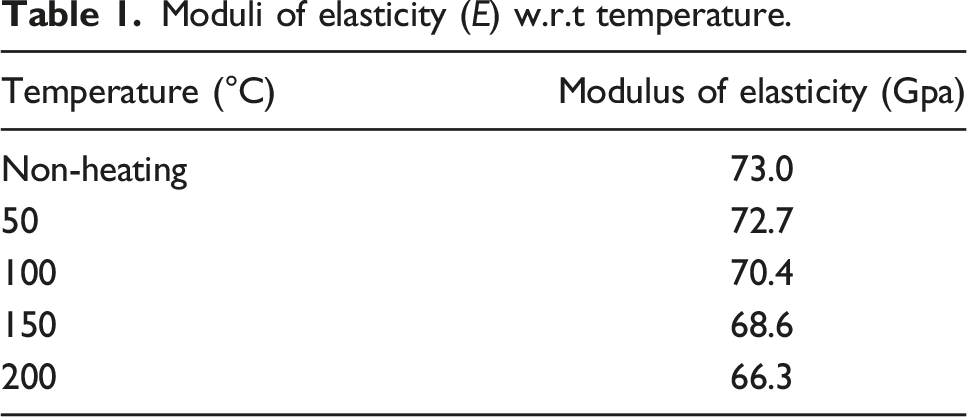
A generalized equation for Schematic of a cantilever beam having end mass. Moduli of elasticity (E) w.r.t temperature.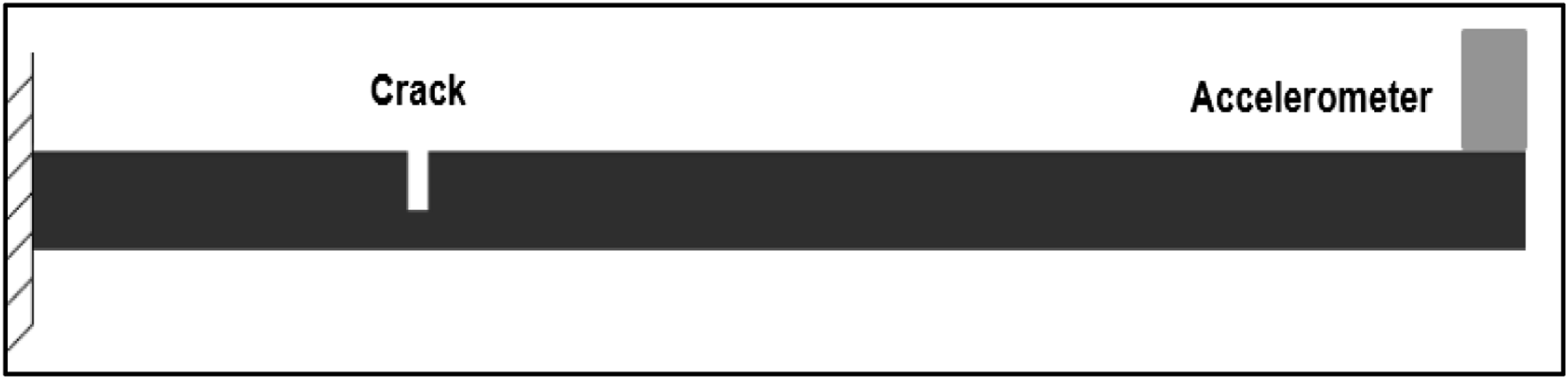


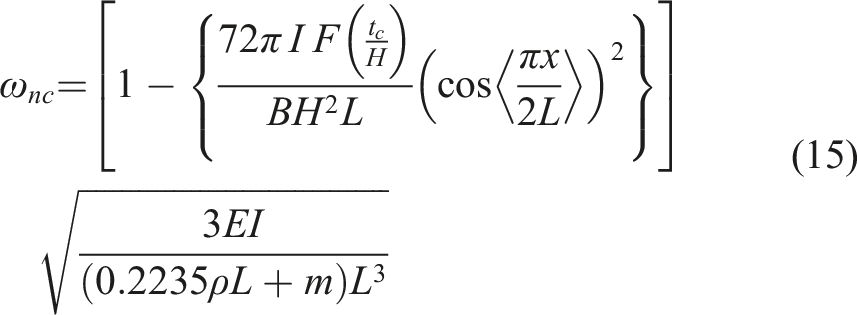
Application of neural network
In contrast to the empirical relation ANN is used to establish a trend to predict the damage quantification of metallic beams for the parameters discussed below. ANN delivers swift adaptability while preserving the generalization of the trend with accurate and appropriate application for numerous problems. Owing to these attributes ANNs are widely being used and has a great potential for estimating damage severity along with location in structures 51
The input layer consist of three parameters namely temperature, frequency and amplitude. Feed forward neural network is used with back propagation algorithm. There is a single hidden layer consisting of 13 neurons that connects with a two output parameter i.e. crack depth and crack location. Each parameter is linked with hidden neuron with input weightage factor i.e. Wx,i. Where x denote the neuron and i denote the parameter. The hidden neuron is connected with output parameter with output weightage factor i.e. W. Each neuron in hidden and output layer has bias value denoted by b and B respectively. Figure below shows the diagram of the neural network. (Figure 6). Network diagram.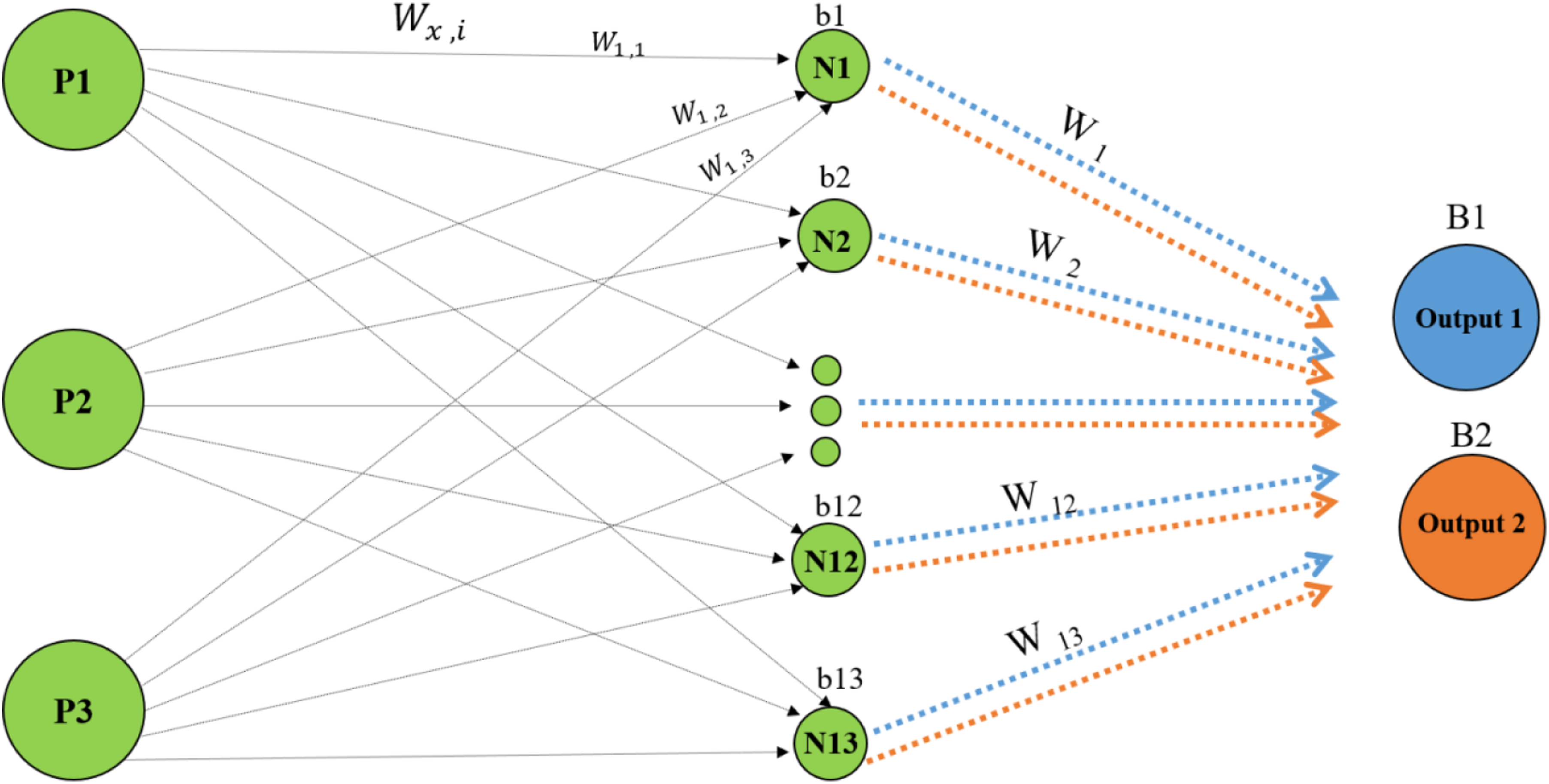
This network is conventionally used to estimate the weights and bias value of each neuron. In back propagation of neural network, gradient decent algorithm is used to minimize the error function. The network is trained by supervised learning i.e. input data is organized prior to training of neural network. The error function move back and forth updating the input and output weights with bias value to achieve the desired output. The training process start by first initializing the weights and biasness at random values. These random weights and biasness are then fed into network to update the model. The input layer is connected with each neuron of hidden layer with some weightage factor that changes after number of iterations. The information is transferred between input and hidden layer by means of activation function. Each hidden neuron is connected with output parameter by weightage factor that updates during back propagation. The error function is computed based on difference between the target value and trained value. The next step is to calculate the correction factor for output weight and bias value. The error function of hidden neuron is then calculated by summing the product of input weight and error function of output layer and then multiplying it with derivative of activation function. The subsequent delta of input weights and bias value of each neuron is then calculated. The final step is to update the input and output weights with their bias values. The process is based on back propagation that continuously calculates error function and update the model until the stopping criteria is achieved. MATLAB ® toolbox is used for the building and training of ANN. ANN is trained over the same range of experimental data as used to derive the empirical equation. This establishes a robust basis for trend development. Primarily, the network is trained by three input variables namely Temperature, Frequency and Amplitude against the two output variables as Crack depth and Crack location. A range of data is selected for this purpose and a set of size 75 is selected to train the network. The overall size of training array is 75 rows and 5 columns.
Results and discussion
Experimental results
There are four variants available: Uncracked, Cracked at a length of 5%, 10% and 15% of L. A brand-new specimen with a crack depth of 0.5 mm is placed/mounted on the shaker at varioustemperatures at the beginning of each experiment. Measurements are made while the specimen operates at its native frequency. The reduction in amplitude is seen as a sign that the specimen’s inherent frequency has changed. A wooden mallet is used for the impact test once more in order to determine the new modal frequency. Up to the specimen’s catastrophic breakdown, this process is repeated. Figure 7 displays the image taken simultaneously while measuring the crack depth using a microscope. Figure 8 plots natural frequencies and their corresponding dips in relation to the fracture depth ratio. The evolution of crack propagation in the samples. Natural frequency V/S crack depth for a propagating cracklocated at 5% of total length.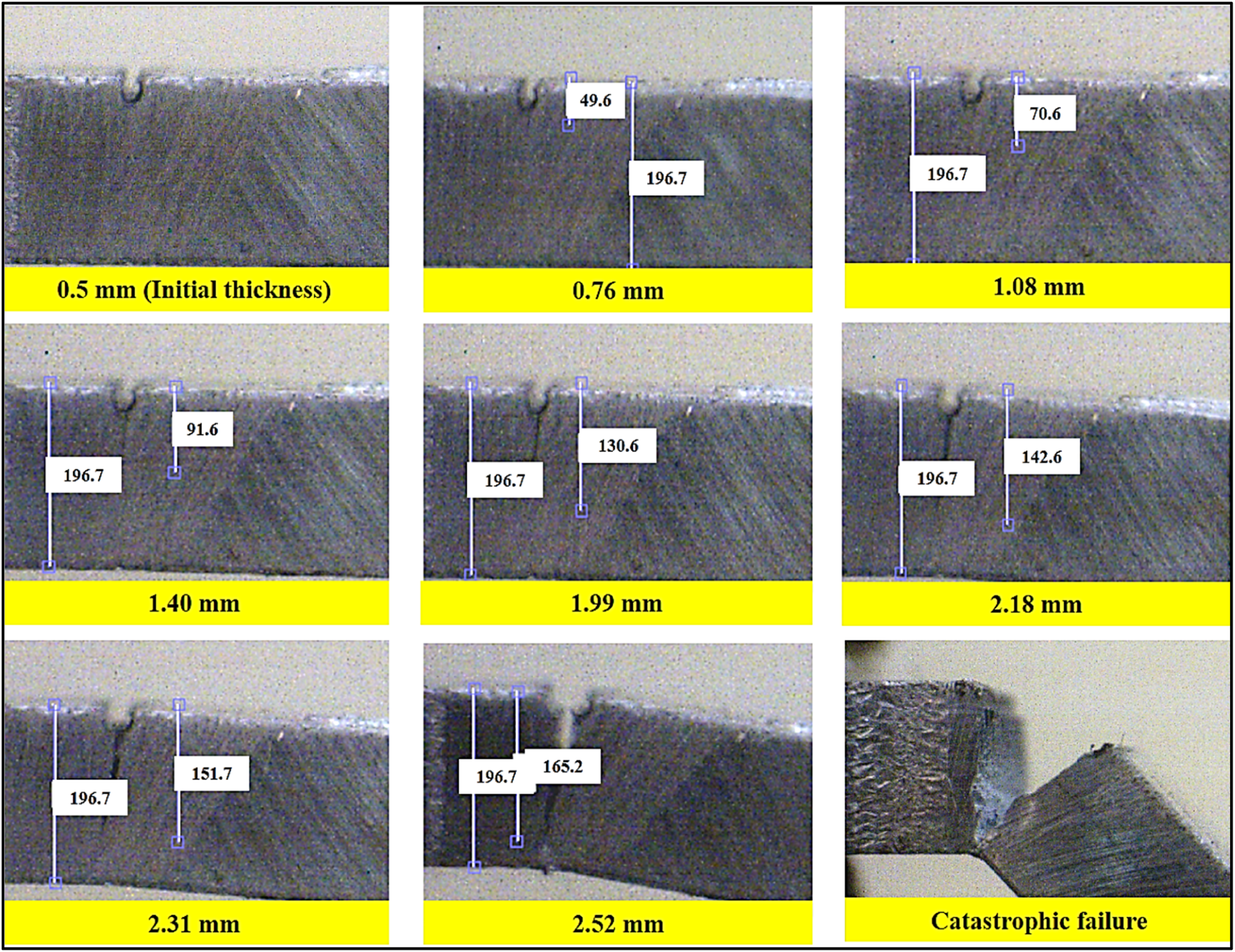
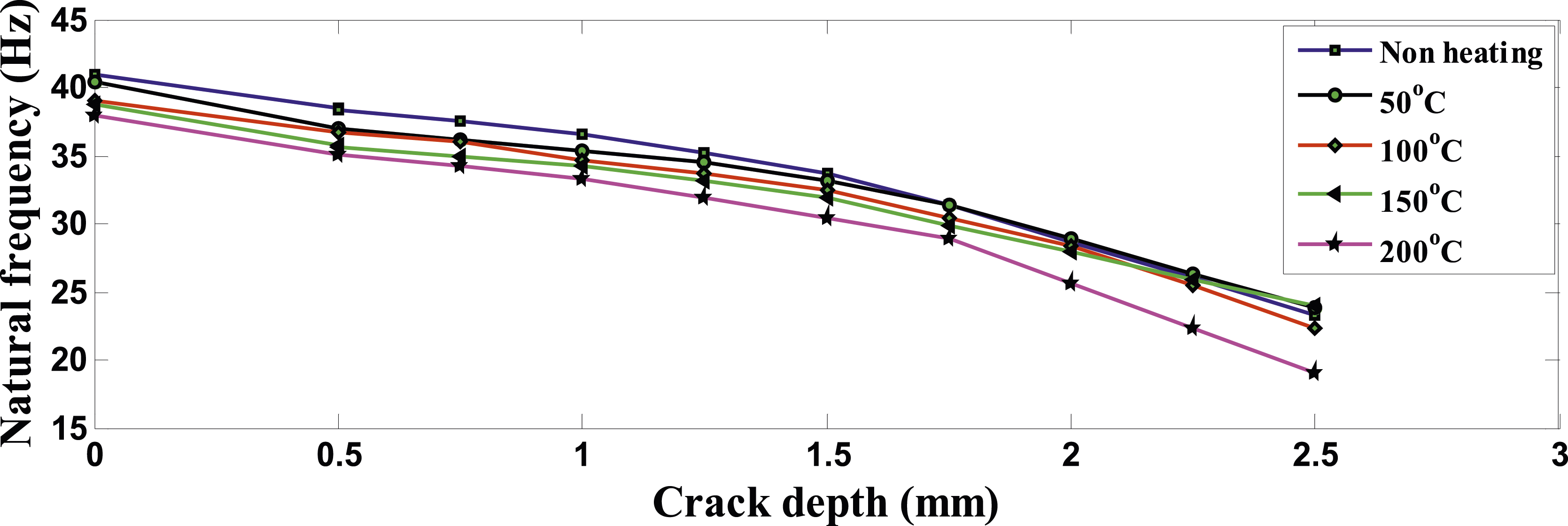
The specimen’s natural frequency value at a 0.5 mm fracture depth is its natural frequency. The fracture will initiate wideningas soon as the load is introduced, and the specimen vibrates at its natural frequency. As seen by the graphs, this propagation will lessen stiffness, which will ultimately result in a fall in natural frequency. Up to its catastrophic failure, the lowest value is reached. The variation in amplitude response w. r.t a propagating crack is also evaluated in light of initial crack depth, as depicted in Figure 9 for a crack that is 5% of the total length at a certain temperature range. The decrease in stiffness due crack propagation results in increased responsesagainst the same magnitude of force. The results of amplitude and natural frequency are like first seeded crack. The fracture that is 15% of the total length long and has the highest natural frequency value and the lowest value of amplitude at the same magnitude of damage. Amplitude V/S crack depth for propagating crack located at 5% of total length.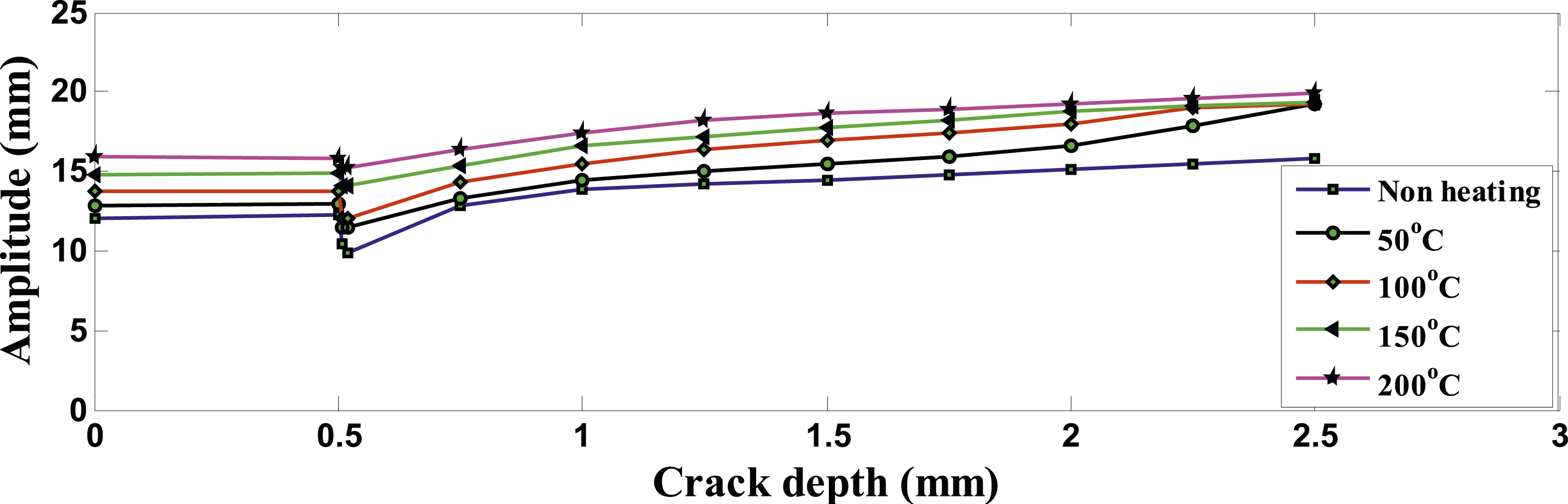
A notable observation made during crack propagation is that at a crack depth of around 0.5 mm, the natural frequency did not significantly vary in response to subsurface cracking. As a result, it was very challenging to determine the exact moment that subsurface cracking began. The first seeded crack depicted in Figure 8 does not appear to have changed under the microscope. On the other side, a dip in amplitude at 0.5 mm signifies the start of subsurface crack propagation, which can later help with preventative maintenance planning, as illustrated in Figure 9. Therefore, under thermomechanical stresses that accelerate fracture propagation by lowering structural stiffness, the amplitude response is given more weight.
The frequency and amplitude response is presented for temperature ranges ranging from non-heating to 200°C in order to visualize the impact of temperature change. For the same amount of damage, a structure’s natural frequency is decreased as temperature rises. On the other hand, amplitude rises as structural damping is decreased. This demonstrates how the temperature might affect thermomechanical loads’ failure rate.
5%, 10%, and 15% of the total length of the crack are located for temperatures between zero and 200°C. For all temperature values, the value of natural frequency is larger for cracks that are at 15% of the total length, indicating that the stiffness of specimen is immune to crack locations that are distant from the fixed support. The subject structure becomes more elastic because of a crack that is near the fixed support, which results in a lower structural damping value. The structure with a lower value of natural frequency, thus, presents a larger value of amplitude response undergoing the same stress. It demonstrates that the placement of the crack has no bearing on the material damping. However, the placement of the crack may alter the structural damping. The underdamped response of the system to the damping and reduction in natural frequency, which is demonstrated in equation (16),
57
further supports this.
Empirical correlations
The proposed approach, which includes an empirical connection between the fracture depth, natural frequency, temperature, crack location and beam amplitude, can identify both the location and depth of the crack. For an empirical relationship to be formed, a sizable number of experiments are needed. Using the decline in natural frequency, temperature and amplitude difference, this empirical relation is anticipated to be able to forecast the fracture depth. To determine the percentage reliability of the outcomes in light ofthe experimental data as described through equation (17),
58
the percentage replication (PR) criterion is frequently utilized.
The reaction and temperature are taken into account when developing the suggested methodology. Interpolation is used to identify three permutations of fracture depth and position for amplitude difference and frequency drop separately using the data that is currently available. Because the same amplitude difference and frequency drop may be attained using three distinct sets of fracture depth and location, these three combinations are practical. The distinctive feature between each set of crack depths at a certain site determined by amplitude difference and frequency drop is then measured. The most precise location and crack depth will be indicated by the anticipated values with the smallest difference based on amplitude difference and frequency drop. Figure 10 displays a thorough diagram for determining the depth and position of cracks. Plan for predicting crack location and depth.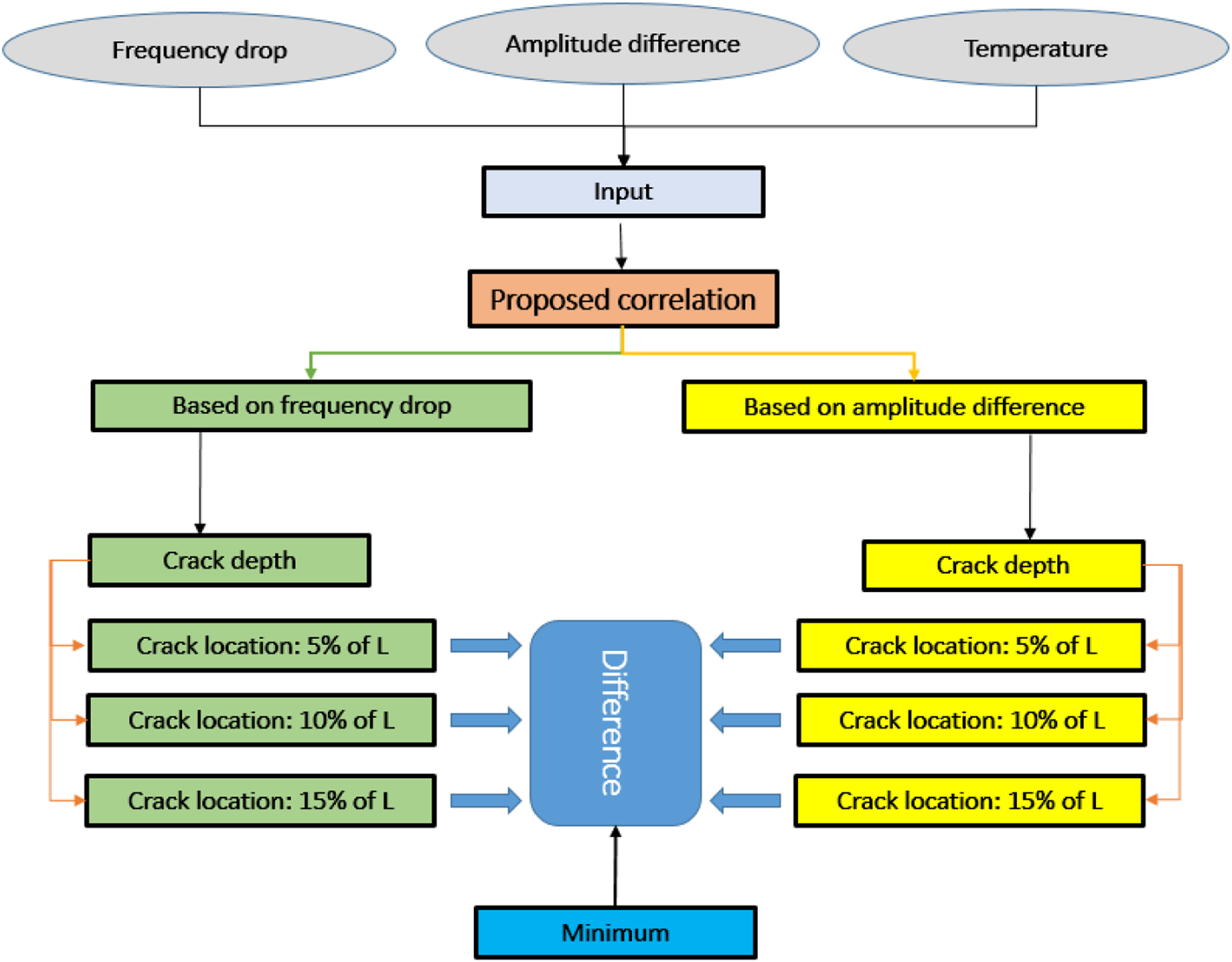
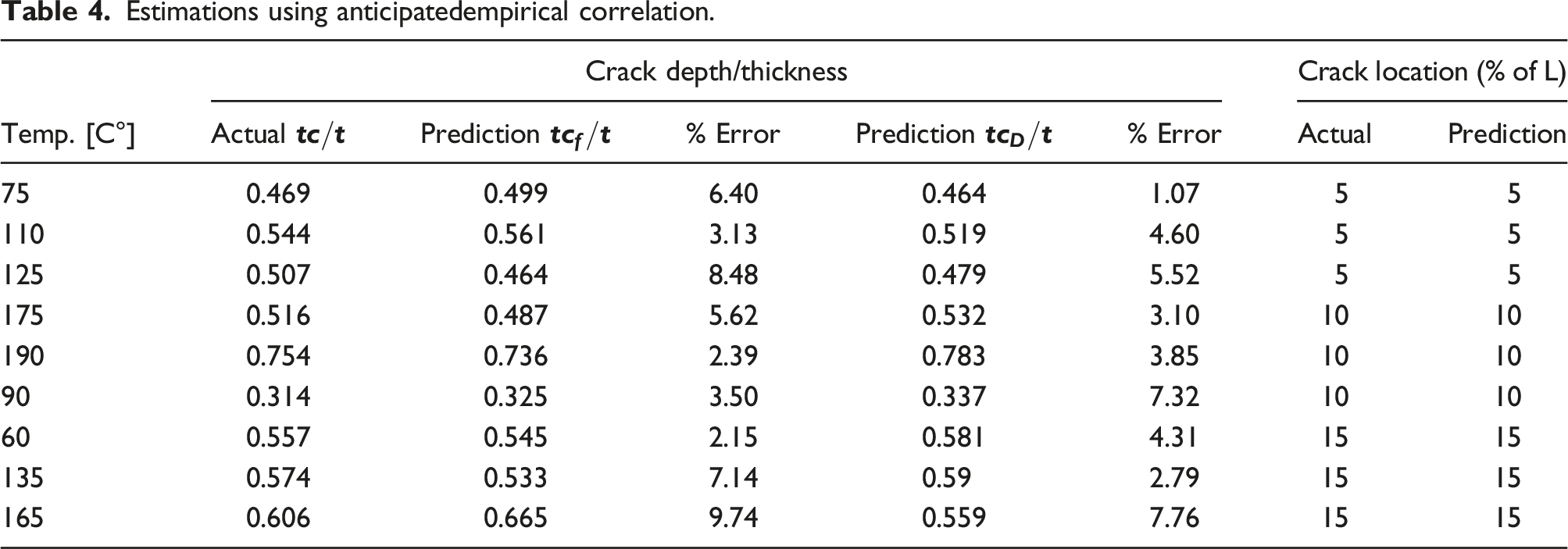
Three locations will have six universal correlations owing to certain response parameters. Six global correlations are derived from these correlations, and three are used to calculate the crack depths by amplitude difference and three by natural frequency difference. One location is represented by one set of values for the crack depth. Therefore, the variation in these crack depths is due to one site, and this location will be used to determine where the actual crack will be. The real location of the crack will be at the point where the difference in crack depth is least. You can use these empirical correlations to determine how a fracture spreads from its inception until its failure. A fair agreement is found between the values for the visually observed crack depth and the values determined from equation (15).
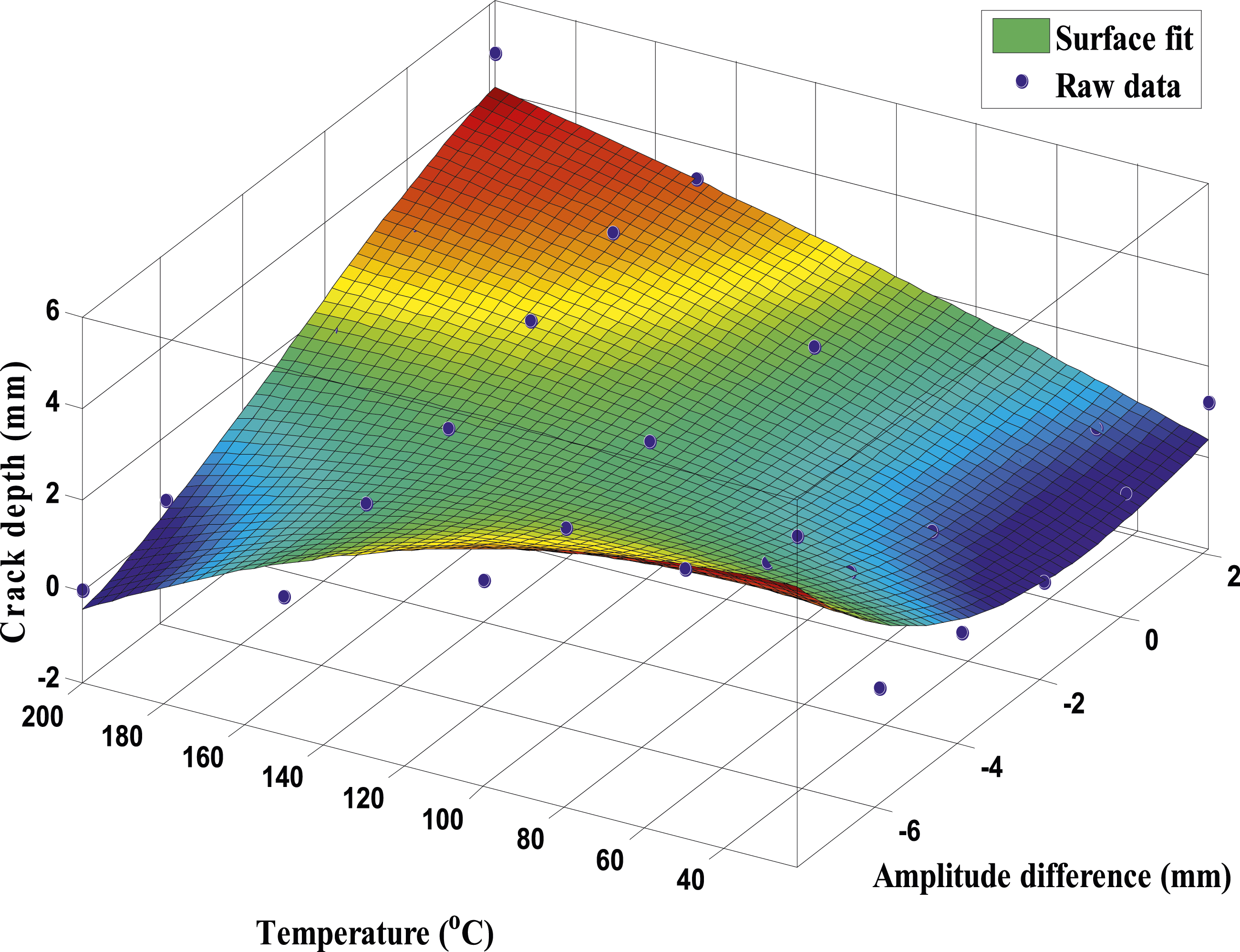
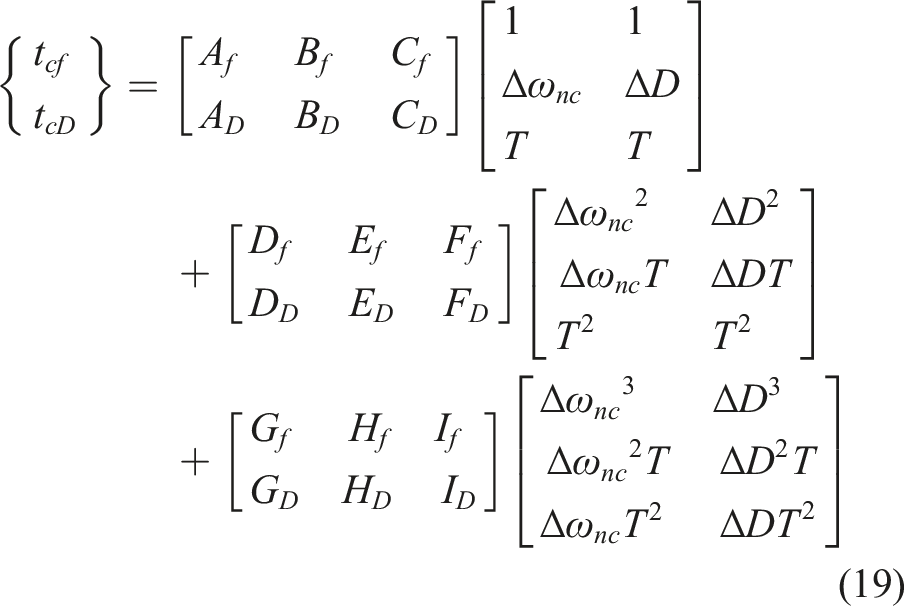
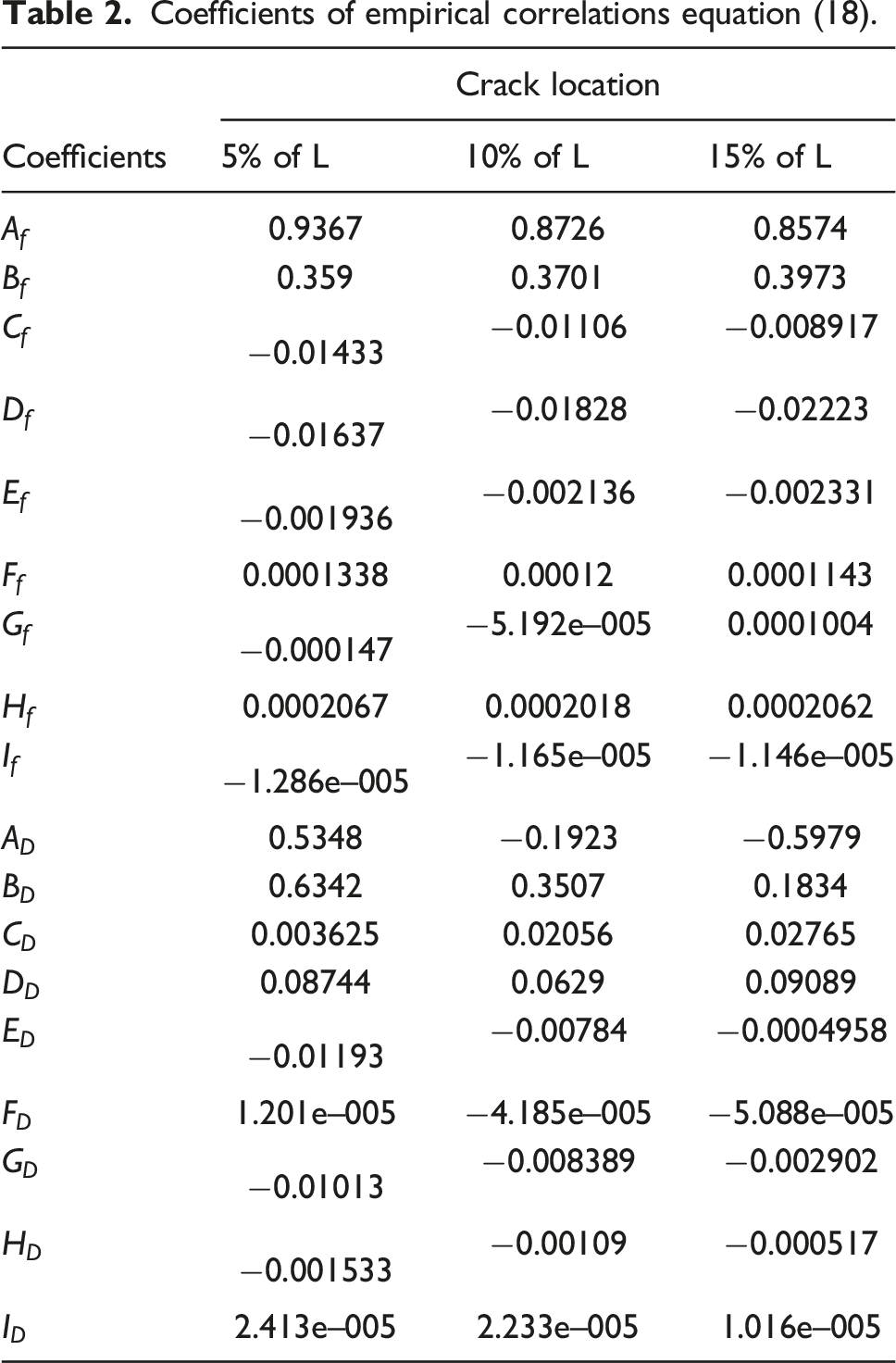
On the basis of the provided data, a curve fitting is done to produce a universal empirical correlation that can account for a variety of frequency and sample lengths, as indicated in equations (18) and (19). The formulation of equation (19) takes into account temperature, amplitude differential, and frequency drop. As a result, the first matrix represents the polynomial coefficient, and the second is dependent on the relevant temperature and dynamic response parameter values. Figures 11 and 12 exhibit the crack depth in correlation with temperature or as a its function, drop in frequency, and amplitude difference. The majority of the data points are compatible with this polynomial curve fit. Although a small fraction of the population is still uninsured, the forecast percentage will be definitely close. Depiction of surface fit and experimental data for empirical correlation in light of frequency drop for crack located at 5% of L. Surface fit and experimental data for empirical equationencompassing amplitude difference for a crack located at 5% of L.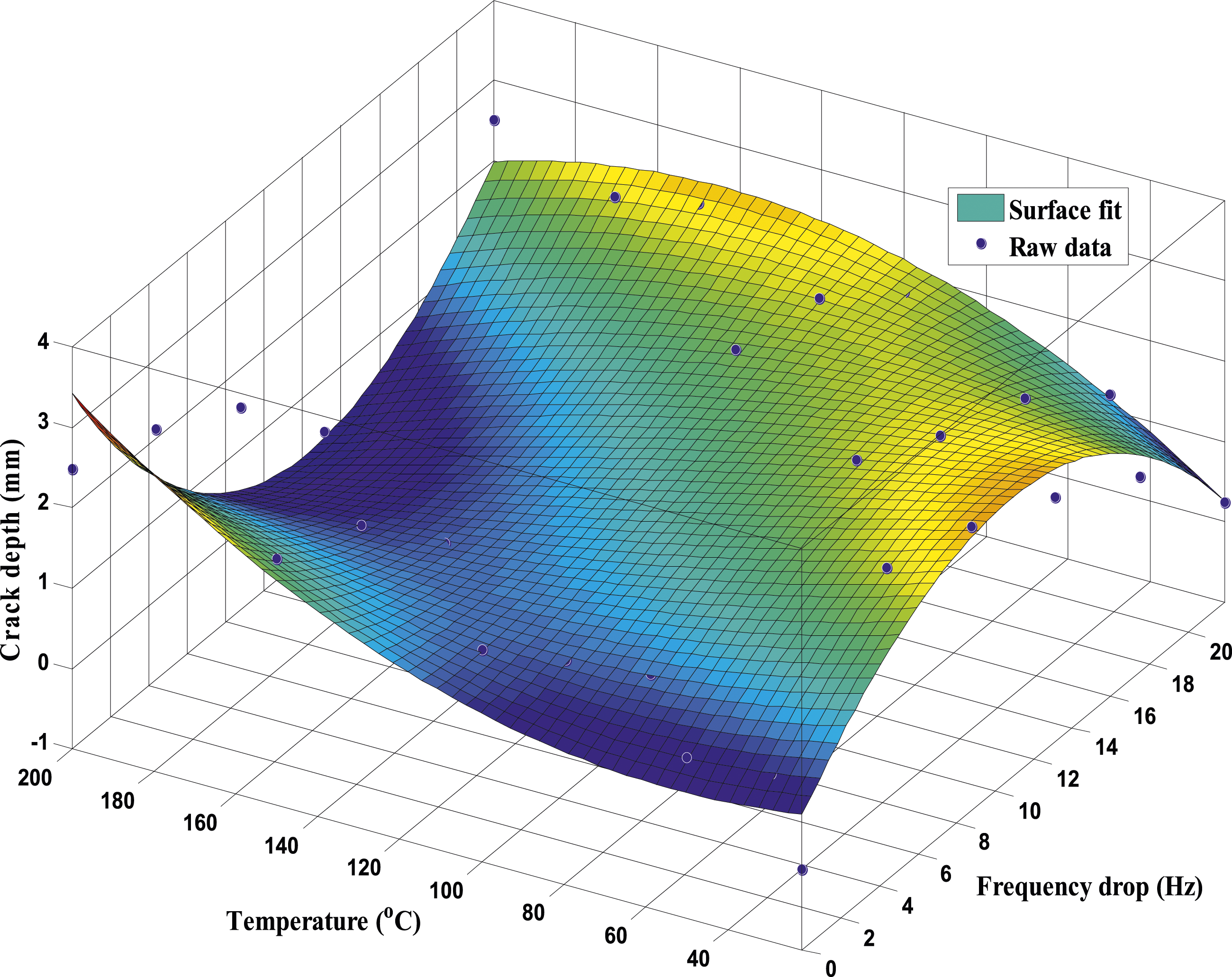

Coefficients of empirical correlations equation (18).
Validation of correlations and comparison with neural network
The network is trained using a supervised learning technique by sorting all of the trial data to reduce noise; this process improves network fitting while preserving trend generalization. Figure 13 illustrates the results of training using the Bayesian regularization technique, which yield an overall regression value of 0.98. Regeneration plot.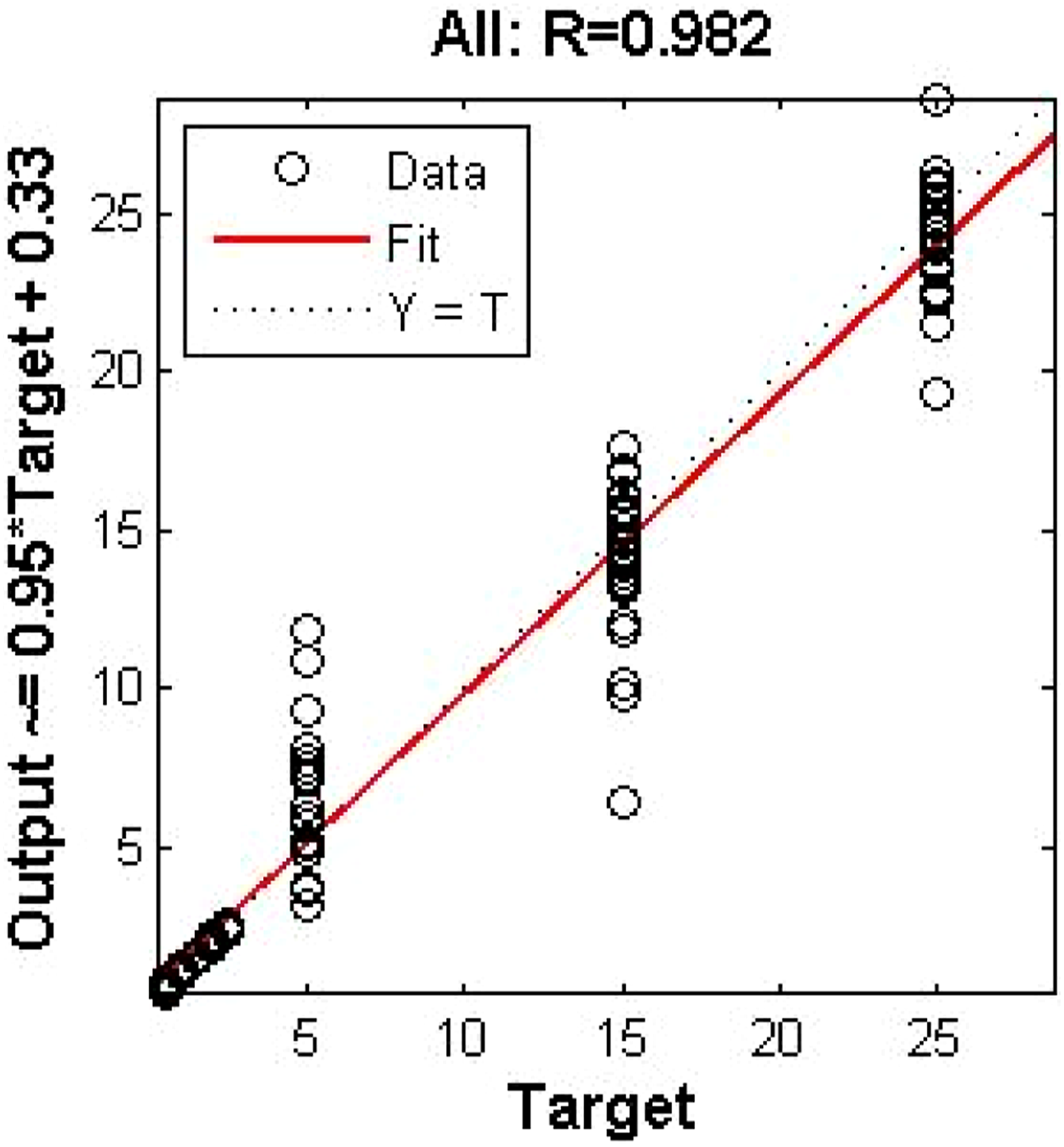
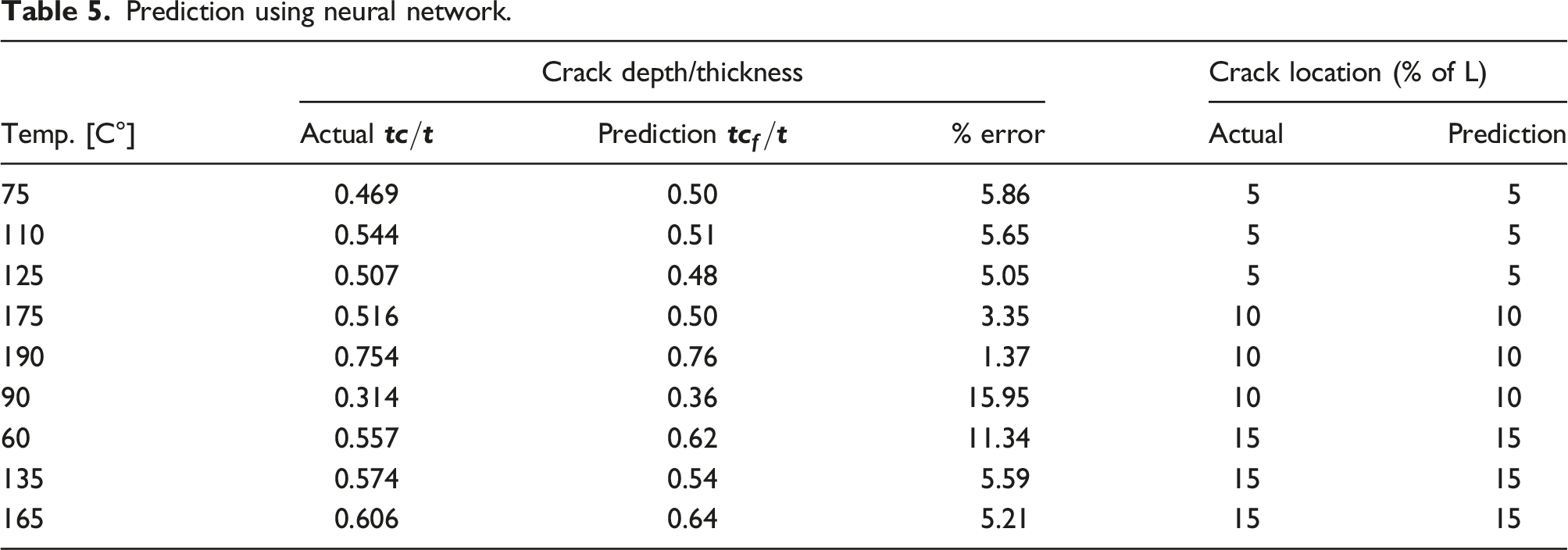
The training error achieved is significantly small and it is achieved in over 215 iterations as shown in Figure 14. In order to obtain the best possible regression and minimal error several trainings of the network are performed and while it varies every time, the values differ only slightly. The results obtained for the arbitrary data set are within the target of 10% error, indicating that the network has been successfully trained. Finding the depth and position of damage cracks is made possible by the promising outcomes. However, in some circumstances, experimenting with various neural network designs and parameter values can provide the best prediction. Training error plot.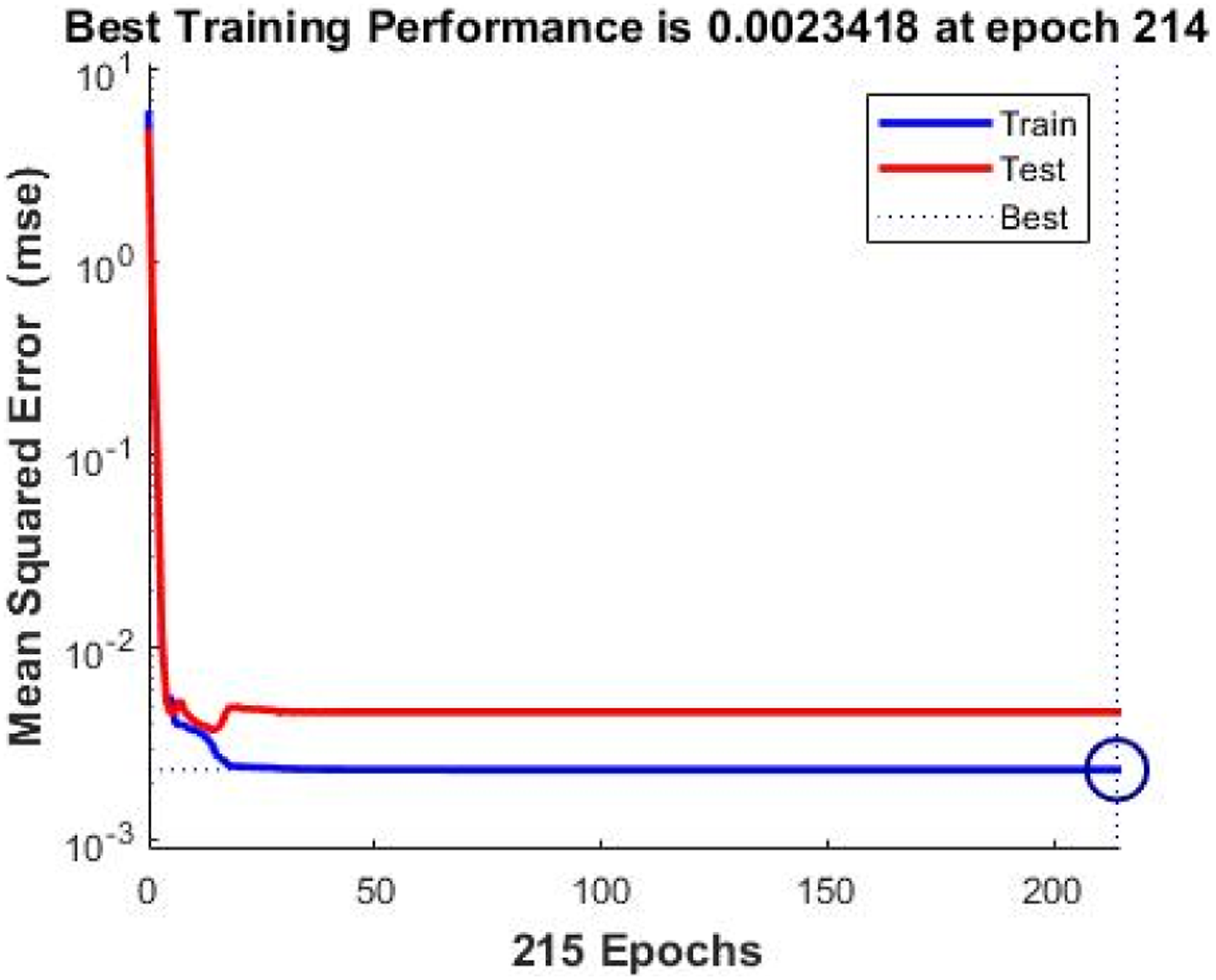

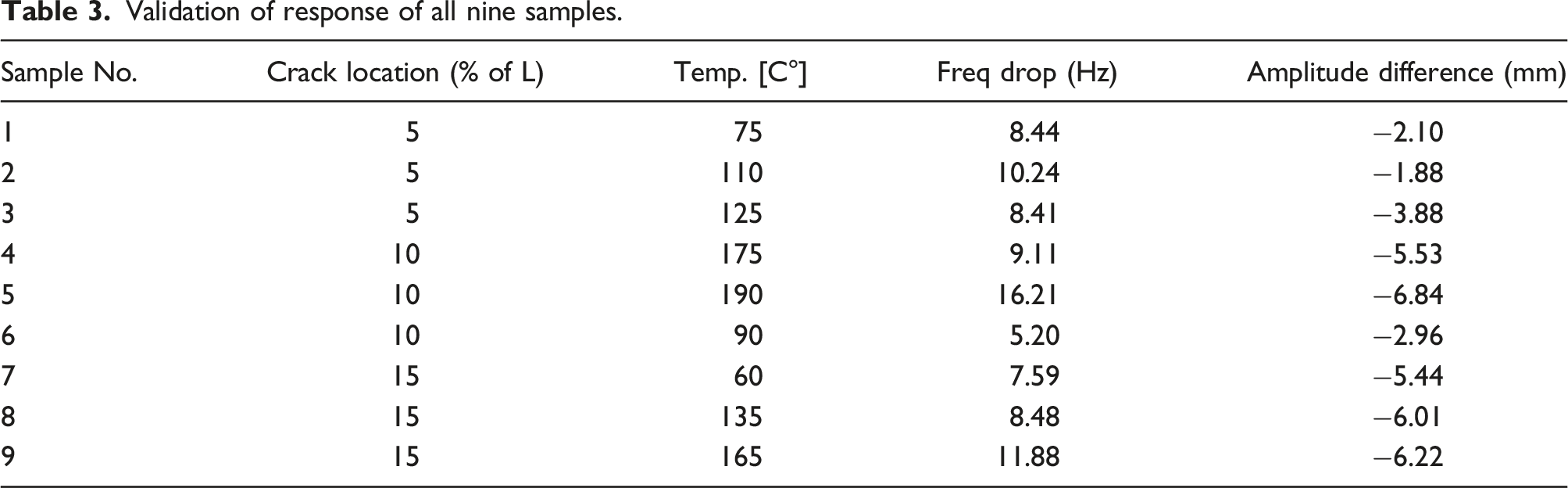
Validation of response of all nine samples.
Estimations using anticipatedempirical correlation.
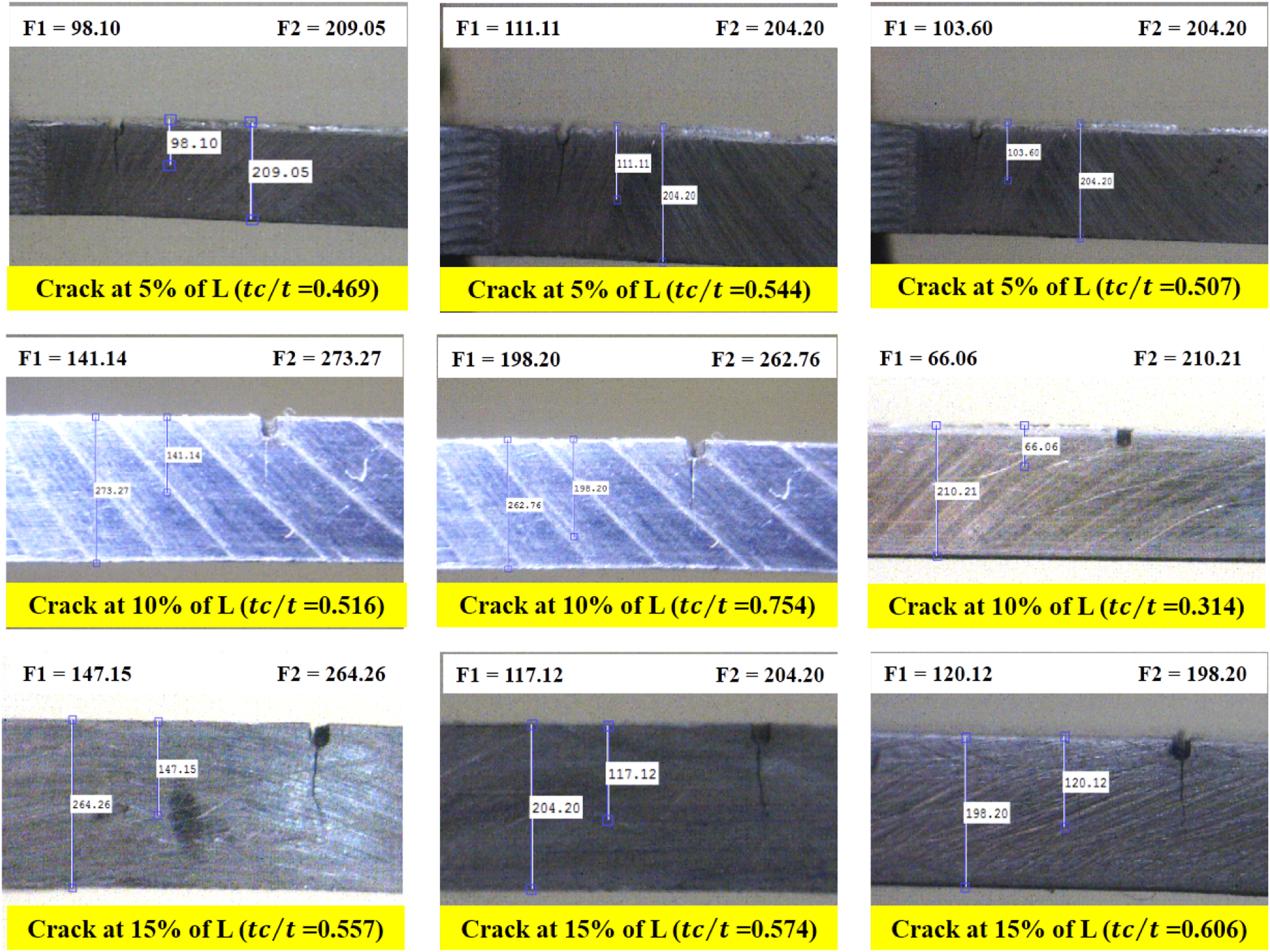
Specimen images for experimental validation.
Prediction using neural network.
Conclusion
A novel methodology is proposed to predict the crack depth in an Aluminum 2024 cantilever beam, operating at a modal frequency by its dynamic response values including frequency drop and amplitude difference. Due to changes in stiffness, the dynamic response including frequency drop and amplitude also changes; this effect has also been investigated by varying temperature based on in situ working conditions. Experimental information for deepening cracks in various places is acquired. Based on the comprehensive results, a trend is obtained to establish relationships among crack depth, location and temperature for the first time for a cantilever beam operating under thermo-mechanical loads. Higher temperature reduces stiffness, which in turn reduces the frequency and causes a beam to vibrate more violently under the same load. Similar behavior is seen for cracks that are farther from the fixed support. Notable results are obtained for amplitude response in which the subsurface cracking is evident without showing any increase in crack propagating; this will be extremely beneficial for preventive maintenance and give warning well before catastrophic failure. To forecast the location and depth of cracks, a thorough schematic is developed and then compared with a neural network approach. In order to create thisreliable tool, empirical relations in light of global curve fit are developed using temperature and dynamic response. This tool is validated for both readily available data and arbitrary sample data. The projected outcomes are in line with the outcomes attained using the neural network and are well within the prediction range of 10%. Without interrupting the structural element’s normal processes, this approach can further be utilized to analyze the rate of crack propagation and its course.
Footnotes
Declaration of conflicting interests
The author(s) declared no potential conflicts of interest with respect to the research, authorship, and/or publication of this article.
Funding
The author(s) received no financial support for the research, authorship, and/or publication of this article.
