



Abstract
Co-production in urban shaping can future-proof emergent neighbourhoods against disasters and help them adapt to climate change. But to be effective, co-production processes need to understand and work with the complexities on the ground, drawing on a “dialogue of knowledges” among civil society, the state and academia. This paper reflects on 10 years of work in Comuna 8, Medellín, where disaster risk management (DRM) has become a key driver of community mobilization. It traces the evolution of a uniquely continuous sequence of participatory action-research projects around DRM in self-built neighbourhoods involving all these actors, linking community activism, scientific knowledge and policymaking. It highlights the diversity and capacities of community organizations and other actors that support them and how their interactions with state actors have evolved. It also demonstrates the emergence of an integrated approach to DRM and climate change adaptation from a bottom-up understanding of the complexities of place.
Keywords
I. Introduction
From the 1970s onwards, calls to recognize self-built neighbourhoods as a solution to the housing crisis in a rapidly urbanizing world led to international agency support for sites and services and so-called “informal settlement upgrading”. These calls acknowledged poor communities’ engagement in shaping their neighbourhoods and cities in the global South. By the 1990s, the debate and the focus of international agencies had moved on to community self-management.(1) Similarly, the international debate on disaster risk management (DRM) has evolved from early calls for engaging local communities in the 1980s,(2) to the discussion of transformative action involving all stakeholders in climate change adaptation (CCA).(3) The roles of civil society, the state and the private sector, and linkages between them, have been at the heart of this thinking. Whereas “partnership” was the (much criticized) mainstream model from the 1990s onwards, “co-production” has become increasingly adopted more recently.(4)
However, the implementation of these approaches shows that the forms of interaction underpinning co-production as a basis for urban governance – including at the interface between urban planning and DRM – are fraught with complexities and contradictions. Paradoxically, these are due to both the rigidity and the porousness of the key actors. A proactive approach to co-production in “urban shaping” – designing, developing and managing cities to enhance their social, economic and environmental sustainability – can help to future-proof emergent neighbourhoods against potential disasters, taking climate change into account. But to be effective, the approach needs to understand and work with these complexities and contradictions. It also needs to develop flexible ways of responding to ever changing circumstances, different speeds in formal and informal processes, and the various drivers that influence the priorities and agendas of the actors involved.
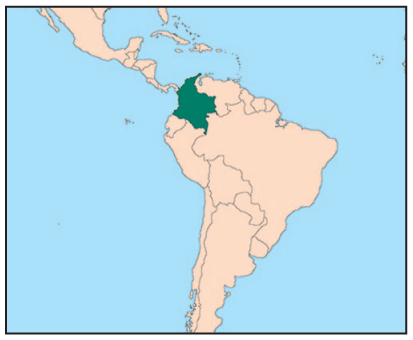
In this paper we reflect on 10 years of work in Comuna 8,(5) Medellín, Colombia, where DRM has become a key driver of community organization and mobilization. The paper traces the evolution of a sequence of projects and initiatives mainly in Comuna 8. Some were funded by academic research and impact funding in the UK, some driven by community organizations, and others initiated by local government. These initiatives have underpinned a uniquely continuous process of action-research around DRM in self-built neighbourhoods involving all these actors, and linking community activism, scientific knowledge (including citizen science) and policymaking.
This paper’s objective is to draw lessons from this example of collaborative and risk-informed decision-making on urban planning, and the ways it engages with long-term future approaches. The paper addresses the relationship between urban development planning and DRM in Medellín in the context of climate change and the need to adapt. It also explores the extent to which inclusive and informed decision-making processes in risk-related urban planning – as experimented with in the Comuna 8 projects through coalitions between community, academia and the state – lead to greater adaptive capacities at the community level.
II. Theoretical Framework(6)
The urban shaping perspective employed in this paper focuses on collaborative visioning processes that bring marginalized and more powerful voices into conversations, and integrate an awareness of risk from multiple perspectives. This is part of an ongoing shaping and reshaping of places that addresses their physical, social and economic complexity.(7) It supports the understanding of urban planning as a social – rather than merely technical – process in which dialogue between actors, recognition of different kinds of knowledge and power relationships, and a strategic way of operating based on long-term visions implemented through incremental actions are all important.(8) This perspective recognizes the importance of creating social and institutional spaces for negotiating the planning, design, management and implementation of the city and its urban services. Creating and analyzing these spaces requires understanding:
Their processes and outcomes,(9) including who generates these spaces, how they are managed and their timeframes; and
Their content, including the issues and demands addressed in the negotiations, and the actors’ reasons and motivations for including them.
Starting with urban management processes, international agency discourse and academic debate around housing shifted in the 1990s from supporting “self-help” processes to promoting community self-management. Although the authors consider this a positive evolution, it can also be understood as a rather technocratic and apolitical approach. Meanwhile, there have also been calls – from both social movements and academia – for stronger community activism and its recognition. For instance, Mitlin(10) and Smith(11) have both analyzed how community organizations that federate and form second-tier organizations develop a greater capacity to effectively open and use spaces for negotiation with the state.
More recently, interest has developed around “urban reform coalitions”, which Mitlin refers to as “groups of diverse stakeholders working together to achieve common goals”.(12) Early studies focused on alliances between local governments and business elites in the United States of America, expanding later to urban social movements in the global South. For instance, Weldeghebrael(13) analyzes 24 coalitions in Africa formed around disadvantaged groups aimed at influencing urban policy through knowledge co-production, using a set of six dimensions: forms of coalition, temporality, goal orientation, degrees of formalization, class composition and key outputs. According to Mitlin and Weldeghebrael, these coalitions focus on “collectively researching urban challenges, building the research capabilities of community groups, legitimizing community-produced data, and jointly experimenting with alternative solutions”.(14) They also note that “these collaborative spaces and their contribution to the co-production of knowledge and urban transformation are largely undocumented”.(15) In the context of urban planning, DRM and CCA in the global South, the following question arises: what impact can these coordinated co-production efforts have? We address this question taking into account Weldeghebrael’s six dimensions.
Regarding the content of the discourses of actors who interact in spaces for negotiation around urban management, there is extensive literature on the need to value and recognize local knowledge.(16) For instance, the notion of a “dialogue of knowledges” has its origins in the work of Orlando Fals Borda, who proposed an approach to rural development in which the traditional knowledge of communities engaged in “dialogue” with the technical knowledge of agronomists, resulting in changes in understanding in both parties.(17) Development literature – particularly rural development – often discusses the need to value different kinds of knowledge and the ways in which they are validated.(18) So, should we expect each sector of society to have a monopoly on a particular kind of knowledge – that is, local and traditional knowledge from communities; scientific from academics; and legal, technical and managerial from the institutions? And what happens when the communities use areas of knowledge that are not traditionally considered a part of their abilities?
The literature of the 1970s to 1980s presents many examples of social movements that took both pragmatic and more philosophical stances, demanding housing and urban services on the one hand, but also the more abstract right to the city.(19) Since the 1990s, there has been evidence of a fragmentation of popular struggles around more specific issues. For instance, according to Velásquez and González,(20) protest-based demands for public services have been the main driver of citizen mobilization in Colombia.(21) On the other hand, calls in academic circles have advocated a more transdisciplinary, holistic approach, aiming at understanding and influencing complexity (for instance, integrating DRM with adaptation to climate change(22) or with regenerative design proposals(23)). More recently, this trend has been exemplified by nature-based solutions (NBS), conceptualized as achieving multiple benefits rather than addressing individual problems. This type of counterproposal is a reaction to the growing disciplinary specialization in scientific and academic knowledge over the last 200 years.
Beyond disciplinary divisions, the relationship between the community and the place it inhabits can be seen as more experiential than others (for example, the relationship that academics may form with a place from their disciplinary perspective, or the relationships formed by institutional actors who interact with a place through administrative processes) encouraging a respect for local knowledge. Citizen science projects often understand these processes as ways to increase the scope of data collection, contextualize data with local knowledge and empower communities, always under the guidance of academic teams.(24) However, what if communities themselves, guided by their experience of place, could begin to assimilate and use transdisciplinary knowledge in an integrative way? What could be their contributions to spaces for negotiation and to the city’s planning and management processes?
III. Methodology
This paper was written as a collaborative reflection by three UK-based academics, two local community leaders and one local consultant who have worked together in a series of community-based action-research projects in Medellín.(25) The collaboration goes back 10 years for four of the authors. The reflection was undertaken during online meetings involving all authors. The call for abstracts for this issue of Environment and Urbanization on urban shaping was the basis for initial discussions and for the production of short pieces addressing key questions posed in the call. These were synthesized into a full draft in Spanish by the lead author, to which all contributed further. That draft was then translated into English by two of the academics. The paper draws on documents and reports produced by projects the authors collaborated on,(26) as well as their direct experience of the process.
The projects that evolved over the 10-year process analyzed here adopted a participatory action-research and knowledge co-production approach.(27) It brought together actors and knowledge about the territory, identifying and developing proposals and “solutions”, and implementing these – all of which have enabled progress towards a common goal (Figure 1). The goal was to identify different levels of responsibility of relevant organizations, and the joint formulation and design of proposals at different scales, in order to address disaster risk management. The Comuna 8 experience provides an intrinsic case study.(28) It is of interest because of the rarity of its long-term collaboration, particularly between community organizations and academia, and to a lesser extent with the state.
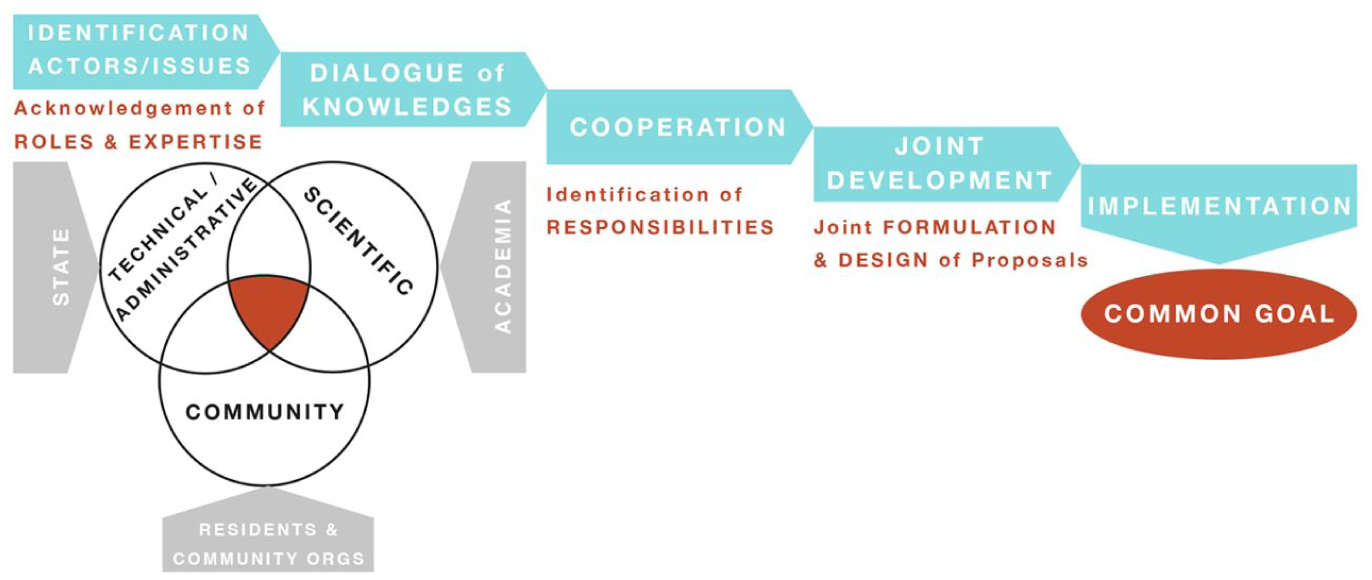
Participatory action-research and knowledge co-production approach
The key actors in the process have been the Comuna 8 social organizations and a group of universities in Colombia and the UK(29) that jointly developed action-research project proposals. The co-production methodology for implementing these participatory action-research projects evolved throughout the process. It started with a pilot project in a self-built neighbourhood where residents collected data (citizen science), followed by projects in which community volunteers undertook qualitative analysis of the data. The methodologies in more recent projects involved a wider set of community participants in decision-making around the research process, for example, in choosing the evaluation criteria for prioritizing pilot projects. Throughout this trajectory, the interdisciplinary team has constantly learnt from other experiences, such as the work developed by Stein and Moser for CCA in self-built neighbourhoods in Honduras.(30) Table 1 shows the research methods used for each project – no new data were collected specifically for this article.
Co-production of knowledge methods based on action-research
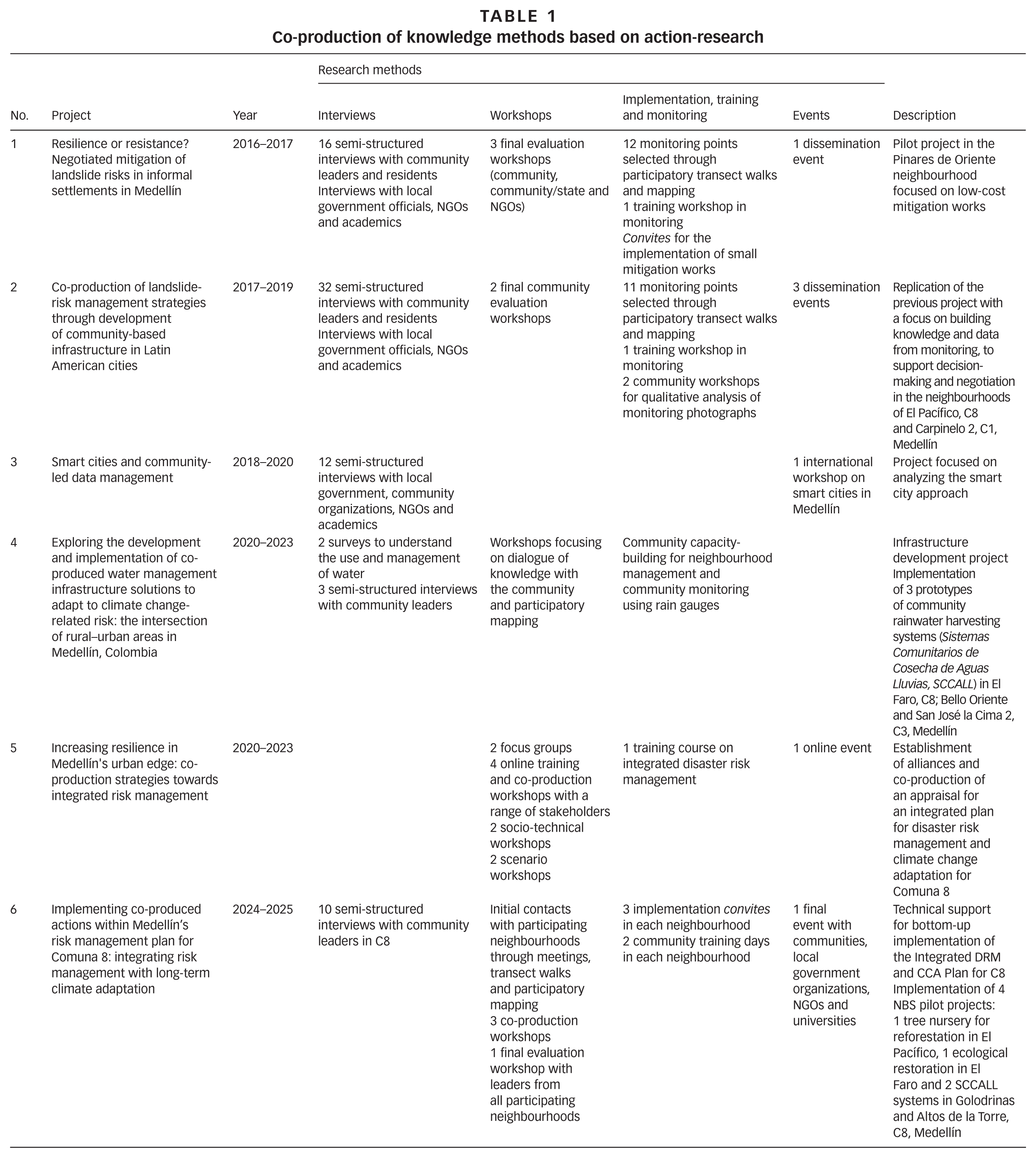
These initiatives (Table 1 and Figure 2) included initial pilot projects that explored the community’s capacity to monitor and mitigate small landslides risk within their neighbourhoods (2016–2019);(31) community rainwater harvesting as DRM and CCA (2020–2023); the generation of a comuna-wide Integrated Plan for Disaster Risk Management and Climate Change Adaptation (IPDRMCCA) for Comuna 8 (2020–2024); and a further set of community-based pilot projects exploring the scope of NBS for DRM and CCA at the neighbourhood level (2024–2025).
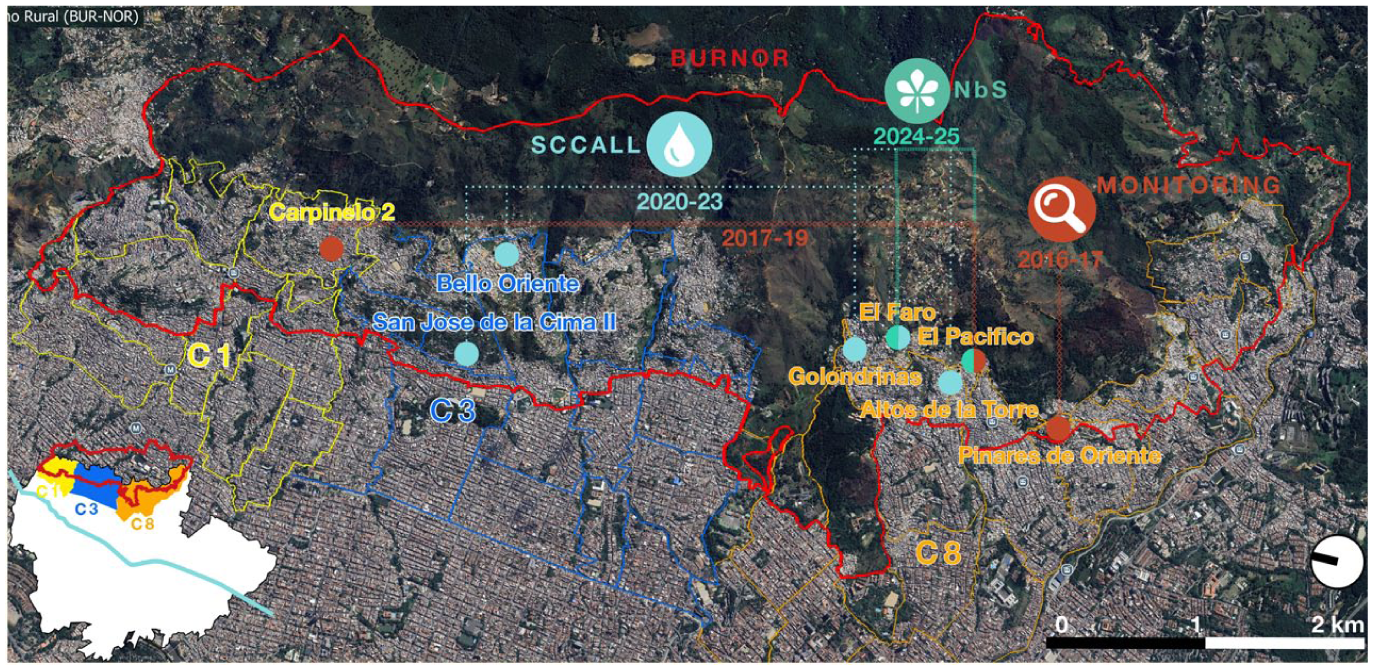
Map showing location of the BURNOR within Medellín (lower left) and of action-research projects implemented across Comunas 1, 3 and 8
The universities provided academic rigour to the methods deployed (Table 1), as well as expertise in relevant disciplines such as geology and geo-environmental engineering. They also facilitated activities and mediated between communities and the state. The projects received ethical approval from the relevant universities.
The community organizations facilitated and coordinated residents’ participation in action-research activities. Residents contributed their in-depth knowledge of the complex historical, social and political context, and shared the results of previous projects they had participated in. Activities made possible by their organizational capacity ranged from workshops to the building of pilot projects (mitigation and NBS projects) through collective community activities (convites).(32) Ultimately, these organizations worked with local nongovernmental organizations (NGOs) whose technical, legal and organizational support was also key to the projects’ success.
State institutions contributed previous technical studies as secondary data, and advice on relevant legal and regulatory frameworks and processes. They also facilitated coordination between the projects and other local government actors working on DRM, CCA and urban planning. The way this article was written, as the result of joint reflection, reproduces the co-production approach deployed in the projects.
IV. Background: Community action in Disaster Risk and Habitat Management in MedellÍn
Medellín municipality (population 2,616,335 in 2024) in northwestern Colombia, is part of a metropolitan area covering much of the Andean Aburrá Valley (4,179,996 inhabitants, 95.5 per cent urban).(33) The valley floor is occupied by the formal city, while much of the surrounding steep hillsides are occupied by self-built neighbourhoods, some dating back to the 1950s. Medellín’s peripheral hillside neighbourhoods, with their high levels of risk and vulnerability, have been largely built by migrants arriving as a result of forced displacement.(34)
Medellín has a long history of state intervention in self-built neighbourhoods, notably the Comprehensive Programme for the Improvement of Substandard Neighbourhoods in Medellín (PRIMED) in the 1990s,(35) and the implementation of the cable car system (Metrocable) and social facilities by “social urbanism” between 2004 and 2012.(36) Since 1999, state efforts have focused primarily on the development of the Land Use Plan (POT) to guide public interventions and regulate urban development activities.(37)
Medellín’s current POT, formulated and adopted in 2014, establishes a “compact city” model based on inward and vertical growth mainly within the Aburrá River valley. By 2025, its implementation had failed to reflect the plan’s expectations, partly because the financing instruments were not consistent with the plan’s ambitions.(38) The plan subdivided the municipality into 10 macro-projects (second-level planning instruments), one of which is the Northeastern Urban–Rural Edge Macro-project (Macroproyecto de Borde Urbano Rural Nororiental or BURNOR), comprising the upper parts of Comunas 1, 3 and 8, which share social and biophysical conditions.(39) As of December 2024, 49 per cent of the formulation was completed.(40)
The formalization of informal neighbourhoods, one of the POT objectives, requires the formulation and adoption of the relevant macro-project; detailed risk studies (Decree 1807 of 2014); and the implementation of risk mitigation works. The first two steps, established by the POT, are financial viability and the prioritization of actions. The elected mayor can decide which POT priorities to meet during their four-year mandate, influencing decisions on how to use the city’s limited resources.
The Colombian regulatory framework has held back improvements in the living conditions of informal settlements, as regulations restrict municipal action in the areas considered as informal. Medellín had 87,854 informal residential properties in 2014 and 75,806 in 2024.(41) Although there has been a reduction in quantitative terms, there is still lack of security of land tenure and housing.(42)
Biophysical hazards(43) and illegal land tenure have shaped popular struggles related to access to and affordability of goods and services, and to emergencies and disasters that widen socio-environmental inequality gaps. In Comuna 8, through formal participation and advocacy mechanisms, civil society organizations began to influence the comuna-level and zonal planning agenda by linking strategic issues around public services and DRM to the local development plan and the participatory budget.(44) This positioned such issues on the public agenda, flagging municipal responsibilities. The projects and processes discussed in this article are part of this trajectory.(45)
Civil society organizations in Comuna 8 managed to fund detailed risk studies through the participatory budget. They aimed to establish risk scenarios using a technical process and manage possible solutions in the comuna, incorporating them into institutional agendas, thus facilitating implementation of the local government’s land-use planning. As a result, Comuna 8 has the highest number of detailed risk studies completed, all of which are needed for subsequent regularization and legalization. Comunas 1 and 3 have only completed a few preliminary studies. Although these are major achievements, the implementation of related works and the formulation and adoption of the macro-project are still pending, having been slowed down by regulatory complexities.
In response to slow progress, social movements in different comunas, including Comuna 8, have created organizational structures specializing in key issues. The Comuna 8 Housing and Public Services Committee was created in 2011 as a forum for sharing knowledge and generating proposals around decent housing and public services.(46) It was later renamed the Housing and Habitat Committee, as it fights for residents’ permanence and defence of the territory as a whole – that is, for their right to have a say on how the entire comuna is managed rather than focusing on individual householders’ rights only. It has always focused on proposing alternatives, though its origins lie in protests against evictions related to municipal flagship projects such as the Bicentennial Park and the Metropolitan Greenbelt.(47)
In legal terms, the social bodies responsible for liaising with the municipality are the Community Action Boards (Juntas de Acción Comunal or JAC).(48) The Housing and Habitat Committee was created as a specialized arm that allows coordination with other local, municipal, national and international actors who contribute proposals responding to local conditions, as well as from other areas of knowledge.
V. Disaster Risk Management: The Community Agenda and Establishing Co-production Processes
a. Confidence-building among actors
Over the last decade, hillside neighbourhood communities in Comuna 8 have reconfigured their participation in DRM through a unique organizational transition, supported by Colombian legislation in risk management and planning.(49) This transition involved a transformation (from confrontation to dialogue) in strategies, discourses and relationships with other actors, in particular state bodies, giving rise to a bottom-up community agenda focused on the defence of territory and climate justice.
As part of this process, coordination also began between the Housing and Habitat Committee and local and UK universities,(50) aimed at developing pilot projects in Comuna 8. These projects adopted an action-research methodology, bringing technical and scientific knowledge into dialogue with community knowledge to identify risks, design mitigation strategies and co-create solutions.
The first project was the community risk-monitoring pilot project in the Pinares de Oriente neighbourhood (2016–2017).(51) Neighbourhood leaders, with technical support from academic researchers and resident involvement, undertook participatory mapping of areas at risk of landslides, created monitoring groups for critical points in the neighbourhood, and implemented temporary, low-cost works as pilot measures. These works, referred to as “meantime” measures, do not reduce the risk category identified in Medellín’s POT, but they address immediate vulnerabilities. As a result, calls to the emergency line were reduced and awareness of the need for minor mitigation works was improved.
Although the initiative was promoted by neighbourhood community leaders, it initially faced strong resistance from some residents, who associated the research with local government and feared it could lead to evictions. These fears stemmed from a history of mistrust of the state and previous interventions that had not adequately considered residents’ priorities.
The Community Action Boards (JAC) helped overcome this mistrust by explaining the projects’ scope and reaffirming its community-led nature. The Housing and Habitat Committee, with its organizational track record and legitimacy, acted as a bridge between technical knowledge and resident concerns, promoting bottom-up learning about risk. Subsequently, the lessons learnt in Pinares were replicated in the El Pacífico and Carpinelo 2 neighbourhoods (2017–2019) with a greater focus on community monitoring and the development of a basic mitigation plan proposal for each neighbourhood. This was based on reorganizing pedestrian mobility and water-management infrastructure, the basis for subsequent interventions led by neighbourhood organizations.
These initial projects generated a transformation in the communities’ perceptions of their own ability to take direct local action and to interact with state institutions on DRM issues. For instance, in the initial project in Pinares de Oriente, during a role-playing game in preparation for a workshop in October 2017, a resident stated that:
“We have managed to start mitigating some of the risks with the help of the universities: water runoff, water from roofs [. . .] Our dream is to move forward and collaborate with ideas and community gatherings [convites], and that is why we are asking for your collaboration. We are all at risk.”
During the same workshop, a community leader proposed what is essentially a co-production approach: “We want to see what the community can contribute and what the institutions can contribute.”
State participants in the project evaluation workshops assessed the community’s achievements very positively, but with caveats related to urban planning legislation. For instance, a local government representative stated:
“It is very interesting to see what you are doing [. . .] Here we see efforts that show that municipal resources do not allow all affected communities to be addressed simultaneously [. . .] In the meantime, temporary solutions must be identified until the definitive solution arrives. Care must be taken to ensure that these interventions do not become permanent solutions for the community.”
This observation acknowledges social capacities for CCA. However, the regulatory structure is inflexible and, combined with fluctuating political will, can hinder negotiation with the municipality and contribute to mistrust of local government. An example is the experience of the El Pacífico neighbourhood, where the 2018 co-production of a DRM strategies project established community monitoring processes and an evacuation plan that resulted in no casualties from a flash flood in 2020. However, the post-flood Attention and Recovery Committee (MAR)(52) that was established to negotiate for the resettlement of affected households and neighbourhood upgrading made no progress in the first three years, reducing local government’s credibility. These protracted processes tend to dampen community-led initiatives, as everyday life obligations intervene for community leaders and engaged residents.
b. Creation of spaces for participation and consensus-seeking
A community agenda around risk formed not only within the scope of these projects, but also through community organization-led creation of spaces for participation and decision-making, such as the cabildos abiertos(53) and public hearings where public policies and programmes were questioned and proposals were presented, taking a technical-political approach. In this regard, the El Pacífico neighbourhood’s community DRM plan became a reference for community organizations elsewhere in the city.(54)
During implementation of the community risk-management pilot project in Pinares de Oriente, the community organizations involved organized the first Open Council for Risk Mitigation and Comprehensive Legalization,(55) which was convened by the Local Administration Board (JAL).(56) More than 600 Comuna 8 residents and local government representatives took part.(57) Such spaces for participation have continued to be used throughout the last 10 years. One of the most significant was the Open Council for Inclusive Climate Action,(58) convened in June 2023 by the Housing and Habitat Committee. Dozens of community organizations presented their proposals to Medellín City Council and other municipal government organizations, based on community-led appraisals, action-research experiences and demands for concrete action by the community. This resulted in consensus-building with the Comuna 8 JAL and the establishment of the first urban local agreement in the country on community strategies for inclusive climate action,(59) known as “eight for eight”,(60) because it comprises eight DRM and climate adaptation measures for Comuna 8. This step demonstrated the community’s organizational capacity and ability to coordinate different community actors’ agendas, underpinned by technical data and based on conclusions from the various risk appraisals conducted in the comuna.
VI. Integrating Disaster Risk Management and Climate Change Adaptation, and Upscaling Co-production
a. Evolution of an integrated approach in community–academia–state projects
Collective action in Comuna 8 evolved from small-scale interventions in DRM to proposals that integrate CCA, including through such nature-based solutions as rainwater harvesting and reforestation. Two trends have underpinned this process: the thematic integration of DRM, CCA and NBS in joint community–academia projects, and the consolidation of a model of co-production of knowledge and actions between community, academia and the state with a view to upscaling.
In relation to the integration of DRM and CCA, a significant project was the co-production of water-management infrastructure to adapt to risks linked to climate change (2020–2023) in three neighbourhoods: two in Comuna 3 and one in Comuna 8. Taking a living lab approach,(61) dialogue and cooperation between community organizations and the academic team played a key role at all stages, including problem identification, solution proposal, solution prioritization applying social and technical criteria, and solution development from design to implementation.
An early finding from this action research was that the main disaster events affecting Medellín’s hillside neighbourhoods are related to hydrometeorological phenomena, thus linking DRM to changing weather patterns related to anthropogenic climate change. The process went beyond the construction of small pilot rainwater-harvesting projects to include data collection on rainfall using rain gauges and its analysis over time, contrasting it with historic data from SIATA’s(62) rainfall stations. This supported an understanding of the rainfall regime and potential extreme events. It also gave the community the knowledge base to demand that the major public drainage network be joined up with finer-grained networks serving communities, groups of houses and households, to better manage runoff exacerbated by land development.
In relation to upscaling, the project to co-produce an Integrated Plan for Disaster Risk Management and Climate Change Adaptation (IPDRMCCA) for Comuna 8 (2020–2023), conceived as a local planning tool, moved on from pilot projects in particular neighbourhoods to a comuna-wide approach. Initiated by the Comuna 8 Housing and Habitat Committee, the universities and Medellín’s municipal Administrative Department for DRM (DAGRD),(63) the participatory project facilitated development of risk scenarios for the urban–rural edge and contributed to the preparation of the plan’s appraisal stage.
This was the first project in which the three key stakeholders (community, state and academia) were involved continuously from the beginning, thus fully achieving the co-production process set out in Figure 1. An initial step was agreeing on a set of guiding principles for the project, including the establishment of a dialogue of knowledges. This foundation, and the establishment of trust among the coordinating organizations, allowed for knowledge exchange and flexibility during the process, which adapted according to the evolving availability of resources to each organization. Key achievements included the training of community leaders and some local government officials, and the initial preparation of the IPDRMCCA, the full development of which was approved through Comuna 8’s 2023 participatory budget. Paradoxically, this full development through the participatory budget led to a partial loss of control of the process by the community, as preparation of the full plan went out to tender and was prepared by contractors, leading to concerns among community leaders that the plan might lose its political edge.
The most recent project in this evolving community–academia–state articulation and its increasing thematic integration resulted from the joint intention of the community organizations and universities to accelerate the implementation of the IPDRMCCA for Comuna 8. The project focused on the implementation of four pilot projects in four neighbourhoods (Altos de la Torre, Golondrinas, El Faro and El Pacífico), using NBS (see Table 1).
For the pilot NBS (2024–2025), local engagement started with individual meetings and interviews with members of the JAC in the four neighbourhoods, followed by phased community workshops. The latter identified and evaluated the range of relevant NBS, refining the selection and prioritizing one per neighbourhood through working groups that analyzed area conditions and community capacity. Possible solutions were evaluated following environmental, social, institutional and economic criteria, and considering their capacity to address CCA, the Comuna 8 IPDRMCCA and the “eight for eight” measures.(64) Other factors taken into account included the impact and scalability of the solutions, linkages between the different solutions in different neighbourhoods, and synergies with institutional programmes and projects. The NBS were implemented by means of convites, with local NGO support and training of volunteer residents.
The change in local government after the 2023 local elections led to its reduced participation in the process, compared to the stronger partnership achieved during the co-production of the IPDRMCCA. The fragility of this relationship and the need for the collaboration to be continually renewed is evident in comments from community representatives in the evaluation workshops at the end of the NBS project. While they considered it essential that the NBS emerge from community knowledge, they highlighted the need for external resources to implement these projects and lamented the lack of commitment from some local government organizations: “They only come to get their photo taken. What do they contribute?” The community representatives considered the NBS pilot implementation as a kind of ‘letter of introduction’ that allowed them to show local government that community organizations can be trusted to implement solutions that help manage disaster risk and adapt to climate change:
“Institutions want to see projects that are up and running, and this gives us an advantage, as the administration works because we make ourselves be seen.”
In summary, over 10 years these projects have generated numerous advances. Community-built small-scale landslide risk mitigation works in one neighbourhood have been copied by other community organizations and households across northeast Medellín. Two neighbourhood-level DRM plans have been developed, as well as the pioneering comuna-wide IPDRMCCA. There are now five community-managed rainwater-harvesting systems, while the ecological restoration of a community-managed open space and a community-owned tree nursery supports reforestation and reduces landslide risk.
Importantly, the process to produce these tangible outcomes strengthened the community organization network, and gave visibility and credibility to community leaders vis-à-vis local government. Community organizations increased their capacity to formulate proposals based on their own multifaceted perceptions of risk using a language local government understood. They also built a stronger and well-informed leadership, as is detailed below.
b. Integrating initiatives that emerged from the community
The community in Comuna 8 has generated its own organizational platforms to autonomously approach DRM and CCA in an increasingly integrated way. An example was the creation of the Medellín Hillside Movement(65) in 2020, established as a space to coordinate actions among several Comuna 8 organizations, including the Comuna 8 Housing and Habitat Committee, the Tejearañas collective and NGO Lawyers’ Corporation for Freedom (Corporación Jurídica Libertad or CJL). This led to the establishment of the Comuna 8 People’s Autonomy Schools (EPA),(66) with three approaches to CCA: food, water and energy autonomy. The Medellín Hillside Movement has promoted defence of the territory and decent life as intrinsic to DRM. It has demanded the implementation of the BURNOR macro-project with a climate change focus and the declaration of a climate emergency by the municipality of Medellín.
In 2022, as part of the Medellín Hillside Movement’s educational strategy, the People’s School for Climate Action was established in Comuna 8. This community initiative has facilitated access to scientific information on climate change and risk, adapting the language and the technical tools to the context of the hillside neighbourhoods. It has encouraged people to become community leaders, allowed social appropriation of technical knowledge, and led to the creation of an Inter-neighbourhood Panel on Climate Change (Panel Interbarrial de Cambio Climático). This is a mechanism for coordination among neighbourhoods and related organizations which has generated common agendas, including proposals for micro-basin restoration, integrated waste management and community preparedness for climate emergencies, among other issues.
VII. Discussion and Insights
Reflecting on the significance of the described initiatives, we return here to the questions posed in Section II:
1) In the context of urban planning, DRM and CCA in the global South, what impact can these coordinated co-production efforts have?
2) Should we expect each sector of society to have a monopoly on a particular kind of knowledge (local and traditional knowledge from communities; scientific from academics; and legal, technical and managerial from the institutions)?
3) What if communities themselves, guided by their experience of place, could begin to assimilate and use transdisciplinary knowledge in an integrative way? What could be their contributions to spaces for negotiation and to the city’s planning and management processes?
In relation to the first question on the potential impact of the coordinated efforts by community organizations on co-production processes, and the alliances between them and with other related actors, we need to consider the coalitions formed in these processes, as well as the particularities of each participating actor.
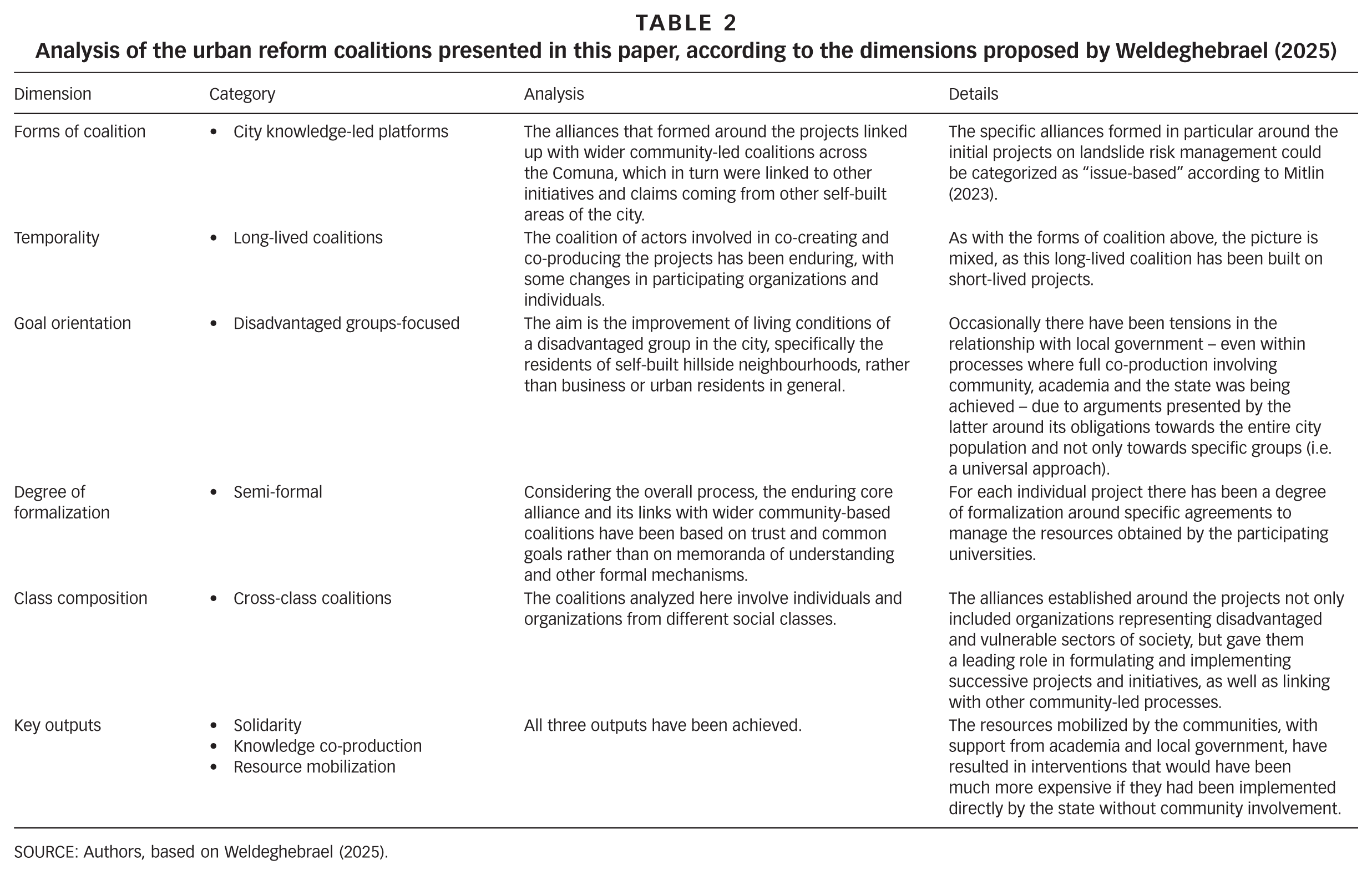
Weldeghebrael’s dimensions of urban reform coalitions allow an overall understanding of the characteristics of the process presented in this paper, as summarized in Table 2. Within his typology of urban reform coalitions – outlined on the basis of goal orientation and class composition – the process presented here would be classified as an “inclusive opportunity expansion coalition”, aiming “to incrementally nudge entrenched political, social and economic relations that can be exploitative and impoverishing in favour of organized disadvantaged groups”, and in which “co-produce[d] knowledge with disadvantaged groups play[s] a crucial role in catalysing urban reform, making academics and action-oriented researchers key partners”.(67) Analysis of each participating actor (strengths, challenges and limitations) provides the following insights on their roles.
Analysis of the urban reform coalitions presented in this paper, according to the dimensions proposed by Weldeghebrael (2025)
SOURCE: Authors, based on Weldeghebrael (2025).
a. Role of community organizations
Neighbourhood-level community leadership, and its links with second-tier community organizations and other community-related actors through coalitions, has generated results such as the “eight for eight” measures. These leaderships link technical knowledge related to climate change with political mobilization in an area of great social and legal complexity. Links with a wider variety of actors are also important, such as NGOs, support groups and other community organizations with a wide range of purposes particularly focused on this urban–rural edge. A comparison with other contexts where the academics involved in these projects have also worked shows that in cities with lower levels of community organization, the common alternative is individual negotiation with neighbours, without trust in the local authorities or, sometimes, in their own representatives. This does not generate opportunities for collective action or an overall community approach to the challenges the community faces.
Community willingness to experiment and learn is also notable. For example, during the NBS project community evaluation workshops, community leaders considered one of the benefits of the NBS pilots’ implementation to be the way they allowed communities to “understand how, through these processes, we are adapting to climate change and at the same time linking it to risk management” and to learn how to “mitigate risk by means of nature-based solutions”. These leaders felt that the pilots should become models replicated in other neighbourhoods and across the city. They also valued the projects’ potential to protect the spaces they occupied for community use and enjoyment: “a space that serves for community enjoyment and projects that can impact the community and not just a single person [. . .] because if we left the space unused it would already be developed”.(68)
b. Role of state organizations
The state has the power to legislate, regulate and distribute public resources, which in principle gives it a high capacity to act. In addition, the direct knowledge of the issues in the self-built hillside neighbourhoods on the part of many local government officials is remarkable, as is their personal willingness to work towards improving living conditions in these areas. However, their involvement demonstrated on several occasions how the inflexibility of administrative processes could hamper the participation of state organizations in the activities of this type of coalition. The changes in local government resulting from local elections, as well as among officials and staff because of political manoeuvring, generated several discontinuities in local government participation in the projects on several occasions, sometimes leaving the process unsettled for months on end.
c. Role of academia
Colombian and UK universities have mechanisms that facilitate their involvement in urban reform coalitions such as those described by Mitlin and Weldeghebrael,(69) and others. The Colombian system has the university outreach project,(70) which allows universities to work with organizations representing vulnerable communities. In the UK, initiatives geared towards societal impact are increasingly valued and resourced by nationally distributed research funding. However, much of this support in both countries is provided via relatively small funding packages and for very short-term projects, resulting in processes that are seen as too rushed by communities. For example, in the evaluation of the tree nursery project a community leader commented that “there wasn’t enough time for the bamboo to dry out”. In addition, occasionally it is difficult to align project activities with community participants’ family and work responsibilities. Finally, there is a lingering perception in academia that these action-research projects are not always as valued as more traditional research projects.
A final point on question (1) is that the actors involved are not siloed. Some individuals straddle more than one entity. For example, a resident in a self-built neighbourhood and a community leader may also work as a part-time academic, which gives them insight into different ways of thinking and acting, and hence a capacity to act as a bridge in coalition-building.
d. Role of “dialogues of knowledges” and transdisciplinary knowledge
In relation to the second question, the “dialogue of knowledges” needs to acknowledge the different ways of thinking and languages used by the various actors. For example, in Medellín, academics use the term “habitat”, while local government refers to “land use” and communities defend their “territory” – though these terms are not used by each actor exclusively. But there has also been a growing appropriation by the community of scientific, technical and legal language, with university and NGO support, which has transformed the community’s understanding of their territory and their capacity to negotiate with government. They have assimilated terms like “climate change”, “adaptation” and “nature-based solutions” as categories anchored in their daily experience.
Finally, we come to the third question, about what would happen if communities could begin to assimilate and use transdisciplinary knowledge in an integrative way, and ultimately what their contribution would be to the city’s planning and management processes. The communities’ key contribution has been a holistic perception of their habitat and an integration of DRM and CCA. This can be seen in the evolution of the projects from an initial focus on landslides, to an integrated plan for DRM and CCA, and a more recent re-evaluation of how nature and NBS are integrated in these processes. This is linked to their desire to control urban expansion and densification in their area and protect the character of the urban–rural edge.
This integrated vision is guided by the communities’ lived experiences and their need to ensure they can safely remain in their neighbourhoods with decent living conditions. In this vein, Wilches-Chaux and Rivera-Florez(71) have put forward the notion of Safe Living With Risk, a way of inhabiting areas where there are hazards and vulnerabilities based on risk knowledge, reduction and prevention.
This integrative perspective also highlights limitations in the ways of thinking and acting of the actors involved, including within community organizations. For example, community perceptions of their territory do not match the official planning boundaries. Another example is the Housing and Habitat Committee’s focus on already-built neighbourhoods, ignoring the adjacent rural area, which is crucial for urban expansion control and watershed management. These are complex socioecological systems, with multiple actors involved in decision-making. A final example of these limitations is local government’s narrow vision regarding the protection of natural spaces – for instance, the declaration of the Cerro Pan de Azúcar (Sugarloaf Hill) as a “tutelary hill”(72) when there were already communities living on it, without involving the communities.
VIII. Conclusion
This paper has focused mainly on the evolution of the role of community organizations in the generation of spaces for negotiation as part of urban shaping, and on the increasingly integrated agendas put forward by these organizations. It illustrates how urban shaping can result not only in more integrated visions and plans for a place, but also in transforming participants’ capacity and knowledge in the process.
In relation to process, the paper illustrates what is possible when civil society organizations join forces among themselves and with other actors, and move from protesting to proposing. The factors enabling this in Comuna 8 include the diversity and strength of the community organizations’ capacities, and their constant striving for a better-informed community – through education of community leaders and activists, promotion of spaces and opportunities for a dialogue of knowledges, and engagement with academia and local government.
Regarding content, the paper shows how community organizations in Comuna 8 first prioritized DRM in their relations with local government, then gradually expanded their negotiations to include CCA and, eventually, NBS. This has not been a linear process, but the result of an accumulation of learning through action research, in the context of an evolving normative and policy framework. This evolution reflects the incremental rise in technical and political capacity of community actors to contribute to debates about the future of the city with viable proposals. This has enabled initiatives such as the Medellín Hillside Movement and the Inter-Neighbourhood Panel on Climate Change to put forward demands that go beyond the neighbourhood, and to position Comuna 8 as an example of bottom-up strengthening of urban resilience.
Despite the evolving ability to interact with formal urban planning, the transition from protesting to proposing does not imply the disappearance of conflict, nor the narrowing down and uniformization of viewpoints. Community organizations operate in two modes simultaneously: continuing their wider political struggle against structural inequalities, while also engaging in projects such as those analyzed here. These projects have improved their ability to influence policy and contributed to the construction of alternative urban planning approaches for self-built hillside neighbourhoods, which may help address risks faced by the city more widely.
However, these co-production processes do not guarantee that the perceptions and intentions of all the actors involved will coincide. In fact, community organizations are often driven to explore initiatives autonomously. Community actors need to understand the drivers of local government initiatives, so as to be able to engage with them in a more fruitful way when they see a benefit in this.
Processes like those described here relate to a particular context and cannot be replicated elsewhere in a mechanistic way. However, three key factors contribute to their success:
Long-term engagement between actors, which builds knowledge and trust;
Prior existence of community networks and leadership, which facilitate continuous engagement; and
Co-production methods that purposely link scientific, technical/administrative and community knowledge, generating proposals seen as feasible and legitimate.
To conclude, the paper advances the concept of urban shaping as a co-production process that integrates DRM and CCA through sustained collaboration among community organizations, academia and the state. It operationalizes the idea of a dialogue of knowledges, demonstrating how communities can assimilate and apply transdisciplinary knowledge to influence urban governance. The paper shows how bottom-up initiatives can evolve from protest to proposal and generate integrated, risk-informed planning approaches. It also identifies enabling conditions – long-term engagement, strong community networks and deliberate linking of knowledges – that underpin successful co-production in contexts of so-called informality and vulnerability.
Footnotes
Acknowledgements
We would like to thank two academics in Medellín who were instrumental to the success of the first two projects reported on in this paper, and who have continued to engage with our subsequent action-research. Françoise Coupé, Emeritus Professor at Escuela del Hábitat, Facultad de Arquitectura, Universidad Nacional de Colombia, who has held positions in local and metropolitan government in Medellín, opened doors to both community organizations and state institutions, and led local research teams with great insight and care. José Humberto Caballero Acosta, formerly Associate Professor in Geological Engineering and Environmental Engineering, Facultad de Minas, Universidad Nacional de Colombia, provided in-depth knowledge of the geology under Medellín’s self-built hillside neighbourhoods and masterfully engaged local communities in monitoring and understanding their territory from the perspective of risk.
Declaration of Conflicting Interests
The authors declared no potential conflicts of interest with respect to the research, authorship, and/or publication of this article.
Funding
This research was financially supported as follows:
“Resilience or Resistance? Negotiated Mitigation of Landslide Risks in Informal Settlements in Medellín”, NERC Global Challenges Research Fund award number NE/P015557/1.
“Co-production of Landslide Risk Management Strategies through Development of Community-based Infrastructure in Latin American Cities”, The British Academy Global Challenges Research Fund Cities and Infrastructure Programme award number CI170338.
“Smart Cities and Community-led Data Management”, Scottish Funding Council Global Challenges Research Fund award.
“Exploring the Development and Implementation of Coproduced Water Management Infrastructure Solutions to Adapt to Climate Change-related Risk: The Intersection of Rural-Urban Areas in Medellín, Colombia”, The British Academy award number UWB190128.
“Increasing Resilience in Medellin’s Urban Edge: Co-production Strategies towards Integrated Risk Management”, University of Edinburgh ESRC Impact Acceleration Grant EDI-20/21-P0034.
“Implementing Co-produced Actions within Medellín’s Risk Management Plan for Comuna 8: Integrating Risk Management with Long Term Climate Adaptation”, University of Edinburgh ESRC Impact Acceleration Grant EDI-23/24-P0086.
“Technical Support for Implementation of Medellín’s Comuna 8 Integrated Disaster Risk Management and Climate Change Adaptation Plan”, Heriot-Watt University EPSRC Impact Acceleration Account Grant Worktribe ID 1254248.
Ethical Approval and Informed Consent Statements
Ethical approvals for the above projects were obtained as follows:
“Resilience or Resistance? Negotiated Mitigation of Landslide Risks in Informal Settlements in Medellin”, ethical approval obtained from the School of Energy, Geoscience, Infrastructure and Society Research Ethics Committee (Heriot-Watt University).
“Co-production of Landslide Risk Management Strategies through Development Of Community-based Infrastructure in Latin American Cities”, ethical approval obtained from the School of Energy, Geoscience, Infrastructure and Society Research Ethics Committee (Heriot-Watt University).
“Smart Cities and Community-led Data Management”, ethical approval obtained from the School of Energy, Geoscience, Infrastructure and Society Research Ethics Committee (Heriot-Watt University).
“Exploring the Development and Implementation of Coproduced Water Management Infrastructure Solutions to Adapt to Climate Change-related Risk: The Intersection of Rural–Urban Areas in Medellín, Colombia”, University of Edinburgh ethics approval number 193402-193395-67086029.
“Implementing Co-produced Actions within Medellin’s Risk Management Plan for Comuna 8: Integrating Risk Management with Long Term Climate Adaptation”, University of Edinburgh ethics approval number 193402-193395-117708955.
“Technical Support for Implementation of Medellín’s Comuna 8 Integrated Disaster Risk Management and Climate Change Adaptation Plan”, School of Energy, Geoscience, Infrastructure and Society Research Ethics Committee (Heriot-Watt University) ethics approval number 2023-6493-9007.
ORCID iDs
1.
4.
Mitlin and Bartlett (2018a).  define co-production in urban areas as usually involving “the co-delivery of essential municipal services (for instance, water, sanitation and drainage) – to low-income communities, with roles for both government and organised citizens”.
5.
A comuna is the lowest administrative unit of local government in Colombia, which is represented by an elected Junta Administradora Local. The municipality of Medellín is geographically divided into 16 comunas (urban area) and five corregimientos (rural area).
7.
16.
18.
Chambers (1993, ).
19.
21.
25.
The two lead academics – both based at UK universities – have a decades-long involvement in research in Latin America, in particular related to supporting low-income urban communities; the two community leaders are highly involved in community activism in Comuna 8; and the local consultant has a long-standing involvement with research related to low-income urban communities in Medellín, with both local and UK universities. There were no state-sector authors, and the paper reflects experience from the perspective of the community and academic members of the projects.
26.
Project reports are available at https://www.globalurbancollaborative.org/completed-projects and .
27.
29.
Heriot-Watt University and the University of Edinburgh in the UK, and the Universidad Nacional de Colombia Sede Medellín and Universidad de Antioquia in Colombia.
30.
In particular their methodology for asset planning, which involved the community in identifying priority solutions, tasks, locations, responsibilities, timings and cost estimates (Stein and Moser, 2018).
31.
Smith et al. (2017, 2020a, 2020b, ).
32.
Convites are community gatherings to work collectively on building or maintenance for the neighbourhood, which usually end with a group meal.
34.
A key driver of urbanization in Colombia has been forced displacement by the more- than-50 years of armed conflict, with people fleeing violence from the guerrillas and the paramilitary. For more detailed descriptions of how the city of Medellín and its urban planning instruments have evolved, see Garcia Ferrari et al. (2018) and , in preparation).
35.
Programa Integral de Mejoramiento de Barrios Subnormales en Medellín (PRIMED, 1996).
36.
Social urbanism was an approach developed in Medellín which sought to provide transport, education and leisure infrastructure and facilities to the poorer neighbourhoods in the city (Dávila, 2013).
37.
Plan de Ordenamiento Territorial, POT (Garcia Ferrari et al., 2018).
39.
The municipality of Medellín is geographically divided into 16 comunas (urban area) and 5 corregimientos (rural area).
42.
Land tenure is a key factor in the lack of involvement of the private sector in the initiatives discussed in this paper. The insurance sector is a major player in relation to risk management in Colombia; however, its involvement in self-built neighbourhoods is minimal because of the lack of property deeds and the non-insurable nature of these hillside areas. In Comuna 8, tensions over land development arise not so much with private development companies as with illegal land subdividers supported by armed groups.
43.
By 2023 there were 146.9 hectares classified as at high risk (mainly of landslides), with more than 50 per cent located in the northeastern part of the city (Alcaldía de Medellín, 2025).
44.
Every comuna in Medellín has a 12-year local development plan which sets out the priorities for the area, including a long-term strategic vision and a four-year implementation plan. Local development plans are jointly prepared by local government and the comunas’ community organizations. The projects and activities that are prioritized by the community for each four-year implementation plan are paid for by the participatory budget, which allows communities to have a direct say on how 5 per cent of the local government’s budget is spent within their comuna.
45.
It is interesting to note that other areas in Medellín (for example, in Comunas 1 and 3) approached these processes differently, distancing themselves from legal frameworks and implementing community initiatives such as those linked to water supply management and training for young people. The social organizations involved believe that “legalization” is counterproductive for informal neighbourhoods and they prefer community self-management.
46.
The Housing and Habitat Committee was formed at the same time as nearly 20 others, as a result of a meeting of community organizations that took place as part of the organizational management and strengthening strategy of the Local Development Plan for Comuna 8 (Carvajal and Velásquez Castañeda, 2019).
48.
JACs are community organizations that are regulated by the Colombian legislation, which may be created by residents in an area to represent their community in local governance participatory processes. Comuna 8 has over 30 JACs.
49.
Colombia has a National Disaster Risk Management System, which is regulated by Law 1523 of 2012. This institutional framework promoted decentralization and community participation in DRM, thus allowing local organizations to have an increasingly prominent role in risk reduction. Colombia’s DRM legislation is seen as pioneering in Latin America.
50.
Heriot-Watt University and the University of Edinburgh in the UK, and the Universidad Nacional de Colombia Sede Medellín.
51.
52.
Mesa de Atención y Recuperación (MAR).
53.
Cabildo abierto (“open council”) is a type of meeting established in Colombia’s National Constitution which government agencies are bound to attend and respond to, and where community organizations can set out issues and petitions. They can be convened by the local administrative boards (juntas administradoras locales or JALs), which are democratically elected public entities and the highest political authority at the local level in Colombia.
54.
Led by Colegio Mayor and community leaders within this neighbourhood, linked to the JAC.
55.
Cabildo Abierto para la Mitigación del Riesgo y la Legalización Integral.
56.
See note 53.
58.
Cabildo Abierto por una Acción Climática Incluyente.
59.
Estrategias Comunitarias para una Acción Climática Incluyente.
60.
Ocho por la ocho.
61.
Living labs are real-world environments where stakeholders (citizens, researchers, businesses, government) collaborate to co-create, test, and innovate solutions for real-life challenges.
62.
Early Warning System for Medellín and the Aburrá Valley (Sistema de Alerta Temprana de Medellín y el Valle de Aburrá).
63.
Departamento Administrativo de Gestión del Riesgo de Desastres (DAGRD).
65.
Movimiento de Laderas de Medellín.
66.
Escuelas Populares de Autonomía (EPA).
68.
This refers to ongoing illegal sales of land on the urban–rural edge of Medellín by armed groups historically linked to the guerilla movements or the paramilitary.
70.
According to the Universidad Nacional de Colombia’s website, university outreach projects (“proyectos de extensión universitaria”) include a category called “solidarity outreach”, which “comprises scientific, technological, artistic and cultural programmes and projects with high social impact, which are developed and financed totally or partially with University resources. This category brings together different fields of knowledge and strengthens links with different sectors of society with the aim of social inclusion of vulnerable communities.” See .
71.
72.
The “tutelary hills” are seven hills in Medellín which are protected as “natural guardians” of the city due to their historic, cultural and environmental significance.