




Abstract
This paper is a report on one of three related case studies in Latin America and shows the progress in the city of Chetumal, and the larger state of which it is the capital (Quintana Roo), in disaster response, especially with regard to cyclones. It also shows the progress in land use and ecological planning through the development of certain tools, which have changed the approach from one of prohibiting action to suggesting alternatives. Rather than stopping development, the focus has been on taking full account of its impacts and trying to make development compatible with environmental protection. There has also been progress in ecosystem conservation and water management, coordinated between different levels of government and different stakeholders. While much of this has taken place within the formal framework set by government, participatory processes have increased civil society awareness and commitment to environmental issues, and its capacity to participate and take a position, especially during the planning stages.
Keywords
I. Introduction
Every place and community is exposed to the effects of climate change and climate variability. But vulnerability and impacts vary significantly, and express themselves differently at the individual, household, community and city level.(1) For individuals, for instance, the scale and nature of vulnerability can be related to income, age, gender, access to infrastructure and services, the safety of land sites and housing, safety nets and having voice within political and bureaucratic structures.
Urban centres can have advantages in dealing with present and future climate change challenges. Their governments potentially have considerable influence over the distribution and level of risks within a city. Well-governed urban centres and cities, with the capacity to understand risk and plan accordingly and with the ability to work with different stakeholders, including those most at risk,(2) are generally more resilient. They have services and infrastructure in place, long-term urban environmental planning, transparency and accountability as guiding principles, and a commitment to pro-poor policies. Mostly, in the face of climate change, they need to address “old” problems that have been occurring year after year, although now they are tied to new economic, environmental and social processes, many of which have a global scale(3) with local implications.
This paper aims to provide a better understanding of the constraints faced by city and municipal governments in Latin America in developing adaptation plans, by analyzing the case of the city of Chetumal in Mexico within its larger context of the State of Quintana Roo and the Municipality of Othón P Blanco. This is the second paper in a series of three that developed from city dialogues and discussions with government officials and other local stakeholders – the others being for the cities of Rosario (Argentina) and Manizales (Colombia).
An effective climate change adaptation strategy in any city involves coordination with most, if not all, departments and sectors. It calls for the knowledge and capacity to build resilience and set in motion the procedures needed to reduce risks – including disaster preparedness for extreme weather events,(4) attention to the underlying causes of vulnerability(5) and a commitment to move from resilience to transformation.(6) This requires not only well-trained government officials and technicians but also a budget. Little of this can be achieved without effective urban climate governance, involving public, private and civil society actors and institutions to identify climate goals and manage the relevant planning and implementation.(7)
In the first paper of the series,(8) we suggested that, although an increasing number of cities and municipal governments are putting forward plans and programmes on climate change adaptation, relatively few have made important advances in the more complex task of implementing adaptation strategies. Those that have started programmes have only managed to implement very preliminary steps,(9) and there are a number of reasons for this:
Climate change issues are often perceived as being global and in the distant future.(10) There is little certainty (or information) around the potential local impact of environmental risks and the probable effects of climate change and variability.(11)
No government gets credit when its programmes have prevented disasters –and risk reduction has to compete for scarce resources and with what are seen as more pressing needs(12) (backlogs in infrastructure and service provision, poor quality housing, social emergency situations etc.).
Responses have been narrowly focused, managed by a single government area and seldom visualized as responding to broader local development issues.(13) Usually, there is little understanding of the co-benefits of adaptation planning, urban planning and environmental sustainability.(14)
Skills and financial resources are scarce; often, municipal and city governments are understaffed, with little access to external financing.(15)
Departments in charge of adaptation often have limited budgets and lack political influence within the government structure.(16)
Often, local governments lack decision-making powers over key policy issues such as transportation, land use planning, energy, infrastructure provision etc. There is often a “problem of fit” between the problem to be addressed and local possibilities.(17)
Vertical autonomy of municipal and city governments is critical in enabling adaptation strategies, but horizontal relationships are also key. Adaptation strategies need to guide and influence the largest and most powerful departments within local governments, with regulatory frameworks to support coherent urban development in line with needed disaster risk reduction and adaptation measures.
II. Research Background
It is a challenge to identify cities that are implementing climate change adaptation plans and programmes that are more than statements of intent. The Municipality of Othón P Blanco (hereafter OPB) and, more specifically, the city of Chetumal were chosen for various reasons:
Because the city is in the path of tropical cyclones, it has developed an emergency system embedded within all government areas and incorporated within daily life, along with some good risk prevention mechanisms. Cyclones and storms are expected to increase in intensity and the city must be prepared to tackle these extremes.
Chetumal is both the municipal seat of OPB and the capital of the State of Quintana Roo (hereafter QR), and the presence of both municipal and state level authorities allows for the constant interaction between officials at different levels of government and between the public and private sectors, favouring coordination, dialogue and understanding.
The State of QR and its municipalities have developed several land use and ecological planning tools such as the Programas de Ordenamiento Territorial (POETs) and the Programas de Ordenamiento Ecológico Local (POELs), with urban planning processes such as the Programas de Desarrollo Urbano (PDUs) being specific to urban centres.
The Municipality of OPB has developed its own participatory Agenda 21.
Mexico is a leader in the region in developing legislation and strategies for climate change mitigation and adaptation, which creates an appropriate framework for developing regional and local climate change adaptation plans.
Contact was made with senior experts in Mexico in 2011 to identify and set up a local team and to narrow down possible study areas. Between September 2011 and January 2012, once the city had been chosen, background material was analyzed to design a comprehensive interview agenda, covering the four priority adaptation areas included in the National Special Climate Change Programme (Programa Especial de Cambio Climático) PECC 2009–2012, namely disaster risk management, territorial planning, ecosystem conservation and water basin management. Group interview agendas were set up for federal, state and municipal government levels and also for civil society and the academic and private sectors, and individual interviews were also planned with key government authorities.
The local team leader contacted key people to set up the interviews and invite relevant stakeholders to generate an interesting exchange. The background document prepared by the local team was sent to all contacts prior to the interviews. While IIED–AL researchers had general guidelines on the relevant issues to cover, the interviews encouraged open dialogue, allowing participants to share experiences and develop their thoughts on improving urban environmental governance in general, and climate change adaptation specifically. Each interview took approximately two hours, whether with a group (varying from five to 15) or with individuals. In general, response and participation were very good.
Often, representatives of key sectors/departments were involved in more than one issue and participated in more than one group interview. For example, the Sub-Secretary of Environmental Policies participated in different discussions around the development of POELs, protected ecological areas and in a meeting hosted with the Secretary of the Environment to discuss QR’s environmental policy; and the Director of Urban Planning of the Municipality of OPB participated in discussions on POELs and the water sector. The result of this complex agenda was a very rich interaction process for all those involved. The director of the Office of Climate Change was present during most of the interviews.
III. Characteristics of Chetumal
a. Socioeconomic context
Originally a Maya-controlled region, the territory of QR was created in 1902 and governed by the federal government, and only in 1974 was it officially recognized as a state.(18) Known as “green hell”,(19) it originally only had 10,000 inhabitants, but between 1935 and 1970, a federal land colonization policy provided incentives for campesinos from other states to settle there. Most urban centres and economic activities (mostly sugarcane) developed in the south, in what is today the Municipality of OPB. In the 1970s, a federal initiative dramatically shifted the state’s profile with the creation of Cancún and the promotion of massive tourism, and in the next 40 years there was explosive growth in the north. The state now has more than 1.3 million inhabitants, 88 per cent of them urban.
b. Political and administrative context
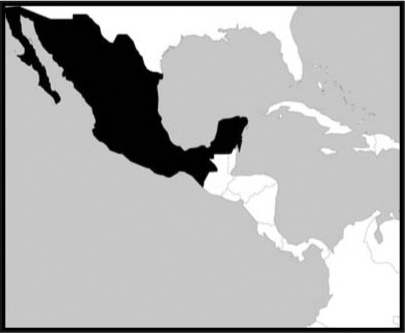
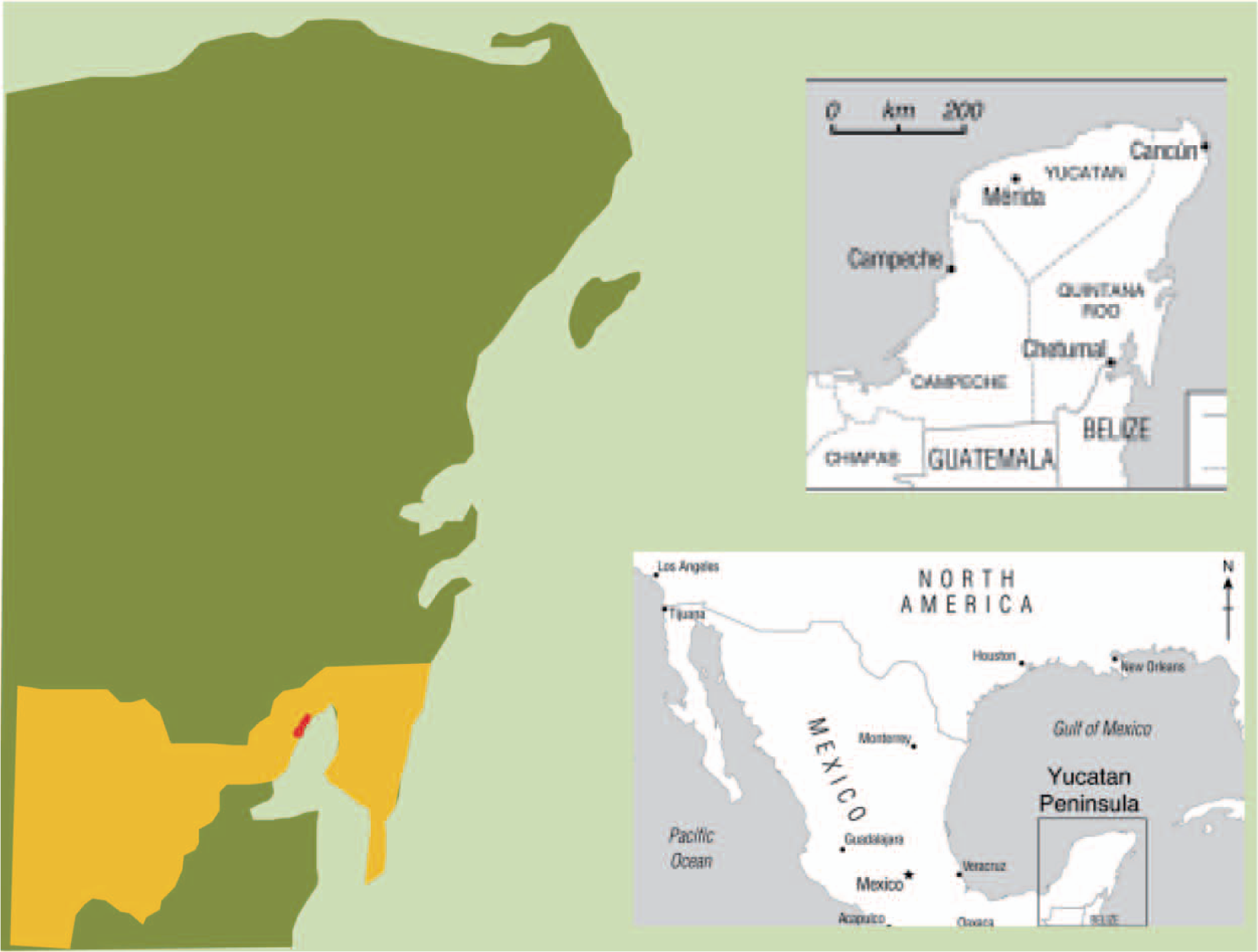
The city of Chetumal, in the south of QR,(20) borders on Belize and on Chetumal Bay near the mouth of the Río Hondo (Map 1). It is the state capital and municipal seat of OPB and has a population of 151,253,(21) up from 5,000 in 1950. Highway construction in the 1960s and 1970s facilitated connections with the rest of the peninsula and Mexico, and the declaration of a tax free zone, together with a large population of government employees, contributed to the city’s growth. The city is mainly an administrative and commercial centre, but OPB’s diverse environments also make adventure tourism and the exchange of environmental services viable alternatives.
Yucatán Peninsula
The Yucatán Peninsula is regularly affected by hurricanes and tropical cyclones. For instance, hurricanes Janet in 1955 and Dean in 2007, both category five, made landfall near Chetumal. The city is somewhat buffered by the Bay of Chetumal and has developed mostly on higher ground since the devastating effects of Hurricane Janet, when only a few buildings were left standing. The lower sections of the city along the coast are more thinly populated because of hurricane exposure, unstable land and a high water table due to constant water surges from the bay.
c. Relations between municipal government and state and national levels
OPB, along with QR, is run by the PRI (Partido Revolucionario Institucional). Municipal elections are for a three-year period with no option for consecutive terms. Despite these brief mandates, policy continuity is somewhat guaranteed as municipal executives can often be found in state secretariats or departments and vice versa (since both state and municipality have traditionally been run by the PRI). The federal government, until recently run by the PAN (Partido Acción Nacional), is once again under the control of the PRI since the 2012 elections.
Years of decentralization efforts and democratic practices are slowly beginning to show results. Constitutional reform in 1999 gave autonomy to municipalities, although in practice it doesn’t always work out that way.
Most public policy decisions also involve other areas of government. States and municipalities remain highly dependent on federal transfers, and the state controls municipal tax rates and approves municipal development plans.(22) This all means that lower levels of government can easily be controlled. But in QR and OPB, both controlled by the PRI, there is little party political conflict. State government is the main interlocutor with both the federal and municipal governments and defines priorities around regional development and environmental policies.
There is frequent coordination between state and municipal levels, and various federal secretariat representatives are based in Chetumal. During interviews, some concern was expressed regarding continuity of policies and the energy and time needed for their implementation, but this was associated less with party politics than with budget constraints, difficulties in coordination and knowledge gaps. Budget transfers from federal to state level are also an issue (with party politics playing a more significant role here), as is the limited capacity of municipal governments to generate revenues and support actions.
d. National climate strategy – supporting regional and local action
Mexico is a regional leader in developing legislation and strategies for climate change mitigation and adaptation. This includes a new climate change law and instruments such as the PECC (2009–2012), which defines actions around mitigation and adaptation in relevant sectors, namely water resources, agriculture, forestry and fisheries, ecosystems, energy, industry and services, territorial planning and urban development and public health.(23)
The Environmental and Natural Resources Secretariat (Secretaría de Medio Ambiente y Recursos Naturales – SEMARNAT) is in charge of Mexico’s climate change policies and actions, assigning responsibilities to other sectors and government levels. Mexico’s new climate change law is the first of its type for low- and middle-income countries and one of the most comprehensive in the world, setting high targets for mitigation and aiming to coordinate the work of federal, state and municipal governments and with civil society and the private sector.
In terms of adaptation, programmes and actions in Mexico are basically still at a diagnostic and proposal stage, evaluating risks, costs and priorities, designing guidelines and taking stock of what different secretariats are doing. The pace is set by the PECC: the first stage (2008–2012) is evaluating vulnerability and the economic costs of priority measures; the second stage (2013–2030) is strengthening strategic climate change capacities; and the third stage (2030–2050) is consolidating built capacities. The new climate change law includes the adaptation of people and ecosystems to climate change, the role of natural infrastructure in adaptation, and the conservation of ecosystems to reduce human vulnerability, but these need to be acted on.
The National Development Plan 2007–2012 also has specific goals, actions and targets around climate change. The State Development Plan 2011–2016 for QR highlights the importance of public policies to enhance adaptation at state and regional levels, by fostering cross-cutting actions involving all sectors and stakeholders within the framework of a green economy and sustainable use of natural resources. Its main goal is to understand vulnerability and develop the needed adaptation measures. It also highlights the need for a regional focus, covering the Yucatán Peninsula, and a regional adaptation fund.(24)
The Secretariat of Ecology and Environment (Secretaría de Ecología y Medio Ambiente – SEMA) is supporting municipal initiatives and, since COP 16 in Cancún, working within a Regional Commission of Climate Change, the first of its kind in Mexico. In 2013, they started to work on the regulatory framework of the state climate change law (Ley de Acción de Cambio Climático del Estado de Quintana Roo), which requires a state action plan (the PEACCQROO), informs State Congress on actions every two years and creates a Climate Change State Commission. The state legislature can create its own laws on environment, urban development and civil protection, but they must be in line with federal legislation.(25)
The municipal level depends on federal and state guidelines, but is also responsible for regulating urban development and establishing local construction norms, both of which are key to adaptation.
The Municipal Development Plan for OPB (2011–2013) contains five broad lines of action: developing research; information and communication (including a municipal environmental risk atlas); education and capacity-building; preventive and corrective environmental risk actions; and citizen participation.(26)
IV. Disaster Risk Reduction
Due to its geographical location, QR is familiar with disaster risk. Expected changes in climate include an increase in the incidence of hurricanes and tropical storms, higher sea levels and increased incidence of storm surge, increases in mean temperature and more extreme droughts and floods. There would be effects on natural ecosystems, human settlements, key infrastructure and production systems, as well as a risk of saltwater intrusion in coastal wells, disruptions to the delicate marshland balance and an accumulation of massive amounts of dry vegetation that could easily catch fire.
In Mexico, after the 1985 Mexico City earthquake, the federal government created the National Civil Protection System (Sistema Nacional de Protección Civil – SINAPROC) to coordinate disaster management. Three bodies contribute to the task: the National Civil Protection is responsible for emergency and day-to-day operations and is advisor to the disaster management system; the National Centre for Disaster Prevention (CENAPRED) is responsible for research, capacity-building and communications materials; and the Emergency Fund (FONDEN) provides funds for prevention, emergency response and reconstruction. This system is replicated at state and municipal levels.(27)
Based on the principle of subsidiarity, the lowest level of government is responsible for disaster risk reduction; only if municipal capacities are insufficient does the state or federal level intervene. Following Hyogo Framework Action guidelines, local governments and communities are the key players, and the system has moved from response to risk identification and vulnerability reduction.(28)
At the state level, QR’s Office of Civil Protection coordinates all government sectors, the private sector and civil society. Part of the state’s civil protection system is a technical Civil Protection Institute, autonomous from public administration and in charge of preparing state civil protection plans and programmes. All municipal presidents are board members.
Different state secretariats or offices coordinate specific actions within the civil protection system. For instance, the Secretariat of Infrastructure and Transportation is responsible for coordination before a hurricane, using GIS to anticipate which communities will be affected and what will be needed to restore lifelines; it tackles the immediate assessment of the damage and the re-opening of roads.(29) The Municipality of OPB coordinates civil protection actions with all relevant stakeholders and at different government levels, with capacity to offer and receive support from others. Its Office of Civil Protection has a register of low-income housing at risk, an inventory of safe places (for evacuees) and a set of tested procedures to guarantee basic needs during an emergency and the restoration of lifelines and reconstruction. The private sector is also a relevant actor during emergencies, placing machinery, tools, teams and communications at government disposal(30) and undertaking prevention work around potential forest fires, (cleaning vegetation debris, creating fire guards etc.)(31) QR and some of its municipalities received UN recognition for their work on early warning, emergency and reconstruction after hurricanes Wilma in 2005 and Dean in 2007 for their success in protecting human lives and economic assets.
Some specific initiatives developed in QR include:
A reliable early warning system that starts 72 hours before hurricane landfall and triggers different preparation mechanisms to be followed by all stakeholders.(32)
The QR Social Communication System (Sistema Quintanarroense de Comunicación Social – SQCS), which aligns all information and communication channels and has an excellent track record.(33) Communications include early warnings, necessary updates on safety and available support during and after impact, as well as continued disaster risk preparedness and prevention campaigns.(34)
A system for locating tourists (Sistema Estatal de Localización de Turistas – SELTUR), operating since 2008.
Programmes for both conserving and recovering beaches – mostly in the northern area.
A safe housing programme for low-income households in Chetumal and in rural communities, to withstand the impacts of hurricanes. (Up to 2010, the programme had built 14,000 rural units but concerns were raised during interviews over priorities regarding informal settlements around Cancún and their access to infrastructure.)(35)
Modifications to building codes and urban norms, including underground electricity, removable street lights, suitable urban forestry, standards for large signs/billboards and a review of housing materials (to prevent these from becoming missiles in strong winds). Each municipality is slowly incorporating these standards.
A key short-term task still to be completed is the preparation of the state’s risk atlas, which should incorporate climate change variables.
Those involved in civil protection are taking the potential impacts of climate change seriously, along with their interplay with disaster risk. Most of the civil protection system, however, is still basically an emergency response system. Addressing the underlying causes of vulnerability is left primarily to other sectors. The good coordination that exists around emergencies is not always replicated in regular day-to-day coordination; each sector tends to focus on its particular responsibilities.(36) This shortcoming, common to many disaster risk reduction systems, needs to be addressed, given that climate change will present more challenging situations.
The need for a cross-cutting, cross-departmental, cross-sectoral approach to complex challenges becomes obvious in the following example. Mahahual was a small fishing village in OPB that, until recently, had just a few diving centres. It changed dramatically with the construction of a modern cruise port in 2001. In 2007, Hurricane Dean washed away the port, severely affecting the small town. OPB managed the reconstruction, which involved a new urban plan prohibiting construction along coastal sand dunes, also a federal prohibition preventing private investors from restricting public access to beaches, and the facilitation of private investment in the cruise port’s reconstruction. The first two measures incorporate some risk prevention; the latter, however, maintains the same development paradigm, with no apparent discussion of local and regional consequences. It repeats instead the development model in the north of the state, where massive tourism has been supported despite the social and environmental costs.(37)
Access to funds is a constant constraint. Municipal governments seldom have more than they need to maintain the basics; for all the “extras”, they depend on state or federal funds. Presenting projects, negotiating budgets, thinking in terms of each individual secretariat or department, all take time and effort.
V. Integrating Environmental and Territorial Planning
a. Regional and local planning (Programas de Ordenamiento Ecológico Territorial–POETs and Programas de Ordenamiento Ecológico Local−POELs)
In Mexico, states are in charge of elaborating and implementing regional development plans (Programas de Ordenamiento Ecológico Territorial – POETs), drafting policies on the use of natural resources, implementing ecological controls and managing natural reserves (areas naturales protegidas – ANP). Municipalities prepare and implement local urban and ecological plans within their territory (Programas de Ordenamiento Ecológico Local – POELs and Programas de Ordenamiento Urbano – PDUs).
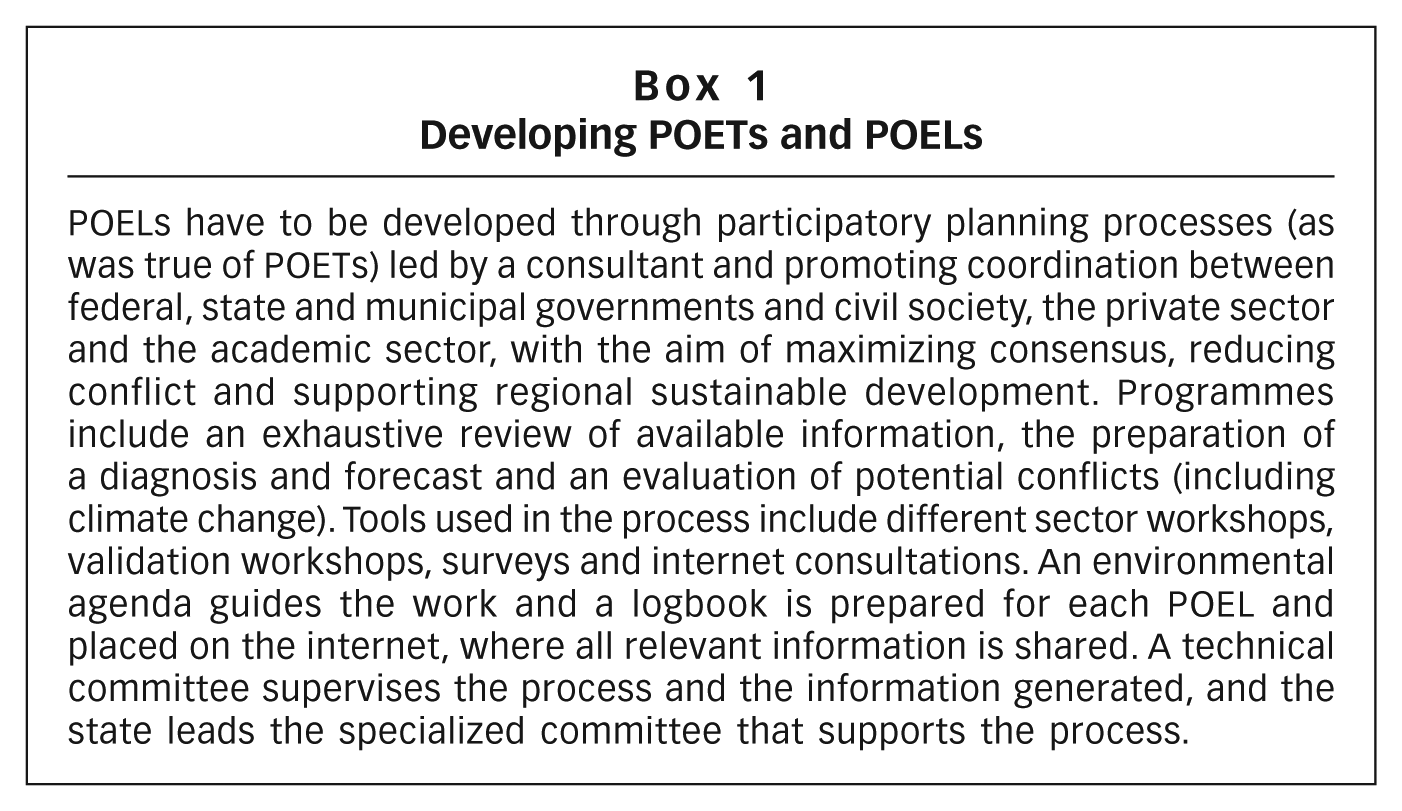
QR has made important advances in planning, trying to coordinate environmental protection with development. In 1998, a general law (Ley General de Equilibrio Ecológico y Protección del Ambiente – LGEEPA) sanctioned the incorporation of territorial ecological programmes (POETs) as a key policy tool to promote sustainable development, maximize consensus between actors and minimize environmental conflicts over land use. By 2003, QR had implemented six POETs for Caribbean coastal areas with fragile ecosystems that were subject to the greatest economic and population growth pressures. After 2003, POETs were revised to become POELs (local ecological programmes), a participatory municipal planning tool approved by local councils that set the norms for all actions (Box 1). POELs are prepared for all or part of a municipality, although urban areas also need an urban development programme (Programa de Desarrollo Urbano – PDU) to complement the POEL.
Both POETs and POELs were mandated by state and federal laws, but their success and capacity have varied greatly between states and between municipalities. Where municipalities have lacked the capacity to develop the programme, the state or federal level provides technical and professional support.
Today, development and land use is regulated along the entire coast of QR. Almost all important tourist destinations have implemented their POEL (Isla Mújeres, B Juárez, Solidaridad, Cancún, Tulum). Other municipalities are in the process, including OPB. For the southern part of the Caribbean coast, including the Bacalar Lagoon system, POETs are still in force. Both government (state and municipal) and civil society undertake continual updates.
SEMARNAT, the federal agency responsible for ecological planning in Mexico, establishes the need to identify key environmental assets that help to reduce vulnerability and zones potentially vulnerable to the effects of climate change. No POEL in QR has yet incorporated specific climate change adaptation criteria, although they all incorporate criteria that are useful when planning for climate change. However, they are progressively incorporating specific climate change criteria, as in the cases of OPB and Tulum.(38) In OPB, this has gone a step further with the creation of the Municipal Planning Institute (Instituto Municipal de Planeación – IMPLAN) in 2011 as a decentralized office responsible for strategic planning processes, including climate change and Agenda 21.
b. Urban development programmes (Programas de Desarrollo Urbano – PDUs)
Every important urban centre has a PDU, developed in parallel with the POELs, which includes attention to sustainable urban development. The state forestry law complements PDUs, defining the creation of peri-urban green areas, regulating the ratio of population to green space, setting up special protected zones within urban areas and dictating the need for environmental impact assessments and control over public spaces and green areas.(39)
The state supports municipalities in developing their PDUs and this is mostly covered by the municipal budget. As with POETs and POELs, a consultant is hired to lead the participatory process (to include ejidatarios,(40) professional schools, land developers, government areas, the academic sector, the private sector, representatives of civil society etc). PDUs have to be approved by the local council.(41) Changes take place quickly, however, and the state Secretariat of Urban Development encourages municipalities to revise their PDUs every two to three years.(42)
There is the further challenge of small, rapidly growing urban communities that lack the capacity to develop urban programmes. There is a pilot project to initiate integrated development programmes (Programas de Desarrollo Integral) in these localities, using participation, to respond to local expectations.(43) Rapid growth in these small centres is associated with savings accrued by seasonal workers in tourist centres; some 60,000 houses have been built with their savings.(44)
The PDU for metropolitan Chetumal−Calderitas−Xul Ha ended in 2005. Present urban development tends to concentrate services and urban infrastructures in the area of Chetumal, attracting residents and generating urban sprawl, with its negative side effects. Although the PDU tries to balance urban development, this was raised as a concern during interviews. A problem in Chetumal is that impermeable soil and a flat topography complicate drainage networks. Solutions are expensive and local governments (or private developers) lack access to affordable credit lines.(45)
Another problem is keeping up with urban expansion. In Chetumal, land is available and affordable.(46) However, there is always the risk of unofficial, unapproved division and sale of land, as in northern QR. The development of new neighbourhoods (formal and informal) is a constant challenge to local authorities. In response, the Municipality of OPB developed serviced plots in the 1990s that were then tied to a “progressive housing programme” (Vivienda Progresiva). Applicants within certain income levels could access credit to start a basic housing unit that could later be expanded. Formal plans for a selection of prototypes were approved by the Housing Institute. Initially, the programme was meant to solve the problem of illegal invasions by tying infrastructure to the development of new land. Later, when tied to the housing programme, it worked better for families with enough regular income to access credit. By 2000, when government could not keep up with the infrastructure demands, it handed everything over to private developers.
Today, private developers progressively establish new neighbourhoods along with infrastructure and services, following government guidelines for expansion.(47) They build about 2,000 units a year in Chetumal in developments that are expected to be “sustainable”. Houses are paid for with 30-year mortgages, easily accessible to those with permanent formal jobs. House size depends on capacity to repay. Today, 60 per cent of houses are small (38 square metres), up from 10 per cent some years back. (In part the result of very young couples or women alone who are buying. Other comments suggested that it could result from the loss in savings capacity due to gambling.(48)) Federal norms specify construction quality (thermal insulation, water-saving and energy-efficient appliances, hurricane-resistant materials) although these norms have their limits as they are general and not specific to the region. Government continues to develop plots with services and basic housing units for those who cannot get a mortgage from the private sector, but this is not a priority and the programme will probably end or have little impact.(49)
There are now more than 19 PDUs in QR. None to date specifically address climate change impact, vulnerability or the need to increase resilience.(50) But by effectively regulating land use, they also develop urban resilience and respond to problems that climate change may generate or exacerbate.
A key element of QR’s success in developing regional−local ecological planning programmes in coordination with urban programmes was the integration of environmental and urban issues under one secretariat, the Secretaría de Desarrollo Urbano y Medio Ambiente – SEDUMA). For many years, the two areas had a strong beneficial working relationship.(51) The creation of two different secretariats (SEMA and SEDU) in 2011 certainly presents new challenges, and staff are still adjusting to the loss of contact and exchange.(52)
Despite these problems, QR has ample experience developing planning tools and also the capacity to negotiate successfully with different stakeholders through participatory planning processes. This has increased civil society commitment to environmental issues and enhanced their capacity to participate and take a position. It should be easy to capitalize on this to include issues of climate change; yet despite growing concern over the potential impacts, POELs, POETs and PDUs have not yet been specifically linked to climate change.
The state Office of Climate Change has initiated an ambitious project to evaluate the ecological planning programmes, drawing information from POELs, POETs and PDUs and allowing assessment and reformulation of goals, especially those associated with climate change.
c. OPB’s Agenda 21(53)
The World Bank and Mexico’s federal government have been cooperating on a programme aimed at developing sound sustainable territorial and economic strategies and poverty reduction measures that take into account the social impacts of climate change. Coordinated work has also developed between the World Bank and the Municipality of OPB, including a workshop on climate change in May 2010. The municipality plans to revise and improve its local development strategy with a vision of sustainable development, climate change adaptation and social inclusion, and has embarked on a participatory Agenda 21 with a focus on sustainable tourism and climate change.
The process, supported by the World Bank and coordinated by an external consultant, involved preparatory meetings with different government sectors and professional groups, meetings to guarantee continuity between outgoing and incoming governments,(54) development of a local advisory body, workshops with the Agenda 21 team, international visits to develop capacities, and the launching of the Agenda 21 participatory process. The final document contains the concerns and proposals of the OPB community and some of these are highlighted here:
The coordination and support given to the OPB Agenda 21 process by both the outgoing and incoming municipal governments and the level of participation and commitment of the different sectors.
Development based on sustainable resource use, sustainable tourism/ecological tourism, transparency and continuity in government, and a strong local economy.
The urgent need for a solid waste management programme and appropriate disposal facilities, wastewater treatment facilities (today most of this goes untreated into the Bay of Chetumal), better implementation of plans, more coordination and the inclusion of civil society; the PDU has been criticized because it is not enforced as it should be.
Changes in local weather patterns and the need to include climate change mitigation and adaptation strategies in the PDUs.
d. Water management
Water management is a priority adaptation area in the National Climate Change Programme (PECC 2009–2012) that Mexico seems keen to develop. Water is the principal means through which climate change affects human and natural systems, yet in many locations water management cannot even deal with current climate variability.(55)
In 1989, the National Water Commission (Comisión Nacional de Agua de México–CONAGUA) was created with the aim of modernizing and decentralizing water management.(56) Water is managed through river basin councils (consejos de cuenca), which develop water infrastructure and services and are responsible for the conservation and restoration of water basins. Initially, the councils involved only water users but, with time, included representatives of civil society, scientific and academic institutions and NGOs. Implementation was much more difficult than expected, largely due to governance challenges. The consejo de cuenca for the Yucatán Peninsula, created in 1999, includes the director of CONAGUA, the governors of Campeche, QR and Yucatán, and representatives of users from the agricultural, industrial and urban services sectors. A river basin committee for Río Hondo (the river separating QR from Belize) and a committee for clean beaches are both auxiliaries to the river basin council. According to those interviewed, Yucatán’s water sector is becoming more participatory and coordinated in decision-making, resource use and water management.(57)
Technicians from CONAGUA and CAPA (Comisión de Agua Potable y Alcantarillado, QR − Commission of Potable Water and Drainage) work with academia to obtain precise, reliable information and do not anticipate acute conflicts around water scarcity, although they are concerned about avoiding overexploitation and salinization. With climate change, the balance of water flow and recharge will probably change, resulting in new equilibriums between saltwater and freshwater bodies. Good water management is one of the best climate change adaptation actions, although most current protection measures are not implemented to address climate change.(58) There is also concern over the protection of water resources (aquifers and marine water). Water and sanitation coverage has increased significantly (more than 90 per cent coverage in the State of QR), as has the construction of water treatment plants – although Chetumal still needs one. During interviews, there were many comments about the need for a plant, to avoid contaminating Chetumal Bay, and for technology at the sanitary landfill, to avoid contaminating the aquifer.
e. Ecosystem conservation
The protection of natural areas and the sustainable use of natural resources are critical both for mitigation and adaptation. Conservation policies in QR are well-established and supported. There are 26 protected natural areas (areas naturales protegidas – ANPs), three of them within the municipality. Community members, ejidatarios, farmers’ associations, the research and scientific community and NGOs all participate actively in the ANP management programme under the coordination of federal or state government.
Although academia and civil society are highly committed to ecosystem conservation, including climate change adaptation, it has proven difficult to reconcile the interests and livelihood needs of the local community with the interests of other external stakeholders. In the case of the Sian Ka’an ANP, the local community feels the governance system is rigid and top-down and that they have to negotiate with powerful conservationist NGOs.(59)
Ecosystem conservation is challenging in the context of tensions between tourism, land development, farmers and ejidos forestales.(60) In 1986, state government started to regulate forest conservation, supporting landowners to make rational use of resources, and working with a range of stakeholders.(61) Key partners in this process have been the ejidatarios, who committed themselves to stop deforestation.(62) The challenge is considerable – more than 70 per cent of QR is forested. If the state allocated more money, the federal government would probably follow.(63) Tied to the wealth of natural resources, both inland and in coastal areas, eco-tourism emerges as an activity that could balance income generation with sustainable use of the environment, and counter the more destructive tourism model that is a constant threat.
VI. Participation
POETs, POELs, river basin councils, the development of PDUs, OPB Agenda 21 and the state development plan have all involved participation, a federal prerequisite for any development plan or programme. But participation can also be an empty buzzword, and developing good mechanisms is a challenge. Participatory processes in QR and OPB could be substantially improved but the seed is there.(64) Most sectors at this point assume it is their right and responsibility to be part of the planning process, and government recognizes the need for participation and transparency to legitimize their plans and actions.(65)
In OPB, municipal government relies on the support of citizen committees and technical committees to develop projects and ensure they are environmentally and economically sound before going to city council for approval.(66) Key partners in generating locally based knowledge are Escuela de la Frontera Sur and the University of QR (UQROO), which often sees its role as broker of divergent interests.(67) The OPB Agenda 21 also involved several stages of participatory planning. The municipal government knows that the budget necessary to solve all the problems and fulfil the proposals of the agenda is not available, but they plan to prioritize projects and start with those that are needed most.(68)
In addition to the participatory processes developed locally, there are close personal relationships that encourage cooperation between different government sectors and with civil society and the private sector. Chetumal’s size and its role as both municipal seat and state capital are certainly helpful on this front. More challenging are the “bottom-up” participatory processes. Interviewees felt that participatory planning processes did not necessarily lead to the actual implementation of programmes. Some argued that they were invited to participate without enough time to prepare a meaningful contribution.(69) They also wanted decision makers and technicians to be more involved in the participatory processes; meetings they felt, were often a waste of time when government representatives changed from one meeting to the next, or when technicians were not present to explain that decisions might not actually be viable. The real decisions were made elsewhere.(70)
VII. Conclusions: Present and Future Challenges
QR and OPB are planning and implementing actions that are not explicitly about climate change but that in fact contribute substantially to climate change adaptation and vulnerability reduction. The work done in civil protection, land use and ecological planning, water management and ecosystem conservation all involves essential components for adaptation that just need to be reframed within a climate change adaptation agenda.
Initial formal steps have been taken to develop a climate change strategy. Both federal and state governments are passing climate change laws, designing strategies and planning accordingly. QR has created an Office of Climate Change that is evaluating the performance of POELs and POETs in terms of climate change, and also preparing a climate change policy and the necessary mitigation and adaptation actions to increase resilience and reduce vulnerability.(71) More recently, the SEMA has finished the PEACCQROO, which is open for discussion and revision on a virtual platform. The federal and state institutional platforms are important, clearly influencing what municipal authorities are doing to support climate change planning and actions. The development of regional platforms (for the Yucatán Peninsula) is also a positive step forward.
Most stakeholders interviewed agreed that actions such as the preparation of local plans (POELs), the modification of land use in coastal areas, disaster risk prevention, and water management or the protection of ecosystems that can act as buffers all contribute to climate change adaptation. They also showed special concern for the pressures associated with urban development and fragile ecosystems and see POELs as an important tool to guide development. Rather than prohibiting development, these planning tools have focused on developing in ways that take impacts fully into account.(72) There is an overall feeling that QR’s government and its people are making a difference and are leaders in civil protection and ecological planning. At the same time, the model of generating new urban land through private developers needs good guidance and controls as well as perhaps stronger government involvement.
Perhaps the greatest challenge is associated with developing more effective “bottom-up” participatory processes, which is difficult when the formal institutional framework takes the lead. Probably, by engaging more with issues that are currently not formal priorities, there may be further advances on tackling the root causes of vulnerability and risk. This means questioning the hegemonic development vision(73) and collectively designing the type of place and community that is wanted, with more genuine participation of local stakeholders.
Budget allocation is another challenge, especially since cross-cutting issues such as climate change adaptation fall within different government areas and government levels. Many interviewees stressed the lack of funds to implement actions and secure their continuity, and budget allocations are often a good measure of commitment and negotiating capacity. The Municipality of OPB has just created an office in Washington DC, to improve their relations with international donors and to access project funding more directly.(74)
The long tradition of reaching agreement between diverse stakeholders, each with their own interests, is a key asset for climate change adaptation. Conservationists, tourism developers, landowners, ejidatarios, fishermen co-ops, NGOs, academic and research centres, chambers of commerce, civil society and all three levels of government in OPB are used to negotiating and reaching agreements, and show the capacity to assume new challenges.
Footnotes
Acknowledgements
This research was supported by the Rockefeller Foundation within a programme on Advancing Knowledge and Understanding of Action on Urban Adaptation to Climate Change in support of the IPCC’s Fifth Assessment, implemented by IIED. The authors would especially like to thank José Roch Vásquez for his contributions during the preparation of the background material, for helping set up interviews and for his comments on the final draft of the report. Thanks are due to all those who were interviewed, who openly shared their knowledge and perceptions.
2.
UN−Habitat (2011), Cities and Climate Change: Global Report on Human Settlements 2011, Chapter 6: Climate Change Adaptation Responses in Urban Areas, UN−Habitat, pages 129−162; also Moser, C and D Satterthwaite (2008), “Towards pro-poor adaptation to climate change in urban centres of low- and middle-income countries”, Human Settlements Discussion Paper, Climate Change and Cities 3, IIED, London, 39 pages.
3.
McGranahan, G, J Songsore, Charles Surjadi, Marianne Kjellen and Pedro Jacobi (2001), The Citizens at Risk: From Urban Sanitation to Sustainable Development, Taylor & Francis, 216 pages.
4.
See, for instance, Bernard, Susan M and Michael A McGeehin (2004), “Municipal heat wave response plans”, American Journal of Public Health Vol 94, No 9, pages 1520−1522.
5.
Wisner, B, P Blaikie, T Cannon and I Davis (1994), At Risk: Natural Hazards, Peoplés Vulnerability and Disasters, Routledge, 447 pages.
6.
Pelling, Mark (2010), Adaptation to Climate Change; from Resilience to Transformation, Routledge, London, 224 pages.
7.
Anguelovsky, I and J Carmin (2011), “Something borrowed, everything new: innovation and institutionalization in urban climate governance”, Current Opinion in Environmental Sustainability Vol 3, pages 169–175.
8.
Hardoy, J and R Ruete (2013), “Incorporating climate change adaptation into planning for a liveable city in Rosario, Argentina”, Environment and Urbanization Vol 25, No 2, pages 339–360.
9.
Hardoy, J and P Romero Lankao (2011), “Latin American cities and climate change: challenges and options to mitigation and adaptation responses”, Current Opinion in Environmental Sustainability Vol 3, pages 158−163; also Bulkeley, Harriet (2010), “Cities and the governing of climate change”, Annual Review of Environment and Resources Vol 35, pages 229–253.
10.
See reference 9, Hardoy and Romero Lankao (2011); also Roberts, D (2010), “Prioritizing climate change adaptation and local level resilience in Durban, South Africa”, Environment and Urbanization Vol 22, No 2, pages 397–413.
11.
Sharma, D and S Tomar (2010), “Mainstreaming climate change adaptation in Indian cities”, Environment and Urbanization Vol 22, No 2, pages 452−465; also see reference 9,  .
.
12.
Hardoy, J, G Pandiella and L S Velásquez Barreto (2011), “Local disaster risk reduction in Latin American urban areas”, Environment and Urbanization Vol 23, No 2, pages 401−413.
13.
See reference 12.
16.
Dodman, D and D Satterthwaite (2009), “The costs of adapting infrastructure to climate change”, in M Parry, N Arnell, P Berry, D Dodman, S Fankhauser, C Hope, S Kovats, R Nicholls, D Satterthwaite, R Tiffin and T Wheeler, Assessing the Costs of Adaptation to Climate Change; A Review of the UNFCCC, IIED and Grantham Institute, pages 73−89; also Carmin, J, D Roberts and I Anguelovski (2009), “Planning climate resilient cities: early lessons from early adapters”, Fifth Urban Research Symposium: Cities and Climate Change: Responding to an Urgent Agenda, 28
17.
See reference 9, Bulkeley (2010).
18.
There is a population size threshold to achieve the status of state.
19.
The name stems from the region’s natural characteristics that made it inhospitable, namely dense jungles and mangroves, the presence of malaria and no communications.
20.
The two other states that form the peninsula are Yucatán and Campeche. Previously, both Campeche and Quintana Roo were part of the State of Yucatán.
21.
Instituto Nacional de Estadística y Geografía (INEGI) (2010), Censo de Población y Vivienda 2010, INEGI, México, available at .
22.
Wilkinson, E (2011), “Decentralized disaster management: local governance, institutional learning and reducing risks from hurricanes in the Yucatán Peninsula”, PhD thesis, Department of Geography, University of London.
25.
Wilkinson, E (2012), “Why ‘small is beautiful’ in municipal disaster risk reduction: evidence from the Yucatán Peninsula, Mexico”, Environmental Hazards: Human and Policy Dimensions Vol 11, pages 155–171.
27.
See reference 22; also see reference 25.
28.
See reference 25.
29.
Interview with Arq. Vidal, Sub-Secretary of Infrastructure and Transportation (Secretaría de Infraestructura y Transporte – SINTRA).
30.
Interview with Arq. Vidal, Sub-Secretary of Infrastructure and Transportation (Secretaría de Infraestructura y Transporte – SINTRA); also interview with directors of Civil Protection.
31.
Interview with CONAFOR (Comisión Nacional Forestal – National Forestry Commission) and INFOQROO (Instituto Forestal del Estado de Quintana Roo – Forestry Institute of the State of Quintana Roo) teams.
32.
Wilkinson’s research states that early warning and alert systems are developed at federal level and do not always respond to local needs. During interviews for this project, the issue did not come up, nor has the alert system been questioned.
33.
Interview with Jorge Acevedo Marín, Director of SQCS (Sistema Quintanarroense de Comunicación Social – Quintana Roo Social Communications System).
34.
Interview with Jorge Acevedo Marín, Director of SQCS (Sistema Quintanarroense de Comunicación Social – Quintana Roo Social Communications System).
35.
Interview at Secretariat of Urban Development (Secretaría de Desarrollo Urbano – SEDU).
36.
Interview with Arq. Vidal, Sub-Secretary of Infrastructure and Transportation (Secretaría de Infraestructura y Transporte – SINTRA).
37.
See Navarrete, D, M Pelling and M Redclift (2011), “Critical adaptation to hurricanes in the Mexican Caribbean: development visions, governance structures and coping strategies”, Global Environmental Change Vol 21, Issue 1, February, pages 249–258. (The issue also came up in many of the interviews.)
38.
Gabriel Nieves, Sub-Secretary, Secretariat of Ecology and Environment (Secretaría de Ecología y Medio Ambiente – SEMA).
39.
Interview with Hugo Galletti, advisor to the state government on forestry matters.
40.
Ejidatarios are members of the ejidos, which are rural properties for collective use (collective property) that were re-installed in México in 1934 as a result of the agricultural reform.
41.
Nínive Navarrete Canto, Sub-Secretary of Urban Development of Housing, Secretariat of Urban Development (Secretaría de Desarrollo Urbano – SEDU).
42.
Group Interview at Secretariat of Urban Development (Secretaría de Desarrollo Urbano – SEDU) to discuss the POEL.
43.
Group Interview at Secretariat of Urban Development (Secretaría de Desarrollo Urbano – SEDU) to discuss the POEL.
44.
Informal conversations with local team during visit.
45.
Interview with Juan M Mercader Rodriguez − Promocasa.
46.
There is federal land and land from the ejidos that, due to changes in land ownership, are achieving individual ownership. The cost of land in Chetumal is around US$ 5 per square metre, whereas in northern Quintana Roo a usual price is US$ 150 per square metre.
47.
None of these are targeted to low-income groups or involve social housing.
48.
Interview with Juan M Mercader Rodriguez − Promocasa.
49.
Group Interview at Secretariat of Urban Development (Secretaría de Desarrollo Urbano – SEDU) to discuss the POEL.
50.
Background paper prepared by the local team.
51.
Gabriel Navarro,Sub-Secretary, Secretariat of Ecology and Environment, (Secretaría de Ecología y Medio Ambiente – SEMA).
52.
Interview at Secretariat of Urban Development (Secretaría de Desarrollo Urbano – SEDU).
53.
54.
The process developed at the end of 2010 and beginning of 2011, coinciding with elections and a change in municipal president and his cabinet.
55.
Bates, B C, Z W Kundzewicz, S Wu and J P Palutikof (editors) (2008), Climate Change and Water, IPCC Secretariat, Geneva, 210 pages.
56.
Rossin, T (2010),“Water scarcity, climate change and the poor”, in D Verner (editor), Reducing Poverty, Protecting Livelihoods and Building Assets in a Changing Climate: Social Implications of Climate Change for Latin America and the Caribbean, World Bank, Washington DC, 441 pages.
57.
Interviews with representatives of CONAGUA (Comisión Nacional del Agua de México – National Commission for Water, Mexico), CAPA (Comisión de Agua Potable y Alcantarillado – Commission of Potable Water and Sewage), SEMARNAT (Secretaría de Medio Ambiente y Recursos Naturales – Environmental and Natural Resources Secretariat), OPB Secretariat of Urban Development and Environment; background paper prepared by local team.
58.
59.
Brenner, L (2012), “Desarrollo local participativo y buena governanza ambiental: una combinación viable? La experiencia de una reserva de biosfera Mexicana”, Medio Ambiente y Urbanización No 76, IIED−AL, pages 211–242.
60.
Interview with José Roch, Director of the Office of Climate Change and Environmental Management (Cambio Climático y Gestion Ambiental) – Secretariat of Ecology and Environment (Secretaría de Ecología y Medio Ambiente – SEMA).
61.
Interview with CONAFOR(Comisión Nacional Forestal – National Forestry Commission) and INFOQROO (Instituto Forestal del Estado de Quintana Roo – Forestry Institute of the State of Quintana Roo) teams.
62.
Interview with Hugo Galletti, advisor to the state government on forestry matters.
63.
Interview with CONAFOR (Comisión Nacional Forestal – National Forestry Commission) and INFOQROO (Instituto Forestal del Estado de Quintana Roo – Forestry Institute of the State of Quintana Roo) teams.
64.
Interview with University of Quintana Roo team.
65.
Interview with University of Quintana Roo and IMPLAN (Instituto Municipal de Planeación – Municipal Planning Institute) teams.
66.
Interview with Municipal President Carlos M Villanueva Tenorio.
67.
Interview with University of Quintana Roo team.
68.
Interview with Municipal President Carlos M Villanueva Tenorio.
69.
Interview with team from Colegio de la Frontera Sud.
70.
Interview with Chamber of Commerce; also interview with University of Quintana Roo team; and interview with professional schools.
71.
Interview with José Roch, Director of the Office of Climate Change and Environmental Management (Cambio Climático y Gestion Ambiental) – Secretariat of Ecology and Environment (Secretaría de Ecología y Medio Ambiente – SEMA).
72.
Interview with University of Quintana Roo team.
73.
See reference 37.
74.
Interview with Municipal President Carlos M Villanueva Tenorio.