



Abstract
Rapid urbanization in sub-Saharan Africa has intensified waste-management challenges, particularly in Cape Town and Johannesburg, where informal reclaimers remain central yet marginalized actors. This study investigates how digital innovation transforms waste management and facilitates the integration of informal sectors within smart city frameworks. Using a qualitative case-study approach guided by sociotechnical transition theory, the research analyzes policy documents, digital platforms and secondary literature to evaluate information and communications technologies (ICT)-enabled systems such as internet of things (IoT) sensors, blockchain applications and mobile recycling platforms. Findings reveal that these technologies can improve operational efficiency, regulatory compliance and transparency, while reshaping market access and recognition for reclaimers. The discussion highlights opportunities for inclusion, training and circular economy outcomes, alongside challenges of digital divides, data justice and risks of exclusion. The study concludes that an equitable, context-sensitive model is essential to ensure that digital transitions empower informal workers, advance sustainability and align with Sustainable Development Goals.
Keywords
I. Introduction
The rise of advanced information and communications technologies (ICTs) and internet of things (IoT) technologies has catalyzed a transformative shift in the conceptualization of smart cities, particularly in the context of sub-Saharan Africa.(1) This transformation is particularly evident in waste-management systems amid the fourth industrial revolution (characterized by rapid advances in ICT, big data analytics and automation) where technologies such as IoT and blockchain(2) play critical roles in enhancing environmental protection and sustainability.(3) Rapid urbanization in sub-Saharan Africa has escalated waste-management challenges, especially in cities where growing urban populations demand efficient waste-management solutions.(4) Traditional approaches often fail to address the complexities of informal waste recycling, which plays a vital and substantial role in these urban environments.(5) The informal sector, however, remains largely unrecognized and unsupported by formal systems.(6) This study investigates the transformative potential of digital technologies in enhancing waste-management practices and integrating informal sectors within smart city frameworks.
The integration of ICT in waste-management systems in the global South significantly enhances urban sustainability and addresses critical social inequalities, aligning with several Sustainable Development Goals (SDGs).(7) These initiatives, as illustrated by the examples in this paper, can contribute to SDG 11 (Sustainable Cities and Communities) by raising waste collection and recycling rates; to SDG 12 (Responsible Consumption and Production) by facilitating more efficient waste management and recycling,(8) and to SDG 8 (Decent Work and Economic Growth) by empowering informal waste reclaimers with training and better market access.(9)
Despite the growing interest in smart city initiatives, a notable gap remains in the literature regarding the impacts of ICT on waste-management systems, particularly in the context of informal waste reclaimers. Research has focused primarily on the technological aspects of smart cities, often overlooking the social dimensions.(10) For example, while studies have highlighted the efficiency gains from ICT adoption in waste management,(11) they frequently neglect the implications for social equity and the livelihoods of informal workers. This study seeks to fill this gap by examining how ICT-enabled waste-management systems can facilitate the integration of informal waste reclaimers, promoting social inclusion and environmental sustainability. While the potential of digital transformation to enhance efficiency, sustainability and inclusivity in waste management has been acknowledged globally, few empirical studies have investigated these innovations within the unique socioeconomic and environmental context of sub-Saharan Africa.
The significance of this study, which focuses on the smart cities of Cape Town and Johannesburg, lies in its potential to inform policymakers and urban planners about the importance of inclusive digital transformation strategies that recognize and empower informal waste sectors. Emerging trends in these approaches, such as increased digitalization of waste-management processes and community engagement through digital platforms, highlight the importance of informed decision-making and active citizen involvement in promoting responsible production and consumption.(12) Balancing these positive trends with the challenges of digital inclusion and data privacy is essential for maximizing ICT potential in promoting sustainable development and achieving the SDGs in urban contexts. The current literature reveals several gaps, particularly in the sub-Saharan context, with regard to the specific challenges and opportunities of integrating digital tools within existing waste-management systems.(13) Although smart city technologies are gaining traction, few studies have examined how place-based, indigenous knowledge systems can be incorporated into digital waste-management strategies.(14) An understanding of the interplay between technology and informal practices can help cities develop more effective waste-management solutions, increasing operational efficiency but also supporting informal livelihoods.(15)
To address these issues, this study explores the following research questions:
How do ICT-enabled waste-management systems impact the operational efficiency and regulatory compliance of waste management in Cape Town and Johannesburg?
In what ways do these systems facilitate the integration of informal waste reclaimers into formal waste-management processes?
What are the social and environmental implications of different models of ICT integration in waste management?
II. Advanced Technology for Waste Management in Smart Cities
a. Conceptualizing smart cities
Since their initial conceptualization in the 1980s, smart cities have evolved significantly, expanding from technologically deterministic visions to more integrated sociotechnical approaches that combine digital infrastructures, governance processes and citizen participation.(16) The emergence of the fourth industrial revolution has intensified the embedding of digital systems within urban management frameworks. Contemporary smart cities are understood as complex assemblages of interconnected infrastructures that use real-time data flows to increase their efficiency, sustainability and responsiveness.(17)
Waste management is central within this paradigm because it directly influences public health, environmental quality, resource efficiency and urban aesthetics. Waste systems have traditionally been labour intensive, costly and logistically complex. Smart waste management aims to mitigate these challenges by deploying sensor networks, telemetry, route-optimization algorithms and digital engagement tools to optimize collection, improve monitoring, reduce environmental impacts and strengthen accountability. IoT-enabled bins, for example, transmit real-time fill levels to municipal dashboards, enabling dynamic routing strategies that significantly reduce fuel consumption, overflow events and operational costs.(18)
The use of data-driven analytics also supports the predictive modelling of waste generation patterns, enabling municipalities to plan seasonal service adjustments, allocate resources more efficiently and minimize carbon emissions.(19) Mobile applications can also help disseminate waste-collection schedules, facilitate household sorting behaviour and provide incentives for recycling participation,(20) reflecting a broader trend towards digitally mediated environmental governance.
Scholarly critiques caution that smart city waste systems are not solely technical constructs, but also sociopolitical projects embedded in power relations, institutional capacities and uneven digital infrastructures.(21) The uptake and effectiveness of smart waste systems depend on digital literacy, affordability, community engagement and local state capacity – factors that vary sharply across global South contexts.(22) Thus, while technological advancements offer efficiency gains, they may also reproduce inequalities or impose exclusionary governance models if not implemented sensitively.
b. Technology and sustainability in waste-management systems
The sustainability discourse surrounding ICT-enabled waste-management systems often foregrounds the improved environmental performance, reduced carbon emissions and more transparent monitoring of material flows. Real-time data, predictive analytics and automated reporting mechanisms support more environmentally responsible decision-making by allowing municipal authorities to detect inefficiencies, adjust operations and verify compliance with environmental regulations.(23)
At the regulatory level, digital systems increasingly enable compliance with extended producer responsibility (EPR) schemes, landfill diversion targets and formal recycling quotas. Blockchain technologies, for example, have been piloted in Europe, China and Latin America to create tamper-proof transaction records that improve traceability and prevent illegal dumping or material leakage.(24) Verifiable audit trails strengthen transparency across the value chain and facilitate multi-scalar regulatory oversight.
However, scholars also highlight the potential for new vulnerabilities and inequities. Issues such as platform centralization, data extraction, cybersecurity threats and opaque algorithmic decision-making raise concerns about accountability, privacy and governance.(25) Regulatory systems dependent on digital platforms may inadvertently marginalize actors without access to digital tools or who operate within informal economic structures. These tensions point to the need for holistic governance frameworks that consider social justice, not only technical efficiency.
Operational efficiency
Operational efficiency is one of the best-documented benefits of ICT-enabled waste systems. IoT-based monitoring mechanisms, such as ultrasonic sensors in waste receptacles described above, have demonstrated reductions of up to 40 per cent in collection trips, contributing to lower fuel consumption, reduced emissions and improved service quality.(26)
Machine learning and predictive analytics enhance this by identifying temporal and spatial patterns of waste generation, enabling dynamic allocation of vehicles and personnel, and forecasting such needs as bin replacements and recycling facility expansions.(27) These systems contribute to resource optimization, but their success depends on a robust digital infrastructure, sensor reliability and institutional readiness to interpret and act upon complex datasets.
Regulatory compliance
Digital systems significantly bolster regulatory compliance with accurate tracking of waste flows, monitoring of recycling rates and verifying adherence to local and national regulatory frameworks.(28) Blockchain-based initiatives in the waste sector, particularly in Asia and Europe, demonstrate how decentralized ledgers can provide transparent, immutable records of material transactions, supporting anti-fraud measures and regulatory enforcement.(29)
Nevertheless, the literature also points to emerging concerns around data sovereignty, digital surveillance and the risk of regulatory overreach. Without inclusive governance, digital compliance frameworks may privilege actors with digital access and capacity while sidelining informal workers and digitally disenfranchised communities.(30) This underscores the need for regulatory approaches that integrate social inclusion, digital rights and environmental justice principles.
c. Using ICTs to integrate and include informal reclaimers in formal waste systems
A substantial body of scholarship has documented the pivotal role of informal reclaimers in waste-recovery systems across the global South.(31) Despite contributing significantly to recycling rates, informal workers often face exclusion from urban planning, social protection and technological innovation. While ICT integration presents opportunities for inclusion, the literature identifies structural, socioeconomic and technological barriers that can limit the benefits to informal actors from digital transitions.
Digital platforms for market access
Digital platforms have emerged as critical mediating infrastructures in contemporary waste economies, restructuring how materials, information and value circulate between informal reclaimers, aggregators and downstream processors. Research from Brazil, India, China and Kenya shows that platform-mediated systems can improve market access for informal workers, providing real-time price information, reducing dependence on intermediaries and enabling more direct transactions with buyers.(32) Digital tools perform not only a logistical function here but also a representational function: they render reclaimers’ contributions visible in data form and can assign them digital identities linked to transaction histories, supporting access to financial services, credit or training opportunities.
However, the literature also emphasizes that the benefits of platformization are highly contingent on preexisting structural conditions. The uptake and effective use of such platforms require access to appropriate devices; affordable and reliable connectivity, literacy and digital skills; and supportive intermediaries such as nongovernmental organizations (NGOs) or cooperatives.(33) Lacking these enabling conditions, platforms risk reproducing existing hierarchies, privileging better resourced or socially connected informal actors while leaving the poorest workers excluded from data-driven circular economy innovations.(34)
Incentivizing participation
Incentive-based digital systems such as points, rewards or gamified recycling applications have been widely documented as mechanisms to stimulate household participation in source separation and recycling.(35) These schemes typically reward users for bringing recyclables to collection points, logging transactions via apps, or complying with separation-at-source guidelines. From an environmental perspective, studies show such tools can increase the volume and quality of recyclables diverted from landfills, supporting circular economy objectives.(36)
However, these systems also reconfigure the political economy of access to materials. While increased household participation may enhance the overall supply of recyclable materials available to informal reclaimers, new formal actors (such as private logistics providers or platform operators) may also capture the higher-quality stream, leaving reclaimers with more marginal materials or unstable access.(37) If incentive schemes and platform rules are designed without explicit attention to informal workers, they may unintentionally bypass or displace them, even while improving headline environmental indicators.(38)
Data sharing and transparency
Data sharing and transparency are often presented as normative goods in digital governance discourses, and ICT-enabled waste systems are no exception. Digital registries, mobile reporting tools and transaction-tracking mechanisms arguably strengthen accountability, improve planning and enable more inclusive governance arrangements by making contributions across the value chain visible.(39) In principle, they can support recognition of informal reclaimers’ environmental contributions and provide an empirical basis for integrating them into local waste policy.
However, critical work on data justice complicates this optimistic narrative. Informal workers frequently occupy precarious legal and social positions and may be vulnerable to data exploitation, surveillance or punitive enforcement.(40) Data ownership, consent, purpose limitations and benefit sharing may be weakly addressed, especially in low- and middle-income settings.(41) Without clear governance frameworks, data about reclaimers may be used to discipline or control them, for example, restricting access to certain sites rather than enhancing their negotiating power or securing their rights. This tension highlights the importance of embedding data protection and participatory data governance in ICT-enabled waste reforms.
Improved working conditions and training
A growing body of literature highlights the potential for ICT-enabled initiatives to contribute to improved working conditions and skill development among informal reclaimers. In several countries, municipal authorities, NGOs and social enterprises have used digital programmes as entry points to provide safety equipment, training on occupational health and basic digital literacy to waste workers.(42) When combined with organizational support such as forming cooperatives or associations, these interventions can help reclaimers gain more secure access to materials, negotiate better prices and reduce exposure to hazardous environments.
However, studies also point to uneven implementation, with interventions concentrated in pilot neighbourhoods or supported by time-limited donor funding.(43) Training programmes may also prioritize the use of specific apps over broader empowerment objectives, leaving underlying structural issues such as harassment, legal insecurity and inadequate infrastructure unaddressed.(44) The literature underscores that ICT cannot substitute for labour rights, social protection or supportive regulatory frameworks.
Challenges of digital inclusion
Digital inclusion remains a central challenge at the intersection of ICT and informality. The barriers identified include the cost of smartphones and data, patchy network coverage, low levels of formal education, language barriers in app interfaces, gendered disparities in technology access and widespread mistrust of digital systems for fear of surveillance or fraud.(45) These barriers are particularly pronounced in informal settlements and peripheral urban areas.(46)
If these structural constraints are not explicitly addressed, ICT integration can reinforce inequality by using data from a more connected subset of workers to shape policy and investment decisions.(47) Liu et al. (argue that “digital by default” approaches risk erasing actors who remain offline, rendering their contributions invisible in circular economy planning.(48) Multimodal engagement strategies that combine digital tools with face-to-face organizing, analogue documentation and community-based intermediaries are vital to ensure that digital transitions do not deepen existing exclusions.
d. Social and environmental implications of ICT integration in waste management
Social implications
From a social perspective, ICT integration in waste-management systems can potentially reshape the relations among recognition, power and belonging. Digital identification systems, transparent transaction histories and community-engagement platforms can strengthen the social status of waste workers, documenting their contributions and facilitating more equitable engagement with municipal authorities and private-sector actors.(49) In some contexts, digital registries have been associated with improved access to training, safer working environments, and, in limited cases, inclusion in social protection schemes.(50)
But critical scholarship on digital urbanism also warns that digitalization can deepen precarity when it privileges monitoring and control over care and support.(51) Platform-based governance can introduce new forms of dependency on proprietary systems, expose workers to data-driven surveillance or create reputational scoring systems that are opaque and difficult to contest. When livelihoods depend on flexible, informal arrangements, these shifts may generate new vulnerabilities, even as they open some avenues for formal recognition. The social implications are thus ambivalent and highly context dependent, hinging on whether informal workers are treated as partners in codesign or as data points to be managed.
Environmental implications
Environmentally, ICT-enabled waste initiatives are often promoted for their potential to increase recycling, reduce landfill dependency and improve carbon efficiency, supporting more resource-efficient and less-polluting waste regimes.(52) ICT can also strengthen circular economy outcomes by facilitating higher-value material recovery.
However, a growing body of literature calls attention to the material and energetic footprint of digital infrastructures themselves. Data centres, sensor networks and frequent device replacement generate energy demand and e-waste streams that complicate simplistic narratives of “green” digital transitions.(53) In addition, the environmental gains may be unevenly distributed, with affluent areas benefiting first, while poorer neighbourhoods continue to experience inadequate services. This reinforces the need for holistic evaluation that considers rebound effects, spatial justice and the full lifecycle of digital hardware.
e. Challenges and considerations
Synthesizing the literature, four crosscutting challenges emerge at the nexus of ICT, waste management and informality. First, data privacy and digital rights have become central concerns, particularly in blockchain-based or centralized data systems in which sensitive information about informal workers’ movements, earnings and networks is recorded.(54) The absence of clear legal protections and accessible grievance mechanisms exacerbates these risks. Second, persistent digital divides, not only infrastructural but also sociocultural, limit the participation of many marginalized communities in digitally mediated waste systems.(55) Third, institutional capacity gaps, including limited technical skills in local governments, fragmented mandates and unstable funding, affect the ability of cities in the global South to adopt, maintain and govern ICT tools effectively.(56) Fourth, scholars warn against technological determinism, where digital efficiency overshadows critical questions of labour, justice and political power.(57) Informal workers can appear as “beneficiaries” of technology or obstacles to modernization rather than as collaborators whose knowledge and practices are central to existing circular flows.(58) These challenges underscore the need for context-sensitive, equity-oriented digital transitions that foreground social justice.
f. Research gap
While the literature on smart cities, ICT-enabled waste systems and circular economy transitions has expanded significantly over the past decade, several important gaps remain, particularly in relation to urban Africa and hybrid formal–informal waste economies.
First, digital circular-economy transitions in the global South remain under-theorized. Much of the existing research focuses on technological innovation, optimization and business models, often drawing on cases from Europe and East Asia.(59) We know far less about how digital infrastructures reshape hybrid systems in which formal municipal services, private-sector actors and long-standing informal reclaimers coexist in complex, sometimes conflicting configurations.(60) Theories of circular transitions tend to privilege formal industrial sectors, leaving informal economies at the analytical margins. Systematic, comparative analyses of digital waste initiatives in sub-Saharan African cities, particularly those explicitly engaging informal workers, remain scarce.(61)
Third, the implications of digitalization for data justice, visibility and power relations within waste economies are only beginning to be explored. While some authors focus on data privacy and exploitation,(62) there is still limited work documenting how data are produced, governed and used in ICT-enabled waste systems involving informal labour. Questions around data ownership, consent, algorithmic governance and the potential for digital systems to reproduce or transform existing hierarchies remain underexamined, particularly in African urban settings.(63)
Finally, there is a notable gap in the understanding of how sociotechnical transitions unfold when digital niches interact with entrenched informal regimes. Multilevel perspective (MLP) frameworks have been applied to circular economy transitions in sectors such as energy, mobility and manufacturing but seldom to hybrid waste systems where informal practices are already central.(64) This limits our grasp of how digital initiatives are anchored, resisted or repurposed within existing informal infrastructures and how they reconfigure regime-level dynamics in cities of the global South.(65)
This study addresses these gaps by examining three ICT-enabled waste-management initiatives operating in Cape Town and Johannesburg: Regenize, BanQu and Kudoti. It employs a sociotechnical transition lens, focusing specifically on the interaction between digital platforms and informal reclaimers in Cape Town and Johannesburg. In doing so, it contributes empirically to under-researched African experiences and advances theoretical debates on digital justice, informality and sociotechnical change in urban sustainability transitions.
III. Analytical Framework
The study used sociotechnical transition theory and multilevel perspective (MLP)(66) as theoretical frameworks to examine the digital transformation of waste management in Cape Town and Johannesburg. These frameworks facilitated an understanding of the interplay between technology, policy, community engagement and market dynamics, all of which are vital for developing sustainable waste-management solutions.
Sociotechnical transition theory asserts that the effective integration of ICT in waste management necessitates systemic changes that encompass not only technological advancements but also transformations in social practices and policies.(67) This theory underscores the coevolution of technology and society, indicating that the implementation of ICT should be paired with initiatives to engage local communities and stakeholders.(68) Additionally, the theory emphasizes the need to consider the socioeconomic contexts in which these technologies are deployed, ensuring that they are accessible and advantageous for all community members.
The multilevel perspective (MLP) further enhances this analysis by dividing the integration of ICT into three analytical levels: niches, regimes and landscapes.(69) Niches are innovation spaces where new ideas and technologies can flourish, such as pilot projects that evaluate ICT-enabled waste-management solutions. For example, pilot initiatives in Johannesburg that incorporate informal waste reclaimers into formal waste-management systems act as incubators for innovative practices.(70) Regimes consist of existing practices and structures within waste management that can either support or obstruct the adoption of new technologies.(71) The current regulatory frameworks and municipal policies in Cape Town and Johannesburg exemplify how regime dynamics can influence the integration of ICT in waste management. Finally, landscapes encompass the broader sociopolitical and economic contexts that shape these transitions, including urbanization trends and environmental policies.
The process of integrating ICT in waste management occurs in several phases, as delineated in the MLP framework, illustrated in Figure 1.(72) Sociotechnical transition theory and MLP provide critical insights into the integration of ICT in waste management within sub-Saharan Africa. By highlighting the necessity for inclusive and participatory approaches, these frameworks stress the importance of involving local communities and stakeholders in the design and execution of ICT solutions.(73) At the niche level, innovative practices such as those employed in the study cases are explored, whereas at the regime level, existing waste-management policies and practices in South Africa are examined. The landscape level considers broader socioeconomic and environmental factors influencing waste-management practices in urban settings.(74) This research emphasizes that effective digital transformation in waste management not only improves operational efficiency but also advances broader socioeconomic objectives, ultimately promoting sustainable development in urban environments.
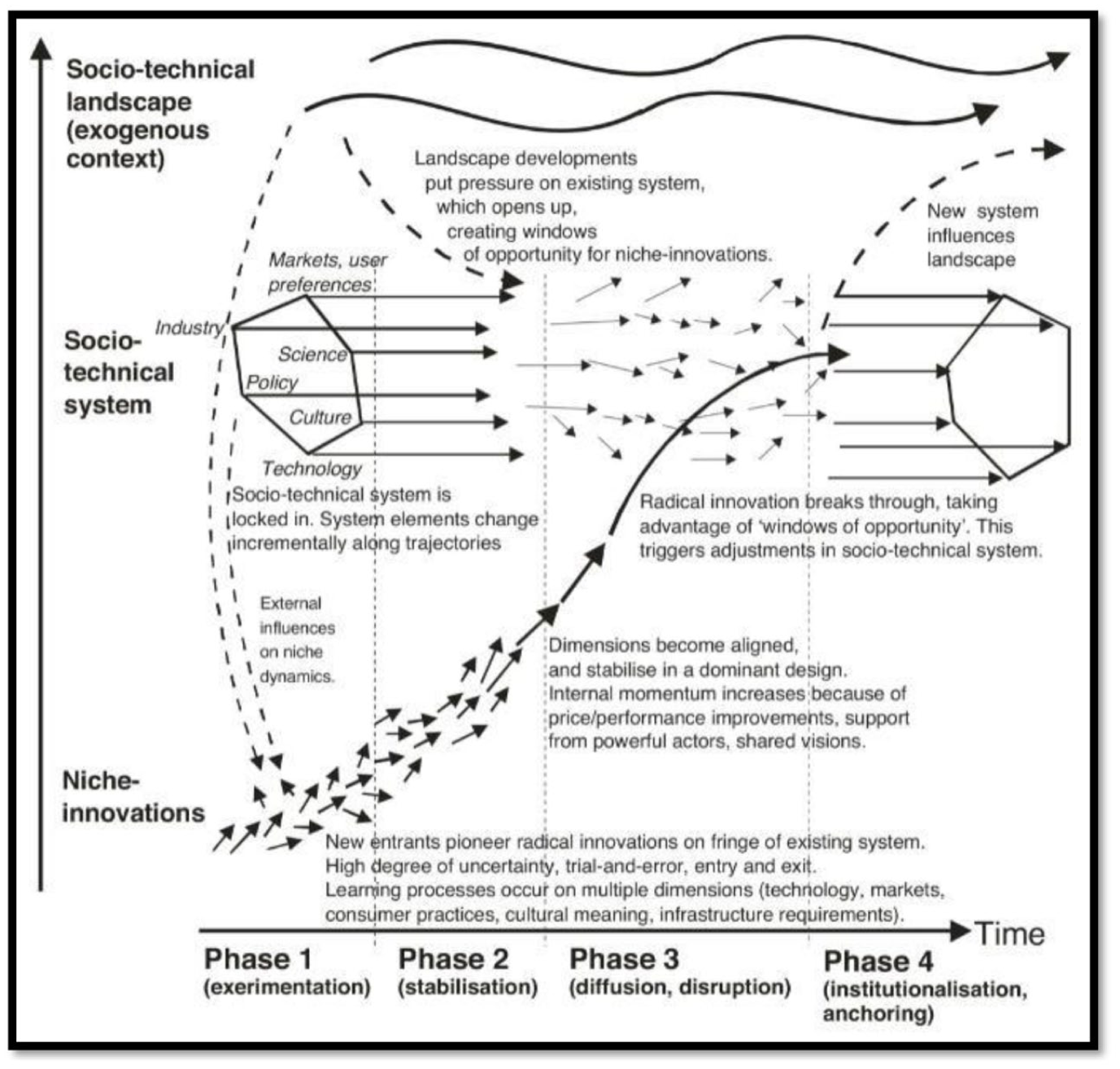
The multilevel perspective on sociotechnical transitions
IV. Materials and Methods
This study investigates the role of digital technologies in transforming hybrid formal–informal waste systems in South Africa. It employed several quality control (QC) and quality assurance (QA) measures to ensure data validity and reliability. Clear data-collection protocols were established, utilizing standardized tools and training to minimize bias.(75) Triangulation was employed by integrating multiple data sources. By maintaining detailed documentation and continuous monitoring, the research was able confidently to validate its conclusions.
A qualitative case-study approach was selected, as it is well suited to examining sociotechnical systems where human practices, digital infrastructures, regulatory frameworks and political-economic conditions interact in dynamic and uneven ways.(76) Semi-structured interviews, participant observation and the analysis of webinars and documentary material combined to build a rich, triangulated understanding of how digital platforms shape the labour, governance and material dimensions of waste management.
a. Case-study selection
The three case studies, chosen through purposive selection, capture maximum variation in models of ICT-enabled integration within the informal recycling sector, representing three different technical architectures. Regenize is a socially embedded incentive-based model focused on community engagement and behavioural change; BanQu is a blockchain-enabled compliance system; and Kudoti is a digital trading and materials-matching platform. As noted below in the analysis, they converge into two analytically coherent processes, with Regenize operating as a stand-alone, social entrepreneurship model, while BanQu and Kudoti align within a shared compliance-driven digital governance pathway that prioritizes traceability, formalization and regulatory alignment. These cases illustrate different ways digital infrastructures can interface with informal reclaimers, municipal bureaucracies, private recycling companies and community structures. Their geographic distribution across Cape Town and Johannesburg allows examination of ICT innovations’ interaction with differing regulatory environments, municipal capacities and socio-material waste infrastructures. This diversity is critical given the uneven implementation of extended producer responsibility (EPR) regulations and the persistent marginalization of informal reclaimers across South African cities.(77)
b. Strategy and interview participants
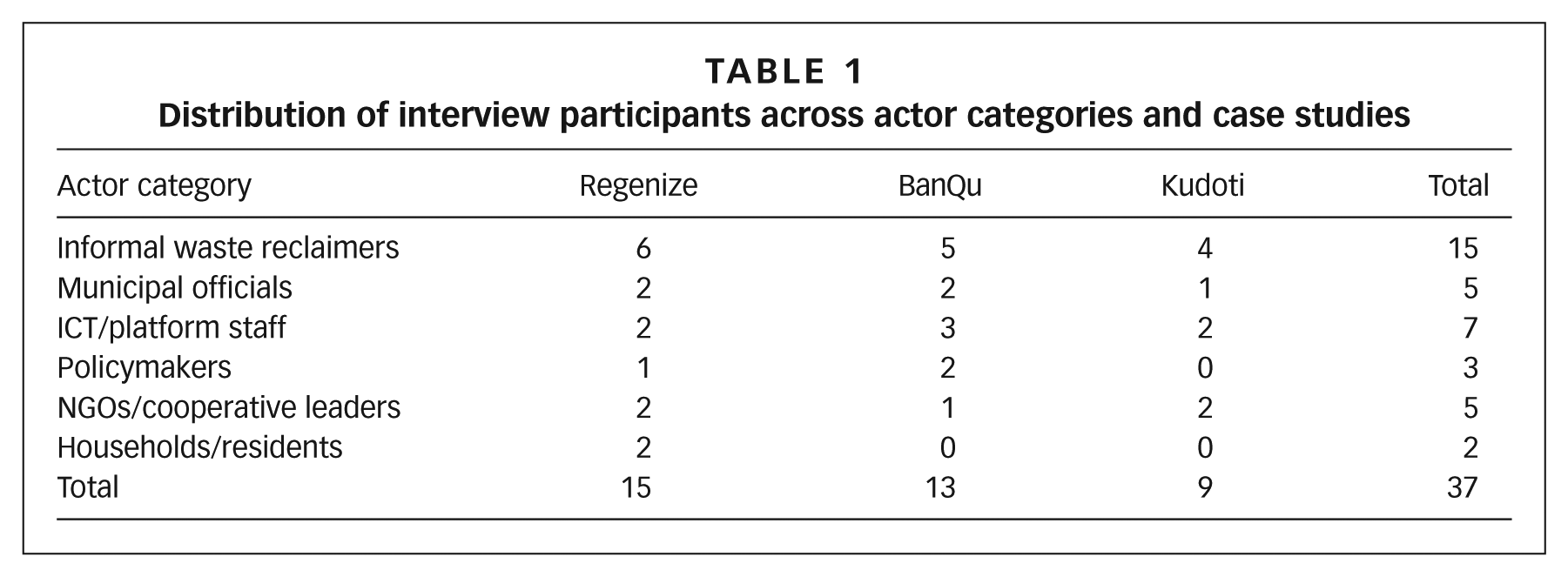
A total of 37 semi-structured interviews, designed to capture the perceptions and experiences of actors positioned differently across the waste value chain, were conducted between 2023 and 2024. Participants were recruited through a combination of purposive sampling to ensure the inclusion of institutional, technical and labour perspectives, and snowball sampling, widely used in research where relational networks shape access to participants.(78)
The interviewees included informal waste reclaimers, municipal officials, national and local policymakers, platform developers and ICT company staff, and NGO representatives (Table 1). Interviews ranged from 30 to 60 minutes. They explored platform governance, digital practices, perceptions of risk, institutional constraints, labour impacts, compliance mechanisms and the socio material conditions under which reclaimers engage with ICT tools. Only in the case of Regenize were households interviewed, since only Regenize interfaces with household consumers. BanQu and Kudoti centre on traceability and materials trading rather than citizen participation.
Distribution of interview participants across actor categories and case studies
c. Participant observation
Participant observation supplemented interview data and was conducted at community recycling events, drop-off points, buyback centres, municipal waste depots and informal sorting locations. These observations enabled assessment of the following:
How reclaimers navigated app interfaces in real time;
The physical constraints of using smartphones in informal labour settings;
Negotiations between reclaimers, platform staff and municipal officers; and
Material flows, sorting practices and platform-induced labour changes.
d. Webinars and documentary sources
Complementary data were generated through analysis of relevant webinars held between 2021 and 2024.(79) These webinars provided access to policy discussions, technical presentations and debates on data justice, EPR compliance and digital circular economy transitions in the global South.
Documentary sources, including municipal waste strategies, EPR regulations, ICT white papers, platform training manuals and industry reports, were also analyzed to contextualize the case studies and verify claims made during the interviews. This triangulation strengthened the credibility and analytic depth of the findings.(80)
e. Data analysis
Transcribed interviews, fieldnotes and documentary data were analyzed via three-stage thematic analysis facilitated by the use of qualitative data-analysis software NVivo 14, with a focus on key themes such as community engagement, operational efficiency, regulatory compliance and socioeconomic impacts. The first stage involved inductive open coding to identify initial concepts emerging from the data.(81) The second stage involved axial coding, where codes were grouped around themes relating to digital governance, labour dynamics, sociotechnical practices, platform power, data practices and integration challenges. The third stage involved interpretive/theoretical coding, informed by sociotechnical transition theory,(82) data justice frameworks(83) and critical scholarship on informality and circular economies.(84) This enabled conceptual linkages across cases, generating crosscutting patterns concerning how digital platforms operate within hybrid formal–informal waste systems.
Respondents did not participate formally in coding or interpretation, but follow-up communications clarified workflow descriptions, verified technical details and ensured factual accuracy, an approach consistent with ethical qualitative practice.
f. Ethical considerations
Ethical approval was obtained from the University of South Africa’s College of Science, Engineering and Technology’s School of Engineering. All participants provided informed consent, and confidentiality was ensured through the use of alphanumeric identifiers.(85) Given the precarious socioeconomic position of informal reclaimers, additional safeguards were applied, including repeated consent checks, anonymous reporting of locations and sensitivity to power imbalances during data collection.(86)
V. Results
This section presents the empirical findings of the study, illuminating how ICT-enabled waste systems reshape operational efficiencies, regulatory landscapes and pathways for integrating reclaimers into evolving digital circular economies. The analysis is structured around the conceptual framework, with particular attention to sociotechnical transitions (niche–regime dynamics) and data justice considerations. As noted, the findings point to the emergence of two distinct models of ICT integration: a compliance-oriented model, exemplified by BanQu and Kudoti, and a social entrepreneurship model, represented by Regenize. These models, corresponding to different sociotechnical logics, produce divergent outcomes for actors (Figure 2).
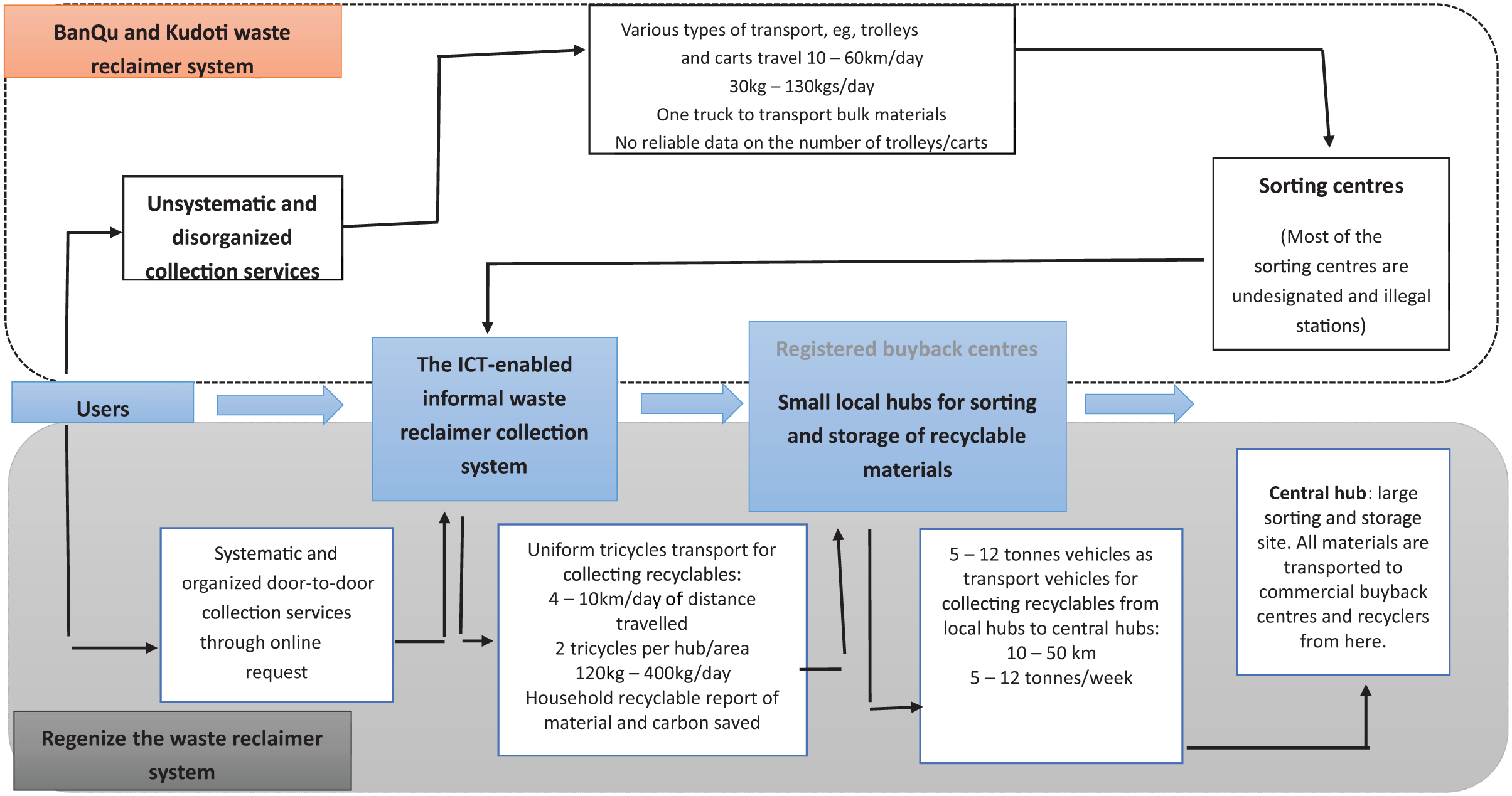
Two models of ICT integration: compliance-oriented model and social entrepreneurship model
The first empirical pattern concerns the compliance-oriented model, in which municipal officials (O1, O3) and ICT developers (D1, D2) are consistently framed as a mechanism for standardizing and formalizing recycling activities in line with South Africa’s evolving EPR regulations. Officials described these platforms as critical infrastructures for embedding “auditability”, “traceability” and “regulatory certainty” into the value chain. As one official in Johannesburg noted (O2), “We finally have auditable records. The material can be traced back to the collector. That has never been possible before.” Developers similarly emphasized the technical affordances of blockchain or structured data systems in reducing disputes over weights, verifying sources of collected material and generating immutable evidence for producers’ compliance reports. According to one developer (D1), “Every kilogram logged is assigned to a verified collector. It secures the system.”
From a sociotechnical transition perspective, these digital infrastructures reinforce formal institutional logics by embedding accountability, transparency and traceability into everyday waste flows. However, this alignment with formal governance produces uneven effects for informal reclaimers, with widespread challenges related to smartphone access, airtime affordability, digital literacy and the reliability of applications in the field. One reclaimer (R4) explained: “I lose work when the app won’t open or when my data runs out. Then, I can’t log anything.” Such experiences highlight how digitalization may simultaneously invite and constrain participation, generating what data justice scholars describe as conditional inclusion: where participation becomes dependent on access to devices, connectivity and technical competencies. 87
Reclaimers also expressed discomfort over increased visibility and perceived surveillance. One participant (R7) explained, “Now everything is recorded. Sometimes it feels like they are checking on us, not helping us.” This sentiment illustrates how technologies framed as enhancing transparency for regulators can be experienced by reclaimers as mechanisms of control, reinforcing asymmetric power relations between formal authorities and informal labour.
The complexity of the compliance model becomes particularly visible in Kudoti’s community-focused implementation in Cape Town. While NGO representatives (N3, N5) viewed Kudoti as stabilizing income by creating predictable, app-mediated connections between reclaimers and buyers, reclaimers themselves reported tensions relating to autonomy and flexibility. One experienced collector (R6) noted, “Before, we could sell to anyone. Now, the app decides where we must go.” Digitalization therefore reconfigures long-standing informal networks, shifting bargaining power and narrowing the range of reclaimed materials that can be sold outside platform-mediated channels. In sociotechnical terms, Kudoti represents a hybrid configuration where digital niches become integrated into existing informal regimes, generating both opportunities and constraints.
Participant observation provided insight into the labour dynamics overlooked in official narratives. At buyback centres, staff frequently assisted reclaimers with navigating interfaces, correcting errors in digital weights, and translating English-language menu options. Observations demonstrated that digital systems do not eliminate labour but redistribute it, often transferring the burden onto reclaimers and frontline staff. Webinars, however, presented a frictionless narrative of digital optimization, rarely acknowledging usability challenges, infrastructural deficits or the labour associated with digital transitions. This disconnect illustrates a recurring pattern in digital circular economy discourse: the privileging of institutional visions of efficiency over the lived experiences of informal workers.
Regenize’s social entrepreneurship model operates according to fundamentally different logics, emphasizing community engagement, behavioural change, and the social and environmental dimensions of waste management. Household users described clear and accessible guidelines, straightforward user interfaces and incentives that fostered collective participation. As one user (H1) noted, “The rewards make it easy to get involved. The whole family participates now.”
Reclaimers involved in Regenize experienced significant improvements in dignity, safety and community recognition. One participant (R2) explained, “People know who we are now. They don’t chase us away; they save recycling for us.” Participant observations confirmed this: households frequently greeted reclaimers by name, children assisted with sorting and residents prepared materials more carefully before handover. This relational embeddedness marks Regenize as a niche innovation that reconfigures social norms around waste work, aligning with transition theory’s emphasis on experimentation, learning and trust-building as precursors to systemic change.
Despite these strengths, concerns were raised regarding the long-term sustainability of incentive-based engagement. One policymaker (P2) commented, “Incentives work, but if the funding dries up, the behaviour may not last.” Reclaimers also expressed uncertainty about fluctuating reward values and inconsistent household participation (R3), indicating that niche models remain vulnerable to resource dependencies even as they produce more socially inclusive outcomes.
Across both models, interviews with municipal officials and ICT developers highlighted perceived improvements in operational efficiency, including automated data entry, reduced disputes over weights, enhanced coordination with buyback centres, and more consistent reporting for EPR frameworks.(88) However, reclaimers’ accounts highlight persistent usability challenges: app freezes, failed uploads, mismatched digital and physical weights, and battery depletion during collection rounds. One collector summarized the impact of system failure (R5): “If the system goes down, my whole day’s work disappears.” Such experiences demonstrate a sociotechnical misalignment between digital infrastructures designed for regulatory optimization and the precarious material realities of informal labour.
Participant observations revealed other gaps: reclaimers struggled with touchscreen navigation, staff regularly overrode system errors, and the absence of device-charging facilities frequently disrupted workdays. Language barriers and inconsistent material categorization further complicated their use, contradicting webinar claims of seamless optimization.
The patterns of integration also diverged. Developers described digital identity systems in BanQu and Kudoti as enabling reclaimers to build transaction histories. Some reclaimers appreciated improved trust with buyback centres. Others questioned the practical benefits in the absence of access to financial services or municipal support. One participant (R10) observed, “They say the data helps us. I don’t see how.” Regenize facilitated more relational forms of integration: predictable routes, safer working environments, improved material quality and social recognition.
Despite these divergences, structural barriers persisted across all cases, including fear of surveillance, the lack of necessary documentation for platform registration(89) and low digital literacy. An NGO representative (N2) emphasized that “digital tools help, but they cannot fix structural inequalities.” Environmental implications were similarly mixed. Respondents across all groups reported improvements such as reduced contamination, increased household recycling and better documentation of diversion activities. However, observations identified emerging environmental costs, including electronic waste from damaged devices, additional paper use for system backup, and the energy demands associated with blockchain systems, confirming scholarly insights into the ecological impacts of digitalization.
VI. Discussion
The findings respond directly to the research questions and fill critical gaps previously identified in the literature, particularly regarding the mediation of formal–informal relations by digital platforms and the nascent theorization of data justice and sociotechnical transitions in African circular economy contexts.
a. ICT, operational efficiency and regulatory compliance
The first research question asked, how do ICT-enabled waste-management systems impact operational efficiency and regulatory compliance in Cape Town and Johannesburg? Findings demonstrate that ICT platforms substantially reshape waste-management operations, but with different effects across models. BanQu and Kudoti enhanced traceability, standardization and reporting accuracy, allowing municipalities to track waste flows with previously unattainable precision. Officials described these platforms as creating the first “auditable records” of informal recycling labour, aligning with EPR requirements and facilitating institutional oversight, addressing the literature gap concerning the limited evidence on digital governance mechanisms in African waste systems.(90)
However, the improved efficiency was not uniform. Reclaimers claimed disproportionate burdens from unreliable network connections, device failures, data costs and unfamiliar technical interfaces. Such operational fragility illustrates how digital systems embed new forms of dependency and vulnerability, reinforcing data justice concerns(91) and showing that operational rationalization at the regime level can increase precarity at the niche level.
This illuminates how digital tools strengthen regime structures (regulatory monitoring, standardized reporting) while simultaneously generating sociotechnical misalignments for informal actors. The research thus makes a novel contribution by demonstrating that operational efficiency is unevenly distributed across actors situated differently in the waste hierarchy.
b. Integration of informal waste reclaimers
The second research question asked, in what ways do ICT-enabled systems facilitate the integration of informal waste reclaimers into formal waste-management processes? Findings demonstrate that ICT platforms facilitate highly variable pathways of integration, revealing two distinct outcomes: conditional formalization in compliance-oriented models and socially embedded inclusion in social entrepreneurship models.
In compliance-oriented systems (BanQu and Kudoti), integration occurs primarily through digital identification, transactional visibility and regulatory alignment. Reclaimers using these platforms gained formal recognition through digital transaction histories that could theoretically improve bargaining power or access to financial services. However, this remained conditional: reclaimers could only participate if they possessed smartphones, digital literacy, stable connectivity and comfort with increased surveillance. These findings provide granular evidence of how socioeconomic and infrastructural constraints mediate digital inclusion, an area that remains largely unexamined in current scholarship.
In contrast, Regenize’s social entrepreneurship model generated relational inclusion, anchored in everyday interpersonal encounters between reclaimers and households. This integration operates beyond regulatory frameworks by transforming the social status of reclaimers, reducing stigma and fostering community respect. This finding fills an important theoretical gap, demonstrating that integration in informal economies is not only a matter of regulatory compliance or economic visibility but also of the social legitimacy and recognition dimensions rarely acknowledged in the mainstream smart city literature.
Thus, this study contributes by showing that digital integration is not monolithic: ICTs can simultaneously formalize, marginalize or socially empower reclaimers depending on design logics, governance structures and community interactions.
c. Social and environmental implications of ICT integration
The third research question asked, what are the social and environmental implications of different models of ICT integration? The findings reveal complex and sometimes contradictory implications across both model types.
Social implications
Compliance-oriented systems enhance institutional visibility but risk exacerbating inequities. Reclaimers expressed concerns about surveillance, data capture and the potential regulatory consequences of increased visibility, particularly for undocumented or financially precarious individuals. These findings underscore the importance of placing data rights and ethical governance at the centre of digitalization debates. Conversely, Regenize demonstrated that ICT can foster social cohesion, community involvement and dignity enhancement. Reclaimers observed that household members acknowledged their work, greeted them by name and prepared materials in advance, changes that participant observation confirmed. These relational transformations directly challenge prevailing narratives that depict ICT in waste management primarily as a technical optimization tool. Instead, the study shows that ICT can reshape affective and social relations, promoting more just, inclusive waste systems.
Environmental implications
ICT systems improved recycling rates, reduced contamination and enhanced material recovery. However, the research also reveals new environmental externalities including e-waste from broken devices, energy-intensive blockchain operations and increased reliance on paper when digital systems fail. These findings complicate the assumption that digitalization is inherently sustainable, a perspective that remains insufficiently problematized in the literature.
d. Contributions to research
This study makes substantive contributions to the research gaps outlined in the literature review. First, it advances the understanding of digital circular economy transitions in the global South by demonstrating that digitalization does not follow linear or technocratic pathways but unfolds through complex interactions between new digital infrastructures and long-standing informal waste regimes. The South African cases show that digital circular economy interventions become hybrid sociotechnical formations shaped simultaneously by technological affordances, institutional constraints and informal practices. This insight challenges the dominant assumption in circular economy scholarship that digital transitions are straightforward or primarily innovation driven.
Second, the study provides much-needed empirical depth on the digital mediation of formal–informal relationships, illustrating that ICT platforms redistribute power, visibility and precarity across different actors. For example, while municipal officials gain enhanced oversight through real-time data, reclaimers may face increased surveillance or reduced market autonomy. Digitalization reorganizes relationships between stakeholders rather than simply improving efficiency. This finding fills a critical knowledge gap about the social and political dynamics of digitally mediated waste systems.
Third, the study contributes to emerging debates on data justice, visibility and power by demonstrating that digital visibility can produce both empowerment and vulnerability. Although platforms generate traceability and recognition for reclaimers, this visibility is double edged, potentially exposing workers to regulatory scrutiny, dependency on platform infrastructures or exploitation of personal data. These findings contest the prevailing discourse equating digital inclusion with socioeconomic uplift, providing evidence that, without safeguards, datafication can reinforce existing inequalities.
Finally, by applying sociotechnical transition theory (specifically the multilevel perspective) to informal waste economies, this study expands the theory into domains where informality, not formal regulation, constitutes the primary organizing logic: a significant contribution, as transition studies typically focus on formal industrial sectors. The analysis demonstrates this interaction by showing that Regenize’s niche-level, community-based recycling practices operate alongside and are indirectly shaped by the regime-level compliance infrastructures of BanQu and Kudoti, which structure traceability, pricing and reporting systems that reclaimers must ultimately navigate within the same urban waste economy. This interaction reveals how transitions proceed through negotiation, contestation and embedded social relations: dynamics that are largely invisible in formal-sector-dominated circular economy studies.
e. Theoretical significance
The findings contribute to three theoretical fields. First, within sociotechnical transition theory, the study provides a nuanced account of how digital innovations evolve within hybrid governance environments. This finding demonstrates that niche innovations (Regenize) do not simply scale into regime structures but coexist with, complement or resist them. This dynamic is evident where Regenize operates alongside, rather than within, the compliance-oriented architectures of BanQu and Kudoti. Regenize’s community-embedded incentive model functions in parallel to these regulatory platforms, at times reinforcing their outcomes (for example, increased recycling volumes) and at other times diverging from or challenging regime logics by prioritizing social inclusion, behavioural change and locally grounded practices. Regime-aligned systems (BanQu and Kudoti) reinforce top-down regulatory logics. This interplay shows how transitions in informal economies occur through layered and uneven processes rather than through linear pathways envisioned in classical transition models.
Second, the study advances the field of data justice and digital governance by illustrating how digital visibility functions as a sociopolitical mechanism rather than a purely technical process. The findings confirm that data infrastructures shape distributive, procedural and recognitional justice outcomes for reclaimers. While digital identity systems and traceability tools can support accountability, they may also impose new forms of surveillance or create dependencies on proprietary technologies. These insights contribute to theoretical debates on how digitalization restructures inequality in low-income urban contexts.
Third, the research significantly enriches hybrid governance and informality studies. It conceptualizes digitalization as a new mode of governing informal labour: mediating legitimacy, authority and labour relations between reclaimers, municipalities and private actors. ICT platforms emerge not simply as tools but also political intermediaries through which informal workers negotiate inclusion, recognition and livelihood security. This reframing challenges binary classifications of “formal” and “informal” by showing how digital infrastructures produce new hybrid regulatory spaces.
Taken together, this research provides a theoretically informed, empirically detailed analysis of how digitalization is reshaping waste governance in South Africa. The study demonstrates that digital technologies do not uniformly generate efficiency, inclusion or sustainability. Their impacts are contingent upon governance arrangements, socioeconomic inequalities, infrastructural conditions and the lived realities of informal workers.
By foregrounding multiple perspectives, the study reveals how digital systems simultaneously enable and constrain new forms of participation, recognition and authority. It contributes to debates on digital circular-economy transitions by showing that digitalization in the global South is a socially mediated, politically negotiated and environmentally ambivalent process.
VII. Conclusion
The study shows that ICT-enabled waste-management systems are reshaping South Africa’s hybrid waste economies in uneven, deeply sociopolitical ways. Across the three cases, digital tools improved traceability, standardization and EPR-aligned reporting, strengthening regulatory compliance and institutional oversight. However, hidden friction caused by connectivity failures, device limitations, user–interface challenges and heightened surveillance also burdened informal waste reclaimers. Two distinct integration pathways emerged: conditional formalization under compliance-oriented models (BanQu and Kudoti); and relational inclusion under the social entrepreneurship model (Regenize). Social and environmental outcomes were similarly mixed: while ICT platforms increased recycling rates and reduced contamination, they also generated new environmental pressures through e-waste, energy use and the infrastructural demands of digital systems. Digitalization is not inherently inclusive or sustainable; its impacts depend on governance arrangements, platform design and the socioeconomic conditions of the communities involved.
Several recommendations emerge. Digital literacy training, device-access support and multilingual interfaces could reduce digital exclusion among reclaimers. Regulatory frameworks must strengthen data protection, informed consent and platform accountability to prevent exploitative surveillance practices. ICT developers should adopt participatory and human-centred design processes that reflect the lived realities of informal workers, and municipalities must combine compliance objectives with community-based, socially inclusive models that support dignity and economic security. Future research should conduct longitudinal analyses of how reclaimers’ livelihoods evolve as digital systems mature and compare cross-country cases to understand how different regulatory, infrastructural and sociocultural contexts shape digital transitions in the circular economy. Further work is needed to examine the environmental footprint of digital infrastructures and explore how digital governance frameworks (DGFs) might better align innovation with justice-oriented principles of inclusion, recognition and sustainability.
Footnotes
2.
IoT refers to sensor-enabled devices that exchange real-time data for automated monitoring. Blockchain is a decentralized digital ledger that records tamper-proof transactions for traceability.
10.
Onur et al. (2024); Mora et al. (2023);  .
.
13.
18.
21.
31.
32.
33.
Binns (2022); .
52.
59.
61.
62.
Binns (2022); .
63.
64.
Geels (2020); .
76.
77.
79.
These webinars were hosted by the African Circular Economy Network (ACEN), UN-Habitat Waste Wise Cities, the South African Waste Pickers Association (SAWPA), and municipal digital innovation forums.
84.
85.
For example, R4 = informal reclaimer 4; O3 = municipal official 3; D1 = platform developer 1; N2 = NGO representative 2; H1 = household respondent 1.
88.
These extended producer responsibility frameworks require producers to document and report verified recycling and material recovery. ICT platforms support this by generating auditable digital records, reducing weight disputes and ensuring accurate, compliant reporting.
89.
This was especially the case for migrants lacking passports, permits or residency papers to access formal systems. Several respondents expressed concern that digital registration could expose their irregular immigration status and digital traceability could expose them to tax, immigration or residency compliance enforcement.