




Abstract
The work of Buenos Aires’ cartoneros (informal recyclers) has important environmental and economic repercussions for the city. This paper investigates cartoneros’ working and living conditions, establishing a 2007 baseline for the logistics of informal recycling practice in Buenos Aires and providing a description of the socioeconomic characteristics of these workers at a key moment in time. Under the purview of a new chief of government elected in 2007, a formalization plan for cartoneros was initiated in 2011. This paper assesses some of the potential impacts of this plan on cartoneros and their work, and suggests that while such a system may benefit some workers (providing them with increased income, social acceptability and improved relationships with the municipality), there are also potential drawbacks to the formalization plan (including possible difficulties instituting a cooperative system with previously unorganized workers and the labour exclusion of more socially marginalized cartoneros).
I. Introduction
Buenos Aires’ informal recyclers (known locally as cartoneros) undertake important economic and environmental work. Their recovery of recyclable and re-usable materials from kerb-side waste allows them to mediate their own poverty, provides valuable inputs to industry and reduces the volume of materials destined for landfill (by approximately 11 per cent in 2004(1)). Despite the value of this work, the problems of informal recyclers are often sidelined by decision makers. These workers continue to carry out work that is precarious, low-paid, highly stigmatized and laden with health risks.
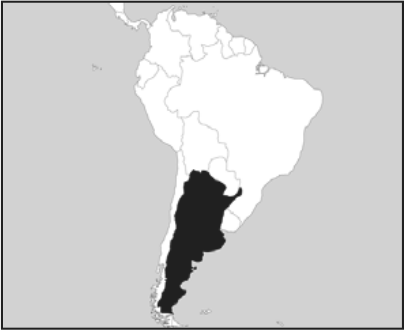
Cartoneros are a highly visible group of workers whose presence has become emblematic of the Argentine social situation, particularly because their numbers appeared to have increased greatly in the aftermath of the national economic crash of 2001–2002. This increase was particularly noticeable in the capital city of Buenos Aires, where this research was carried out. In 2011, the municipal government of Buenos Aires began the citywide rollout of a formalization plan for these workers. This paper presents a pre-formalization baseline of the working conditions of some of the city’s approximately 9,000 cartoneros, thereby providing valuable information for assessing the relevance of the formalization plan to the everyday practice of this kind of work.
The research is based on a survey (n=397) and series of interviews (n=30) with cartoneros carried out in 2007 by the author and a team of four local research assistants. The survey was designed to target workers who collected primarily from kerb-side waste as opposed to collecting exclusively from clients. During random walks of pre-determined length in 10 areas of the city known to be frequented by cartoneros, we approached each cartonero whom we encountered; the total refusal rate for the survey was 17 per cent. Interviews were also conducted with 18 key informants between 2007 and 2011, and included current and former government workers, local academics, community organizers and representatives of cartonero cooperatives. The author conducted the interviews and undertook the translations.
II. Context
According to the municipal government of the Federal District of Buenos Aires (Gobierno de la Ciudad de Buenos Aires), the city produces approximately 5,000 tonnes of waste daily. The city’s almost three million residents generate approximately one kilogramme of waste per day and the remainder is generated by the more than one million people who regularly commute to the city.(2) For residents of the central Federal District, waste collection services from either the kerb side or large containers placed on city blocks operate six nights a week, and residents must place their waste outside between 8–9pm.
In affluent and middle-income neighbourhoods and commercial districts of the central city, it is common to see cartoneros opening bags of kerb-side waste to remove materials that can be re-sold or re-used. In contrast to the residents of the neighbourhoods where they work, many cartoneros live in low-income and/or informal settlements in either marginal areas of the inner-city or in Greater Buenos Aires. Those who live in communities in the Greater Buenos Aires region surrounding the Federal District tend to live in lower-income areas of this heterogeneous region, some of which have peri-urban characteristics (such as poor infrastructure and low quality housing stock). As noted by Grimson,(3) it is the proximity of entrenched poverty in the city margins to the more affluent elites in the city core that makes informal recycling a viable survival strategy in the Greater Buenos Aires region.
For at least 150 years, workers have subsisted by recycling Buenos Aires’ waste.(4) For many years this clandestine work was tolerated by the authorities as long as it took place on dumpsites out of public sight. The institution of sanitary landfills in the Buenos Aires region in the 1970s restricted informal recyclers’ access to dumpsites and made it illegal to engage in this type of informal waste work.(5) Illicit informal recycling still continued in the city, although at a reduced scale in the form of street-picking and collection from small businesses.
The persistence of informal recycling in Buenos Aires was accompanied by a long trajectory of increasing poverty and unemployment in Argentina. This economic change can be traced back to anti-inflationary measures in the 1970s and high economic instability in the 1980s, resulting in hyperinflation in 1989.(6) Austerity measures and an attempt to peg the peso to the US dollar in the early 1990s led to rising unemployment and increased external debt.(7) A number of factors between 1995 and 1999 contributed to Argentina’s long-term economic instability and led to economic stagnation, including corruption, the political manipulation of the courts, decreased rule of law and provincial government non-adherence to fiscal constraints.(8) Renewed austerity measures and a recession led to the refusal of international lenders to continue financing the country’s debt, leaving Argentina’s political and financial systems in ruins by the end of 2001.(9)
This financial crisis in 2001–2002 marked a decisive shift in informal recycling work. With the overnight crash of the peso, the importation of raw materials for industrial use became prohibitively expensive. For example, the price of paper increased by more than 10 times in a matter of months.(10) This crisis created an increased demand for recyclable materials from local markets and also gave rise to soaring unemployment rates.(11) Therefore, informal recycling work during this period was both a personal response to labour insecurity for workers and a source of affordable inputs for local industry. Schamber(12) reports a count of the number of cartoneros entering the city via the Alsina bridge (one of the main entry points to the city) in October 2001 – a few months before the financial collapse – and again a year later. Over that period, the number of cartoneros entering the city at this one point increased five-fold, giving some indication of the increase in informal recycling work in the city proper.
The city government passed a law legalizing informal recycling in January 2003, and created a municipal programme (the Programme for Urban Recuperators – Programa de Recuperadores Urbanos or PRU) to liaise with cartoneros and to provide them with social services such as vaccinations, free gloves and reflective vests. PRU also mounted a registry of the city’s cartoneros, with the dual aim of collecting demographic information about these workers and providing them with a card indicating they had registered with the authorities (thus offering a sense of social legitimacy). By August 2007, PRU had registered a total of 15,526 cartoneros.(13) It is important to note that not all people in the registry worked continuously as cartoneros – it is likely that many had either left this type of work completely or entered and exited as their financial situation changed. In 2008, the municipal government estimated the number of cartoneros in the city to be around 5,000, although no methodology for this estimate was provided.(14) The ILO and UNICEF conducted a detailed count of the city’s cartoneros in 2004, and counted 8,762.(15)
The rise in both the visibility and number of cartoneros in the city was accompanied by an increase in labour organization among these informal workers. Some organized themselves into cooperatives, with the goal of adding stability and economic value to their work by scaling up the volume of collected materials, as well as creating a collective basis for interaction with the authorities and organizing activism on pertinent policy decisions in the city.(16) As of 2010, the municipality recognized 12 cartonero cooperatives in the city, most of which had between 10 and 100 members (although two had 300 and 400 members each(17)). The city’s list suggests that there were 976 cooperative members working in the city at the time. Although these cooperatives signify an important moment in the social organization of cartoneros, and a key opportunity for their self-expression and representation, many of the cooperatives that emerged in the 2000s relied heavily on external resources and may not have been sustainable.(18)
In this study, the vast majority (99 per cent) of the cartoneros surveyed reported that they worked individually and were either not interested or not able to participate in such cooperative movements. Cooperative members are thus barely represented in this study and this is probably because we approached kerb-side collectors in the evenings. Key informant interviews revealed that many cooperative members collected recyclable materials during the day from a regular clientele of households and businesses with whom they had personal relationships, and these practices tended to take place on a smaller scale. Regardless, if about 967 of the city’s estimated 8,762 cartoneros active in the mid-to-late 2000s were cooperative members, it is clear that the overwhelming majority of this work was carried out in a non-cooperative format.
Although cartoneros have become a mainstay of the city’s urban landscape, and are still an essential part of both the waste management system and local industrial circuits, their relationship with municipal authorities and city residents has been troubled at times.(19) The ambivalent relationship between cartoneros and the municipal government stems in part from the varying political stance of the Buenos Aires chief of government, Mauricio Macri, vis-à-vis these workers. Elected in 2007, Macri had previously campaigned unsuccessfully for the top municipal post on a platform that included evicting the cartoneros from the city. Macri subsequently toned down his antipathy for cartoneros in a context of increasing public support for and solidarity with these disenfranchised workers.(20) After a series of conflicts with cartoneros at the beginning of his term, Macri’s position on informal recyclers has changed to one of incorporation, and the current formalization plan has taken place under his administration.
In late 2008, the city government introduced the beginnings of a formalization plan for some of the city’s informal recyclers, recruiting them into a limited number of pre-selected cooperatives. As of 2010, the city government had provided approximately 2,000 recyclers with uniforms and about 500 had also received debit cards that provided them with access to government benefits, including health insurance, subsidized transport and social security benefits. This debit card also provided $200 pesos per month as a subsidy (or about US$ 66 – the equivalent of almost 40 per cent of average earnings for cartoneros). This payment was meant to subsidize, but not replace, cartoneros’ earnings from the sales of collected materials. In other words, while their working conditions may have been somewhat formalized by the city government, cartoneros remained ultimately responsible for their own financial subsistence. They were given access to these resources on the condition that they registered as “urban recuperators” with the government and agreed not to work with children or break open garbage bags in public spaces.(21)
In concert with the organization of informal waste workers, the municipal government has been promoting source separation through projects in key neighbourhoods in the city (two residential and two commercial areas) and through working with individual large generators of recyclable materials (such as hotels), in order to support increased recycling and the viability of a formalized workforce of cartoneros. It was estimated that approximately 20 per cent of the city’s residents were separating their recyclable materials from their waste at source in key neighbourhoods where the formalization of cartoneros had been rolled out.(22) The municipality had plans to extend this formalization programme throughout the city, and at the time of writing had negotiated contracts with eight neighbourhood-based cooperatives and one materials transportation cooperative operating in multiple zones of the city.(23) These contracts were designed to give each of these groups proprietary access to the kerb-side waste in a prescribed district of the city, as well as access to some additional city resources (such as trucks and uniforms). The plans included the extension of the partial salary system described above, including an increase in the amount to $370 pesos (US$ 123), or approximately 70 per cent of the median 2007 income of surveyed cartoneros. It is difficult to access the details of these benefits, and in 2011 a key informant within the municipal government suggested that this obfuscation was intentional, in order to limit the number of people trying to enrol in the programme. Apparently, the government preferred to recruit certain workers in the earlier pilot stages of the programme, largely based on their neighbourhood of work. According to a 2013 version of the city’s recycling website, 2,100 cartoneros had been incorporated into the programme, an increase of only 100 workers since 2010.
In order to better understand the ways in which these formalization initiatives could change the practice of informal recycling work and impact the livelihoods of the city’s cartoneros, it is important to examine pre-formalization working conditions. The following sections describe the logistics of informal recycling work as practiced in 2007 and also provide an overview of some of the socioeconomic characteristics of this group of workers.
III. Logistics of Informal Recycling in Buenos Aires
a. Collecting materials
Informal recycling takes multiple forms in the urban areas of Buenos Aires. The most consistently visible form involves the separation of recyclable and re-usable materials from kerb-side waste. In addition to recovering materials and re-usable items from the waste stream, 71 per cent of cartoneros surveyed reported having “clients” who regularly separated and saved recyclable materials for them; five per cent reported that they only collected pre-separated materials and did not open garbage bags to find materials for resale or re-use. While most clients give cartoneros these materials for free, six per cent of the survey respondents reported that they paid for at least some of the materials they received, either in kind or at a set price.
Cartoneros collect large amounts of materials, making this physically intense and heavy work (see Photo 1 for an example of a loaded cart). As noted by an interview respondent: “… it’s very hard to pull a cart with car wheels on it behind you loaded with metals, cardboard, bottles, when sometimes I’ve had to make three or four trips a day to support my family” (40 year-old man). Survey respondents reported that they (and any co-workers who shared their cart) collected a daily average of 125.1 kilogrammes of materials for resale; the median quantity of materials collected daily was 100 kilogrammes per cart. The difference between the average and the median suggests that some cartoneros collected exceedingly large loads of materials, skewing the average upward.
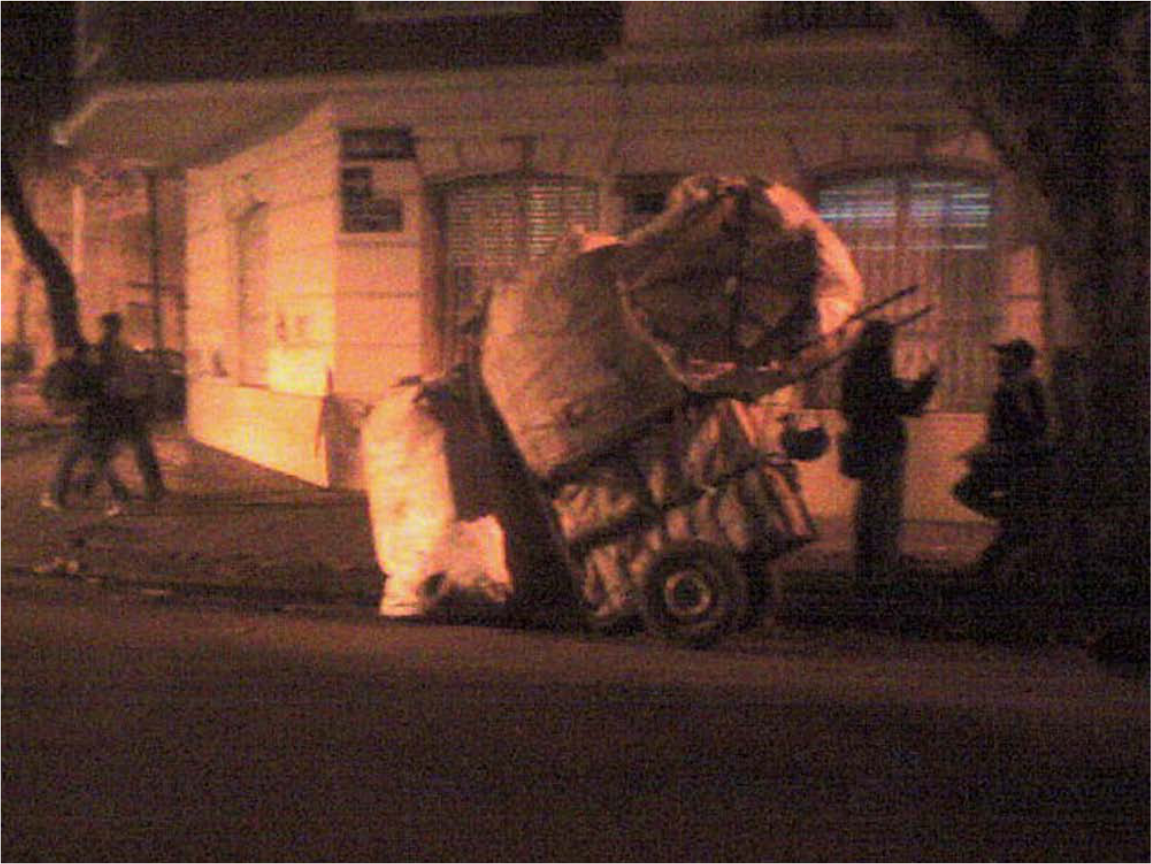
Full cartonero cart
In the survey, 93 per cent of respondents reported that they worked in the same zone every day. However, these regular working areas could be quite extensive; on average, respondents reported walking 52.8 blocks per day during their collecting activities (median=40 blocks). For most, this work was also time intensive – an average of 5.4 days per week and 6.2 hours per day.
Some cartoneros specialized in the materials they collected while others collected a diversity of materials. Some relied on the availability of materials in their zone of work (for example, the profusion of white paper waste in the downtown business district made this the exclusive material collected in this zone for some). Others made decisions about which materials were worth collecting based on fluctuations in the prices offered by depots. Respondents were asked about the types of materials they collected on a regular basis (Figure 1) and whether they collected materials other than those presented in Figure 1. Each of the following additional items was reported by one respondent: oil drums, antiques, bronze, carpet, coloured paper, film and magazines.
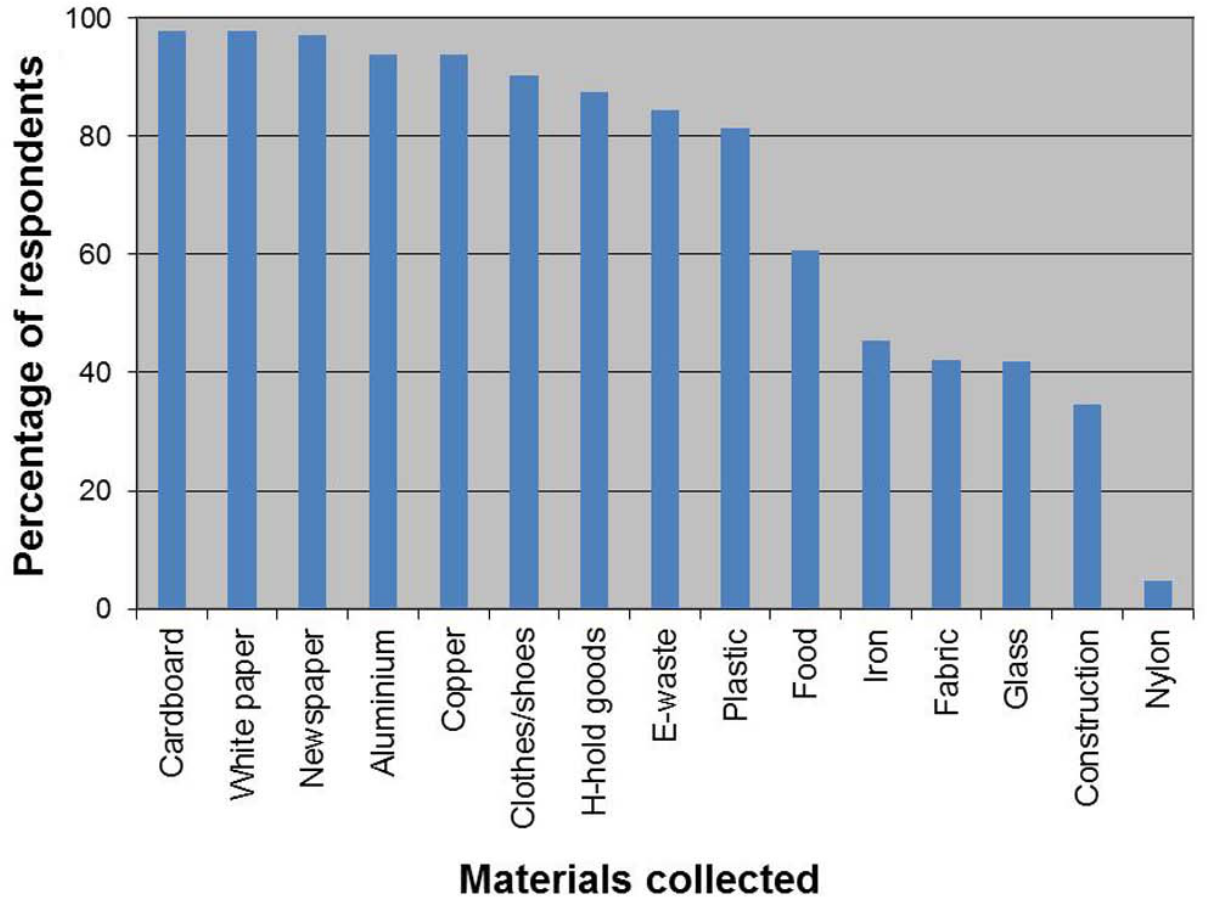
Percentage of respondents who collected different materials
Figure 1 indicates that 61 per cent of respondents collected food. Some explicitly noted that they only collected food that had been saved for them or that had otherwise been kept separate from the waste stream. Although some respondents were occasionally observed collecting food items from the waste stream, many were apparently wary of the dangers of eating food from such a source and others of the stigma associated with acknowledging that they did so.
Most respondents (97 per cent) also spent additional time preparing materials for sale at a depot – cleaning, compressing, bagging and burning (in the case of metals mixed with other elements). More than half (56 per cent) reported that they sorted or classified collected materials primarily in their home; 36 per cent sorted materials in the street; four per cent used both home and the street. While many cartoneros took care to bag up any debris remaining from sorting in the street, respondents noted that a small number simply broke garbage bags open (rompen bolsas) and left waste on the sidewalks and in the streets. This practice was frowned upon and was usually associated with occasional cartoneros who did not have place-based or community ties in their areas of work.
b. Selling collected materials
Cartoneros’ selling activities reflect the spatial separation between home and worksites. While most (66 per cent) reported selling their materials at a depot near their home, 27 per cent sold at a depot near their worksite, six per cent sold somewhere that was near both home and worksite, and two per cent sold at a location that was near neither home nor worksite. The most cited reasons for choice of selling location were the prices offered by the depot (55 per cent) and the convenience of the location (i.e. close to home or work – 41 per cent). The majority of respondents (82 per cent) relied on one depot for selling their materials, 15 per cent frequented two depots and three per cent sold at more than two locations on a regular basis. Most people who reported that they sold to more than one depot told us that they would sell different materials to different depots, depending on the prices on offer. Some respondents also commented that they sold re-usable items (such as furniture, clothing and shoes) at fairs and flea markets. Observations from 2011 indicated that selling at a depot often involved negotiations on the quality of the materials (e.g. how severely soiled reclaimed paper was), and that materials could be turned down by the depot depending on either quality or the depot’s willingness to buy a given material in the context of shifting prices. Respondents were not asked about the amount of time they spent waiting in line at depots.
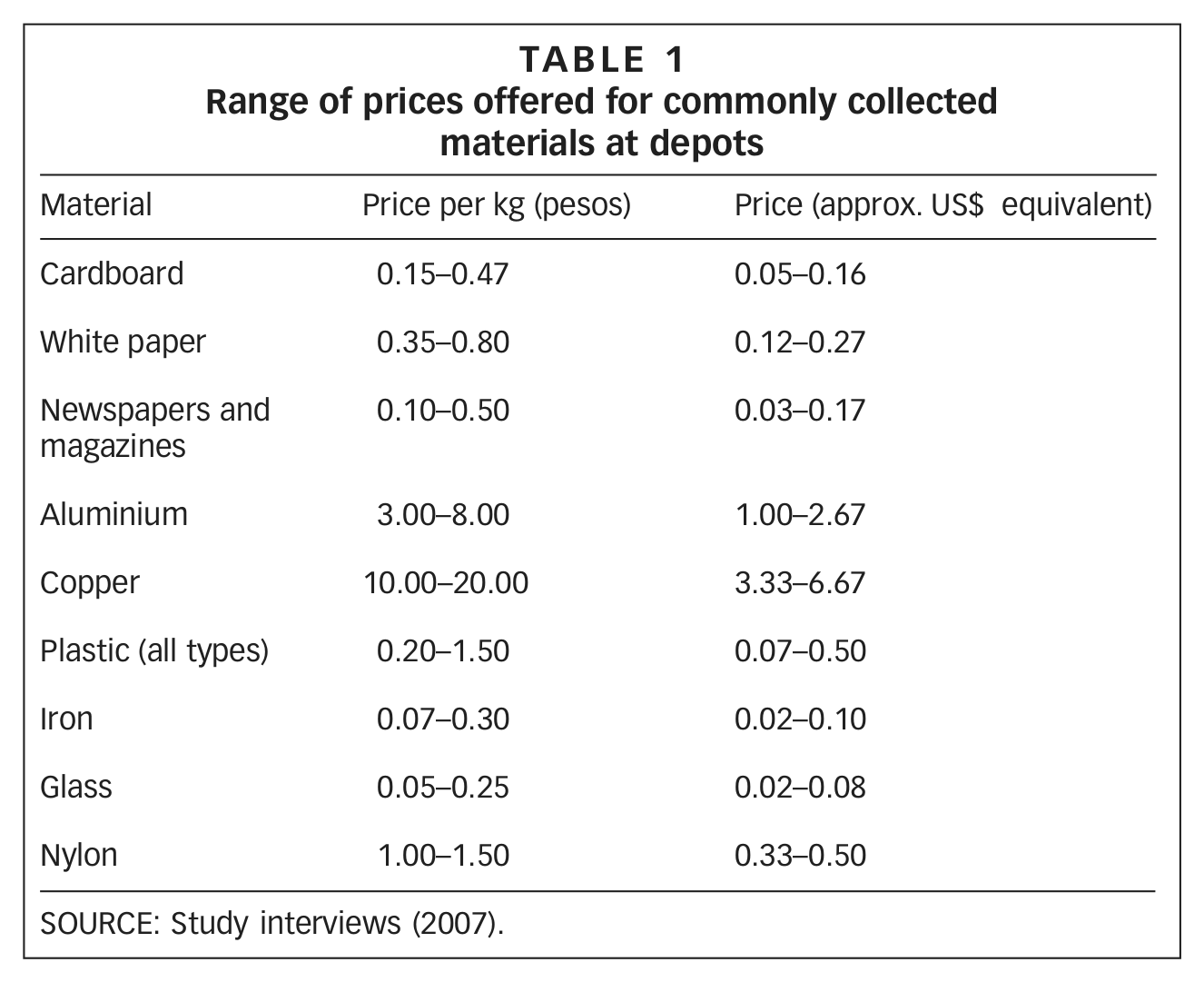
Respondents reported that the prices they received for their collected materials were influenced by many variables, including world demand, local demand, seasonal variation and selling location (e.g. downtown depots near the work zone offered lower prices in exchange for convenience; depots specializing in particular materials sometimes offered higher prices). We asked interview respondents (n=29) what the current prices were for the most commonly collected materials at the depots they frequented. The results are presented as aggregate ranges in Table 1, listed according to the popularity of the collected materials among cartoneros.
Range of prices offered for commonly collected materials at depots
SOURCE: study interviews (2007).
The broad range in prices for the materials frequently collected by cartoneros reveals the precariousness of their earnings due to potential price fluctuations, as well as the possibility of large differences in earnings even among cartoneros who collect the same materials in the same quantities, depending on when and where they sell.
The average daily income per person as reported in the survey was $27.92 pesos (approximately US$ 9.31) and the median was $23.33 pesos per person per day (US$ 7.78). Average monthly income was $614.18 pesos (US$ 204.73) and the monthly median income was $520 pesos (US$ 173.33). According to INDEC’s Continuous Permanent Survey of Households (Encuesta Permanente de Hogares Continua) data from the first trimester of 2007, the median monthly income of cartoneros, as compared to that of Argentines in all urban areas, fell near the bottom of the fourth decile ($500–630 pesos per month(24)). At the time of the survey, almost 70 per cent of all Argentines with incomes earned more than cartoneros.
In addition, 14 per cent of respondents reported that they earned money by means other than cartonero work. The average amount of money earned from other sources of income (n=44) was $268.22 pesos per month (US$ 89.41), with a median of $190.00 pesos per month (US$ 63.33). Another 29 per cent reported that someone in their household received a government subsidy.
c. Work technologies
Informal recycling is typically low technology work. The main technique used by cartoneros in Buenos Aires to assess the contents of a bag of waste is to press on different parts of the bag to get a sense of its contents. This practice is known as palpar las bolsas (to palpate the bags) and is done to avoid dangerous items in the waste stream.(25) One respondent described this as routine knowledge for cartoneros: “… who goes along in the street knows … what’s in a bag and what’s not, or just to palpate it, to touch it like this, to move it you know, no, this one is in a bad state, don’t touch it” (45 year-old man).
Only eight per cent of respondents were observed using any type of work equipment (e.g. gloves, masks, reflective vests), despite the fact that 43 per cent had registered or were in the process of filing their registry with PRU and had access to the free equipment handed out by this government body. When asked why they didn’t use equipment, or in the case of those who used some why they weren’t using additional equipment, common responses included the discomfort associated with its use (50 per cent), a lack of access to equipment (26 per cent), the perceived lack of necessity for equipment (13 per cent), the potential for equipment to impede work practices (11 per cent) and the potential cost of procuring new equipment (five per cent). These findings are supported by reports from other parts of the world. In Ho Chi Minh City, Vietnam, it was observed that when waste pickers did use gloves, they were often made of fabric and so were of little protective value;(26) in Pelotas, Brazil, only 22 per cent of respondents reported wearing gloves, 16 per cent reported wearing boots and one per cent used facemasks;(27) child waste pickers in Manila, Philippines, were observed holding their T-shirts over their faces in order to prevent smoke inhalation;(28) and only two per cent of waste pickers in Paraná, Argentina used equipment of any kind.(29)
In contrast with the low-technology approaches that cartoneros used to collect recyclable materials, 30 per cent of respondents owned cell phones and 59 per cent of those said they used them for work purposes. UN–Habitat has suggested that the proliferation of cell phone technology may have the potential to augment economic development and poverty alleviation in the global South.(30) It is therefore valuable to understand the ways in which low-income workers use this technology to support their work. The most common work-related use for cell phones was to contact family members in order to keep them apprised of work locations and schedules. Other reported uses included contacting clients, other cartoneros, depots and the municipal government. Respondents used both text and voice services (44 per cent), text messaging only (41 per cent) or voice services only (15 per cent). The acquisition of cell phones by respondents was generally quite recent (Figure 2) and the trend suggests that cell phone ownership among cartoneros may be substantially higher now than at the time of the survey.
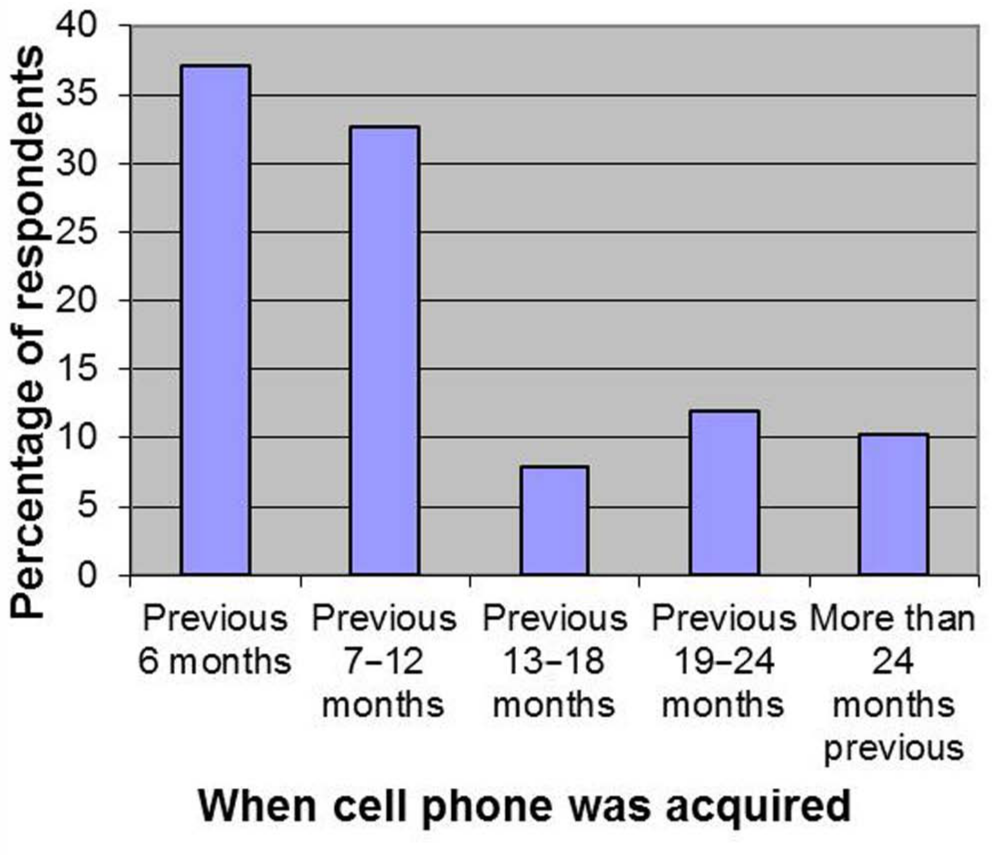
Timing of cell phone acquisition
The contrast between cartoneros’ reliance on handling thin plastic bags of waste without protective equipment and their growing rates of cell phone ownership points to the complexity of these workers’ realities. They are capable of combining a range of diverse practices in order to do their work effectively with the limited resources available to them.
d. Travelling to work
In the survey, six per cent of respondents reported living in the city of Buenos Aires (Federal District), and 94 per cent in Greater Buenos Aires. The observed proportion of city dwellers was lower than the estimate from the PRU registry, which suggests that about 25 per cent of cartoneros lived in the Federal District area. It is possible that the survey’s sampling method was not representative of the cartoneros’ residential patterns, or alternatively that the PRU data were also subject to location bias (having been collected from a self-selected population who identified themselves to the authorities at a series of pre-chosen registry sites over a number of years). Figure 3 depicts the locations of the home communities of those cartoneros who participated in the survey. As observed by Paiva,(31) these areas are often the most impoverished of Greater Buenos Aires, suggesting a degree of inequality between those who collect recyclable materials and those who inhabit the areas where these materials are disposed of and recovered.
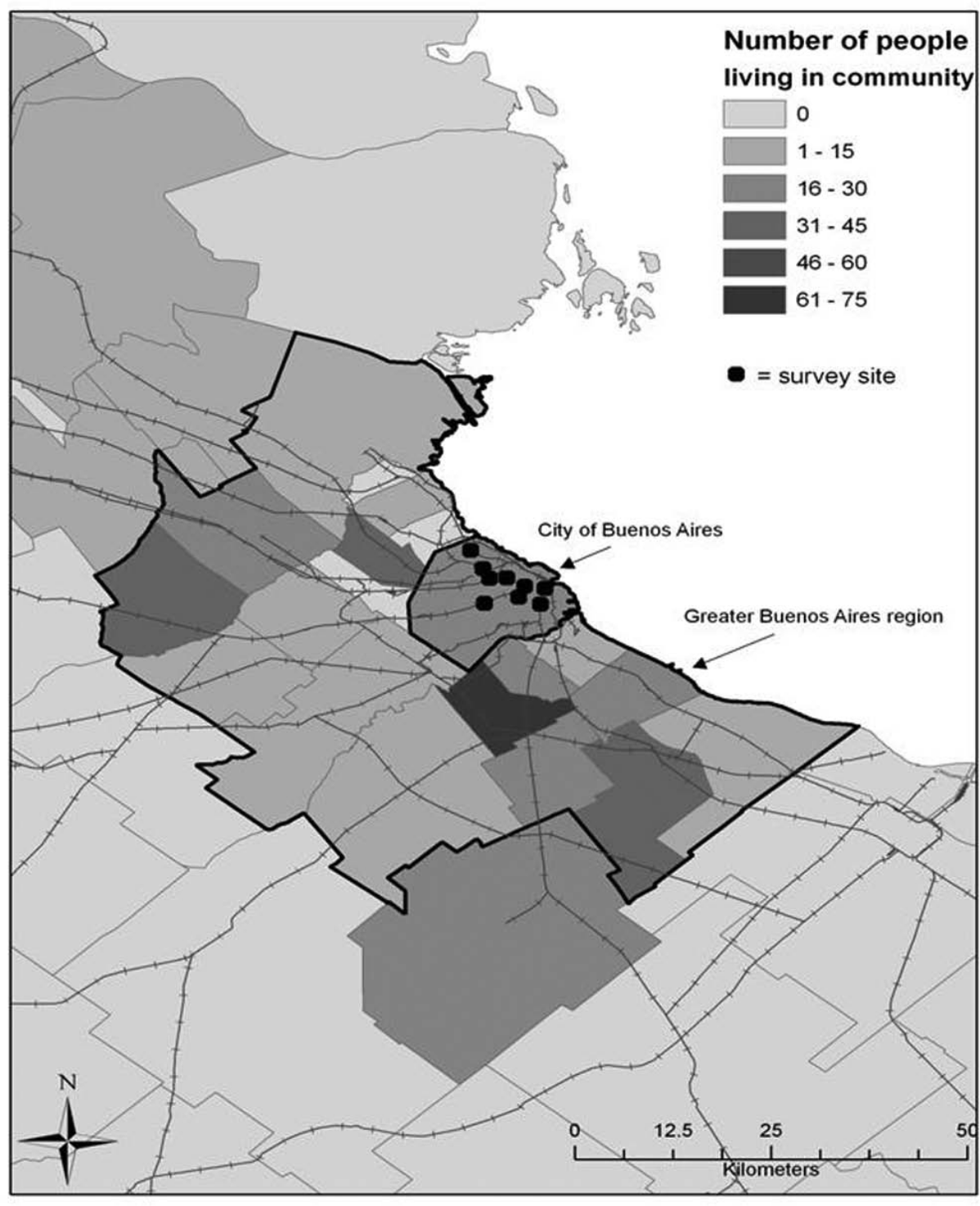
Location of the home communities of surveyed cartoneros (2007 boundaries)
The distance between home and worksite necessitated a lengthy commute for many cartoneros, along with other workers. Survey respondents travelled an average of 1.2 hours each way between their residence and worksite. The most commonly used modes of transportation were trains (63 per cent) and privately operated trucks (22 per cent) (Photos 2 and 3). Others walked, bicycled, took the bus or used the subway. Cartoneros who used trains or trucks were more likely to sell to depots in their home communities and therefore travelled with their carts. Those who used the subway and buses were more likely to rent or store their carts at a depot close to their work zone. Transportation choices were limited in any given area; for example, truck services were most common in Greater Buenos Aires communities that were not located along the train lines, and tended to be more expensive than other modes of transportation (US$ 2.21 per day on average versus a daily average of US$ 0.99 for buses and US$ 0.16 for trains).
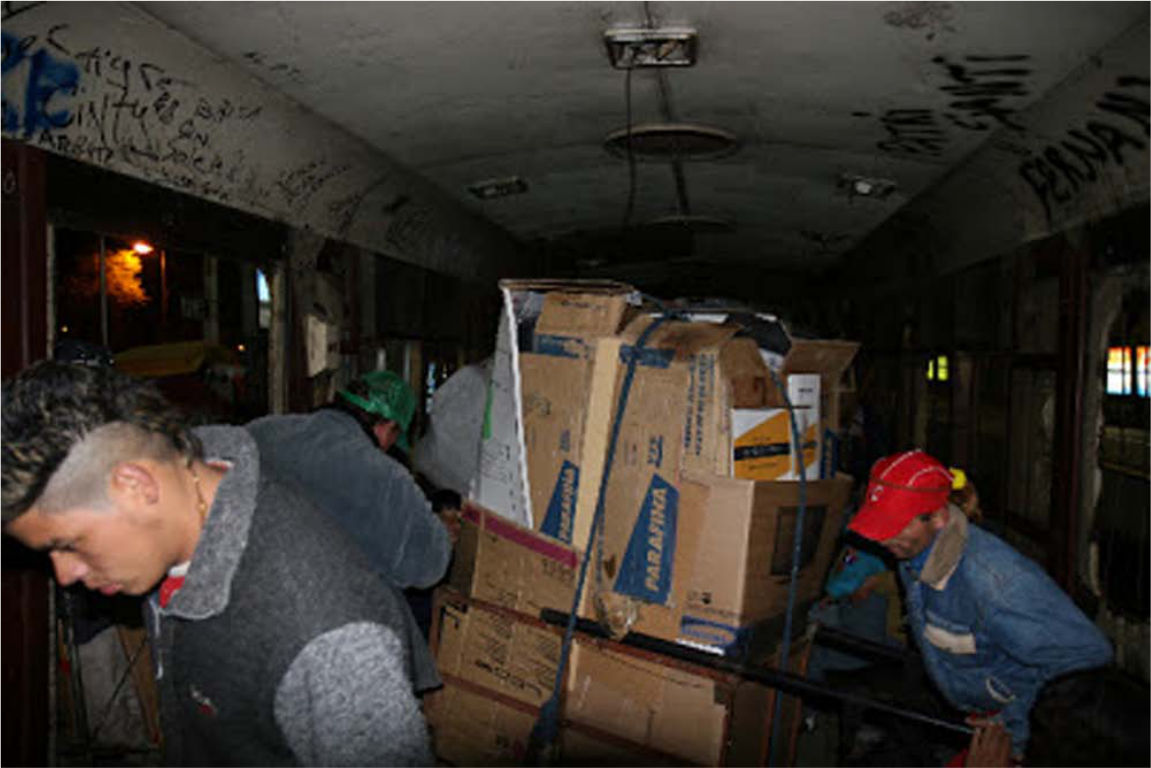
Cartonero train
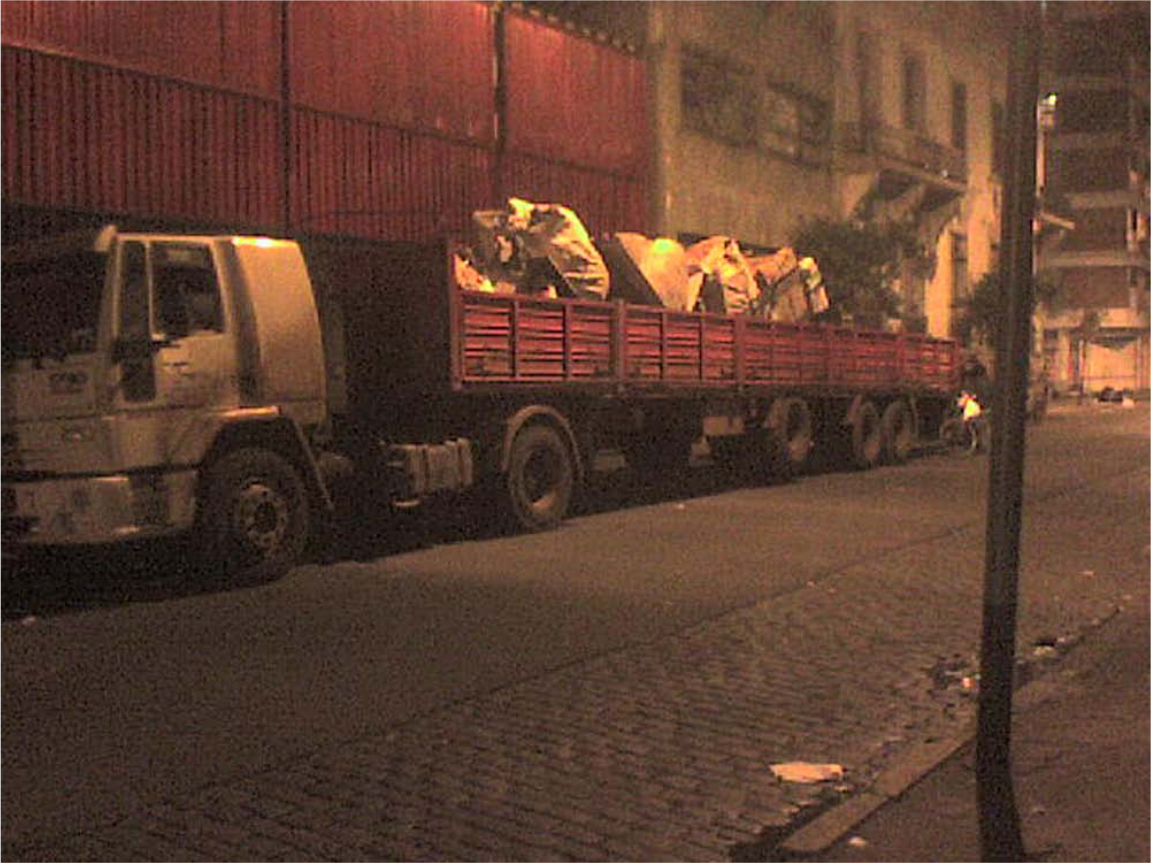
Trucks transporting cartoneros and their carts
Like many other aspects of cartoneros’ work, transportation was a precarious and often unpredictable resource. Cartoneros reported injuries on trains and trucks caused by moving carts or from falls. Cartonero trains often did not run on schedule and it was not uncommon for workers to be subjected to long delays. These specialized trains tended to be older and had been gutted to make room for carts. In 2007, one of the main cartonero train services in the city (Tren Blanco) was cancelled, with the train company citing safety concerns and financial constraints. This example typifies the tenuous nature of cartoneros’ access to transportation.
IV. Socio-Demographic Profiles of Cartoneros
While some socio-demographic trends can be observed in the survey data, it is important to note that cartoneros are a diverse group of workers. Aggregate data about the cartoneros encountered during the survey and interviews highlight some of their similarities, while still preserving the diversity of their individual experiences.
a. Age
Although people of all ages were observed engaging in this type of work, the average age of survey respondents was 30.4 years and the median age was 27 years (Figure 4).
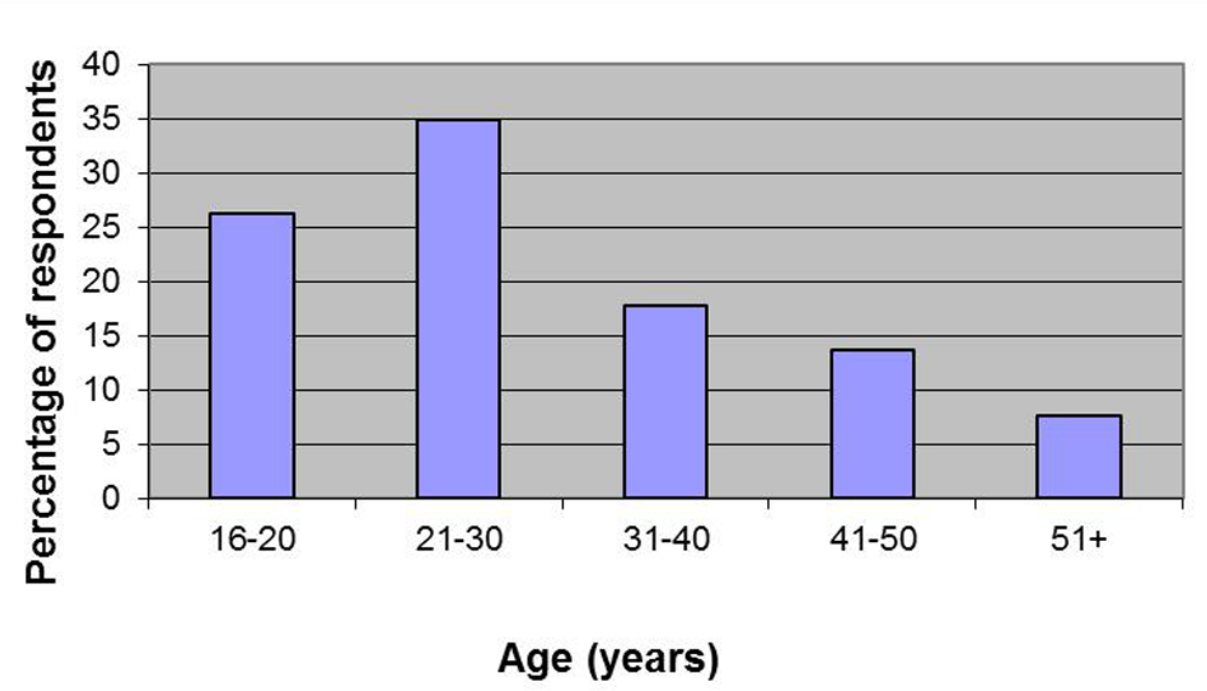
Age distribution of the survey sample
Few respondents between the ages of 16 and 20 held other employment prior to becoming cartoneros, as compared to other age groups (p=0.00; χ2(1)=42.778). However, more workers aged 16 to 20 were attending school at the time of the interviews (p=0.00; χ2(1)=33.715), and those between the ages of 16 and 30 tended to have more education than those in other age groups (p=0.00; χ2(1)=10.288). Nevertheless, these cartoneros faced new forms of labour market exclusion that cannot be explained by lack of education. This finding is revealing and suggests a shift in the labour market in the years preceding the survey (and especially among low-income workers).
Ethics approval for this research precluded interviewing participants younger than 16, and for this reason, 27 potential survey respondents were excluded from the study. However, we noted that 19 per cent of respondents were working with children present (some of whom were also working themselves), and we observed a total of 111 children accompanying survey respondents. Women were more likely to be working with children present than men (p=0.00; χ2(1)=29.150). The ILO has identified child labour as a significant problem in the informal recycling sector in many countries.(32) Their report on this topic contends that the financial crisis of 2001 drove increasing numbers of children to work as informal recyclers in Argentina. A follow-up study of child labour and informal recycling in Buenos Aires conducted in 2004 found that 48 per cent of cartoneros were children or adolescents.(33) This figure included children who accompanied cartoneros but were not working themselves and so it may overestimate the prevalence of child labour. However, this proportion of working and accompanying children and adolescents is still larger than what we observed during the survey, so it is likely that child labour rates declined between 2004, when the ILO and UNICEF study was completed, and 2007, when this research was carried out. Due to the stigma surrounding child labour and the active policy attempts to reduce childhood informal recycling in Buenos Aires, I did not ask respondents about the parenting challenges presented by working with children.
b. Gender
While most survey respondents were male (72 per cent), a significant number (28 per cent) were female. These figures roughly correspond to the PRU’s registry data, which indicated that approximately 30 per cent of cartoneros were women. This rate of women’s participation in cartoneo was lower than the proportion of women active in the labour force in all of Argentina in 2007 (46 per cent(34)), but still represented a substantial female presence among cartoneros. Cerrutti(35) notes that sharp increases in female labour participation rates in the early 1990s were concentrated in lower-income households, indicating that Argentine women’s entry into the labour force during this period was largely a poverty mediation measure. She further notes that higher unemployment rates and labour instability during this period were also concentrated among lower-income women in Buenos Aires, revealing that increased labour participation rates did not necessarily lead to stable employment for these women. It is likely that the presence of female cartoneras in the informal recycling workforce in 2007 was a result of similar household level economic coping strategies in the post-crisis environment of the 2000s.
c. Labour histories
Most cartoneros (82 per cent) had undertaken work other than informal recycling at some point in their lives. When asked about the types of work they had engaged in previously, respondents’ most common answers were construction (35 per cent), domestic work (13 per cent), factory work (11 per cent), food preparation (eight per cent), sales (eight per cent), homemaking (five per cent) and repairs (five per cent). Other professions listed by respondents included driving, food services, office work, deliveries, the armed forces, electrical/mechanical work, animal care, farming, gardening, teaching, nursing, civil service work, security work and work in recycling depots.
Respondents had been working as cartoneros an average of 5.5 years. Their entry into informal recycling work seems to accord roughly with unemployment rates (Figure 5),(36) suggesting that engaging in this work was a means of addressing a lack of formal employment opportunities.
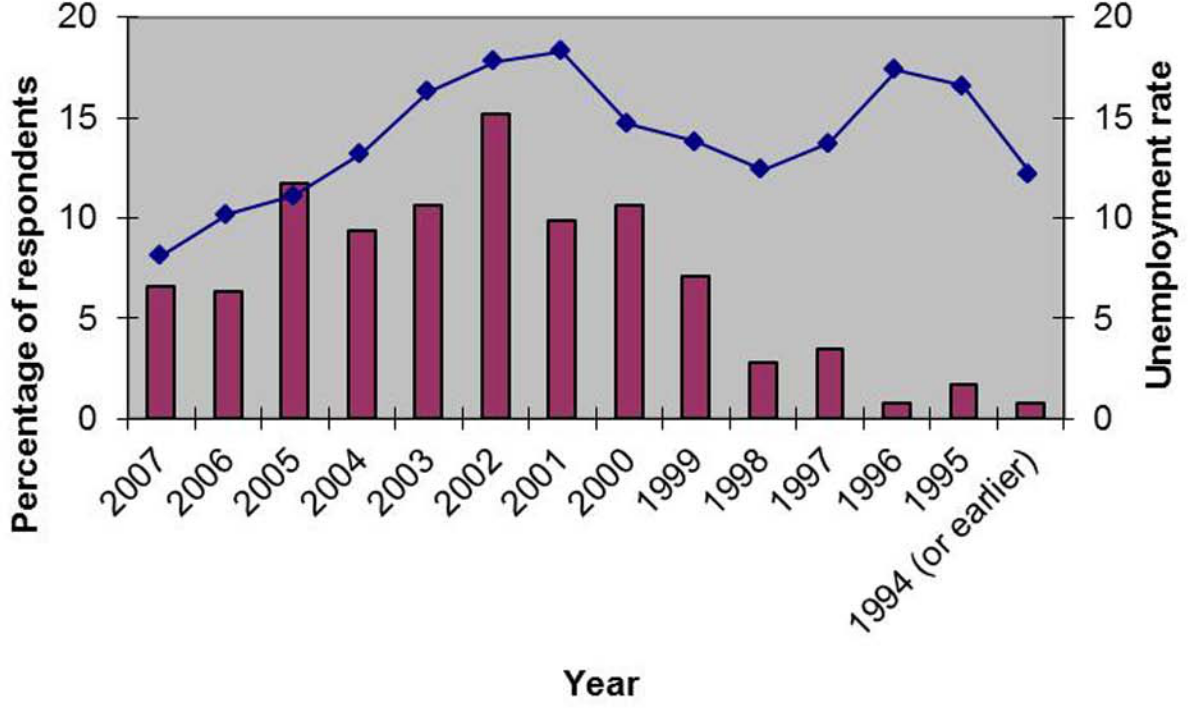
Year starting to work as a cartonero and annual unemployment rate
It is important to note that the survey only represents those who were still working as cartoneros and so does not reflect the labour experiences of those who exited informal recycling work prior to 2007. The discrepancies between unemployment rates and entry into informal recycling in the mid-1990s may be the result of this sampling limitation; if cartoneros were able to exit this work successfully during the decrease in employment rates around 1998, the result could be fewer continuing workers who began during this era. It is also germane that economic constraints in Argentina began to increase at least a decade before the crisis of 2001–2002, and so workers’ entry into informal recycling in the 1990s may also be tied to a longer trajectory of national financial instability.
d. Life trajectories and informal recycling
Survey respondents were asked why they had started working as a cartonero and multiple answers were allowed. The most common responses were a need for work or an allusion to unemployment (68 per cent), and references to particular expenses or a general need for money (26 per cent). Some noted that they made more money as a cartonero than they did in other jobs (12 per cent) and others referred to particular limitations that prevented them from taking other work (such as advanced age, lack of education, lack of legal documentation or health problems – 11 per cent). A small number noted that this was their family occupation or that they knew no other type of work (four per cent). A few stated that they began this work because they liked it, and some that they enjoyed working with their friends (three per cent). Three respondents said that this work was better than robbing and another three had started recycling because they had wanted to stop going to school. Two respondents explicitly connected their entry into informal recycling work with political changes in Argentina. The interview responses provide more nuance and detail: “I began when my husband was out of work and, well, I had small children. There were days when I didn’t have food to give them and that’s how I started” (42 year-old woman). “Eh, it was … let’s see, seven years ago and we couldn’t find a way to help my mom or to have things for myself, and well, and I saw that, that people were coming and they were earning money, and I came too” (21 year-old man).
Most cartoneros were pushed into this work through necessity, although some described being drawn by its benefits. We asked respondents what they liked about the work, allowing for multiple responses. Almost half (47 per cent) said they liked nothing about it, but most found at least one aspect appealing. They liked having work (16 per cent), working without a boss or without hassles (14 per cent), and finding good things in the waste stream (10 per cent). Some liked the camaraderie and the opportunity to meet people (eight per cent), while others liked the flexibility (six per cent). A few respondents said that the work was easy and straightforward (two per cent), some said they liked collecting items for recycling (one per cent), and three respondents said they liked everything about the work. Some respondents liked walking or being out in the streets (10 per cent) or having the opportunity to get out of the house and have some personal space (six per cent).
We also asked what respondents did not like about this work. While some said there was nothing they did not like (23 per cent), four per cent disliked everything about the work. The most common response was working with waste or doing dirty work (31 per cent). The physical conditions of the work bothered many: 12 per cent described it as tiring or heavy work, 11 per cent disliked the exposure to cold, rain or other weather conditions the work entailed, and 10 per cent cited health problems as a drawback. Five per cent did not enjoy walking in the streets, four per cent described their earnings as uncertain or non-formalized, four per cent complained of the lack of money and benefits, three per cent cited long or late working hours, three per cent disliked commuting or using the train, one per cent said they had no choice in pursuing this work, and one person disliked working without equipment. Child care issues were mentioned by two per cent, and one respondent each mentioned dogs, the monotony of the work, the wastefulness of not source-separating waste, and not using their skills or qualifications as drawbacks of the work. Some referred to social aspects, noting that they experienced conflict with others, whether other cartoneros, doormen, municipal workers, taxi and bus drivers or the police (five per cent), or that they felt ashamed (four per cent) or discriminated against because of their work (nine per cent). The stigma associated with waste can extend to workers who have close contact with it.(37) Discrimination and social stigma were also common themes in the interviews with cartoneros: “Because sometimes you go along walking and … you see a lady 30 metres away and she closes the door quickly because she is afraid, she is afraid because of our appearance or because of what’s happening [informal recycling]” (49 year-old man). “People regard us very poorly, including people from the [home] neighbourhood who speak very badly of us because we are cartoneros” (35 year-old woman).
V. Comments on The Informal Nature of This Work
Despite the precariousness and the barriers to social mobility that are inherent in the informal nature of this kind of work, informality also has numerous benefits. Workers do not have access to work-based social benefits but nor do they have to pay income tax on their earnings. The work allows those with little education or formal training to enter the labour market, albeit through a marginalized form of employment. It affords flexibility in terms of schedules, working locations and ability to attend to other responsibilities while working (such as child care, household errands, etc.), an aspect cited as a benefit by some survey respondents.
In describing the ubiquity of informality in the post-crisis economy of Buenos Aires, Whitson(38) notes that the choice to work in the informal sector can represent a political statement of independence from employers and the state, as well as a form of resistance to the norms of the formal economic system. In addition to these ideological implications, independence from a formal employer also has practical benefits for cartoneros: “… I don’t have money to go out tomorrow, I grab a bit of whatever – a bit of newspaper … a bit of white [paper] – pum pum, I go and I sell it and then I have money to come [to the city]. To come, to smoke, to eat, understand me? That’s the benefit that this has. Not like other work, where I would have to wait until Saturday to get paid, see?” (52 year-old man).
However, the autonomy and flexibility of the work come at the price of precarious earnings, exclusion from most formal social support mechanisms (such as work-related health insurance programmes) and unhealthy working environments.
VI. Implications for Formalization
This survey and the attendant interviews provide a snapshot of the working lives of Buenos Aires’ informal recyclers in the era directly preceding municipal formalization of this kind of work. The findings raise some concerns about the formalization plan and also highlight some potential benefits that such a plan could afford, including increased social legitimacy and decreased stigmatization. Key informant interviews with cooperative members bidding on municipal formalization contracts revealed a strong desire among this sub-set of cartoneros to be recognized as sanctioned workers with official status. These cooperative members also articulated a number of potential material benefits to formalization, including access to municipally owned vehicles, sorting and storage areas, and the possibility to scale up the volume of their operations, thereby increasing the prices they receive from recycling depots. These workers also cited the social services and partial salary from the government as motivations to participate in the formal system.
Cooperatives are often held up as a sustainable solution to the problems associated with informal recycling.(39) This type of social organization can provide improved working conditions, improved incomes and skill sets, and opportunities for community development and collective action. When these organizations are integrated into urban governance structures, they can help improve waste diversion rates and create more sustainable waste management systems.(40)
However, the benefits of formalization for Buenos Aires’ cartoneros would be limited to those workers who were able to affiliate themselves with the cooperatives that won the municipal contracts. There may be geographical or inter-personal barriers to such affiliations. Geographical barriers could include excessive commuting times or insufficient transportation lines between a worker’s home and the cooperative’s demarcated worksite. Inter-personal barriers could involve an unwillingness or incapacity to work in a group context. As noted above, only a small number (one per cent) of survey respondents participated in cooperatives, suggesting that cartoneros operating informally may not be interested in working in this type of collective working structure.(41) This may be due to relatively low levels of trust and camaraderie between cartoneros; when asked how much they trusted other cartoneros, 24 per cent said not at all, 53 per cent said a little bit and only 22 per cent trusted other cartoneros a lot. Furthermore, 25 per cent of survey respondents reported having conflicts with other cartoneros. It is also possible that those who relied on cartoneo as a temporary or occasional work strategy were not interested in becoming involved in a work organization that required a long-term and possibly time-intensive commitment.
Furthermore, many informal recyclers are drawn to the flexibility of this work because they can work to their own schedules, bring their children with them to work, or avoid authoritative relationships altogether. The municipality’s structured formalization plan requires a commitment to working without children, to not opening garbage bags on the street and to a certain level of attendance at worksites (all of which were monitored and documented by city workers in the pilot areas of the formalization programme, as I observed in 2011). Not all cartoneros have an equal interest in or capacity for cooperative membership, submission to municipal oversight, and “respectable” behaviour in the city streets. Workers with stringent domestic responsibilities, addictions, disabilities and anti-social tendencies experience more chronic types of labour exclusion, and for these reasons they may not be able to insert themselves into the formalization plan. This research therefore suggests that further measures are required to address the social and economic marginality of some of the people who worked as cartoneros in pre-formalization times.
The provision of partial salary subsidies is a key component of the formalization plan. Although this subsidy is better than no economic support, it is questionable whether the partial salary system can provide long-term financial stability for cartoneros, given the unpredictability of markets for recycled materials. Furthermore, a system that relies on cartonero sales may not achieve the best diversion rates, since cartoneros are selective about the materials they decide to collect and sell. For example, only 42 per cent of survey respondents collected glass. Interview results indicated that this was due to the low sale price of glass (US$ 0.02–0.08 per kilogramme). If a recycling system is driven primarily by the price of materials, full removal of low-resale materials from the waste stream is unlikely. Alternative financial arrangements could include the provision of a full salary for formal system cartoneros, contingent on the collective achievement of high diversion rates for all recyclable materials, or possibly the intervention of the government as a guaranteed buyer of recyclable materials at subsidized prices that favour cartonero sellers. Both of these propositions would be more expensive for the municipality and so are unlikely interventions. It is not unusual for municipal recycling programmes in the global North to occasionally run at a financial loss due to the unstable nature of recycling markets.(42)
The support that the municipality formerly offered PRU has also changed over time. The creation of the Ministry of Environment and Public Space in 2007 coincided with the renaming of PRU, which is one of its subsidiaries. This programme is now known as the General Directorate of Urban Recycling Policies (Dirección General de Políticas de Reciclado Urbano), and the PRU acronym was retained. Follow-up interviews with key informants suggested that the programming and outreach work of PRU has been greatly scaled back in response to political changes within the city government. New functions focus on the bureaucratic operation of the formalization plan, including oversight of cartoneros’ compliance with the municipal code of behaviour, as noted above. PRU’s responsibilities have therefore fundamentally changed from supporting cartoneros to surveilling and disciplining them.The long-term effects of the formalization plan on the cartonero population as a whole are somewhat uncertain due to the logistics of the process. As noted above, the initial target of this policy was to formalize about 2,000 workers, and the most recent figures indicate that 2,100 cartoneros are currently formalized under the city government’s plan. It is likely that non-formalized recycling will continue in its older form in the less visible and less affluent areas of the city, and it is possible that many workers will remain excluded from some or all of the benefits offered to those in the formal system. Regardless of the limitations of the proposed formalization plan, it is apparent that the plan will benefit some recyclers who previously worked informally, if not all of them. This type of municipal intervention represents a shift toward a non-adversarial relationship between government authorities and cartoneros, a laudable outcome. The long-term effects of the formalization programme in Buenos Aires are yet to be seen, but one outcome worth assessing is whether these efforts entrench a vulnerable segment of marginalized workers into even more precarious circumstances.
Footnotes
Acknowledgements
Funding for this research was provided by the Trudeau Foundation, the Social Sciences and Humanities Research Council, the International Development Research Centre and the Lupina Foundation. Invaluable research assistance was provided by Cecilia Belistri, Evangelina March, Moira López MacLoughlin and Vanesa Prieto.
1.
Pardo, R H, F Cariboni, A Risso, M Pugliese, C L Belistri and M E Abdala (2007), “El circuito de recuperación de materiales reciclables en la ciudad de Buenos Aires”, Asociación Argentina Uruguaya de Economía Ecológica, San Miguel de Tucumán, 15 pages.
2.
Buenos Aires City Government (2010), “Recuperadores urbanos”, accessed online at  .
.
3.
Grimson, A (2008), “The making of new urban borders: neoliberalism and protest in Buenos Aires”, Antipode Vol 40, No 4, pages 504–512.
4.
Schamber, P J and F M Suárez (2007), “Cartoneros de Buenos Aires. Una mirada general sobre su situación”, in P J Schamber and F M Suárez (editors), Recicloscopio: Miradas Sobre Recuperadores Urbanos de Residuos de América Latina, Prometeo Libros, Los Polvorines, Argentina, pages 25–46.
5.
See reference 4.
6.
Altimir, O and L Beccaria (2001), “El persistente deterioro de la distribución del ingreso en la Argentina”, Desarrollo Económico Vol 40, No 160, pages 589–618.
7.
Ranis, P (2004), “Rebellion, class and labour in Argentine society”, Working USA Vol 7, No 4, pages 8–35; also Gallo, A, J P Stegmann and J W Steagall (2006), “The role of political institutions in the resolution of economic crises: the case of Argentina 2001–2005”, Oxford Development Studies Vol 34, No 2, pages 193–217; and Weaver, F S (2000), Latin America in the World Economy, Westview Publishers, Boulder CO, 252 pages.
9.
See reference 7, Gallo et al. (2006); also see reference 7, .
10.
See reference 4.
11.
Calello, T D (2007), “Asambleas vecinales y cartoneros: reflexiones sobre lo que ¿fue?”, in P J Schamber and F M Suárez (editors), Recicloscopio: Miradas Sobre Recuperadores Urbanos de Residuos de América Latina, Prometeo Libros, Los Polvorines, Argentina, pages 207–216.
12.
Schamber, P J (2002), “Registro observacional de cartoneros sobre puentes zona sur – Capital Federal 2000, 2001 y 2002”, Universidad Nacional de Lanús, mimeo.
13.
See reference 2.
14.
Gutman, D (2008), “Presentación del ministro Juan Pablo Piccardo en la legislatura: sumar a los cartoneros al plan de reciclado oficial costará $102 millones”, Clarín, 27 November, accessed online at .
15.
16.
Paiva, V (2007), “Cooperativas de recuperadores de residuos del área metropolitana bonaerense, 1999–2004”, in P J Schamber and F M Suárez (editors), Recicloscopio: Miradas Sobre Recuperadores Urbanos de Residuos de América Latina, Prometeo Libros, Los Polvorines, Argentina, pages 153–175; also Buldain, B (2007), “Experiencias asociativas de cartoneros. El caso de la cooperativa El Orejano”, in P J Schamber and F M Suárez (editors), Recicloscopio: Miradas Sobre Recuperadores Urbanos de Residuos de América Latina, Prometeo Libros, Los Polvorines, Argentina, pages 178–184; and Koehs, J (2007), “El empowerment de los cartoneros de Buenos Aires y su emergencia como actores sociales durante la crisis argentina de 2002”, in P J Schamber and F M Suárez (editors), Recicloscopio: Miradas Sobre Recuperadores Urbanos de Residuos de América Latina, Prometeo Libros, Los Polvorines, Argentina, pages 185–206.
17.
See reference 2.
18.
See reference 4; also Schamber, P J (2007), “Consecuencias del fallo judicial sobre los niños cartoneros: cuando la preocupación por evitar el trabajo infantil no deja ver sus causas”, in P J Schamber and F M Suárez (editors), Recicloscopio: Miradas Sobre Recuperadores Urbanos de Residuos de América Latina, Prometeo Libros, Los Polvorines, Argentina, pages 269–280.
19.
Sánchez, N (2008), “Los vecinos no quieren predios para que los cartoneros separen la basura”, Clarín, 15 February, accessed online at ; also Gómez, S (2008a), “Incidentes en el desalojo de 70 familias que vivían en Pampa y las vías del mitre, en Belgrano”, Clarín, 23 February, accessed online at www.clarin.com.
20.
See reference 4.
21.
See reference 2.
22.
See reference 2.
23.
Buenos Aires City Government (2013), “Recuperadores urbanos”, accessed online at .
24.
INDEC (Instituto Nacional de Estadística y Censos, Argentina) (2007), “Encuesta permanente de hogares continua”, accessed online at .
25.
Paiva, V (2006), “El ‘cirujeo’, un camino informal de recuperación de residuos. Buenos Aires, 2002–2003”, Estudios Demográficos y Urbanos Vol 21, No 1, pages 189–210.
26.
Nguyen, H, C Chalin, T Lam and V Maclaren (2003), “Health and social needs of waste pickers in Vietnam”, University of Toronto Waste Econ Programme Research Paper, Toronto ON, accessed online at , 30 pages.
27.
Da Silva, M C, A G Fassa, C E Siqueira and D Kriebel (2005), “World at work: Brazilian rag pickers”, Occupational and Environmental Medicine Vol 62, pages 736–740.
28.
Gunn, S and Z Ostos (1992), “Dilemmas in tackling child labour: the case of scavenger children in the Philippines”, International Labour Review Vol 131, No 6, pages 629–646.
29.
Anzola, M G, A R Petrucci, G P Alvarez and R L Emery (1998), “Proyecto de investigación incidencia de las condiciones ambientales en la salud del trabajador ciruja del volcadero municipal de Paraná”, Facultad de Trabajo Social, Universidad Nacional de Entre Ríos, Paraná, Argentina, 103 pages.
30.
31.
See reference 25.
32.
33.
See reference 15.
34.
United Nations Statistics Division (2009), “Millennium Development Goals database”, accessed online at .
35.
Cerrutti, M (2000), “Economic reform, structural adjustment and female labour force participation in Buenos Aires, Argentina”, World Development Vol 28, No 5, pages 879–891.
36.
INDEC (Instituto Nacional de Estadística y Censos, Argentina) (1994–2007), “Tasas de desocupación y subocupación”, accessed online at .
37.
See reference 28; also Huysman, M (1994), “Waste-picking as a survival strategy for women in Indian cities”, Environment and Urbanization Vol 6, No 2, October, pages 155–174; and Hunt, C (1996), “Child waste pickers in India: the occupation and its health risks”, Environment and Urbanization Vol 8, No 2, October, pages 111–118.
38.
Whitson, R (2007), “Hidden struggles: spaces of power and resistance in informal work in urban Argentina”, Environment and Planning A Vol 39, pages 2916–2934.
39.
Medina, M (2000), “Scavenger cooperatives in Asia and Latin America”, Resources, Conservation and Recycling Vol 31, pages 51–69; also Gutberlet, J (2008), Recycling Citizenship, Recovering Resources: Urban Poverty Reduction in Latin America, Ashgate, Aldershot, 212 pages; and Gómez, S (2008b), “La iniciativa muestra a escala el camino que deberá recorrer la ciudad de Buenos Aires: de cartoneros a ‘empresarios’ que levantan la basura en Nordelta”, Clarín, 14 December, accessed online at .
40.
Gutberlet, J (2010), “Waste, poverty and recycling”, Waste Management Vol 30, pages 171–173.
41.
At the time of the survey design in 2007, I was not aware of the cooperative-based formalization plans that would follow from Macri’s election, and so there were few survey or interview questions regarding unaffiliated cartoneros’ willingness to join a cooperative. I did conduct interviews with active cooperative members in 2007, but these interviews do not speak to the experience of those who were outside of the cooperative membership. Many of the comments about cartoneros’ willingness to join a cooperative are therefore based on extrapolation and speculation from the available data for 2007. During follow-up interviews in 2011, I spoke with cooperative members who were bidding on government contracts, in order to learn more about this emerging system, as described above.
42.
Lund, H F (2001), The McGraw-Hill Recycling Handbook (second edition), McGraw-Hill, New York, 976 pages.