




Abstract
Informal settlements face critical infrastructure deficits compounded by climate risks, positioning nature-based solutions (NbS) as a promising yet contested approach, particularly given socio-spatial complexities in the global South. This paper investigates the socio-technical design of decentralized water infrastructure within the RISE programme across six Indonesian informal settlements, or kampungs. Employing a mixed-methods approach, including the analysis of design plans, fieldwork notes and resident interviews, the study identifies key factors – land ownership, access, social ties, water management and house layouts – that significantly shaped NbS interventions. The participatory Panrita process fostered crucial north–south knowledge co-production, iteratively adapting technical designs to local contexts. Through a model of knowledge interfaces, findings underscore the vital role of context-sensitive spatial practices in navigating technical demands and local realities, empowering communities in shaping their urban everyday life. This research emphasizes flexible, ethnographic and collaborative approaches for socially and environmentally just NbS in informal settlements.
Keywords
I. Introduction
Rapidly growing informal settlements face the intersecting challenges of inadequate infrastructure and escalating climate risks. Often located in precarious and precious environments such as riparian corridors,(1) these settlements are particularly vulnerable to the impacts of climate change. Nature-based solutions (NbS) – actions to protect, sustainably manage and restore natural or modified ecosystems – have received much attention as a promising approach both to address infrastructure deficiencies and to enhance climate resilience in the global South.(2) However, effective NbS design and implementation in informal settlements requires a nuanced understanding of the spatial and sociocultural dynamics.(3)
NbS for water and sanitation in informal settlements often take hybrid forms (combining green, blue and grey infrastructure), reflecting complex land tenure arrangements and informal governance structures.(4) While participatory design approaches are increasingly advocated,(5) the nuances of knowledge co-production involving diverse actors – including built environment professionals, researchers from the global North and South and local communities – in shaping the ‘socio-technical’(6) design of NbS remain underexplored. Importantly, ecological interventions in these spaces are deeply intertwined with residents’ claims to land and housing justice, where placemaking becomes a means towards recognition, identity, justice and dignity.(7) This paper argues that professionally grounded spatial practices, employing collaborative, context-sensitive approaches, are essential for promoting socially and environmentally just cities by facilitating co-creation of appropriate, sustainable NbS interventions in informal settlements.
To explore this, the paper examines the design phase of the Revitalising Informal Settlements and their Environments (RISE) programme in Makassar, Indonesia. We investigate how built environment practitioners and researchers integrated social and technical factors in designing decentralized water and sanitation infrastructure across six diverse kampungs. By analysing the dynamic interplay of design decisions and outputs, this study aims to expand understanding of complex knowledge co-production interfaces that define north–south partnerships in urban grounded practices. It advocates for understanding and enabling diverse knowledge transfers in participatory design, for more equitable and sustainable urban development.
II. Background
a. NbS framing and implementation barriers in informal settlements
NbS are actions to protect, sustainably manage and restore natural or modified ecosystems to address societal challenges. Advocated for by such organizations as the International Union for the Conservation of Nature (IUCN)(8) and the World Bank,(9) NbS emerged as an approach that can simultaneously provide human well-being and biodiversity benefits, integrating nature into development for a wide range of social, economic and environmental gains. Despite its growing prominence, the concept of NbS is contested, with diverse interpretations across disciplines and agendas. Osaka et al.(10) call for reflexive, critical application of NbS, acknowledging the ambiguities of the concept and urging consideration of diverse perspectives in their assessment. A significant gap exists in understanding how NbS projects can genuinely align with community needs and priorities, particularly concerning justice and equity.(11) The IUCN’s Global Standard for NbS, for example, emphasizes balancing trade-offs, but provides limited guidance on achieving fair outcomes that integrate both expert and lay knowledge.(12) Bauer, in a review of 88 NbS cases, calls for practical strategies to implement just NbS, especially beyond the global North.(13) This gap in scholarship and practical guidance underscores the need for research exploring the sociocultural aspects of NbS to ensure equitable interventions. For instance, Huq provides an understanding of informal urban agriculture not only as valuable forms of ecological infrastructure, but as practices that are critical to what he calls “everyday endurability” – resisting policing, eviction,(14) unemployment and environmental risks.(15) This perspective calls for other ways of designing and implementing NbS, especially in informal settlements, connected to issues of land rights, gendered labour, community power-building and resistance against exclusionary urban development.
When it comes to designing and implementing NbS in informal settlements, recent studies highlight multiple barriers.(16) These typically include limited space, competing land uses, financial constraints, hidden costs, gentrification, negative perceptions of NbS and governance issues.(17) Overcoming these barriers requires moving beyond technical fixes and embracing meaningful participatory processes that influence residents’ perceptions and valuation of urban nature.(18) This requires a grounded translation of NbS engineering and ecological concepts, facilitated by interdisciplinary urban expertise that can navigate multiple governance levels.(19) This has been mainly facilitated through the international development sector and the multilateral development banks.(20) As noted, much of the technical and empirical experience for designing and implementing NbS is from the global North, and therefore recent professional engagements to develop NbS in the global South have involved north–south research and technology collaborations.
b. Grounded spatial practice in north–south contexts
While the number of north–south collaborations on NbS projects are increasing,(21) successful implementation in informal settlements requires more than integrating indigenous ecological knowledge with science and engineering.(22) It also demands a nuanced understanding of the complex spatial, sociocultural and political dynamics. Understanding knowledge co-production in north–south partnerships is crucial for navigating trade-offs and effectively implementing NbS in these contexts.
Recent collaborations and approaches have moved away from simplistic, one-way north-to-south technology transfer common in the 1970s and 1980s, towards innovation cooperation, emphasizing equitable partnerships and the development of local innovation.(23) Addressing power imbalances in north–south research and practice is critical for knowledge co-production that leads to urban equality.(24) As Butcher et al. note: “Attention to epistemic injustice requires engaging with how knowledge is produced, whose knowledge is valued, and how different knowledge claims are negotiated. Such questions go beyond the ‘inclusion’ of marginalised voices, drawing attention to deeply contested and power-laden processes through which diverse knowledges are (or are not) mobilised, recognised, and actioned.”(25)
Power imbalances can manifest across various scales and project stages, from funding structures to methodologies and publications. This paper focuses specifically on north–south partnerships in urban grounded practices, as other dimensions have been researched elsewhere.(26)
While participatory approaches are considered critical for successful north–south transdisciplinary research and practice,(27) it is essential to recognize their inherent Western epistemological roots.(28) This necessitates critical reflection on the design process, ensuring these approaches genuinely support local contexts and knowledge systems. This can be achieved through engaging with Southern urbanism scholarship, which understands urban processes as practices open to multiple and diverse actors and networks. It challenges dominant technocratic and depoliticized approaches from the global North, emphasizing the need to understand urbanization from the south, and its multiple social, political and spatial dynamics.(29) These non-dominant practices encompass different forms, including radical, insurgent, agonistic planning and knowledge co-production. For instance, Beard’s concept of ‘covert planning’ highlights how, in contexts like Indonesia, communities engage in subtle, informal forms of planning outside formal frameworks, without overtly challenging power relations.(30) In relation to ecological infrastructure in informal settlements, Huq advocates for a Southern urbanist approach that centres the agency and knowledge of marginalized communities in design and implementation.(31) Understanding these nuanced forms of participation requires ethnographically informed approaches that bridge the gap between urban planning and everyday practices.(32)
Within Southern urbanist approaches, Antaki and Petrescu highlight a shift in the role of professional spatial researchers and practitioners from expert authorities to facilitators, integrators and collaborators. They become agents, social makers, correspondents and caretakers, working alongside communities to navigate complex spatial intervention.(33) These knowledge exchanges are intricate, spanning multiple stakeholder arenas and spatial and political scales. As a way of bridging these separate knowledge arenas, Clarke et al. propose a framework for decolonizing participatory design practice through three interconnected movements: decolonizing in design by critically reflecting on Western-centric biases, decolonizing by design by promoting alternative epistemologies and ontologies through collaboration, and decolonizing through design by creating opportunities for change, going beyond research to work with “other possible ways of being”.(34) Importantly, Southern approaches are rooted in everyday life and interactions, emphasizing that transformative change often manifests through what Clarke et al. refer to as “intimate and communal” shifts that build restorative connections within communities.(35) This calls for grounded approaches to urban development where research and practice work together.
Frediani, Cociña and Acuto proposed a theoretical framework to support research into knowledge translation processes, that can incorporate marginal, subalternate or undervalued knowledges at different scales.(36) Their model, drawing on the sociology of knowledge, development studies and feminist theory, is rooted in the Southern planning perspective. They define knowledge translation as emerging, iterative, “multi-scalar and nonlinear processes of encounter between research and practices in which different forms of knowledge are articulated”.(37) This model conceptualizes research and practice knowledge interfaces as multi-directional exchanges of actors, typologies, tactics and instruments (Figure 5). These interfaces are not neutral; their configuration influences whose knowledge is recognized and how it becomes part of urban practice. Understanding knowledge interfaces is crucial to supporting processes for urban equality.
While the theoretical foundations of the Southern approach to planning are growing, more empirical research is needed to understand how these principles translate into practice. Planning for NbS in informal settlements, such as those in Indonesia, presents an opportunity for exploring these dynamics. This context requires a complex interplay of social, technical and ecological knowledge exchange between north and south researchers and practitioners, and between spatial practitioners and communities.
III. Empirical Case Study
a. RISE programme
The Revitalising Informal Settlements and their Environments (RISE) programme is a health and environment project involving both implementation and research in the Asia-Pacific region, initiated in 2017.(38) It is a 10-year, US$ 40 million transdisciplinary, global north–south research programme, funded by a consortium of partners including the Wellcome Trust, Asian Development Bank (ADB), New Zealand Ministry of Foreign Affairs and Trade and Australian Department of Foreign Affairs and Trade. As outlined in Leder et al., RISE is a cluster randomized controlled trial across 12 informal settlements in Makassar, Indonesia, and 12 in Suva, Fiji. In each city, half of the settlements were randomly assigned to receive a decentralized water infrastructure intervention to compare the intervention’s impact on human and environmental health to that in the control settlements.(39) By improving water and sanitation systems, RISE aims to reduce environmental contamination, enhance public health and increase climate resilience in these urban areas.(40)
The intervention, detailed in the RISE and ADB report,(41) is a hybrid NbS approach with significant ecological components, including constructed wetlands and biofiltration gardens. While certain broader ecological dimensions might not be the primary focus, the core principles of utilizing natural processes for infrastructure are central to the intervention. The system reorganizes water flow throughout the settlement, encompassing wastewater, stormwater and diversified water supply. A core engineering concept, the ‘treatment train’, was developed during the design process. This concept combines NbS with hard (grey) and IoT-enabled(42) infrastructure elements to ensure functionality in the challenging context of urban kampungs, characterized by topographical constraints and limited space, with streets as the primary public areas (Figure 1).
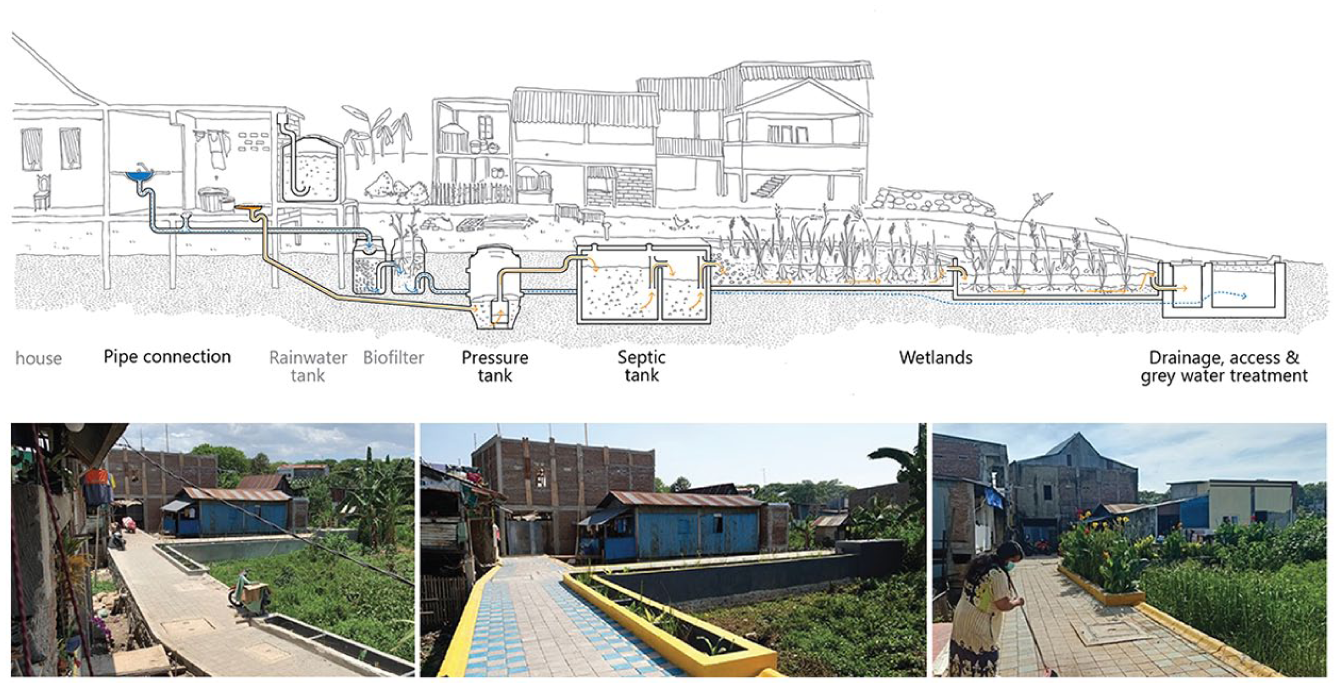
The ‘treatment train’, the RISE engineering concept translated into design plans for six kampungs
The treatment train components include rainwater tanks, toilets, pipes, a pressure tank, a septic tank, constructed wetlands, biofilters, trench drains and swales. The electrically powered pressure tank, serving four to seven households (up to 35 people), plays a crucial role by collecting black water from toilets and pumping it to the septic tank. Gravity then enables wastewater to flow through the filtering layers of gravel, sand and roots. Each pressure tank thus has significant implications for the design, accessibility and community dynamics related to the intervention.
The RISE programme presents a unique case study for examining knowledge co-production in the implementation of NbS in kampungs, due to four notable features: (1) it involves the design and implementation of a highly complex engineering (technical) intervention within the challenging physical and social context of urban informal settlements; (2) it draws on more than 10 years of research from the Cooperative Research Centre for Water Sensitive Cities in Melbourne, and represents a relatively explicit instance of technology and knowledge ‘transfer’ from the global North, that went through crucial adaptation and co-development in the design phase of the project; (3) it is an in situ ecological urban intervention working with the existing social and spatial structures, which distinguishes it from many other upgrading projects requiring resettlement and demolitions; (4) it includes a high degree of transdisciplinarity, involving collaboration between engineers, designers, social scientists, public health experts and communities.
b. The Build Teams and the Panrita process
The RISE programme involves scientists and built environment professionals in Melbourne, Makassar and Suva. Each location had independent ‘Build Teams’ for intervention design and construction and ‘Assessment Teams’ for data collection and analysis.(43) All teams convened in ‘Integrators’ meetings’ for transdisciplinary exchanges. This paper focuses on the collaboration between the Makassar and Melbourne Build Teams. The Makassar team comprised seven long-term residents (five architects and two civil engineers) who were responsible for participatory design, permits, land arrangements and implementation oversight. The Melbourne Build Team had eight members: a civil engineer, two landscape architects, a participatory designer, two NbS experts and two informal settlement experts. This team developed the ‘treatment train’ in scenario workshops, and later co-developed infrastructure plans with the Makassar team.
The participatory design process was termed Panrita, an acronym for ‘PerencanaAN RI kampungTA’, meaning ‘planning in your kampung’. This framework, co-created by designers from both Build Teams, was tailored to the RISE treatment train, the limitations of the scientific methodology used by the assessment team and local design practices, and it involved a series of workshops to facilitate community input in the RISE design phase. The intensive phase, including group workshops, posters, 3D models, theatrical performances, prototyping sessions and household visits, lasted seven to 16 days per settlement, and was supplemented by follow-up visits to households and city departments. The entire Panrita process across six kampungs spanned seven months, resulting in infrastructure plans (‘Panrita plans’) and community plans, involving 1,284 residents from 268 households.(44)
The term panrita, aside from being an acronym, holds cultural significance in Indonesian village communities, referring to a ‘person that sees’.(45) Originating from Sanskrit in the seventeenth century, a panrita is a knowledgeable, respected figure with technical expertise, who listens to diverse perspectives and envisions solutions. From the outset, its symbolic meaning served as a crucial reference for the Makassar team’s socio-technical approach: “Sometimes you name something, but the meaning will follow. And now, I feel the meaning follows us. The Panrita is – our Panrita is – not the person. [It] is not us, but it’s like . . . how the knowledge is transferred to the community. Yeah. It’s not a person, but, yeah . . . There are no experts here, but we should transfer all of the knowledge to all of [the] people so people will be the Panrita, all.” (quote from the interview with the Makassar Build Team, 1 November 2019)
c. Six diverse kampungs facing water challenges
Figure 1 illustrates the treatment train components that were translated into spatial design plans for each kampung. These kampungs vary in size, density, sociocultural composition and location within the catchment. Kampung 1 is in the city’s coastal zone; kampungs 2 and 3 are in the north of the city, along the toll road to the airport; kampung 4 is in a flat, inland, low-lying area; and kampungs 5 and 6 lie along the rivers. They face similar challenges including inadequate drainage, both pluvial and fluvial flooding, water scarcity and sanitation issues (overflowing septic tanks, blocked toilets, open defecation). The smallest kampung has 82 residents and the largest 336. The water challenges are strongly connected with challenges of land speculation and intimidation, power dynamics between resident groups, and uncoordinated infrastructure improvement programmes. The implementation approach to designing was on the scale of household ‘clusters’ (4–7 neighbouring households). A comparison of the kampung characteristics and their relation to watershed and city scale is beyond the scope of this paper.(46)
d. Methods
To analyse knowledge interfaces in the socio-technical design of decentralized water infrastructure, we employed a mixed-methods approach based on outputs from the Panrita process across the six kampungs.(47) This approach aligns with interdisciplinary studies using socio-technical approaches to cities.(48)
Our analysis drew upon three distinct datasets. First, we conducted a document analysis of the final Panrita plans and community maps. This focused on identifying patterns, recurring themes and areas of convergence or divergence between the initial technical design proposals from the Melbourne team at the start of the project, and the final plans that resulted from the participatory process with communities and city stakeholders. These documents provided detailed representations of proposed infrastructure, community feedback and negotiated outcomes.
Second, we performed a thematic analysis of fieldwork notes, sketches and debriefing session transcripts from the Melbourne–Makassar team’s experiences during the Panrita workshops. This qualitative data, inductively coded in NVivo using descriptive and affective methods, illuminated frequent trade-offs, challenges and strategies in designing NbS systems.(49)
Finally, we conducted in-depth, semi-structured interviews with seven residents across kampungs, within their home contexts and daily routines. This allowed for a deeper understanding of their lived experiences with water and sanitation practices, and the triangulation of these values with those raised in design debrief sessions and proposed drawings and plans.
IV. Findings: Integrating NbS in Urban Kampungs
Six key categories of factors shaped the decentralized water infrastructure design in kampungs (Figure 2): those that enabled (stimulating) and those that constrained (limiting) the integration of new infrastructure. Stimulating factors motivated residents to adopt the system, while limiting factors presented challenges. Some factors were both stimulating and limiting, depending on the context. We describe each category and discuss how the Panrita approach and the Makassar–Melbourne team’s practices facilitated this socio-technical NbS design.
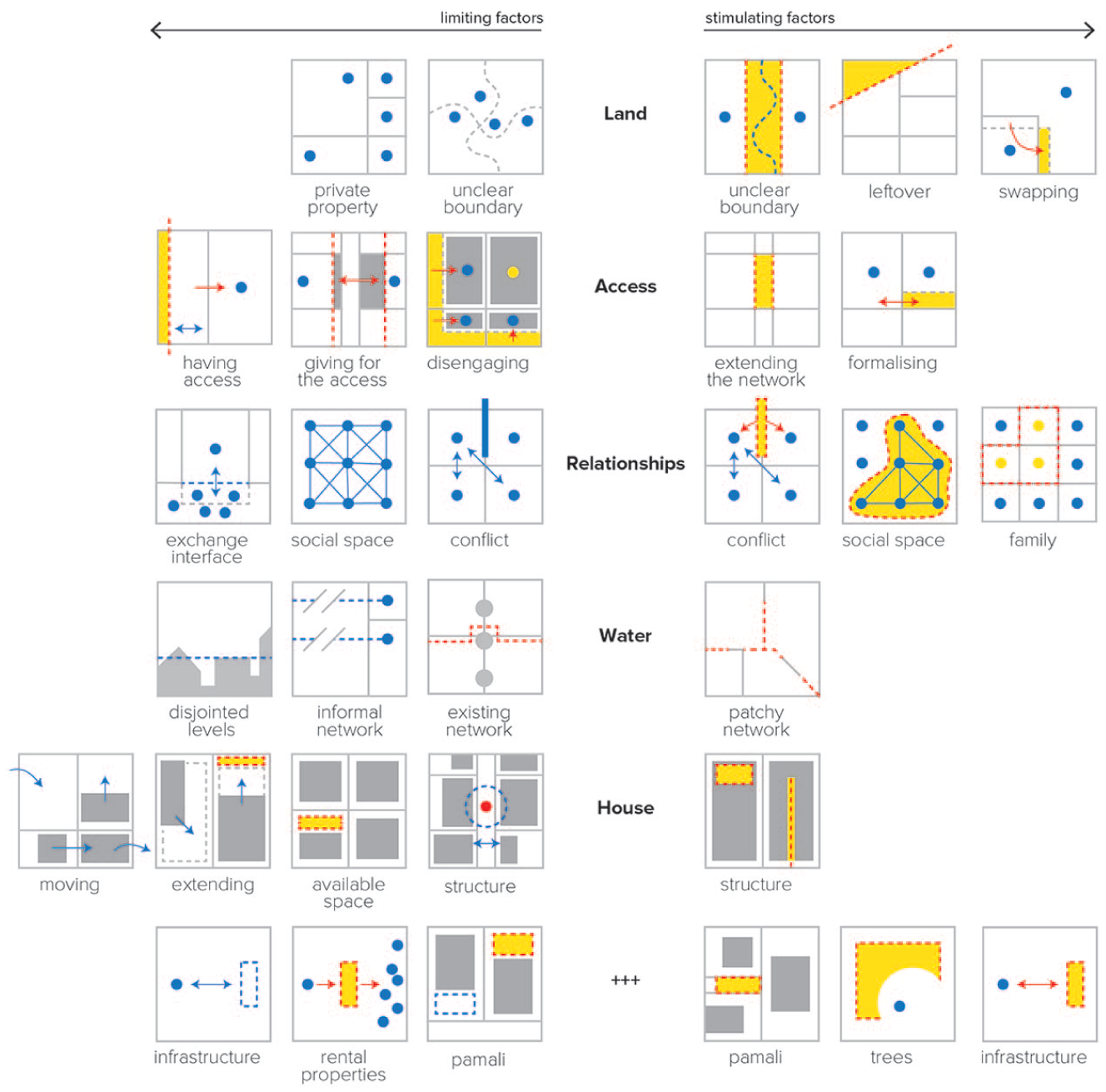
Overview of the most influential factors for the infrastructure design in kampungs
a. Land
Land ownership was the most significant factor influencing intervention design. In kampungs, land is predominantly privately owned, except for main access ways, which are typically government owned. Most land ownership arrangements follow the informal rincik certificates dating back to pre-1960, which can be checked in the Kelurahan (local authority – ward). A rincik is a large parcel of land owned by one family, informally divided and inherited from generation to generation.
Four primary land-related factors shaped the design of infrastructure during Panrita. First, the uneven distribution of unoccupied land presented both a significant challenge and a potential opportunity. Residents with larger land plots were reluctant to sacrifice space for communal wetlands. Honest discussions with landowners were essential. In the ideal scenario, each household would donate a small land portion to fulfil the required amount of space for the infrastructure. This process was often led by the eldest member of the extended family, who was usually the rincik holder and could decide which part of the land could be used for communal purposes.
Second, unclear property boundaries presented both obstacles and opportunities. Uncertain or disputed ownership meant residents could not agree on the position of infrastructure elements. However, the potential wetlands were also seen as a way to resolve long-standing conflicts by formally demarcating property lines. For example, resident Bu Ria strategically proposed the wetland position and shape to formally demarcate a rigid boundary between her property and that of Bu Acce, who was known for causing land disputes. To arrive at this moment in the design process, it was critical for Bu Ria to gain an understanding of what wetlands could look like, their spatial requirements, and function. After engaging in prototyping sessions and observing how Makassar team members negotiated the space for wetlands, Bu Ria shared her worries about Bu Acce’s constant encroachment, trusting the team to mediate (Figure 3.1).
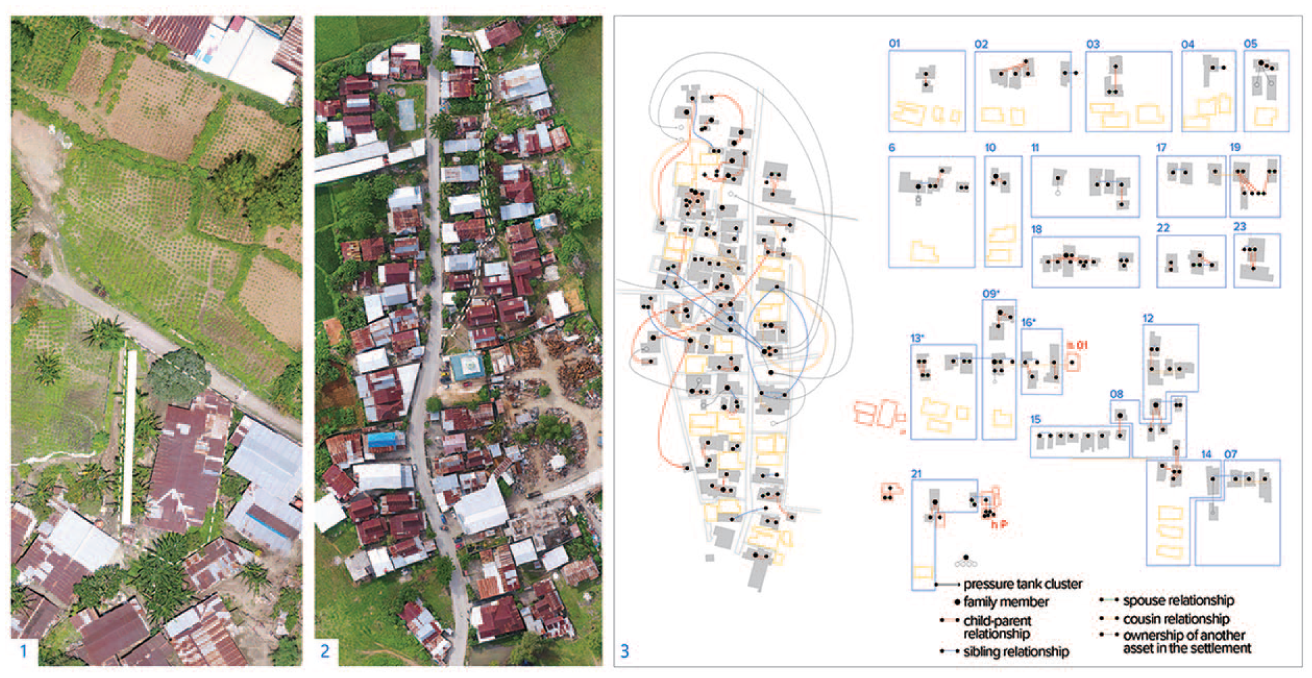
Key factors shaping the NbS in kampungs: (1) a wetland can establish and secure an unclear property boundary; (2) unfair access development with long-term consequences – dashed line marks the narrow, inaccessible road, a result of the forced land donation for the main road; (3) family ties in kampungs were the main factor for deciding which houses will connect to the same wastewater treatment system
Third, ‘leftover’ land from informal divisions, historical land laws or uncoordinated planning provided valuable opportunities for locating communal infrastructure, such as wetlands, biofilters, pipes and drains. These decisions required technical knowledge and future thinking about maintenance access.
Lastly, ‘land swapping’ emerged as a strategy; residents were willing to exchange small parcels of land with their neighbours to facilitate the infrastructure implementation or to resolve existing land issues.
To navigate these complex land dynamics, the Makassar team managed to foster deep trust within the community, particularly among different family and social groups (renters vs owners, newcomers vs long-term residents, etc.). A thorough understanding of land tenure systems and local customs was essential. Land discussions often occurred intimately, in household prototyping sessions, as curhat.(50) Acknowledging the kampung hierarchy, prototyping sessions started in the households of respected elders or tokoh-tokoh, whose decisions influenced other residents.
To design NbS plans from the technical side, the Melbourne team needed physical and drone surveys, and data on the number of people and houses in each kampung. This information was complemented with hand sketches of the informal (infra)structures that the Makassar team drew during Panrita.
To facilitate the socio-technical design discussions, the technical components of the treatment train were actively included in discussions with residents through: (1) posters illustrating each element’s function and maintenance; (2) theatrical performances in which residents embodied these elements, exploring their properties; (3) a 3D kampung model to demonstrate system connections within the community; and (4) prototyping elements in full scale to illustrate their physical properties in the context of existing structures. Understanding the technical properties of NbS enabled residents to engage in discussions about land readjustment, leading to the formalization of property boundaries, resolution of disputes and improved functionality of their living spaces.
b. Access
Access within kampungs involves a complex interplay of formal and informal arrangements. Beyond government-owned main roads, movement occurs through narrow, informally shared lorongs. Lorongs are governed by dynamic, unwritten agreements influenced by social ties, property ownership and historical usage, with landowners often restricting access based on personal conflicts or future development plans. This informal system of access rights plays a crucial role in shaping social and power relations within the kampung. Understanding these intricate regulations was essential, as lorongs frequently represent the only available spaces for infrastructure.
In the Panrita process, several access factors shaped infrastructure design. The notion of expanding the access network was well received. Residents often supported green infrastructure (like wetlands or biofilter drains) along informal lorongs if it simultaneously formalized them with permeable paving, establishing a permanent agreement with neighbours.
However, minimal access width for different road users was prioritized over the installation of NbS. Historical injustices also played a role. In one settlement, a controversial main road built by local government with forced land donations caused lasting resentment, hindering the current intervention. Residents had not been consulted about its position or width. This had negative consequences for the properties in the row behind – houses at the front did not want to donate one more metre for the road at the back because their land had already been taken (Figure 3.2). As a result, the back properties were left with a one-metre-wide road, too narrow for the waste truck, pa’gandeng. Concerns like this demonstrate the consequences of neglecting a socio-technical design approach. Past injustices shape current possibilities.
Finally, residents refusing to share land for communal access were excluded (by the community) from connecting to the green infrastructure for wastewater treatment.
The Panrita process revealed the important role that access provision plays in kampung micro-politics. The Makassar team needed a deep understanding of historical access networks and intricate neighbour relationships. While the intervention aimed to improve access, it also inevitably made it more permanent, requiring careful consideration of existing arrangements to avoid future conflicts and ensure the longevity of the infrastructure. From a technical perspective, the access was critical for future operation and maintenance.
Given the micro-political tensions between residents, access issues were not discussed in group workshops but instead resolved through a sensitive participatory process. Multiple perspectives were first unveiled in intimate conversations, and solutions were collaboratively identified through prototyping sessions in groups of five to seven households. The team fostered the resulting trust by caring: incorporating community prayer led by tokoh-tokoh and group dancing (senam bersama) into design sessions, unifying intentions and distinguishing the project from unjust historical developments.
c. Social relationships
Social relationships were the third key influencing factor. Households connected to the same pressure tank (black water pump) were related by kinship ties, which facilitated resource sharing, mutual support and collective decision-making. However, this also meant that unrelated households, such as renters or newcomers, could be excluded. Conflicts (personal and land-related) directly influenced the placement of pipes, toilets, pressure tanks and wetlands. People involved in conflict refused to have their human waste combined in the same wetland.(51) Additionally, unoccupied spaces with vital potential, such as those for businesses along front property boundaries, could not be used for NbS. Finally, creating communal spaces around infrastructure elements was a strong incentive for design.
The Panrita process highlighted the strong spatial manifestations of social relationships, whether related to conflicts, friendships, family or business. This directly influenced the acceptance or rejection of NbS. The Makassar team meticulously mapped family trees and settlement histories. Figure 3.3 illustrates the connection between a family tree (left) and the pressure tank clusters arrangement (right) in one kampung. This was crucial to ensure the use of the system, as families would not use new toilets if the design led to unacceptable wastewater mixing. Effective green infrastructure design required mapping complex social structures, alongside a physical feature survey of these irregular spaces. In group sessions, the Makassar–Melbourne team used a 3D kampung model with symbols representing social and physical aspects (such as wells, toilets, community spaces) and proposed NbS elements to initiate socio-technical conversations. Malu, or the fear of losing face, would often cause residents to withhold direct feedback in these sessions.(52) However, in prototyping sessions, these discussions would continue – moving or spray painting NbS elements on the ground was a strategy for getting design feedback that, by way of testing several options on the ground and in real space but not asking for direct feedback on one specific option, would not be influenced by malu.
d. Water management
Kampung water networks (drains, septic tanks, toilet and water pipes) are typically irregular and disjointed, built incrementally without considering overall catchment dynamics. This significantly influenced NbS design at the settlement level in three ways.
First, existing infrastructure both stimulated and limited design possibilities, sometimes allowing space for future infrastructure, but sometimes interfering with proposed layouts. By exploring interlinked issues with residents, the Makassar–Melbourne team could design better drainage on the settlement scale. For instance, in one settlement, long-standing conflict over greywater overflow from higher-level houses into lower ones required both the team’s technical knowledge and its conflict mediation skills.
Second, the topography of the site, together with the lack of coordination between retrofitted infrastructure elements, resulted in a lack of coherence between vertical levels, hindering water flow. Stormwater drains along main roads, for example, were often higher than low-lying settlements. This challenge was critical at the household scale, impacting toilet flushing and greywater drainage. Stilt houses where water needed to be carried upstairs were a particular problem. In this context, the team identified the everyday needs of vulnerable groups (children, older people, persons with disabilities), incorporated them into the designs, and forwarded concerns to government programmes for further assistance, if needed.
Third, the informal water supply network, with pipes buried under roads or crossing private land, proved difficult to protect and integrate into new plans. This highlighted the vulnerability of informal systems and the need for careful consideration of existing elements during interventions.
Integrating NbS with this complex, often hidden hybrid infrastructure was challenging. The Makassar team relied on resident knowledge for the precise locations of formal and informal infrastructure, uncovering gaps related to illegal arrangements or dependencies on other networks. The Melbourne team relied on physical surveys, but kampung water systems could change rapidly.
A technical approach to design was mainly concerned with the misalignment between optimal NbS design and existing roads and structures. The socio-technical approach revealed the fact that the intervention would also interfere with the existing (illegal) water supply. To reach an understanding that incorporated social and technical concerns, the Melbourne–Makassar team combined knowledges – using surveys, a 3D kampung model, theatrical performances and prototyping. These tools demonstrated NbS function at catchment scale, illustrated the importance of water levels, and showcased the size limitations of proposed NbS, allowing the team to draft system plans at the intersection of these diverse knowledges. An NbS validation workshop also engaged city stakeholders to discuss NbS requirements within the context of the broader water network.
e. House layout
Kampungs are dynamic environments, with houses frequently being expanded, relocated or demolished to accommodate evolving needs, posing significant challenges for infrastructure planning.
One such challenge relates to toilet installation. Residents often prioritized the expansion of living space over new toilet construction, leading to unconventional toilet placements. For example, rather than sacrificing unbuilt land for a new toilet, residents would demolish parts of their existing homes to accommodate a toilet (Figure 4.1). Septic tank placement was similarly diverse – tanks were placed under verandas, under roads, or even within living spaces. This complicated the design of piping layouts, which relied on existing septic tank location and accessibility.
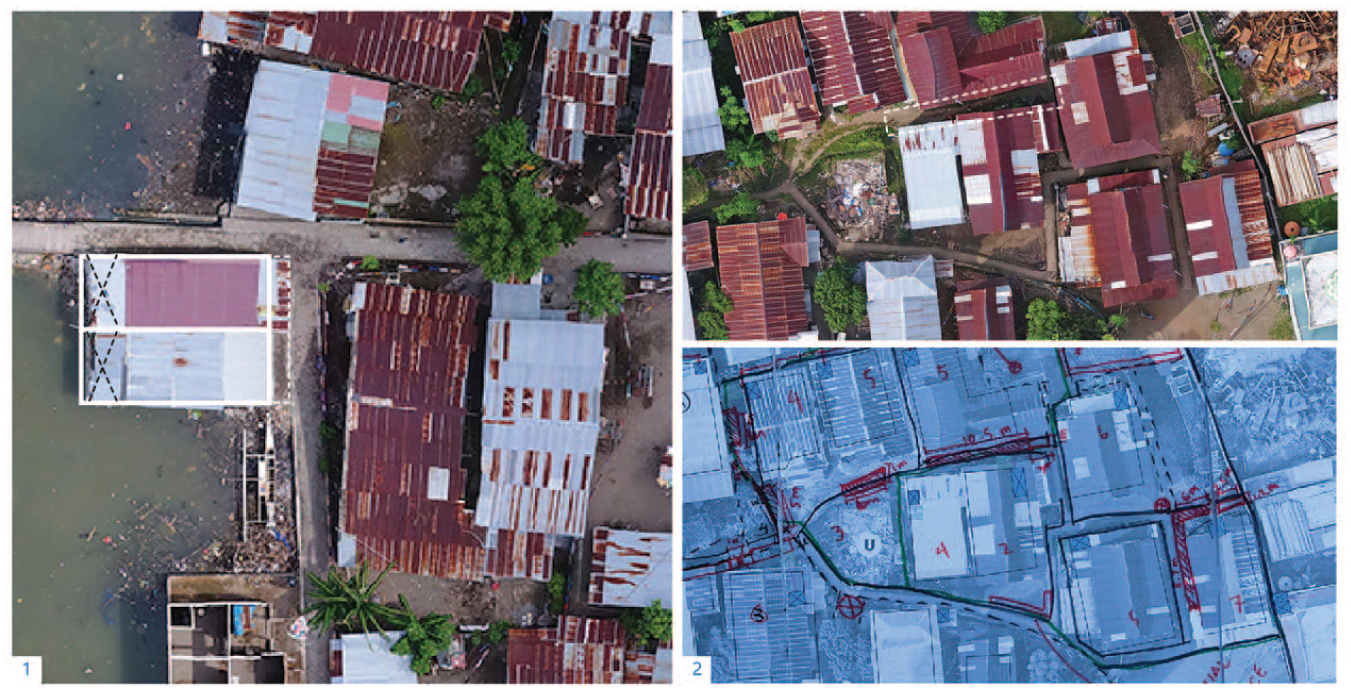
Key factors shaping the NbS in kampungs: (1) residents chose to demolish part of the house (black line) to make space for the toilet; (2) wetland can neutralize a pamali road and raise the property value (top: marked road perpendicular to a house; bottom: sketch for a wetland)
Connecting households to the sewer system often relied on offering additional benefits, like floor or wall renovations. This required the sensitive management of resident expectations and consistently applied project principles. Understanding the necessary minimal level of renovation in kampungs, where each house is unique, was both a social and a technical challenge.
The Makassar team had to grasp residents’ future aspirations and to perceive benefits and barriers at the household scale. This demanded imaginative design thinking and communication – not only explaining pipe fall, but illustrating how the pipe might entail new tiling for the living room floor, or the resurfacing of the veranda. Without the Makassar team’s capacity to illustrate how hidden infrastructure upgrades could enhance living conditions, few residents would agree to property modifications to allow NbS connections.
f. Other factors
Less frequent, yet equally important, factors included local beliefs (pamali), infrastructure properties, rental structures and the presence of trees.
Pamali significantly influenced design in kampungs. These beliefs, expressed through language, behaviour and the built environment, could both hinder and facilitate designs. For instance, pamali prevented toilet placement where the front facade was the only available option. Having a toilet there was seen as “having dirt on your face”. Conversely, wetland designs could ‘fix’ other pamali concerns. It is believed, for instance, that ghosts can enter the house if a road finishes perpendicular to its wall. Similarly, some residents believed that the placement of a house perpendicular to a road created bad luck and disharmony. In Feng Shui(53) this is known as tusuk sate or ‘skewer’ house.(54) Positioning wetlands at the end of such dead-end roads neutralized this risk. Numerous such beliefs are present in Indonesian settlements, the result of an acculturation process that blends and recombines many of the country’s diverse beliefs and traditions (Figure 4.2).
The acceptance of new infrastructure was also significantly influenced by its technical feasibility, particularly as residents were concerned with electricity costs and potential odour. Past infrastructure experiences were crucial; positive experiences fostered receptiveness, while negative ones bred suspicion. Anxieties about communal septic tank management and waste handling further limited design options. Ethical concerns arose regarding rental properties, where improvements could lead to increased rents. Other arrangements, like ‘land guardianship’, where tenant families resided on land to protect it from encroachment, often limited design choices as these families lacked decision-making authority and landlords were difficult to contact. Finally, the strong value placed on existing natural features, especially trees, significantly constrained design choices for elements like wetlands.
The variety of discussions with residents is reflected in the variety of the identified influencing factors. Joint understanding was enabled by multiple and diverse knowledge transfers. Knowledge co-creation occurred both spontaneously and in structured participatory workshops, merging everyday life in kampungs with the Panrita process. For instance, design workshops were coordinated with daily prayer times: Zuhr, Asr, Maghrib, Isha’a (and Jumu’ah on Fridays). The Makassar team actively participated in community life – attending prayers, funerals, weddings and sharing meals – expressing friendship and interest in residents’ lives.
V. Discussion
a. Implementing NbS in kampungs: barriers and opportunities
The factors influencing NbS implementation in kampungs are diverse. Some barriers or limiting factors align with the existing literature, which has discussed dimensions such as limited space, competing land uses, financial constraints, fear of hidden costs, negative perception of technologies and poor understanding of governance.(55) Our research has highlighted additional barriers, including unclear property boundaries, a lack of public spaces, land and social conflicts, informal access arrangements, competing access uses, informal water networks, undocumented infrastructure, disjointed infrastructural levels, frequent changes in house layouts, negative experiences with past infrastructure development, spatially reflected local beliefs (pamali), maintenance anxieties, ethical concerns over rental property upgrades and difficulties contacting absent landlords.
Factors stimulating and supporting NbS design were found to include the clarification of land boundaries, utilization of ‘leftover’ land, the swapping of land to optimize spatial organization, extension and formalization of access networks, mitigation of social conflicts, creation of small public spaces, strong family networks, connection of patchy water networks, ‘micro renovations’ to homes, spatial leveraging of pamali, protection of natural assets and positive past development experiences.
Notably, the RISE programme’s primary aims – reducing environmental contamination, enhancing public health and increasing climate resilience(56) – did not explicitly motivate residents to implement NbS. Instead, NbS mattered for its potential to engage with existing life and future changes, echoing Southern urbanist perspectives, aligned with Huq and Smith.(57) This underscores the need for co-framing projects with diverse stakeholders and allowing NbS framings to emerge through participatory design, rather than being predetermined through technical-only requirements and impact targets. NbS framings in Panrita emerged through participatory design, in relation to what was relevant in specific contexts and situations. ‘Experts’ did not go to the settlements with the idea of ‘solving the land issues’ with piping; rather, the Makassar–Melbourne team and residents discovered the appropriate NbS design together. This finding has significant implications for understanding participatory failures in international development, where inflexibility can lead to ‘fake participation’. Instead, following Vasudevan and Novoa, urban practice from the south means embracing multiplicity and situated knowledges.(58)
b. Knowledge translation for a socio-technical approach
The findings demonstrate the co-creation of diverse knowledges and skills among the Melbourne and Makassar teams, residents and city stakeholders. We interpret these intricate exchanges through Frediani, Cociña and Acuto’s model of knowledge interfaces, which identifies actors, typologies, tactics and instruments as key dimensions in knowledge translation processes (Figure 5).(59) This framework, rooted in Southern planning perspectives, is particularly suitable for understanding how otherwise marginal knowledges are articulated in urban practice.
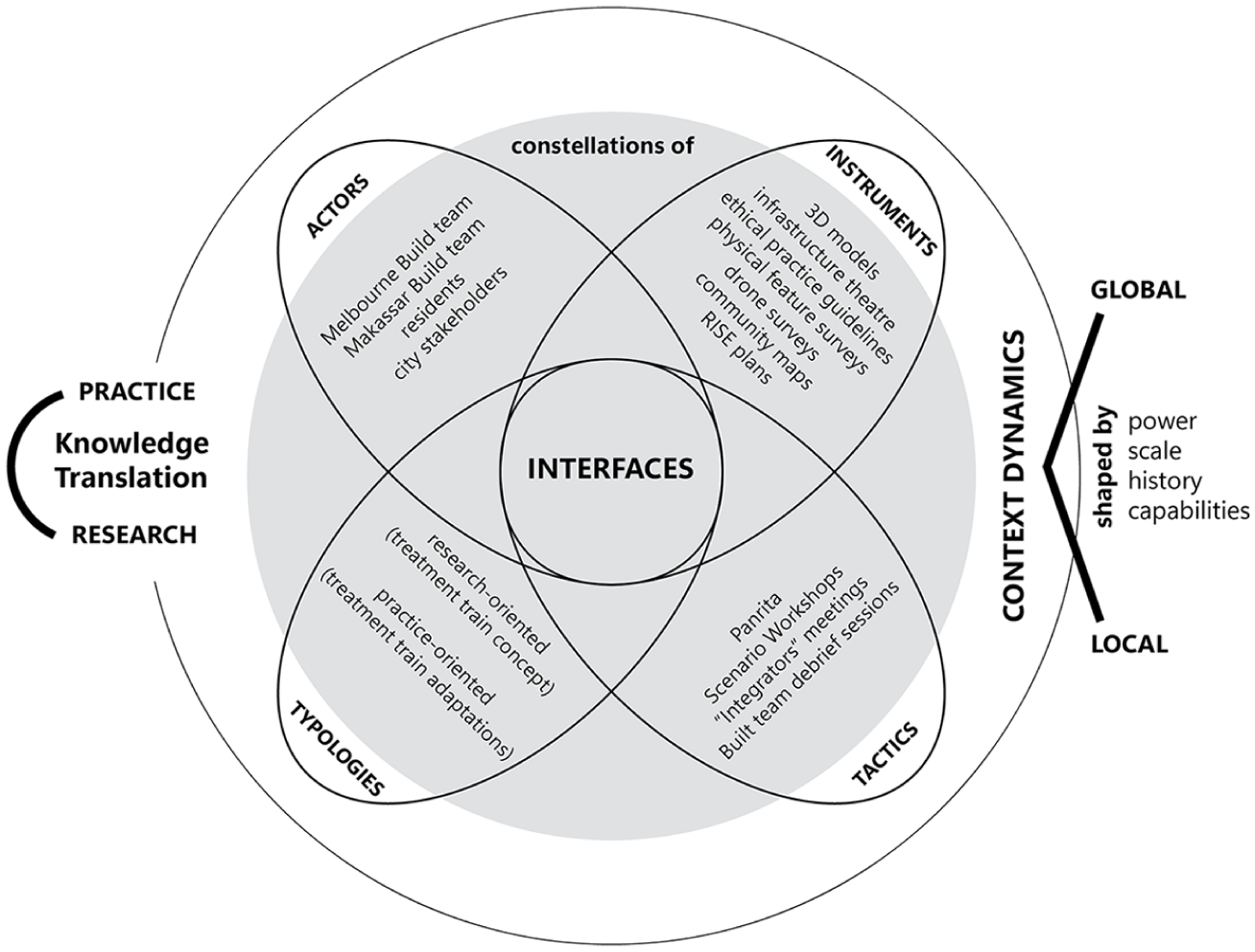
Some of the dimensions of knowledge interfaces in the design phase of the RISE programme
Within the typologies dimension, two main approaches guided the design. The Melbourne team primarily advanced a research-oriented typology, reflected in the treatment train concept and research-informed hybrid technology. This technical knowledge prioritized effective and sustainable green, blue and grey infrastructures for water management, aligning with traditional global North expertise. This was critically complemented by a practice-oriented typology, through Panrita, in which the treatment train was iteratively adapted to local spatial regulations, residents’ everyday needs and aspirations, and the ever-changing morphology of kampungs. This integration of local realities into technical design highlights the essential social component, which resonates with calls to move beyond purely technical solutions in informal settlements.(60)
The heterogeneity of the actors, including the Melbourne and Makassar teams, diverse residents (women, children, tenants, landowners, tokoh-tokoh) and city stakeholders, often entailed conflicting values. For example, the tension between piping efficiency and social groupings (Figure 3.3) challenged the design process. This interplay of diverse knowledge holders speaks directly to the literature on power imbalances and epistemic injustice in north–south collaborations.(61) A consideration of diverse knowledges was achieved by considering typologies, tactics and instruments that would enable these perspectives to be heard.
The tactics and instruments employed were fundamentally socio-technical. Panrita itself served as a deliberate strategy to facilitate knowledge exchanges between experts and residents. Technical scenario workshops and integrators’ meetings provided structured forums for scientific and design knowledge exchange, leading to the definition of the treatment train. Critically, a range of instruments enabled diverse knowledge interactions and mediated tensions within the kampungs. These included physical and drone surveys, a 3D kampung model, theatrical performances and full-scale prototyping. Beyond ‘structured’ instruments, the Makassar team’s ability to attune to local ways of communicating and caring – such as intimate curhat moments, acknowledging tokoh-tokoh hierarchy, participating in community prayers and senam bersama, and sharing meals – was paramount. These culturally sensitive tactics were critical to the socio-technical participatory processes. They correspond directly to ‘decolonizing by design’, whereby alternative epistemologies and ontologies emerge through collaboration.(62)
The translation of the treatment train from a rigid technical sequence (Figure 1) into a dynamic socio-technical interface (as evidenced by Figure 2’s influencing factors) powerfully reflects Frediani, Cociña and Acuto’s concept of knowledge translation as a non-linear, multi-directional process of encounter. The Panrita plans, detailing the final NbS designs, did not stem from a single expert vision but emerged from the constellation of these diverse knowledges. This process expanded the space for manoeuvre within the functional design, leading to meaningful options that satisfied diverse intervention framings. Importantly, participant input extended beyond obvious questions (such as the position of the NbS elements, or a desirable use of space). Detailed understanding of the system’s technical properties, facilitated by the team’s collaborative approach, empowered communities to exercise agency(63) and foster “other possible ways of being”.(64) This aligns with Beard’s concept of ‘covert planning’ and the broader pluriversal planning scholarship outlined by Vasudevan and Novoa.(65)
Ultimately, our findings underscore the vital importance of understanding and enabling diverse knowledge transfers in participatory design processes. The Panrita process was a combination of north and south methods, because they had to answer to different sets of actors, who transfer knowledge in different ways, and see the world and design differently. This requires the participatory process itself to be designed through collaboration and highlights the value of an ethnographic approach for observing, understanding and iteratively adjusting methods to truly integrate context-sensitive knowledge, thereby facilitating just and sustainable urban development.
VI. Conclusions
This research examined the socio-technical complexities of implementing NbS for decentralized water infrastructure in Indonesian kampungs. By analysing the RISE programme’s collaborative design, we explored how grounded spatial practices integrate social and technical factors to shape NbS interventions.
Our findings reveal key factors – land, access, social relationships, water management, house layout – that profoundly influenced NbS design. NbS success stemmed not merely from technical aims, but from its ability to integrate with residents’ everyday lives and future aspirations, aligning with Southern urbanist perspectives. We highlight a wide range of social and technical aspects that stimulated or limited NbS design in kampungs.
The Panrita process was essential in mediating these factors and fostering knowledge co-creation. Using Frediani, Cociña and Acuto’s knowledge interfaces model,(66) our study demonstrates how diverse actors, typologies, instruments and tactics combined to produce context-specific urban solutions. This active co-production transformed the treatment train from a technical concept into a nuanced socio-technical interface, shifting from technology transfer to innovation cooperation. This was not spontaneous; it was a result of extensive planning, dedicated funding and time. Conscious attention to Southern planning approaches and decolonizing participatory design by the Makassar and Melbourne teams was essential throughout. These findings underscore the critical role of professionally grounded spatial practices in navigating technical requirements and local realities, enabling communities to shape their urban environments.
This research offers empirical insights into complex NbS planning in kampungs, deepening our understanding of how research and practice can collaboratively enable more equitable and sustainable urban development. Future research should employ longitudinal mixed-methods studies to evaluate the long-term socio-ecological impacts of NbS interventions. Furthermore, ethnographic studies combined with remote sensing could investigate how NbS designs adapted or were altered during the construction and operation phases. Finally, future work should explore the mechanisms and effectiveness of knowledge dissemination and translation from co-produced projects like RISE, using social network analysis to trace the uptake and adaptation of NbS principles within neighbouring settlements and households.
Footnotes
Acknowledgements
This study was completed as part of the Revitalising Informal Settlements and their Environments (RISE) program (https://www.rise-program.org/) on behalf of the RISE Consortium ( ). It would not be possible without the interdisciplinary, collaborative effort that each and all of us brought together. A special thank you to the remaining members of the Makassar Build Team: Noor Ilhamsyah, Nur Intan Putri and Adrianto Hidayat. Additional thanks to the core engineering team members from Monash University: Dr Peter Breen, Kerrie Burge, Anna Leersnyder, Amalie Wright and Dr Michaela Prescott. Finally, nothing would be possible without all those who agreed to share their experiences and imagination with us. We would like to acknowledge all residents of kampungs in Makassar who gave their time and insights for this study.
Funding
This research was funded by the Monash Art, Design, Architecture (MADA) Scholarship and the Monash University Graduate Research Completion Award. Liza Marzaman and Ihsan Latief, as well as the entire Build Team and the intervention in Makassar, are funded through the RISE programme. The RISE program is funded by the Wellcome Trust [grant 205222/Z/16/Z], Australian Department of Foreign Affairs and Trade, New Zealand Ministry of Foreign Affairs and Trade, Government of Fiji, National Health and Medical Research Council [grant 1183686], Asian Development Bank and Monash University. It involves partnerships and in-kind contributions from the City of Makassar, Water Sensitive Cities Australia, Fiji National University, Hasanuddin University, Stanford University, Emory University, University of Melbourne, South East Water, Melbourne Water, Water Authority of Fiji and UN-Habitat.
Ethical Approval and Informed Consent Statements
Ethics review and approval was provided by participating universities and local institutional review boards, including: (1) Monash University Human Research Ethics Committee (Melbourne, Australia; project ID 35903) effective as of 2 November 2022; (2) Monash University Human Research Ethics Committee (Melbourne, Australia; project ID 9396) - SUPERCEDED (has been closed but is linked to new ID); (3) Ministry of Research, Technology and Higher Education Ethics Committee of Medical Research at the Faculty of Medicine, Universitas Hasanuddin (Makassar, Indonesia; protocol UH18020110). All data were collected with informed consent from all participants. All data in the study are pseudonymized, including participant and kampung names.
2.
For example, see the recent review (Castaldo et al. 2025) and the UN Habitat guideline that introduces NbS as cost-effective and efficient ways to improve the adaptive capacity of vulnerable communities in the global South ().
3.
6.
We use the term ‘socio-technical’ to describe the entanglement of humans and technologies. Originating from two distinct fields, urban history (e.g. Tarr 2008) and Science & Technology Studies (e.g. Latour 2008), it argues that technological development is a process shaped by not only scientists, engineers and policymakers, but also politicians, activists, artists, users and residents (Guy and Karvonen 2011). In spatial disciplines, the concept expands the view of technology beyond the artefacts produced, and includes “the knowledge required to construct and use these artefacts, as well as the practices that engage them” (Guy 2010, page 228). Broadly guided by this theoretical framework, we adopt the socio-technical perspective on designing decentralized water systems in informal settlements. The socio-technical framing of urban water sustainability is the relationship between technology, culture, institutions, people and infrastructure, where these elements mutually influence and depend on each other (Bell 2020; ).
11.
Bauer (2022); .
13.
Bauer (2022); for prevalence of NbS case studies in the global North see .
14.
For example, residents that are part of these agriculture groups have better reputations than those who are not. Arrested residents who that are confirmed to be members of these groups may receive get a better treatment in custody, or be released faster if they are part of police profiling. For evictions, sometimes agricultural practices in certain areas are left as they are, as they also provide food and finances. Therefore, residents do not lose their livelihoods. Sometimes residents even plant specific species that are favoured by authorities, so they can plant vegetables in between them, to sustain their food and economic sources.
16.
20.
21.
22.
ICLEI (2022); .
26.
29.
37.
Frediani, Cociña and Acuto (2019), page 8.
38.
42.
‘IoT’ refers to the Internet of Things, whereby computing devices are embedded in everyday objects and interconnected via the internet.
44.
46.
48.
They are characterized by applying qualitative methods in a case study that allows for the research of specific, context-dependent interactions between social and technical factors. They often involve direct research of participatory experiences of ‘embedding’ particular technology in its material and cultural surroundings, and the way its final shape emerges through design, dialogue and negotiations (, page 125).
50.
Curhat, an abbreviation of curahan hati, translates to English as a flood of one’s feelings, ‘outpouring heart’, speaking what the heart really feels. It is part of confiding in someone trustworthy.
51.
Cultural beliefs are complex in Indonesia, including those about human waste and wastewater. For example, women often wash babies’ nappies or menstrual pads before disposing of them, to avoid being cursed through black (voodoo) magic. Similarly, mixing human waste with an untrustworthy neighbour is avoided.
52.
Malu is a type of shame, ‘losing face’, a social norm that plays an important role in the culture of hierarchy and the construction of gender differences in many Asian societies, including Indonesia (Fuller Collins and Bahar 2000; ).
53.
Feng Shui is an ancient Chinese knowledge system that determines where buildings or graves are best placed in relation to nature and the environment. It had strong influence in Indonesia and is frequently practised there.