



Abstract
This paper investigates the multiple ways in which the lives of urban refugees are impacted by the presence of refugee camps. It builds on a growing body of literature on the urban refugee experience that recognizes the agency exercised in the rejection of the camp. But it also demonstrates how, in countries with an encampment policy, the presence of camps can limit urban refugees’ mobility and their ability to take advantage of all that urban life has to offer. It also highlights the consequences of the choice refugees must make between receiving humanitarian aid in a camp and living unassisted in an urban area. The paper draws on qualitative interviews with refugees in Ethiopia, Kenya and Jordan. It presents conclusions on the inadequacy of the international response, which fails to capitalize on the presence of displaced people in cities, to achieve the supposed policy goal of “self-reliance”.
I. Introduction
This paper explores the experiences of urban refugees living in countries with an encampment policy, drawing on qualitative interviews with refugees in urban areas and refugee camps in Jordan, Kenya and Ethiopia. It reviews the literature on urban refugees, particularly scholarship engaged with the “politics of presence”, and the right to the city as applied to experiences of urban forced displacement, as well as, more negatively, the limited mobility of urban refugees. It then examines current policy discourse related to the urbanization of displacement, arguing that the lives of urban refugees continue to be shaped by the idea and existence of camps. The relationship between the camp and the urban is then explored, with attention to (1) the rejection of the camp and the agency of urban refugees; (2) their limited mobility in the city, generated by fear of forced removal to the camp; and (3) difficulties in securing urban residence. The paper builds on and fleshes out Darling’s reference to the “shadow” of the camp in the city(1) and Brun’s “camp-logic”(2) exploring the numerous ways in which, for refugees, the “camp haunts the city”,(3) limiting movement and challenging the idea that the right to the city might be achieved. It concludes by reflecting on the inadequacy of international refugee response, which fails to capitalize on the presence of displaced people in cities, to achieve the supposed policy goal of “self-reliance”.
II. Background
a. The urbanization of displacement(4)
Over the past 10–15 years, recognition has grown of the presence of refugees in urban areas worldwide, estimated to be approximately 60 per cent of all refugees, although caution is required with such estimates.(5) Scholars and other observers have begun building a rich picture of the ways forcibly displaced people living in “protracted displacement” (taken here to mean more than five years in exile) navigate formal and informal urban systems, engage with institutions and find entry into housing and job markets. The many strands of this documentation include attention to refugees’ access to health care, housing and basic services,(6) and a gendered perspective on this,(7) livelihoods and enterprise development,(8) measurement and assessment of “self-reliance”,(9) and the role of municipal actors in supporting or constraining the urban refugee experience.(10) Much of this research has a welcome emphasis on place and space, and some has focused on time, reflecting the paradox inherent in displaced populations living for decades under asylum regimes based on the idea of a temporary stay. While some scholars have developed a narrative of passivity and limbo, others – notably Brun(11) and Brun and Fábos(12) – speak of active waiting, stressing refugees’ agency, determination to define alternative futures for themselves and practices of home-making within the city.
The presence of refugees, other forcibly displaced people and vulnerable migrants in urban centres, their shared challenges with the urban poor, and moves by networks of progressive mayors to welcome their social and economic contributions(13) have prompted new imaginings of inclusive cities. One such research direction has been to consider not what differentiates urban residents in terms of their status or citizenship, but what they have in common: their presence in the city. This perspective often draws on Lefebvre’s idea of the right to the city.(14) While it is a complex, loosely argued concept, at root the right to the city privileges the city’s use value over its exchange value – i.e. it provides opportunities for culturally rich and diverse experiences, not just capital flows and financial enrichment. Lefebvre also promotes the idea that inhabiting the city is “the key to political inclusion”, as Purcell explains. He continues, “those that inhabit the city have the right to the city”,(15) meaning they have the right to take a central role in decision-making that affects urban life and the urban fabric, and the right to enjoy all that city life has to offer. Purcell elaborates on what this might mean for non-nationals: The right to the city revolves around the production of urban space, it is those who live in the city – who contribute to the body of urban lived experience and lived space – who can legitimately claim the right to the city. [. . .] Whereas conventional enfranchisement empowers national citizens, the right to the city empowers urban inhabitants.(16)
The concept appeals to scholars and activists working in support of urban refugees, as it rejects strict notions of citizenship in favour of more flexible ideas about belonging, based on presence. A handful of articles and policy reports have attempted to apply the right to the city explicitly to urban refugees. Lyytinen’s exploration of Congolese refugees in Kampala(17) focuses on the right to live in the city (as opposed to an isolated camp or settlement), protection challenges, difficulties accessing UNHCR assistance and nascent collective organization among refugees. A policy-focused IRC report on refugees in Dar es Salaam(18) posits the right to the city as equitable access to services, education and livelihoods. In both cases the right to the city is used as a benchmark against which to demonstrate the limitations to refugees’ material and political status.
An emergent strand of scholarship in refugee studies has more in common with Purcell’s approach on claims to the city made through everyday life in urban space. These scholars counter the notion of the passive urban refugee and posit their presence and tenacity in the city as evidence of a type of everyday politics and active (although often hidden) citizenship. Empirical work on the topic includes a recent edited collection on refugees as “city-makers” in Lebanon. Here, Fawaz et al.(19) reject the “tone” of humanitarian “refugee talk” that focuses on gauging levels of deprivation against standard indicators. Moving away from a language of passivity, fear, crisis and disruption, they present refugees as “home-makers, city navigators, urban producers [and] political subjects”. Focused on Beirut, they demonstrate how the city is “being reshaped through specific urban practices initiated by individual and collective refugee experiences”.(20) Refugees, they posit, are political agents who make claims on the city, not generally through overt resistance, but through what Bayat calls a “silent encroachment”.(21) They “consolidat[e] their individual and collective presence”, by affirming the right to mobility, and “solidifying a tent or securing a network of apartments that establish a recognised presence in a specific urban neighbourhood”.(22) This chimes with Sanyal’s discussion of urban refugees in India and Palestinian camps in Lebanon. Rather than a “grand attempt at rebellion”, acts of agency are “attempts to make spaces ‘ordinary’ through the processes of squatting and building that try to reclaim ‘normal’ life and create a ‘home’”.(23) Darling argues that a more profound analysis of refugees’ engagement with the informal sector in cities will reveal “incremental and often highly tactical practices that can constitute ‘minor’ political acts”. This includes “building precarious shelters, engaging in black markets, identity stripping, voluntary employment and anti-deportation organizing and networking”.(24)
These authors ask us to see political significance in the “piecemeal activities” within the city’s informal spaces that express “a different relation to citizenship”(25) and “to see how agency is exercised through ‘descending into the ordinary’ and reclaiming liveable spaces”.(26) Some of these same authors,(27) however, also acknowledge that this tacit political act may be compromised by serious constraints on refugees’ movement, with significant consequences for their lives and livelihoods.
While there has been much work in refugee and migration studies on immobility, bordering and spaces of detention,(28) less prominent in the literature is a discussion on the ability of refugees to circulate around the city – to drive themselves or access public transport, to work, trade, shop, engage in leisure activities, take part in community life, access health care or educate themselves or their children. This capacity is touched upon in a series of papers that emerged from an ODI study in the late 2000s,(29) with case studies from a range of cities impacted by displacement. The authors note how, across multiple contexts, “irregular status leads to fear of deportation, which in turn can lead to displaced people restricting their movements and reducing their visibility”.(30) In Nairobi, even Somalis with recognized and regular status “are subject to harassment and extortion by the police, affecting their ability to work as traders”,(31) a point repeatedly made by respondents in the Out of camp or out of sight? Realigning responses to protracted displacement in an urban world (PDUW) study, more than a decade later, as discussed below.
The issue of mobility has been studied in some detail in the context of Syrian refugees in Jordan and Lebanon. Fawaz et al.(32) argue – in stark contrast to Haysom(33) – that while refugees in Beirut “do not claim their right to the city by appropriating public spaces in vocal political forms”, they nonetheless demonstrate political agency by “claiming visibility and affirming their right to mobility despite restrictive conditions”. This collection includes an essay on Syrian refugee scooter delivery drivers in Beirut, who are presented as competent “urban actors” visible across most of the city, that “affirm their visibility and hence claim their right to the city”.(34) The authors acknowledge the gendered nature of this presence – women are not employed as delivery drivers – and also the significant obstructions to mobility, including arrest and extortion, physical danger, stigmatization and harassment.
Sanyal also explores the limits on refugee freedoms in Lebanon, but comes to a different conclusion, arguing that the government’s ad hoc measures result in “criminalization and immobilization of refugees”.(35) She documents the ways Syrian refugees experience limits on their freedom through the proliferation of roadblocks, imposition of curfews on “foreigners”,(36) limits on social gatherings and bureaucratic and financial barriers to the renewal of documentation. Sanyal concludes by questioning the divide between “camps and non-camp spaces”, noting that Syrians are “faced with precarious and protracted forms of waiting in urban and rural areas that are similar to that in camps and detention centres”.(37) Brun(38) similarly shows how nation states use legality and illegality to control mobile populations. Working with refugees in Jordan and Lebanon she demonstrates how difficulties renewing expired identity documents create a climate of fear and place limits on mobility. One refugee describes his Beirut existence as being like a “bird in a cage”; another notes “you feel like you live here, but you can’t move at all”. Elsewhere, Brun argues that “young people experience the continued presence of the camp-logic in [Jordan and Lebanon] as a geopolitics of fear – a securitised approach – where states consider refugees out of place and generally a threat to security”.(39) This finding echoes Darling’s assertion that the “camp haunts the city”.(40) To understand how this haunting occurs, we turn next to consider how urban refugees figure in, or are absent from, international policy debates.
b. Urban refugees in policy and programming
Frequent reference to the “urbanization of displacement” in policy circles has yet to lead to a significant change in programming or funding flows towards refugees and internally displaced people (IDPs) living in cities.(41) Few humanitarian actors afford much attention to this population, preferring to consider urban refugees as “self-reliant”. In most cases around the world, urban refugees receive little, if any, humanitarian assistance.(42) As Leeson et al. point out, self-reliance or self-sufficiency is assumed for the majority of the world’s urban displaced.(43) Policy, programming and spending continue to focus on camps, and camps continue to be the default response to new refugee crises.(44)
Camps have been critiqued for decades. Notable is the “anti-warehousing” campaign of the 2000s, which documented the negative social, environmental and geopolitical impacts of camps, and highlighted how encampment denied refugee rights and put lives on hold for decades.(45) Prominent legal scholars have derided camps as “a breach of the most fundamental human rights, a cruel and dehumanising absurdity excused by neither political nor economic convenience”.(46) However, camps have lasting appeal. For aid agencies, they make aid distribution easier, while the aid dependency of refugees in camps make them an enduring and “visible tool” for raising funds.(47) Camps also sustain a significant in-country presence for the UN in many countries across the world. While encampment is not UNHCR’s official policy, Verdirame and Pobjoy found “some evidence that UNHCR advocated the establishment of camps in certain situations, and hardly any to show that UNHCR ever publicly objected to it”.(48)
Host governments also see camps as “a tangible demonstration that a government is actively responding to a refugee crisis”.(49) Encampment is often seen as a “political” decision presumed to be at the host government’s request because of security concerns and as a way of securing continued flows of aid. In this vein, camps play an important function in the political economy of refugee hosting. By insisting that the UN take responsibility for the “care and maintenance” of an essentially incarcerated population,(50) host governments avoid a significant financial burden. The threat of camp closure and forced return of residents can be used as a bargaining chip for more aid. Camps, however, are an enormous expense, sucking huge resources into parallel systems of service provision of almost zero benefit to the host government or population.
By contrast, very little humanitarian assistance is expended on urban refugee populations, despite their long-standing presence in towns and cities, documented since the 1970s.(51) The general perception in the latter half of the twentieth century was that urban refugees were a “problem” and disproportionately expensive to provide for.(52) These attitudes persist – according to Haysom,(53) the urban displaced are considered “an expense and a security threat” although no cost-benefit analysis comparing camps with urban hosting is in the public domain.(54) Many host governments, UN policymakers and NGO practitioners view the urban displaced as “out of place”(55) and assume that “refugees belong in camps”.(56) UNHCR’s “highly controversial” 1997 urban policy(57) focused heavily on the “problems” caused by urban refugees, and in particular “irregular movement” to towns and cities.(58) NGOs argued then that the policy sought to prevent refugees, who were considered rural people, from moving to urban centres. Today, while there are notable exceptions – like the Palestinian camps in Jordan, Lebanon and Syria, encircled by growing cities – the vast majority of camps are in remote areas. In many well-documented examples from the 1970s until the 1990s, refugees were expected to become self-sufficient small-scale farmers on previously uncultivated land.(59)
UNHCR introduced another urban policy in 2009 (with a considerable backstory, explored in depth by Crisp(60)). Muggah and Abdenur suggest that this policy “was never fully accepted and suffered from uneven implementation”,(61) and it has not been evaluated recently.(62) A legal analysis of the 2009 policy by Verdirame and Pobjoy(63) argues that while it improved on its predecessor, the “camp bias” remained in evidence. Of particular importance is the clear directive that where a camp exists, assistance will not be provided to urban refugees, as evident in the following: In countries where camps have been established, refugees who have moved to an urban area will normally receive financial assistance from UNHCR only if they have a demonstrable need to be in that location. [. . .] Refugees who are unable to survive in the city will be offered the opportunity and means of transport to take up residence in a camp if one is available to them.(64)
As well as contravening both international human rights and refugee law by denying freedom of movement,(65) this directive creates a stark divide: you are either in the camp and looked after, or out (generally in an urban area) and on your own. The division is further entrenched by the frequent requirement for refugees to register with the UN or host government either in a camp or in an urban area, with the place of registration appearing on identification documents, and potentially restricting rights to travel and to live elsewhere.
This division is also apparent in more recent international policy discussions on refugee response. For example, the Global Compact on Refugees, affirmed by UN Member States(66) focuses on increased financial support for destination countries, more third-country resettlement admissions, support for safe return and an emphasis on facilitating “self-reliance” of refugees. The steps to be taken to support self-reliance in a city will be very different to those in a camp or rural area, but the Compact and other documents (e.g. the Comprehensive Refugee Response Framework, from the New York Declaration for Refugees and Migrants)(67) are written at a level of abstraction that is almost blind to differences in locations where it might be implemented. The Compact lists the various sectors that are integral to a comprehensive refugee response but is vague on how this is to be achieved. It mentions urban areas, but always in conjunction with “rural areas”, in a catch-all reference to those outside camps. For example: “Increasingly, refugees find themselves in urban and rural areas outside of camps, and it is important to also respond to this reality.”(68)
Many organizations working on displacement have limited experience in urban centres and may not know how to “respond to this reality”. The dichotomy between camp and urban, or camp and “elsewhere” has very real implications for refugees’ ability to flourish in towns and cities. As Darling puts it: The idealized vision of the refugee camp as a temporary ‘solution’ to displacement continues to position the camp as a focus of policy, legitimation and humanitarianism, and in doing so helps to explain the production of urban refugees as ‘problematic’ by comparison.(69)
It should be noted here that in contrast to this idea of a dichotomy, there is a considerable literature on the overlaps between camp and city, pointing to regular and repeated flows of goods, people and capital between camps and nearby urban centres, as well as more distant large cities. Camps begin to resemble urban informal settlements as they become more permanent. Other practices of home-making have also been widely documented.(70) However, not all camps have porous boundaries. In both Kenya and Jordan, camps are tightly controlled, secure environments, with strict entry and exit requirements. The Ethiopian camp in this study is physically more open, but elevated levels of indigence among its population preclude most from leaving. Most refugees in this study are either in or out of the camp – few can move freely between these very different worlds.
For those who have made it to the city (or avoided the camp) the promise of freedom and opportunity are not guaranteed. This paper argues that refugees can experience camp-like control in the city, while also living in fear of forced return to the camp. As Sanyal notes: Cities and rural municipalities are not usually seen as spaces that can be prison-like, where refugees can face forms of policing that mirror that of detention centres. Yet, this can and does occur. As we see more refugees living outside camps and amongst local populations, we should in addition to considering the emergence of new forms and politics of asylum and refuge, also consider the more pernicious aspects of it.(71)
In summary, there is a clear practical and bureaucratic divide between the camp and the urban. However, as a result of related policy and programming choices, the camp lurks in the background of attitudes and practices towards urban refugees. This paper now draws on empirical material to consider how refugees view camps, and how those who are living in urban centres, on the one hand, reject the camp and make claims on the city as urban residents, but, on the other, are constrained from enjoying what urban life can offer by either a “camp-logic” of control or the spectre of the camp itself.
III. Research Study
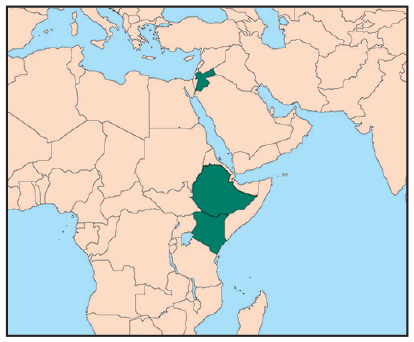
The following section draws on qualitative data produced with refugees in Jordan, Kenya and Ethiopia as part of the study entitled Out of camp or out of sight? Realigning responses to protracted displacement in an urban world (PDUW), led by the International Institute for Environment and Development (IIED) from 2020 to 2024. The study, which also covered IDPs in Afghanistan, was designed as a mixed-methods comparison of the experiences of displaced people in camps and urban areas. It focused specifically on well-being and livelihoods, and included a large survey (N = c.4,000), qualitative interviews and, during the inception phase, “concept testing” focus groups. The methods were employed with displaced men and women in one camp and one urban area in each of the four countries. The survey also included non-refugee “hosts” in the urban area, and key informant interviews with government and UN officials, NGOs and community leaders in each study site.
Approximately 50 interviews, focused on well-being, were conducted in each country, split equally between one camp and one urban area, and between men and women adult respondents. Interviewees were selected with a view to achieving a mix of ages, income and education levels, as well as family situations, and do not form a representative sample. Most interviewees had already been surveyed and had indicated their willingness to be contacted again as part of the study. The interviews aimed to triangulate and enrich the quantitative survey data by probing more deeply into understandings and experiences of well-being. In Jordan, Syrian refugees were interviewed in the Sweileh neighbourhood of Amman and Zaatari camp. In Kenya, Somali refugees were interviewed in Eastleigh, Nairobi and in Dadaab camp. In Ethiopia, Eritrean refugees were interviewed in the Gofa Mebrat Haile condominium in Addis Ababa and Aysaita camp. Interviews began with a discussion of the project aims and an explanation of how data would be anonymized. Interviews were conducted in refugees’ native language by a researcher of the same sex and lasted between 60 and 90 minutes. They were sometimes carried out in the home, or in a community centre, if respondents preferred. Interviews were recorded, transcribed and translated into English, and analysed with the help of NVivo software.
IV. Research Findings
a. Rejecting the camp – movement to cities and freedoms won
Encampment policy varies by national context, but in all three study countries, refugees have to fulfil certain requirements to live legally outside a camp. This can present insurmountable practical challenges, leading to a situation in which refugees may become trapped in the camp against their will, or live irregularly in the city, with far-reaching consequences for their livelihoods and well-being. Our research showed that in many cases, the difficulties and indignity of camp life are the motivation to move to the city, or to bypass the camp altogether. The camps covered by the research project – Dadaab in Kenya, Aysaita in Ethiopia and Zaatari in Jordan – vary in levels of security and control. Camps in Kenya are closed, and only refugees who can convince the authorities of their resources and family connections, and navigate the bureaucracy to leave, can move out of the camp on a temporary or permanent basis. Dadaab respondents spoke of their desperation to leave, describing it as a prison: We [refugees] say we are in a cell that is open in the upper part. (Displaced men’s focus group, Dadaab, 4 December 2020) Refugees believe that camps are prisons. (Displaced mixed gender focus group, Dadaab, 3 December 2020)
One woman likened it to living inside a bottle, with the air continually recycled.
Some refugees in Zaatari camp, Jordan, have been able to find work outside the camp, and can move in and out with relative freedom, as agricultural day labourers. Others who have found Jordanian “sponsors” have convinced the authorities that they can support themselves permanently outside the camp. However, their mobility depends on certain factors. Not all can invest the time and money for a movement permit, or they lack the social and financial resources to make the initial move out of the camp: . . . you have to waste two or three days just to be able to get a permit to leave. (Displaced women’s focus group, Zaatari, 6 July 2022) Excuse me, but let me say something about permits to leave the camp. You go to get a permit, but they literally close their doors in your face, tear up the permit document and yell at you. I mean the policewomen. (Displaced women’s focus group, Zaatari, 6 July 2022)
Refugees noted that, since the pandemic, obtaining permission to leave has been more difficult. The windows for the process are considerably reduced, and security staff determine the length of the permit. Many spoke of being picked up by police – and sometimes fined or detained – when trying to leave unofficially to attend medical appointments, or simply to buy goods unavailable in the camp.
Generally speaking, leaving or bypassing the camp means foregoing humanitarian assistance. Of the three study countries, only in Jordan did a significant proportion of refugees outside camps receive aid in cash or kind. Faced with limitations on freedom and on work within the camp, our urban respondents had made the choice to leave, or never to settle there. For some this was an issue of dignity and self-worth, and a refusal to be “reduced to humanitarian subjects, compelled to rely on aid”. 72
One Syrian woman, now living in Amman, had left Azraq camp, a much more heavily securitized environment than Zaatari camp: We came to the camp. It wasn’t what we expected. [. . .] I’m accustomed to working with my hands and eating from what I plant. I don’t wait for anyone to come and hand me things. [. . .] We escaped from the camp, we left fleeing, we were escapees. So, we didn’t have papers nor ID cards, nothing that allowed us to be here [in the city]. [. . .] My daughter is supposed to be in the tenth grade now, but she is in the eighth grade, because we spent two years without papers, without anything, until UNICEF intervened and the children outside the camps were enrolled in government schools. My husband got caught while working. They caught him and asked him about his papers and his ID card. We had escaped from the camp, so they took us back there. We stayed for one week, we didn’t stay for long. We were sent there three times and every time we stayed for a week, or four or five days and then we came back [escaped again]. (Syrian refugee woman, 36, Amman, 15 March 2022)
The decision by this woman and her husband to leave the camp illegally (and repeatedly) placed an additional psychological burden on the family, with the very real threat of return to the camp at any time.
Despite assertions by aid agencies that camps are safety nets for the most vulnerable, they can be places of hunger, homelessness and inadequate service provision,(73) and many refugees are well aware of this. Zaatari camp is relatively well-funded, and refugees’ basic needs were met there to a much higher standard than in the camps surveyed in Ethiopia and Kenya. Several Somali women we interviewed in Nairobi, aware of the poor quality of services, lack of freedom and the difficulty in leaving once registered in a camp, had chosen to bypass Dadaab altogether. Working as street hawkers, they currently endure significant hardships for the sake of a better future for their children outside the camp.
I have never thought of moving to the camps because it’s difficult to start a business. [. . .] Through my small hustles along the road, I want to pay for university fees for my older children and the smaller ones. (Somali refugee woman, 39, Nairobi, 27 July 2023)
Given the difficulties of leaving the camp, or of establishing a life in the city without assistance, it can be seen as an assertion of agency, and even a type of triumph. It is a form of resistance against the stereotype of the passive recipient of aid, and a direct challenge to the government’s encampment policy. Those who have left the camp illegally, or have not formalized their status in the city, engage in everyday resistance, avoiding the police and authorities to live and work informally and support themselves and their families.
Refugees begin to make claims to urban life for themselves and their children, based on presence and their inputs into the city. They spoke of pride in what they had achieved: I have already given [my children] a life that is different from mine, they are all in school. At their age, I was raising children, I was a widow at a very young age. I have worked and sold clothes along the streets of Eastleigh, but my kids would never do that because they are educated and they would have formal jobs. (Somali refugee woman, 39, Nairobi, 27 July 2023)
Despite the difficulties of urban life, a return to the camp is unthinkable for most: If I went back to the camp, I would destroy everything I have built here. (Syrian refugee woman, 36, Sweileh, 15 March 2022)
However, the freedom won to live in the city may also entail a loss of freedoms, particularly with regard to mobility around the city.
b. Limited mobility in the city, fear and securitization
As noted above, the construction of camps is often posited as a political choice, based on a logic of security. Refugees are presented as a threat to stability who must therefore be contained, and refugees outside of camps can be associated with violence and conflict, and suffer from being viewed through this lens. As a result they can experience “camp-like control” in the city. This was particularly clear in Ethiopia, where our research had to be postponed after conflict broke out in 2020 between forces allied to the Federal Government and the Tigray People’s Liberation Front. Our respondents were Eritrean refugees of Tigrinya ethnicity, who found themselves a target of violence and suspicion across the country. Conflict did not reach Addis Ababa, yet heightened security concerns limited refugees’ movements around the city: Even if you have the residence permit, you will not have confidence to move freely, and personally, I don’t like to move outside of my home. (Eritrean refugee man, 29, Addis Ababa, 4 March 2022)
More than one respondent underscored the feeling of exposure as a refugee in the city, without recourse to support or protection: I fully understand that as a refugee there is no agency to advocate for me whenever any protection issue happens. So, I prefer to limit my movements and try to protect myself by not moving much. (Eritrean refugee man, 28, Addis Ababa, 7 July 2022)
This may well be a reference to UNHCR’s inability to prevent atrocities against Eritrean refugees elsewhere in the country.(74)
Somali refugees in Nairobi also experience this association with conflict and violence, and a securitized response to their presence in the city. Many Somalis have distinctive physical characteristics and may be singled out by police and other authorities for bribes, extortion and arbitrary detention, or face stigma and discrimination for their supposed link to terrorism.(75) As a result, many stay within the boundaries of Eastleigh, a Nairobi neighbourhood with a large population of Kenyans of Somali origin as well as Somali refugees. One man explained: I don’t feel safe to move around because there’s so much harassment from the police, who will do everything to extort money from vulnerable people. [. . .] Every minute you must have money in your pocket to buy your freedom. A refugee living in the urban is considered to be cash cow for police and other government agencies. I move around the city with a lot [of] caution and with friends who are Kenyans. (Somali refugee man, 45, Nairobi, 25 August 2022)
Similar points were made by almost all of our Somali refugee participants in Nairobi. Most of our respondents spoke of limiting their movements to the Eastleigh neighbourhood. Fear of harassment, fines and detention also have impacts on refugees’ access to affordable basic services: Nairobi is riskier because you can meet police any time. Sometimes you cannot go out of town or even walk late at night. For example, there is a big hospital called Kijabe outside town which is very cheap, but one cannot go because people fear they can encounter problems. (Somali refugee man, 32, Nairobi, 28 August 2022)
While those without documentation or expired IDs may feel particularly vulnerable, even Somalis with valid IDs experience harassment.(76) As one refugee put it: “I am just a guy in Nairobi” – without recourse to assistance and without an opportunity to alter his situation and reduce vulnerability to abuse. He suggested that documentation would make little material difference to his experience in the city: Since I do not have the government ID, my movement at night is limited so I just go home. I am looking for ways to get out of that situation but [. . .] even if I apply for the government ID, the database shows I am a refugee. (Somali refugee man, 42, Nairobi, 3 October 2022)
The extent to which Somali refugees limit their movements depends on class and ethnicity. Those with strong family networks from ethnic groups that are well-established in the city are able to call on relatives for help. However, this support only extends to the city boundaries: Even if I am arrested here in Nairobi, I can call my uncle who can run to me and get me out. But in those cities [elsewhere in Kenya] I would be alone and no one would support me. (Somali refugee man, 20, Nairobi, 6 October 2022)
For other, less well-connected refugees, fear of arrest reduces mobility to a much smaller area. One woman believed she did not have the right to live outside the neighbourhood of Eastleigh, whereas if registered as an urban refugee she should have the right to live anywhere in the city: If I leave it is when I am going to the UNHCR offices in Westlands. I am always afraid I will be arrested if I go beyond. [. . .] My refugee status cannot allow me to leave Eastleigh, I am only allowed to live within the camp or Eastleigh. (Somali refugee woman, 30, Nairobi, 24 May 2022)
In Amman, certain subsections of the Syrian refugee population also restrict their movements around the city as a protection strategy. These are generally people who have left the camps illegally, having given up trying to get legal permission to leave. While free from the restrictions of camp life, many people spoke of their fear of arrest, fines and return to the camp, and this limited their movement around the city: It is our collective tragedy, especially those who left the camps, we are not allowed to move, go in or out. (Displaced women’s focus group, Amman, 8 December 2021) I was smuggled through camps; I didn’t come in a legal way. So, you feel it is difficult if you want to work in any place. Your papers are always illegal or unofficial, and the legal papers are the most important thing. Everything needs a permit. (Displaced women’s focus group, Amman, 8 December 2021)
In all three cities, fears of the police and the sometimes very limited geographical area where refugees are comfortable are an indication of the “camp-logic” at work in the city. It appears particularly acute for the woman in Nairobi cited above, who only moves beyond Eastleigh to engage with the UN refugee agency. Camps are purposefully established, according to Picker and Pasquetti, to “displace and confine undesirable populations, suspending them in a distinct spatial, legal and temporal condition”.(77) Across the cities in the study, refugees experience a governance regime very different to the one regulating the lives of citizens, in much the same way as they would in camps.
c. Living in the shadow of the camp
The camp impinges on urban life in a particularly acute way for those who, while they have managed physically to leave the camp, have found it difficult or impossible to register as urban refugees and formalize their urban residence. One woman who left Village 5 in Azraq camp, a closed and prison-like section notorious for being a place of internment for refugees suspected of links to ISIS, explained that she had applied in Amman to rectify her status five times since 2018, but had always been refused because of where she lived in the camp: They didn’t let any of us move to the other zone, except for those who paid money [bribes]. (Syrian refugee woman, Amman, 15 March 2022)
Another Syrian woman who left Zaatari for Amman spoke of her frustrated desire to alter her status. Although she had been living in the city for many years (initially while her son was receiving medical treatment), she still struggled to “leave the camp”: We need to rectify our status, that means UNHCR has to accept sponsoring me, to let me leave the camp. I tried of course to get sponsored by UNHCR based on my son’s medical reports, so they could help me get out of the camp and live here. . . but they didn’t accept it, my attempts failed. Now at this point, I don’t live there at all, I just go to the camp, get a permission to leave, and return here. (Syrian refugee woman, Amman, 10 March 2022)
She spoke of the time and financial burden imposed by living in Amman but being registered in the camp, having to make her children miss two days of school and pay for transportation to go to the camp to renew her papers. Her life in the city remains curtailed by the camp.
This situation was also apparent in Nairobi. There we interviewed a Somali woman who had been surprised to find that she was registered in Dadaab, although she had never visited the camp. Rectifying this situation would have meant multiple journeys across Nairobi, first to try to book an appointment and then to renew documentation at the UNHCR offices, located in a wealthy suburb where she would stand out. The fear of arrest, combined with the cost of public transport, left her unable to shed her unwarranted camp status. Although she was an urban refugee, she was essentially trapped in Eastleigh, experiencing life in the city in a way more akin to the camp.
In Ethiopia, registering as an urban refugee can mean leaving the city and living in a camp until the process is complete. A woman in Addis Ababa spoke of the difficulties and physical distress she experienced in trying to leave the camp behind her. She went first to the government refugee administration to apply for asylum and was required to travel to Adi-Harush camp in Tigray, via the Endabaguna reception centre. As she was pregnant and felt ill, she returned to Addis Ababa without having been able to compete all the necessary paperwork. After two more years living without papers, she tried to register her son: They told me that I could only apply from the camp as I stayed in the city as an illegal migrant, so I took my son and went [. . .]. I stayed for more than 20 days [in Endabaguna] because no one wanted to take responsibility for my son. [. . .] I went [on] to the camp with my son. And stayed for a whole 2 months; it was almost 3 months since I left [Addis] considering the time I stayed in Endabaguna and the days of transportation. The process was very long and very exhausting. [. . .] But the worst was staying in the camp, I can’t even express it. [. . .] The residents are cooperative and they gave me some materials, spoons, plates etc. so that my children could eat and drink, and I started a new life in the camp. The camp authorities only gave me a blanket and a mat and told me that they don’t give a pot. But how would I cook and feed them? (Laughs). The second worst thing was, I was wounded all over my hand because of a snake bite. And I’ve been going back and forth [within the camp] for the whole 2 months having my child on my back and tying my son with my scarf as the appointment to register myself was 2 months later. (Eritrean refugee woman, 33, Addis Ababa, 15 March 2022)
The irony that the woman had to “start a new life in the camp” in order to officially carry on living in Addis shows that the camp continues to be the default response to refugee situations. The camp looms large for urban refugees whose identity documents link them to it – particularly those who have left without permission. This experience echoes Darling’s idea of the “shadow of the camp”,(78) where refugees supposedly belong and to which they fear forced return.
d. An illogical international refugee response
One final way that the camp looms over the city is the way in which government and UN officials posit the camps as the only alternative to those who are experiencing difficulties surviving in urban centres. The refrain “if refugees can’t manage in the city then they can go/return to the camp to receive assistance” has been heard by research team members coming from the UN and governments all over the world, and it was reiterated by officials in key informant interviews for this study. As noted above, while the current UNHCR urban policy remains in force, it is the official position. There is evidence of the policy being implemented in Kenya in 2020, during the COVID-19 pandemic, where those who had lost livelihoods in Nairobi were relocated to a camp – although this practice was suspended after an outbreak of the disease in Kakuma camp.(79)
Refugees thus face a stark choice between the camp and the city, as lamented by Adior Ibrahim, a refugee from South Sudan who has published an account of leaving Kakuma with her mother, illegally, as a child: If I was designing UNHCR programmes, I would do everything I could to make sure people have both social security and the possibility to work to support themselves. I would also try to maximize their ability to make their own choices about what they want to do and where they want to live. [. . .] I don’t think choosing between a life of encampment – receiving bare minimum assistance from UNHCR – and choosing to be free to make your own life choices and pursue opportunities should be so difficult.(80)
Her family’s irregular status in the city had a huge impact on their ability to access basic services and education. This underscores the enormity of the decision her mother had made in leaving the camp without papers and choosing to live in the city without assistance.
As long as the “myth” of the camp as a safety net prevails,(81) and international donors continue to support camps as a priority (seemingly at any cost), the camp will be presented to refugees as their only alternative if they are struggling to support themselves and their families in the city. This demonstrates a failure by policymakers in the UN and their donor governments to modernize the approach to refugee movements. They maintain a focus that promotes the quasi-incarceration of refugees in camps in remote, rural areas, often with no realistic end in sight, and do so at the expense of those who have sought to establish themselves in urban areas, many of whom may, in time, no longer require external support. These current attitudes and practices run counter to the supposed prioritization of “self-reliance” as set out in the Global Compact on Refugees. Support for refugees who have shown the determination to leave or bypass the camp to achieve this supposedly desired outcome is very rarely provided. Striving to make a claim on the city, through work and their presence, they are often prevented from benefiting from all that urban life has to offer by the shadow and logic of the camp. Rather than receiving assistance and/or improved protection in the city, which might help them to maintain or promote independence – and even achieve a right to the city – they are instead offered a return to dependence in the camp.
V. Conclusions
Across the world many urban refugees have made two difficult journeys – the first to flee war, violence or persecution in their country of origin, the second to leave the confines, hardship and dead-end life of residence in a camp. However, once living in the city, not all refugees can take advantage of the social, economic or political opportunities that it provides, and they struggle to access basic services. Having taken long, dangerous and sometimes illegal journeys in search of freedom, many, somewhat paradoxically, find their mobility and freedom constrained. This is due to both the physical restrictions that refugees place upon themselves for their own protection, and the life-limiting levels of poverty that prevent them from moving around the city to work, study or socialize, exacerbated by having illegal or irregular status. The extent to which fear and poverty limit the movement of refugees is impacted by a range of factors, including their ethnicity, nationality, gender and class, but it was present across all three cities in our study, manifesting itself in similar ways. A pernicious and long-standing belief that refugees in cities are “out of place” combines with a climate of suspicion and securitization and leads to experiences of harassment, extortion and arbitrary arrest. The shadow of the camp – particularly for those who have left it illegally – combined with a camp-logic governing refugees’ lives and livelihoods, combine to generate fear and to affect refugee mobility in the city. While urban refugees may indeed be striving to be “city-makers”, resisting being the object of humanitarian assistance, and proud of their contributions to local society and economy, their ability to achieve some kind of right to the city is countered by an experience of camp-like control and fear of forced return to the camp, thus experiencing the city as Sanyal terms “a space of containment rather than one of freedom”.(82)
The ongoing neglect of urban displacement by the international community, including the failure to specify how goals for refugee self-reliance might be achieved outside of camps, and to take action on this, is ultimately self-defeating. Assuming that urban refugees can become “self-reliant” or “city-makers” without any support is a dereliction of duty and overlooks the intense vulnerabilities many face. Meanwhile, the protracted nature of many displacement situations means generations of refugees are growing up in camps, almost entirely dependent on assistance, and yet experiencing very poor levels of human development. Positing the camp as the only alternative for refugees who are struggling in the city fails to capitalize on their demonstrated desire to support themselves. Facilitating movement out of camps, and providing some kind of safety net to support refugees as they establish a life in an urban centre, has the potential to alleviate some of the financial pressures on the international donor community. It is time for that community to reckon with the violation of human rights ingrained in the practice of encampment, and consider more economically, environmentally and socially sustainable forms of refugee support and protection.
Footnotes
Acknowledgements
The author would like to acknowledge the significant contributions Deena Dajani and Boel McAteer made to this article, which draws on their coding and analysis of the PDUW qualitative datasets from Jordan, Ethiopia and Kenya.
Funding
The author(s) disclosed receipt of the following financial support for the research, authorship, and/or publication of this article: This research was financially supported by UK Research and Innovation’s Global Challenges Research Fund (GCRF) (project ES/T004525/1). The project was supported by additional funding from the IKEA Foundation; Bernard van Leer Foundation; Swiss Development Cooperation (SDC); UKRI COVID-19 Grant Extension Allocation (CoA); ESRC Impact Acceleration Award; Cardiff University HEFCW (Higher Education Funding Council for Wales) ODA Award and a GCRF and Newton Institutional Consolidated Impact Accounts Award.
