



Abstract
While the work of waste pickers advances urban sustainability, there has been little focus on how climate change impacts affect them. This paper reports on a pilot study with 61 waste pickers in Minas Gerais, Brazil to understand their perspectives on climate change impacts and actions. It explores how waste pickers experience climate change impacts at home and at work, their adaptive strategies and the specific actions and actors needed to address these impacts.
Waste pickers have practical knowledge and experience of climate events. But due to precarious employment and lack of access to services, infrastructure and social support, their responses are improvised and inefficient. They require better institutional support and their proposals must be incorporated into a negotiated approach to urban resilience. Proposals such as the climate bonus – similar to the existing recycling bonus – may help address the structural drivers of vulnerability for waste pickers in Minas Gerais.
Keywords
I. Introduction
Waste picking tends to be a marginal and invisible activity. It is associated with high levels of poverty and livelihood insecurity(1) and poses direct health risks to those involved.(2) Yet waste-picking activities are a crucial component of municipal waste management in many cities(3) and contribute to a city’s overall sustainability. Informal waste pickers lower the quantities of waste to be disposed of, enabling materials to be reused or reprocessed, and provide valuable materials for global recycling industries.(4) They also potentially contribute to carbon emission reductions, for example, by improving land use, preserving and extending green areas, removing waste at source and facilitating innovative energy systems such as biogas.(5)
There have been attempts to quantify the contributions of waste picking to emission reductions in Brazil and Colombia.(6) But the overall emphasis has been on efficiency and emissions reductions in specific waste streams rather than on the integrated role that informal waste pickers play in municipal and neighbourhood waste-management systems. Limited attention has been given to the waste pickers themselves, how climate change affects them, or the multiple layers of discrimination they face.
Helping waste pickers adapt to the impacts of climate change has a double benefit. It improves urban resilience by addressing the conditions of vulnerability of marginalized collectives while facilitating their contributions to urban resilience and sustainability. But despite some initiatives to support waste pickers in Brazil – and an active network of waste pickers – they still receive limited support to adapt and cope with climate change impacts. Lack of support from the government may compromise the waste pickers’ role in facilitating sustainable waste management.
Despite waste pickers’ historic organizing efforts,(7) their role and vulnerability often remain unrecognized. Waste pickers suffer from stigma such as the unfair association of waste picking with violence or illegal activities and punitive government practices often result in harassment, violence and restricting access to materials in public spaces. They also face misconceptions about their sophisticated understanding of the waste-management process and suffer distributional injustices because of their position in recycling value chains, including disproportionate exposure to climate impacts. Waste pickers also suffer injustices related to their exclusion from decision-making processes about issues that affect their lives, from emergency plans to plans for relocation. This prevents waste pickers from being able to participate in rule-setting discussions that set the grounds for the rights and responsibilities of all actors (including local governments and the private sector) involved in solid-waste management.
These injustices are visible in urban areas in Brazil, where waste pickers have become the first line of protection against climate change. Brazil has been at the forefront of inclusive recycling for more than two decades, having introduced national and local policies that enable waste pickers – known as catadores in Brazil – to be included as service providers in collecting and sorting recyclables. The 2010 National Solid Waste Policy(8) deemed catadores as preferential partners in source segregation schemes and instituted an inclusive extended producers’ responsibility system.(9) These efforts, however, have been insufficient to address ongoing injustice and vulnerabilities. There are concerns about the ability of cities to push for more inclusive recycling and waste-management practices.(10) There is an urgent need to incorporate waste pickers’ perspectives in current climate policies at the local level by recognizing their roles and rights, understanding their knowledge and experience, how climate change impacts their lives and livelihoods, and how they can play a role in local decision-making.
Urban climate justice requires engaging with waste pickers’ perceptions of climate change impacts and what knowledge they hold for mitigating carbon emissions and developing adaptation responses. Moreover, waste pickers’ knowledge may be crucial in addressing the structural drivers of vulnerability that shape their work.(11) Any enhancements in waste pickers’ living and working conditions will result in waste-management improvements, benefiting the cities where they live and work. However, including waste pickers’ perspectives is not only about improving performance in the waste-management system; it is also about enabling them to claim their right to shape urban futures through a negotiated approach to urban resilience, in which their voice is heard and recognized through the exchange of perspectives between public institutions, private companies and waste pickers.(12)
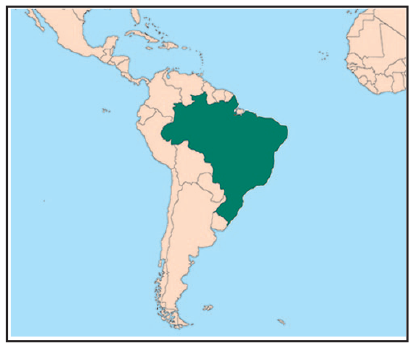
This paper explores waste pickers’ perceptions of climate change and its impacts in the state of Minas Gerais, Brazil. As part of a broader study led by Women in Informal Employment: Globalizing and Organizing (WIEGO)(13) in collaboration with the Urban Institute at the University of Sheffield, a pilot survey was conducted among 61 individuals involved in waste-picking activities in different cities within the state. The study was motivated by the limited evidence about the perceptions of waste pickers on the impacts of climate change or their perspectives on mitigation and adaptation.
The analysis shows the intricate role that waste pickers play in the sustainable management of cities in Minas Gerais state. It also demonstrates that incorporating waste pickers’ knowledge into climate change responses has enormous potential to enhance the safety of urban environments while reducing emissions and improving waste pickers’ wellbeing. Recognizing informal workers’ perspectives is not only more just, it also enhances the sustainability of the city. Planning, policy and regulation must recognize and compensate for such improvements.
II. Role of waste pickers in waste management
a. Waste picking and structural discrimination
Waste picking is an activity strongly linked to the conditions of exploitation that produce urban inequalities. First, waste picking is racialized, which exemplifies the prevalence of racial capitalism in contemporary urban economies. Racial capitalism posits that the operation of economies in the contemporary global landscape of capitalism is predicated upon labour exploitation and surplus value extraction from minorities and excluded groups.(14) Waste picking is thus associated with violent processes of exclusion that are reproduced during waste-picking processes, for example, when workers see their access restricted to technologies or resources that would increase the value of their activities.(15) In addition, waste picking provides an escape route for individuals in marginal contexts, finding it a source of autonomy, however precarious.(16)
In a patriarchal and intensely racialized society such as Brazil – where most waste pickers are Black or multiracial – informal workers such as waste pickers tend to inhabit conditions of deprivation. The socioeconomic drivers that sustain Brazil’s economy systematically deprive certain groups and displace them to perform activities that produce very little income, even if they add value to local economies and the environment. These are activities that involve a great deal of care and whose value should be reassessed differently in contemporary economies. Waste picking entails caring for the city; yet contemporary capitalism tends to devalue this essential reproductive work.(17)
b. Waste picking and sustainability
A dominant theme in the literature has been challenging the discrimination and stigma associated with waste picking.(18) More attention should be paid to the necessary role that waste pickers play in sustaining essential waste-management practices, sometimes at a high personal cost for the workers.(19) Waste pickers play a vital role in closing waste-circulation circles in the manner proposed by advocates of the circular economy, a model of production and consumption that prolongs the lifecycle of products to minimize waste. Closing those circles may be an essential means of delivering sustainable cities.(20)
A growing body of literature demonstrates the contribution of waste picking to municipal solid-waste management.(21) The recognition and inclusion of waste pickers improves waste flows and reduces the incidence of refuse dumps, illegal dumping and backyard waste burning.(22) In addition, waste pickers can play an essential role in reducing emissions by facilitating the reuse and recycling of resources through selective collection.(23) A circular urban economy requires managing diverse flows of waste that formal mechanisms cannot always handle promptly, giving waste pickers an essential role in making cities sustainable and resilient.(24) Tools have been developed to quantify waste pickers’ contributions to reducing carbon emissions.(25) However, these tools hardly capture the wide range of benefits waste pickers provide (for example, when the tools account solely for the waste that is effectively recycled).
Long-term attempts to facilitate the recognition of waste picking as a sustainability-related practice(26) are linked to calls for inclusive waste-management practices.(27) Waste pickers also develop sustainability innovations suited to urban contexts and create institutions such as cooperatives that, through solidarity networks, reduce resource consumption and improve urban health.(28)
c. Governance of waste and waste-picking activities
Waste-picker cooperatives in Brazil(29) have developed inclusive recycling systems nationwide and secured service-provider contracts with municipalities in several cities.(30) For example, a survey of 24 municipalities in the state of Espírito Santo showed that most local governments have some legal provision for informal waste-picking services.(31) This is not unique to Brazil. Local governments in cities such as Buenos Aires (Argentina), Bogotá (Colombia) and Pune (India) have established contracts and/or formal arrangements with workers’ organizations. These provide varied forms of support such as social salaries (minimum wages), payments for service-provision contracts (paid per tonne), facilities (such as recycling sorting centres, equipment and personal protective equipment or PPE) and capacity building (for example, through network development or online courses).(32)
Some reverse logistics systems in Brazil – returning products from end users back to the retailer or manufacturer through the supply chain – incorporate waste pickers so that they receive support from the waste-management industries.(33) Multi-stakeholder platforms in Brazil also enable waste pickers’ engagement in co-producing inclusive recycling policies and have been effective, for example, by giving waste pickers visibility in new planning processes.(34) However, incorporating informal workers into the waste sector is often based on exploiting the informal sector, which often subsidizes formal waste management.(35) Work conditions expose waste pickers to occupational health hazards, further compounded by climate change. Cooperatives help partially address waste pickers’ vulnerabilities(36) but cannot challenge the structural conditions of inequality and exploitation in which they work.
Organizing has been waste pickers’ primary strategy to gain influence and voice in recycling and waste legislation. Brazil is home to one of the most significant movements of waste-picker cooperatives: the National Movement of Waste Pickers (MNCR in Portuguese) and its allies have, since its creation in 2001, advocated for legal frameworks that recognize workers as legitimate service providers, and for fair remuneration policies. In addition to fighting for contracts with the cities for payment for collection and sorting services, the MNCR has proposed establishing payments for environmental services as a type of compensation for the environmental services they render by retrieving recyclables that would otherwise be landfilled or disposed of in open refuse dumps.
Official recycling schemes include waste pickers via formal agreements whereby the city recognizes the contribution of a given cooperative to the city’s waste management with monthly subsidies and/or payment for services via a commercial contract. Where these contracts do not exist, cooperatives generate income exclusively from selling recyclables. Cooperatives may also enter agreements with private companies to collect recyclables generated at their premises. However, there are some limitations, including:
Limited uptake of contracts;
Poor performance due to limited coverage and low investments;
Poor workplace infrastructure;(37)
Lack of social protection and social indicator systems;
The impacts of an onerous tax environment and market volatility on workers’ income; and
Dependence on an interstate recycling chain that makes workers dependent on intermediaries.
III. Waste picking and climate change in minas gerais
Recycling is a critical source of livelihood for organized and non-organized waste pickers in the state of Minas Gerais, which has nearly 300,000 waste pickers, although only a fraction (5 per cent) are formally employed (Table 1).(38) The Brazilian Annual Listing of Social Information (RAIS) figures shown in Table 1 in particular include only workers who have a contract to work in junkyards or with the municipality.
The waste-picker workforce in Minas Gerais
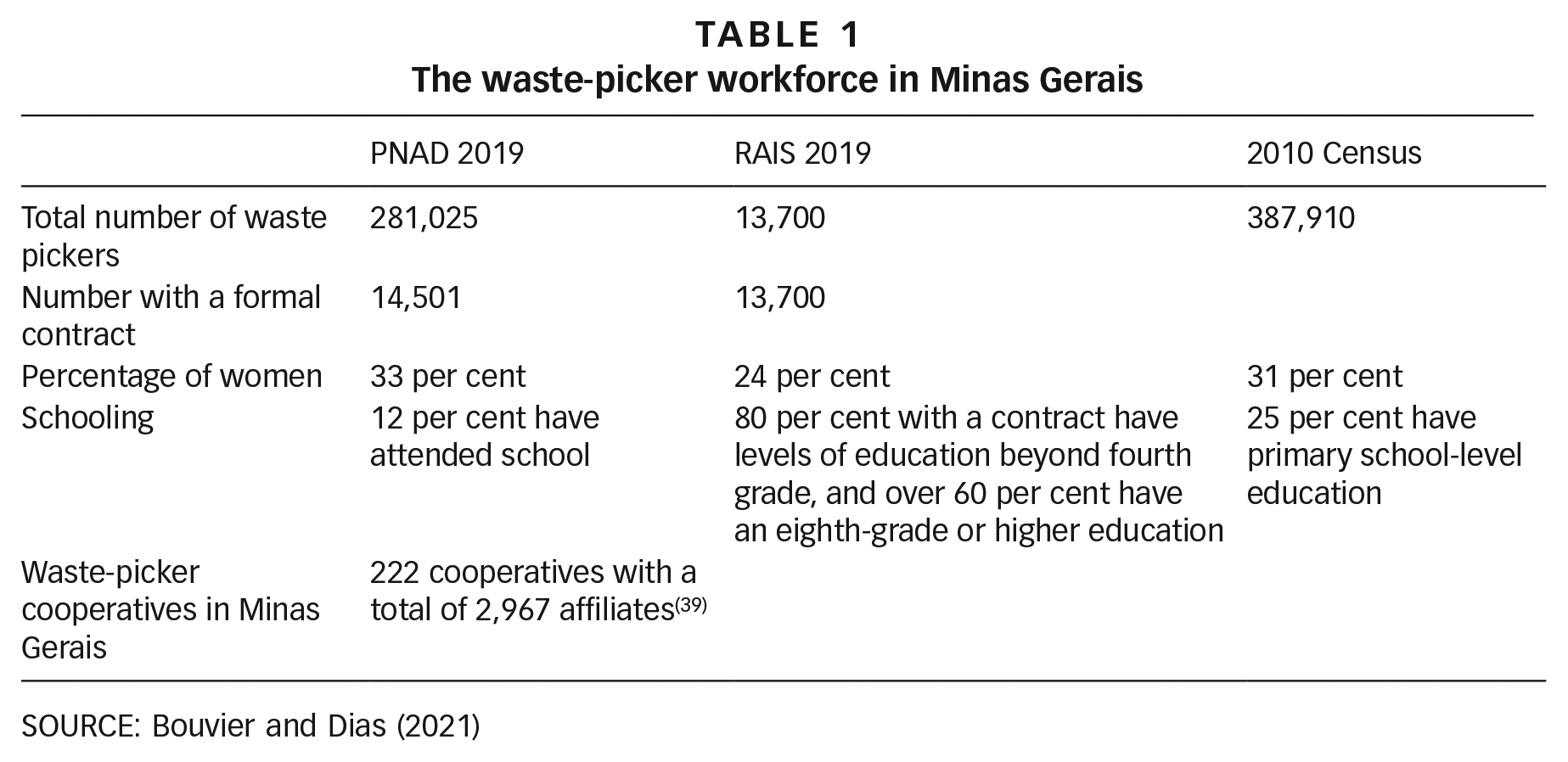
SOURCE: Bouvier and Dias (2021)
Waste picking is an essential economic sector in Minas Gerais, particularly in the city of Belo Horizonte.(40) However, greater socioeconomic inclusivity is still a challenge related to the fragile position of waste pickers in the recycling value chain. This precarity is linked to greater vulnerability during economic and/or climate-related crises.
The state of Minas Gerais and its capital city, Belo Horizonte, have been at the centre of social activism and progressive policymaking since the early 1990s. The first multi-stakeholder platform at the provincial level – the Waste and Citizenship Forum of Minas Gerais (FELC-MG) – was created in 1999. The FELC-MG convenes governmental agencies, the private sector, non-governmental organizations (NGOs), universities and the state legislative chamber alongside waste pickers.
Waste pickers in Minas Gerais have used their strategic alliances with members of parliament (of the Minas Gerais chamber) and with public officers of the state government to pursue payments for environmental services. In November 2011, the house of representatives of Minas Gerais approved a state law establishing a monetary incentive known as the recycling bonus (bolsa reciclagem) to be paid by the state government to waste pickers who are cooperative or workers’ association members.(41) This payment is given in addition to payments for service collection of recyclables some cooperatives receive from agreements or contracts they may have with municipalities.(42) In addition, in 2023, the state of Minas Gerais published a climate action plan, elaborated with a participatory methodology, that made climate justice one of four pillars of action (alongside mitigation, adaptation and innovation) and foregrounding the rights and conditions of the state’s most vulnerable populations.(43) For example, the plan proposes the introduction of waste-management technologies – such as biogas and incineration – while considering the impact of adopting these technologies on waste pickers.(44) The plan also proposes actions to increase the number of cooperatives and informal workers within the state’s recycling bonus programme. There is, therefore, a window of opportunity to transform the working conditions of waste pickers in Minas Gerais.
IV. Methodology
A pilot survey on climate change perceptions was conducted with 61 waste pickers in Minas Gerais from September to December 2022. Waste pickers were recruited using a snowball sampling method.(45) The surveys were conducted by interviewers who read the questions to the waste pickers directly and annotated their responses. Most waste pickers interviewed were women (77 per cent) and 74 per cent were non-white (Table 2).
The waste-picker profile of interviewees in Minas Gerais
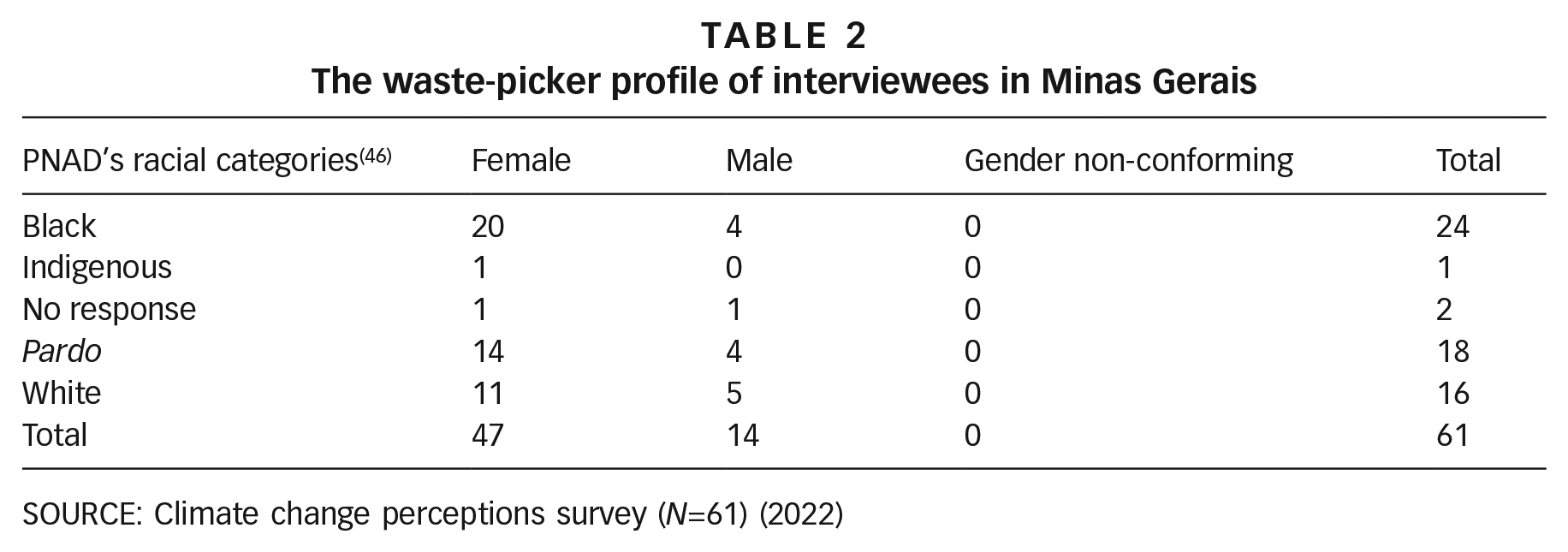
SOURCE: Climate change perceptions survey (N=61) (2022)
There is, however, a variety of age groups associated with waste picking (from 18 to 68 years) and different educational levels, although most waste pickers tend to have lower levels of education. Many respondents were waste-picker leaders in administrative positions (62.3 per cent). Nearly 20 per cent reported involvement in activism.
Most waste pickers (65.7 per cent) stated that they owned their own home. Some live in rental properties (21.3 per cent) or occupied (3.3 per cent) or provisional (9.7 per cent) properties (in other words, living in precarious conditions in properties or on land without legal title). There is no correlation of the type of property with gender and race, and households consist of an average of three to four people. This suggests that waste picking in Minas Gerais is a viable livelihood alternative for households, notwithstanding the challenges relating to work conditions. This can be interpreted as a reflection of the results of advances in national housing policies, such as the Minha Casa, Minha Vida social housing programme and the Growth Acceleration Programme (2007–2019), which have nevertheless had mixed consequences.(47)Waste pickers in the sample have multiple experience levels, from those involved in waste-picking activities for four years to those who have relied on it for over 30 years. Most of the interviewees (90 per cent) belong to a waste-picking cooperative, a source of support in the context of self-employment and periodic crises.(48) Cooperatives also provide a place of work for 77 per cent of the workers, although workers may alternate it with working at home and on the streets. Of the 90 per cent that belong to cooperatives, 52 per cent reported working regularly on the street, which exposes them to additional dangers ranging from health risks to violence.
V. Results
a. Perceptions of climate change among waste pickers
The data suggest a high awareness rate of climate change among waste pickers in Minas Gerais. During the interviews, 74 per cent of interviewees (45 participants) responded “yes” to whether they had heard of climate change. Their answers to the open-ended questions in the survey demonstrated their understanding of climate change, including its causes and the ways humans generate emissions. Many emphasized the global nature of climate change and its anthropogenic origin. However, waste pickers’ narratives emphasized the contrast between global anxieties and local experiences of climate change. For example, one waste picker explained that:
“Here in Poços de Caldas, [the] climate is crazy. Now the weather is beautiful; suddenly, it’s cold and raining. All over the world, I think things are ugly; climate change is destroying our country.”
Waste pickers also articulated an understanding of observed impacts and changes, woven into complex narratives of changes experienced during their lifetimes:
“In the past, the rainy season had much rain, and the dry season was arid. Then the weather changed; while it’s cold, it’s already hot, and rain comes, there’s a change in the climate. And we observe that the plants we used to see at the end of September and October this year and last year happened toward the end of August. Unbearable heat and windstorms, which were not so frequent before. Before, crops were abundant [beans, corn, rice]. But now there is no corn, or very little [. . .] And there was more work in the fields; there were carrots, potatoes and peppers. Now nobody plants any more and we no longer have these means of work.”
Waste pickers were also able to explain the interconnection between causes, impacts and consequences, constructing climate change narratives that transcend scales and that attribute responsibilities. This harrowing account from a waste picker shows how the symbolic understanding of climate change as a global issue is interlinked with the operative dimension of how climate change impacts everyday life, putting waste pickers at the heart of the solution:
“I think it involves so much the issue of pollution in general, and it also consists of this issue that is happening: everything is coming double [such as rainfall], all because of us, the human being. It takes too long to rain, and when it rains, it floods [. . .] Sometimes, it’s too muggy, hard to work, and sometimes too cold. And all this because of man. We play our part in making the materials return, but unfortunately, human beings don’t care about that. Want to earn the money.”
Other waste pickers related climate change with ongoing impacts in their neighbourhoods, especially impacts on their waste-management activities. These narratives are punctuated by statements about the role of waste pickers in enabling a sustainable environment. On the one hand, there is their role in delivering sustainability:
“We know that climate impacts are getting worse every day and, on the Earth, everything is connected. And because of our work, we are doctors of the environment. But we need to make it healthier, and for that, we need to work together. Because it is not just today that it is bad; if we do not rush to help, it will be tough. And [it] can also bring economic benefits.”
On the other hand, waste pickers also link their work to reducing the structural drivers of vulnerability, thus delivering urban resilience for the cities they work in. Waste management demonstrates the vital link between sustainable and resilient urban development. For example, one waste picker explained that:
“It’s about what we recycle; many manholes won’t be clogged. For example, who throws in the manhole harms everyone. Garbage thrown away is our sustenance.”
Waste pickers portrayed their profession as one of cleaning – as doctors of the built environment – but their narratives only make an explicit connection to emissions reduction in passing mentions and without specificity (for example, “making the materials come back”).
When asked where they heard about climate change, television was the primary source of information (reported by 40 per cent), followed by workers’ meetings (20 per cent) and social media and the internet (14 per cent). When asked more specifically, workers provided examples showing the circulation of climate change discourses across their networks, including family networks and children in school, other waste pickers and international organizations or NGOs, including WIEGO. An essential source of information for waste pickers is the cooperatives, where peer-to-peer learning is a daily activity. Several interviewees mentioned specific events and training organized by their cooperative where they first heard about climate change. This resonates with the vital role that cooperatives and waste-picking networks provide in facilitating sharing knowledge, but also relating the experiences of waste pickers to broader debates on sustainability.
At the end of the interview, 95 per cent of the workers declared that climate change was a significant challenge for their lives and work, including some who had not heard of it before. They emphasized impacts on productivity (especially heat stress), decreases in earnings and impacts on wellbeing. Mitigation, sustainability and adaptation were presented as interlinked issues, depending on their experiences of the impacts of climate change on their wellbeing and work-related performance. This recognition is an initial step towards improving their contribution to urban sustainability.
b. Experiences of climate change impacts and on-the-ground responses
The data from the survey show that waste pickers are at the front line of climate change, as they frequently experience its impacts. A high number of waste pickers (88 per cent) have experienced direct negative impacts that can be linked to climate change in the last six months, including heatwaves (82 per cent), flash floods (25 per cent), infectious diseases (15 per cent) and mudslides (7 per cent). These impacts affect their health, work, productivity, income and future opportunities, and their mobility.
Waste pickers have varying perceptions about how these impacts affect the waste-picking community. Approximately one in six waste pickers defined vulnerability as distributed equally depending on the effects experienced. However, the rest of the interviewees identified specific variables exacerbating vulnerability, especially collecting on the streets (23.5 per cent) or from refuse dumps (5.9 per cent) instead of working in recycling centres. Age, gender and homelessness were also identified as vulnerability variables.
A quarter of the participants have experienced a recent flash flood. In the waste pickers’ accounts, flooding constitutes a threat to life, a factor that worsens work conditions, and a phenomenon that reduces their income and affects their livelihood. Each of those consequences has specific patterns of response (see Annex 1 in supplementary materials). For example, as a threat to life, they related flash floods to the halt of their work activities and to self-protection (“We find a way to live with our fear, or hide”). But they also related flash floods to the protection of urban life, as these events interact with the waste pickers’ activities and the structures they feel responsible for. As one participant said, “To remove some girls from the flooded area, we had to make a cover, but that was all, the shed and roof tiles did not fall.”
As a threat to work, their priority is to protect their place of work and maintain continuity. Action strategies may vary slightly depending on whether the waste pickers find themselves working on the street or in the cooperative recycling warehouses. They differentiated between individual and collective responses to flooding. Individual responses relate to the need to maintain continuity while working around the flood, from immediate reactions such as using cans to bail out floodwaters to removing whatever recyclable materials are available or even halting work. Collective responses, in contrast, may take a more preventive approach, such as coordinating processes to store waste and materials and keep facilities clean in recycling centres, moving and protecting the materials collected, or even restoring damaged streets to facilitate the infiltration of floodwaters into the ground. Finally, some strategies relate to dealing with an effective reduction of income, such as extending their working hours to compensate for hours of work lost or from the decrease in the value of collected materials.
Waste pickers also suffer from excess heat. In our sample, 83 per cent of interviewees had recently experienced abnormal heat or heatwaves. Excess heat is so common that waste pickers have accepted it as an inherent risk and often do nothing to deal with it, even though if has significant impacts on their health. Most strategies are developed individually (see Annex 2 in supplementary materials). Over half of the interviewees affected by heat (28) monitor and vary their drinking water intake to manage the effects of heat. A fifth of interviewees use fans, regardless of whether they work on the street or in the cooperative centres. Using water fountains and adaptable clothing, including caps, is also common. Those based at cooperatives emphasized challenges related to ventilation and the design of the building; they adopt strategies such as slowing down the pace of work. However, those who work primarily on the street focus on strategies to operate under the shade by changing locations or adjusting their working hours (for example, by working in the early hours of the day when it is cooler).
In summary, waste pickers’ coping strategies are ad hoc and insufficient, compromising their ongoing role in waste management in cities in Minas Gerais. Addressing the dynamic pressures shaping vulnerability and their root causes would enable waste pickers to play a crucial role in advancing a sustainable and resilient city.
c. Governance and support for waste pickers in confronting climate change
Measures to improve the living conditions of waste pickers – on their terms – depend on an institutional ecosystem that addresses their concerns. Half of the interviewees (31 out of 61) could not recall receiving any support from institutional actors (Table 3). In general, waste pickers struggle to access any support or services and depend on private individuals, companies and NGOs to provide donations in emergencies.
Types and frequency of institutional support for climate change impacts experienced by waste pickers
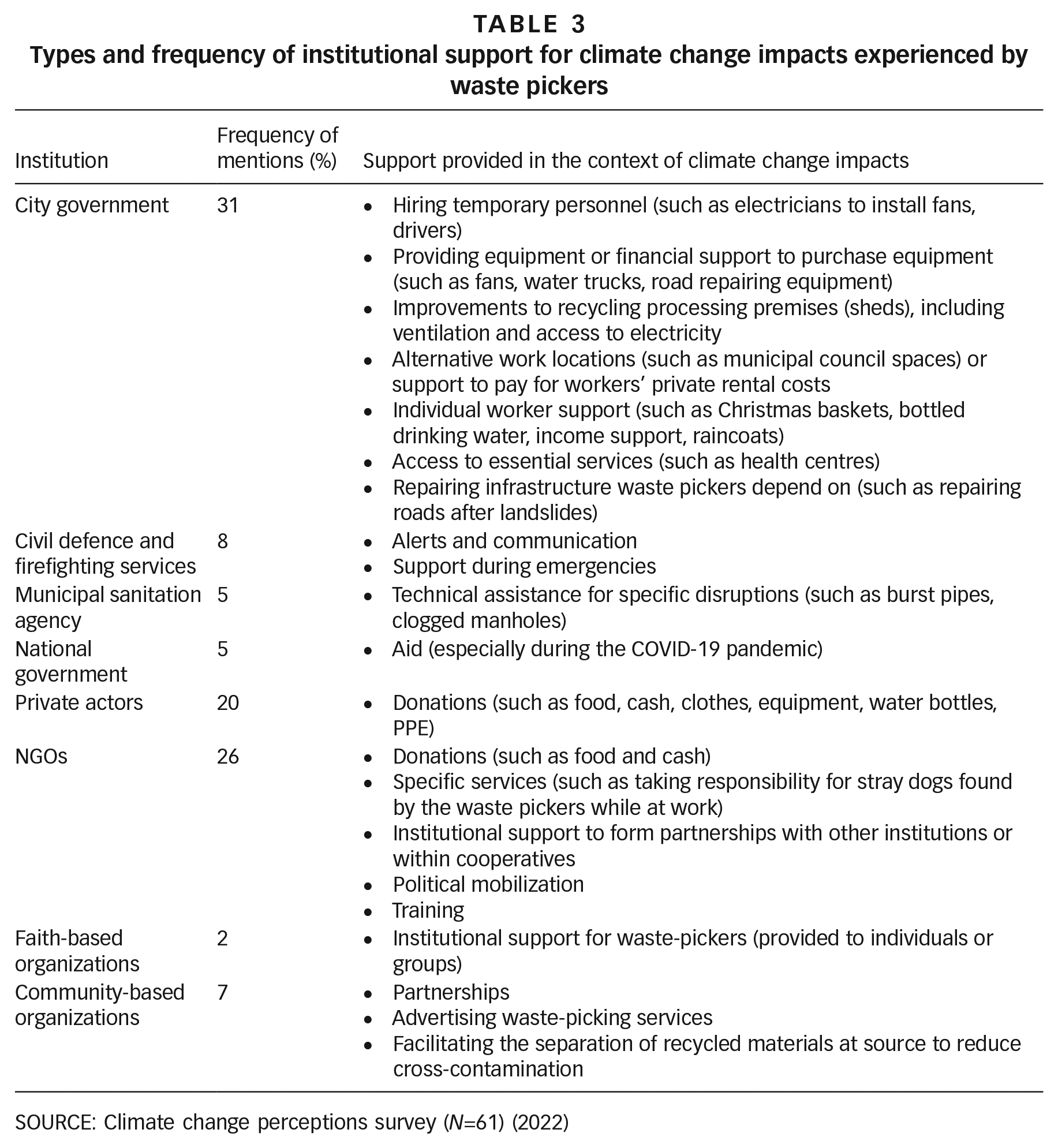
SOURCE: Climate change perceptions survey (N=61) (2022)
No interviewee recalled any form of support from national government institutions. A third identified having had support from the city government, such as providing workspaces or financial assistance, and facilitating access to critical services such as health centres. However, since cooperatives often mediate such partnerships, non-organized waste pickers tend to be excluded from measures advanced by local institutions. Private-actor and NGO support is mainly in the form of donations and on an ad hoc basis. NGOs may also be intermediaries that occasionally support partnership-building, networks and capacity-building workshops.
Cooperatives facilitate numerous measures to reduce waste pickers’ vulnerability to climate change impacts. Short-term actions to address these challenges include income support and providing food, water or clothing. These individually targeted forms of support are hardly transformative – but they are crucial for waste pickers. Cooperatives can improve waste pickers’ working conditions, mainly because they can advocate to different levels of government for improvements to workplace infrastructure and acquire adequate individual and collective equipment. Cooperatives also help build government and non-governmental partnerships and articulate workers’ needs at multiple levels and spaces.
Our study participants made specific suggestions as to which actors could support their work and contribute to reducing the overall conditions of vulnerability, including local, state and national institutions and private actors. Some transformative support areas they noted include broadening access to housing programmes, strengthening the provision and quality of public health and education services, providing fair employment contracts, and ensuring access to social protection for informal workers.
Waste pickers’ experiences of working with city governments vary considerably. Those who have not received support from city governments tend to have a negative view of government authorities. However, most interviewees were aligned in their recommendations for city governments, including providing specific technical and financial resources, recognizing the valuable role of waste pickers and facilitating inclusive solid-waste management. The study participants’ responses underscore two functions that city governments should take on. First, city governments should build institutional support networks to facilitate waste pickers’ work. Second, city governments could create a more robust recycling culture that involves a large population and other relevant stakeholders in the public and private sectors. For example, one participant explained the city government’s role in providing a workable legal framework and in establishing adherence to the laws:
“[Local governments should] create public policies to guarantee the fundamental rights of collectors, comply with what the law determines, and pay for the service provided. At least provide infrastructure support: for example, some collectors don’t have housing. Guarantee access to the public policy for the social inclusion of collectors, give the collector a voice, remove them from invisibility.”
Those who have received support from the city government hold a more optimistic perspective, and many of their proposals build upon these experiences. In some cases, the city government is also seen as a potential advocate with the power to challenge the structural conditions of racialized exploitation. One waste picker highlighted this clearly:
“[The city government plays a key role in] hiring collectors, complying with the PNRS [Brazil’s National Solid Waste Policy]. For us, who are black and poor, we don’t have access to the means of production. Their support is not charity: we must find a way to correct the situation. Our challenges have to be treated in the economic and not only in the social sphere. I don’t believe we’re going to discuss equality without discussing class. ‘I am a warrior; I overcame it, but until when?’ I want to be a subject of the law.”
Waste pickers also suggested that the state or federal governments could provide measures akin to the “recycling bonus” (bolsa reciclagem) to support them in extreme events associated with climate change. Waste pickers claimed both the conditions and the outcomes of their work – as “doctors” of the urban environment – as a rationale for municipal payments:
“I work harder than any minister of the environment. My work should have better pay, not just in my case but in everyone’s, because this work helps in events such as floods and landslides. The government could have a kinder look at street collectors and make, at least, a symbolic remuneration for each collector who helps the environment.” “[The federal government could act] to value work that can mitigate climate impacts, as we help the environment by recycling materials that could be degrading and polluting the environment. They could pay for the environmental service that is done, value and pay better for it.”
VI. Conclusions
This study, although still in the pilot stage, aims to grapple with the challenge of climate change in Brazilian cities from the perspective of a vulnerable collective, that of waste pickers. The survey provides a snapshot of waste pickers’ experiences and perceptions of climate change. The sample over-represents cooperative members, women and waste pickers in leadership positions, and therefore may overlook the perspectives of the most marginalized groups among waste pickers, such as non-organized workers (who are mostly men). Since non-organized workers are identified as vulnerable, further work could aim to reach them directly.
Nevertheless, the study provides an overview of how climate change is experienced within the lives and work of waste pickers in Minas Gerais. Understanding their perspectives is essential for delivering a transition to sustainability that puts climate justice at the centre of climate action, in line with existing policies such as the 2023 climate action plan of Minas Gerais.
The survey provides four key insights. Firstly, in relation to the conceptualization of climate change, waste pickers offer a complex understanding of the relations between global processes and local impacts and actively recognize the impacts of climate change on their lives and their role in building urban resilience. Based on this pilot study, Figure 1 shows how waste pickers’ knowledge and experience can contribute directly to a negotiated approach to urban resilience, which enables the exchange of perspectives between public institutions, private companies and waste pickers. As explained earlier, much research focuses on quantifying the role of waste pickers in reducing carbon emissions through selective collection.(49) The lack of broader indicators to identify linkages between sustainability, resilience and decarbonization in waste management hinders the recognition of the role that waste pickers play in urban environments, as well as the potential to address structural drivers of vulnerability (poverty and precarity) through forms of compensation and payment.
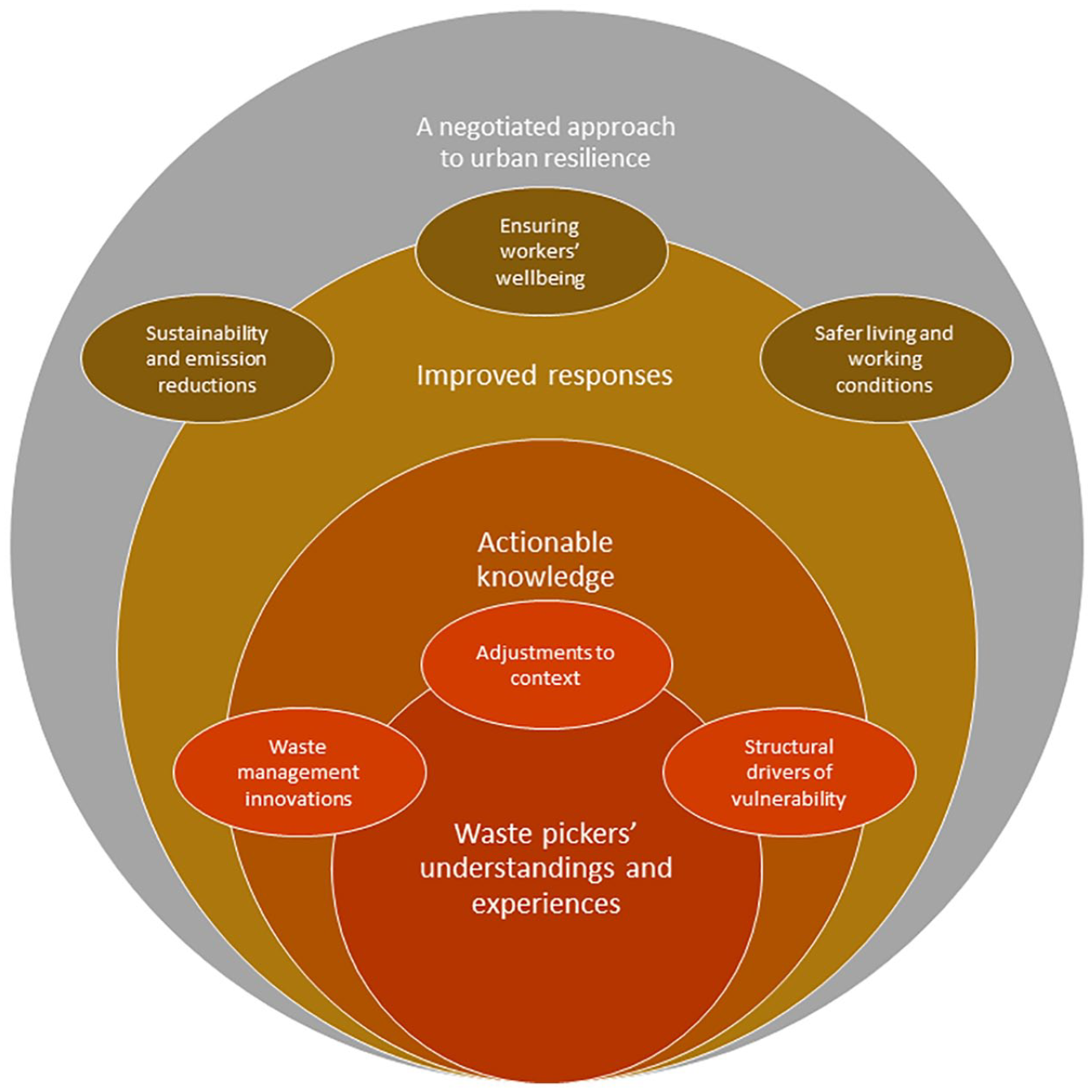
Mobilizing waste pickers’ understandings and experiences for a negotiated approach to urban resilience
Secondly, waste pickers’ perceptions of and responses to climate change are closely linked to their perceived impacts of climate change. Most waste pickers have experienced an incident that could be attributed to or exacerbated by climate change in the sixth months preceding the survey, such as flash flooding or unexpected heat events. Their responses are mostly ad hoc, responsive, improvised and partial, even though preventive actions – such as improved working conditions – could play a transformative role in the lives and work of waste pickers.
Thirdly, improving working conditions could also increase the role of waste pickers in moving waste upstream, helping to free up land and preserve urban environments, further facilitating their role in maintaining a clean and safe city. The case of waste pickers demonstrates how to build climate-resilient pathways(50) in urban environments by aligning decarbonization efforts with human development and reductions of vulnerability.
The fourth insight of the survey is the limited support waste pickers receive. Cooperatives remain a central actor in helping to build resilience among waste pickers.(51) However, cooperatives alone cannot have the transformative impact needed to enable climate-resilient pathways. Institutional support is required. So far, only local governments appear to provide any significant support to enable waste pickers to deal with climate change. However, there is an urgent need to align federal, state and local efforts to provide waste pickers with a social safety net, appropriate technology and emergency support. The recycling bonus provides an example of support highly valued by waste pickers in Minas Gerais. A similar “climate change bonus” could be directed towards measures that build resilience among waste pickers, thus enhancing their contribution to urban sustainability and decarbonization. Such a climate change bonus could adopt a holistic approach beyond quantifying the meagre fraction of waste that is effectively recycled and look instead to the range of environmental services that waste pickers provide, from reducing plastic pollution to cleaning up land for the establishment of green spaces. As Table 4 shows, waste pickers have abundant ideas about the forms of support to deal with climate risks that facilitate their work.
Measures to support waste pickers to manage ongoing climate change risks
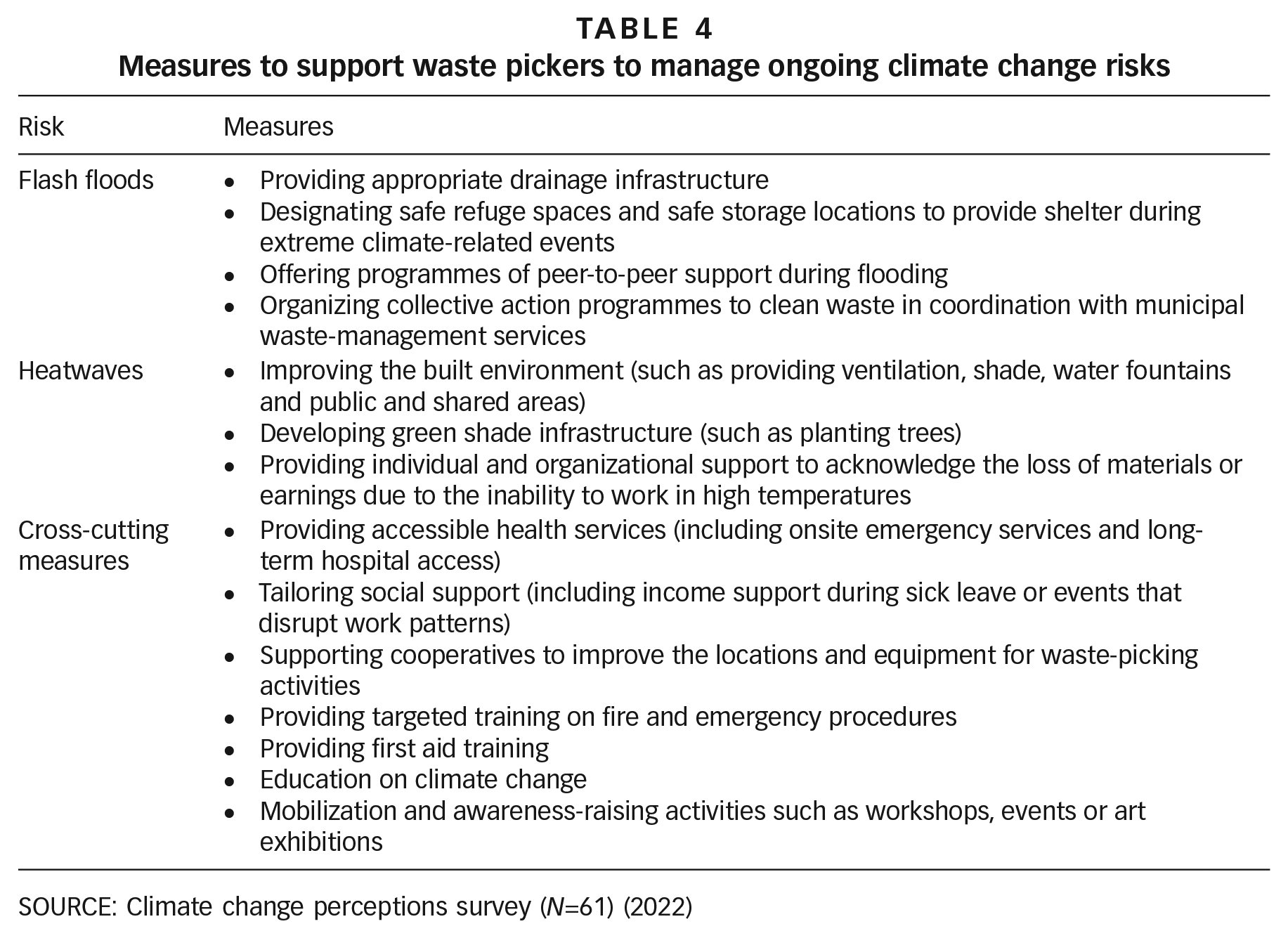
SOURCE: Climate change perceptions survey (N=61) (2022)
As climate change impacts intensify over the coming years, waste pickers’ individual and collective responses will become less and less effective. Without institutional support, waste pickers will soon hit adaptation limits in Brazilian cities, losing a crucial asset in delivering urban sustainability and decarbonization. The complete integration of waste pickers in inclusive waste-management systems remains inconceivable to many of our interviewees. And few of the measures outlined in Table 4 will enable emission reductions at a larger scale without developing a vision of climate-resilient cities that recognizes the essential role of waste pickers as “doctors of the urban environment”, who care for the urban space.
There are effective measures that could be directed towards creating such a vision, for example, through popular education and mobilization. Creative methods such as art, theatre, storytelling and poetry can help develop alternative climate lexicons suited to the lives of waste pickers and the conditions in which they live. A possible area for future study could include surveys and other social methodologies, such as life biographies, that could provide more information to understand the trajectories of waste pickers’ lives and under what conditions waste picking becomes an essential livelihood strategy. This is because life trajectories include not only waste pickers’ understanding of climate change (which is described, for example, in terms of childhood experiences) but also their understanding of and hopes for the future. These actions could be become part of a negotiated approach to urban resilience that incorporates the perspectives of waste pickers and their cooperatives, alongside those of a wide range of other stakeholders including municipalities, the private sector and other levels of government, in efforts to deliver resilient urban futures.
Supplemental Material
sj-pdf-1-eau-10.1177_09562478241230813 – Supplemental material for The case for a climate bonus: waste pickers’ perceptions of climate change in Minas Gerais
Supplemental material, sj-pdf-1-eau-10.1177_09562478241230813 for The case for a climate bonus: waste pickers’ perceptions of climate change in Minas Gerais by Sonia Maria Dias, Vanesa Castán Broto, Breno Cypriano, Ana Carolina Ogando and Juliana Gonçalves in Environment & Urbanization
Footnotes
Acknowledgements
We would like to acknowledge all those who gave of their time and insights for this study, especially waste pickers and partnering cooperatives. We are grateful to Livia Ferreira, Bárbara Lana, Raquel Manzanares, Guilherme Tampieri and Jussara Rajão for their support in different stages of this mapping.
Funding

Supplemental material
Supplemental material for this article is available online.
Notes
References
Supplementary Material
Please find the following supplemental material available below.
For Open Access articles published under a Creative Commons License, all supplemental material carries the same license as the article it is associated with.
For non-Open Access articles published, all supplemental material carries a non-exclusive license, and permission requests for re-use of supplemental material or any part of supplemental material shall be sent directly to the copyright owner as specified in the copyright notice associated with the article.
