




Abstract
This paper describes how the city of Bandar Lampung began to incorporate climate change adaptation goals into its budget and some of its plans. A series of Shared Learning Dialogues supported by the Asian Cities Climate Change Resilience Network (ACCCRN) involved staff from city government, NGOs and universities. This led to the formation of a multi-stakeholder City Team that was charged by the mayor with assessing climate risks and vulnerability, prioritizing problems and programmes, supporting small-scale adaptation projects and functioning as climate change adaptation advocates within the city. The paper describes some of these projects and how a range of factors underpinned better solid waste management and flood risk reduction, including fiscal reform that brought a large increase in the city’s budget, strong leadership and better planning. Challenges and barriers are also discussed, including what is needed to ensure that local government continues to incorporate climate change adaptation into its work and investments.
Keywords
I. Introduction
This paper examines the emerging institutional transformation and policy change in the city of Bandar Lampung as a result of support from the Asian Cities Climate Change Resilience Network (ACCCRN). This is funded by the Rockefeller Foundation, managed by Mercy Corps and implemented by the City Team (a multi-stakeholder platform that includes city government). This initiative started in 2009 and it runs until 2016.
For Bandar Lampung and the other cities with ACCCRN support, three specific outcomes are sought: improved capacity within their governments to plan, finance, coordinate and implement climate change resilience strategies; the creation of a network of people with practical knowledge of building urban resilience to deepen the quality of awareness, engagement, demands and applications by ACCCRN cities; and expansion or scaling up of the urban resilience-building models in other cities, drawing on diverse resources.(1)
In this paper, we ask how the city government can sustain adaptation to climate change and what mechanisms are required to ensure incremental change toward long-term adaptation. The paper draws on the authors’ engagement as researcher (Lassa) and facilitator (Nugraha) with ACCCRN and on fieldwork in Bandar Lampung from June to October 2012. This included participant observation, unstructured interviews with city stakeholders and project managers, semi-structured interviews with local communities and literature reviews (including a review of official minutes of meetings, project reports and other official documents).
The paper is structured as follows. Section II provides background information on the city and Section III considers how climate change adaptation is being considered for cities. Section IV discusses the implementation of ACCCRN’s activities in Bandar Lampung, including the Shared Learning Dialogues (SLDs), Vulnerability Assessment (VA), formation of the City Team, pilot projects and City Resilience Strategy (CRS). Section V presents a case study of urban waste management. Section VI reviews expenditures on environmental issues, Section VII outlines the city’s sustainability scenarios and Section VIII presents some final reflections.
II. Bandar Lampung: Past and Present
Home to nearly 900,000 inhabitants, the city of Bandar Lampung spreads along 27 kilometres on the east coast of Sumatra Island. The city was severely damaged by the 1883 Krakatoa volcano eruption that triggered deadly tsunamis. The impact of these modified the city, which came to be divided into two parts. The safer part was situated in the upper part of the city (formerly known as Tanjung Karang district) where the wealthier groups live (and was once used by the Dutch colonial rulers). The second part (formerly known as Teluk Betung District) has high concentrations of low-income groups. This was among the areas hit by the tsunamis in 1883 that killed thousands of people in Lampung and also on the Banten coast (northwest of Java Island). Tanjung Karang and Teluk Betung were brought together to form a united district called Bandar Lampung in 1983.
As Sumatra’s island gateway to Jakarta (Indonesia’s capital and its largest city) and as a major destination for transmigration (inter-island migration), Bandar Lampung continues to experience high rates of population growth – on average 8.6 per cent per year for the period 1971 to 2010. As of 2011, exports through Bandar Lampung port were going to more than 87 countries (24 countries in Asia, 14 in Africa, three in Asia Pacific, 15 in the Americas, and 31 in Europe). As of 2008, at least 27 per cent were living under the poverty line. In 2030, its population is likely to reach around 1.2 million.
By 2005, Bandar Lampung no longer had rural areas. The status of 100 per cent urban is defined by administrative status; desa (rural village) status no longer exists and all areas now have kelurahan (urban village) status. This is a result of rapid spatial change in the city as only 10 years previously, there were still 146,000 people considered to be living in rural areas of the city. Lampung received the first influx of transmigrants from Java Island in 1905 in a programme initiated by the Dutch colonial rulers. This was later supplanted by further transmigration under the Suharto government during the period of Pelita (five-year development plans).(2) The population of both the city of Bandar Lampung and the province of Lampung have been dominated by transmigrants (for the city, from about 36 per cent in 1971 to more than 80 per cent in 2010).
According to a recent climate Vulnerability Assessment carried out by ACCCRN, Bandar Lampung is at high risk from extreme weather events such as droughts and floods. In Sumatra, these are strongly related to large-scale climate phenomena such as El Niño Southern Oscillation (ENSO)(3) and the Indian Ocean Dipole (a.k.a. Indian Niño) that often regulates the rainfall pattern in the western and eastern Indian Ocean of Indonesia.(4) A recent drought affected its residents, especially those who work as urban farmers, causing a decline in crop yields and loss of income for traders of agricultural products. Despite the city’s entirely urban status, however, at least 55 per cent of the land is still used for dry and mixed dry agricultural areas (down from 60 per cent in 1992). The total area under settlement increased from 13 per cent in 1992 to 35 per cent in 2006. Since dryland agriculture is very sensitive to drought and there is competition between agriculture and the household/industrial consumption of fresh water, the city often experiences a lack of fresh water.
The city’s vulnerability to extreme weather has persisted and has been amplified by different forms of maladaptation to different urban problems. There has been an increase in small flood events within the city. Its coastal population often experiences coastal floods that are locally known as robs (high tides combined with inundation and abrasion). In addition, more incidents of flooding have been strongly associated with poor drainage and solid waste management. 86 per cent of the city’s solid wastes never reach the final disposal site and waste has accumulated over the last 30 years. Informal settlers do not see waste as a problem but as a resource that can be turned into raw materials for settlement expansion. This can be seen in community-based coastal reclamation in Bandar Lampung that has been in evidence over the last 25–30 years. Unfortunately, the inhabitants of these settlements on reclaimed land have homes and livelihoods that are at high risk from floods, sea level rise and tsunamis, and these are difficult to reduce or reverse.
III. Climate Change and Development
In Indonesia, national policies on climate change are still at an early stage. In addition, the main focus is still on climate change mitigation. The establishment of the National Climate Change Council in 2008 and the subsequent release of the Indonesia Climate Change Sectoral Roadmap (ICCSR) by the National Development Planning Ministry (BAPPENAS) have been the first steps toward integrating climate change adaptation and development. The ICCSR targets 2015 as the year when climate change vulnerability mapping will lead to the establishment of adaptation information systems at national level. At present, climate change intervention is mainly limited to discussions of mitigation and adaptation in particular policy settings with stakeholders at national level. At both province and district levels, adaptation policy remains at the stage of some pilot initiatives driven and facilitated by international actors in a few selected cities and regions.
Researchers have been suggesting that the main vehicle for addressing climate change is the development process.(5) Sustainable development outcomes require sustainable adaptation to climate change.(6) However, in conventional city development, climate change is still a nascent policy domain and still unknown to many cities’ managers, especially in low- and middle-income countries.(7) Some case studies of adaptation initiatives such as Durban and Hessequa (South Africa) and Quito (Ecuador) are often presented as good practices.(8) Despite evidence of a significant degree of endogenous influence toward the adoption of climate adaptation in Durban and Quito, exogenous influences are evident in much of the discussion on climate change policies in the cities of the Global South and these serve to motivate, facilitate and shape actions.(9) Some cities in high-income nations, especially global cities such as New York, Sydney and Barcelona, have endogenously addressed their need to adapt to climate change drawing on their own financial resources, scientific knowledge, infrastructure and regulatory capacity.
In order to achieve sustainable development outcomes, cities have to adapt to climatic change through building their resilience. But cities in low- and middle-income nations have been struggling to adapt due to the lack of knowledge and capacity in urban climate planning and development reform. Regardless of the model and origin of policy change and the drivers (either endogenous or exogenous), the question is how cities of the Global South can make use of incentives, ideas and capacity toward the needed institutional change.
IV. The ACCCRN Framework in Practice in Indonesia
In recent years, the cities of Bandar Lampung and Semarang (Indonesia), together with eight other cities in India, Thailand and Vietnam, have been taking the leadership role in developing an ex-ante adaptation strategy and climate resilience building. These are all part of ACCCRN. The two Indonesian cities are among the most important coastal cities that have been exposed to different types of coastal risks and catastrophes. In the context of increasing vulnerabilities and climate change, the cities are likely to face diverse scales and magnitudes of climate extremes. The selection of the cities in Indonesia was based on a desire to work in secondary cities (cities with populations of around 1 million) that are vulnerable to climate change. Also influencing the choice of cities was political will (as city governments agreed to adopt the Urban Climate Resilience Planning Framework (UCRPF)), government capacity and the presence of individual champions.
The ACCCRN project framework that is being implemented in Bandar Lampung includes five phases (Figure 1). The first involves Shared Learning Dialogues among practitioners and policy-makers. These began in mid-2009. The second is the production of a Vulnerability Assessment that informs the need to both conduct further in-depth studies (third phase) and develop a City Resilience Strategy (fourth phase). The third phase is the initiation of pilot projects, sector studies, workshops and the drafting of a CRS during 2010–2011. In the fourth phase, the VA is intended to help the actors to understand the present context and future scenarios as shaped by vulnerability and climate change. The VA identifies vulnerable sectors and groups in the city. The final phase is the implementation of the actions from 2012 to 2016. Starting in 2011, at the programme management level (country level), the ACCCRN project initiated support for replication and dissemination of knowledge and practical know-how from the ACCCRN pilot cities to other cities in Indonesia.
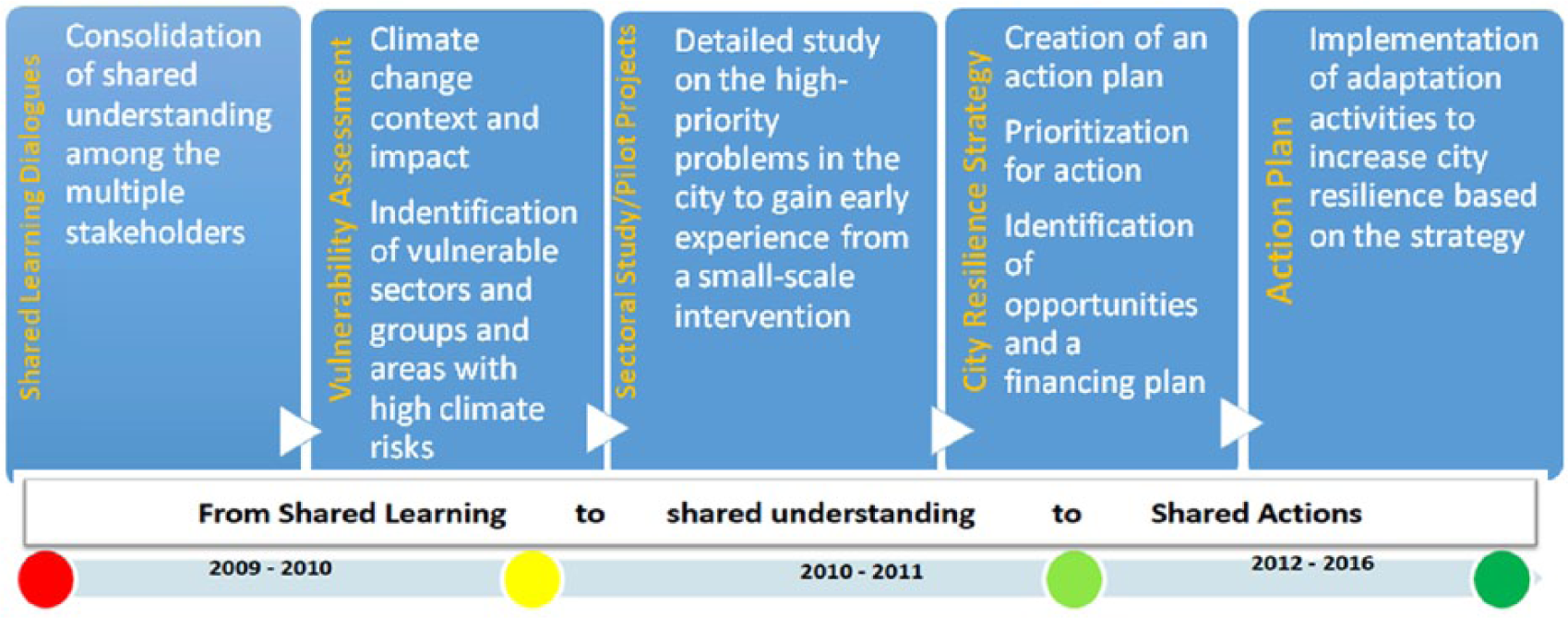
Typical ACCCRN process in Bandar Lampung and Semarang
a. Shared Learning Dialogues
In Bandar Lampung, the ACCCRN project has been facilitating a new mode of urban climate governance where a collective decision-making process is undertaken by the City Team through multi-stakeholder platforms made up of representatives of relevant departments, civil society organizations and local universities.
Since mid-2009 the City Team has adopted SLDs, which are “iterative, transparent discussions with local community members, government agencies, civil society organizations, research centers and other technical agencies designed to facilitate mutual learning and joint problem-solving”.(10)
During the SLDs, the UCRPF was introduced to the city stakeholders. This framework, developed within ACCCRN, helps urban agents (individuals and organizations) to think across sectors and scales; the UCRPF facilitates the contextualization of scientific knowledge of climate change and drives action in a defined timeframe. Thus, it helps increase understanding of urban systems, institutions and climate change along with the interactions among them.(11)
The first SLD focused on an introduction to scientific information on climate change for the city departments and NGOs. The City Team referred to it as levelling the perceptions concerning climate change so the actors could be on the same page.
SLDs help the actors to identify problems related to climate change and its footprints in the local levels as well as vulnerability identification. In the second SLD, the stakeholders were informed of evidence from the VA co-produced by a local university with the Indonesian ACCCRN project lead (Mercy Corps) and URDI, an Indonesia-based NGO. The VA identifies sectors that are potentially affected by climate change. Responses from participants in the SLD helped the vulnerability assessors to improve the draft. The second SLD identified the need for prioritization concerning sectors that needed to be studied in greater depth.
During the third SLD, the City Team discussed the findings from the pilot projects. The participants identified early actions required to tackle climate change and highlighted some institutional issues such as the trade-offs between intervention options and the need for capacity building, basic services improvement and strengthening of the local informal economy. A working group for the CRS was formed at this meeting. The members of the working group were selected from the City Team, which includes representatives of the city development planning agency as well as the Environmental Department (BPPLH).
The fourth SLD in May 2010 became a discussion forum for action plans. Assessment criteria for intervention proposals were discussed and all processes of decision-making were shared. In May 2010, ACCCRN created opportunities for the city to submit concept notes for intervention. Of the six concept notes, one was developed into a proposal entitled Integrated Solid Waste Management Master Plan.
The city governments allocated funds for the city’s departments to sustain the coordination meetings among local government departments, NGOs and academics. The city government, especially the key departments that host the initiative, also allocated an annual budget (averaging US$ 10,000) to incentivize their focal points to participate in the meetings. More than a hundred meetings were held during 2009–2013, which were attended by designated city officials, NGOs and local universities.
b. Vulnerability Assessment and City Resilience Strategy
International and national experts were commissioned to conduct a VA of Bandar Lampung City. The study aimed (i) to assess current and future climate variability in Bandar Lampung, (ii) to assess vulnerability and adaptive capacity as well as current and future climate risk at urban village (kelurahan) level, (iii) to identify direct and indirect impacts of climate hazards now and in the future at kelurahan level, (iv) to identify the most vulnerable areas and social groups, as well as dimensions of vulnerability, including adaptive capacity of communities in relation to climate change impacts, (v) to identify institutional and governance issues that may affect the resilience of the city to current and future climate risk, and (vi) to develop initial recommendations for increasing the city’s resilience to current and future climate risk.
The assessment document reveals the risks the city faces from natural catastrophe and natural hazards such as floods, landslides, high tides (a.k.a. robs), tsunamis, earthquakes and droughts. The study also evaluated the socioeconomic impact of climate risk in six kelurahans. The assessors developed a vulnerability and adaptive capacity index for the kelurahan that included socioeconomic and biophysical indicators.
The risks from flooding are associated with the two large rivers (Way Kuala and Kuripan) and the other 23 small rivers or streams that pass through the city. In addition, the kelurahans, where many of the households live in buildings on river banks, have little access to drinking water from PDAM (the government-owned water companies), and have high population densities and large concentrations of low-income groups. A large proportion of the kelurahan area near the rivers and coast with less green open area is likely to be more at risk (indicated by the high vulnerability index). The assessment baseline year is 2005 with future scenarios for 2025 and 2050. It is projected that by 2025 and 2050, six–seven kelurahans are likely to experience improvement in the coping capacity index but for some other kelurahans, this is likely to decrease.
The results from the VA have been incorporated into key city policy documents. These include the City Resilience Strategy 2011–2030 and the Integrated Solid Waste Management Master Plan (funded by ACCCRN) drafted in 2011. The CRS 2011–2030 provides broad guidance for city-level stakeholders in particular to guide the city to create an informed climate change adaptation strategy. The CRS collated results from the VA to inform the climate change adaptation scenarios. The CRS document is expected to inform the Long-term Regional Development Plan 2005–2025 (RPJP) and Bandar Lampung Spatial Plan 2011–2030 (RTRW).
The actors believe that without the resilience strategy document, the city would be unable to adapt in response to extreme weather events. The CRS has provided valuable information to inform adaptation in the city’s Mid-term Regional Development Plan 2010–2015.(12)
The City Team members claimed early successes of ACCCRN in that both the VA and CRS have been incorporated into the Mid-term Regional Development Plan 2010–2015, suggesting that one of the strategic efforts to reduce the risk of flooding is to improve the quality of management and processing of solid waste. However, the VA and the CRS are not cited in Bandar Lampung’s Spatial Planning (RTRW) Document for 2011–2030.(13) One of the reasons is that the consultants selected for the RTRW 2011–2030. do not have adequate climate adaptation literacy. For the other documents (e.g. the Mid-term Development Plan), all the key selected consultants have been part of the City Team. Nevertheless, the VA, CRS and Integrated Solid Waste Management Master Plan have been treated as informal (as they have not yet been endorsed as legal documents). But they have been used and cited in the White Paper for Sanitation in Bandar Lampung City (drafted in 2012) and in the Master Plan for Green Open Space drafted in 2012.(14)
c. Formation of City Team
The City Team plays an important role in ACCCRN cities because it becomes a temporary climate governance mechanism or collective decision-making body drawing in city departments, civil society, representatives from local universities and the private sector. The idea is to have a defined procedure for cities’ decision-making systems.
The legitimacy of the team in Bandar Lampung is based on two official decision letters (or mayor’s decrees) in 2010 and 2011. The mandates for the City Team are to monitor, control, organize, conduct studies, manage projects, and report on all activities, processes and methodologies applied under ACCCRN. It also leads and facilitates the development of the CRS, which is one of the key goals of the ACCCRN project. The City Team prepares monitoring and evaluation plans for each pilot project. The City Team determines the terms of reference for the sector studies. The initial ideas for the sector studies were generated during the second SLD with participation of community members and then narrowed down and finalized by Mercy Corps and the City Teams.
The City Team is to ensure that the VA is adopted into the development agendas. One early success was to adopt the VA as a basis for the Bandar Lampung Resilience Strategy document. Since then, the team was to guarantee the adoption of the CRS into the city development planning and agendas. The City Team has emerged as a temporary strategic group that functions as a lobby group to ensure politicians, the mayor, and the head of city departments allocate adequate resources for climate adaptation.
ACCCRN also affects the day to day relationships between NGOs and their perception about local governments as indicated by the lack of collaboration prior to ACCCRN. There have been improvements in the relationships between local governments and NGOs. Despite the risk of being compromised by this, the NGOs also noted that the network gives them more chances to influence local government.(15) This suggests that the City Team functions as a networking and relationship-building agency where stakeholders’ interests are shared.
d. Pilot projects
As the VA document suggests, the inadequacies in solid waste management and drinking water provision have became the most visible problems for the city over the last 10–20 years.(16) During 2009–2011, no project was earmarked related to urban climate adaptation. It was agreed by the City Team that all the pilot projects should be implemented by NGOs because the local government’s budget system has no provision for tapping external resources. The first pilot project was implemented by an NGO (Lampung Ikhlas). It was a small-scale waste management and clean water management project with the overall objective of improving community adaptation to reduce impacts of flood and water scarcity. It sought to change the behaviour of coastal communities through solid waste recycling (e.g recycling plastic and paper waste as well as turning organic waste into fertilizer). The water management project helped communities in Kangkung Village (Kota Karang) to filter brackish water into drinking water.
The second pilot was implemented by an NGO named Mitra Bentala. The NGO helped a community in Bandar Lampung (Panjang Village) through waste management training, organic farming, environmental education and clean water support. It also facilitated vertical agriculture training – a way of growing herbs and vegetables that uses little space and that makes use of organic waste. Mitra Bentala provided some waste containers as well as forming a community-based organization to collect household solid waste through temporary waste collection (tempat penumpukan sementara).
Our study suggests that the intervention was not sustained due to the institutional barriers present in 2009 (such as the lack of space and lack of incentive for growers). What is left is a few champions who turned organic waste into inputs for organic farming and very small-scale vertical agriculture. While the clean water project was sustained, it remains an isolated success with no evidence of the potential for upscaling.
However, the overall policy landscape for waste management suddenly changed, especially after the new mayor took office in 2010. This is discussed in Section V below.
V. Case Study of Urban Waste Management Sustainability
One of the impacts of the SLDs, the VA and the pilot projects was the increasing attention to waste management in the city’s government offices. The decision of the City Team to draft the Integrated Solid Waste Management Master Plan(17) (to increase climate change resilience) has helped the city to start investing in waste management. This recognized the importance of having a plan for waste management to increase city resilience to both the direct and the indirect impacts of climate change. It recognized that solid waste has been contributing to vulnerability to climate change impacts as uncollected wastes in “drainage channels and rivers have reduced the drainage capacity and increased the possibility of flooding”. In addition, “due to high tide, wind storm and high rainfall in coastal areas there have been severe flood events. And along with piles of garbage in coastal areas and inland areas, the secondary impacts (of disease spreading and water contamination) could trigger the occurrence of dengue fever and diarrhoea.” Existing data suggests that only two-thirds of generated waste was properly disposed of in a final disposal site, with the rest improperly disposed of, including in drainage channels.
The new mayor’s commitment to environmental sustainability within the city fits well with the City Team’s initiatives, starting since the end of 2010. Most of the City Team members have had roles as “informal” advisors to the mayor. As a result, from 2010, the city government has increased its investment in its waste management policy and practice.
Along the 27 kilometres of the city’s coastline, we have observed how the coastline has been expanded into the sea as communities use household solid wastes as a raw material for landfill. This form of community-based coastal reclamation is also complemented by uncontrolled reclamation by the private sector and local government. The “new” settlements that result from this practice cannot be fully seen as informal because the local government has legally expanded its electricity and water services to these areas and collects land and housing tax from the areas too.
Photos 1 and 2 show waste management practices in Bandar Lampung.
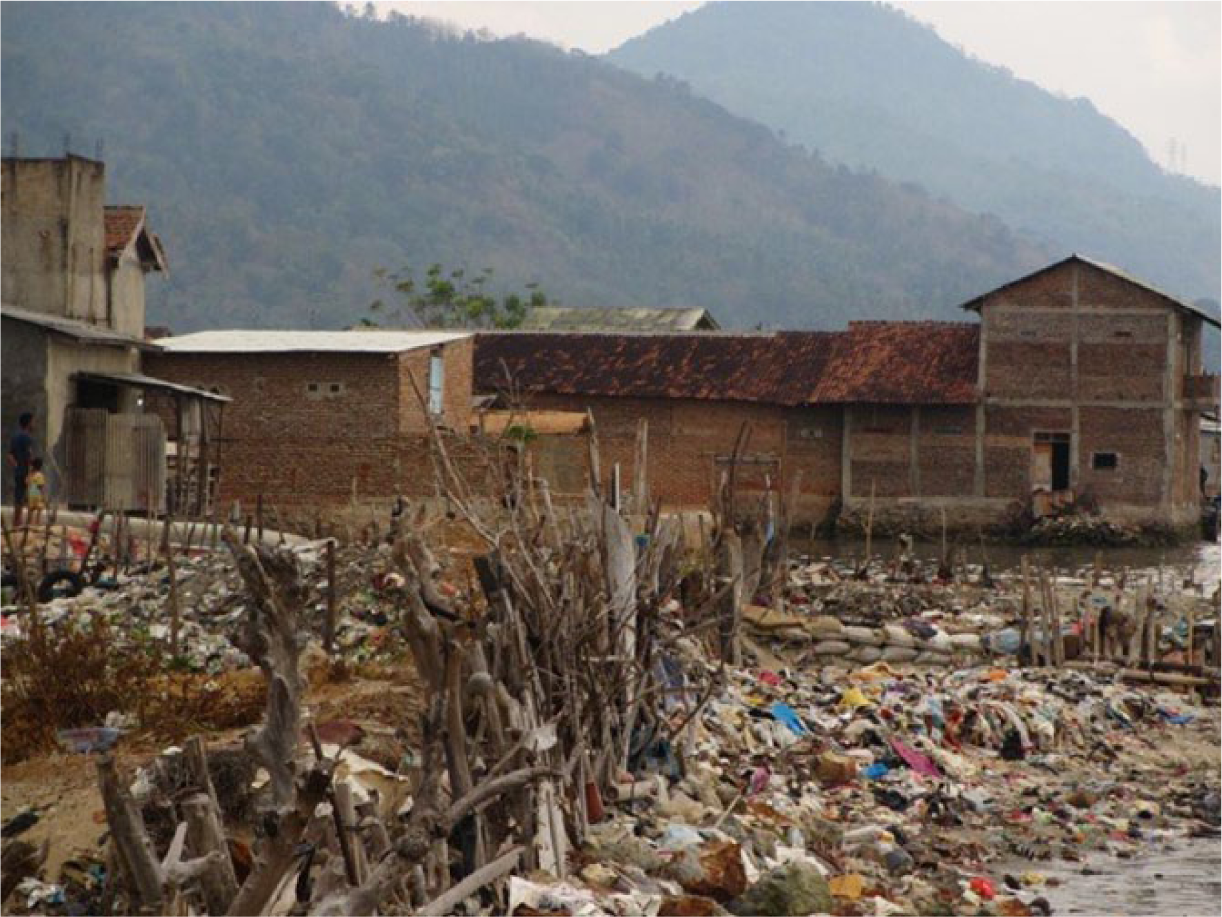
Land filling practice on the coast by local communities
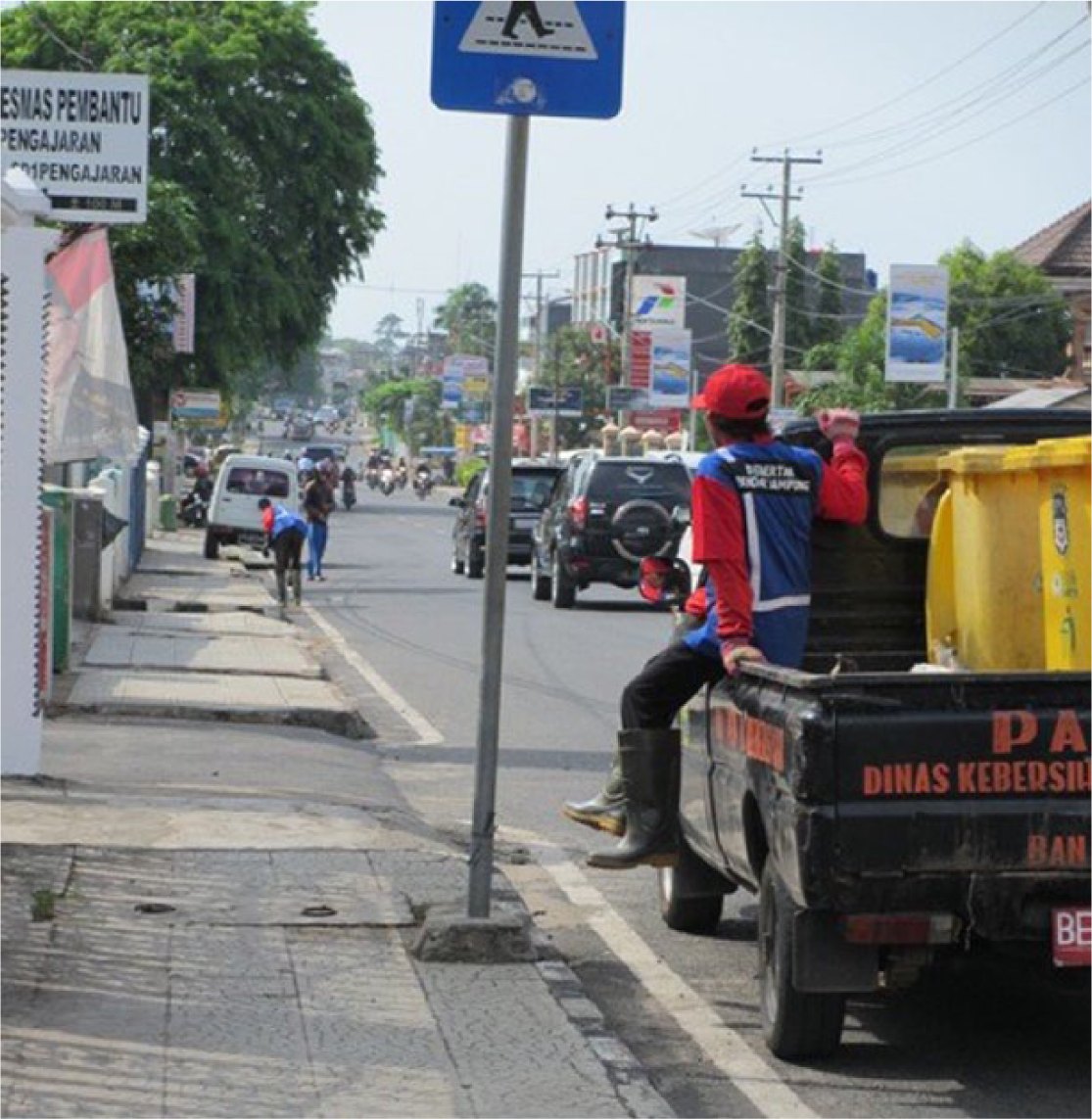
Recent solid waste management practice by the City Parks and Cleaning Department
Photo 1 shows the result of the ongoing informal coastal reclamation using solid waste that has meant that the coastlines have been moving from 10 to 100 metres into the sea. This coastal reclamation continues despite significant reforms made by the city government over the last three years. The informal settlers see the waste as valuable raw materials for settlement expansion – but this can also be seen as increasing vulnerability to high tide, wind storms and high rainfall, and even as maladaptation in relation to climate change.
A range of different institutions with different jurisdictions make up a polycentric solid waste management system. The coastline and near-shore solid wastes are the responsibility of the Marine and Fisheries Department. Solid waste at the urban markets is managed by the traditional market managers. The City Parks and Cleaning Department deals with the wastes in the streets, road canals and selected public spaces. Photo 2 is an example of how the City Parks and Cleaning Department has been working to clean the city’s streets since the new mayor took office in late 2010.
There has been very considerable progress in solid waste management as seen and felt by most of the interviewed stakeholders.(18) But what is puzzling is that this was not reflected in the ranking given to the city in the Adipura Award. This award has been used to encourage Indonesian cities and urban regions to be clean and green since 1986. The Adipura Award was stopped for a few years after the fall of Suharto in 1998 but was revived during Megawati’s presidency in 2002. Every year, there is an Adipura contest among the metropolitan cities, big cities, medium cities and small cities. Additional categories include cities with the best urban–forest ratio, best city markets and best city parks. In 2009 Bandar Lampung was awarded the Adipura Award in the big city category. In 2012, when the city was cleaner and better managed as a result of significantly higher investment in waste management, it received a new status as “the dirtiest city” in Indonesia. It came bottom in the Adipura ranking – as announced by the central government’s Ministry of Environment.(19) There is good reason to question the 2012 Adipura assessment. Assessing the responses of a range of interviewees including taxi drivers, garbage collectors and officials at the mayor’s office and city environmental agency suggests that the city was cleaner and had better managed solid wastes in 2012 compared to 2009. Indeed, the city could have been placed far lower in the 2009 assessment – but the 2012 assessment was unacceptable. Unfortunately, the assessment process and ranking criteria are not entirely transparent.
There has been a sharp increase in the city budget since the present mayor took office in 2010. For instance, in 2009, the City Parks and Cleaning Department budget was only US$ 247,000. This increased by 700 per cent in 2010 (or US$ 1.8 million) and continued to increase to US$ 3.2 million in 2011 and US$ 5.5 million in 2012. This rapid increase in budget was made possible by the reform in the taxation and tax collection system set by the mayor. It is clear that solid waste management has improved greatly although there is the question of whether this will be sustained – for instance, whether it will be supported by the next mayor in 2015.
VI. City Spending on Environment and Climate Change
The mayor decides on which environmental agenda to fund although, as explained below, the city legislators also have some powers in this. Officials at the Environmental Department Office and the Development Planning Office have the discretionary power to propose smaller-scale budget lines. The city budget for the environment (including climate change) is relatively low in international comparisons but it grew from less than US$ 100,000 for 2004–2006 to about US$ 300,000 during 2007–2010 (Figure 2). It has been consistently increased since 2010, where it started from US$ 300,000, to about US$ 750,000 in 2013.
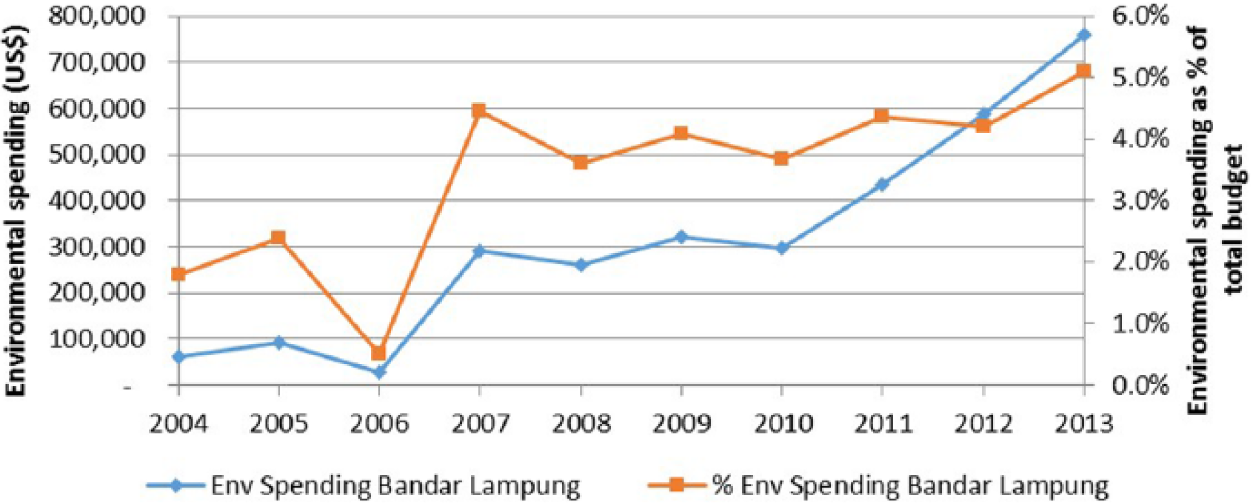
Bandar Lampung spending on the environment and climate change
The total budget for fiscal year 2012 was about US$ 215 million. Since the new mayor took office, he has been pushing to double the budget for 2011–2013. Compared to the total city budget, for both recurrent costs and development expenditure, the percentage of the budget allocated for climate change-related activities was below 2.5 per cent during 2004–2006, 4 per cent during 2011–2012 and 5 per cent in 2013. The data is based on the spending at the Environmental Department combined with some related spending such as public health and urban drainage. However, more detailed disaggregated data is not yet available.
After the exchange of ideas through the SLDs during 2009–2012, since 2012, for the first time, the Environmental Department (a.k.a. BPPLH) has created a new budget code for climate change adaptation. This is broken down into intervention for the groundwater recharging programme, namely biopores (water-absorbing pits or holes), climate change impact control, and training/capacity building concerning biopores. The increase in 2012 and 2013 allocations shown in Figure 3 has been related to the local government commitment to improve groundwater conditions by supporting biopores. Before 2012, climate change adaptation was under a budget line for environmental protection and conservation. There have also been recent efforts that include greatly increased spending on tree planting, biopores and capacity building.(20)
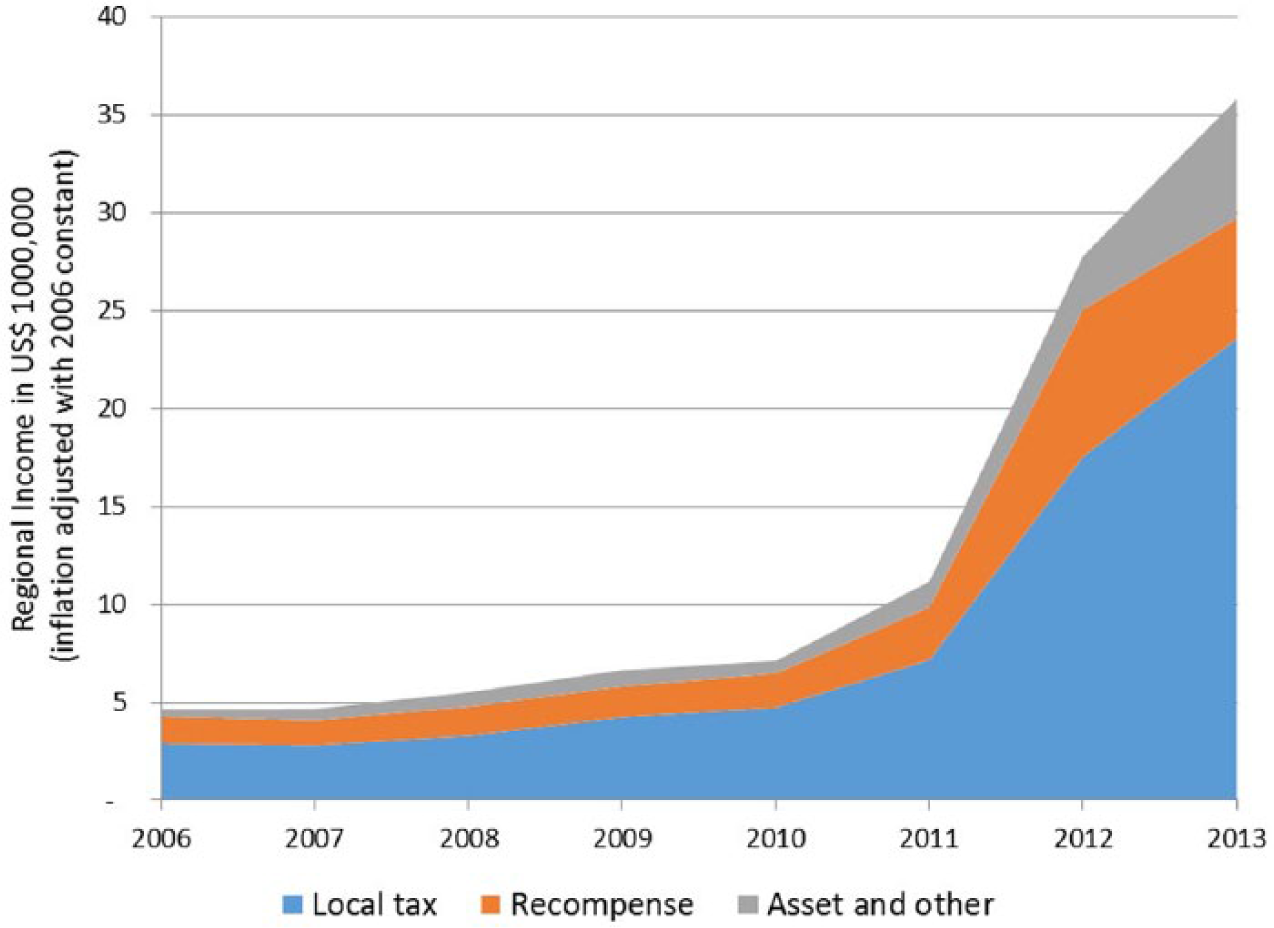
Trend of regional original income in Bandar Lampung
Since 2010, BPPLH has shown a commitment to investing in climate change adaptation. It allocated US$ 121,000 in 2010, 112,000 in 2011 and 133,000 in 2012 to address climate change impact. In 2013, the planning draft suggests an increase to US$ 144,000. Although data based on final audits is not yet available, the increase in the allocation of the environmental sector (Figure 2) suggests that the allocation is likely to be as committed. This budget does not include staff costs. In 2010 and 2011, the budget was spent mainly on buying seeds for urban trees as well as buying instruments such as climate and weather monitoring and some laboratory instruments (LAKIP BPPLH 2010 and 2011).(21)
Some of the city’s annual budget is from funds transferred by the central government through DAK (special budget allocation), often made by ministers at central government level. This includes the funds of the Environmental Department. Some of the shifts in the budget allocations to include climate change intervention during 2010–2011 were at the expense of other environmental programmes. For instance, the water and environmental quality monitoring and improvement programme in 2009 was US$ 145,000 but cut to zero in 2010, while in 2011 only US$ 1,980 was allocated to it. Even though it was raised to US$ 40,000 and 30,000 in 2012 and 2013 respectively, this is still far below the 2009 level. Comparable cuts were made in the budget for environmental impact assessment including no funds during 2010–2012. So there is considerable volatility in the budget allocation. The reason for the volatility is that interest from the city government changes every year despite the fact that there is a need for stable allocation of vital programmes such as water and environmental quality monitoring. 2013 shows some indication of a more balanced budget allocation within the office but this is helped by the increase in the budget from US$ 194,000 in 2009 to 463,000 in 2013.
VII. Sustainability Scenarios
In international development interventions, sustainability is often interpreted as lengthening the social and physical outputs and outcomes.(22) The ACCCRN project seeks to imprint adaptation pathways in the cities that can be sustained. The expectation is that after the phasing out of the intervention in 2016, city governments will be able to adopt, replicate and sustain the overall process using their own resources to reduce their climate change risks.
There is the issue of how what began as an exogenous influence becomes locally owned. The idea of a city government having a climate change adaptation policy was introduced by ACCCRN. Whether or not it will continue depends on whether the city government takes the opportunity to sustain the policy and practice of climate adaptation. Our work suggests that five factors have importance for assessing this – beyond the SLDs and exchange of ideas. The first is fiscal sustainability, which allows a city government to increase sharply the investment in waste management using the city’s own funds, while at the same time shifting some small grants from the central government to support climate change adaptation. The second is the planning process. The third is sustaining the continual flagging of the idea of adaptation in the offices (e.g. BPPLH and Bappeda). The fourth is the issue of leadership. The fifth is the issue of staff turnover in the context of Indonesian decentralization. Finally, the drive from the mayor to enforce local regulations that are pertinent to adaptation is also key to sustaining the results.
a. Fiscal sustainability
Over the last five years, the government of Bandar Lampung has increased its capacity to act by expanding its revenue base. It has enjoyed a great deal of income growth since 2010. In 2006, its income was US$ 57 million and in 2010, around US$ 86 million. During 2011 and 2012, the city recorded an increase to US$ 101 million and then to US$ 135 million. The total budget allocated for 2013 was US$ 149 million.
The data (Figure 3) suggests that Bandar Lampung City also increased its tax income; in 2006, the city was only able to collect US$ 4.7 million. This increased to US$ 7.6 million in 2010 and $11.8 million in 2011. In 2012, after serious commitment from the city government, including efforts to curb corruption within the local tax office and the extension of tax targets, the PAD (regional original income) increased to US$ 29 million in 2012 and US$ 35 million in 2013. This included local tax (regulated by national tax law), recompense (or Retribusi – special tax collected for special services such as parking services, regulated under city tax law), and the local government’s asset management. Local taxes are collected from entertainment businesses, hotels and C type mining (e.g. sands and other substances for construction materials); there are also taxes on street lighting and advertisements. In addition there are transfers of funds from central government (a.k.a. dana perimbangan). These consist of general allocation funds (DAU) – usually 60–70 per cent of which are allocated to the salaries of civil servants while the rest goes to physical infrastructure, facilities and other regular spending. There are also special allocation funds or DAK allocated by central government through technical ministries that go directly to specific departments in cities and districts, and sharing funds from tax and non-tax sources. Then there are “Other Sources” such as grants, (disaster) emergency funds, tax sharing with the province, other adjustment funds and other funds outside the categories above.
b. Better planning and better city politics
Weak capacity in annual development planning has been the bottleneck for both urban and regional development in Indonesia. After the political reform that led to decentralization in Indonesia in 1999, local governments have been going through a long transition in building their capacity to plan. Local governments have been encouraged to plan for their own development agenda. New political dynamics emerge as the executive governments often require political approval from the multi-party legislators at province, city and district levels. This often creates long delays in fiscal planning for the new fiscal year. In some places, executive–legislative conflict can mean delays of more than nine months. A delay of nine months means that the cities/regions have only 90 days to finish development projects. As a result, development outputs often suffer from poor-quality implementation and construction.
To avoid delays in fiscal planning, the central government issued regulations that create sanctions and rewards for the cities and regions. One of the regulations is Ministry of Finance Regulation 04/2011 concerning the time limit for regional fiscal information such as the annual fiscal plan (a.k.a. APBD). It encourages local governments to submit a new fiscal plan for each fiscal year on 31 January. If they fail to submit on time, they receive warnings within 15 days after the time limit. If these are ignored, within 30 days, new warnings will be issued and the Ministry of Finance will also delay the transfers of DAU (general allocation funds). The government will cut the transfers by 25 per cent each month during the fiscal year. Other sanctions will also be applied.
On the other hand, rewards are given to local governments that accomplish their fiscal planning earlier. Figure 4 shows how the city of Bandar Lampung has demonstrated a new culture of fiscal planning. For what is probably the first time during the last 50 years, the city has been able to obtain approval of its fiscal year planning ahead of time. For 2012, the mayor was able to get approval from the legislators 16 days before the beginning of the new fiscal year. For the fiscal years 2013 and 2014, the approval was signed 92 and 120 days in advance. For fiscal year 2014, it was reported that the city of Bandar Lampung was the first to finish its 2014 fiscal planning.(23)
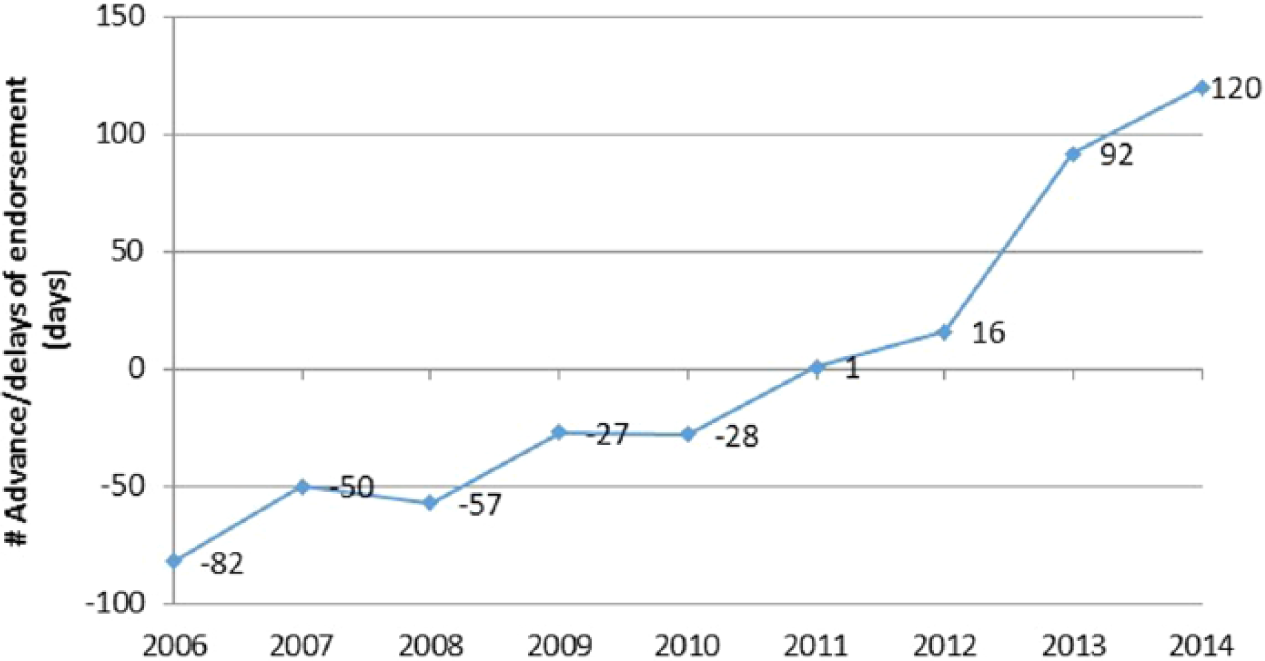
Trend in time for approval of annual fiscal planning for Bandar Lampung (in days)
One incentive is that city/district governments are entitled to US$ 1 million grants if they are able to plan ahead. Another benefit of early approval is that it allows the city bureaucrats adequate time and some degree of quality to plan and implement their programmes and projects. In the past, such as in 2006, approval was delayed by 82 days because of long negotiation between the executive and the legislative. This can also lead to corruption risk. In the city of Semarang, also supported by ACCCRN, the previous mayor took the risk of using bribes to speed up approval of the 2012 budget allocation and as a result he ended up being punished by the National Corruption Eradication Commission in 2012.
c. Leadership
The mayor noted that “Floods often come to this city, but I ask all the village and districts’ head to take care of their local environment by direct visits to the field and not only sitting in the office as I do.”(24) In the management of solid wastes, the mayor promotes high-performing staff and dismisses those with poor performance. Local media portray him as having a good deal of crisis management leadership, exemplified by his consistent city surveillance during heavy rain, especially in the inundation hotspots. It is not clear whether he will run for a second term in 2015. However, he recently ran for governor of the entire Lampung Province in April 2014. Despite ranking second out of four candidates, he received the majority of votes for the city of Bandar Lampung, with 56 per cent. This indicates that the people of the city are in favour of his leadership.
On 11 September 2012, the mayor received an award from the vice president of the Republic of Indonesia.(25) The award was a recognition of the financial accountability of the city government. He combined support for innovative programmes (including environmental programmes) with transparent financial management. As for the 2013 and 2014 annual fiscal plans, the city legislators were to review and approve them first. In addition, the provincial government as the representative of national government also was to review and approve the draft earlier so that work could start subsequently on the first of January 2013 and January 2014.
Administrative will and political will are the conditions for creating sustainable climate governance practice. Leadership and accountability create conditions for healthy fiscal capacity. The increase in the fiscal capacity of the city means more funding available for the issues and sectors that concern the present leadership.
However, there should be fixed connectors and lobby groups created at different levels in order to facilitate the different actors, such as politicians, bureaucrats, civil society, the private sector and academia, coming together to solve urban problems under a changing climate; this is a role that is in part played by the City Team.
d. Staff turnover
Rapid staff turnover causes discontinuity in the City Team and this was especially so during 2009–2010. In Indonesia, it is common for middle- or high-level government staff to be moved without prior notice. Therefore, policy innovation and practices being exercised by key officials are often discontinued when these officials are moved. Our interviews in Bandar Lampung suggest that among high-level officials involved in the City Team, only one or two key persons have stayed in the same offices for more than 10 years while the rest only stayed from six months to three–four years.
Our recent findings suggest that the key person, Desti Mega Putri, the daily coordinator of Bappeda’s City Team, moved from her post in Bappeda in early 2014. Since she has been a champion as well as a connector of stakeholders within and outside city government in regard to all of the climate change resilience initiatives since 2009, her departure can be seen as a collapse of a hub of the City Team network. The internal reporting and documentation system in local governments elsewhere in Indonesia remains weak. Most often the successor has to start from scratch as the accumulated information, knowledge and network over the years are not properly documented. This might lead to transition in the current progress of adaptation and resilience.
Despite the fact that the City Team conducted a workshop (in early 2014) on how to institutionalize the adaptation and resilience initiative, the members were divided when we (Nugraha) asked about their views on the future without ACCCRN. Half of the City Team were of the view that the initiative can be sustained while the rest pessimistically maintained that things may not be sustained given the uncertainty in the future leadership.
e. Sustainability of adaptation discourse
The success in increasing city government income from local tax and recompense allowed the government to increase the annual budget for urban waste management from US$ 0.25 million in 2009 to US$ 5.5 million in 2012. But having more money does not automatically increase investment in sustainable development including climate change. In Bandar Lampung, sustaining the adaptation planning needs more than the meetings, pilot projects and interventions reported in this paper. It is clear that the city government has been performing better in waste management (suggested by both the spending and the fact that the city is cleaner), but there is still a need for smarter spending (e.g. more spending on adaptation and wider environmental concerns).
Findings from ACCCRN in Semarang suggest that having a local champion matters. The absence of a local champion can delay progress in adaptation.(26) The sustained success of adaptation in Durban (e.g. with a prominent champion such as Debra Roberts) indicates that a local champion should have stable engagement to ensure a long-term endogenous climate adaptation initiative.(27) In the context of Indonesian decentralization, this requires an inter-generational leadership commitment that ensures not only financial supports but also the existence of the local champions.
f. Creative enforcement of regulation
The VA acknowledges that over-exploitation of ground water is one of the root causes of the city’s vulnerability in regard to fresh water supplies, along with regular droughts. The mayor has demonstrated how local regulations (or Perda) and incentives can be created to shape the behaviour of the community and private businesses. Under Perda No 2/2010 (regarding Ground Water Management) and Perda No 9/2011 (Guide for Ground Water Tax), the present city government has been able to create disincentives for ground water exploitation.
As of 2012, the mayor was able to collect US$ 40,000 of the water tax (compared to the target of US$ 25,000). The amount may seem trivial in relation to the local government budget but it is significant from the perspective of the local government’s history. The arrangement was under the leadership of the Environmental Department.(28) Property and housing developers have been encouraged to pay the ground water tax. This is seen as a way to increase local income tax and recompense at the same time.
VIII. Reflections
Lessons from Durban suggest that the city government’s much-heralded adaptation strategy was unsuccessful in encouraging any new adaptation-focused action, while the development of sectorally focused action plans has been far more successful in building champions and encouraging action. In addition, lessons from Durban’s adaptation response suggest that the learning by doing strategy has been key to the city’s success; it allowed the city to explore new methods and concepts through structured and programmatic action.(29)
In Bandar Lampung, the “learning by doing strategy” has been used in part by the City Team with support and leadership from the city’s mayor. However, there has been no clear, measurable success in the degree to which the level of vulnerability and risk has been reduced within the city because the intervention has been focusing on the activities such as developing new ideas, studies and knowledge sharing, policy drafting and budgeting. But the success in local tax reform that is an important part of the increase in fiscal capacity allowed the city government to invest in waste management.
One of the lessons learnt in Bandar Lampung is that progress toward adaptation can be reached when external support such as that from ACCCRN is met by an endogenous drive, as exemplified by the present city government, including the leadership from the mayor as well as the still-functioning City Team.
Bandar Lampung has evolved from a city with no knowledge or policy on climate change adaptation to a more climate change-sensitive city as indicated by the shifts in planning, policy and city budget. However, spending explicitly earmarked for climate adaptation within the city’s Environmental Department has been very modest in comparison to waste management.
This paper has documented progress to date but there is uncertainty about how attention to climate adaptation will unfold in the future. Present “temporary” success is associated with the multi-stakeholder platform, the City Team. Its members have been able to act as climate policy entrepreneurs in their own departments and agencies. The City Team also managed to convince the mayor to combine external support (from ACCCRN) with the city budget to address water matters such as biopores. The question is: After 2016, what kind of incentive can be locally created to support the roles of the City Team?
Incentives for climate adaptation need to be substantial and sustained(30) because “incentives create imperatives” for coordination, shared learning and shared action.(31) However, incentives for climate adaptation can only work if there is a sustained effort to keep the issue alive at city level. This justifies the use of small external interventions to catalyze action within the city.
Footnotes
Acknowledgements
The authors would like to thank two anonymous reviewers, Diane Archer, David Satterthwaite and Christine Ro, who gave very valuable inputs to improve the previous drafts. Personal thanks to Ratri Sutarto, Pak Sutri, Paul Jeffery, Ninik Mulyawati, Omar Saracho and Jim Jarvie (Mercy Corps), who have been supporting all the logistics of this research. We would also like to thank all the City Team members in Bandar Lampung, especially Desti Mega Putri (Bappeda Bandar Lampung), Wahyudi (BPPLH), Aryanto (Pusbik), Herza (Mitra Bentala), Maulana Muklish (Lampung University) and others who have been kindly providing support for this research. We also thank the Rockefeller Foundation for the research grants without which this piece would not have materialized.
1.
Brown, Anna, Ashvin Dayal and Christina R Del Rio (2012), “From practice to theory: emerging lessons from Asia for building urban climate change resilience”, Environment and Urbanization Vol 24, No 2, pages 531–556.
2.
Satbintrans (1983), Pola pelaksanaan transmigrasi umum, resettlement dan transmigrasi lokal (Pattern of Implementation: General Transmigration, Resettlement and Local Transmigration in Lampung Region), Pemprov I Lampung; also  , Kota Bandar Lampung in Figures 2010.
3.
Gutman, G, I Csiszar and P Romanov (2000), “Using NOAA/AVHRR Products to Monitor El Niño Impacts: Focus on Indonesia in 1997–98”, Bulletin of the American Meteorological Society Vol 81, No 6, pages 1189–1205, available at http://dx.doi.org/10.1175/1520-0477(2000)081<1189:UNPTME>2.3.CO;2.
4.
Du, Yan, Tangdong Qu and Gary Meyers (2008), “Interannual Variability of Sea Surface Temperature off Java and Sumatra in a Global GCM”, Journal of Climate Vol 21, No 11, pages 2451–2465, available at .
5.
Román, Mikael, Björn-Ola Linnér and Per Mickwitz (editors) (2012), “Development policies as a vehicle for addressing climate change“, Climate and Development Vol 4, No 3, pages 251–260.
6.
Eriksen, Siri and Katrina Brown (2011), “Sustainable adaptation to climate change”, Climate and Development Vol 3, No 1, pages 3–6.
7.
Carmin, JoAnn, Isabelle Anguelovski and Debra Roberts (2012), “Urban Climate Adaptation in the Global South: Planning in an Emerging Policy Domain”, Journal of Planning Education and Research Vol 32, No 1, pages 18–32.
8.
See reference 7; also Pasquini, Lorena, Gina Ziervogel, Richard M Cowling and Clifford Shearing (2014), “What enables local governments to mainstream climate change adaptation? Lessons learned from two municipal case studies in the Western Cape, South Africa”, Climate and Development, available at http://dx.doi.org/10.1080/17565529.2014.886994; and Roberts, Debra (2008), “Thinking globally, acting locally – institutionalizing climate change at the local government level in Durban, South Africa”, Environment and Urbanization Vol 20, No 2, pages 521–537.
9.
Anguelovski, Isabelle and JoAnn Carmin (2011), “Something borrowed, everything new: innovation and institutionalisation in urban climate governance”, Current Opinion in Environmental Sustainability Vol 3, No 3, pages 169–175.
11.
Moench, Marcus, Stephen Tyler and Jessica Lage (editors) (2011), “Catalyzing urban climate resilience: Applying resilience concepts to planning practice in the ACCCRN program (2009–2011)”, ISET, Boulder, Colorado; also Tyler, Stephen and Marcus Moench (2012), “A framework for urban climate resilience”, Climate and Development Vol 4, No 4, pages 311–326.
12.
Personal interviews with Desti Mega Putri, the Daily Coordinator of the City Team of the Local Development Planning Board (Bappeda) and the Head of the Planning Section of the Development Planning Board of Bandar Lampung, on 19 June 2012 and 11 October 2012.
13.
See City Regulation (Perda) No 10/2011 Concerning Spatial and Regional Planning 2011–2030. The word “climate” is not mentioned at all. However, the document has been sensitive to disaster risk management terminology because it appears dozens of times in the planning documents.
14.
See reference 12. We participated in the last meeting of the Master Plan for Green Open Space. The meeting was hosted and facilitated by Mrs Desti Mega Putri.
15.
Personal interview with Aryanto, Director of Pusbik, on 19 June 2012; also personal interview with Herza, Director of Mitra Bentala, on 10 October 2012.
16.
CCROM, ISET, Mercy Corps, URDI and ISET (2010), Final Report: Vulnerability and adaptation assessment to climate change in Semarang City, ACCCRN, Indonesia.
18.
We interviewed 14 grassroots communities in seven villages during 13–14 October 2012 concerning the behaviour of solid waste management at the level of households as well as the local institutions.
19.
When we suggested that perhaps the Adipura assessor downgraded the cleanliness index of the city based on the observation of the city’s coastal areas, one of the City Team members in the city’s Environmental Department argued that almost all of the coasts in cities in Indonesia are in poor condition. So coastal conditions should not be used to downgrade the rank of the city of Bandar Lampung. Interview with A Wahyudi, key contact at BPPLH, City of Bandar Lampung, on 20 June 2012.
20.
Personal interview with Maulana Muklish, Lecturer and Climate Change Adaptation Education Project Manager, Lampung University, on 11 October 2012.
21.
The LAKIP Report is the Performance Accountability Report by city departments.
22.
Pelling, M (2011), “Urban governance and disaster risk reduction in the Caribbean: the experiences of Oxfam GB”, Environment and Urbanization Vol 23, No 2, pages 383–400.
24.
25.
26.
Lassa, Jonatan and Setiyono Jawoto (forthcoming), “Recent Progress of Climate Integration Into Local Development Policy in Indonesia: Lessons From Agenda 21 to ACCCRN in Semarang City”, Climate and Development (under review).
28.
See reference 25.
30.
See reference 21.
31.
Carmin, JoAnn, Debra Roberts and Isabelle Anguelovski (2009), Planning Climate Resilient Cities: Early Lessons from Early Adapters, Paper prepared for the World Bank 5th Urban Research Symposium on Cities and Climate Change, Marseille, France, June, page 4.