



Abstract
This paper utilizes a climate justice perspective to examine municipal green bonds (MGBs), a green-labelled debt instrument issued by subnational governmental entities, such as municipalities or cities, that determines financial, social and environmental redistributions in the context of climate change. This analysis focuses on the origins and financial construction of MGBs as the “descendant” of US municipal bonds and provides data on their recent diffusion in Africa and Latin America. It then draws connections with the lessons learned from critical analyses of US municipal bonds. The case study section explores one wastewater MGB of San Francisco (California) and creates material and theoretical connections with MGBs issued to finance water infrastructure in Mexico City (Mexico) and Cape Town (South Africa). The article concludes that the analysis and implementation of municipal green bonds needs a climate justice approach in order to recognize and address the production and reproduction of climate injustices.
I. Introduction
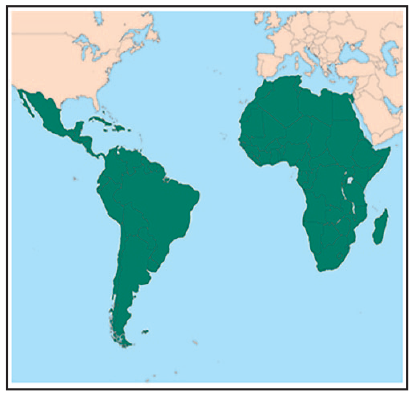
The contribution of Working Group II to the Sixth Assessment Report of the Intergovernmental Panel on Climate Change (IPCC) on “Impacts, Adaptation and Vulnerability” makes it clear that cities(1) in global South regions, including Africa and Latin America, are at the forefront of the climate crisis and central to adaptation strategies.(2) In these regions, the urban population is growing and the environmental impacts are increasing,(3) creating a compounding effect when it comes to vulnerabilities to climate change.(4) Therefore, states, municipalities, international organizations and private actors alike have been arguing that the response to the climate crisis requires the allocation of an increasing amount of financial resources to urban areas in the global South, an effort that has to be put at the centre of climate action(5) and the sustainable development agendas grouped by the IPCC under the umbrella concept of “climate resilient development”.(6) In the context of a “financial gap”,(7) municipal green(8) bonds (MGBs) are increasingly promoted by climate and development stakeholders as a financial opportunity for cities and other subnational governments to raise the capital needed to finance climate action, including projects crucial for climate adaptation,(9) such as attention to water infrastructure.(10) This is vital for communities in the global South with a higher concentration of vulnerabilities,(11) especially as the large part of mobilized climate finance is allocated to climate mitigation.(12) Within the global South, this article concentrates on MGBs in Africa and Latin America, two of the regions with the highest levels of inequality – a salient consideration within a climate justice approach.(13)
MGBs are debt securities issued by subnational governmental entities that are labelled green to signal to the financial market a climate- and environment-related investment. The issuance of MGBs is so far concentrated in the United States of America (US),(14) while gradually emerging in the rest of the global North and South, with the highest concentrations in Europe and China. The first of these experiences was in Île-de-France,(15) France, in 2012.(16) In Africa and Latin America, local governments issued nine MGBs over the 2014–2023 period, which included cities and provinces in South Africa, Mexico, Argentina and Morocco (see Table 1).
Municipal green bonds in Africa and Latin America, 2014–2023
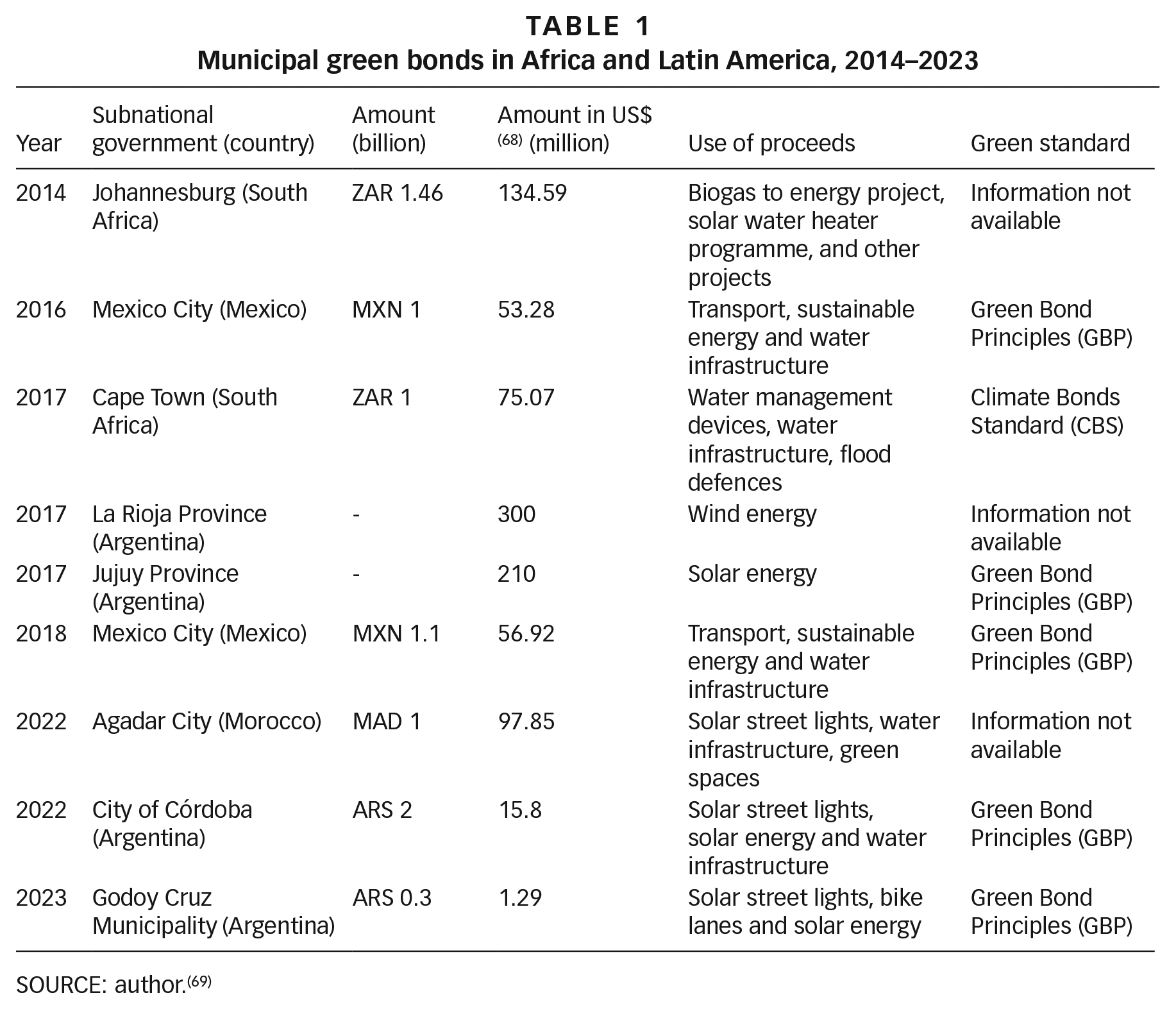
SOURCE: author.(69)
Academic attention to green bonds is growing year by year.(17) Jones and others classified the literature on green bonds in 2020 under two main approaches: practical concerns and political concerns. Most of the available literature focuses on practical concerns regarding the expansion of the green bond market, including product integrity, financial performance, additionality(18) and market globalization.(19)
Only a few authors have delved into the political economy(20) of green bonds, and even fewer have dealt with their subnational version, the MGBs. In 2018, Christophers studied the entanglement of financial and environmental risk for the issuance of an MGB to fund green water infrastructure in Washington, DC, US.(21) Hilbrandt and Grubbauer studied the first MGBs in Mexico City (Mexico) in 2020, finding that the application of green standards barely impacted project implementation, yet served to promote markets, knowledge and political support amid challenges of long-term stabilization.(22) García-Lamarca and Ullström examined an MGB issued by Gothenburg (Sweden) that circulated capital within a consensual, non-antagonistic, sustainable order.(23) In addition, Bigger and Millington analysed the issuance of MGBs by Cape Town (South Africa) and the New York Metropolitan Transit Authority (US), finding greater financial and environmental burdens “borne primar[il]y by the poor or working class people of color”,(24) and the narrowing of options for the structural changes needed for just climate adaptation.(25) In synthesis, there is a dearth of research applying an explicit climate justice approach to the discussion of MGBs.
As a general framework, this paper recognizes that the expansion of green debt(26) in the context of highly indebted countries is inherently problematic and that the use of a debt instrument is often limited to cities and provinces that prove to have the necessary conditions to go into debt, such as regulatory frameworks,(27) legal capacities, financial expertise, creditworthiness and consolidated local financial markets (see Section III below).(28) However, it also recognizes that MGBs will continue to be issued and that it is important for academics to critically reveal current and future frictions and incoherence. To achieve this goal, this paper combines a qualitative approach with a critical review of relevant sources, including financial, policy and academic documents, reports, standards and media coverage. It also builds on fieldwork undertaken by the author in San Francisco, California (December 2021 and January 2022), Mexico City, Mexico (February–March 2022) and Cape Town, South Africa (September–December 2022), drawing on 32 semi-structured interviews with water activists, heads of households, policymakers and climate finance experts.(29) All of this work focused on the MGBs’ use of proceeds for water infrastructure, a commonality in the three cities, allowing the analysis of the green debt instrument and its connection with a critical environmental and climate element, notably water. The paper provides a comprehensive analysis of the MGBs’ roots in and lessons from the US. It then explores the situation in Africa and Latin America, and offers key insights from theory and practice to understand the need for a climate justice approach for future research, policymaking and project funding.
II. A Climate Justice Approach: Distribution, Recognition And Procedure
There are many definitions of climate justice, a framework receiving increasing attention.(30) Overall, the concept of climate justice originates from and contains aspects of environmental justice, focusing on climate impacts unevenly distributed over present and future generations and within and between countries.(31) A brief excursus on environmental justice is needed here. Environmental justice is an approach to socio-ecological processes that promotes the fair distribution of environmental benefits and detriments and the fulfilment of basic environmental needs for all, regardless of attributes such as ethnicity or income.(32) This includes, but is not limited to, having access to breathable air,(33) drinkable water(34) and nutritious food.(35) In the US, environmental justice has followed the path of racial justice, explicitly condemning environmental racism and the highest concentrations of pollution in Black-majority areas.(36) The social movements for environmental justice fostered mobilization and ideas for climate justice, and the two prongs are increasingly finding spaces of convergence.(37)
In 2005, for example, Hurricane Katrina in the southern US was an extreme climate event that impacted Black-majority municipalities such as New Orleans (Louisiana), unveiling the entanglement between climate, environmental and racial injustices and spurring social mobilization against this nexus.(38) Movements for climate justice have continued to grow and demand effective climate action that responds to different forms of injustice, environmental racism and colonial legacies.(39) The political support behind the notion of climate justice and its increasing relevance in both academic and policy spaces is exemplified by its mention in the Preamble of the Paris Agreement(40) (albeit without a concrete definition) and by its recent adoption in 2022 in the Sixth Assessment Report of the IPCC, where the term is both defined and justified.(41) In the report, the IPCC reviews the climate justice scientific literature, which builds on both environmental and climate justice cases and movements and synthesizes three fundamental pillars: recognition, procedure and distribution.(42) The recognition pillar entails the acknowledgement of diverse perspectives and cultures on what and who is relevant; the procedural pillar focuses on who decides what and who participates in decision-making; and the distributive pillar accounts for how burdens and benefits are distributed amongst different spatial and temporal scales, from individuals to nations to generations.(43)
A key component of climate justice is inclusiveness, which is the need to recognize the varied and intersecting forms of exclusion and vulnerability that materialize and worsen under climate change. The IPCC explains that “Vulnerabilities vary by location and are shaped by intersecting processes of marginalization, including gender, class, race, income, ethnic origin, age, level of ability, sexuality and nonconforming gender orientation (high confidence).”(44) Accordingly, the IPCC recommends climate action with an inclusive approach that recognizes the various intersections of vulnerabilities to accelerate positive transformative adaptation to climate change.(45) This requires the concept of intersectionality to be part and parcel of climate justice,(46) just as it is of many other facets of social activism and academic debate, including, for example, Critical Race Theory, Black Feminist Thought and Third World Feminism.(47) Furthermore, the urban context, with its inherent challenges, demands a specific climate justice perspective.(48) In urban settings and with respect to MGBs, local governments grapple with the concentration of vulnerabilities in densely populated areas and tensions arising from insufficient recognition of exclusionary dimensions such as income and race, as discussed in Sections IV and V of this paper.(49) The aspect of inclusiveness involves the issue of voice and the pillar of recognition. For instance, voices related to climate justice emerging from social movements in the global South may encounter challenges in attaining recognition in academic and international policy arenas.(50)
Finally, following the IPCC, climate justice is used in this article as a concept that counters the uneven distribution of climate-related “goods” and “ills” on the basis of the pillars of distribution, recognition and procedure, taking into consideration the intersectional forms of exclusion that are worsened by the climate crisis and that require a systemic and structural approach across multiple axes of vulnerability. In a nutshell, climate justice is conceived here as a “nesting doll” that contains aspects of environmental justice and aspects of racial justice, all of which relate to the common pillars of recognition, procedure and distribution and are embedded under intersectionality.(51) Therefore, when examples of racial justice or environmental justice are mentioned in the following sections, they are understood to be contained within climate justice. And when climate justice is mentioned, it is understood to include environmental, racial and intersectional aspects. This involves considering climate justice not only as analytical lens but also as strategic approach for advocacy and policymaking.
III. Municipal Green Bonds In Africa And Latin America: Elements And State of the Market
Green bonds emerged in the last two decades with the support of development banks and other public and private actors. The European Investment Bank issued a Climate Awareness Bond in 2007, a direct precedent for green bonds,(52) and then, at the suggestion of Swedish pension funds looking for green investments, the World Bank issued the first bond labelled as green in 2008.(53) The green bond market continued to be modest until 2013, when the International Finance Corporation issued a US$ 1 billion green bond. Annual green bond issuance grew from less than US$ 50 billion in 2014 to US$ 263 billion in 2019, and a cumulative issuance of US$ 1 trillion was completed in 2020.(54) Green bonds raise more capital than other climate finance instruments, such as the Clean Development Mechanism(55) and the Green Climate Fund.(56) However, despite their rapid growth, green bonds accounted for just under 4 per cent of the nearly US$ 120 trillion global bond market in 2020, indicating potential for expansion.(57)
MGBs are the municipal expression of green bonds; as such, they share characteristics with both green bonds and municipal bonds.(58) In this sense, MGBs are a financial instrument with a combination of elements based on the (subnational) issuer and the (green) label. Municipal bonds are issued by a local government, authority or company under its control.(59) Subnational governments issue municipal bonds as a source of municipal debt; this can be done as an alternative to borrowing money from banks.(60) There are two types of municipal bonds depending on the source of income used to pay back the debt: revenue bonds are expected to be paid with the returns produced by the financed projects (e.g., water bills with water infrastructure), and general obligation bonds rely on the regular source of income of the local government issuing the bond (e.g., taxes).(61)
The basic elements of regular municipal bonds are the principal (the amount of indebted money), interest rate (earnings), maturity date (to pay the principal), an issuer (the local government), the use of proceeds (on expenses or projects), and a source of revenue to pay the debt (see Figure 1). MGBs share the regular elements of municipal bonds, but with the additional element of a green label, which can be based on voluntary standards, of which two were applied in the MGBs discussed in this article. First, the Green Bond Principles (GBP) of the International Capital Market Association (ICMA), initially published in 2014 with a voluntary external review and no detailed taxonomy of eligible green projects, were applied to the MGBs issued in Mexico City and, in Argentina, in the city of Cordoba and province of Jujuy (see Table 1). Second was the Climate Bonds Standard (CBS) of the Climate Bonds Initiative (CBI), first published in 2015 with mandatory external review and a classification of eligible investments known as the Climate Bonds Taxonomy. The CBS was applied in the MGB of the city of Cape Town, South Africa (see Table 1).(62) There are other green bond standard initiatives, such as the European Union Green Bond Standard.(63) Beyond green bonds, other labelled bonds are sustainability bonds, categorized as having a combination of environmental and social objectives, or blue bonds, labelled as such to fund projects in the ocean, along coastlines, or in relation to the blue economy.(64)
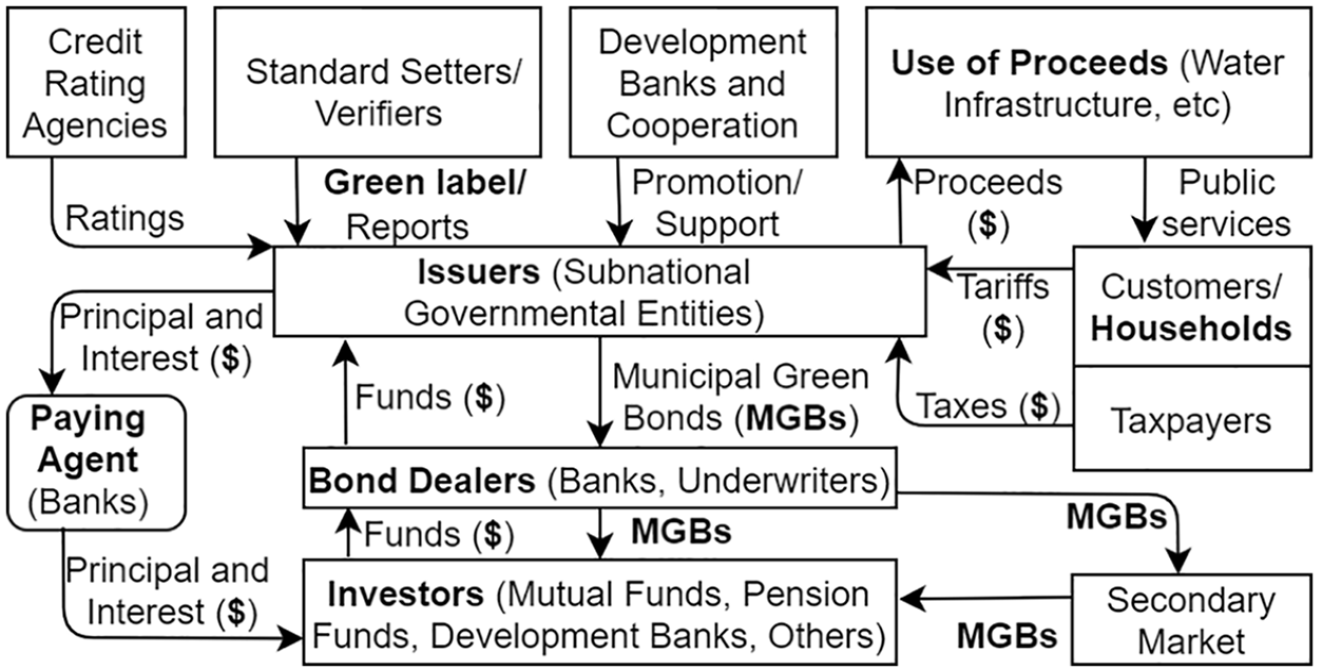
Municipal green bond cycle
MGBs focus the financial sourcing for climate action on debt labelled green at the subnational level of the State, and private finance markets and investors.(66) Throughout the MGB cycle, subnational governmental entities issue green debt in the financial market, which involves private and public actors, such as debt-buying investors, standard setters like ICMA and CBI, and subnational financial and environmental authorities. Therefore, MGB decision-making involves public servants and investors holding financial capital; the former prepare the MGB and issue it on the market through a financial intermediary, and the latter buy the bond and collect the return and the principal (see Figure 1).
The green bond market is concentrated in the US, Western Europe and China. In the global South, the issuance of green bonds totalled US$ 323.4 billion for the 2012–2021 period, 68 per cent of which corresponded to China, 10.3 per cent to Latin America and 1.32 per cent to Africa. By sector, most green bonds in the global South were issued by financial institutions, non-financial corporate, sovereign and government agencies.(67) Table 1 shows the issuance of MGBs for the 2014–2023 period in Latin America and Africa, with proceeds earmarked for projects classified as climate adaptation and mitigation.
IV. Lessons from Municipal Bonds in the Us: Racial and Environmental Injustice
Because MGBs are nothing more than municipal bonds with a green label, strong support for this analysis can be offered by the critical research and empirical studies carried out on the distributive implications of municipal bonds. This is especially true because most of these studies have been conducted in the US, a country that represents macroeconomic and financial conditions that are considered benchmarks for the municipal debt markets in the global South, as explained in this section.
Historically, municipal bonds have been a preferred source of finance for US subnational governments. All across the country, aqueducts, hospitals and other key features of public life have been funded by the issuance of municipal debt. In quantitative terms, 72 per cent of the country’s infrastructure built between 2007 and 2016 was financed by municipal bonds.(70) In 1812, the New York City Government issued the first US municipal bond; by the beginning of the 2020s, the US municipal bond market had grown to around US$ 3.8 trillion, with MGBs accounting for 1–2 per cent of that market.(71) In the US municipal debt market, the Commonwealth of Massachusetts issued the first MGB in 2013; as of 2018, MGBs expanded to reach 3,983 issuances, with a total worth of US$ 28 billion.(72)
The use of municipal debt has been increasingly promoted in development finance and climate finance agendas in the global South, first with municipal bonds and then with MGBs. Since the 1990s, development banks, cooperation agencies, the private sector and academia have been encouraging the use of municipal bonds in the global South as a model to obtain access to private financial capital in a context that is distinguished by its “financial gap”(73) and public finance scarcity.(74) In 2009, for example, USAID argued that bonds “have longer maturities, require less collateral, and are more affordable than traditional bank loans”.(75) According to James Leigland, a World Bank consultant, the US municipal bond market acts as a benchmark for municipal bonds elsewhere due to its more than two-hundred-year history, the maturity of its legal frameworks, associated professional expertise, regulatory institutions, information databases and homogeneous standards.(76) In other words, municipal bonds – and later MGBs – are not completely original; they are an attempt to expand the use of financial instruments, long used in the US, to the global South.
For this reason, it is key to look at the academic work on regular municipal bonds in the US and the way it has shown how municipal debt can activate financial and environmental distributions that were usually overlooked before the issuance of the financial instrument. Historian Destin Jenkins analysed the municipal debt experience in San Francisco, California in the 1940s and 1950s and found that municipal bonds primarily financed public infrastructure in white suburbs, leaving Black-majority neighbourhoods behind.(77) Municipal debt “unlocked profits for underwriting investment banks, made for new roads and streets that separated black from white, and delivered interest payments to wealthy bondholders”.(78)
Empirical evidence has been gathered that shows that the issuance of municipal bonds by US subnational governments reproduces racial injustices.(79) For instance, Yinger analysed the risk ratings of general obligation municipal bonds in the US for the 2002–2007 period: although cities rarely defaulted, those with a larger Black population had worse risk scores.(80) Similarly, Ponder analysed the municipal bonds issued from 1970 to 2014 in the US and found that the combined average interest rate for all cities was 5 per cent, and no city with a Black-majority population had an interest rate below the national average.(81) In effect, Black-majority cities have had to pay more to access funding for their basic infrastructure as a consequence of the higher interest rates based on the opinions and standards of credit rating agencies.(82)
Furthermore,(83) Loftus and others analysed a sample of 362 municipal bonds issued by 56 tribal (Indigenous) governments in the 1992–2021 period, totalling US$ 4.9 billion, and found that “tribal governments pay 22% to 87% higher borrowing costs than nontribal governments, which translates to approximately $79,000 to $310,000 in higher annual interest payments for the average tribal issuer”.(84) Along similar lines, Eldemire and others analysed rated municipal bonds issued by cities and counties from 1990 to 2019 and found that “racial bias can increase borrowing costs, especially where racial resentment is severe”.(85) Finally, to discuss the possible link between climate, race and financial risk, Smull and others analysed 712,855 municipal bonds as of April 2022 and found that racial composition explains municipal credit spreads, or differences in borrowing costs for cities, whereas climate risk does not.(86)
From an environmental perspective, multiple case studies have demonstrated that municipal bonds produce racial and environmental injustices in terms of access to water, as in the examples of Jackson, Mississippi, and Detroit, Michigan. Researchers investigated how the issuance of municipal bonds to finance and refinance water infrastructure increased the price of water bills and water access shutoffs, especially in Black-majority neighbourhoods and cities, in order to collect money to pay off municipal debt. Municipal bonds hindered access to water and climate adaptation capacities in these racialized communities.(87)
The use of the US municipal debt market as a benchmark for countries in the global South – including when it comes to the issuance of MGBs – may thus conceal more problems and frictions than its promoters would admit. In particular, the experience in the US displays both an asymmetry in interest rates between Black-majority municipalities and the rest and an uneven distribution of drinking water due to more expensive water bills or non-payment disconnections. The US municipal bond experience shows the interrelationship between racial injustice and environmental injustice in the distribution of a vital environmental and climate element such as water. This also demonstrates the need to approach this type of financial instrument from an intersectional climate justice perspective, including environmental and racial perspectives and applicable interrogations and responses. Yet, these aspects are rarely discussed when municipal bonds and MGBs are promoted as one of the most effective ways of financing climate action.
Nevertheless, after two centuries of the US municipal bond market, questions of racial justice are starting to be asked in the field of municipal finance. The Committee on Financial Services of the House of Representatives of the US Congress had a session on 28 April 2021, examining the role of municipal bonds in racial and social justice.(88) In 2021, the Robert Wood Johnson Foundation gave a grant of US$ 4 million to empower communities to disrupt systemic racial inequities in the US municipal bond market.(89) As a result, in 2023, a voluntary framework for “Municipal Bond Markets and Racial Equity” was published, which formulates questions to help issuers assess their practices, such as “What share of the project(s) funded with the bond proceeds will lead to improved water access that benefits low-income residents or residents who are people of color or part of other historically marginalized groups?”(90) This is an illustration of a pertinent question worth asking in relation to environmental and racial justice, all within the climate justice framework introduced in Section II, a framework that is not normally included in the green labelling of municipal bonds with proceeds used in contexts of injustice, as explained in the next section.
V. A Climate Justice Approach to Municipal Green Bonds: Recognition, Procedure and Distribution in San Francisco, Cape Town and Mexico City
This section draws on three cases of MGBs in San Francisco (California, US), Cape Town (South Africa) and Mexico City (Mexico) from the perspective of climate justice and its three pillars: recognition (who and what is relevant;) procedure (who makes decisions and how); and distribution (financial and environmental benefits and detriments) (see Section II). First, the San Francisco case shows the experience of a municipal bond with a green label in the US, a benchmark country for municipal bonds as explained in Section IV, allowing an experience from the global North to be put into analytical dialogue with two experiences from the global South in Africa and Latin America.(91) In all three cases, a significant share of the proceeds was used for water infrastructure.
a. San Francisco (California) wastewater MGB: An environmental injustice context
The San Francisco Public Utilities Commission (SFPUC) issued one wastewater MGB in 2016 for US$ 241 million, with the proceeds earmarked for the renovation of wastewater infrastructure in the city of San Francisco.(92) A portion of the proceeds went to finance the renovations of the Southeast Treatment Plant, responsible for treating the majority of the city’s wastewater.(93) The two largest projects of the plant are the New Headworks Facility,(94) where wastewater treatment begins with the removal of debris and grit, and the new Biosolids Digester Facilities,(95) with the production of biosolids for potential use as fertilizer. In both projects, the renovation sought to maintain infrastructure, reduce bad odours and prepare for earthquakes and for the rise in sea level due to climate change.(96)
The Southeast Treatment Plant complex is located in the southeast corner of San Francisco, in Bayview-Hunters Point (BHP), a historically Black-majority neighbourhood.(97) BHP accumulated environmental injustices due to the location of pollution sources such as the aforementioned treatment plant that pollutes the air and generates bad odours by treating San Francisco’s wastewater; most of the city’s industrial zone; and decommissioned infrastructure including the Navy shipyard, the Navy Radiological Defense Laboratory and the Hunters Point Power Plant, with their polluting legacies.(98) This is a paradigmatic case of municipal green debt entering a context of environmental injustice.(99)
In the context of the Southeast Treatment Plant, the convergence of racial and environmental injustices is further exacerbated by the impacts of climate change, all of them aspects of climate injustice. San Francisco employs a combined sewer system, where both rainwater and wastewater converge at the Southeast Treatment Plant for treatment before being released into the ocean.(100) However, this system faces challenges during rainstorms and extreme climate events, resulting in combined sewer overflows,(101) discharging contaminated water without treatment.(102)
Recognition of environmental and racial injustice in Bayview-Hunters Point prior to and outside of the issuance of the wastewater MGB
Before the issuance of the 2016 wastewater MGB, the city of San Francisco and the SFPUC had already recognized the environmental injustice in BHP, an epicentre of social mobilizations for racial and environmental justice. San Francisco’s first zoning plan in 1921 concentrated industrial and residential uses in this neighbourhood, placing housing next to pollution sources. With World War II, the military industry in BHP grew, demanding a workforce of Black Americans, drawn from the “Great Migration” of people who fled the Jim Crow segregation system in the southern states.(103) The Navy shipyard located in BHP was also a foothold for military nuclear activities, as the site where ships irradiated by nuclear tests in the Pacific were disassembled. This shipyard was opened in 1940 and closed permanently in 1994, leaving behind radioactive pollution. BHP residents still demand environmental justice and a complete clean-up of this pollution. Nearby, the Hunters Point Power Plant operated from 1928 until 2006, when it was closed after years of local opposition to its pollution.(104) Adjacent to the former plant, a public park commemorates the struggle for environmental justice in BHP with several permanent art installations. The neighbouring Southeast Treatment Plant was inaugurated in 1952, and its renovation, partially financed by an MGB, began in 2018. In this neighbourhood, the struggle for environmental justice is interwoven with the historical fight for racial justice, a landmark moment of which was the Hunters Point uprising to protest the killing of Matthew Johnson, Jr., an African American teenager, by a police officer on 27 September 1966.(105)
In this historical context of racial and environmental injustice in BHP, San Francisco’s governmental entities acknowledged the need for an environmental justice policy. On 13 October 2009, the SFPUC adopted Resolution No. 98-0170, which defines environmental justice as “the fair treatment of people of all races, cultures, and incomes and . . . [the belief] that no group of people should bear a disproportionate share of negative environmental consequences resulting from the operations, programs, and/or policies of the SFPUC”.(106) The SFPUC was the first utility in the US to adopt this kind of policy,(107) and the Southeast Treatment Plant renovations represented an opportunity to test its validity and implications.
Procedure for the inclusion of the environmental justice perspective outside of the MGB
As a response to SFPUC’s environmental justice policy (distinct from the MGB procedure), the Southeast Treatment Plant projects included an environmental justice initiatives programme consisting of employment and educational opportunities for historically discriminated-against populations, temporary art installations (e.g. Photo 1), a new community centre and environmental justice impact reporting.(108) In BHP, the environmental justice report identified 33 indicators of concern, including the concentration of particulate matter, cancer risk, nuisance and odours, traffic density, brownfield sites,(109) proximity to hazardous waste generators and solid waste sites, zoning for industrial uses, the rental affordability gap, displacement and homelessness.(110) The financial resources to implement the environmental justice initiatives in the project were assigned as a percentage of the total project financing, regardless of the origin of the funds. For instance, the Biosolids Digester Facilities Project, part of the Southeast Treatment Plant, assigned “2 percent of all above ground infrastructure project costs to support arts enrichment [and], a new, world class community center at 1550 Evans”.(111) Ultimately, this case illustrates, in historical and policy terms, how an environmental justice perspective is accepted as relevant, even if not included in the green labelling process, explained next.
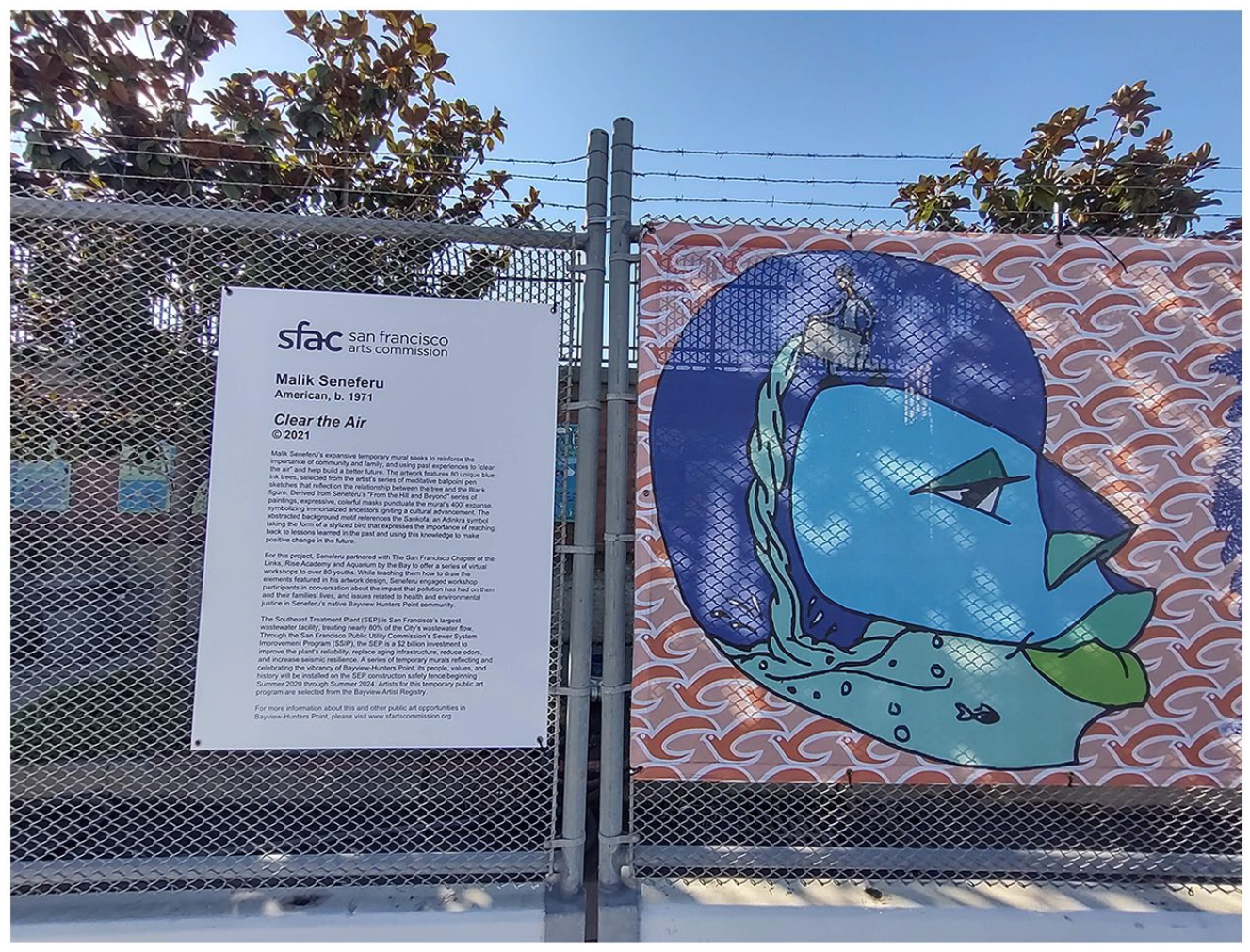
Environmental justice temporary art installation on the Southeast Treatment Plant construction safety fence. Bayview-Hunters Point, January 2022
In a distinct process unrelated to the SFPUC’s environmental justice policy, the 2016 wastewater MGB utilized the green label under the Climate Bonds Standard of the Climate Bonds Initiative. This green labelling strategy incorporated the Water Infrastructure Criteria of the Climate Bonds Initiative, categorizing water-related assets eligible for certification, including wastewater treatment facilities. The criteria included a scorecard to assess climate vulnerability and adaptation plans of issuers, notably lacking explicit climate justice criteria.(112) In essence, the MGB’s green label process did not entail any specific recognition or strategy concerning environmental or climate justice.
Racialized distribution of space and pollution is maintained and legitimized with the MGB
The racialized distribution of space and of pollution is ongoing in San Francisco, which continues to concentrate its polluting sources in BHP. It could be argued that the municipality, through its MGB-funded green-labelled improvements, is applying a veneer of legitimacy to its discriminatory policies; meanwhile the underlying structural issues remain untouched. In terms of procedure and distribution of environmental and financial benefits and detriments, the acknowledgement of environmental injustice did not mean structural change, which might, for example, have included the dismantling and relocation of the Southeast Treatment Plant. In the words of a BHP resident: “They use this district as, like, a dumping ground. For the homeless, for the shelters, for the treatments, for the cement making, for the radioactive materials . . . . If it’s something that’s rejected somewhere else, and more so because the people that somewhere else in San Francisco got enough time to go to the [City] Council meetings. But when you are a blue collar and you have to work every day you don’t have enough time to go to the Council meetings.”(113)
In terms of the distribution of finance and space, BHP is in a contradictory situation. On the one hand, ongoing processes of gentrification and increases in the cost of living in San Francisco loom over the historic inhabitants of the neighbourhood. On the other hand, the reputation for crime and the risk of contamination have slowed the forces of displacement and cumulative redistribution.(114) Neither the Southeast Treatment Plant renovations nor the MGB directly address responses to these processes of displacement and distribution. The renovation works will ironically extend the plant’s presence in BHP for decades, postponing structural solutions aligned with a just distribution of space and finance that, for example, would dismantle the plant, as was the case with the Hunters Point Power Plant in 2006.
b. Cape Town Water Management Devices (WMDs) in “indigent”(115) households
In 2017, the government of Cape Town issued on the Johannesburg Stock Exchange an MGB for US$ 75 million.(116) The Water Management Devices (WMDs) programme for “indigent” households(117) created in 2007 received 83 per cent of the proceeds.(118) The goal of this programme,(119) according to KPMG,(120) was “to enhance water management, influence behavior to reduce water wastage and reduce water losses through leakage”.(121) This initiative unfolded against the backdrop of the 2015–2018 drought, an extreme climate event leveraged by the City of Cape Town Government to urge residents to reduce their water consumption.(122) The WMDs distributed a daily quota of 350 litres of water per “indigent” household; once this amount was exhausted, the service was suspended until the next day at dawn, when it would restart.(123) Following long-term community opposition, the WMDs programme was cancelled in 2021 for replacement by conventional meters.(124) Most “indigent” households in Cape Town are located in Black-majority and “Coloured”(125)-majority neighbourhoods, as explained below. This is therefore a case of municipal green debt financing an environmental policy that restricts the distribution of water in the context of a racial divide.
Insufficient recognition of racial and environmental injustice in Cape Town
The MGB adhered to the CBI’s voluntary Climate Bonds Standard, which contains a list of pre- and post-issuance requirements, none of which addresses explicitly racial, environmental or climate justice criteria, despite the fact that the green debt addresses a context of historical racial injustice in post-apartheid Cape Town. The apartheid government implemented a racial injustice system where race determined socioeconomic status and divided spaces in the city. As a result, according to Turok et al., “Whites became increasingly better-off than Indians/Asians, followed by coloureds and then black Africans”.(126) White neighbourhoods were assigned to better locations closer to workplaces, and non-white neighbourhoods to peripheral locations; meanwhile, the mobility of non-white people in white areas was restricted and only allowed with a pass. Since the end of the apartheid government in 1994, although the prohibitions on non-whites residing in or transiting through white neighbourhoods were lifted and some modifications happened, the neighbourhoods with the best locations and higher-income households, such as Sea Point and Camps Bay, have continued to be white-majority. Meanwhile the neighbourhoods with the worst location, lower incomes and most “indigent” households, continue to be Black-majority, as in Khayelitsha and Dunoon, or “Coloured”-majority, as in Mitchells Plain. The WMDs were mostly targeted at “indigent” households in lower-income neighbourhoods.
The WMDs programme did not sufficiently recognize the legacy of racial injustice, ignoring the varied and compounded vulnerabilities in “indigent” households. For instance, the programme did not adjust the daily water quota to the specific needs of a population with greater health problems, more children and elderly people in need of support.(127) According to a water activist and resident in Dunoon, children may find it hard to wash for school, and elderly people may not have access to water when they need to take their medication.(128)
Inadequate procedure for participation
The “indigent” households and communities in the areas experiencing racial injustice did not have sufficient opportunity to effectively participate in planning or carrying out the WMDs programme implemented in their neighbourhoods or to learn about the MGB financial operation that tied them to a municipal green debt obligation.(129) As a Mitchells Plain resident explained: “We didn’t understand the device, we didn’t know that when your water is finished for the day, the amount that they’re giving you, the tap just switches off.”(130) The inadequate participation is illustrated by the opposition these devices faced, with residents and activists advocating for real, meaningful engagement before WMDs installations, collecting evidence on the impacts of the lack of water, and lobbying against it with councillors.(131) Sufficient community participation could possibly have signalled the impertinence of the project or suggested needed modifications within this milieu of injustice.
Distribution of water, profits and debt
The issuance of the MGB and the allocation of proceeds to the WMDs triggered a financial distribution through which the bond buyers collected profits while taxpayers and water tariff payers contributed to repaying the municipal green debt (see Figure 1) that financed a failed water distribution strategy. Neither the bond nor the WMDs policy sufficiently addressed the context of racial and social injustice. The programme also triggered an uneven distribution of water, which was assigned per “indigent” household, with no regard to the number of people living in each household, or the fact that lower-income households tend to include more people, given the housing deficit and the consequent increase in backyarders (Photo 2).(132) In the words of a Mitchells Plain resident: “They know that here is another household living here. And inside that house is another 2–3 houses living there. They keep on calling us even though in meetings we keep on saying to them stop referring to us, to it, as households.”(133)
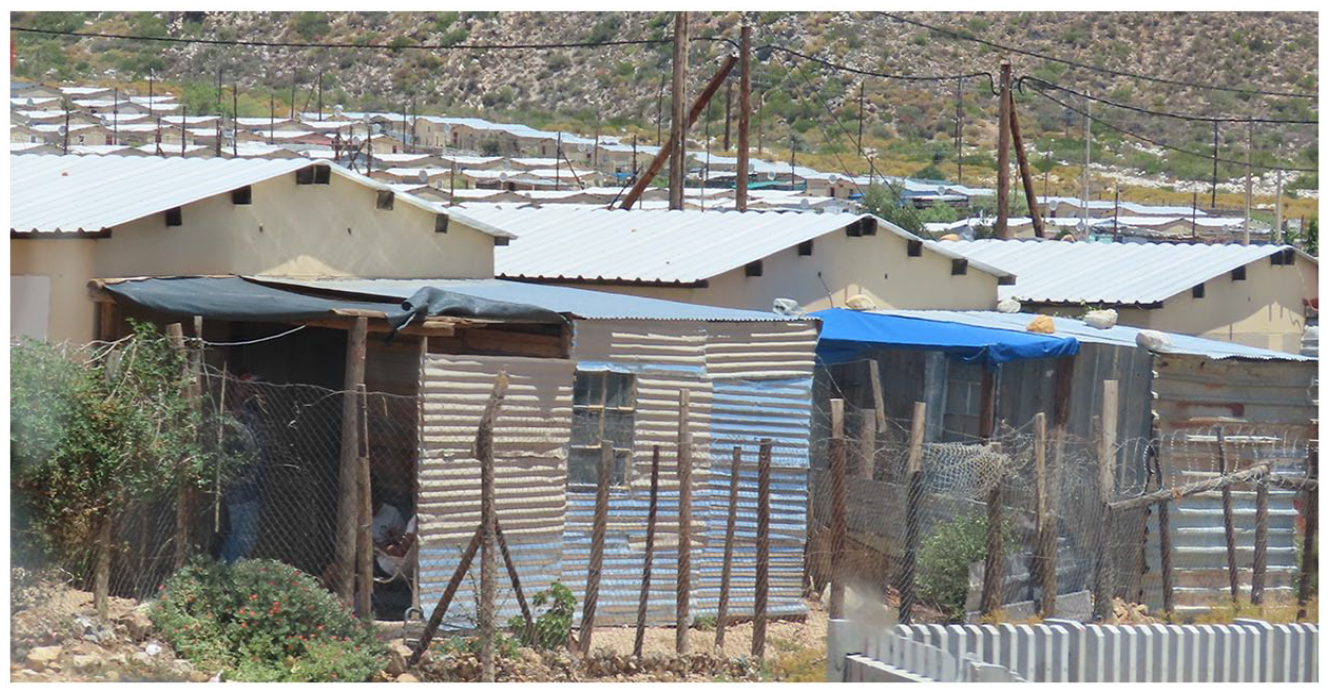
Backyarders near Cape Town in the Western Cape Province, December 2022
c. Water infrastructure in lower-income eastern Mexico City
In 2016, Mexico City issued the first MGB in Latin America in the Mexican Stock Exchange Market for a value of US$ 53 million. The proceeds were assigned to projects for sustainable transportation (58 per cent), water infrastructure (36 per cent) and energy efficiency (6 per cent).(134) For water infrastructure, the two largest allocations of capital were in eastern Mexico City. The amount for the “Vicente Guerrero” Regulation Plant in the borough of Iztapalapa, which regulates the flow of rainwater and sewage to alleviate floods, was US$ 8 million.(135) For the Selene water purification plant in the borough of Tláhuac, which renders groundwater drinkable,(136) it was US$ 5.4 million.(137)
Insufficient recognition and procedure
The voluntary standard applied was the Green Bond Principles of the ICMA (see Section III). The environmental, social and governance research, ratings and analytics firm Sustainalytics provided the reference framework’s Second Opinion,(138) and Carbon Trust provided the follow-up report. Neither the standard applied nor the follow-up report included climate justice criteria. As in the cases of San Francisco and Cape Town, there are two moments or levels at which the recognition of the situation of racial and environmental injustice is possible: first, at the government level, with regulatory frameworks and implementation strategies; and second, at the level of financial issuance, with voluntary standards applied to the MGB. Accordingly, in the country’s political constitution, Mexico recognized the importance of protecting the rights of the population identified as “indigenous” and “Afro-Mexican”.(139) However, in the Vicente Guerrero and Selene water projects, partially financed with the MGB, there were no evaluation and monitoring criteria with a racial or environmental justice perspective, despite the projects’ location in the boroughs of Iztapalapa and Tláhuac, where the presence of Afro-Mexicans, indigenous people and lower-income households is well recognized.(140)
In terms of procedure, the MGB was issued to finance projects already planned and under construction, such as the Vicente Guerrero and Selene water infrastructures. Since the bond did not have additionality, or finance new projects, it could be argued that additional spaces for participation were not necessary for already ongoing projects. However, green debt tied up government action and reduced the alternatives for regulating flooding in Iztapalapa and the treatment and distribution of drinking water in Tláhuac, an area with intermittent access to water.(141) Therefore, the MGB needed participatory procedures in order to recognize the implications of green debt and water distribution for racial and environmental justice.
Distribution of drinking water and flood water in eastern Mexico City
In Mexico City, water distribution is uneven between the west, which concentrates higher-income neighbourhoods in boroughs like Miguel Hidalgo and Benito Juárez, and the east, with lower-income neighbourhoods in boroughs such as Iztapalapa and Tláhuac (see Photo 3).(142) The drinking water from the Lerma-Cutzamala system enters the city from the west and is initially distributed in this area.(143) Therefore insufficient water reaches the east and consequently dozens of neighbourhoods in the eastern part of the city have intermittent access to water.(144) Additionally, during the rainy season, the neighbourhoods in the east, which were built in former lake areas, are most affected by flooding.(145) In the borough of Iztapalapa, the Vicente Guerrero regulation plant has two artificial lagoons that store and regulate excessive flood water. In the borough of Tláhuac, the Selene water purification plant filters groundwater to be distributed in the neighbourhoods in the area. Therefore, it could be argued that the two projects, financed partially by the MGB, addressed the drinking water scarcity and seasonal floodings in eastern Mexico City. This perspective may be subject to criticism, however, as explained next.
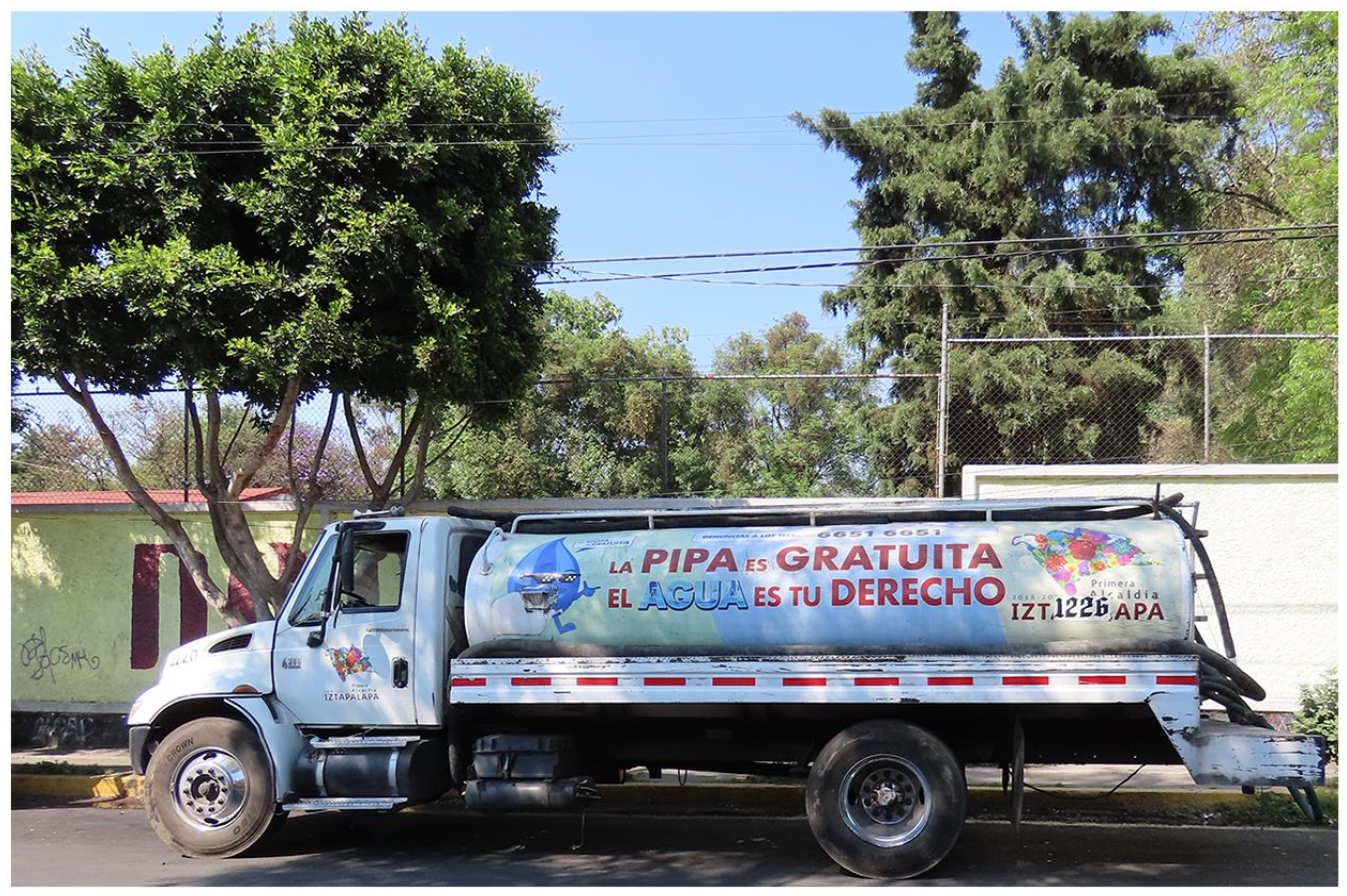
Water truck in Iztapalapa with the sign “The water truck is free, water is your right” (in Spanish: “La pipa es gratuita, el agua es tu derecho”), January 2022
It is pertinent to analyse the two projects financed by the MGB within the general context of water in Mexico City. The Vicente Guerrero regulation plant, focusing on flooding mitigation, actually diverted attention from the more comprehensive solutions needed to address recurring flooding. These might have included, for instance, more just urban planning with a fairer distribution of the areas less vulnerable to flooding, the construction of a separate drainage system for rainwater and wastewater, and the reduction of paved surfaces that prevent infiltration. Regarding the Selene purification plant, while it addresses water scarcity, it also exacerbates the overexploitation of groundwater. Extracting and filtering groundwater alleviates water scarcity but contributes to the depletion of aquifers, leading to surface subsidence and adversely affecting local communities.(146) This plant may also have diverted attention from more substantial solutions in terms of water distribution.
VI. Conclusions
The literature on the climate justice analytical framework has established the triad of procedural, recognition and distributive justice. This framework has proved useful for analysing situations and dynamics of injustice related to MGBs for water infrastructure, addressing not only environmental aspects such as water distribution but also their interplay with other intersectional social considerations, such as racial discrimination and income inequality. In the three cases presented here, the MGBs’ proceeds were assigned to projects in contexts of climate injustice with implications for the distribution of water, an essential element in the context of both environmental and climate justice. In Black-majority and “Coloured”-majority neighbourhoods in Cape Town, WMDs restricted access to drinking water in “indigent” households; in eastern lower-income Mexico City, the Vicente Guerrero regulation plant controls flood water and the Selene purification plant makes groundwater drinkable; in the historically Black-majority neighbourhood of BHP in San Francisco, the Southeast Treatment Plant processes most of the city’s wastewater, generating related pollution and bad odours for the area. In all three cases, despite the green label, the projects failed to include a positive transformation in terms of climate justice, whether in the issuance of the bonds or in the implementation of already ongoing projects financed with or without a green label (lacking additionality).
This paper argues that green labelling has had two negative effects. First, it has legitimized or greened the issuer and the corresponding financial market, creating a narrative of incremental or additional climate action. The Cape Town and Mexico City MGBs even received international awards from the news portal Environmental Finance, and the Mexico City issuance received positive national press coverage.(147) Meanwhile, in practice, the green label added nothing to either the implementation of the water projects or the related public policy. This paper further argues that these projects distracted from channelling financial efforts towards additional climate action with a climate justice perspective, which, as explained by the IPCC in the Sixth Assessment Report, is the substantive response actually needed.(148) The issuance of MGBs financed and legitimized the status quo in the case of San Francisco, with the use of proceeds going to the renovation and continuation of the Southeast Treatment Plant in the BHP neighbourhood. In the case of Mexico City, the proceeds were used for water infrastructure that failed to contribute to structural and substantive solutions to flooding or intermittent access to water. In the case of Cape Town, the investment worsened the situation, as “indigent” households’ access to drinking water became restricted. In all three cases, there is a context of racial and environmental injustice.
It exceeds the focus of this paper to determine whether or not municipal green debt is a just strategy between and within countries, for (re)distributing the financial burden for responding to the climate crisis.(149) The objective here was to underscore the basic elements and connections for arguing that climate justice is an essential perspective in the analysis of the proliferation of MGBs in the global South. The climate justice approach is critical to addressing and responding to the overlapping vulnerabilities of historically excluded individuals, households and communities struggling to achieve climate change adaptation, especially within the complexities of urban contexts. This application of a climate justice perspective to MGBs would be a form of climate justice in itself in the realm of recognition and would open up possibilities for implementing more just climate action in the urban context, especially in the global South.(150)
Although the green bond research agenda is already vast and constantly growing,(151) specific research on municipal examples of green bonds with a climate justice perspective is still nascent.(152) This specific research agenda is relevant because it will help to situate municipal green debt within the larger debate on green bonds,(153) green debt, debt and climate(154) and climate coloniality.(155) It will also contribute a climate justice perspective to the climate finance and development finance debates, now intertwined under the umbrella concept of “climate-resilient development”.(156)
Footnotes
Acknowledgements
The author extends gratitude to two anonymous reviewers, the editors, and Professors Tomaso Ferrando and Hanna Hilbrandt for their valuable comments. This article also benefited from insights and debate at the Institute of Development Policy (IOB) PhD Seminar on 15 December 2022, and the workshop “Solving the interdisciplinary thresholds in your research” on 12 June 2023, organized by the Institute of Development Policy (IOB) and the Urban Studies Institute at the University of Antwerp. Special thanks are given to Jeanine Legato for editorial support.
Funding
This research was funded by the University of Antwerp’s Research Fund (DOCPRO – BOF scholarship FFB190308).
