




Abstract
In the context of growing urbanization, sanitation in many cities is in acute crisis with severe social and environmental consequences. The Sustainable Development Goal (SDG) of sanitation for all by 2030 is increasingly elusive. Municipalities have been experimenting with a range of lower-cost sanitation solutions. Simplified Sewerage Systems (SSS) have emerged in different cities as one response, but with mixed results. This paper evaluates an SSS project in an informal settlement in Dar es Salaam, Tanzania. Drawing on a combination of a survey and focus group discussions, the paper examines the social and economic impacts of the SSS and identifies a set of key concerns for future urban sanitation interventions: affordability, maintenance and governance. We conclude by considering the implications for future research and practice on urban sanitation, including the limits of technology-based approaches and the necessity to focus on the diverse needs of residents in place.
Keywords
I. Introduction
The global sanitation crisis is one of the most pressing issues in cities today and a central challenge of our age. The World Health Organization estimates that 3.6 billion people – 46 per cent of the global population – lack access to safely managed sanitation.(1) Almost a quarter of those lacking access to even basic sanitation live in urban areas, especially in informal settlements, which are growing faster than cities more generally.(2) The majority of underserved residents have low incomes and live in water-scarce, higher-density peri-urban communities.(3) Cities are expected to grow by another 2.5 billion people by 2050, mostly in informal and often unserved settlements, placing huge demands on already struggling sanitation, water and waste systems. A 2019 World Resources Institute report on 15 cities suggested that, on average, 62 per cent of sewage is already unsafely managed, spilling into local environments, often with devastating health impacts.(4)
At the same time, increasingly unequal cities are dealing with the intensifying pressures of the climate crisis and struggling to recover from the impacts of the COVID-19 pandemic, all of which has worsened conditions for many.(5)
Lack of access to reliable sanitation services, a product of unequal political, economic and social relations within cities, is a profoundly networked problem that both drives and reflects wider injustices, not least the differential access to basic services that disproportionately impacts the most vulnerable groups.(6) Key drivers of sanitation poverty include inequalities in land and housing, transport and other basic infrastructures including electricity, waste management and clean water.(7) Poor sanitation also exacerbates inequalities related to gender,(8) race, ethnicity,(9) age and bodily ability.
Access to safe water and sanitation would address at least 10 per cent of global health concerns and avoid their social and economic consequences.(10) Yet, the chances of meeting the Sustainable Development Goal (SDG) objective of providing sanitation for all by 2030 are rapidly diminishing. Even before the COVID-19 pandemic, 89 countries were not on track to achieve universal basic sanitation by 2030.(11) Low-income communities are typically excluded from or have marginal roles in planning and decision-making on sanitation, and many cities do not adequately prioritize sanitation for low-income groups.
An urgent task is to understand the successes and limitations of sanitation interventions in different cities, and to explore what can be learned for future success. Our contribution comes through collaborative research in Dar es Salaam, Tanzania, where one potential solution has been developed and led by the Tanzanian NGO, Centre for Community Initiatives (CCI):(12) a Simplified Sewerage System (SSS), piloted in the informal settlement of Mji Mpya.
SSS has been lauded as an affordable solution to the challenge of providing improved urban sanitation(13,14) that enables communities to build and maintain contextually appropriate sanitation systems.(15) However, there has been little research into the longer-term impacts of SSS on the daily lives of residents, or how these impacts are distributed among residents. Similarly, scholarship has drawn attention to the importance of community participation for the sustainability of SSS,(16) but there is little evidence of how ongoing maintenance and governance challenges are addressed in practice, particularly with regard to issues not identified at the project planning stage.
We present research findings compiled in collaboration with CCI to ask: what are the social and economic impacts of simplified sewerage on the lives of affected residents, and what can future initiatives learn from this case?
The paper makes three important contributions to the interdisciplinary literature on urban sanitation. First, it re-examines SSS as a “socio-technical system”,(17,18) highlighting the social and institutional conditions necessary for the operation of the technical system to benefit vulnerable urban groups. The lack of research on ensuring reliable operation over time is a significant gap in research on sanitation and on the more general intersection between cities, development, infrastructure and poverty.
Second, the article identifies the social and economic impacts of SSS in an under-examined geographical context. The challenges are especially severe in African cities, and there is a dearth of research in Dar es Salaam in particular. Our contribution draws out relevant lessons from an established SSS for development of urban sanitation systems in rapidly growing urban informal settlements across the region and beyond.
Third, we draw attention to the fundamental question of maintenance, a growing concern in research and policy debate on effective sanitation.(19) There is little research on the challenges in maintaining SSS systems, and how they might be addressed.
In the following section we examine the academic literature on SSS, focusing on the social and economic impacts and associated issues of governance and maintenance. Then we introduce the research site and its relation to the wider city. In the next section, we provide background on the SSS project in Mji Mpya and describe our research methodology. The fourth section presents the results, organized around the themes of economic and social impacts, maintenance and governance challenges. Finally, we reflect on the wider implications of this case.
II. Sanitation And Simplified Sewerage Systems: A Review
In this section we draw on literature on community-managed urban sanitation systems and show how SSS has been characterized as a solution to the urban sanitation crisis. We also set out how readings of SSS as a socio-technical system push us to engage with issues of maintenance and governance.
a. SSS as solution to the urban sanitation crisis
A recent World Bank study estimated that if the 60 fastest-growing cities in the world were to be sewered by 2030, this would have to happen “at a rate that is ten to fifty times higher than the highest rate for any project in the World Bank’s database”.(20) SSS is often positioned as a lower-cost, more practical, faster route to sewered cities than conventional sewers. There is debate about the respective merits of simplified versus conventional sewerage,(21) but SSS will play an increasingly important role.
SSS are networks that use smaller diameter pipes, laid at a shallower depth and with a flatter gradient than conventional sewers, allowing for lower costs and greater flexibility in the system’s design. While SSS designs vary, a key difference with conventional sewerage is that the pipes are laid between houses and under footpaths rather than under roads. This means that they do not need to be load bearing and so can be made of less robust materials (typically plastic). SSS removes waste as conventional gravity systems do; however, the flexible design standards allow for systems to be adapted to the local topography and built environment.
In addition to savings on materials and installation, the SSS pipes can be accessed, repaired and extended more easily than conventional sewers.(22) SSS provides an improvement on commonplace pit latrines, which are costly to empty and can overflow, particularly during rainy seasons. Typically, SSS includes installing toilets as well as sewerage.
In some places, SSS has been scaled up to serve significant urban populations, with Brazil at the forefront. In the 1980s, in the “condominial approach” established in peri-urban areas in Brazil, the sewer network provides a single connection to a block of housing, reducing the length of both sewers and water pipes. Smaller branches then connect into streets and houses, and sometimes localized water supplies and sewage treatment systems. Residents were frequently involved in the design, construction and maintenance of their locally branched systems. In Salvador, for example, 2,000 km of smaller sewer pipes, connecting 300,000 homes, were laid between 1996 and 2004, alongside 86 pumping stations. Simplified sewers reach over one million people in the city.(23)
Another success story is the Orangi Pilot Project (OPP), an influential, well-publicized SSS model, with a system of collector pipes connecting homes and running next to streets, co-constructed and paid for by residents. Orangi Town is one of the lowest-income areas of Karachi, Pakistan’s largest city, where 50 per cent of the 17.5 million people live in informal settlements.(24) When OPP began its work in 1980, they found some residents already fitting rudimentary sewer pipes around their houses; OPP began supporting them with technical assistance and low-cost pipes. OPP developed an “internal/external” model with four levels: the house, the sewer in the lane, the neighbourhood collector sewer, and the trunk sewer and treatment plant. The first three levels were managed by residents; the fourth, given its associated cost and labour, was managed by the state.(25) By 2011, 90 per cent of Orangi’s sewer lines had been constructed and financed by residents, improving public health and fostering community organization.(26)
Much of the literature promoting SSS focuses on the reduced installation costs.(27) In Brasilia, for example, research shows how SSS provided for 500,000 people at lower cost than the utility company.(28) However, while there is research on social inequalities and sanitation,(29,30,31) there has been less work on SSS in diverse forms of informal settlements. In East Africa, for example, households can differ widely in size, water and the sanitation provision and arrangements in place between landlords and tenants.(32) There has also been little research on the distribution of SSS economic impacts among multiple households and living arrangements.
In addition, scholars have focused on the hygiene impacts of urban improved sanitation coverage – in Brazil, for instance, it was estimated that SSS led to a 22 per cent reduction in child diarrhoeal disease(33) – as well as improving the health of local waterways.(34) However, there has been little evidence for the contribution of SSS to community relations.
Research has considered the particular conditions enabling some examples of SSS to flourish, while efforts to replicate them have struggled. For example, replicating the OPP model in Pakistan has proven challenging. The state can be slow and difficult to work with, although OPP has fed into national sanitation policies.(35,36) Also, residents who took part in OPP owned their homes and did not need permission to take part in the work, and homes were typically large enough for installing toilets(37) – factors often not replicated in other lower-income neighbourhoods.
In the context of Dar es Salaam, the lack of improved sanitation cannot be separated from broader structural issues contributing to the proliferation of informal settlements, frequently characterized by low-income populations, who are exposed to environmental risks and lack tenure security. While it is beyond the scope of this article to examine all these factors, it is important not to overstate the potential of SSS to resolve these structural issues.
b. SSS as socio-technical system – governance and maintenance
It is useful to think of SSS as a socio-technical system. Prescott and colleagues,(38) argue that research on such systems needs to engage with issues of operation and maintenance, including roles and responsibilities; technical construction, including design, materials and technologies; and sociocultural aspects, including contextual adaptation and community participation. Design, maintenance and governance are all relevant.
Roles and responsibilities in SSS governance have been a particular focus of research. For example, OPP’s internal/external concept is predicated on the idea that residents should be responsible for their own sanitation, while the state provides the capital-intensive trunk infrastructure. This approach is shared by many high-profile civil society voices globally. In Mumbai, for example, the Indian Alliance civil society network – a critical member of the Slum/Shack Dwellers International (SDI) movement to which CCI and the Tanzanian Urban Poor Federation (TUPF) also belong – has described its view of the roles of the state and communities in terms of “big pipes and little pipes”, arguing that the state should provide big pipe items like water supply or treatment, while residents contribute toilets, smaller pipes and drains.(39)
However, SSS’s “little pipes” tend to be more vulnerable to blockage and damage than conventional sewers, and often less able to cope with the high levels of waste generated by dense neighbourhoods. SSS also does not work as well in multi-storey housing contexts. Maintenance depending on voluntary residential cooperation can be difficult to sustain without clear guidelines and identified actors and processes in place to resolve disputes.(40) While scholarship has emphasized the vital role of NGOs, community-based organizations and donors in supporting the development of inclusive sanitation solutions,(41,42) the constellation of actors involved in delivering and maintaining SSS in practice is less well understood.
While discussions of governance and maintenance are a common element of SSS project development, there is little research examining how these discussions have shaped the system’s efficacy ex post. And yet, the demands placed on neighbourhoods to maintain systems has sometimes led to functional problems, and charges for connections and use have been difficult to meet for lower-income residents.(43) The challenge is considerable and requires learning from SSS initiatives – whether they succeed or fail – across the world. The SSS project in Dar es Salaam offers useful lessons for this wider debate.
III. Researching Urban Sanitation
In addition to presenting background on SSS in the settlement of Mji Mpya, this section also outlines the methodology used to examine the impacts and challenges of the system.
a. Introduction to sanitation in Mji Mpya, Dar es Salaam
Dar es Salaam provides a highly relevant context within which to assess sanitation interventions. It is one of the fastest growing cities in Africa. With a 4.7 per cent annual population growth rate, the population of 5.5 million is expected to almost double by the mid-2030s,(44) presenting a huge challenge to the capacity of local authorities and utilities to deliver infrastructure for all.
Seventy per cent of the city’s population live in informal settlements and lack reliable access to services including sanitation. The formal sewerage network serves only 10 per cent of residents.(45) Eighty per cent of sanitation provisions are pit latrines but less than a quarter of these are lined, and residents are often exposed to overly filled pits and illegal disposal nearby.(46) Ninety per cent of waste does not go into a sewer; a third of this is emptied from tanks, but only five per cent is treated.(47) Dar es Salaam’s two rainy seasons frequently lead to localized flooding that brings solid and human waste into neighbourhoods, streets and homes. Given that the city’s informal settlements are growing at twice the rate of the city more generally, the sanitation challenge will probably increase before it gets better.(48)
Water and sanitation are formally provided by Dar es Salaam Water Supply and Sanitation Authority (DAWASA), which is responsible for building and maintaining infrastructure and operating the water and sewer networks and service connections. Informal systems are provided through a host of local arrangements, from private vendors and NGOs to resident provision and bespoke municipal systems.(49)
The research was carried out in Mji Mpya, a settlement located close to the city centre, within Vingunguti Ward and Ilala District (administratively, Ilala City Council), with a population of approximately 17,000 people and an average household size of six to eight people.
Mji Mpya is on a hillside, bordered on three sides by main roads and a river. At the bottom of the hill are municipal-built wastewater stabilization ponds which treat sewage from waste collection trucks that service the wider city. Within the settlement, those with higher incomes typically live further up the hill – referred to as “upstream” – away from the smell of the ponds, while the poorest households are located “downstream”, less than 20 metres from the ponds. Flooding is an ongoing issue caused by heavy seasonal rainfall combined with a high water-table, particularly in the settlement’s lower areas.
Before the SSS was installed, most residents used pit latrines, with only a small number accessing pour flush toilets or lined pits. Most of these pits were simply dug between buildings and covered with a piece of wood and some very basic covering for privacy, such as corrugated iron or hung sheets. Residents described a wide range of challenges with the pit latrines, including their condition, conflicts around access and conditions in and near the latrines, and the high cost of maintenance. Several residents complained of the permanent smell and prevalence of mosquitoes, cockroaches and flies. Their construction and condition made the latrines dangerous to access for elderly and disabled residents and particularly for children; residents described instances where the toilets had broken and become unsafe, or children had fallen into the pits.
Yet these systems are expensive to construct. In low-income neighbourhoods across the world, pit latrines can cost between 128 and 759 per cent of average household monthly income to construct.(50) They are also expensive to maintain. Emptying a pit costs between 70,000 and 120,000 TZS (US$ 30.19–51.75).
Mji Mpya pits needed emptying four to five times each year, concentrated around the rainy season. While landlords were often solely responsible for these costs, in some cases tenants pooled resources to pay. Some latrines were inaccessible to waste removal trucks. High costs and inaccessibility led some residents to empty their pits when it rained, allowing waste to wash downhill. Others dug new latrines whenever the previous one became full. These situations have been sources of conflict within and between upstream and downstream residents in the settlement.
b. History of SSS in Mji Mpya
The Centre for Community Initiatives (CCI) was formed in 2004 and has long been involved in water and sanitation provisioning in informal settlements, often in partnership with the Tanzanian Urban Poor Federation (TUPF). CCI’s work includes mapping existing provisions and using those data to negotiate with local authorities and communities.
The Mji Mpya SSS emerged through CCI’s engagement in an international research programme, SHARE (Sanitation and Hygiene Applied Research for Equity), co-led by the International Institute for Environment and Development (IIED) and Slum/Shack Dwellers International (SDI), and funded by the UK Department for International Development (2012–2016). SHARE partners were interested in the replicability of the Orangi Pilot Programme model for SSS as an action-research project within a portfolio of other research initiatives. CCI encouraged the project team to explore the feasibility of establishing an SSS in Dar es Salaam, given the lack of affordable alternatives. A feasibility study by CCI identified the issue of maintenance as critical for the SSS operation. It was noted that, typically, house owners are responsible for the maintenance of their connection pipe, while the operation of the system is handled either by a local appointed by the community, a small company or the sewerage authority (at the time DAWASCO).
In 2015, OPP technical staff travelled to Tanzania, Kenya and Zimbabwe as part of a knowledge exchange organized by SDI. The Tanzanian visit focused specifically on lessons that could be learned from OPP to support the SSS planning in Mji Mpya. An important part of the exchange was analysing the roles of different stakeholders in the project’s delivery, including the community, CCI, different levels of government and SDI. OPP staff also identified the importance of well-defined responsibilities with regard to system maintenance.
The design and installation of the SSS in Mji Mpya (which took place in phases between 2014 and 2019) involved CCI and SHARE programme partners, with technical assistance provided by Ardhi University and the UK-based NGO, Cambridge Development Initiative. The SSS comprises nine “routes” through the settlement, connecting to 300 houses. The routes were identified in collaboration with residents; six were constructed by CCI and a further three by Cambridge Development Initiative.(51)
The SSS is composed of PVC Class B pipes, ranging from four to six inches (approximately 10–15 cm) in diameter and buried in shallow trenches laid at a gentle decline. Some join a septic tank at the bottom of the hill that drains into the sewerage treatment ponds and others discharge into a large sewage pipe. The installation of pipes under walkways (rather than roads) significantly reduced the length of pipe required and the depth at which it needed to be buried. The existence of trained community members, who were able to construct the systems using basic tools, meant further savings. Costs were further reduced through the use of small access chambers, which are cheaper to maintain and easier to inspect than traditional manholes and conventional sewers.
SSS can potentially use motorized pumping or lifting stations to convey waste across a flat terrain. However, this increases the cost of installation and maintenance. Therefore, SSS typically rely on gravity – and so require elevation – to function. Mji Mpya has a particular set of geographical characteristics that made it well-suited to SSS, such as the sloped terrain and proximity to the sewerage treatment ponds.
Most landlords and property owners connected to the SSS reported being involved in its installation while many tenants reported they were not involved. The households connected to each route elect a Network Chairperson, responsible for reporting issues with the system to DAWASA. When the SSS was installed, property owners and landlords were given the opportunity to take out a loan to also improve the toilet in their house. The improved toilets cost 750,000 TZS (US$ 325) with loans available to be repaid over one to three years with an annual interest rate of 20 per cent. Despite a high cost and interest rate, 61 per cent of landlords and property owners surveyed had taken the loan.(52)
c. Methodology
This research was designed through a remote collaboration between researchers in the UK and Tanzania, within a large international research programme, Knowledge in Action for Urban Equality (KNOW), led by the Bartlett Development Planning Unit, University College London (2018–2022), which focused on understanding and reducing urban inequalities.
The field research element comprised two stages through the spring and summer of 2021 and was conducted outdoors with COVID-19 safety measures in place. The four local researchers conducting the fieldwork had been involved in previous CCI studies in the settlement. Given time and resource constraints, it was decided collectively to take an iterative, two-stage approach to fieldwork, the first a survey of 104 households connected to the SSS; the second comprising focus groups that enabled more in-depth discussion of issues.
Survey questions were designed by CCI and the research team in several online meetings. Key to the design process was a mutual learning workshop on research ethics and informed consent. An information sheet and consent form, meeting the standards of research ethics, was collectively designed, translated into Swahili and verbally communicated as part of the survey. Survey respondents verbally consented to take part in the survey before it began.
The survey, targeting individuals using the SSS, was conducted by the four local researchers using ODK mobile offline data collecting software focused on demographic and income characteristics, household dynamics, access to sanitation before and after the installation of SSS and household water usage. Each researcher operated within a predefined area of the settlement, which comprised approximately one quarter of the area served by the SSS.
The survey yielded 104 responses, representing just over one third of the 300 houses connected to the SSS. Respondents were 74 per cent female and 26 per cent male, all over the age of 18. Sixty-seven per cent reported having a primary school education, 20 per cent a secondary education, two per cent had attended university and 11 per cent had no formal education. Sixty-seven per cent were landlords, 34 per cent tenants.
Most survey respondents (56/104) had lived in the settlement for more than 10 years. However, there had been continuous in-migration in the past decade, reflecting the wider nature of migration in the city and surrounding areas.(53) Only a small number of respondents came from outside Dar es Salaam (10/104), and over 70 per cent had lived elsewhere within Ilala district before moving to the settlement. There are a variety of living arrangements in the area, with large numbers sometimes living in one house (in a minority of cases more than 16 people), in many instances from three generations. Ninety-six per cent of respondents had dependants, and a quarter had more than four. The survey found most landlords live with their tenants, but also identified landlords living alone or tenants living in a shared house without the landlord.
The results were provisionally analysed for trends and anomalies and used to form the basis of the more detailed focus group discussions in the second stage. Focus group questions further explored the impacts of the SSS and provided deeper understanding of some of the survey data, specifically, in four key areas that emerged from the survey: the economic impacts of SSS, the social impacts, maintenance of SSS and urban sanitation policy.
To capture different experiences across key vectors identified by CCI through its extensive and sustained engagement in the settlement, the team proposed to organize the following focus groups: male landlords, female landlords, male tenants, female tenants, upstream residents (mixed sex and tenure status) and downstream residents (mixed sex and tenure status).(54) Each focus group comprised seven or eight residents from households connected to the SSS.
Focus groups were conducted in Swahili and translated into English by the local researchers. The entire process was iterative, with several key reflective moments when the whole research team came together to discuss emerging themes and findings and to adjust the methodology and research questions.
IV. Findings: Simplified Sewerage In Practice
Here, we identify economic and social benefits and challenges and draw attention to the vital question of maintenance. The findings reveal the potential of SSS to alleviate everyday urban struggles while also pointing to the need to evaluate and monitor technical, social and economic conditions not in isolation, but together.
a. Economic impacts of SSS: reduced but uneven costs
Seven per cent of survey respondents in Mji Mpya fell below the national basic needs poverty line (49,320 TZS [US$ 21.27] per month), broadly in line with city-wide poverty rates. However, 28 per cent of survey respondents were found to live between the national basic needs poverty line and the World Bank’s extreme poverty line (US$ 1.90 per day; equivalent of 134,000 TZS per month).
Both survey and focus groups found SSS significantly less costly to use than the previous pit latrines. While there are increased costs for water, necessary to ensure the system functions, these costs are more than offset by the lower expense of paying a utility bill than privately maintaining a latrine. As one downstream resident explained:
“Considering the location of my house, [the pit] was inaccessible, therefore I had to spend a lot of money to empty the pit when it got full. However, this has changed with the system installed, whereby I pay less.” (Focus group 10/08/21, translated from Swahili)
Three key areas of expense were identified: the DAWASA sanitation tariff, the cost of water and the cost of maintenance. Only one tenant indicated that rent had been raised – from 25,000 to 30,000 TZS per month (US$ 10.78–12.94) – since the installation of SSS. There have been other temporary costs for landlords too, such as loan repayments, described above.
The DAWASA sanitation tariff for waste disposal is 5,465.75 TZS (US$ 2.36) per sewer connection per month, plus 18 per cent VAT, representing 11 per cent of the basic needs income for one adult. This is a reduced tariff, negotiated by CCI, so that residents only pay for waste disposal and not the combined water and waste disposal tariff that had previously been charged. This cost applies per sewer connection regardless of the number of residents using it – for some houses the bill is paid by only one person, while in others it is shared among a larger group. Of the 29 surveyed residents living below the World Bank’s extreme poverty line, a third are in households of 10 or more people, meaning that the tariff could potentially be shared between many individuals. Another third of this group live in a household of one to five people, and so face a greater financial burden per person.
We identified four payment models for the sanitation tariffs. First, the landlord sometimes pays the full amount as part of the rental deal offered to the tenant (58 per cent of landlords). One landlord explained that this helps attracts tenants to the house; another said it helps to avoid “misunderstandings” on bill responsibility with tenants. The second model divides the tariff proportionately between tenants and landlords on a per capita basis. This can raise challenges, and several landlords and tenants said that often one or more tenants fails to contribute, leading to tensions and sometimes higher contributions for other residents. In the third, similar model, the landlord pays the majority share of the tariff, while the tenants contribute a smaller proportion, and in the fourth – a relatively new arrangement – tenants pay a combined 10,000 TZS (US$ 4.31) per month “service fee” to the landlords, which covers a range of costs (including sanitation, electricity, community policing(55) and waste collection). This fourth model was only observed in the relatively affluent upstream areas. Landlords suggested that this model had been introduced to reduce conflicts between landlords and tenants with regard to utility bills and expenses.
The contrast between the sanitation tariffs and the cost of emptying a pit latrine is stark. One tenant noted that they had previously paid up to 10,000 TZS (US$ 4.31) per month towards emptying the pits, while they now contribute 1,500 TZS (US$ 0.65) per month towards the tariff. The cost difference depends upon both the previous pit usage, and the number of people now contributing to the tariff payment. We estimate that current sanitation tariffs (excluding water usage and maintenance) are between 11 per cent and 24 per cent of the cost of maintaining a pit latrine. However, the SSS costs are still too high for the lowest-income residents. Also, residents who had been emptying their pits illegally when it rained may now be paying to manage their waste for the first time. Despite the reduction in costs for most residents, the financial burden is uneven. And while some tenants have had the costs borne by landlords, others have had to assume more of it themselves.
Household water usage has increased significantly since the installation of SSS for households with both improved and unimproved toilets (those who took a loan to install a new toilet and those that did not). The water is necessary for the system to function well and prevent blockages. Many households also report using the system to dispose of other domestic wastewater. Most focus group participants indicated that they now use two to three times as much water as before SSS (a small number indicated no change). Current use varies significantly with household size and was reported to be from three to five 20-litre buckets for an individual living alone to six to eight buckets for a house with a landlord and three tenants. This higher water use is hardly excessive and represents only a marginal increase above the 50 litres per person per day minimum standard set by WHO for healthy urban living.(56) However, this may still be unaffordable for some households.(57)
This adds up to an expense of between 10,000 and 20,000 TZS (US$ 4.31–8.62) per month on water per house. Larger households, especially those with children, have seen even greater increases in water usage. The survey indicated that most residents (76 per cent) purchase water from private bore holes where a five-litre bucket costs 50 TZS (US$ 0.02) and a 20-litre bucket 100 TZS (US$ 0.04). Since the installation of SSS, some landlords have connected to piped water, which has reduced the unit cost for water, although some said it was still marginally more expensive given the increased volume of water used. The cost of water for running the SSS is, then, consistently less than the cost of maintaining a pit latrine, but this saving – like the tariff – is unevenly distributed across residents.
In addition to reduced maintenance costs, residents identified several other positive SSS impacts. These include employment generation (for ongoing maintenance such as removing blockages), fewer fines for disposing of domestic wastewater in the street, and the reduced need to buy “toilet dishes” (reusable bed pans) for children (for whom SSS toilets are safer than pit latrines.) Households may also have lower health care bills, although this was not raised in the survey or focus groups.
SSS has meant significantly reduced household expenditure for the majority of surveyed residents, more than 80 per cent of whom live below the World Bank’s poverty line. The unequal distribution of costs, however, remains a concern, especially for those living alone, those with many children, and those brought, for the first time, into a formal network where payment is required. Those who had never paid to empty their pits now pay up to 6,449.59 TZS (US$ 2.78) per month for a sewer connection, plus water costs.
These inequalities vitally illustrate the limitations of technical solutions to the urban sanitation crisis. Technology is essential, of course, but is only part of the necessary response. The challenge for interventions using approaches like SSS is to attend to the fine-grained economic conditions of a given place. This requires time- and place-based data that can identify economic differences, and then respond with flexible provisions, including subsidies for those with lower incomes and for larger households.
b. Social impacts: urban life and well-being
Residents reported positive social impacts of the SSS at both household and settlement level. SSS has helped reduce conflict and has significantly improved the urban living environment. At the household level, SSS has also reduced anxiety regarding the condition and accessibility of toilets and ease of waste disposal (compare Figures 1 and 2).
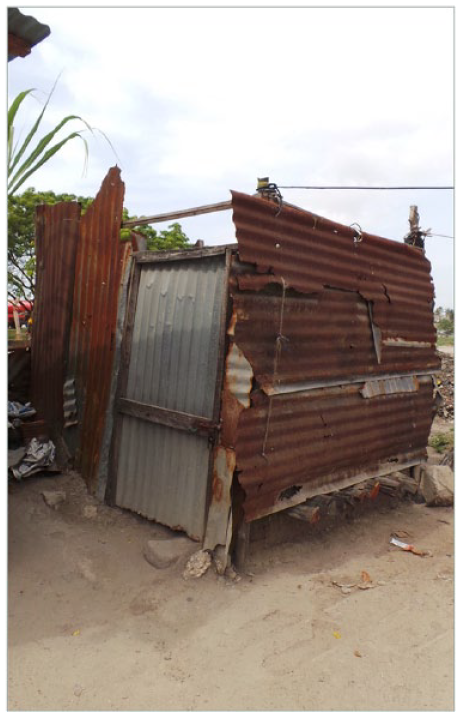
A pit latrine in Mji Mpya before the implementation of the Simplified Sewerage System
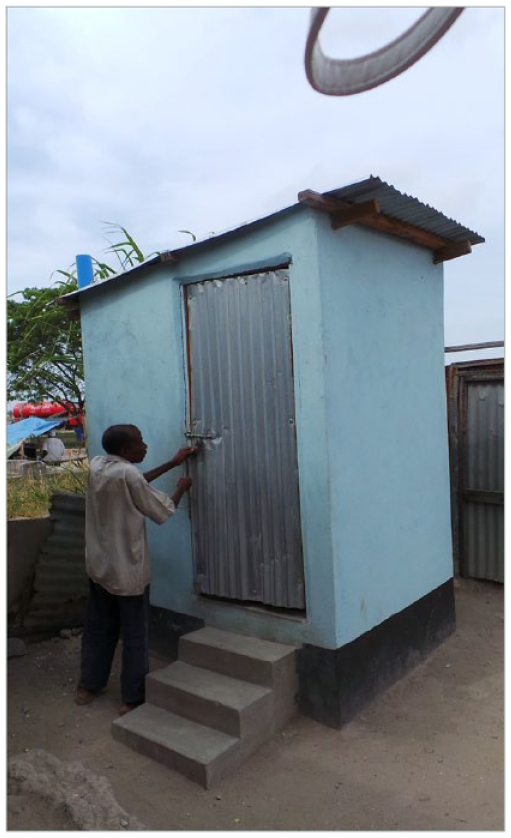
Improved toilet in Mji Mpya after the implementation of the Simplified Sewerage System
Most of the surveyed residents and those in focus groups remarked on the improved condition of the toilets, and especially the reduced smell within the house, the greater ease of cleaning and the enhanced privacy and “dignity”, particularly for women. A key improvement, consistently identified, was the easier accessibility of the new toilets for children, elderly people and people with disabilities. As one female upstream resident said:
“Nowadays I do not go with my child to the toilet. I just wait for him outside while I continue with other tasks such as washing dishes. When he calls me, I go. I am sure of his safety because the toilet has been built well and is clean.” (Focus group 10/08/21, translated from Swahili)
A key social impact of SSS, raised in every focus group, was the perceived reduction in conflict between neighbours, who had previously been vexed by illegal disposal of pit latrine waste and the digging of new pits between existing dwellings. One further benefit was that household wastewater from cooking and cleaning could be disposed of in the toilets rather than dumped on walkways between houses or into large gullies, avoiding not only conflict but fines for illegal waste disposal. Some residents also described greater cooperation around the shared maintenance of the SSS. One woman suggested that the impacts of the SSS have led to changed perceptions about Mji Mpya outside the settlement:
“We are currently an exemplary place. It is not something small for the people of Mji Mpya to have these kinds of toilets. People of [nearby settlement] Tabata really want to have these kinds of toilets and they are often asking about how to get connected.” (Focus group 10/08/21, translated from Swahili)
Residents overwhelmingly stressed the health benefits of the SSS compared to pit latrines. There have been fewer instances of malaria and typhus and no recorded cases of cholera in the settlement since 2016. The role the SSS has played is unclear, given that most residents in the wider settlement are still using pit latrines, but it is reasonable to assume that improved sanitation contributes to positive health outcomes. Overall, every group of residents we spoke to stressed the positive social impacts of the SSS.
c. Maintaining the system: blockages and responsibility
A key issue cutting across both economic and social impacts of SSS is maintenance. Residents identified various technical challenges, which were in turn revealed to be governance issues. The problem most frequently identified was that pipes become blocked because households do not always use sufficient water with the system. Some residents noted that water was not always available to purchase nearby. Others argued that the blockages were caused by household waste flushed through the pipes.
Most residents suggested that the community be responsible for removing small blockages. A clear gendered division of responsibilities came through in every focus group. With few exceptions, women were seen as responsible for cleaning the toilets and men for purchasing tools and materials and doing maintenance. Men in the house either manage small maintenance jobs themselves or call DAWASA or pay local young men. Some spoke of initially tackling problems themselves or with neighbours’ help before speaking to the network chairperson if the problem could not be resolved. Larger maintenance tasks were considered the responsibility of DAWASA (echoing the little pipes/big pipes discussion above), along with supplying maintenance equipment to the settlement.
While the initial training on SSS use and maintenance was comprehensive and led by community members in collaboration with CCI and Cambridge Development Initiative, subsequent engagement with DAWASA introduced an element of uncertainty with regard to maintenance responsibilities. Specifically, when residents were first connected, DAWASA informed them that they would handle “big” blockages while the community would remain responsible for “small” blockages. However, the precise boundary between these responsibilities was not defined. The authors believe that this disrupted the community’s energy and sense of responsibility for maintaining their own system. It was also noted that DAWASA often took days to respond to a “big blockage”.
Residents repeatedly mentioned a lack of clarity on who to speak to when a maintenance challenge arose – the network chairperson, the Mtaa (sub-ward level) office, or DAWASA. Some said a lack of clarity and responsiveness meant they felt forced to address issues themselves. Beyond the organizational roles in maintenance, there was also a concern about coordination between residents in different parts of the settlement, due in part to the way SSS networks are constructed, financed and managed. CCI has helped develop terms of reference designed to mediate conflicts and clarify responsibilities in ongoing maintenance, but governance remains an issue, including in resolving disputes, and there is the larger challenge of ensuring timely maintenance by the state. CCI is currently exploring options with local state actors for scaling up community-led and managed SSS in other informal settlements in the city.
d. SSS in Mji Mpya as a socio-technical system
The technical construction, operation and maintenance requirements of the SSS are a direct product of its low-cost design. The roles and responsibilities of different actors, carefully considered at the inception, have had to adapt to specific tensions, such as between upstream and downstream residents. In this sense, SSS both generates and reduces tensions within the settlement. However, the net contribution is overwhelmingly positive when compared with the latrine-related conflicts.
The socio-cultural aspects, in this case, have been key to the project’s success. The participation and ownership of the project has been a CCI priority from the outset. However, it does raise questions as to whether the system could be easily replicated elsewhere in Dar es Salaam without such well-organized residents’ groups, the support of SDI and professional support that is sensitive to community planning and implementation. Mji Mpya’s hillside location also makes it topographically suited to SSS. Developing SSS in other settlements in the city would require careful translation of the system’s design and governance arrangements rather than straightforward replication.
The issues of governance raised by residents highlight the socio-technical nature of the SSS. Management and maintenance issues were the focus of extensive discussions during the planning and design of the SSS. However, CCI emphasizes that governance issues persist because community-level governance structures are only one part of the wider set of governance structures involved in the SSS, including the state and private companies. Governance challenges are partly a function of the ways these unequal actors work together, but also reflect a deeper set of issues regarding the visibility and recognition of urban informal communities by the state and other urban actors, as well as the capacity to develop and manage urban sanitation infrastructures. Progress has been made, and DAWASA is now keen to replicate the SSS elsewhere in Dar es Salaam. The ongoing challenge is ensuring that community-led governance structures, such as those in Mji Mpya, are institutionalized within future SSS projects in the city.
V. Conclusions
The SSS in Mji Mpya has had positive social, economic and environmental impacts. The social impacts were identified at both household and settlement level, although the generally positive economic impacts were unevenly distributed within both the settlement and households. SSS has an important role to play in meeting the SDG of sanitation for all by 2030. At the same time, it is important not to overstate its potential. Access to improved sanitation is a necessary but insufficient condition of urban poverty reduction, and as we have shown, SSS also presents significant challenges.
The project demonstrates how partnerships between NGOs, residents and local state actors can deliver successful SSS models, as seen before in the Orangi Pilot Project. The case demonstrates the role that NGOs and other actors – in this case CCI – can play in supporting community-managed urban sanitation in low-income, mixed-tenure contexts, but points to the need for ongoing engagement between all parties. This represents a challenge to scaling up SSS, particularly in low-income settings, where longstanding and productive relationships with enabling actors may not exist, particularly in new settlements or in contexts without a highly capable civil society sector.
The differential economic impact for residents of the SSS is an important concern for further research. The ways costs are distributed and impacts shared is influenced by a range of dynamics, living arrangements, tenant–landlord relations and number of dependants, all likely to shift dramatically with context. This makes it a challenge to generalize from these findings, but it does point to particular conditions and arrangements that influence the SSS contribution to addressing the urban sanitation crisis and improving the lives of low-income urban residents.
A key challenge is the distribution of costs among residents, and the lesson is to address potential cost inequalities in the initial plans. It involves working with both landlords and tenants to develop simple regulations across homes, so that tenants are not the financial victims when landlords design contracts and payment. It also involves identifying households that may struggle with costs – large families and the lowest-income tenants – factoring in subsidies for those groups in the design of tariffs and other utility bills.
The debate on costs and governance continues in the area. The economic challenges for sanitation highlight both the strengths and limits of technology-based approaches. In both planning and implementation, it is vital to understand the diverse economic needs of residents, a challenge that only grows when we consider rolling out approaches like SSS at the city scale.
Successful SSS, as a socio-technical system, is as much a function of governance and billing as of pipes and waste, and it is vital to plan with an understanding of local people and places, and long-term clarity. CCI continues to develop this work in partnership with residents and city actors. The story recorded here will contribute to that process and hopefully to cases in other cities too. More research is needed, focused on the social, technical and economic mechanisms through which sanitation systems might operate in the longer term. A focus on the intersections of key concerns is necessary: people, poverty, environment, development and infrastructure. Our understanding of these intersecting issues is particularly limited in urban Africa, where the challenges in rapidly urbanizing cities like Dar es Salaam are often more severe, growing, and intensified by climate change.
Footnotes
Acknowledgements
The authors wish to thank the residents of Mji Mpya and the Tanzanian Urban Poor Federation for taking part in this research. Thank you to Samwel John, Mussa Raido, Anna Mejala and Paul Miza of CCI for their invaluable contributions. Thank you also to colleagues on the KNOW programme for supporting this work. Lastly, thank you to the anonymous reviewers and to the editors of Environment and Urbanization for their careful reading and constructive comments.
Funding
This work was supported by the UK’s Economic and Social Research Council (ESRC) under the Global Challenges Research Fund (GCRF) [ES/P011225/1].
22.
Kabange (2017); also  .
.
52.
The toilet loan is beyond the scope of this article, but on toilet costs elsewhere see Black and Fawcett (2008); also .
54.
“Upstream” and “downstream” refer to different areas of the settlement, approximately downhill, closer to the ponds, and uphill, further from the ponds. The areas are not clearly separated – they describe different ends of a continuum between the lower and higher areas in the settlement. The relative differences in experience between so-called “upstream” and “downstream” residents were identified by CCI as an important dynamic to explore through this research.
55.
Each household in Mji Mpya pays 1000 TZS (US$ 0.43) towards community policing per month.