




Abstract
In Dar es Salaam, Tanzania, small-scale and everyday disasters are a manifestation of the multidimensional inequalities faced by residents of informal settlements. The co-production of knowledge about disaster and other risks, bringing together residents with local NGOs and local government representatives, is a potential entry point for addressing inequalities. This paper reports on such a co-production process in two informal settlements, carried out by the Centre for Community Initiatives with the Tanzania Urban Poor Federation and local government at the Mtaa level, and it looks at how community assessments of risks travel into local governance and policymaking. The involvement of Mtaa officials in this process has led to incremental changes in local governance, for example better linking of local budgets with disaster risk reduction (DRR) priorities and the representation of civil society on the municipal disaster management committees. The paper also points to the challenges of achieving integration of DRR and development activities at the local level.
Keywords
I. Introduction
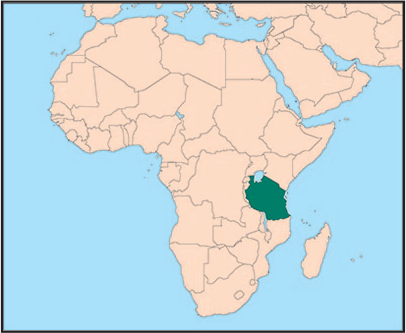
This paper analyses the outcomes of a knowledge co-production process focused on disaster risks in two informal settlements in Dar es Salaam, Tanzania that used the “Action at the Frontline” methodology, tailored not only to assess disaster risks but to prioritize the small-scale and everyday threats to which residents are exposed. The process was led by the local NGO, the Centre for Community Initiatives (CCI), in partnership with the Tanzania Urban Poor Federation (TUPF) and the local government at the Mtaa (sub-ward) level – the lowest level of the devolved local government structure and elected representation in Tanzania. In this paper, we reflect on how knowledge co-production on disaster risks and the spectrum of threats that people face in informal settlements is connected to the challenge of addressing equalities from a multidimensional perspective.
The research demonstrates that residents see environmental risks and disasters as just part of a spectrum of threats that affect their lives. Seeing disaster risks within this broader context is important for the disaster risk reduction (DRR) field because addressing disasters at the local level requires that DRR be well integrated into the development agendas of local governments. The knowledge co-production process described in this paper brought up the acute infrastructural and service deficits faced by people living in informal settlements, but it also implied a deeper-seated recognition of the struggles of women, men and young people and the voice they should ideally have in decision-making, a recognition that is fundamental to communities’ trust in local government.
While there is no shortage of arguments in the literature about the need for community-based DRR, we know that community-based risk assessment is seldom taken up by local government.(1) The approach presented here is novel because it brings together communities, local governments and NGOs in a collective knowledge production and action-oriented process to address everyday risks in an African city. Although local government’s role in addressing disaster risks is recognized and is identified in the Sendai Framework for Disaster Risk Reduction,(2) headway on this is still weak in most local governments across sub-Saharan Africa, including Tanzania.(3) National DRR frameworks are often devoid of details spelling out the implications for local-level governance structures and for funding local-level DRR implementation; if attention to these details does exist it is often separated from mainstream governance.(4) What is more, most disaster-related budgets are still geared towards managing disasters when they happen, rather than trying to reduce the risk of them happening.
This paper adds to the DRR discussion by demonstrating how the co-production of knowledge about disaster risks and other local threats can generate information relevant to the community to influence local budgeting and urban management. It provides a strong example of the linkages needed between DRR and development at the local level to address urban equality. Many of the processes that drive urban disaster risk and vulnerability are borne out of development models of intensified production that have failed to deliver equitable economic growth. Rather, they have created imbalances with disproportionately negative outcomes for low-income constituents, who ultimately are further exposed to risks.(5) We view this problem through an equality lens, seeing pathways towards urban equality as a combination of equitable distribution, reciprocal recognition, parity in political participation and solidarity and care.(6) This brings us to focus on the underlying structural conditions that, for example, turn weather events into disasters and everyday local hazards into threats to people’s well-being and livelihoods.
This paper presents a brief background of relevant literature, focusing on this expanded notion of disaster risk, on dimensions of urban equality and on community-based DRR. This is followed by a description of the methodological approach, and then by the results of this exercise. The discussion and conclusion reflect on the knowledge co-production process, the opportunities it provides for addressing urban equality through a focus on disaster risks, and the challenges it faces.
II. Background
a. The full range of “urban risks” can be meaningfully understood as part of DRR
The wide range of environmental risks and hazards faced by people living in informal settlements is hard to separate from a spectrum of other threats, forcing us to consider an expanded notion of disaster risks. Oliver-Smith defined disaster as a disruption to the normal events of daily life that results in some kind of loss and is caused by human–environmental interactions.(7) This definition encompasses a wide range of “urban risks”.(8) At one end are the large-scale (intensive) more visible disasters such as severe flooding and earthquakes; at the other the more frequent (extensive) everyday health impacts and material losses that can be caused by events including flooding, crime, evictions, accidents, building collapse and fires.(9) Some of the elements that our community participants define as threats, however, such as drug abuse, low incomes or decline of morals, might not be classified as stemming from human–environmental interactions, but are rather related to social or economic conditions. This begs the question: should these kinds of issues rightfully be considered in a discussion of disaster risk? And, if they are, what happens to our understanding of DRR?
It is well understood in the literature that disasters are not merely exogenous events but are better understood as a social construction and the product of skewed development practices.(10) Addressing disaster risks from this perspective is about addressing the underlying structural conditions that render people vulnerable, whether to natural hazards or to a range of issues that drive inequalities.(11) The focus on inequalities that leads to this wider definition of risk is particularly critical in urban centres in sub-Saharan Africa as it allows for a recognition of the broader systemic conditions shaping communities and their underlying vulnerabilities.(12) DRR, from this standpoint, is not only about its traditional domain of installing drainage, designing toilets to withstand flooding, or insuring losses, but also about such issues as access to employment, safety in the workplace, diversity in decision-making and gender and health disparities. Obviously, these aspects cannot be addressed through DRR programmes alone, but are part of the wider socio-economic and governance agenda. We argue that including these concerns does not dilute DRR, but instead clarifies the need to integrate DRR into development. This presents several challenges because the issues are not just about better services and infrastructure (equitable distribution) but also about how different views and understandings are represented in decision-making and in what is prioritized by governments.
b. Community-based DRR and co-production
The need for community-based approaches to counter top-down approaches in the fields of DRR and development is well established.(13) Also well established, however, is an assumption of the incompatibility of local knowledge and scientific knowledge, with the result that the former is hardly used in the design of DRR policy frameworks.(14) Most national risk reduction policies still rely on frameworks that place responsibility on scientific knowledge and the role of central government, rather than local action or strategies.(15)
Despite the rich participatory nature of community-based DRR and the knowledge and action it generates, it is often overlooked in formal DRR programming and fails to influence DRR policy.(16) Community-based development needs to go beyond its lynchpin of guaranteeing participation within vulnerable communities, to recognizing its dependency on the contribution of stakeholders at different levels of decision-making,(17) including local government, NGO actors and faith groups.(18) The involvement of these diverse actors can support the effective decentralization of DRR efforts(19) and minimize the risk that local-level action, based on meaningful community participation, will be limited to one-off projects.(20) It also opens up the potential for community-based development to be a co-produced endeavour that can develop knowledge and provide urban services in transformative ways.(21)
III. Disaster Risk in Informal Settlements in Dar Es Salaam
Dar es Salaam is the largest urban centre and principal commercial hub in Tanzania. It has an estimated population of over seven million (up from four million in the 2012 census) and an average annual growth rate of 5.8 per cent, driven largely by rural–urban migration(22) in response to the city’s economic draw. By the mid-2030s the city’s population is expected to exceed the 10 million mark.(23) This urbanization rate has proven unsustainable in terms of the city’s capacity to provide adequate, affordable housing and services for all. This shortfall is accentuated by the growing demand for housing close to livelihood opportunities such as the small-scale industries and markets near the central business districts, and to major transport nodes and the harbour. An estimated 80 per cent of the city’s population are now concentrated in informal and unplanned settlements,(24) which have become manifestations of the city’s spatial and socio-economic inequalities.(25) Residents live in overcrowded conditions with severe infrastructural deficits in hazardous locations such as floodplains, river banks and wastelands, where they are exposed to risks such as seasonal flooding and disease outbreaks, which further accentuate poverty and inequalities.(26) These informal settlement residents are disproportionately exposed to the burdens of disaster risk in the city.
The inadequate resources, both human and capital, for coping with the city’s rapid growth and for managing disaster risk are coupled with poorly coordinated and implemented planning frameworks and development controls, despite the diversity of regulatory and policy instruments introduced since the 1970s.(27) Specifically, on disaster risk, Tanzania has a Disaster Risk Management (DRM) law (Draft 2016) and a DRM structure that devolves institutional roles from the national through to the local scale. Being in nature an operationally top-down structure, it allows in principle for information and resources to flow along an established chain. DRM programming, predominantly focused on intensive disasters, has been largely supported by donor-funded projects such as the “Zuia Mafuriko” (prevent flooding) and “Ramani Huria” (risk mapping) Dar es Salaam Project (2015–2016)(28) funded by the World Bank and other partners. Earlier projects included the UNDP-funded “Strengthening Climate Information and Early Warning Systems in Tanzania” (2014–2018)(29) and the EU-funded “Climate Change and Urban Vulnerability” (CLUVA) 2011–2013.(30)
However, the official policy does not explicitly cover the sub-ward structures (the lowest level of local government administration) in urban areas. Nor does it adequately account for the dynamics of community organization and the widespread informality and everyday risks below the ward level. Consequently, NGOs and community organizations, deploying a range of community-based DRR programmes, have played the primary role in addressing extensive and everyday risk in vulnerable communities and informal settlements. For instance, the CCI supports development initiatives in housing and shelter, water and sanitation and health in informal settlements in the city. CCI works in alliance with the Tanzanian Federation of the Urban Poor (TUPF), the local branch of the SDI (Slum/Shack Dwellers International) network. TUPF has a well-established record in mobilizing local communities to channel and leverage their knowledge and experiences for everyday communal action.(31)
It is therefore interesting to interrogate further the extent to which knowledge co-production approaches, such as CCI’s work in Dar es Salaam, are meeting the needs of informal settlement residents and to test the utility of bottom-up knowledge and information in local government decision-making and its potential to influence policy design and implementation.
IV. Research Study
a. Getting action at the frontline
Action at the Frontline (AFL) was developed by the Global Network for Civil Society Organisations for Disaster Reduction (GNDR) as one of a suite of methods for monitoring the implementation of the Hyogo Framework for Action (the global blueprint for DRR efforts between 2005 and 2015). It was initiated as a bottom-up method, a counteraction to the top-down methods of risk assessment favoured by governments.(32) Both AFL and its precursor, Views from the Frontline (VFL), are flexible tools for eliciting experiences of everyday risk, leading to the prioritization of responses based on local knowledge.(33)
In practice, many different participatory methodologies have been employed as part of community-based disaster risk reduction (CBDRR), to assess the risks people face, their capacities and the actions they can take to tackle extensive and everyday risk. These methodologies have empowered communities and allowed them to generate knowledge that can be scaled up, and to serve as a vehicle for negotiating local change.(34) One of these methods, “Participatory Three-dimensional Mapping” (P3DM), facilitates the integration of scientific and local knowledge to create scaled-down relief risk maps and models that communities can relate to and that represent the realities of local risks. These in turn are used to negotiate interventions from local government officials in contexts where updated risk maps and information are scanty.(35) Another tool, the Urban Vulnerability Capacity and Loss Assessment (UVCLA), an adaptation of a method designed by Oxfam and the Red Cross, includes a situation analysis to identify key hazards through focus group discussions, historical timelines, transect walks and seasonal calendars; a vulnerability analysis using the problem tree as a tool; a capacity analysis; and the formulation of solutions.(36) Also relevant is the enumeration method of SDI. This approach to informal settlement profiling collects data using predesigned surveys on residents’ everyday lives and living conditions.(37)
There is a need to re-examine tools that can be mutually trusted by all stakeholders and are tangible to all, drawing on all forms of knowledge and ultimately fostering dialogue between different actors of DRR.(38) This opens up the need to explore new forms of resilience metrics and documentation at the community scale, not only to fill knowledge gaps, but also to explore the communication channels that can best enhance the utility of community-generated risk data and knowledge for policy-makers.(39) The AFL methodology creates the opportunity to explore these challenges. It has been applied in several communities, and by design introduces the element of co-production with local decision-makers.(40) This involvement of local decision-makers overhauls the currently established approaches to data collection. The AFL introduces iterative workshops for cross-stakeholder conversations regarding community actions on risk. This creates the space for deliberations that forge a nuanced, strategic understanding of power structures and the knowledge of what will support effective social transformation, thereby pushing the boundaries of community-based DRR as a co-produced endeavour.(41)
The aim for this research was to run collective cycles of action planning, designed to strengthen local capacities for learning and action in the face of everyday disasters. The process prioritized collective actions that communities can initiate, ultimately contributing to community resilience.(42) The AFL can be applied as a basis for establishing or enhancing an existing partnership between a civil society organization or local government and a community.(43) In this case, the CCI in partnership with TFUP and community residents drew in the leadership of the sub-ward (Mtaa) government leaders and representatives of the development committees at ward level to undertake the research as a mixed team. Administratively, municipalities in Dar es Salaam are divided into wards, sub-wards (the lowest level of elected local government representation) and Ten Cell Units (clusters of 10 housing units or plots recognized for more grassroots representation in settlements). Involving officials from these levels was a deliberate effort to ensure a shift in CCI’s traditional approach. Inverting their usual timing and format, they engaged decision-makers from the onset of the research endeavour instead of at the stage of presentation of findings and recommendations. CCI facilitated the training of this mixed research team through the co-design of objectives, questions and the collective translation of tools. In the process, the space for co-production and sharing was established even before the fieldwork had begun. The unique value of introducing decision-makers early on, during the make-up of the research teams and in training phase, was an adaptation of the AFL and was to ensure early buy-in and sustained participation of local government decision-makers right from the start of the research. CCI also drew in other relevant decision-makers at subsequent stages through workshops and dissemination events.
The key to AFL methodology is the gathering of individual views from a diverse set of residents through an informal conversation centred mainly on respondents’ perception of local threats, the impacts of those threats, possible actions and, finally, barriers to taking action (encompassing both obstacles and other structural underlying factors that hindered local action). The initial question asked of residents was “What are the threats you face in leading your life?” This question was not specifically oriented to disaster. Although the term “threats” was used to imply the range of hazards and everyday risks that residents were exposed to, by placing its use and application into the hands of the community, we were able to capture diverse voices and sometimes unanticipated opinions. A series of workshops and focus group discussions convened by the research team with residents in each settlement served as vehicles to foster dialogue, profile risks and document findings. Metrics were generated from the weighted frequencies of the views expressed, and were then used to generate scores on the threats, impacts, actions and barriers.
b. Study sample and timeline
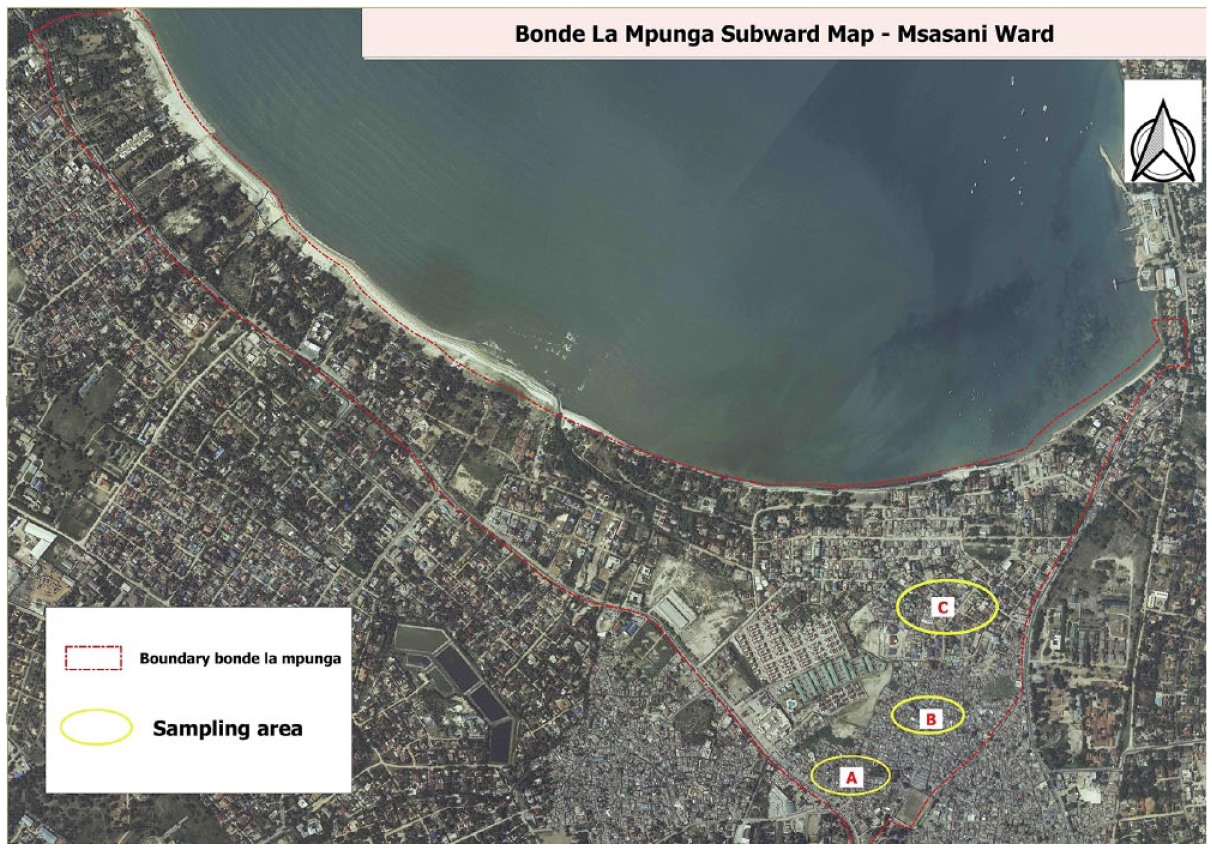
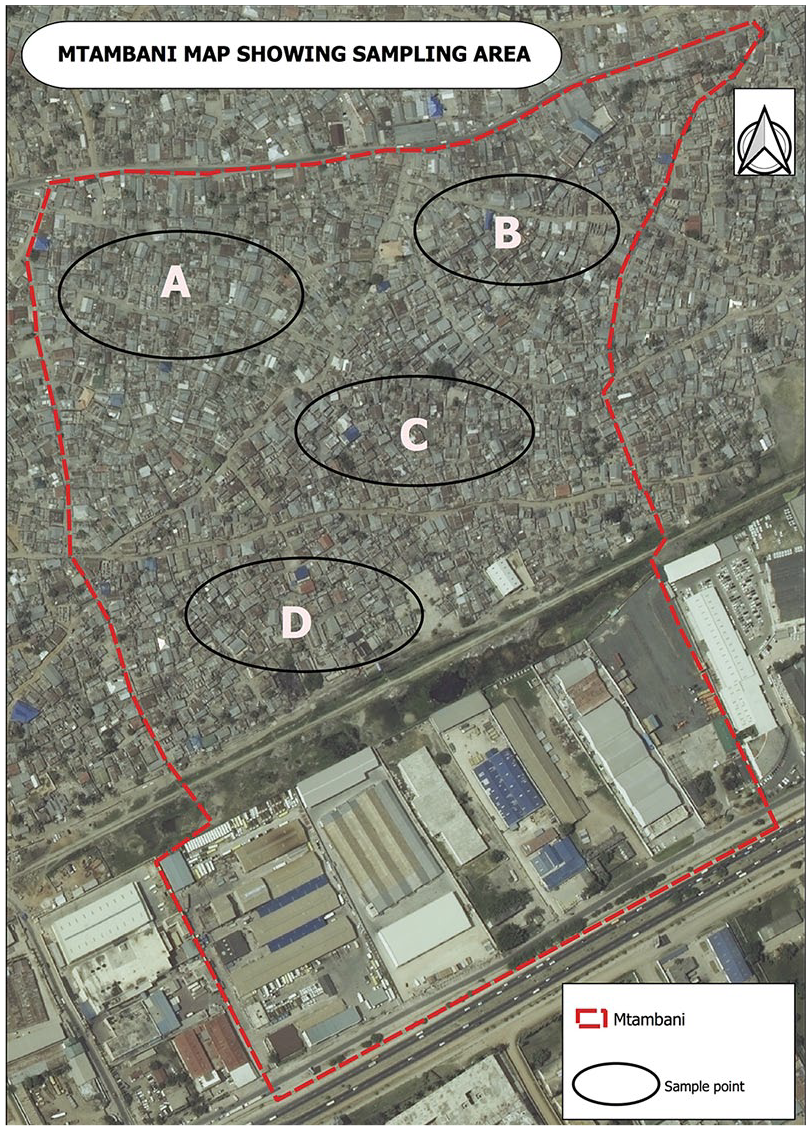
The study was carried out in two informal settlements in Dar es Salaam(44) – Mtambani settlement in Ilala Municipality and Bonde La Mpunga settlement in Kinondoni Municipality. Sub-wards vary in area and population and may cover one or more informal settlements; however, in this case, each of these study sites represents an entire sub-ward. Bonde La Mpunga has population of 22,400 (6,280 households and 1,604 houses); Mtambani is smaller, with a population of 11,520 (3,115 households and an undetermined number of housing structures).(45) TFUP has an active presence in each settlement, serving as a mobilizing vehicle for the urban low-income communities, and each settlement also has a long-standing relationship with CCI.
The two settlements are also representative of the nature and distribution of informality in Dar es Salaam, typically described as either “booming” or “saturated”.(46) In booming settlements like Bonde La Mpunga (Map 1), less than 80 per cent of the land area is typically used for construction and the settlement continues to attract new developments, including some middle-income gated housing developments, hotels and hospitals amidst the clusters of poorer housing. By contrast, saturated settlements like Mtambani (Map 2) were formed earlier in the city’s growth. Typically, more than 80 per cent of their land area is built up and they are more homogeneously unplanned, low-income settlements.(47)
Map of Bonde La Mpunga
Map of Mtambani
In Bonde La Mpunga, residents were selected through purposive sampling in the parts of the Mtaa where informal settlements were most concentrated (Map 1). A more randomized sampling was conducted in Mtambani (Map 2). The AFL tool was translated into Swahili by the mixed research team, and selected residents were organized into four separate focus groups (men, women, youth in school, youth out of school(48)) in each settlement to gather reflections (between April and June 2017). Collated data from these focus groups were initially presented to the wider community for feedback in a series of collective workshops, and there were subsequent joint workshops for cross-community exchanges and reflections, particularly on proposed actions (between July and November 2017). The exchanges were also followed by additional workshops with ward and municipal executives in both Ilala and Kinondoni municipalities, and then with relevant external stakeholders including the police, health officials and utility providers to share and disseminate community priorities and views, and to present copies of summarized findings (June 2018).
c. Method of analysis
The findings in each settlement allowed for a compilation of residents’ perceptions and experiences of risks or threats they faced, the impact of these risks, proposed actions and barriers to local action. The local actions that the community proposed were based on their perceptions and prioritization of the most feasible and cost-effective measures. Residents ranked their top five responses in each of the four categories (threats, impacts, actions and barriers).
These ranked responses were given scores between 1 and 5 (5 being the highest) and then multiplied by the number of times (frequency) a particular issue, perception or experience was raised. The resulting number was used as the combined local metric for each of the four indicators of the AFL.(49) These scores were then used to produce tables and charts to visually represent the findings to the community, and with local decision-makers in workshops.
V. Findings
Results of the threats, impacts, barriers and proposed community actions for the two settlements are as shown in the tables and figures below.
a. Everyday threats in Bonde La Mpunga and Mtambani
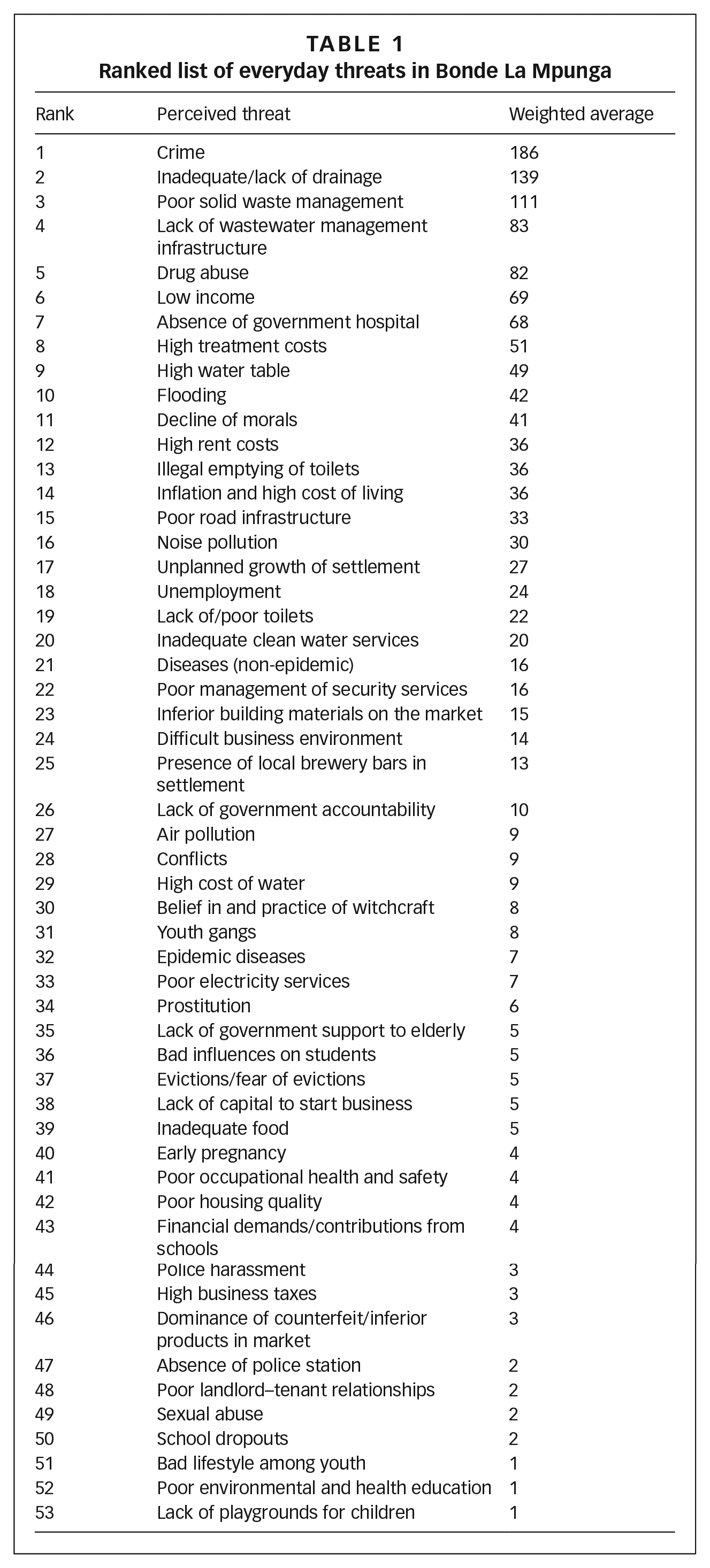
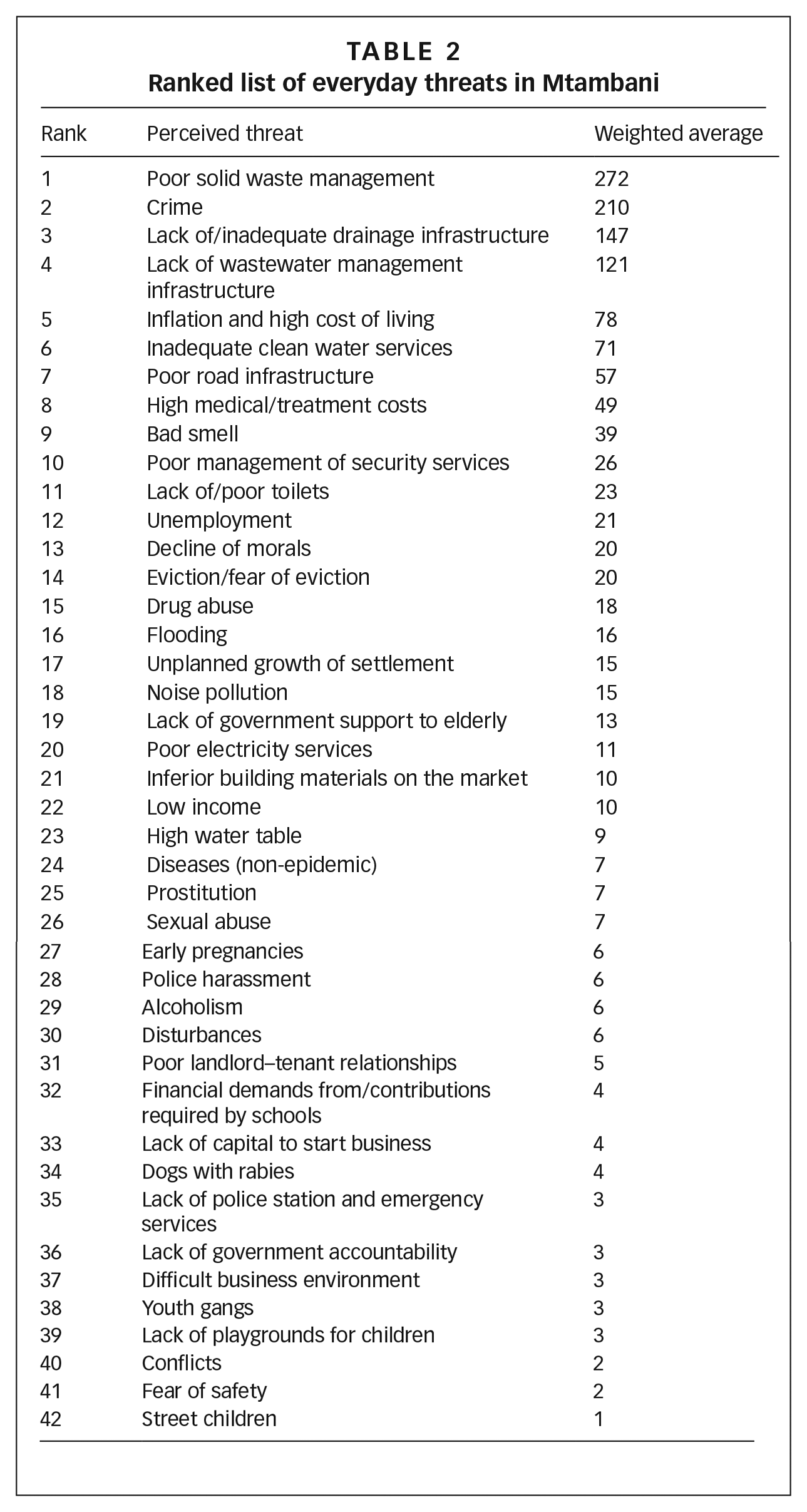
Tables 1 and 2 show a very wide range of small-scale and everyday risks that residents in the two informal settlements are experiencing in their day-to-day lives. They capture the diverse expressions and prioritization of the perceived threats and represent a broad community voice on the socio-economic and environmental discontents within their settlements. There are the common DRR concerns of poor solid waste management, inadequate drainage infrastructure and high water table, but also a range of social and cultural factors that are perceived to threaten communal well-being, including conflicts, drug abuse, low income and youth gangs. There are also lower-ranked threats such as police harassment and the lack of playgrounds for children. The AFL process, therefore, generated a broad, rich snapshot of community concerns (a total of 97 concerns, with significant overlap across the two settlements) which in many regards are not accounted for in the formal government frameworks dealing with risks.
Ranked list of everyday threats in Bonde La Mpunga
Ranked list of everyday threats in Mtambani
b. Impacts of everyday threats in Bonde La Mpunga and Mtambani
The catalogue of impacts (Figure 1) created by the identified threats range from those with a direct correlation to risk such as flooding from poor drainage infrastructure, to more nuanced and compounded expressions of the impacts of everyday threats, such as bad smells, increased medical bills and immoral/antisocial behaviour.
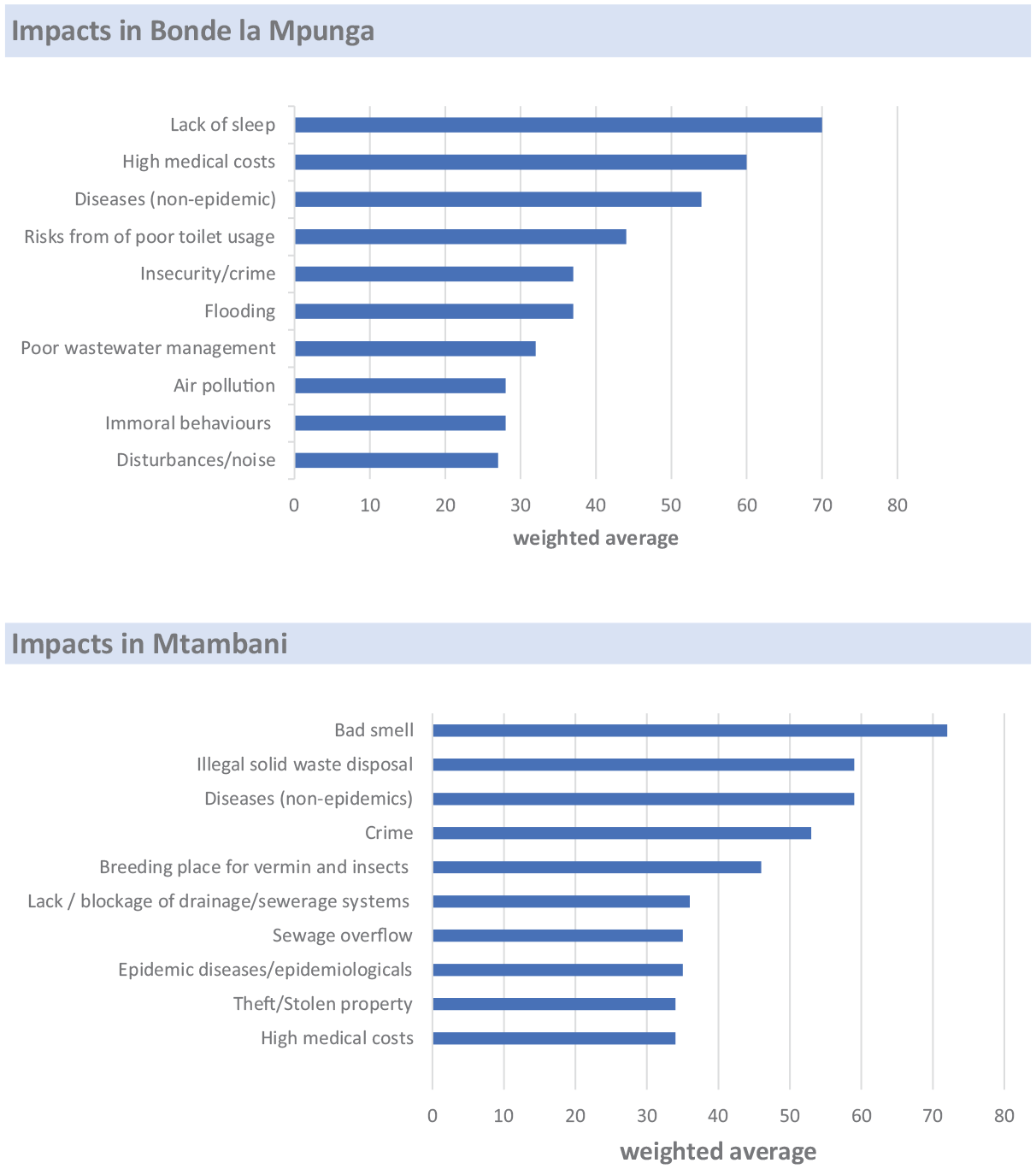
Top 10 impacts of everyday threats in Bonde La Mpunga and Mtambani (as prioritized by residents)
c. Proposed community actions to address threats in Bonde La Mpunga and Mtambani
The list of proposed, prioritized community actions also represents a wide range (Figure 2) related to both DRR measures and wider priorities. In both settlements, there was significant prioritization of collective action to improve drainage infrastructure and community security in order to curb crime. Some of these proposed actions were feasible and low-cost compared to government-proposed actions to deal with disaster risk, taking into consideration the respective capacities in situ for delivery. A need was flagged for infrastructural investments and a more equitable distribution of resources and services, of which informal settlements were often deprived. The responses conveyed a renewed effort to call on government accountability, and for recognition of community struggles. They demonstrate the overall burden that government should bear in providing services that reduce vulnerabilities, and how, by extension, action on disaster risk is heavily tied to meeting development deficits in the city.
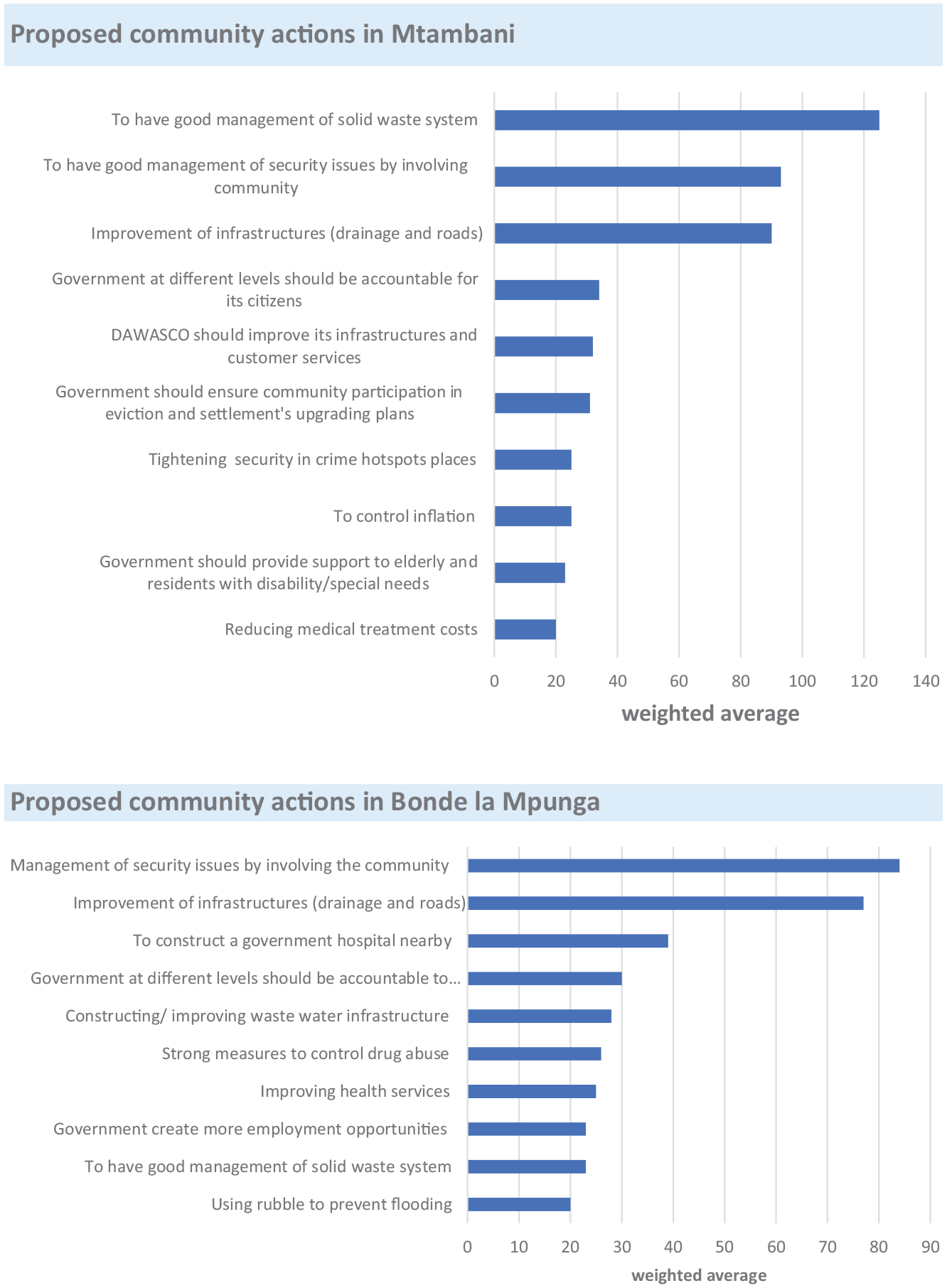
Top 10 proposed community actions in Bonde La Mpunga and Mtambani (as prioritized by residents)
d. Barriers to community actions to address threats in Bonde La Mpunga and Mtambani
The assessed barriers to community action on everyday threats in the settlements (Figure 3) were strongly linked to the multiple dimensions of urban equality, including the structural and underlying drivers of risk in the settlements. They point to the limitations of individual agency and the impacts of weakened community cohesion in informal settlements as well as to the expectations of communities for government to be accountable. The high ranking of crime in the identified threats is linked to this lack of accountability; that is, linked to the common perception that the police neglect informal settlements, for example by failing to operate patrols, having slow response times and being felt to perceive informal settlements as a hiding place for criminals.
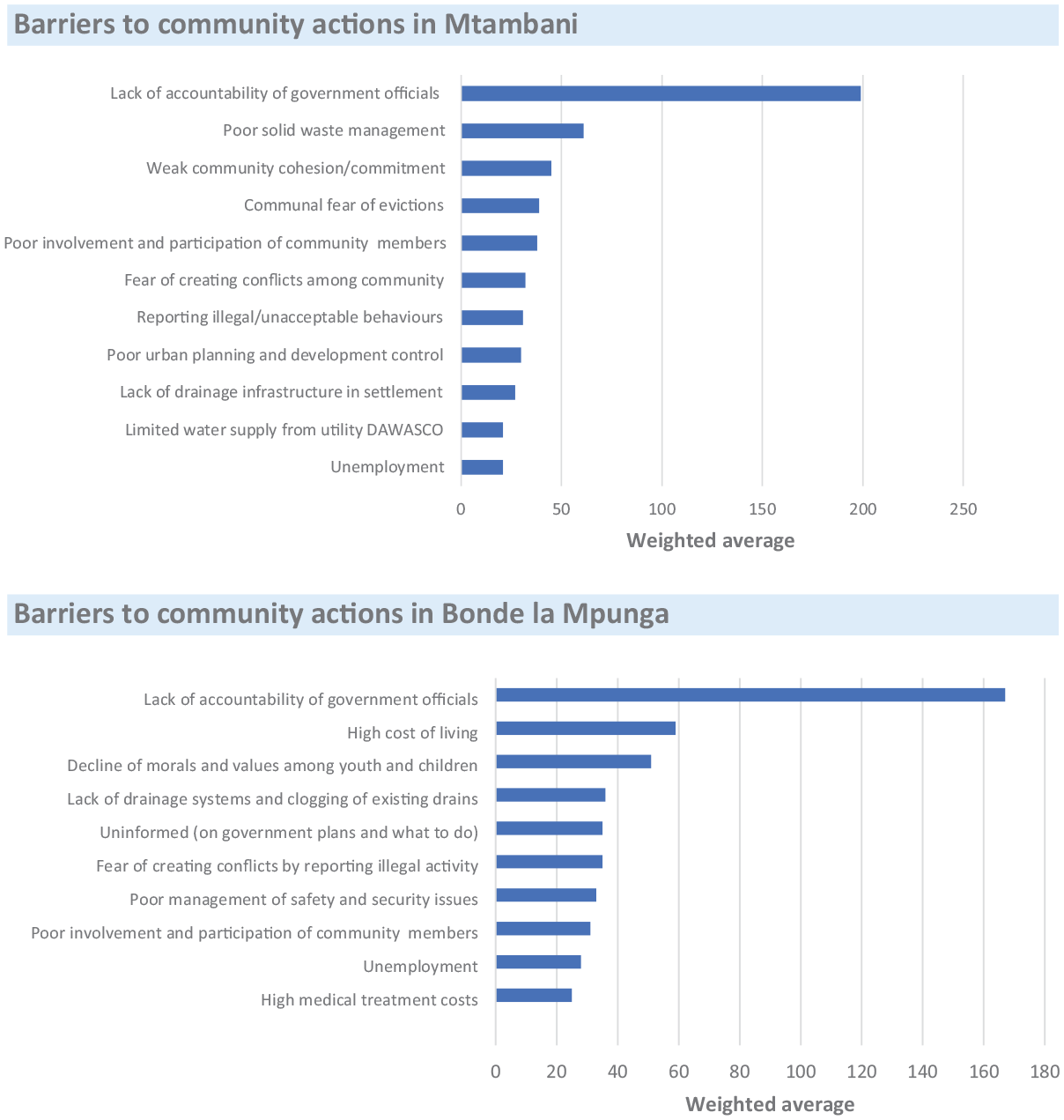
Top 10 barriers to community action to address threats in Bonde La Mpunga and Mtambani (as prioritized by residents)
Overall, the findings of the AFL as a knowledge co-production process suggest the prevalence of small-scale disaster risks and other social risks as the real threats to lives and livelihoods in the informal settlements. Urban service and infrastructure deficits – such as those relating to solid waste collection, sewage and wastewater infrastructure, security/policing and health care, as well as income, employment and economic issues – are strongly linked to challenges around tackling these issues.
The highlighted threats are at variance with the policy coverage and municipal practices in Dar es Salaam, which are skewed to addressing catastrophic events rather than the smaller events that affect people’s lives more. This points to the need for stronger links between DRR and development, and to the fact that disaster risks can be an entry point for understanding wider social issues.
VI. Opportunities and challenges for addressing urban inequality through knowledge co-production on disaster risks
The process and findings of the AFL in Dar es Salaam provide a useful opportunity to reflect on the value and potential of knowledge co-production in managing disaster risks and addressing inequalities. This includes the deliberations between stakeholders and policy-makers involved in the AFL risk-profiling exercise, and those external to the research but engaged in dissemination workshops and other conversations. The reflections on the process and findings are presented below.
a. Creating spaces for and sustaining dialogue on DRR
The mixed teams, especially with local government officials involved, created a new space for communication, dialogue and recognition in a manner that departed from CCI’s traditional approach to research and stakeholder engagement. Key stakeholders were in direct contact with community residents, allowing them a first-hand experience of community challenges. For instance, this was the first time that the municipal health officer for Ilala Municipality had visited the Mtambani community, which fell under her jurisdiction, and she appreciated the gravity of the challenges that she encountered. There were several moments of spontaneous discussion throughout the AFL process, introducing a much-needed dialogue, brokering relationships and sustaining the process of knowledge co-production. The strategic involvement of stakeholders who could potentially act on the findings, or who were the target of the actions right from the beginning, served to create critical buy-in and a means of legitimizing community-generated data. One direct outcome has been the recent award of solid waste removal contracts to the TUPF group in Mtambani instead of to a commercial contractor. Clean-up campaigns have also been organized by the ward development committee (WDC) to clear major drains ahead of the rainy seasons.
The creation of new spaces for dialogue, participation and recognition was not limited to the AFL process or data collection stage, but also emerged from ongoing engagement, as the findings of the research were used to broker dialogue with other decision-makers in the local government chain. For instance, CCI has now been given an ex officio seat in the municipal disaster management committees in both municipalities (see Figure 4). In the quarterly committee meetings CCI is gradually advocating for a shift in focus from post-disaster management to risk management. The biggest influence has been the growing recognition of the linkages between extensive risks and health outcomes, and the fact that some community health challenges could be addressed through DRR.
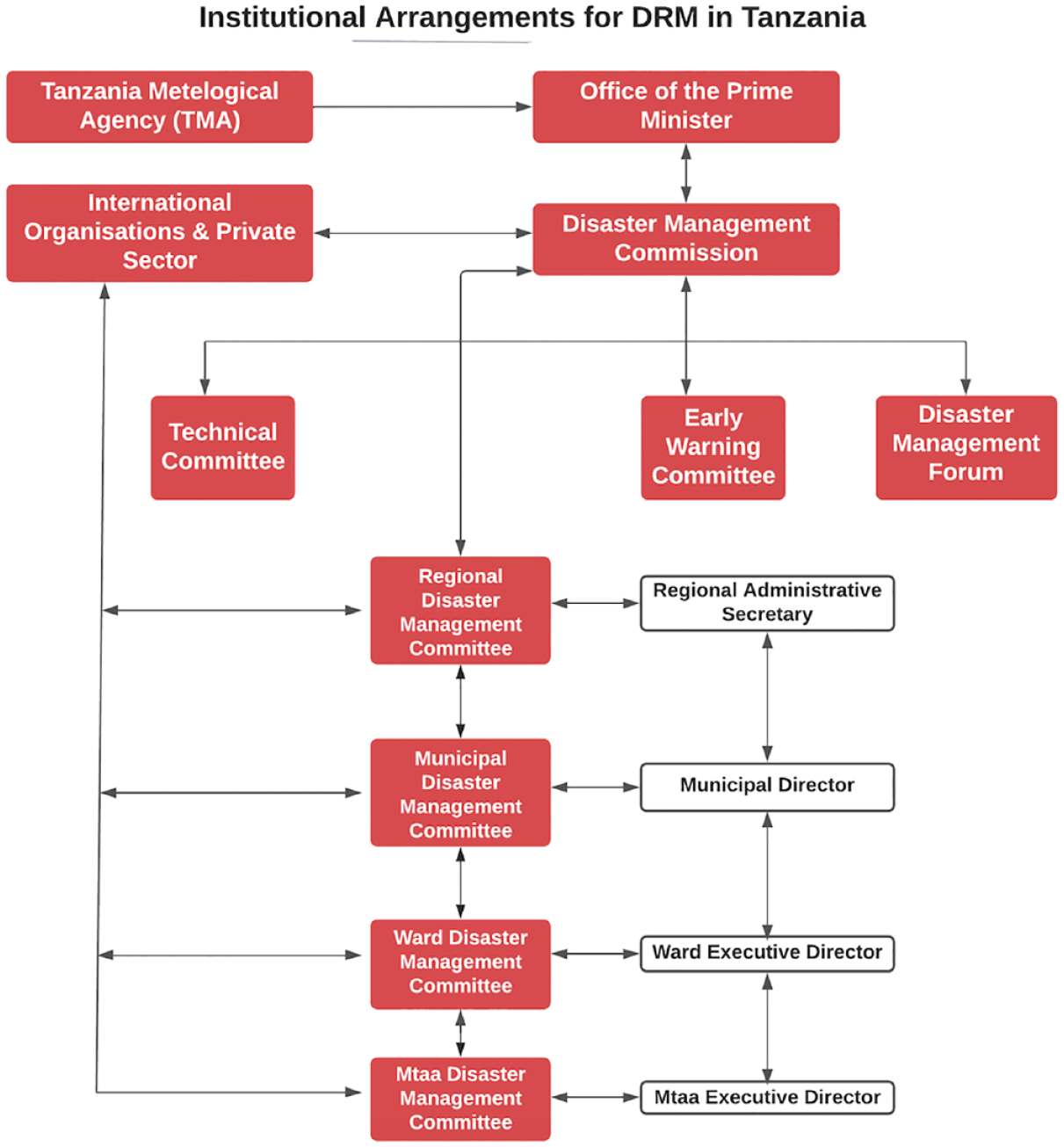
DRM institutional structure in Tanzania and its linkages with local governance structures in Dar es Salaam
b. New tools and metrics for risk assessment and risk communication
The entire process of the adapted AFL served as a simple, accessible means of generating new risk metrics, and made it possible for local decision-makers to take action. The use of weighted means, which the research teams worked out with the community residents, led to the creation of summary tables, graphics and charts. These outputs (translated into Swahili) were deposited with the Mtaa executive offices as well as the WDC, the lowest local government administrative structures. The WDC planned to use the outputs to incorporate a consideration of risk into their development plans. The dissemination workshops, as part of the AFL process, identified the WDC as a critical factor in local action, as its modest budgets can be purposed for DRR and development issues. It is also an important node in passing community concerns on to higher authorities. The WDC meetings were identified as a viable forum for sustaining DRR discussions, and the ward councillor, who took part in the project workshops, was considered an important ally. This involvement has been helpful in integrating and communicating the health dimension of DRR, with the ward and municipal health officers now advocating for improved waste management practices.
c. Catalysing local action
The knowledge co-production process went beyond data generation and risk profiling by also representing community voice and priorities in planning for community-level action. The summary outputs and graphics left with the Mtaa leadership have provided a blueprint for local-level decision-makers on community priorities with regard to action on extensive and everyday threats. This point highlights the potential value of knowledge co-production for achieving DRR action at the lowest scale. The most significant impact to date has been the efforts to address solid waste management and clear up drains. However, extensive floods persist, albeit at a lesser scale, because clean ups have been limited in scope, and a significant part of the settlement is inaccessible to the trucks that clear the clogged drains. There is the potential, however, to replicate and expand these CBDRR endeavours and although the impact may be limited it remains significant to residents.
By introducing simultaneous conversations on threats, impacts, actions and barriers, the AFL method has helped community residents to link risks to ongoing interventions and to consider their concerns more holistically, factoring in their respective capacities and resources. The adapted AFL approach has meant the profiling of risk was not a one-off activity but has become embedded in a sustained engagement over several months with significant community leadership and ownership. The centrality of community residents at all stages of the data collection, analysis and public dissemination was well received by community and federation members.
The process also draws on the established networks and community organizations that already exist in informal settlements. This means that activities are not one-off, but sustained over time as part of CCI’s long-standing engagement to provide technical and financial support to the TUPF with the wider objective of building strong networks of solidarity and care that enable agency at the local level. The TUPF, as part of the SDI network, has an established track record in settlement profiling and enumerations across Dar es Salaam and other urban areas in Tanzania.(50) These experiences were shared as part of the collective design and co-production of the tools by the research team.
d. Operationalizing devolved DRM structures and bottom-up influence of policy
The AFL has also provided an opportunity to interrogate and test DRM structures in Tanzania and to demonstrate how CBDRR programming could relate to formal structures in urban areas. The official Tanzanian national DRM policy does not explicitly cover the dynamics of community organization below the ward level in urban areas, and the AFL process was useful in investigating what exists both in principle and practice at the sub-ward level, which is an important scale for addressing extensive risks. It was also interesting to explore the relationship of sub-ward activity to the formal DRM structure above the ward level and its potential utility for communicating with stakeholders and decision-makers at higher levels. For instance, several sub-wards have some form of a disaster committee which, together with other ward executives, provides essential disaster relief and mobilization efforts. While these committees are known first responders in the event of episodic and large disasters, their role needs to be expanded to cover more DRR functions than just providing relief after a disaster happens.
This enquiry into the role of sub-ward structures in DRM and risk communication is also timely, given a recent restructuring and streamlining of reporting mechanisms between the ward, municipality and district levels (since the fieldwork in June 2018). The municipal disaster management committee, which previously reported directly to the elected district commissioner, now reports directly to the municipal director who is technically and financially better equipped to deal with DRM issues (see Figure 4). Similarly, at the sub-ward level the disaster committees are now mandated to report to the Mtaa executive officer (an appointed local government official who may not reside in the Mtaa) rather than to the Mtaa chairperson (an elected local representative). Unlike the chairperson, the executive officer has a direct reporting link to the municipal director and is able to represent community concerns for the receipt of funds which are at the disposal of the municipal director.
However, it is also critical that the Mtaa chairperson, a community resident who is seen as the grassroots representative, establishes effective communication with appointed officials like the executive officer who can help draw down municipal funds. The chairperson’s role is critical for the continuity of any DRR action since the executive officers, who may not be local residents, have limited office hours and experience a high staff turnover.
The challenges with the AFL co-production approach remain because support from the local government is so integral to addressing the DRR and development deficits. In the cases presented in this paper, the process was successful in drawing in the Mtaa representatives, partly because CCI had been working in Mtambani and Bonde La Mpunga for some time and had already developed relationships there. However, if this process is scaled up across areas where there is no existing relationship between communities, NGOs and local government, it cannot be assumed that Mtaa leaders will engage, and they could even be hostile to a process that engages with informal settlements. Also, the AFL process requires the amplification of community voices to achieve reciprocal recognition, either through grassroots organizations or local NGOs, and so requires a level of outside support or the existence of organized communities to undertake the process.
VII. Conclusions
The research presented in this paper has shown that residents view disaster risks as part of a larger spectrum of threats and as intermixed with other threats. This reaffirms the well-known position that a strong integration of disaster management and development is needed at the local level. This case study provides an example of how this can be done. This paper has sought to demonstrate how a knowledge co-production process on disaster risk connects to the challenge of building pathways towards urban equality from a multidimensional perspective. Many of the threats that the residents in Mtambani and Bonde La Mpunga face could be described as manifestations of inequitable distribution. Some small-scale disasters could be avoided with improved access to water and sanitation infrastructure, road networks, fire service, policing, health care and consistent incomes. Many of the social and economic threats that were identified also point to wider societal issues. The aim of DRR is not only to address the immediate causes of disasters, but also to tackle the underlying social and political conditions. We argue that any incompatibility that might be perceived between the more commonly framed disaster threats and the wider spectrum of threats can be tackled through similar supports for community and local government interaction.
From the perspective of CCI, the NGO that works to support grassroots leaders from informal settlements across Tanzania, co-production is the appropriate way to strengthen the role of community representation in local governance and to bring community and government views closer together. In this case, we have seen how the co-production process established room for manoeuvre in reciprocal recognition and parity of participation. Although CCI is experienced in supporting communities to develop their voice in local-level decision-making, this project introduced them to a new way of working, creating a mixed assemblage of local government leaders and municipal executives working together with community representatives to co-produce knowledge about disaster risks. This process was helped by a growing recognition by municipal-level decision-makers in Dar es Salaam of the role of community agents like CCI and the TUPF. The inclusion of CCI representatives and community leaders in the municipal processes, such as on the municipal disaster management committee, is an example of this. Likewise, the visits by senior municipal executives to informal settlements to witness things for themselves brought about a recognition of the challenges that had hitherto been missing.
There was an element also of mutual care and solidarity, as the knowledge co-production process worked across the two settlements. During the workshops, the federated members and residents of the settlements came together in one room to share experiences and learning, and to share the outcomes of the results, building solidarity between the communities. In the stakeholder workshops with higher-level decision-makers, municipal executives and Mtaa executives were brought together to bear witness, to understand, to listen and to hear. They also received the documented outputs – the maps and graphs. This engagement was seen as a huge step in bridging a wide gap in understanding the challenges facing informal settlements.
Cities are fundamentally shaped by market forces, and the analysis of equality or inequalities must bring us to the whole city perspective, rather than just that of informal settlements. Regarding pathways towards urban equality, co-production can start from one point or multiple points.(51) As is evident from the skills and capacities brought to bear in this research and in other CCI initiatives, co-production from the informal settlement upward provides the opportunity to make representations at the city level and up to the regional or national level. It requires the consistent commitment of communities to engage, to trust and to create the capacity to advocate for change.
From CCI’s practitioner perspective, co-production is certainly seen as one way forward in developing these pathways and as perhaps a better approach than other development methods as it is a counterweight to the government implementation of unsustainable activities. Co-production builds up the capacity of communities to manage, and it provides space for manoeuvre for all the different actors, rather than just one institution or stakeholder.
Footnotes
Funding and Acknowledgements
This article was written with the support of the AXA Research Fund Outlook Project “Supporting policy action in urban areas based on understanding people’s experiences of environmental risks,” and the research project Knowledge in Action for Urban Equality (KNOW), funded by the UK Research and Innovation through the Global Challenges Research Fund (GCRF), Project No. ES/P011225/1. With thanks to Mtafu Manda for his support on the AFL process.
3.
Kiunsi (2013); see also  .
.
6.
9.
Bull-Kamanga et al. (2003); see also Dodman et al. (2019); .
11.
Twigg (2009); see also .
12.
Dodman et al. (2017); see also .
13.
14.
Gaillard and Mercer (2013); see also .
17.
Tiepolo and Braccio (2020); see also Safier (2002); .
21.
Mitlin (2008); see also .
26.
Kiunsi et al. (2009); see also .
27.
Kiunsi (2013); see also .
33.
GNDR (2013); see also .
39.
40.
Gibson and Wisner (2016); see also .
44.
This research received ethics clearance from UCL Research Ethics Committee, application number: 7559/005, Risk in informal settlements. Community knowledge and policy action.
45.
Data collected from Mtaa executives in each settlement (May 2017).
48.
As per the ethics guidelines, consent from a parent or legally responsible adult was sought for all youth participating in the focus groups.
49.
For instance, if at the end of the exercise, 6 residents ranked ‘crime’ as the most important threat it would have a score of (6 x 5 = 30). If another 3 residents ranked it as the second most important it would have a score of (3 x 4 = 12). The combined weighted average for ‘crime’ from 9 residents is therefore 42.
50.
Ndezi (2009); see also .