




Abstract
This paper examines the changes to social networks of people living in seven informal settlements in Raipur, India, who, in line with the “Indian Alliance” model of community organizing, worked with NGO partners to form local associations in their settlements. These associations were meant to help the participants and their fellow settlement residents to access more secure housing through the Rajiv Awas Yojana (RAY) policy. This paper presents findings from a quantitative social network analysis, demonstrating the impact of the organizing efforts in reshaping their relationship structures and strengthening their agency. These findings were tested for resonance and further fleshed out with qualitative details by going through the analysis with participants. Finally, this paper offers reflections on incorporating technical research methods into organizing and action research interventions, affirming the notion that people living in informal settlements are well placed to generate and make use of sophisticated data on their own communities and cities.
Keywords
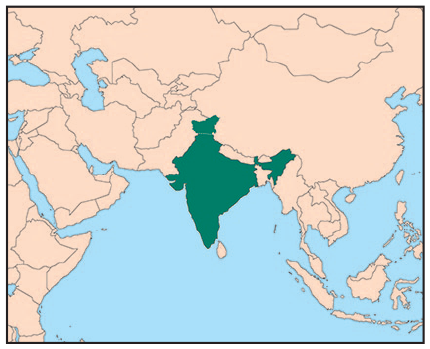
I. Introduction
Two 2016 papers in this journal(1) described the journey of local federations of people living in informal settlements in urban India – how they organized within their communities; created and took advantage of opportunities for participation in settlement policies in such areas as service provision, sanitation and housing construction; and managed to achieve a measure of empowerment and strengthened agency. As noted there and elsewhere,(2) this distinctive Indian Alliance approach to organizing has been honed over decades and has been quite effective at strengthening agency.
This paper presents an approach based on social network analysis for capturing information about interpersonal relationships as they change over the course of such organizing activities. I demonstrate how these methods were used in the case of seven informal settlements in Raipur, India, that implemented this approach to organizing in the context of the Rajiv Awas Yojana (RAY) settlement upgrading policy, which was meant to include local participation in the planning and construction of high-quality housing in existing informal settlements. As groups of settlement residents began organizing together, their new relationships and relational dynamics were captured by different forms of social network data, revealing quantitative and qualitative aspects of the empowerment and strengthened agency that resulted.
The idea that agency(3) – the ability to take action that makes a difference – is tied up in relationships is not new. Granovetter(4) famously noted the importance of people in one’s extended social network (“weak ties”). Social capital has been a common conceptual lens for understanding how relationships can act as a resource for individuals or groups.(5) Burt(6) and others(7) have pointed out how particular social network features are related to social capital – and agency more generally.
Additionally, multiple strands of scholarship have explored the ways people living in poverty are particularly dependent on relationships. Chatterjee(8) coined the phrase “political society” to denote the way people living in informal settlements in India tend to accept collective identities around deprivation (i.e. the “poor” or “slum dwellers”) in order to access basic services – almost always through patronage relationships. Others(9) have explored the relational nature of power and agency in Indian informal settlements, noting that while close relationships of interdependence can be an asset, patronage and clientelism can undermine social change efforts to create greater equality.
Given the importance of relationships to agency, I argue that it is crucial to find more effective ways of capturing real-time information about social networks – in order to analytically capture the links among action, the resulting changes to the relational context, and the subsequent impact on agency. In addition to making these processes visible, the methods discussed here emphasize the qualitative, subjective nature of relational change and the need to work directly with local people to reflect on their experiences. This helps to illuminate the subtle ways agency evolves with relationships. For example, in a system where local actors are dependent on unequal patronage relationships, simply building new relationships might allow them to effectively circumvent unwanted or unhelpful patrons (i.e. strengthened agency), or it might undermine important channels of support from those patrons (i.e. weakened agency).
In documenting and tracing the formation of local associations, this research contributes to an understanding of how to nurture agency and resilience in informal settlements. The following section presents methodological approaches to studying social networks at individual and collective levels, in order to better understand the limits or extent of agency among individuals and across networks in informal settlements. The background to the project in Raipur, India, is discussed in the subsequent section. This paper presents findings from this project, and it articulates two main contributions to the study of urban informal settlements and efforts, like the Indian Alliance approach to organizing, to strengthen the agency of people living in informal settlements.
First, by depicting changes to participants’ social networks over time, this paper presents evidence of how Indian Alliance-style organizing leads to changes to relationship structures. This quantitative “story” was tested for resonance by going through the analysis with participants and fleshing out qualitative details of what relational changes meant for agency. Secondly, this paper offers reflections on going beyond either purely quantitative network analysis or purely qualitative participatory network analysis. By demonstrating the impact of organizing on individual and collective agency, this study underlines the value of organizing and participatory action research (PAR). This study further demonstrates the capacities of organized communities within informal settlements to work with technically sophisticated methods and data and to effectively build the resulting knowledge back into their change efforts.
II. Social Network Analysis: A New Approach To Participation
Social network analysis makes use of graph theory mathematics and statistics to illuminate structural features of networks like class (random, scale-free, small-world, etc.), centrality (a statistical measure of how many connections actors have), and clusters (groups of nodes more connected to each other than they are to a larger group).(10) One strand of literature on social network analysis can be described as “social physics”(11); it examines purely quantitative metrics of networks to illuminate objective aspects of webs of relationships, abstracted above the level of human meaning that may exist. For such an approach, it makes little difference whether the nodes in the network are machines, animals, human beings or companies.
While there is value in this kind of abstract analysis, critics such as Emirbayer and Goodwin(12) and Crossley(13) argue that for social network analysis to generate insights relevant to real-world social settings – for it to be truly social – it must integrate qualitative analysis with the quantitative.(14) There are inherent uncertainties in social network analysis because stories and narrative conclusions that can be drawn from abstract quantitative metrics are inevitably open to contestation.(15)
There is a particularly vibrant set of mixed-methods social network analysis literature emerging in German-language publications(16) following the work of Schiffer(17), which seeks to apply not only qualitative methods, but participatory ones as well (see Net-Map(18)). This typically involves asking people to draw their relational connections on paper or with game pieces on a tabletop, or even in the dirt, depending on the context, allowing the participants to analyse their “ego-nets” using quantitative tools and to hash out their own qualitative meanings.(19) This approach tends to emphasize the participatory meaning-construction processes for the analysis of networks, rather than relying solely on rigorous quantitative processes. This is often appropriate, following the principle of “optimal ignorance”(20) – that the value of additional and more detailed data must be weighed against the cost of collecting it for the people involved.
The research described in this paper represents an attempt to balance qualitative and quantitative approaches to social network analysis. It was also an attempt to make a rigorous technical analysis accessible and relevant to participants who were primarily concerned with social change outcomes (rather than research outputs). To do this, I generated a participatory dataset, made use of quantitative social network analysis at both the individual and collective levels, and followed a participatory process for quantitative and qualitative analysis of those data. Here I explain the quantitative metrics before detailing the participatory methods that were used.
a. Metrics for individuals
Social network analysis often involves quantifying aspects of a node’s position within the network. Several metrics(21) capture how “central” a node is within the network.
“Degree” is simply the number of other nodes that a given node is connected to. A higher degree implies that a node is central because it has many connections.
The “betweenness” centrality of node a considers all the possible pathways between each pair of other nodes and captures the proportion of those that require going through node a.(22) This metric captures the effect of being an “intermediary” between lots of other people and implies that a node is central because it acts as a bridge or broker between other pairs of nodes.
“Closeness” centrality captures how many steps away a node is from each other node, on average.(23) Intuitively, a higher closeness centrality implies that a node is central because it can reach the other nodes in a relatively small number of steps. That is, information or resources have less social distance to travel. For a node with no connections, closeness centrality is undefined.
Taken together, this suite of individual-level metrics can tell a detailed story about the roles played by different nodes within the social network. It may be important to know that certain actors are connected to many others, or it may be most relevant if certain actors function as brokers. Degree, betweenness and closeness, while not direct measurements of agency, do help in drawing conclusions about how different actors experience agency within their relational context. This is especially true if the analysis is supplemented with qualitative data and resonance-tested with the actors themselves. Further, if social network data are available over time, changes in these individual-level metrics can reveal important aspects of how actors’ agency has changed over time.
b. Metrics for the collective
Krackhardt et al.(24) devised a set of metrics that capture connectedness and hierarchy in the context of networks that belong to organizations. In this paper, I examine the social network of the project participants as they created associations within each of their seven informal settlements and linked up with each other to form an organization. In this case, Krackhardt’s group-level metrics – connectedness, graph hierarchy, graph efficiency, least upper boundedness and graph density – reveal important features of the nascent organization.
Graph
Finally, graph density is often considered alongside Krackhardt’s original four metrics. Graph
Taken together, these group-level metrics, like individual centrality metrics, reveal important aspects related to the experience of agency. These metrics can suggest which actors are likely leaders as well as whether information flow and decision-making are likely to be streamlined or irregular. Again, if social network data are available over time, these metrics can reveal important features about an organization’s structural evolution.
c. Network restructuring
The work of Kossinets and Watts(29) was an early example of the empirical study of how social networks evolve over time and how group-level and individual-level features of the networks change. These authors suggest that – at least in their study of university teachers and students – while group-level networks tended to evolve towards an equilibrium, individual features tended to remain unstable. For example, bridging nodes might remain prevalent and important for how a network functions, but the individuals occupying those bridging positions tended to be replaced over time. More recent research has built on and extended the theoretical and empirical analysis of how networks change over time, importantly considering how processes and networks co-evolve. For example, Corten and Buskens(30) modelled and conducted experiments on how different network configurations impacted the adoption of social conventions, including how the need to address collective action problems led to endogenous reconfigurations of networks to achieve such conventions. Flores et al.(31) modelled the ways groups within networks could influence the spread of ideas or adoption of behaviours, which they say would be relevant to identifying groups and understanding the processes by which they might achieve social outcomes, such as starting a social movement or preventing terrorist attacks.
One key concept for making sense of restructuring networks is percolation. As the name implies, percolation refers to situations where there is sufficient connectivity between nodes for something to flow through the network. Percolation is a particularly relevant phenomenon characteristic of complex networks, where it represents one of the simplest examples of emergent behaviour.(32) It offers insight into how the dynamics of networks (how networks rewire over time) and the dynamics on networks (what processes happen in the relationships or what passes through the connections) work together.
While percolation is typically studied in the context of physical science, a recent review of advances in the study of percolation has noted its applicability to social network phenomena.(33) Campbell(34) and Tur et al.(35) explored how percolation impacts processes on social networks, with Tur et al. explicitly modelling interactions on “small-world” networks meant to simulate real-world social networks. These studies demonstrate that increasing numbers of ties as networks evolve create non-linear changes in how processes work on those networks. At certain levels of connectedness, not only are “giant components” of nodes created, but more widespread diffusions are enabled – whether those diffusions are of information, diseases, or more complex processes of forming social norms.
That is, starting with a set of disconnected nodes, if we systematically add connections, at some point (depending on the structural properties of the network and the processes by which we added the connections, i.e. randomly or non-randomly, but independent of social context) the network qualitatively changes from being a set of largely disconnected groups to a single, mostly connected group. This is a simple but non-trivial example of emergence and critical behaviour in a complex social system. Research has been done on social implications of percolation effects in the context of human social systems,(36) but as of yet, no one has applied this to evolving networks of urban organizers. This phenomenon is examined in this paper by looking at how new connections formed over the course of the research project changed fundamental properties of how the system worked and evolved.
d. Resonance testing and feeding back findings into reflective action for change
Qualitative interviews and ethnographic observations can shed light on the meanings that people place on relationships, and these methods can be used to “resonance test” the findings generated through social network analysis.(37) In the context of a development intervention project, observing actions over time can deepen the understanding of both the nature of relational ties and the content of the relational dynamics – what information is flowing through relational ties, and what kinds of relational dynamics are occurring on the network.
Additionally, going through a participatory social network analysis – even if it is primarily a visual analysis – can serve two important functions. First, it can help verify and nuance the quantitative findings. Something suggested by metrics is more believable if the “nodes” themselves confirm it with their lived experiences. Alternatively, analysis done together can help identify areas where the networks alone may be misleading. Second, in the context of participatory action research, doing the analysis in partnership with the participants can ensure that research is not extractive, that data and knowledge created through research are owned by and useful to the participants. In keeping with the objectives of PAR, participants can reflect on the ways actions have impacted their networks, and as a result changed the kinds of things that are possible. This knowledge can feed back into the participants’ planning and decision-making processes for future actions.
As mentioned above, there is growing concern in the networks literature about finding ways to strengthen quantitative social network analysis with qualitative data on what relationships mean to the individuals within them. This is usually done by having people draw out their social connections on paper through a facilitated dialogue. This also resonates with participatory processes for “system mapping” that have been advanced in action research settings.(38) However, it is also possible to carry out a participatory analysis of network data that were collected with a survey.
In this research, the printed network diagrams based on data collected from the participants served as the basis of a qualitative discussion, in which the participants marked up the maps and discussed the findings.
III. Research Background
The project, which formed the context of this research, was called Strengthening Civil Society Voices of the Urban Poor(39) (referred to throughout simply as the project or SCSVUP). It began in late 2011 and ran through the end of 2013. It was initiated and managed by a consortium of Indian NGOs: PRIA and SPARC at the national level, while the local PRIA office and a local NGO, Chetna, managed the project activities in Raipur. The project explicitly set out to implement a locally tailored version of the Indian Alliance approach to organizing in informal settlements through building local associations.(40) This approach, which involves NGO partners supporting local people’s own community organizing efforts, has been developed and honed over several decades by the members of the Indian Alliance: the National Slum Dwellers Federation (NSDF), Mahila Milan and SPARC.(41)
NSDF has organized groups of people living in informal settlements to resist eviction and build social and political power,(42) while Mahila Milan has done the same amongst its female membership.(43) SPARC, the support NGO to these networks, has helped facilitate the institutionalization of those relationships between and across members living in settlements and on pavements, as well as the sharing and building of knowledge generated through the rich experiences of members.(44)
The purpose of the intervention described in this paper was to form local associations through which settlement residents would be able to access participatory settlement upgrading resources via a national programme called Rajiv Awas Yojana (RAY).(45) The associations were called “slum improvement committees” (SICs) throughout the project. While the RAY mandated the formation of such committees in each settlement in order to facilitate participatory planning and local management of the upgrading process, I observed that this aspect of the programme was largely ignored. The two Raipur-based NGOs used the Alliance model for the intervention in order to ensure that these mechanisms for participation were formed and that they were able to link up across settlements (going beyond the intent of the RAY programme). SICs were successfully formed in seven informal settlements whose residents had expressed an interest in the organizing project.
Over the years, the Indian Alliance has achieved the resettlement and upgrading of housing and services for thousands of federation members.(46) Despite this fact, however, little is known about the complex processes of change that take place over the course of such organizing efforts. By examining the social networks of the project participants over the course of the intervention documented here, and looking at SIC formation and subsequent action, this paper explores how such interventions actually impact the social networks of participants and how this, in turn, impacts agency.
The seven settlements in which SICs were established as part of the project shared some features. Each had been in place for at least 30 years. The land they occupied had previously been on the outskirts of the city, but as urban development and expansion had taken place, the land each occupied had come to be regarded as part of the urban core. This meant it had greater value for property development, and pressure to remove the settlements had grown. Some settlements occupied government-owned land, while others included land owned by the railroads or land with disputed ownership.
The settlements varied in the degree to which the residents had experience with organized political action. The Ambedkar Nagar and Lakshmi Nagar SICs included individuals with extensive experience as local leaders and political operatives within the BJP political party – Keshav from Ambedkar Nagar and Amrit from Lakshmi Nagar (discussed further below). Ambedkar Nagar residents tended to be more active in public life, regardless of party affiliation, than residents of the other settlements. Other settlements had less experienced leaders and less active residents. These aspects of civic agency within the settlements and their correlation to party connections is beyond the scope of this paper, but are discussed at length elsewhere.(47)
One of the primary objectives of the project was to form local associations (SICs) within the seven participating informal settlements. This was accomplished by the end of December 2012. From January to February 2013, SIC members and other residents of the settlements who were involved in the project participated in project activities that included meetings, settlement enumerations, and preparations for participating in the RAY settlement upgrading scheme.
The seven settlements examined in this paper were: Ambedkar Nagar, Lakshmi Nagar, Shakti Nagar, Shanti Nagar, Gandhi Nagar, and two settlements in Shiv Nagar (Shiv Nagar 1 and 2, in this paper).
IV. Methods
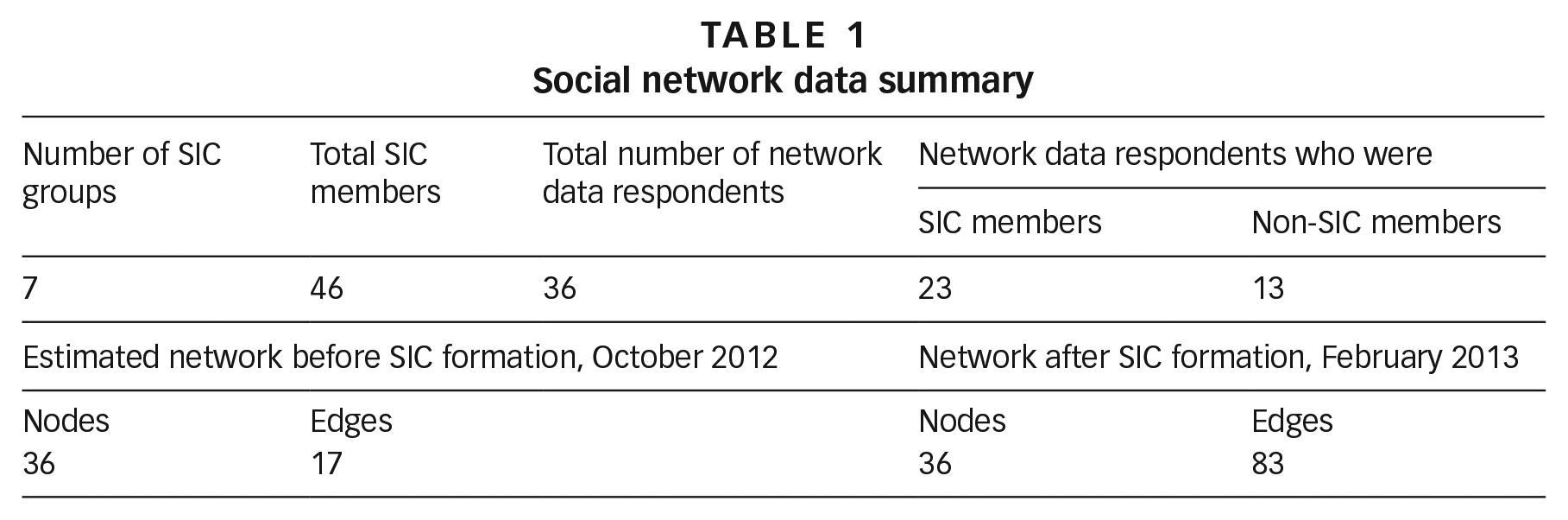
In February 2013, I collected data on the social connections of the project participants. I used a purposive sampling method to select which of the project participants from across the seven settlements would be interviewed. I attempted to interview as many SIC members as possible and to include people who were active in the project across all seven settlements. Not all the SIC members were active or accessible during this time. I interviewed 36 individuals in total from across the seven settlements. Of those, 23 were members of their settlement’s SIC. The seven SICs involved in the project had a total of 46 members, meaning that exactly half of the SIC members were interviewed. The 13 non-SIC respondents were chosen because of their interest and participation in project activities. This is summarized in Table 1. These respondents represent a bounded set of project participants, and their reported connections can reasonably be considered complete and exhaustive for the purpose of calculating social network metrics.
Social network data summary
During the interviews to capture social network data, respondents were asked the following questions:
Of the people living
Of the people living
Who did you interact with
Who did you interact with
For each relationship reported, I asked the respondents to briefly and generally indicate the nature of the relationship (i.e. family, friend, work colleague, public figure) and the nature of the interaction (i.e. friendly visit, business transaction, protest, gathering information). This allowed me to understand the different kinds of actors that were common in the network, which actors were important to the participants and for what reasons, and which relationships had been forged because of the project. In some cases, respondents were probed about whether specific relationships had been initiated as part of the project or if they had preceded the project.
Once these data had been collected, I plotted them as two social networks: one as reported in February 2013, and another where relationships formed through the project were removed. This second network is an estimate of the social network of the project participants in October 2012. Both networks are analysed here, with the second network considered to be a reconstructed baseline. This baseline was constructed through careful conversation with participants and taking account of the detailed knowledge I attained through building personal relationships with the participants myself over the course of the project. However, it is worth noting that it is an estimate, with some uncertainty. For example, some networks might have existed before the project but might have broken down or been replaced with other ones since, perhaps even because of, the project. Still, comparing the two provides insight into how the network was being reconfigured due to project activity and the local organizing actions of the SICs.
In addition to the qualitative data gathered during the social network interviews, I carried out two extensive reflective discussions with project participants in which we conducted a participatory visual social network analysis. To be clear, the data were considered to represent a single project network comprised of residents and SIC members from across the seven settlements. Thus, these participatory analysis exercises were iterations of a single overall collective network analysis. Details about how the respondents were connected to each other within and across settlements can be seen in the network maps in Figures 1 and 2.
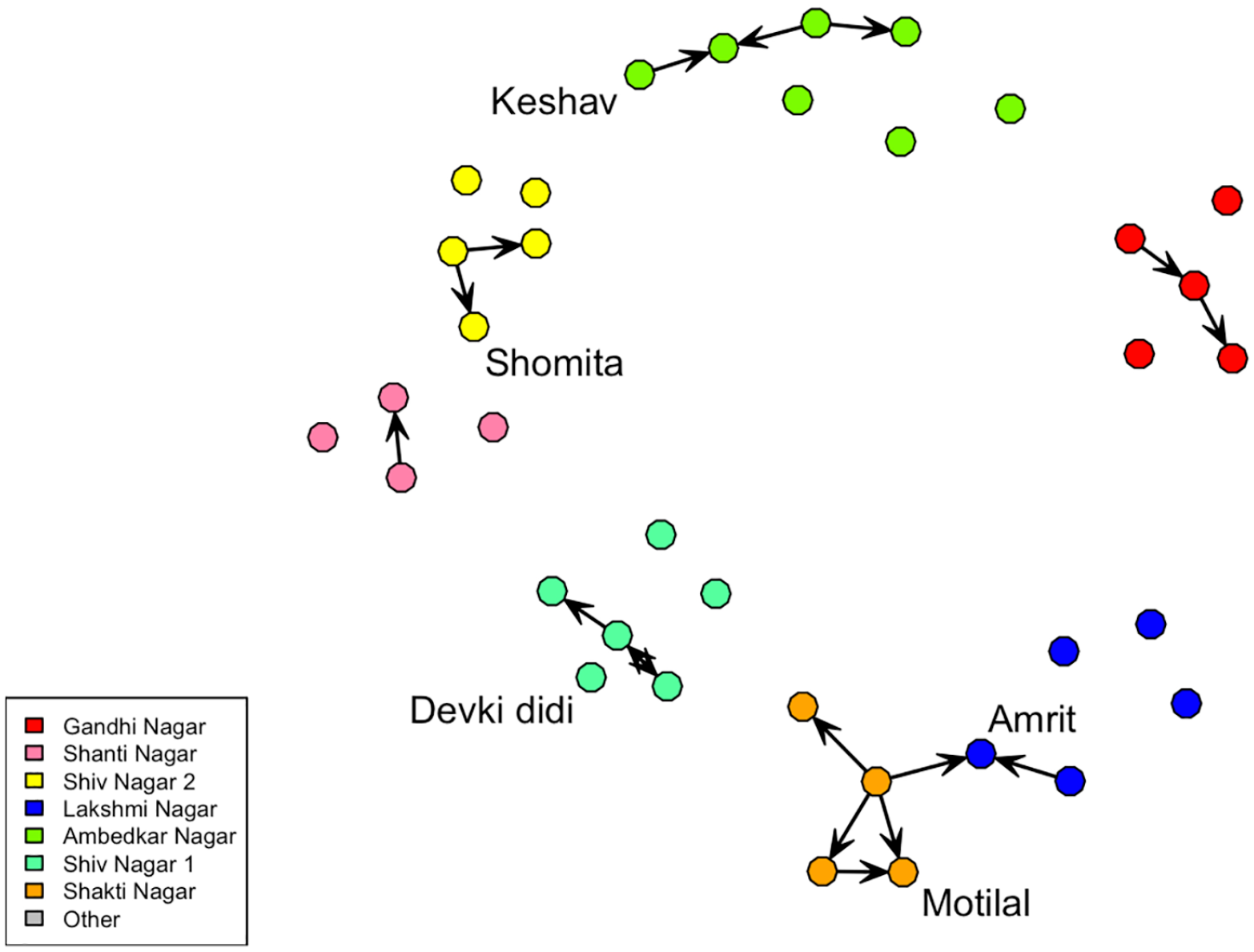
Estimated baseline social network of interviewed participants before forming SICs
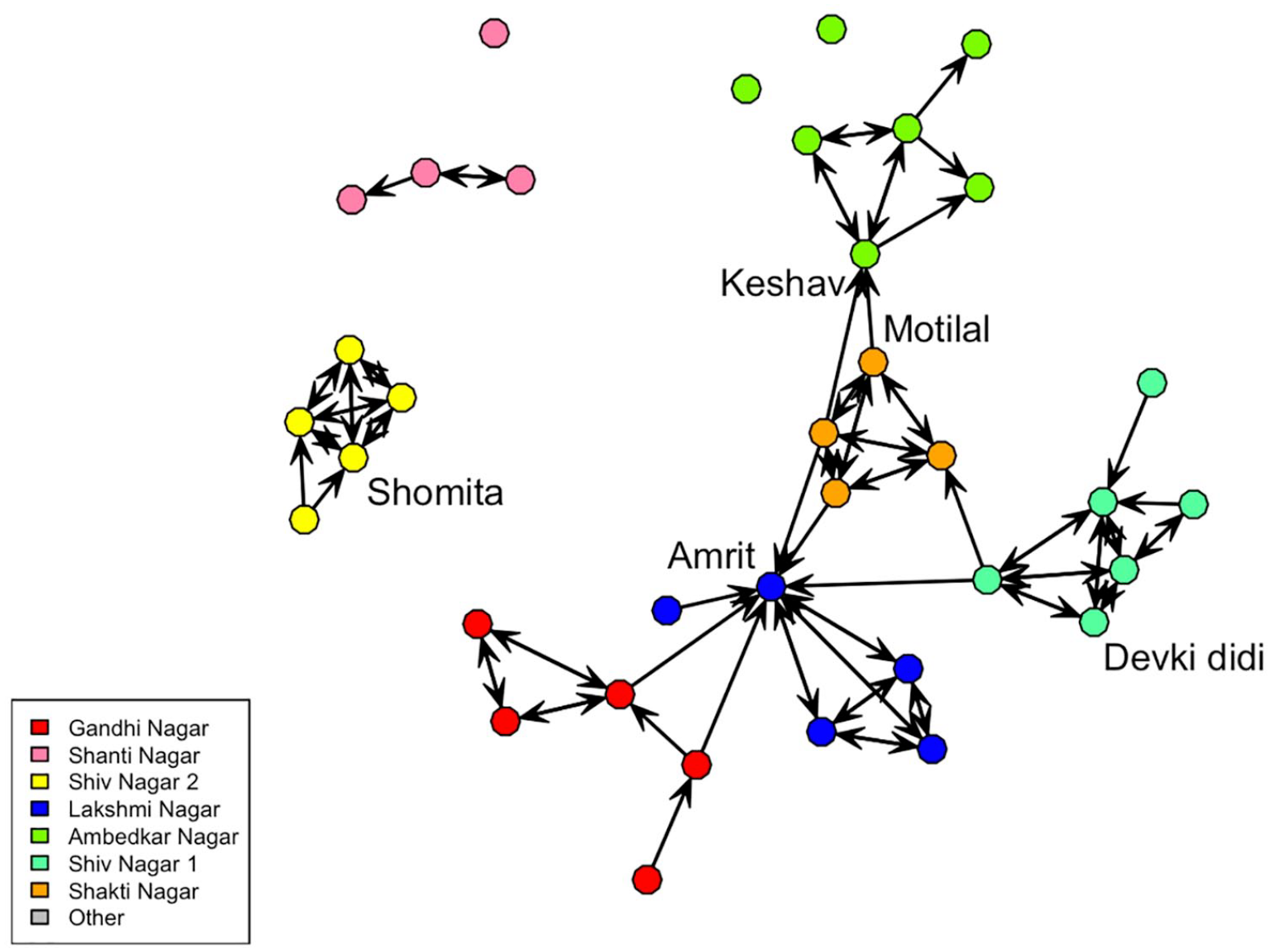
Social network of interviewed participants after forming SICs
The first discussion was held with the SIC members of the Ambedkar Nagar settlement and served as a pilot – to learn how to carry out a participatory visual social network analysis. The second discussion was held with a group comprising at least two members from each SIC. These discussions allowed me to test the findings of the social network analysis for resonance with the experiences of the project participants. They also allowed the participants the opportunity to carry out their own analysis, collectively digest their findings (and my own findings once presented), and use the findings to inform their ongoing project activities.
I printed the social network diagram based on these data on a table-sized sheet of paper and used this map as the focus of a facilitated discussion. I facilitated a visual analysis of the network diagram in which the participants located themselves in the printed network and made sense of their connections to each other. In addition to visually exploring the printed map, participants were able to mark up the maps with additional connections and information about the content of their relationships. Through this participatory analysis, the participants were able to articulate how relationships had changed over time and how certain relationships provided entry points for issues they hoped to address through collective action.
The findings of my analysis are presented in the next section, followed by a section discussing the participants’ analysis and use of findings.
V. Data And Analysis
Based on the 36 social network interviews conducted with the project participants, a network was generated that included 472 nodes (including the 36 individuals interviewed) with 748 total edges (representing the total number of reported relationships). However, as summarized in Table 1, the data do not represent a census of all SIC members and project participants. Social network theorists have pointed out that social network sampling can impact metrics in uncertain ways.(48) Given these well-known limitations of sampling methods in social network analysis,(49) I have chosen not to extrapolate from these data to estimate metrics for the entire settlements. Rather, I treat the interviewed group as a complete project network for the purposes of metric calculation. These graphs contain 36 nodes and 83 edges in February 2013, but only an estimated 17 edges in October 2012, based on my reconstruction. Again, this is detailed in Table 1. Figure 1 depicts the estimated baseline network of October 2012, before the SICs were formed and project activities had commenced. Figure 2 depicts the network as reported in February 2013.
a. Individual metrics
Table 2 provides three standard measures of centrality for nodes in a network: degree, betweenness and closeness. These three metrics can reveal substantial information about the role played by a given node in a social network. As mentioned earlier, Amrit from Lakshmi Nagar and Keshav from Ambedkar Nagar were experienced leaders within their settlements, each having extensive connections to the BJP party leadership. In the network as reported in February (Figure 2), both were quite central in terms of their degree and betweenness centralities. However, before the start of the project, they had almost no contact with people from the other participating settlements.
Individual network metrics, before (estimated) and after SIC formation
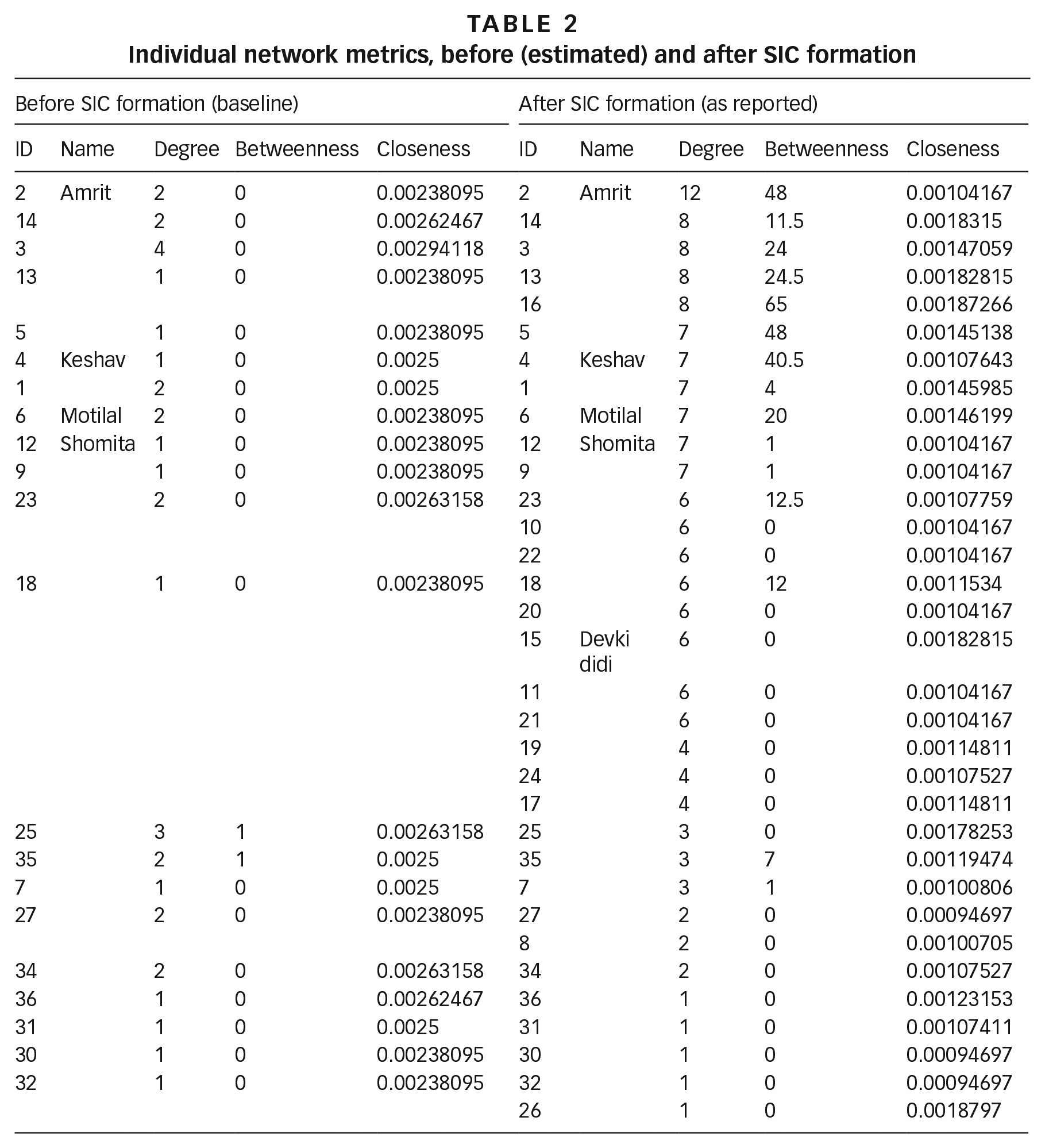
After forming the SICs, Amrit had 12 connections to other interviewed participants, while Keshav had seven. Amrit had the highest number of anyone in the network, and Keshav was also among the highest. Amrit’s betweenness centrality was the second highest, at 48. This suggests he was the participant best positioned for leadership and influence within the network. Keshav also had very high betweenness (40.5), which is commensurate with his role as “fixer” and his leadership position within his community. Note that since the baseline network (Figure 1) is largely disconnected, betweenness centrality is zero for most of the respondents. Those respondents who had no connections to other respondents in the baseline network are not listed on the left side of Table 2.
Closeness centrality scores tell a more nuanced story. Neither Keshav nor Amrit have particularly high closeness centrality. This seems to be an artefact of their positionality – many of the respondents named them, but Keshav and Amrit did not name many of the other respondents. As of February, most of the ties involving Amrit and Keshav were directed towards them. That is, the other respondents were naming them as important contacts more often than they were reciprocating. This directionality means that it had become easier for the others to access each other through Amrit and Keshav, but not necessarily easier for Amrit and Keshav to access everyone, since they had become two “peaks” of a nascent hierarchy.
Meanwhile, Motilal, Shomita, and Devki didi also became much more central to the network after the formation of the SICs. Devki was a leader with much the same background as Keshav and Amrit. Motilal and Shomita represent an “average” kind of participant who came into the project with little experience and few skills for organizing or taking collective action. They had few connections to powerful actors. After forming the SIC groups, “average” participants of this type dramatically increased their number of connections – within and across neighbourhoods – and increased their positional power within the network. Motilal’s betweenness centrality jumped from one to 20 after forming the SIC groups.
b. Collective metrics
Krackhardt’s(50) five metrics for capturing connectedness and hierarchy are presented for both networks in Table 3. Recall that “connectedness” captures the extent to which the individuals are directly connected to each other, “hierarchy” captures trends in the directionality of ties, “efficiency” captures redundancy in connections, “lubness” captures how streamlined communications channels are within a network, and “graph density” captures the proportion of possible relationships that actually exist. Taken together, these five metrics provide a good characterization of an organizational network.
Network-level metrics before (estimated) and after SIC formation
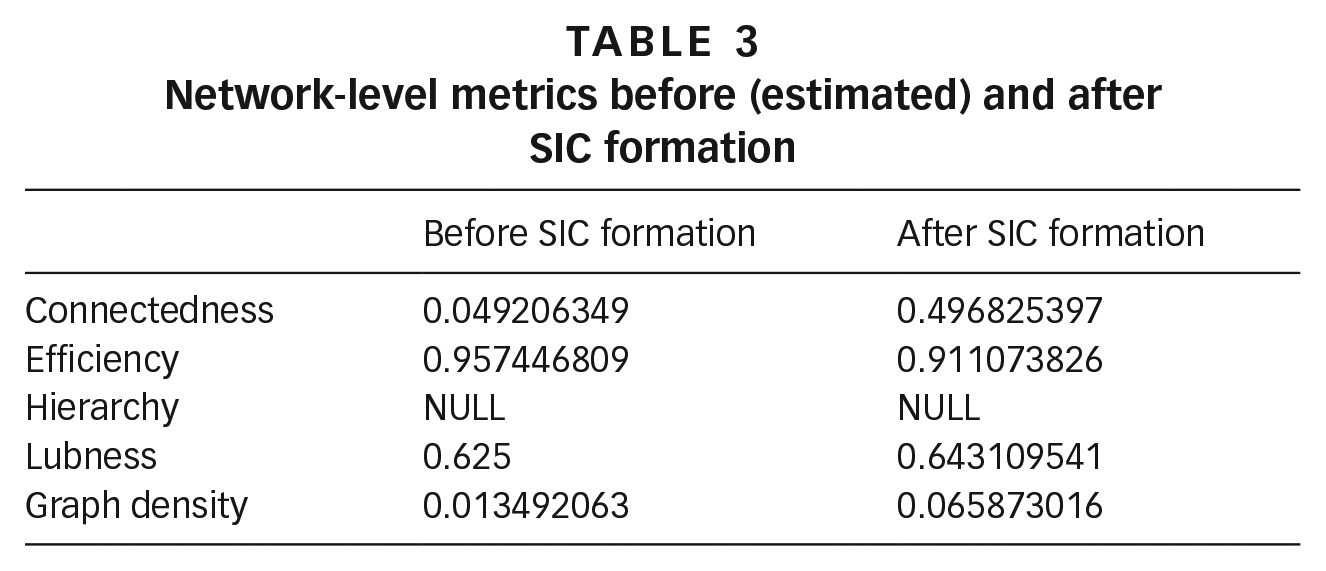
The first thing to notice is that connectedness increased dramatically. Figure 1 shows that before intentionally forming SIC groups in the seven settlements, the network was highly disconnected. In fact, there was only one case of inter-settlement connection before the project: Amrit’s connection to someone in Shakti Nagar who he knew through his work. From the perspective of complex networks, this indicates the phenomenon of percolation: the new relationships resulted in a “phase change” whereby the network went from being mostly disconnected to mostly connected. This is discussed in greater detail in the section below.
Efficiency decreased slightly, but great care must be taken in interpreting this measure. The calculation for efficiency, by definition, cannot account for disconnected graph components. It merely calculates the degree of “excess” connection within the component that
Least upper boundedness increased, but only to about 0.54. This indicates that a leadership structure did develop and strengthen as the SIC groups were formed, but as of February 2013, no single person or group of people was dominant. This suggests that, even as Keshav and Amrit were leaders, they did not dominate the fledgling SIC organization. This was corroborated during the facilitated discussions of the networks. Keshav, looking at printouts of the networks, argued that greater distributed leadership was needed within the SIC organization, rather than shouldering the responsibility himself. The SIC groups simply did not have the structure of a rigid hierarchical, top-down organization, and, for better or worse, its effectiveness and long-term success would require members from each SIC group to step up and take responsibility as leaders.
Finally, the graph density increased slightly after forming the SICs, but Figure 2 shows that the network was still rather sparse. Notably, the SICs did not become one homogeneous group. They remained dense clusters weakly connected to each other through the smaller number of very active SIC members. Beyond this, and perhaps equally important, visual inspection of Figures 1 and 2 suggests that forming SICs significantly changed relationship structures within the settlements, not only between settlements.
c. Dynamics of the network and on the network
It is often assumed that informal settlements are places of dense ties of mutual dependence.(52) While there were clear community clusters in each settlement, forming the SICs seems to have catalysed new and stronger relationships amongst people living in the same settlement. The participants may have been neighbours for many years, but working together as SIC members and as part of the project seems to have brought them closer together. The social network suggests that these (new) relationships became more egalitarian, with most people now claiming to have relationships with most others from their settlement. This is an important finding, and it has implications for agency – especially around capacities to take collective action. The strengthening of intra-settlement ties over the course of the project constitutes a strengthening of agency, and it is corroborated by the subjective sense of strengthened agency reported by many of the participants.
The social network analysis reveals several important things about how forming the SIC groups impacted the social network. It is clear from a visual comparison of Figure 1 to Figure 2 that between October and February, many new relationships were developed. This led to the formation of a “giant component” in the network – the rapid change from a set of disconnected communities to a single community weakly held together but with stronger sub-communities.
Firstly, the numbers and a visual inspection of Figures 1 and 2 suggest that forming SICs and participating in the SCSVUP project initiated a “phase change” in the network through which seven individual groups became a nascent organization. This new organization exhibited a distributed leadership structure, with the two leaders – Keshav and Amrit – assuming central roles. The numbers also suggest that both “average” participants and the “leaders” benefitted from these new relationships, though in qualitatively different ways. The more experienced leaders extended their reach beyond their own settlements. Meanwhile the “average” participants dramatically increased their positional power, with some becoming leaders within their settlements and brokers between their settlements and outside resources for the first time. This phase change to a nascent organization is further illuminated through group-level metrics.
d. Participatory analysis and resonance testing
While the social network analysis that I carried out on the network data from the survey described above shed light on important aspects of the system, I wanted that insight to be relevant to the participants themselves. Rather than merely feeding back the findings from my analysis to the participants, I worked with them to carry out their own analysis.
The result of this visual analysis was not quantitative assessments of centrality or positional power. Rather, it was a sense among the participants of their own relational importance within their social system. In some cases, participants noted how aspects of the network resonated with their senses of being variously isolated or connected at both the individual and settlement levels. It provided a confirmation of positive social changes that they were feeling, but also pointed out certain groups that were being left behind. The participants were able to use these insights to inform their planning discussions for future collective action.
During the Ambedkar Nagar discussion, an SIC member explained his understanding of the printed social network diagrams: “We are exactly in the middle of the thing, and thereby very close to the others. We need to increase these relationships gradually. The moment the word Ambedkar Nagar comes, they visualize us. A few people are already connected to the power. There are still some people who also want to connect to the power area. Those who want to get in contact with the powerful ones, they can contact the person who is connected to the power. They can go with him to the powerful person and get to know him as well so next time they can go alone to the powerful person. We are contacting the powerful people alone now. If it was a collective way, if three or four people go to them, the contact increases. Anyone who wants to get in contact with the powerful man can get in touch with us. Maybe he is afraid of expressing his problems, or shy, or avoids speaking. So, this type of contact will gradually develop his confidence.”
Later, during the facilitated exercise with the larger group of SIC members, Amrit, an experienced organizer and SIC member from Lakshmi Nagar, drew attention to how isolated Shiv Nagar 2 and Shanti Nagar were in the network. This resonated with the SIC members’ intuition that those settlements’ SIC members were not as experienced or integrated into functioning networks of patronage. Through this discussion, the project participants decided to make more of an effort to connect with the SIC members and residents of Shiv Nagar 2 and Shanti Nagar. This built on the vision of incremental relational change articulated by the Ambedkar Nagar SIC: helping those less experienced leaders of more isolated settlements to forge new connections with powerful patrons and have transformative experiences in taking public action.
Seeing their position within their social networks, and the changes that had occurred since beginning the SCSVUP project, contributed to helping the SIC members learn from their experiences, plan collective action more effectively, and have a more tangible feeling of their accomplishments. Social change is usually a slow process. The day-to-day monotony of organizing can be demoralizing without a tangible sense that one is having an impact. Seeing and collectively making sense of social networks can expand participants’ perspectives beyond their own personal experiences and can make visible and tangible system-level changes that might not have been acutely felt.
VI. Discussion
By closely examining the participants’ social networks over the course of the project, this research has documented some of the ways in which the Indian Alliance approach to organizing in informal settlements leads to strengthened agency. The group of project participants were not well connected before the intervention. In some cases, participants from the same settlement did not report knowing each other before being brought together as members of their settlement’s SIC. While some of the individuals who participated in the project were experienced leaders with extensive connections to powerful public actors, many were not. Forming the SIC associations created and strengthened relationships between participants within the settlements as well as across settlements. As these relationships were formed – and importantly, strengthened through taking action as part of the project – the evolving social network reveals the emergence of a “giant component”, a nascent organization. This new organization attained the ability to act as a collective – later carrying out a press conference and city-level consultation with the mayor and a powerful city councillor.
This is constitutive of strengthened agency, for both individuals and the collective. Even the experienced leaders such as Amrit and Keshav experienced strengthened agency since they had previously not been a part of such an organization. Whereas their previous connections had been mainly to politician–patrons, this new organization created through the project intervention allowed them to act outside of party politics, in the realm of civil society.
The findings presented above from the quantitative social network analysis were tested for resonance and further fleshed out by going through the technical analysis with the participants. This led to a more complete understanding of how the organizing effort had led to relational changes. It confirmed that what the quantitative analysis indicated to be elements of empowerment and strengthened agency were also experienced as such. This study demonstrates the value of incorporating technical and quantitative forms of analysis into organizing and action research efforts. It also supports the notion that people living in informal settlements are well placed to generate and make use of sophisticated data on their own communities and cities.
There are implications for participatory policies, such as the RAY (and its successor, the PMAY(53)), which takes for granted that local groups can be formed quickly and function effectively as participatory planners for upgrading of informal settlements. This research suggests that, while many people living in informal settlements are experienced organizers capable of participating in such policies, these leaders are not ubiquitous, nor all the same. The skills of leadership and public action are not spread evenly throughout settlements or across the settlements of a city. A process of bringing different groups from different settlements together in the way of this project shows the promising potential for strengthening the agency of both the experienced and inexperienced participants. There is potential even to build a culture of participatory skills and practices so that organized groups of people from informal settlements become effective city-wide partners for government seeking to implement policies, including but not limited to settlement upgrading.
VII. Conclusions
The SIC members and participants in this research project set out to follow the Indian Alliance approach to community organizing. The findings in this paper address gaps in the literature around how exactly this approach leads to empowerment and strengthened agency for the participants. This paper provides quantitative evidence of what happened to the relationships of participants – namely that ties were created (i.e. the networks rewired) and the substance of relationships changed (i.e. the social dynamics that occurred within those relationships). While social network analysis metrics alone are not a complete picture of agency, they are important indicators of social positioning and influence. The multiple metrics for centrality provide multiple perspectives on the relational positioning of the various participants, and the story that emerges is of greater interconnection and strengthened positioning for many of the participants after the SIC groups were formed in the seven settlements. The percolation analysis also suggests that the new relationships resulted in a substantial shift from disconnection to integration.
This demonstrates how agency was strengthened, along the lines expected by the Indian Alliance approach, and that story is affirmed by the qualitative meanings the participants ascribed to the networks. In the cases of those who were already leaders, the new connections provided additional opportunities to distribute resources and mobilize for collective action. In the cases of those who had been less prominent previously, the new connections gave them new opportunities to broker and channel resources to their communities. Where previously no coherent organization existed, the SIC groups became a platform for collective action and a platform through which the participants reported experiencing empowerment.
This paper also demonstrates a way to capture the impact of Indian Alliance-style organizing on the relationships of participants – at both the individual and collective levels. In addition to being able to quantify changes to relationships that can be associated with ideas of agency and empowerment, the method presented here also demonstrates that technical analysis can be carried out by (or in the very least be used by) communities in learning from their experiences and developing more sophisticated understandings of their journeys to empowerment.
