




Abstract
This article contrasts gentrification and related processes of displacement across two of Tanzania’s fastest-growing cities. Some groups are particularly vulnerable to gentrification, with smallholder farmers particularly vulnerable on the periphery, and tenants particularly vulnerable near the centre. In the cities’ newly urbanizing peripheries, many of the longest-standing residents from farming families sell their land to upwardly mobile newcomers moving out from the city centre. In inner-city informal settlements, populations have become far denser and tenants outnumber owners, whilst developers and other large formal-sector land users are potentially interested in securing the land for upmarket residential or non-residential uses. Bringing the planning system and the informal settlements into better alignment is important, but regularization efforts can unnecessarily amplify the risks of exclusionary gentrification. While better-organized communities should be able to mitigate these risks, for this to be achieved the most vulnerable groups need to be adequately represented.
Keywords
I. Introduction
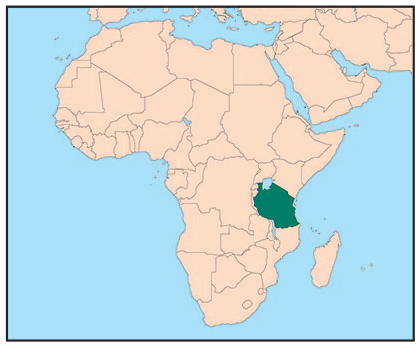
This article draws on a three-city study of the urban land nexus and inclusive urbanization in Dar es Salaam, Mwanza and Khartoum. The main body of the article comes in two parts: the first a synthesis of evidence from across the wider study (Sections I and II); and the second presenting case study results on four settlements, one central and one more peripheral in each of the two cities, Dar es Salaam and Mwanza (Sections III and IV). This introduction begins with a conceptual review of gentrification, agglomeration and the urban land nexus, and settlement informality and regularization (Ia). It goes on to provide a short summary of the larger study this article is based on and the methods employed (Ib).
a. Conceptual background
The term gentrification was coined to refer to what was taken to be a particular form of class transition in affluent cities, with middle-class residents incrementally but rapidly displacing working-class residents in certain downtown neighbourhoods.(1) It soon became clear that even in these affluent cities gentrification takes many forms.(2) The researched forms and sites of gentrification have now expanded to the point where planetary gentrification scholars use the term to refer to any process involving investment in the built environment, and the related displacement of poorer and politically weaker land users by more affluent and powerful ones.(3) Lees and colleagues argue that this more abstract definition helps to avoid the tendency for international urban research to misinterpret what is happening in lower-income cities by employing concepts developed in and more suitable to the most affluent cities. Alternatively, by following Smith(4) in treating displacement and capital investment as defining features of gentrification, planetary gentrification scholars distance themselves from those who see gentrification as a fundamentally beneficial process.(5)
The claims by planetary gentrification scholars that gentrification is taking place even in rural and non-residential areas(6) mirror the claims by scholars of planetary urbanization that urbanization is taking place even in remote rural areas.(7) This planetary focus is linked to their joint emphasis on capitalism, taken to have become a global process. While a seminal article making the case for gentrification as a global process argued that it had spread from the affluent cities where gentrification was first documented to the rest of the world,(8) this phased view has been largely discredited.(9) Nevertheless, a healthy but unresolved debate persists on whether extending the concept of gentrification globally is a step forward, or whether it undermines its relevance in the cities where the concept originated, even as it diverts attention from key dynamics of the displacement taking place in much of Africa, Asia and Latin America.(10)
We adopt the broad definition, but focus on urban forms of gentrification. Storper and Scott have criticized planetary urbanization for its “radical devaluation of the forces of agglomeration and nodality in urban-economic geography”.(11) Whether or not the same criticism can be levelled at planetary gentrification, it is important to relate the gentrification and displacement taking place in cities to the struggles for land and location that characteristically take place across urban landscapes.
In cities like Dar es Salaam and Mwanza, populations and built-up areas are expanding rapidly with comparatively little planning, and a large part of the population is unable to afford to meet conventional planning regulations in any case. A highly simplified account of gentrification in such cities would be: first, very poor people tend to settle informally on the urban periphery; then, as the city expands, the increasingly central location of these underserved and still impoverished settlements attracts investors; eventually, the low-income residents are displaced and new higher-income users move in. This superficially attractive account is misleading, not least in assuming that it is the very poor who first urbanize the cities’ peripheries, and intimating that it is inherently inappropriate for poor households to occupy central locations. It also fails to explain how and why very low-income settlements do often persist centrally in the face of strong political and economic pressures – and what this implies for achieving more inclusive urbanization. On the other hand, any explanation of gentrification in these cities must take account of the different challenges and opportunities central and peripheral locations pose for low-income residents trying to secure a place to live.
Scott and Storper proposed the dynamics of agglomeration and of the urban land nexus as two processes all urbanists should agree are relevant to any city.(12) While they have been rightly taken to task for this hubristic and scantily defended claim of universal relevance,(13) much urban gentrification and many other forms of urban displacement are bound up in these dynamics. The dynamics of agglomeration are those that combine to draw people and their physical and institutional creations together into cities, and the dynamics of the land nexus are those that determine who and what goes where in the resulting tightly settled and built-up locations. The two are intimately related since it is the (net) advantages of agglomeration that underlie the struggles for space and location in the urban land nexus. Alternatively, the extent to which agglomeration is indeed advantageous, who secures its advantages, and who is exposed to its disadvantages (e.g. accumulations of hazardous waste and pollution), depend on how the land nexus comes to be configured. This can involve varying degrees of inequality both between and within more central and more peripheral areas. There is, unfortunately, no simple way to manage the configuration of an urban land nexus efficiently and equitably. Many of the interactions between different urban actors and artefacts that make agglomeration advantageous take place outside of markets, but are hard to manage with the conventional tools of government. Achieving greater inclusion while enhancing the advantages of agglomeration is a complex political challenge, particularly when there are strong vested interests resisting inclusion.
These complex political challenges in Dar es Salaam and Mwanza are complicated by informal settlement and regularization, two processes central to ongoing policy debates in both cities. The term “informal settlement” is often used to refer to settlements in urban Africa, Asia and Latin America whose residents live in shelter and/or income poverty; the qualifier “informal” suggests that government authorities do not officially accept them. Regularization is a process whereby informal settlements are upgraded and land rights formalized to the point that they are officially accepted by the government. In this article we will be using local definitions.
In Tanzanian cities, informal settlements are generally taken to be unplanned urban settlements. Despite this definition, it should not be assumed that, had official planning rules been applied, they would have been formal planned settlements. In the past and still today, a large part of the population could not afford housing and services that conform to planning regulations. Informal settlements have emerged out of awkward compromises, allowing low-income residents to build housing they can afford, and the authorities to condemn the officially substandard conditions that result, without the authorities necessarily taking responsibility for either upgrading the settlements or evicting the residents. Recent and ongoing regularization programmes are meant to include sufficient upgrading to bring the settlements in line with planning regulations, but, given existing financial constraints, they focus primarily on land titling and boundary adjustments. In principle, regularization incentivizes investment in housing and infrastructure and improves conditions for existing residents. But it can also drive the poorest residents out of the regularized settlements, and/or allow wealthier informal settlements to gain acceptance while rendering poorer ones less secure.
b. Project background
The research undertaken for this article was part of a project entitled “The Urban Land Nexus and Inclusive Urbanisation in Dar es Salaam, Mwanza and Khartoum” (see the acknowledgements). The empirical basis for the project included city-wide spatial analysis and mapping of key components of the land nexus along with at least 10 case studies of key land nexus processes in each city.
For Dar es Salaam and Mwanza, the spatial analysis and mapping examined population distribution and how it changed between 2002 and 2012 (the most recent intercensal period), land uses (including for informal settlement), and infrastructures (including roads and piped water networks). Census data were also used to examine the spatial distribution of people potentially vulnerable to exclusion (e.g. those scoring low on an index of disadvantage, migrants, tenants and/or women), in spatially segregated locations, without titles to their land (for owner-occupiers) and/or without access to spatially delimited services such as piped water.
The case studies focused on such land nexus processes as settlement formation, informal settlement regularization, gentrification, government resettlement, new-town development, and informal self-building. Most utilized a mix of quantitative and qualitative methods, tailored to the particular settlements and land nexus processes of concern.
The city-wide mapping/spatial analysis and the case studies just mentioned inform the overview provided in Section II. It starts with a summary of the cities’ population growth and informal settlement (IIa), and goes on to examine the formation of rental markets (IIb), regularization and the formalization of property rights in land (IIc), and finally the broad outlines of gentrification (IId).
Two further case studies in each city provide the basis for Section III, which contrasts some of the consequences of this churn in the land nexus in more central and more peripheral locations, and how it affects different groups of residents. These case studies were broader in scope than the others. And rather than being led by academic researchers, they were undertaken by the Tanzanian Urban Poor Federation, a community-based organization, and its support NGO, the Centre for Community Initiatives, both of which have been active in Dar es Salaam and Mwanza for many years.
II. Locating Exclusion in the Cities’ Churning Urban Land Nexuses
a. Population growth and informal settlements
According to United Nations estimates, the populations of the cities of Dar es Salaam and Mwanza grew at 5.4 and 5.8 per cent a year respectively between 2015 and 2020, with Dar es Salaam reaching about 6.7 million people in 2020, and Mwanza reaching 1.1 million.(14) The national population growth rate was only 3.1 per cent over this period, and the cities’ growth involved considerable net in-migration. Dar is the wealthier of the two cities. Based on an index created for this project from variables in the 2012 census related to the education of the household head, the ownership of durable goods, and the quality of the home and its services, the two worst-off of five socioeconomic classes include only 36 per cent of the population in Dar es Salaam versus 55 per cent in Mwanza.(15) More recent estimates of poverty in Tanzanian cities also indicate that the poverty rate is lower in Dar es Salaam, though its decline may have stagnated or even reversed since 2012.(16)
Most of the population in both cities lives in informal settlements, in part because formal housing is unaffordable for a large part of the population.(17) The unofficial and unstable acceptance of informal settlement is an awkward compromise common to many countries, creating various forms of exclusion, but avoiding some of the most severe forms. When informality is unofficially accepted, the pressure to bring the formal planning regulations in line with what people can afford is reduced, as is the pressure to upgrade the settlements.
The Tanzanian government has come quite far in accepting informal urban settlements, but also in starting to regularize them.(18) Urban landholders are meant to have a (leasehold) title, but the law provisionally recognizes locally accepted claims grounded in customary law or longstanding tenure claims. Ward or mtaa (sub-ward) officials have played an increasingly important role, and their legitimation of land claims and transactions provides a fair degree of security. A shift in language from “squatter settlements” to “informal settlements” was part of acknowledging such claims.
Tolerated informality can have contradictory effects when it comes to tenure security. It still gives the landholder less tenure security than an official title when it comes to competing ownership claims. On the other hand, this same lack of land titles can make it more difficult for private developers and formal businesses to buy up the land without official support, complicating market-led gentrification.
More generally, the forms that informality takes, and where it is located in the land nexus, can have an important impact on the supply and quality of informal housing, and influence how exclusionary a city is. It is sometimes assumed that more peripheral locations are inherently more suitable to those on low incomes, and particularly recent arrivals. This is a misleading oversimplification. For very poor households dependent on insecure informal-sector livelihoods, being centrally located can be critical, as was recognized by the early scholars of informal settlements, including Turner.(19) More established residents with secure livelihoods can aspire to become landowners, and move out from the centre to buy, build on, and move to plots on the periphery. Such movers have been central to the development of informal settlements in Dar es Salaam and Mwanza.(20)
b. The development of informal rental markets
The neglect of private renting in Tanzania’s policy discussions around land tenure belies its importance.(21) While urban housing issues are discussed mainly in terms of owner-occupiers, about 41 per cent of Dar es Salaam’s and 37 per cent of Mwanza’s residents live in privately rented homes.(22) There are tenants in all socioeconomic classes. Even in the highest of the five socioeconomic classes referred to above, about 30 per cent of residents are private tenants in both cities. Particularly among the lower two socioeconomic classes, private tenants generally live closer to the city centre than others.(23)
The concentration of lower-status tenants closer to the centres reflects the manner in which the informal settlements consolidate. The pioneer settlers are largely self-builders, many of whom later build structures to rent out.(24) The overall percentage rates of population growth are highest in the peripheries of both cities, with the highest rates of absolute growth (number of people per hectare per year) closer to the centre, where densities are already high.(25) Even further towards the centre, average densities are lower, with pockets of high density, and some areas in decline. The densities get far higher in Dar es Salaam, with contestation between different land users likely to be especially acute.
Tenants may face higher rents when their homes or neighbourhoods are improved, and hence can be ambivalent regarding new water connections, better roads, wealthier neighbours building fancier homes and other changes in the local land nexus that owner-occupiers can benefit from. Partly for these reasons, owner-occupiers can be threatened by the prospect of tenants becoming a dominant force in neighbourhood politics, and have an incentive to curtail their power. More generally, wealthier city residents may find centrally located, overcrowded and underserviced settlements of low-income residents unpleasant and even threatening, creating support for policies making central city living less affordable to the poorest. Such incentives can be important when it comes to gentrification and other land nexus processes.
c. Regularization and the formalization of property rights in land
The official regularization process is more advanced in Dar es Salaam than in Mwanza. Census data suggest that in 2012 almost two-thirds of informal owner-occupiers in Dar es Salaam claimed to hold titles or residential licences, as compared with fewer than half in Mwanza.(26) Official guidelines describe the five steps of the regularization as: 1) Declaration and public consultation; 2) Survey of existing conditions; 3) Planning process and approval; 4) Cadastral survey and approval; and 5) Issue of title deeds.(27) The Mwanza Master Plan indicates that while the process was meant to involve upgrading as well as some replotting, surveying and titling, in practice the local authority’s lack of resources has meant that the upgrading has not been achieved.(28) The same probably holds in Dar es Salaam.
During the course of regularization, even the costs of the surveying fall to informal plot-holders. While individual plot-holders sometimes commission surveyors independently, the regularization process involves wards and mtaas building up as much of a consensus as possible amongst plot-holders to pay the costs. They negotiate a reduced fee schedule with an authorized surveyor, based on some minimum uptake rate. However, even these costs are unaffordable to many plot-holders. Similarly, while there has been some relaxation in the minimum plot size requirements under regularization (90 square metres, compared to 300 in planned settlements), meeting all the regulations and potential taxes would also be unaffordable for many.(29)
In effect, if rigidly and rapidly enforced on all informal settlements and residents, regularization could lead to large-scale evictions of informal plot-holders, as well as higher rents, causing enormous hardship and a major disruption to the city economies. In practice, there is considerable variation in how the regularization process unfolds in different wards and mtaas. In particular, there can be more or less participation of plot-holders, tenants and other stakeholders. Currently, there are no well-developed models for low-cost regularization, and while the case studies revealed some strong participatory practices, it remains difficult for such practices to spread within and between the cities. There is also a tendency for the regularization to become focused on tenure regularization and titling, mainly for those who can afford it.
If urbanization is to be inclusive, it is important that settlement regularization not give advantages primarily to landowners, and particularly those who are better off. Tenants, and the mostly women who live in owner-occupied homes but are not owners themselves, would need a voice in the local regularization processes. Particularly for women household heads in owner-occupied homes, regularization could become a process of gaining property rights.(30) For tenants and vulnerable landowners, the challenge to achieving inclusion is preventing regularization from being a threat.
d. Gentrification
In both Dar es Salaam and Mwanza there is a wide range of very different processes that could be referred to as gentrification, in that they involve investments in the land nexus (either in structures or infrastructures, or even in property regimes), and a related displacement of people of lower socioeconomic status by land users of higher economic status. The cities’ rapid population growth and uneven economic growth are central to these gentrification processes, but vary over time and across space.
Gentrification is not inherent to the consolidation of informal settlements. In the early years of settlement, as plots are developed, services are organized by plot-holders when they cannot be secured from utilities. Self-builders tend to first build for themselves, and later add rooms for rent or for additional family members. As the share of residents who are tenants increases, this may reduce the average socioeconomic status of the settlement. Countering this, as the city expands around the settlements, and better infrastructure networks are extended into them, it may be possible to raise rents by more than the service costs, pushing out poorer tenants in favour of wealthier ones. Landlords themselves, including small ones, may make investments with a view to increasing rents, or potentially to getting a “better” class of tenant. However, such strategies must be set alongside that of increasing the number of rooms on the plot and renting them out, which can lead to the sort of crowding and hygiene problems that can make it hard to attract wealthier tenants.
Though gentrification may not be inherent to informal settlement consolidation, it appears in many forms. In Dar es Salaam and Mwanza there is little evidence of the sort of incremental but rapid gentrification that initially brought the term into use in cities like London and New York. This may be at least in part because high-density, low-rise, underserviced, low-income settlements, with roads not passable by automobiles, are not attractive to aspiring middle-class households, however conveniently located. The dynamics are quite different at the start of the informal urbanization when land is being converted from agriculture, during consolidation, and then again at the end when developers and other commercial land owners are competing to gain ownership of the land.
III. Contrasting Gentrification in Central and Peripheral Settlements: Four Case Studies
This section draws on case studies in four settlements in and around Dar es Salaam and Mwanza. For each city, the research team selected two low-income settlements, one close to the city centre and one located in the outskirts of the city and representative of the rapid geographical expansion of the built-up area. Each settlement shows different dynamics: the central neighbourhoods attract newcomers to the city and from other neighbourhoods within the city, in search of cheap accommodation and proximity to employment opportunities. They must be prepared to put up with congestion and pollution, and often inadequate housing and insufficient basic services. Peri-urban settlements, in contrast, attract wealthier residents who move from city centres, pushed by congestion and high costs of living and pulled by lower land prices and the prospects of owning their own (or a better-quality) house. They must be prepared to put up with limited basic infrastructure as the settlement transitions from rural to urban status. This basic narrative does not apply to all groups, however, and within each settlement there are differences and what can broadly be identified as winners and losers, supporting the view of gentrification as a complex process.
a. The settlements
The central locations: Mtambani, Vingunguti Ward (DarCentral) in Dar es Salaam and Kilimahewa (MwaCentral) in Mwanza
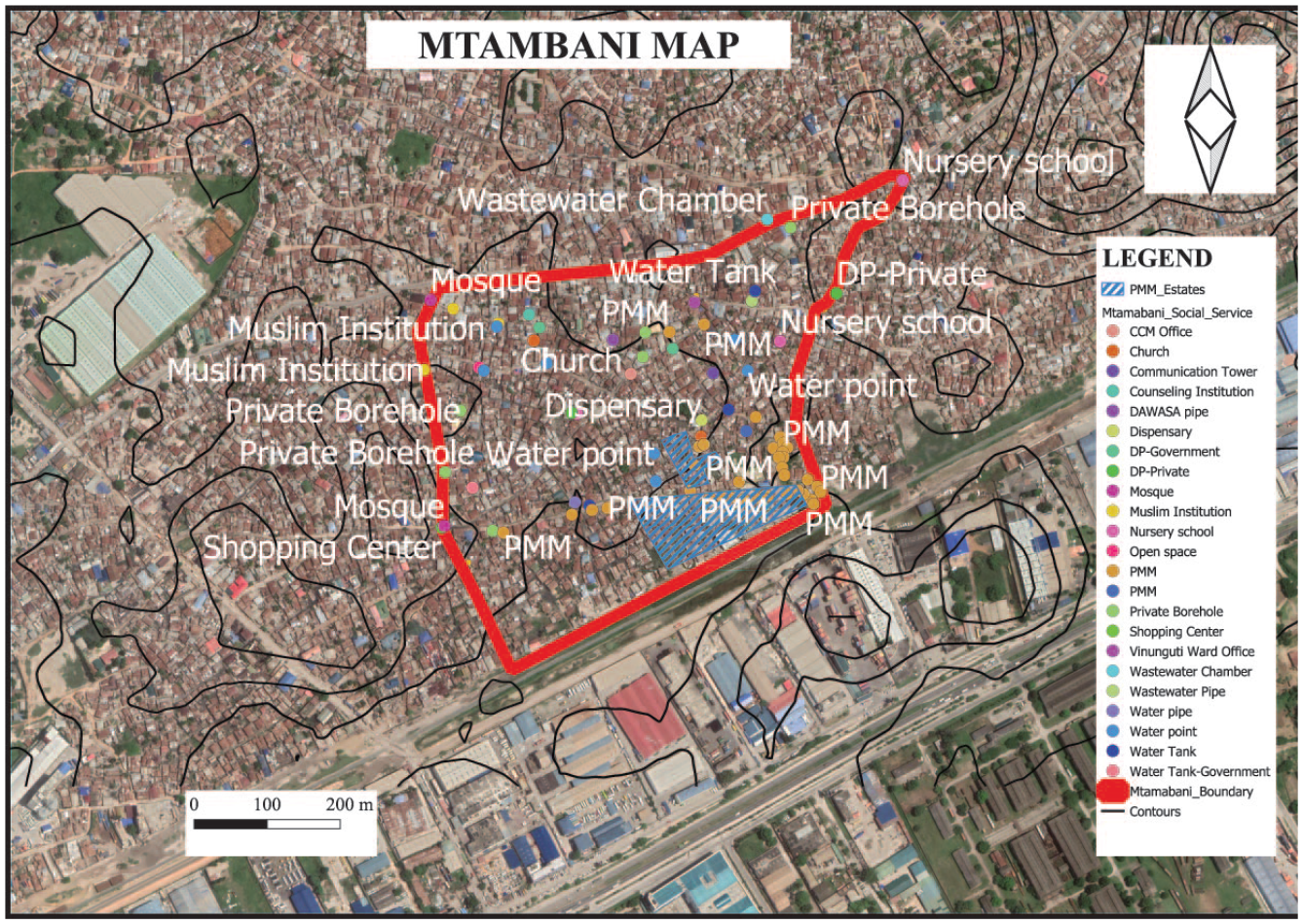
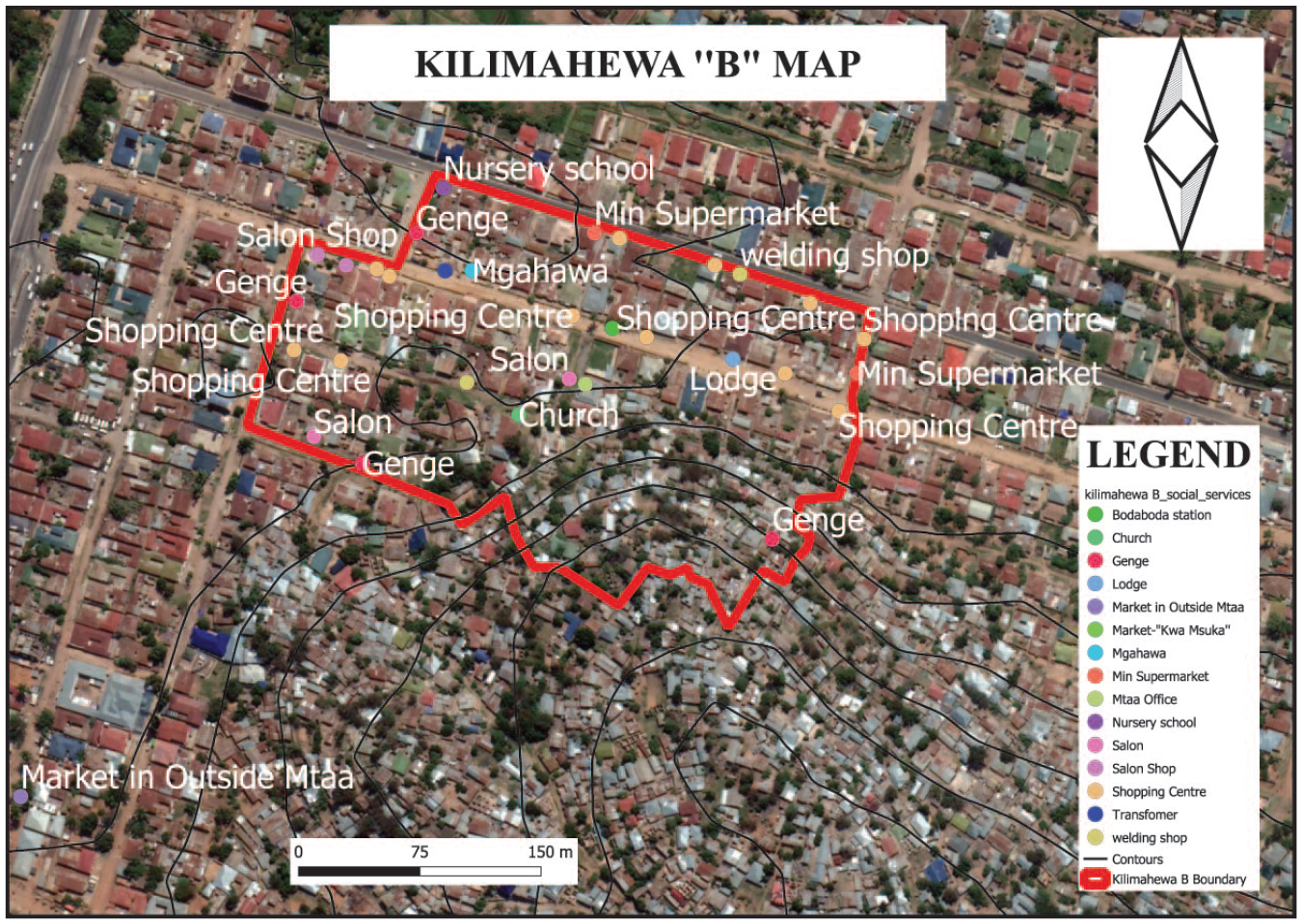
Both of these centrally located neighbourhoods have transformed rapidly from peripheral farming areas in the 1960s to densely populated inner-city settlements. Mtambani is located within walking distance from places of work, mainly informal activities connected to industrial enterprises and to the central Kariakoo market. Kilimahewa is also located within walking distance from the city centre and the port. For both settlements, such proximity to employment opportunities is the main attraction, and explains why people continue to move in, notwithstanding poor housing and infrastructure conditions.
Over time, access to housing has drastically changed in both settlements, with many landlords moving elsewhere and renting out their homes. Tenants account for three-quarters of residents in Mtambani and about 60 per cent in Kilimahewa, both well above city averages. External pressures are especially strong in Mtambani’s Vingunguti ward, where a private company started purchasing land for the expansion of its existing dry port (the striped blue and white spots marked “PMM_Estates” on Map 1). However, this is taking a long time, which increases the sense of uncertainty among residents, as eviction or compulsory purchase remains a possibility and discourages investments in basic infrastructure. Such pressures are absent in Kilimahewa (Map 2), despite its proximity to the recently expanded main road connecting Mwanza to the airport. Here too, however, it may be just a matter of time. Following the creation of a second municipality in Mwanza, plans are being prepared for the development of a second central business district not far from the settlement. (For ease of reference, in the rest of the paper Kilimahewa is called MwaCentral and Mtambani is called DarCentral.)
Mtambani (DarCentral)
Kilimahewa (MwaCentral)
The peripheral locations: Rufu (DarPeripheral) in Dar es Salaam and Ibinza, Nyamadoke Ward (MwaPeripheral) in Mwanza
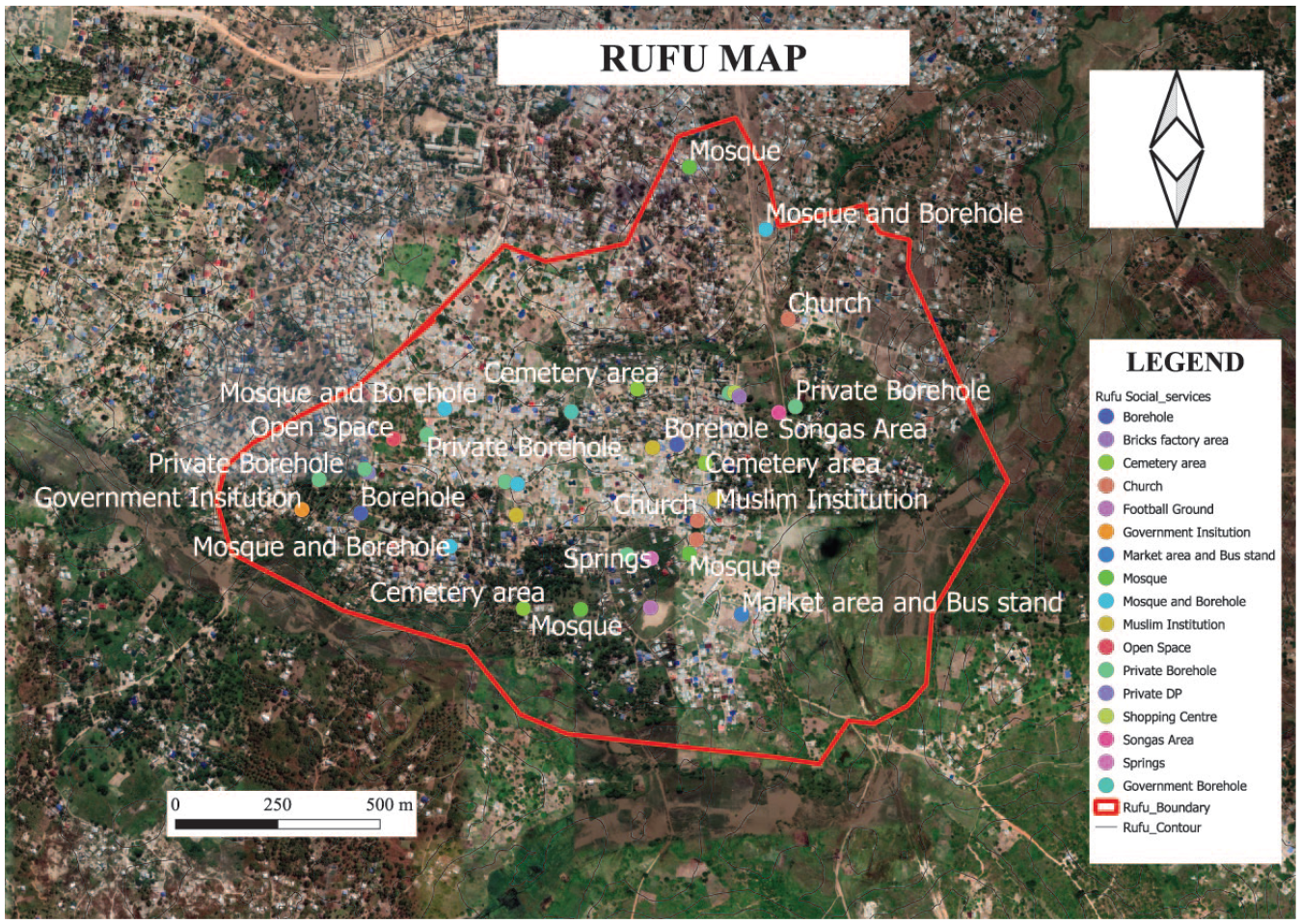
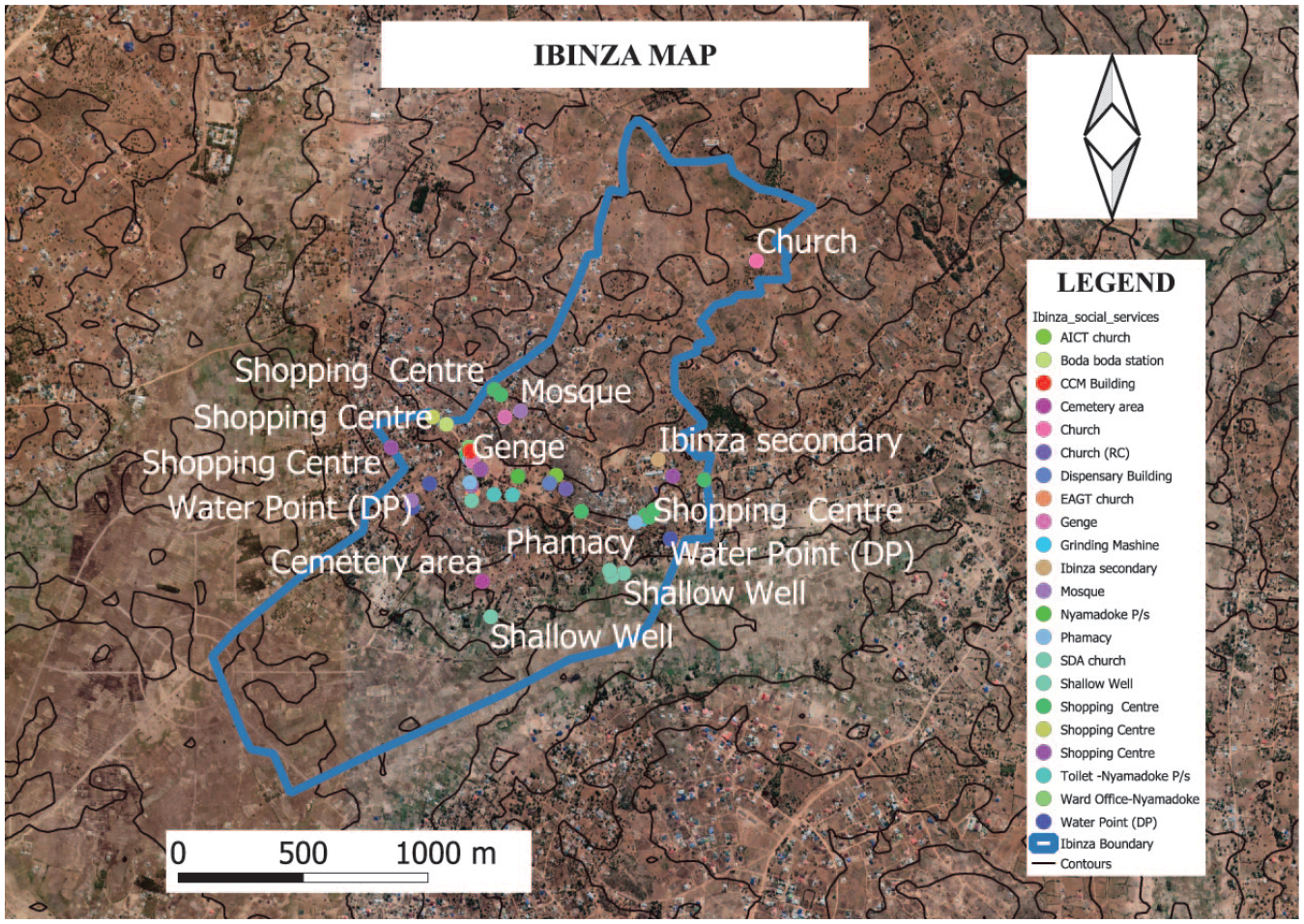
Both the Rufu and Ibinza settlements are rapidly transforming from farmland to residential neighbourhoods. Hence, while density is increasing it is still low compared to that in the central settlements (Maps 3 and 4). Farming is still practised by the original residents, although it is declining as land is sold to newcomers from the inner city and other urban centres. In Rufu, original residents are now only 10 per cent of the population. In Ibinza’s Nyamadoke Ward, where the process of transformation started more recently, they are still 80 per cent of the population. Compared to Rufu, which is well connected by road and transport networks to Dar es Salaam and beyond, Ibinza remains more “rural”: it lacks basic infrastructure such as roads and water points (Map 4), and its economic base is still predominantly agricultural. However, it is slowly but surely becoming incorporated into the city.
Rufu (DarPeripheral)
Ibinza (MwaPeripheral)
Investment by wealthier urban households in these peripheral areas has significant impacts: in Rufu, better-educated new residents, including retired civil servants, can negotiate with the local government to improve basic infrastructure such as the road. This seems more difficult in Ibinza, where several new houses remain unoccupied due to lack of services including water and an all-weather road. And while urban investment can bring in new economic opportunities, it is unclear whether these will benefit all residents. Hence, while the growing number of tenants moving into Rufu reflects the success of the settlement, lack of planning is seen as a looming challenge. In Ibinza, lack of basic infrastructure is not slowing down investment in land and housing, but is a major challenge for local economic development as investors appear to hesitate to move to the settlement. (For ease of reference, in the rest of this paper we refer to Rufu as DarPeripheral and Ibinza as MwaPeripheral.)
b. A mixed-methods approach
A number of tools were used in these case studies, including focus group discussions (FGDs), key informant interviews, individual residents’ trajectories/life histories, and mapping. Overall, 17 FGDs were conducted across the two cities. These were complemented by key informant interviews at the mtaa (sub-ward), ward and municipality levels, and in Mwanza, with utilities staff. Overall, 18 trajectories/life histories were conducted with residents selected to cover a number of key characteristics such as age, gender, residential status, and length of time in the settlement. Finally, key infrastructure and services within administrative boundaries were identified by local leaders and federation members. GPS demarcation was then superimposed onto OpenStreetMap and Google Maps (Maps 1–4).
IV. Findings: Access to Land, Housing and Livelihoods
We illustrate how the concept of gentrification is translated into practice in the four settlements by focusing on three interrelated processes. First, we describe how access to land and land values are affected by urban growth and physical expansion, and how these dynamics differ between central and peripheral locations (IVa). Closely related is the significant increase in the proportion of tenants in the central settlements and the growing cost of securing access to housing in these locations (IVb). This partly explains the movement of middle-class settlers to the peripheral locations, where land is cheaper. Finally, we describe how the process of urban expansion, intended here to refer to the relatively rapid transformation of essentially rural locations into more densely built-up settlements, in turn transforms the livelihoods of local residents, especially long-term ones (IVc).
a. Access to land and changing land values
All four locations have seen dramatic increases in land values. In DarCentral, land is owned privately, having evolved out of traditional and customary ownership. A government regularization process has begun, and some residents have been provided with residential licences. There is no longer any unbuilt land available, so buyers typically purchase existing houses, demolish them and then build new ones. Much the same applies in MwaCentral.
In the peripheral settlements, selling land to newcomers has become profitable as values have increased following the geographical expansion of the two cities. In DarPeripheral, the first group of new residents in the early 2000s was able to buy large plots. Over time, and to satisfy demand from more newcomers, the plots have gradually been parcelled out and resold at much higher prices. The early intra-city migrants have reinvested their profits in the construction of large houses and are a relatively powerful voice in local affairs.
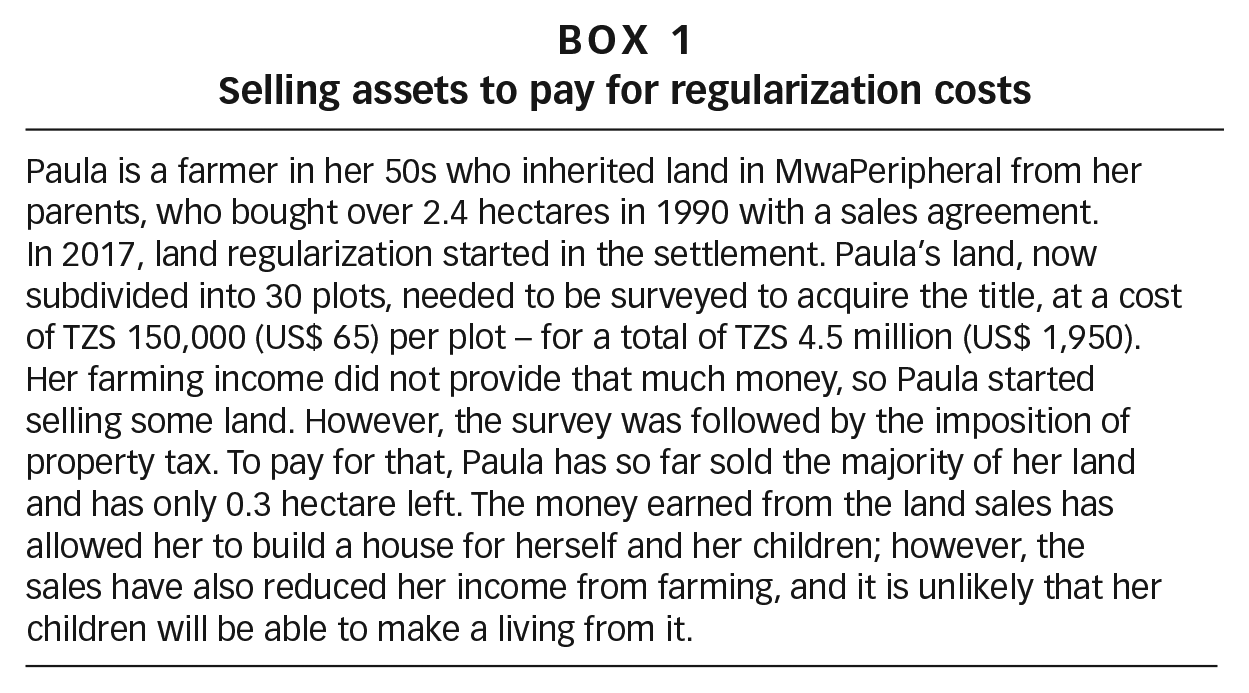
In MwaPeripheral land prices have also escalated since the 1970s. There are differences however between DarPeripheral and MwaPeripheral. In DarPeripheral, the group that has been able to capitalize on increasing land values is not the original residents – the farmers who first sold their land to newcomers from the city. Rather, the early intra-city migrants have benefitted from parcelling out their plots and reselling at higher prices. Some of them have sold all their land and moved to even more peripheral areas. In MwaPeripheral, the severe lack of basic infrastructure is slowing the process: while city-based investors have bought land and built houses, in most cases they have not moved in and the empty buildings are guarded by live-in watchmen. What this shows, however, is that these (potential) “newcomers” can afford to invest substantial amounts and wait a relatively long time for their value to increase. In contrast, the original residents may have to sell their land in order to pay for surveys and taxes under the ongoing regularization processes (Box 1).
Selling assets to pay for regularization costs
The emergence of land markets in both central and peripheral settlements is the origin of latent and open conflicts. Boundaries are often vague, especially in the peripheral locations and where land was allocated by local authorities with only a sales agreement. This can lead to double selling by dishonest brokers, and intra-family disputes over inheritance. Rules and regulations for regularization vary depending on local authorities. In Dar es Salaam, landowners need a two-year renewable residential licence. According to local mtaa leaders, about 60 per cent of landowners in DarCentral have both a certificate of right of occupancy and a residential licence, but only 40 per cent have been issued formal title deeds. In DarPeripheral, people still rely on sales agreements witnessed by the mtaa chairperson. And while overall, more women are becoming landowners, decision-making on selling is still mainly in the hands of men, except in the case of woman-headed households.
b. Tenants and landlords: changing relationships and dynamics
For both DarCentral and MwaCentral, proximity to employment opportunities is an important reason for new residents moving in. However, there is a substantial difference between people who rely on casual, unskilled work and those who are in long-term employment, either formal or informal. The casual workers are more vulnerable and tend to be the majority of tenants.
The proportion of tenants in DarCentral is higher than the city average, as the settlement’s location seems to compensate for poor housing and infrastructure. Most newcomers, especially tenants, come from other low-income settlements within Dar es Salaam. Due to the age of the settlement, many houses are undivided inheritances. Disputes over maintenance costs among the owners mean that typically these multi-owned houses are in poor condition, with poor sanitation facilities and decaying physical infrastructure, and it is not unusual for all owners to move out of the house and rent it out. Alternatively, owners may only rent out a few rooms and stay on the plot.
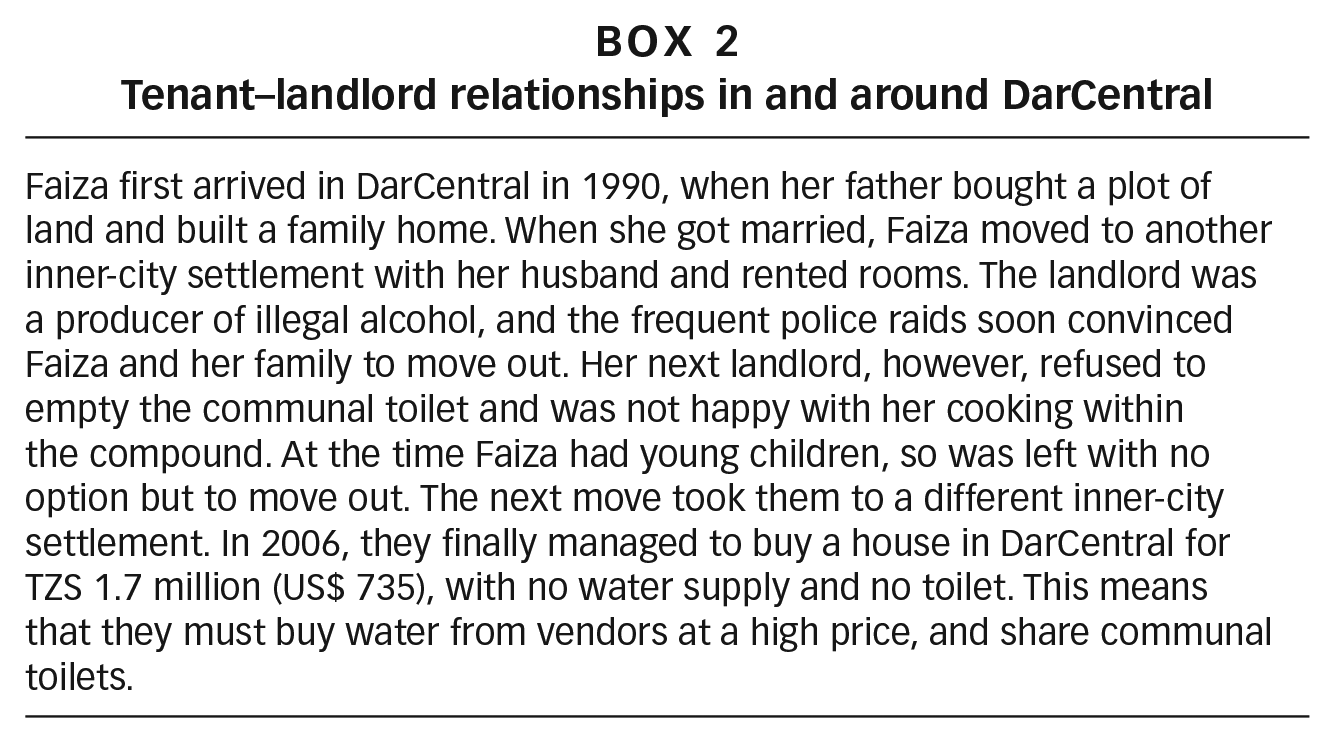
The relations between tenants and landlords are often tense (Box 2). Absentee landlords are not generally concerned with long-term renovations or even with regular maintenance, including emptying latrines, which fill up quickly due to the high water table. For landlords who live in the same compound, toilets are often a bone of contention and they may try to limit the number of visitors to their tenants on the grounds that they fill up the toilets too quickly.
Tenant–landlord relationships in and around DarCentral
The lack of investment in the housing stock of DarCentral is influenced by both internal relationships, such as the multiple ownership of inherited houses, and by external dynamics. For the latter, the settlement’s strategic location is of great importance. A major inland container depot company, PMM, has its estate on the margins of the settlements, along a main road (Map 1). In 2015, PMM started purchasing land (and houses) in DarCentral to expand its dry port. The plan was to eventually buy the whole settlement. At the time the fieldwork for this research was conducted, only around 20 houses and plots had been purchased. Sellers complained that only part of the money had been paid, and the operation appeared to have stalled. It is unclear what will happen next, but in the meantime, there is a clear disincentive for investments in maintenance and upgrading within the settlement, of both individual houses and basic infrastructure.
Renting out rooms can also be an essential income source for low-income landlords. In MwaCentral, unlike in DarCentral, there remains a substantial proportion of the original house builders who moved into the settlement in the 1970s. Now retired, they rely on rents to make ends meet. What remains to be seen is whether external and internal pressures will have a negative impact on the settlement, as in DarCentral.
The proportion of tenants in DarPeripheral, about one-third of residents, is much lower than in the central settlements. As in the central locations, tenants are motivated primarily by proximity to their places of work. However, among the new residents who have bought land and built their houses there is a sizeable proportion of retired middle-class people (civil servants, university lecturers) for whom the main attraction is living a less stressful life. That said, most tenants are also professionals, such as workers in a nearby newly built hospital. In many cases, renting seems to be a first step towards landownership as land prices remain relatively accessible.
c. Changing livelihoods on the peri-urban interface
One important if often overlooked aspect of gentrification is the transformation of economic activities. In peri-urban areas, this transformation entails moving from a predominantly agrarian economy to one based on services and industry. In this study’s peripheral settlements, livelihoods are shifting rapidly. Some individuals manage to benefit from changes in the economic base. However, and perhaps for a larger part of the residents living there before urbanization really took off, the new challenges involve a depletion of assets, especially land.
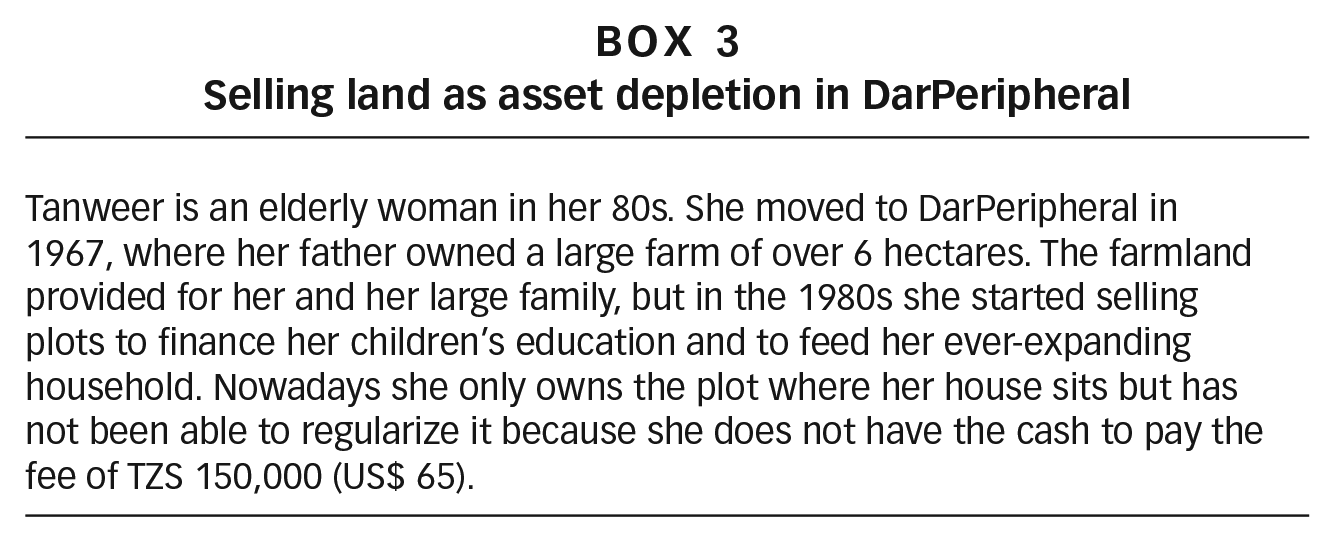
Land is especially important for agricultural production. In MwaPeripheral, farming plots tend to be large, underscoring the agricultural nature of the settlement. While farming has long been the main source of income for most of the original residents, a major challenge posed by the regularization process is cost, which is often beyond the means of farmers with a very limited cashflow (Box 3).
Selling land as asset depletion in DarPeripheral
At the same time, some long-term residents develop new income-generating activities, serving new local demands linked to the urban expansion. In MwaPeripheral, where road transport is especially poor, several young men have invested in motorcycles that are used as taxis to connect travellers to the city. Others trade in livestock to respond to new demand and provide building materials for the new homes being built (Box 4).
Income diversification in MwaPeripheral
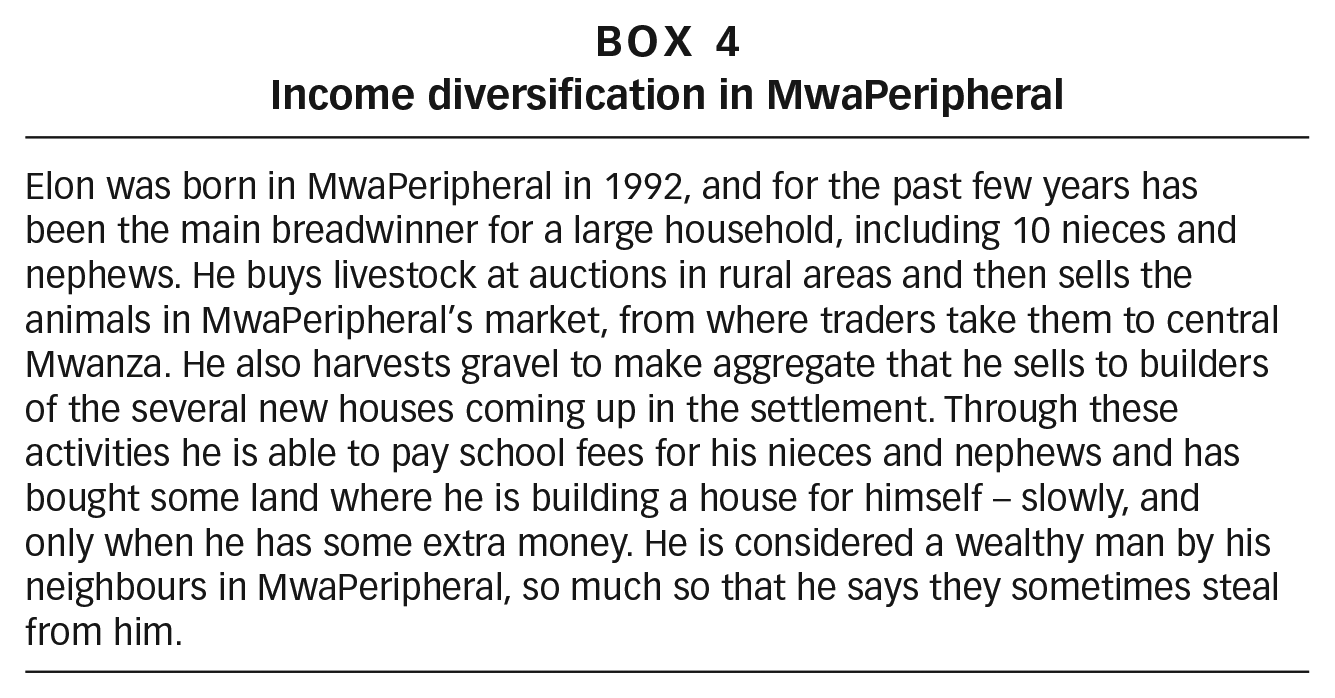
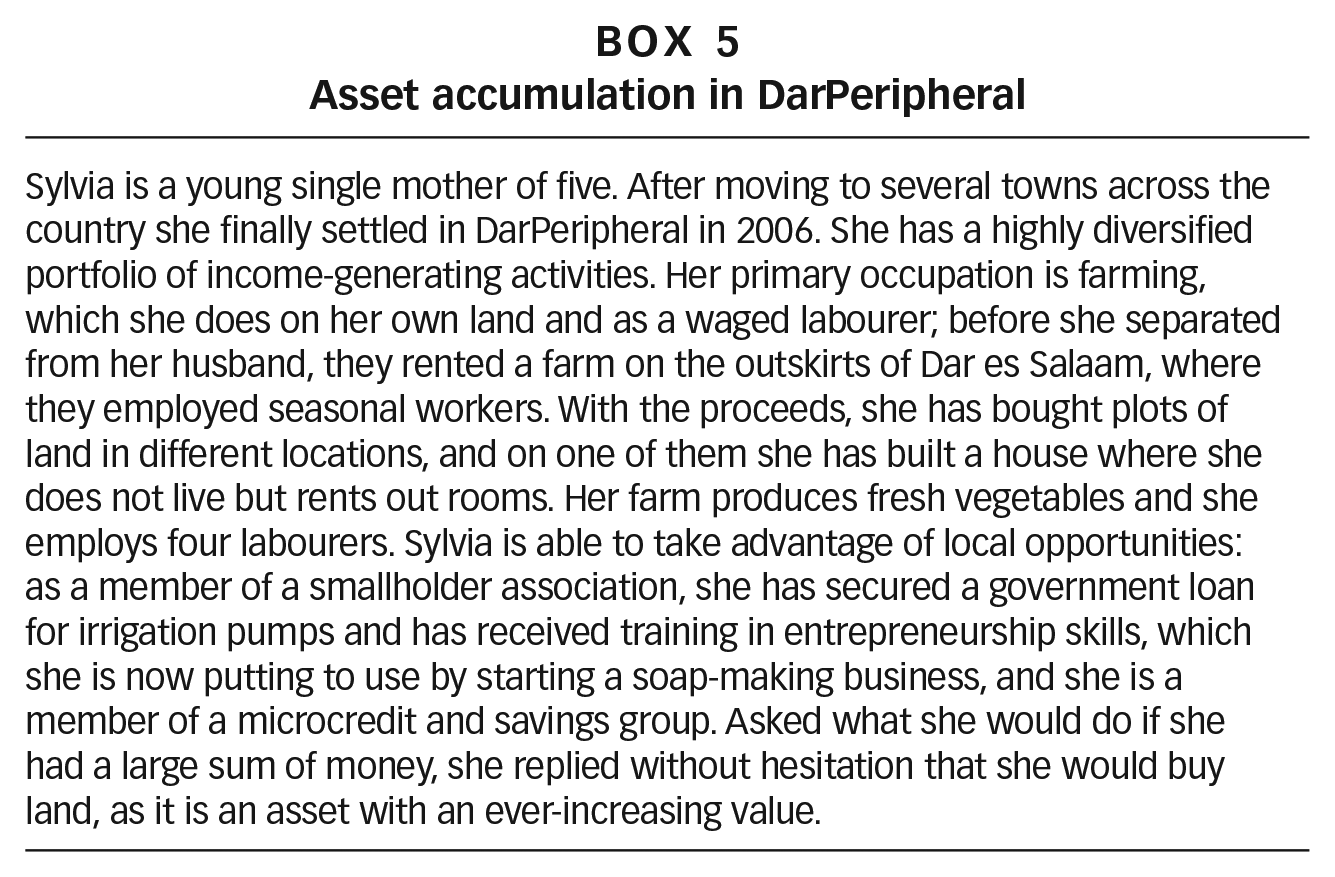
Successful livelihood strategies that allow individuals to accumulate assets are context-specific: hence, in MwaPeripheral it makes sense to invest in transport and building materials and to trade in livestock. In DarPeripheral, on the other hand, it makes more sense to invest in rental accommodation, for which, unlike in MwaPeripheral, there is demand; and in the production of perishable vegetables and fruit, which can easily be sold at a nearby market or transported to Dar es Salaam (Box 5).
Asset accumulation in DarPeripheral
V. Conclusions
Within the context-specific processes of urban expansion and densification, we can identify two distinct and somewhat opposed broad gentrification trends in the central and peripheral neighbourhoods. In the inner-city settlements, most long-term resident landowners benefit from the increase in the value of land. This is the case even if they do not sell as there seems to be an inexhaustible demand for rooms to rent. In both the Dar and Mwanza central settlements, this is reflected in the above-average proportion of tenants and in the relatively high cost of rent, despite the fact that most – albeit not all – tenants depend on irregular jobs in the informal economy. Along with the inadequate provision of basic infrastructure and services, especially in DarCentral and in the hilly part of MwaCentral, these residents suffer from both income and non-income poverty. In neither case do processes of gentrification generally benefit residents – most of whom are tenants. Those who clearly benefit are absentee landlords and some better-off owner-occupiers. The flat part of MwaCentral is still different as a large proportion of owners reside in the settlement, suggesting that it is important to consider not only inter-city differences but also intra-city and intra-neighbourhood diversity.
In contrast, in the peripheral settlements newcomers are those most likely to benefit from most of the change in land values. This is also the case when they have to wait, sometimes for a very long time, for infrastructure to reach the settlement, as in the case of MwaPeripheral. In both DarPeripheral and MwaPeripheral, newcomers are generally wealthy, educated people who can wait for their investments to bear fruit and are able to negotiate with local governments to secure their land rights. Long-term residents, on the other hand, can be forced to sell land in order to pay for land registration and land tax costs. Traditional small-scale farmers may also find it more difficult to adapt to new economic opportunities and challenges. This is not the case for everyone, however: younger and more entrepreneurial long-term residents can benefit from new opportunities, both in farming – especially if proximity to urban market nodes ensures access to demand for high-value perishable fruits and vegetables – and in a variety of non-farm activities such as construction and transport. The more successful livelihood strategies – that is, the ones that result in an increase in assets – tend to rely on a diverse portfolio of income-generating activities. For some long-term residents, however, selling land is not a choice. The cost of regularization seems an important reason for these sales, but they need to be understood in the context of households with limited labour and skills, which find it difficult to invest in alternative income-generating activities. Either way, in both of the peripheral settlements, DarPeripheral and MwaPeripheral, long-term residents are confronted with a rapidly changing environment where farming alone is a less and less viable livelihood option.
In principle, more and better community involvement should enable more inclusive urbanization and more equitable regularization processes. There are clearly groups and areas that benefit from regularization more than others. Giving residents as well as local officials a say in how and when regularization takes place should help avoid damaging gentrification and the displacement of the most vulnerable. Many property disputes could be resolved, spaces for public use could be better secured, and upgrading could be planned far more proactively by community organizations working in collaboration with local officials, and with the technical support of NGOs.
But in DarCentral and MwaCentral, with their high density, high share of tenants, and high land values, effective community organizing must overcome divisions between tenants and landlords, who are likely to have very different views on how to achieve the best regularization and upgrading of sanitation.
The challenges facing community organization are rather different in the peripheral case study areas, where the people being displaced are more often farmers whose ties to the city centre and to government institutions are weaker than for those moving in. Effective community organization must bridge this divide. But particularly in MwaPeripheral, where houses are being built but not yet occupied, there is comparatively little scope for conventional community organization, grounded in women’s savings groups (as with much of the Tanzanian Urban Poor Federation). On the other hand, in DarPeripheral the comparatively well-off people moving in to become owner-occupiers are already relatively well organized through the official governance system, and are not obvious candidates for informal community organization. Thus here too, conventional community organizing is constrained, and innovative approaches are needed.
Footnotes
Acknowledgements
This article is based on a project funded by the DFID East Africa Research Hub (EARH) titled “The Urban Land Nexus and Inclusive Urbanisation in Dar es Salaam, Mwanza and Khartoum”, led by the Institute of Development Studies (IDS), with a selection of outputs available at  . We are indebted to leaders and members of the Tanzania Urban Poor Federation for their active participation in discussions and interviews in both Dar es Salaam and Mwanza. Thanks are also due to the rest of the project team, and especially to Alphonce Kyessi and Wilbard Kombe of Ardhi University, for their very productive collaboration.
1.
Glass, Ruth (1964), “Introduction”, in London: Aspects of Change, MacGibbon & Kee, London; also Smith, Neil (1979), “Toward a theory of gentrification: a back to the city movement by capital, not people”, Journal of the American Planning Association Vol 45, No 4, pages 538–548, available at .
2.
Beauregard, Robert A (1990), “Trajectories of neighborhood change: the case of gentrification”, Environment and Planning A: Economy and Space Vol 22, No 7, pages 855–874.
3.
Lees, Loretta, Hyun Bang Shin and Ernesto López Morales (2016), Planetary Gentrification, Urban Futures, Polity Press, Cambridge, UK; also Clark, Eric (2005), “The order and simplicity of gentrification - a political challenge”, in Rowland Atkinson and Gary Bridge (editors), Gentrification in a Global Context: The New Urban Colonialism, Routledge, London and New York.
5.
Slater, Tom (2006), “The eviction of critical perspectives from gentrification research”, International Journal of Urban and Regional Research Vol 30, No 4, pages 737–757, available at .
6.
See reference 3, Clark (2005); also Bernt, Matthias (2018), “Gentrification between urban and rural”, Dialogues in Human Geography Vol 8, No 1, pages 31–35.
7.
Brenner, Neil (2014), Implosions/Explosions: Towards a Study of Planetary Urbanization, Jovis, Berlin.
8.
Smith, Neil (2002), “New globalism, new urbanism: gentrification as global urban strategy”, Antipode Vol 34, pages 427–450.
10.
Ghertner, D Asher (2015), “Why gentrification theory fails in ‘much of the world’”, City Vol 19, No 4, pages 552–563; also López-Morales, Ernesto (2015), “Gentrification in the global South”, City Vol 19, No 4, pages 564–573.
11.
Storper, Michael and Allen J Scott (2016), “Current debates in urban theory: a critical assessment”, Urban Studies Vol 53, No 6, pages 1114–1136, page 1114.
12.
Scott, Allen J and Michael Storper (2015), “The nature of cities: the scope and limits of urban theory”, International Journal of Urban and Regional Research Vol 39, No 1, pages 1–15.
13.
Robinson, Jennifer and Ananya Roy (2016), “Debate on global urbanisms and the nature of urban theory”, International Journal of Urban and Regional Research Vol 40, No 1, pages 181–186.
14.
15.
17.
Andreasen, Manja Hoppe and Jytte Agergaard (2016), “Residential mobility and homeownership in Dar es Salaam”, Population and Development Review Vol 42, No 1, pages 95–110; also Collier, Paul and Patricia Jones (2017), “Transforming Dar es Salaam into a city that works”, in Christopher S Adam, Paul Collier and Benno Ndulu (editors), Tanzania: The Path to Prosperity, Oxford Scholarship Online, pages 86–104.
18.
See reference 15; also Kombe, Wilbard and Volker Kreibich (2001), “Informal land management in Tanzania and the misconception about its illegality”, presented at the ESF/N-Aerus annual workshop “Coping with Informality and Illegality in Human Settlements in Developing Countries”, Leuven and Brussels; and Kironde, J M L (2006), “The regulatory framework, unplanned development and urban poverty: findings from Dar Es Salaam, Tanzania”, Land Use Policy Vol 23, No 4, pages 460–472.
19.
Turner, John (1968), “Housing priorities, settlement patterns, and urban development in modernizing countries”, Journal of the American Planning Association Vol 34, No 6, pages 354–363, page 356.
20.
See reference 17, Andreasen and Agergaard (2016); also Andreasen, Manja Hoppe, Gordon McGranahan, Alphonce Kyessi and Wilbard Kombe (2020), “Informal land investments and wealth accumulation in the context of regularization: case studies from Dar es Salaam and Mwanza”, Environment and Urbanization Vol 32, No 1, pages 89–108.
21.
Cadstedt, Jenny (2010), “Private rental housing in Tanzania — a private matter?”, Habitat International Vol 34, No 1, pages 46–52, available at .
22.
See reference 15, page 23.
23.
See reference 15, page 23.
24.
See reference 17, Andreasen and Agergaard (2016); also see reference 20, .
25.
See reference 15, pages 12–13.
26.
See reference 15, page 24.
27.
28.
See reference 27, pages 60–61.
29.
See reference 15, pages 36–37.
30.
For example, see Ali, Daniel Ayalew, Matthew Collin, Klaus Deininger, Stefan Dercon, Justin Sandefur and Andrew Zeitlin (2014), The Price of Empowerment: Experimental Evidence on Land Titling in Tanzania, Working Paper 369, Center for Global Development.