




Abstract
This paper explores the interplay between social and physical aspects of food retail in disaster and post-disaster contexts and discusses how it can inform better market support interventions and food retail modernization agendas. To this end, this paper draws on a case study analysis of three distinct marketplaces in metropolitan Port-au-Prince to explore aspects of food provision and access. The findings demonstrate the pertinence of beneficial reciprocal relationships among traders and between traders and customers, as well as the physical preconditions for the existence and maintenance of these relationships over time. The study also reviews the impacts of destroyed and changing physical infrastructure in disaster and post-disaster contexts on these social relationships. It concludes by calling for an acknowledgement of the interrelated attributes of solidarity, proximity and stability of existing marketplaces in urban planning and humanitarian practices in the efforts to improve urban food security and disaster recovery.
I. Introduction
The collapse of and damage to Port-au-Prince’s built environment triggered by the 2010 earthquake in Haiti caused extensive human and material losses,(1) as well as disrupted access to the urban services that city dwellers rely on for their daily needs and wellbeing. Food actors and infrastructure were not spared. To illustrate, an Emergency Market Mapping and Analysis (EMMA) of rice – a staple food in Haiti – estimated that 80 per cent of small wholesalers located downtown were inactive a few weeks after the earthquake, and many of those who survived lost their storage space.(2)
Several reports based on the evaluation of the humanitarian response in Haiti, as well as other subsequent urban disasters, argue in favour of building from and strengthening existing ways in which urban residents access commodities like food.(3) Despite the fact that retail is key in meeting urban dwellers’ food needs,(4) Battersby argues that the very places where urban dwellers source food remain generally overlooked in food security studies because of a focus on individuals and households as units of analysis or as targeted beneficiaries.(5) This is also echoed in market support interventions, largely focused on the economic dimensions of supply.(6) Juillard et al. labelled the issue an “institutional barrier”, as there is – among relevant stakeholders – “poor recognition of the role market actors play in meeting the needs of affected populations and in supporting economic recovery following a disaster, and the support needs of market actors (especially smaller businesses) who are also disaster affected”.(7) For example, the 2010 EMMA report on Haiti is silent on the needs of food retailers after the earthquake,(8) and an urban food security report in 2016 excluded food retail from the assessment as well as the types of infrastructure that required improvement.(9)
The fact that urban and humanitarian planning practitioners tend to not understand or to disregard the need to support existing food retail infrastructure may be related to the lack of evidence on how this infrastructure functions and is affected by crises. This article emphasizes that, for most low-income city dwellers, access to and provision of food are relational in nature. They are influenced not only by the physical location in which trading activities occur (the physical infrastructure), but also by the interpersonal relationships among traders and between traders and customers (the social infrastructure). The fact that physical access is an important determinant of urban food security has been highlighted in food desert research(10) and recent studies of African urban food security.(11) Building on similar claims, several low- and middle-income countries have supported food retail modernization policies aimed at, according to Berger and van Helvoirt, the “transformation of traditional and largely informal retailers to modern food systems. . . with supermarkets as one of its most prominent features”.(12) Nevertheless, several studies demonstrate the limitations of supermarket-focused strategies because they disregard or undermine the social attributes of informal markets that are already present in these neighbourhoods.(13) In fact, Battersby, Crush and Frayne show that informal marketplaces continue to form a major food supply source in South African cities, despite the presence of supermarkets.(14) Advantages are found in the possibilities of negotiating small quantities and buying on credit.(15) For most low-income city dwellers, food retail has an inherent social dimension and is indeed similar to Simone’s concept of “people as infrastructure”,(16) a notion of an urban service that is directly linked to what people can produce with very few resources.(17) Food provision and access, as social infrastructure, are generally at odds with official regulations and are highly provisional because of the extensive labour required, the rich social networks involved, and the numerous challenges faced by providers and users to access and maintain urban services.(18) In the process, as Simone argues, service providers appropriate and transform urban spaces into essential “functional destinations”.(19) The streets, squares, halls and other open spaces become places that are the preferred source of food. These are referred to as marketplaces in this paper.
In contrast to supermarket-focused strategies and to frequent but harmful regulatory and repressive policies on petty trade,(20) Berger and van Helvoirt argue that modernization of food retail in the cities of low- and middle-income countries must aim for supporting traditional ways of providing and accessing food.(21) Nevertheless, the rare projects that aim to build or improve infrastructure dedicated to petty commerce often fail because they do not seem to meet the conditions needed for trade.(22) In Haiti, research has demonstrated how the reconstruction of the Iron Market, or Marché en fer, despite a positive impact on wellbeing and working conditions, did not successfully support the livelihoods of food traders.(23) The situation was similar at Fond-Parisien, where a public market constructed in 2014 has been deserted by customers.(24)
In response to the lack of understanding regarding how the social infrastructure and the physical infrastructure of food retail co-function and are affected by disasters, as well as to inform better market support and market modernization practices, this paper explores the relational dimensions of food retail in marketplaces of post-earthquake Port-au-Prince, Haiti. The paper focuses on the attributes of interpersonal relationships among traders and between traders and customers (the social infrastructure), as well as the relations to the marketplace in which trading activities occur (the physical infrastructure), to explore how hazardous events and conditions can impact such attributes.
II. Methods
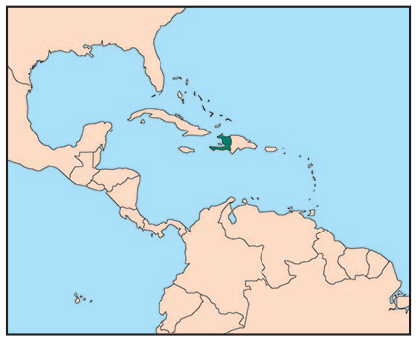
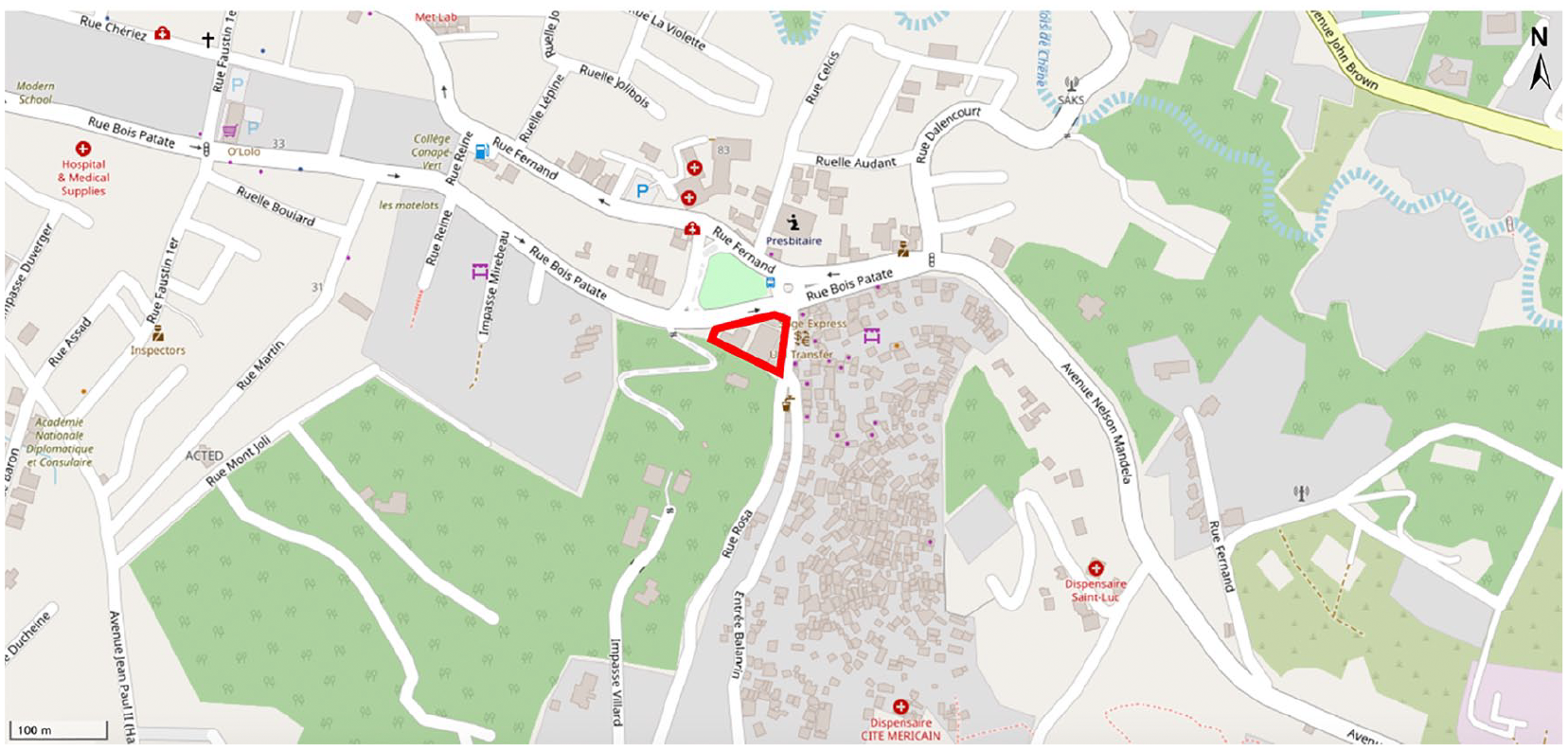
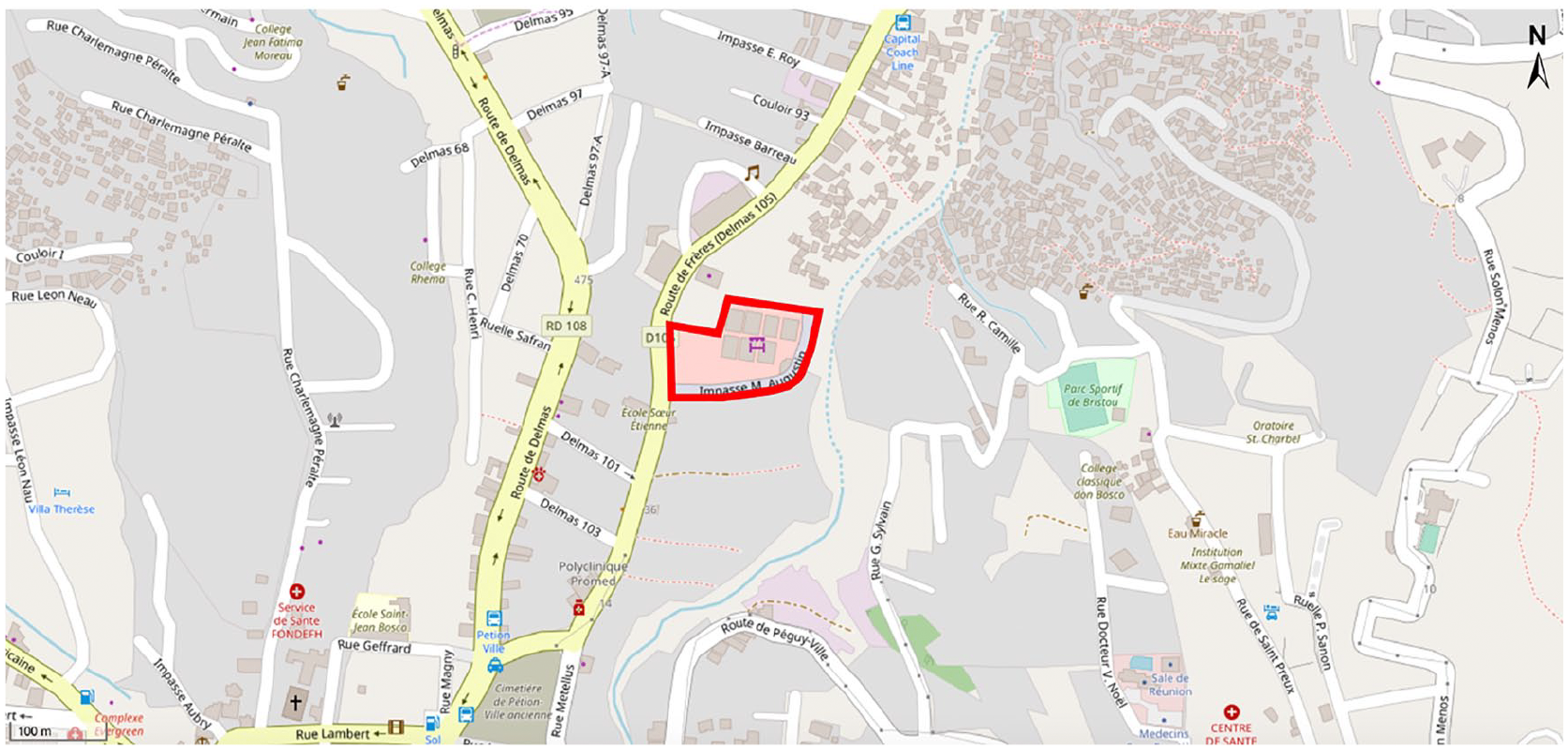
The paper is primarily a comparative study based on the analysis of structured interviews with 104 traders and 105 customers conducted in July and August 2017 in the marketplaces of Lalue and Canapé-Vert in Port-au-Prince, and La Coupe in the adjacent municipality of Pétion-Ville, Haiti. These particular marketplaces – described in the following section – are primarily focused on the sale of basic commodities to customers living in nearby low-income residential settlements (Maps 1 to 4 and Photos 1 to 3). These marketplaces were selected because they have very different physical settings (Table 1) and have been affected differently by hazardous events and conditions.
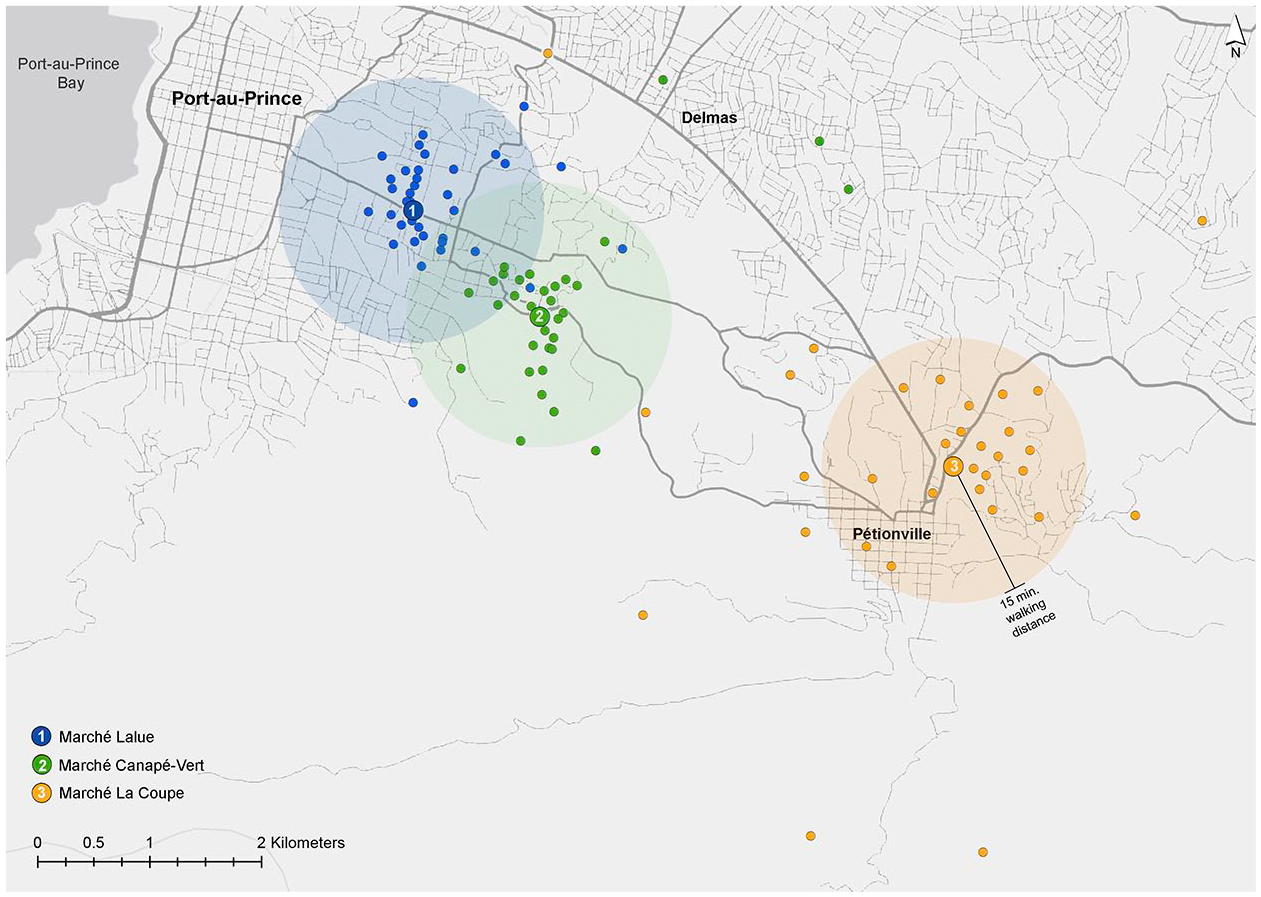
Residential locations of interviewed customers in relation to the marketplace
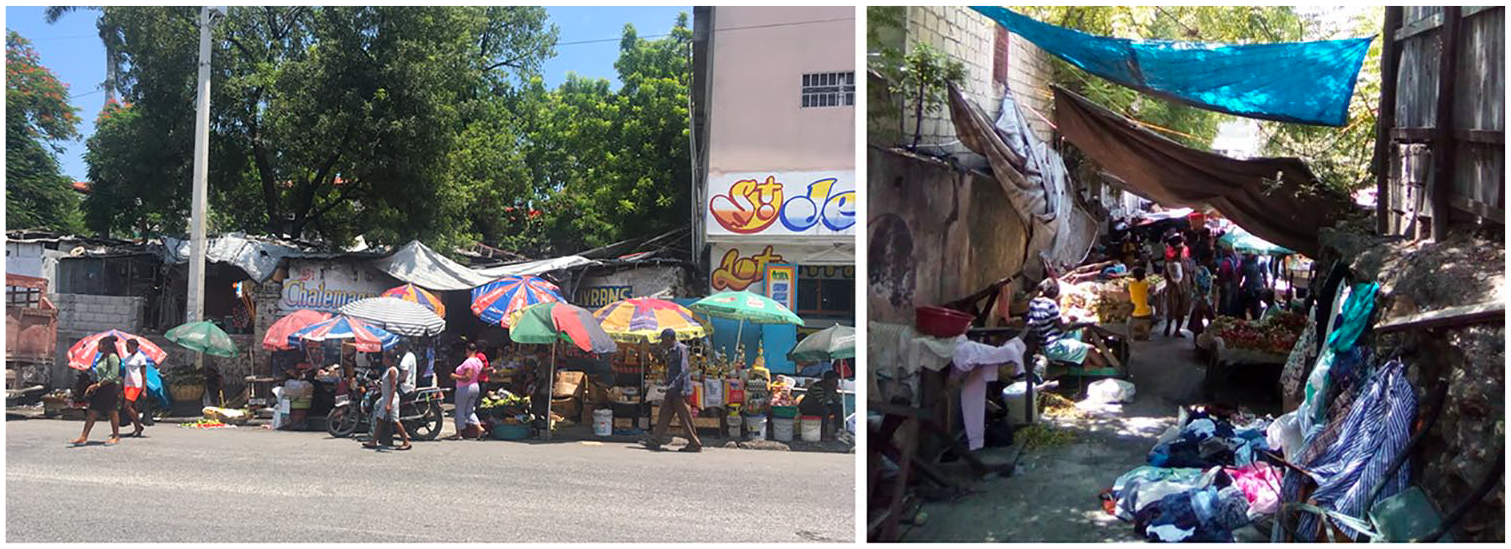
The informal marketplace of Lalue
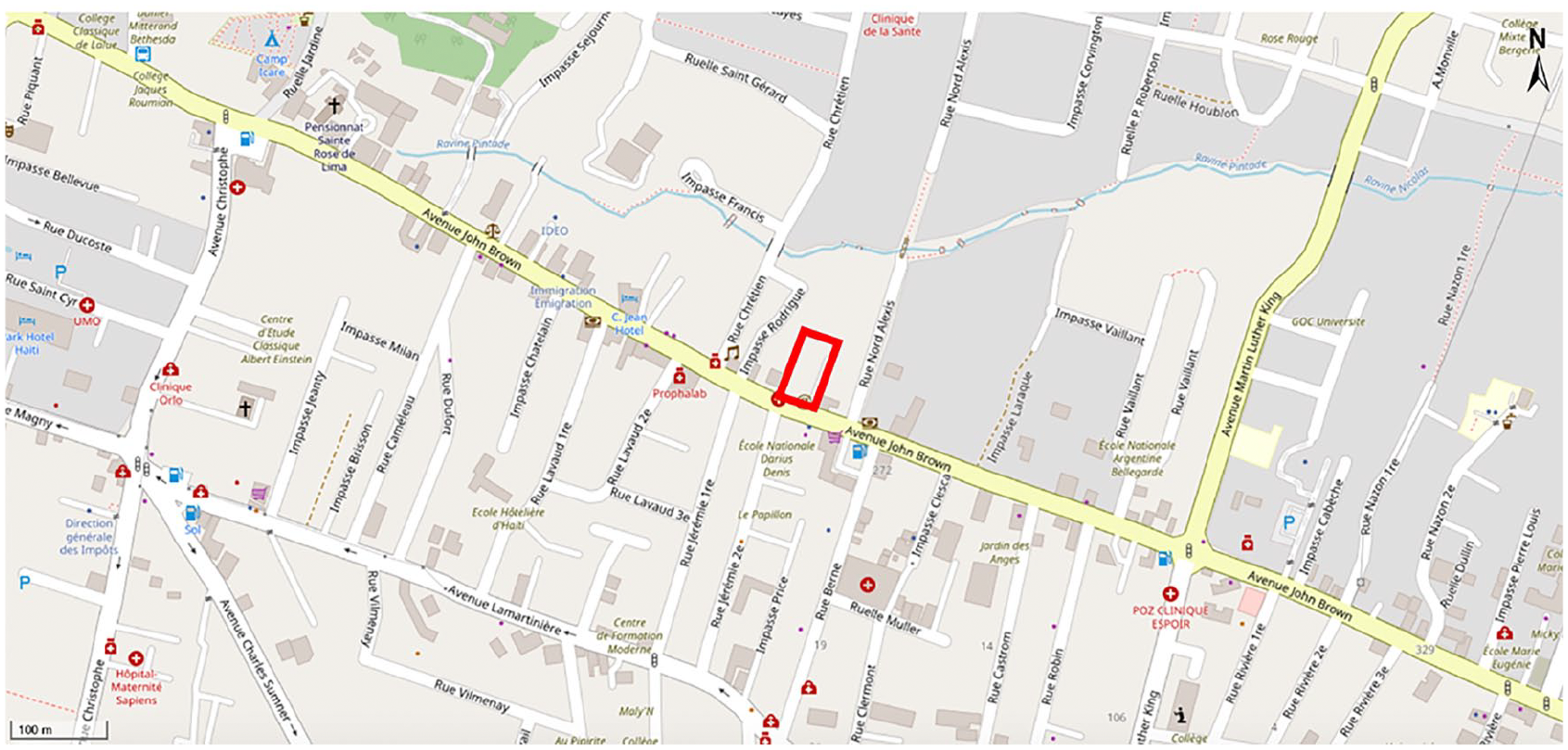
The informal marketplace of Lalue
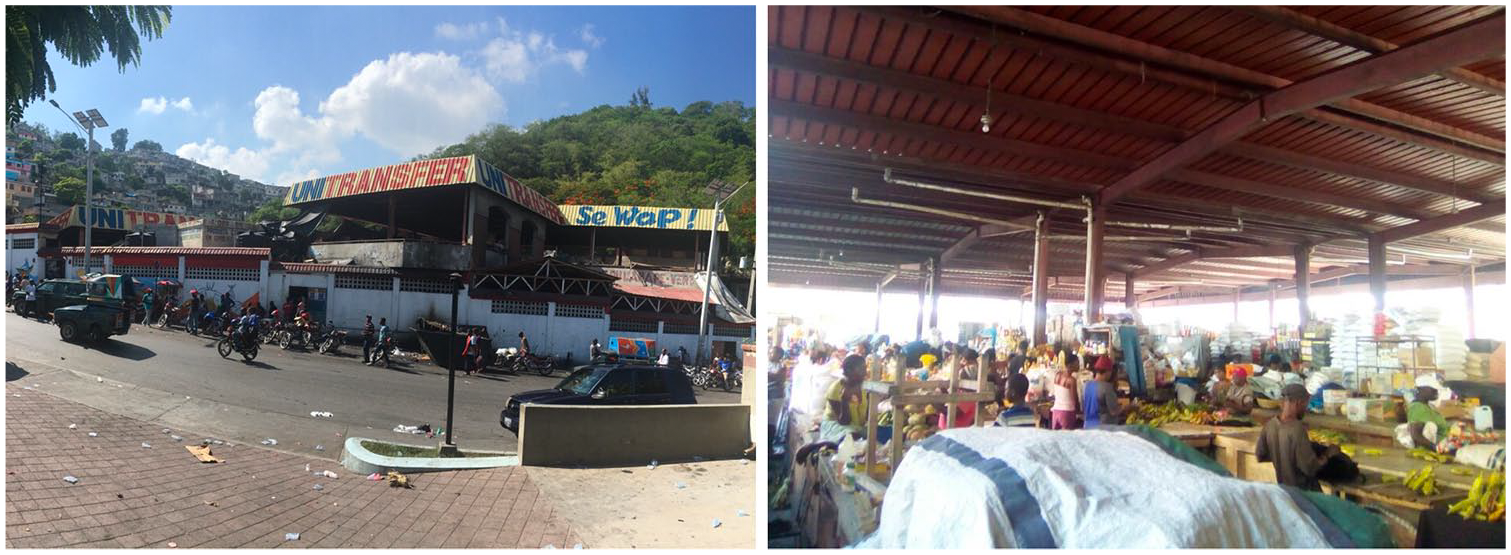
The covered marketplace of Canapé-Vert
The covered marketplace of Canapé-Vert
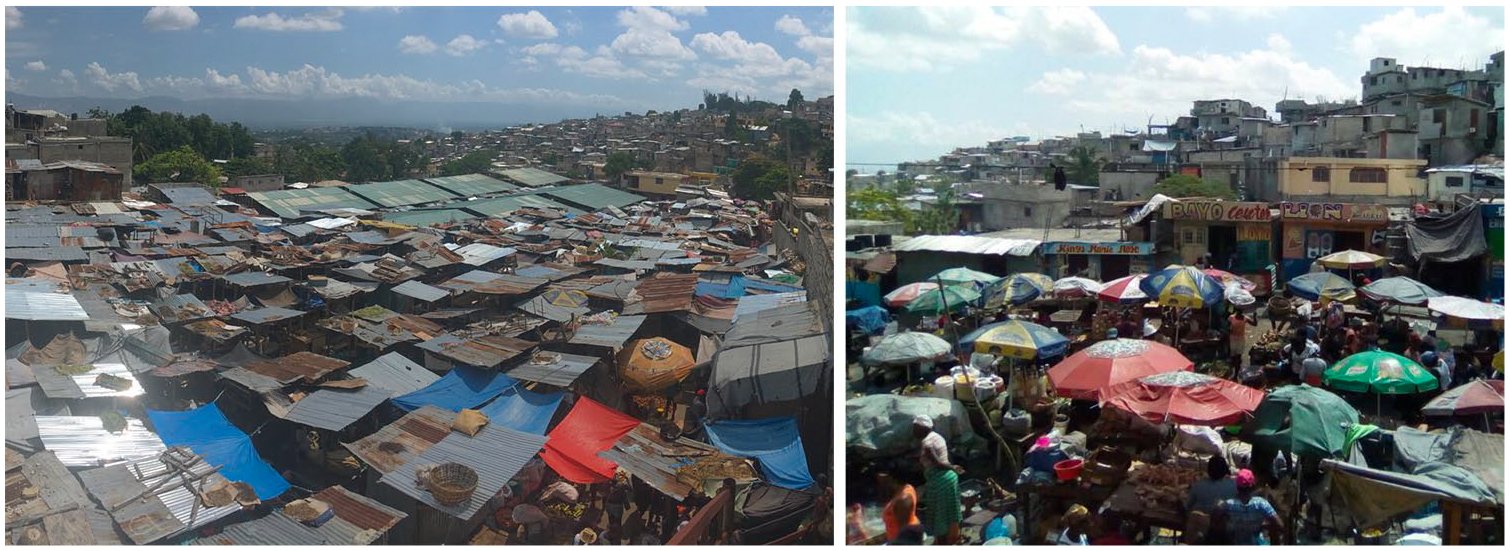
The marketplace of La Coupe
The marketplace of La Coupe
Overview of marketplace characteristics
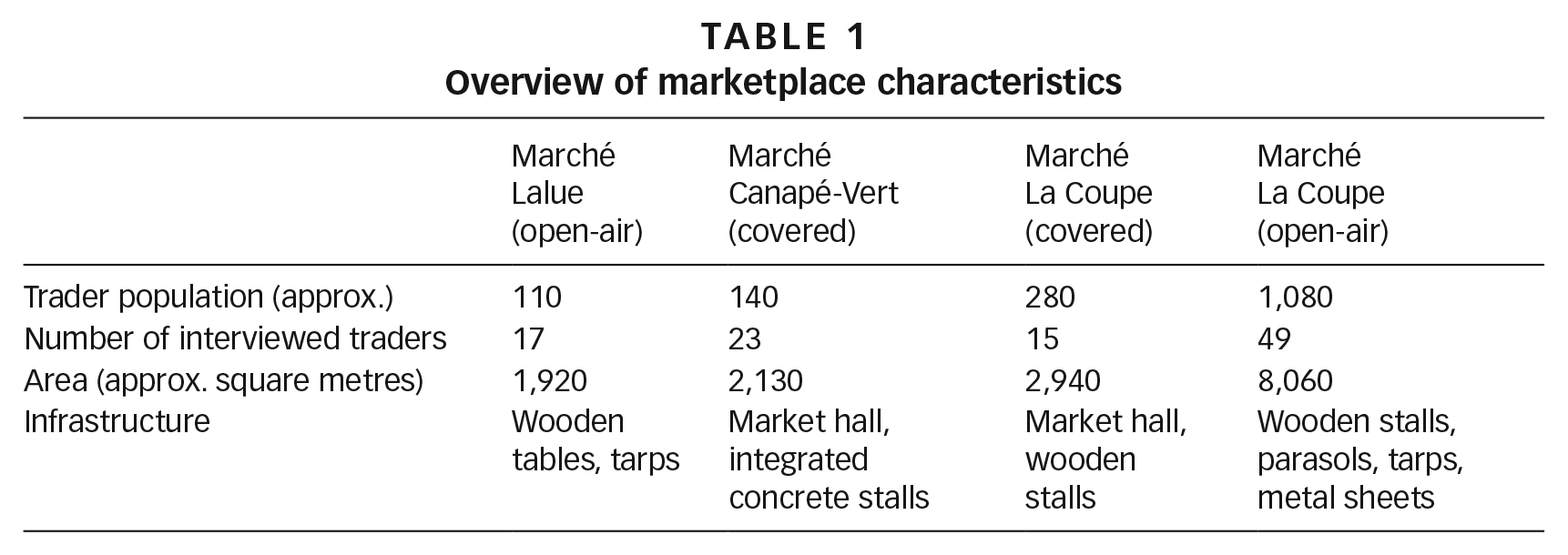
Traders were sampled in order to cover all areas and infrastructural conditions within each marketplace. Numbers of respondents were roughly proportional to the trader population of each market (Table 1). The interviewed traders sell food (66 of 104), cooking-related goods such as charcoal (9), and other commodities such as hygiene products (29). Thirty-five customers were also interviewed in each market in the dedicated food zones. In line with other studies on Haitian petty trade,(25) most interviewed traders (79 of 104) and customers (78 of 105) in these marketplaces are women, and a majority of traders (81 of 104) are the sole or main breadwinner of their households, with marginal differences across marketplaces.
Questionnaires were designed based on a literature review and preliminary fieldwork conducted in 2016. On average, the length of these interviews was 60 minutes for traders and 30 minutes for customers; the interviews were conducted in Creole by four students attending the Université d’État. Thereafter, the responses transcribed in French were analysed using qualitative data analysis software to perform content analyses and quantitative data analysis software to perform frequency analyses. Findings were triangulated with those from semi-structured interviews with traders located in several marketplaces of the metropolitan area (n=25), local and national governmental stakeholders (n=22), and Haitian academics (n=3). On-site observation, the literature on Haitian trade, newspaper articles, maps and aerial images were also used for triangulation.
III. Selected Food Marketplaces In Metropolitan Port-Au-Prince
While there are a dozen market halls in Port-au-Prince under the administration of the municipality, an estimated 100 informal marketplaces occupy the public spaces and interstices of the capital city,(26) where there is a considerable lack of formal space dedicated to petty commerce.(27) Places in market halls managed by the municipality are generally permanent; traders can buy a trading spot when a new marketplace is built, and the place is retained for the trader for life and passed through generations. In street markets, as well as in open-air markets such as Lalue and part of La Coupe, there is strict social control with regard to who can join the kin group of vendors and thereby access the vending space. It is next to impossible to begin vending in spaces that are already occupied, unless one is introduced by a family member.(28)
Like most marketplaces of basic commodities in Haiti, the three marketplaces of Lalue, Canapé-Vert and La Coupe are predominantly operated by women traders who generate income for their households.(29) To operate in formal or informal marketplaces, traders generally pay a range of fees or payoffs to municipal officers, service providers and others who claim authority over the public space. Market managers appointed by the municipality are generally limited to collecting municipal fees, ensuring minimal security and collecting waste. At the time of fieldwork, the municipality of Port-au-Prince tended to adopt laissez-faire approaches to street markets, while the municipality of Pétion-Ville adopted a more repressive stand on street traders.(30) Moreover, as they are off-street, the selected marketplaces are not subject to evictions and harassment from official authorities.
The three marketplaces studied here offer retail merchandise present in every typical urban market in Haiti, such as local agricultural products, international foodstuffs, meat, seafood, charcoal, and other basic household necessities.(31) These three marketplaces are essentially dedicated to local consumption; 85 per cent of the interviewed customers were engaged in making purchases for their own households, which were located in the vicinity (Map 1).(32) The three marketplaces, like any typical market in Haiti, are also organized in zones of similar commodities.(33)
The marketplaces present substantial differences in the type and quality of physical infrastructure (see Table 1). Lalue Market (also called Ravine Pintade, Photo 1 and Map 2) occupies an abandoned plot in a mixed-use neighbourhood near the city centre. The neighbourhood is considered to have slightly above average relative wealth, and housing conditions and access to basic services are considered better than average.(34) However, the marketplace is in close proximity (approximately 200 metres) to an informal residential settlement built along the Ravine Pintade. This settlement was severely damaged by the 2010 earthquake.(35) Further, this market is not managed by the municipality; traders explained that they were unsure of the landowner’s identity and claim to the land.
Canapé-Vert Market is a split-level covered market built in 2004, located in a mixed-use neighbourhood and in proximity to several informal settlements located on mountain slopes (Photo 2 and Map 3). The neighbourhood is considered to have low relative wealth. Although the houses may be in better condition than those in other informal settlements, they are not necessarily of good quality, and only a few houses have access to basic services.(36) Significant sections of this neighbourhood also suffered heavy damage and destruction due to the 2010 earthquake.(37) The eastern part of the market hosts food vendors. In the western part, the upper floor hosts cosmetics and clothing vendors, and the lower floor hosts mostly charcoal and food vendors as well as water and sanitation facilities. The marketplace is managed by the municipality of Port-au-Prince.
La Coupe Market, built on the slope of a ravine, was inaugurated in 2008 with the aim of relocating traders from the business centre of Pétion-Ville to its vicinity, a mixed-use neighbourhood close to informal residential settlements (Photo 3 and Map 4). The area is considered to have low relative wealth.(38) The three-storey covered market was severely damaged by the 2010 earthquake and was rebuilt as a two-storey building by the municipality with the financial support of the US Agency for International Development. Many buildings also collapsed in the surrounding neighbourhoods, but were damaged to a lesser extent than those in the vicinity of other markets.(39) The halls house traders, of food, kitchen utensils and clothing, as well as butchers and poultry traders on the lower level. However, a majority of traders are located outside the covered market in a larger area of various terraces and alleys that link the market to the road above the slope. Most sell food items, but some sell charcoal, secondhand clothing and accessories. La Coupe is denser than the other selected markets and overflows onto the surrounding streets. While many stalls within market halls remain empty or are only used for storage, the alleys and terraces are fully utilized by traders. This issue is explored later, in the discussion of post-disaster market conditions. The entire area is under the responsibility of the municipality of Pétion-Ville, including the alleys where trade is allowed in practice.
IV. The Relational Attributes of Marketplaces
a. Relations among traders in the marketplace
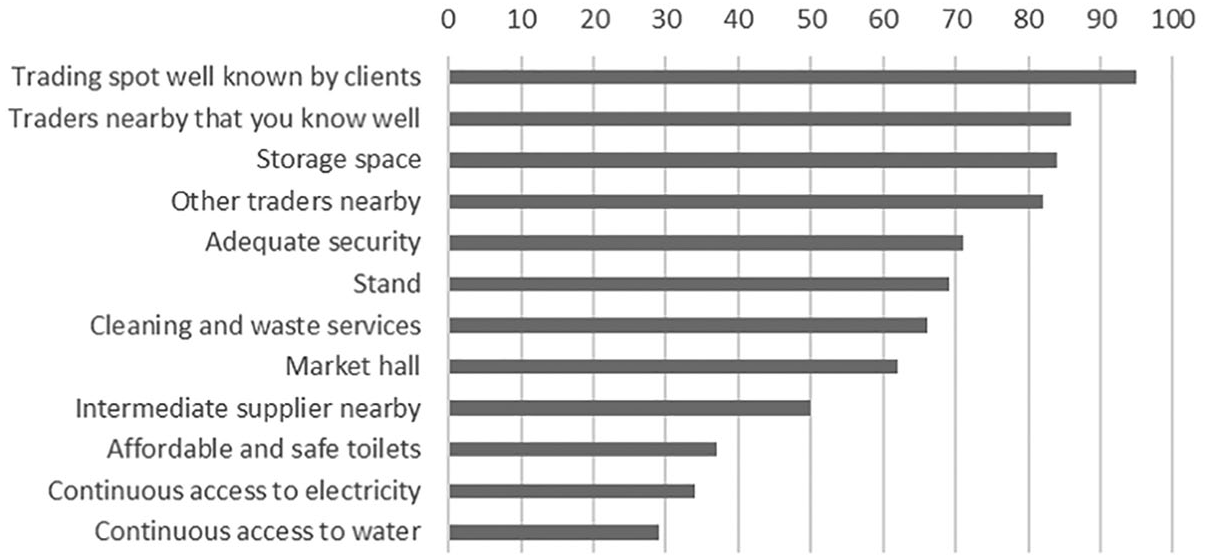
Despite being physically different, the three marketplaces have similar attributes in the relationships within trader communities as well as those between traders and customers. Solidarity tends to supplant competition among the community of petty traders in Haiti, a fact that was reported by Legerman in 1962,(40) Bazabas in 1997,(41) and Thérasmé in 2011.(42) These social relationships were often built on years of working in close proximity. Almost all the interviewed traders considered it significant or very significant to have traders they know well close to their trading spot (Figure 1). As Bazabas explains, “the entrepreneur who creates and develops a petty street enterprise only looks to garner and maintain a relatively fixed market share without positioning himself as a competitor of his neighbours, who develop the same activity”.(43) When asked to describe their relationships with their colleagues, most of the interviewed traders had a positive opinion (91 of 104). Many of them characterized the relationships as being good or enjoyable (56 of 104), and others described themselves as being a community or like a family (37 of 104): “We all are traders. We are all in the same boat. So, we live as a family.” (Trader 59, Lalue)
The infrastructural elements that traders viewed as significant or very significant for them and their businesses (% of traders reporting these)
As frequently observed in other Haitian marketplace studies, traders also mentioned that they would not hesitate to open a colleague’s stall and serve his or her regular clients in the absence of the trader (42 of 104). The reasons for absence could include retrieving stock from a distant supplier, sickness, or taking care of family duties: “One of my friends was sick for a while. It was me who was selling for her and buying merchandise for her.” (Trader 92, La Coupe [hall])
Other traders said that they help, support and look after each other (20 of 104). Other services involving daily operations, such as lending change, buying and transporting merchandise for others, and sending clients to other traders, were also repeatedly observed.
As in the streets,(44) many vendors occupying a trading spot in an open space – like in Lalue and in the alleys of La Coupe – said that they had secured their spot through a family member. As Thérasmé explains, this helps sustain solidarity in the marketplace: “The interest that the liberated space is occupied by a relative relates to the reproduction of the social structure of the marketplace as an area of knowledge, reciprocity and proximity”.(45) While traders generally pay to acquire a trading spot within market halls – for example, in Canapé-Vert or part of La Coupe – findings reveal that territories are socially maintained regardless of the market typology. One market manager, who wished to move traders within a market hall, explains: “[They will say] ‘us, we form a small group here, I have my colleague here, I can’t move without my neighbour.’ We need to move them in groups . . . The previous manager wanted to use force, but also failed.”
Traders also continue trading in the same location because of their reliance on regular customers to stabilize trade. Favours are offered by traders in exchange for frequent patronage and loyalty from customers, thereby becoming a reliable source of income. For this to happen, their trading location must be easily accessible and well known to customers. The importance of the trading location also became evident when the interviewed traders were asked why they cannot relocate: “I don’t want to move, but if someone would make me, I would lose my clientele because all my kliyans know where to find me.” (Trader 134, La Coupe [alley])
A well-known trading spot was identified by traders as the most important feature of the marketplace. Along with the proximity to well-known colleagues, this socio-spatial relationship was perceived as more important than other physical elements of infrastructure (Figure 1).
b. Customers’ relations within and to the marketplace
The reciprocal relationships between traders and their regular customers and between customers and their regular traders, called pratik(46) in Haiti, were reported by Mintz in 1960.(47) As shown in this study, this subtle social custom is still common practice in Haitian marketplaces, although now often referred to as a kliyan.(48) In the present study, most traders (91 of 104)(49) reported having at least one pratik or kliyan. The majority of traders who were able to count them(50) have more than five regular customers (31 of 57). Moreover, most of the customers (89 of 105) said that they have at least one regular trader and a majority of them have up to five regular traders. In all the marketplaces, most customers referred to their pratik or kliyan in positive terms: as being of great importance (38 of 105), having good relations with them (27 of 105), or being convenient and useful to them (25 of 105).
“They are extremely important to me. They trust me. They are accustomed to sell to me.” (Customer 38, Lalue)
Further, most customers visit marketplaces on a daily basis to buy the food they need (74 of 105), benefitting from the option of buying in small quantities. Customers benefit from additional advantages in trading regularly with the same traders – advantages that are not available in supermarkets. The most mentioned benefit (29 of 105) is the ability to get more food for the same price: “When I buy from the hands of these traders, they always give surpluses. They sell well and they are kind.” (Customer 42, Lalue)
It has also been regularly observed that traders add an extra handful of beans or measure rice generously at no additional charge. Another advantage of customers having a regular trader is being able to buy on credit (23 of 105). With credit, a customer who is not able to buy food on a particular day would still be able to get food and pay for it the next day: “They are used to sell to me to pay after. If they were not there, I wouldn’t be able to buy at the market.” (Customer 38 at Lalue)
These benefits have been confirmed in interviews with traders, as most feel obliged to provide these favours to retain their regular clientele.
For almost all interviewed customers, physical proximity to the marketplace, mainly in relation to the customer’s place of residence, is the most frequently mentioned reason for selecting a marketplace (98 of 105). Almost all customers at Lalue and Canapé-Vert were living within a 15-minute walking distance (approximately 1,200 metres, see Map 1). In the case of La Coupe, a larger marketplace, half of the interviewed customers walk to the marketplace, and it takes most of them over 15 minutes to travel there. Numerous customers stated that living close to the market allows them to spend less time and money on transportation. Other marketplaces may offer better prices but are located further away, thereby increasing costs: “I am used to go to Marché Salomon and to Marché en fer. There, traders sell at low prices. . . . [But] this market is close by. I don’t need to pay a taxi to go buy. It is close to me.” (Customer 83, Lalue)
Many customers (38 of 105) also mentioned that the market was the place of their pratik or kliyan and, therefore, where they had advantages and were able to save money: “I live not too far so I come here because it is close by . . . I developed a certain practice of coming here, so it means I became good friends with the traders.” (Customer 38, Lalue)
V. The Relational Attributes of Marketplaces In Disaster And Post-Disaster Contexts
a. Variations in infrastructural vulnerability and impact on traders’ clientele
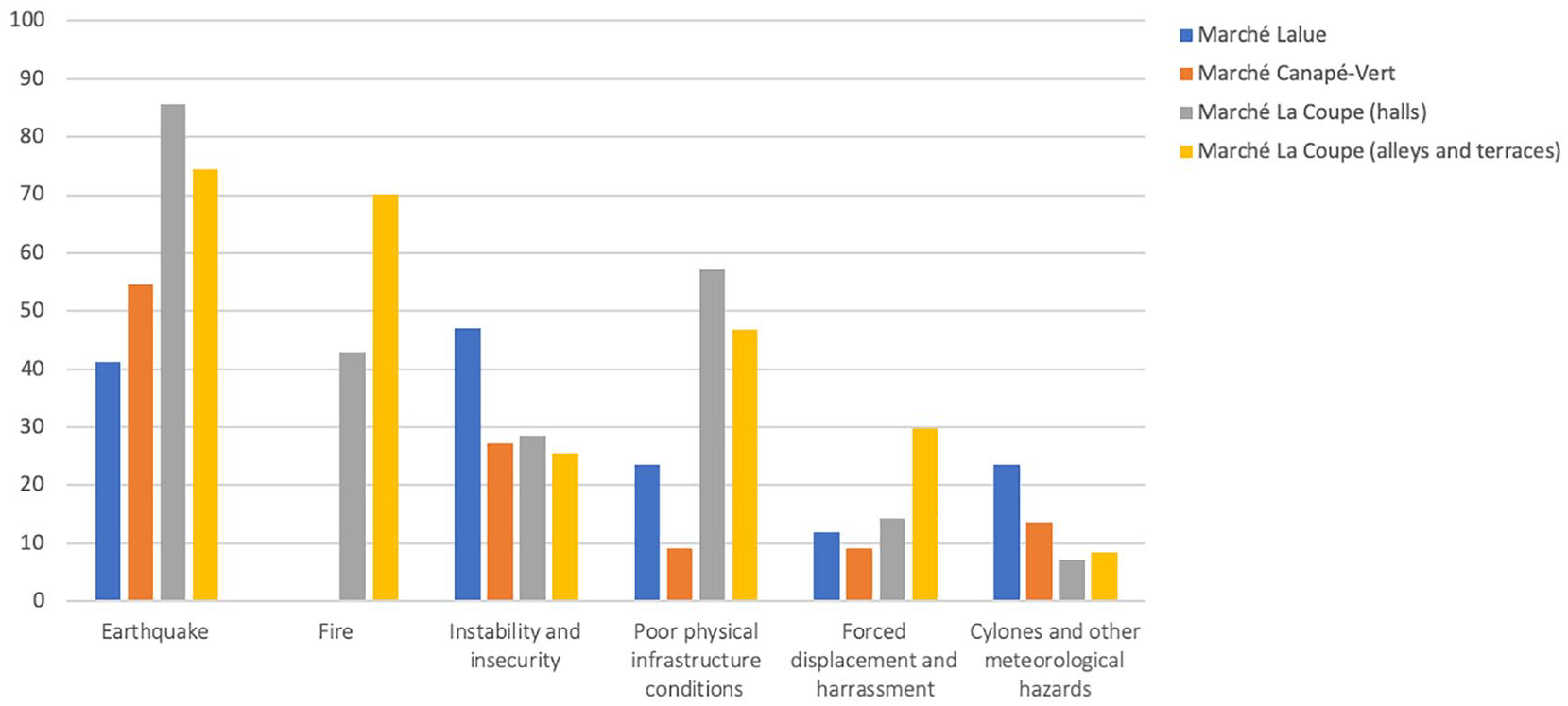
Traders have experienced hazardous events and conditions differently depending on the marketplace in which they are located (Figure 2). Hazards may originate from within the marketplace – such as fires, poor physical conditions and poor market management – or may come from outside the marketplace and impact a larger area, such as earthquakes and tropical storms. Many of the events and conditions experienced in the marketplace relate to hazardous conditions generated by infrastructure inadequacy, such as lack of sanitation, drainage and fire safety, as well as to the vulnerability of its physical infrastructure to external hazards.
The main hazardous events and conditions mentioned by interviewed traders as affecting them (% of traders reporting these)
In particular, the earthquake caused extensive damage to the market halls of La Coupe, while the covered market of Canapé-Vert and the open-air market of Lalue evaded serious damage. Despite the differences, traders in all three marketplaces said that they were affected by the earthquake. They mentioned that many clients died and that their remaining clients as well as they themselves became poorer, as financial constraints were imposed on both traders and customers and the total amount of trade possible was reduced: “[Since the earthquake], we don’t sell as much as we are used to. Trade decreased by a lot.” (Trader 56, Lalue)
Losing clients has a detrimental impact on traders’ livelihoods. Many vendors mentioned they had to reduce food expenditure and stop sending children to school in order to cope with the drop in income.
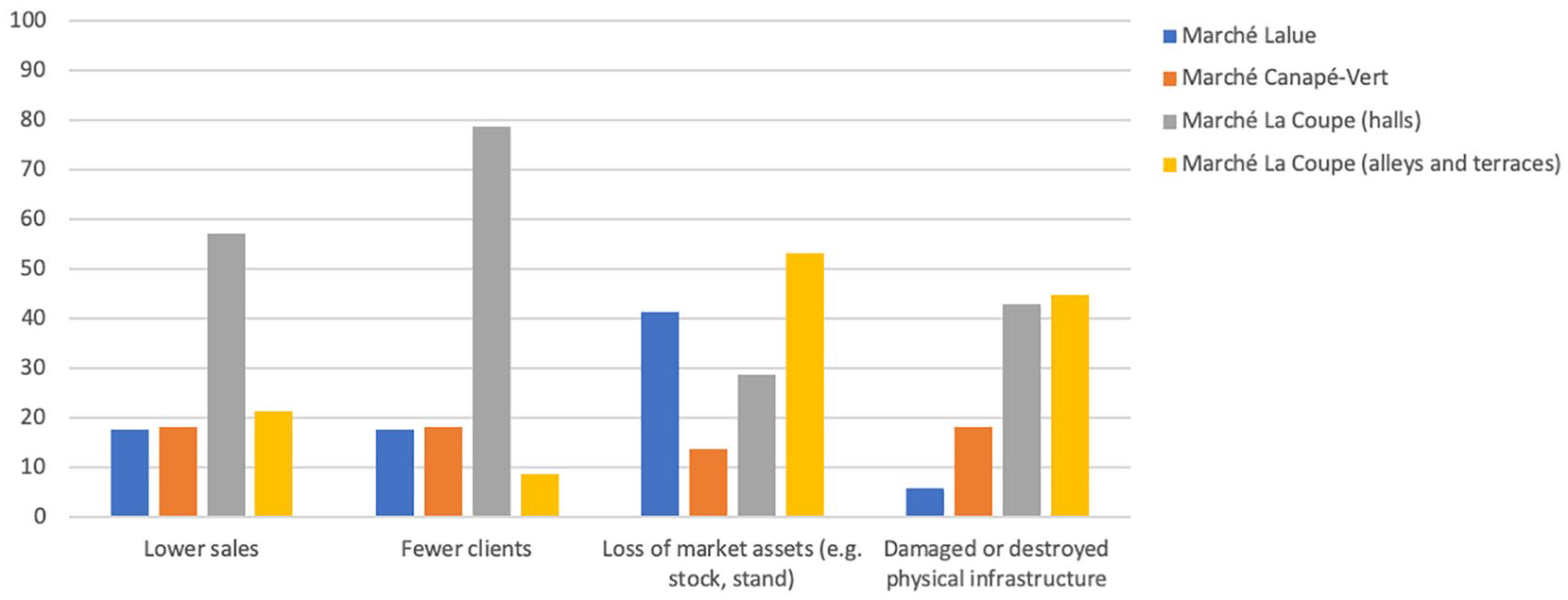
The earthquake and its aftermath also impacted the sustainability of the pratik and kliyan relationships, which varied across marketplaces. Of particular interest is that there was no significant difference between the informal marketplace of Lalue and the covered market of Canapé-Vert in terms of reported impact on their number of clients (Figure 3), despite worse working conditions, greater vulnerability to meteorological hazards, and higher exposure to unrest in Lalue. However, the situation appears to be significantly different in La Coupe, where the infrastructure’s vulnerability and inadequacy has impacted the traders’ clientele. Numerous traders said they lost regular clients there (41 of 64): “After the earthquake, many people left the marketplace and a lot of people did not want to come back because of the fact that the marketplace was destroyed.” (Trader 70, La Coupe)
This outcome was nuanced and can be explained further by the longer recovery time for traders and the effect of the changes in its physical configuration and governance after the earthquake, which are explored in the following subsections.
The main impacts of hazardous events and conditions mentioned by interviewed traders as affecting them (% of traders reporting these)
While traders mentioned numerous hazardous events and conditions that they experienced in the marketplace, over half the customers (59 of 104) reported that there were no hazards in the marketplace that directly affected them. When questioned specifically about the impact of the earthquake, most customers who were living nearby at the time confirmed that they did not lose their regular traders in the aftermath of the earthquake. Contrary to expectations, for customers there were no significant differences between the Canapé-Vert and La Coupe markets, two marketplaces where traders experienced hazards very differently. Eight customers, of whom six were interviewed in Lalue, said they lost a few traders, mostly due to the collapse of traders’ homes.
Further, the customers who mentioned being affected by events and conditions in the marketplace mostly expressed their compassion and sadness regarding the traders’ losses. One customer explained how it has directly impacted his pratik: “There are kliyan who did not come back after a while, that I was used to buy from their hands. [They] lost family or their house. So, the new kliyan that I [had developed] did not sell me well, and later, they did not want to sell on credit.” (Customer 33, Lalue)
The apparent discrepancy between the vulnerability of traders’ relationships with their regular customers, and the robustness of customers’ relationships with their regular traders, raises questions about the disparities of perspectives between the two groups. This difference can be explained in part by the limitations of the study, as interviews were conducted with traders and customers who were still present in the marketplace. For example, customers who used to come to the marketplaces studied here, but who now shop at a different location, were not interviewed. Moreover, internal migration was significant following the 2010 earthquake in Haiti.(51) The potential impact of this mobility on pratik or kliyan relationships was noted by several customers, for example: “If I quit the area to live somewhere else, I will not be able to come here.” (Customer 47, Canapé-Vert)
While customers might have changed their sources of food because of intra-city migration, this probably did not affect the work locations of traders, as most do not live in the same neighbourhood as the marketplace (86 of 104).(52) A few traders (13 of 104) also mentioned that they moved to a different neighbourhood following the earthquake but continued trading in the same marketplace. In other words, for traders, proximity to the workplace does not appear to be as crucial as proximity to the source of food for customers.
b. Variations in disaster recovery and limits to trader communities’ agency
Over 80 per cent of the traders in the selected marketplaces returned to their previous location after the earthquake, with little variation between marketplaces. However, the time traders took to return to trading at their marketplace varied, and this was related to the type and the robustness of the marketplaces’ physical infrastructure. Most traders at the open-air market Lalue returned within one month, as the impact of the earthquake and the subsequent aftershocks on the infrastructure were minimal, allowing the locations of traders’ businesses to remain intact. At Canapé-Vert, a covered market that withstood the shock, most traders returned within three months. Traders did not return as fast as at Lalue due to the fear that the structure might not resist aftershocks. Most traders at La Coupe returned after more than six months due to structural damage and the extended time and space needed for reconstruction. The proportion of traders who took more than 12 months to return to this market was much higher than that in other markets, with 13 traders of the 64 interviewed only coming back after one year, while only one trader (out of 17) took this long to return to Lalue, and none (of 23) to Canapé-Vert.
Most traders lost the majority of their pratik or kliyan, and this was true for all markets. However, the data suggest that the more time traders took to return to the marketplace after a shock, the more likely it was that they would lose even more regular customers. At Lalue and at Canapé-Vert, most of the traders who had lost only a minority of their customers were those who returned within three months (11 out of 17). Conversely, most of the traders who lost all or almost all of their regular customers, mainly at La Coupe, took at least six months to return (8 out of 11), and the trading spots that six of them had formerly used were located under the collapsed market halls. Therefore, these data suggest that the capacity to return to the original trading spot after a disaster, and the rapidity with which this happens, is likely to support the maintenance of pratik or kliyan relationships in post-disaster settings.
With regard to the relationships in the trader communities, friendships were reestablished after the disaster for most of the traders (69 of 104 traders). They explained that they regained kin-like friendships only when they returned among their neighbouring colleagues.
“We were split for some time because we all had different issues to deal with, and after we found ourselves again.” (Trader 34, La Coupe [alley])
While many traders reported “staying in contact” and that they “were happy” to see their colleagues after weeks or months of absence, most traders mentioned that marketplace friends did not help them return to their trade in substantial terms. The responses were similar across marketplaces: “It [the earthquake] has not affected our relationships . . . but we were in a situation where none of us could help each other, especially after the earthquake.” (Trader 57, Lalue, who returned after two months)
This indicates that, while traders’ relationships with their colleagues are useful at an operational level and to sporadically support individuals in need, community agency was limited in the recovery period due to the extent of the disaster’s impact on the trading community.
c. Variations in post-disaster conditions: the impact of changes in infrastructure typology and governance
Another factor that can explain the difficulties in maintaining pratik and kliyan relationships in a post-disaster context relates to the changes in the physical and spatial conditions that traders returned to in their marketplaces. The context of the Canapé-Vert and Lalue marketplaces did not change significantly. In both sites, the characteristics of the infrastructure, its spatial organization, provision of services, and the management have remained, to a large extent, unchanged. At Canapé-Vert, the increase in the number of residents in its surroundings in the earthquake’s aftermath, because of displacement, paralleled an increase in the number of traders selling in the market. These were absorbed within the existing covered space, which is still sufficiently large to host more traders. The increase in the number of traders did not come up as an issue in the interviews with traders and the manager. Similarly, a few traders who had been selling downtown moved to Lalue, which did not appear to be a concern either.
While conditions remained largely unchanged at Lalue and Canapé-Vert after the earthquake, La Coupe changed significantly. First, the particular physical configuration of La Coupe put many traders in disadvantageous positions. Many traders interviewed in the market hall stated that its hard-to-reach location at the bottom of a slope, with overcrowded and dangerous alleys and stairs, negatively impacts their ability to attract clients.
“The roads are narrow and prevent clients to come here . . .There is a client who broke his foot in the stairs. People prefer to go in other marketplaces because the marketplace is located inside, too far for the clients.” (Trader 106, La Coupe [terrace])
While the position of the covered area was similar prior to the earthquake, its surrounding alleys and terrace are now much denser, partly because the market halls were rebuilt with one floor fewer. With an increase in the trader population, more traders installed their shops closer to the main access points and on the nearby sidewalks. Many traders at the bottom of the slopes complained that competition with those closer to the entrances increased to a point where they began to lose clients and income. Consequently, several traders indicated that their colleagues left to sell in the streets, enduring worse conditions, while using their original location for storage purposes.
Further, many traders reported that the situation was better under the previous administration – before the earthquake – as coercion was used to “push traders back inside”. According to them, this allowed the trading area to be restricted to the marketplace, and simultaneously reduced competition among zones selling similar commodities. After the earthquake, the appointed local administration(53) adopted a more laissez-faire approach towards street trading, putting the traders in the marketplace in a disadvantageous position in comparison to similar traders located near the entrance and on the streets, which was more convenient for customers. These findings show how unequal physical conditions in a single marketplace can, in the long run, introduce unfair competition between traders and interfere with the custom of pratik and kliyan relationships, particularly in large marketplaces such as La Coupe.
VI. Discussion and Conclusions
This paper highlights a lack of evidence in the literature on how food retail infrastructure functions and is affected by disasters in cities of low- and middle-income countries, and in Haiti in particular. Building on Simone’s concept of “people as infrastructure” and on current discussions on market modernization, this paper aims at identifying the attributes related to the social and physical dimensions of food provision and access, as well as exploring how they can be affected by hazardous events and conditions. More case study research could strengthen the case for building on the relational attributes of marketplaces and could deepen the understanding of contextual particularities specific to Haiti and other cities in low- and middle-income countries. Moreover, combining studies of marketplaces with household studies in the surrounding neighbourhoods would also help to capture possible changes in preferred sources of food in post-disaster contexts, which is an object of research that could not be investigated with the focus on current users of marketplaces alone. Nevertheless, interviews conducted with traders and customers in three marketplaces in Port-au-Prince not only highlight beneficial social attributes for traders and customers, but also reveal their linkages to the marketplace and the social effects of gradual and sudden changes in that marketplace. These findings have implications for how marketplaces can be conceptualized in the cities of low- and middle-income countries and how they can be built upon in pre- and post-disaster contexts.
Further, the literature on food retail modernization in low- and middle-income countries, mostly in Africa, has mentioned the comparative advantage of informal markets over supermarkets based on making it possible for low-income consumers to purchase small quantities and, occasionally, buy on credit. The findings of this paper indicate that eased access to goods in Haitian marketplaces is mostly related to sustained relationships among traders and customers. The reciprocity and trust underlying that solidarity among food retailers and with customers is developed over repetitive interactions, regardless of marketplace typology. The fact that these social aspects of infrastructure were given more importance than other existing or desired physical features indicates how significant these relationships are for traders. It was found that the marketplace’s proximity to customers is of relevance for building solidarity, in terms of both the distance to places of residence and ease of access within the marketplace. Friendships among traders are also based on immediate proximity and enable them to retain their regular clientele while traders themselves are on leave. Finally, solidarity among traders and customers relates to the maintenance of a stable position in the marketplace, as it is important for customers to be able to find their regular traders easily in crowded environments in order to maintain these reciprocal relationships over time.
Moreover, these advantageous relationships are not invulnerable, as findings show how hazardous conditions in the marketplace and its vulnerability to hazards can aggravate problems with food provision and access in a post-disaster context, due to the erosion of the preconditions needed for building and maintaining solidarity. In other words, physical proximity and spatial stability can be affected during crises, indirectly impacting solidarity among food retailers and buyers. While relational attributes exist across different marketplaces, how they are impacted by hazardous events and conditions varies. This variation is due to the difference in the typology and the robustness of the physical infrastructure in which traders and customers operate. Specifically, the differences in traders’ working conditions do not appear to impact relationships with their regular customers. However, if the physical infrastructure fails to safeguard the traders’ trading position and if traders take too much time to return after a disaster, relationships between traders and customers are also likely to be affected. Similarly, if it becomes too laborious for customers to reach their regular traders due to a change in the organization of the marketplace or due to the extension of the marketplace onto the streets, these traders can become cornered in a disadvantageous position and, therefore, less likely to attract and maintain new regular clientele.
The existence of relational attributes and their exposed vulnerability have implications for conceptualizing food retail infrastructure in cities of low- and middle-income countries. As Battersby and Watson(54) indicate, marketplaces – where most urban low-income households source their food – possess characteristics that supermarkets do not. Distinctions are found in an understanding of marketplaces as social infrastructure,(55) as many advantages of choosing marketplaces as a source of food over supermarkets come from the interpersonal relationships between traders and customers. However, this is not to say that food retail infrastructure is solely social and deprived of physical and spatial dimensions, as these social relationships are embedded in a given place. In particular, this paper shows how changes in physical infrastructure and in the occupation of space, permanently or for a few months, can hinder the sustainability of these social relationships that take time to build. If proximity between customers and traders and among groups of traders is altered by a longer distance or by increased obstacles, and if the trading location is destroyed or unstable, the findings suggest that it is likely that solidarity among traders and with customers will be affected.
The findings also have implications for market support interventions and food retail modernization in Haiti, as well as in other cities of low- and middle-income countries. While household studies have shown that purchasing power remains the primary factor for food access among urban dwellers, findings in this paper show how the relational attributes of marketplaces can also alleviate food insecurity. For urban planning and humanitarian practices, the findings provide a further understanding of the value and limitations of market traders in meeting food needs in post-disaster settings. They also supply evidence of the need to improve a marketplace’s physical infrastructure to facilitate and better protect valuable relationships. Recognizing the attributes of existing marketplaces related to solidarity, proximity and stability could be a step forward, ensuring that these attributes are not hindered and, in best cases, are strengthened in modernization projects. This paper supports Lyons and Snoxell’s claim that “the importance of marketplace friendships for survival and stability suggest that markets should not be relocated or removed in the process of formalisation, without thorough consultation”.(56) However, if Lyons and Snoxell’s study focuses on friendships among traders, this study shows that marketplace friendships extend to the relationships between traders and customers and that these could also be affected by involuntary relocations caused by disasters or changed marketplace conditions. For the same reason, traders and customers must be consulted rigorously in efforts to improve urban food security and disaster recovery.
Footnotes
Acknowledgements
I am very grateful to Rolee Aranya, David Sanderson and the two anonymous reviewers for their constructive comments that have improved this paper. Special thanks go to Youveline Amilca, Forteson Dorcius, Florie Anne Dorsainville and Samuel Jozil for their invaluable assistance in Port-au-Prince, and to all the people who participated in the research.
