




Abstract
Many cities in sub-Saharan Africa lack official records of deaths and of serious illnesses and injuries from everyday hazards and disaster events at all scales. This is a major limitation to effective planning for risk reduction. This paper seeks to fill some of these data gaps for the city of Ibadan, drawing on newspaper reports, hospital records, and databases or records of government departments for the period 2000–2015. It presents what can be learned about risks from these sources and discusses how the social, economic and political structures at the national, city and locality levels contribute to the most serious urban risks, as well as how these drive the process of risk accumulation, especially for vulnerable groups. Excluding public health risks for which data are scarce and incomplete, road traffic accidents, crime, violence and flooding constitute the most serious hazards in the city of Ibadan.
I. Introduction
Contemporary urbanization processes and rapid population growth in sub-Saharan Africa are increasing the exposure of urban dwellers to everyday hazards and disaster risks.(1) The distinct dynamics of changing urban forms, city governance, public financing, physical infrastructure and social services are closely connected to the construction and accumulation of these risks. This can be seen in increasing pressure for housing, inadequate provision of and unequal access to critical public and social services and basic infrastructure, and poor urban management and planning.(2) This is likely to most impact the urban poor and other vulnerable groups. This needs to be clearly understood if these risks and their impacts are to be reduced. To these is now added climate change, giving rise to new forms of vulnerabilities and emerging urban risks.(3) Yet there is a significant data gap on risk in urban areas of Africa.(4)
This paper describes the large gaps in data on risk in Ibadan, in particular the lack of official records of deaths and of serious illnesses and injuries. It seeks to fill some of these data gaps by drawing on newspaper reports, hospital records and databases of government departments for the period 2000–2015. Excluding public health risks for which data are scarce and incomplete, road traffic accidents, crime, violence and flooding constitute the most serious hazards in the city of Ibadan. The paper also discusses some of the causes and influences on this – including the inadequacies of city governance; the lack of public funding; poor-quality provision for water, sanitation and electricity; inadequacies in the transport, healthcare and emergency services systems; and, of course, urban poverty.
The paper draws a distinction between extensive and intensive risks.(5) Intensive risk refers to the risk associated with high-severity, mid- to low-frequency disasters,(6) with the potential for 30 or more deaths and/or 600 or more houses destroyed or seriously damaged in one municipality/local government area (LGA). Extensive risk refers to the risk associated with low-severity, high-frequency (persistent) events, mainly but not exclusively associated with highly localized hazards. It is also defined as the risk of premature death, injury/illness and impoverishment from all events whose impact is too small to be classified as major disasters.(7) Extensive risks are closely linked with underlying risk drivers, such as inequality and absolute poverty, which drive hazard exposure and vulnerability.(8)
II. Ibadan City
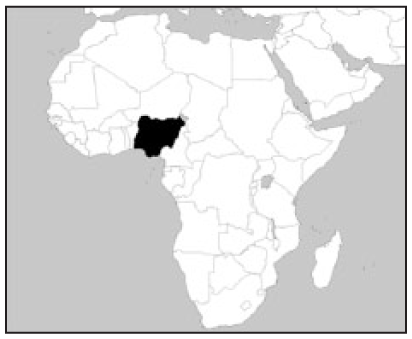
Ibadan is the capital of Oyo State and has over 3 million inhabitants. It was already classified as an urban centre by the middle of the 19th century and was regarded by Akin Mabogunje as the “pinnacle of pre-European urbanism in Nigeria and the largest purely African city”.(9)
From covering only one square kilometre in 1830, the built-up area extended to become a large, sprawling city with a built-up area of 401 square kilometres in 2012 (Map 1).(10) Much of the city growth has been due to unplanned expansion and development of new areas extending outwards from the older immigrant suburbs. Open spaces and natural surfaces within the city area continue to decrease as a result of continuous infill even as floodplains, hill slopes and other hazardous areas are built up. This development has the effect of modifying urban hydrology through increased runoff and the urban climate through enhanced warming and increased local winds.
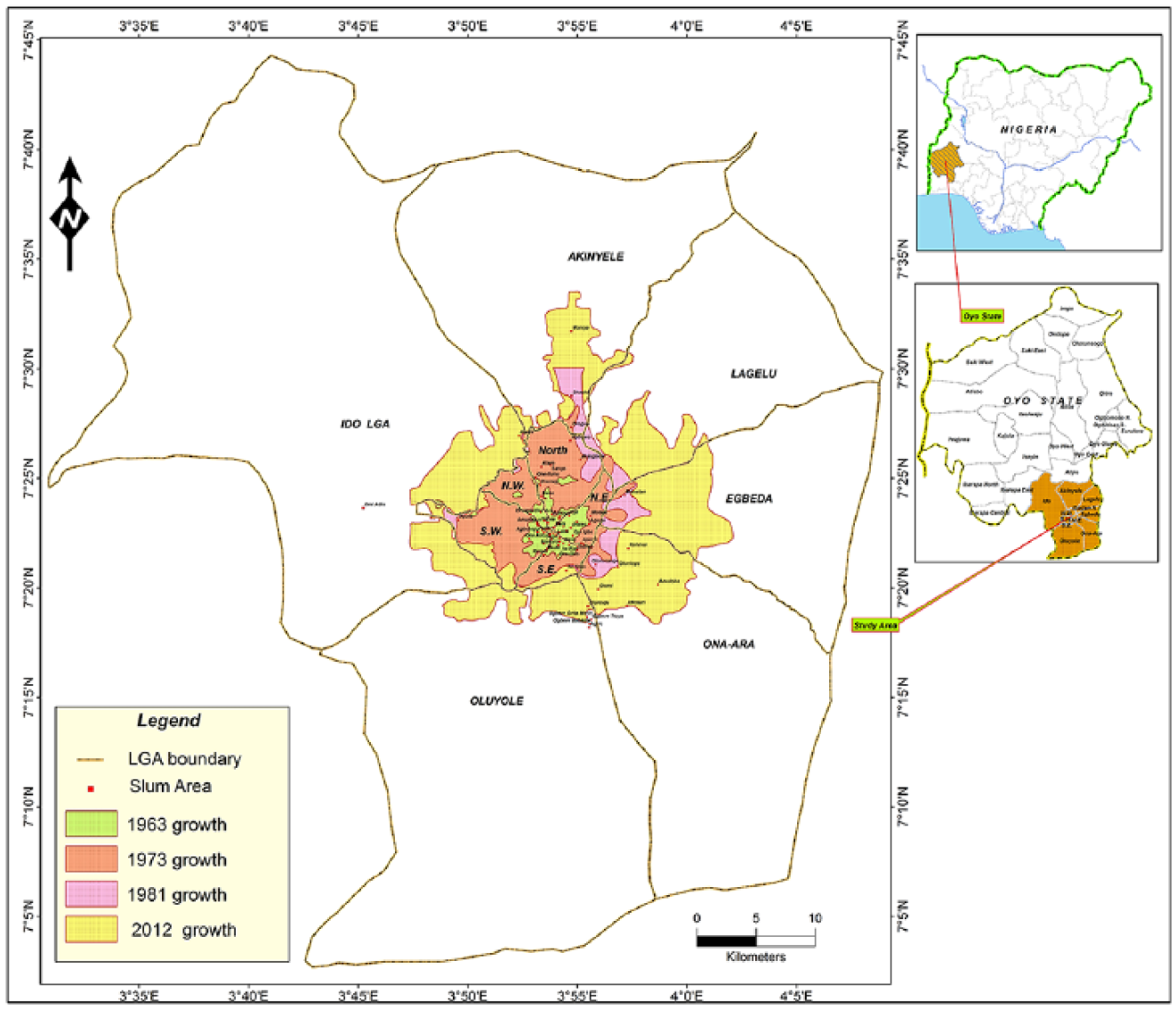
Ibadan city growth and the development of slum settlements
Most of the city expansion has been from informal land subdivisions and illegal settlements. Informal land subdivisions, though intended for urban use, do not conform to land subdivision regulations, e.g. regular plot dimensions, street lights and paved roads. Illegal settlements termed atomistic settlements are squatter settlements that grew incrementally without an overall plan and with dwellings built on irregular parcels of land.
The settlement characteristics of Ibadan city expansion during the period 2000 to 2013 highlights changes in pattern.(11) For the 1984–2000 period, most of the additional built-up residential area was from atomistic settlements (36 per cent) and informal land subdivisions (56 per cent). Formal subdivisions and housing projects, characterized by higher levels of regularity and provision of infrastructure and better connections to existing roads, occupied only 8 per cent of the additional built-up area. The city expansion in the period 2000–2013 was 75 per cent atomistic settlements and 25 per cent informal subdivisions. This shows the failure of local authorities to effectively plan and manage urban development. Many of the newly developed areas are a mix of characteristics found in traditional settlements (including high density and poor-quality, poorly maintained housing) and planned residential layouts of low to medium density. These have not been integrated into the city’s planning system. At present, at least 72 slum(12) localities are identifiable in the city.(13) While many of these are in the densely populated inner city, the “slums” in the “newer” city area cover a larger area and increasingly accommodate large populations.
By 2010, 31 per cent of households were migrants.(14) The factors attracting migrants have changed with time, as have migrants’ socioeconomic characteristics. The poor state of the national economy, ethnic clashes, religious violence and terrorist activities in northern Nigeria since 2000 have influenced the characteristics of migrants. New migrants are mostly poor, with no education or only primary school education. This has implications for their ability to access employment opportunities, affordable housing in non-marginal locations, healthcare and other social services. An important outcome of rapid population growth in an unfavourable economic environment is the increase in the population living in substandard housing and overcrowded conditions.(15)
III. The Lack of Risk Data In Ibadan
The lack of systematic and common-format records of the impact of everyday hazards and disaster events at all scales and magnitudes in many African cities is well exemplified in Ibadan. Some factors contributing to this are as follows:
1) Citywide systems for official recording of deaths, and by association their causes, are incomplete and very inadequate. There is government provision for the registration of births and deaths by the National Population Commission (NPopC), local governments and hospitals. Generally, only deaths that occur in public/private hospitals and health facilities or that have involved the police are adequately recorded. Deaths due to other causes or occurring in the home are rarely registered with the NPopC and local government offices.
2) Different agencies have poor information and data storage practices. Only in the last decade have information databases for many government ministries and agencies been stored in electronic form. For the most part, risk information, where available, can only be retrieved from records manually entered into registers. The problem of missing data is commonly associated with records kept only in hard copies.
3) There is a lack of consistency in the form in which data are entered and stored over time and from one department to another in the city. The format of records that are available often varies within and across sources.
4) The process of collecting and storing data is time-consuming because records are mostly hand-written.
5) The quality of data stored is largely dependent on the knowledge and training received by data entry staff, the capacity of persons in charge of data management, and the resources available to each department/ministry/agency. Variations in these affect the completeness, level of detail and reliability of data.
6) Government agencies seldom keep reports and data on deaths and losses arising from everyday hazards and disaster events at scales lower than the state level. It is only major disaster events that attract attention and as a result have some record of the impacts provided at the city level. Even when this is available, data are not usually available for scales lower than the city level. For example, a gross total number for deaths resulting from the major flood disasters in 1980 and 2011 was recorded without reference to the number of deaths from floods in different areas of the city. In most cases there are few attempts, if any, to record other risk-related data at the scale lower than the local government area. Yet data for risk assessments are needed for each ward, to understand their particular risks and who is most affected.
7) Risk information drawn from reports in local newspapers is not exhaustive in terms of coverage due to the large spatial extent of the city, limited space for reports, and limited ability of news reporters to source relevant information.
8) With the exception of hospital records, which include information on patient age, gender, occupation and residential address, detailed sociodemographic data for the majority of victims or persons affected by everyday hazards and disasters in the city are rarely recorded.
IV. Urban Risks – Exposure and Vulnerability
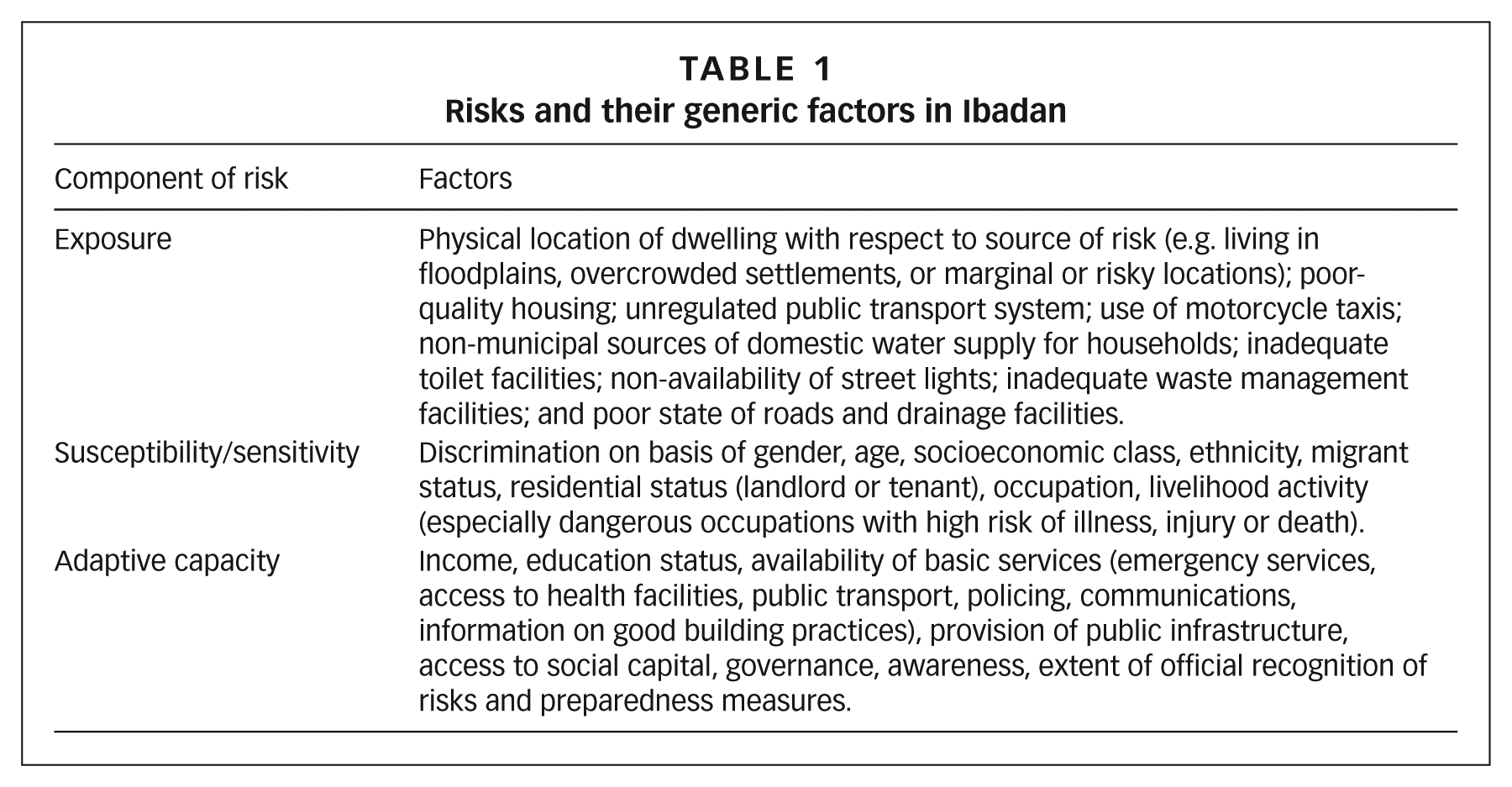
The analytical framework for the study is based on an understanding of risk as an accumulation of vulnerability (susceptibility to hazard and lack of adaptive or coping capacity) and hazard exposure. The determinants of risk are highly context-specific(16) and dynamic. They vary across temporal and spatial scales, and are influenced by economic, social, geographic, demographic, cultural, institutional, governance and environmental factors. Many of these determinants shape the vulnerability of individuals or communities to different risks.(17) There are generic determinants of risk such as poverty, inequality, poor health, lack of access to resources and low social status, which may cut across the spectrum of different risks, while other factors are specific to the risk context.(18) The factors that shape vulnerability to the risk of fires, for example, are different from those for flood hazards or road traffic accidents. Risk factors for Ibadan are listed in Table 1.
Risks and their generic factors in Ibadan
Wisner and colleagues suggest that demographic, economic and political processes are the most important
V. Drivers Of Risk
Some of the key drivers of exposure to hazards and vulnerability are inadequacies in city governance, the lack of public finance, inadequate infrastructure and services, and poverty.
a. City governance
City authorities have a major role in shaping urban vulnerability and hazard profiles through their decisions and actions (or inaction) around disaster preparedness, infrastructure and service provision, land management and other urban functions.(21) In 1961, Ibadan was constituted into seven local governments comprising the Ibadan City Council and six district councils for the suburban areas. The Ibadan District Council was created to coordinate the affairs of the seven local governments. In 1976 the Nigerian Local Government Reform was formulated to make the local governments autonomous, functional and developmental, while the 1999 Constitution of the Federal Republic of Nigeria strategically positioned local governments as the third tier of government to provide public goods and services whose benefits and impacts are localized in nature.(22) In 1989, the Ibadan Municipal Government replaced the Ibadan City Council and was split into five autonomous local governments, while the suburban areas retained the structure of six local governments. This has resulted in uncoordinated urban planning and management and subsequent spatial inequality in the provision of basic social services and urban infrastructure. This also resulted in increasing proliferation of informal settlements in the city.(23) To a large extent, urban development has taken place without compliance with building and land-use regulations. Successive city governments have failed to provide a city plan, so there has been no standard zoning arrangement.
A haphazard pattern of urban development is especially evident in the newly developed peripheries of the city. Although the state regulations on the minimum riparian setbacks on either side of watercourses range from 15 to 46 metres, depending on the size of the river or stream,(24) in the aftermath of the August 2011 floods in Ibadan, 26,533 buildings were identified within the statutory setbacks (Photo 1).(25) In regard to housing conditions in two slum localities(26) in Mapo (core area), only 10 per cent of housing had approved building plans; for Apete (newly developed suburb) this was 41 per cent.(27) Poor urban planning, poor development control, and weak building code regulation and enforcement have increased the vulnerability of large numbers of city inhabitants to various risks, including floods, road traffic accidents, building collapse and fires.
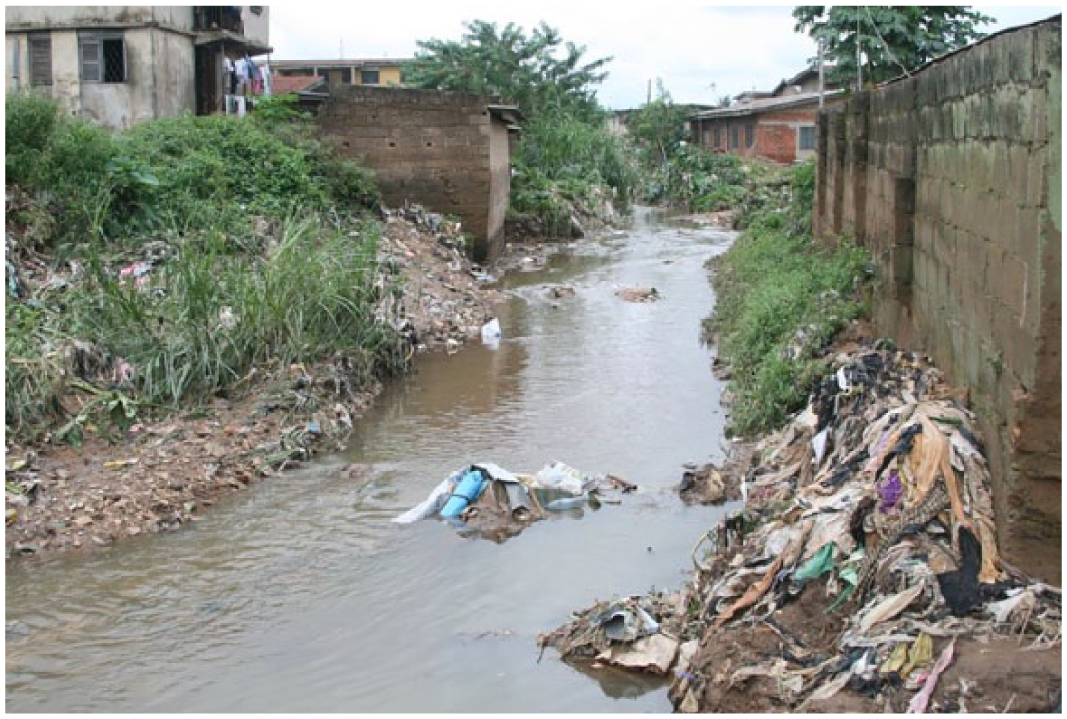
Buildings close to a stream in Agbowo, a slum settlement in the Ibadan North LGA
b. Public financing
A key challenge to good city governance is the shortage of public financing. National macroeconomic conditions and poor financial management by successive state and local governments have limited city governance and environmental management across the country. Since the Nigerian economy is largely driven by revenue from oil production, the fall in global oil prices in mid-2014 and later destruction of oil refineries and vandalism of infrastructure drastically reduced daily oil production. This had a significant impact on the national budget,(28) which reduced the allocations to states. The annual domestic debt of Oyo State increased by about 300 per cent during the period 2011 to 2014. State government responses were to have far-reaching implications for city management and the welfare of households. These included withholding funds for local governments’ use, with resultant erosion of the autonomy of local governments(29) and defaulting on payment of salaries to civil servants. Non-payment of salaries to civil servants in Ibadan (about 38,722 persons) slowed the local economy and increased urban poverty.
The effect of dwindling finances and increasing domestic debt for the state also translated into a general decline in the state budget allocation for social services during 2008 to 2014. The productive sectors (including agriculture and forestry, manufacturing, industries and services) received the most funding in most of these years. In the annual allocation of Oyo State’s budget to social services, the budget allocation to the health sector was especially affected, dwindling from 20.4 per cent in 2008 to 8.5 per cent in 2014. Also noteworthy is the fact that regional planning and environmental development consistently recorded the lowest budget allocation among departments during the seven-year period. This meant serious constraints on investments in water resources, housing, environmental sanitation/drainage/sewage and town/country planning. Budget allocations to the economic sector and to general administration went up in most years. The financial crisis accentuates existing hazards by hampering the capacity of city and local governments to provide basic infrastructure and social services, and to protect vulnerable individuals and households.(30)
c. Access to infrastructure and basic services
Lack of access, or inadequate access, to basic services (e.g. healthcare, public transport, emergency services) and infrastructure (e.g. roads, drains, and water supply) directly affects everyday hazards and disaster risks.(31) For example, inadequate sanitation and poor access to safe water supply increases health risk, including the risk of diarrhoeal diseases and cholera from contaminated water; a lack of drainage exacerbates flooding; and a lack of roads hinders evacuation and access by fire services when floods and fire disasters occur. The sprawling nature of Ibadan’s growth also makes the provision of adequate urban infrastructure and basic social services more expensive.
The development of Ibadan as an urban settlement before the introduction of motorized vehicles influenced the pattern and quality of the road network in the traditional core area and also, to some extent, in the newer informal settlement areas. Most roads are barely more than footpaths and many buildings are not accessible by motorized vehicles. Many of the newer areas have developed with poor road networks that are largely untarred and in poor repair.(32) Roads only occupied 12 per cent of the built-up expansion area for the period 1990 to 2014, and 35 per cent of Ibadan’s residents were not within walking distance of an arterial road. The poor financial capacity of local governments means very little is undertaken with regard to provision of tertiary roads for neighbourhoods, and several localities in the city do not have direct access to the public transport network.
The city’s public transport system changed significantly as a consequence of changes in the national economy, city governance and urban management.(33) Poor or absent physical planning in many parts of the city and the inability of local and state governments to adequately control and manage the public transport system have exacerbated transport problems. From 1988 to the early 1990s, the city benefitted from a city mass transit bus system, and the transportation needs of the urban population were adequately catered for. However, due to poor management, the bus service declined within a very short period. Presently, public transport is by hundreds of small taxis and minibuses as well as several thousands of motorcycle and tricycle taxis. It is estimated that no fewer than 200,000 commercial motorcyclists presently operate in the city, and there are many concerns about their safety.(34) The increase in road traffic accidents resulting in severe injuries and deaths is closely connected with the operation of commercial motorcycle taxis.
d. Water and sanitation
Ibadan has very inadequate water and sanitation coverage. The poor water supply situation has been worsened by urban expansion and population growth. According to a 2009 African Development Bank report, no more than 25 per cent of the city population has access to the municipal potable water supply, while only 33 per cent has access to good sanitation facilities.(35) There are also no sewers in Ibadan. Many residents depend on groundwater from wells and boreholes and other water sources for drinking and household use.(36) Many wells in these communities are highly polluted because of their proximity to pollution sources such as pit latrines and solid waste dumps, unsanitary practices and flood overflow.
About 70 per cent of solid waste generated within the metropolis is not properly disposed of and managed; most is dumped in drainage channels, unapproved dump sites and wetlands. The State Waste Management Agency and local governments own an estimated 70 waste collection trucks; to cater for the city properly would require at least 500 trucks.(37)
e. Electricity supply
Although most households are connected to the national electricity grid, they face irregular supplies daily. A study in the Ibadan North LGA revealed that 93.4 per cent of households only have electricity for an average of one to four hours a day and 71 per cent of households use electricity generators.(38) But generators are generally too expensive for low-income households. The use of generators and storage of petrol and diesel for generator use in residences and workplaces, as well as private/illegal electricity connections, are a major cause of fires in the city.
f. Access to healthcare
Access to healthcare is unequally distributed in the city, with the five LGAs in the inner city recording a larger number of private and public health facilities than the other six LGAs. The high cost of private health services means that healthcare is not readily accessible to the majority of the urban poor. Most primary healthcare facilities in the city are not served by medical doctors on a daily basis.
g. Emergency services: fire stations
There are seven government-owned fire stations, of which five are located in the five local governments in urban Ibadan and only two (one each) in two suburban local government areas. In addition, there is a fully equipped fire station at the University of Ibadan. Provision of fire services for the city is therefore grossly inadequate, considering the large population; land area/spatial extent of the city; and residential, industrial and commercial facilities present. More often than not, the fire services have only a limited supply of water, or none.
h. Poverty and unemployment
While urban poverty is a longstanding problem in Ibadan, poverty levels increased in the last 10 years. The 2010 unemployment rate for Oyo State, for which Ibadan is the capital city, is 27.7 per cent.(39) The situation of youth (15–24 years old) unemployment in the country is much worse. Rising unemployment rates, especially among youths, is a key driver of many social vices, including carjacking, armed robbery, kidnapping and all forms of violence.(40) Their scale and nature have increased in Ibadan within the last decade.
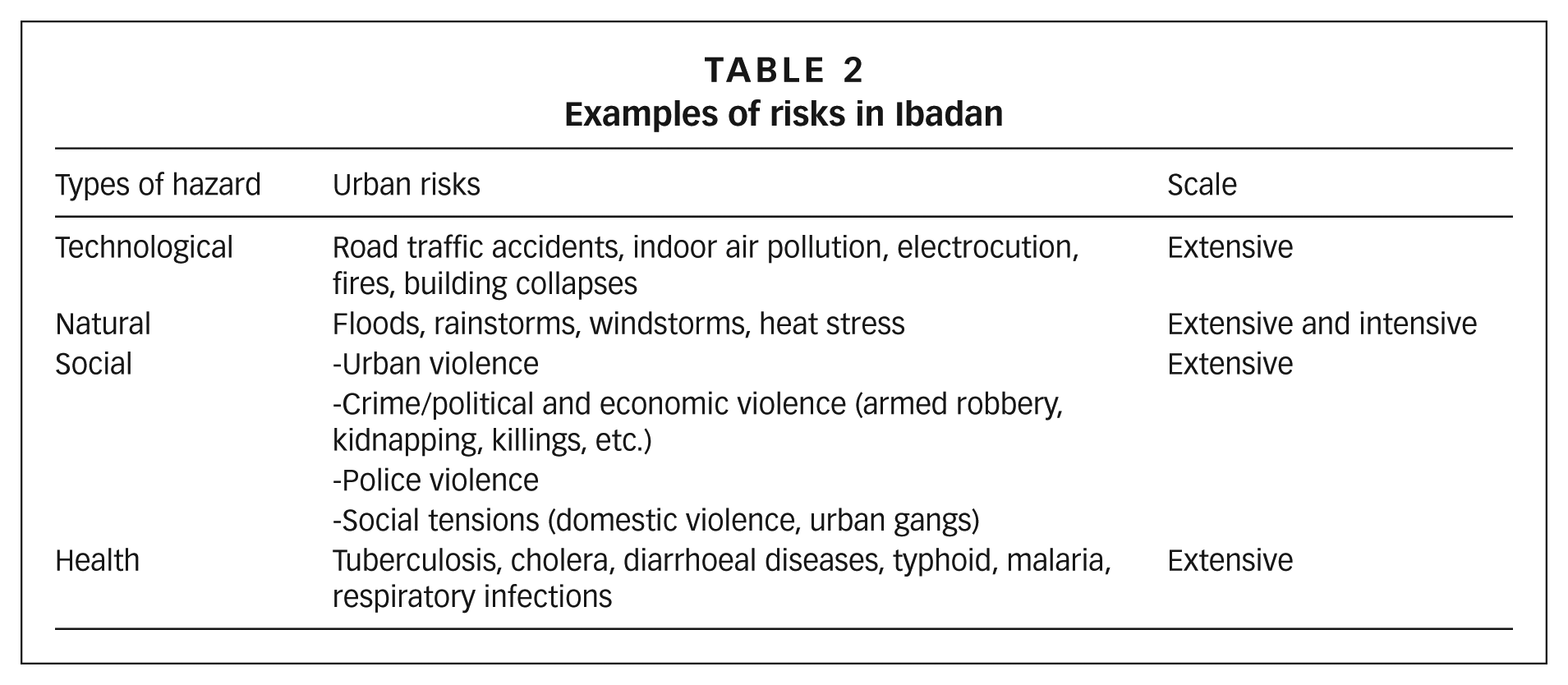
The different types of everyday hazards and disaster risks that characterize the risk profile of the city can be classified under four main categories: technological, natural, social and public health risk (Table 2).
Examples of risks in Ibadan
VI. Risk Data Sources And Analysis
The first new source of data on risks came from a review of all issues of the Nigerian Tribune newspaper published from 2000 to 2015. Drawing from this, a database was built on its reports of deaths and losses from everyday hazards and disaster risks in the city. This systematic collection of data covered both intensive and extensive risks (i.e. the whole spectrum of risks, including disasters and everyday hazards that resulted in illness, injury and premature death, property and economic losses) in the city. A triangulation of research methods was done by also drawing on an analysis of hospital records, Ministry of Health records and other sources, including government departments and agencies. These all collected relevant data on intensive and extensive risks.
The daily newspaper may not provide a complete picture of risks – but it has reports each day (that go back to 2000). In other cities, newspapers have been utilized as sources of contemporary and historical data, to complement official datasets relating to disaster and hazard events.(41) In addition to data drawn from the Nigerian Tribune, data were collected from the following sources, where possible also for 2000–2015:
1) University College Hospital, Ibadan (UCH) and the Government Chest Hospital, Ibadan. Records of deaths resulting from purposely sampled diseases causing premature deaths – typhoid fever, diarrhoeal diseases, meningitis (and also gunshot injuries) were collected from the medical records department of the UCH, while information on death cases from tuberculosis was sourced from the Government Chest Hospital. Data were collected for the period 2000–2013. The records of deaths from different causes in the two hospitals were for patients who were brought there alive and received treatment but later died from the causes of treatment.
2) The Oyo State Ministry of Health hosts the database of cases of selected non-communicable diseases, road traffic accidents and cholera. This is compiled from all public health facilities in the city, including general hospitals and primary healthcare facilities. The health records of the foremost federal government-owned tertiary health facility in the country, the University College Hospital, were however not included in the database of the State Ministry of Health.
3) Government ministries and agencies: - Federal Road Safety Corps (FRSC) for records of road traffic accidents and associated impacts, including deaths and other losses - Oyo State Emergency Management Agency - Oyo State Fire Service - Nigeria Police Force
4) Relevant publications
For every documented hazard/disaster event or health risk, the following information was elicited where available:
1) Date of the hazard or disaster event
2) Incidence location or residential address for patients in the case of hospital records
3) Number of deaths – i.e. people who died due to direct causes immediately or sometime after the disaster
4) Number of people injured – i.e. persons with bodily injuries
5) Number of persons affected – i.e. persons who suffered indirect or secondary effects
6) Number of victims – i.e. persons whose individual or collective property and/or services have suffered serious damage directly associated with the event
7) Number of damaged houses – i.e. houses that suffered some damage and required repairs
8) Number of destroyed houses – i.e. houses that have collapsed, or have been swept away, submerged or damaged in such a manner that they are not habitable
Data analysis used Excel and UNISDR’s DesInventar software. DesInventar is a conceptual and methodological tool for the construction of databases of loss and damage caused by disasters of small, medium and greater impact. The database is developed from pre-existing data, institutional and published reports, and newspaper sources.(42)
a. Data sources and gaps
Risk data sourced from the Nigerian Tribune cover most types of everyday hazards and disaster risks that might be expected in a highly populated city. Nonetheless, the reporting of urban risks will be incomplete and might be biased. Newspapers report events perceived by their reporters as newsworthy and with a human impact. By and large, newspaper reports give an indication of the nature and scale of risks in the city. However, data on the impacts of reported events are mostly incomplete in terms of the gender and age of persons associated with the particular event and the monetary value of the damage and loss.
Data on premature deaths collected from the UCH and the Government Chest Clinic for tuberculosis are considered to be reasonably complete because individual patient records with sex, age and residential address were available. The two hospitals did not keep medical records in electronic form for the study years, which was a major limitation to collecting data on patient cases for some diseases of interest at the UCH. Malaria, a major health risk and cause of premature death in Nigeria, was therefore not studied because of the lack of time to manually go through the thousands of records of malaria cases not kept electronically. Malaria would likely be recognized as among the most important health risks in Ibadan if relevant data were available.
For disease data kept by the Oyo State Ministry of Health, records for the period before 2009 are only available in hard copy; it was not until 2009 that storing of health records in electronic form began. Data kept in hard copy are more susceptible to loss. In addition, formats for data collection have changed. Before 2000, a format designed by the State Ministry of Health was deployed for collection of health records across the state, including Ibadan. In 1999, the National Health Management Information System (NHMIS), a generic format for health data collection nationwide, was developed by the National Council of Health. This formed the basis of health data collection during the period 2000–2012. A newer version of the NHMIS was introduced in 2013.
One other major limitation was that before 2013, available disease data were recorded at the level of LGAs. It was difficult or impossible to get disease data for the city at the scale of the locality or ward. Disease data collected at the LGA level could not be processed using the DesInventar software because the unit of analysis for the city is the ward level. The newer version of the NHMIS currently in use overcomes this limitation, and disease records since 2013 can be retrieved at the ward level and health facility level. Data on tuberculosis and mental health conditions are also not included in the disease database.
The newer version of the NHMIS does not enable direct access to disease surveillance from the source, as is the case with the earlier version. Further, disease surveillance data are not received promptly and directly from the Disease Surveillance Offices. Only summaries of disease records are received by departments of planning, research and statistics of state health ministries. There is also the time lag of some years before surveillance data are made available, and so they do not allow the timely assessment of disease profiles of different localities within the state. In 2017, disease surveillance data for the period 2013–2017 were not yet available. There are also data gaps resulting from random cases of non-reporting of deaths by some health facilities, especially public health facilities or local government offices. Non-supply of data on deaths is mainly due to attempts by concerned health facilities to avoid the stigmatization of being associated with deaths of patients.
Data on fire incidents in the city were mostly drawn from newspaper reports because of poor record keeping by the different fire stations and the State Fire Service. Records of road accidents kept by the FRSC cannot be considered complete because of inadequate monitoring of roads and overlapping of roles with the police force with regard to road safety. In addition, only from 2009 are data on road traffic accidents available in electronic form. Accident data recorded in registers for the earlier period could not be accessed from the FRSC. While road accident data before 2009 were available by gender and age from the State Police Headquarters, Ibadan, these were only provided at the state level as city-level data were not available. Although gaps and inconsistencies have been identified in risk data held by the different sources as described above, consistent patterns in the risk profile of the city still emerge. These are described in Section VII.
VII. Everyday Hazards And Disaster Risks In Ibadan
Analysis of reports in the daily newspaper showed that city residents are exposed to many different risks; Figure 1 shows how road traffic accidents, crime, violence and floods account for the largest number of premature deaths over a 15-year period. The annual number of reported deaths and injuries is generally increasing.
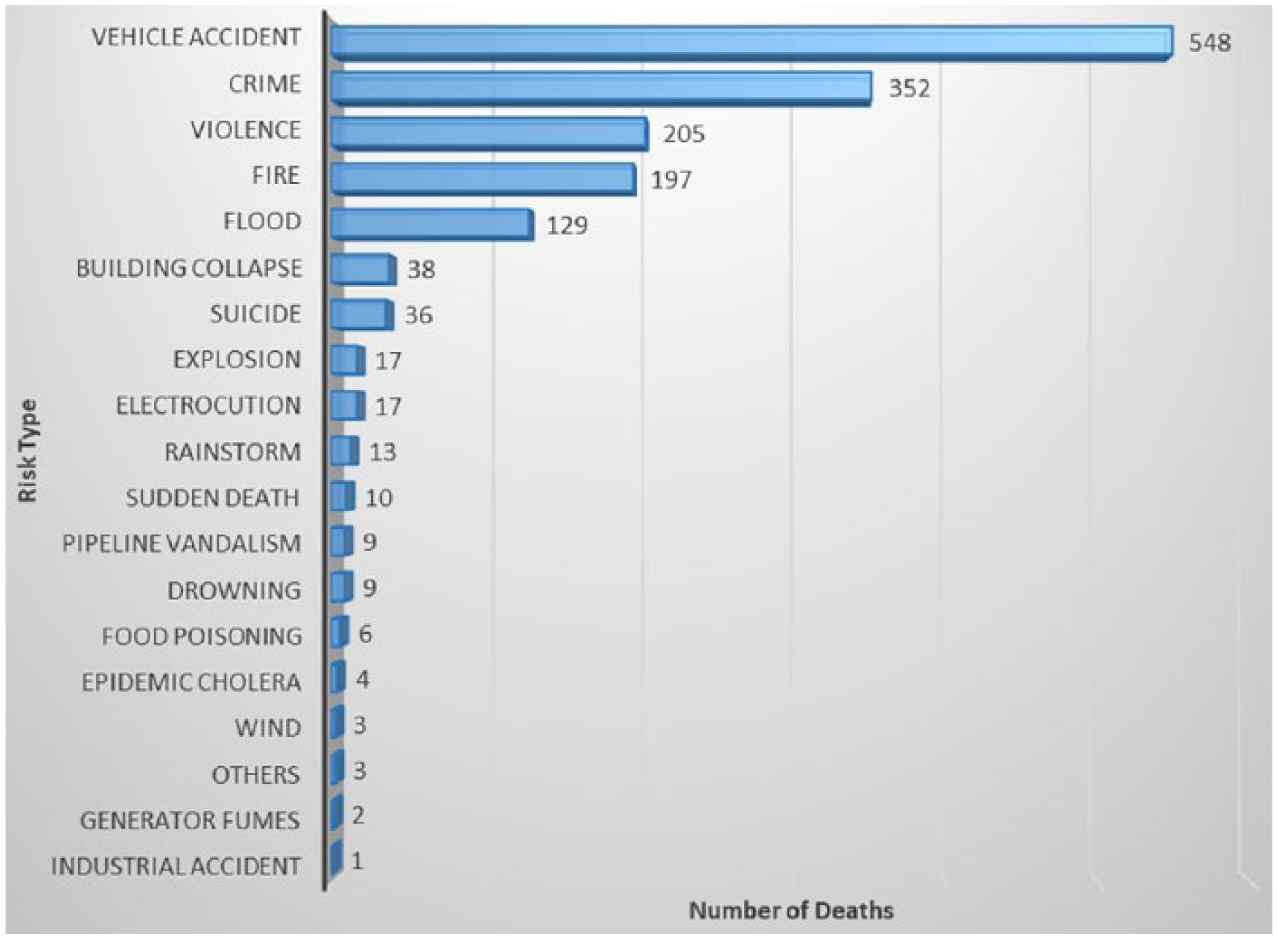
Total number of reported deaths by risk type in Ibadan (2000–2015)
a. Road traffic accidents
The data from the DesInventar database showed 548 deaths from road traffic accidents from 2000 to 2015. Statistics on road traffic accidents sourced from the Federal Road Safety Corps show large numbers of persons killed or injured in road accidents since 2009 – and they represent a leading cause of premature deaths and injuries.
b. Crime and urban violence
Crime and urban violence are also major causes of premature death and injury, and they have been intensifying over the last decade. A range of factors are known to contribute to the risk of urban violence, including governance failures and spatial characteristics of cities.(43) Such characteristics include high density, overcrowding, social heterogeneity, the inability to absorb surplus low-skill labour, under- and unemployment, inequalities in income and provision of services, drug abuse, local grievances and failures of cultural integration; all these are readily observed in Ibadan.
The introduction or implementation of policies by governments that are considered unfavourable by citizens has also engendered urban violence. At different times since 1992, mass violent demonstrations and destruction of property have taken place in the city in response to government attempts to increase the prices of petrol and allied products. Election processes have also been sources of conflicts and violence,(44) sometimes resulting in injury, loss of lives and property.
c. Floods, strong winds and rainstorms
Ibadan faces changes in the frequency and intensity of extreme weather events, to which climate change and local environmental change contribute.(45) These can have profound impacts on the urban poor and resulting poverty outcomes.(46) While the numbers of people injured and premature deaths from these climate-related hazards do not compare with those recorded for road traffic accidents, violence and crime, the impacts in terms of buildings, physical infrastructure, and property damaged or destroyed is significant. For example, in February 2009, the Oyo State Emergency Management Agency recorded that a major rainstorm event either damaged or destroyed 269 buildings. The risk was largely due to the susceptibility of buildings in these locations since most are old, poorly maintained or poorly constructed. This event was not reported in the Nigerian Tribune. In February 2013, about 1,000 residential, religious and commercial buildings, schools and urban infrastructure (such as electricity poles and bridges) were damaged or destroyed by a strong wind of 72 knots, which accompanied the first rainfall of the year.
d. Infectious and parasitic diseases
One key question is why infectious and parasitic diseases appear to contribute so little to reported deaths; only cholera is listed, and with only four deaths in Figure 1. Why are no deaths reported for instance for diarrhoeal diseases, malaria, tuberculosis, typhoid or other diseases? But of course, most deaths (and most premature deaths) are not reported in newspapers. A study published in 1983 identified malaria, diarrhoeal diseases, gastroenteritis, pneumonia, tuberculosis, chickenpox, measles, malnutrition, anaemia, eye disease and hypertension as the top 10 diseases affecting Ibadan city dwellers.(47) Records of premature deaths from the University College Hospital, Ibadan in 2000–2013 showed diarrhoeal diseases (124 deaths), meningitis (57 deaths) and typhoid fever (33 deaths) to be important causes of premature death. During the same period, 133 cases of deaths resulting from tuberculosis were recorded at the Government Chest Hospital, Ibadan.
There is likely to be high prevalence of waterborne diseases, particularly typhoid, dysentery, cholera and diarrhoeal diseases, especially among the urban poor and largely due to the poor water supply and sanitation.(48) Cholera outbreaks are common; in 2004, 1,872 cases were recorded; in 2006, 1,769. In 2011, 537 cases were recorded, following the August 2011 floods, which claimed four lives.
Tuberculosis remains an important health risk, especially in the inner city because of the poor housing conditions and overcrowding in the slum areas. The government chest clinic reported 133 deaths from TB between 2000 and 2013. But deaths from tuberculosis have declined over this 14-year period because of improved health services for treatment of tuberculosis in the city provided by international agencies.
To return to the reported deaths from the newspaper, the numbers of reported premature deaths have been increasing over time from everyday hazards and disasters (intensive and extensive risks) during the period 2000 to 2015. Similarly, the entries in the DesInventar database indicate an upward trend for both deaths and injuries in the same period. This corroborates the view that mortality associated with extensive risk appears to be trending upwards,(49) since a greater proportion of risks in the city are a consequence of everyday hazards and small disasters.
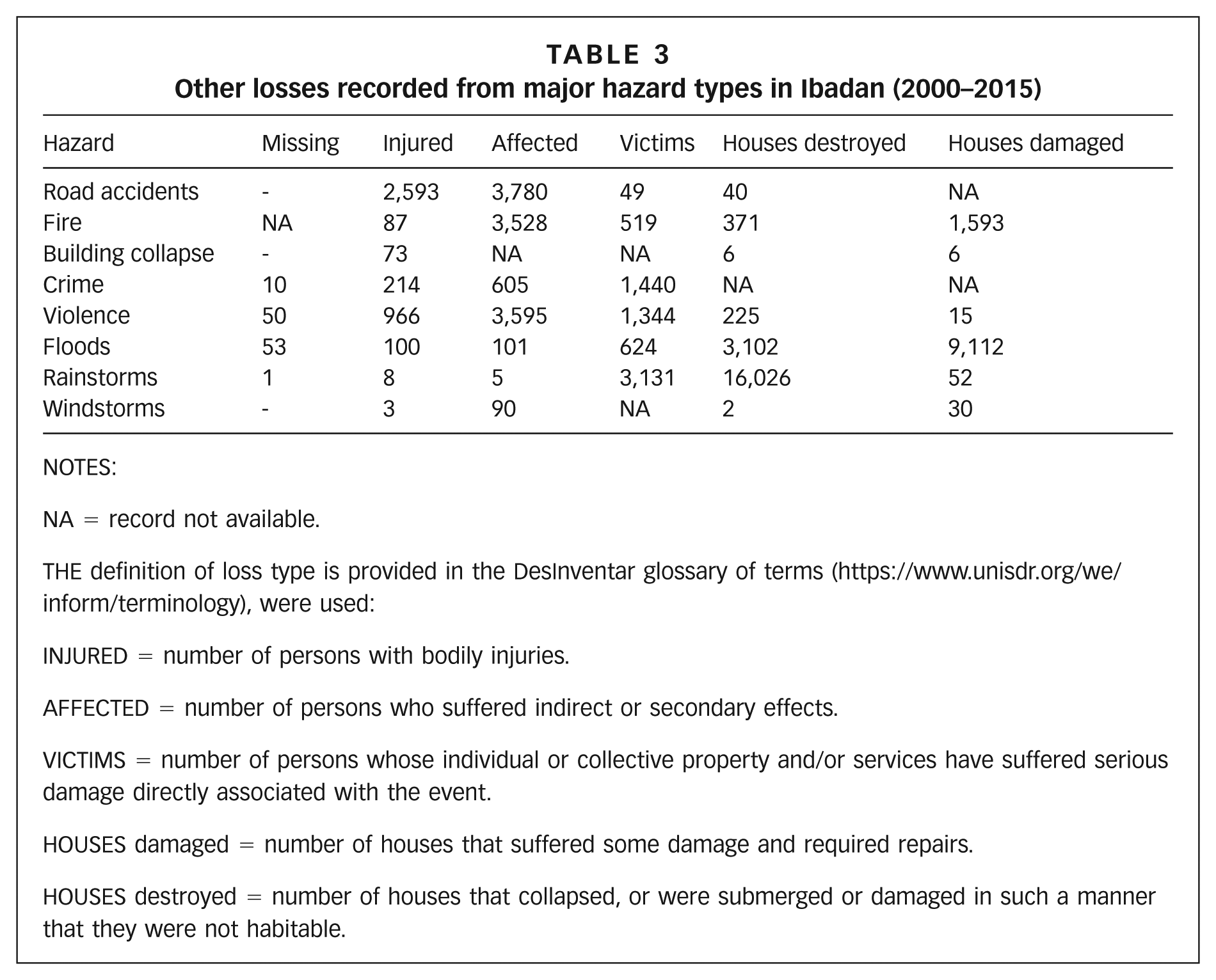
Table 3 gives data on other losses recorded as major hazard types in Ibadan from 2000 to 2015. More than 3,500 persons were affected – i.e. suffered indirect or secondary effects – by road accidents, fires and violence. As for the number of victims, i.e. persons whose individual or collective property and/or services have suffered serious damage directly associated with the event, rainstorms rank highest (with the most houses destroyed). Crime and violence have the next highest numbers of victims. Most destruction or damage to houses is due to rainstorms, floods or fire.
Other losses recorded from major hazard types in Ibadan (2000–2015)
NOTES:
NA = record not available.
The definition of loss type is provided in the DesInventar glossary of terms (https://www.unisdr.org/we/inform/terminology), were used:
Injured = number of persons with bodily injuries.
Affected = number of persons who suffered indirect or secondary effects.
Victims = number of persons whose individual or collective property and/or services have suffered serious damage directly associated with the event.
Houses damaged = number of houses that suffered some damage and required repairs.
Houses destroyed = number of houses that collapsed, or were submerged or damaged in such a manner that they were not habitable.
VIII. Conclusions
The risk landscape of African cities is influenced by so many factors. Most are linked to the availability and quality of housing, infrastructure and services within each neighbourhood. This in turn is linked to the competence and capacity of local governments. But many risk factors come from beyond neighbourhood boundaries – including macroeconomic conditions, politics and policy decisions at the national and state levels, and to some extent by international development agendas.
In Ibadan, risk accumulation and vulnerability to intensive and extensive risks are shaped by the interplay of its urban pattern and evolving urbanization processes, and social, economic and political structures at different scales. Although the pattern of city growth and uncontrolled urban development are important drivers of urban risks, the qualities of the city’s operating systems, in terms of institutional capacities and governance at different scales, are also significant. So too, by extension, is public financing for urban infrastructure and social services. While the sprawling nature of Ibadan’s city growth demands increasing financing for investments in physical infrastructure and basic social services, changing macroeconomic conditions and poor financial management by successive state and local governments are serious limitations to robust city governance and environmental management. Poor urban planning and failure of local authorities to effectively manage urban development have resulted in an increased proportion of atomistic (illegal) settlements, characterized by inadequate physical infrastructure and lack of/poor social services. The pressures described have to a large extent influenced the observed patterns of both extensive and intensive disaster risks in Ibadan.
Governance limitations also help explain why there is no vital registration system recording all deaths and their causes, and why hospital and health clinic records are not available for monitoring illnesses and injuries citywide and within each settlement and local government area. This paper has sought to draw on other sources to build a citywide picture of the most serious risks facing the population and who is most affected. But it also acknowledges the data gaps.
Apart from public health risks, and recognizing that these are under-reported, road traffic accidents, crime, violence and flooding have emerged as the most serious hazards in the city, resulting in social and economic losses, injuries and deaths. From the analysis of newspaper records from 2000 to 2015, road traffic accidents are the leading cause of premature deaths and the second leading cause of injuries after violence. If there were complete data on the premature deaths from infectious and parasitic diseases, it is likely that diarrhoeal diseases, TB and typhoid would be among the most common causes of death.
Changes in urban morphology are likely to include an increasing tendency for people to move to suburban and peri-urban areas from the inner city, with migrant populations increasingly settling in risky city outskirts lacking infrastructure and social services. For the most part, in Ibadan as in other sub-Saharan African cities, there is a lack of citywide risk information across the spectrum of risks to inform risk-sensitive development and disaster risk reduction. Deliberate and systematic action planning for risk reduction, including measures for reducing vulnerabilities to urban risks, need to be integrated into short- and long-term city development plans, with goals for investment and financing clearly defined. This will contribute towards achieving the targets of the New Urban Agenda(50) and achieving safe communities and sustainable cities. It should also reduce the risks that underlie so many premature deaths, illnesses and injuries.
Footnotes
Funding
This paper was supported by the Urban Africa: Risk Knowledge programme, funded by the UK Economic and Social Research Council (ESRC) and Department for International Development Humanitarian Innovation and Evidence Programme under Grant No ES/L008777/1. The author appreciates the insightful review comments and suggestions of Sheridan Bartlett, Mark Pelling and David Satterthwaite, which have enhanced the quality of the paper. This paper draws from a longer and more detailed working paper:  .
.
1.
Adelekan, I, C Johnson, M Manda, D Matyas, B Mberu, S Parnell, M Pelling, D Satterthwaite and J Vivekananda (2015), “Disaster risk and its reduction: an agenda for urban Africa”, International Development Planning Review Vol 37, No 1, pages 33–43; also Pelling, M and B Wisner (2009), Disaster Risk Reduction: Cases from Urban Africa, Earthscan.
2.
Pelling, M (2002), “Assessing urban vulnerability and social adaptation to risk: evidence from Santo Domingo”, International Development Planning Review Vol 24, No 1, pages 59–76; also Quarantelli, E L (2003), “Vulnerability to disasters in developing countries: managing risks”, in A Kreimer, M Arnold and A Carlin (editors), Building Safer Cities: The Future of Disaster Risk, World Bank, Washington, DC, pages 211–231; Boko, M, I Niang, A Nyong and C Vogel (2007), “Africa”, in M L Parry, O F Canziani, J P Palutikof, P J van der Linden and C E Hanson (editors), Impacts, Adaptation and Vulnerability, Contribution of Working Group II to the Fourth Assessment Report of the Intergovernmental Panel on Climate Change, Cambridge University Press, Cambridge, UK and New York, USA, available at https://www.ipcc.ch/site/assets/uploads/2018/02/ar4-wg2-chapter9-1.pdf; and Beard, V A, A Mahendra and M I Westphal (2016), “Towards a more equal city: framing the challenges and opportunities”, Working paper, World Resources Institute, Washington, DC, available at .
3.
Dodman, D, D Brown, K Francis, J Hardoy, C Johnson and D Satterthwaite (2013), “Understanding the nature and scale of urban risk in low- and middle-income countries and its implications for humanitarian preparedness, planning and response”, Human Settlements discussion paper, International Institute for Environment and Development, available at http://pubs.iied.org/pdfs/10624IIED.pdf; also Beall, J (2006), “Cities, terrorism and development”, Journal of International Development Vol 18, No 1, pages 105–120.
6.
UNISDR (2017), Terminology on Disaster Risk Reduction; also UNISDR (2015a), Linkages between Population Dynamics, Urbanization Processes and Disaster Risks: A Regional Vision of Latin America, UNFPA, UNISDR and UN-Habitat, available at .
9.
Mabogunje, A L (1968), Urbanization in Nigeria, University of London Press, London, page 186.
10.
Adelekan, I, L Olajide-Taiwo, A Ayorinde, D Ajayi and S Babajide (2014), Building Urban Resilience: Assessing Urban and Peri-urban Agriculture in Ibadan, Nigeria [J Padgham and J Jabbour (editors)], UNEP, Nairobi, available at https://www.researchgate.net/publication/283548736_Building_Urban_resilience_Assessing_Urban_and_Peri-urban_Agriculture_in_Ibadan_Nigeria; also Onibokun, A G and A J Kumuyi (1999), “Ibadan, Nigeria”, in A G Onibokun (editor), Managing the Monster: Urban Waste and Governance in Africa, International Development Research Centre, Ottawa, pages 49–100, available at .
11.
Atlas of Urban Expansion (2016), Ibadan, available at .
12.
The term “slum” usually has derogatory connotations and can suggest that a settlement needs replacement or can legitimate the eviction of its residents. However, it is a difficult term to avoid for at least three reasons. First, some networks of neighbourhood organizations choose to identify themselves with a positive use of the term, partly to neutralize these negative connotations; one of the most successful is the National Slum Dwellers Federation in India. Second, the only global estimates for housing deficiencies, collected by the United Nations, are for what they term “slums”. And third, in some nations, there are advantages for residents of informal settlements if their settlement is recognized officially as a “slum”; indeed, the residents may lobby to get their settlement classified as a “notified slum”. Where the term is used in this journal, it refers to settlements characterized by at least some of the following features: a lack of formal recognition on the part of local government of the settlement and its residents; the absence of secure tenure for residents; inadequacies in provision for infrastructure and services; overcrowded and sub-standard dwellings; and location on land less than suitable for occupation. For a discussion of more precise ways to classify the range of housing sub-markets through which those with limited incomes buy, rent or build accommodation, see Environment and Urbanization Vol 1, No 2 (1989), available at .
13.
15.
Songsore, J (2000), “Urbanization and health in Africa: exploring the interconnections between poverty, inequality and the burden of disease”, Institut für Wirtschafts- und Sozialgeographie Working Paper 12-2000.
16.
Cardona, O D, M K van Aalst, J Birkmann, M Fordham, G McGregor, R Perez, R S Pulwarty, E L F Schipper and B T Sinh (2012), “Determinants of risk: exposure and vulnerability”, in C B Field, V Barros, T F Stocker, D Qin, D J Dokken, K L Ebi, M D Mastrandrea, K J Mach, G-K Plattner, S K Allen, M Tignor and P M Midgley (editors), Managing the Risks of Extreme Events and Disasters to Advance Climate Change Adaptation, Special report of Working Groups I and II of the Intergovernmental Panel on Climate Change, Cambridge University Press, Cambridge, UK and New York, USA, available at .
17.
Cutter, S L, C T Emrich, J J Webb and D Morath (2009), Social Vulnerability to Climate Variability Hazards: A Review of the Literature, Final report to Oxfam America, Hazards and Vulnerability Research Institute, University of South Carolina, Columbia, available at http://citeseerx.ist.psu.edu/viewdoc/download?doi=10.1.1.458.7614&rep=rep1&type=pdf; also Lavell, A, M Oppenheimer, C Diop, J Hess, R Lempert, J Li, R Muir-Wood and S Myeong (2012), “Climate change: new dimensions in disaster risk, exposure, vulnerability, and resilience”, in C B Field, V Barros, T F Stocker, D Qin, D J Dokken, K L Ebi, L D Mastrandrea, K J Mach, G-K Plattner, S K Allen, M Tignor and P M Midgley (editors), Managing the Risks of Extreme Events and Disasters to Advance Climate Change Adaptation, Special report of Working Groups I and II of the Intergovernmental Panel on Climate Change, Cambridge University Press, Cambridge, UK and New York, USA, available at .
18.
Brooks, N (2003), “Vulnerability, risk and adaptation: a conceptual framework”, Tyndall Centre Working Paper 38, Norwich.
19.
Wisner, B, P Blakie, T Cannon and I Davis (2003), At Risk: Natural Hazards, People’s Vulnerability and Disasters, Routledge, London, available at .
20.
See reference 19.
21.
Okafor, S I (2008), Location, Distribution and Questions of Justice: An Inaugural Lecture, University of Ibadan, Ibadan.
22.
Egwaikhide, F O (2004), “Intergovernmental fiscal relations in Nigeria”, in Intergovernmental Relations in Nigeria, Programme on Ethnic and Federal Studies, Ibadan, pages 1–23; also Agba, M S, S Stephen Ocheni and D O Nnamani (2014), “Local government finance in Nigeria: challenges and prognosis for action in a democratic era (1999-2013)”, Journal of Good Governance and Sustainable Development in Africa Vol 2, No 1, pages 86–96.
24.
25.
26.
See the definition in reference 13.
27.
Adeniji, G and B Ogundiji (2009), “Climate adaptation in Nigerian cities: regularising informal and illegal settlements in Ibadan”, Fifth Urban Research Symposium.
28.
World Bank (2017), Private Sector Participation in Solid Waste Management Activities in Ibadan, World Bank and the Public-Private Infrastructure Advisory Facility for the Oyo State Government, 162 pages, available at .
30.
Oliver-Smith, A, I Alcántara-Ayala, I Burton and A M Lavell (2016), Forensic Investigations of Disasters (FORIN): A Conceptual Framework and Guide to Research, IRDR FORIN Publication No 2, Integrated Research on Disaster Risk, Beijing, 56 pages.
31.
Satterthwaite, D and D Mitlin (2014), Reducing Urban Poverty in the Global South, Routledge, London.
32.
Adesanya, A (2015), “Transport in Ibadan”, in D Layiwola (editor), The City State of Ibadan, Institute of African Studies, Ibadan, pages 117–134.
33.
See reference 32.
34.
See reference 32.
35.
AfDB (2009), Urban Water Supply and Sanitation for Oyo and Taraba States, Project appraisal report, available at .
36.
Adelekan, I O (2006), “Socio-economic implications of water supply in Nigerian urban centres: the case of Ibadan”, in T Tvedt and E Jakobsson (editors), A History of Water: Water Control and River Biographies Vol 1, I B Tauris Publishers, pages 372–387; also Ochieng, G M, O I Ojo, K Ogedengbe and J M Ndambuki (2011), “Open wells, sanitary features, pollutions and water qualities: case study of Ibadan slums, Nigeria”, International Journal of the Physical Sciences Vol 6, No 13, pages 3062–3073; and Owoeye, J O and A O Ogundiran (2015), “A study on housing and environmental quality of Moniya community in Ibadan, Nigeria”, International Journal of Physical and Human Geography Vol 3, No 1, pages 31–45.
37.
See reference 28.
38.
Adedeji, A A (2016), “Spatial exploration and analysis of electricity poverty: a case study of Ibadan, southwestern, Nigeria”, Thesis submitted for the degree of Doctor of Philosophy at the University of Leicester.
39.
Nigeria Bureau of Statistics (2012a), Social Statistics in Nigeria, Abuja; also Nigeria Bureau of Statistics (2012b), Nigeria Poverty Profile 2010, Abuja, available at .
40.
Obateru, O I (1994), “Planning the city to mitigate urban violence”, in I O Albert et al. (editors), Urban Management and Urban Violence in Africa, IFRA, Ibadan, pages 29–39; also Okojie, C E E (2013), “The jobless, unemployed, young and poor in Nigeria: the gender dimension”, The Nigerian Journal of Economic and Social Studies Vol 55, No 1, pages 37–72.
41.
Marulanda, M C, O D Cardona and A H Barbat (2010), “Revealing the socioeconomic impact of small disasters in Colombia using the DesInventar database”, Disasters Vol 34, No 2, pages 552–570; also Taylor, F E, B D Malamud, K Freeborough and D Demeritt (2015), “Enriching Great Britain’s national landslide database by searching newspaper archives”, Geomorphology Vol 249, pages 52–68.
42.
43.
Ghani, Z A (2017), “A comparative study of urban crime between Malaysia and Nigeria”, Journal of Urban Management Vol 6, No 1, pages 19–29; also Muggah, R (2012), Researching the Urban Dilemma: Urbanization, Poverty and Violence, International Development Research Centre, available at https://idl-bnc-idrc.dspacedirect.org/bitstream/handle/10625/53538/IDL-53538.pdf?sequence=1; and Moncada, E (2013), “The politics of urban violence: challenges for development in the Global South”, Studies in Comparative International Development Vol 48, No 3, pages 217–239.
44.
Igwe, D O (2012), “The perception of electoral violence and democratization in Ibadan, Oyo State Southwest Nigeria”, Democracy and Security Vol 8, No 1, pages 51–71.
45.
See reference 10, Adelekan et al. (2014); also Adelekan, I O (2012), “Vulnerability to wind hazards in the traditional city of Ibadan, Nigeria”, Environment and Urbanization Vol 24, No 2, pages 597–617; and Agbola, B S, O Ajayi, O J Taiwo and B W Wahab (2012), “The August 2011 flood in Ibadan, Nigeria: anthropogenic causes and consequences”, International Journal of Disaster Risk Science Vol 3, No 4, pages 207–217.
46.
47.
Iyun, B F (1983), “The determinants of disease-risk cell areas in Ibadan city”, Geoforum Vol 14, No 2, pages 211–221.
48.
See reference 35; also see reference 36, Adelekan (2006); Lawoyin, T O, N A Ogunbodede, E A Olumide and M O Onadeko (1999), “Outbreak of cholera in Ibadan, Nigeria”, European Journal of Epidemiology Vol 15, pages 367–370; and Oguntoke, O O, O J Aboderin and A M Bankole (2009), “Association of water-borne diseases morbidity and water quality in parts of Ibadan city, Nigeria”, Tanzania Journal of Health Research Vol 11, No 4, pages 189–195.
50.
The New United Urban Agenda was adopted by the United Nations Conference on Housing and Sustainable Urban Development in 2016 to set a global standard for sustainable urban development. Among other targets, the Agenda prescribes that national governments and urban local authorities have responsibilities to provide basic services for all citizens and strengthen resilience in cities to reduce the risk and the impact of disasters.