




Abstract
Climate resilience varies significantly based on gender and on location in different physical and social spaces. A qualitative study exploring conditions of the urban poor in Khulna, Bangladesh demonstrates how the appropriation of private, parochial and public spaces by residents of informal settlements influences their capacity to cope with climate risks. Because of the spatial implications of the predominant patriarchal system, women remain vulnerable in private spaces. The parochial spaces they use for productive work also leave them exposed and sensitive to climate hazards. On the other hand, men, who make greater use of public spaces, still have negligible capacity to take any anticipatory and reactive actions in response to risks there. This paper, which provides a comparison to earlier research in Dhaka, argues that gendered constraints in both inhabiting and shaping spaces is an underlying cause of differential climate resilience; alternatively, planning climate-resilient spaces can be seen as a fundamental change contributing to transformative adaptation.
I. Introduction
This paper reports on findings from a qualitative study in Khulna, Bangladesh, exploring how resilience to climate extremes is mediated by gender dynamics in the built environment of low-income households and communities. Drawing upon knowledge from the disciplines of architecture, anthropology, geography and urban studies, the research explores the ways gender difference operates in physical space, and the diverse factors that influence status differences between women and men for production, reproduction and transformation of those spaces. The perception and experience of the spaces that people have, do not have, or are denied access to can empower them to take action or can render them powerless.(1) Understanding the power to take action is significant in assessing climate resilience and the capacity of individuals or communities to cope with hazards and maintain the potential for adaptation.(2)
There are few examples of gender-focused spatial inquiry into the economic activities of low-income households in the global South.(3) In what does exist, a gender perspective is often perceived as relating only to women rather than exploring the relationship between women and men. Similarly, only a limited literature explores the nuances of climate risks within the built environment in urban informal settlements.(4) These limitations can be explained, in part, by a general belief that physical spaces and living conditions in informal settlements are so far beneath acceptable levels that all residents must be equally exposed to climate hazards.
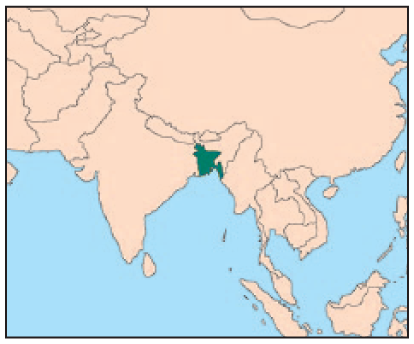
This study in Khulna – the third largest city of Bangladesh – can be considered a supplement to previous research completed in Dhaka,(5) which recognized that both gender dynamics and climate vulnerabilities are highly context-specific. The present study was undertaken as a comparative exploration to investigate similar variables in a different location. Dhaka is a mega-city attracting economic and climate migrants, with diverse economic opportunities for both men and women; Khulna, by contrast, is a smaller city with a declining population and limited economic opportunities, given its lack of infrastructure and diminishing development interventions. Dhaka is also a very dense city that suffers from high exposure to extreme temperature; Khulna, a moderately dense city, is more highly exposed to hazards resulting from rainfall variability. The findings confirm that, although the experiences of men and women living in informal settlements in cities of the global South may seem similar, nevertheless, there are important differences.
II. Gendered Space and Climate Resilience: The Conceptual Framework
a. Gender and spaces
The lived experiences of residents of informal settlements are dynamic, fluid, and often informed by an amalgam of related ideals regarding such dimensions as time and space, financial and social circumstances, the developmental cycles of households, culture and social identities reflected in quotidian activities. The meanings of these ideals are negotiated in mutually constitutive processes that interlink individuals and communities with the spaces of the city.(6) The practical reality of informal settlements conforms to the theoretical arguments that space is socially produced and, conversely, that space is a condition for social production.(7) Also, space – as it is found, used, occupied and transformed through everyday activities – reflects cultural values and is necessarily gendered.(8)
Spaces can be defined as public, private or parochial based on different scales of intimacy experienced within them. Private space is formulated based on ties of close intimacy and personal connection among individuals. Public space, conversely, is marked by the co-presence of individuals personally unknown to one another, or known only in terms of occupational or other non-personal identity categories (for example, street vendor and customer).(9) The third category, a less commonly used concept, is parochial space, where individuals form interpersonal networks around a sense of commonality. Where private space is the world of the household and intimate network, parochial space is the world of the neighbourhood, workplace, or acquaintance network; and public space is the world of strangers and the streets. Different types of activities (private, parochial and public) are present in every dwelling and settlement, whether informal or formal and lower- or higher-income. What differentiates the settings within those settlement types is the spatial allocation for those activities.(10)
Whereas separate functions generally have separate spaces in higher-income areas, space limitations within informal settlements necessitate the overlapping of many “private” or “public” activities in parochial spaces. Parochial spaces are not merely physical spaces but are rather defined by the nature and quality of activities happening there. They are created, as Lofland describes, by “a sense of commonality among acquaintances and neighbours who are involved in interpersonal networks that are located within “communities””.(11) They are the spaces where people identify with the other people present and the rhythms and protocols that govern activities in those spaces – for example, in a neighbourhood that hosts people with similar lifestyles or trades. Often parochial spaces can be perceived as public, based on changes in occupants through different times of day and the experience of the space by users. However, the key characteristic that differentiates them from public space is a sense of feeling at home that encourages involvement in collective actions and rituals one values. Thus, public spaces can overlap with various networks of parochial space, and parochial spaces may or may not be attached to private spaces.
Traditionally, men have dominated public space and used their privilege to access resources both in the household and in the wider public domain.(12) Women in traditional societies are often more concerned with the collective or family aspects of resources(13) and have been mostly confined to private space. The most pervasive representation of gendered space is the paradigm of “separate spheres”, which divides city from home, public from private, production from reproduction, and females from males, creating an oppositional and hierarchical system.(14) The institutionalization of certain spatial practices reinforces sex-specific advantages or disadvantages – for example, defining who can use what resources to take any action. The resulting inequalities depend on both the value and recognition given to the contributions and capacity of different household members to exercise agency on their own behalf.(15)
These traditionally “separate spheres” are not static. In most cities of the global South, structural adjustment policies and neoliberal governance have added burdens to low-income households, causing women to be recruited as labour force participants and community mobilizers, in addition to their role as urban homemakers.(16) Global demographic changes predict that increasing numbers of women and girls will live in cities with the prospect of narrowing gender disparities, and many will live in informal settlements.(17) In this context, the cultural notion of confining activities to either private or public spaces will need to expand to include parochial spaces that can accommodate different needs and allow for negotiation over the use of spatial resources.
b. Gender and climate risks
Gender is also a primary driver of the differential vulnerability to climate-related risk.(18) The ability to take reactive and anticipatory action to reduce loss or to speed recovery from climate hazards depends on how an individual can access or manage resources. Within a household, this bargaining power depends on control over resources, mobilization of interpersonal networks, basic attitudes(19) and, of course, extra-household socioeconomic and legal institutions such as the market, the community and the state, all of which influence intra-household dynamics.(20) Hence, the capacity to reduce risks from climate hazards depends on power relations and personal choices formulated through culture and practices.
Inequalities in access to space and resources can significantly affect climate resilience. Climate risks are not new; rather they exacerbate existing risks due to physical, financial and social poverty and inequality. The literature on climate change discusses the much-debated concept of resilience in association with greater uncertainty and risks arising from responses to ongoing changes; when applied to cities and urbanization, the term resilience is used to recognize cities as contested social systems where poverty and vulnerability are outcomes of political and social processes.(21) Resilience refers to the capacity both to cope and to adapt. Coping focuses on the moment, and on constraints and reactive measures for survival; adapting (in terms of human responses) focuses on the future, where learning and reinvention are key features, and short-term survival is less in question.(22) Proactive and strategic decisions to adapt, anticipating changes, depend on social systems.
Some argue that when climate resilience is assessed in conjunction with social systems, it underscores social relations of power,(23) which, in turn, pave the way to consider both social justice and risk-management concerns for transformative adaptation.(24) Adaptation can take different forms, but transformative adaptation aims for fundamental qualitative change and “may include shifts in perception and meaning, changes in underlying norms and values, reconfiguration of social networks and patterns of interaction, changes in power structures, and the introduction of new institutional arrangements and regulatory frameworks” that are either manifestly the primary drivers of risk, or are on the point of collapse.(25) Gender has been explored as a social system through which to examine climate risks, while spatial analysis sheds light on actors and their agency. The exploration of gendered space can combine insights into actors, agency and the power relations that not only define risks but that are also the drivers of resilience for both men and women in the household and community.
To illustrate, climate-induced hazards can affect work burdens, physical and psychological stress and autonomy. Some of these concerns entail access to and control of other means of production, such as income, credit and appropriate technologies; access to education and training; social status and decision-making power regarding resource management, use and production; participation and involvement in social processes; and freedom of organization.(26) These are structural barriers to gender equality, and addressing them calls for women’s economic empowerment, the reduction of their disproportionate burden of unpaid work, and the promotion of their participation and leadership in all forms of decision-making.(27) Strengthening gender-responsive strategies by addressing these structural barriers is essential for building resilience.(28)
Often these barriers are spatial in nature, a reality frequently not acknowledged or discussed. Existing institutional arrangements prohibit low-income households from accessing land, housing and housing finance in Bangladesh. Consequently, residents of informal settlements are marginalized and required to live in hazard-prone locations, often facing the threat of eviction. In addition, spatial injustices produce uneven power relations that can limit individuals’ and households’ ability to take anticipatory and reactive actions. Female-headed and renter households, for instance, are generally more constrained. Thus, resilience itself can be unevenly distributed within societies and also across space, especially at the neighbourhood and household levels.(29) Embedded injustice based on gender dynamics for accessing spaces can result in environmental injustice, including a differential resilience to climate change.
III. The Study Areas and their Exposure to Climate Hazards
The Khulna region has experienced notable changes in climate over recent decades – rising temperatures have been coupled with rising humidity,(30) the monsoon is strengthening towards the end of the season, and the number of rainy days in a year has been increasing by 0.8 days per annum.(31) Khulna City is exposed to increasingly frequent and intense cyclones, along with storm surges; fluvial flooding from adjoining rivers; pluvial flooding and waterlogging; salinity intrusion into rivers and into groundwater aquifers; and heatwaves coupled with water scarcity.(32) Secondary data analysis on climate variables and associated hazards prompted the selection of Khulna for the fieldwork.
The fieldwork concentrated on two areas along the Rupsha River in Khulna (Map 1). The first, a settlement popularly known as Rupshachor, is considered the densest informal settlement in the city, with 207 households per acre.(33) The settlement was developed on public land after the construction of a flood embankment during the late 1980s, motivated by the economic opportunities in the nearby fish-processing factories, especially for women. The other area, known as Railway colony and Greenland abashon, is a linear settlement of multiple clusters by the river on land owned by different public authorities. Households squatted in the area to take advantage of economic opportunities near the regional railway station, river port, goods storage and retail markets. A significant number of households moved here from southern districts that were affected by Cyclone Sidr in 2007. On average, there are 54 households on each acre of land in this area.(34) Most of the residents of the studied squatter settlements were homeowners, and a smaller number rented rooms.
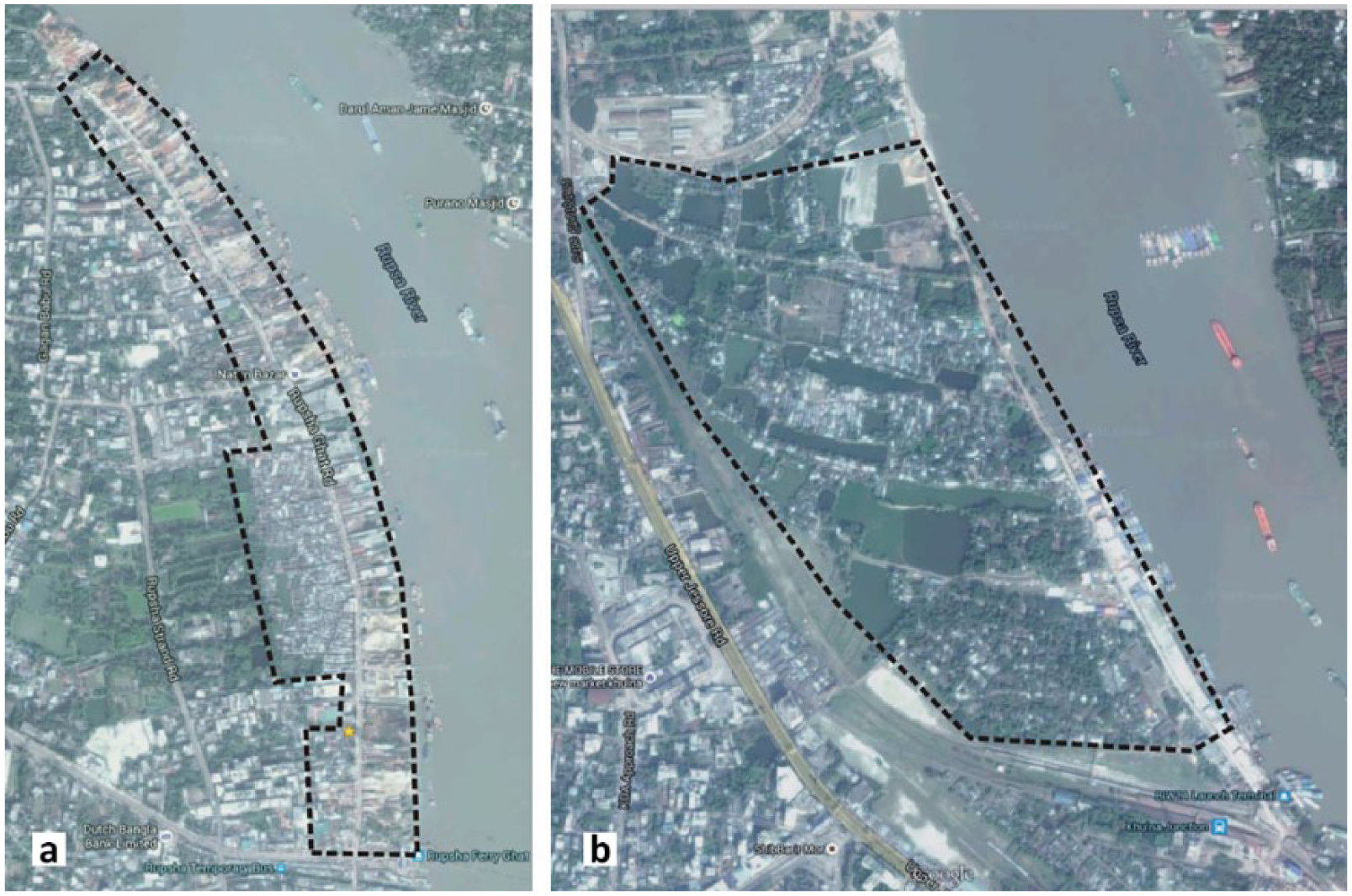
Location of the study area
The residents of the study areas identified waterlogging and the associated flooding, along with high tides and storm surges, as the dominant hazards affecting their wellbeing. They also recognized the extreme variability in temperature over the years. Most respondents remarked on the scarcity of drinking water and its associated health hazards during the dry season from March to May.
IV. Methodology
The research strategy in Khulna aimed at selecting and prioritizing the most interesting or relevant intersections of the social categories related to power structures: for example, place, gender and economic status.(35) The idea was to go beyond identifying power patterns to problematizing the underlying social categorizations, such as “women”, “poor” and “slum dwellers”, and to see how they are intertwined, reinforced or challenged in the context of climate change. Qualitative research methods were employed to understand gender dynamics, climate vulnerability and resilience as well as space use patterns within the realities of informality and economic poverty.
The data collection methodology, as in the earlier study in Dhaka,(36) followed the Participatory Climate Change Adaptation Appraisal (PCCAA),(37) using tools like transect walks, participatory mapping, timelines and causal flow diagrams to investigate both extreme weather events and assets. Some of these tools were prepared with the help of community members and key informants. Nine focus group discussions with 85 respondents from diverse backgrounds provided information and insights on community-level vulnerability, assets and adaptive activities.
Members from a total of 35 households were interviewed with semi-structured questionnaires, and each of their dwellings was identified on a map using GPS. Spaces and activities were measured, sketched and photographed. The diversity and representativeness of participants were ensured using such variables as homeownership, household headship, location, construction materials, economic activities and earnings. For example, 60 per cent of the interviewed households owned their houses, and 80 per cent were male-headed households – a predominant feature in the area. Seventy per cent had lived in the area for more than five years, 60 per cent were self-employed, and 40 per cent of households had both male and female members engaged in diverse economic activities. In addition to the semi-structured interviews during the fieldwork between September and December 2014, other community and city dwellers, development practitioners and policymakers were interviewed informally to triangulate the findings.
V. Findings on Characteristics of Different Spaces, Usage Patterns and Climate Risks
Khulna, like other cities in Bangladesh, has a patriarchal social structure. Men are expected to take on productive roles while women are principally responsible for reproductive roles. Similar to those in most low-income communities, women and girls in Rupshachor and Railway colony and Greenland abashon also undertake paid work to supplement household income, given limited resources, in addition to performing unpaid community activities. Access to education and skill development is limited within the community. Most men are engaged in labour-intensive economic activities located nearby, unlike in the study area in Dhaka, where there were more diverse opportunities. Men’s socializing is dominated by work-related acquaintances, and hence usually takes place around workplaces.
Although some women and girls in the Khulna sites work outside the settlement (either in the nearby fish-processing facilities or in adjacent neighbourhoods within walking distance), this is not as common as in the study settlements in Dhaka. Women who run home-based economic activities (more uncommon than in Dhaka) tend to use spaces in and around the house while taking care of their household chores. Some of their socialization and home-based business occur in parochial spaces within the community where they feel at home because of their neighbours’ similar lifestyle and interpersonal networks. Private spaces are just about sufficient for performing basic activities like sleeping and eating. Often cooking must be done outside. Space for spending social time with the household members is nonexistent in most houses. Access to financial assets increases the possibilities for women and girls to be in public spaces for shopping and entertainment. However, both sexes seek to spend time in parochial spaces due to the types of activities that are performed in those spaces. This option is less available in Dhaka, with its scarcer open space.
a. Private spaces for domestic use
As in Dhaka, most low-income households in the Khulna settlements are limited by affordability and availability to one-room dwelling units, where everyday activities are performed within the private domestic space. Increased temperature is a significant factor in these small dwellings (although it does not pose as serious a risk in Khulna as in Dhaka, which has higher density). Single domestic spaces without proper openings for ventilation can be exposed to heat transmitted from high heat-absorbing and emitting materials like corrugated iron (CI) sheets, and as a result of overcrowding and cooking fumes inside the room. Some of the houses in these settlements do better than others in response to increased temperatures. The golpata(38) roofs, bamboo mat enclosures and rammed earth plinths that are more common in Khulna significantly reduce both heat absorption and emission. However, these houses are more vulnerable to intense rainfall and waterlogging from high tides and storm surges – key hazards for these settlements. Earthen plinths become muddy from water seepage and standing water; and their maintenance can be cumbersome and time consuming. Women who perform their daily chores inside such domestic spaces have limited capacity to take any action other than spreading timber dust on muddy floors to reduce moisture or using electric fans for some cooling air flow.
In the warm, humid climate of Khulna, openings and ventilation can be critical. Prolonged exposure to air and surface temperatures above skin temperature without air movement and with higher humidity can result in considerable physical discomfort, a loss of efficiency, and even heatstroke. These impacts can be significantly reduced by ensuring air movement.(39) As shown in Photo 1, a window that would in theory contribute to ventilation might be protected for security and privacy with timber planks on the outside and a curtain inside, eliminating any chance of air circulation. Women and girls confined to private spaces with ineffective ventilation remain exposed to the risks of high temperatures.
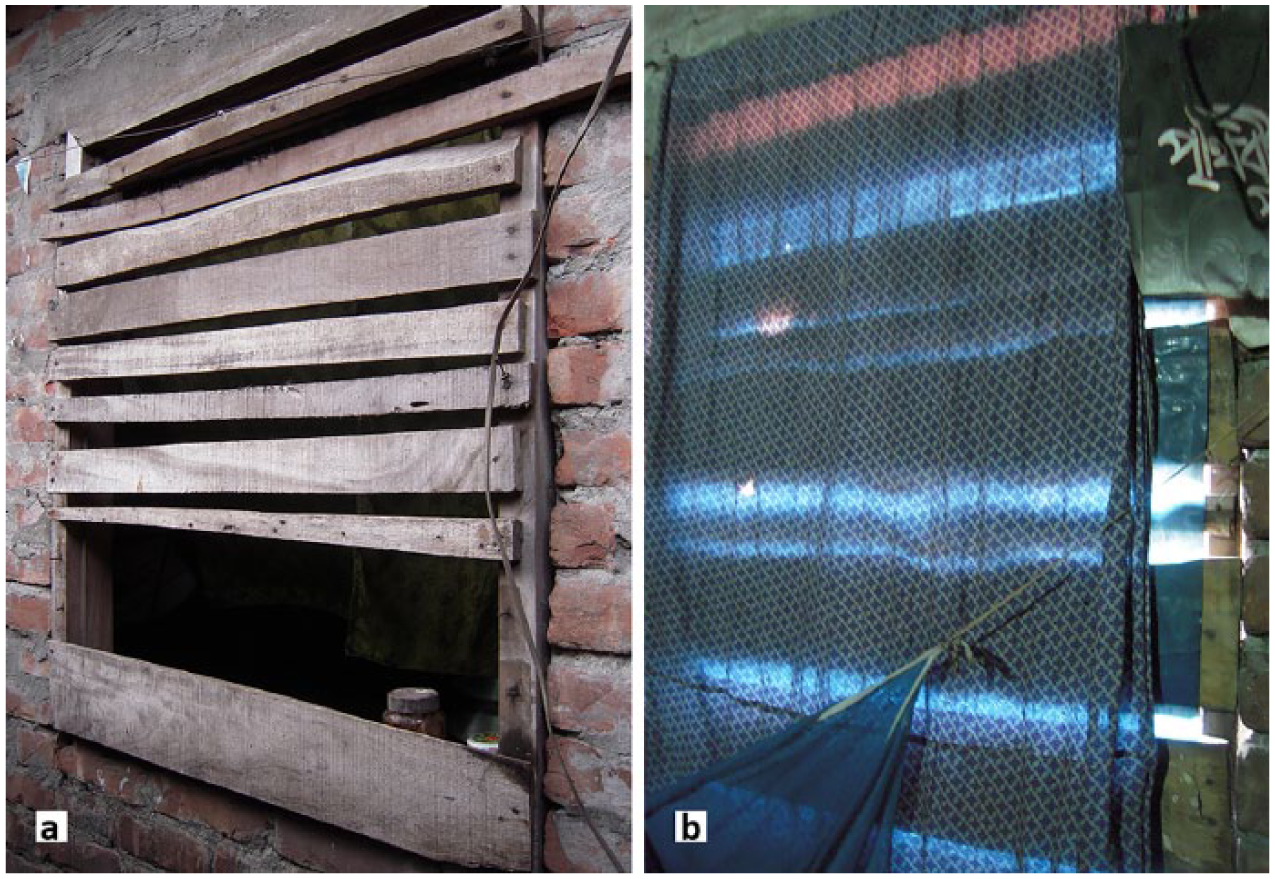
Materials and protection in windows:
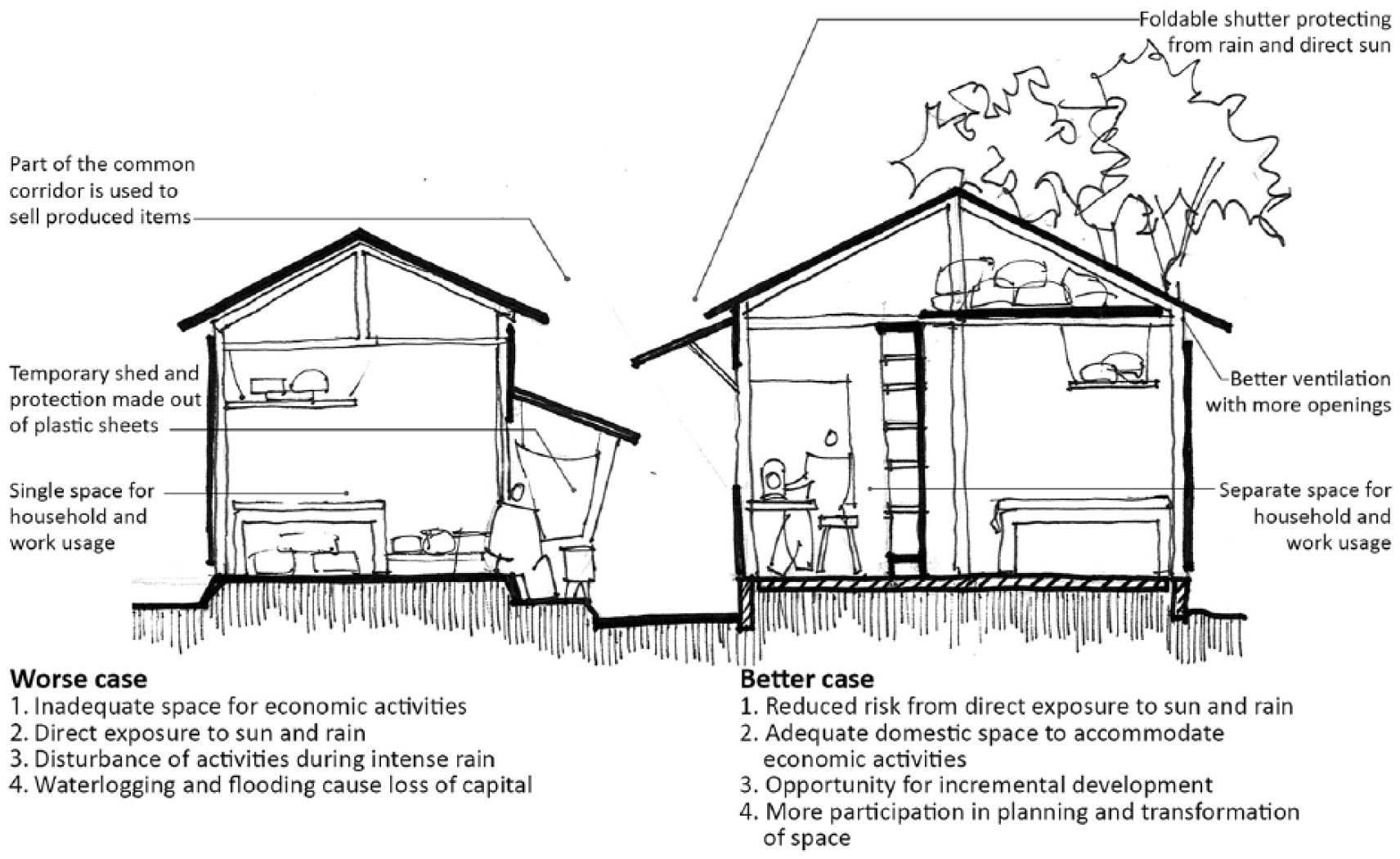
Despite their limited space, many households segregate female and male spaces by dividing them with partitions or constructing a mezzanine level (as shown in the “better case” in Figure 1) by adding to walls and raising a sloping roof using CI sheets. Higher roofs made of golpata are vulnerable to high winds, require stronger structural support, and are expensive to maintain in the long term; hence this material is losing popularity. In many cases these mezzanine levels are not high enough for adults and are reached by means of a steep ladder, which limits accessibility. Usually young girls or children sleep on the upper levels. The tradition of making a mezzanine level in these settlements may have originated from the community’s years of experience of dealing with pluvial flooding related to waterlogging, especially during high tide in the adjoining river.
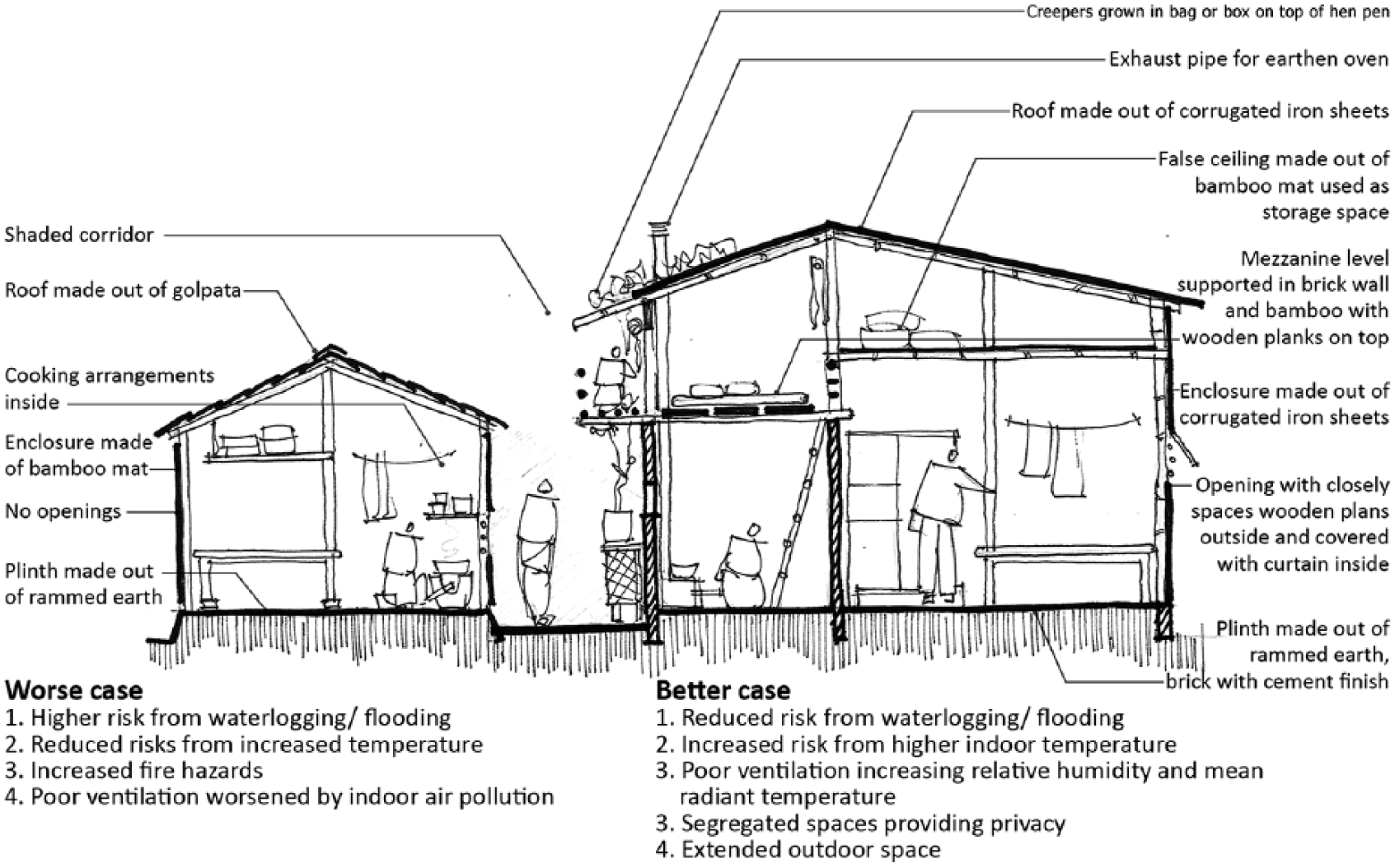
Use of private spaces for domestic purposes
In a generally high-density settlement, upper-level spaces create more opportunities for ventilation openings. As shown in Figure 1, extending an upper-level platform creates a veranda-like space. One neighbourhood street (goli(40)) has a series of houses with extended verandas; a focus group discussion in the neighbourhood revealed the advantages of such a space, even if narrow. Apart from reducing risks from waterlogging, the uncovered platforms are used for drying clothes on cloudy days, sitting in the sun on cold days, and enjoying the breeze on evenings of extremely hot days. A series of extended, perforated platforms made of bamboo or timber create shade in the circulation corridor underneath, keeping that space cooler. At the same time, this creates a separate upper-level sphere for women and girls above the gaze of men. The predominant social norms discourage men and even boys from spending time in private space other than for sleeping and resting. They can choose instead to be near the river, away from the ill-ventilated and often overheated houses.
Waterlogging, with the associated flooding, is a hazard experienced throughout these neighbourhoods, unlike in Dhaka, where there are better drainage facilities and less rainfall. Building material use in Khulna is very much determined by men, who are considered the decision-makers and knowledgeable about construction. Respondents suggested that using brick and CI sheets for house improvements not only reduced the waterlogging risk but also indicated better economic and social status. Although some recognized that golpata was more comfortable in terms of heat than CI sheets, problems with availability and maintenance of golpata led households to accept the discomfort associated with CI sheets. The tendency of men to prioritize economy over comfort in their choice of materials is something to explore further. Findings in Dhaka indicated that women there had more power than those in Khulna to be involved in decision-making in planning and constructing houses, because of their greater access to financial assets.
Living in one room means that many women and girls have to go outdoors to common wells and bathing spaces for washing, bathing and water collection. Usually these spaces are not protected from rain or sun and may lack shade or places to sit. These activities and spaces do, however, provide a chance to socialize. Otherwise women and girls are limited to gathering in the private space of someone’s house or courtyard. In one interview, a community leader described the semi-open space she had planned and constructed adjoining the living room in her house, in part to accommodate the frequent meetings associated with her leadership role. Being located near a water body, protected from direct sun and slightly away from the public gaze (Figure 2), this shaded and ventilated space is popular with her neighbours on hot summer days. This type of planning and construction is uncommon in these settlements, however.
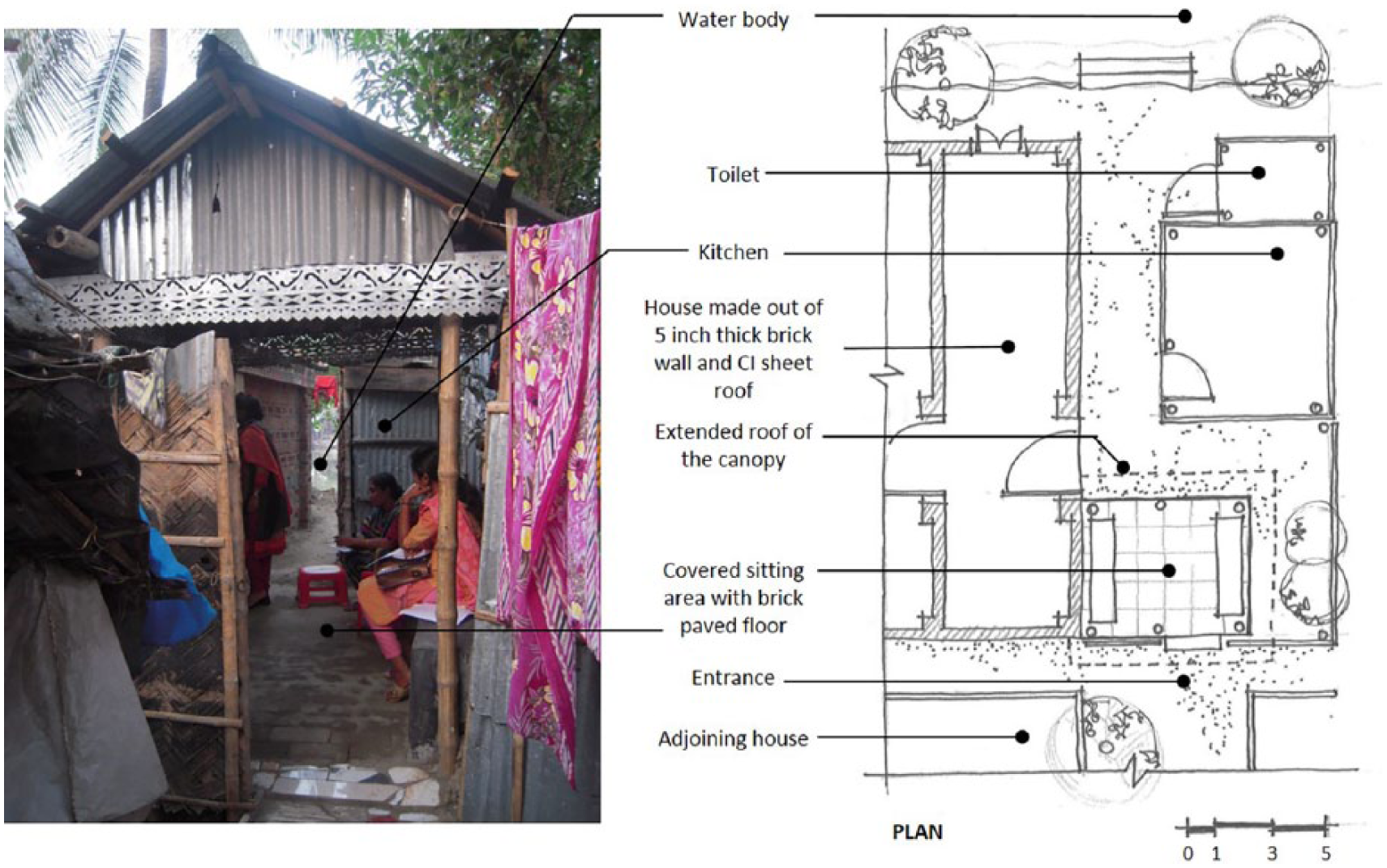
Space designed for socializing
b. Parochial spaces for productive opportunities
Factors limiting employment opportunities in Khulna City have meant that low-income households must find innovative survival strategies.(41) Undoubtedly these include the increase in home-based enterprises within the settlements, many operated by women and girls. Not only are home-based enterprises preferred in Khulna, as in many cities of the global South,(42) given the social and moral norms of patriarchal systems, but also lower levels of skills and job experience and limited access to startup capital limit enterprises to spaces in or near the home. Women face fewer restrictions in using settings in the parochial domain for productive work than in the public domain.(43)
However, the lack of financial and human capital still constrains their ability to diversify their enterprises,(44) and they are restricted to trades such as food preparation, petty commodity production, street trading or vending, and work as subcontracting enterprises. Many of these economic activities take place in available open and semi-open spaces, such as verandas, corridors, courtyards, streets, roadsides, railway tracks, playing fields and water bodies, as depicted in Photo 2. These are the narrow spaces within the neighbourhood where women feel at home and are encouraged to take part in collective activities that the community also values. Women’s presence in these parochial spaces needs little negotiation, as they are seen as being within the “community”. In the densest settlement, Rupshachor, finding or creating this kind of working space is more difficult. Thus, women there are more likely to pursue economic activities away from their home – for example, as household help or temporary labourers in fish-processing factories. One study claims that 70 per cent of working women in this settlement work in these jobs.(45) By contrast, more women in Railway colony and Greenland abashon are involved in different home-based enterprises within their settlements.
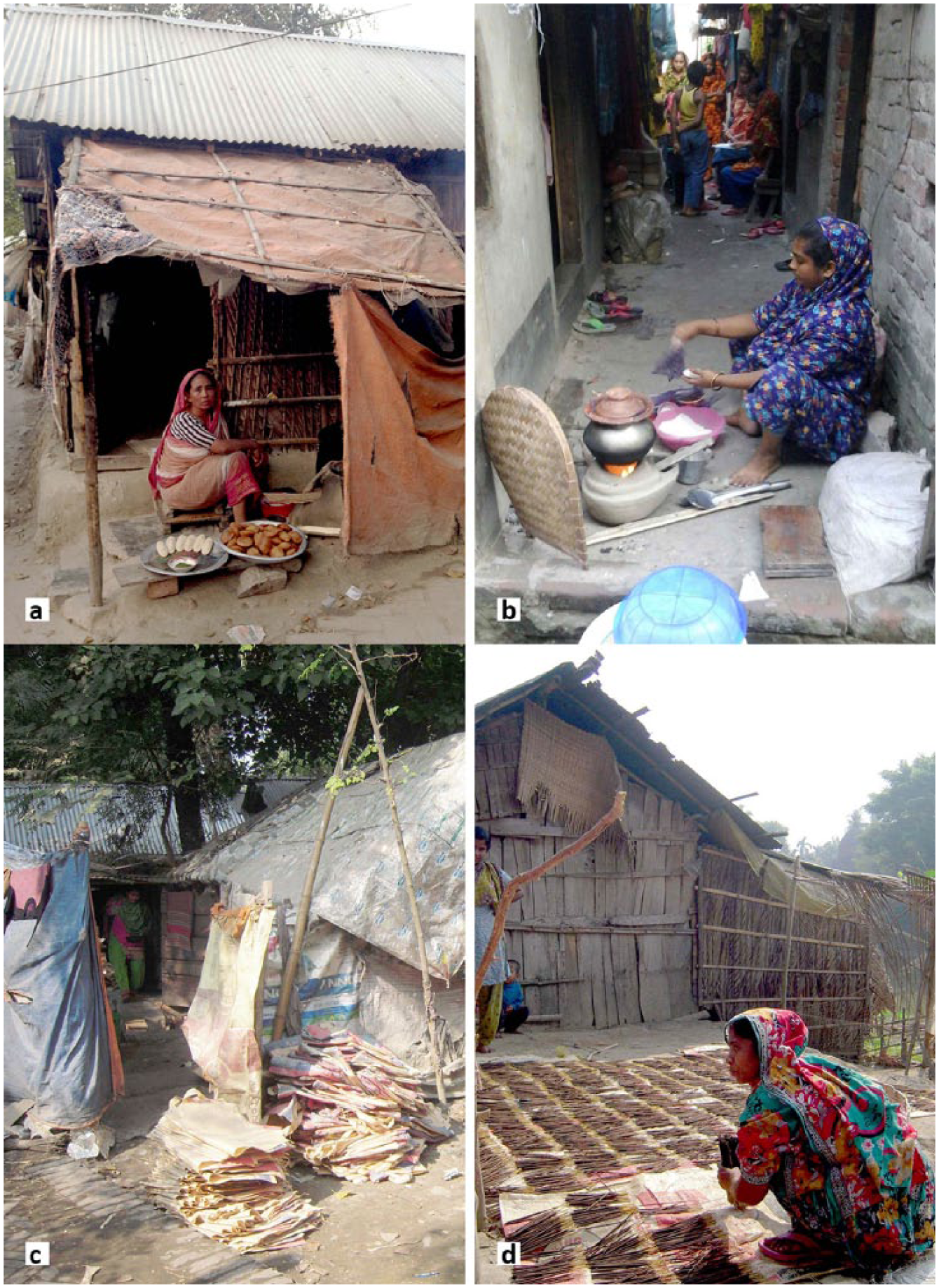
Different home-based economic activities performed in parochial spaces:
As evident from Photo 2, few of these parochial spaces protect women from direct sunlight and rain while they are working. Severe weather conditions, such as intense rain for days, can hamper their activities. Waterlogging after cyclones, storm surges and flooding can cause loss of capital, undermining the chance of recovery after a disaster. Accumulating financial assets, in the form of secured income, savings, and access to credit, is not easy for women and girls in Khulna who work in parochial spaces. Even those who work outside in the fish-processing industry are exposed to higher risks from high tides, storm surges and intense rainfall. In Dhaka, by contrast, women experience a lower level of climate risk. Because informal settlements there have less open space than even the densest settlement in Khulna, most women work outside the neighbourhood. Yet their work opportunities, for example in the garment industries and as cleaners and cooks in offices, are much less affected by climatic hazards.
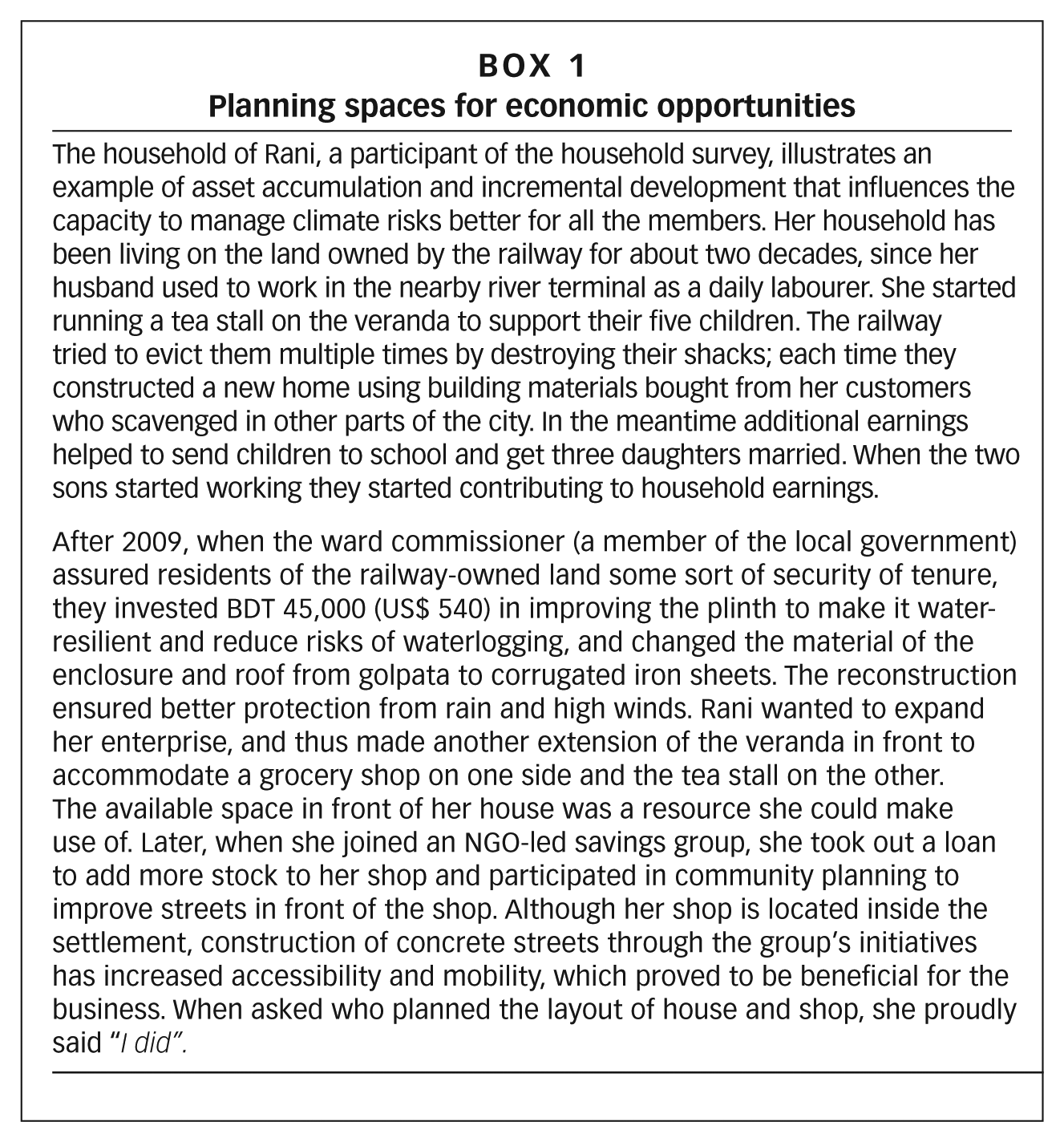
Some women in Khulna operate home-based enterprises by transforming and extending their domestic space, as illustrated in two case studies in Boxes 1 and 2. This also happens in Dhaka, but to a greater extent, as demand for goods and services within the settlement is higher in Dhaka. Since both Khulna settlements are on the river edge of the city, they are not accessible and integrated with rest of the city to bring in business. Transformation and extension of housing to allow for home-based enterprises are quite common around the world, and women often play a major role in such transformation.(46) In many instances, the spaces that accommodate productive activities are not that apparent, since the same space is used both for production and for other daily activities at different times of the day.(47) Some of these physical transformations are planned and incrementally developed, as illustrated in Box 2. The ability to transform affects how well residents can cope with climate hazards.
Planning spaces for economic opportunities
Incremental development of parochial space
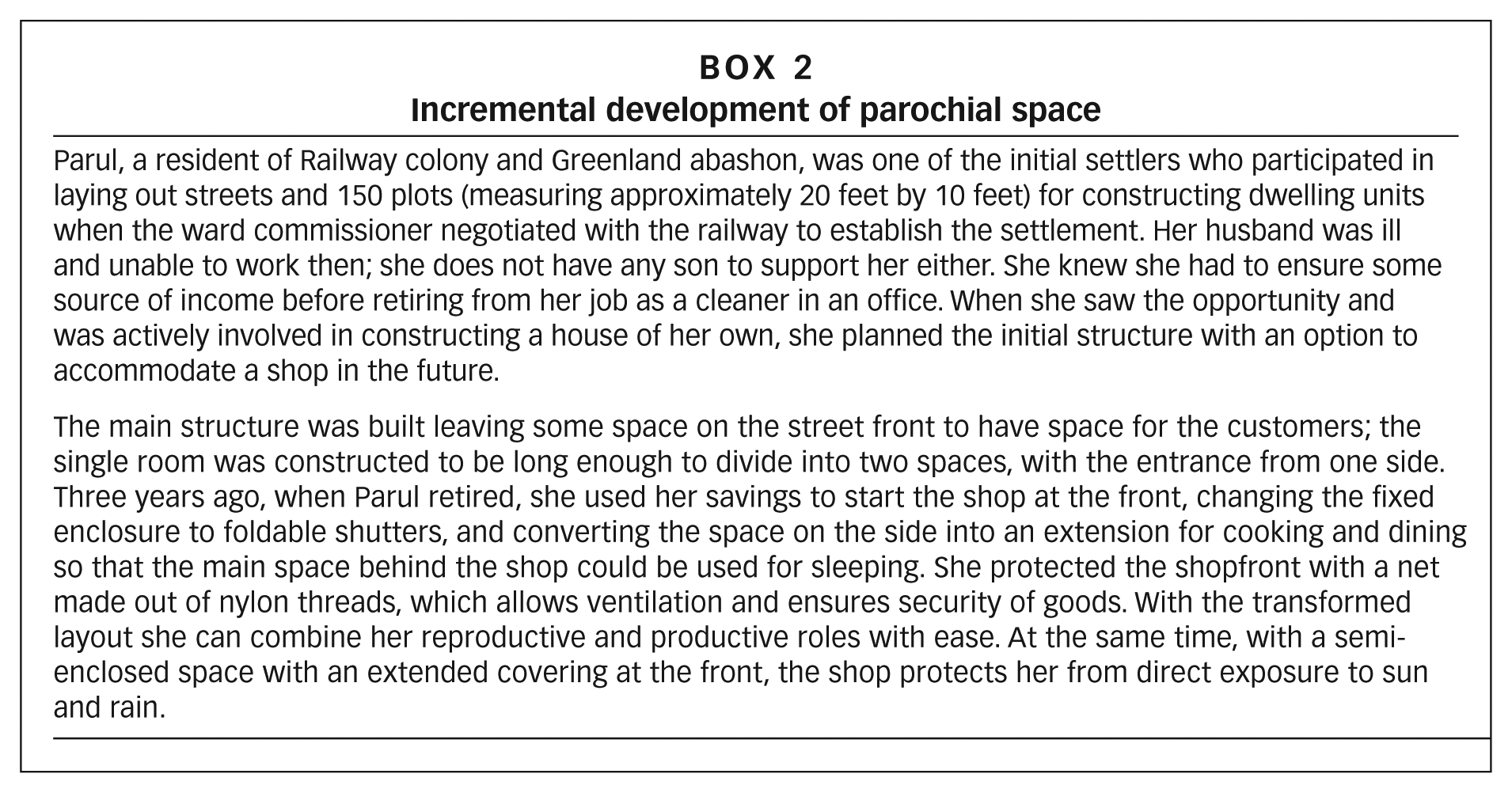
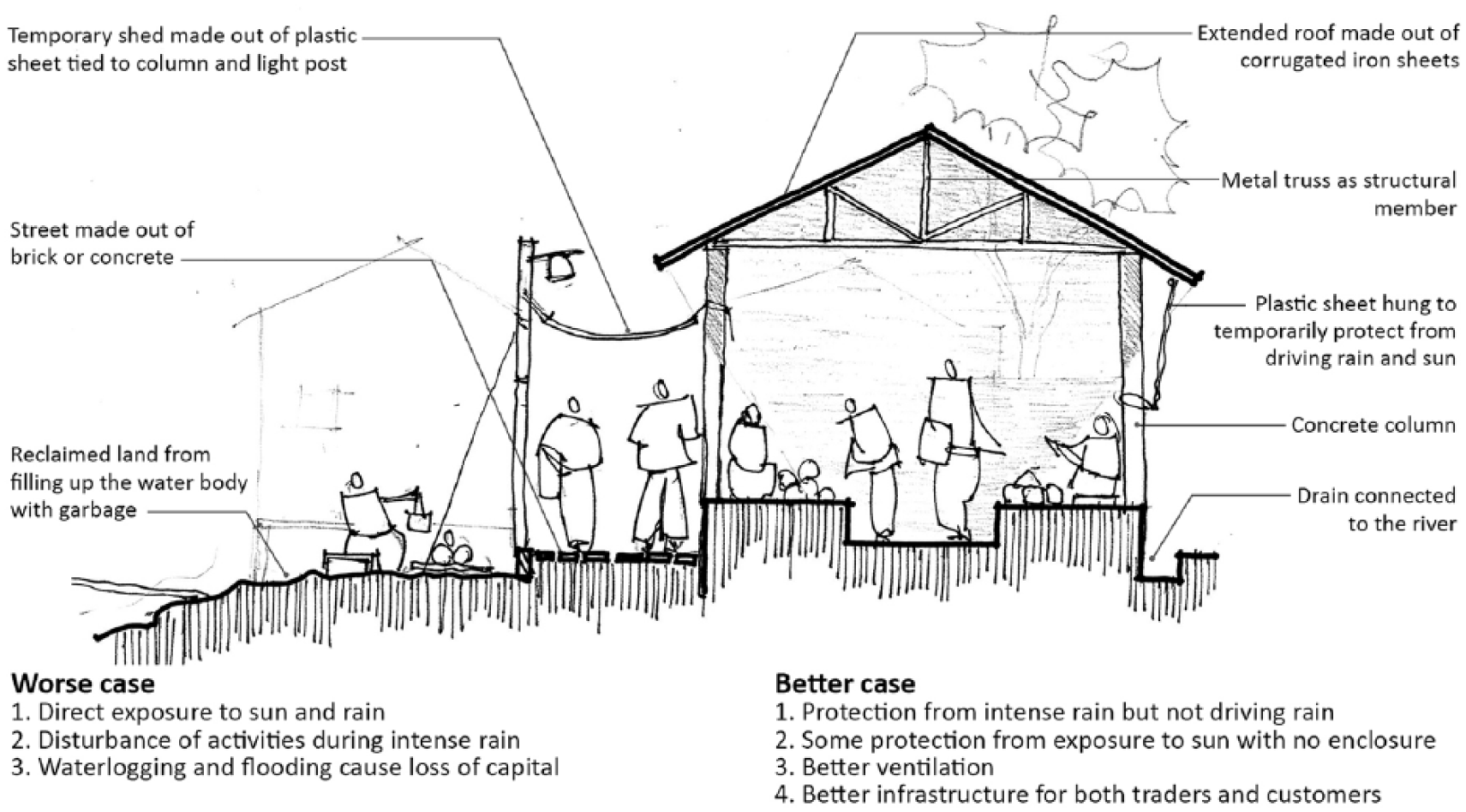
Figure 3 compares two cases to assess the climate risks involved in using parochial spaces for productive purposes. As illustrated in these examples, such transformations are possible when women have access to such assets as credit and social support from savings group networks for better negotiations, as well as a client group to make purchases.
Use of parochial spaces for economic activities
c. Public spaces for work and socializing
Public spaces in the studied settlements in Khulna are along the main access roads and river, which accommodate many economic opportunities – mostly for men and boys. These opportunities are labour-intensive, including loading and unloading goods from ships, trucks and railway wagons, and carrying goods to and from construction material depots, ice factories, and timber mills. Sardar, the employers who hire labourers, reported that they prefer men and boys for their physical strength and ability to withstand difficult working conditions – carrying goods through narrow gangways, often working odd hours, and coping with severe or extreme weather conditions in open space.
When and where men work depends entirely on their employers. Men and boys have little choice but to work in adverse conditions, as the availability of employment is limited and competitive. Employment is also not available year-round. There are even fewer opportunities during the monsoon season. The loss of income has to be compensated for by working harder the rest of the year and saving. Other employment opportunities are driving rickshaws and vans, pulling carts with goods or driving battery-driven easy-bikes in the city. Working in these open spaces significantly increases men’s exposure to weather-related risks.
Men and boys from these settlements also use public space – tea stalls along the road, mosques, labour unions, cooperatives and political party offices – for socializing. All these spaces are semi-open, protected from direct exposure to sun and to a degree from rain. These public spaces are hubs for getting access to work, learning of possible upcoming opportunities, and maintaining social and professional networks. Although mosques and offices are used for more formal gatherings, informal discussions take place in semi-open tea stalls where plastic sheets are hung to protect customers from driving rain and to provide shade. These tea stalls are popular places in the settlements throughout the year. Open spaces by the river also provide some relief in the evenings and nights during extremely hot days; men and boys reported gathering there.
Women use some of these public spaces, although mostly on their way to work and shopping. Very few women work in public spaces alongside men. One exception is chipping rust off ships in the shipyard in Rupshachor. To get there or to other jobs, women and girls if necessary use main roads, and may also use different facilities and shops along the road, yet they prefer to use the neighbourhood streets (goli) and shops if possible because of social norms regarding purdah. The goli are not truly public spaces, as in many instances the entrance from the main road to these streets has a partition, gate or curtain hanging from a frame to restrict entrance by strangers. Most of the home-based enterprises run by women are located along some neighbourhood goli; women and children are the principal customers.
In both study settlements, NGO activities over the years have organized different women’s groups for improving infrastructure, participating in different sociocultural activities, and attending events within and around the areas. Participants in this research appeared to be active and aware of these ongoing activities. Women community leaders took the lead in introducing the area and the residents to the research team; some of them were associated with political parties and worked as representatives of members of the local government. Residents, NGO workers and political leaders identified these young women as instrumental for gaining support and arranging any political, social and cultural activity. Yet none of them sat in the political party’s office, club or cooperative offices along the main road; few conversed with their group members in tea stalls, and none of them used mosques or open spaces along the river to organize informal discussions. These public spaces remained gendered, failing to reflect women’s growing participation in non-domestic roles and their increasing movement around the city.
The establishment of Boubazar (a daily market) in Railway colony and Greenland abashon by some women’s groups may be seen as representative of their interest, entitlements and a gradual shift in power relations. The market was initiated by elderly women of the community, who bought vegetables from wholesale dealers in other parts of the city and sold them in small amounts. Sometimes they bought slightly spoiled produce for less, selling it after cutting away the spoiled parts. This market became popular with local women since they could buy for less and in small amounts, enabling them to pay from the household’s meagre daily earnings. The market also became a place to spend time away from the house, meet neighbours and discuss any activities of the group they were members of. Funding opportunities from the livelihood programme of a donor-funded development project encouraged the savings group members and traders to propose improved infrastructure for the market (shown as a “better case” in Figure 4 and Photo 3).
Use of public spaces by women
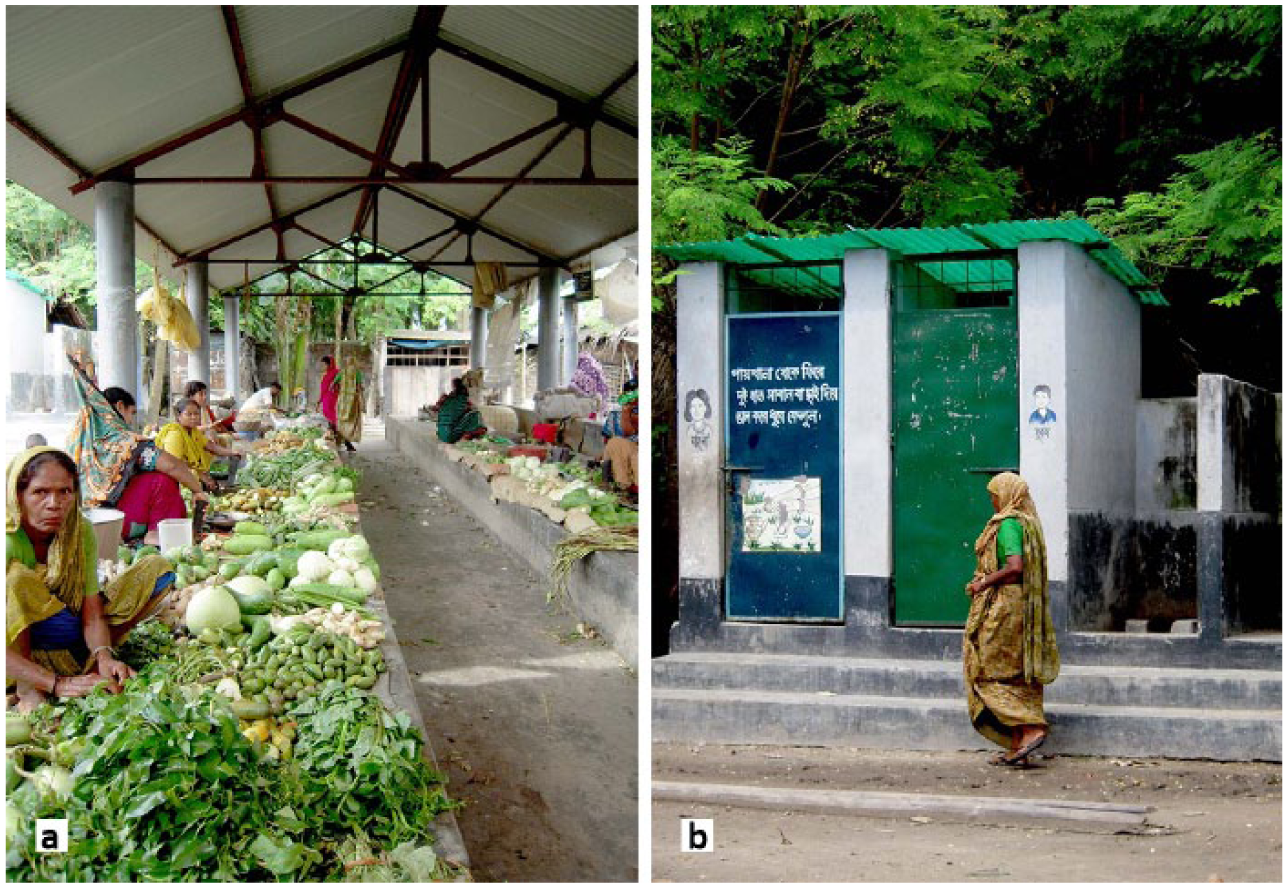
Boubazar – the market mostly operated by female community members:
However, the group members were not actually involved in the planning and design of this market: engineers from the local government designed it as a typical bazar shed. The design was flawed – the high roof with no enclosure provides relief from heat with ample airflow but fails to protect the sellers and buyers from driving rain and direct sun during the morning hours, when this market principally operates. The traders usually hang plastic sheets as a temporary measure on hot days or when it rains. Despite its drawbacks, because the roof can withstand high winds, and has concrete plinths and drainage that reduce waterlogging and muddy floors, the market has significantly reduced exposure to climate-related risks for all the users of the facility, as compared to risks faced by individual traders who operate in open space (shown as a “worse case” in Figure 4). One might argue that the market is an example of improved access to public space by women to ensure better earnings; nevertheless, the term Boubazar, or “Market for the wives”, indicates a separation reflective of the traditional norms, resulting in limited usage of the space throughout the day and mostly by women.
This established market is definitely an advantage for women who used to sell either from their house or by going around the settlement as vendors. It ensures better economic returns in addition to building human and social assets. Gradually different products are being brought in, more characteristic of a public space bazar. Thus, business has become better, and women are more accepted in this public space. Since sellers had to form a savings group to operate in the market, the market has given them opportunities to build their social networks and make decisions as a group. This spatial intervention has addressed some of the underlying structural barriers, as discussed before, that result in gender inequality – and by extension in a lower adaptive capacity.
VI. Analysis of the Findings
Domestic space is often taken for granted or ignored, yet it reflects ideals and realities about the gender dynamics of the household and the society – the roles and social relations of women and men and the social meaning behind those positions and relations.(48) The findings of this study indicate that Khulna is no exception to the predominant patriarchal system of Bangladesh that mostly confines women and girls to private spaces in informal settlements, which provide inadequate protections against climate hazards. Sociocultural norms regarding privacy and security significantly affect the spatial organization and quality of these private spaces. In addition, women have limited capacity to take action, as men are expected to make decisions about planning, construction and management of built forms, even where they spend less time and perform fewer daily activities than women. Substandard domestic spaces cannot provide adequate protection from temperature variability, intense rainfall, storm surges, waterlogging or high winds, and can create challenging living conditions for those inhabiting the spaces – who are mostly women and girls.
Even so, a focus on the relationship between the production of goods and services and reproductive activities highlights the prospect for changes in gender relations in urban environments.(49) Traditionally, women’s work in rural Bangladesh remains invisible because it is seldom carried out in public space; even farmed fields are close to the household and working there is perceived as a natural extension of women’s reproductive roles. Since not all women’s production is marketed, their productive activities are seen only as a complement to men’s income-generating activities.(50) The spatial analysis of informal settlements in Khulna City illustrates a similar trend in urban areas; hence, it reinforces the importance of parochial spaces. Women face fewer restrictions in using the parochial domain for productive work than for public spaces. The availability and accessibility of parochial spaces in Khulna gives women and girls the opportunity to take on productive roles and to increase their negotiating and decision-making ability.
Yet these parochial spaces may be highly exposed to such climate-related hazards as intense rainfall, associated flooding and increased temperature. Women and girls in low-income households are often disproportionately and adversely affected when exposed to climate extremes, and they have lower capacity to make adaptive changes in the built environment by choosing building materials or planning spaces.(51) Most of the actions they take in the face of immediate and significant stress are more along the lines of coping than adapting.(52) Some actions may be indicative of more strategic decisions, such as transforming a portion of the house; however, most of the proactive actions undertaken with a view to anticipating changes in the future are focused on economic challenges rather than on the challenges induced by climate. For example, the minimal investments in physical improvements to create shops or workspace do not protect against damage or loss of capital from climate-induced disasters.
On the other hand, the characteristics of the public spaces inhabited mostly by men, and men’s patterns of using them, also result in low climate resilience – an issue that is not often discussed. Economic opportunities in the city for members of low-income households with limited skills are in the informal sector. The public spaces that accommodate these informal economic activities are exposed to temperature variability, rainfall and storms. Men and boys working in open spaces have almost no option but to work in adverse conditions or lose income. Even for men, the capacity to take anticipatory or reactive action to improve the spaces where they work and socialize is negligible. Exposure to direct impacts, for example increased heat, can exacerbate risks to health and economic stability. Women’s far more limited presence in the public realm, on the other hand, may reduce their exposure to the direct impacts of weather and the related risks; however, it has indirectly increased their vulnerability because of their limited access to financial and human resources, and consequently their decision-making ability.
The findings of this study may be compared with other research that has identified different actions taken in the built environment. For example, Haque et al.(53) have reported residents using polythene sheets or cement bags on roofs and in wall openings to protect from the rain; raising plinth levels with bamboo structures or mud; and installing perforated net-like partition walls using bamboo sticks to allow airflow inside the house. Parvin et al.(54) have described the design of large openings without shutters, and the practice of keeping doors open throughout the day as a means to adapt to increasing heat stress. Roy et al.(55) discuss the provision of multi-functional outdoor spaces and community kitchens. Nevertheless, interrogating these responses to identify who can negotiate and take action underscores the limited capacity of women in these households; most cannot take action on their own.
A comparison of Khulna findings with those from the earlier study in Dhaka demonstrates the importance of considering the local context. The situation within the capital city, with its different economic opportunities and better infrastructure, cannot be considered representative of conditions in other cities like Khulna. The greater potential for remuneration and the broader range of occupational choices act as a driver for women and girls to migrate to urban areas,(56) and it is important to understand conditions there. But conditions are not unconditionally uniform for all cities. Gender divisions and disparities persist in Khulna, and in some instances are reconstructed or exacerbated through spatial practices and representational spaces, which at the same time influence the local capacity to manage climate risks.
VII. Conclusions
This paper has explored resilience to climate-related hazards through an examination of gendered space in urban informal settlements. Spaces are continually contested, negotiated and reconstructed on the basis of gender dynamics, which is true also for the climate resilience of people within those spaces. Access to resources – savings, access to credit, information about work opportunities – is possible within public, and to some extent parochial, spaces. But being limited to private space also limits the opportunity to take actions that significantly reduce risks.
Methodologically, focusing on negotiations and contestations among different groups with different access to urban space provides us with a better understanding of diverse physical, economic and social resources – and of the capacity of both men and women to build resilience, capitalizing on available resources within informal settlements.
Policymakers in Bangladesh recognize and adapt bottom-up approaches to development, with participation of both men and women of low-income households in different socioeconomic activities, decision-making and governance. Many development initiatives are designed around women’s participation in economic activities, providing them with credit for entrepreneurship and home-based enterprises. The intention is to remove structural barriers to gender inequality. However, the question remains how gender needs and climate risks are addressed in development planning, especially keeping in mind the locations of economic and social activities. In smaller cities like Khulna, access to climate-resilient public spaces is challenging for both women and men of low-income households. As an alternative, parochial spaces within these settlements provide more opportunities for interventions due to their acceptance and familiarity, yet also remain vulnerable to extreme weather.
The findings of this study re-emphasize that inequality in the potential for inhabiting space is one of the underlying causes of differential climate resilience in urban informal settlements. Capitalizing only on the interpersonal networks located within a community to encourage collective action in parochial spaces, nevertheless, may not significantly increase climate resilience. Physical infrastructure and spaces that support climate-resilient livelihoods, both by diversifying opportunities and making them appropriate to cope with climate hazards, will be essential in the future planning of informal settlements. The predicted demographic shift towards female dominance in urban informal settlements will require further exploration on how to ensure full participation of both women and men in planning and implementing climate-responsive and resilient spaces.
Footnotes
Acknowledgements
I would like to also acknowledge the reviewers’ insightful comments that greatly improved the manuscript. Parts of the findings have been published as a case study in the book Social Sustainability, Climate Resilience and Community-based Urban Development, edited by Cathy Baldwin and Robin King.
Funding
This research has been funded by the Bixby Research Fellowship. Professor Mark Montgomery, a senior associate at the Population Council in New York, provided valuable guidance in designing the research project and reviewing the data.
1.
Flather, A J (2013) “Space, place, and gender: the sexual and spatial division of labor in the early modern household”, History and Theory Vol 52, pages 344–360.
2.
 , Managing the Risks of Extreme Events and Disasters to Advance Climate Change Adaptation [C B Field, V Barros, T F Stocker, D Qin, D J Dokken, K L Ebi, M D Mastrandrea, K J Mach, G-K Plattner, S K Allen, M Tignor and P M Midgle (editors)], Special Report of Working Groups I and II of the Intergovernmental Panel on Climate Change, Cambridge University Press, Cambridge, UK and New York, USA.
3.
Huq-Hussain, S (1996), “Female migrants in an urban setting - the dimensions of spatial/physical adaptation: the case of Dhaka”, Habitat International Vol 20, No 1, pages 93–107; also Ghafur, S (2002), “Gender implications of space use in home-based work: evidences from slums in Bangladesh”, Habitat International Vol 26, No 1, pages 33–50; Mahmud, S (2003), “Women and the transformation of domestic spaces for income generation in Dhaka bustees”, Cities Vol 20, No 5, pages 321–329; and Tipple, G (2004), “Settlement upgrading and home-based enterprises: discussions from empirical data”, Cities Vol 21, No 5, pages 371–379.
4.
Jabeen, H, C Johnson and A Allen (2010), “Built-in resilience: learning from grassroots coping strategies for climate variability”, Environment and Urbanization Vol 22, No 2, pages 415–431; also Parvin, A, A Alam and R Asad (2013), “Climate change impact and adaptation in urban informal settlements in Khulna: a built environmental perspective”, Unpublished paper presented at the ClimUrb Conference, University of Manchester, September; Haque, A N, D Dodman and M M Hossain (2014), “Individual, communal and institutional responses to climate change by low-income households in Khulna, Bangladesh”, Environment and Urbanization Vol 26, No 1, pages 112–129; and Jabeen, H and S Guy (2015), “Fluid engagements: responding to the co-evolution of poverty and climate change in Dhaka, Bangladesh”, Habitat International Vol 47, pages 307–314.
5.
Jabeen, H (2012), The Built Environment and Gender Dynamics for Asset-based Adaptation in the Urban Poor Households in Dhaka, Bangladesh, University of Manchester.
6.
Oldfield, S (2014), “Negotiating society and identity in urban spaces of the South”, in S Parnell and S Oldfield (editors), The Routledge Handbook on Cities of the Global South, Routledge, London and New York, pages 339–340.
7.
Lefebvre, H (1991), The Production of Space, Blackwell, Oxford; also Massey, D B (1994), Space, Place and Gender, Polity Press, Cambridge, UK.
8.
Rendell, J (2000), “Introduction: gender, space”, in J Rendell, B Penner and I Borden (editors), Gender Space Architecture, Routledge, London, pages 101–112.
9.
Lofland, L H (1998), “Toward a geography and history of public realm”, in The Public Realm: Exploring the City’s Quintessential Social Territory, Routledge, Oxon and New York, pages 1–22.
10.
Diang, S and A Adebayo (2011), “Analysis of the built environment of informal settlements using systems of settings and activities”, International Journal of Architectural Research Vol 5, No 1, pages 86–98.
11.
Hunter, A (1985), “Private, parochial and public social orders: the problem of crime and incivility in urban communities”, in G Suttles and M Zald (editors), The Challenge of Social Control: Citizenship and Institution Building in Modern Society, Ablex Publishing, Norwood, pages 230–242, page 11, cited in [see reference 9].
12.
Kabeer, N (2003), Gender Mainstreaming in Poverty Eradication and the Millennium Development Goals: A Handbook for Policy-makers and Other Stakeholders, Commonwealth Secretariat and International Development Research Centre, London, Canada.
13.
McKie, L, S Bowlby and S Gregory (1999), “Connecting gender, power and the household”, in L McKie, S Bowlby and S Gregory (editors), Gender, Power and the Household, Macmillan Press, Houndmills, pages 115–129.
14.
See reference 8.
15.
See reference 12.
16.
OECD (1995), Women in the City: Housing, Services, and the Urban Environment, Organisation for Economic Co-operation and Development, Paris; also Peake, L (2009), “Gender in the city”, in K Rob and T Nigel (editors), International Encyclopaedia of Human Geography, Elsevier, Oxford, pages 320–327.
17.
Chant, S H and C McIlwaine (2016), Cities, Slums and Gender in the Global South: Towards a Feminised Urban Future, Routledge, Oxon and New York.
18.
Dankelman, I (2010), “Introduction: exploring gender, environment and climate change”, in I Dankelman (editor), Gender and Climate Change: An Introduction, Earthscan, London, pages 1–20; also Alber, G (2011), Gender, Cities and Climate Change, Unpublished thematic report prepared for Cities and Climate Change, Global Report on Human Settlements 2011, UN-Habitat, available at .
19.
Quisumbing, A R and J A Maluccio (2000), “Intra household allocation and gender relations: new empirical evidence from four developing countries”, FCND discussion paper, International Food Policy Research Institute.
20.
Agarwal, B (1997) ‘“‘Bargaining’” and gender relations: within and beyond the household”, Feminist Economics Vol 3, No 1, pages 1–51.
21.
Friend, R and M Moench (2013), “What is the purpose of urban climate resilience? Implications for addressing poverty and vulnerability”, Urban Climate Vol 6, pages 98–113; also Reed, S O, R Friend, V C Toan, P Thinphanga, R Sutarto and D Singh (2013), ““Shared learning” for building urban climate resilience – experiences from Asian cities”, Environment and Urbanization Vol 25, No 1, pages 393–412.
22.
Lavell, A, C Diop, J Hess, R Lempert, J Li, R Muir-Wood and S Myeong (2012), “Climate change: new dimensions in disaster risk, exposure, vulnerability, and resilience”, in C B Field, V Barros, T F Stocker, D Qin, D J Dokken, K L Ebi, M D Mastrandrea, K J Mach, G-K Plattner, S K Allen, M Tignor and P M Midgle (editors), Managing the Risks of Extreme Events and Disasters to Advance Climate Change Adaptation, Special Report of Working Groups I and II of the Intergovernmental Panel on Climate Change, Cambridge University Press, Cambridge, UK and New York, USA, pages 25–64.
23.
Pelling, M and D Manuel-Navarrete (2011), “From resilience to transformation: the adaptive cycle in two Mexican urban centers”, Ecology and Society Vol 16, No 2, Article 11.
24.
Pelling, M (2010), Adaptation to Climate Change: From Resilience to Transformation, Routledge, London; also Revi, A, D Satterthwaite, F Aragón-Durand, J Corfee-Morlot, R B R Kiunsi, M Pelling, D Roberts, W Solecki, S P Gajjar and A Sverdlik (2014), “Towards transformative adaptation in cities: the IPCC’s fifth assessment’, Environment and Urbanization Vol 26, No 1, pages 11–28.
25.
See reference 2, page 436.
26.
Dankelman, I and W Fansen (2010), “Gender, environment and climate change: understanding the linkages”, in I Dankelman (editor), Gender and Climate Change: An Introduction, Earthscan, pages 21–54.
27.
Chant, S and C Sweetman (2012), “Fixing women or fixing the world? “Smart economics”, efficiency approaches, and gender equality in development”, Gender & Development Vol 20, No 3, pages 517–529; also Hendra, J, I Fitzgerald and D Seymour (2013), “Towards a new transformative development agenda: the role of boys and men in gender equality”, Journal of International Affairs Vol 67, No 1, pages 105–122.
28.
Otzelberger, A (2011), Gender-Responsive Strategies on Climate Change: Recent Progress and Ways Forward for Donors, Institute of Development Studies/BRIDGE Publication; also Ahmad, N (2012), “Gender and climate change in Bangladesh: the role of institutions in reducing gender gaps in adaptation program”, Social development working paper, World Bank, Washinngton, DC.
29.
Jabeen, H (2017), “Adaptability of the built environment of informal settlements to increase climate resilience in Dhaka, Bangladesh”, in A Allen, L Griffin and C Johnson (editors), Environmental Justice and Urban Resilience in the Global South, Palgrave Macmillan, New York.
30.
Mondal, M S, M S A Khan, U Kumar, R Rahman and H Huq (2013), “Hydro-meteorological trends in southwest coastal Bangladesh: perspectives of climate change and human interventions”, American Journal of Climate Change Vol 2, pages 62–70.
31.
See reference 30; also Shahid, S (2010), “Rainfall variability and the trends of wet and dry periods in Bangladesh”, International Journal of Climatology Vol 30, No 15, pages 2299–2313.
32.
See reference 4, Parvin et al. (2013) and Haque et al. (2014); also see reference 30; Institute of Water Modelling (2010), Technical Assistance Consultant’s Report Bangladesh: Strengthening the Resilience of the Water Sector in Khulna to Climate Change, Asian Development Bank; and , Adapting to Climate Change: Strengthening the Climate Resilience of Water Sector Infrastructure in Khulna, Bangladesh, Mandaluyong City.
34.
See reference 33.
35.
Kaijser, A and A Kronsell (2014), “Climate change through the lens of intersectionality”, Environmental Politics Vol 23, No 3, pages 417–433.
36.
See reference 5.
37.
Moser, C and A Stein (2011), “Implementing urban participatory climate change adaptation appraisals: a methodological guideline”, Environment and Urbanization Vol 23, No 2, pages 463–485.
38.
Golpata (Nypafruticans) is a stemless palm, whose fronds are used for roof thatching.
39.
Koenigsberger, O H, T G Ingersoll, A Mayhew and S V Szokolay (1974), Manual of Tropical Housing and Building, Longman, London.
40.
Goli in Bengali refers to a narrow street. In the studied settlements, they are usually three to five feet wide. All the houses are accessed through this open-air corridor. The group of houses along a goli is considered a neighbourhood and are identified by the name of that goli. In Rupshachor there are 18 goli, named after either the homeowner who initiated the neighbourhood or an important community facility located there, such as a school or mosque.
41.
Kellett, P and A G Tipple (2000), “The home as workplace: a study of income-generating activities within the domestic setting”, Environment and Urbanization Vol 12, No 1, pages 203–214.
42.
See reference 17.
43.
Bose, M (1998), “Women’s work and the built environment: lessons from the slums of Calcutta, India”, Habitat International Vol 23, No 1, pages 5–18.
46.
See reference 41.
48.
Ahrentzen, S, D W Levine and W Michelson (1989), “Space, time, and activity in the home: a gender analysis”, Journal of Environmental Psychology Vol 9, pages 89–101; also Spain, D (1992), Gendered Spaces, University of North Carolina Press.
49.
See reference 48, Spain (1992); also Mackenzie, S (1988), “Building women, building cities: towards gender sensitive theory in the environmental disciplines”, in C Andrew and B M Milroy (editors), Life Space: Gender, Household, Employment, University of British Columbia Press, pages 13–30.
50.
Chen, M A (1983), A Quiet Revolution: Women in Transition in Rural Bangladesh, Schenkman Publishing Company, Cambridge, USA.
51.
Jabeen, H (2014), “Adapting the built environment: the role of gender in shaping vulnerability and resilience to climate extremes in Dhaka”, Environment and Urbanization Vol 26, No 1, pages 147–165.
52.
See reference 22.
55.
Roy, M, D Hulme and F Jahan (2013), “Contrasting adaptation responses by squatters and low-income tenants in Khulna, Bangladesh”, Environment and Urbanization Vol 25, No 1, pages 157–176.
56.
See reference 17.