




Abstract
The relationship between “coping” and “resilience” increasingly features in academic, policy and practical discussions on adaptation to climate change in urban areas. This paper examines this relationship in the context of households in “extreme poverty” in the city of Khulna, Bangladesh. It draws on a quantitative data set based on 550 household interviews in low-income and informal settlements that identified the extent of the underlying drivers of vulnerability in this setting, including very low income, inadequate shelter, poor nutritional status and limited physical assets. A series of focus groups were used to explore the ways in which physical hazards have interacted with this underlying vulnerability, as a means to understand the potential impacts of climate change on this particular group of urban residents. These outcomes include frequent water-logging, the destruction of houses and disruption to the provision of basic services. The main focus of the paper is on describing the practices of low-income urban residents in responding to climate-related shocks and stresses, placing these in a particular political context, and drawing lessons for urban policies in Bangladesh and elsewhere. A wide range of specific adaptation-related activities can be identified, which can be grouped into three main categories – individual, communal and institutional. The paper examines the extent to which institutional actions are merely “coping” – or whether they create the conditions in which individuals and households can strengthen their own long-term resilience. Similarly, it examines the extent to which individual and communal responses are merely “coping” – or whether they have the potential to generate broader political change that strengthens the position of marginalized groups in the city.
I. Introduction
The vulnerability of individuals, communities and cities to climate variability and change is an outcome of the interaction between an external threat or hazard and the internal characteristics of a system. For residents of low-income and informal settlements in urban areas in the global South, these internal characteristics – which may include limited income, few assets and poor provision of basic services – are particularly important in shaping the consequences of climate-related hazards. Similarly, effectively responding to climate change requires not only addressing the direct outcomes of particular events but also more generally building the resilience of marginalized and vulnerable groups.
This paper examines these underlying drivers of vulnerability as they affect extremely low-income residents of the city of Khulna, Bangladesh – and the individual, communal and institutional responses to these. The analysis contributes to an understanding of the dynamics of climate change impacts and responses in rapidly growing urban centres in Bangladesh,(1) and to the relationship between urbanization, poverty and climate risk throughout Africa, Asia and Latin America.(2) More specifically, however, it examines the potential for actions taken at the household and community level in urban areas to go beyond offering short-term “coping” solutions in response to specific events, resulting instead in more transformational changes that address the underlying drivers of vulnerability.(3) While Roy et al.’s(4) recent article on climate change in Khulna in this Journal addresses the political and legal spheres, this paper looks in more detail at the nature of the relationships between household, community and institutional adaptation (while recognizing the importance of political and legal drivers in this).
Bangladesh is widely recognized as a country that is highly vulnerable to disasters and climate change because of its geographical situation (exposed to cyclones), its topography (low-lying and prone to flooding), its high population density(5) and its low level of human development (with an HDI value of 0.515 and a UN HDI ranking of 146 out of 187 countries and territories).(6) High levels of poverty are recognized as contributing to vulnerability, as the Fourth Assessment Report of the Intergovernmental Panel on Climate Change concludes:
“Poor communities can be especially vulnerable, in particular those concentrated in high-risk areas. They tend to have more limited adaptive capacities and are more dependent on climate-sensitive resources such as local water and food supplies.”(7)
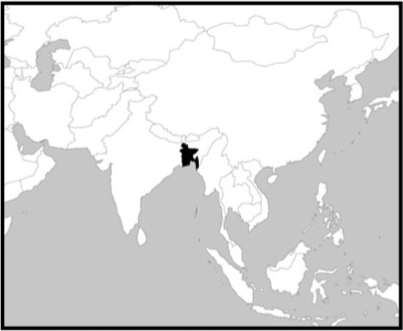
Bangladesh has also been urbanizing rapidly: the proportion of the population living in urban areas has grown from just 4.3 per cent in 1950 to 27.9 per cent in 2010, and is expected to grow further to 36 per cent in 2025.(8) Khulna is the third largest metropolitan city in Bangladesh located in the coastal region in the southwest of the country (Map 1), and is affected by floods, storms, limited availability of fresh water, water-logging and heat waves.(9) The city’s population has also grown rapidly in recent decades: from 41,000 in 1950 to 1,781,000 in 2011 – and is projected to grow further to 2,805,000 by 2025(10) (Figure 1). While Khulna and other cities in the global South have made minimal contributions to greenhouse gas emissions that cause climate change,(11) they face particular challenges regarding its impacts, partly because of the substantial backlog in basic protective infrastructure.
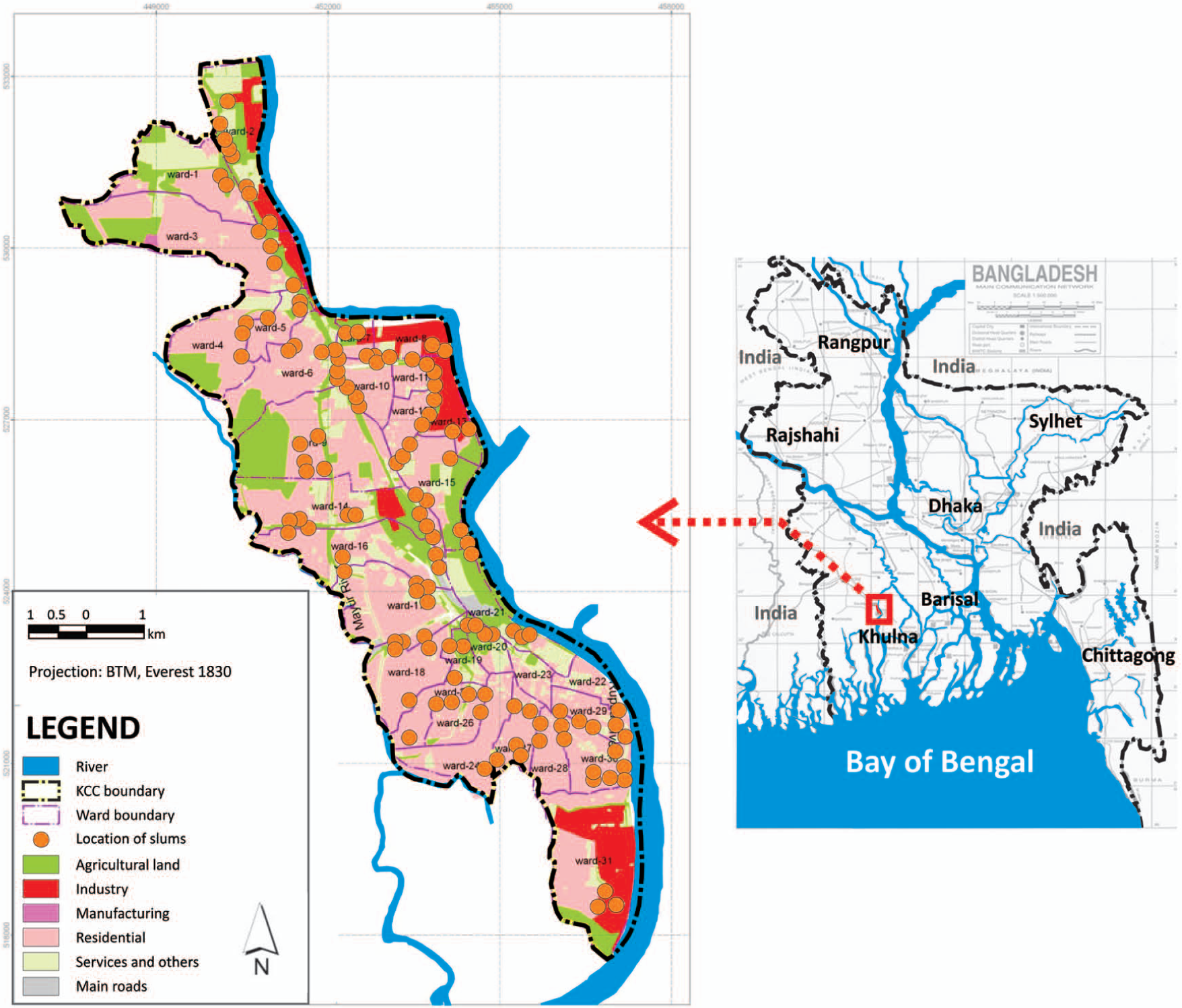
Location map of the city of Khulna (showing land use and low-income settlements)
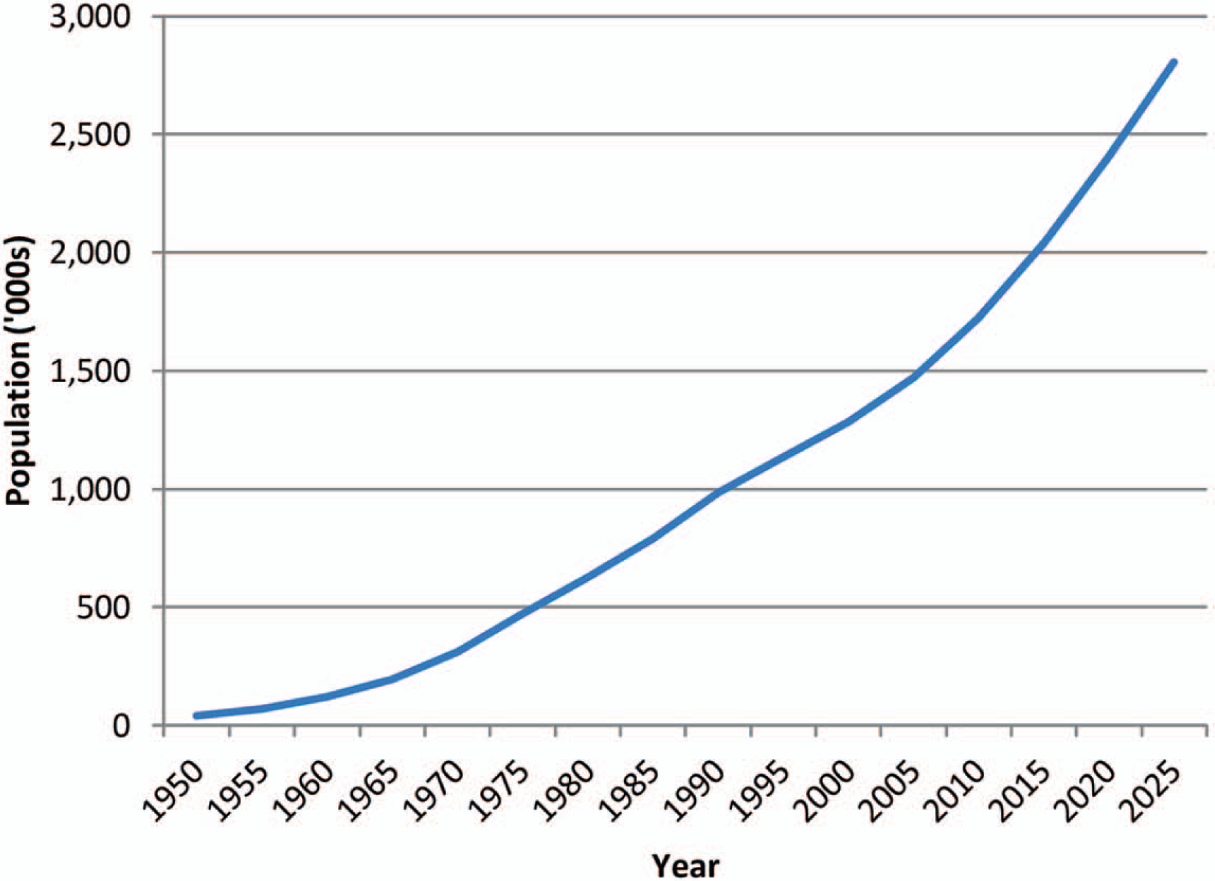
Population growth in Khulna since 1950 and projected growth to 2025
Managing the consequences of climate change in urban areas will require a range of responses: increasing the resilience of urban systems (including networked infrastructure); improving the functioning of institutions (that have responsibility for urban planning and management); and strengthening the capacity of agents (individuals, households and communities).(12) This paper focuses directly on the second and third of these, specifically by examining the ways in which responses to climate variability and change can generate broader transformations in urban social relations, accountability and governance. The specific entry point is a focus on community-based adaptation (hereafter CBA), explained by Ayers and Forsyth in the following way:
“Community-based adaptation operates at the local level in communities that are vulnerable to the impacts of climate change. It identifies, assists and implements community-based development activities that strengthen the capacity of local people to adapt to living in a riskier and less predictable climate. […] It builds on existing cultural norms and addresses local development concerns that make people vulnerable to the impacts of climate change in the first place.”(13)
The research presented in this paper was undertaken as part of the Action Research for Community-based Adaptation in Bangladesh (ARCAB) programme, a long-term project that aims to address knowledge gaps through the generation of longitudinal data and evidence of the effectiveness of CBA. It involves “action partners”, “research partners” and “knowledge management partners” working together in five major ecosystem zones and one urban site in Bangladesh.(14) In this particular case, the research was undertaken alongside a Save the Children project titled Out of Poverty Graduation Model for the Urban Extreme Poor, which has been implemented with residents of slum areas in Khulna City who are living with working children.(15) These residents were selected based on the characteristics of having a household income below BDT 3,500 per month (approximately US$ 45), owning productive assets worth less than BDT 5,000 (approximately US$ 65), lacking access to microfinance and consuming fewer than three meals per day. The research involved reviewing official reports and project documentation from the Khulna City Corporation (hereafter KCC) and Save the Children, analyzing questionnaire survey data for 550 households (selected randomly from 1,200 project beneficiaries) generated by Save the Children, and undertaking primary data collection through interviews and focus group discussions. Four focus group discussions were conducted, with approximately 20 people participating in each: the groups were selected so as to ensure representation from different types of settlement (based on level of municipal services provided), different locations (and how this shapes exposure to particular hazards) and gender (including one all-female group).
The next section of the paper provides a review of the literature exploring the potential and limits for CBA in urban areas, specifically in Bangladesh. The following sections then address specific questions:
What are the main drivers of vulnerability for low-income urban residents in Khulna and how are these shaped by both external (biophysical) hazards and internal (social and economic) characteristics?
What strategies do low-income urban residents use to respond to extreme events and climate variability?
How do communal and institutional responses develop from and support individual and household activities? What does this imply for future CBA programming in urban areas?
II. Urban Vulnerability and The Potential for Community-Based Responses
There is a considerable body of research and literature on urban poverty and vulnerability − including vulnerability to climate change − in urban Bangladesh. While various conceptual frameworks for understanding vulnerability to climate change have been produced,(16) this research draws primarily on the definition used in the IPCC Fourth Assessment Report:
“[T]he degree to which a system is susceptible to, and unable to cope with, adverse effects of climate change, including climate variability and extremes. Vulnerability is a function of the character, magnitude and rate of climate change and variation to which a system is exposed, its sensitivity and its adaptive capacity.”(17)
This provides a suitable framework for examining vulnerability in the particular context of low-income settlements in Khulna – one that takes into account both external (exposure to particular hazards) and internal factors (the sensitivity and adaptive capacity of households, communities, urban institutions and the city as a whole). It informs a recognition that vulnerability in urban areas is shaped by the broader urban context and forces, including informality, rapid urbanization and a lack of infrastructure and basic services. While these factors are recognized by researchers as being important for shaping climate vulnerability in urban Bangladesh, they have, to date, been relatively neglected in the policy domain.(18)
Alam and Rabbani(19) provide one of the first reviews of climate impacts and responses in a Bangladeshi city, examining the case of Dhaka and recognizing the particular impacts of poor air quality and frequent flooding on infrastructure, industry, trade and commerce, utility services, population and health, and livelihoods. Elsewhere in Bangladesh, climate-related hazards in Chittagong include cyclones, flooding, landslides and tidal surges; with anticipated sea level rise expected to contribute to increased flooding (especially flash flooding), water-logging, tidal surges, and salt water intrusion. Hill-cutting (despite being prohibited in the 1995 Chittagong Master Plan) has led to landslides and siltation of waterways, which exacerbates flooding, while a shortage of safe drinking water is associated with a high prevalence of water-borne diseases.(20)
Responses to climate change, particularly associated with disaster risk reduction, are examined in the case of Chittagong by Ahammad.(21) This study shows the lack of connection between “formal” institutional structures for disaster preparedness and the groups who are most vulnerable to the impacts of disasters, with NGO activities and donor-funded projects failing to reach some highly exposed communities, and local government hampered by financial limitations. The paper also concludes that strengthening the capacity of local authorities to reduce the vulnerability of the urban poor is not a priority under national climate change adaptation policy. Despite this, low-income urban residents in Dhaka and other cities in Bangladesh engage in a wide range of physical, economic and social strategies to reduce risk (for instance, ventilation to reduce the effects of extreme temperatures) and to recover from flooding and high temperatures – these include modifying the physical and built environment (at the scale of both the household and the neighbourhood), building up stores of food and saleable assets, diversifying income sources and developing social support networks.(22) Similar strategies have been observed in Khulna,(23) including changes to the built environment and modifications in livelihood strategies.
However, there is a need to address urban vulnerability and responses to climate change through more politically informed approaches that explicitly examine the role of power relations in shaping these issues. The constraints that limit inputs from low-income urban residents into political processes in Bangladesh are widely recognized;(24) even where mechanisms exist for citizen participation in urban governance, these frequently exclude residents of illegal or informal settlements who may be particularly vulnerable to the effects of climate change. Indeed, Banks et al. conclude that “… local elected officials in urban areas have little incentive to be responsive, accountable or inclusive to their poor electorate.”(25) However, some progress in this area is apparent through the Urban Governance project, but this has been limited thus far to “Category A” municipalities.(26) Specifically in relation to climate vulnerability, Roy et al.(27) recognize a range of structural and political constraints that need to be overcome in order to reduce the vulnerability of the urban poor, including the lack of a socio-political platform, ineffective support from public institutions, aid and NGO dependency, and limits to agency and structures.
Although there has been substantial documentation and research on CBA,(28) there is very little literature – in Bangladesh or elsewhere – that explicitly examines the role of and potential for CBA in urban areas.(29) The urban context presents a range of challenges for accepted CBA understanding and practice. The density of people and economic activities shapes patterns of vulnerability, whereas the relative strength of a variety of institutions (including civil society, the private sector and the state (both local and national government)) produces a distinct context within which decision-making and implementation of adaptation actions must exist.
Responding to climate change in ways that meet the needs of low-income urban residents must therefore address immediate development needs (the provision of basic services and infrastructure) alongside specific actions to reduce the effects of climate-related hazards. This has frequently been conceived of as “resilience”, understood as the capacity of a system to withstand change while still retaining “… the same function and structure while maintaining options to develop.”(30) Practical examples of this in urban settings have tended to emphasize activities such as “… climate-sensitive land use and urban planning …” and “… institutional coordination mechanisms and capacity support”;(31) issues such as local level resilience(32) or ecosystem-based approaches;(33) or inherent characteristics such as responsiveness, resourcefulness, flexibility, diversity and redundancy.(34) More recently, however, the concept of transformation has been proposed as a more meaningful long-term response to climate change. At the simplest level, this shift is seen as being primarily about the scale of the intervention; Kates et al.(35) posit transformative adaptation as being necessary where risks are so sizeable that incremental responses are inadequate. By contrast, O’Brien(36) argues that there is a need for adaptation that contests and creates alternatives rather than simply seeking to accommodate global environmental changes. Specifically in the urban setting, Mitlin suggests that framing vulnerability is “… an outcome of wider social processes shaping how people see themselves and others, their relationship with the environment and role in political processes”,(37) and suggests that meaningful adaptation will require transforming these social processes rather than simply applying solutions to maintain their current functioning. In the remainder of this paper, therefore, we identify the actions that are being taken in the context of Khulna to respond to particular climate-related threats, and examine the extent to which these can contribute to a more transformative pathway for adaptation and urban development.
III. Drivers of Vulnerability In Khulna, Bangladesh
a. Geographical and bio-physical drivers of vulnerability
Khulna is located beside the Rupsha and Bhairab rivers, at an elevation of approximately 2.5 metres above mean sea level, and covers an area of about 47 square kilometres.(38) Overall, 46 per cent of the city’s land area is residential, 18 per cent is farming land, 15 per cent is industrialized areas and five per cent is commercial areas, while the rest consists of official structures, transport infrastructure, community and defence, facility parks and water bodies.(39) The climate is humid during the summer, the average annual temperature is 26.3°C and the average annual rainfall 1,800 millimetres. Industrial development since the 1960s has had a substantial influence on the city’s demographic composition, as people have migrated for employment in port-related activities, the jute industry and shrimp farming – resulting in larger numbers of industrial labourers and industrial investors.(40) Displacement from rural areas to the city has also taken place as a consequence of major cyclones. The city is therefore densely settled, with a density rate of 3,335 persons per square kilometre.(41)
Climate-related hazards have long been experienced in and around Khulna; indeed, the majority of the city’s population has been affected by one or more major climate-related problems in the past 10 years (81 per cent by severe cyclone, 11 per cent by river flood, five per cent by water-logging).(42) The effects of these events are accentuated by an inadequate drainage system – the city has no underground drainage system,(43) and the drainage channels that do exist are frequently blocked because of poor solid waste management and poor maintenance. Water-logging is a frequent occurrence – in some areas of the city, as many as 45 per cent of households are affected each year(44) – and predictions (including the Khulna urban drainage model developed by the Institute of Water Modelling) are that climate change is likely to increase the occurrence of water-logging.(45) There are high levels of water pollution, including from the 350 industrial units in the area,(46) yet the river remains a main source of water for many households. In addition, increased salinity of groundwater in the city is hazardous to the city’s residents.(47)
A range of future changes in the climate have also been identified as likely to affect Khulna. These include increased intensity and frequency of floods, storms and cyclones; water-logging; salinity intrusion in the water; riverbank erosion; and sedimentation.(48) These are expected to have particular consequences for the health, water supply and sanitation, energy, waste management, road and transportation sectors in the city.
Residents of low-income and informal settlements in Khulna face a wide range of climate-related hazards. Some of these are sudden-onset events, including river flooding, water-logging and urban flooding, heat waves and cyclones; while others are slow-onset processes, including increased water salinity and rising average temperatures. River floods occur when rivers overflow, particularly during the rainy season – a particularly devastating flood was experienced in Khulna in 1988. Water-logging and urban flooding are also a consequence of intense and prolonged rainfall causing water bodies to overflow. Although urban flooding does not occur every year, water-logging as a result of inadequate drainage is a regular event in the low-income settlements studied. After one or two days of heavy rainfall, water depths of approximately 30−50 centimetres are experienced, with the water remaining for three to four days, severely hampering regular activities. This can lead to skin problems among residents and an increase in the number of mosquitoes, which contributes to the spread of malaria. Khulna’s coastal location also means it is exposed to cyclones, with Sidr (2007) and Aila (2009) both directly affecting the city and causing long-term effects.( 49 ) Sudden-onset events frequently result in rises in food prices, making it difficult for residents to afford adequate nutrition.
Of the more slow-onset events, the increased salinity of drinking water supplies is a major issue for the groups studied, resulting in a lack of drinking water that is particularly acute from April to July. This is also the time when heat waves are usually experienced, with focus group participants indicating that these are now becoming more common in earlier months of the year.
b. Socioeconomic and legal components of vulnerability
Low-income and informal settlements in urban areas exhibit a range of characteristics that contribute to vulnerability to climate variability and change. These settlements are characterized by congested living spaces, poor quality housing, a lack of accessible drinking water and inadequate sanitation facilities.(50) There is a high incidence of urban poverty in Khulna. The city generates a relatively low proportion of national GDP (11.7 per cent) compared to Dhaka (37.2 per cent), Rajshahi (20.5 per cent) and Chittagong (19.3 per cent) (although these figures – the latest available – date from 1999−2000(51)). One analysis suggests that 190,000 of the city’s residents, living in 520 low-income neighbourhoods, are poor(52) − although this is based on data from 2005 and is likely to be a substantial underestimate because of the ways in which urban poverty is defined and measured.(53)
Specifically within low-income settlements, the survey data clearly demonstrate the individual and household characteristics that limit the capacity of these low-income urban residents to deal with shocks and stresses, including those arising as a consequence of climate variability and change. Household income was low, with 56 per cent of the surveyed households having a monthly income of less than BDT 500 (approximately US$ 6.50). This group has very limited physical assets: none of the surveyed households possess a radio, four per cent have mobile phones, 10 per cent have televisions and 53 per cent have mechanical fans.
As most of the surveyed population (76 per cent) lives in rented houses, they suffer from insecure tenure (as rental agreements are seldom legally formalized and there is little protection for tenants) and they are unlikely to invest in improving housing structures to improve their resilience, which resonates with other studies of the area.(54) Similarly, landlords have few incentives to invest in improving the quality of the housing. Three types of tenure arrangement are found in the studied area: unauthorized dwelling owners (i.e. self-built houses on unoccupied and unauthorized land); authorized dwelling owners (i.e. self-built houses on rented land); and tenants. This widespread lack of ownership is a significant barrier to investment in housing infrastructure, and also to willingness to contribute to improvements in common infrastructure (such as roads and drainage).
The quality of the housing stock is poor, with 11 per cent of houses being characterized as having a “weak structure” and a further 76 per cent identified as in “bad physical condition”. There are particular characteristics of the housing structures that increase the likelihood of residents suffering harm from climate-related hazards: the majority of houses (76 per cent) have mud floors (which are badly affected by water-logging); a high proportion (33 per cent) have roofs made of thatch or nypa leaves; while prolonged water-logging can also weaken the structure of houses through causing bamboo and wood walls to rot. The locations are generally overcrowded, which creates problems with heat and noise and makes evacuation during extreme events difficult.
The quantitative data suggest that almost all (96 per cent) of the population surveyed obtains water from deep tube wells and that most of these sources (97 per cent) are tested and safe – although the extent of this testing and the way in which safety was measured are not clear. A different picture was presented in the focus group discussions, during which a large number of participants stated that they relied on shallow tube wells and faced difficulty in collecting safe water, particularly because of the problem of salinity. They also stated that they had to use polluted water from nearby surface water bodies for household use. Sanitation is poor – while some areas have community latrines constructed by NGOs, these are inadequate (with one latrine shared between approximately 20 households), meaning that open defecation is common. This results in unpleasant and unhygienic surroundings and the spread of water-borne and water-washed diseases, including diarrhoea and cholera (which is endemic).
Under existing conditions of climate variability and extreme events, livelihood activities are disrupted. People may temporarily be unable to access their livelihoods because of interruptions to transportation and communication systems; others may have agricultural livelihoods disrupted more permanently by increases in soil salinity. Diseases and other health problems occur – to which children and elderly people are particularly susceptible. Women are particularly badly affected – many of them work at home and are illiterate, and are therefore the last people to be notified of impending hazards. Social expectations also mean that they are frequently the last people to leave home for shelters, as they are expected to be primary care givers for the family.
Taken together, the combination of minimal financial resources, poor quality of housing, limited access to information, inadequate provision of basic services and a substantial public health burden create conditions in which people have extremely limited abilities to cope with shocks and stresses. This is an important component of vulnerability, which – when combined with a hazard-prone physical environment (as previously discussed) – means that people are likely to be adversely affected by climate variability and change.
c. Actions by individuals and households
In common with people elsewhere in Bangladesh,(55) low-income residents in Khulna are already taking a wide range of actions to respond to climate-related hazards (Table 1). These are largely spontaneous or “impact-minimizing” rather than planned or “preventive”,(56) often because residents lack the means to make more substantial changes (particularly in relation to locating in less-exposed areas). They are also ingenious and varied, particularly recognizing the severe technical, locational and economic constraints under which these households operate.
Responding to climate-related hazards
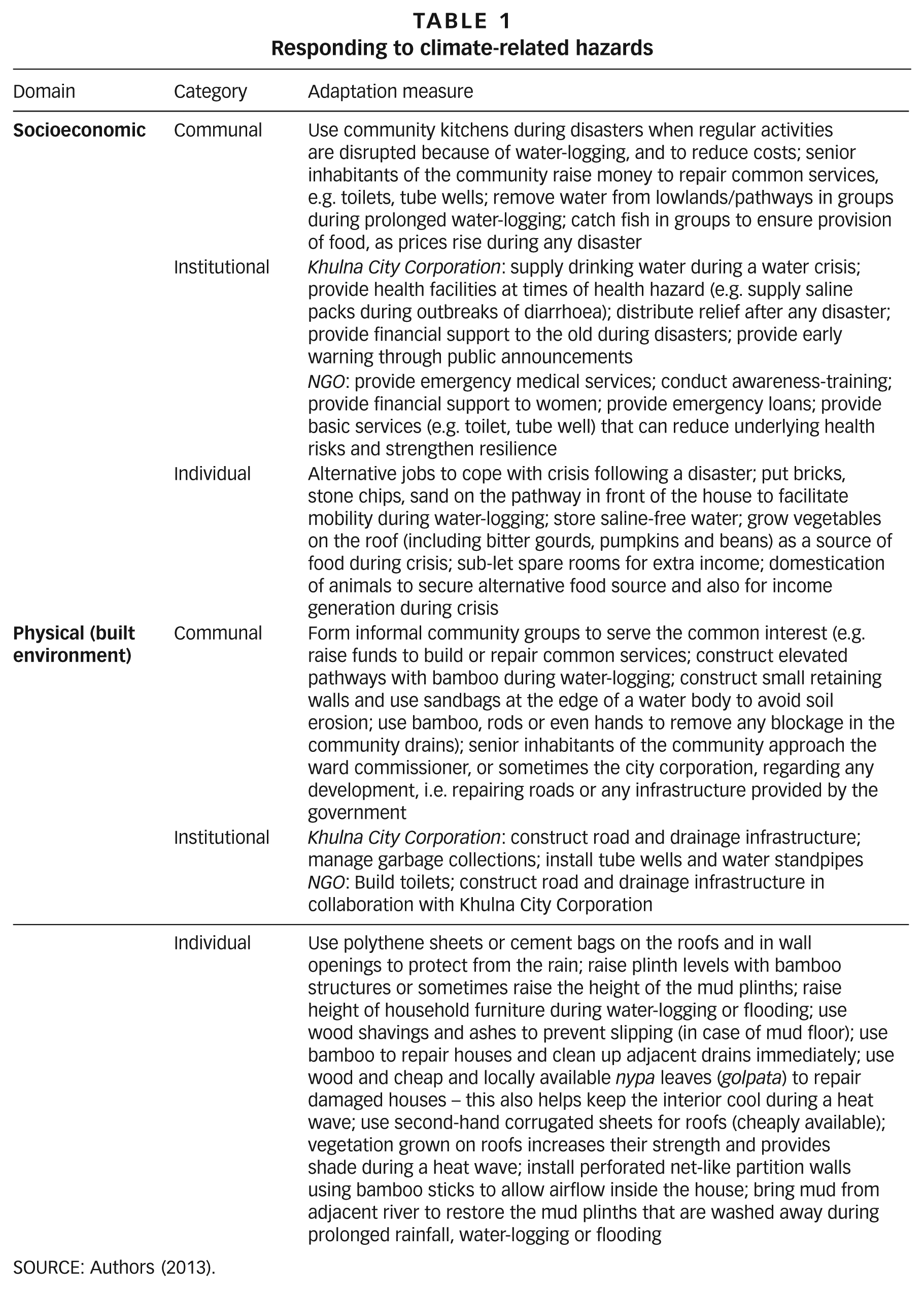
SOURCE: Authors (2013).
Most of these actions involve making modifications to the physical dwelling and its immediate surroundings to deal with different types of threats – examples are shown in Figures 2A and 2B. Many of these deal with hazards related to heavy rainfall and flooding. Polythene sheets or empty cement bags are put on the roof and over wall openings to protect from heavy rain. Plinths are elevated or houses are built on stilts to avoid water-logging. If flooding does take place, household goods are put on shelves close to the ceiling (a practice not widely seen in Bangladesh, although documented in locations including Indonesia and Tanzania), and furniture is raised off the floor. Mud floors are made less slippery after water-logging by spreading crushed wood and ash.
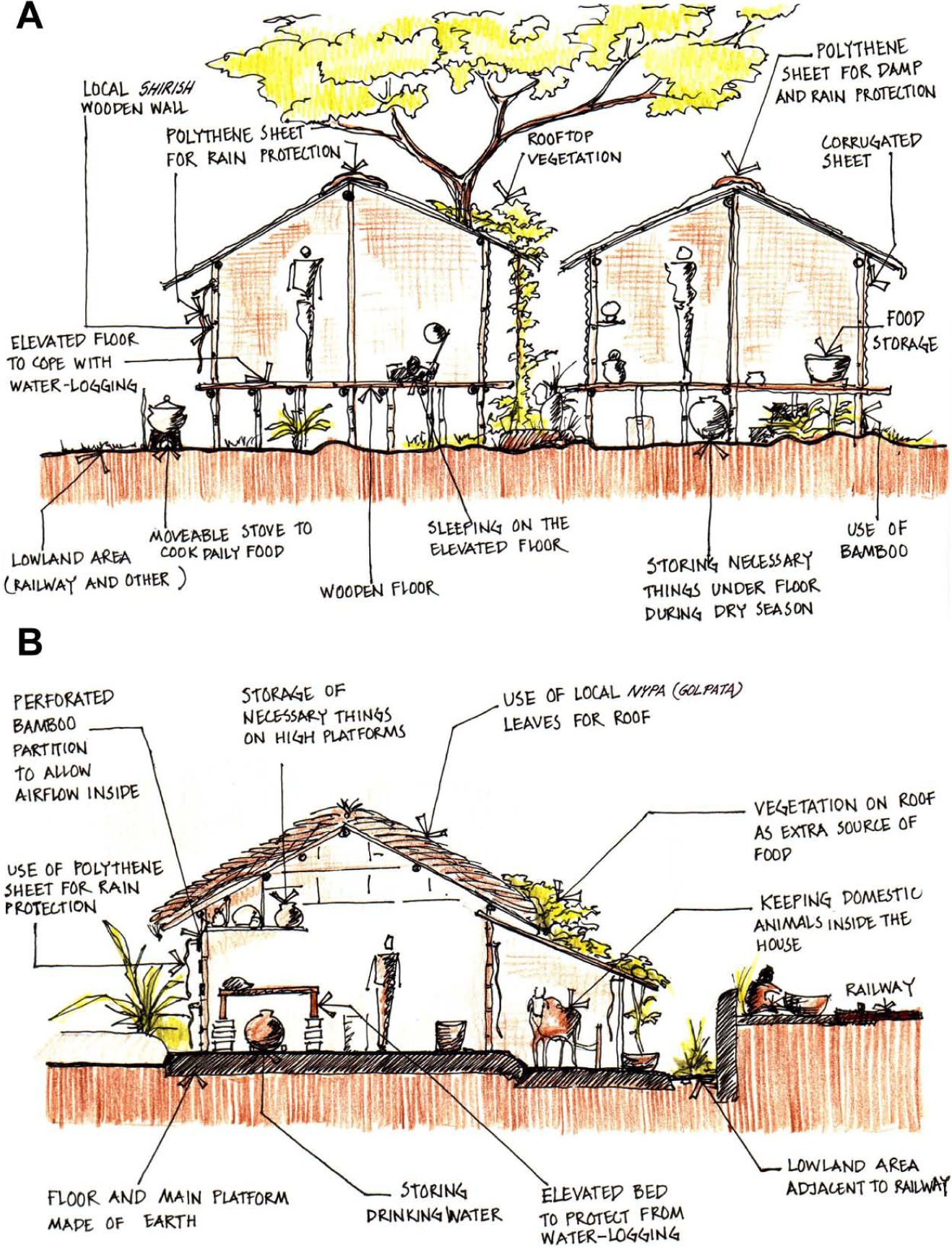
Modifications to household structure to reduce impacts of climatic events
Other modifications help to improve comfort in times of extreme heat. Perforated bamboo partitions are used as interior walls to allow the flow of air around the dwelling; and allowing vegetation to grow on the roof helps to keep the interior cool – and can also be a source of food. Some actions address water availability, with households using all available empty pots to collect and store water. In addition, a wide range of approaches are used to repair damaged houses in a cost-effective manner: locally available golpata (nypa leaves) is used to repair roofs, while shirish wood collected from the nearby sawmill is used to repair walls. Finally, residents contribute to improvements in the immediate surroundings of their homes that can help to prevent damage from flooding, for example using bamboo to clean drains, and strengthening pathways and lanes with crushed stone and brick chips.
d. Communal and institutional actions
Research elsewhere in Bangladesh has noted the importance of social networks in climate change adaptation,(57) and residents of low-income settlements in Khulna also act communally to reduce risk. During or after disasters, people move together to take shelter; people catch fish in groups during periods of prolonged water-logging as a means of enhancing food supplies; and community kitchens are used during disasters to reduce costs. These communal activities involve both younger and older people: senior inhabitants raise money to build or repair common services, while younger people are more likely to be involved in any physical efforts. These public goods include tube wells, drains, toilets, elevated pathways made of bamboo (to enable access to and from the community at times of water-logging) and small retaining walls at the edge of water bodies (to prevent land erosion). Senior community members also act as go-betweens when approaching the ward commissioner or the KCC for support and assistance in this process.
A considerable number of institutions operate in these low-income areas, with a range of responsibilities and ambitions. These include the KCC, but also a range of local, national and international NGOs. The KCC is mostly engaged in post-disaster relief, including the distribution of drinking water during shortages, saline packs during outbreaks of diarrhoea, and other relief items after particular events. The NGOs work more generally on community development concerns (that can be seen as strengthening adaptive capacity), as well as on providing emergency services during disasters.
e. Towards transformational change that reduces vulnerability
However, none of these existing responses address the underlying social and political marginalization of the communities, which is perhaps the single most important feature contributing to their vulnerability to climate variability and change. While all the inhabitants of the city are entitled to basic services provision, the KCC (in common with many other local authorities in low- and middle-income countries) fails to acknowledge the existence of many informal settlements. This means that they are excluded from the KCC’s provision of services, including drinking water, roads, drains and solid waste management. Improved provision of basic services and infrastructure would be a considerable contribution to vulnerability reduction, by strengthening the adaptive capacity of individuals and households and by reducing exposure to flooding and water-logging. In turn, this could lead to increased motivation for the residents themselves to invest in shelter improvements, if repeated damage due to climate-related events is perceived to be less likely.
Another significant underlying factor contributing to vulnerability is the location of these low-income and informal settlements. Most are on land that is categorized as low-lying or agricultural rather than residential, because areas designated for residential use are unaffordable to the poorest. Some are in areas that are exposed to particular hazards, including beside the river or alongside railway tracks. Although responses to informality have gradually recognized the advantages of in situ upgrading (as opposed to relocating), the changing risk context as a consequence of climate change may result in accepting the need to move some residents. However, this requires strong relationships of trust between organized community groups and local authorities (as has been demonstrated in some cases in the Philippines.(58)
Meaningful development that reduces risk and meaningful adaptation that improves living conditions will therefore require action at the intersection of private and public interests. This will not only improve the conditions for individual households but can also strengthen the resilience of the city as a whole. For example, at the time of Cyclone Aila in 2009, the low-income residents living alongside the river were proactive in protecting the city through putting sandbags and dumping rubble along the banks – although this may have long-term negative consequences of blocking the river. This reduced flooding in the city, as although the embankment protecting the city from the Rupsha River has reached only half its anticipated lifespan, it is already reported to be on the verge of collapse because of the use of poor construction materials.(59)
One possible response to risk is to use the skills and knowledge that already exist in these households and communities as the basis for more far-reaching adaptation planning and action. These skills and knowledge are more likely to be used by residents if they are more confident that their efforts (and investments) will not be lost through evictions by the KCC or private landlords. As one respondent commented:
“We can’t afford to build another new house if we are evicted from here. Hence, we use local cheap materials so that we can just ensure a shelter here and move elsewhere if evicted, carrying these housing materials. You are asking about improving our physical environment, who does not want to stay in a better environment? But is it feasible for us under this circumstance (economic and legal)?”
Low-income residents therefore have the skills to use readily available materials – which, if supported, can reduce the overall costs for the implementation of more meaningful responses by civil society and government institutions. This knowledge can be supplemented with awareness-raising and training workshops (already being done by some civil society groups in the city), which can also help to prevent maladaptation – for example, elevating the level of paths and walkways may reduce flooding in one location, but if this is done without adequate consideration for broader drainage patterns it can worsen the issue elsewhere. However, efforts also need to be made to improve the sharing of information about climate-related risks – both to provide warnings when hazards are imminent and to provide support and advice on how best to act. As the vast majority of the households surveyed do not have televisions, radios or mobile phones, they lack this kind of information and are therefore unable to take actions to reduce the consequences of particular climate-related events; they are also uninformed about longer-term climate trends. While the KCC provides public service announcements using loudspeakers, these are only delivered to riverbank settlements.
Another response that strengthens the adaptive capacity of low-income households and communities is to support the development of climate-resilient livelihood strategies. These are livelihood strategies that generate present-day income for families but that are also resilient to anticipated future changes in the climate. People living in low-income areas of Khulna have already been identified to undertake different ways of earning money and this has often been supported by NGOs – for example, through providing financial services (assets or capital) to develop small businesses such as sewing, handicraft production and retail outlets. Households with savings have greater coping ability during a crisis,(60) and the KCC and NGOs are implementing different types of savings schemes. NGOs have also been seeking to strengthen women’s access to and control over assets and resources, thereby boosting their ability to make decisions, participate in the process of local governance and thus strengthen their resilience.
All of the above will require greater engagement and accountability from institutional actors. The Khulna Development Authority is responsible for enforcing regulations (which are also monitored by the KCC) to ensure that landlords meet the minimum standards of housing infrastructure, while the presence of active NGOs can also reduce the likelihood of forced evictions. These responses can provide an incentive to low-income residents (including tenants) to invest in their housing, make physical adjustments to their shelter, and sometimes even improve the settlement to better adapt to climatic variability and change. The KCC has already been acting as a facilitator and partner to NGO activities, with civil society groups helping to convince the Khulna Development Authority of the need to act to reduce the vulnerability of low-income urban residents.
IV. Conclusions
Both future changes in climate and future urbanization trends are difficult to predict with any accuracy. However, in the case of Bangladesh, both these forces will continue to shape the lives and well-being of millions of urban residents. This level of uncertainty is one of the reasons why responses to climate change require not only managing specific threats but also strengthening the capacity of individuals, households, communities and governments to deal with a range of shocks and stresses.(61)
Although the focus of this paper is on the “extreme poor”, the experiences of this group in Khulna are indicative of the challenges for low-income residents in many cities in Africa, Asia and Latin America. Poverty and political marginalization create the underlying conditions that reduce the ability of these individuals and households to cope with both slow- and rapid-onset events. Whether or not these events turn into disasters depends on the coordinated preparation and management of households, communities and institutions.
The experiences of these residents of Khulna indicate that many activities are already being undertaken that respond to particular threats. However, while these short-term practices may respond to urgent needs, they will be insufficient in the longer term. Long-term meaningful resilience will require not only addressing the backlog in risk-reducing infrastructure but also providing institutional support to households and communities – and this, in turn, will not happen unless households and communities have effective ways of influencing processes of urban governance. Equally, this needs to be supported by national policies that grant responsibility, autonomy and resources to local authorities to address local and urban development concerns. National, urban, institutional, communal, household and individual adaptation are therefore all associated with each other and should engage with each other to achieve meaningful and enduring resilience.
Footnotes
Acknowledgements
The research for this paper was undertaken as part of the Action Research on Community-based Adaptation in Bangladesh (ARCAB) project, managed by the Bangladesh Centre for Advanced Studies (BCAS) and funded by DFID. The authors would like to thank Muzaffar Ahmed and Md. Shahadat Hossain from Save the Children, and the community participants in Khulna for their time and insights; also Diane Archer for her comments and suggestions.
1.
Alam, M and G Rabbani (2007), “Vulnerabilities and responses to climate change for Dhaka”, Environment and Urbanization Vol 19, No 1, pages 81–97; also Tanner, T, T Mitchell, E Polack and B Guenther (2009), “Urban governance for adaptation: assessing climate change resilience in 10 Asian cities”, Institute for Development Studies Working Paper No 315, pages 1−47; Ahammad, R (2011), “Constraints of pro-poor climate change adaptation in Chittagong city”, Environment and Urbanization Vol 23, No 2, pages 503–515; Jabeen, H, C Johnson and A Allen (2010), “Built-in resilience: learning from grassroots coping strategies for climate variability”, Environment and Urbanization Vol 22, No 2, pages 415–431; and Roy, M, F Jahan and D Hulme (2012), “Community and institutional responses to the challenges facing poor urban people in Khulna, Bangladesh in an era of climate change”, University of Manchester, Brooks World Poverty Institute, Working Paper 163, 63 pages.
2.
Dodman, D and D Satterthwaite (2008), “Institutional capacity, climate change adaptation and the urban poor”, Institute for Development Studies Bulletin Vol 39, No 4, pages 67–74; also Bicknell, J, D Dodman and D Satterthwaite (2009), “Adapting Cities to Climate Change: Understanding and Addressing the Development Challenges”, Earthscan, London, 397 pages; and Hardoy, J and G Pandiella (2009), “Urban poverty and vulnerability to climate change in Latin America”, Environment and Urbanization Vol 21, No 1, pages 203–224.
3.
Pelling, M (2010), Adaptation to Climate Change: From Resilience to Transformation, Routledge, London, 224 pages; also O’Brien, K (2012), “Global environmental change II: from adaptation to deliberate transformation”, Progress in Human Geography Vol 36, pages 667–676; and Dodman, D and D Mitlin (2013), “Challenges for community-based adaptation: discovering the potential for transformation”, Journal of International Development Vol 25, No 5, pages 640–659.
4.
Roy, M, D Hulme and F Jahan (2013), “Contrasting adaptation responses by squatters and low-income tenants in Khulna, Bangladesh”, Environment and Urbanization Vol 25, No 1, pages 157–176.
5.
Islam, I (2008), “Wetlands of Dhaka Metro Area: a study from social, economic and institutional perspectives”, PhD thesis, Japan Society of Promotion of Science (JSPS), College of Policy Science, Ritsumeikan University, Japan.
6.
United Nations Development Programme (UNDP) (2012), International Human Development Indicators (Bangladesh), available at  .
.
7.
Wilbanks, T J, P Romero Lankao, M Bao, F Berkhout, S Cairncross, J-P Ceron, M Kapshe, R Muir-Wood and R Zapata-Marti (2007), Industry, Settlement and Society. Climate Change 2007: Impacts, Adaptation and Vulnerability, Contribution of Working Group II to the Fourth Assessment Report of the Intergovernmental Panel on Climate Change, M L Parry, O F Canziani, J P Palutikof, P J van der Linden and C E Hanson (editors), Cambridge University Press, Cambridge, page 359.
8.
United Nations Department of Economic and Social Affairs (UN–DESA) (2012), World Urbanization Prospects: The 2011 Revision, 308 pages, available at .
9.
10.
See reference 8.
11.
Dodman, D (2009), “Blaming cities for climate change? An analysis of urban greenhouse gas emissions”, Environment and Urbanization Vol 21, No 1, pages 185–201; also Hoornweg, D, L Sugar and C Gomez (2011), “Cities and greenhouse gas emissions: moving forwards”, Environment and Urbanization Vol 23, No 1, pages 207–227.
12.
Tyler, S and M Moench (2012), “A framework for urban climate resilience”, Climate and Development Vol 4, No 4, pages 311–326.
13.
Ayers, J and T Forsyth (2009), “Community-based adaptation to climate change: strengthening resilience through development”, Environment Vol 51, No 4, page 24.
16.
Brooks, N (2003), “Vulnerability, risk and adaptation: a conceptual framework”, Tyndall Centre for Climate Change Research, Working Paper 38, available at http://www.tyndall.ac.uk/sites/default/files/wp38.pdf; also Romero Lankao, P and H Qin (2011), “Conceptualizing urban vulnerability to global climate and environmental change”, Current Opinion in Environmental Sustainability Vol 3, pages 142–149; and Hallegatte, S, F Henriet and J Corfee-Morlot (2011), “The economics of climate change impacts and policy benefits at city scale: a conceptual framework”, Climatic Change Vol 104, pages 51–87.
17.
See reference 7, page 883.
18.
See, for example, Rana, M (2011), “Urbanization and sustainability: challenges and strategies for sustainable urban development in Bangladesh”, Environment, Development and Sustainability Vol 13, No 1, pages 237–256; also Banks, N, M Roy and D Hulme D (2011), “Neglecting the urban poor in Bangladesh: research, policy and action in the context of climate change”, Environment and Urbanization Vol 23, No 2, pages 487–502.
23.
See reference 1, Roy et al. (2012); also Parvin, A, A Alamand and R Asad (2013), “Climate change impact and adaptation in urban informal settlements in Khulna: a built environmental perspective”, unpublished paper presented at CLIMUrb Conference, September 2013, University of Manchester.
24.
Banks, N (2008), “A tale of two wards: political participation and the urban poor in Dhaka city”, Environment and Urbanization Vol 20, No 2, pages 361–376.
26.
28.
See, for example, Ensor, J and R Berger (2008), Understanding Climate Change Adaptation: Lessons from Community-based Approaches, Practical Action Publishing, Rugby, 192 pages; also Reid, H, M Alam, R Berger, T Cannon, S Huq and A Milligan (2009), “Community-based adaptation to climate change: an overview”, Participatory Learning and Action Vol 60, pages 11–33; and Schipper, L, J Ayers, H Reid, S Huq and A Rahman (editors) (2014), Community-based Adaptation to Climate Change: Scaling It Up, Routledge, London, 304 pages.
29.
Although, see reference 3, Dodman and Mitlin (2013); also Soltesova, K, A Brown, A Dayal and D Dodman (2013), “Community participation in urban adaptation to climate change: potential and limits for CBA approaches”, in L Schipper, J Ayers, H Reid, S Huq and A Rahman (editors) (2014), Community-based Adaptation to Climate Change: Scaling It Up, Routledge, London (n.p.).
30.
Nelson, D, N Adger and K Brown (2007), Adaptation to Environmental Change: Contributions of a Resilience Framework, page 396, available at .
31.
Brown, A, A Dayal and C Rumbaitis del Rio (2012), “From practice to theory: emerging lessons from Asia for building urban climate change resilience”, Environment and Urbanization Vol 24, No 2, page 542.
32.
Roberts, D (2010), “Prioritizing climate change adaptation and local level resilience in Durban, South Africa”, Environment and Urbanization Vol 22, No 2, pages 397–413.
33.
Roberts, D, R Boon, N Diederichs, E Douwes, N Govender, A Mcinnes, C Mclean, S O’Donoghue and M Spires (2012), “Exploring ecosystem-based adaptation in Durban, South Africa: learning-by-doing at the local government coal face”, Environment and Urbanization Vol 24, No 1, pages 167–195.
34.
See reference 12.
35.
Kates, R, W Travis and T Wilbanks (2012), “Transformational adaptation when incremental adaptations to climate change are insufficient”, Proceedings of the National Academy of Sciences Vol 109, No 19, pages 7156–7161.
37.
Mitlin, D (2011), “Lessons from the urban poor: collective action and the rethinking of development”, in M Pelling, D Manuel-Navarrete and M Redclift (editors), Climate Change and the Crisis of Capitalism: A Chance to Reclaim, Self, Society and Nature, London, Routledge, page 85.
38.
See reference 1, Roy et al. (2012); also Mclntosh, A (2008), Bangladesh: Supporting the Establishment of the Khulna Water Supply and Sewage Authority, ADB Technical Assistance Consultant’s Report, Project No 42171, ADB, Dhaka, pages 1−23.
39.
See reference 9.
40.
Khan, M and U Kumar (2010), Water Security in Peri-urban South Asia. Adapting to Climate Change and Urbanization, Scoping Study Report, IWFM, BUET, Khulna; also Murtaza, G (2001), “Environmental problems in Khulna city, Bangladesh: a spatio-household level study”, GBER Vol 1, No 2, pages 32–37.
41.
Khulna Development Authority (2006), Khulna Master Plan 2001–2010, available at .
42.
See reference 9.
43.
Rahman, M (2005), Cities and Climate Change: Preparation of Risk and Vulnerability Maps of Khulna City, Bangladesh, available at http://www.clacc.net/knowledge/Documents/Cities&ClimateChange.
44.
See reference 43.
45.
See reference 9.
46.
Financial Express (2010), “Khulna environment fast degrading”, available at .
47.
48.
See reference 43.
49.
Mehedi, H (2010), The Stories of Rootless People (in Bengali: Shekorhinmanuserkotha), Humaityr Watch, Khulna, available only in Bengali.
50.
Grönwall, J, M Mulenga and G McGranahan (2010), “Groundwater, self-supply and poor urban dwellers: a review with case studies of Bangalore and Lusaka”, IIED Water and Sanitation Series, Working Paper 26, London, pages 1−87.
51.
52.
Angeles, G, P Lance, J Fallon, N Islam, A Mahbub and N Nazem (2009), “The 2005 census and mapping of slums in Bangladesh: design, select results and application”, International Journal of Health Geographics Vol 8, No 32, 19 pages.
53.
Mitlin, D and D Satterthwaite (2013), Urban Poverty in the Global South, Routledge, London, 354 pages.
54.
See reference 4.
56.
Wisner, B, P Blaikie, T Cannon and I Davis (2004), At Risk: Natural Hazards, People’s Vulnerability and Disasters, second edition, Routledge, London, 320 pages.
57.
Rotberg, F (2013), “Social networks, brokers and climate change adaptation: a Bangladeshi case?”, Journal of International Development Vol 25, pages 599–608.
58.
Rayos Co, J (2010), “Community-driven disaster intervention: experiences of the Homeless People’s Federation Philippines, Incorporated (HPFPI)”, IIED Human Settlements Working Paper 25, 69 pages; also Dodman, D, D Mitlin and J Rayos Co (2010), “Victims to victors, disasters to opportunities: community-driven responses to climate change in the Philippines”, International Development Planning Review Vol 32, No 1, pages 1–26.
59.
Daily Star (2013), “Khulna city embankment damaged before reaching half the lifespan”, 16 July 2013, available at .
60.
See reference 58, Dodman et al., (2010).
61.
Carmin, J and D Dodman (2013), “Science and scientific uncertainty in urban climate adaptation planning”, in S Moser and M Boykoff (editors), Towards Successful Adaptation: Linking Science and Practice in Managing Climate Change Impacts, Routledge, London, pages 220–234.