




Abstract
This paper explores the strategies of social movement organizations working in towns and cities of the global South to secure justice for their members and address poverty and inequality. The paper argues that there has been a false distinction between alternative strategies of resistance. Drawing on research in Kenya and South Africa, I argue that, rather than seeing strategies of contention, collaboration and subversion as separate approaches, they can best be understood as alternative strategies, adopted simultaneously and iteratively by urban social movements. Movements, I suggest, move among contentious politics, efforts at collaboration with the state, and subversion (often taking the form of encroachment), to address the survival imperatives of their members.
I. Introduction
Much has been written about the strategies of social movements and the “repertoires” of action they employ to secure the needs and interests of their members. Much of this literature focuses on the responses of marginalized populations in the global North which face multiple disadvantages in the context of capitalist development. But there is now also a growing awareness of the challenges facing people in the global South with inadequate access to services, housing and secure tenure,(1) and the exploration of social movements has expanded to include grassroots organizations within this increasing population. As discussed in Section III, these movements, it has been argued, practise contentious politics, seeking to open new opportunities. Empirical studies have also considered alternative approaches: in particular, the collaborative strategies of co-production, participatory development and democratic deliberation, but also the more subversive strategies taken by informal settlement dwellers as they encroach on the formal city, seeking resources to secure their well-being.
In this paper, I argue that theory has emphasized contention, ignoring the other strategies deployed by social movements; and I explore the multiplicity of strategies and the interactions between them. Rather than being viewed as separate approaches, I argue that these strategies of contention, collaboration and subversion can best be understood as often complementary alternatives. They are frequently followed simultaneously and iteratively as social movements seek to resist exploitation, dispossession and other forms of disadvantage. Greater attention to this breadth of strategies will prevent the dismissal of movement actions and help to build an understanding of how to secure the political transformation required for a more equitable and inclusive future. This discussion offers new insights into pro-poor politics and may help to build links between academics and movement activists.
The movements considered here are not simply formal organizations, but are rather “ politicised collective activities of and for the poor” that include “the more nebulous, uncoordinated and cyclical forms of collective action, popular protest and networks that serve to link both organised and dispersed actors in processes of social mobilisation”.(2)
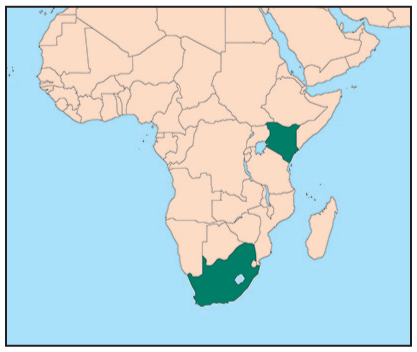
This paper discusses the sources of my empirical evidence (Section II); and then summarizes literature on social movements and contentious politics, encroachment and subversion, and collaboration (Section III). It introduces and contextualizes the SDI (previously known as Shack/Slum Dwellers International) alliances in Kenya and South Africa (Section IV) and synthesizes their strategies, bringing together the literature with their practices and experiences (Section V). Section VI concludes.
II. Researching Social Movements: Sources and Methods
This discussion draws particularly on my experiences with three urban social movements over the last 22 years: SDI, a network of federations of low-income and frequently informal citizens in 34 countries and 477 cities in the global South; the Asian Coalition for Housing Rights (ACHR), supporting more than 1,000 local groups in 165 towns and cities; and the residents’ associations and lane organizations associated with the Urban Resource Centre and Orangi Pilot Project (OPP) in Karachi (Pakistan).(3) My understanding has been further shaped by a research project on chronic poverty and social movements in Peru and South Africa.(4) My knowledge of these programmes has grown organically, informed by discussions of organizational principles, goals, contextual analyses and working practices as represented by community activists, and with exposure to local development, often with repeated visits to particular settlements over several years. This paper has a particular focus on Kenya and South Africa, both countries where I have a long-standing engagement with the SDI affiliates to generate and refine knowledge, as well as a wider research interest.
My engagement has been made easier by the continuity of senior staff and community activists within these organizations. I have learnt about their strategies, their successes and failures, and their analysis of these outcomes. This has been augmented by the views of community members, staff from advocacy networks, partner agencies and other collaborators, government staff and politicians. I have also worked with multiple SDI affiliates and ACHR members as they write about their experiences and publish them through the International Institute of Environment and Development (IIED) and this journal. These repeated encounters have supported a research approach very similar to the form of political ethnography described by Auyero(5) and Daskalaki and Mould.(6) My experiences with these movements, associated networks and organizations have shown me how important a sustained engagement is to understand approaches and underlying strategies at depth – movement activists may be cautious about revealing their perspectives and experiences to researchers they do not know. My understanding of strategies has been strengthened through shared exchanges on state actions, community responses and associated perspectives over time. The conclusions summarized here have been shared and discussed through these exchanges and continuing dialogues with other practitioners, professionals and academics working with SDI and related movements. My work with SDI has emphasized to me the importance of being aware of my position as an English academic, and respectful of my social distance from the realities of urban informalities and inequalities in the global South.
III. Social Movements and Political Action
The most popular perspective for activists and activist scholars focused on the strategies of social movements is that of contentious politics.(7) Tarrow recognizes other strategies as well (including negotiation with the state and challenges to cultural codes), but concludes that “…the most characteristic actions of social movements continue to be contentious challenges”.(8) He argues that because they lack other resources such as money, organization and access to the state, “contention may be the only resource movements control”.(9) Contentious politics, he argues, not only are a central strategy of movements, but also define movements: “…people engage in contentious politics when patterns of political opportunities and constraints change and then, by strategically employing a repertoire of collective action, create new opportunities, which are used by others in widening cycles of contention. When these struggles revolve around broad cleavages in society, when they bring people together around inherited cultural symbols, and when they can build on or construct dense social networks and connective structures, then these episodes of contention result in sustained interactions with opponents - specifically, in social movements.”(10)
Tilly, Tarrow and associated authors have had a primary focus on understanding the ways organized citizens engage publicly with political change. Their work explores how and why social movements gain prominence, their influence on European history, and the processes of movement organization. Tilly describes a movement as enacting a “synthesis” of three elements: sustained public effort (campaign); forms of public political action (demonstrations, petitions, meetings, media engagement); and public representations of the participants’ worthiness, unity, numbers and commitment to their cause.(11) This literature recognizes that movements necessarily engage governments to advance their cause.
Tarrow(12) emphasizes the state’s importance in determining the nature of this engagement, and whether negotiation takes place or not. The political opportunities available to specific movements are a function of the strength and strategies of the state.(13) These include both opportunities that facilitate the work of movements (increased external resources, reductions in the costs of contention, existing and new alliances, improved political access, international support and influential allies) and opportunities that weaken the state and improve the working context (the vulnerability of elites to challenges from excluded groups, reduced capacity for state repression, political leaders’ need for new sources of support, divided elites, low state strength, and ineffective and illegitimate state repression).(14) Also significant is the consciousness of the oppressed regarding the causes of their disadvantage, and how it might be addressed.(15) Although movements are acknowledged to use multiple types of collective action “both outside and inside the political process”,(16) relatively little attention is given by contentious politics theorists to non-contentious elements of their work.(17) An exception is Goldstone,(18) who emphasizes the importance of relations with state agencies and other political groups, arguing that the focus just on contention is too restrictive.
While the primary focus of this work has been on the United States and Europe, ideas about contentious politics have been applied to the global South.(19) Mohanty et al. argue that in Brazil, India and South Africa, social movements tend to mobilize around existing policies on redistribution, with a primary emphasis on policy reform rather than more radical and revolutionary paradigmatic change.(20) Ballard et al.,(21) in a volume on South African social movements, also suggest that movements have multiple and complex strategies.
More collaborative relations between the state and organized citizens have been given sustained attention in recent years. A switching between engagement and negotiation emerges from multiple empirical analyses.(22) Holsten(23) argues that in Brazil, strong grassroots organizations have produced an alternative public sphere that has led to a new kind of citizenship and changing relations with the state.
One emergent type of engagement between the state and low-income and/or disadvantaged groups is that of co-production and other forms of participatory governance.
The concept of co-production came to prominence in the early 1980s, when a particular form of citizen–state interaction was “discovered” in US cities.(24) Co-production, it was argued, points to the potential of citizen involvement to improve service delivery and associated outcomes.(25) Joshi and Moore refine definitions and suggest that “…institutionalized co-production is the provision of public services (broadly defined to include regulation) through regular, long-term relations between state agencies and organized groups of citizens, who both make substantial resource contributions”.(26) Co-production may involve co-governance, co-management, co-implementation (with citizens being involved in production), co-finance and co-learning.(27) As is evident from Joshi and Moore’s definition, substantive citizen engagement is required.
Some discussions of co-production in the global South view it as a secondary strategy for service delivery relevant in the context of a weak state prior to the adoption of a state-led welfare programme,(28) but this interpretation is not universally accepted. Other discussions locate co-production within a broader struggle for choice, self-determination and meso-level political relations in which citizens both seek an engagement with the state (to secure redistribution, reduce free riders, etc.), and also are oriented towards self-management and local control over local provision in areas related to basic needs (i.e. services with development significance).(29) Co-production, rather than simply a route to improve service delivery, is a strategy for the organized urban poor to consolidate their local organizational base and build capacity to negotiate successfully with the state on both policies and practices.
Attention has been given to why movements find co-production effective for addressing members’ needs and interests, turning their positions from a negative stand against state action to a positive demonstration of how things might be improved. Connolly,(30) discussing the Mexican social movements in the 1980s, suggests that the shift from street protests to Protesta con propuesta (protest with proposal) was particularly significant in advancing claims and acquiring resources from the state, even as the dominant political party sought to control movements and challenge their autonomy.(31) The rise of FONHAPO (a state programme to support housing investments) was important in influencing movement leaders’ understanding of effective strategies. Connolly elaborates: “…the importance of these experiences should not be underestimated for their local, national and international influence,
The strategies described by Appadurai in the context of SDI,(33) and by Castells in the context of Madrid’s citizen movements,(34) highlight the importance of citizen engagement in collective consumption goods as a route for an emancipatory politics. Engaging in service delivery can build strong local grassroots organizations able to negotiate with the state as they both practise self-reliance and have a range of working relations with the state.
Considerable attention has also been given to participatory governance, particularly participatory budgeting. Holsten(35) argues that citizens have used such opportunities as part of a transformation of citizenship. Baiocchi, Heller and Silva(36) test these conclusions through a study of eight Brazilian municipalities, and argue that both movement autonomy and state institutionalization of participatory practices are critical to the success of movements achieving greater citizen involvement in decision making. Movements, they suggest, may choose engagement from a position of strength (not weakness); they do not abandon contention but rather choose to negotiate. These and other studies warn against a simplistic assessment of participatory budgeting,(37) whose outcomes illustrate the contested nature of state and movement interactions, and the significance of material constraints such as low municipal budgets.
A third literature (beyond those on contentious politics and on engagement with the state) offers insights into practices of organized resistance focused on subversion, or the undermining of anti-poor state actions. The ways local people resist anti-poor coercive practices have long been recognized.(38) Myers(39) highlights both illegal land occupation and illegal income generation in Lilongwe (Malawi) to elaborate how residents survived in the colonial African city. He also highlights the ambiguous nature of many such practices – they may be subversive towards the state and/or conform with local power structures. Whatever the historic conditions under which people have occupied towns and cities in the global South, Bayat argues that as economic conditions become increasingly adverse for some, there has been a “Quiet encroachment …non-collective but prolonged direct action by individuals and families to acquire the basic necessities of their lives (land for shelter, urban collective consumption, informal jobs, business opportunities and public space) in a quiet and unassuming illegal fashion”.(40) Here this quiet encroachment is an individualized approach, but a substantial body of literature shows that these activities are frequently collective. Gillespie,(41) for example, elaborates on the multiple forms of action taken by street traders in Accra to secure trading spaces. The public nature of the space means that these strategies (e.g. illegal tapping of water lines or electric cables) may require some level of collective engagement, even if it is simply to secure non-interference. Bayat argues that the urban poor are neither revolutionary nor acquiescent to disadvantage. Rather they seek to advance their interests through pragmatic actions that they test and refine. Political relations in the Middle East have, Bayat suggests, led to the increased prevalence of this approach in this region, and encroachment, directed towards the state, constitutes a form of resistance through subversion. He also acknowledges that not all encroachment is deliberately subversive; households may be forced to seek an accommodation with local elites even as they resist some forms of disadvantage.
Sen articulates the importance of subversion when he notes that the “most blatant form of inequalities” is evident when “discontent is replaced by acceptance, hopeless rebellion by conformist quiet and most relevantly, in the present context suffering and anger by cheerful endurance”.(42) Acts of subversion demonstrate the ability to resist injustice privately or simply to continue survival efforts with low public visibility if circumstances do not allow adversity to be resisted through public protests or otherwise overcome.(43) Both psychologically and politically, subversive acts are an important practice. Drawing on the experiences of the Orangi Pilot Project, Alimuddin, Hasan and Sadiq describe the installation of a piped water network in an informal settlement in Faisalabad. Formal engagement with the local authority was needed to gain access to water; but this followed the “clandestine” laying of a water pipe beneath a road.(44) They argue that an important relational change emerges: “Development does not occur as a result of available funds. It takes place through the development of skills, self-reliance and dignity - the three are closely inter-linked. These factors make relationships within communities, and between communities and government agencies, more equitable and this change in relationships brings about changes in government planning procedures and, ultimately, in policies.”(45)
The occupation of public space to address needs and reclaim identity is given significance elsewhere in academic literature. Daskalaki and Mould(46) discuss urban “subversions” that are as much cultural as resource-orientated and that represent efforts to use urban space in ways that may not be sanctioned by those formally governing the city. Examples are painting houses in favelas and performance art in public urban space. Yates,(47) analysing movement strategies and the creation of social centres through the occupation of private and public space in Spain, explains how low-income households secure resources by acquiring food from large waste bins. He argues that in this country such strategies are very much part of movement actions. Unlike co-production, these activities challenge the state and its approaches to resource allocation.
Another variant of subversion is the “precedent setting” of the Indian Alliance and other SDI members. When accepted policies and practices fail to work for them, the Alliance often demonstrates more effective pro-poor options. These precedents, as described by Burra,(48) are often a creative form of rule breaking – legitimating the resourceful but often illegal strategies of low-income and informal households. Why this strategy? Burra explains, “The alliance believes that, however unmindful of the needs of the poor the State might be, ‘State-bashing’ alone is simply not an effective way to change its policies and practices”.(49) But to negotiate effectively, new solutions have to be identified, realized and secured. These subversive precedents have involved changing zoning and building regulations, challenging rules that limit entitlements to bid for municipal projects, and infrastructure installation by communities themselves.
There has been discussion of social movement strategies that extend beyond specific approaches; indeed arguably it is the multiplicity of strategies that enables movements to take on the challenge raised by Harvey(50) of creating anti-capitalist futures, which are less exploitative and more emancipatory, through efforts to produce, protect and use public goods. However, for the most part discussion about the blending of approaches has focused on contentious politics and collaboration/engagement with the state. Robins, with a focus on movements of disadvantaged groups in South Africa, argues that grassroots organizations are pragmatic, using multiple strategies to influence political leaders(51) in part because they have to navigate “multiple domains of politics” as they engage with considerably more powerful agencies.(52) Understanding of the strategies used in this context also emerges from Heller and Evans’(53) discussion of Tilly’s work on Brazil, India and South Africa. They suggest that urban social movements have faced particular difficulties in the last two decades with increased state managerialism, growing wage inequalities and few employment options. Mohanty et al. reach similar conclusions, arguing that movements have to negotiate contested terrain and may chose strategies that avoid conflicts, as governments are most comfortable with mobilizations that “do not directly threaten state power through protest”.(54) Ballard et al. argue that in South Africa, “Social movement engagements with the state fall on a continuum between in-system collaborative interactions on the one extreme, and out-of-system adversarial relations on the other. Relatively few movements can be clearly placed in a single camp.”(55) Such strategies, they say, are used simultaneously across movements with the potential, at least, for informal synchronization, to strengthen pressure for change.
While there has been less recognition of the strategic use of subversion (through encroachment), this is now emerging in the literature. Gillespie,(56) in a study of social movements in both the informal economy and informal settlements in Accra, differentiates between quiet encroachment and bold encroachment, which involves social movements’ efforts to “render themselves visible, participate in urban governance”, asserting their rights through campaigning and resistance. Choplin and Ciavolella(57) extend the debate with an analysis of the contribution of encroachment practices to patterns of resistance in the context of evictions and resettlement in Nouakchott (Mauritania).
Finally, we should recognize Harriss’s class analysis,(58) highlighting that, as least in India, “the rich operate while the poor agitate”. It appears that movements also recognize that the shifting and simultaneous use of strategies offers political advantages.
IV. A Summary Introduction to Sdi in Kenya and South Africa
This section introduces the strategies of two SDI affiliates that I have worked with over the last two decades, the Kenya SDI Alliance and the South Africa SDI Alliance. Each SDI Alliance includes the savings-based federation, an NGO and a separately registered fund. In South Africa, a second community-based network is also part of the Alliance. In Kenya this includes Muungano wa Wanavijiji (a federation of savings schemes from informal settlements, whose name means “united slum dwellers”), the grassroots fund Akiba Mashinani Trust (AMT), and a professional support NGO, SDI Kenya. In South Africa, this includes the Federation of the Urban and Rural Poor (FedUP), Informal Settlement Network (ISN), uTshani Fund and Community Organization Resource Centre (CORC).
Drawing on the exposure to movement strategies, practices and experiences summarized above, this section describes some of the experiences of the SDI network and its local affiliates, and explores how they might be understood and represented. The Kenyan and South African examples allow for the exploration of strategies in contexts with significantly different levels of both development and informality. Their experiences are not unique, however. Relevant ideas and experiences from other SDI affiliates, particularly India, Namibia and Zimbabwe, are also mentioned below. In this discussion, I use the term “strategies” to refer to overall plans, and “tactics” for particular sets of activities. “Approaches” is used to refer to the generic techniques of contentious politics, collaboration and subversion.
a. Kenya
The SDI affiliate in Kenya, Muungano wa Wanavijiji, emerged in 1996 in a period when land grabbing and eviction was rife. In the preceding decades, President Moi had used the transfer of public land in Nairobi to consolidate support and remain in power. This resulted in a distinctive pattern in which landowners rented large areas to people who then built shacks to rent; they are known as structure owners.(59) Low-income tenants struggled with tenure insecurity in a context of low wages, few work opportunities and low levels of economic growth. Muungano’s initial leadership positioned the movement to mobilize around the claim that the state was responsible for addressing the needs of residents of informal settlements, given their essential contribution to the city’s economy.(60) Needs were acute. In Nairobi, an estimated 55 per cent of the population lived in informal settlements in 1995, occupying 5.8 per cent of the land.(61) And in 2004/6, an estimated 61 per cent of all non-agricultural urban workers worked informally.(62) Informality continues to characterize this context.
During the late 1990s, landowning chiefs sought to push out tenants and sell their land on the open market.(63) Political alliances were made between those struggling for democracy and land justice. While Muungano’s leadership was convinced that the state had to address the needs of informal settlement residents, they were impatient to push ahead and develop solutions regardless of the state’s involvement, and began to experiment with development projects. As the movement consolidated and democratic practices in Kenya strengthened, collaboration with the state grew. The new constitution in 2010 mandated citizen participation in urban planning, opening new possibilities. Also, the ability of local government to declare informal settlements as Special Planning Areas facilitated rules and regulations more inclusive of low-income groups. By 2017, Muungano and NGO partners Akiba Mashinani Trust and SDI Kenya had developed multiple experiences of co-development related to both housing and service delivery. Particularly notable is the Kambi Moto development in Nairobi, in which 270 households, both structure owners and tenants, shared land and undertook housing development.(64) In August 2017, the declaration of a Special Planning Area in Mukuru (an informal settlement of 105,000 households) by the county government was an acknowledgement of the success of these efforts as the County embarked on this joint development with Muungano.(65) However, although the context is much more positive, mobilization against eviction remains a key tactic to this day.
b. South Africa
South Africa’s SDI affiliate, the Federation for the Urban and Rural Poor (FedUP), emerged from an earlier movement, the South African Homeless People’s Federation (SAHPF), in 2006. Active in cities across the country post-1994, in a period with high expectations of state redistribution, the Federation developed multiple strategies and tactics. It has had to engage national, provincial and municipal government to secure access to state housing finance; national government financed the capital housing subsidy, provincial governments have had a lead role in subsidy allocation, and municipalities remain the key planning authority. The Federation has drawn on varied experiences of earlier social movement mobilization, notably the struggle against apartheid.(66) Informality is less significant in South Africa than Kenya. By 2014, an estimated 11 per cent of the urban population lived in informal settlements(67) and 30 per cent worked in the informal sector in 2007.(68)
Member savings schemes began organizing in the years immediately prior to democratization and the movement engaged with emerging democratic institutions. As stakeholders in the design of the national capital housing subsidy, SAHPF developed a community-driven self-build approach, integrated into the subsidy programme as the People’s Housing Process (PHP).(69) High levels of renting in backyard shacks were indicative of both housing need and the poor quality of housing provision; land invasions were very much a part of the repertoire of activities. Federation leaders had to negotiate with a state increasingly hostile to such actions. The controversial Elimination and Prevention of the Re-emergence of Slums Act (2007) in Kwa-Zulu Natal attempted to make eviction easier for provincial governments, but was overruled by the constitutional court when challenged by another social movement (Abahlali base Monjondolo).(70) While opposed by some government staff and politicians, the Act was supported by others. By 2010, the housing subsidy programme had provided 2.8 million dwellings, but the housing backlog remained at about 2.1 million; most houses had been constructed through top-down delivery projects as PHP delivery was not scaled up.(71)
By 2006, in order to strengthen political voice and demands for redistribution, the Alliance expanded to include the Informal Settlements Network, a configuration of community groups using more traditional organizing methodologies.(72) Now, in 2018, the state appears to offer considerable support to those in informal settlements, with water and electricity subsidies as well as a housing programme that includes upgrading. However, delivery has still failed to reach millions in need.(73) FedUP has been under pressure to respond as frustrations across informal settlements have increased and residents’ service protests have grown. The Alliance has been focused on informal settlement upgrading and improving the quality of state programming, although subsidized housing construction also continues.(74)
As in Kenya and elsewhere in SDI, the movements are careful to avoid being aligned with political parties. At the settlement level, residents are likely to hold different party affiliations and preferences, and to be able to negotiate with the party in power. However, where there are possibilities to build a constituency of political support, these are taken up. In South Africa, Joe Slovo, first Minister of Housing in that country’s democratic regime, supported the Federation by contributing to the loan fund; and a close partnership with the then Minister of Human Settlements (Lindewe Sisulu) developed from 2006,(75) although commitments for subsidy finance have been hard to realize.
Organizing processes in South Africa have been particularly challenging in the last decade and some actions carry the risk of political exclusion. The economic context remains difficult for low-income households. There are high levels of economic development but few opportunities for informal businesses, and a deep hostility towards informality in general.
V. A Triad of Movement Strategies
This section describes the strategies being used in Kenya and South Africa and analyses factors that have led movements to shift approaches or rebalance between them. Figure 1 shows the core approaches, all three of which are significant, and also how the federations move among them. There is a particular focus here on the three “axes”. These offer a conceptual framework for understanding the movement among these alternative approaches, which can shift according to political expediency and movement identities and mobilization.
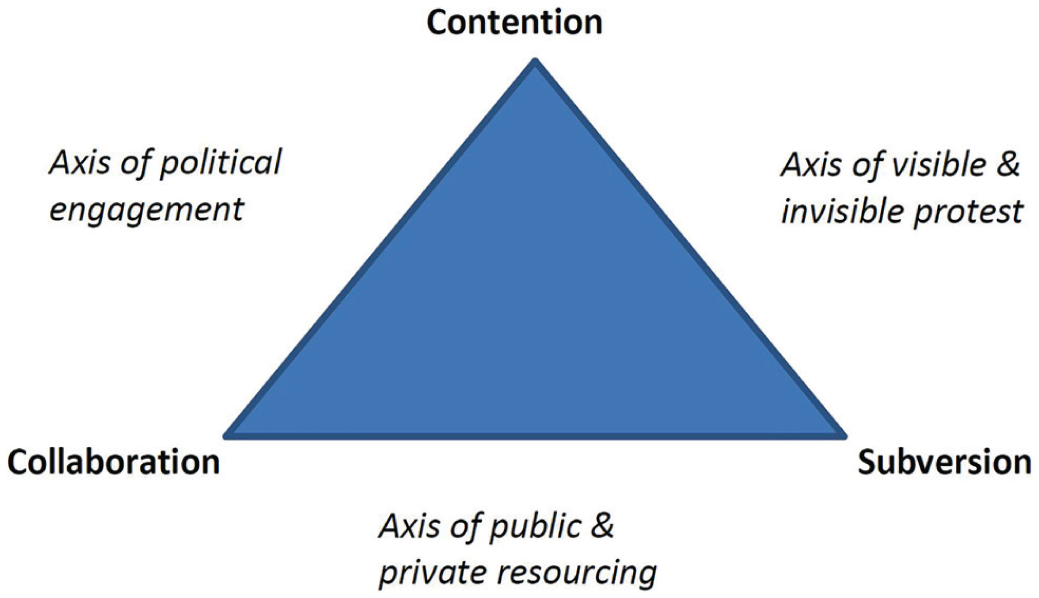
Core approaches to urban transformation adopted by social movements
Joseph Muturi, a Muungano leader, identifies actions consistent with all three approaches in the defence of Woodley market in Nairobi. This local authority-organized market provides a base for hundreds of traders. Lacking reasonable facilities and infrastructure to attract customers, vendors spread out over the pavements, a move to improve their incomes that became subversive at scale. This encroachment on public space, and its scale, required authorities to demonstrate their control, and vendors were charged a fee to sell on the street. When the county government proposed a medium-rise building on the market site (making land available for housing on the remainder of the site), the vendors organized demonstrations in protest.(76) Nairobi County indicated its willingness to consider alternative plans, and Muungano supported the trader organizations to negotiate with officials and politicians, co-producing an alternative design that maximized the use of space. This brief example demonstrates the multiplicity of approaches and the fluidity of movement actions.
The “axis of visible and invisible protest” (Figure 1) moves from contention, through visible acts that claim attention without contestation, to less visible acts of subversion. The nature of the movement activities means that less is written about “under the radar” encroachment. Encroachment is not necessarily against the state, although in the urban context it frequently is. This is especially the case in the global South, where informality is ubiquitous and frequently used against low-income groups by the state to further marginalize and disadvantage them. Encroachment can be a powerful subversive act. As the movement moves along this axis from public to hidden resistance, members, for any of a number of reasons, seek to make their opposition public. The risk is that this public opposition will draw attention from a hostile state to activities it then tries to repress. This might be true of both acts of public protest and those less visible, such as the illegal tapping of water lines. Alternatively, the state may be persuaded by force of numbers or the power of legitimate argument to negotiate and compromise. A particular challenge for movements as they move between the invisibility of subversion and the public statement of contention is to maintain their relevance to people’s day-to-day difficulties. Much of the hidden resistance is related to livelihoods and improvements sought in material conditions. But resisting publicly may jeopardize the continued practice of these activities. Once Nairobi street traders protest the lack of facilities, they draw public attention to themselves and risk losing the space they have secured. Movements have to balance their need to be public with the need to address people’s material disadvantage.
The ability of SDI’s South African Alliance to use information (specifically community enumeration) to move away from both invisibility and contention, negotiating to secure public resources, is exemplified in their response to repeated fires in the Joe Slovo informal settlement (Cape Town).(77) SDI’s enumeration practice draws on the experiences of the founding affiliate in India, whose first survey(78) was a confident statement of pavement dwellers’ presence on the city’s streets, challenging ongoing evictions and enabling the pavement dwellers over time to strengthen their identity and political position, eventually leading to gaining housing as they secured public resources for their shelter needs.(79) The same practices were adapted to the South African context. Part of the Joe Slovo community, informally settled in the 1990s, was relocated in 2005–2006, leading to street protests by other residents. Legal challenges only delayed further relocations. To advance a dialogue with the authorities, the community undertook enumeration and house numbering in 2009, at the same time documenting their contribution to the local economy and their lack of facilities. The subsequent negotiations led to a new relationship with the authorities, as well as sanitation improvements.
The axis of political engagement moves between contention and collaboration and highlights the explicit political positioning of movements. In Kenya, Muungano wa Wanavijiji began, in 1996, by fighting evictions through demonstrations and legal challenges, in the context of considerable contestation between national and local government.(80) Muungano worked with NGOs to challenge evictions in court, initially losing 24 cases.(81) Their strategies then diversified. While emphasis is now on collaboration with government, contentious politics continues. Nairobi County’s current willingness to engage around the upgrading of the informal settlement of Mukuru follows earlier demonstrations on land grabs, land rights and land occupations, and protests about the lack of sanitation. At the same time, multiple forms of collaboration include participation in government planning processes and the creation of new spaces for joint activities. Felista Ndunge, Muungano leader in Mukuru, elaborates on the consequences: “Things have changed. The forced evictions have lessened and if there is a village that is to be affected by demolition it is usually where there is no other option, or it’s in private land, or by the riverside, or maybe the [land] reserved by the government for a different purpose. But there must be a relocation plan, that is one achievement of Muungano. Before they do the demolitions or people are moved there must be a plan for where they will go.”(82)
Muungano’s shifts along this axis have not been easy. Lines and Makau(83) explain how ambivalence about engagement with the state led to a split in 2001 (although both groups remained under the Muungano platform). Engagement without significant improvements for those in informal settlements remains a concern in Mombasa, for example, where Muungano has been frustrated by limited progress on land issues despite collaboration with the City Council. Movement along these axes is not unidirectional, nor do movements occupy a single position on the axis. Rather there is a continual shifting in the weight of activities in response to external opportunities, new openings and strategic realignments.
In South Africa, the resources on offer have been an incentive for engagement with the state. As explained by Patrick Magabula, FedUP’s late president, movement leaders recognize that securing influence and resources requires “Shaking off the stigma that we are land grabbers”.(84) The state has been under pressure to address housing needs in the context of a rights-based constitution(85) and growing citizen protests. FedUP’s leaders have long sought engagement and collaboration on both housing construction and settlement upgrading. The early years of the federation were characterized by frequent land invasions.(86) While the work of SDI and affiliates is frequently presented in terms of collaboration with the state, contention continues to this day. In 2011, when people were evicted from Marlboro South, an area of abandoned warehouses in Johannesburg occupied by homeless families, the Informal Settlements Network (ISN) organized a province-wide solidarity march to raise attention to the difficulties faced by these families and lack of meaningful engagement with government.(87) Both FedUP and ISN are frustrated that state action against those living informally continues despite a rights-based constitution and considerable rights-based action. Local associations continue to move between strategies to advance their interests; see, for example, recent efforts to secure the government action to upgrade Slovo Park in Johannesburg.(88) As in Kenya, they shift between approaches of collaboration and contention.
Engagement with the state may emerge from subversion as well as contention. The axis of resourcing reflects the reality that both individual and collective acts of subversion are primarily concerned with survival. When low-income households face acute difficulties securing even basic incomes and have limited access to public goods, the motivation for subversion is necessity rather than resistance. This is not to deny the political dimension, but to recognize multiple motivations and the need to secure essential goods and services. In South Africa, SAHPF members subverted building regulations when they developed a plot of land in Cape Town that became the Victoria Mxenge Housing Cooperative. Landfill was required, but the formal contractors did a poor job. City engineers proposed expensive raft foundations that would have used up much of the state housing subsidies financing the development. The women, learning from their Indian peers, decided to use an innovative technology (ring beam slabs). To release the funds, the Council required the community to take responsibility for any cracks.(89) The pre-financing required for this act of subversion was repaid when the residents eventually accessed the housing subsidy. Such resources are both financial and reputational as positive engagement strengthens the public legitimacy of a community’s contribution. Such recognition enables social movements to engage with authorities and identify further opportunities for their members.
Muungano’s experience demonstrates the potential and complexities of moving from subversion to collaboration in a context dominated by informality. In Mathere (Nairobi), the utility disconnected suppliers indiscriminately in 2007 to undermine the gangs organizing the informal provision of water. Residents asked Muungano to intervene on their behalf. Muungano organized residents into associations, and facilitated a dialogue between the associations and the utility in 2008. Frustrated by the options on offer from the utility and facing an unwillingness to negotiate, Muungano began to work with the local community to develop new options. “Muungano instead organized the construction of a model water kiosk, and the community began independently digging the trenches required for pipes”.(90) After these discussions and the subsequent development of trust between savings group leaders and utility officials, the residents’ associations “…offered to remove the informal infrastructure themselves, as a sign of good faith, generating a lot of goodwill with the state. Both sides worked fast, and by 2012, 38 water kiosks stood in 11 villages, with 29km of trunk water pipe extended into the settlement.”(91) Negotiation enabled a shift from invisibility to visibility with the provision of formal services.
For Muungano’s membership, high rents, low wages and limited employment options mean that households in Nairobi encroach on land where possible. The changing emphasis among strategies of encroachment, protest and co-production is demonstrated through the history of Muungano’s participation in the railway redevelopment in Nairobi. Households had located shacks in the railway reserve (land alongside the track) because of a lack of alternative options. In 2004, the government announced the eviction of all residents along the Kibera/Mukuru railway line due to the planned redevelopment. Multiple protests followed. When the Kenyan government required World Bank financing for the project, it had to reconsider its approach to eviction, since finance would be conditional on compensating those requiring resettlement. The government introduced the required policy reforms and acknowledged that it needed to work with Muungano to provide resettlement to those displaced in lieu of compensation. The result was that 9,000 households and businesses received homes and workspaces. Along an 11-kilometre stretch of railway, the reserve was reduced from 30 to 20 metres on either side, with the remaining 10 metres used for the required construction.(92)
In South Africa, the benefits of government engagement are evidenced by the construction of 11,825 PHP houses by local communities, financed by the state.(93) Arguably more significant for those living in informal settlements has been the policy shift towards community-led informal settlement upgrading. In Cape Town, the Alliance has secured City Council support for five upgrading projects. For example, 167 households in Sheffield Road (Philippi) settled in a road reserve received toilets from the City and hence greater tenure security.(94) However, the Alliance has struggled to secure the same benefits for other households.(95) There is consistent and ongoing strategizing about the best approach to follow. Frustrated by inaction, communities continue to invade land. Bradlow(96) quotes Nokhwezi Klaas, a community leader from a Cape Town informal settlement: “The city told us to not put shacks in here. But we insisted on putting shacks. They came to count our shacks and then they said, ‘No more shacks. Otherwise, we will demolish.’ But that never happened.” In eThekwini, FedUP leaders suggest it was the willingness of Abahlali base Mjondolo to use public demonstrations that led the local authority to prioritize their access to land.(97)
In the absence of successful engagement with government, communities fall back on a combination of contention and subversion. Zibagwe(98) describes the struggles of residents of the informal settlement of Enkanini (Stellenbosch) to access energy. In 2007, families invaded this land because they could not afford the rents for backyard shacks. The municipality sought to move the settlement (because the land was zoned for agricultural development), but the resettlement options they offered were a considerable distance away. In 2012, the Alliance partnered with the municipality to support a community self-enumeration, which showed very low levels of formal services. Residents paid R200 a month (US$ 20) to households in the adjacent formal neighbourhood to informally access their electricity. Multiple blackouts in the formal settlement led government to remove these connections. Enkanini residents then connected directly to the mains electricity. When this was cut during the day, they reconnected at night. When, exhausted by these efforts, they connected to a buried cable to a local school, the municipality cut the school connection. The state then offered the community the chance to be part of a University of Stellenbosch solar power initiative. This led to public protests as some residents felt that it did not address their need for electricity. Zigbawe(99) notes, “Self-connection in Enkanini, through izinyoka [meaning snakes, and also used to describe illegal connections], became a defiant and puncturing act as well as a covert resistance against marginalisation from this crucial urban service”. Such accounts highlight the ways organized and unorganized residents shift between strategies of subversion and those of engagement and contestation; subversion can be both a political act and an act of necessity in insecure and highly commodified urban contexts.
These Kenyan and South African examples illustrate the commonality of struggles and strategies despite differences in the scale of informality, state investment and opportunities. The federations use contention, collaboration and subversion to assert their presence in ways that advance their interests, claiming citizenship when appropriate and disappearing into the obscurities offered by informality when this appears to offer an advantage. This is not to conflate the Kenyan and South African experiences; there are significant differences. But what is evident is the use of similar approaches.
VI. Conclusions
While academic literatures acknowledge the importance of multiple strategies for social movements, there has frequently been an emphasis on one strategy to the exclusion of others and an assumption that they do not coexist. This paper has emphasized that distinctions between these strategies are artificial. Opposing engagement and contention, for instance, is a false dichotomy for movements that move between alternatives to strengthen their negotiating positions and respond to changing circumstances (which they themselves may have catalysed).(100) Movements need both to negotiate with the state and to develop effective alternatives recognized as credible by the state.(101) The use of contentious politics is not irrelevant; on the contrary, this is a well-used strategy. But it is not sufficient. The significance of Tilly and Tarrow ’s work (see Section III) appears to have led to an overconcentration of academic scholarship on this approach and too little critical engagement with the mix of approaches that movements draw into their repertoire.
An emerging body of academic literature recognizes that strategies may be multiple(102); but this recognition has been limited on the whole to contentious actions and more positive engagement with the state. This is an oversimplification; strategies may also include a de facto shift into resistance through practices of subversion, especially the encroachment of land for either livelihood or residence, and the challenging of rules and regulations as movements seek to “remake” the state in a form that is more effective in addressing poverty and reducing inequalities.
As they engage the state, movements may be forced to deny their associations with groups practising encroachment or contestation. This political necessity makes research difficult. The challenge must be to develop methodologies that allow such complex positioning to be revealed.
Two factors that appear significant in triggering changes in strategies and approaches are the scale of community action and the attitude of the state. The state (or part of the state such as a city government) decides how to respond to contentious politics and whether it wants to resist or negotiate. Influential in its decision is the scale of the action and whether it is perceived by the public as a legitimate grievance. The state decides whether it will ignore citizen encroachments or, as pressures for modernity intensify, if it will seek to manage these practices, and how. Encroachment has the potential to be a powerful subversive statement even when it is less visible (and sometimes less organized) than either street protests or more participatory forms of governance and self-help improvement. In terms of understanding both movement strategies and outcomes, this analysis emphasizes the importance of shifting tactics and the necessity for a dynamic and temporal analysis. Political opportunities may open up unexpectedly and catalyse a movement response; but more importantly such opportunities are dynamic. While low-income groups are disadvantaged in terms of political power, they are involved in the making and remaking of such opportunities. Their power lies in both their strategic capabilities and their organizing potential.
Movements are motivated to engage the state for recognition, redistribution, and protection from dispossession and exploitation. This engagement comes with risks.(103) This paper’s analysis suggests that even when movements negotiate and then collaborate, they balance this positioning with both contentious politics and subversive actions that can advance interests alongside the outcomes of direct engagement. The ability to maintain autonomy, making decisions about strategies and learning from them, appears to be critical. While the significance of movement autonomy has been recognized,(104) the ways movements define and defend their autonomy has received insufficient consideration. As important as autonomy is the capacity to move between strategies, taking into account how movement legitimacy is recognized and how the needs and interests of members are being addressed. In addition to planning for negotiation and protest, it is critical to recognize, guide and support appropriate encroachment. As pressures mount on city governments to deliver to their citizens and as the costs of city living rise, the survival struggles of low-income households become more acute. How those struggles manifest, and their intensity and scale, are likely to be key to determining the inclusivity of 21st-century cities.