




Abstract
An estimated 60 per cent of the world’s 17 million refugees currently reside in cities, where they often lack access to financial assistance and legal protection.(1) In their absence, displaced populations depend on participation in formal and, more frequently, informal markets for livelihood generation. However, little is known about how refugees enter these markets, how they fare in relation to host populations and internally displaced persons (IDPs), and how municipal and humanitarian actors might intervene to improve their outcomes. This paper examines the participation of refugee and IDP populations in markets in Kampala – the capital of a country with one of the largest refugee populations in the world. It investigates the experiences of Acholi, Somali and Congolese populations in the paper bead, bitenge fabric and cosmetics markets, respectively. Considerable diversity is found in the experiences of these different populations, relating to their access to basic services, supply chains, and diasporic networks.
Keywords
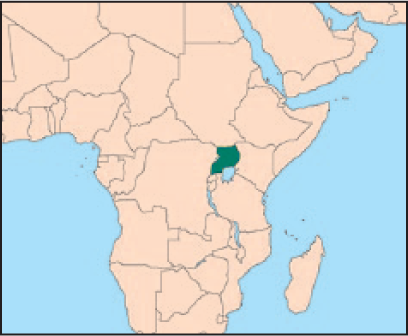
I. Introduction
The majority of the world’s refugees and internally displaced persons (IDPs) reside in urban areas.(2) Like other urban migrants, refugees and IDPs arrive in towns and cities in search of services and socioeconomic opportunities. However, displaced populations also seek security, anonymity, and/or the promise of resettlement.(3) In 2009, UNCHR recognized urban areas as “legitimate places for refugees to reside and exercise the rights to which they are entitled”.(4) Yet humanitarian actors have been slow to adapt to urban environments, accustomed to the separation rather than the integration of displaced and host populations, and the replacement rather than the reinforcement of local systems.(5) As a result, Lucy Earle argues that humanitarian response remains “fundamentally at odds with the way that towns and cities are organized and the way that urban life plays out”.(6)
Host and displaced populations alike struggle to overcome the structural problems associated with urban poverty. Nevertheless, they differ in two important ways. First, most refugees and IDPs have experienced violent conflict, human rights abuses, and/or long and arduous journeys – experiences that expose them to additional forms of physical and mental stress that are often not well understood by host governments.(7) Second, refugees and IDPs face additional barriers when seeking to access work – for example, language and political discrimination – that can force them to engage in activities with higher degrees of social and economic risk.(8)
Markets – as both physical places and systems of exchange – fulfil critical functions as providers of food and livelihoods in humanitarian crises. Such is their importance to urban humanitarian response that data collected from market vendors have been shown to provide critical information for disaster early warning systems.(9) Participation in markets, for example through petty trade, provides displaced populations with an accessible source of income that can be combined with other activities. Meanwhile, informal markets(10) can offer a sanctuary from restrictive systems of taxation and regulation. Nevertheless, there is a need to better understand: i) the capacity of (particularly informal) markets to respond to the complex needs of displaced populations, and ii) the ways in which municipal and humanitarian actors may regulate and/or strengthen these markets without endangering processes of integration.(11)
This study sought to address these gaps by generating qualitative and quantitative data on the experiences of displaced populations in Kampala, Uganda. The following section provides an introduction to Kampala and its position in relation to regional migration flows. Section III outlines existing theories and approaches to refugee livelihoods in urban areas, while Section IV describes the project’s methodology. The findings of the paper are then presented in Sections V and VI, and summarized in the conclusions.
II. Refugees and IDPs in Kampala
Uganda is at the centre of current debate on urban refugees. The country’s Refugee Act 2006, which establishes refugees’ rights to live, work, and own land in urban areas, has been hailed as exemplary, and a global “model” for humanitarian response.(12) However, the model has been criticized in Uganda for binding assistance to the geographic location of refugees, providing relief only to those in rural camps.(13) The model has also come under pressure from heavy refugee influxes from the Democratic Republic of Congo (DRC), Somalia and (more recently) South Sudan. The number of refugees and asylum seekers in Uganda doubled from 500,000 in 2015 to over one million in 2017, giving Uganda the third largest refugee population in the world.(14)
Kampala’s annual growth rate (3 per cent) is partly attributable to the arrival of displaced populations.(15) UNHCR estimates there to be 94,958 refugees and asylum seekers in Kampala – a figure that increased by 25 per cent between February 2016 and May 2017 (Table 1). The two largest refugee populations in the capital are from the DRC and Somalia: the former fleeing the First and Second Congo Wars (1996–2003) and various phases of the Kivu conflict (2004–present), and the latter from reverberations of the Somali Civil War (1991–present).
Registered refugees and asylum seekers in Kampala
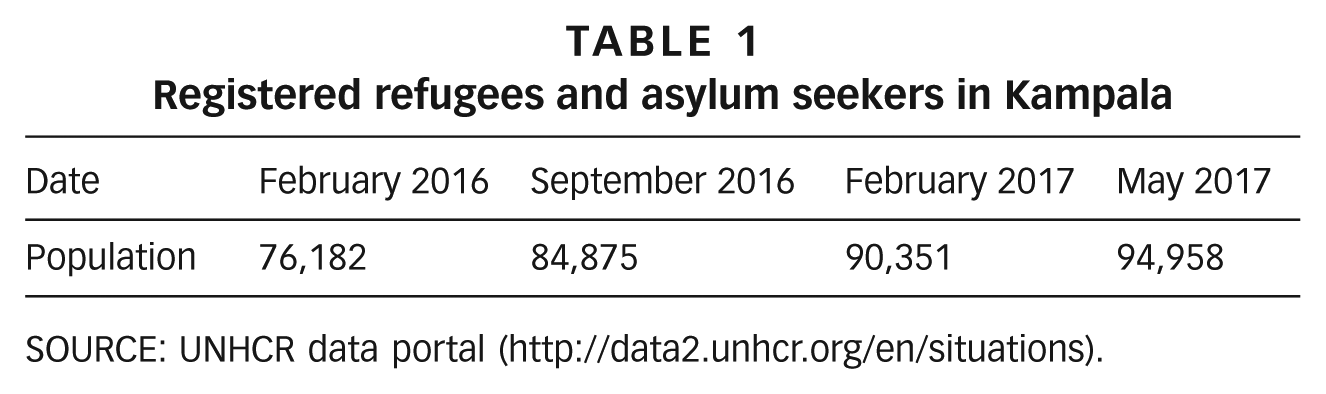
SOURCE: UNHCR data portal (http://data2.unhcr.org/en/situations).
Refugees in Kampala are required to register with the police and the Office of the Prime Minister, where they are given an identification card and a letter outlining their right to work.(16) InterAid, UNHCR’s implementing partner in the city, is responsible for providing temporary forms of support to refugees in situations of particular hardship. However, urban refugees are generally ineligible for humanitarian assistance in Uganda.
International refugees are joined in Kampala by IDPs from Acholiland in Northern Uganda (omitted in Table 1), where over 700,000 Ugandan citizens were displaced as a result of the Ugandan government’s conflict with the Lord’s Resistance Army (1994–2005).(17) At the war’s peak the government forcibly moved over a million Acholi people into “protected villages”, which were subsequently declared IDP camps.(18) UNHCR provided assistance to IDPs in the north of Uganda. However, this assistance ended in 2012. As a result, IDPs are no longer recognized by either the Ugandan government or UNHCR, despite the fact that there are believed to be over 300,000 displaced Acholi in Uganda.(19)
In principle, international refugees are permitted entry into the formal employment market. However, in practice, employers and state security services are inconsistent in their interpretation of refugees’ right to work.(20) A majority of refugees join IDPs and host populations in the informal economy, which has been described as “the main bulwark against unemployment, destitution and crime in the country”.(21) However, the informal economy has become increasingly competitive in recent years and rates of failure are high. Kampala’s unofficial trade, manufacturing and service industries are hampered by a lack of access to basic skills, finance, information and infrastructure. City services are overstretched and underfunded, and urbanization has been accompanied by increasing levels of poverty and inequality. Approximately 60 per cent of the city’s population reside in settlements with unreliable access to water and sanitation,(22) while the health sector is under-resourced and characterized by hidden fees and payments.(23)
The question of how displaced populations fare relative to other groups in formal and informal markets is critical for three reasons. Firstly, it provides a test of one of the central functions of the informal sector, namely its ability to provide for the sections of society most vulnerable to unemployment and poverty. Secondly, it sheds light on the types of comparative (dis)advantage faced by new entrants, relating for example to their access to finance, information and customers. Thirdly and relatedly, it allows us to better understand how municipal and humanitarian institutions might intervene – whether separately or in concert – to improve the outcomes of host and displaced populations in rapidly growing cities.
III. Refugee Livelihoods in Cities: Theories and Approaches
a. Existing approaches to refugee livelihoods
Policy approaches to refugee livelihoods are largely unchanged since the 1920s, drawing from a rotating menu of agricultural production, vocational training and microfinance.(24) Nevertheless, the increased visibility of refugees in towns and cities has generated a new wave of academic and policy interest in refugee livelihoods. This literature can be broadly divided into two camps: one focused on the social, political and legal structures that constrain the livelihood activities of urban refugees; and one focused on the skills and networks that enable them to thrive. These two camps are loosely associated with the twin discourses of refugee vulnerability and refugee capacity respectively.
Firstly, the vulnerability literature emphasizes the host state as the key institution in the lives of refugees. For example, Jacobsen argues that refugee vulnerability is primarily “determined by the laws and policies of host governments and by the way these policies are implemented; the public and private institutions devoted to supporting and managing refugees; and the dominant public ethos”.(25) Within this literature, the work of the International Rescue Committee and Women’s Refugee Commission has been influential in documenting the barriers that refugees face when attempting to access basic services such as housing, education, healthcare and legal support, and the forms of discrimination they experience from landlords, government authorities and the public.(26) In this context, refugees’ reliance on informal markets is read as a “practical material critique of the declining standards of humanitarian support”,(27) and emphasis placed on the responsibility of host governments and international agencies to guarantee legal rights and extend basic service provision.
Secondly, the capacity literature places emphasis on social networks and economic markets as the key institutions in the lives of refugees. This literature departs from the observation that the “primary determinants of urban protection have less to do with policy frameworks than individuals’ choices and positions in social and institutional networks”.(28) Indeed, legal status has been shown to make little difference to the livelihood strategies of refugees in Cairo and Johannesburg.(29) Central to the capacity literature is the notion that urban refugees are able to achieve economic self-reliance through their engagement in (particularly informal) markets, and in doing so, make important contributions to host societies.(30) For example, Betts et al. argue that “refugee economies” are integrated, profitable and technologically advanced.(31) Rather than service provision, emphasis is placed on microfinance, market access, and the role of the private sector.(32)
These two literatures broadly reflect differences between rights- and resource-based approaches to intervention in the informal sector.(33) While the vulnerability literature places emphasis on households, making the case for extending rights and basic services, the capacity literature instead places emphasis on enterprises and markets, making the case for employment generation and permissive business regulation.
However, taken as a whole, this literature is limited in its ability to inform urban humanitarian response for two reasons. Firstly, a significant majority of studies focus uniquely on the experiences of refugees, without considering their interactions with other urban populations. Secondly and relatedly, these studies tend to restrict their analysis to traditional state and humanitarian actors, without considering the (potential) role of other actors and institutions at the city level, including displaced populations’ own organizations. Consequently, there is a need to better understand the ways that displaced populations are positioned within complex urban systems.
b. Positioning refugees within complex urban systems
Given both the complexity of urban environments and the enmity that can result from exclusive interventions, humanitarian organizations are being encouraged to take a place-based rather than a population-based approach to urban programming.(34) This approach requires an understanding of the relationship between the specific capacities and vulnerabilities of displaced populations, and the systems already in place in towns and cities. Critically, it places emphasis on bolstering existing systems – such as markets, infrastructure and utilities – rather than duplicating or undermining them.(35) What is important in the first instance is not the legal or institutional status of these systems (e.g. the extent to which they are formal or informal), but rather their ability to meet the needs of affected populations in a way that is familiar to them.(36) In the context of this study, systems thinking provided a way to unpack the complex relationships that displaced populations have with their surrounding built, social and economic environments.
IV. Methodology
We used a three-step methodology in order to generate in-depth case studies of the paper bead, cosmetics and bitenge (patterned fabric) markets. These markets were selected for their close association with three of the largest displaced populations in Kampala: Acholi IDPs, Somali refugees and Congolese refugees. The inclusion of Acholi IDPs enabled a comparative analysis of the fortunes of a long-term, internally displaced population in the city, in addition to the short-term, international refugees often prioritized in the displacement literature. A team of two research assistants were deployed in each market: Acholi, Somali and Congolese researchers were teamed up with MA students from the Urban Action Lab at Makerere University, and participated in the design of the research instruments.
First, a mapping exercise was performed in order to generate an overview of the locations and scales of the paper bead, cosmetics and bitenge markets in Kampala, and the positions of displaced populations within them. This exercise began with the traders and business owners working in the geographical centres of the three markets in the city: Kireka (known locally as the “Acholi Quarters”), Kisenyi (known locally as “little Mogadishu”) and Katwe. The research teams then traced the goods as they were traded, processed and transported across the city, recording significant locations, processes and interactions. This process culminated in a listing exercise, which captured the gender, age, nationality and refugee/IDP status of enterprise owners in each of the markets.(37)
Second, a survey was administered with people located in different positions in each market (e.g. producers, wholesalers and retailers), including both displaced and host populations. This survey gathered a broad array of information on participant demographics, networks and enterprise performance. Survey participants were recruited through a respondent-driven sampling technique, which has been developed in studies investigating the social networks of hidden populations.(38) A first wave was conducted with 30 refugees/IDPs in each market, randomly selected from the listing exercise. Following this, a second sample was generated from the responses of Wave 1 participants, who were asked for the five most important connections in their businesses (suppliers, customers and other businesses). A third wave was then generated from the responses of the Wave 2 participants, and so on, until 100 enterprises were surveyed in each market.
Third, a series of life history interviews were conducted with 20 participants in each market in order to add in-depth, contextual information to that gathered through the survey. Interview participants were purposively sampled from the survey exercise, ensuring variance in age, gender, income, market position (e.g. wholesaler or retailer) and time spent in Kampala. They were encouraged to describe their entry into Kampala and their market in detail, focusing on the challenges they have faced and the forms of assistance they have received.(39)
The entry of refugees and IDPs into (in)formal markets in Kampala was shaped in part by the nature of their displacement, and the forms of support they received on arrival. The following section provides an overview of the networks, institutions and spaces through which Acholi IDPs and Somali and Congolese refugees entered the city, and their interactions with existing systems (e.g. for housing, education and healthcare). Section VI then examines their entry into the three markets.
V. Arrival in Kampala: Shelter and Basic Service Provision
a. Acholi IDPs
Acholi IDPs began to arrive in Kampala in large numbers in the late 1990s, following the Ugandan government’s much-criticized decision to force 90 per cent of the population of Acholiland into “protected villages” (later IDP camps), starting in 1996.(40) A majority of Acholi participants recalled having moved through IDP camps, some sleeping in the bush for weeks at a time in order to avoid being detained. They then sought transport to Kampala via the towns of Kitgum or Gulu. The Acholi population in Kampala has high rates of HIV infection as a result of their exposure to sexual violence during the conflict.(41)
As many as 10,000 Acholi IDPs in Kampala reside in an area known as the Acholi Quarters, located 10 kilometres northeast of the Central Business District (Map 1). The area became part of Kampala District following the redrawing of the municipal boundary in 1996 and has remained in jurisdictional limbo ever since, described as “no man’s land” by one local chairman.(42) Acholi Quarters is a camp-cum-settlement, where people stay in “temporary houses, like the ones in the camps”, suspended in time and place between Kampala and Acholiland.(43) Rents are affordable relative to other parts of the city (approximately US$ 14/month for a room), and entry is eased by the large number of Acholi speakers.
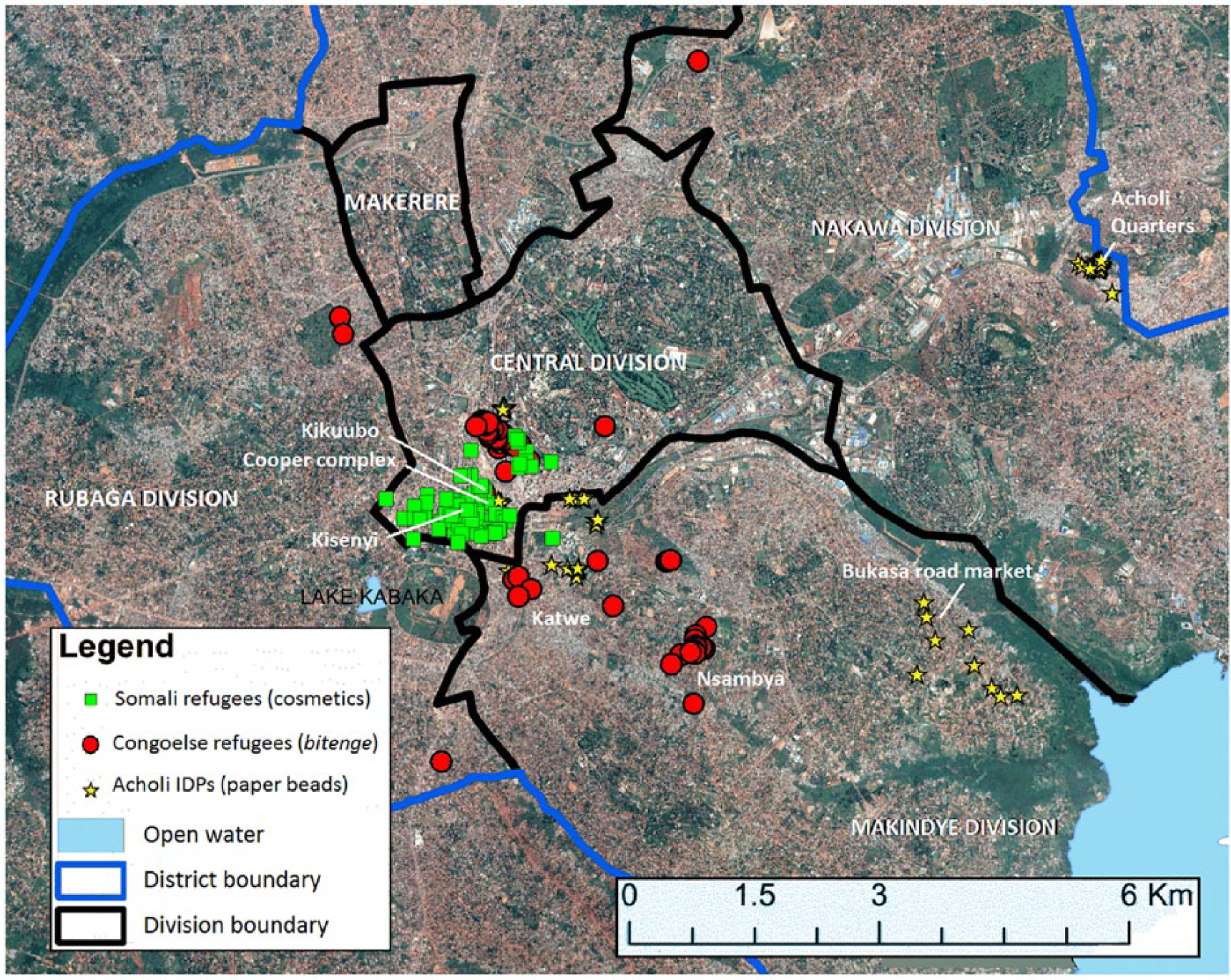
Locations of the business premises of displaced populations in Kampala District
However, a majority of residents interviewed lacked access to water, electricity and secure tenure. Participants reported that “the national housing association is sending us away”, and “I am hearing rumours that this area is going to be demolished”, emphasizing that they could not afford rents in other parts of the city.(44)
In the absence of any support from national or municipal government, new arrivals found assistance hard to come by: “When we first arrived we did not get anything…We really suffered a lot. We could go to the coffee factory to pick stones and dirt from the coffee beans for export [but] could not even pay school fees for our children.” (Agnes) “I found my husband here, having reached the point of having nothing to eat…There is a stone extraction quarry [in the Acholi Quarters], where 20 jerry cans pay USh 500 [500 Ugandan shillings, or US$ 0.14] [so] I started extracting stone with my child on my back.” (Pamela)
A majority of Acholi participants bemoaned the absence of income-generating activities in and around the Quarters, emphasizing that “there is no source of work” and not enough food.(45) Municipal health and education facilities were geographically and financially inaccessible to the majority of Acholi participants, leaving them dependent on faith-based NGOs, such as Meeting Point International (for HIV treatment) and the Luigi Guissani Institute (for their children’s education).
b. Somali refugees
The experiences of Somali refugees entering Kampala were significantly different to those of Acholi IDPs. Historically, Uganda has had a marginal role in relation to Somali migration flows, with Somalis preferring to live and work in neighbouring Kenya, and (particularly) the Eastleigh neighbourhood of Nairobi. However, Uganda has provided a safe haven during unstable periods in Kenya.(46) Regular flows of Somali refugees – particularly from the Darood Harti clans – began to enter Uganda after 2006, as a result of the renewal of the civil war in Somalia, the increasingly restrictive stance of the Kenyan government, and the passing of Uganda’s Refugee Act. As a result, a majority of Somali refugees in Uganda have spent time in Kenya, and maintain social and economic networks there.
A small Somali community has been present in Kampala since the early 20th century, when soldiers from northern Somalia were embedded in the British Army. In the late 1970s a Somali sheik constructed a mosque in Kisenyi, a deprived neighbourhood just south of the city centre. He subsequently became a reference point for Somalis seeking entrepreneurial opportunities in the capital, including Ahmed Omar Mandela, who founded the multinational companies Mandela Group, City Oil, and Java Café, and was later appointed a minister in the Buganda Kingdom (the cultural region where Kampala is situated.)(47) Kisenyi has since developed into Uganda’s “little Mogadishu”, where refugees arrive on daily bus connections from Nairobi. Once in Kisenyi, assistance is extended through the Somali Community Association: “When I was in Kenya, many people told me: ‘you cannot live here without ID: they are arresting Somalis [and] taking their money everyday’. They collected for me money to come to Uganda…When I reached Kampala, people here took me to the Somali Community Association [and] I told them my history. They gave me food and I went to the station in Old Kampala. They registered me and referred me to the OPM [Office of the Prime Minister] where I received asylum seeker status…Somali people gave me a room and I have been in this house ever since.” (Amina)
A number of Somali participants were provided with food and shelter by extended family on arrival in Kisenyi. Those without direct family connections were able to draw upon the support of clan networks and the Somali Community Association. The Somali mosque also connects people in Kisenyi and collects zakat (a ritual form of alms-giving) to support new arrivals.
Like Acholi IDPs, Somali refugees entered into an area of the city in which they felt a degree of cultural affinity, emphasizing that “Somalis help each other” and that Kisenyi “feels like our home capital…like Mogadishu”.(48) However, unlike Acholi IDPs, they were able to access a dynamic, central neighbourhood that provided access to city services and systems. Depending on prior experience, new arrivals were generally able to find jobs and apprenticeships in transport, restaurant and cosmetics businesses, before starting their own enterprises. New arrivals rented rooms in houses with water and electricity connections from long-term tenants and (predominantly Ugandan) landlords, many of whom live in the community. The average monthly rent for a room was approximately US$ 50, although several participants claimed that Ugandan landlords overcharged them.
Kisenyi is within walking distance of a range of schools and health centres. Nevertheless, there were barriers to accessing municipal health and education systems. Several Somali participants reported that they could not afford to send their children to school, while local health services were reportedly unable and/or unwilling to address displacement-specific health needs including shrapnel wounds, which seriously restricted one participant’s mobility.
c. Congolese refugees
Congolese populations have been arriving in Kampala in greater numbers since the intensification of the Kivu conflict in the DRC’s eastern provinces in 2009. UNHCR currently estimates that there are 200,000 Congolese refugees in Uganda, of whom over 10 per cent are in the capital, having bypassed refugee camps: “We heard that they were receiving refugees in Uganda and that is where others were going, so we also came here…We heard that life in the camps is too difficult, but here in town you can struggle, move around and survive.” (Bibiche)
Another participant expressed a desire to be treated like a “human being” in Kampala rather than a “victim” in a camp.(49) However, despite the passing of Uganda’s Refugee Act (2006), Congolese refugees often experienced institutional confusion on arrival in Kampala: “When we reached here things were difficult; we asked the boda-boda [motorcycle taxi] driver about UNHCR offices and he took us to InterAid [UNHCR’s implementing partner in Kampala]. InterAid told us to go to the police, so we went to the police [but] we did not get any assistance…We asked one Ugandan where we can find other Congolese and he took us to a Congolese church in Katwe.” (Miriam) “As a refugee I need to be supported by UNHCR. It’s so bad that UNHCR is like our father here but they don’t support us…. I wonder why they are even here because I can’t see what they do.” (Robert)
It is official policy for refugees to register for asylum seeker status at the Office of the Prime Minister (OPM). However, a number of Congolese and Somali participants reported that they had been instructed by OPM to report to refugee camps. A total of 9 per cent of Congolese and 8 per cent of Somali participants received financial assistance from UNHCR by periodically returning to the camps – assistance that was unavailable to Acholi IDPs. However, the vast majority of participants had received no assistance from UNHCR or InterAid, generating a sense of frustration.
In the absence of government or humanitarian support in Kampala, Congolese refugees relied on alternate institutions. The vast majority of Congolese participants made reference to the role of Congolese churches in Kampala. Church officials wait at Kampala’s bus terminals to greet new arrivals, offering food, accommodation and guidance on how to navigate the asylum system. There are approximately 50 Congolese churches in Kampala, clustered in the neighbourhoods of Katwe and Nsambya, immediately south of Kisenyi (Map 1).(50) Most Congolese refugees rent small rooms in these neighbourhoods, which, like the Acholi Quarters, lack access to running water and electricity, although they are in much closer proximity to the city centre. (These rooms cost approximately US$ 28/month.) Some refugees receive offers of accommodation and employment from other members of the congregation, while others receive longer-term assistance from the Jesuit Refugee Service (JRS), a faith-based NGO that has been operating in Nsambya for over a decade.
There was a feeling among interview participants that Congolese refugees do not benefit from the same forms of solidarity as their Somali counterparts, reflected in the notion that “Congolese here do not help each other”.(51) The Congolese population is much more dispersed in Kampala (Map 1), and tensions were reported between different groups from South Kivu relating to the legacies of the conflict. The arrival of Congolese refugees in the city was often described as a period of struggle, comparable to that experienced by Acholi IDPs: “Kampala is not like Congo, here you have to buy everything – even drinking water…Also it is not easy to get food. I remember we used to stay the whole day without eating because we did not have money. The rent also is very expensive; to get even a single room you have to pay USh 100,000 [US$ 28] and the landlords keep increasing the price.” (Bridget) “As you know refugees don’t have money and that is why they live miserably in places where people shouldn’t live. You will see a whole family living in a single room in a slum where water floods people’s houses when it rains. It’s so difficult.” (Elia)
Unlike both Somali refugees and Acholi IDPs, Congolese refugees lacked a geographical focal point in Kampala. Furthermore, their journeys to Kampala were often prompted by spontaneous outbreaks of violence, rather than a preconceived plan to join extended family (as was often the case with Somali participants). In the absence of support from humanitarian, state or Congolese actors – with the exception of the churches – new arrivals often spent periods sleeping outside the Old Kampala police station before finding affordable accommodation. Consequently, their survival in Kampala was dependent on their ability to find or create income-generating activities at the earliest opportunity. The following section examines the activities of Acholi IDPs, Somali refugees and Congolese refugees in the paper bead, cosmetics and bitenge fabric markets, respectively.
VI. Market Entry in Kampala: Suppliers, Customers and Capital
a. Acholi IDPs in the paper bead market
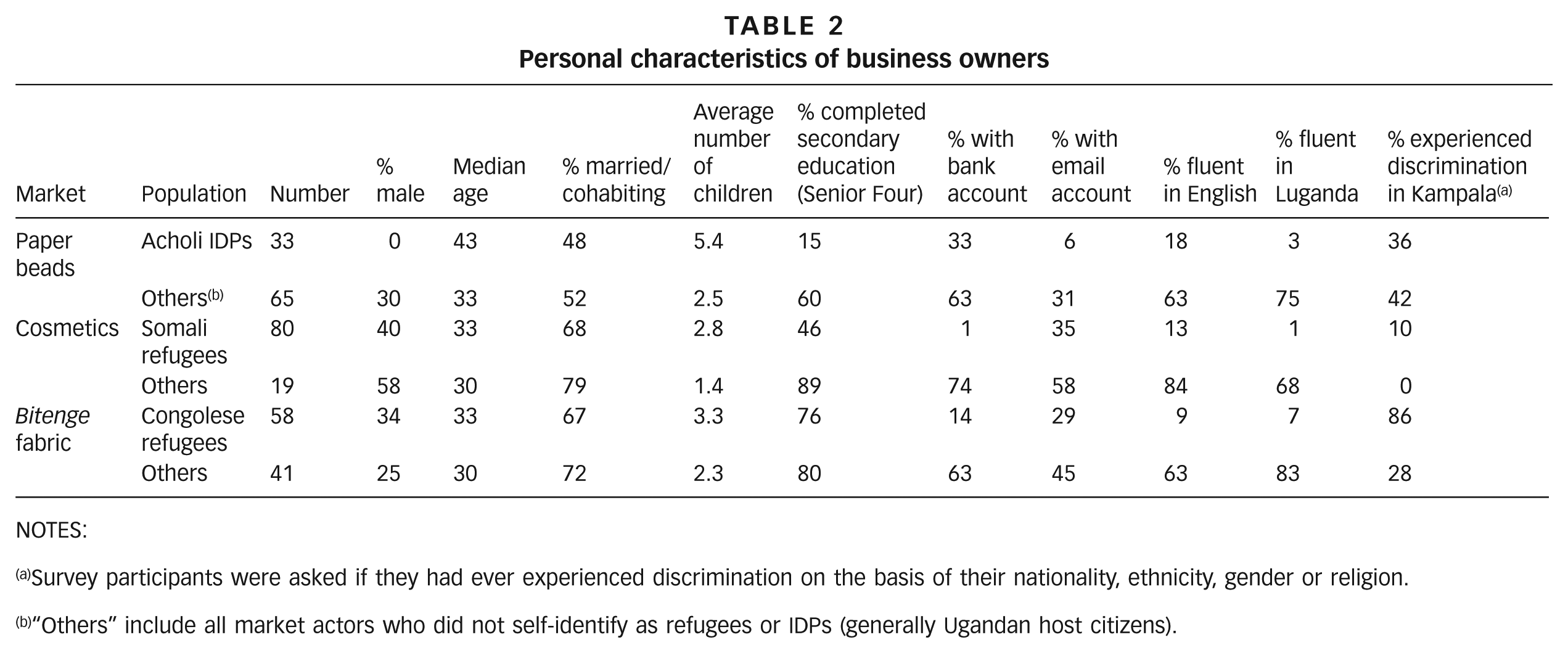
The production of bead jewellery has a history in Acholi cultural practice. Beads are rolled from recycled paper and then combined to make bracelets and necklaces that can be exported or sold in Kampala’s growing tourism market. All of the Acholi IDPs surveyed in the paper bead market were women, of whom the majority were single (widowed), with an average of 5.4 children (Table 2). As a result, their business activities had to be combined with childcare responsibilities, and theirs was often the only source of household income. Acholi men – fewer in number as a result of their involvement in the civil war – tended to be more mobile, seeking out jobs in the transport and construction sectors. Paper bead fabrication was seen to be a favourable activity insofar as it does not require heavy investment in capital or education and can be done from the household. Only 15 per cent of Acholi participants had completed secondary education (Table 2), and the majority had been engaged in subsistence agriculture prior to their displacement.
Personal characteristics of business owners
NOTES:
Survey participants were asked if they had ever experienced discrimination on the basis of their nationality, ethnicity, gender or religion.
“Others” include all market actors who did not self-identify as refugees or IDPs (generally Ugandan host citizens).
The mass entry of Acholi IDPs into the paper bead market can be traced back to the intervention of a social enterprise in the early 2000s: “There was a white lady who came and started a project with a group of women called Beads for Life. The women who registered started making paper beads. I learned how to make the beads, so they started giving me paper to roll for them…they paid USh 1,000 [US$ 0.28] for 30 beads…With this money I started to buy papers and other materials in order to make my own.” (Agnes)
Beads for Life was founded by a group of American women in 2003 that began to contract displaced Acholi women to make bead jewellery for export to customers in America. A number of similar organizations have since been established, including Project Have Hope and 22 Stars, all of which contract groups of Acholi women to make paper bead jewellery for export to North America. Like Agnes, the majority of Acholi participants began making paper beads after coming into contact with a handful of social enterprises, before establishing their own businesses. The average startup capital for paper bead businesses run by Acholi IDPs was just US$ 8, usually acquired through rotating savings and credit associations.
Some participants criticized enterprises such as Beads for Life for their exclusivity. For example, a businesswoman from central Uganda complained that such organizations only bought beads made by “Northerners”,(52) while an Acholi participant noted that they only assisted the “really poor”, or those who happened to be available during the registration process. All others were excluded from selling their beads to the North American market. Furthermore, the original beneficiaries were cut off or “graduated” after a few years on the basis that the organization sought to assist new groups and to prioritize business training over market access.(53) In its absence, the women became dependent on selling the beads in local craft markets, including Bukasa road (Map 1). However, the average monthly profit of Acholi participants selling bead products in the domestic market (US$ 28) was under half that of Acholi participants selling to markets in Europe and North America (US$ 69).
Acholi IDPs identified three structural barriers to accessing the paper bead market in Kampala. Firstly, only 18 per cent of participants were fluent in English and 3 per cent in Luganda (the language of business in Kampala), relative to 63 per cent and 75 per cent of their local counterparts (Table 2). Grace explained the implications of this for her business: “Maybe a neighbour can find you a customer, but since we don’t speak the same language, they prefer to take the customer to someone else.” (Grace)
A number of Acholi participants also reported being victims of discrimination by prospective customers in Kampala, during which they were called “Kony” (the rebel leader of the Lord’s Resistance Army, notorious for recruiting child soldiers). Secondly, women in the Acholi Quarters were located 10 kilometres from suppliers and customers in the city centre. As a result, the cost of transport was a significant barrier to market access. Thirdly and relatedly, there was understood to be an acute shortage of affordable commercial space in the city: “The main challenge is that we don’t have a permanent place where we work from…we are evicted…all of us, crafts, paper beads, we are evicted and some move out of the business.” (Hajjat) “KCCA [Kampala City Council Authority] can take you to prison while you are selling in town at any time.” (Anena)
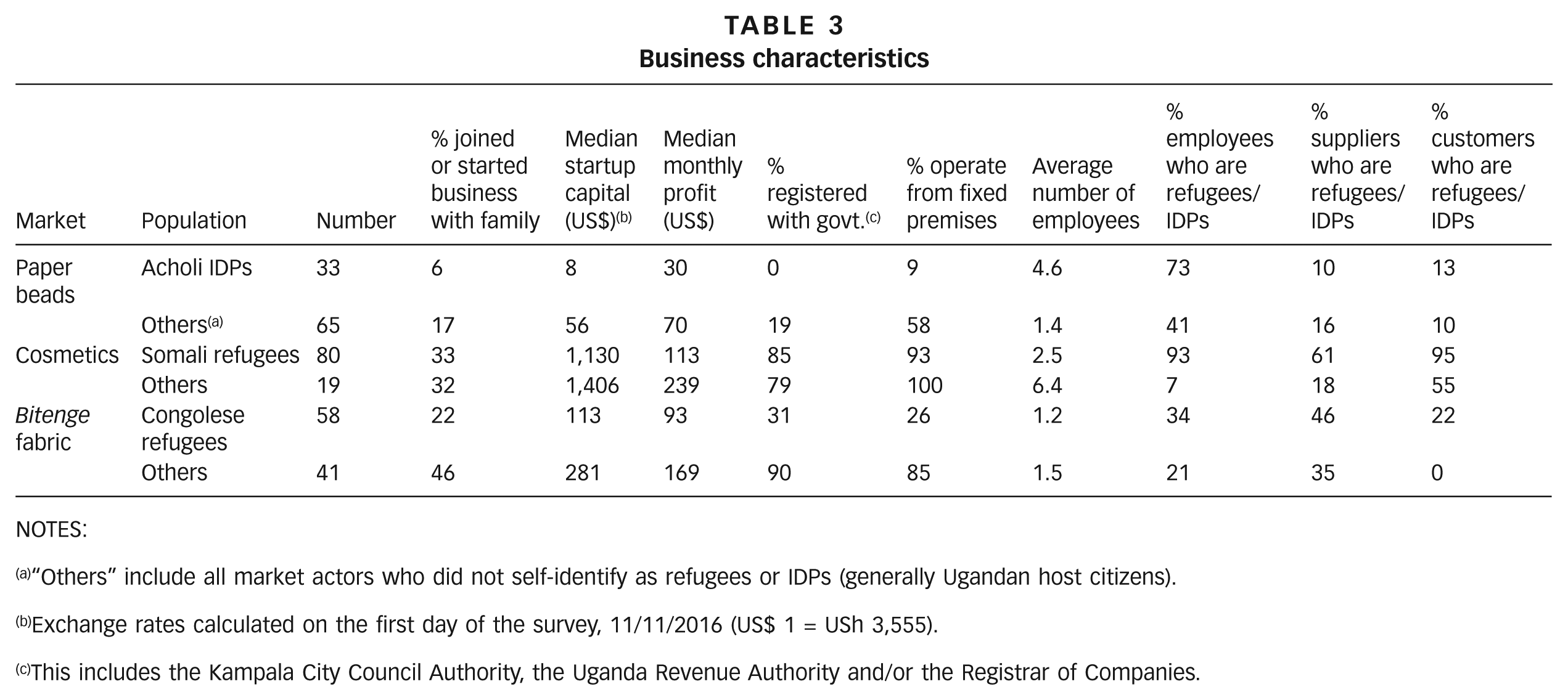
Three of the markets in which the women had historically sold their products in the city had been dismantled and/or redeveloped at the time of research: Kubbiri market, Nsambya craft market, and an unnamed market on Jinja Road. In response, one group of IDPs successfully started their own business collective, Mukyaribe, in order to access customers through church networks in Kampala – churches agreed to display their goods after services, with profits partly reinvested into business training. However, access to markets remained a general challenge. Only 9 per cent of Acholi IDPs in the paper bead market operated from fixed business premises (compared to 58 per cent of local citizens), and none was registered with government (compared to 19 per cent). Finally, average profit was just US$ 30/month (compared to US$ 70 for Ugandans – Table 3), in a country where the official poverty line is US$ 58/month.(54)
Business characteristics
NOTES:
“Others” include all market actors who did not self-identify as refugees or IDPs (generally Ugandan host citizens).
Exchange rates calculated on the first day of the survey, 11/11/2016 (US$ 1 = USh 3,555).
This includes the Kampala City Council Authority, the Uganda Revenue Authority and/or the Registrar of Companies.
b. Somali refugees in the cosmetics market
Somali migration routes to Kampala help facilitate their entry into a large and profitable market. The beauty industry in Africa and the Middle East was estimated to be worth over US$ 20 billion in 2011, with Kenya the third largest market in sub-Saharan Africa.(55) Kenya manufactures cosmetic products and exports them to the region, including through Somali intermediaries.(56)
In our study, the typical Somali cosmetics trader in Kampala was a married female with two–three children, operating a registered business from fixed commercial premises (shop) in Kisenyi (Table 2). The educational profiles of Somali refugees in Kampala were comparable to those of Acholi IDPs: fewer than half had completed secondary education, and only 13 per cent were fluent in English. However, unlike new arrivals in the Acholi Quarters, Somalis in Kisenyi were quickly embedded into supply chains and socioeconomic networks. One-third of Somali refugees entered the cosmetics market by starting or joining a family business, and over 60 per cent of suppliers were other Somali refugees (Table 3). The average startup capital for a Somali cosmetics business was US$ 1,130 – a significant sum that was often funded in part by remittances from overseas.
Unlike other displaced groups, the entry of Somalis into the cosmetics market was often planned long before their arrival in Kampala. For example, Abdurrahman had been studying and working in a cosmetics business in Mogadishu prior to the escalation of the civil war in 2013. Members of his extended family – present in Kampala for over a decade – advised him that Uganda was a place where he could continue his education and start his own business. On arrival in Kampala, the Somali Community Association provided funding for him to study for a university diploma in accounting and business management. He then managed to raise a loan of US$ 10,000 from a combination of his cousins in Kampala and a brother who had been resettled in America, in order to start a cosmetics business in Kisenyi, importing goods from Kenya.
Somali refugees without access to capital instead purchased goods from Kikuubo – the centre of the cosmetics wholesale trade in Kampala, located just one kilometre from Kisenyi (Map 1) – and sold them from small spaces rented from existing shops. Unlike Acholi IDPs, Somali businesses were provided with direct access to customers through a thriving domestic market in Kisenyi. Just as they received credit from suppliers, they extended it to customers, noting that “[they] get money from abroad monthly [so] they pay when they get they money”.(57) It could be said that Kisenyi’s economy is driven by remittances. Somali diasporic networks provide access to finance both directly, through startup capital, and indirectly, through the custom of other refugees. In our study, 95 per cent of the customers of Somali businesses were other Somali refugees (Table 3). Consequently, Somalis in the cosmetics market were much less reliant on interactions with host populations in order to make a living, and average profits were relatively high (US$ 113/month). A number of Somali participants quoted figures in US dollars rather than Ugandan shillings, so accustomed were they to foreign exchange markets.
There is some evidence that migrant networks based exclusively on religion and/or ethnicity increase the propensity for conflict in urban settings.(58) Indeed, the violent expulsion of the Asian minority in Kampala in 1972 can be partly traced back to the decision of the British colonial authority to promote Indian migrants as an exclusive commercial class in the city.(59) Although Somali refugees reported much lower levels of discrimination than their Acholi and Congolese counterparts (Table 2), there were a number of flash points. For example, participants reported that Ugandan vendors in Kikuubo sold to Somalis at three times the going price, and that Ugandan landlords in Kisenyi continually increased rents because “they believe Somalis have lots of money”.(60) Other Somali participants reported having had disputes with Ugandan neighbours over theft and solid waste disposal, noting that they did not feel protected by local police.
The deployment of the Ugandan People’s Defence Force to Somalia in 2007 – heavily supported by the Somali community in Kampala – was followed by twin bomb attacks in Kampala in 2008 and 2010. These events, more than any other, have heightened tensions between the Somali and Ugandan populations in the city, with the former reporting cases of being called “Al-Shabaabs” (after the Islamist militant group). During a workshop on business regulations in Kampala, city council officials expressed concern about the security implications of encouraging Somali refugees to enter public marketplaces.(61) As such, the spatial segregation of the Somali population in Kampala was supported in part by the municipal government.
c. Congolese refugees in the bitenge market
The emergence of a market for bitenge in Kampala can be traced back to refugee influxes from the DRC in the early 1990s. Bitenge is a colourful printed fabric traditionally worn on special occasions. Initially seen as a product for the Congolese, the material has since become a popular product in Uganda, as a result of both its increased visibility in international fashion campaigns and the marketing strategies of Congolese businesses in Kampala. As Adeline, a Congolese participant, explained: “I’m getting more interest because many people here have started to enjoy putting on bitenge, whereas before they were not used [to it].”
The geographical centre of the bitenge trade in Kampala is the Cooper Complex, immediately south of Kikuubo in central Kampala. Here vendors sell bitenge imported from the DRC, Ghana, Nigeria, the Netherlands and (increasingly) China at wholesale. In our study, the average Congolese entrant into the bitenge trade was a married female, with a secondary school qualification (Table 2). Approximately one in five Congolese refugees entered the market through a family business, while the remainder depended on connections forged during their first months in Kampala. Lacking the diasporic networks of their Somali counterparts, they were often reliant on assistance from NGOs and social enterprises for training and networking. For example, a number of participants accessed business training and employment opportunities through Young African Refugees for Integrated Development (YARID), an NGO started by a group of young Congolese refugees in Nsambya in 2007. However, Congolese participants generally lacked the access to capital enjoyed by their Somali counterparts (e.g. through remittances and diasporic networks), and could not afford to rent business premises at the time of their arrival.
The majority of Congolese entrants into the bitenge market were sole operators of mobile, informal businesses (78 per cent lacked fixed premises, and 70 per cent were unregistered with government). New Congolese entrants were generally introduced to wholesalers in and around Cooper Complex, who provided them with bitenge on credit to sell in and around the city centre. Although the neighbourhoods of Katwe and Nsambya are less than 2 kilometres from the textile hub at Cooper Complex, demand for bitenge is highest in and around the city centre (unlike the cosmetics market in Kisenyi). Given high rental costs in this area, Congolese participants were generally dependent on mobile vending, often walking upwards of 10 kilometres/day in the course of selling their products. As a result, their position in the bitenge market brought them into frequent conflict with municipal authorities: “We have no particular place where we sell from, so at any time the Kampala City Council Authority can come and take all your business. We are arrested by the KCCA all the time [so] I walk with fear in town – there are places I would like to sell from but I cannot reach because of fear.” (Alain) “Here in Uganda it’s the hawkers who suffer most. Their property is stolen and they are discriminated [against].” (Hajjat Bucu)
Participants provided multiple examples of having their stock confiscated, with significant impacts on their businesses and family. The annual cost of business licences in Kampala – US$ 59 for retailers in the city centre – was seen as prohibitive during the startup phase, driving a vicious circle in which those saving for a licence suffered losses as a result of arrests and stock confiscations.
Interactions with customers, suppliers and state institutions were also made difficult by language gaps – 9 per cent of Congolese participants were fluent in English and 7 per cent in Luganda, while the vast majority of bitenge customers were Ugandan (Table 3). The vast majority (86 per cent) of Congolese participants claimed that they had been victims of discrimination in Kampala. This finding that was supported by some of our interviews with Ugandan participants, one of whom asserted: “I don’t like the way [the Congolese] do things… I wouldn’t do business with them or associate with them in any way.”(62)
A final challenge articulated by Congolese participants was the entry of new actors into the bitenge market. Increased imports of patterned fabrics from China had reportedly driven down prices, and an increasing number of Ugandans had entered the supply chain (54 per cent of all suppliers were Ugandan). The average monthly profit among Congolese refugees was US$ 93/month (compared to US$ 167 for others). As one participant summarized: “[Now] it is only about eating, living and educating the children – it is no longer a way to buy a plot of land and build.”(63)
VII. Summary and Conclusions
Our findings reveal considerable diversity in the experiences of displaced populations in markets in Kampala. By way of a summary: Acholi IDPs operating in the paper bead market are predominantly single women with specialist health conditions and substantial childcare responsibilities. Residing in remote areas of Kampala without capital or socioeconomic connections, they are generally dependent on NGOs and social enterprises for market access. A minority of business owners have been able to access capital and customers through savings rounds and church networks; however, the majority generate an income that is far below that required to meet their basic needs.
In contrast, Somali refugees in the cosmetics market are typically married and arrive in Kampala with pre-existing support networks. Many have prior experiences of running urban businesses, and are able to access training and substantial startup capital through a combination of community associations, extended family, and the Somali diaspora. Critically, they are engaged in the sale of manufactured goods rather than artisanal products, and have access to both suppliers and customers, utilizing historical migration routes in ways that respond to emerging local demand.
Finally, Congolese refugees in the bitenge market generally arrive in Kampala at short notice after bypassing refugee camps in Western Uganda. Like their Somali counterparts, they are able to access shelter and support on arrival (through Congolese churches) and skills trainings (through local NGOs), and are involved in the sale of manufactured products in which they have a particular advantage. However, they generally lack access to the capital required to enter into the supply and wholesale of bitenge and are instead reliant on selling products on the streets of Kampala, bringing them into frequent conflict with the municipal authorities. On average, refugees and IDPs generated approximately half the income of host citizens in each of the three markets.
These findings bring into focus the plight of internally displaced populations in Uganda, and the gap that exists between national refugee policy and the experiences of urban refugees on the ground. The right to live and work in Kampala is circumscribed by a number of significant economic costs – for housing, basic services and business licences – that restrict the ability of displaced populations to realize these rights in practice. There is a need to create spaces of exchange among refugees and IDPs, host citizens and municipal authorities in order for national policies to be debated, understood and implemented in urban settings.(64) Furthermore, targeted investments in housing, healthcare and basic services are urgently required in remote and deprived urban areas, such as the Acholi Quarters in Kampala.
Nevertheless, the accounts presented here bring into question the utility of uniform approaches to displaced populations in urban settings, given the contrasting needs and experiences of different groups. Rather than reducing these experiences to the twin narratives of self-reliance (capacity) and state neglect (vulnerability), it is important for researchers and policymakers to acknowledge the complex ways in which different groups are positioned within urban systems, and the diverse range of actors and institutions through which they seek access to vital resources.
Footnotes
Acknowledgements
This paper would not have been possible without the remarkable work of our research team in Kampala: Robert Hakiza, Joel Ongwech, Abdirahman Sheik Mahi, Teddy Kisembo, Gloria Nakyagaba, Hakim Sserviiri and Disan Byarugaba. We would also like to thank the reviewers, Laura Camfield and David Dodman for their comments on the draft.
Funding
This paper is funded by the UK Department for International Development (DFID) through the Urban Crises Learning Fund. The fund is part of DFID’s Urban Crises Programme on the urban aspects of humanitarian action, which involves IIED and the International Rescue Committee (IRC).