



Abstract
Protracted displacement is one of the most complex and difficult humanitarian problems facing the international community today. This paper argues that urban protracted displacement deserves status as a distinct state of refugeehood, and that better analysis of the structural and individual barriers to economic inclusion of urban refugees and IDPs should underpin both incremental and radical policy response. The paper draws on a study of protracted displacement in four countries, Ethiopia, Jordan, Kenya and Afghanistan, to explore those barriers through application of the Displacement Economies Framework, a theoretical and programming tool developed through the research, to help rethink responses to protracted displacement in cities. The paper thus contributes to literatures on urban protracted displacement and to a gap in the research on displacement economies in cities, demonstrating that addressing structural and individual barriers is key to supporting the economic inclusion of displaced people in cities.
I. Introduction
Protracted displacement is one of the most complex and difficult humanitarian problems facing the international community today. Since UNHCR first defined the concept over two decades ago, the number of refugees and IDPs (internally displaced persons) has increased from 17 million in 2004(1) to over 117 million today.(2) Entrenched conflict and war mean that refugees may never return home. Yet approaches to help them integrate locally or resettle elsewhere are hindered by restrictive policies, narratives of the burden imposed by refugees(3) and lack of understanding of their potential positive impacts. Many refugees and IDPs move to cities where, sacrificing aid for independence, they need an income to survive. There, despite restrictive regulations, displaced people find varied livelihoods, drawing on previous skills and individual and collective agency to create jobs and develop niche urban markets. Their economies are distinct but not well recognized. New approaches are urgently needed to highlight the economic contribution of displaced people and underpin policy innovation to support the displacement economies of urban refugees and IDPs.
Humanitarian responses are no longer predicated on the assumption that displacement is temporary and that basic needs can best be met in confined camps. Yet meeting the long-term needs of heterogeneous and dispersed refugee/IDP populations in cities is complex, especially where many urban residents are poor.(4) Displaced people and aid agencies envisage the future differently and conventional responses to crises rarely build on the everyday practices of displaced communities.(5) Humanitarian agencies must work with new partners to demonstrate that cities are legitimate places for refugees and IDPs to live in, and to ensure that assistance reaches vulnerable people in both the displaced and poor urban communities.
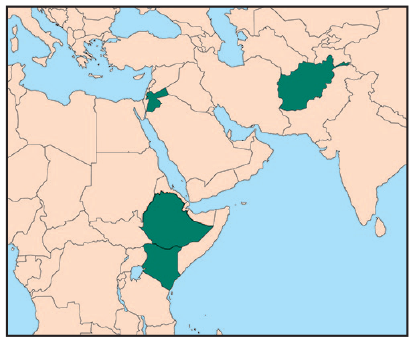
With a focus on the economies of displaced people in cities, this paper argues that urban protracted displacement deserves recognition as a distinct state of refugeehood. This recognition would give displaced people with little chance of resettlement or return better opportunities to rebuild their lives. This empirical paper calls for policy shifts that acknowledge this reality and address the structural and individual barriers to economic inclusion to underpin both small-scale and radical policy responses. The paper draws on data from a large-scale comparative study in Afghanistan, Ethiopia, Jordan and Kenya,(6) and uses the concept of “displacement economies”, defined as “the collective economy created over time by refugees and IDPs through their livelihood activities, enterprise, need for services and consumption, and through their mutual support and diaspora inputs”.(7) The analysis applies the Displacement Economies Framework (DEF), a theoretical and programming tool developed through this research, to highlight potential economic contributions of refugees and IDPs and barriers to their achievement, and help rethink responses to protracted displacement.(8) The paper contributes to literatures on protracted displacement and refugee/IDP urban livelihoods, based on a social science perspective on the structures and relationships underpinning displacement economies, rather than on econometric modelling.
We navigate our large dataset through a series of linked questions. First, we ask of the literature, “what is distinct about protracted displacement in cities?” and “what urban livelihoods result?” We then briefly describe the DEF as an analytical tool and outline our methods and study contexts. The following sections then use the DEF in different ways to test its potential. Second, a cross-country livelihoods analysis asks “who is working where?” and “what assets are more strongly associated with self-employment?” We focus on self-employment as a strategy that enables refugees and IDPs to avoid exploitative employment and to deal with a lack of jobs. Self-employment can also promote economic diversification and provide employment for other displaced people and hosts. Third, an enterprise analysis asks “how does enterprise emerge and survive?” We then use the whole framework to examine the collective displacement economy of Eastleigh, Nairobi. Finally, in conclusion, we discuss the conceptualization of urban protracted displacement arising from our findings, the policy lessons that result, and the value of the DEF in drawing these conclusions.
II. Protracted Displacement in Cities
Protracted displacement is a long-standing humanitarian concern, and as early as 2006 UNHCR noted that long-staying refugees and IDPs in urban areas were largely overlooked. Yet progress on protracted displacement in cities has been slow.(9) The numbers of people forcibly displaced through persecution, conflict or violence is inexorably rising. Using UNHCR definitions, by the end of 2023, 117.3 million people were displaced, including 37.6 million refugees, 6.9 million asylum seekers and 68.3 million IDPs, of whom two-thirds are in situations of protracted displacement.(10) Cities, now the main place of refuge, accommodate over 60 per cent of all refugees and IDPs.(11) It is now timely to ask “what is distinct about protracted displacement in cities?” We review displacement and livelihoods literature to address this question.
“Protracted displacement” as a concept refers to large groups of refugees whose displacement is long-standing, chronic or recurring, and who live in entrenched conditions of uncertainty, precarity and rightlessness.(12) UNHCR defines a “protracted refugee situation” as one where “refugee populations of 25,000 persons or more have been in exile for five or more years in developing countries”.(13) For IDPs, a commonly used definition of protracted displacement is that employed by the Brookings-Bern Project on Internal Displacement: when “processes of finding durable solutions have stalled and/or IDPs are marginalised as a consequence of violations or a lack of protection of human rights, including economic, social and cultural rights”.(14) Thus, protracted displacement refers both to the time in exile and the denial of rights. In this paper we take protracted displacement to refer to anyone displaced for more than five years.
Displacement is often associated with the rise of fragile states, and the politics in countries of origin and arrival. This structural complexity means that protracted displacement cannot be resolved through humanitarian action alone and it challenges the concept of “durable solutions” (resettlement, return or local integration) which seeks to resolve the status of displaced individuals without recognizing the structural causes of their displacement. In a major EU study, Etzold et al.(15) argued the need to explore three structural forces underlying displacement: displacing (e.g. protracted conflicts), marginalizing (e.g. legal or practical obstacles to local integration) and immobilizing (e.g. protection regimes). In cities, local politics plays a major role. While municipalities are front-line agencies in tackling deprivation, they often lack knowledge of refugee affairs.
The popular image of displacement is one of stasis, where people arrive and stay. In practice, refugees and IDPs move on to improve their lives. The encampment policies pursued by many countries, partly to contain perceived security threats, deprive refugees and IDPs of the right to move, the freedom to pursue normal lives and the chance to become productive members of society.(16) Nevertheless, mobility is now seen as a key tactic in protracted displacement, both translocal and transnational.(17) There is also increasing recognition that displaced people have agency to identify their own solutions to displacement, in which mobility plays a role.(18)
Many refugees and IDPs move to cities seeking independence, jobs and a better future, but once there they face a precarious existence. Aid may be patchy, and the move to a cash economy means they need paid work. They often join the urban poor, working informally, but with additional burdens of trauma and displacement. Those who flee may lose assets and property and incur debts from the journey or payments to smugglers. Many have suffered acute personal loss.(19) Often, refugees live in legal limbo, as few countries grant them urban residency rights; IDPs may also lack urban IDs.(20) Without documents, refugees and IDPs cannot rent property, access health care or education, open a bank account or get a SIM card. Service provision is fragmented between aid agencies, local authorities, faith-based organizations and NGOs, and displaced people have to navigate territorially distinct forms of governance.(21)
Given the significance of cities and towns for refuge, it is surprising that “the urban” and “livelihoods” are not prominent in protracted displacement research. Studies have discussed the humanitarian challenge in cities, the “urban turn” in camp and urban settlements, and the challenges faced by overlapping displaced populations.(22) Refugee women are seen as particularly vulnerable, often subject to gender-based violence and transactional sex, although displacement also provides opportunities for women’s empowerment.(23) Other vulnerable groups are noted as well – the very young, the elderly, and young men prey to physical violence. Research has also explored the need for a spatial lens, and for aid agencies to collaborate with municipal authorities in refugee service provision.(24) Nevertheless, a gap remains in academic research on the economies of protracted displacement in cities.
Earning a living is crucial for urban refugees and IDPs, many of whom receive almost no humanitarian support. They usually access livelihoods through informal waged employment or own-account work.(25) Although refugees’ right to work is internationally recognized,(26) nationally their rights are often restricted, leaving them vulnerable to low pay, poor working conditions, harassment or extortion.(27) A 2022 study on refugees’ de jure and de facto right to work in 51 countries, covering 87 per cent of all refugees, found that more than half faced significant restrictions on rights to work.(28) Refugees and IDPs, like the urban poor, must use political stratagems and surreptitious agency to avoid the traps of informal work.(29) They also rely on collective agency, collaborating through social and diaspora networks to create new markets, diversify economies and contribute to urban tax revenue.(30)
For humanitarian agencies, there are significant challenges in supporting dispersed urban populations of refugees and IDPs, which makes enumeration and protection difficult.(31) In cities, aid agencies need to work with new delivery partners, making it difficult to avoid political influence.(32) Support for urban refugees and IDPs has relied on livelihoods programming (e.g. training, cash grants and financial inclusion), often including both hosts and refugees. However, the focus on individual skills ignores the structural factors underlying protracted displacement. While the broad structural barriers to inclusion of refugees and IDPs are well known – politics and conflict; security fears about refugees; legal restrictions on mobility and rights to work; local xenophobia; and extortionate practice – the way such barriers play out in practice is less well explored. In cities, local politics related to migrants and refugees plays a key role.
All people in protracted displacement have lives that are on hold, facing restricted rights and marginalization for years of exile. Brun(33) has emphasized the temporal nature of protracted displacement involving “active waiting” and the interlinked concepts of waiting and hope – a state of material dispossession and in-betweenness combined with transformation and new possibilities. Studies have also explored what people are waiting for – e.g. access to health services, employment, education, housing and safety and security.(34) However, there is less discussion in the literature of how different groups and communities experience displacement, for instance young women or men seeking education and employment, married and single parents providing for their families, or older people.
The urban displaced are often hidden, excluded from humanitarian support, facing poverty and marginalization, and working informally. Yet, research has shown that their livelihoods and enterprise build on mutual support and transnational networks to create distinct and dynamic “displacement economies”, a subset of the informal economy.(35) Addressing barriers to this entwined economic activity is critical to enabling refugees and IDPs to rebuild their lives and contribute economically. There remains a need for a comprehensive framework to provide a better understanding of the economic impact of refugees, which recent research has not yet provided.(36) The new displacement economies framework (DEF) applied here shows how analysis of the structural barriers to the livelihoods and enterprise of refugees and IDPs can underpin policy innovation, and addresses the gap in the literature on the economic dimensions of urban protracted displacement.
III. The Displacement Economies Framework (DEF)
This section explores the rationale for the DEF and its main components. Refugees and IDPs often employ multiple economic strategies to construct livelihoods. These strategies vary significantly by nationality and ethnicity and build on prior skills. Making a living also depends on social networks, diaspora links(37) and bonds of trust to nurture commercial relationships.(38) Understanding the strucural and local barriers to nascent economic activities is critical to ensuring that refugees and IDPs can build independence in protracted displacement.
Research on refugee livelihoods(39) is now well-established, but there has been less attention to the enterprises(40) started and run by refugees and IDPs, which contribute to livelihoods and also have wider economic impact. Recently two significant strands of research have explored the wider economic impacts of displacement. First, Hammar’s work on “displacement economies”(41) emphasizes the paradoxes of displacement (e.g. uncertainty and dislocation, order and disorder) and considers the actors and networks underpinning displacement, while acknowledging that her concept is not an operational framework. Second, with its market-based perspective, the Oxford Refugee Studies Centre(42) frames refugee economies as a distinct sub-economy, occupying a specific institutional context that shapes refugees’ interactions with markets, but without discussing the links between refugee livelihoods and enterprise. These approaches have advanced debates on economies in displacement, but neither presents a clear analytical framework to address the barriers to economic inclusion of urban refugees and IDPs.
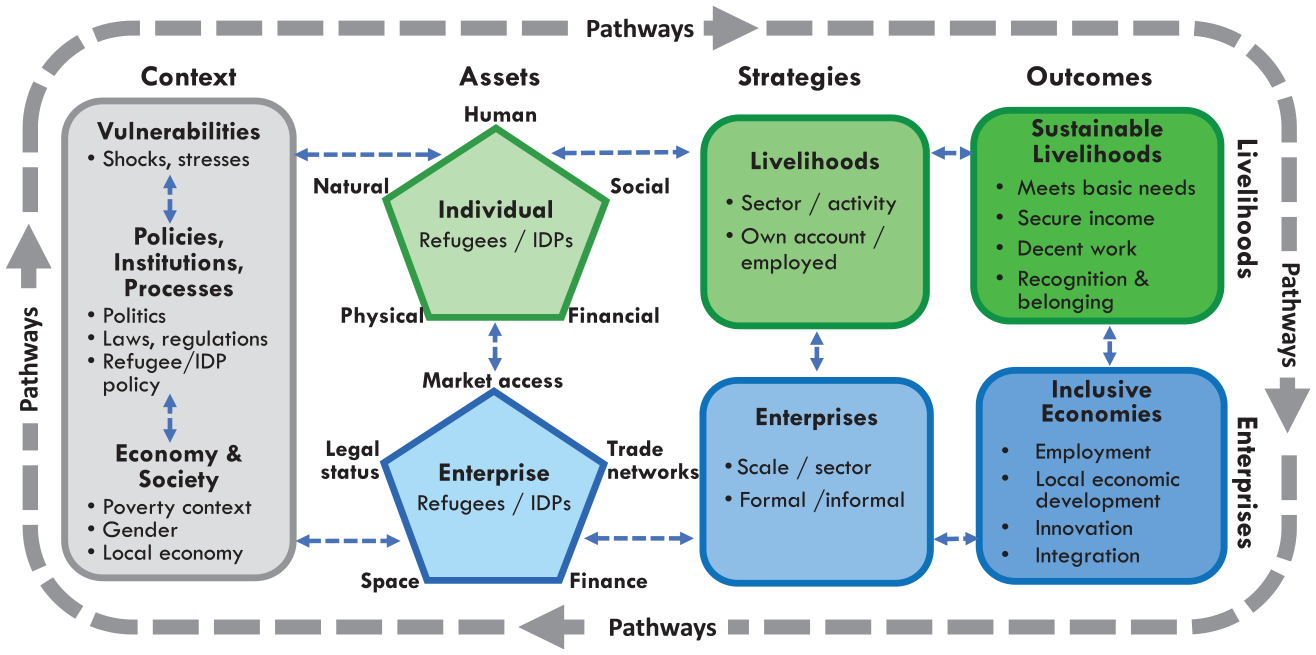
The DEF presented in Figure 1 draws on extensive reviews of refugee, development and informal economy literatures. The approach was field-tested with country partners and at participatory forums for the project with government representatives, aid organizations and refugee representatives. A separate paper outlines the conceptual underpinnings of this framework.(43) The DEF builds on the Sustainable Livelihoods Framework (SLF),(44) which has been widely used in refugee studies,(45) but its focus on individuals and households misses the collective economic contributions of displaced people. The SLF is also criticized for focusing on stable contexts and not addressing conflict-affected situations.(46) The DEF incorporates the SLF, but adds the enterprise, temporal and conflict dimensions of displacement economies.
Displacement Economies Framework
The context analysis (left column) explores the structural factors affecting urban displacement economies, including the sociocultural and political-economy context, and the vulnerabilities of displaced people. The livelihoods analysis (top row) looks at the assets people use to build livelihoods, their strategies and the outcomes they need for urban lives. The enterprise analysis (bottom row) explores enterprises run or managed by refugees/IDPs, the assets, business strategy and potential for inclusive economies. The columns (assets, strategies and outcomes) examine the links between livelihoods and enterprise, mainly through self-employment. In this paper we first use a livelihoods analysis to explore people’s individual assets associated with self-employment thus showing their routes into enterprise; we then use enterprise analyses to explore how urban refugee-/IDP-run businesses survive and thrive. We bring these together in the case study of Eastleigh.
IV. Methods and Country Analysis
The research by our international team was one of the first large-scale studies of the outcomes of protracted displacement in cities and camps.(47) Fieldwork was carried out with refugees/IDPs and hosts in four countries: Ethiopia, Jordan, Kenya and Afghanistan. In each country we looked at populations from similar ethnic backgrounds in one city and one camp, exploring the themes of well-being and economies. In this paper, only the urban findings are reported. The countries of study were selected because of their large displaced populations, and their significance as international pioneers: Ethiopia, Kenya and Afghanistan are pilot countries under the UN’s 2018 Global Compact on Refugees, and its Comprehensive Refugee Response Framework (CRRF), and Jordan made pledges under the same framework. This section outlines our methods and summarizes the country contexts.
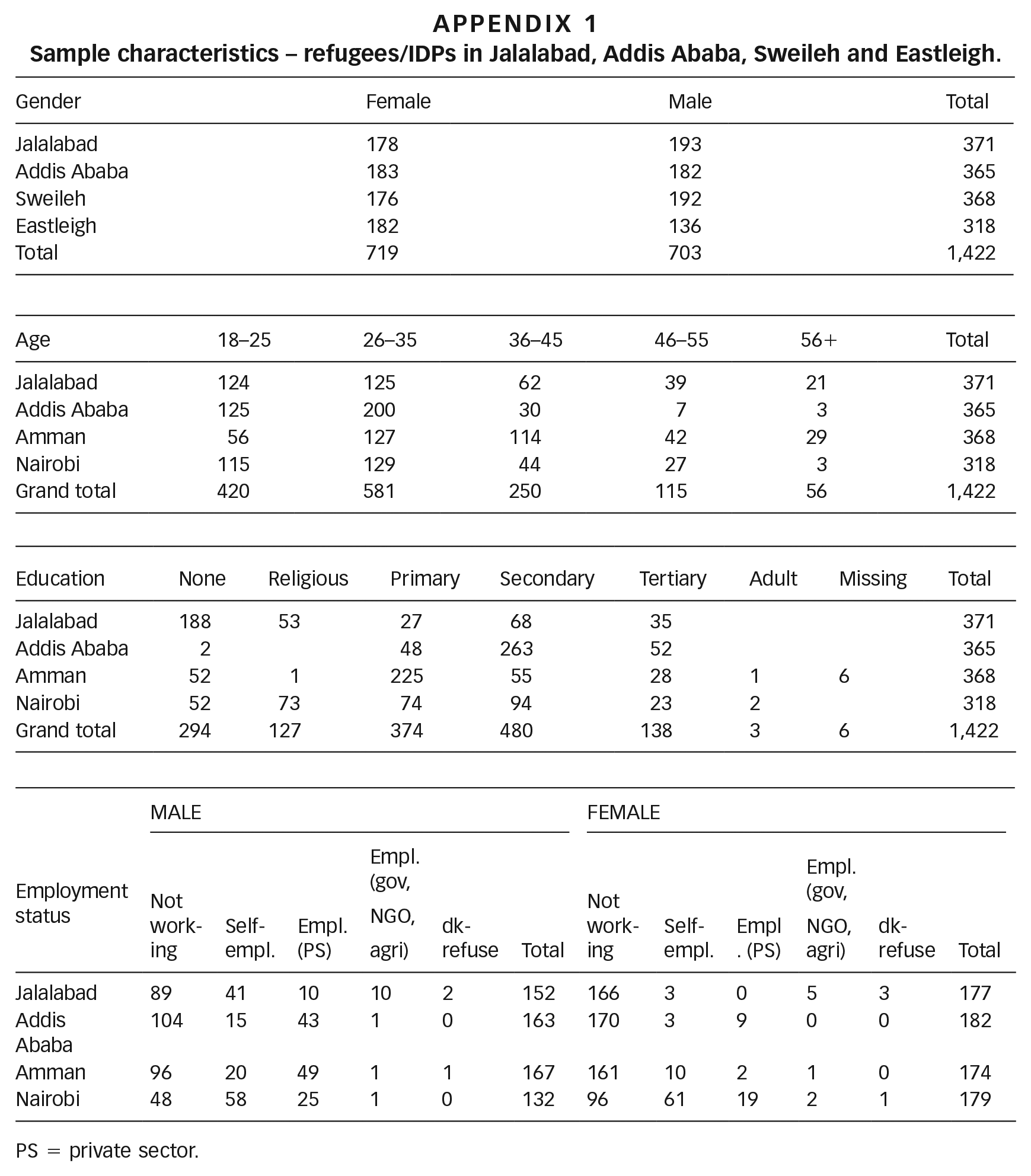
The project adopted a comparative mixed-methods approach. Quantitative data were derived from a structured survey of refugees or IDPs in one city and one camp in each country, and of hosts in the cities. In total, 1,419 urban interviews were undertaken in local languages with: IDPs and returnees in Majboor Abad, Jalalabad; Syrian refugees in Sweileh, Amman; Eritrean refugees in Gofa Mebrat Hail, Addis Ababa; and Somali refugees in Eastleigh, Nairobi. Similar numbers of men and women were interviewed (Appendix 1).(48,49) Qualitative data were drawn from around 600 in-depth interviews with key informants, selected survey respondents (on well-being) and displaced people running enterprises in sectors where most displaced people work, identified from the survey.
All four countries face national and local sensitivities in hosting refugees/IDPs. The text below outlines the scale of displacement; the displaced population studied; the encampment policy; legislation; and right to work from each of these countries:
Ethiopia has an open-door policy towards refugees. In 2023, UNHCR recorded 933,035 refugees and asylum seekers there, predominantly from South Sudan, Somalia and Eritrea.(50) Most refugees live in 23 scattered camps, although the civil war in northern Tigray closed several camps. About 10 per cent of refugees live in urban areas, either for their safety and protection or because they have independent support. Many refugees in Addis Ababa are Tigrinya-speaking Eritreans escaping their government’s repression or open-ended conscription. Ethiopia’s 2019 Refugee Proclamation has eased some restrictions on mobility and work permits, but within a context of heavy police control.(51)
Kenya recorded 588,724 refugees and asylum seekers in 2023, mainly from Somalia and South Sudan. Most (84 per cent) live in remote camps around Kakuma in the northwest and Dadaab in the east. Although movement out of camps is actively restricted, 15 per cent of refugees live in Nairobi, where Somalis tend to join a large community of Somali Kenyans.(52) In Eastleigh, refugees come from several large Somali clans, which are dominant in business.(53) Kenya’s Refugee Act of 2021 simplifies access to work permits, and the proposed Shirika Plan aims to transform camps into “integrated settlements”.(54)
Jordan has the second highest per capita refugee population in the world,(55) with 736,159 refugees in 2023 (excluding Palestinians), of whom 89 per cent in 2023 were Syrian. Most refugees live in urban areas, with only 18 per cent in Zaatari, Azraq and other camps.(56) Although not a signatory to international refugee protocols, Jordan has capitalized on international aid for refugees.(57) The 2016 Jordan Compact turned the Syrian crisis into a development opportunity, and 300,000 refugee work permits have now been issued, mostly in restricted sectors.(58) Many Syrian refugees in Jordan come from Dar’a near the border, Homs, Aleppo and rural Damascus, but labour controls are tight.(59)
Afghanistan has a population in flux and ethnic ties across the region transcend modern-day borders. The 2022 Displacement Tracking Matrix(60) estimated that 2.6 million Afghans were displaced, 5.7 million had returned to their areas of origin, 3.6 million had migrated abroad and 1.7 million had returned from abroad, with the highest level of movement in Kabul. Returnees and IDPs are often from northwest Pakistan, and often accommodated in camp-like settlements.(61)
Multi-country comparative studies at this scale are rare. Using the DEF to frame the analysis, we were able to explore differences in structural contexts between countries through the experiences of people in protracted displacement. The DEF also enabled us to look in-depth at a particular locality, to address the guiding questions posed in Section I. Eastleigh in Kenya was chosen as this case study because of its range of refugee economic activity.
V. Cross-Country Livelihoods Analyses
In this section we draw mainly on the quantitative survey and use a livelihoods analysis (the top row, Figure 1) and the assets pentagon of the DEF to address two questions: first, “who is working, where?” and second, “what assets are most strongly associated with self-employment or employment?”
a. Who is working, where?
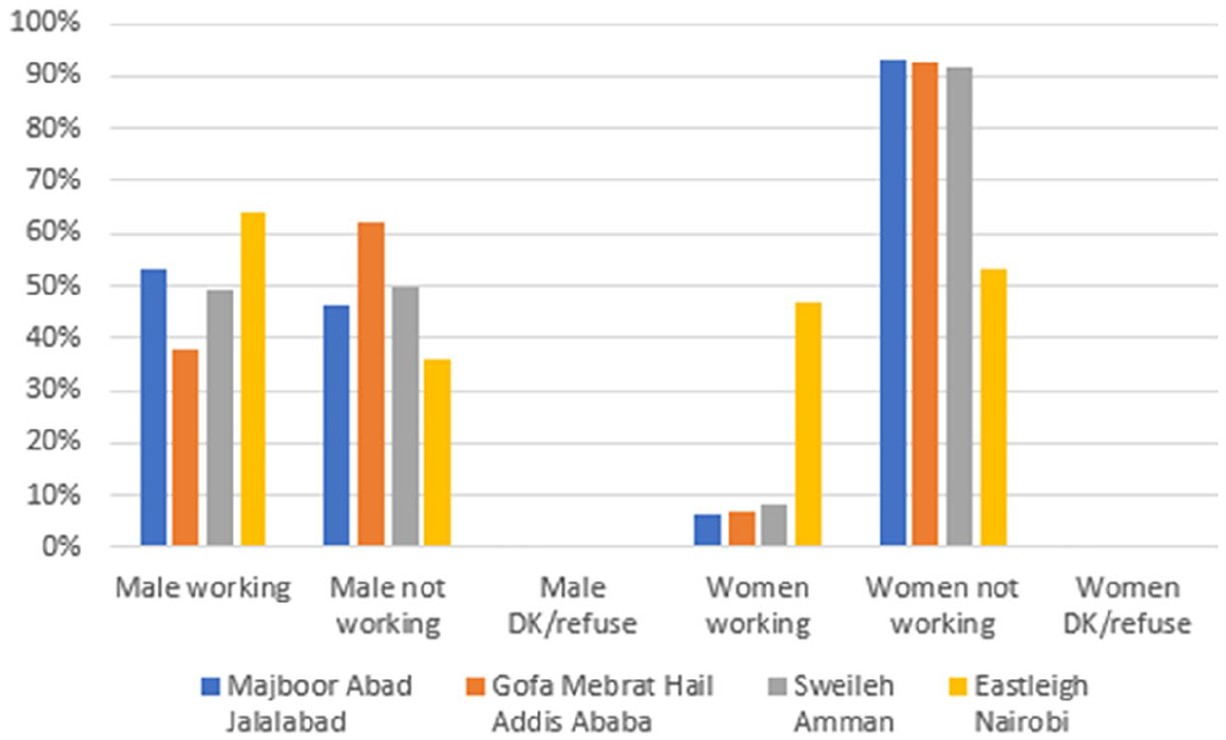
We first used quantitative data to highlight economic activity patterns among the study population. Cross-country comparisons showed significant differences in response to the question “do you currently have a source of income from work?” (Figure 2).
Number of respondents with an income from work, by gender and urban location
In Addis Ababa, the impact of restrictions on working rights and heavy-handed control are clear. Urban residency in Addis Ababa is granted only to refugees with protection needs or those who can prove independent support (usually Eritreans); many others self-settle. Despite relaxations in the 2019 Refugee Proclamation, in practice few refugees gain work permits. Thus, the proportion of refugees with an income from work was very low – only 38 per cent of male and 7 per cent of female interviewees (Figure 2), who often worked informally as mechanics, carpenters, hairdressers/barbers, or in cafes and bars. Other refugees rely on remittances, although they are generally well-educated, with previous work experience (70 per cent of males and 40 per cent of females), suggesting considerable wasted potential.
Eastleigh is interesting because of the high rates of male and female refugees working (65 per cent and 47 per cent respectively) (Figure 2). Although the 2021 Refugee Act has lifted restrictions on freedom of movement, the right to work and to start a business, this was still new when we did our survey and had had only limited impact. In Eastleigh 83 per cent of urban refugee households reported businesses or wages as their main source of income. Refugees work mainly in textiles or food products (wholesale and retail), and in hospitality. Cultural considerations did not seem to inhibit women refugees from working, although they were often vulnerable. In Sweileh, about half of the male refugees were working, mainly in construction, e.g. tiling, plastering or decorating. Work permits are granted for specific sectors, but flexible permits are difficult to obtain. A few women worked in home-based or domestic work including tailoring, embroidery, preparing food for sale or cleaning. In Afghanistan, where IDPs can work, just over half of male respondents were working.
All displaced people find difficulties in accessing the labour market, because of discrimination, lack of economic networks or regulations restricting the right to work. Although all three refugee-hosting countries in our survey are relaxing regulations on the right to work, in practice work permits are complex to obtain, or may be tied to a specific employer or sector. Repressive surveillance in Addis Ababa and Amman inhibits access to work, whereas in Nairobi, a neoliberal economy and kinship networks with Kenyan Somalis support a strong economy where working is the norm.
b. Walking the tightrope: self-employed or employed?
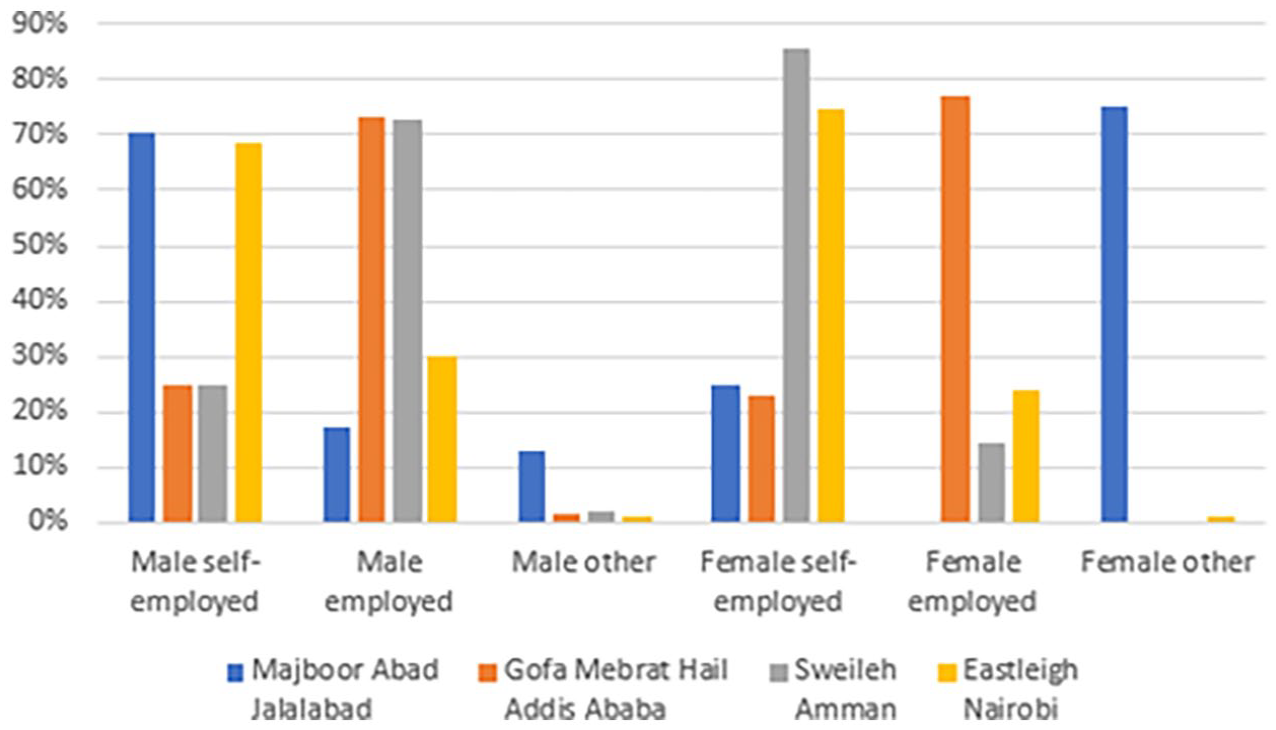
Envisaging a “livelihood” as a dynamic response to adverse shocks and stresses, we used the DEF to explore the strategies leading to waged work or self-employment (Figure 3). Displaced people often construct livelihoods, combining informal salaried work, day-labour or self-employment. Self-employment can be a livelihood option of last resort, but also has potential for innovation and employment creation.
Working respondents by type of employment
Among working displaced people, self-employment was high (Figure 3). Of urban male displaced workers, 48 per cent worked for themselves and 45 per cent for an employer. Among women, relative figures were 66 per cent and 26 per cent although sample sizes were small. Figure 3 shows substantial differences across countries, with male self-employment particularly high in Nairobi and Jalalabad, and female self-employment in Nairobi.
c. What assets best equip people to earn?
Next we used the DEF to address two questions: “which livelihood assets best equip refugees/IDPs to earn?”, and “which livelihood assets are most closely linked to self-employment?” From the quantitative survey, we considered 29 “livelihood assets”, e.g. education, previous work experience, savings and debt, housing situation, community status and others. Logistic regressions are run on dichotomous pairs, so we compared: (1) self-employed vs not working; (2) employed vs not working; and (3) self-employed vs employed. For each pair, coefficients were computed for the 29 variables to illustrate significance.(62) Results for men and women are combined as the sample of working women was small. We were particularly interested in the assets that enabled self-employment, so the regression subset of self-employed vs not working has been made available in Appendix 2.
In all locations, the logistic regressions showed that previous work experience was the most significant asset as a determinant of earning an income (Figure 4), and that having household savings was the most significant for self-employment (Figure 5). Both figures use the sample for pair 1 (self-employed vs not working(63)).
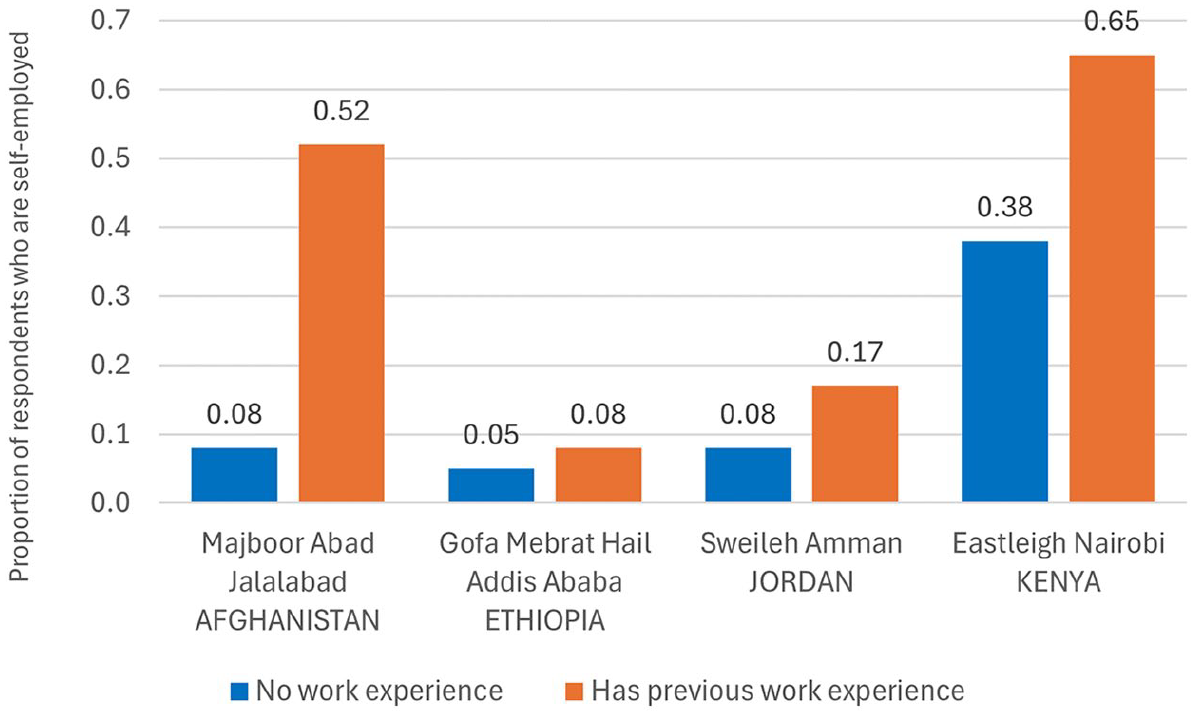
Levels of self-employment by previous work experience
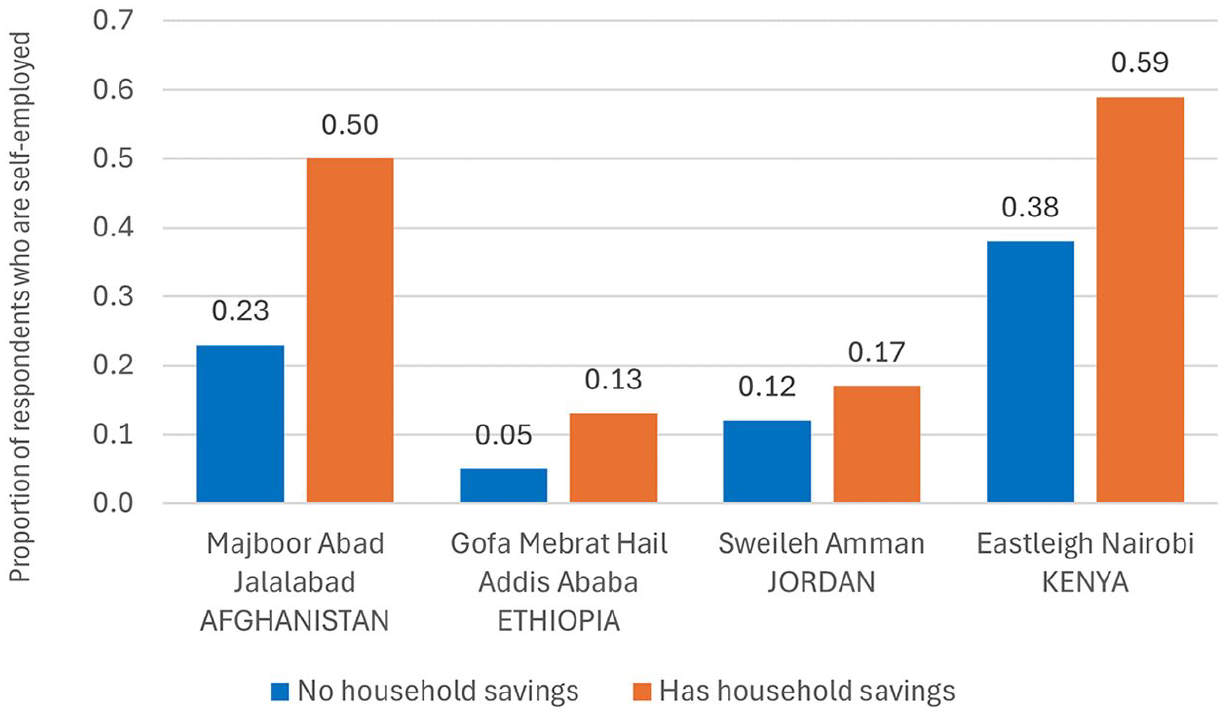
Levels of self-employment by household savings
In Eastleigh, strikingly more refugees work than elsewhere. It is easier there to become self-employed with no previous work experience, perhaps because the scale of economic activity in Eastleigh makes it easier to find work (Figure 4). Elsewhere, results show that without previous work experience it is difficult to find employment. This finding is significant for urban displacement policy, as helping young refugees and IDPs overcome barriers to work is critical to avoid either long-term exclusion from the labour market or hazardous secondary migration.(64)
The importance of household savings for self-employment is also clear. The findings suggest that capital to start and sustain enterprises comes mostly from refugees/IDPs themselves, an aspect rarely recognized by policymakers (Figure 5). In both Jalalabad and Nairobi, where self-employment was high, household savings were significantly associated with self-employment, perhaps because more permissive structural contexts enable displaced people to capitalize on assets, a key lesson for policy.
It is no surprise that individual past experience is important for employment of any kind, and household savings for self-employment. However, regulations matter, and the DEF highlights the structural constraints, particularly regulatory enforcement in Amman and Addis Ababa, which clearly restrict access to work and self-employment.
VI. Surviving in the City: Networks, Partnerships and Vulnerabilities
We now use an enterprise analysis (the DEF’s bottom row) to examine key factors and collective strategies that enable refugees/IDPs to start and sustain an enterprise. Even in surveillance societies, some refugees find clandestine ways to earn, often supported by friends and family. In seeking new entry points for innovative urban refugee policy, it is important to understand how refugees themselves navigate constraints. The section draws on the extended qualitative interviews focused on enterprises, to ask, “how does enterprise emerge and survive?” We focus on two assets from the enterprise pentagon that emerged as particularly significant: the social and trade networks that facilitate business, and refugees’ capacity to navigate aspects of their (il)legal status.
a. Getting started: social and trade networks
Social networks were critically important in starting businesses, establishing trade networks and gaining market access, particularly in Afghanistan and Jordan. Relatives or friends often provided skills training (in Sweileh), advice on contacts and market opportunities (in Sweileh’s building trades), goods on credit (e.g. for popcorn selling in Majboor Abad). They helped find space (e.g. in Nairobi) or were the first customers. Sometimes the assistance took the form of a loan from relatives in-country or abroad.
Friends and social networks were particularly important in starting a business. A young man in Majboor Abad with a plumbing supplies shop said, “My friend is a wholesaler of water supply systems, and advised me to set up a plumbing materials shop . . . At first, I bought all the pipes, taps and pumps from my friend, then I started selling other material and my enterprise expanded.” A woman trained in hairdressing was invited to do a bride’s hair and makeup, and then, “Two weeks later there was another wedding, and the people brought the bride for makeup because they noticed me at the previous wedding. This way I got famous and started my enterprise.” In Addis Ababa, a 31-year-old female refugee had walked across the border hoping to be resettled with her husband, but when her marriage failed, her sister taught her traditional habesha embroidery which she does from home with helpers. “My customers find me from Facebook or phone, and through personal connections. I have Facebook and Telegram pages and I post there to advertise my work . . . Most of my customers are abroad, and I send the materials by post or DHL.”
In Jordan, Syrian refugees set up businesses to exploit a market niche, as many Jordanians prefer secure government jobs. A man in Sweileh explained, “Life forced me to work in a family business, as I was not able to go to university and finish my [engineering] education.” The business started selling men’s clothing but when cheap exports from Asia arrived he switched to beauty products and accessories. “My brother . . . travelled to Europe and left me an opportunity . . . I never found any opportunities to work in my major [heating and air-conditioning] . . . I had no other options.” The need to earn sometimes empowers women. A female refugee in Sweileh doing embroidery told her husband, “I didn’t come to this world to cook and sweep. I have to do something for this community . . . I have the capability and I have the talent.”
Informal economy literature points to the importance of social networks in economic survival and the collaborative nature of trade.(65) The need for social support is intensified in displacement, and displaced people often train others despite increasing competition for themselves. Social networks were important across all four study locations, but particularly in the successful business district of Eastleigh, where several displaced entrepreneurs had capitalized on digital social media, as well as traditional support from family and friends.
b. Navigating restrictive legislation: partnerships
A striking finding was the role of partnerships between hosts and refugees in all three refugee-hosting cities, to help navigate legal constraints. Few countries give refugees a right to work, and even fewer the right to register an enterprise. Even where de jure rights exist, costly bureaucratic constraints often stop their de facto achievement. However, in Amman, Addis Ababa and Nairobi we found partnerships widely used to sidestep these constraints. In Amman and Addis Ababa, partnerships were almost the only route to self-employment, but have not been widely reported in refugee research.
Sometimes the partnerships were with trusted kin or genuine collaborators. In Eastleigh some partnerships were large-scale, as a wholesaler importing Chinese clothing reported: “[For] registration you need a Kenyan National Identification Card (ID), and a KRA pin, which I lack. Therefore, a man I met . . . became a good friend and my business partner and has registered the business. I pay to him a cut of the benefits every year.” In some instances, the host gains experience of business without the risk, as a Syrian carpenter in Sweileh reported: “My partner . . . wanted to remain an employee because he is afraid of risk . . . He has rent, his children’s expenses, his wife, and asked what if the shop wasn’t successful? So, I suggested that we open our own shop while he remained an employee in his job.”
In Kenya, only a few respondents knew about, or had received, the new Class M work permit allowing them to register a business with an alien card. A Somali refugee in Eastleigh bought vegetables from Marikiti Market for his shop and delivered to restaurants. “My business is registered with Nairobi City Council with a relative’s Identification (ID) card . . . Refugees . . . do not have the required documents but the process is easy for locals.” In Addis Ababa, Eritreans were under strict surveillance, as a barber in Gofa Mebrat Hail explained. “In Ethiopia, it is impossible to trade without [a] licence. Eritreans cannot register their business in their name . . . But we are lucky that the landlord already had a business licence and we continued with it.” More commonly, the national is a sleeping partner who takes a cut of the profits. In Eastleigh, landlords, often mall owners, may rent a shop or space in the entrance, covering the business licence for all the tenants. The partnerships reduce police harassment, a particular problem in Nairobi.
However, partnerships can be risky. Agreements are informal and there is no legal protection. Although informal market access is not outside the law, with unequal power relations refugees worry that all their efforts could vanish with an untrustworthy partner. A taxi driver in Addis Ababa said, “I don’t have to pay anything to the person in whose name the taxi is bought . . . You’d do some favours just for your conscience. But everything is difficult when your property is in another person’s name. When it comes to trust you’re always 50–50.” A Syrian in Sweileh had finally managed to register his pastry and coffee shop: “[Before], everything was in the name of the young man . . . It was licensed and equipped, and the electricity and water were all paid by me, but . . . I paid him the rent . . . Finally, we have registered our business using our alien cards . . . Now thank God we can.” A tailor in Sweileh had not taken the risk: “It was too risky. I sold gold and borrowed money, and I paid until I could get this equipment.”
Our findings on partnerships were a surprise, as they were used by urban refugees in three very different refugee-hosting contexts to leverage social networks and sidestep the legal ban on refugees registering an enterprise. Although Kenya and Jordan were starting to relax regulations, the bureaucracy and cost of enterprise registration was impossible to manage for most refugees. Yet, enabling refugee and diaspora investment provides scope for economic growth and innovation, for example in the clothing sector of Eastleigh and in construction in Jordan. This finding suggests that, where full enterprise registration by refugees is politically too sensitive, partial steps may be possible, for example by allowing a refugee partner in an enterprise to have legal title to the assets, or an area-based approach registering refugee enterprises in a particular locality.
VII. Eastleigh, Collective Impacts
In the final section we use the whole DEF framework to examine the cumulative impact of livelihoods and enterprise in Eastleigh, Nairobi’s thriving business hub of “Little Mogadishu”. Eastleigh is a fascinating case study because of the impact of collective enterprise and the opportunity it offers to refugees and others. Established in 1921 as an Asian neighbourhood, from the 1980s Eastleigh attracted Somali traders importing goods from Somalia or Dubai. The 1980s economic crisis and resulting liberalization stimulated wholesale and retail trade.(66) Eastleigh’s trade is now in millions of dollars, and Somalis, both Kenyans and refugees, control trading emporia and cargo companies importing goods from Malaysia, Thailand, China and beyond, and Eastleigh’s Somali community has political representation (key informant).
Today, Eastleigh contributes perhaps 30 per cent of Nairobi’s GDP.(67) Several of the refugees interviewed ran large wholesale businesses. Investment is injected through informal hawala (trust-based credit) and, according to interviewees, many diaspora Somalis in the US or Canada invest in new buildings with space pre-let to small operators. However, police harassment is acute for refugees without an urban ID card, and police bribery reputedly treats small-scale traders “like ATMs”.(68)
Businesses often operate cooperatively, with different people contributing land, capital or expertise. As a restaurant owner explained, “I had a relative in Denmark who wanted to open a business in Nairobi, and I wanted to invest the money I had saved . . . so we decided to open a business together . . . none of us had local ID . . . so we looked for a third shareholder with local identity.” A food wholesaler described how he started small and expanded: “I can now educate my children, support my wife, mom and siblings . . . I saved enough money to establish a small kiosk for my wife this year, she can now keep herself busy and support me financially.”
We also found great poverty in Eastleigh, particularly among women who were divorced, separated or widowed who were trying to construct a livelihood. The financial situation of women survey respondents was often precarious. In Eastleigh, 32 per cent (of 222 female respondents) said their household’s financial situation was “difficult” or “very difficult”; this rose to 67 per cent for separated women, and 33 per cent for divorced men (of 177 respondents). The qualitative interviews reinforced this finding. According to one woman, “I’m a single mother and get chased a lot by the authorities . . . The police are sent to the streets, and we might be moved two or three times per week . . . we were tear-gassed and had our stuff confiscated . . . We have nobody to go to. We have an ayuuto [savings group] . . . If goods are confiscated we lend the member money to get the goods back.” Some stories were harrowing. A 31-year-old Somali grandmother selling clothing from the street supported five children and grandchildren. Her husband had been killed. Two of her three children were kidnapped and her young teenage daughter was raped and then had twins.
Eastleigh is a thriving business community, where bonds of clans and language outweigh national identity. A neoliberal economic context and large-scale enterprises support a thriving economy. Uncertain legal status is bypassed through partnerships, and market access, trade networks, finance and space are facilitated through kinship and ethnic networks. The displacement economy is entwined with an established Somali Kenyan market, but the existence of refugee-run wholesale businesses suggests a well-established internationally oriented contribution. Nevertheless, structural constraints hinder the refugee entrepreneurship in the area, including social exclusion, police corruption and the heavy-handed application of regulations. Beneath Eastleigh’s prosperity, poverty is endemic, particularly among women, for whom work is dangerous, and sexual harassment is an everyday threat. The DEF helps pinpoint those impacts and the responses of displaced communities.
VIII. Discussion and Conclusions
People in protracted displacement have their lives on hold. Many face years in exile, often moving to towns and cities where legal, bureaucratic and practical barriers hinder their economic inclusion. Often denied freedom of movement, the right to work, own property, receive a full education or achieve an adequate standard of living, their de jure and de facto rights are curtailed. The rights enshrined in UN conventions apply to all displaced people, but their translation into national refugee policy is patchy.(69) Denial of rights matters to all refugees, but for those in long-term exile, it can mean that whole chapters of their lives are lost. Refugees and IDPs in cities who can work, do so to survive.
This paper argues that urban protracted displacement deserves recognition as a distinct form of refugeehood recognized in practice and academia, in which economic inclusion is key. Yet surprising gaps remain in the literature in analysing the challenges and potential of displacement economies in cities. While research on urban displacement is well-established,(70) and protracted displacement has received coverage,(71) the economic implications of urban protracted displacement are less often explored.
This paper argues for a new approach to distinguish the structural and individual barriers to economic inclusion in cities, and for a more nuanced understanding of how refugees navigate those barriers, as a basis for policy review. Drawing on the threefold classification by Etzold et al.,(72) structural barriers can be displacing, marginalizing and immobilizing. Addressing the conflicts that cause displacement may be a distant dream, but focusing on the structural, legal and practical obstacles to economic inclusion and mobility in countries of arrival is more realistic. The insurgent, clandestine and ordinary means through which refugees and IDPs survive in the city suggest new policy directions. Enterprise is the forgotten dimension in livelihoods response, yet is significant in giving displaced entrepreneurs agency and in diversifying local economies. Our study shows that in the policed cities of Amman and Addis Ababa, enterprise was depressed. In liberalized Nairobi, and unrestricted Jalalabad, self-employment predominated, and was also the only route to work for most of the women in our survey.
Policy reversal is controversial, as states worry about the security burden imposed by refugees, but an interim approach is to embrace “stealth humanitarianism” – small steps that address barriers without directly challenging the status quo, such as learning how barriers operate on the ground and what initiatives displaced people take to negotiate them, and testing innovation as a precursor to substantive change. The importance of social networks in refugee livelihoods has been identified,(73) but specific steps such as facilitating refugee and IDP access to formal finance or legal money transfer can support diaspora investment. Area-based approaches can support enterprise in localities with concentrations of displaced people, and refugee associations can support dialogue with local governments. Support to groups or cooperatives of women producers can facilitate skills development, while the celebration of refugee enterprise can widen trade networks.
Host–refugee enterprise partnerships were an unexpected finding, which have not been widely researched. Partnerships demonstrate how displaced people navigate structural barriers to enterprise, and if they were regularized, vulnerability could be reduced. In restrictive Amman and Addis Ababa, partnerships were almost the only way to run a business with the potential to employ other people, but they left refugees with no recourse against an untrustworthy partner. In Nairobi, trading licences were often held by shop owners. From the DEF analysis it is clear that legal status is a critical concern for refugee entrepreneurs. Regulations should enable refugees to register enterprises, or at a minimum register a share in a host–refugee partnership. Mobility is also important so that refugees/IDPs can move beyond their local area to conduct business. Sexual harassment of women refugees and IDPs is widely reported, indicating that support for women’s livelihoods may have added benefits of reducing exploitation.
The Eastleigh case study demonstrates that refugee-run enterprise can flourish when it reaches a critical mass, supported by diaspora investment, cross-border trade and political representation by Somali Kenyans. However, the predations of municipal police significantly undermined the profits of our interviewees. More significant was the prevalence of acute deprivation and sexual harassment for women working in Eastleigh. Gender-based violence in transit is often reported by women refugees,(74) but is equally prevalent in cities of refuge. Setting up accessible support networks for women hawkers and other workers, and linking women refugees to existing local services, could support the most vulnerable.
The Displacement Economies Framework (DEF) makes a significant contribution to studies on urban protracted displacement, demonstrating how structural and individual aspects of displacement interact. First, the DEF enabled us to use a cross-country analysis of livelihood strategies to explore who is working, where, and what the impact of regulatory constraints is. Second, the DEF allowed an enterprise analysis to explore economic strategies, and remarkable commonalities were found across very different refugee contexts. Third, the DEF allowed us to explore displacement economies in a specific urban context, and to identify the barriers, vulnerabilities and successes, and collective impact for economic inclusion and the wider economy.
We conclude that urban protracted displacement is now so widespread that it deserves recognition as a sub-discipline of refugee/IDP studies, with an understanding that the displacement economies of refugees and IDPs in cities are complex, interlinked and fragile, but with potential to flourish. The DEF provides a structured format through which displacement economies can be studied, one that is applicable both in large mixed-methods studies or smaller case study research. As knowledge develops, the framework will evolve, but it is a first step in a journey to encourage national and local governments, in addition to the international community, to recognize cities as legitimate places for refugees and IDPs to live and work, and to view displacement economies as an economic asset rather than a security threat.
Footnotes
Appendix
Sample characteristics – refugees/IDPs in Jalalabad, Addis Ababa, Sweileh and Eastleigh.
| Gender | Female | Male | Total |
|---|---|---|---|
| Jalalabad | 178 | 193 | 371 |
| Addis Ababa | 183 | 182 | 365 |
| Sweileh | 176 | 192 | 368 |
| Eastleigh | 182 | 136 | 318 |
| Total | 719 | 703 | 1,422 |
| Age | 18–25 | 26–35 | 36–45 | 46–55 | 56+ | Total |
|---|---|---|---|---|---|---|
| Jalalabad | 124 | 125 | 62 | 39 | 21 | 371 |
| Addis Ababa | 125 | 200 | 30 | 7 | 3 | 365 |
| Amman | 56 | 127 | 114 | 42 | 29 | 368 |
| Nairobi | 115 | 129 | 44 | 27 | 3 | 318 |
| Grand total | 420 | 581 | 250 | 115 | 56 | 1,422 |
| Education | None | Religious | Primary | Secondary | Tertiary | Adult | Missing | Total |
|---|---|---|---|---|---|---|---|---|
| Jalalabad | 188 | 53 | 27 | 68 | 35 | 371 | ||
| Addis Ababa | 2 | 48 | 263 | 52 | 365 | |||
| Amman | 52 | 1 | 225 | 55 | 28 | 1 | 6 | 368 |
| Nairobi | 52 | 73 | 74 | 94 | 23 | 2 | 318 | |
| Grand total | 294 | 127 | 374 | 480 | 138 | 3 | 6 | 1,422 |
| Employment status | MALE | FEMALE | ||||||||||
|---|---|---|---|---|---|---|---|---|---|---|---|---|
| Not work-ing | Self-empl. | Empl. (PS) | Empl. (gov, NGO, agri) | dk-refuse | Total | Not work-ing | Self-empl. | Empl . (PS) | Empl. (gov, NGO, agri) | dk-refuse | Total | |
| Jalalabad | 89 | 41 | 10 | 10 | 2 | 152 | 166 | 3 | 0 | 5 | 3 | 177 |
| Addis Ababa | 104 | 15 | 43 | 1 | 0 | 163 | 170 | 3 | 9 | 0 | 0 | 182 |
| Amman | 96 | 20 | 49 | 1 | 1 | 167 | 161 | 10 | 2 | 1 | 0 | 174 |
| Nairobi | 48 | 58 | 25 | 1 | 0 | 132 | 96 | 61 | 19 | 2 | 1 | 179 |
PS = private sector.
Funding
The author(s) disclosed receipt of the following financial support for the research, authorship, and/or publication of this article: This research was financially supported by UK Research and Innovation’s Global Challenges Research Fund (GCRF) (project ES/T004525/1). The project was supported by additional funding from the IKEA Foundation; Bernard van Leer Foundation; Swiss Development Cooperation (SDC); UKRI COVID-19 Grant Extension Allocation (CoA); ESRC Impact Acceleration Award; Cardiff University HEFCW (Higher Education Funding Council for Wales) ODA Award and a GCRF and Newton Institutional Consolidated Impact Accounts Award.
