




Abstract
This paper presents results of a household survey on the current sanitation and sewerage conditions in Metro Manila. The survey included a choice, measured in terms of the marginal willingness to pay (MWTP), between two alternative domestic wastewater treatment systems: 1) a sewerage system connecting individual households to a treatment plant through sewer lines; and 2) a combined drainage–sewerage system in which wastewater effluent flows with rainwater through flood canals and is intercepted for treatment only at a certain point in the waterway. With the second, the health improvement effect may be limited, but the cost can be significantly lower. The finding in favour of the combined drainage–sewerage system lends some support to this new approach in municipal wastewater treatment, which some other increasingly congested metropolises in Asian countries are likewise adopting, as an alternative to the more costly individual household sewer connections.
Keywords
I. Introduction
In many Asian countries, sewerage systems consisting of sewer lines connecting households and establishments to sewage treatment plants are uncommon.(1) In the Philippines, only about 4 per cent of the population have a sewer connection. Even in the most developed urban centre of Metro Manila, sewer line system coverage remains about 8 per cent.(2) This means that less than a tenth of the wastewater in Metro Manila undergoes complete treatment before disposal to water bodies. The rest of the wastewater either flows into septic tanks that only provide primary treatment (solids remain on septic tank floors while the liquid portion overflows into drainage canals); or, in the absence of septic tanks, as is common in informal settlement areas, households’ used water from toilets goes directly to drainage/flood canals without any treatment. Most septic tanks are installed by the households or builders employed by them, not by government agencies. Many of the septic tanks are suspected to be substandard and they are not desludged on a regular basis. When full septic tanks are not desludged, household wastewater along with the solid portions overflows into the drainage canals.
The formerly government-owned and -operated Manila Waterworks and Sewerage Systems (MWSS) was privatized in 1997 to improve and expand not only water supply but sewerage coverage.(3) The privatization agreement provided for the gradual increase in sewer connection coverage from 7 per cent to 62 per cent by 2021, when the planned sewerage infrastructure development would have been completed.(4) Due to financial and physical constraints, such as the difficulty of constructing underground sewer pipes in the heavily congested metropolis, MWSS is now opting instead for a combined drainage and sewage system that diverts combined rain and sewage water in the drainage canals into treatment plants before the water is discharged to Metro Manila rivers, Laguna Lake or Manila Bay. By the end of 2012, about 4 per cent of the Metro Manila service area had been covered by this “combined” system, raising the proportion of household wastewater undergoing complete treatment before discharge to Metro Manila waterways to 12 per cent.
Inadequate domestic wastewater treatment causes two major problems: water pollution and waterborne diseases. Inadequate sewerage service has resulted in serious pollution problems in Metro Manila’s waterways. Water quality monitoring at different stations in this waterways system in 2008 and 2009 yielded highly alarming pollution levels.(5) Available data on the sources of water pollution in Metro Manila published in the Pasig River Rehabilitation Commission (PRRC) 1998 Final Report revealed domestic wastewater to be the biggest source, accounting for 60 per cent of the pollution load in Metro Manila waters.(6)
Untreated domestic wastewater causes diseases such as diarrhoea, cholera, typhoid, dysentery and hepatitis. In the Philippines, more than 11,000 people die each year from diarrhoea. All waterborne diseases together account for about 20,000 deaths a year. In 2008 diarrhoea was the second largest cause of mortality among Filipino children below 5 years old,(7) while 70 per cent of children 11 years old and below were infected with intestinal worms.(8)
The combined drainage and sewerage system option being pursued by MWSS concessionaires, even if it results in improvements in the water quality of Metro Manila rivers, may not sufficiently address the effect of domestic wastewater on morbidity. With this system, wastewater from private septic tanks that is only partially treated and untreated wastewater from rudimentary latrines in many informal settlements in Metro Manila will continue to drain through flood canals. As the combined rainwater and wastewater will be intercepted for treatment only after a certain point in the waterway, people’s exposure to polluted drainage/canal water, especially those in informal settlement areas, essentially remains the same, unless other measures, such as the strict regulation and monitoring of septic tank standards and maintenance, are also implemented.
The two alternative domestic wastewater treatment programmes – 1) a sewerage system that connects individual households to a treatment plant through sewer lines as stipulated in the original concession agreement; and 2) the combined drainage–sewerage system currently being pursued by MWSS – will have different water quality and health effects. While the two strategies may differ only slightly in terms of water quality improvements, there may be a substantial difference between the two approaches in terms of health improvements. Another important factor in the choice of a particular domestic wastewater treatment programme is cost, which is substantially lower for the combined drainage–sewerage system.
This paper presents the results of a survey on the current sanitation and sewerage conditions in Metro Manila, which included a choice modelling exercise undertaken to determine people’s willingness to pay (WTP) for improvements in the water quality of Metro Manila rivers and reductions in the incidence of waterborne diseases, two main benefits that can be realized with expanded and improved domestic wastewater treatment systems. The study focuses on people’s preferences and their own valuation of the benefits that they perceive to derive from sewerage programmes. This is done to address the need for more evidence-based planning of development interventions in the area of sanitation and sewerage.(9) Estimates of the WTP and the rich set of information gathered from the survey provide necessary inputs in cost–benefit analyses of alternative sewerage programmes, and hence guide policymakers and service providers in designing and implementing the long-overdue sewerage expansion programme in Metro Manila.
II. Methodology
a. Choice modelling
The concept of willingness to pay (WTP) in economics is a measure of the benefits that an individual perceives to be derived from a good or service. Estimating WTP is therefore crucial in order to maximize welfare for society as a whole. The task is especially important in the case of public goods or goods with extensive externalities, in which gains and losses extend beyond the private individuals making the decisions, and hence cannot be observed and measured completely from market outcomes.
Over the years, research on the valuation of non-marketed goods such as a public good or programme has developed into two main branches: revealed preference methods and stated preference methods. Revealed preference methods infer the value of a public good by studying actual (revealed) behaviour in a closely related market. For example, preference or demand for clean air through air pollution abatement programmes may be inferred from real property markets in which locations with better air quality can be priced higher. In general, the revealed preference approach has the advantage of being based on actual choices. However, the valuation is conditioned on current and previous levels of the related marketed good, and non-use values are not captured.
In cases where no such database exists and no closely related market can be explicitly studied, stated preference methods are employed. In the stated preference approach, contingent or hypothetical questions concerning trade-offs between improvements in public goods and money are posed to respondents. Preferences for, or the value of, changes in public goods are then inferred from the responses.
Stated preference techniques entail eliciting people’s WTP for a non-market good or public project through a survey. There are two survey-based valuation methods: contingent valuation (CV) and choice modelling (CM). In CV, the respondents are asked to state their WTP for a certain level (or change in the level) of a non-market good, through either an open-ended question (How much are you WTP?) or a dichotomous-choice question (Are you willing to pay XXX pesos?).
In CM, respondents are asked to choose one among several alternatives in a choice set. Each alternative is described in terms of attributes/characteristics with different levels. A monetary value (price of the good or cost of the programme) is included as one of the attributes. In making choices, respondents are implicitly trading off money against the different levels of the attributes in a set of alternatives. WTP for attributes of the good, rather than the good itself, is estimated indirectly based on these trade-offs.
CM has three advantages over CV. First, CM is more efficient in that it collects more valuation information from each respondent. The number of respondents multiplied by the number of choice sets presented to each respondent gives the total number of observations that can be generated and used in the regression analysis. Second, CM allows the analyst to estimate WTP for many different versions of the programme without resorting to large split CV studies. Third, CM allows the analyst to observe more directly how each respondent trades off different programme attributes, again without relying on a split-sample CV experiment and comparisons between respondents.(10) In this study, CM was employed as it allowed the evaluation of sewerage programmes with different extents of individual sewer connections and combined sewage–drainage systems that could bring about different combinations of health and water quality impacts.
It must be emphasized that the quantitative economic analysis done in this study is just one of various approaches to assess households’ preferences for sanitation and sewerage services and the viability of alternative systems.
b. Design of the choice sets and the survey instrument
The final form of the questionnaire resulted from a series of key informant interviews (KIIs) with officials of the national and local government units and of relevant government agencies (e.g. the National Water Resources Board [NWRB], Department of Environment and Natural Resources [DENR], Department of Health [DOH], and MWSS Regulatory Board and Laguna Lake Development Authority); management of the two MWSS concessionaires; and focus group discussions (FGDs) and pre-tests with representative segments of the target population (households from different income classes in Metro Manila). These pre-survey activities provided important inputs in the selection of relevant background questions, together with the range of categorical answers to the questions, the formulation of the valuation scenario and the choice sets, and the selection of visual aids and other tools for better and more uniform understanding of questions by respondents.
The 12-page questionnaire consisted of four parts. Part A included a brief introduction on the purpose of the survey as well as awareness and attitudinal questions on the environment, water sources, domestic wastewater, and its effects on people’s health and livelihoods. Part B elicited information on the household’s supply of water and on the current water treatment facilities and sanitation and sewage facilities used by the household. Part C was the valuation part of the survey, and included both contingent valuation and choice modelling components. Finally, Part D asked socioeconomic questions about the respondent and his/her household. These questions were asked last to ensure that respondents’ interest did not fade early on in the survey. All questions were provided with answers or ranges of values (except for age) from which respondents could choose, to make the task manageable for the respondent and the responses to all questions quantifiable. Respondents were informed at the start of the interview that the survey could take about 15–30 minutes.
The valuation scenario began by giving the respondent information and data on pollution levels in Metro Manila water bodies, the baseline pollution levels, incidence of waterborne diseases, and how these diseases can be caused by untreated domestic wastewater. This was followed by a description of two municipal wastewater systems, individual sewer connections versus combined drainage–sewerage; and an explanation of how these two systems differ in terms of reductions in water pollution levels and incidence of waterborne diseases.
This paper reports on the choice modelling component of the valuation done in the survey. To measure the values people attach to the health effect and water quality effect of domestic wastewater treatment systems, the sewerage programmes in the choice sets are described in terms of three attributes: 1) reduction in water pollution load from domestic wastewater, 2) reduction in the incidence of waterborne diseases, and 3) cost. Alpizar et al.(11) suggest that it may help to directly relate attributes to the status quo level. Hence, the health and water quality attributes are specified as per cent improvements from the status quo levels. For the water quality improvement attribute, the two levels used are 50 per cent and 90 per cent reduction from the status quo pollution load from domestic wastewater in Metro Manila waterways, the latest estimate of which is 200,000 metric tons of biological oxygen demand per day (mt BOD/day).(12) For the health improvement attribute, the levels used are 20 per cent, 30 per cent, 50 per cent and 70 per cent reduction from the baseline incidence of waterborne diseases in Metro Manila of 10 cases per 1,000 people per year.(13) The cost attribute is expressed as an additional price per cubic metre of water consumed. These attribute levels (Table 1) were finalized after a series of interviews with water, sewerage, and health experts, and of focus group discussions and pre-tests with households of different income levels.
Attributes and levels used in the choice sets
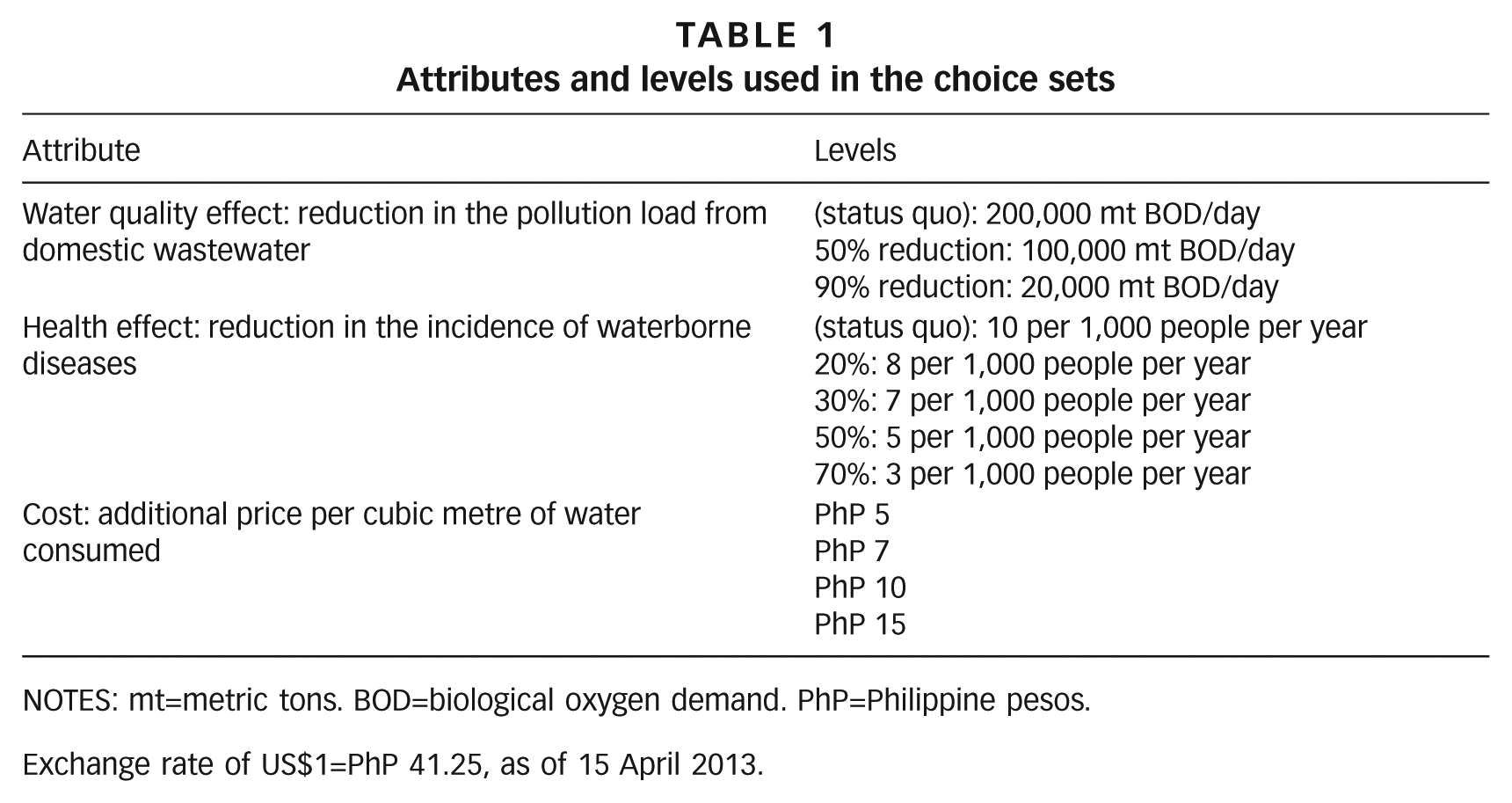
NOTES: mt=metric tons. BOD=biological oxygen demand. PhP=Philippine pesos.
Exchange rate of US$1=PhP 41.25, as of 15 April 2013.
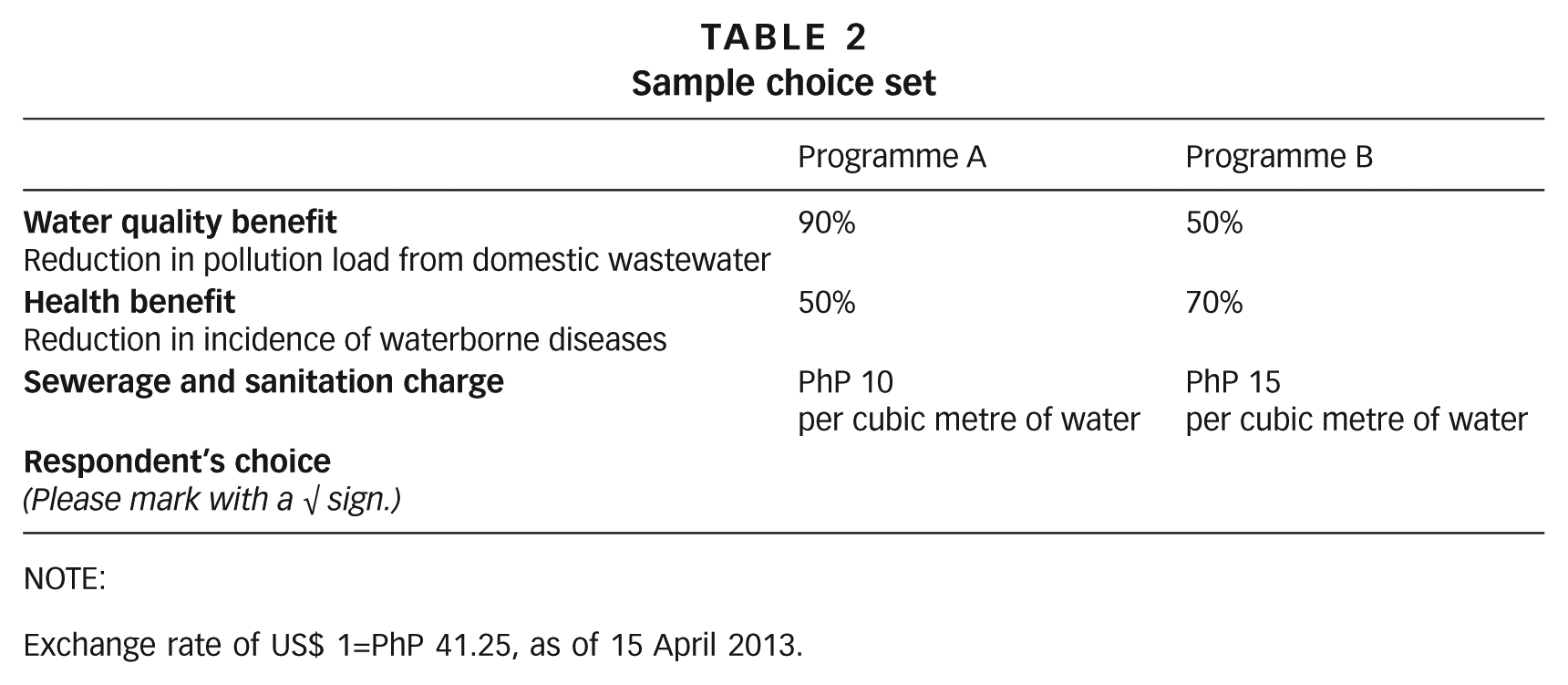
Each choice set presented two alternative sewerage programmes. The “status quo” option was not included and the respondent was required to choose one alternative in each choice set. Seven paired choice sets were presented to each respondent. The choice sets were formulated using an orthogonal main effects design(14) that considered only the direct effect of each attribute on utility. Table 2 shows a sample choice set.
Sample choice set
NOTE:
Exchange rate of US$ 1=PhP 41.25, as of 15 April 2013.
c. Sampling, survey implementation and data analysis
A total sample of 406 respondents was generated from 13 cities and municipalities in Metro Manila. For each city, a residential barangay,(15) with residents belonging to all social classes, was selected.(16) Respondents in each barangay were chosen using systematic sampling. Permission and assistance to conduct the survey were secured from the barangay captain’s office. With maps provided by the barangay office, starting points were identified and enumerators were instructed to approach the 50th house from the starting point. In case of refusal to participate, the next house would be approached. Every succeeding respondent approached had to be the 50th house from the last responding household.
The survey was conducted through in-person interviews during the months of May–October 2012. Enumerators, recruited from a pool of applicants who were at least university students, were given a two-day training course prior to the pre-tests. The first day of training gave an overview of the objectives of the study and the choice modelling approach; and it familiarized the enumerators with concepts and systems of water supply and wastewater treatment. On the second day, enumerators were trained on the survey instrument, with the meaning and the reasons for each question and statement discussed. Enumerators were instructed to strictly follow the wordings in the questionnaire. The training included role-playing exercises.
The sample size of 406 respondents, each given seven choice sets, generated a total of 2,842 observations (respondents’ choices), which were analysed using the multinomial logit regression procedure. The analytical framework was based on the Lancasterian theory of value,(17) which defines utility as a function of various attributes or characteristics of goods rather than of the goods themselves. The regression procedure yields coefficients for the attributes of the good or programme in the utility function. Marginal willingness to pay (MWTP) for an attribute is the marginal rate of substitution between an attribute and money, and is mathematically defined as the ratio of the coefficient of the attribute and the marginal utility of money (the coefficient of the cost variable).(18)
III. Results
a. Respondents’ characteristics
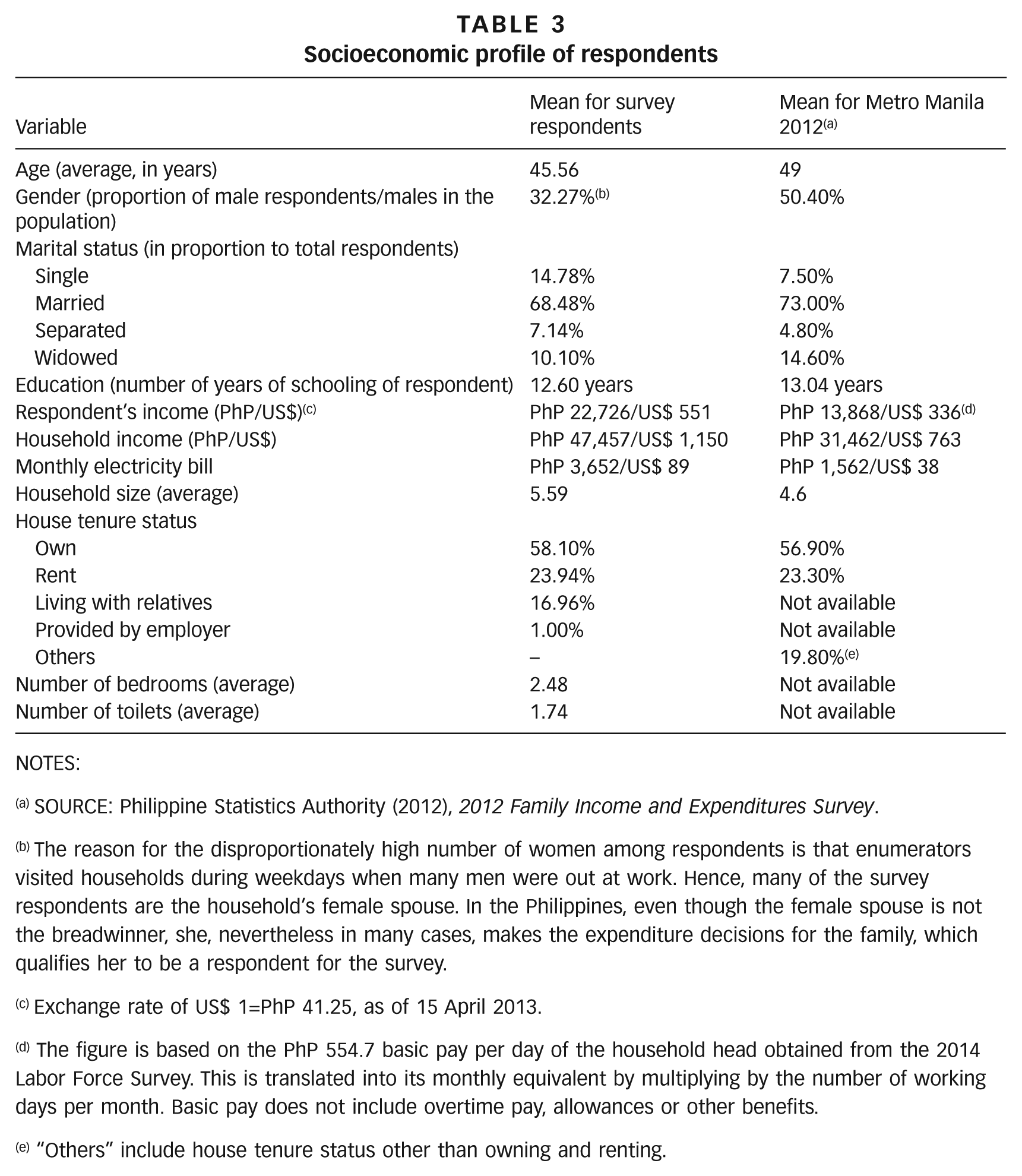
Table 3 shows the profile of survey respondents. The average respondent is 46 years of age. Almost a third (32 per cent) are male. Most (68 per cent) of the respondents are married, 7 per cent separated, 15 per cent single and 10 per cent widowed. On average, each respondent has completed 12.6 years of schooling, implying 2–3 years of vocational or college education. The average monthly income of the respondent is PhP 22,726 (US$ 551). When incomes of other household members are included, total monthly household income amounts to PhP 47,457 (US$ 1,150). The average monthly electricity bill is PhP 3,652 (US$ 89). The average household has six members.
Socioeconomic profile of respondents
NOTES:
SOURCE: Philippine Statistics Authority (2012), 2012 Family Income and Expenditures Survey.
The reason for the disproportionately high number of women among respondents is that enumerators visited households during weekdays when many men were out at work. Hence, many of the survey respondents are the household’s female spouse. In the Philippines, even though the female spouse is not the breadwinner, she, nevertheless in many cases, makes the expenditure decisions for the family, which qualifies her to be a respondent for the survey.
Exchange rate of US$ 1=PhP 41.25, as of 15 April 2013.
The figure is based on the PhP 554.7 basic pay per day of the household head obtained from the 2014 Labor Force Survey. This is translated into its monthly equivalent by multiplying by the number of working days per month. Basic pay does not include overtime pay, allowances or other benefits.
“Others” include house tenure status other than owning and renting.
The third column of Table 3 gives the mean values of the socioeconomic variables for the whole of Metro Manila for the year 2012. The socio-demographic profile of the sample respondents is somewhat close to that of the average household in Metro Manila, although the mean household income and electricity bill of the sample are higher. Note that for respondents’ incomes, the means of the sample and for Metro Manila may not be comparable as the latter is derived from basic pay only. As explained in note d of Table 3, the overall average for Metro Manila for a respondent’s income is based on the daily basic pay of the household head. Basic pay does not include overtime pay, allowances and other benefits. In the survey, however, the responding household head was asked to give his/her gross income, including overtime pay and allowances. This could be one reason for the income discrepancy between the sample and Metro Manila population. Nevertheless, the substantially higher mean electricity bill of the sample may imply that the willingness to pay to be derived from this sample may be leaning on the high side.
More than half (58 per cent) of respondents declared that they own the house in which they reside. Ownership could mean either of two things. One is true ownership of the land and house in the case of properly titled property. The other is in the case of informal settlement areas, where ownership only means a “right” to occupy the land and ownership of the shanty structure. Thus, house ownership does not always mean an elevated socioeconomic status. About a fourth (24 per cent) of the responding households reside in rented houses and 17 per cent reside in relatives’ houses, the extended family arrangement common in Asian countries. On average, the houses have two bedrooms and two toilets.(19)
b. Water supply
Survey results reveal the substantial expansion in water supply service coverage effected by MWSS privatization. With the two private concessionaires, namely Manila Water and Maynilad Water, providing water to 45 per cent and 46 per cent, respectively, of the total respondents, only 9 per cent depend on sources that are less convenient and safe (public/community wells), more expensive (other public utilities, subdivision deep wells), or both (water tankers, buying from neighbours). The average monthly volume of water consumed per household is 33 cubic metres (m3), valued at about PhP 970 (US $24), an effective price of PhP 29.21 (US $0.71) per m3 of water.
The results provide some evidence of the existence of demand for improved drinking water quality in Metro Manila (Table 4). More than half (56 per cent) of responding households buy bottled water and/or buy water from water refilling stations for their drinking water, incurring an additional monthly water cost of about PhP 404 (US$ 10), nearly half of what they pay to the main water supplier. Further, though not as pervasive, point-of-use water treatment technologies such as purifier, filter and boiling are employed by some households (14–17 per cent).(20)
Water supply
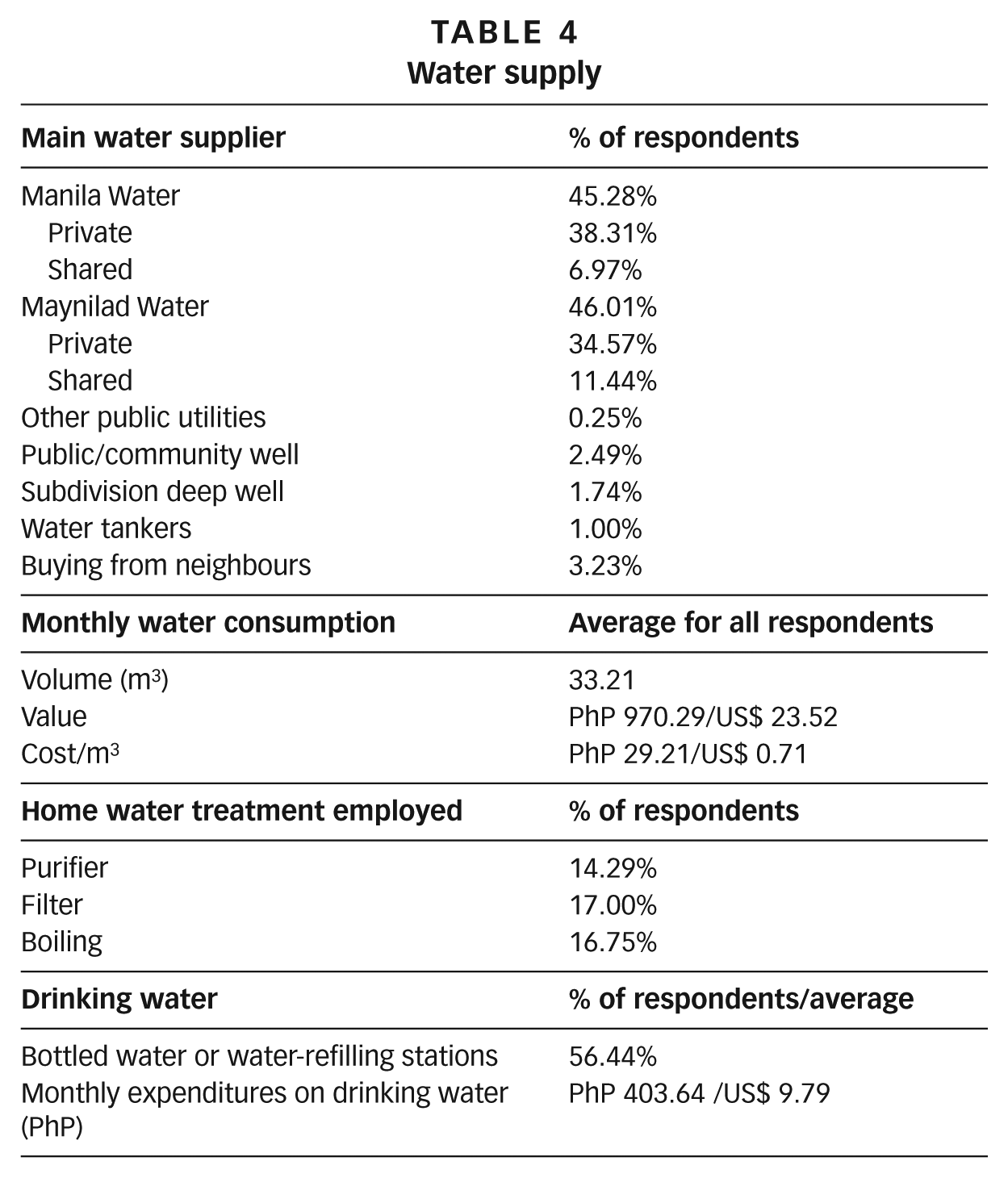
The substantial extra expenditures incurred by the majority of households for drinking water reflect concerns of Metro Manila households regarding the safety of their water supply, even that from the MWSS concessionaires. Domestic wastewater flowing from private septic tanks in residential villages and from rudimentary latrines in informal settlement areas drains through flood canals. In Metro Manila, water supply pipes lie near flood canals, and pipe leakages proliferate due to poor maintenance. This results in numerous cases of water supply contamination and outbreaks of waterborne diseases, and causes widespread public anxiety about the safety of water supply.
c. Sanitation and sewerage
Sanitation in the form of a watersealed toilet(21) is already a basic fixture in family dwellings in Metro Manila (95 per cent). At present, fewer than 1 per cent of households have no access to any form of toilet facilities. Even in informal settlement areas where a family dwelling is usually just a small one-room structure (living, dining and sleeping areas are one and the same), there is a toilet in one corner that is separated from the rest of the house by a rough hollow block wall, and in some cases, by just makeshift plastic curtains or other similar flimsy materials. While there is now almost 100 per cent sanitation coverage in Metro Manila, the presence of a watersealed toilet in a household dwelling may not necessarily mean highly improved sanitation conditions, given the variation in the sewage treatment employed (Table 5).
Sanitation and sewerage
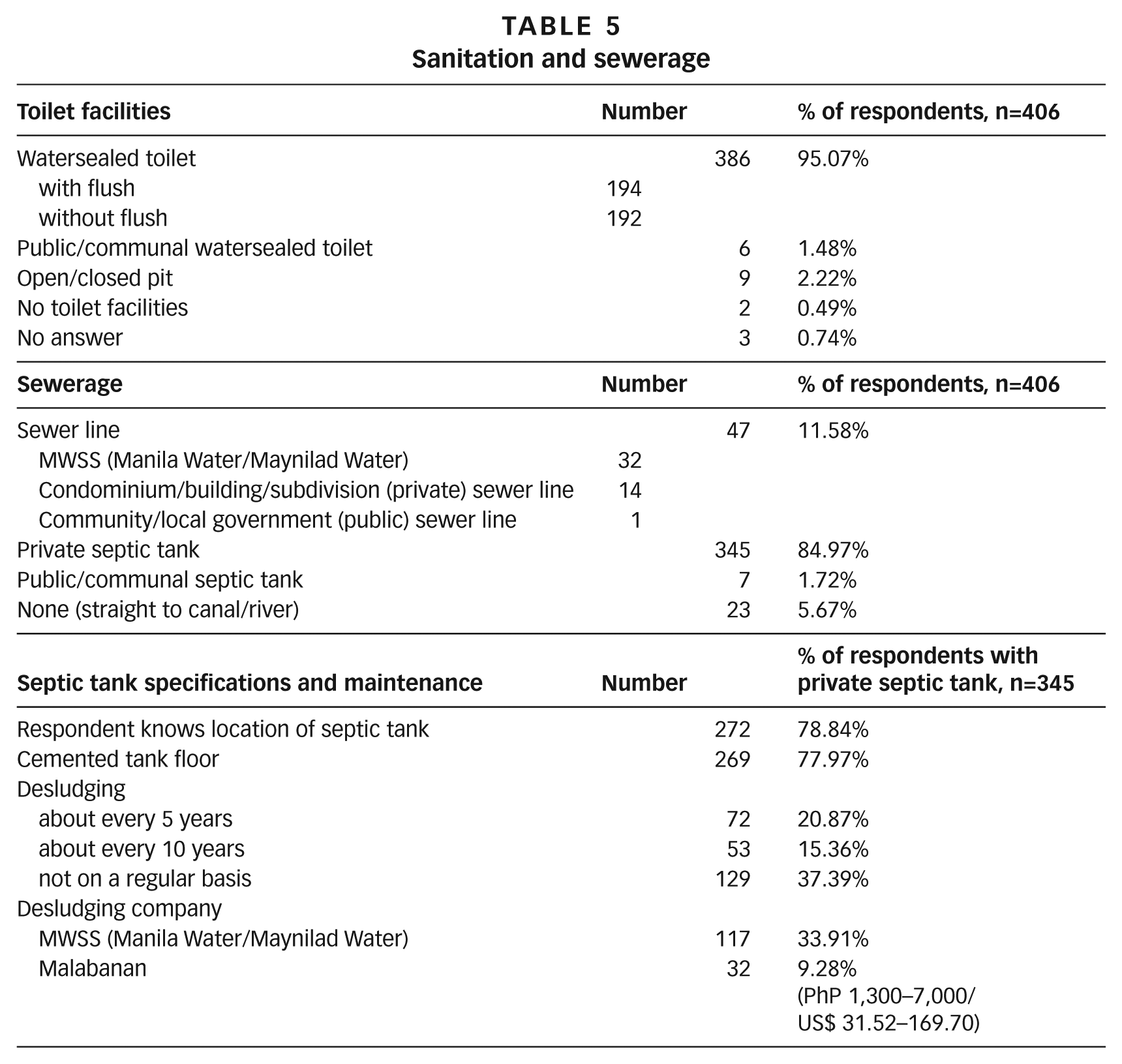
The predominant (85 per cent of households) sewerage system employed in Metro Manila involves the use of private septic tanks. Only 12 per cent of the responding households are connected to a sewer line that transports wastewater to sewage treatment facilities. More than two-thirds of households connected to a sewer line, or 8 per cent of all responding households, are serviced by the two MWSS concessionaires.(22) A few crowded, low-income communities have communal/public septic tanks (about 2 per cent of respondents) while low-income or informal settlement areas near canals and rivers have their wastewater flow straight to these water bodies.
Survey results confirm the suspicion that many private septic tanks in Metro Manila are substandard. The standard required by the government is that of a two-chamber tank cemented on all sides. A substantial 22 per cent of the septic tanks are not cemented at the bottom. Many households in informal settlements use plastic drums as septic tanks. These plastic drums are buried in the ground with the bottom side cut off, so that liquid wastes from toilets flow through the ground, which can cause aquifer contamination. Septic tank maintenance is likewise poor; only about a third of the septic tanks are desludged of septage on a regular basis. Thus, much of the septage may just be overflowing to the drainage canals, a potential health risk to neighbouring communities.
d. Willingness to pay
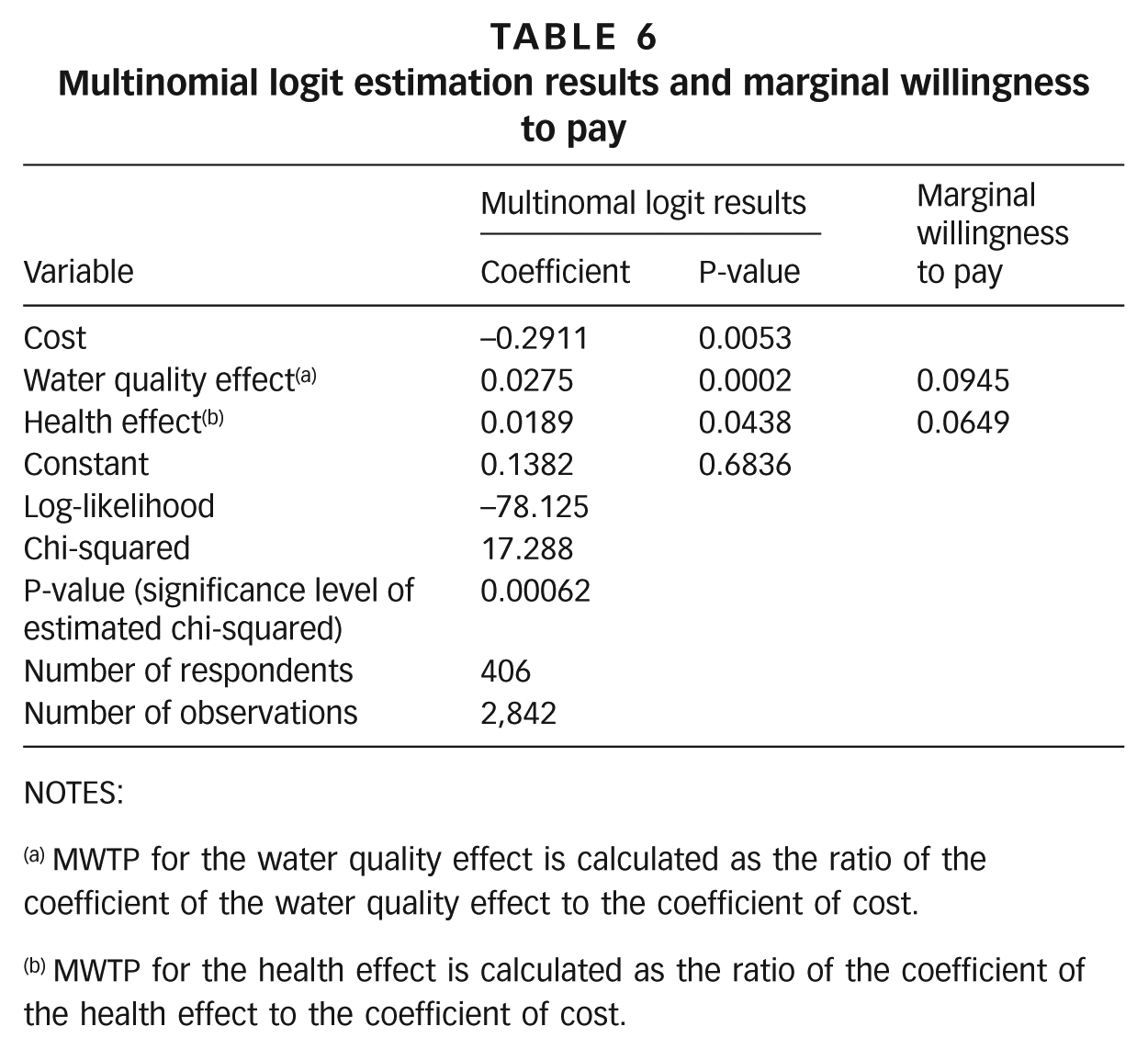
With 406 respondents, each given seven choice sets, a total of 2,842 observations are generated for the multinomial logit estimation. Regression results are presented in Table 6. The overall regression result is highly significant with a log-likelihood of -78.125 and a chi-squared statistic of 17.288 (corresponding to an alpha of less than 1 per cent, or a 99 per cent significance level). The coefficients of all attributes of the programme are likewise statistically significant, those of the health effect and programme cost at more than a 99 per cent level and that of the water quality effect at more than a 95 per cent level. In accordance with economic intuition, the cost attribute has a negative sign, and both health and water quality improvement attributes have a positive sign. This means that respondents are more likely to choose alternatives with lower cost and greater health and water quality impact. With the stronger economic status of the sample over that of Metro Manila (as reflected in the sample’s higher mean income and electricity bill), the prioritization of cost can be assumed to likewise prevail among the larger Metro Manila population. The higher coefficient of the water quality improvement attribute relative to that of the health improvement attribute reveals that respondents value water quality improvements of the Metro Manila rivers and lake a little more than the health effect. This lends some support to the combined drainage and sewage programme as an alternative to individual household sewer connections.
Multinomial logit estimation results and marginal willingness to pay
NOTES:
MWTP for the water quality effect is calculated as the ratio of the coefficient of the water quality effect to the coefficient of cost.
MWTP for the health effect is calculated as the ratio of the coefficient of the health effect to the coefficient of cost.
Willingness to pay for a programme that can bring about a 50 per cent reduction in both pollution load and incidence of waterborne diseases is calculated to be PhP 8.05 per m3 of water, slightly over a fourth of the effective water rate.
IV. Conclusions
The strategy currently pursued by MWSS to expand sewerage coverage in Metro Manila is the combined drainage–sewerage system. In this system, domestic wastewater effluent from septic tanks flows into the drainage canal and combines with rainwater. Combined sewage and rainwater is intercepted and diverted to water treatment plants before disposal to rivers. According to MWSS concessionaires, financial and physical constraints (lack of space and difficulty of installing sewer lines in heavily congested Metro Manila) have made it necessary for them to abandon the earlier planned programme of individual household sewer line connections in favour of the combined system. The combined system implies the continuing use of largely unregulated, unmonitored and substandard private septic tanks. While this may reduce domestic wastewater pollution load in the Metro Manila rivers, bay and lake, the risk of groundwater contamination and health risks from sewage in drainage canals may largely remain the same. The health risk is particularly serious with the increased occurrence of flooding in recent years.
The choice experiment results disaggregate perceived benefits from the water quality effect and the health effect in terms of the marginal willingness to pay. The estimates reveal slightly greater MWTP for water quality improvements, which the more doable and less costly combined system can address to the same extent as the individual household sewer connections. This finding augurs well for this new approach in municipal wastewater treatment, which some other increasingly congested metropolises in developing countries (e.g. Vietnam) are likewise adopting. Nevertheless, the health issue, which appears to not yet be fully understood and appreciated by the households surveyed in this study, needs to be addressed through proper regulation and monitoring of septic tank construction and maintenance by MWSS concessionaires.
Footnotes
Acknowledgements
This paper was undertaken with financial support from the Philippine Commission on Higher Education - Philippine Higher Education Research Network (CHED-PHERNET).