




Abstract
The poorest and most marginalized people in cities are often understood to be those living in the worst forms of shelter or with none at all. They are labelled the “homeless”, the “destitute” and the “extreme poor”. Based on ethnographic research in Dhaka, Bangladesh, this article challenges this association, arguing that living in the worst conditions can enable people to earn, save, and invest in lives and livelihoods elsewhere. Their capacity to do so is generally related to the urban potential for creating “defiled surpluses”, resources that can be productively exploited but at the cost of an association with the defiled. These costs and opportunities are not however equally distributed, and recognizing this helps us to understand the nature of micro-inequalities. In Dhaka the presence of people living on pavements and in markets, parks and transport terminals can represent destitution, but also the astute negotiation of the city.
I. Introduction
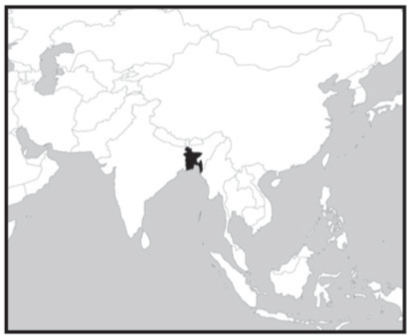
The Sustainable Development Goals (SDGs) have the target to “eradicate extreme poverty” by 2030, an aspiration premised on the identification of poverty and categorization of people on this basis. This article is an attempt to challenge the ways in which poverty and marginalization are often perceived in urban contexts across low-income countries today. Drawing on ethnographic research from Dhaka, Bangladesh, I argue that people who are often categorized through such terms as “extreme poor”, “destitute” and “homeless” in fact have livelihoods that are far more complicated and nuanced than these labels suggest. The core argument developed is that living in the open or in the most basic forms of shelter and earning through the lowest-status forms of work can represent destitution, but can also represent the astute negotiation of the urban environment. Through these livelihoods, some people are able to save and invest, supporting family elsewhere, starting businesses, paying dowries, or purchasing land, livestock or new homes. This supports the argument that “homelessness can be an act of self help and control, rather than an act of helplessness”.(1)
The new notion of “defiled surpluses” is proposed as a way of conceptualizing this potential, indicating how people exploit what are perceived as impure, defiled and often unused resources that urban areas in particular offer. This is something that can be seen through history and across the world, but must also be understood as only materializing through the convergence of a number of factors. In Dhaka, these factors include new technology for mobile-based money transfers, general economic growth, and the fact that access to defiled surpluses is often not mediated by third parties such as party political leaders, unlike many other resources in the urban context. Defiled surpluses do not however exist for everyone, and this understanding offers one way of conceptualizing the stark micro-inequalities that exist among such people. While some are able to earn and invest, others are without the relationships to do so. For single women in particular, life in these contexts can further entrench poverty rather than helping to alleviate it.
This article is based on a yearlong ethnography in Dhaka, between 2014 and 2015. Research took place with people living in the open or in the most basic slums,(2) and who work mostly as day labourers, maids, scavengers and beggars. This included children, building on the work of Conticini;(3) however, it focused primarily on adults and adolescents. I principally worked in a large marketplace at the centre of the city, but also included a number of secondary locations including pavements, transport terminals and parks. For the most part I worked alone, by both day and night, building relationships with people in each of these areas and participating in everyday life as far as possible. A number of local NGOs providing services such as night shelters were also used as entry points, particularly early on. Arguments rely primarily on participant observation; however, towards the end of the research period, 30 interviews were conducted mainly with women and teenagers already known to me, in order to verify and supplement findings. All of these were transcribed and translated with the help of a research assistant. While arguments pertain primarily to Dhaka and Bangladesh, based on limited experience in Kolkata, I believe they may also resonate more widely across South Asia.
II. Identifying and Labelling the Poorest
a. Labels, poverty and cities
It is common within urban research and development practice to label groups of people, categorizing them on the basis of the particular characteristics they are understood as representing. This process of labelling is political. In an early exploration of this subject within development studies, Wood(4) argues that labelling “refers to a relationship of power in that the labels of some are more easily imposed on people and situations than those of others”. Labels are thus always embedded within wider relationships and inequalities in power, and prominent labels represent dominant ideas about how the world can or should be understood. The ubiquity and necessity for labels can however lead to complacency about the understandings they are predicated upon and the values they promote. As Moncrieffe(5) argues, the process of labelling “continues wantonly, without contemplation of the politics involved and the potential adverse outcomes”. The understandings on which labels are premised may or may not fairly reflect the lives of those labelled, and the use of labels can thus perpetuate misunderstandings about people and their lives. The key issue then is not to contest the use of labels per se, but rather to ask “which and whose labels prevail, and under what contextual conditions?”(6)
Within international development research and practice there are prominent labels used to categorize and refer to urban poverty and marginalization. These include “homeless”, “destitute” and “extreme poor”. Underlying such labels are common assumptions about the relationship between certain kinds of spaces and poverty. People living in the worst conditions are often perceived to be suffering the severest forms of poverty and marginalization. Intuitively the type of shelter one has is taken as an indicator of one’s status, and the notion of “homelessness” signifies the severest possible state. This label is most clearly associated with people living in the open – including but not confined to the pavements, marketplaces, parks and transport terminals – and the extent to which it is more widely applicable is debated.(7) In the global South the homeless are often understood as some of the poorest of the “extreme poor”. They may also be perceived as being “destitute”.(8) The people demarcated through these labels are then assumed to have unique characteristics, often framed primarily in terms of a lack of resources, with more sophisticated analyses examining multi-dimensional aspects.
One reason that it is so important to critically assess labels is that it is one way to ensure the more ethical and effective use of a society’s resources. Early work on labelling examined the significance of terms similar to these for state–society relationships, focusing particularly on the distribution of welfare.(9) In such contexts, labels can serve to define needs and frame agendas. A contemporary example of this on a universal scale is the categorization of people as “extreme poor”, as defined by the Sustainable Development Goals (SDGs) agenda. In this and many similar contexts, the need for resources to be efficiently distributed is perceived as necessitating the labelling of people into deserving and non-deserving categories. In practice, this process may or may not be seen as justified, accurate or ethical.
Labelling however has far wider motivations, uses and “adverse outcomes”. A historical example of labelling for example is that of people as caste members in colonial India in the 19th century. This involved the amalgamation of distinct identities and concepts into easily demarcated categories, and the extent to which this was justified is seriously questioned.(10) The process of labelling often leads to individuals or households being taken as “cases”, with the assumption that they have the characteristics associated with people in that category.(11) More widely, the “homeless” are often subject to negative labelling, including being seen as vagrants, thieves, beggars, immoral, drug addicted and mentally ill.(12) Such perceptions can have a range of adverse outcomes for those so labelled as well as for wider society, and there is thus a need to deconstruct and critically amend labels used.
b. The “floating” and “rootless” in Dhaka
In Bangladesh the severest forms of urban poverty and marginalization are also often associated spatially with the rasta (road) or pot (street). This is not however as distinct from the bosti (slum) as may be perceived, as there are often slums on the pavements in urban centres. A recent Government of Bangladesh urban census termed these potho-bosti (street-slum), and in everyday conversations those living there sometimes refer to them as bosti. The people living in these potho-bosti, and more generally in open spaces, are conceptualized through a range of labels that stem from culturally specific ideas about marginalization. These relate to long histories of particular social–cultural groups living lives that are perceived to exist outside of the moral order and conventional boundaries of Bengali Muslim society. They also relate to the deep-rooted association between impurity and occupation. The labels used therefore not only indicate material conditions, but are assessments of value and moral status.
It is common for children living in the open to be termed potho-shishu (street children) by wider society, particularly elites. The street is often distinguished from the legitimate basha (home), even if those living in a potho-bosti may refer to it as their basha. While children are then associated spatially with the open, the streets and public spaces, there is no common equivalent label used for adults. Certain NGOs have adopted the term potho-bashi (street dweller), but this is not widely used beyond them. Amongst such people themselves, the term rasta manush (road people) is occasionally used about others in their situation to speak negatively of them.
It is more common however for people living in the open or the most basic slums to be associated with particular occupations. For example, they may be referred to as tokai,(13) meaning rag-picker or scavenger, or as bikkuk, meaning beggar, as if all people living in such spaces do such work. These low-end occupations are inherently associated with open public spaces. The significance of this is not difficult to appreciate. This is where rubbish is casually thrown, where dogs live, where men urinate, and where the drains and sewage systems overflow. The association between moyla (dirt) and occupation is deep-rooted, related to a long history of low-caste Hindus and Muslims handling waste and more broadly defiled services.(14)
The association between people and open, public space is taken as an indication of a detachment from society. This connotation is contained in a range of labels that portray these people as floating, or drifting, cut off from their homes. The elite use the term bashoman, coming from the word basho, meaning floating, and therefore translated as “floating person”. This term is central to the Government of Bangladesh’s categorization of urban poverty, and is contrasted with the term bosti-bashi (slum dweller).(15) This is also connected to the practices of particular religious–cultural groups, particularly Sufi Muslim aesthetics, referred to sometimes as fakir. Fakir traditionally move around the country, sometimes playing music or reciting stories or poetry, and can be found particularly at mazar (Islamic shrines). Zazabar – meaning vagabond or gypsy – may also be used to indicate drifting or wandering, moving from area to area. Similarly, the term tokai stems from a verb meaning “to look for”. The images of scavengers – particularly children and women – searching the city with bags, collecting bottles or paper, or of the beggars at junctions moving from car to car, symbolize this disconnect. Underlying this notion of wandering or drifting are perceptions about people’s relational condition, and deeply intertwined with this, their moral status.
In the case of children and the elderly there is a common refrain that they “have no one” (keu nai), and more generally they “have no home” (bari nai). The notion of a bari has a fundamental place in people’s social identities. Underlying this is their identification with being “rootless”. This is captured by the term chinomul. Chino indicates torn or separated while mul indicates root, and the term therefore means “uprooted” or “rootless”. The term was once used as the name of an NGO centre for children in Dhaka. People living in similar circumstances are also identified as “rootless” in India.(16) The key narrative is thus that people’s roots in their bari (ancestral, often village home) have been broken and hence they live at the urban margins.
A dominant perception within Bangladeshi society, one institutionalized within government discourse, is then of a drifting class, disconnected from a key social–moral base underpinning society. These ideas are represented well in a quote from a popular English language newspaper: “The rootless people are flooding in the capital to eke out an existence… a floating family struggles to accommodate to its makeshift stay…”(17) A recent government survey similarly writes that the “floating population constitutes the mobile and vagrant category of rootless people”.(18) Those inhabiting what is portrayed as dirty and a defiled space are seen as materially destitute, lacking respectability and social value, disconnected from mainstream society, and floating between spaces, while also fundamentally torn from their roots in an ancestral home.
III. Exploiting Defiled Surpluses
This section challenges two assumptions underlying the labels commonly used within international development and more specifically in Bangladesh: first, that people living in the worst spaces are the worst off materially in the urban context; and second, that these people are disconnected from their homes. In challenging these assumptions, it builds on an existing body of work that has examined the relevance of Western “homelessness” discourse in the global South,(19) and also the livelihoods of “street children” in Bangladesh.(20) As will be demonstrated empirically, people living in the open or in the most basic slums in Dhaka often in fact have relatively high incomes, which they save and invest elsewhere. The notion of “defiled surpluses” is proposed as a way of conceptualizing this potential and of opening up an analysis of micro-inequalities.
a. Defiled surpluses
One way of conceptualizing how people benefit from the worst spaces and livelihoods is through the notion of “defiled surpluses”. This is the idea that cities have the potential for creating surplus resources that are socially constructed as “defiled”, but that can be productively exploited. The idea of a surplus – as in excess, or resources beyond what are needed – can be seen across the examples of scavenging, begging and living in the open. The majority of poor urban people do not actively exploit these defiled surpluses. A shop worker paying to live in a large bosti may be able to save money and invest elsewhere, for example, but is not necessarily exploiting any defiled surpluses. But drawing on this surplus represents the dominant way in which people living in the very worst conditions benefit in the urban context.
In Dhaka, scavengers survive through collecting waste paper, bottles and vegetables, which they then sell on, as people do across the world. Sicular(21) writes of scavengers as “those who treat waste essentially as an ore: a source from which valuable materials can be extracted”. The basic principle behind this is the productive appropriation of something that has been conceptualized as both dirty and not needed. Similarly, the act of begging itself can be seen as an appropriation of a defiled surplus, but in a different form. It is taking on a subservient, socially demeaning status, in order to extract surplus wealth from other urban dwellers.
Most significant of all is the appropriation of unused space in a productive way. In Dhaka this includes footpaths, parks, sides of rail lines, nooks and crannies within markets and between buildings, mazar (shrine) grounds, stadium car parks and transport terminal floors. These spaces are often concrete, solid, sometimes sheltered, in some ways comparatively clean physically, and yet considered defiled and in much of the 24-hour cycle unused. Together these spaces, materials and statuses are all perceived as defiled and as impure, and yet together can represent surplus resources that can be exploited.
That scavenging and begging can in instances be profitable, or that living in the open can be a means of reducing costs, has been observed across the world, indicating that defiled surpluses are not unique to any particular context. Sicular’s study of scavengers in Indonesia(22) records how for the uneducated and unconnected, certain forms of scavenging could offer higher incomes than working in agriculture or garment factories, “often high enough to allow them to save small amounts to remit to their villages”. Recent research from Ghana has found that scavengers in Accra “earn far better than the daily minimum wage”.(23) Similarly, scavengers in Nuevo Laredo, a city in the north-east of Mexico, have been found to “make in one day what minimum-wage factors workers/employees make in 1 week”.(24) As will be established, evidence here suggests that some scavengers can even earn more than low-level professionals.(25)
There is also some historical evidence that suggests a long-standing potential for defiled surpluses. Mayhew(26) describes with some surprise the high income of sewer scavengers in 19th-century London. These scavengers were known as “shore-men”, “shore workers” or “toshers”, the last name coming from the items, or “tosh”, that they found. They would illegally enter the city’s labyrinth of sewers, searching for lost and washed-away goods, usually working in small groups to protect themselves from swarms of rats. Mayhew also notes the high incomes of particularly entrepreneurial beggars in the city.
There is no reason to suggest that the possibility for defiled surpluses is uniquely urban; however, characteristics particular to the urban environment give reason to believe that defiled surpluses are more probable in these contexts. The possibility for defiled surpluses is, most importantly, contingent on significant inequality. As Sicular(27) argues, scavenging is dependent on high levels of consumption producing recyclable waste. Similarly, the opportunity for begging is dependent on there being surplus wealth, and the appropriation of open spaces is also reliant on high levels of public investment in infrastructure (pavements for example). There is greater potential for all of these in areas with concentrations of wealth. Given that urban areas across the world – and certainly in Bangladesh – are often wealthier than rural ones, this leads to the conclusion that defiled surpluses are more likely in urban centres. Indeed, historically, scavenging for example has concentrated in urban centres, though it is not unique to them.(28)
Though emphasizing the potential for defiled surpluses, it is clear that not all urban contexts offer such opportunities, and that not everyone experiences these opportunities equally. Thus, research elsewhere has documented that, contrary to arguments here, these occupations offer low incomes(29) that are only enough for subsistence.(30) A recent study from India, for example, argues more generally that those living in poor-quality settlements “merely survive”.(31) The authors argue that “the kinds of settlements that currently serve as home in Bangalore to new migrants from distressed villages hardly serve as locations for building a better life”.(32) Similarly, studies of people living in the open have elsewhere noted high inequalities in people’s incomes.(33)
Critically, therefore, defiled surpluses should be understood as resources only when there is the convergence of different factors, including particular structural socioeconomic and political conditions, as well as certain personal characteristics. An extremely wide range of factors can be pointed to as significant, including economic factors (for example, relating to the price of recyclable goods, or the availability of surplus wealth to be distributed in alms), as well as the regulation of urban spaces (whether people are able to sleep in the open or beg at all, for example). While structural factors create general conditions for defiled surpluses, they can only be exploited through the convergence with individual characteristics. The following subsection explores the dynamics of defiled surpluses in Dhaka, and Section IV uses this concept to examine the nature of micro-inequalities.
b. Earning and investing
The majority of people who live in the open or the most basic slums in Dhaka earn far more than the thresholds used to categorize “the poor” and “extreme poor”. That this is the case points in part to serious weaknesses in poverty lines as tools for measuring poverty. It is well established that income and expenditure measures fail to account for the diverse aspects of poverty(34) and the cost of urban living. It has also been argued that the “cost of basic needs approach” used fails to consider the heavier reliance of urban households on cash income to survive, being unable to live from homestead or agricultural land,(35) or the price differentials between urban and rural areas for food and basic non-food items.(36)
However, in general I found that such people could earn not only beyond poverty thresholds, but often even more than low-level university-educated professionals. This finding is born from long-term and systematic observations, as well as triangulation through conversations with labour leaders, recycled goods shop owners and NGO staff. Strikingly, NGO fieldworkers openly acknowledged that some project “beneficiaries” living on pavements earned more on a monthly basis than they did. They explained that they had learnt this from years working in the context as well as conducting internal monitoring activities.
This finding is not confined to any particular profession. Hassan,(37) an experienced scavenger of almost three decades who sleeps outside a University of Dhaka hall, explained the situation as he saw it:
“There’s lots of money in scavenging. If you work well, you can make at least 500 taka a day… If the market is very bad, if you can’t even collect the smallest amount, you would still make 300-400 per day.”(38)
Put another way, on a monthly basis scavengers can earn significantly more than the official salary of a traffic police constable. Day labourers’ salaries fluctuated between roughly 300 and 1,000 taka daily. Similarly, income in pocket was described by street-based sex workers as about 400–600 taka a night for older or less attractive women (as they explained it), and for the lighter-skinned, younger, more beautiful women around 1,000–2,000 taka. The beggars without disabilities I knew typically earned between 300 and 600 taka a day, and those with disabilities earned more, even up to 1,000 taka a day. Some disabled beggars living on pavements have young assistants to whom they pay 10,000-taka monthly salaries. Rina, a single woman who was thrown out of her village by her husband a couple of years ago, came to Dhaka by boat and started to live in the Supreme Court area. She described her experiences:
“I used to beg, walking around, I went to Chawk Bazar, Shabagh… I earnt about 500, 600, 700 taka a day… If the police caught us, they would take all our money, but they couldn’t. Whenever we saw a police van, then we ran away from them.”
Majeda, an NGO fieldworker, describes her experience attending the funeral of the wife of a project participant, Masud, a beggar who slept on the pavement around the university area:
“We thought he’s our participant so we have to help bury her, but when we went to the funeral we saw we were of no weight… I saw that all his relatives were coming on motorcycles, they were ‘heavy heavy’ [wealthy]. Then one of his relatives told me that Masud owns a 5 storey high building in Jatrabari!”
This last example is exceptional, and more generally these illustrations should be qualified. Though they are born from systematic observation and questioning over a long period with many people, I have not used any statistical methods. Furthermore, the livelihoods of Masud, Rina, Hassan and others like them all represent significant risks and vulnerabilities, they are subject to seasonal fluctuations, and households have differing dependency ratios. The health risks associated with scavenging, for example, have been well documented.(39) Research from India indicates the significance of police harassment to children(40) and adults(41) living in the open, and the significance of health shocks and life events more generally for the urban poor can seriously threaten any gains made.(42) Studies from Bangladesh have noted the experiences of violence and poor health amongst people living in the open.(43) This is also not to negate that the underlying reasons for people to live in such contexts are most often related to such hardships as environmental degradation, indebtedness, lack of employment and family breakdown.
The basic point however is that occupying what are perceived as the lowest-status forms of work and poorest-quality of spaces for living in Dhaka City can be profitable. A proposition then emerges: some such people could in fact afford to live in the more established and serviced bosti. It is often assumed that people live in these seemingly desperate places because they cannot live elsewhere. But one way in which the situation is often understood by those living there is in terms of having lower or no costs. As an NGO fieldworker put it to me once of a potho-bosti – “almost everyone here could actually live in the bosti if they wanted to”. Choton, who lives in a potho-bosti opposite the headquarters of a major international bank and works as a scavenger, explained:
“You see the people in this area? They earn three or four hundred taka in a day, some earn five hundred daily. In one day they work hard to earn that. But they keep that money, many don’t spend it. Saving little by little they make it a large amount, and then they take it back to the village. Then they invest it in some work, maybe for land or building a house, and then they come back here again. This way they become a little bit settled and later we see they’ve been able to give their children a better life.”
The basic dynamic described in this passage was a common one. Through sacrificing a degree of immediate security, people working as beggars, labourers, scavengers, maids and sex workers are able to channel resources elsewhere. The intended uses of these savings differ – some migrate to save up for a daughter’s dowry, others to buy land, others to invest in business, others simply to feed their families. In Dhaka’s bazars people pass through for a week working as a coolie by day, later sleeping on the market floor or on the footpath, lying curved in their baskets. People travel to the city to beg, perhaps for a week, sometimes even daily, and most noticeably around religious festivals. Some stay for months, others only return once a year. The amounts of time spent in either location clearly differ but the basic logic is similar.
This dynamic is typical of people living in the open or the most basic slums. As a rough estimate, I would say that – to differing degrees – it represents over two-thirds of the people living in these conditions in Dhaka City. Iqbal, for example, was by his own estimate in his 50s and when I met him had been living outside the office of an international business at Karwan Bazar for two years. He is from Jamalpur in the north of the country, where he has four daughters. He described having only a small plot of land and needing to save for their dowries. He begged around central Dhaka by day, focusing particularly on the five-star Sonargaon hotel. From this he earned around 500 taka daily, of which he spent about 120 taka buying food from street restaurants, and was able to save around 300 taka a day. Every couple of days or once a week he sent this back to his village via bKash, the mobile-based money transfer service. Iqbal planned to spend a couple more years like this in Dhaka.(44)
Parveen, a woman living in a potho-bosti nearby Kawran Bazar, reflected on the situation on her pavement: “some people here have two storied buildings back in the village…” She then counted the names of six or seven local people on her fingers. “They have a good situation but come here and sleep on the street.”
Similar tactics on the part of low-caste and -class groups in 19th-century Dhaka can be seen in accounts from that period, though not relating necessarily to people living in the open. Wise(45) refers to the Hindu “caste” parasara das, who came from Sylhet to Dhaka as labourers “and set up as stonecutters, but return and spend their savings at their homes”. The Kahar, some of whom came from Chaprah (in modern-day Bihar) worked in Dhaka as “coolies, porters, and domestic servants; but they always return home as soon as a little money has been saved”.(46) The Hindu barbers (napits) reportedly did the same thing:
“Napits have the reputation of being thrifty and very acute, and many, plying their trade in Dacca, hold land in Tipperah, which is sublet to others. Every year they visit their homes, carrying thither their savings, and at leisure arranging all affairs for the ensuing year.”(47)
The findings of my research suggest that the people living in the open or in the most basic slums on public land are at one extreme of the much broader spectrum of people who migrate for low-status work. This reinforces an argument made by other authors that people are strategic about where they live in the urban context. Writing of Kolkata, Furedy argues that scavengers “will position themselves as close as possible to the wastes they covet”,(48) which tend to be central business areas near hotels and offices. Analysing pavement dwellers in Bombay, Patel similarly argues that some “chose the location because of its proximity to their place of work”.(49) The argument is also in line with the idea that living in the open can be a temporary strategy of “supplementation” to livelihoods elsewhere,(50) and can also form part of “traditional, long-standing livelihood strategies”.(51) This resonates with arguments from Krishna et al. that the Indian government’s classification of slums into two broad categories is problematic. They found those living in government-recognized slums were in fact the lower middle classes, sitting “near the middle of the city’s socioeconomic spectrum”,(52) and they argue that “Little is gained (and much is lost) by considering slums as a homogenous category of settlements”.(53) In line with these arguments, data presented here suggest a need to bring greater nuance to the intuitive association between certain forms of shelter and particular experiences of poverty and marginalization.
In Dhaka, those living in these spaces identify two immediate structural factors as particularly important to enabling these livelihoods: first, access to defiled surpluses that is not in general mediated by third parties, and second, the growth of digital money transfer services. Recent work from urban Bangladesh has examined how access to housing, work opportunities and public services in the city’s slums is mediated by a range of actors including mastan(54) and party political leaders.(55) Access to these resources has been conceptualized as coming at a cost, part of which is financial. Relationships with these mediating actors are often portrayed as exploitative, and as representing an obstacle to the livelihoods of the urban poor.(56)
Access to the defiled surpluses described in this article is not in general mediated in this way. In most cases, working as a scavenger or beggar for example does not require payments to these types of actors. Living in the open and potho-bosti only very rarely necessitates payments, and when it does, payments are ad hoc and infrequent. Furthermore, these people do not rely on centralized gas, water or electricity services, instead using piecemeal solutions such as cooking with fire in the cracks of pavement, using small private nearby providers such as shopkeepers, or going without. There is therefore less potential for other actors to control and extract benefits from these services. A key rationale for many people living in these contexts is to avoid mediated access to housing, thereby reducing the cost of living.
The utility of defiled surpluses has also been enabled through the growth of mobile-based money transfer services such as bKash, as seen in the case of Iqbal. This and similar services allow people to quickly and cheaply transfer money across the country through a vast network of registered agents, who are often based on streets and in shops. Across Dhaka people spoke very highly of this service, and explained that it has radically improved their ability to benefit from such spaces by improving security. Anwar, a disabled beggar living near the Supreme Court, explained: “Ah, bKash! Through bKash you can send money from here to England!… It’s good, the thieves can’t steal it. The creation of bKash has made things very convenient for us.” Others described being far less reliant on both informal networks back to the village as well as on local shopkeepers, and therefore less vulnerable to theft and exploitative relationships either in Dhaka or in their village. Abul, a market labourer who grew up in Karwan Bazar, explained:
“There used to be lots and lots of robberies here. People always had their money stolen. But nowadays it’s different, people don’t carry lots of money anymore. If we have 500 taka we can send it through bKash. Before when we used to go home, then the local groups [in the village] also used to rob us, but now we have bKash so they can’t. It’s been going for about 5 years. Nowadays it’s very easy you can stay inside your room and get the money.”
While the potential for people to benefit from these livelihoods comes in part from these factors, it is the convergence of these and individual characteristics that ultimately determines whether defiled surpluses are utilized. Understanding how this is the case helps better understand the nature of micro-inequalities and therefore challenges the ways labels are used to categorize people in the urban context.
IV. Exploring the Nature of Micro-Inequalities
It was argued earlier that people living in what are commonly perceived as the worst spaces are labelled together in ways that assume they have similar experiences of poverty. From the outside they may appear alike: they may sleep on the pavement or in similarly defiled space, many may beg or scavenge recyclable goods, and they may wear the same quality of clothes. As already indicated however, “the destitute” are deeply unequal. This inequality takes many forms, but the difference focused on here is that while some people are able to earn, save and invest elsewhere, others are unable to, and are left living day to day without assets or investments to rely upon. Not everyone has the potential to exploit defiled surpluses in Dhaka City, and alongside the opportunities portrayed in the previous section sits stark destitution.
The following subsection argues that the potential for exploiting defiled surpluses stems not only from wider societal factors such as those pointed to above, but critically how these converge with individual characteristics. Providing a comprehensive account of these factors is beyond the scope of this article. However, two prominent dynamics are highlighted here: first, the importance of wider connections; second, the significance of exploitative dependencies; and, related to these, the unequal costs of being associated with the defiled.
a. The importance of wider connections
A primary factor determining the potential for people to exploit defiled surpluses is the nature of the relationships that they maintain, beyond where they can be observed sleeping and living in Dhaka. These vary significantly: while some have strong relationships with their families in villages or less often slums elsewhere, others have only weak ties, and some are completely estranged. These ties connect closely to the process by which people have come to these spaces. Some people have arrived in Dhaka through a brokered process based on home village networks. This is particularly the case for most people living in potho-bosti, including Parveen, who was quoted earlier. On her stretch of pavement, people arrived in Dhaka based on networks from either Rangpur or Jamalpur in the north of the country. Elsewhere in Dhaka these home districts correspond very closely to particular pavements of the city, which often operate as closed communities, only allowing others from that network to stay. Many such people come seasonally to Dhaka. Other people describe having been forced out of home through violence, due to suffering a trauma or mental illnesses, or having become drug addicted. More common for single women is having been divorced, abandoned or widowed and rejected by wider family and the community. Aklima, a single middle-aged woman who lives at a bazar with her daughter and runs a tea stall, once told me: “even if I save up and buy land in the village, who will work it for me? I only have one daughter. So, what will I do? Spend my money for my everyday costs or save my money?”
For a minority of people, a key constraint is not then the capacity to earn, but rather the capacity to invest. This can be the case for both men and women, young and old. In the case of Rina, who was mentioned earlier, though earning relatively high amounts of money through begging, she described spending the extra on this and that, with nowhere to send it or use it more productively.(57)
Without relationships that offer a place to safely send money and invest it productively, there is less or no potential to exploit defiled surpluses. In practice these relationships of course represent much more than a place to invest, including the motivation to do so, to work hard and to control everyday consumption. Furthermore, they are not static, but evolve, are built and need to be maintained. Teenagers often described wanting to earn money for the families they were only in minimal contact with in order to rebuild relationships. People often described having to lie to family members in the village about what they did in the city in order to maintain their status. Some men I knew had adopted the bari of their wife, and considered this their ancestral home where they had investments. Building such relationships where they do not already exist therefore constitutes an important means by which the potential for using defiled surpluses can emerge.
b. The risks of dependencies and becoming defiled
A minority of people living in the open or in the most basic slums lack not only wider connections, but also relationships in Dhaka that can offer a minimal degree of security. Where such people lack relationships that provide this security in a context that is socially accepted as legitimate and moral (i.e. within a family structure), they are often forced to seek shelter in ways that are high risk. In these cases, an association with the defiled often represents not a means to a better life but an entrenchment of marginalization and poverty. This is particularly the case for children without families and single women. In the case of single women, there are severe consequences for Bangladeshi women of perceived sexual impurity.
Naseema, a middle-aged woman who lives between a park and an NGO centre in South Dhaka, explained to me that for their own security “the women who are single living here have to maintain a relationship with someone”. Normally within Bangladeshi society this would mean a male figure within a family setting, typically a husband or father. In this context some women manage to find a degree of safety in one of the city’s NGO-run night shelters. If they do not, however, or in the period before they are able to access such services,(58) the relational possibilities open to such women will very often be risky and dangerous. One possibility that I encountered often in the case of single women was that a woman finds a male guardian living in similar circumstances – locally sometimes called a “boyfriend” – who perhaps later is described as, or actually becomes, her husband. Such relationships were described as often exploitative. Sonia, for example, is in her mid-20s, and came to Dhaka as a child growing up at a train station in the city. After becoming a sex worker she married a rickshaw wallah who also lives at the station. She explained:
“There are many men who know what we do but marry us to be able to live off our income. But some men marry us to lead us in a good direction. There are many men who send us to have sex for money even after marriage. If the women don’t give money to their husbands, they torture them. My husband doesn’t love me, but he never took money from me, not even two taka.”
A further possibility is that people find shelter from locally powerful actors such as party political leaders. Naseema continued: “Say a girl is going through the park. She is new. Who will give her shelter? They [local politically affiliated leaders] will say ‘take her, she can stay here today’ ”. Such shelter comes however at a cost. Naseema explained that there are two types of sex – one is penetrative. The other is “oral sex”, said in English, but meaning talking dirty, what they call mukh fazila (mouth naughtiness) in the village. She explained that to survive you have to at least do mukh fazila. It was often described to me as common for single young women to be sexually abused.
Women often portrayed such relationships and experiences as traumatic. One significant reason for this is their symbolic social significance. For wider society, life in these defiled spaces represents the transgression of conventional moral boundaries in Bengali Islamic society. For example, these women in general need to talk more often to men, and there are no clear boundaries between being inside private space and outside in public. The implications of this are inherently sexual. As a policeman expressed it to me once, “I don’t like these people because they have ‘free sex’ ”, referring to both men and women (though he later told me about his various mistresses). The concept of “free sex”, spoken in English, is referenced commonly in Bengali and is also a point of interest in relation to foreigners. If society regulates sexual behaviour, these spaces and people are associated with a social breakdown. Females living outside of a family setting can easily become perceived as being nosto (broken, spoiled). The sense that women can no longer fit within the moral boundaries of society creates a deep sense of powerlessness often expressed in terms of a closing down of opportunities, a lack of options, an inability to be accepted more widely.
The sense of being considered defiled was also expressed by others, for example sewer workers living in a park who described being mocked. However, the significance of this was framed more as an immediate cost, and not necessarily one – as in the case of single women – that would close down future possibilities. Indeed, sewer work is mainly seasonal and these labourers worked elsewhere in other seasons.
The costs of an association with the defiled therefore are not equally distributed, and for a minority of people the defiled does not represent opportunities that can be exploited, but an entrenchment of poverty and marginalization in the interest of immediate survival. This is in line with Wood’s(59) notion of a “Faustian bargain”, where “the pursuit of immediately needed security places [the poor]… in relationships and structures which then displace the longer term prospects of a sustained improvement in their livelihoods”. As has been indicated, however, these relationships are complex and diverse in terms of the dynamics of interdependency, motivations and so forth. In the case of Sonia, for example, despite being considered nosto, and being with a husband who she said did not love her, she also described having recently managed to invest in land back in her home village, the land title being in her son’s name.
V. Conclusion
This article challenges the ways in which urban poverty and marginalization are identified and conceptualized in the context of urban Bangladesh. The notion of “defiled surpluses” was proposed as a way of conceptualizing how people in fact benefit from living and working in what are considered the worst conditions. This is the idea that cities in particular have the potential for creating surplus resources that are socially constructed as defiled but that can be productively exploited. As explored here, however, this potential only emerges through the convergence of a wide range of factors, and understanding this helps clarify the nature of micro-inequalities in Dhaka City.
Relationships are central to the capacity to exploit these surpluses. Without wider relationships outside of Dhaka, people do not necessarily have a safe place to invest or the motivation to do so, even if they have relatively high incomes. Furthermore, single women and children in particular are sometimes forced to find a (most often male) guardian, which can often pose risks. In the longer term, it can also deepen experiences of poverty and entrench an association with the defiled in a way that closes down future possibilities. “The destitute” may appear alike from the outside, but this appearance conceals stark inequalities. Recognizing the significance of these relationships contributes to Devine’s(60) argument that to say amar keu nai (I have no one) in Bangladesh indicates “a more profound sense of helplessness and vulnerability” than saying amar kichu nai (I have nothing).
This discussion raises significant questions for development practice and social policy. Recognizing the opportunities that such livelihoods can offer challenges any assumption that all of these people would wish to move into better forms of urban shelter. If saving money and investing elsewhere is a fundamental rationale for living in these circumstances, then the opportunity to pay for better accommodation could undermine rather than support this. That not everyone does benefit from defiled surpluses, however, points to a need for policies targeted towards the most vulnerable. That relationships are pointed to as a significant factor delineating inequalities raises difficult questions as to how these can be built or replaced. At a broader level, while the potential to exploit defiled surpluses may increase through, for example, new technology such as bKash, it is equally possible that opportunities will decrease as cities develop, for example as they more strictly limit the possibilities of begging or living in the open.
It is hoped that this article opens up avenues for further research into defiled surpluses. If it is accepted that the potential for exploiting these emerges from the convergence of a range of factors, then a critical task becomes identifying what these factors are and how they interact in any given context. In Dhaka, and more broadly in Bangladesh and South Asia, this should be analysed in relation to the rapid socioeconomic, cultural and political change witnessed over recent decades and continuing today.
Individuals furthermore rely upon relationships that are vastly different and complex in ways far beyond what has been described and conceptualized here. Understanding how these converge, interact and evolve could help clarify the nature of urban poverty and marginalization, and challenge dominant ways of conceptualizing them. Ultimately this article is also a call to listen more closely to how people and communities themselves understand and speak of their own lives.(61)
Footnotes
Acknowledgements
I would like to thank Joe Devine and Geof Wood for reviewing earlier drafts of this article, as well as two anonymous reviewers for their helpful comments.
Funding
This work was supported by the Economic and Social Research Council (grant number ES/J50015X/1).
1.
Speak, Suzanne and Graham Tipple (2006), “Perceptions, Persecution and Pity: The Limitations of Interventions for Homelessness in Developing Countries”, International Journal of Urban and Regional Research Vol 30, No 1, page 181.
2.
It is acknowledged that the term “slum” is inadequate for describing low-quality settlements; however, it is widely used in English-language literature describing urban Bangladesh, hence its use here. The term “most basic slums” is used to refer to the settlements made from tarpaulin or similar materials, and occupying spaces such as pavements, parks or the sides of some railway lines, and are distinct from the large, built-up and often serviced slums that house most of the urban poor.
3.
Conticini, Alessandro (2005), “Urban livelihoods from children’s perspectives: protecting and promoting assets on the streets of Dhaka”, Environment and Urbanization Vol 17, No 2, pages 69–81.
4.
Wood, Geof (1985), “The Politics of Development Policy Labelling”, Development and Change Vol 16, No 3, page 347.
5.
Moncrieffe, Joy (2007), “Labelling, Power and Accountability: How and Why ‘Our’ Categories Matter”, in Joy Moncrieffe and Rosalind Eyben (editors), The Power of Labelling: How People Are Categorized and Why It Matters, Earthscan, page 1.
6.
Wood, Geof (2007), “Labels, Welfare Regimes and Intermediation: Contesting Formal Power”, in Joy Moncrieffe and Rosalind Eyben (editors), The Power of Labelling: How People Are Categorized and Why It Matters, Earthscan, page 19.
7.
Tipple, Graham and Suzanne Speak (2009), The Hidden Millions: Homelessness in Developing Countries, Routledge, 344 pages.
8.
Harriss-White, Barbara (2003), “Destitution and the Poverty of its Politics – With Special Reference to South Asia”, World Development Vol 33, No 6, pages 881–891.
9.
See reference 4; also Schaffer, Bernard (1985), “Policy Makers Have Their Needs Too: Irish Itinerants and the Culture of Poverty”, Development and Change Vol 16, No 3, pages 375–408.
10.
Samarendra, Padmanabh (2011), “Census in Colonial India and the Birth of Caste”, Economic & Political Weekly Vol XLVI, No 33, pages 51–58.
11.
See reference 5, page 1.
12.
See reference 1, page 176.
13.
Note that while tokai is widely used to refer to people, it is often disliked and considered insulting by those it is used to refer to. People prefer specifying that they scavenge paper (kagos tokai) or bottles (bottle tokai), for example.
14.
Two notable 19th-century texts that offer descriptions of Dhaka are those by Taylor, James (1840), A Sketch of the Topography and Statistics of Dacca, G.H. Huttmann, Military Orphan Press, Dacca, 371 pages; and Wise, James (1883), Notes on the Races, Castes and Trades of Eastern Bengal, Her Majesty’s printer Harrison and Sons, London.
15.
Elsewhere in English the government uses the language of “vagrants” and “shelterless people”, as in Bangladesh’s 2011 Vagrants and Shelterless Persons Act.
16.
Patel, Sheela (1990), “Street children, hotel boys and children of pavement dwellers and construction workers in Bombay – how they meet their daily needs”, Environment and Urbanization Vol 2, No 2, page 10.
17.
Mahmud, Abu Hayat (2013), “Life on footpaths causing nuisance to city dwellers”, Dhaka Tribune, 8 September.
18.
19.
See reference 7; also Speak, Suzanne (2004), “Degrees of Destitution: A Typology of Homelessness in Developing Countries”, Housing Studies Vol 19, No 3, pages 465–482.
20.
See reference 3.
21.
Sicular, Daniel T (1991), “Pockets of Peasants in Indonesian Cities: The Case of Scavengers”, World Development Vol 19, Nos 2/3, page 138.
22.
See reference 21, page 144.
23.
Rockson, George N K, Francis Kemausuor, Raymond Seassey and Ernest Yanful (2013), “Activities of scavengers and itinerant buyers in Greater Accra, Ghana”, Habitat International Vol 39, page 152.
24.
Medina, Martin (2005), “Serving the unserved: informal refuse collection in Mexico”, Waste Management & Research Vol 23, No 5, page 391.
25.
The potential described here is in line with findings that suggest that the nutritional status of boys living on the streets can be better than that of comparable boys in slums and rural areas. See Panter-Brick, Catherine (1996), “Growth status of homeless Nepali boys: Do they differ from rural and urban controls?”, Social Science & Medicine Vol 43, No 4, pages 441–451.
26.
Mayhew, Henry (2012), London Labour and the London Poor, Oxford University Press, Oxford, 528 pages.
27.
See reference 21.
28.
Downs, Mary and Martin Medina (2000), “A short history of scavenging”, Comparative Civilizations Review No 42, pages 23–45.
29.
Wilson, David, Costas Velis and Chris Cheeseman (2006), “Role of informal sector recycling in waste management in developing countries”, Habitat International Vol 30, No 4, pages 797–808; also Tevera, D S (1994), “Dump scavenging in Gaborone, Botswana: anachronism or refuge occupation of the poor?”, Geografiska Annaler Vol 76, No 1, pages 21–32.
30.
Huysman, Marijk (1994), “Waste picking as a survival strategy for women in Indian cities”, Environment and Urbanization Vol 6, No 2, pages 155–174; also Birkbeck, Chris (1978), “Self-employed proletarians in an informal factory: the case of Call’s garbage dump”, World Development Vol 6, Nos 9/10, page 1180.
31.
Krishna, Anirudh, M S Sriram and Purnima Prakash (2014), “Slum types and adaptation strategies: identifying policy-relevant differences in Bangalore”, Environment and Urbanization Vol 26, No 2, page 578.
32.
See reference 31, page 583.
33.
Jagannathan, N Vijay and Animesh Halder (1988), “Income-Housing Linkages: A Case Study of Pavement Dwellers in Calcutta”, Economic and Political Weekly Vol 23, No 23, pages 1175–1178.
34.
Green, Maia and David Hulme (2005), “From Correlates and Characteristics to Causes: Thinking about Poverty from a Chronic Poverty Perspective”, World Development Vol 33, No 6, pages 867–879; also Boonyabancha, Somsook and Thomas Kerr (2015), “How urban poor community leaders define and measure poverty”, Environment and Urbanization Vol 27, No 2, pages 637–656.
35.
Rahman, Hossain Zillur (2011), Urban Bangladesh: Challenges of Transition, Power and Participation Research Centre, pages 34–35.
36.
Banks, Nicola, Manoj Roy and David Hulme (2011), “Neglecting the urban poor in Bangladesh: research, policy and action in the context of climate change”, Environment and Urbanization Vol 23, No 2, pages 487–502.
37.
The names of all research participants have been anonymized in this article.
38.
US$ 1 is approximately 78 Bangladeshi taka at the current exchange rate, worth far more in real terms.
40.
See reference 16, page 10.
42.
See reference 31, page 578.
43.
Koehlmoos, Tracey Pérez, Md Jasim Uddin, Ali Ashraf and Mashida Rashid (2009), “Homeless in Dhaka: Violence, Sexual Harassment, and Drug-abuse”, Journal of Health, Population and Nutrition Vol 27, No 4, pages 452–461; also  , Lives and Livelihoods on the Streets of Dhaka City: Findings from a Population-based Exploratory Survey, Working Paper No 19.
44.
I met very few people living in the open with formal bank accounts. A notable example was Nijam, a 15-year-old labourer who had grown up in NGO centres from the age of around five, when he described coming to Dhaka alone on a train. Working unloading vegetables at Kawran Bazar, where he also lived, he had diligently saved up two lakh taka (over US$ 2,500), deposited safely in a Dutch-Bangla Bank account.
48.
Furedy, Christine (1984), “Survival strategies of the Urban Poor – Scavenging and Recuperation in Calcutta”, GeoJournal Vol 8, No 2, page 130.
49.
See reference 16, page 11.
51.
See reference 7, page 153.
52.
See reference 31, page 570.
53.
See reference 31, page 569.
54.
Mastan have been identified as central to the urban political economy in Bangladesh and are understood broadly as violent gang members or leaders who are closely linked to party politics.
55.
Banks, Nicola (2016), “Livelihood Limitations: The Political Economy of Urban Poverty in Bangladesh”, Development and Change Vol 47, No 2, pages 266–292; also Suykens, Bert (2015), “The Land that Disappeared: Forceful Occupation, Disputes and the Negotiation of Landlord Power in a Bangladesh Bastee”, Development and Change Vol 46, No 3, pages 486–507; Hossain, Shahadat (2013), “The informal practice of appropriation and social control – experience from a bosti in Dhaka”, Environment and Urbanization Vol 25, No 1, pages 209–224; Hackenbroch, Kirsten and Shahadat Hossain (2012), “ ‘The organised encroachment of the powerful’ – Everyday practices of public space and water supply in Dhaka, Bangladesh”, Planning Theory and Practice Vol 13, No 3, pages 397–420; and Banks, Nicola (2008), “A tale of two wards: political participation and the urban poor in Dhaka city”, Environment and Urbanization Vol 20, No 2, pages 361–376.
56.
See reference 55, Banks (2008); and .
57.
The way she described it gives a clearer sense of the money just going. She described spending her money on: “khorcho-morcho [costs], khai-loi [eating], urai-firai [wandering], abi-zabi [junk, bad things], kiyte kiyte shesh [eating eating finish]”.
58.
Some NGO shelters for women in Dhaka have a requirement that women must have been living in the open for a certain amount of time (often a couple of months) before they are eligible.
59.
Wood, G (2003), “Staying Secure, Staying Poor: The ‘Faustian Bargain’ ”, World Development Vol 31, No 3, page 455.
60.
Devine, Joseph (2006), “NGOs, Politics and Grassroots Mobilisation: Evidence from Bangladesh”, Journal of South Asian Development Vol 1, No 1, page 91.