




Abstract
Zero Waste household practices adopted in informal settlements have facilitated the reduction of greenhouse gas emissions and contributed to income generation, food security and the strengthening of the social fabric. In four informal settlements in Santiago de Cali (Colombia), these practices were identified through participatory methodologies, and statistical tests of association between variables were used to determine possible causes of their implementation. These practices were found to be associated with characteristics of the residents including their connection to the cultural traditions of their places of origin, their resilience and solidarity, the satisfaction of their basic needs and their search for a healthy environment. This paper discusses these practices, the elements that drive them and their main benefits, highlighting the need for public policies to recognize their contributions in addressing global challenges and for future research to quantify their contributions.
I. Introduction
In the face of poverty or forced displacement, and in the context of neglect by the state and society, informal settlements have become a refuge for vulnerable communities that come to cities in search of opportunities to meet their basic needs. These settlements house 29.7 per cent of the world’s urban population and are characterized by a deficit in basic services.(1) This includes inadequate solid waste management, which generates environmental pollution and health risks.(2) In order to adapt to these conditions, the inhabitants of many informal settlements have developed grassroots innovations, drawing on their own resilience.
Innovations triggered by solid waste offer opportunities to improve the living conditions of the urban poor and increase their income, while also contributing to addressing global challenges such as the reduction of greenhouse gas (GHG) emissions. This is in line with Dodman et al.,(3) who point out that informal settlements are often home to enterprises that recover, reuse and recycle recyclable materials, contributing to climate change mitigation and improving sanitary and environmental conditions.
Recycling in informal settlements and its contributions to the transition to sustainable cities is increasingly recognized.(4) Solid waste management practices at the household level have also been identified as contributing to this objective,(5) although they have been little explored. These practices can be understood from the Zero Waste approach, a strategy that prioritizes actions for the non-generation of solid waste and, in the event that solid waste is produced, promotes its use and recovery. As a result, the amount sent for final disposal can be minimal, even null. This paper analyses these practices, their triggers and benefits, based on the study of four informal settlements located in the city of Santiago de Cali in Colombia.
The paper is structured in six sections. Section II presents the opportunity to mitigate climate change by improving the living conditions of the urban poor through solid waste, its management in these contexts and the challenges in Colombia. Section III describes the methodological tools used to collect and analyse information on Zero Waste practices and Section IV presents the practices and their drivers. Section V discusses the main benefits of promoting Zero Waste practices adopted in informal settlements and Section VI presents the conclusions, claiming that Zero Waste household practices in informal settlements represent an opportunity to improve the living conditions of the urban poor and to address global challenges.
II. Background
a. Addressing climate change through integrated neighbourhood upgrading in informal settlements
Informal settlements are usually located on the periphery of urban areas, in places with environmental risks that make them vulnerable to the impacts of climate change and aggravate the socioeconomic conditions of their inhabitants. These places can vary, but are usually characterized by insecure land tenure, precarious housing, overcrowded conditions, low incomes, deficits in basic services, among other limitations that make them vulnerable to climate change and natural disasters.(6)
Sustainable Development Goal 11 of the 2030 Agenda aims to make informal cities and settlements inclusive, sustainable, safe and resilient. However, their rapid expansion and the limited solutions so far for integrating their inhabitants into the socioeconomic dynamics that allow them to improve their quality of life make these settlements a challenge for city planning. This is both because of the limited capacity of municipal authorities to invest in illegal areas, and because of the variation both in the physical conditions of these sectors and in the sociodemographic characteristics of their populations. Such is the degree of exclusion to which residents are exposed that, in some regions, although they have been settled for decades, they are not included in the official cartography of government authorities even after many updates.
In order to improve the quality of life of residents of informal settlements, comprehensive neighbourhood upgrading or related programmes have been proposed. The focus of these programmes tends to be on the provision of infrastructure and basic services, targeting interventions in construction and the physical transformation of the environment, and emphasizing actions to improve solid waste collection, pest control and common spaces, among other amenities,(7) with high costs and low coverage. Faced with this low coverage, residents in many places have organized themselves and self-managed their own solutions. Occasionally they have been able to include their territories in discussions or government policies and have contributed to the establishment of guidelines for comprehensive upgrading processes, taking climate justice into consideration.(8)
Almansi et al.(9) and Satterthwaite et al.(10) emphasize that compre-hensive neighbourhood upgrading must go beyond the provision of infrastructure, considering the opportunity to mitigate climate change risks while improving the living conditions of the urban poor. One way to do this is through the proper management of solid waste(11) by minimizing its final disposal, a practice that is a major contributor to GHG emissions from the waste sector, and which accounts for approximately 4 per cent of global emissions.(12) This percentage is relatively low in relation to the total; however, the quantities are significant if one takes into account the trend toward an increase in solid waste generation and the fact that the main GHG generated by this sector is methane, the warming potential of which is 34 times greater than that of CO2.(13) These realities make even more evident the significance of the waste sector in the efforts to reduce global warming and mitigate the impacts of climate change, and the relevance of promoting or boosting strategies that facilitate its diversion from final disposal sites.
b. Solid waste management in informal settlements
The multiplicity of issues and challenges faced by informal settlements means that relevant information on solid waste management in this context tends to be scarce. The studies that address this topic do so mainly from two approaches: (i) exploring the challenges in solid waste collection that arise from the complex physical conditions of settlements built without planning, and neglected by municipal authorities, and (ii) the recognition of grassroots innovations associated with recycling that arise from the efforts of their inhabitants to subsist.
Taking the case of a settlement in Durban (South Africa), Parikh et al.(14) expose the barriers in the provision of solid waste collection services due to deficiencies in infrastructure. This causes waste to be dumped in streams and sewers, raising the likelihood of flooding, a situation that increases health risks and daily challenges for the inhabitants. Similarly, Al Tal et al.(15) present the challenges in solid waste collection for an informal settlement in Amman (Jordan), pointing to the lack of roads, steep stairs and the presence of empty lots that become hotspots for the accumulation of solid waste, along with the inadequate practices of the inhabitants.
Based on the difficulties in providing formal collection services and the lack of recognition for grassroots innovations, context-specific solutions have been proposed. In informal settlements in Managua (Nicaragua), a waste pickers’ cooperative successfully addressed deficiencies in solid waste collection by arranging for collaboration between the community, local waste pickers and the formal city sanitation service, while reducing illegal dumping and increasing waste pickers’ incomes.(16)
Another case of service co-production was documented in Kisumu (Kenya), where three waste picker entrepreneurs were able to consolidate and expand their operations in informal settlements, amplifying the social and environmental benefits to the formal city.(17) Zapata Campos et al.(18) documented grassroots innovations in urban contexts of extreme scarcity, finding that in these environments solid waste represents an abundant resource, encouraging the development of novel practices for its use that in turn contribute to addressing global challenges.
These experiences show that informal settlements can be niches of sustainability in terms of solid waste management practices and should be taken as a reference point in other contexts. Waste pickers, waste entrepreneurs and community organizations have demonstrated success with innovations driven by the desire to address both socioeconomic and environmental challenges.
The contributions of waste pickers in environmental and economic terms in cities are increasingly recognized, but there is still some way to go in positioning waste pickers as relevant actors in building just and inclusive cities(19) and in dignifying their work. Parikh et al.(20) indicate that in informal communities, recycling is often carried out at the individual level as a way of generating income, especially through the collection and sale of plastic and cardboard. It is important to note that Zero Waste practices, such as recycling, have also been identified in households in informal settlements(21) that contribute to reducing the amount of solid waste sent for disposal and, in turn, reduce the environmental impacts and costs associated with its management.(22) However, little attention has been given to the adoption of these practices and the motivations behind their development and benefits.
c. Public policies on climate change and Zero Waste in Colombia
Latin America and the Caribbean is the most urbanized region on the planet, with 80 per cent of the population living in cities(23) and 25 per cent in informal settlements.(24) In Colombia, it is estimated that 65 per cent of urban areas are informal(25) and that about 11.4 per cent of the population lived in informal settlements by 2018.(26) This percentage is expected to increase, given that Colombia, according to UNHCR,(27) is one of three countries with the highest number of displaced persons from across borders. It also has the second largest internally displaced population in the world.
Colombia has various planning instruments that constitute a fundamental basis for the implementation of programmes and projects in informal settlements to improve the living conditions of the urban poor and to face global challenges. These instruments include the Comprehensive Neighbourhood Upgrading Policy (2009), the National Policy for the Comprehensive Management of Solid Waste (2016) and the National Climate Change Policy (2017). With regard to solid waste management, the national policy is based on the circular economy and promotes prevention by closing cycles. In addition, one of the current government’s commitments, defined in the Development Plan 2022–2026, “Colombia, World Power of Life”, is the creation of a Zero Waste programme to develop circular cities that contribute to a net zero balance between GHG emissions and absorption and to climate resilience, by promoting the reuse of materials and resources.(28)
In Santiago de Cali, the third most populated city in Colombia, the Public Policy for Comprehensive Habitat Upgrading was adopted in 2017, with the objective of implementing actions to improve the quality of life in informal settlements. Within the framework of this policy, District 18 was selected as a pilot project. In 2020, an assessment of the district’s settlements was carried out and the four settlements under study were selected for which in 2021 the Comprehensive Habitat Upgrading Programme was formulated with an intersectional approach, incorporating the Zero Waste strategy. The programme is supposed be implemented over a period of 10 years, starting with the urban legalization of the four settlements under study. This took place in November 2023, so the Zero Waste strategy is yet to be implemented.
III. Methodology
The research on which this paper is based was conducted in order to answer the question: what Zero Waste household practices have residents of informal settlements adopted on their own to address global challenges and what factors drive their implementation? To this end, primary data were collected on the four pilot settlements in District 18 during the years 2021 and 2022, in three phases. The first phase involved gaining familiarity with the settlements and the qualitative aspects of their waste management through transect walks, direct observation and semi-structured interviews with community leaders.
In the second phase, qualitative and quantitative data on consumption habits and solid waste management in homes were obtained through a survey of a representative sample of 336 randomly selected households (confidence level: 95 per cent). From the survey, households with Zero Waste practices were identified. These households were then visited in order to identify their use of solid waste and the factors that motivated their adoption of these practices. In this phase, a solid waste characterization study was also carried out to determine the quantity and type of waste generated in the settlements. In this activity, 295 households out of the total number of those surveyed decided to participate and the characterization study was carried out over one week, collecting the waste on the three collection days of the sanitation company. The KoboCollect app of the Kobo Toolbox software was used to collect the information. This tool optimizes the tabulation of information and facilitates work in remote areas.(29)
Finally, in the third phase, community workshops open to all residents were held in each settlement, with the majority of participants being women (75 per cent). Findings on solid waste management were presented and based on this, participants reflected on how the community could reduce the generation of solid waste, and how they could reuse and take advantage of the solid waste they generated. The answers to these questions contributed to the identification of the most significant Zero Waste household practices and the determining factors for their adoption, as well as the recognition of the voices of those who led these practices.
Based on the results obtained in the three phases and on a literature review on the benefits of Zero Waste household practices, the benefits identified were grouped into four dimensions: (i) environmental, (ii) economic, (iii) health and (iv) sociocultural. In the case of environmental and economic dimensions, benefits were quantitatively determined; for health and sociocultural dimensions, the benefits perceived by settlement residents were consolidated with those reported in the literature in similar contexts.
For the environmental dimension, GHG emissions that could be avoided by diverting usable waste from final disposal sites were estimated using the World Wildlife Fund’s tool for the development of GHG emissions inventories in Colombian cities.(30) Emissions were also projected to 2030 based on population data from 2018 to 2021. For the economic dimension, the resources that could be obtained from the commercialization of recyclable materials that were currently sent for disposal were estimated; the waste was classified as “easily recyclable”, “potentially recyclable” and “other”, following the methodology used by Zikali et al.(31) and an analysis of the economic value of the waste was carried out, taking into account the conditions of the study area and the commercial value of the materials based on consultations with waste pickers in District 18.
The qualitative and quantitative data collected were consolidated in Excel and processed with R software by means of a bivariate correlation analysis using Fisher’s exact test of independence. Statistical analysis was performed at a significance level of 5 per cent, indicating a relationship between variables or a difference between groups when the p-value was < 0.05.
IV. Solid Waste Management in Informal Settlements
a. Context
The study area covers four of the 195 informal settlements located in Santiago de Cali:(32) La Arboleda, Brisas de Las Palmas, Pampas del Mirador and Alto Polvorines (Map 1). All four are located on the southwestern slope of the city, on the boundary between urban and rural areas. These settlements had been prioritized for a process of Comprehensive Habitat Upgrading, led by the local government, taking into account the intersection of: (i) high priority scores for urban legalization, (ii) the existence of detailed risk studies, (iii) the possibility of coverage for water and sewage services and (iv) applied research already carried out by the Universidad del Valle with international cooperation and coordination with the local government and the community.(33)
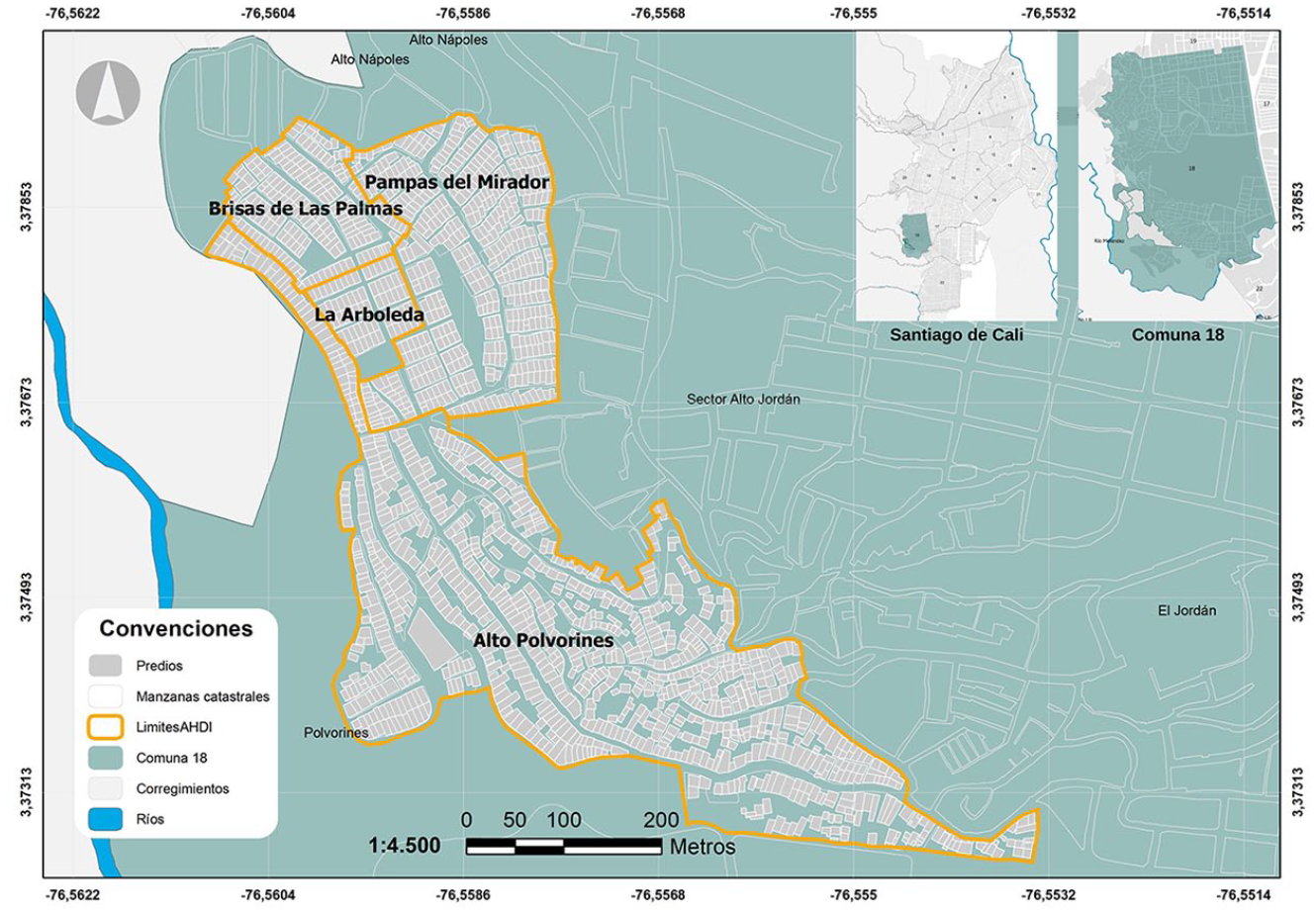
Location of the study area
The four settlements originally emerged from a process of occupation that began in the 1990s in Alto Polvorines, followed by La Arboleda and Brisas de Las Palmas, and finally Pampas del Mirador. Since their beginnings, these settlements have been characterized by accelerated population growth, and they reached a combined population of 9,390 inhabitants by 2021. This growth dynamic has been promoted by both the internal displacement of people due to the armed conflict in the country(34) and the search for decent housing. This is reflected in the fact that 54 per cent of the inhabitants come from rural areas in other departments.(35)
In the four settlements women predominate as heads of households (66 per cent), 40 per cent of the households derive their livelihood from informal work and more than 80 per cent report monthly incomes of less than one legal minimum wage as defined in the country (approximately US$ 300 in 2023).(36) The four settlements are classified in socioeconomic stratum one, which corresponds to the population with the lowest income in Colombia. In terms of educational level, 30 per cent of the inhabitants have not entered the education system or have only completed a few years of primary school, 32 per cent have completed primary school, 30 per cent have completed secondary school and 8 per cent have completed higher education.(37)
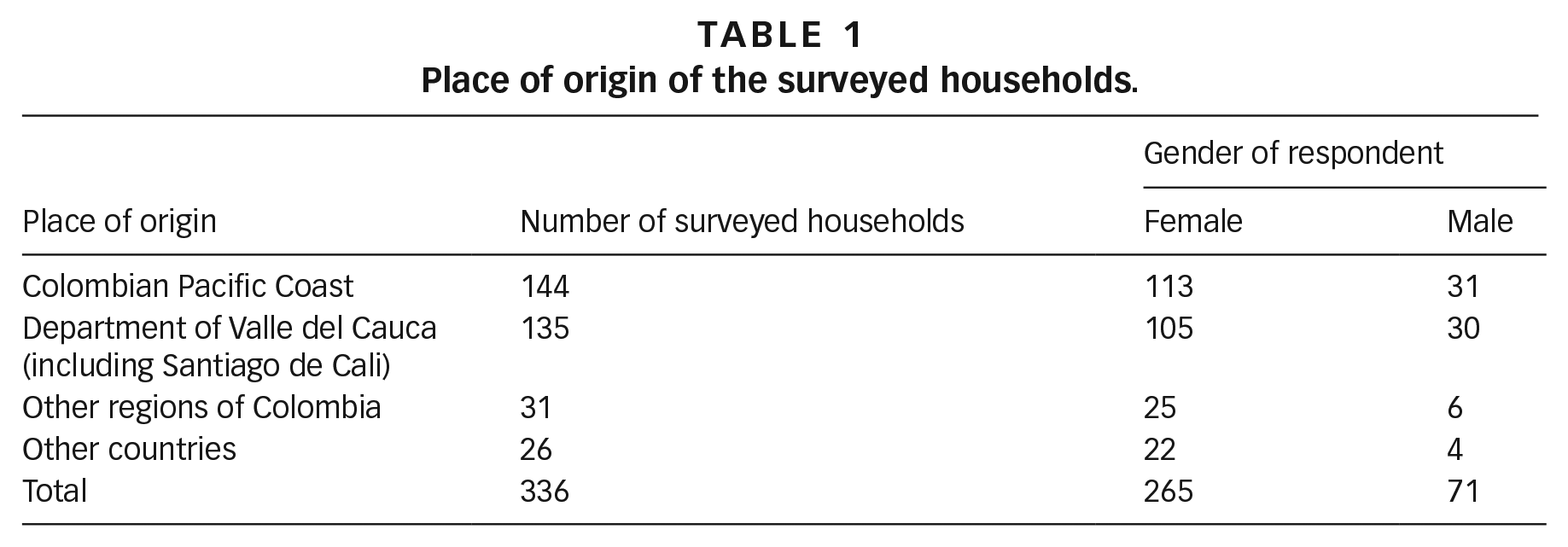
In terms of the households surveyed (336), Table 1 presents information on the place of origin of the household and the gender of the respondent.
Place of origin of the surveyed households.
b. General aspects of solid waste management
Based on the solid waste characterization study carried out, it was determined that the per capita production (PPC) of solid waste in these four settlements is 0.38 ± 0.28 kg/inhab/day, lower than values reported in other informal settlements(38) and in Latin America and the Caribbean more generally.(39) It is also lower than the average PPC indicated for Colombia in the Technical Regulations of the Drinking Water and Basic Sanitation Sector in terms of its level of complexity(40) and lower than that reported for the single-family sector in District 18 of Santiago de Cali,(41) where the four settlements are located.
Due to the physical conditions of the terrain in the area studied, which have resulted in a road network composed of irregular grids, with winding, narrow and discontinuous streets, 68 per cent of the households must carry the solid waste they generate from their homes to temporary collective collection points. The location of these collection points has been agreed between the sanitation company and the community. The inhabitants of these households walk between 100 and 200 metres over moderately steep slopes to take their waste to a collection point three times a week. In the remaining households, the collection service is provided door-to-door.
The presentation of solid waste on different days and at different times has led to the excessive accumulation of waste in the temporary collective collection points, causing the proliferation of rodents and other disease vectors, as well as traffic accidents. The most affected are the residents of neighbouring houses, who together with the sanitation company and municipal authorities have carried out awareness-raising and cleaning campaigns, which have not been effective.
c. Zero Waste household practices in settlements
Inhabitants of these informal settlements have adopted Zero Waste practices at the household level, ranging from waste prevention to waste recovery, which are mainly carried out by women. In the 336 surveyed households, 79 per cent of the respondents were women (see Table 1), demonstrating their interest and leading role in the topic. Likewise, 98 per cent of the households reported that women are involved in solid waste management within the home.
Prevention
Some inhabitants have adopted responsible consumption practices with certain products, mainly plastic and packaging material. Among these, 76 per cent of the sample households (N = 336) use reusable shopping bags, 73 per cent list the products they need to buy, 60 per cent prefer bulk supplies, 58 per cent do not buy disposable utensils, 55 per cent prefer products with less packaging, 46 per cent buy their products at farmers’ markets or similar, 33 per cent prefer to buy products in glass or cardboard packaging instead of plastic and 12 per cent use rechargeable batteries (multiple choice question). The practice of making a shopping list was also found by Zhang et al.,(42) who indicate that this habit is more common in low- and middle-income households. According to van Dooren et al.(43) the more often it is done, the less food is wasted.
It was found that prevention practices that represent savings in short-term household expenditure are more frequently adopted in this population, i.e., their adoption could be associated with the economic constraints to which people are exposed. The lower frequency of purchases with higher economic value than usual may be related to findings by Awasthi et al.,(44) who attribute this practice to the fact that consumers with limited income may prefer durable and high quality products, but cannot afford their market price.
Other waste prevention practices are related to the preparation and consumption of food, as expressed by residents of the settlements in the community workshops: “I don’t peel the potato, I wash it well and we eat it with the skin on”; “Economically one has to know how to measure so as not to throw away any food waste”; and “As the situation is, we have to eat the egg even with the shell on” (a metaphorical comment). This has been related to economic constraints, and it has been found that low-income households tend to generate less food waste.(45)
Low purchasing power has forced households to reduce the quantity and quality of food at certain times during the year, resulting in a condition of moderate food insecurity.(46) This situation occurs in about 28 per cent of Colombian households, who do not manage to provide three meals a day.(47) Additionally, food waste prevention practices are associated with the rural origin of some settlement dwellers, a finding that coincides with that of Mattar et al.(48) in five Lebanese provinces and Secondi et al.(49) in the European Union. These studies indicate that households in rural areas show a greater tendency to eat only food they have prepared themselves.
Likewise, several authors(50) indicate that people maintain their rural practices after migrating to the city. Marmolejo-Rebellón et al.(51) reported an association between a Zero Waste-oriented culture and rural cultural practices associated with responsible consumption. However, Devi et al.(52) indicated that settlements may adopt practices from surrounding formal neighbourhoods, increasing their levels of consumption and waste generation over time.
Source separation
Sixty per cent of the sample households indicated that they engage in practices of source separation, sorting their solid waste into two or up to more than four categories. This percentage is higher than that reported for Colombia (49 per cent)(53) and Santiago de Cali (56 per cent),(54) due to the fact that many inhabitants of the settlements recognize separation as a way to give value to solid waste and generate economic income. As indicated by Marmolejo et al.,(55) solid waste management practices by residents have a great impact on the quality and quantity of materials for recovery; in this sense, although the higher-than-usual percentage of households in the settlements that separate at source represents an opportunity for the recovery of solid waste, it is necessary to reinforce this practice.
The main reasons for separating at source are similar in the four settlements: 66 per cent of 203 households that engage in practices of source separation do it to care for the environment, 32 per cent to show solidarity with neighbours who recycle, 24 per cent to dignify and facilitate the work of the sanitation company operators and waste pickers and 18 per cent to use the waste in their homes or to sell it (multiple choice question). The 12 per cent corresponding to “other reasons” gave answers related to hygiene and cleanliness in the home, prevention of vectors and diseases, and civic culture. In low-income cities such as Makassar (Indonesia), Permana et al.(56) indicate that the predominant reason for households to separate was to earn money by marketing recyclable waste, while in the case of a high-income context such as Singapore, Shan et al.(57) point to environmental care, resource conservation and family and civic culture.
Similarly, Rathore and Sarmah(58) found that social awareness and concern for the environment, and the perceived environmental benefits, are factors that influence the intention to separate at source among urban residents of India. It is important to note that in the four informal settlements studied in Cali, no single reason was found to be most relevant to the decision to source-separate; as Zapata Campos et al.(59) point out, in the case of grassroots innovation, economic, security, social and environmental motivations are intertwined to the point that they are difficult to separate, and the combination of these is essential in environments of extreme scarcity.
A statistically significant relationship was also found between households that separate at source (203) and their place of origin (p = 0.00019). Seventy per cent of the 144 households from the Colombian Pacific Coast and 48 per cent of the 31 households from other regions of the country have adopted the practice of source separation. This is related to the desire of people from rural areas to keep their environment clean and tidy, to the opportunity to give value to their waste and to obtain income from it. For those arriving in the settlements, it is also an opportunity to reinforce a familiar practice.
Regarding the arguments put forward by those who do not separate waste, 37 per cent of the 133 households that do not separate waste stated that they do not consider it necessary or do not think it makes sense, 30 per cent stated that they do not have the time to do it, followed by 14 per cent who consider that separating waste is confusing and 12 per cent who do not do it because there is no selective collection in the settlements (multiple choice question).
Households that separate develop the following waste management practices grouped according to the type of solid waste generated:
Use of organic waste
Thirty-two per cent of the sample households reincorporate the organic waste they generate into the natural cycle by transforming it into soil improvers or using it as animal feed. Eighty per cent of the 106 households that do so, use their waste as fertilizer for their plants, 23 per cent use it as feed for their animals and 7 per cent carry out processes that simulate composting (multiple choice question); some households reported carrying out more than one practice. Raw food waste such as fruit, vegetables and eggshells are the raw material for plant and composting manure. Uneaten prepared foods are also used for feeding animals.
Some residents of the settlements refer to the practice of mixing the waste directly into the soil or combining it with other materials for a period of no more than one month before applying it to the soil of their plants or gardens as “plant compost” (Figure 1). Patwa et al.(60) point out that organic waste should not be applied directly to the soil because plants do not have the capacity to recover nutrients from them. Hardgrove and Livesley(61) also found that direct application of coffee residues to the soil decreased the growth of horticultural plants. However, Coester et al.(62) indicated that direct application of pruning and garden residues can have the same or better advantages on soil fertility than composting them first.
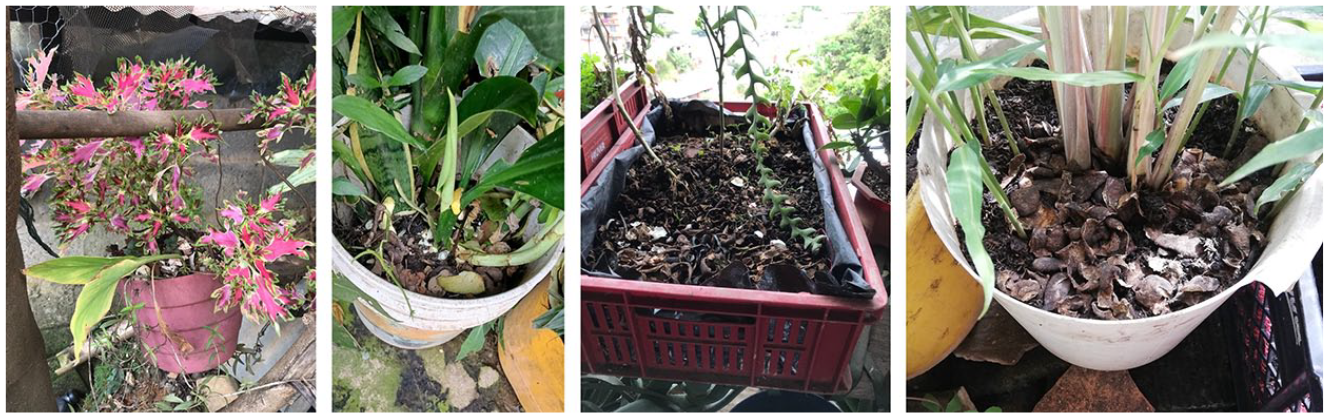
Direct application of organic waste in plant soil
As for eggshells, inhabitants recognize their use as a fertilizer for plants and their effectiveness as a calcium source: “I grind the eggshells in the blender and throw them on the plants, which makes them germinate faster and the calcium gives them nutrients”, said one female inhabitant of the settlements. In this way, eggshell becomes an alternative to lime because of its calcium content;(63) it has also been suggested that it can be a suitable source of phosphorus in tomato crops.(64) Another waste product used is peanut shells, whose benefits on soil properties and plant growth have been documented.(65)
The practice that residents refer to as “composting” consists of using a container or space on the ground to mix waste with different materials for a period longer than a month, until a product with an earthy smell and colour is obtained, according to their criteria, suitable for use as a soil improver. Previously, the inhabitants reduced the size of the waste by shredding, in order to facilitate decomposition and improve the quality of the product. Although they have not established an ideal particle size in the process, the residents confirm that the size of the raw material influences porosity: “I chop the shells because that way they decompose faster, if I throw them whole they take longer.”
Some residents mix organic waste with materials available in their area to accelerate their decay and obtain a soil improver with higher nutrient content. Among the materials used are rice husks mixed with animal dung and ash, which is beneficial to the process according to some studies(66) and to residents of the settlements: “I chop onion and tomato peelings and as we cook with firewood, I throw that ash on them, you can see how that compost turns out”; “I am one of those who chop all the potato, tomato and cassava peelings and I mix them with ash and that makes a very elegant compost and deters mosquitoes”. The containers used for this practice are buckets, sacks and baskets, which are available in their homes, all with lids or covers and some with slots in the bottom or holes in the sides (Figure 2). Other households carry out this practice directly in holes in the courtyard of their homes.
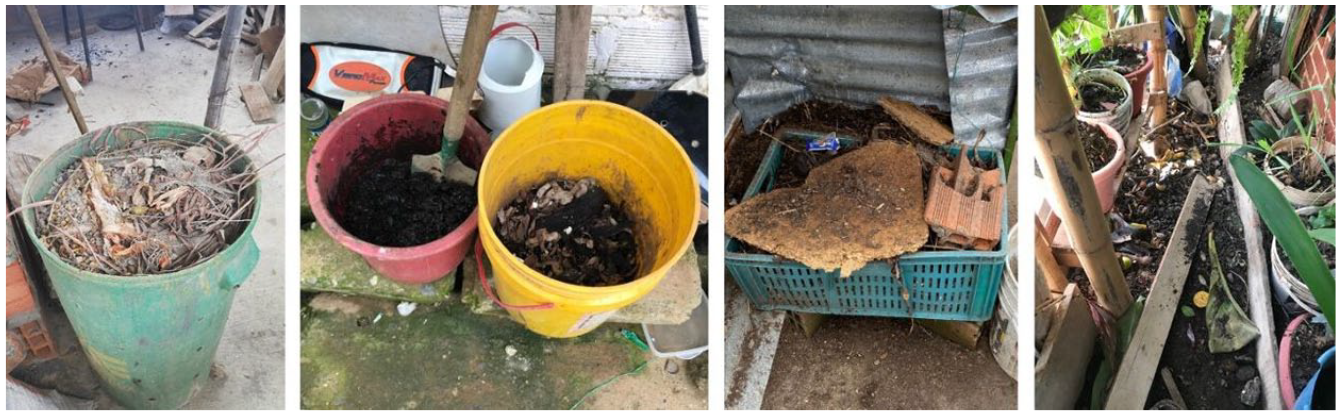
Containers used in the production of compost from organic waste
The practices of creating “fertilizer for plants” and “composting” are carried out in different ways according to the tradition of each family; however, in general, households report favourable results in their plants with the use of the product obtained: growth in less time, greater flowering and better fruit (Figure 3). As indicated by women in the settlements: “They grow faster and become more beautiful, and apart from that, it gives better fruits in all senses: the flowers become very beautiful, the bushes that do not give flowers or anything like that, they become beautiful.” These practices have also contributed to the generation of cooperative ties between residents; in some cases they share the produce obtained with their neighbours and in others, they share or exchange seeds or fruit from their gardens.
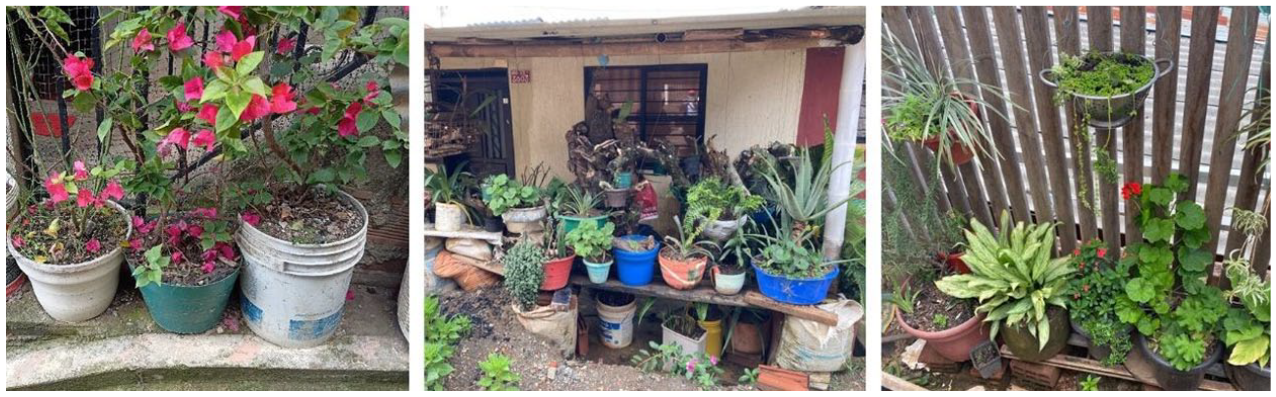
Plants grown with organic waste
In the practices carried out in the households, the presence of offensive odours or disease vectors was not evident. As indicated by some neighbours, they avoid these problems by drying the waste in the sun before putting it in the containers, exposing the plants on which the waste is applied to the sun, and mixing the waste with ash. Some inhabitants indicate that they do not carry out home composting due to lack of space in their homes, a reason that was also identified in a study by Purcell and Magette.(67) Nevertheless, households have sought to overcome this barrier by adapting the little space available, as expressed by a woman inhabitant of the settlements: “I don’t waste a little bit, because the outside part is a well organized wooden or mat box, and that is filled with soil and enough compost, and there one grows the most elegant things.”
According to Boldrin et al.(68) few studies are available on GHG emissions from home composting, but it is expected that better results can be obtained than in larger-scale facilities, given the savings in emissions generated during collection and transport. However, Nhubu et al.(69) caution that capacity building is needed to ensure that backyard composting does not result in undesirable health and environmental impacts associated with improper implementation.
The third type of food waste use is animal feeding, a common practice in rural areas and informal settlements.(70) In addition to maintaining the cultural roots of their rural origins for many residents, the location of these settlements on the border between rural and urban areas allows them to keep animals such as cows, horses, rabbits, guinea pigs, chickens, ducks, cats and dogs, among others.
A statistically significant relationship was found between the adoption of solid waste management practices and the place of origin of the inhabitants of the settlements (p = 0.000435), with 38 per cent of the 144 households coming from the Colombian Pacific Coast carrying out these practices. Settlement dwellers coming from rural areas indicated that managing their solid waste properly is a tradition for them, since in those contexts they had space to grow crops and the waste was seen as fertilizer and not as rubbish. A woman in the settlements said: “We used to live in the countryside. I lived there until I was 12 years old. We lived in Morales, Cauca. Since I lived on the farm I learnt to do that [use waste as fertilizer for their plants]. Here it’s in buckets or pots because there is no space to plant.”
Use of recyclable waste
Of the 203 households that carry out source separation, 31 per cent collect and deliver their waste to a waste picker, 30 per cent give it to neighbours who recycle or donate it to a community recycling programme in the Brisas de Las Palmas settlement and 15 per cent sell it to a recycling depot (multiple choice question). It is noteworthy that 26 per cent of households that separate recyclable waste deliver it directly to the sanitation company service and 12 per cent leave it on the street for collection. These practices do not ensure that waste is diverted from disposal.
The Brisas de Las Palmas community recycling programme is led by women and most of the participants who donate their waste belong to the senior citizens group called Nuevo Amanecer. The resources obtained from the commercialization of recyclable materials are used to support the development of the group’s activities, to buy supplies for the community canteen or to purchase items required by the children’s football team. This programme is a benchmark of the circular economy, which also highlights the relationship between collective action and socioeconomic solidarity.
Among the people who make use of solid waste are waste pickers for whom the sale of recycled materials represents the majority of their family’s income. As expressed by a waste picker from the settlements: “Recycling is very useful for us at home, to sell it, for our livelihoods, because of the economic situation we are in now. I work in a family home twice a week and that is not enough for us.” These people sort and store waste in their homes and then sell it in recycling depots in the area. Additionally, they receive waste donated by their neighbours, as an act of solidarity. According to one inhabitant of the settlements: “We take the recycling to a low-income woman. In this way we help the environment and we help her to have money to buy her household supplies.” According to Do Valle et al.,(71) this type of action is associated with the social awareness of the inhabitants.
There is also an enterprise that uses used cooking oil to make biodegradable soap, led by a woman who mentioned that in addition to obtaining income, this business has allowed her to generate employment for people in the settlement and to avoid dumping the oil in the sewage system or surface water sources. Other practices led by women (including the elderly) involve making accessories and decorative objects for the home with recyclable waste and textiles (Figure 4). Although they said this was for their entertainment, these products also have commercial potential and can lead to the creation of local businesses related to Zero Waste.
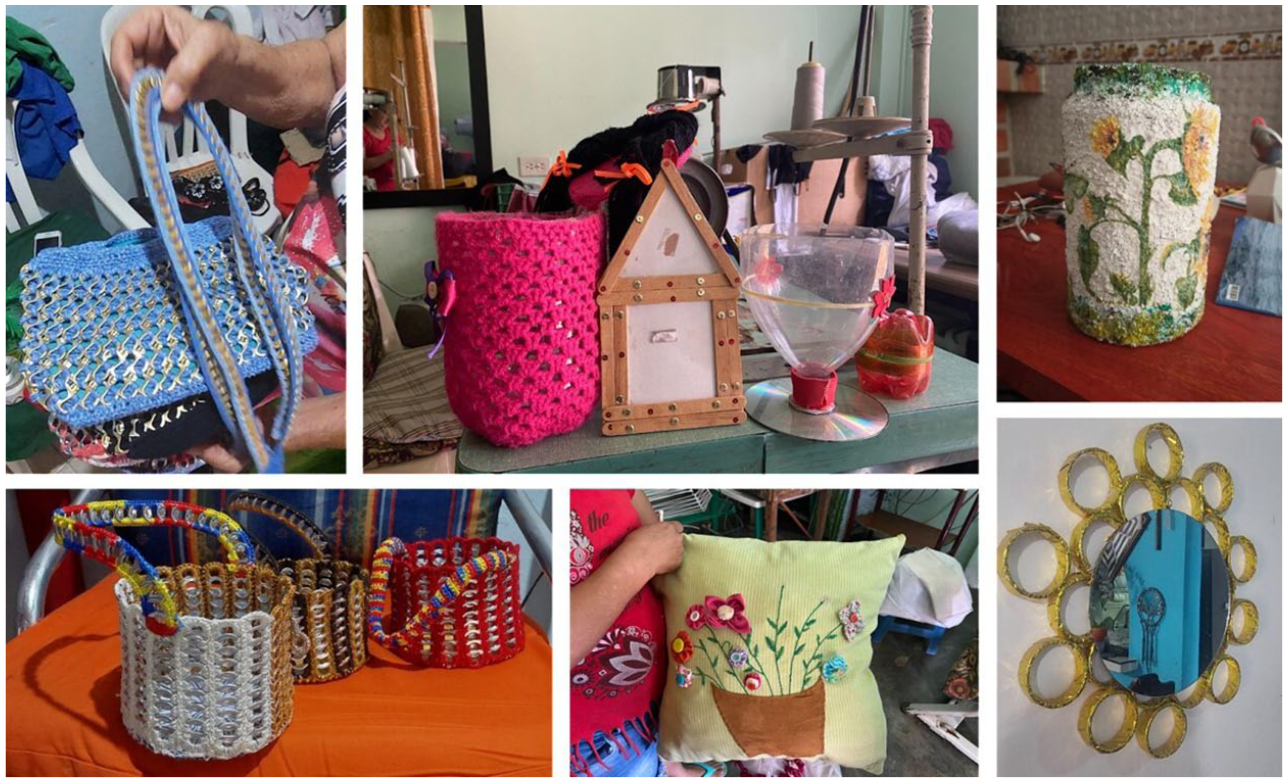
Accessories and decorative objects made from recyclable and textile waste
V. Benefits of Zero Waste Household Practices in Informal Settlements
Different authors(72) have suggested the Zero Waste approach as an effective way of dealing with solid waste management problems, listing some of its contributions. As evidenced in this research, in the informal settlements under study, the implementation of Zero Waste household practices generates multiple benefits both locally with the improvement of neighbourhoods and globally with the mitigation of global challenges such as climate change and poverty. These benefits can be framed in four dimensions: (i) environmental, (ii) economic, (iii) health and (iv) sociocultural.
In the environmental dimension, identified benefits include the reduction of soil and water source contamination and space savings at the final disposal site, which is reflected in a longer useful life of these sites. Also recognized is the reduction of GHG emissions, both the emissions associated with the extraction of raw materials for the production of products that become waste and those generated in their management, mainly in final disposal sites. It is estimated that the waste generated in 2021 in the four settlements produced around 16 tonnes of methane at the final disposal site, which corresponds to 455 tonnes of CO2 equivalent (eq), emissions that by 2030 could reach values of up to 3,580 tonnes of CO2 eq, and that could be avoided, considering that of the 1,302 tonnes of solid waste generated annually, 84.5 per cent corresponds to usable waste. In this regard, it is important to note that although the carbon footprint of informal settlements is significantly lower than that of higher-income contexts,(73) the Zero Waste household practices carried out in these places are relevant and exemplary.
In the economic dimension, benefits such as the generation of employment and economic income and entrepreneurship are identified. It is projected that the use of locally marketable recyclable materials, corresponding to 13.7 per cent of the waste generated in the four settlements, would reduce the economic losses associated with sending them for disposal, achieving the recovery of around US$ 1,600 per month from their sale. Income or savings associated with the Zero Waste home practices analysed and solid waste management are not included in that estimate. However, the reduction of food waste and the use of organic waste for the production of soil improvers or animal feed contribute to food security in the households of the urban poor.
In the health dimension, it is recognized that the reduction in the number and size of open dumping sites helps to minimize public health risks. Vinti et al.(74) reported that in rural areas of Ghana, open dumping sites represent a high risk of infectious and vector-borne diseases, as they create environments conducive to the proliferation of rodents and other animals. The sociocultural dimension includes the benefits expressed by the community that are related to the strengthening of the social fabric, the creation and strengthening of solidarity networks between the different stakeholders, the exchange of knowledge and the empowerment of residents as multipliers of knowledge derived from their cultural roots. The benefits also include the mitigation of conflicts between neighbours related to inadequate solid waste management, contributing to the maintenance of urban neighbourhood peace.
The potential benefits from promoting Zero Waste practices, including the reduction of emissions, the generation of income, the mitigation of health risks and the strengthening of solidarity networks, are evident. It is worth highlighting the relevance of these benefits in neighbourhoods where mutual support has been key to advancing individual and collective projects aimed at improving the living conditions of the urban poor and addressing global challenges. In this sense, the implementation of the Zero Waste strategy, included in the Comprehensive Habitat Upgrading Programme in Santiago de Cali, is an opportunity to energize these practices and broaden their scope of application. This requires the coordination of the different sectors involved in solid waste management.
VI. Conclusions
This paper has analysed Zero Waste household practices adopted by residents of four informal settlements, which focus on preventing the generation of solid waste and promoting its recovery, contributing to improving their living conditions and addressing global challenges. The prevention practices analysed are focused on avoiding food waste and reducing the consumption of plastics and packaging materials. In the case of recovery, organic waste is mainly used for the production of soil improvers that are recognized as fertilizer or compost. Some residents separate solid waste at home, and then deliver it to different actors, among them women neighbours who work as professional recyclers and community organizations that work with the most vulnerable groups in the communities. They also use it for the manufacture of accessories and decorative objects for the home.
This research contributes to the recognition of solid waste management in informal settlements from the Zero Waste approach, identifying the factors that drive the implementation of practices carried out in households, which have been little studied at this level and in these contexts. The Zero Waste practices identified have been adopted in response to the economic constraints faced by the inhabitants of informal settlements and the desire of people from rural areas to keep their environment clean and tidy. Another aspect motivating their adoption is the limitations of conventional solid waste management systems based on the linear economy. These practices, based on popular knowledge and residents’ experiences, are mainly led by displaced women from rural areas characterized by their cultural roots and social sensitivity, who seek to preserve traditional practices from their places of origin and contribute to the generation of income to alleviate the difficult economic situation of their families.
The Zero Waste practices described above contribute to reducing environmental, economic, health and sociocultural problems associated with inadequate solid waste management, through the production of in situ soil improvers used for food production and garden care, the commercialization of recyclable waste, the reduction of waste collection and transport costs, and the generation of solidarity and social bonds.
It is necessary to encourage and strengthen these practices in order to generate niches of sustainability in cities that contribute to the conservation of natural resources and at the same time address the problems generated by inadequate solid waste management. In this sense, it is imperative that public policies recognize the contributions of these practices not only in environmental terms, but also through their generation of employment, solidarity networks, food security and adequate sanitary conditions. Furthermore, it is necessary to make these alternatives visible and legitimize them within the framework of planning instruments, establishing incentives appropriate to the context and defining guidelines that promote their sustainability.
It is essential to promote and implement small- and medium-scale local initiatives for the prevention, recovery and valorization of solid waste. The practices identified in this study have the potential to be replicated and scaled up in low-income contexts in the global South where communities are characterized by their cultural roots in the development of waste management practices in rural areas, based on the articulation of local knowledge and the exchange of knowledge between different key actors. It is also suggested that future research should focus on quantifying the contributions of Zero Waste household practices in terms of GHG reduction and cost–benefit ratios, and on evaluating alternatives to optimize them in accordance with the local context.
Footnotes
Funding
The authors would like to acknowledge support from the UK Research and Innovation (UKRI) Global Challenges Research Fund (GCRF) for the project “Gridding Equitable Urban Futures in Areas of Transition (GREAT) in Cali, Colombia and Havana, Cuba”, Economic and Social Research Council (ESRC) grant reference: ES/T008008/1 and the Universidad del Valle (CI 21098).
