




Abstract
Based on an original dataset of 651 households in the informal settlement of Kibera in Nairobi, Kenya, this article examines household electricity use, drivers of uptake and willingness to pay (WTP) for efficient compact fluorescent lamp (CFL) lighting technology. Informal and illegal electricity consumption, euphemistically referred to by residents as “electricity borrowing”, is common. This removes the metered electricity price lever upon which to influence consumer behaviour and demand for energy-efficient technologies. However, as this study demonstrates, the comparative durability of efficient lighting technologies presents economic benefits for uptake even in a context of fixed-rate electricity payments. While bulb uptake and stated WTP are independent of demographic characteristics such as income activity, gender, education and other factors, they are significantly correlated with informal electricity consumption, beliefs related to bulb durability, knowledge of past energy efficiency outreach, and other contextual factors, underlining a need for tailored approaches to energy efficiency in informal settlements.
Keywords
I. Introduction
Informal settlements are characterized by limited services, including electricity provision. The structures that develop to fill the electricity supply gap in informal settlements create a unique environment for the effective engagement of a substantial population worldwide in energy efficiency initiatives. An estimated quarter of the world’s urban population lives in informal settlements – the figure for low-income countries is higher at one-third.(1) It is expected that 2 billion people will live in informal settlements by 2022.(2) The trend towards urbanization is especially strong in Africa and Asia.(3) The anticipated increase there in the number of urban poor and the energy demand accompanying this growth further underline the urgent need to tailor energy efficiency outreach to informal settlements.
Efficient lighting can contribute to household welfare, grid stability, emissions reductions, and a better stewardship of resources. At the household level, efficient lighting benefits accrue due to the heightened durability of high-quality efficient lighting products, as well as reduced electrical costs for informal settlement households with a metered electricity connection. Efficient lighting also contributes to societal-level benefits. Among the urban poor, lighting is among the most ubiquitous sources of energy demand. As a result, efficient lighting can realize cost savings and peak load reduction, reducing strain on the electrical grid and thereby contributing to more reliable power supply.(4) From an environmental stewardship and resource conservation perspective, the need to increase the uptake of energy-efficient lighting is demonstrated by the energy demand associated with lighting globally and the resulting emissions. In 2005 lighting accounted for 2,650 terawatt-hours (TWh), equivalent to 19 per cent of annual global electricity demand, which is the power generated by all gas-fired power plants worldwide, and annual emissions of 1,889 metric tonnes of carbon dioxide (MtCO2), equal to 70 per cent of world passenger vehicle emissions.(5)
In order to support the delivery of effective means of implementing energy efficiency in informal settlements, this paper seeks to assess drivers of and barriers to the use of efficient lighting and willingness to pay (WTP) for efficient lighting technologies. Inclusive approaches to energy efficiency require a nuanced understanding of electricity consumption and further factors impacting lighting choices in informal settlements, with regard to both personal choices and the broader context for these choices. It is worth stressing that the departure point is not the burden of emissions reductions, but rather the co-benefits of emissions-reducing technologies.
The data presented in this paper are drawn from household surveys (n=651) conducted in the Kenyan informal settlement of Kibera in Nairobi in 2014. The paper proceeds as follows: Section II (background) will review key concepts and the context of the study. Section III (research methodology) will review the methodology adopted for the analysis, which is primarily based on exploratory field research and a randomized household survey. In Section IV (findings), descriptive statistics about Kibera will illustrate the energy and electricity landscape, and data analysis will identify potential drivers and barriers to the uptake of energy-efficient lighting and WTP for compact fluorescent lamp (CFL) bulbs. In Section V these results will be discussed. Section VI (conclusions) will identify potential means of translating these results into policy and programme design.
II. Background
a. Knowledge gap
While some studies on efficient lighting uptake have been conducted in emerging and developing economies,(6) there is a comparative dearth of information on African settings and among the urban poor specifically, with some exceptions.(7) Although surveys on electricity supply and demand have been conducted in Kibera and other informal settlements, these are outdated and offer an incomplete perspective on the electricity demand landscape and – more importantly – the corresponding impact on demand for energy-efficient technologies. This highlights the need for new research in light of recent progress in economic development, electricity service access, and lighting technology progress. This article thus seeks to build upon existing research while demonstrating means of tailoring energy efficiency efforts to urban informal electricity consumers.
b. Energy efficiency: An urgent opportunity
At the macro level, energy efficiency can contribute to energy security, supply stability, emissions reductions, growth and competitiveness.(8) Several factors highlight the importance and urgency of implementing energy efficiency and conservation measures: high energy prices, supply insecurity, depletion of energy resources, and environmental and health factors, among others.
Although Kenyan electricity generation is relatively low-carbon – in 2011 49 per cent was produced by hydropower, 29 per cent by geothermal power and 21 per cent by medium-speed diesel – electricity-related emissions are expected to increase from 2.2 million tonnes of carbon dioxide equivalent (MtCO2e) in 2010 to 18.5 MtCO2e in 2030. Much of this will be the result of new coal and natural gas power generation coming online to meet increasing energy demand, further highlighting the urgency of energy efficiency. Household demand is expected to be particularly responsible for future demand increases, making energy efficiency in the residential sector particularly important.(9)
Nationally, 16 per cent of Kenyan households use electricity as their main lighting source; in urban areas the figure is higher at 51 per cent.(10) Among the African urban poor, kerosene is the leading fuel for lighting and cooking,(11) and accounts for 80 per cent of total energy consumption in the overall Kenyan residential sector.(12) In Kibera, 55 per cent of households primarily use kerosene for lighting and approximately 42 per cent use electricity for lighting.(13) The challenges of kerosene use, including the risk of burns and accidental fires, its impact upon indoor air quality, and the exposure of consumers to price fluctuations and shocks, further underline the value of a transition to electricity in informal settlements and to backup or primary light sources of low-cost solar lighting and lamps.
Although kerosene accounts for the vast majority of total energy consumption in the Kenyan residential sector overall, it is electricity that accounts for the largest share of household energy budgets, on average at 14 per cent.(14) Among this Kibera sample it accounts for an even higher portion of household energy budgets, approximately 20 per cent, underscoring the importance of informal settlement energy efficiency uptake. Furthermore, the price of electricity rose by 73 per cent from 2009 to 2011, the highest among all fuels, driven by rising demand in the domestic and small commercial sectors. This sectoral growth is attributed to increasing urbanization along with greater microenterprise activity.(15)
Although much of the sample surveyed in this study consumes electricity informally, paying a flat rate or nothing at all, electricity legalization programmes in Kibera underline the importance of future energy efficiency upgrades as households enter the regime of metered electricity provision.(16) This underscores the urgency of energy efficiency from a welfare perspective as the lower long-run costs of efficient lighting can positively impact the household welfare of the urban poor.(17)
Kenya is thus a compelling case study from the perspective of household welfare and energy efficiency while being representative of challenges in other developing countries. Energy is a key driver of the cost of living in Kenya, with the energy price index making the largest contribution to the aggregate consumer price index over time.(18) At the same time, relative to other African countries, Kenya has an average to high urban population, energy intensity in its residential sector, and transmission and distribution losses in the region. This and other key electricity sector figures may be found in Table 1.(19)
Regional comparison of 2012 key demographic and electricity sector figures
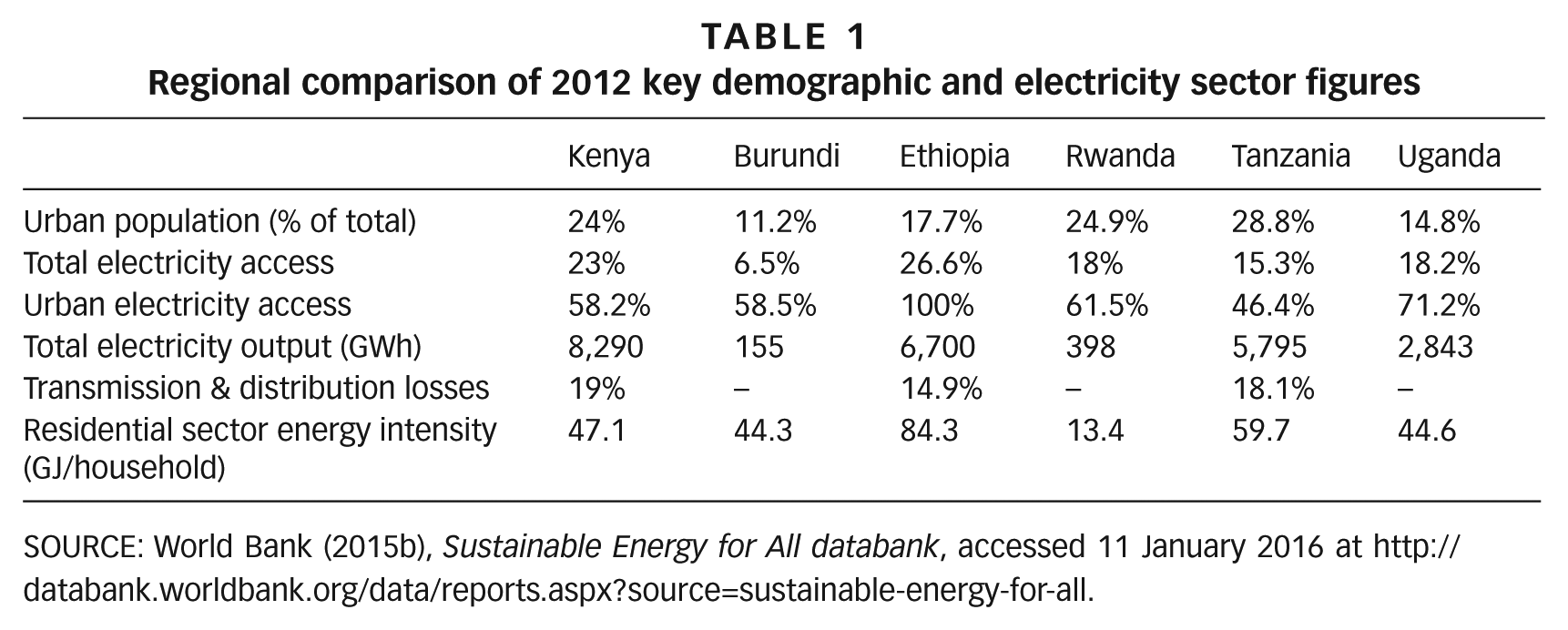
SOURCE: World Bank (2015b), Sustainable Energy for All databank, accessed 11 January 2016 at http://databank.worldbank.org/data/reports.aspx?source=sustainable-energy-for-all.
In 2009, per capita energy consumption was 150 kilowatt-hours (kWh) and is expected to increase to 190 kWh in 2015. Electricity prices are expected to remain relatively high given supply constraints combined with a rising population and economic growth, though demand is price inelastic because of the importance this energy category holds for households and enterprises, especially for those with limited fuel substitution options.(20) Domestic electricity charges (240 volt connections) per kWh for the period in which the study was conducted were assessed on a progressive scale based on overall monthly electricity consumption. Per kWh costs were approximately €0.02 up to 50 kWh, €0.11 from 50 to 1,500 kWh, and €0.18 for consumption over 1,500 kWh.(21)
In its 2014 Draft National Energy Policy Document, the Kenyan Ministry of Energy and Petroleum cites energy efficiency implementation challenges as being related to low levels of awareness, consumer apathy, socioeconomic factors, insufficient standardization/labelling and limited availability of efficient technologies.(22) This article finds similar challenges to energy efficiency implementation in Kibera. More specifically, awareness and beliefs about efficient lighting are seen to impact uptake, while concerns about counterfeit efficient lighting technologies (e.g., lighting products falsely marketed as a name brand, with poorer durability and higher mercury content) hinder efficient lighting purchases.
c. Energy efficiency in a context of informality and durability
The payback period of efficient CFLs compared to inefficient incandescent bulbs normally depends upon upfront purchase price, electricity cost, and rate of use.(23) In this case it is often dependent just on purchase price as the electricity cost for informal connectors is static or absent. The high occurrence of non-technical losses, including electricity theft, in informal settlements(24) removes an important price lever to influence the uptake of energy-efficient technologies, as the consumer pays a fixed rate or nothing at all for electricity.(25)
In Kenya, electricity is often accessed informally. Of those with access, it is estimated that only 61 per cent access it officially through Kenya Power, the national electrical utility, while the remainder source it through illegal connections or private off-grid supply.(26)
The durability concern related to incandescent bulbs is widely reported by survey participants to be a result of power supply irregularity. Often-occurring power surges are reported to cause incandescent and low-quality CFL bulbs to burn out. In the case of incandescent bulbs, this means that even in a context of absent or static electricity payment, there is still a price lever that influences the uptake of high-quality, energy-efficient and cost-efficient CFL bulbs, resulting from the greater durability of these products. However, an important contextual consideration qualifies this statement. Low-quality products have damaged market confidence and presumably reduced demand for energy-efficient lighting equipment, reflecting challenges present in for example St Lucia, China and Pakistan.(27) This paper thus also assesses beliefs related to lightbulb quality, including concern about counterfeit CFL bulbs.
Given the potential savings related to high-quality CFL uptake resulting from the durability of these compared to incandescent bulbs, why do approximately 80 per cent of households in this grid-connected Kiberan sample use incandescent bulbs? In order to address this research question, three factors were assessed in household surveys (n=651): household/respondent demographics, electricity and lighting use profiles, and beliefs and experiences related to lighting products.
d. Kibera
Even the most basic figures on Kibera are disputed, including population. Though a population of or nearing one million is often stated, the 2009 census found a population of approximately 200,000, which is supported by a 2011 geographic information system (GIS)-based study. This same study also conducted a household survey, finding that most Kiberans hold informal occupations, frequently implying irregular income. Average individual income was calculated at 3,977 Kenyan shillings in 2009 (in this 2014 sample, the average, x-, is higher at KSh 6,161; the standard deviation, s,=6,483; and the sample size, n,=75). Of those employed, 45 per cent are self-employed or daily labourers. Average female income is 42 per cent lower than male income, partly reflecting the competing demands of household management and childrearing.(28)
Kibera is a multi-ethnic settlement. Home to all Kenyan ethnic groups, it is divided into villages of distinct ethnic compositions, often with one dominant ethnic group. Kibera landlords, especially those who own many properties, are generally “absentee landlords”, who live elsewhere and lease property without conducting sufficient maintenance. The properties of smaller “resident landlords” typically hold less than 20 rooms, and these landlords frequently share compounds and living conditions with their tenants. Violent conflicts over rent have plagued Kibera, with rent price policies sparking violence and conflict, linked to the ethnicity and patron–client relations that are important in Kenyan politics. Violence plagued Kibera following Kenya’s 2007 election.(29)
III. Research Methodology
a. Research design
This project was conducted in cooperation with the Busara Center for Behavioral Economics in Nairobi and drew from an available pool of 5,000 Kibera residents enrolled to participate in research activities. Drawing from the overall Busara pool, a pre-selection measure identified participants with an existing electricity connection, as this was seen as necessary to assess lightbulb preferences. This was facilitated by administering a household durables survey by telephone to randomly selected households. This was disguised in a broader survey of household durables to preclude priming of the respondents or the larger community that energy-related research was planned. From June to July 2014, 651 randomly selected, grid-connected households in Kibera were then included in the household baseline survey, representing to my knowledge the first randomized survey related to energy efficiency in informal settlements.
A pilot-tested “exploratory, structured and non-disguised questionnaire”(30) was employed. Multiple exploratory field visits informed and tested the survey instrument. This had modules on demographics, energy efficiency knowledge, electricity provision and lighting sources. Respondents were informed that the purpose of the research was to learn more about electricity consumption and lighting provision in Kibera. It was stressed that the research was being collected anonymously for non-governmental purposes, and without affiliation to Kenyan authorities, an important point given the often illicit nature of informal electricity consumption.
The intent was to analyse framework conditions that impact the uptake of a CFL lightbulb in informal settlements. The lightbulb was selected as the unit of analysis as it is the most ubiquitous end-use equipment among those households with a grid connection. Light-emitting diodes (LEDs), a superior product to CFLs, were excluded from the analysis due to an absence of awareness, market unavailability, and confusion of the product with other lighting products among both enumerators and respondents, which interfered with pilot findings, even when employing pictures and examples. During field visits, it was observed that LED bulbs were available only in upscale shopping markets, at a cost of approximately KSh 1,500 (approximately US$ 14.68 on 24 January 2016), though lacking a brand name and model specification information.
Surveys were conducted in 651 households in July and August 2014. Respondents were reimbursed for their time with a gift equivalent to KSh 200. This was the dry season, a relatively stable time for electricity supply, which could have affected the answers. The data were recorded by enumerators on tablet computers and processed using STATA statistical software. The survey collected information related to household demographics, electricity provision and payment, lighting sources and beliefs about them, and knowledge about energy efficiency. Some questions (such as hours of electricity available per day) relied on self-reporting while others (such as current CFL uptake), that could be instantaneously observed, were verified by enumerators.
b. Model 1
In order to assess potential drivers of and barriers to the uptake of energy-efficient lighting technology, two models estimate the presence or absence of a CFL bulb in the surveyed household. These models were developed primarily based on evidence from exploratory field research and pilot surveys. Observed and hypothesized drivers and barriers were incorporated into the surveys and included in the model specifications. These are investigated by employing a simple Probit model. This modelling approach was adopted given that the outcome variable of baseline CFL presence or absence for household i is binary – that is, it can assume one of two values.
Thus, the presence or absence of a CFL light in the household, subject to the independent variables, can in this case be modelled such that
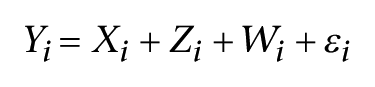
where Yi is the outcome variable for household i and εi is an error term. I anticipated that various demographic factors would influence the household lighting choices. Xi thus controls for gender (Female), present engagement in income-earning activity (the binary variable IncAct),(31) respondent age (Age), years of respondent education (Education) and number of respondent dependents (Dependents).
Given the contextual importance of informality, a number of related factors are anticipated to influence bulb selection and captured in Zi. Since paying a flat rate for electricity removes the cost benefit introduced by metered electricity, a binary variable assesses whether the household pays a fixed monthly rate for electricity (Fixedfee) and is adopted as a proxy variable for informal electricity consumption. I anticipate that households paying a fixed rate will be less likely to use a CFL. Still, the continuous variable measuring the average monthly electricity rate paid by the household is included in the model (ElecPay), though I do not anticipate significant findings given that most households pay a fixed fee. In exploratory field research, some respondents stated preferences for the increased heat emitted by incandescent bulbs, and some for the reduced heat emitted by CFL bulbs. Two binary variables related to bulb heat preferences are thus included, likeIBheat and likeCFLcool. Finally, the continuous variable assessing the number of bulbs in use in the household (Bulbnum) is included.
Beliefs, experience and awareness related to lighting are seen as potential determinants of CFL use and are captured by Wi. Stated WTP for a CFL bulb is assessed in the continuous variable WTP. Given the durability challenges related to lighting in this context, I also assess respondent beliefs related to incandescent and CFL bulb lifespan. Respondents were asked open-ended questions of bulb lifespan for each model. Respondents’ belief in CFLs lasting at least one year is assessed in the binary variable CFL1year. Respondents’ belief in incandescent bulbs lasting one month or less is assessed in the binary variable IB1month. Likewise, two independent variables indicating respondent experience of bulb durability are included. One indicates that the respondent believes power surges to cause incandescent bulb burnout (SurgeIBburn) and another that they cause CFL bulb burnout (SurgeCFLburn). The former is hypothesized to be positively correlated with CFL use, and the latter is anticipated to be negatively associated with CFL use. Given the concerns related to counterfeit CFL bulbs observed in exploratory field research, a Likert-scale question indicates respondent concern about counterfeit CFL bulbs in the independent variable BulbQuality. Furthermore, I anticipate that awareness of energy efficiency will be positively correlated with the presence of a CFL bulb. Respondent ability to accurately define energy efficiency is assessed by the binary variable DefineEE. Whether the respondent can accurately describe the 2010 efficient bulb exchange and energy efficiency programme Badilisha is assessed in the binary variable KnowBadilisha. Finally, I anticipate that being a past recipient of a free CFL distribution programme will be positively correlated with uptake and assess this with the independent variable PastRec.
c. Model 2
Another Probit model is estimated to specifically account for factors related to informality and durability. All Zi variables are included in this model specification as the focus is upon the characteristics of electricity use. Excluded are prior insignificant demographic (Female, IncAct, Age, Education, Dependents) and belief (PastRec, defineEE, BulbQuality, SurgeCFLburn, and WTP) variables. Dropping these variables as a group marginally reduces the model fit (pseudo R2) from .155 to .142. The resulting econometric model thus employs a Probit model to estimate the presence or absence of a CFL in household i subject to the independent variables such that
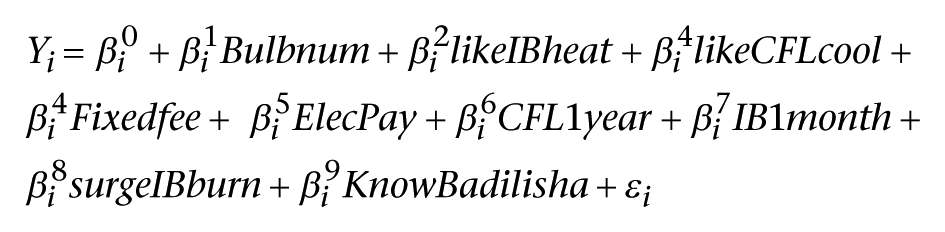
where
Yi is the outcome variable for household i
and εi is an error term.
d. Estimating willingness to pay (Model 3)
Two models estimate WTP for a CFL bulb. These were developed primarily based on exploratory field research and pilot survey evidence. Those observed and hypothesized drivers and barriers were then incorporated into the surveys and included in the model specifications. Adopting WTP as the outcome variable, a linear regression model that employs an ordinary least squares (OLS) regression assessing household and respondent demographics, energy demographics and lighting beliefs is estimated such that
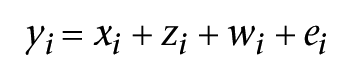
where yi is the outcome variable for household i and ei is an error term.
I anticipated that various demographic factors would influence WTP for a CFL. xi thus controls for gender (Female), present engagement in income-earning activity (the binary variable IncAct),(32) respondent age (Age), years of respondent education (Education) and number of respondent dependents (Dependents).
Given the contextual importance of informality, a number of related factors are anticipated to influence bulb selection and captured in zi. Since paying a flat rate for electricity removes the cost benefit introduced by metered electricity, a binary variable assesses whether the household pays a fixed monthly rate for electricity (Fixedfee) and is adopted as a proxy variable for informal electricity consumption. I anticipate that households paying a fixed rate will have a lower WTP for a CFL. Still, the continuous variable measuring the average monthly electricity rate paid by the household is included in the model (ElecPay), though I do not anticipate significant findings given that most households pay a fixed fee. In exploratory field research, some respondents stated preferences for the increased heat emitted by incandescent bulbs, and some for the reduced heat emitted by CFL bulbs. Two binary variables related to bulb heat preferences are thus included, likeIBheat and likeCFLcool. Binary variables signify the use of an incandescent bulb (UseIB) or CFL (CFLuse). Finally, the continuous variable assessing the number of bulbs in use in the household (Bulbnum) is included.
Beliefs, experience and awareness related to lighting are seen as potential determinants of WTP for a CFL and are captured by wi. Given durability challenges, I also assess respondent beliefs related to incandescent and CFL bulb lifespan. Respondents were asked open-ended questions of bulb lifespan for each model. Respondents’ belief in CFLs lasting at least one year is assessed in the binary variable CFL1year. Respondents’ belief in incandescent bulbs lasting one month or less is assessed in the binary variable IB1month. The former is hypothesized to be positively correlated with CFL WTP, and the latter negatively. Given the concerns related to counterfeit CFL bulbs observed in exploratory field research, a Likert-scale question indicates this respondent concern in the independent variable BulbQuality. Furthermore, it is anticipated that awareness of energy efficiency will be positively correlated with the presence of a CFL bulb. Respondent ability to accurately define energy efficiency is assessed by the binary variable DefineEE. Whether the respondent can accurately describe the 2010 efficient bulb exchange and energy efficiency programme Badilisha is assessed in the binary variable KnowBadilisha. It is also anticipated that being a past recipient in a free CFL distribution programme will be positively correlated with WTP (PastRec). Finally, the continuous independent variable CFLcost includes the respondent’s stated cost of a CFL bulb in the model, anticipating a correlation between stated cost and WTP.
e. Estimating willingness to pay (Model 4)
Adopting WTP as the endogenous, or outcome, variable, a linear regression model employing an ordinary least squares (OLS) regression estimates WTP for a CFL bulb, removing all household and respondent demographic variables (which were insignificant) in the prior model such that
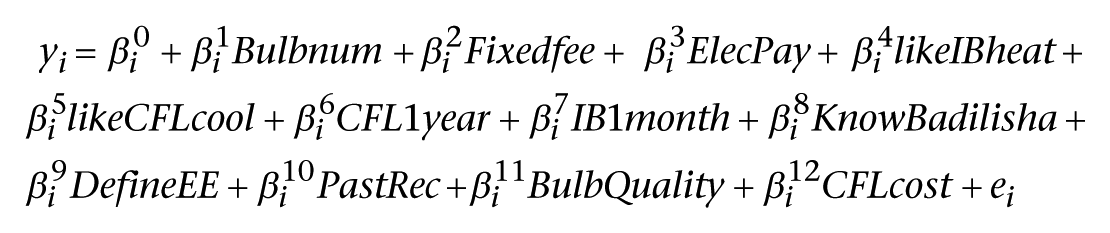
where
yi is the outcome variable for household i
and ei is an error term.
IV. Findings
a. Household demographics, electricity and lighting use
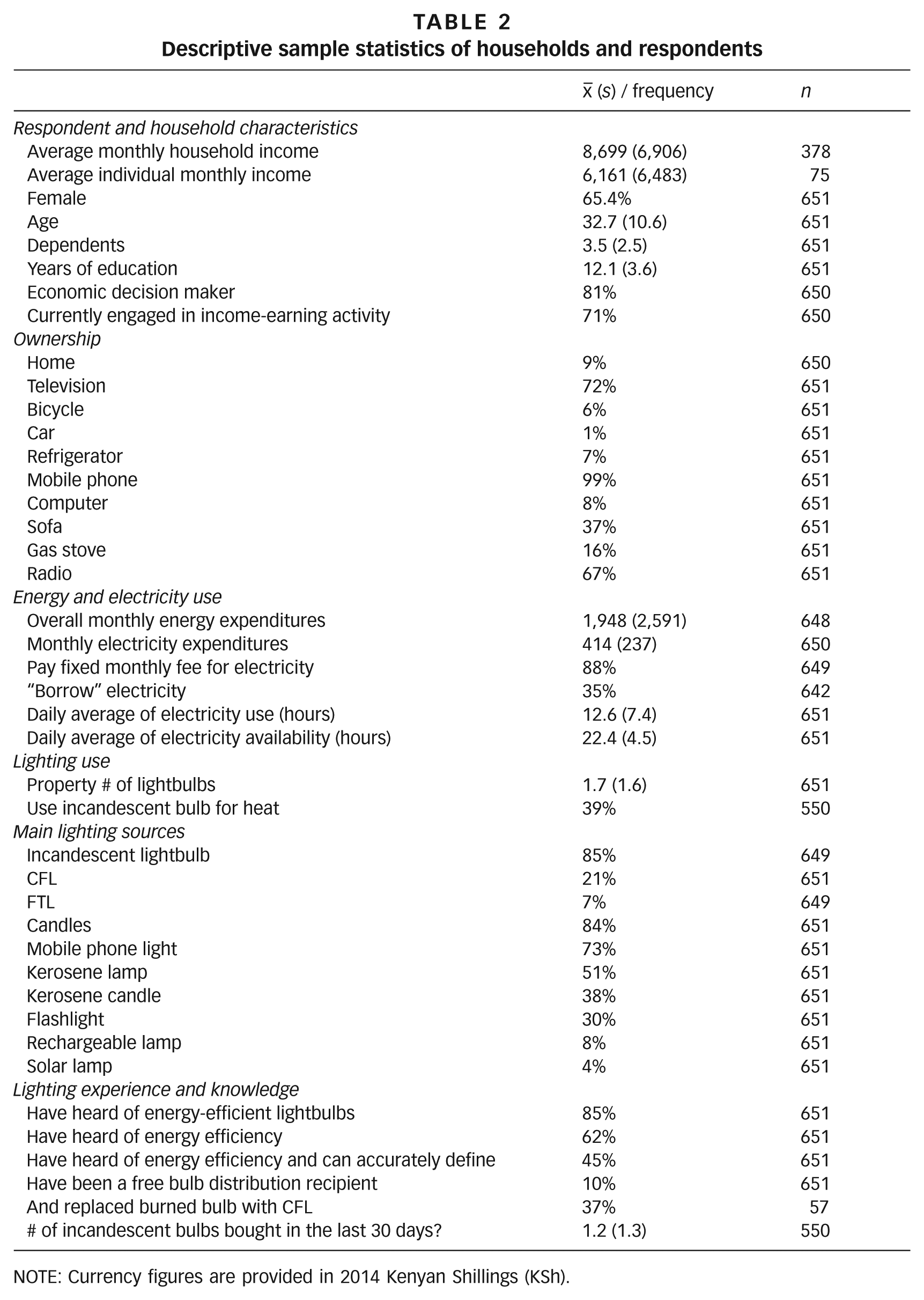
As is common in informal settlements, the vast majority of respondents are tenants (91 per cent). Within the sample, the most common end-use devices are lightbulbs and mobile phones, followed by televisions and radios. Further descriptive sample statistics are found in Table 2.
Descriptive sample statistics of households and respondents
NOTE: Currency figures are provided in 2014 Kenyan Shillings (KSh).
Households were asked about monthly average payments for for energy overall (charcoal, kerosene, electricity, etc.). Among the sample, this average is KSh 1,975 (KSh 1 = US$ 0.01 on 16 January 2016). This accounts for roughly one-quarter of the reported average monthly household income. Average monthly electricity expenditures (
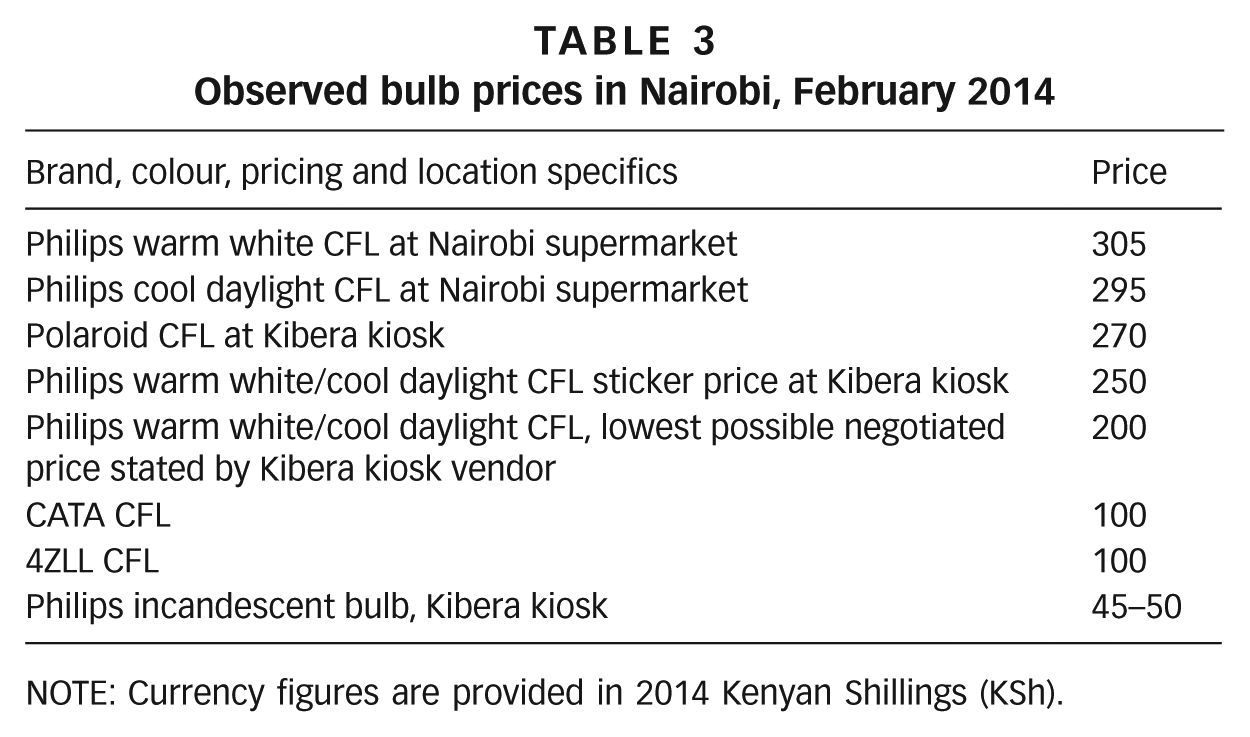
Observed bulb prices in Nairobi, February 2014
NOTE: Currency figures are provided in 2014 Kenyan Shillings (KSh).
Of those households that use incandescent bulbs, 39 per cent indicate they do so because these provide more heat. Indeed, one savvy kiosk vendor who used an incandescent bulb noted she did so solely because it provided warmth. Twenty-eight per cent of respondents indicated a preference for the heat provided by incandescent bulbs while 10 per cent indicated a preference for the comparative coolness of CFL bulbs. Given that the surveys were conducted in winter, the comparatively cool weather when the surveys were conducted might have influenced the responses.
Sampled households with a connection to the electrical grid use a variety of backup lighting sources (mobile phone light, candles, kerosene lamp) in case of power outages. 4.3 per cent of homes use a solar lamp.
The favoured places to buy a quality CFL are supermarkets outside of Kibera (44 per cent), Kibera electronics stores (17 per cent), Kibera kiosks (11 per cent) or Kibera supermarkets (9 per cent). While CFL bulbs have a higher upfront cost than incandescent bulbs (Table 3 provides further information on bulb price), the poor durability of the latter leads to near-term financial loss, even in a context of absent or static electricity payment. There is a sample monthly average of five power surges (s=8), which 81 per cent of residents report to cause incandescent bulb burnout. Respondent perception of the lifespan of an incandescent lightbulb varied widely, but averaged about 90 days, with most reporting a lifespan of 30 days. A further challenge of the poor durability of incandescent bulbs is that between incandescent bulb burnout and repurchase, households must return to non-electrical sources of light such as kerosene, incurring monetary and health risks and burdens in the process.
Thirty-five per cent of respondents self-reported to be currently engaging in electricity theft, euphemistically referred to as “borrowing”. However, this does not necessarily translate into non-payment, as reported by respondents. Among borrowers, the average monthly amount paid is KSh 380 (s=149), with only six reporting non-payment. Some may identify as borrowers because they know they are connecting informally, but still pay for electricity. Still, the self-reported average monthly rates of confessed borrowers are lower than the rates of those identifying as non-borrowers (
Electricity theft is a taboo subject for a majority of respondents, with 73 per cent indicating the practice to be extremely unacceptable. Given the sensitivity of borrowing, it would be naive to believe that the self-reported figure is accurate. Using “borrowed” as a measure of electricity theft is furthermore problematic as it is referring to not so much a direct relationship with the practice but engagement at some point in the value chain. Thus, the figure related to electricity borrowing is assumed to be a lower boundary rather than reflective of the actual rate of informal consumption.
A more reliable indicator of informal electricity consumption is seen to be the variable indicating payment of a fixed monthly rate for electricity (Fixedfee) as at the time of the study there was no official fixed-rate tariff structure in Kenya. Thus, this rather innocuous question is likely a more reliable indication of engagement in informal electricity use. Eighty-eight per cent of the overall sample reports paying a fixed monthly rate for electricity.(34)
Five per cent of respondents indicated they had an individual meter. Asked who they pay for electricity, 46 per cent of respondents indicated an electricity agent, 29 per cent the landlord, 17 per cent the informal electricity provider called Kibera Power, a local outfit that arranges informal or illegal electrical connections and provides electrical services, and 7 per cent Kenya Power (this figure nearly aligns with the rate of individual meters). Reporting the leading reasons for not having established a Kenya Power connection, 53 per cent reported that the connection price is too high, 16 per cent that the current provider will not allow switching, and 8 per cent that they have been unable to secure a connection despite trying.
b. Energy efficiency and lighting experience and beliefs
Fifty-eight per cent report knowing what happens to CFL bulbs when a power surge occurs. Of these, 21 per cent report that the bulb burns out, a figure matched by current CFL users within the sample. Eighty-two per cent of respondents overall report CFLs to be the most efficient. Among CFL users, the figure is higher at 91 per cent. Eighty-one respondents using CFLs could identify the brand in use, with 82 per cent using Philips, 7 per cent using Osram, and 5 per cent each using Cata and 4ZLL.
CFL end-of-life disposal was also assessed. Among those who had disposed of a CFL in the past (n=236), 85 per cent indicated using the garbage, 5 per cent the latrine and 10 per cent other. There is a relatively high concern about counterfeit CFL bulbs. Other CFL concerns are related to cost, durability (particularly in relation to counterfeit bulbs), light quality, and heat produced. At the same time, CFL durability is also seen as a benefit, along with heat produced, energy efficiency and light quality. Incandescent benefits are mainly seen as purchase price, heat provided, light quality and availability.
Eighty-one per cent report that incandescent bulbs burn out following a power surge. Only 9 per cent identify incandescent bulbs as the most efficient. Concerns about counterfeit incandescent bulbs do not match those of CFLs, with only nine respondents indicating this as a concern. The incandescent bulb market is dominated by Philips, with a market share of 97 per cent.
Eight per cent of respondents knew the 2010 Kenyan Badilisha CFL lightbulb exchange campaign and could accurately describe it. Eighty-five per cent had heard of efficient bulbs. A smaller share (62 per cent) reported having heard of energy efficiency while 45 per cent could describe it in an open-ended question. Of those who were a past recipient in a free CFL distribution, 37 per cent were currently using one (Table 2).
c. Models 1 and 2: estimating the presence or absence of a CFL in the household
Overall, respondent demographics were not found be significantly correlated with the presence of a CFL bulb in the household. Of the energy demographic (Zi) variables, Bulbnum, Fixedfee, likeCFLcool, CFL1year and IB1month are significant. Paying a fixed monthly fee for electricity (Fixedfee) is negatively correlated with CFL use, as hypothesized, given the absent pecuniary incentive of metered electricity. Preferring the heat of an incandescent bulb does not significantly estimate the presence of a CFL, while preferring the coolness of these does. Variables related to knowledge and experience are significant. Indicating a low incandescent lifespan and high CFL lifespan are both positively correlated, as expected, with CFL usage, as is indicating that power surges cause incandescent bulb burnout. Knowing the Badilisha bulb exchange and efficiency programme is also positively correlated with CFL use (Table 4).
Probit regression result for the endogenous variable indicating presence or absence of a CFL light in the household
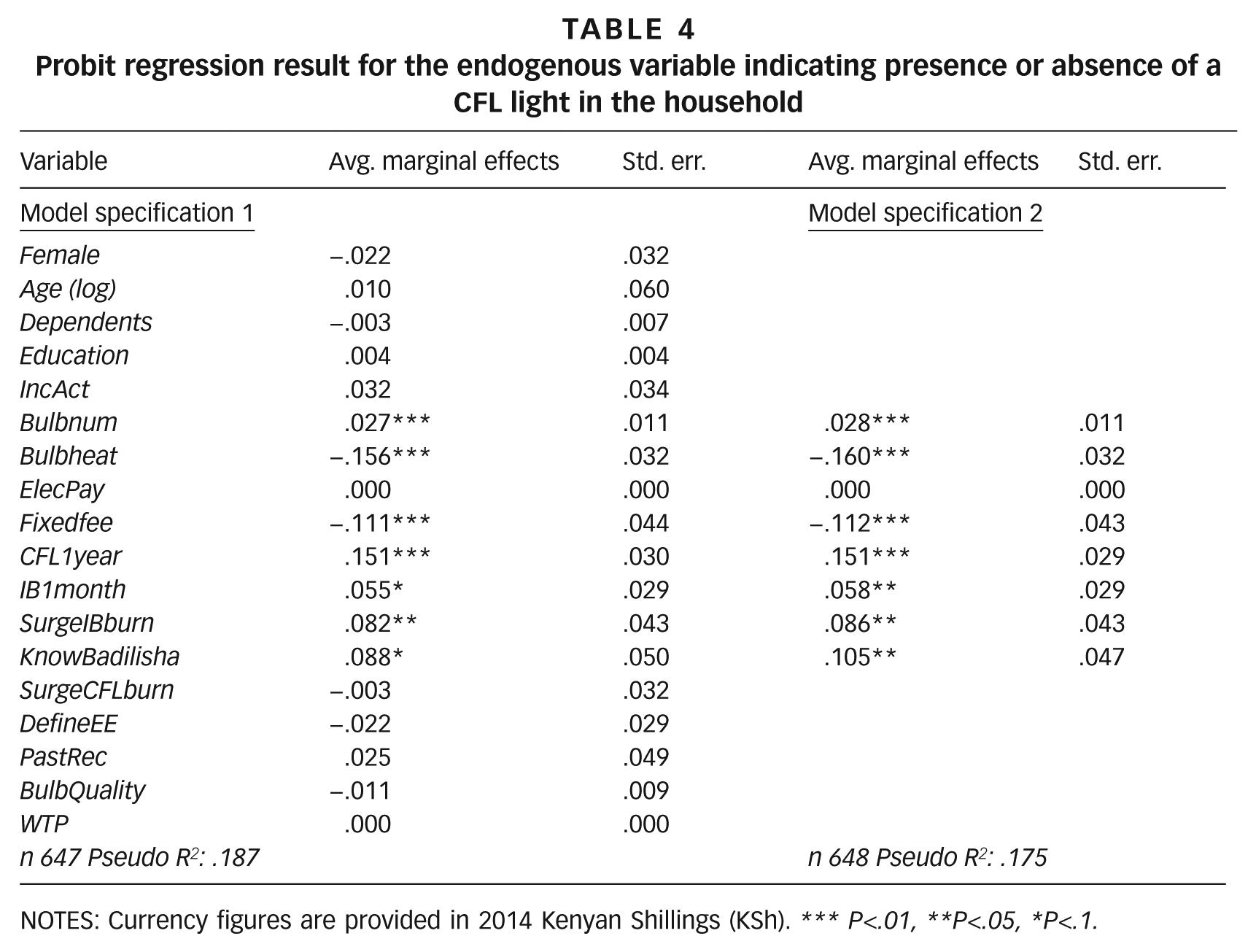
NOTES: Currency figures are provided in 2014 Kenyan Shillings (KSh). *** P<.01, **P<.05, *P<.1.
d. Models 3 and 4: Estimating CFL bulb WTP
In model specification 3, the use of a CFL is negatively correlated with WTP for a CFL bulb and significant at the .05 level. As opposed to prior models with the dependent variable of CFL use, the significance of explanatory variables related to bulb beliefs is largely removed. Only DefineEE, PastRec, BulbQuality and CFLcost are significant. Interestingly, being a past recipient of a CFL free bulb distribution (PastRec) has a negative coefficient. Bulbnum is positively correlated with uptake while the use of both an incandescent bulb (UseIB) and a CFL bulb (CFLuse) are significantly and negatively correlated with WTP. CFLcost, a continuous variable measuring the stated cost of CFLs, is significantly correlated with WTP.
Removing all household and respondent demographic variables that were insignificant in Model 3 slightly improves the fit of Model 4 to an adjusted R2 of .176 while only moderately changing the coefficient values. Bulbnum is positively correlated with CFL WTP, perhaps because multiple bulbs imply more frequent bulb purchase opportunities. Using an incandescent bulb (UseIB) is negatively correlated, perhaps indicating a status quo bias. A negative correlation for (CFLuse) may indicate dissatisfaction with the technology. Alternatively, if the CFL in use has a long lifespan, the respondent may not anticipate being in the market for new lighting for some time and therefore have a lower WTP for lighting. Accurately defining energy efficiency (DefineEE) is positively correlated with WTP, as is CFLcost, though the latter only marginally. Concern about bulb quality (BulbQuality) is negatively correlated with WTP, further underlining the urgent need for quality assurance measures. Past receipt of a free CFL bulb (PastRec) is negatively correlated with WTP (Table 5).
OLS regression result for the endogenous variable of stated WTP
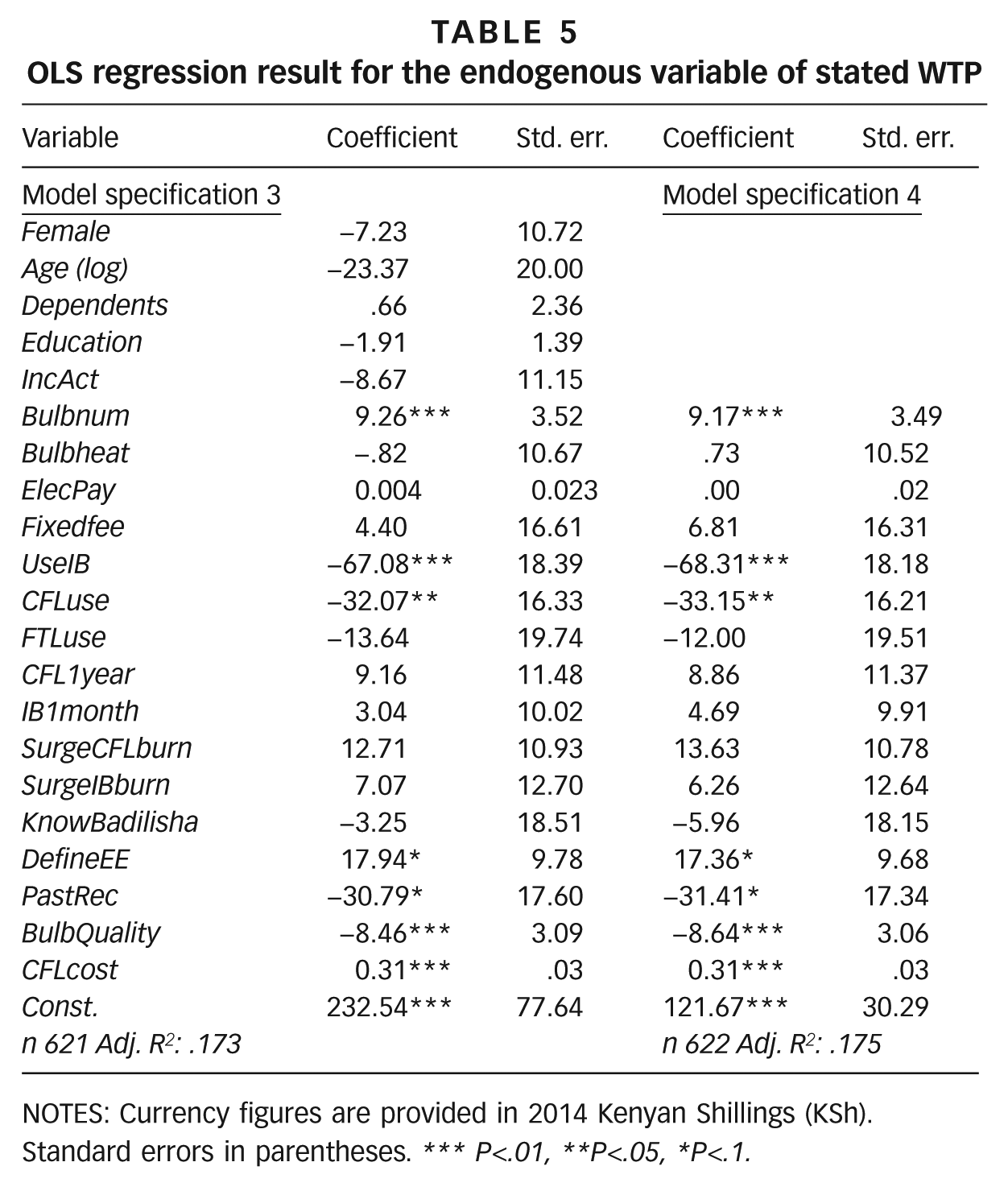
NOTES: Currency figures are provided in 2014 Kenyan Shillings (KSh). Standard errors in parentheses. *** P<.01, **P<.05, *P<.1.
V. Discussion
Two outcome variables have estimated CFL use and stated WTP for a CFL bulb. Overall, there is a strong relative correlation among knowledge, experience, beliefs and CFL use. Belief variables related to bulb durability exhibited significant effects, as did knowledge of the past efficient lighting campaign Badilisha in estimating CFL use. This points to the importance of awareness and beliefs in determining CFL use.
As most households pay a fixed monthly rate for electricity, there is no correlation between electricity payments and the uptake of a CFL bulb, further underlining the need to tailor messages to context-specific benefits and costs, such as durability in addition to efficiency. The insignificance of energy efficiency knowledge in estimating the presence of a CFL bulb may also point to the relative lack of importance of energy efficiency in determining technology uptake in a context of fixed-rate monthly electricity payment and informal electricity consumption.
Practical challenges and benefits of CFL use should be valued. For example, the heat of incandescent bulbs and comparative coolness of CFL bulbs are both detractors and selling points. While valuing the heat provided by an incandescent bulb does not significantly estimate the presence of or WTP for a CFL, it should not be overlooked in promotion thereof. Seasonal changes imply variation in the value of heat generated from incandescent bulbs. Warm summer months translate this benefit into a dear cost in the heat of Kibera. The benefit of CFLs providing less heat is cited by 183 respondents, while the related burden of incandescent heat is noted by 105 respondents. The preference for the comparative coolness of CFL bulbs does significantly correspond to the presence or absence of a CFL in the household. Contextual benefits and hurdles such as heat radiation should be taken into account in the design of energy efficiency policies and programmes.
While the findings related to knowledge may point to the need for an information intervention focusing on the related benefits of CFL bulbs, caution must be taken as a result of quality variation in the CFL product market. Promoting the durability of CFLs should thus be pursued conjointly with quality assurance measures. The potential blowback from activities promoting CFL durability that encourage uptake while low-durability products are prevalent would be hard to understate.
Low-quality bulbs can be expected to challenge technological diffusion of CFLs since they introduce concerns related to trust that impact WTP, a particularly precarious challenge considering the near-term cost and longer-term benefit that the CFL bulb choice normally presents. This challenge is similarly found in St Lucia(35) and Pakistan.(36) To the extent that low-cost bulbs are also low-quality, this points to the potential value of limiting the availability of low-quality counterfeit CFL products to foster consumer confidence and potential effects, including a higher WTP. In this sample, average stated WTP (KSh
VI. Conclusions
This study details relationships between informal electricity consumption and the use and WTP for energy-efficient lighting in the informal settlement of Kibera in Nairobi. Flat rate electricity payment, use of an incandescent bulb for heat, beliefs related to CFL and incandescent bulb durability, and contextual benefits of lighting technologies are observed to significantly impact CFL use.
On the supply side, quality assurance would make an important contribution towards building consumer confidence in efficient lighting products including CFLs and LEDs. Quality testing can help to address perceived and real problems that may hinder market uptake(37) while low-quality products compromise the adoption of efficient lighting technologies. Small and micro-sized vendors of efficient lighting technologies may benefit from training in identifying counterfeit products, and through public display to signal this to customers and create a social norm against counterfeit bulbs.
Reversion to incandescent bulb use following the receipt of a free CFL bulb points to the need for market transformation projects that can sustainably shift consumer demand, in contrast to short-term load reduction that may be sought through free bulb distribution programmes.(38) The value of self-selecting a technology upgrade in comparison to being part of a mandated distribution deserves reflection. It is only a matter of time before LEDs solidfy their status as the new efficient lighting norm, and the value in participating in past purchasing behaviour change by upgrading from incandescent to CFL bulbs should be considered in designing policies and outreach activities.
Knowledge of the 2010 Badilisha efficient bulb campaign is positively correlated with CFL use. This underscores the value of outreach efforts. The higher initial cost of CFLs vis-à-vis the less efficient and less expensive incandescent bulb is a decision-making quandary for the end user, especially in cases of poor understanding of the benefits of efficient lighting and factors related to bounded rationality.(39) The informal settlement context of poverty has furthermore been shown to discount future benefits and induce risk aversion,(40) two meaningful challenges for energy-efficient technologies with a higher upfront cost and potentially uncertain future benefit. Tailored campaigns that promote context-specific benefits in a salient manner can support the efficient lighting uptake decision for consumers.
As this case demonstrates, contextual conditions related to informality make the traditional price lever from metered electricity moot, while electricity supply irregularity heightens the potential benefit of upgrading CFL technology to ensure enhanced durability. Beliefs and the context of electricity and lighting usage shape the presence of CFL bulbs in the household and WTP for this technology. Overall, a combination of labelling and standards; awareness raising; subsidies/rebates, perhaps those yielded through bulk procurement efforts; and capacity building along the supply chain to combat counterfeits would be valuable in this context to increase the uptake of efficient lighting technologies such as CFLs and LEDs. To the extent that the conditions prevailing in the informal settlement detailed herein are more broadly applicable, they hold potential to inform energy efficiency policies and programmes in similar contexts and among a substantial portion of the world’s urban population.