




Abstract
This paper draws on field research conducted among a group of resettled slum(1) dwellers in the west of Bengaluru, and analyzes women’s collective engagement to improve the provision of urban services in low-income neighbourhoods. The paper argues the need to deepen the focus on urban poor mobilizations below the level of the urban poor as a group – to look at the various groups, and the differences, divergences and contradictions within. Using gender as a differential, the paper focuses on women who dominate local neighbourhood level initiatives within low-income settlements, and analyzes their specific opportunities and constraints as actors within the larger domain of urban poor mobilizations. It proposes that these seemingly insignificant day-to-day negotiations diverge from more individual forms of “leadership”, creating a political space at the lowest level of the neighbourhood where the projects of material improvement and emancipation take place simultaneously.
I. Introduction
In the context of the scarcity of resources experienced within low-income settlements, women and women’s organizations play a crucial role in the improvement of infrastructure and services. Drawing on field research conducted among a group of resettled slum dwellers in Bengaluru, India, this paper argues for the importance of women, among other stakeholders, in addressing urban poverty. It describes the constraints that women as actors face in their engagement and seeks to identify the reasons why, despite their overwhelming presence at the neighbourhood level, women as a group, characterized by a specific set of agendas and strategies, are not more visible within academic discourses on urban poor mobilizations. It proposes that gender identity intersects with other identities relative to class, stage of life, paid work and care responsibilities, determining the extent of and limits to women’s collective engagement. Women emerge in this discussion as political actors within the realm of urban poor mobilizations, transcending the public–private schism. In this process, the gendered division of domestic responsibilities on the one hand enables women’s entry into the public sphere, and on the other, limits their engagement at the neighbourhood level.
II. Background: Urban Poor Mobilizations
Residents of low-income settlements and slums, along with the “urban poor”, are discursively constructed as a single homogenous group in state policies that deal with urban poverty. Poverty reduction policies and programmes target the slum as a locus of urban poverty since, as Mathur points out, slums, as spatial entities, can be identified and targeted. (2) According to Gilbert, the term “slum” is problematic because it is reductionist, putting all those without either adequate sanitation or security of tenure into a single homogenous category. (3) Gilbert draws attention to the differences between squatter settlements in the periphery of cities and inner-city slums, distinguishing between peripheral “slums of hope” and inner-city “slums of despair”. (4) In a similar vein, Bhide looks at the differences between communities in Mumbai that are frequently displaced and those that are “well settled”, for whom the term “slum” is a burdensome label. (5) While considerable literature exists on the differences between slums in terms of their legal status and security of tenure, there is little work on the differences within these low-income settlements in terms of gender, religion, caste, relative class and political beliefs and affiliation.
A rich body of analytical work on urban poor movements in India in the field of urban studies includes an analysis of tensions or relations between the urban poor and the state, (6) and between the urban poor and the urban middle classes. (7) Studies frequently refer to urban poor or slum-based mobilizations, including within this category a vast array of mobilizations organized by neighbourhood groups, local slum/area leaders and larger organizations, based on caste and class alliances. Some studies, such as that by Benjamin and Bhuvaneshwari (8) on slums in Bengaluru, provide rich material on the diverse factions within slums and low-income settlements, but its analysis remains at the level of urban governance. This work, through its analysis of local and corporate economies, contributes to an understanding of the manner in which certain institutions and forms of governance impact on poverty. Benjamin and Bhuvaneshwari’s research also provides rich food for analysis on mobilizations within lower-income settlements. But going a step further, a focus on what happens within these local economies and urban poor settlements could provide an understanding of why certain identity groups based on gender, religion, caste, class, age and occupation or political affiliation or beliefs (including but not limited to party affiliations) are included in, or excluded from, the process of claim-making. This focus would provide a certain visibility to those who are marginal, not only at the city level but also within urban poor settlements, and thus allow an analysis of the marginal among the marginalized.
Gender is one of the most important of these marginal identities. Women form a crucial part of urban poor movements, particularly at the neighbourhood level, where their negotiations and lobbying with state departments and political representatives have transformative power. While considerable work exists on urban poor mobilizations, (9) a select few accounts use gender as an analytical framework to analyze the specific position of women within urban poor movements for survival. These include Joop de Wit’s thesis on poverty, politics and gender in Madras slums, (10) Ananya Roy’s work on Calcutta slums (11) and Patel and Mitlin’s work on Mahila Milan. (12) This approach moves beyond a focus on the impacts of urban policies on women. (13) It has allowed the analysis to shift from the descriptive, with women described as suffering more than men in the context of certain deprivations (in case of displacement, or access to water and sanitation), to an analysis of women as stakeholders with the agency to transform their lives. In this sense, the analysis of gender in the context of urban social movements has transcended the public–private schism that relegates women to the private realm of domesticity. (14) Women’s work as active organizers of local initiatives and active participants within more broad-based urban poor networks and movements has thus come to the fore, transforming not only their image but also perceptions of urban poor mobilizations. Within this paradigm of urban poor-based organizations and movements, this paper interrogates the nature of voluntary work provided by the urban poor, deconstructing the manner in which perceptions of the neighbourhood as an extension of the domestic domain enable women’s leadership at the neighbourhood level, helping transcend the public–private schism.
Despite their political agency, women as a group are less explored within the broader consideration of urban poor mobilizations, which focuses on an analysis of relations between such actors as the urban poor, the state, NGOs, political representatives, para-statal agencies and development agencies, homogenizing these various groups in the process. Intra-group differences tend to be ignored, with dominant interests uniformly applied to all individuals. In the process, contestations both within hegemonically defined groups and epistemic communities, formed across groups on the basis of political affiliation and ideologies, are ignored. For example, the middle class is discursively defined through the practices of dominant individuals, while the more marginal members who do not share dominant views, or those who contest and challenge dominant views, remain ignored. In the specific context of gender, urban poverty and mobilizations, the analysis excludes women’s relation to and positions within these mobilizations. Thus the conditions of mobilization, negotiation and decision-making are framed at the level of the slum or settlement, through those who ostensibly claim to represent its inhabitants.
Those who represent urban poor settlements, “slum leaders”, “slum lords” or “area leaders” as they are referred to, are almost always men who claim to represent entire urban poor groups, mediating with political representatives and administrative officials on behalf of their constituencies. For example, de Wit and Berner in their analysis of the limits to slum dwellers’ empowerment call this kind of representation “brokerage”, with the broker normally a well-connected local leader or strongman. They remark that, in India, they had not encountered women in this role. (15) Slum or area leaders claim to represent residents and often act as middlemen, connecting the populations they claim to represent to political representatives in need of vote banks, to mass movement organizations in need of manpower, and to NGOs and CBOs seeking to work in the slum. These middlemen often wield immense power and while some play a beneficial role in the uplifting of their communities, some are feared by other residents. They ensure the continuance of their power over the slum by guarding official information, which they distribute parsimoniously, as described by Milbert, (16) causing a situation of dependency. Politically supported slum lords are more powerful, as they play the role of mediator between government officials and residents and represent their slums before government functionaries. De Wit and Berner point to the need to understand whether such leadership is more self-interested than community welfare oriented. (17)
This paper distinguishes between representational forms of leadership and those driven by other motives such as collective benefit. In this respect, the day-to-day negotiations of groups of women are set apart from those of “leaders”, leadership being a rather male-dominated domain. In essence, the insignificant day-to-day negotiations that are often carried out by women more than men, through visits to the councillor’s office, through community events to which the councillor is invited, through phone calls made by groups during times of distress, diverge both in praxis and intent from the typical slum leader modes of representation.
III. The Fieldwork
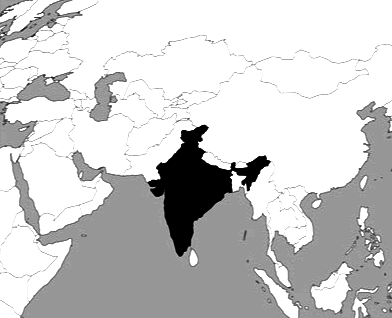
The research on which this paper draws took place in Bangalore, renamed Bengaluru, the capital of Karnataka state in the southern part of India, during 2010–2011. Bengaluru, referred to as the Silicon Valley of India, is home to a population of about 9.5 million. (18) City administration officials estimate that as of 2011, between 30 and 40 per cent of the city’s population, i.e. at least three million people, lived in slums in the city. (19)
A slum in Bengaluru typically houses both old and new migrants (20) from rural areas both within the state and from neighbouring states, mostly from Tamil Nadu. Some of these migrants are seasonal, moving to the city when there is little demand for agricultural labour in the rural areas and moving back when agricultural labour is in greater demand. (21) Data collected during an exploratory field visit to 22 slums in Bengaluru, (22) as well as interviews with NGO staff working in slums in the city, (23) revealed that a majority of residents in the slums visited were either Dalit or Muslim. While people from dominant castes such as Gowdas also reside in slums, they are far fewer in number.
The fieldwork on which this paper is based was part of broader research for a thesis that took place over a period of nine months and was conducted in a group of urban poor settlements in Lakshmi Devi Nagar (ward number 42 (24)) and Laggere (ward number 69 (25)) located in the Rajarajeshwarinagar assembly constituency (number 154) in the west of Bengaluru. (26) Laggere and Lakshmi Devi Nagar are home to several low-cost apartment buildings constructed by the Karnataka Slum Development Board (hereinafter referred to as the KSDB) to house slum dwellers evicted from other parts of the city, including from informal settlements consisting of huts. (27) It houses the city’s first apartment building complex constructed under the JNNURM (28)–BSUP component, (29) a national urban planning initiative involving the provision of affordable housing and improved basic infrastructure (hereinafter called the BSUP apartments). Apart from a thriving garment industry, these wards also house lower and upper-middle class neighbourhoods. This paper is limited to an analysis of women’s engagement in a neighbourhood association working for the improvement of one of several KSDB constructions referred to as the “slum board quarters” by those residing in the vicinity. Within this neighbourhood, which consists of about 240 apartments, hereinafter referred to as “the quarters”, there are clear differences of class between daily wage workers engaged in construction work, those working in nearby garment factories, domestic maids, those engaged as drivers, auto drivers, and those driving their own autos or cars as taxis.
The research used qualitative methods of data collection, including participant observation, semi-structured open-ended interviews and focus group discussions. The choice of methods was based on the objective of identifying the priorities of respondents and their specific trajectories to obtain what they perceived as crucial to their survival in the city. The interviews analyzed for the purpose of this paper include qualitative interviews with five women members of the local association, five women residents and one male resident in the neighbourhood not participating in the activities of the association, and two focus group discussions with a total of 20 female residents, five of whom participated in the activities of the association.
IV. The Neighbourhood and its Residents
The quarters occupied by the respondents were constructed by the KSDB in the early 1980s. (30) They are dilapidated structures with humid and corroded walls and chipping concrete. Rainwater leaks into top floor apartments, and water from bathrooms and toilets seeps into apartments on the floors below. Sanitation services in the area are characterized both by poor materials and lack of adequate maintenance (including waste disposal), resulting in serious sanitation issues in the area. Burst sanitary drains spill human excreta onto the narrow tracts of land separating apartment buildings. Although they do not conform to the image of temporary slum housing, referred to as katcha structures in official language, (31) these apartments are unfit for human habitation. During interviews, residents recounted that the KSDB had earmarked these structures for demolition and were requiring the residents to move into temporary housing – a proposition unacceptable to a majority of the residents. Those who rented apartments within these quarters feared losing their homes, and those who owned their apartments did not wish to reside in the asbestos sheet matchbox rooms provided by the KSDB as temporary rehabilitation until the new apartments were reconstructed.
Residents, who said they had moved from slums along the railway lines into the quarters in the 1980s, were ambiguous in describing their housing. When discussing issues of their collective action through an association they formed to work on the improvement of their neighbourhood, they referred to the housing as “quarters”. However, when they described negotiations with the local municipal councillor, they referred to themselves as “poor people living in slums”. In effect, the use of the term “slum” here is relational and contextual, avoided in the context of their aspirations to a cleaner and healthier neighbourhood and appropriated in the context of claim-making with local political representatives. When asked about their plans for the future, residents spoke about their aspirations for their children, their plans for their higher studies and marriage and, in some of the cases, their wish to move out of the “slum”.
When one family was asked about future plans, the husband responded as follows: “If we are getting our daughter married, we would like to leave the quarters and shift to a good ‘decent’ [author’s emphasis] area. At the time of her marriage we don’t want to be in the slum.” When asked why he considered it a slum, he responded: “Now you yourself said that there is a problem with the drainage…” The use of the term “slum” in this case is thus linked to the lack of basic urban services. By the same logic, underserviced areas, regardless of tenure and housing quality, are all “slums”. Yet this logic is not consistent: one of the respondents, when asked if the KSDB had declared the area a slum in order to proceed with demolition, responded that these were “quarters” but that they housed people from the slum. From this perspective, those who lived in a slum at some point in their lives continued to be slum dwellers, even if the legal conditions of their habitat had changed. Given this ambiguity in their responses, I prefer to refer to this particular neighbourhood as “quarters” as more positive in approach. In my analysis I adopt the term “urban poor settlements”, so as to bring under it a vast range of underserviced low-income habitats, while avoiding the moral connotations of the term “slum”. I use this term qualitatively and not in economic terms of poverty and wages, given the inadequacy of standard tools used to define and measure poverty. (32)
V. Collective Mobilization at the Neighbourhood Level
The neighbourhood level association, the lowest in the pyramid of associational activity, works on the development of the quarters, which consist of a few streets within the larger group of KSDB quarters. (33) The name of this association has been intentionally withheld to provide anonymity and it will hereafter be referred to simply as the Association. It was founded by one of the residents, Priya (name changed), with the support of an NGO working in the area. While the NGO supports the Association in kind, providing resources for projects and events, Priya raises funds from the government and other organizations to support their projects. The Association functions along similar lines to the resident welfare associations (RWAs) found in middle- and upper middle-class areas, (34) with members airing their grievances, based on which the Association formulates its activities. (35) When this research was conducted in early 2010, the Association consisted of eight members: seven women and one man. Of the seven women, six were married and of these, five were over the age of 30. Of these five older women, four had older married children and one (Priya) had school-going children. Of the remaining two women under the age of 30, one was married with one child while the other was unmarried. The only man in the Association was 30 years old and unmarried.
The Association works primarily on issues of education and the development of the neighbourhood. In addition to frequent negotiations with the municipal councillor and other government functionaries directed at increasing water supply and providing sanitation services, the Association’s past activities include obtaining additional land from the government in order to build extra classrooms for the school; the distribution of free books and uniforms to children; and obtaining funds to provide day passes for needy children pursuing high school education in other parts of the city. The Association played a key role in the last municipal elections in 2010, trading votes for the provision of free drinking water (called kaveri water) connections. While water was supplied through these new connections in the days preceding the elections, a few months later the taps had run dry and adequate water supply still eludes residents. Water used for bathing and cleaning (uppu neeru as it is called by residents, meaning saltwater) is provided once a week and, at best, twice a week during periods of adequate rainfall. Drinking water is rarely supplied and is often purchased by residents from middle-class homes that line these settlements. In this context, the Association’s close contact with the municipal councillor provides residents with a channel through which claims for water and sanitation services are made.
When first interviewed prior to the municipal elections held in March 2010, Priya was exuberant at having successfully negotiated access to water, and was positive that the councillor with whom she had traded votes would meet all the demands raised by the Association. Several months later, between December 2010 and May 2011, follow-up interviews revealed that the councillor had done nothing more. When asked, he reportedly said that he had not yet received funds from the government. During a focus group discussion organized at the time, a woman member made strong statements about the repercussions of the councillor’s failure to fulfil their demands. Addressing Priya, she said: “Do you know how badly people scold us? You know that old lady there, she scolds me so badly, she says, you said you will clean this up (referring to the piles of garbage lining the narrow streets of the quarters), you said you will do this and that… do you know how people hold us responsible?”
Having campaigned on behalf of the councillor to enable the process of vote banking, Priya and some of the members active in the campaign were now earning the wrath of residents who held them responsible. In response, the Association members resolved to file an application under the Right to Information Act 2005 (RTI) to find out if it really was true that the councillor had not been allocated funds by the government. In a follow-up phone interview in September 2012, it appeared that the RTI had still not been filed. Instead, Priya said that the councillor had responded to at least half the demands they had made. Even though he had not solved the water problem, he was paying for water that was supplied by trucks during months of high scarcity. She said that the councillor gave all the residents free medical insurance, covering hospital treatment up to 100,000 rupees for all residents in the neighbourhood. She said that if he were to respond to the remaining demands, they would have to follow up and support him. The argument she made was that they could obtain what they wanted only if they supported him. By this logic, filing an RTI, she said, would be too confrontational.
The nature of these political contacts and the modes of claim-making that provide interfaces between the Association and the political representative reveal the political nature of these negotiations, which go beyond contact with formal political processes to the charting of political strategies and the nurturing of long-term relationships with political representatives. This can be interpreted within the perspective of local patron–client politics. But another way of perceiving these actions is to view them as political strategies directed at accountability, exercised outside the realm of legally defined modes such as the right to information. The accountability of the councillor, in the eyes of the residents, is shared between the Association and the councillor. While the councillor is accountable to the residents and the Association, the latter is responsible in turn for “following up” with the councillor. In this sense, claim-making in the vote banking context operates in a political patronage mode of direct democracy, whether mediated by local collectives or made alone, as argued by Benjamin. (36) However, the responsibility to make things happen belongs not only to those benefiting from the vote bank but also to those who facilitated vote banking. In this sense, direct democracy filters down, below the municipal councillors and other political representatives, to those who mobilize votes for them during elections. In effect, representation within formal political structures is preceded by more informal forms of representation and leadership, taking democratic representation one step below that of the ward level.
VI. The Extents and Limits of Collective Engagement
Despite the active work of the Association and the resulting tangible improvements in the neighbourhood, not all women participate in Association activities. Among the women who form the great majority in the Association, older women, who are not engaged in paid work, predominate. Interviews with members, including younger women engaged in paid work, provided key insights into the way that time use determines women’s engagement at the local level. In contrast to the women in the Association, women working in nearby garment factories revealed little or no engagement at the community level. Two focus group discussions with a total of 20 garment factory workers from the quarters revealed that none of them were engaged with the Association, nor were they active in events organized by the Association or in lobbying conducted by the Association. When asked about the poor service provision in the area, a majority of respondents (15) said that they had no option but to buy water at higher prices from middle-class homes located nearby and to pay collectively for the cleaning up of broken drain pipes when the stench became too much to handle. They were all solely responsible for their household chores and had to cook and clean in addition to their work in the factories. The remaining eight respondents shared domestic work with other family members (such as their mothers or mothers-in-law) who fetched water and engaged actively with the Association. These workers all said that they had little time to engage at the community level, since they worked six days a week and sometimes overtime, reserving Sundays and other holidays for domestic work and leisure.
Even among the women who were part of the Association, the extent of their involvement and active participation depended on their situation. For example, Rasheeda, a member, said she had very little time available due to her domestic responsibilities. In addition to carrying water, cooking and cleaning, she also had to take care of her grandchild sometimes, and this left her little time for the Association’s work. Because she could not spend enough time attending meetings and taking part in events, she actually knew very little about the Association. She also complained about the lack of compensation for Association work. While several Association projects receive support in kind from the local NGO, (37) they do not provide salaries or stipends for those working in the community. Work on improving their neighbourhoods is thus an additional charge, and while they do enjoy the benefits of improved service provision, women still stand to bear the larger burden. Padma, another Association member who has to care for a sick family member, also said that she was unable to spend as much time on the Association’s work as she would like. She said that, often, Priya would organize a meeting in front of her house so that she did not have to leave home to attend meetings.
Geethamma, a widow with three grown-up daughters and a school-going son had a little more time for Association activities. She gets support in her domestic chores from one of her daughters who lives next door. The other two daughters work in the garment factory and earn a decent livelihood, so their financial needs and the education of her son are taken care of. Her specific situation allows her more time than Rasheeda or Padma for Association meetings and events.
In contrast to the other women, Priya spends half her day on the Association’s work. She is one of two members of the Association with young school-going children but is still able to spend more time on the Association’s work than other members. Priya is a Christian and lived first in Laggere, with her parents, and now in Lakshmi Devi Nagar, with her husband. She knows the area well and is well connected with the activities of local NGOs, associations and mobilizations. She is better educated than the other members of the Association, having completed a basic degree in arts (BA degree). She began doing what she terms “social work” when she completed her pre-university degree, and has a long history of involvement, having worked in several NGOs before she founded the Association in 2009 with the active support and encouragement of a local NGO. While she received a salary earlier in her job with the NGO, now as president of the Association she does not get paid. She explained that her husband earns well and provides adequately for the family, and as long as the children are well cared for she can undertake the work of the Association during her free time. She spends a substantial amount of time travelling, using local transport. When her first child was born, she took him along with her when she worked, and when the second child was born she tipped the ayah (cleaning help) at the school to keep the elder child after school hours, because taking two children to work was not possible. She admits it was more difficult before the children could walk; after they could walk, she at least did not have to carry them all day. By the time she began the Association’s work in 2009, her children were older and better able to take care of themselves, and she could work without worrying about child care. Her older son, now in high school, takes care of the younger one. When asked how she managed her domestic responsibilities, cooking and cleaning, she said that she and her husband shared the work in the home, which made it easier for her.
Priya is in a sense different from the other women members of the Association. She has fewer care responsibilities and is also better educated. Her work with NGOs provided her with a variety of resources and networks that are not available to the other women members. Apart from these differences, her resilience and commitment to her work, despite the hardships she faced when her children were young, reveal tenacity and immense personal agency. Yet she confesses that she has her limitations. She had been offered paid employment in another NGO working in the area but had to refuse because it involved frequent travel outside the city. Her marital status and domestic responsibilities made this unworkable for her: “… for me, my husband and children stand first. The most important thing for us women is our husband and children, because at the end of the day, people ask us, how is Sir and how are the children? No one will ask me how many jewels I have or how much money I have, will anyone ask me this? No one will ask me this! If I have the capacity to maintain my family, I can maintain other people in my neighbourhood. If I am not able to do for my family, what will I do for others?”
This statement clearly manifests her implicit assumption of socially defined gendered roles. A woman’s status, from her perspective, is defined by the performance of her domestic obligations, and her worth is pegged to her family’s well-being. It is accepted without question that she is responsible for her husband’s and children’s well-being, a responsibility that she bears solely. On the other hand, she argues that her involvement in unpaid “social work” is possible because her husband is able to provide sufficiently for the family, affirming his role as the provider. What this statement also makes clear is that despite her interest in and commitment to her work, it still takes second place to her domestic obligations.
The women in the Association and the garment workers share one thing in common: gender defines their time use, and time-consuming domestic work is disproportionately allocated to women. When women who did not participate in Association activities even at the neighbourhood level were asked the reason for their lack of engagement in efforts that had visibly improved the quality of their lives, the majority said that their domestic responsibilities did not leave them enough time; this was true even for those not involved in paid work. Among those doing paid work, even though some meetings were held in the evenings or on holidays, domestic chores and leisure were a priority at these times. These interviews reveal the gendered dimensions of poverty and the manner in which they impinge on women’s time. On top of paid work and the gendered distribution of domestic work, living in low-income, badly serviced housing adds to the unequal burden these women bear.
In the case of women who were not engaged in paid work, limited financial resources translated into other domestic responsibilities, such as child care and care of the elderly, the ailing or the invalid. In effect, the demands on women’s time, particularly in the slum, are heavy. Social patriarchal structures are in effect reinforced by the state’s failure to provide adequate urban infrastructure, services and facilities. Yet it is undeniable that women are the only spokespersons when it comes to these day-to-day negotiations. Part of the response lies in the voluntary nature of the work. Voluntary work among the poor, even if one gains immensely by it, has direct consequences on their wages and thus on the quality of their lives. A day’s missed wages has tangible impacts on the family’s expenditure on meals, education, health, leisure, etc. People who cannot afford to miss a day’s work often have to compensate with their free time, working on holidays or working overtime, thus eating into the little leisure time at their disposal. It is within this context that one can better understand the fact that it is almost always women who are not engaged in paid work who participate actively in these initiatives. For these women, time spent on neighbourhood work is often considered part of their domestic responsibilities. The home, in this sense, extends to include the neighbourhood, especially given that domestic responsibilities at home depend heavily on neighbourhood conditions. When asked why women engaged in the activities of the Association, most women referred to the need for basic services. After all, if one has to do the laundry, one needs water, and what if there is no water? Thus by extension, obtaining a regular water supply becomes part of doing the laundry. If there is no water, it is almost always the women who carry the burden of fetching water from middle-class residences nearby. Neighbourhood activism is important in ensuring the supply of basic urban services on which women depend for their domestic responsibilities. In this sense, the domestic realm extends to the neighbourhood, and domestic responsibilities include the act of negotiating with political representatives for access to basic urban services. This engagement, which is essentially political even if not in the formal political arena, is in a sense sustained and justified through the gendered division of domestic work. In essence, the domestic sustains their venture into the public political domain, transforming not only local politics but also gendered constructs of a woman’s place, in the process. But this domestication is a double-edged sword as it also limits their activities to the local neighbourhood level, by limiting the time they can effectively spend on their engagement. In effect, despite playing a transformative role, because their work is limited to their neighbourhoods and because it transpires informally through daily negotiations, the work of these women is less visible in the urban political domain.
VII. Women and Representation
These seemingly insignificant day-to-day negotiations are the lowest level at which democracy operates in the urban political domain, drawing from the “…roots, anchors, intimacy, proximity and locality” suggested by “deep democracy” as argued by Appadurai. (38) They depict the lowest level at which politics is conducted in cities, where local economies often compete with corporate economies (as Benjamin describes (39)), in order to survive. These negotiations take place in the many hundreds of urban low-income settlements in Bengaluru, as in other parts of India and the world. They may not take place within the aegis of an association, but their relevance is still crucial to a keener understanding of urban poor movements and social movements as such.
Such community-oriented work acquires different shades depending on the actor involved and the intention with which it is conducted. When carried out by NGO staff it gains an institutional dimension and is located within a certain framework of development or social work, depending on the ideology of the organization involved. When conducted by political representatives or upper-class political aspirants, this work sustains aspirations for political bases, and the relationship between the doer and those who benefit is often framed in terms of clientelism. (40) This type of work is also carried out by local “leaders” who represent the settlement: “slum leaders”, “area leaders”, “slum lords” or pradhans. As Milbert points out, these individual modes of representation and leadership are based on these men’s access to information crucial to the future of the slum, which they guard and control and distribute parsimoniously and selectively. In this sense, these leaders also use their work in their communities to support their leadership over those they serve. These representational modes, be they that of a formally elected councillor, a political aspirant or a leader, all rely on individual leadership. Here again, as Milbert points out, they cannot replace institutional social mediation as, despite their work and commitment to the community, individual interests often outweigh collective ones. In the domain of formally elected representatives, vote bases are often traded for financial or other political benefits, and in the domain of individual forms of community leadership, their networks function above all in their own and their family’s interests. (41)
Distinct from these individual styles of representation, a collective or associational form of community organization, whether undertaken under the aegis of a formalized collective or informal collective, works precisely to make information available to the community. Meetings organized by the Association, for example, provide ample ground for the dissemination of such information and networks of access. In this sense, these collectives function similarly to the resident welfare associations, defending collective interests, but differing in praxis, making claims on the grounds of social justice rather than on the grounds of citizenship rights. This form of collective engagement, which is local and firmly grounded in accessing basic urban resources and free from other aspirations such as political bases, provides valuable tools for the improvement of lower-income neighbourhoods.
While these women gain immensely through access to information and networks, and are often viewed as leading neighbourhood initiatives (though not in the representational sense), they still face a dilemma in defining their work. In this context, while the majority use the term kelasa (meaning work) to describe what they need to do to improve their material situations, a small minority, most of whom are active members of the Association, use the term “social work”, a term commonly used to describe the work carried out by NGOs. When the members were asked how they present themselves before political representatives and government functionaries, many replied that they do so as an NGO. Yet they differ largely from a traditional NGO, lacking the ideological constraints, financial support and, more importantly, the professionalization that characterizes the domain. This need to define themselves within the larger fray of development actors is also strengthened by their own aspirations for a better life. For example, Priya says: “When I was working with the NGO, I had a salary. Since one year now when I started the Association, it has been difficult for me too. I asked them [the NGO that supports the Association with in-kind contributions] for a salary. They have promised that once we have a scheme [meaning project] then we can get a salary from that. It is a scheme, not a salary. For example, if we get money to open an old age home, then Rasheeda can take care of it and get a salary, not really salary but payment. The money will come to the Trust and the Trust can hire her to take care of the old age home… Under government schemes, a certain amount is allotted for salaries, then we can give these people this work and the salaries.”
Priya and Rasheeda, along with a few other members, express their aspirations for projects, revealing a desire to work like an NGO and to receive salaries like NGO staff from projects or schemes that they aspire to implement in the neighbourhood. These aspirations are located in the specific contexts of the difficult lives they live and the heavy domestic burdens they often carry.
While such local collective engagement at the neighbourhood level, particularly in the context of scarce urban resources, lends a more positive view of urban poor mobilizations, the challenges they face, not only in terms of their constraints but also in terms of their context of poverty and deprivation, cannot be ignored. In effect, what is positive in terms of people organizing to improve the material conditions of their lives is in another sense negative, as it overtaxes the urban poor, making them at once the problem and the solution to the issues faced in the context of urban poverty.
VIII. Conclusions
The objective of this article was to bring forth the voices of real people, of real women, in an urban low-income settlement, and describe the ways in which they perceive and deal with their realities. Using these voices, I have attempted an initial analysis of how we can understand the work that women do in the Association and in similar formal and informal collectives in the context of their survival in the city. I suggest that women as a group, within the larger group of the “urban poor”, are significant not only in terms of their overwhelming presence and activity in day-to-day collective negotiations for the improvement of low-income neighbourhoods, but also in terms of the specific gender-based opportunities and constraints they face as a group. I propose that these forms of local collective engagement, which take place at the lowest level of democracy, provide a unique case for the analysis of social actors who are not located within the normally accepted groups of development stakeholders, either in terms of praxis or intent. By remaining outside the formal domain, while continuing to engage with political actors and the state, these women’s groups are at once liberated and constrained in their work. In bringing forth information from the lowest level of the representational pyramid, this article seeks to engage readers in reviewing the seemingly insignificant happenings of everyday life and the actions of seemingly apolitical actors in urban low-income settlements as crucial to the transformation of urban spaces and urban politics.
Footnotes
1.
The term “slum” usually has derogatory connotations and can suggest that a settlement needs replacement or can legitimate the eviction of its residents. However, it is a difficult term to avoid for at least three reasons. First, some networks of neighbourhood organizations choose to identify themselves with a positive use of the term, partly to neutralize these negative connotations; one of the most successful is the National Slum Dwellers Federation in India. Second, the only global estimates for housing deficiencies, collected by the United Nations, are for what they term “slums”. And third, in some nations, there are advantages for residents of informal settlements if their settlement is recognized officially as a “slum”; indeed, the residents may lobby to get their settlement classified as a “notified slum”. Where the term is used in this journal, it refers to settlements characterized by at least some of the following features: a lack of formal recognition on the part of local government of the settlement and its residents; the absence of secure tenure for residents; inadequacies in provision for infrastructure and services; overcrowded and sub-standard dwellings; and location on land less than suitable for occupation. For a discussion of more precise ways to classify the range of housing sub-markets through which those with limited incomes buy, rent or build accommodation, see Environment and Urbanization Vol 1, No 2, October (1989), available at  .
.
2.
Mathur, Om Prakash (2009), Slum-free Cities – A New Deal for the Urban Poor, The National Institute of Public Finance and Public Policy, New Delhi, July, 70 pages.
3.
Gilbert, Alan (2007), “The return of the slum: does language matter?”, International Journal of Urban and Regional Research Vol 31, No 4, December, pages 697–713.
4.
See also debates on using the category of “slum” theoretically, for example Roy, A (2011), “Slumdog cities: rethinking subaltern urbanism”, International Journal of Urban and Regional Research Vol 35, No 2, pages 223–238; also Arabindoo, Pushpa (2011), “Rhetoric of the ‘slum’”, City Vol 15, No 6, pages 636–646.
5.
Bhide, Amita (2009), “Shifting terrains of communities and community organization: reflections on organizing for housing rights in Mumbai”, Community Development Journal Vol 44, No 3, pages 367–381.
6.
Benjamin, Solomon (2000), “Governance, economic settings and poverty in Bangalore”, Environment and Urbanization Vol 12, No 1, April, pages 35–56.
7.
Baud, Isa and Navtej Nainan (2008), “‘Negotiated spaces’ for representation in Mumbai: ward committees, advanced locality management and the politics of middle-class activism”, Environment and Urbanization Vol 20, No 2, October, pages 483–499; also Kamath, Lalitha and M Vijayabhaskar (2009), “Limits and possibilities of middle-class associations as urban collective actors”, Economic and Political Weekly Vol XLIV, No 26 and 27, pages 368–376; and Smitha, K C (2010), “New forms of urban localism: service delivery in Bangalore”, Economic And Political Weekly Vol XLV, No 8, pages 73–77.
8.
Benjamin, Solomon and R Bhuvaneshwari (2001), “Democracy, inclusive governance and poverty in Bangalore”, Working Paper No 26, The University of Birmingham, DFID, 250 pages.
9.
See reference 5; also see reference 6; and Edelman, Brent and Arup Mitra (2006), “Slum dwellers’ access to basic amenities: the role of political contact, its determinants and adverse effects”, Review of Urban and Regional Development Studies Vol 18, No 1, pages 25–40.
10.
de Wit, Joop (1996), Poverty, Policy and Politics in Madras Slums: Dynamics of Survival, Gender and Leadership, Sage, London, Thousand Oaks and New Delhi, 305 pages.
11.
Roy, A (2003), City Requiem, Calcutta: Gender and the Politics of Poverty, University of Minnesota Press, 288 pages.
12.
Patel, Sheela and Diana Mitlin (2011), “Gender issues and slum/shack dweller federations”, Gender and Urban Federations Series Working Paper, IIED, London, 10 pages.
13.
Ganguly Thukral, Enakshi (1996), “Development, displacement and rehabilitation: locating gender”, Economic and Political Weekly Vol 31, No 24, pages 1500–1503.
14.
Weinstein, Liza and Tarini Bedi (2012), “Building politics: gender and political power in globalizing Mumbai”, in Samir Dasgupta, Robyn Driskell, Yvonne Braun and Nicola Yeats (editors), Women’s Encounter with Globalization, Frontpage Publications Ltd., London, 230 pages.
15.
de Wit, Joop and Erhard Berner (2009), “Progressive patronage? Municipalities, NGOs, CBOs and the limits to slum dwellers’ empowerment”, Development and Change Vol 40, No 5, pages 927–947.
16.
Milbert, Isabelle (2006), “Slums, slum dwellers and multi-level governance”, The European Journal of Development Research Vol 18, No 2, pages 299–318.
17.
See reference 15.
18.
See 2011 Indian government census data: Provisional Population Totals Paper 1 of 2011 – Table 1: Distribution of population, decadal growth rate, sex ratio and population density for state and districts 2011, accessed 25 October 2012 at url: .
19.
Times of India (2011), “Every third Bangalorean lives in sub-human slum”, available at , 17 March.
20.
For example, in the Laggere slums, some of the low-cost apartments allotted have been rented out to these new migrants. Also see Gowda, Sidde and G P Shivashankara (2007), “Rural migration to the Indian metropolis: case study Bangalore”, ITPI Journal Vol 4, No 1, pages 67–69.
21.
For example, a settlement of north Karnataka construction workers living in hutments in Laggere is composed of seasonal migrants.
22.
Exploratory fieldwork conducted in 2009–2010, consisting of visits to a random sample of 22 slums in different parts of Bangalore and drawing from interviews conducted with NGO staff working in the slums revealed a predominant Dalit and Muslim population in these slums. Of the slums visited, 10 had a dominant Dalit population, seven had a dominant Muslim population, one had a predominantly OBC population and three had an equal mix of Muslim and Hindu (including Dalit) populations.
23.
Interviews with Isaac Arul Selva from Janasahayog and with Ram Kumar, APSA coordinator, 15 December 2009. APSA works in more than 200 slums in Bangalore and Janasahayog publishes a news magazine for slum dwellers. Its information-based model of NGO-mediated intervention was the focus of Madon and Sahay’s work on forms of mediation by NGOs on behalf of citizen groups; see Madon, S and S Sahay (2002), “An information-based model of NGO mediation for the empowerment of slum dwellers in Bangalore”, The Information Society Vol 18, No 1, pages 13–19.
24.
Lakshmi Devi Nagar ward includes the following areas: Goragunte Playa (P), Lakshmidevi Nagar, Kempamma Layout, Kaveri Nagar, Nandini Layout I Stage, Narasimha Layout, Yeshwanthpur Industrial Suburb (P), Jenakal Siddeshwara Nagar.
25.
Laggere ward covers the following areas: Preethi Nagar, Tyagi Nagar, Vidhana Soudha Layout, Freedom Fighters Colony, Laggere, Narasimha Murthy Nagar, LG Ramanna Colony, Muneshwara Nagar, Rajeshwari Nagar, Rajiva Gandhi Nagar.
26.
The names of the settlements have been intentionally withheld to provide anonymity to the respondents.
27.
One example is the settlement of north Karnataka construction workers who were earlier located next to the Laggere government school and are at present situated opposite the JNNURM–BSUP construction site. See PUCL, Slum Jagatthu, AIDWA, Students Federation of India, APSA, Vimochana and Alternative Law Forum (2006), “Slums under fire: a fact-finding report on the slum fires in Bangalore”, February.
28.
The Jawaharlal Nehru National Urban Renewal Mission (JNNURM) is directed at the fast track planned development of urban infrastructure, service delivery mechanisms, community participation and accountability of urban local bodies or parastatal agencies. It is divided into two components, one directed at the development of urban infrastructure, including the construction of roads, improvements in public transportation etc., and the Basic Services for Urban Poor (BSUP) programme. The BSUP component includes provision of affordable housing; improvement of basic services such as water supply, sewerage, drainage, community toilets, electricity…; and provision of civic amenities such as community halls, child care centres…
29.
The Hindu (2010), “JNNURM bonanza for state”, Front page, available at .
30.
Interview with Mehboob, a resident of one of the KSDB quarters, 10 January 2010.
31.
See MHUPA, National Buildings Organization (no date), “Formats and guidelines for survey and preparation of slum, household and livelihood profiles of cities/towns”, accessed 12 September 2012 at .
32.
Bapat, Meera (2009), “Poverty lines and lives of the poor. Underestimation of urban poverty – the case of India”, Working Paper 20, Poverty Reduction in Urban Areas Series, IIED, February, 53 pages.
33.
The quarters, consisting of streets, are sub-divided and each has an individual name. Each sub-quarter has a unique history, having been relocated at a specific point in time from different parts of the city.
34.
See reference 7.
35.
Meeting of the Association dated 28 January 2010.
36.
See reference 6.
37.
Interview with Priya, 5 January 2011. The in-kind support received from the local NGO included books, uniforms and other materials for children attending the public school; bus passes for children pursuing high school education in further away places; organization of the platform, speakers and chairs for public events, etc.
38.
Appadurai, Arjun (2001), “Deep democracy: urban governmentality and the horizon of politics”, Environment and Urbanization Vol 13, No 2, October, page 42.
39.
See reference 6.
40.
Keefer, Philip and Stuti Khemani (2004), “Why do the poor receive poor services?”, Economic and Political Weekly Vol 39, No 9, 28 February, pages 935–943.
41.
See reference 16.