



Abstract
Dhaka is one of the largest megacities in the world and its population is growing rapidly. Due to its location on a deltaic plain, the city is extremely prone to detrimental flooding, and risks associated with this are expected to increase further in the coming years due to global climate change impacts as well as the high rate of urbanization the city is facing. The lowest-lying part of Dhaka, namely Dhaka East, is facing the most severe risk of flooding. Traditionally, excess water in this part of the city was efficiently stored in water ponds and gradually drained into rivers through connected canals. However, the alarming increase in Dhaka’s population is causing encroachment of these water retention areas because of land scarcity. The city’s natural drainage is not functioning well and the area is still not protected from flooding, which causes major threats to its inhabitants. This situation increases the urgency to adapt effectively to current flooding caused by climate variability and also to the impacts of future climate change. Although the government is planning several adaptive measures to protect the area from floods, a systematic framework to analyze and assess them is lacking. The objective of this paper is to develop an integrated framework for the assessment and prioritization of various (current and potential) adaptation measures aimed at protecting vulnerable areas from flooding. The study identifies, analyzes, assesses and prioritizes adaptive initiatives and measures to address flood risks in the eastern fringe area, and the adaptation assessment is conducted within the framework of multi-criteria analysis (MCA) methodology. MCA facilitates the participation of stakeholders and hence allows normative judgements, while incorporating technical expertise in the adaptation assessment. Based on the assessment, adaptive measures are prioritized to indicate which actions should be implemented first. Such a participatory integrated assessment of adaptation options is currently lacking in the decision-making process in the city of Dhaka and could greatly help reach informed and structured decisions in the development of adaptation strategies for flood protection.
Keywords
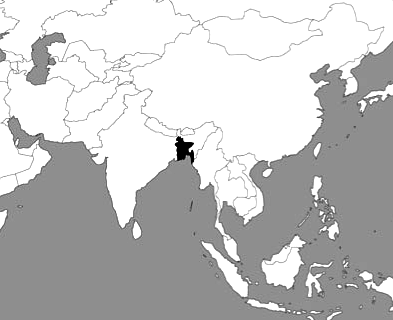
I. Introduction
There is a global inequality between those cities causing climate change and those that are at high risk from its effects but hardly contribute to overall greenhouse gas (GHG) emissions. The latter are mostly located in developing countries and are characterized by an enormous backlog in basic infrastructure services to protect their cities and urban areas.
Bangladesh is listed as one of the countries most at risk from climate-related problems; however, Bangladesh’s contribution to global GHG emissions is one of the lowest in the world. Its low topography, disadvantageous geographic location and high population density make it very vulnerable to climate change.(1) Bangladesh is situated where the Ganges, Brahmaputra and Meghna (GBM) rivers unite to form the world’s largest delta. These three rivers also make Bangladesh one of the world’s most complex river systems.(2)
Dhaka, the capital of Bangladesh, is one of the world’s largest megacities and is subject to a high rate of urbanization. Climate change poses risks to the city in two ways: flooding and heat stress.(3) Besides flooding, the key climate-driven variables are erratic and prolonged rainfall with an increase in precipitation, and river flow changes caused by sea level change. Dhaka falls into the active river tidal zone, and low-lying areas are often engulfed by high tides that are influenced by the sea tides.
The eastern part of the city (Figure 1) is at high risk. In the past, the lowlands and water bodies acted as water retention areas and also helped to sustain the natural ecosystem. The fast-growing population combined with a scarcity of land in that part of the city has resulted in encroachment of the water retention areas. The city’s drainage system has not improved with the rapid growth in the rate of urbanization and most of the city’s canals have either been entirely or partially filled over the last two decades. Consequently, these low-lying areas suffer from inundation.
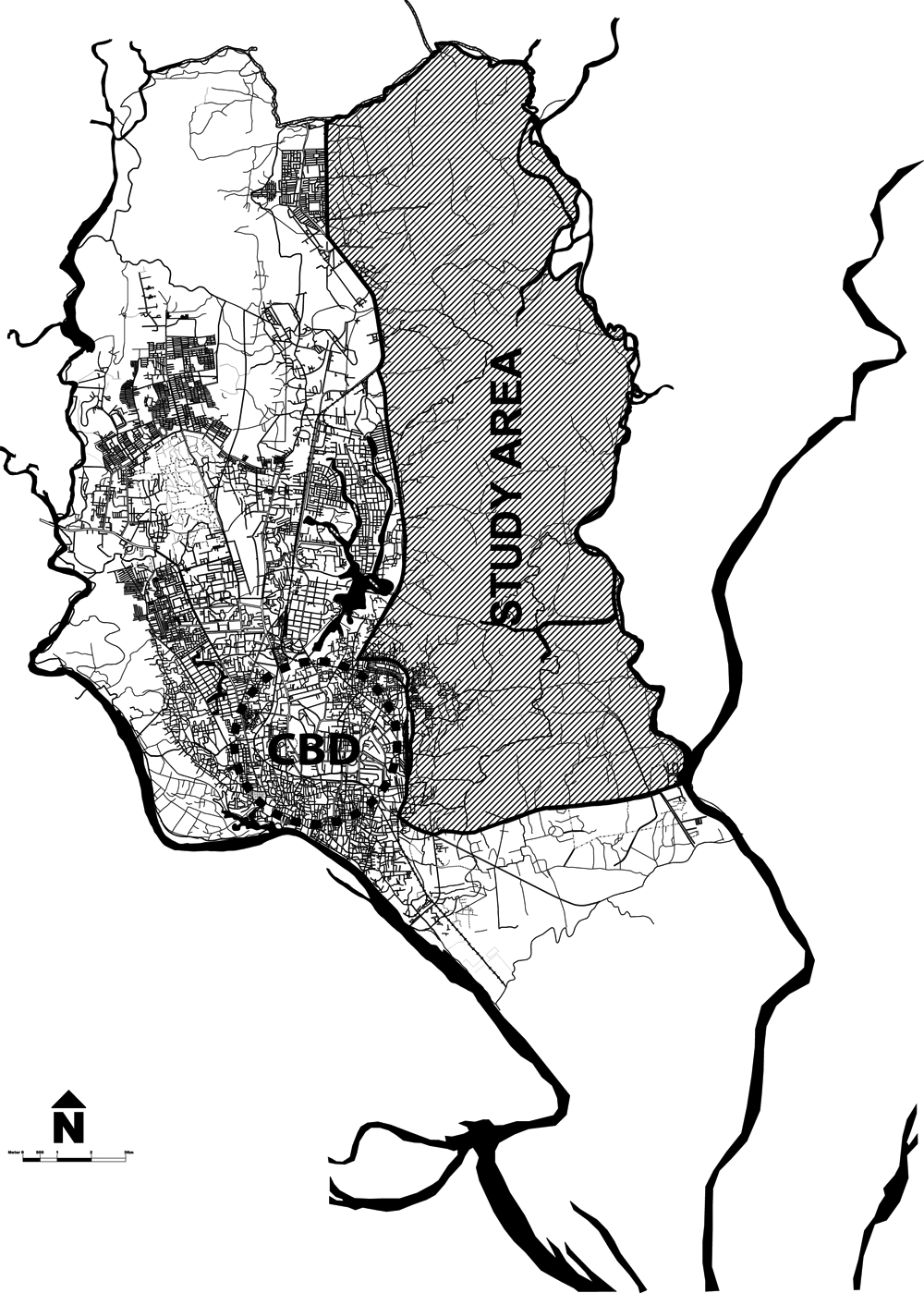
Location of the study area in Dhaka city
The Dhaka Integrated Flood Protection project brought major changes to the flooding system and land use, and protected the western part of the city from flooding.(4) However, the eastern part remains unprotected. This increases the urgency for the need to adapt to current climate variability and future climate change and also to create the tools for assessing different adaptation measures.
After the catastrophic floods of 1987 and 1988, the government of Bangladesh envisaged a Flood Action Plan (FAP) to protect the country from flood damage. Since then, various proposals have been developed to protect Dhaka East from flooding, and the 1992 Japan International Corporation Agency Flood Action Plan (JICA FAP) 8A was the first study that attempted to address this under the Dhaka Integrated Flood Control Embankment Eastern Bypass Road Multi-purpose Project. The project proposed a series of flood protection measures such as embankments, flood walls, raised roads, canal improvement, regulators and pumping stations. However, there are various challenges regarding implementation, including a lack of technical capacity and expertise and limited resources, which are common features in least developed countries;(5) in addition, measures cannot be implemented simultaneously. As a consequence, nothing is being done regarding flooding in the area and there is a clear gap between project proposal and project implementation. There is a need, therefore, to prioritize the proposed measures and assess which must be implemented in the first instance in order to reduce risk and the vulnerability of the area, while simultaneously meeting local goals. Regarding this last point, stakeholder participation is deemed necessary in order to incorporate their views in the successful planning and implementation of adaptation measures. Currently, there lacks a systematic prioritization approach on the one hand and an absence of stakeholder participation on the other regarding flood management, which could help immensely in informing decisions.
II. Vulnerability and Adaptation Assessment
The IPCC Third Assessment Report defines vulnerability as:
“…the degree to which a system is susceptible or unable to cope with adverse effects of climate change, including climate variability and extremes. Vulnerability is a function of the character, magnitude and rate of climate variation to which a system is exposed, its sensitivity and its adaptive capacity.” (6)
According to this definition of vulnerability by the IPCC, the process of vulnerability assessment constitutes of sensitivity, exposure and adaptive capacity analysis (Figure 2).(7)
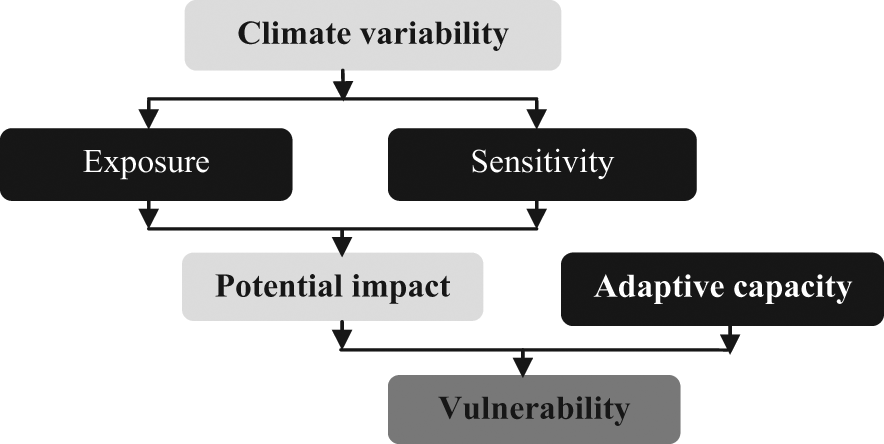
Relationship between vulnerability components
Adaptation to climate change can be defined as any action undertaken to reduce the vulnerability of a system, population or individual to the unfavourable effects of climate change.(8) Adaptation assessment refers to the identification of options that help to adapt to climate change. It also includes the evaluation of the identified adaptation options against selected evaluation criteria such as cost, benefits, feasibility and availability of resources.(9) Considering its significance, it has been suggested that adaptation assessment become mandatory for any development projects in least developed countries (LDCs),(10) and UNFCCC has developed and suggested guidelines for an adaptation assessment process. These guidelines aim to facilitate the LDCs in identifying their urgent priorities, to be met by the selected adaptation options based on the process of National Adaptation Programmes of Action (NAPA). The priority adaptation options are those whose further delay may lead to increased costs and vulnerability.(11) A NAPA is a country specific oriented adaptation framework first introduced by UNFCCC. By means of NAPA guidelines, LDCs are expected to address their immediate needs first in order to be able to adapt to climate change.(12) NAPA addresses the low adaptive capacity of LDCs and provides a process of developing plans of actions for climate adaptation (Figure 3).
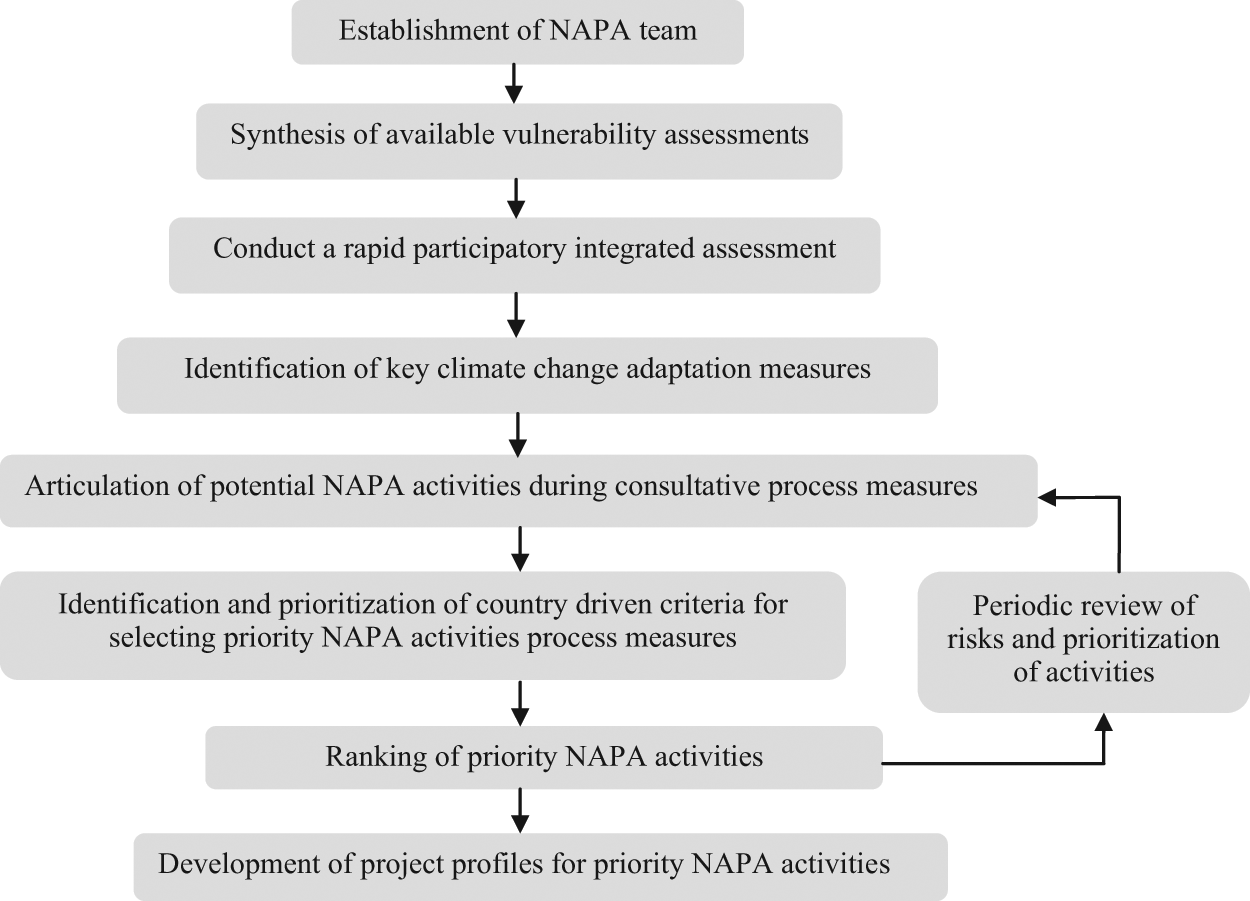
Flowchart of main steps in developing a NAPA
The NAPA framework builds upon the existing coping strategies at the grassroots level in order to assess future vulnerability and adaptation responses. The assessment process includes two important components, namely stakeholder involvement at all levels and the inclusion of existing coping strategies. Prioritization of adaptation activities is conducted according to a country specific set of criteria, namely livelihood, health, food security, agriculture, socioeconomic factors and environmental amenities.
III. Prioritization of Adaptation Measures
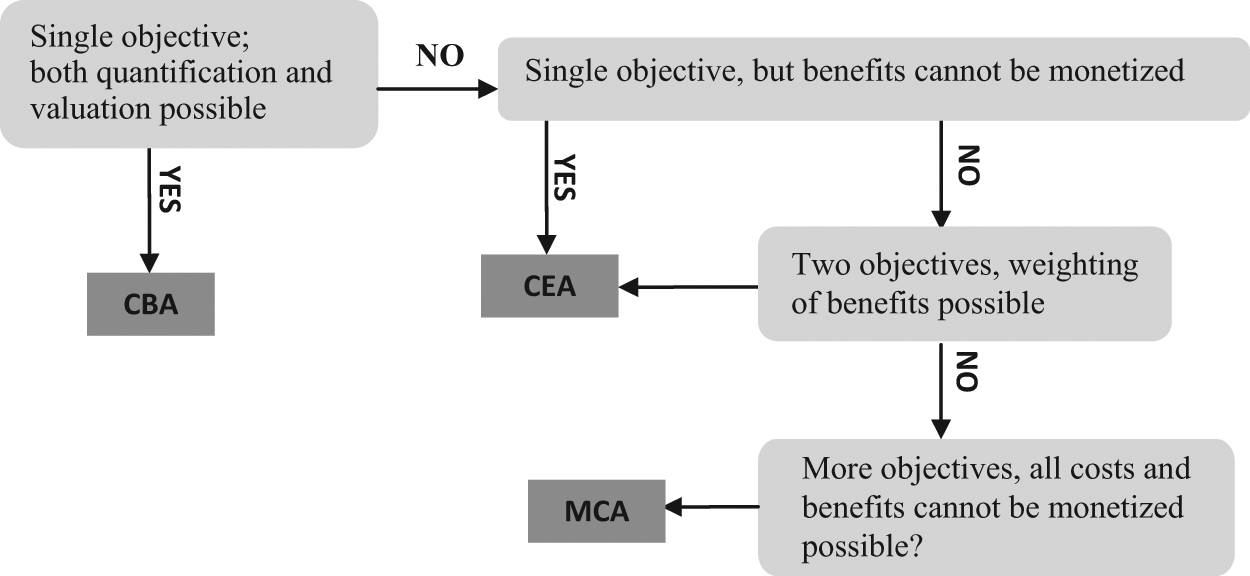
Several techniques are applied in the prioritization of adaptation options, the three most common being cost-benefit analysis (CBA), cost-effectiveness analysis (CEA) and multi-criteria analysis (MCA). According to the NAPA process, UNFCCC suggests MCA in the prioritization of adaptation measures for LDCs (Figure 4).
What method should be used?
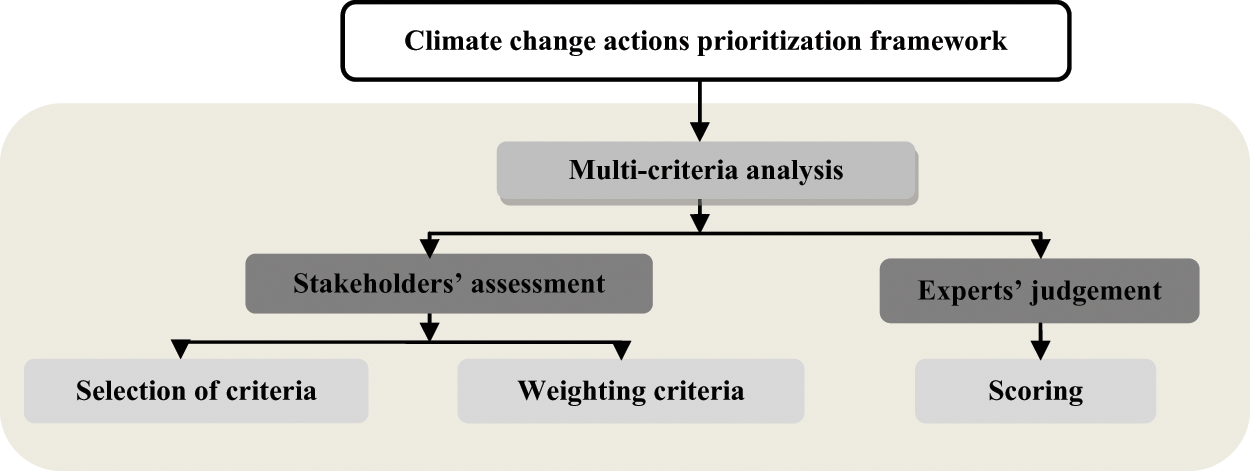
MCA is a prioritization method that simultaneously takes into account multiple evaluation criteria. In order to conduct an MCA, objectives and related indicators have to be identified. This method enhances participation since it involves stakeholders in the decision-making process at an early stage, by identifying their development objectives and weighting the criteria.(13) This is critical in countries where climate change has multifaceted impacts, data are not always available and converting climate change impacts into monetary terms is difficult; there are therefore considerable obstacles and limitations to conducting a CEA or CBA. The involvement of all relevant stakeholders ensures that a wide range of perceptions is taken into account. In this paper, major emphasis is placed on the participation of stakeholders as well as on the incorporation of the judgement of experts, while assessing and prioritizing the adaptation measures under investigation.
MCA is a widely applied approach to environmental issues, including climate change mitigation and adaptation assessment. There are examples of successful applications of the MCA method in the assessment of adaptation measures in various country contexts, including urban flood risk assessment in Germany;(14) ranking of adaptation options for climate change in the Netherlands;(15) and a decision-making support system for impact assessment and adaptation planning in Canada.(16) The MCA approach has also been used to assess flood risks and identify flood vulnerable areas by incorporating GIS in a case study in Nigeria.(17) The method has also been applied in other sectors that require an assessment of adaptation measures, for example in the agricultural sector regarding the identification of vulnerability and an assessment of alternative crop options.(18)
To the best of our knowledge, the MCA method has never been applied at the city level in a low-income country for the participatory assessment of different adaptation options. Therefore, this is a new approach being applied in Dhaka for the assessment of flood protections measures.
IV. Methodological Framework
As mentioned above, the framework is inspired by the NAPA guidelines for LDCs but has been adjusted and downscaled to the local urban level to create Local Adaptation Programmes of Action (LAPA). The adaptation assessment is based on the MCA framework, which involves both stakeholders (normative judgements) and experts (technical expertise). Figure 5 shows the overall integrated assessment framework.
Climate change actions prioritization framework
The application of MCA was undertaken with the aid of a software tool called CLIMate ACTions Prioritization (CLIMACT Prio) decision support tool, which involves various steps as elaborated below.
Step 1: Selection of potential adaptation options
All the adaptation options for the study area proposed by the government were included for assessment. Furthermore, additional adaptation options were selected for assessment based on case studies bearing similar context.
Step 2: Stakeholder criteria selection
In order to assess the adaptation measures, evaluation criteria were identified and selected in a participatory manner. Focus group discussions involving stakeholders were organized at an early stage of the decision-making process, to identify stakeholder objectives and for the final selection of evaluation criteria. The criteria had to fulfill some qualitative attributes such as value relevance; operationality; reliability; measurability; decomposability; non-redundancy; minimum size; preferential independence; completeness; and understandability.(19) Two more attributes were added to reflect developing country aspects, namely relevance to a developing country context and local representation.
Step 3: Experts’ impact judgements: scoring of adaptation options
The next step involved the scoring (assessment) of each adaptation option against the selected evaluation criteria. This was conducted by the experts, who scored each option based on their expertise. This step ensured the inclusion of technical expertise in the assessment process.
Step 4: Stakeholder focus group discussions on weighting of criteria
All the scores were standardized to a common scale based on the min–max standardization technique. Since different units of measurement were used to score the criteria, by using the standardization technique all measurement scales converted to a single common one. Stakeholder preferences regarding the relative importance of criteria were determined during a consensus-building focus group discussion.
Step 5: Prioritization of options
This step aimed to prioritize the most efficient and effective adaptation measures for the study area. Based on the weighted summation formula (combining criteria weights and scores for different adaptation measures), the final ranking for different measures was obtained. The formula of the weighted summation is FSj=§WSij, where FSj indicates the final score of option j, which equals the summation of weighted scores of option j §WSij against the evaluation criteria.
Step 6: Sensitivity analysis
The sensitivity analysis was conducted in order to investigate how sensitive the result of the final ranking is to the input variable of criteria weights, and to incorporate the uncertainty and range of stakeholder preferences.
V. Outcomes of the Assessment of Adaptation Measures for the Eastern Fringe Area of Dhaka
a. Selection of potential adaptation options
The proposed flood protection project for the study area, named the Dhaka Integrated Flood Control Embankment Eastern Bypass Road Multi-purpose Project, includes the following suggested interventions: flood embankment; pumping stations; regulators/sluices; retention basins; construction and upgrading of the road network; flood walls; and canal improvement. So far, none of the listed interventions have been implemented, although successive governments have declared it to be a priority project. It has been more than 12 years since the project was approved (1998).(20)
All the adaptation options listed above were included in the assessment, and a further two have been proposed. These derived from case studies bearing a similar context, and include an emergency response mechanism and an early warning system. The principal institution dealing with emergency response to flooding is the Disaster Management Bureau, but its activity is very limited in Dhaka. It focuses mainly on the coastal area and on areas subjected to flash floods, and has no relief shelters in Dhaka. Schools and other educational buildings are converted into flood shelters during any hazardous periods, which in turn hampers the educational system. Therefore, enhancing the emergency response mechanism is a high priority for Dhaka, specifically in the eastern part of the city.
b. Stakeholder and expert participation
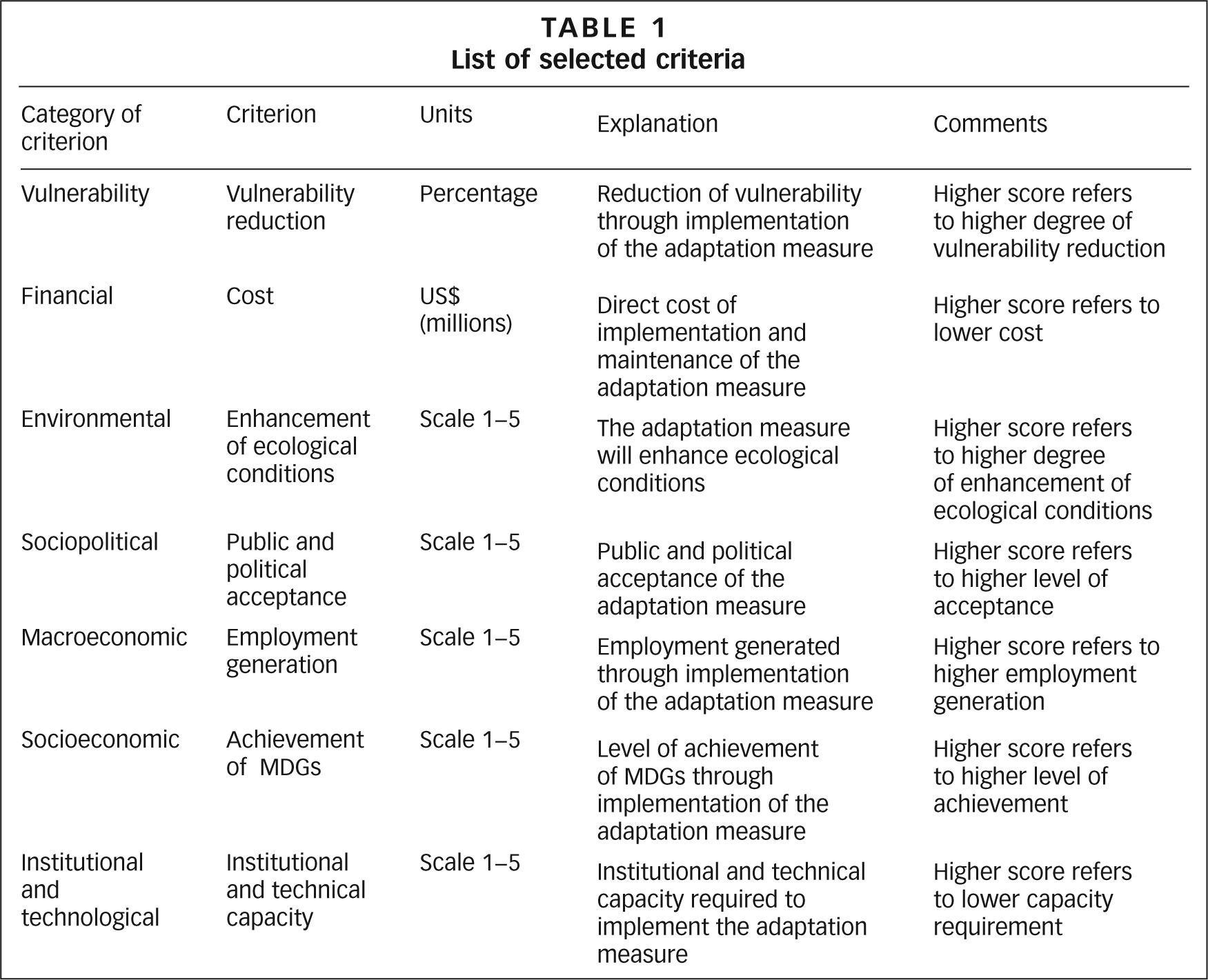
Criteria were selected in a participatory manner based on stakeholders’ views and objectives as described in Table 1. Focus group discussions were conducted in order to identify the most important evaluation criteria to be considered in the assessment of adaptation measures. Due to time constraints during the data collection period, it was difficult to ensure that all relevant stakeholders would attend the focus group discussions. Eventually, nine respondents did attend, representing four main stakeholder groups, which were as follows:
politically elected community representatives;
community representatives from affected sectors (trade, agriculture);
government officials; and
private sector officials.
List of selected criteria
The survey conducted in the study area showed that the highest proportion (more than 35 per cent) of the surveyed population depended on small or large-scale business, which is highly impacted by flooding.(21) Vulnerability analysis(22) showed that water, infrastructure and agriculture were the most vulnerable sectors in the study area; and that squatters’ and slum dwellers’ livelihoods were most under threat as a result of flooding. Therefore, there was an attempt to include all the aforementioned stakeholder groups in the focus group discussions.
Community representatives were selected from the flood-prone areas that were nearest to the Central Business District. Two of them attended the focus group discussions. Three representatives from the study area’s grassroots organizations, namely small and medium size entrepreneurs and farmers, were also selected, because of the vulnerability of these groups. The farmers group representative also represented the squatters group. In addition, representatives from the government bodies responsible for the three most vulnerable infrastructure sectors (roads, water and sewage) were also selected – one each from the departments of water management and development, water supply and sanitation, and roads and highways. Two NGOs dealing with social and development issues in the study area represented the private sector.
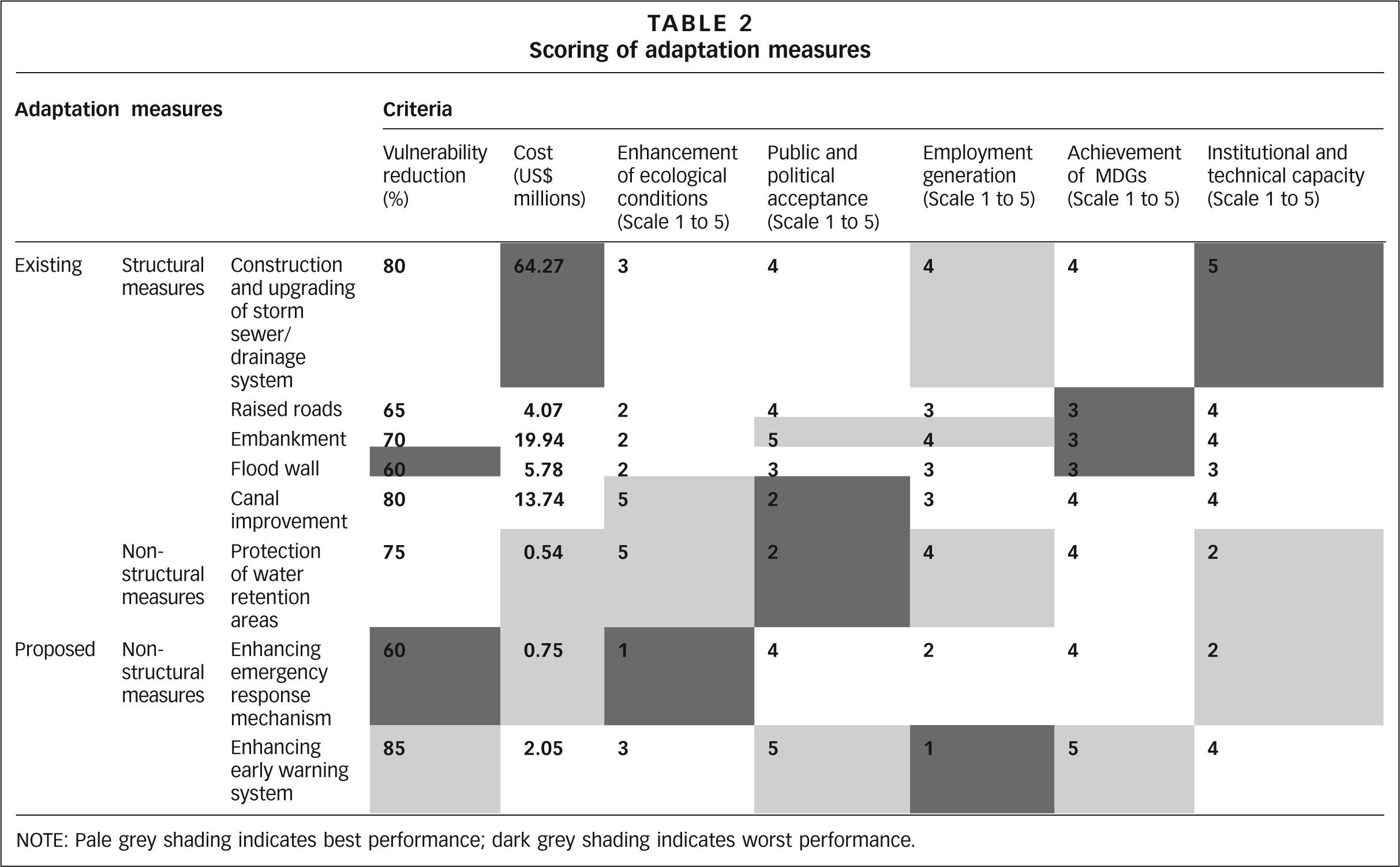
Experts were selected on the basis on their area of expertise in the climate change adaptation field, such as vulnerability assessment, impact assessment, adaptation assessment and flood management. Two expert groups were set up to cover all areas, one with direct experience of working in the study area and the other with experience of working on relevant issues in other areas with a similar context. The second group was introduced to the study context and was provided with relevant background information before scoring the adaptation options. Their judgements determined the scores (likely impacts) for adaptation options against the evaluation criteria. For the criterion “cost”, secondary data were used. Table 2 illustrates the average scores as judged by the experts. The dark grey shaded cells indicate worst performance of a measure against a criterion, whereas the pale grey shaded cells indicate best performance of a measure against a criterion.
Scoring of adaptation measures
NOTE: Pale grey shading indicates best performance; dark grey shading indicates worst performance.
At this point it is important to determine why the measure “flood wall” did not score the worst performance (relatively) regarding the “enhancement of ecological conditions” criterion, as would have been expected. As argued by the experts, and considering the local context, potentially the flood wall could enhance the ecological conditions in the study area because it would protect the area from inundation by the highly contaminated waters of the Balu River. The illegal connection of sewage lines to the storm sewage system discharges huge volumes of night soil and industrial waste into the river, resulting in severe contamination. When the river overflows, contaminated water inundates the study area, causing damage to flora and fauna. A flood wall would prevent the overflow and could therefore protect the flora and fauna from further damage.
Based on the performance of the different measures, it can be observed that none of the measures clearly outranks all the others. Figure 6 (on page 12) depicts the normalized scores illustrated by radar graphs.
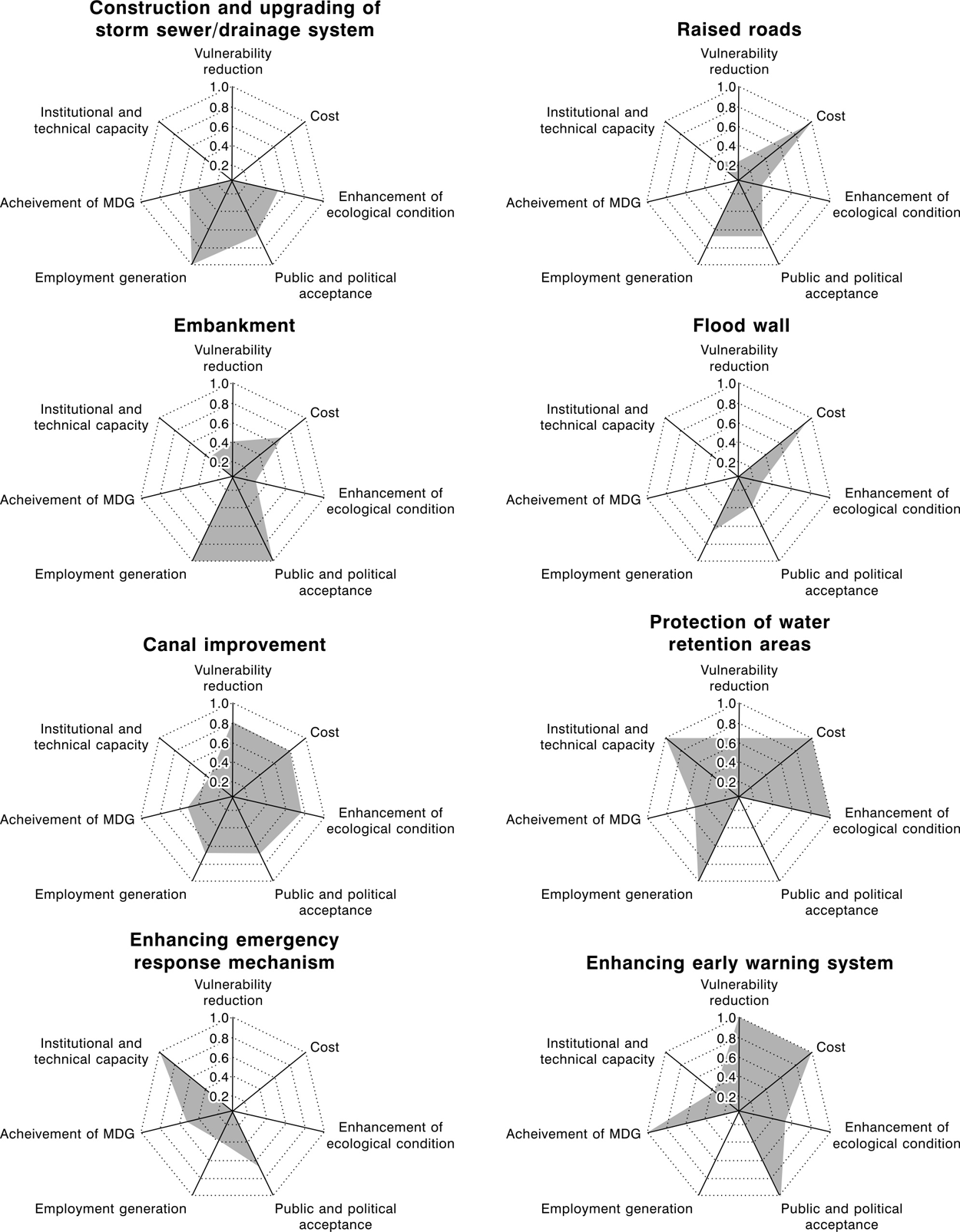
Radar graphs for scores of each adaptation option against selected criteria
Weighting of the selected criteria was conducted during the second focus group discussion. During this meeting, the stakeholders determined the degree of relative importance of each criterion, taking into account the scores of alternative measures that were indicated by the experts. The weighting values were elicited based on a consensus-building discussion. Figure 7 (on page 13) shows that the criteria “vulnerability reduction” and “cost” were weighted with the highest value of relative importance, 23 per cent and 18 per cent, respectively. The criterion “achievement of MDGs” was weighted with the lowest value (7 per cent). This is an interesting outcome since there is worldwide awareness regarding LDCs achieving MDGs, and Bangladesh has proved successful in this.
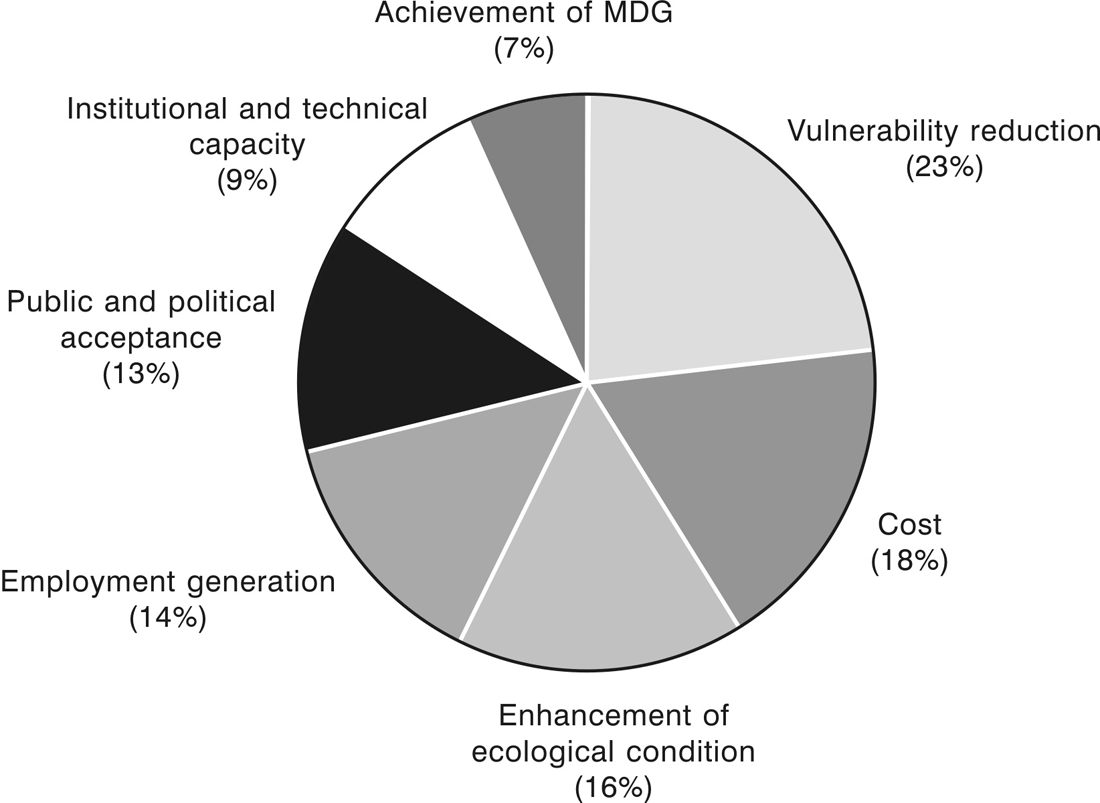
Criteria weights
The scores given by the experts were combined with the weights elicited by the stakeholders in order to estimate the weighted scores. This calculation (see previous formula) resulted in a final score for each option, on which basis the ranking of adaptation options was determined (Table 3).
Prioritization of adaptation measures
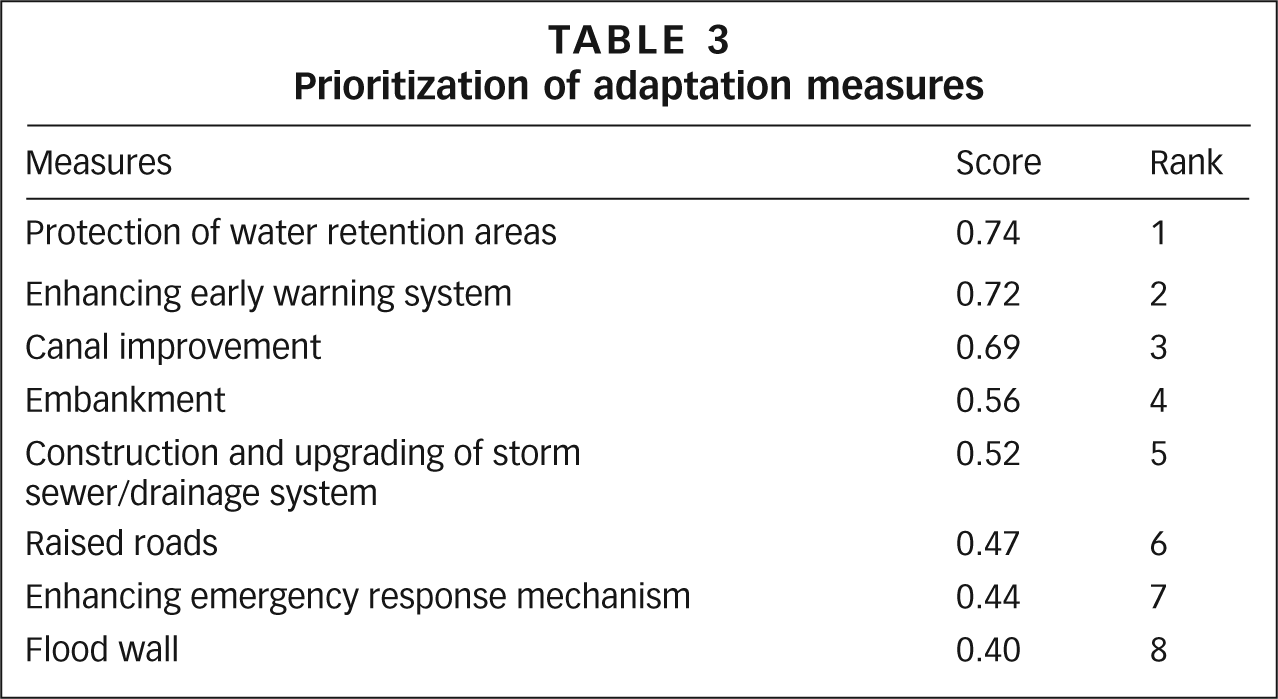
Based on Table 3 (on page 13), the three highest ranking adaptation options are: protection of water retention areas, an enhanced early warning system and canal improvement.
c. Sensitivity analysis
Fourteen scenarios were considered in order to conduct the sensitivity analysis. Scenarios one to seven imply a change in each criterion weight of 20 units on a scale of zero to 100, whereas scenarios eight to 14 imply a change in weights of 40 units. It was found that by changing a criterion weight by 20 units, while keeping the others constant, there was no significant change in the final ranking. As illustrated in Figure 8, by applying small changes (20 units) to criteria weights, only minor changes occurred in the two highest ranked adaptation options. By applying significant changes to the criteria weights, there were further, although not significant, changes to the final rankings of the adaptation options, as depicted in Figure 8. In conclusion, on the basis of the sensitivity analysis, the results can be considered relatively robust with regard to changes in the criteria weights.
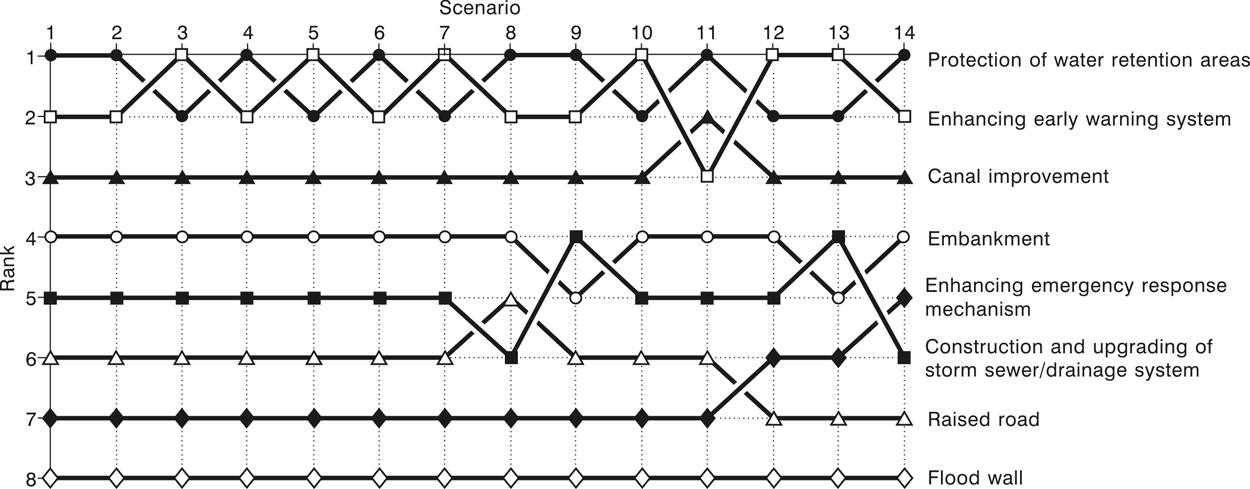
Sensitivity analysis
VI. Discussion
The set of selected criteria that were considered during the adaptation assessment process reflect the main objectives of stakeholders and are the result of stakeholder focus group discussions.
These focus group discussions included representatives from various groups, therefore the identified criteria encompassed a range of perceptions from different categories of people. The discussions allowed different stakeholders to express their views, exchange information and interact with each other in such a way that there was some reduction in the degree of institutional and personal bias. Stakeholders were confronted with the views of other stakeholder group representatives, hence avoiding any manipulation of the responses.
Based on stakeholders’ preferences, it emerged that stakeholders assigned a low relative importance to the criterion “achievement of MDGs”. There is global attention on achieving MDGs in the LDCs at a national level, but the stakeholders from the study area did not accord with that and hence weighted other criteria higher. This can be explained by the fact that flood hazard poses a serious risk to the livelihoods of people in the study area, hence local stakeholders are more concerned with actual and local objectives rather than with issues that are considered at the national or global levels. Another reason could be the reduced presence of squatters and the absence of the poorest of the poor in the focus group discussions. At this point, the high achievement of MDGs in Bangladesh at the national scale should be mentioned, as Bangladesh won the UN award for its MDG achievements in 2010.(23)
The final outcome of the study is the ranking of adaptation measures, which shows that protection of water retention areas, an enhanced early warning system and canal improvement are the highest ranked flood protection measures based on the selected evaluation criteria and stakeholders’ preferences. This is an interesting outcome, since the construction and upgrading of the drainage system has been discussed in Dhaka mostly in terms of reducing vulnerability to flood. If the drainage system is improved, it is expected that flooding will be reduced, but other factors have been identified as being important and should also be considered, for example costs, technical capacity and enhancement of ecological conditions. Construction and upgrading of the drainage system requires a large budget as well as enhanced technical capacity, which are not as readily available in a developing country context. Protection of water retention areas has proved to be the “best” option for reducing the vulnerability of the study area to flooding, while also simultaneously meeting other criteria and considering their relative importance. The sensitivity analysis showed that the results are quite robust with regard to changes in criteria weights. This also accords with the fact that the highest ranked alternatives performed very well for most of the criteria. Therefore, we can conclude the following:
some uncertainty in stakeholder preferences regarding criteria weights can be taken into account without this resulting in any significant changes to the final ranking of the alternatives; and
the robust results on criteria weights show that the experts’ impact assessment (scoring) was most important, along with the selection of criteria, in determining the final results (ranking), proving its significance to the prioritization process.
a. Implications of the study
The current study has some policy and decision-making-related implications:
First, the adaptation to flooding assessment process would be enhanced by considering all important criteria identified by all relevant stakeholders in a participatory manner (Table 1). Their relative importance has also been identified by incorporating stakeholder preferences; thus, stakeholder preferences and perspectives will be brought to the decision-making process. The stakeholder group also includes representatives from grassroots level organizations (i.e. farmers, business groups) in the study area, whose preferences are often neglected during the decision-making process.
Second, the quick assessment and prioritization of adaptation options for the study area provides decision-making support for both local and national policy makers regarding selecting flood management measures that meet multiple local objectives. Some measures have already been proposed for the study area, but it is difficult to implement them simultaneously. Prioritization could support decisions on the implementation of the most immediate (high priority) measures to be undertaken. Moreover, the additional proposed measure “enhanced early warning system” has been shown to be one of the most promising measures to be implemented in the study area, considering budget limitations and the required high institutional and technical capacity.
The methodology applied illustrates the opportunities and value of using MCA in adaptation assessment and flood management, enhancing stakeholder participation in the decision-making process in an LDC context at a city level. The methodology ensures transparency and multi-dimensionality by considering multiple criteria and multiple stakeholders’ preferences, while also including experts’ judgements.
VII. Conclusions
The magnitude of flood risk and climate variability is expected to increase in the future as a result of climate change. Therefore, the vulnerability of developing countries will also increase. For a sustainable future and for the survival of millions of people in cities in developing countries, there is an urgent need to adapt to this variability. The adaptation assessment undertaken in this research provides significant support for policy design and decision-making for an LDC like Bangladesh, where resources are limited and vulnerability to climate change is very high.
The provision of effective prioritization of adaptation measures for flood management is a challenging goal. In this context, the prioritization was conducted with a consideration of budget and institutional and technical capacity constraints. Two adaptation options, namely an emergency response mechanism and an early warning system were included, in addition to those already proposed by the government, namely canal improvement, an embankment, construction/upgrading of the drainage system, and raised roads and flood walls, in order to be assessed and prioritized. The assessment of adaptation options was based on both subjective (experts’ scoring) and objective (actual cost) information. Moreover, two focus group discussions were conducted in order to ensure the highest possible participation of stakeholders in the decision-making process. Stakeholders first identified the main evaluation criteria by expressing their main objectives and perspectives, and then expressed their preferences on the relative importance of the evaluation criteria. Therefore the final outcome and prioritization of adaptation options was determined in a participatory manner on the basis of stakeholder consultation. The exchange of information from a multitude of stakeholder perspectives made the outcome of the decision-making more legitimate and defensible. It should be underlined further that the process of including these two groups (experts and stakeholders) also functioned as a platform for knowledge generation and sharing, which is an important element for enhancing the institutional capacity during the decision-making process.
a. Scope for further research
The current application demonstrated the use of MCA as a prioritization assessment method for the quick screening of adaptation measures in a developing country context, also taking into account multiple local objectives. For an in-depth impact assessment, a detailed vulnerability and adaptation impact assessment could be conducted and could complement the current methodology.
A larger sample of stakeholders could be included, with broader representation, in order to map all relevant stakeholders’ preferences; this could provide considerable information and support to policy-making while simultaneously enhancing participation.
Different judgements could be reached on the basis of different perspectives, i.e. experts, different groups of people from the study area (business, agriculture, squatters, government, etc.). Moreover, the MCA adaptation assessment method can incorporate and test different techniques for weighting or for investigating different methods to aggregate different adaptation options’ scores.(24)
Climate change poses multifaceted risks of flooding that are not always possible to take into account within the application of one method. Multifaceted risks could be assessed by a broader decision-making process such as risk management. MCA can provide information on the relative merits of the assessed adaptation options and further enhance the integrated risk management process, and can be part of this assessment process along with other complementary techniques.
Footnotes
1.
Islam, I (2008), Wetlands of Dhaka Metro Area: A Study from Social, Economic and Institutional Perspectives, PhD thesis, Japan Society of Promotion of Science (JSPS), College of Policy Science, Ritsumeikan University, Japan.
2.
Khorshed, A (2003), Clean-up of the Buriganga River: Integrating the Environment into Decision-making, PhD thesis, Murdoch University, Perth.
3.
Alam, Mozaharul and Rabbani, MD Golam (2007), “Vulnerabilities and responses to climate change for Dhaka”, Environment and Urbanization Vol 19, No 1, April, pages 81–97.
4.
See reference 3.
5.
Mirza, M Monirul Qader (2003), “Climate change and extreme weather events: can developing countries adapt?”, Climate Policy Vol 3, May, pages 233–248.
6.
7.
Few, Roger (2003), “Flooding, vulnerability and coping strategies: local responses to a global threat”, Progress in Development Studies Vol 3, No 1, pages 43–58.
8.
See reference 3.
9.
See reference 6.
10.
See reference 5.
11.
UNFCCC (2002), “Annotated guidelines for the preparation of National Adaptation Programmes of Action”, available at  , 41 pages.
12.
See reference 4.
13.
Brooks, Mark, Frederic Gagnon-Lebrun, Helene Harvey and Claude Sauve (2009), Prioritizing Climate Change Risks and Actions on Adaptation: A Review of Selected Institutions, Tools and Approaches, Government of Canada, Ottawa, 56 pages.
14.
Kubal, C, D Haase, V Meyer and S Scheuer (2009), “Integrated urban flood risk assessment – adapting a multi-criteria approach to a city”, Natural Hazards and Earth System Sciences Vol 9, November, pages 1881–1895.
15.
Bruin, K, R B Dellink, A Ruijs, L Bolwidt, A Buuren, J Graveland, R S Groot, P J Kuikman, S Reinhard, R P Roetter, V C Tassone, A Verhagen and E C van Ierland (2009), “Adapting to climate change in the Netherlands: an inventory of climate adaptation options and ranking of alternatives”, Climatic Change 95, Springer, April, pages 23–45.
16.
Qin, X S, G H Huang, Nie X H Chakma and Q G Lin (2008), “An MCDM-based expert system for climate change impact assessment and adaptation planning – a case study for the Georgia Basin, Canada”, Expert Systems with Applications Vol 34, Sciencedirect, pages 2164–2179.
17.
Yahaya, Sani, Noordin Ahmad and Rania Fadlallah Abdalla (2009), “Multi-criteria analysis for flood vulnerable areas in Hadejia–Jama’ Are river basin, Nigeria”, European Journal of Scientific Research Vol 42, No 1, pages 71–83.
18.
Julius, Susan Herrod and Joel D Scheraga (2009), “The TEAM model for evaluating alternative adaptation strategies”, Global Change Research Programme, US Environmental Protection Agency, Washington DC, 13 pages.
19.
Grafakos, S, A Flamos, V Oikonomou and D Zevgolis (2011), “Integrating environmental, sociopolitical, economic and technological dimensions for the assessment of climate policy instruments”, in W Leal Filho (editor), The Economic, Social and Political Elements of Climate Change, Springer Verlag, Berlin.
21.
22.
Haque, A N (2010), Climate Change Adaptation Assessment: A Case of the Eastern Fringe of Dhaka, Bangladesh, Masters thesis, Institute for Housing and Urban Development Studies, Erasmus University, the Netherlands.
24.
See reference 12.