




Abstract
Adaptation and coping have been frequently compared. However, their relationship is still in dispute. So far, three approaches have been suggested: interchangeable, distinct and interrelated. We argue that the third is the most useful as it provides insights into how long-term adaptation can be achieved by a series of short-term coping mechanisms. Within this focus, we interpret adaptation in a novel way: as a complex cumulative result based on the interaction between multiple coping mechanisms and vulnerability dynamics. As such we reorient Smit et al.’s work on “cumulative adaptation”. Our empirical case is slum households affected by floods from the Mekong River in Phnom Penh, Cambodia. The inquiry is based on 119 surveys and 25 semi-structured interviews in nine slum communities. The results capture new trajectories of adaptation (or maladaptation), livelihoods and local collective action. The article explores implications for local development in slum communities in the global South.
I. Introduction
Because of climate change, the concept of adaptation has become an increasing topic of discussion. The term is frequently used together with “coping” in discussions of individuals’ responses to local impacts. Adaptation focuses more on “the (long-term) process of adjustment” to both actual and expected climate impacts,(1) including transformative changes,(2) while coping usually refers to more short-term and direct adjustments to minimize impacts.(3) However, despite the distinction between the definitions, they have often been used interchangeably, at times creating confusion. This has in turn created problems for studying the precise nature of long-term adaptation, differentiating between cases, and observing relationships between the two concepts. Various efforts to distinguish between them(4) have been limited to listing proposed definitions and have not been followed up by further theoretical and empirical investigations. There still appears to be a significant degree of confusion over how “short-term” and “long-term” should be defined, as well as how long-term processes can be analysed and, from a policy perspective, become more effective.
So far, three approaches have been suggested: approaches that propose the terms as 1) interchangeable, 2) distinct and 3) interrelated. After critically reviewing the approaches, we argue that the third is the most useful as it provides insights into how long-term adaptation can be achieved by a series of short-term coping mechanisms. Within this focus on interrelatedness, our contribution proposes to interpret adaptation in a novel way: namely as a complex cumulative result based on the interaction between multiple coping mechanisms and vulnerability dynamics. We emphasize transformative and systemic change and the need to avoid a concentration on short-term coping(5) – something that overseas development agencies at times overlook since donors pressure them to deliver swiftly. As such we revisit and reorient Smit et al.’s(6) writings on “cumulative adaptation”.
This article addresses two questions: On what basis can the actions of vulnerable urban households against climate impacts be classified or interpreted as either short-term or long-term? And how can long-term structural change be realized based on a series of effective coping mechanisms and local collective actions? We fill a gap in the literature by investigating short-term and long-term aspects simultaneously. And in order to deal with the resulting complexity, we use pathway figures to illustrate the households’ trajectories of coping and cumulative adaptation.(7)
This article also seeks to demonstrate the usefulness of our conceptual framework for explaining the reasons for frequent maladaptation in marginalized communities, especially in the context of the global South. This is done through a case study of riverside slum(8) households in Cambodia’s capital, Phnom Penh. These households, located near the Mekong River, are highly vulnerable to floods caused by climate change (along with other factors such as deforestation, massive urbanization and lake infilling).(9) They therefore need to cope annually with the threat of floods.(10) They also need to adapt in the long run in order to reduce their vulnerability to flooding and continue to make ends meet. Drawing on 119 surveys and 25 semi-structured interviews in nine communities, we describe and explain pathways of adaptation. We demonstrate that collective action at the community level is a necessary condition for bringing about cumulative adaptation.
II. Cumulative Adaptation: The Link Between Adaptation And Coping
a. Defining adaptation/coping and short-/long-term
Debates on adaptation have proliferated since the rise of attention to climate change issues in the 1990s. Different definitions used in earlier academic work were soon consolidated into the Intergovernmental Panel on Climate Change (IPCC) definition of adaptation as “adjustment in natural or human systems in response to actual or expected climate stimuli or their effects”.(11) Meanwhile, the discussions of coping are rooted in development studies.(12) Coping has been discussed from several perspectives, including coping ability, coping capacity, coping strategies, coping mechanisms, coping range and simply coping. Coping was first used for responses to food insecurity;(13) then the discussion gradually expanded to include floods(14) and other hazards and disasters.
Two meanings have been attached to the concept of coping in the development literature. The first, which is the most common and is followed in this article, refers to coping as an immediate response to specific hazards or impacts such as droughts. The second meaning refers to the thresholds of the extreme events with which a system can deal, usually expressed as “coping range”. In this context, a coping range is described in terms of fluctuating thresholds under economic, social, political and institutional conditions, in order to analyse adaptive capacity.(15)
The term adaptation has been frequently used with and compared to coping.(16) This is because both involve individuals’ responses to climate variability and vulnerability. Table 1 summarizes the distinctions between coping and adaptation, indicating that the former involves more immediate, direct, short-term, location-specific actions targeted against a certain shock within the existing structures, while the latter involves more long-term and permanent changes.(17) Long-term, in this context, may refer to the actual temporal duration but more often indicates a systemic length referring to transformative and structural changes in a system (e.g., a system of agricultural production, resource distribution or power entitlement). Therein lies the analytical difference: i.e. the possibility that short-term coping does not necessarily trigger a systemic positive change in households and communities.
Various definitions of coping and adaptation
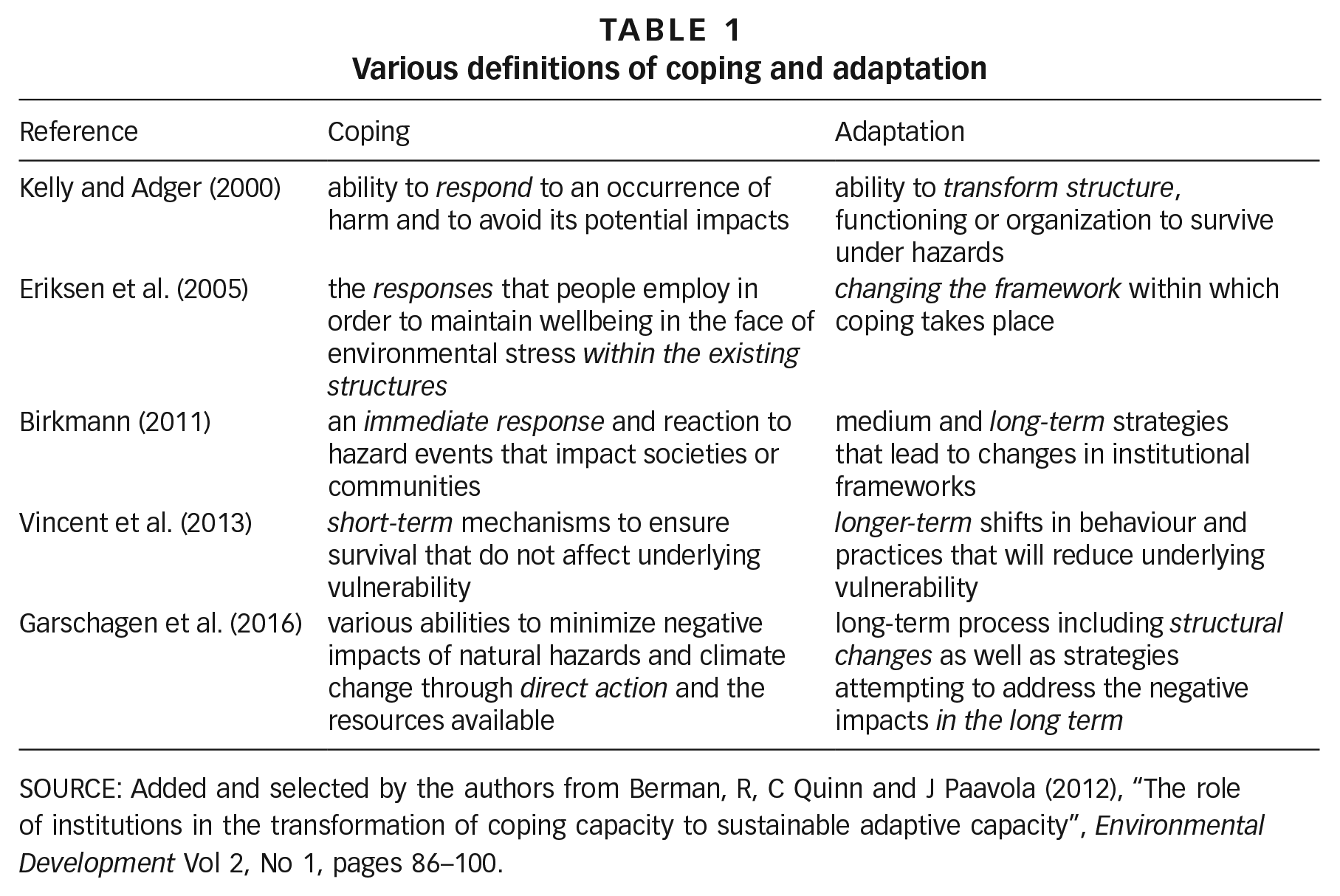
SOURCE: Added and selected by the authors from Berman, R, C Quinn and J Paavola (2012), “The role of institutions in the transformation of coping capacity to sustainable adaptive capacity”, Environmental Development Vol 2, No 1, pages 86–100.
In this article we seek to avoid confusion in the understanding of coping and the short term. We are sceptical of the view that coping is limited to temporally immediate actions.(18) What is more important is not the timing of responses, but whether coping actions are focused on specific situations (e.g., responses to the 2000 floods in Cambodia). Even if only temporally immediate actions are considered as short-term coping, it is still hard to determine how immediate these actions need to be in order to qualify as short-term. From our perspective, coping can involve all means or responses to events – whether the result is effective or ineffective, successful or unsuccessful, and anticipatory or reactive. Take coping with flooding as an example: coping could include moving items to higher places, raising house floors before the flood, staying at home without doing anything, building protective dykes, or relocating and diversifying income sources.
Secondly, we disagree with the view that coping is only a reactive response.(19) In fact, coping could also be proactive or strategic in the same way as adaptation, since some actions for survival are taken beforehand to minimize impacts of events. By the same token, we also disagree with the idea that coping does not affect underlying vulnerability at all. Coping actions could well change the degree of households’ vulnerability, both positively and negatively. Furthermore, coping is not only limited to individual actions, but it can also include collective efforts and even the support received from stakeholders outside the community such as non-governmental organizations (NGOs).
b. Approaches to the relationship between adaptation and coping
The reason for the confusion stems mainly from the continuing debates on the relationships between these two concepts (Table 2). The first approach is to use the terms adaptation and coping synonymously. There has been a tendency in academic discussions to use both terms to represent practices or conditions that address environmental risks and stresses.(20) For example, the third assessment report by the IPCC(21) defined adaptive capacity as the ability to adjust climate change to “cope with the consequences”.(22) The approach is limited as it cannot fundamentally differentiate between short-term and long-term processes in regard to climate change.(23) As a result, it tends to describe only observable examples and practices. In other words, the approach does not provide any insights or room for long-term adaptation and transformative changes.(24)
Three approaches to the relationship between adaptation and coping
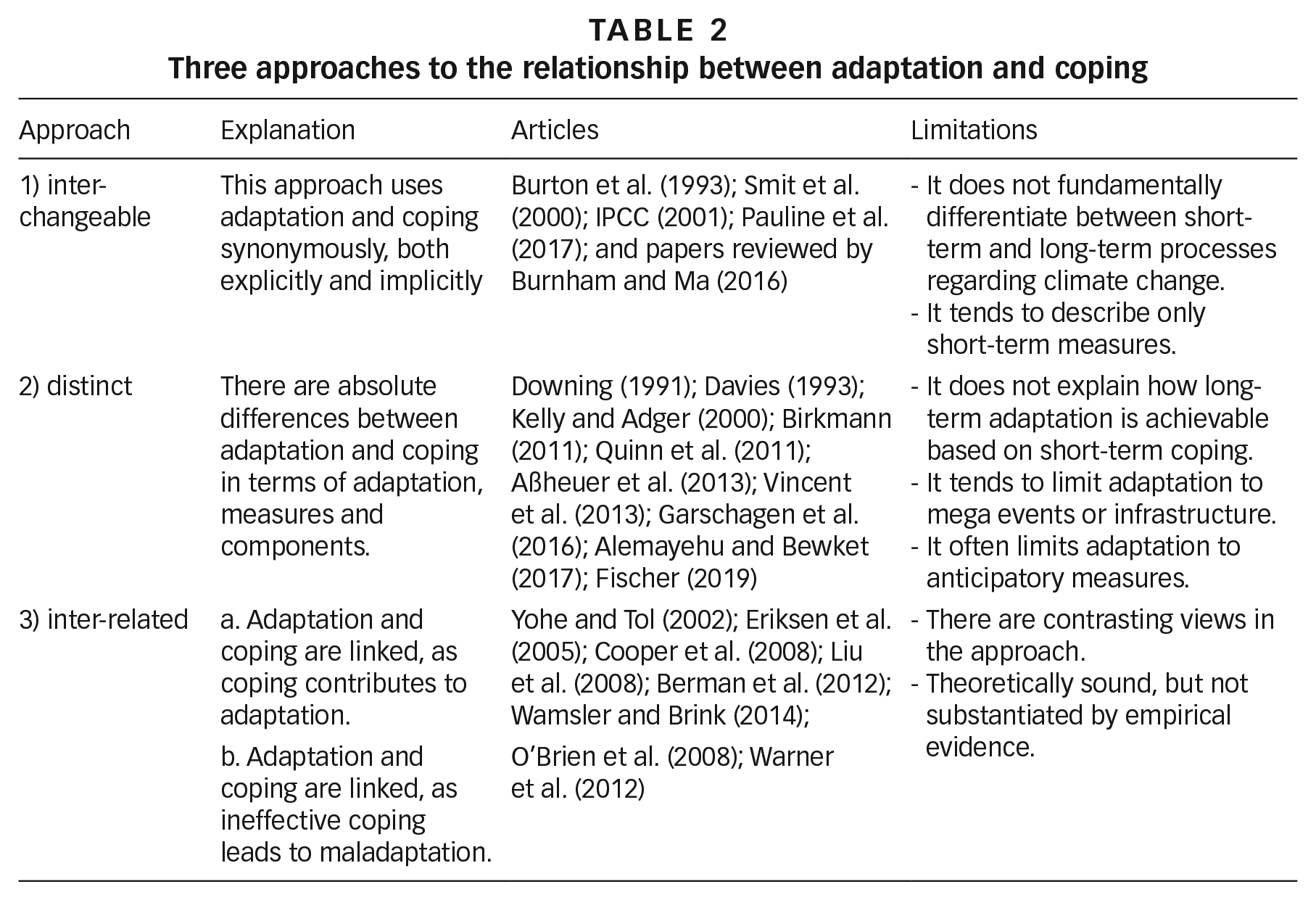
Challenging this first approach, the alternative approach argues that there is a complete distinction between adaptation and coping. It underestimates, or does not mention, the possibility of a partial connection or a certain overlap. The second approach can be criticized for remaining vague regarding the appropriate classification of households’ actions into short-term and long-term, and regarding the ways in which long-term structural changes can be achieved through short-term action. In other words, the temporal dynamics and the pathways that lead to adaptation are not addressed. Moreover, the approach tends to limit the focus of adaptation strategies to mega events or construction(25) and anticipatory measures.(26)
The third approach takes the view that coping can be a stepping stone toward long-term processes. The majority of the attempts to promote this perspective follow the view that coping contributes to future adaptation. Drawing from the initial comment from Yohe and Tol,(27) Eriksen et al.(28) made it more specific: from their view, the two processes of coping and adaptation could be linked, as coping is a prime means of adaptation. Berman et al.(29) asserted that the role of institutions is important for coping to become adaptation, calling this process “transformation”. Yet there is also some disagreement(30) – most notably in the claim that coping always works against adaptation. For example, O’Brien et al.(31) suggested there is a conflict of aims; coping is to maintain livelihood survival and adaptation is to adjust to climate change. While the debate might continue, we favour this third approach as it supports the investigation of the relationship between the two concepts from a temporal, dynamic perspective. This is a major strength of the approach. In practice, it is hard to see that coping is always detrimental to adaptation. Therefore, we opt for the broader view that coping is not a priori negative, and that it may in fact lead to adaptation rather than maladaptation. The following sections will elucidate this point in more detail. As Berman et al.(32) have acknowledged, there is a lack of empirical evidence on the precise relationship between adaptation and coping. Rather, previous attempts have merely put forward theoretical connections without providing supporting empirical evidence.(33)
c. Cumulative adaptation
The previous subsection put forward that coping cannot guarantee a lowering of vulnerabilities but can affect the degree of vulnerability, both positively and negatively. This means that the results of coping activities can influence the components of vulnerability (exposure, sensitivity or susceptibility, and adaptive capacity of a system or a household).(34) In other words, coping has a feedback relationship with vulnerability. In contrast to Magnan et al.,(35) who focused on negative feedback between initiatives and maladaptation, we posit that vulnerability fluctuates within isolated coping activities, no matter whether they are planned, effective or positive. Similarly to what Adger et al.(36) noted about successful adaptation, we argue that successful coping affects vulnerability along three trajectories: by weakening exposure, reducing sensitivity and increasing adaptive capacity. Unsuccessful coping can strengthen exposure, expand sensitivity and decrease adaptive capacity. This position contradicts the perspective that coping would not affect vulnerability at all.(37)
Strengthened or weakened exposure means that households are affected by either more or fewer types of risks and effects than previously when exposed to adverse events. The degree to which households are sensitive to the many types of exposure depends on several determinants, including their socioeconomic, geographical and political conditions. Even though households may be exposed to the same types of risks and effects, sensitivity is not fixed and may expand or decline as a consequence of coping. Thus, expanded/reduced sensitivity is not the same as exposure, as sensitivity has nothing to do with states in which new kinds of exposures emerge or existing exposures disappear. Rather, it indicates greater or lesser susceptibility to the existing types of exposure. What is more, adaptive capacity works through human, financial, physical, natural and social determinants for a range of coping strategies. Households enjoy a greater capacity to cope with the next adverse event, when they have implemented effective coping strategies that prevented unnecessary consumption and enhanced capacities. The opposite feedback is much clearer; an erratic reaction can lead to a huge loss of capacity, for example, through the spending of a large amount of savings.
If the temporal scale is extended, the feedback process will be as illustrated in Figure 1. Vulnerability at Time T (V1) is a function of exposure (E1), sensitivity (S1) and adaptive capacity (AC1). Coping with current vulnerability (C1) has impacts on subsequent vulnerability (V2), and the coping activity is repeated under this new context. Through this process, coping produces a variety of pathways of livelihood changes and adjustment to climatic variances.
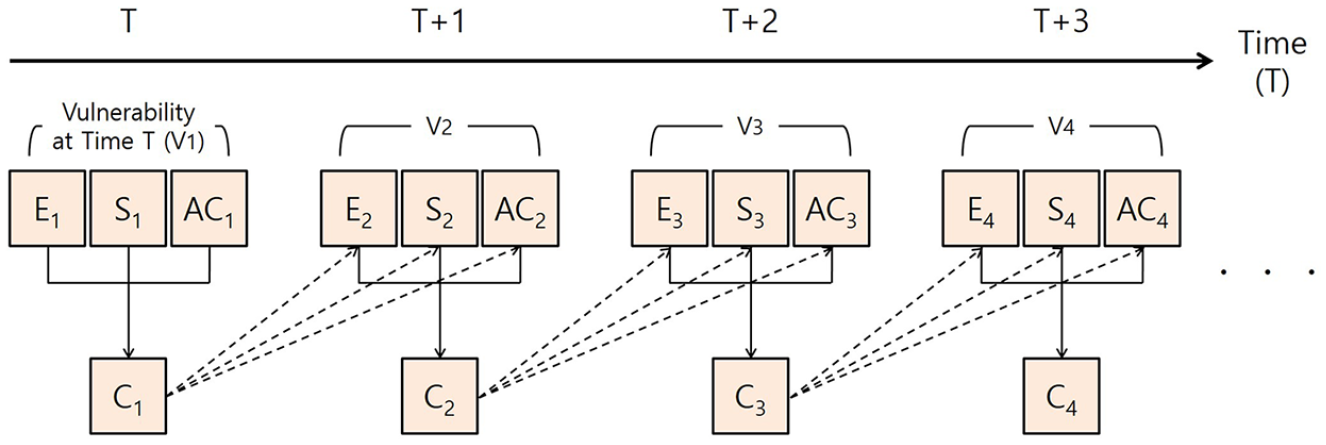
Feedback of coping and vulnerability in multiple time periods
Redrawing Figure 1 to include the “adaptation pathways” approach(38) results in Figure 2. First, there are virtual spaces representing adaptive space and maladaptive space. Adaptive space involves both goals(39) and the thresholds of adaptation.(40) It is not fixed over time, so it can fluctuate according to climate change variance, greenhouse gas mitigation, and other governmental policies and interventions. Represented as a point, exposure can be positioned both inside and outside adaptive space.(41) Extreme events, which exceed the threshold, lie outside the space. Sensitivity is then measured by the distance between exposure and adaptive space. Adaptive capacity, depicted as an arc, refers to the range of possible coping strategies to choose from. If one’s adaptive capacity is limited, the arc in the figure will be reduced and the options for overcoming maladaptive space will also decrease. Finally, coping occurs based on exposure, sensitivity and adaptive capacity. As a result, there are changes in the position and the degree of vulnerability.
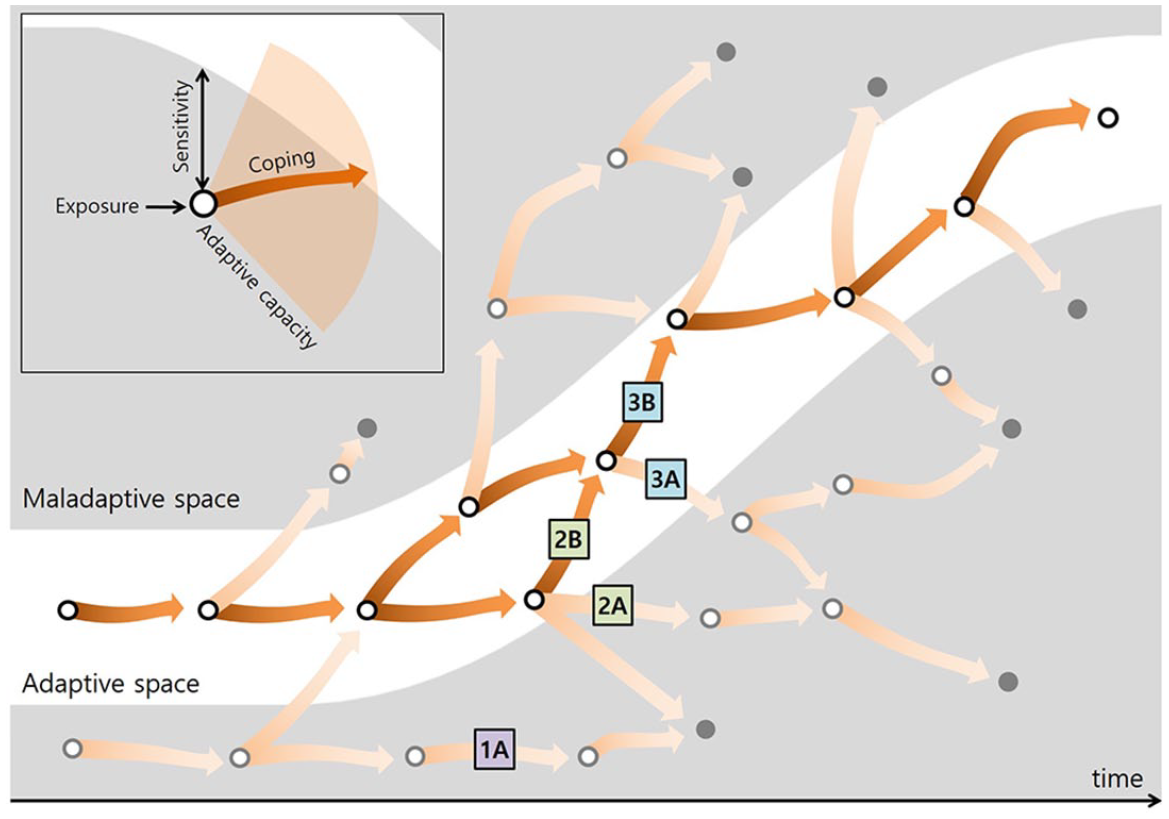
How vulnerability fluctuates according to pathway approaches to coping
The figure contains complex possible pathways in which a number of coping activities can occur with fluctuating vulnerability over multiple periods of time. Importantly, the pathways provide a description of the relationship between coping and adaptation (the third approach as introduced above). The darker arrows represent pathways that are continuously adaptive; in other words, a household achieves adaptation in the long term. The adaptive pathways are not the result of one successful coping activity, but the cumulative result of successful coping over time. Conversely, the lighter arrows represent pathways that fell into maladaptive space. The maladaptive pathways are the cumulative result of ineffective coping over time. Thus, it is important to note the cumulative features of adaptation (or maladaptation) when it comes to explaining the linkage between adaptation and coping for the adaptive pathways. Here we thus revisit Smit’s et al.’s work,(42) where the types of adaptation were introduced but without theoretical or empirical elaboration.
We differentiate between path-dependent and transformative coping. To achieve cumulative adaptation, it is important for households not to adhere to the same coping strategies as in the past (1A and 2A in Figure 2, path-dependent coping).(43) This is because adaptive space fluctuates over time according to climate change variance. In the figure, changing the direction of the arrow means that a household has implemented different coping strategies from those in the past (2B in Figure 2, transformative coping – e.g. newly introducing dykes in a community). Transformative coping is important in that it will increase the flexibility to cope with unexpected changes compared to path-dependent actions, which adhere to the same responses to climatic impacts. It is also important to acknowledge that adaptation is not guaranteed by a single successful coping action or transformation. Rather, it requires constantly transformative and appropriate changes, meaning continuous adjustments to respective conditions and different situations. For example, building protective dykes can work as a successful coping measure in a certain period, but it does not guarantee cumulative adaptation in all communities. This is because dyke systems in a community need to be adjusted to respond to different vulnerabilities (e.g., inundation, disease infection and lower accessibility) depending on specific contexts.
The concept of cumulative adaptation fits well with the definition of adaptation. It makes it possible to capture adaptation as the long-term process of adjustment and its effects, including transformative changes. Moreover, cumulative adaptation adjusts to climate variance by maintaining its position in the adaptive space, and it includes transformation by changing coping strategies. It is also consistent with the case of maladaptation, defined as a process that results in increased vulnerability.(44) Cumulative maladaptation means falling far from the adaptive space, with strengthening exposure, expanding sensitivity and decreasing adaptive capacity. To substantiate our approach, we now turn to our case study situation in Cambodia.
III. A Mixed Research Methodology
The empirical part of this article is based on a case of slum households located along the riverside in Phnom Penh, which are subject to flooding on an annual basis. Since the end of the Pol Pot regime in 1979,(45) the slum has spread over the urban area and the riverside. A local NGO called Sahmakum Teang Tnaut (STT)(46) estimated that there were 26,207 slum households in 2017 (roughly 6.9 per cent of the total 377,000 households in the city), and many were located along the riverside.
The households were selected for the following reasons. First, the riverside slum households are located in places highly vulnerable to floods.(47) Second, the Lower Mekong Basin, which includes Cambodia, is considered one of the most vulnerable regions of the world in terms of extreme events and climate change.(48) Third and most importantly, floods occur and affect riverside households annually. Selecting this location enables us to appropriately observe both short-term coping per flood and long-term adaptation of the slum households, and subsequently the linkages between them.
Quantitative and qualitative methods were used for fieldwork, which was conducted in May and June 2018. Nine out of 277 slum communities(49) were selected as study sites because they are located in highly vulnerable areas and are frequently affected by flood events(50) (Map 1). Furthermore, the sites are distributed among three rivers in Phnom Penh to represent diverse patterns of adaptation, coping and development. The quantitative analysis is based on 119 questionnaires that included four topics: 1) basic socioeconomic conditions; 2) slum conditions; 3) flood vulnerability, including exposure, sensitivity and adaptive capacity (human, financial, physical and social capital);(51) and 4) household coping during floods. The qualitative part of the study consisted of 25 semi-structured interviews, most notably with community leaders and households that have been severely affected. The questions were related to coping activities during past flood events, how path-dependent or transformative their coping has been, their effects on vulnerability and livelihoods, and collective action dynamics. The qualitative results are presented in Table 4 and further illustrated by livelihood change diagrams drawn by interviewees (Figure 4). The results provide supplementary data for the four topics of the surveys, and further information regarding the results and effects of responses during past flood events with respect to adaptation and livelihood improvement.
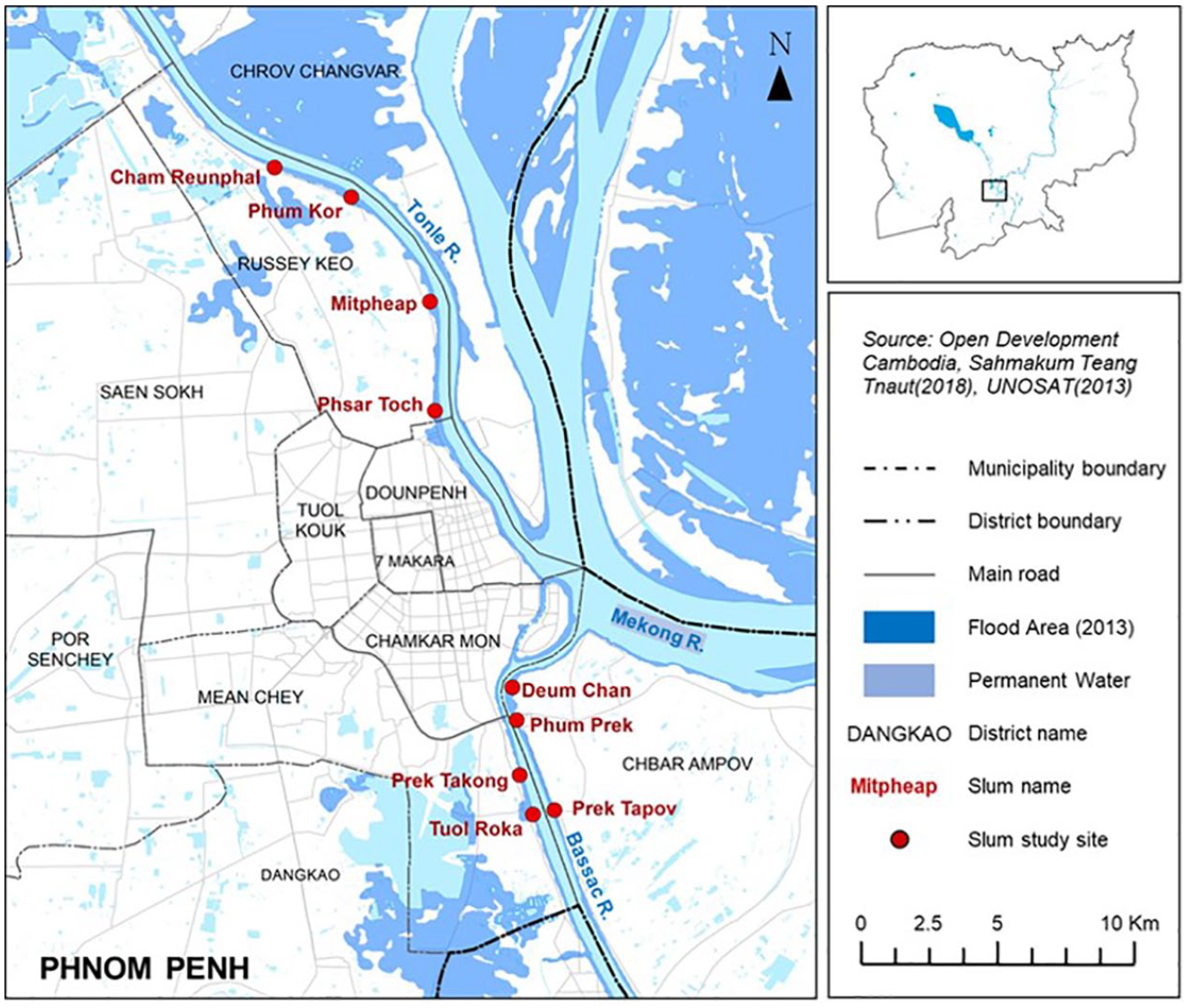
Locations of the slum study sites
Respondents were selected through a combination of random sampling and non-random snowball sampling. The respondents all met the definition of slum households, satisfying at least one of four slum indicators proposed by UN-Habitat(52) (Table 3). The surveys and interviews were conducted in the Khmer language in cooperation with five assistants from the Royal University of Phnom Penh (RUPP). As they possessed a great deal of information about the area and local conditions, the authors were able to discuss issues with the assistants in great detail.
Socioeconomic conditions of the households
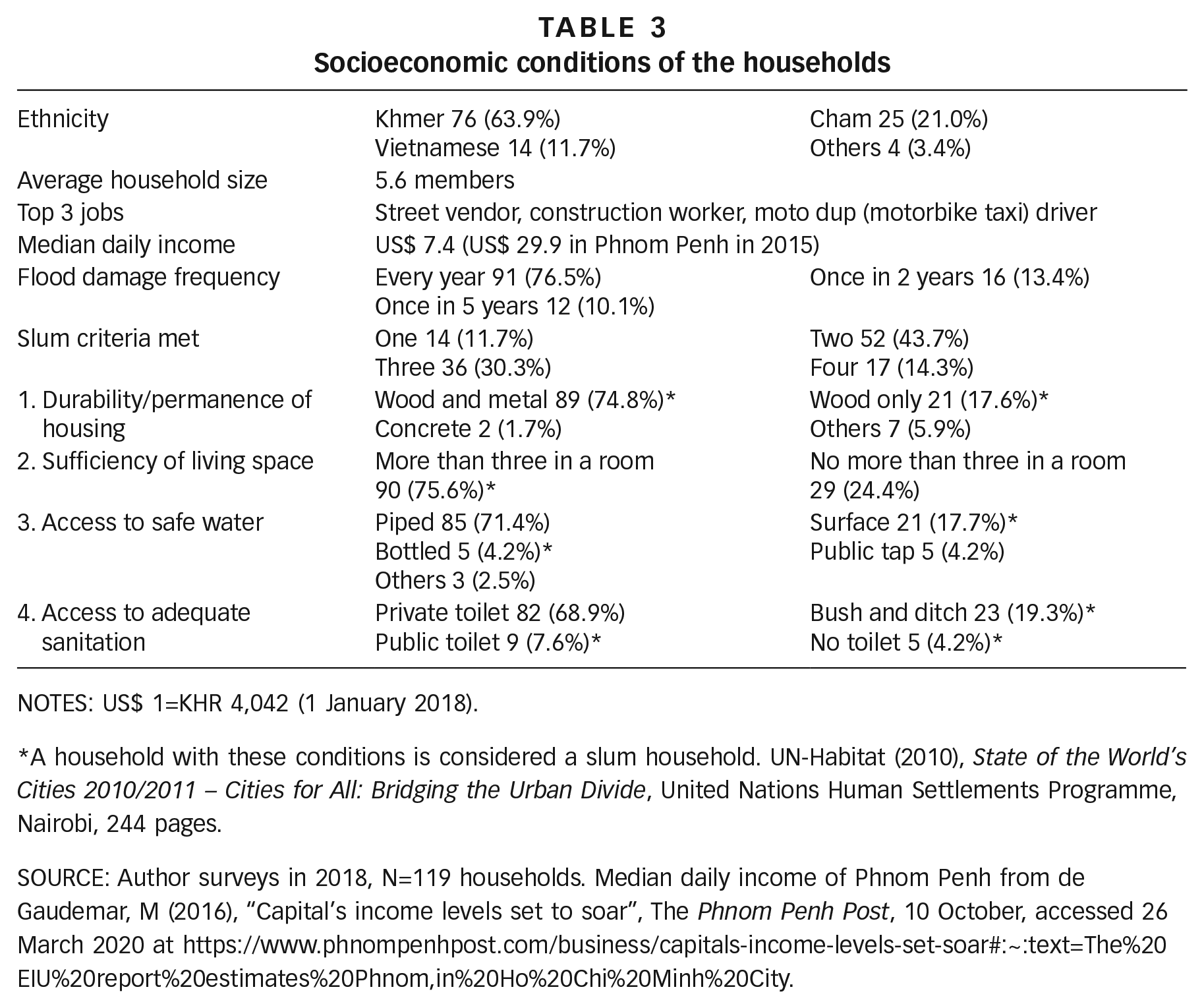
NOTES: US$ 1=KHR 4,042 (1 January 2018).
A household with these conditions is considered a slum household. UN-Habitat (2010), State of the World’s Cities 2010/2011 – Cities for All: Bridging the Urban Divide, United Nations Human Settlements Programme, Nairobi, 244 pages.
SOURCE: Author surveys in 2018, N=119 households. Median daily income of Phnom Penh from de Gaudemar, M (2016), “Capital’s income levels set to soar”, The Phnom Penh Post, 10 October, accessed 26 March 2020 at https://www.phnompenhpost.com/business/capitals-income-levels-set-soar#:~:text=The%20EIU%20report%20estimates%20Phnom,in%20Ho%20Chi%20Minh%20City.
Types of coping and their implications for adaptation
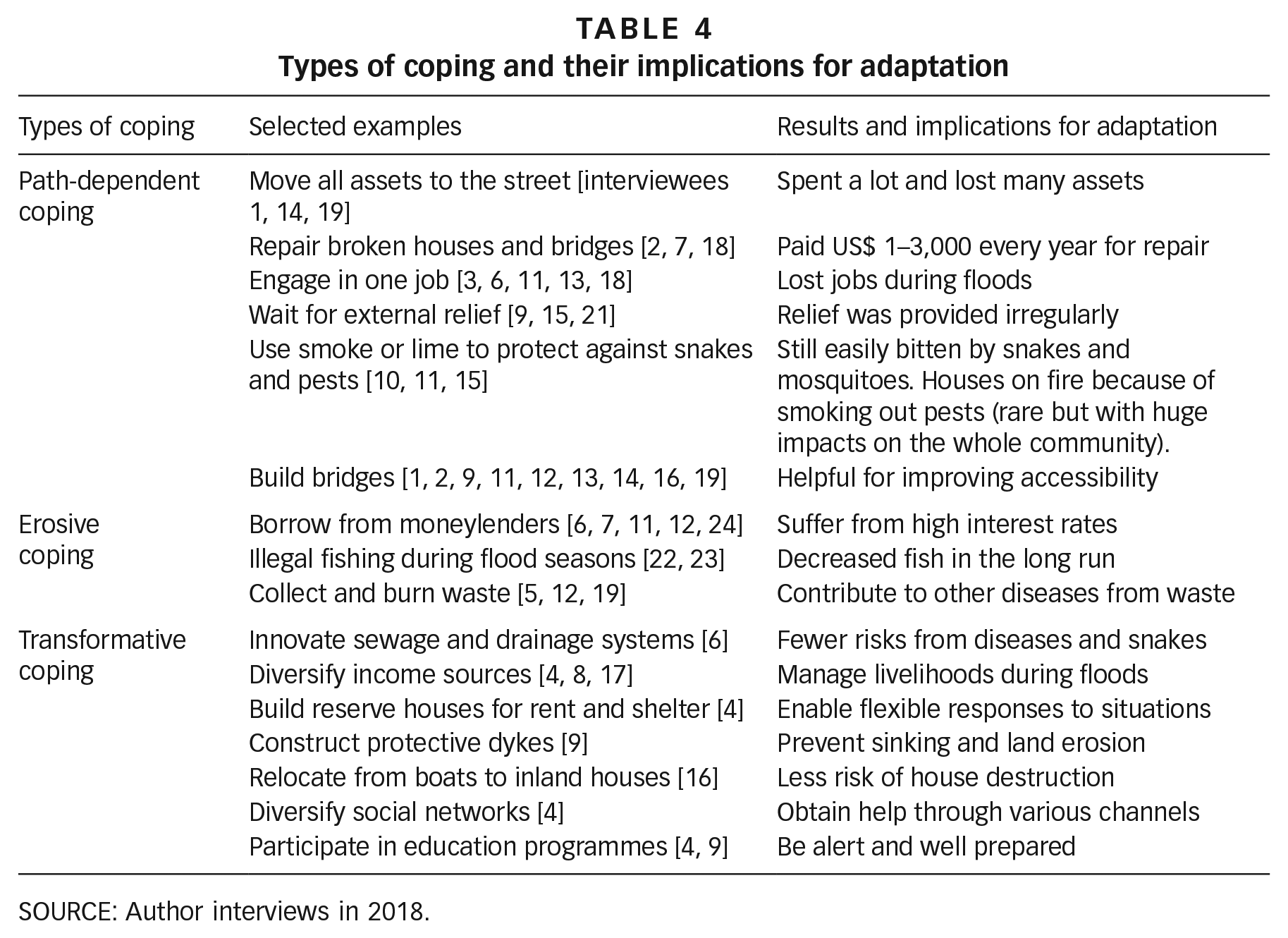
SOURCE: Author interviews in 2018.
IV. The Case Study Through The Lens Of Cumulative Adaptation
a. Household vulnerability and coping
There are increasing uncertainties in Phnom Penh due to climate change variance and ineffective governmental intervention. This is expressed as a shrinking and fluctuating adaptive space in the pathway approach. The urban area is facing increased flood risks caused by higher temperatures and more precipitation in the Lower Mekong Basin.(53) Figure 3 summarizes continuing vulnerability in the riverside slum communities and selected examples of the households’ coping amidst this annually recurring situation. To begin with, vulnerability and coping are categorized into human, financial, physical and social capital, giving an overall view of households’ low adaptive capacity. Among adaptive capacity factors, social capital is stronger than the others as the households have various connections to gain access to social support during flood events. This finding is consistent with other work on vulnerable people, suggesting that they take advantage of social networks and relationships in order to deal with a lack of other kinds of capital.(54) The second column shows the top 10 types of exposure while the third column represents sensitivity, calculated by the proportion affected by each type of exposure. Most households have experienced income decreases (91.6 per cent), a lack of money (89.9 per cent) and food (82.4 per cent), and the destruction of their houses (71.4 per cent). The last column contains various examples of coping – including both active/inactive, transformative/path-dependent, individual/collective and reactive/proactive activities.
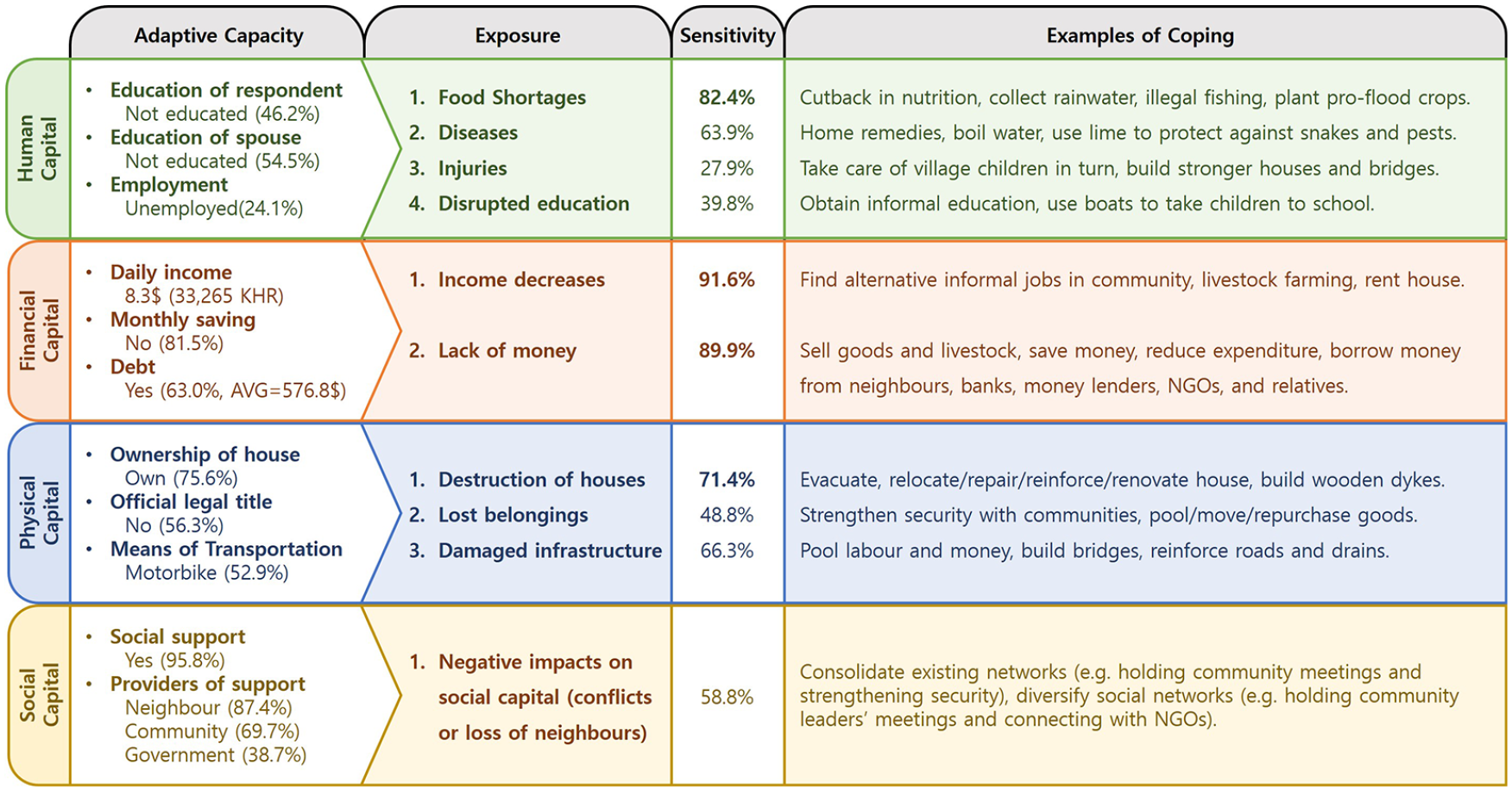
Vulnerability and coping of the households
b. Major pathways of cumulative (mal)adaptation
Although households in all nine communities have struggled with flood vulnerability, and have used various coping strategies in response, the survey shows that the majority have not yet overcome hardships and their livelihoods have worsened since flooding became so common. In fact, adaptation has not emerged.(55) The traditional literature would have interpreted the cause of this failure as an incomplete response: coping without adaptation. However, the theoretical lens of cumulative adaptation allows for richer empirical insights.
The available empirical evidence suggests two common pathways of maladaptation. The first can be characterized by constant trajectories of path-dependent responses and an absence of transformative coping. Households in all study sites except Mitpheap have experienced path-dependent and ineffective coping (1A and 2A in Figure 2). This is mainly because households do not have enough human, financial and physical capital. Their levels of education are low and their debts are high; their livelihoods are fragile, with high unemployment rates and low rates of homeownership. In a situation where capital is limited, transformative measures are hard to come by. As a result, households have continuously lost their assets, paid for repairs to damaged houses, and lost their jobs (Table 4). Repeating the same coping activities results in cumulative damage, worsened livelihoods, and maladaptation (Interviewee 19 in Figure 4).
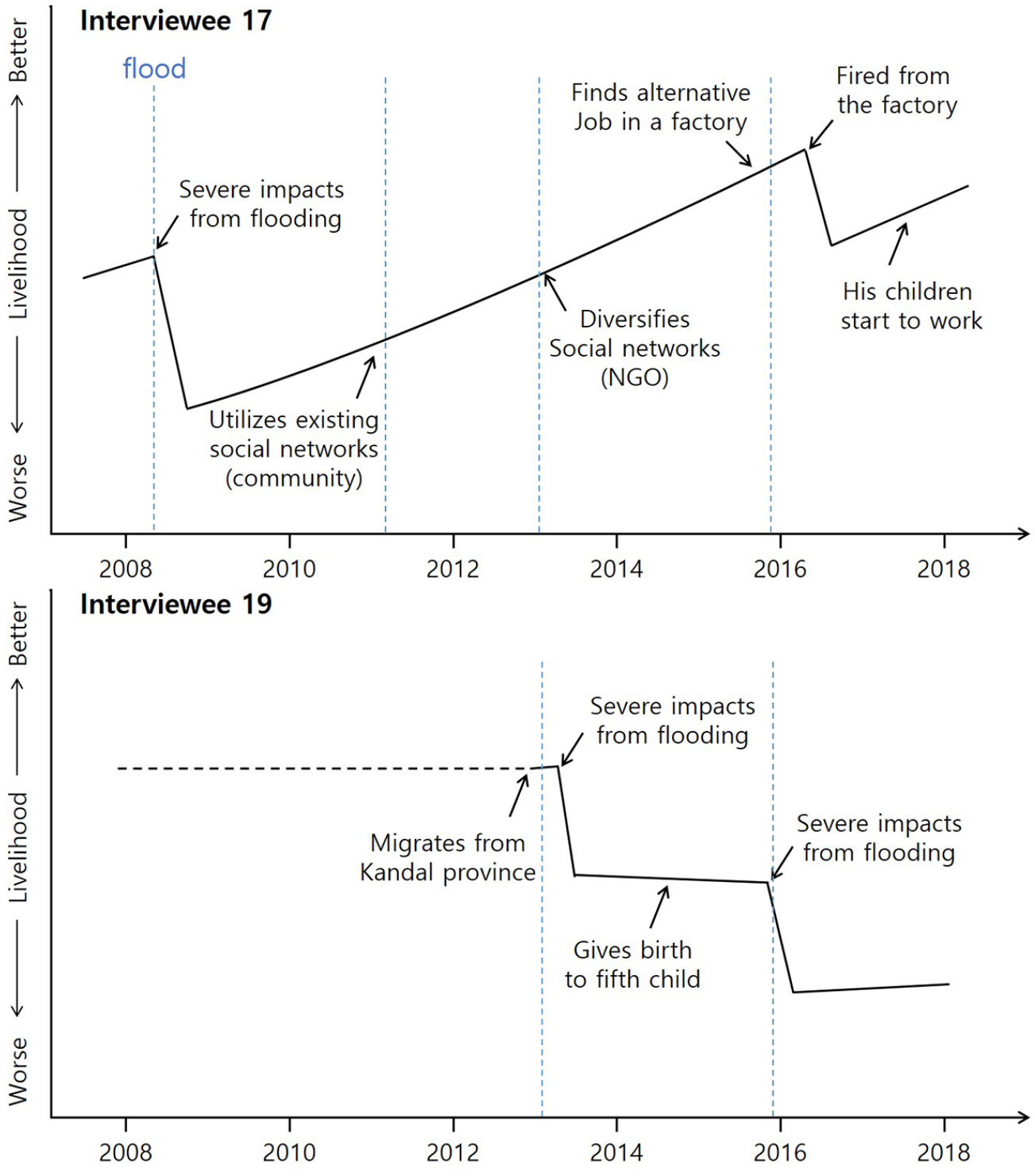
Examples of livelihood change diagrams
Transformative coping is operationally defined as a change in the coping strategies of a household. Examples of transformation are purchasing a refrigerator to sell meals to neighbours during floods for additional income (diversity of income sources) or moving a residence from a boat to an inland house (Table 4). Transformation is important because it enables a higher degree of flexibility to cope with unexpected changes. However, 79.5 per cent of the survey respondents have taken the same path-dependent measures during every flood. Typical answers were “we always cope the same”, “we do the same as before” and “we have no other option because we are poor”.
This is illustrated by the case of Interviewee 7. As she lives on a houseboat, her household has suffered from severe damage during flood seasons every year. Her household has been confronted with cumulative deterioration. She needed to spend her whole annual income (US$ 2,000–3,000) to cope with the flood impacts and as she did this, her debt increased. Her coping strategies are path-dependent (borrowing money to repair her house) and not adequately supported by the government or NGOs, at least not within the last 10 years. As the price of land is about US$ 1,000–1,500 for an average inland plot, she could have purchased land with some of the money spent to deal with annual flood damage.
“Because flood occurs frequently, my house has been broken again and again. I had to borrow money from neighbours . . . and during the next flood, I had to borrow more money from them, which makes my debt increase. . . . I borrowed about US$ 1,000 for my family during one flood, and I pay back US$ 20 per month. . . . I think I spend about US$ 2,000–3,000 during flood seasons. . . . I never save because we don’t have enough money to save. The NGOs or government never help me . . .” (Interviewee 7)
The second pathway of maladaptation involves the one-time use of transformative and effective coping, with a failure to sustain the activity. Direction 3A in Figure 2 illustrates this pathway; successful coping occurred first (2B) and then there was a quick return to the past conditions. Although some (Interviewees 6, 8, 9, 16, 17) had adopted transformative measures (Table 4), they could not sustain them in the subsequent floods. Therefore, it is important not to interpret the effect of coping or adaptation within a single time period. Rather, it is necessary to see how those responses have been positioned in terms of vulnerability and adaptive space for several periods.
There are three common cases of the second pathway in the riverside slums. The first is one-time support from the government or NGOs. Many residents complained that they provided relief goods only once, and not annually. Although one-off support or charitable grants may help immediately after the flood impact, they cannot be expected to have a longer-term effect. The second case happens when households practice ineffective or “erosive coping”.(56) This refers to measures that have adverse effects in the long term despite having short-term advantages (Table 4). Illegal fishing during flood seasons(57) to cope with decreased income is a good example – it offers immediate income but results in fish depletion. Lastly, maladaptation occurs when transformative coping is not sustained. In other words, it occurs when households return to path-dependent coping. This usually happens because households lack the capacity to continue taking transformative measures. For example, Interviewee 17 (Figure 4) had succeeded in diversifying income sources in 2015 (alternative job in a factory) but could not continue the diversification in 2016.
A limited number of households have been able to go on a pathway of cumulative adaptation, with favourable coping activities being sustained in the long run. Cumulative adaptation requires active coping, sufficient support from social networks, and transformative coping. We emphasize that households need to cope flexibly and differently with each situation within the limits of their capital. Households would therefore be able to store their assets for further development without losing them as a result of extreme events. One example is Interviewee 4, one of the community leaders in Mitpheap. She reported that her household had been impacted very little by flooding. This was not only because she copes actively (for example by having a community meeting about flood preparation once a month), but also because she has diversified social networks, including NGOs (e.g. Urban Poor Women Development [UPWD] and STT), government offices [based on her employment experiences], and other communities [community leaders’ meeting once a month]). She also continued to introduce transformative measures such as building a reserve house, having workshops for legal education (supported by UPWD), and not allowing boats to travel near riverbanks in order to prevent land erosion. Utilizing social networks and receiving support are also considered crucial strategies in this case. As a result, she embarked on a pathway of cumulative adaptation in the late 2000s.
“I am working as a community leader. I got to know UPWD when I worked in a [government] office. UPWD taught us about the law with workshops since 2008. Also, STT educates me about the environment. . . . During floods, I move assets to another house. Also, we don’t allow vessels to travel near my community [preventing impacts from waves]. There is a community meeting once a month about how to prepare for flooding. I also hold meetings with other community leaders once a month. It started in 2008. . . . Every year, I used a little [money] because of flooding. In the last 10 years, the lack of flood impacts made my livelihood better. . . . I built a new house with US$ 6,000 in 2016.” (Interviewee 4)
V. Discussion: Cumulative Adaptation And Collective Action
This section stresses the importance of collective action to the promotion of cumulative adaptation in Phnom Penh’s slums. All the communities reported that they often pool labour or capital to build bridges and renovate sewage systems, houses and roads. Although a few are supported by NGOs, most have to cope collectively without external aid.
Based on the questionnaires and interviews, three factors appear to be essential. First, unlike most government and NGO interventions, local collective action is relatively prevalent and sustainable. External support is more often a single event and limited in scale and scope. Communities can also provide support that is responsive to the situation. For example, more than 10 interviewees reported that immediate and flexible construction of bridges in the village is possible only through slum-wide collaboration. This allows for outside access and makes it possible for residents to reach their jobs. Other collective measures, such as cleaning and collaborative childcare during flooding, can create informal employment within the settlement for some, while helping to ensure that other residents can hold on to their jobs rather than staying at home to respond to flooding.
Second, collective attention has the capacity to monitor potentially erosive coping strategies at the individual household level. This is evident in the different responses of communities to illegal fishing. On the one hand, Interviewees 22 and 23 in Prek Tapov reported that a number of residents engage in illegal fishing without community-wide monitoring. On the other hand, according to a community leader in Cham Reunphal (Interviewee 24), erosive fishing is banned at the village level – an important collective action because in practice it is difficult for the municipal government to monitor all erosive coping strategies.
Third, the most transformative coping tends to be informed or implemented by neighbours and communities. For example, it was confirmed that residents exchanged information about how to construct floatable houses (Interviewee 25). This type of exchange plays an important role in disseminating information about transformative coping among households. This inevitably results from chatting with neighbours, community meetings, or other informal/formal social contacts, and is less likely in the context of individual efforts. Relatively large-scale measures require cooperative labour and capital in communities.
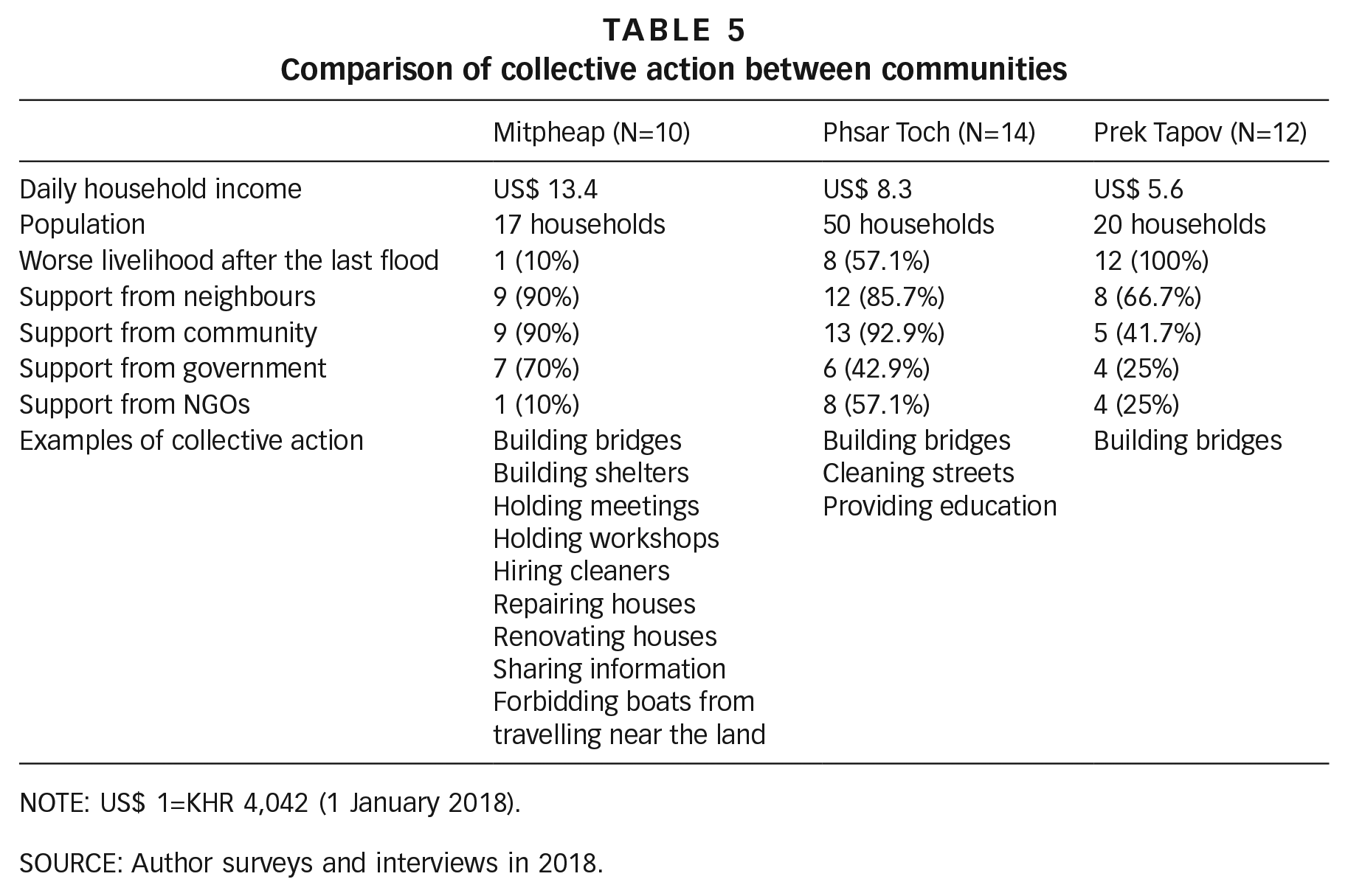
A comparison of three specific communities reinforces this argument. Table 5 compares collective action in three study sites (Mitpheap, Phsar Toch and Prek Tapov), because they represent strong, intermediate and weak levels of collective action respectively. Most households in the three communities are similarly affected by flooding every year or two. External support, for instance in the forms of rice, other food items and money, is insufficient in all three compared to internal efforts in the communities. For example, although support from the government appears to have been far more prevalent in Mitpheap (reaching 70 per cent of respondents compared to 42.9 per cent in Phsar Toch and 25 per cent in Prek Tapov, Table 5), this support consisted only of a one-time subsidy averaging about US$ 5. As such it did not come close to the support households experienced as a result of internal action.
Comparison of collective action between communities
NOTE: US$ 1=KHR 4,042 (1 January 2018).
SOURCE: Author surveys and interviews in 2018.
Mitpheap implemented the strongest collective efforts, with diverse transformative measures including building shelters, holding community meetings to share information, running educational workshops, and even hiring private cleaners. As a result, Mitpheap features solid and tidy buildings with higher floors than in other communities, and a low proportion of households whose livelihoods deteriorated after the last severe flood (10 per cent). A Muslim Cham community in Prek Tapov, in contrast, demonstrated weak cooperation within the community. The only reported effort was building bridges between houses for better accessibility. Results were relatively ineffective; without exception all respondents reported that their livelihoods became worse after the last flood.
The level of collective action in Phsar Toch is between that of Mitpheap and Prek Tapov. The proportion of residents here that reported receiving support from neighbours and the community (85.7 per cent and 92.9 per cent respectively) was similar to that in Mitpheap (90 per cent and 90 per cent respectively). Nevertheless, there was a significant difference in the number of collective strategies performed in the two communities. The strategies of Prek Tapov were not as diverse: building bridges, cleaning streets together, and providing education with the help of NGOs. While most households felt their neighbours and community were supportive, this support did not take the form of joint activities, and the outcomes reflected the lack of diversity and the limited transformative capacity of the measures. A little over half of the households overcame the impacts of the floods (57.1 per cent).
The observed differences in the extent of the collective measures stemmed from the more limited level of cooperation here, related to the degree of trust and reciprocity among residents.(58) Half of all respondents in Prek Tapov complained that “community never do anything” and “(they do) only business”. In Mitpheap, by contrast, all residents were involved in community work. Moreover, the survey reveals a lack of discipline in the other two communities. One survey respondent in Phsar Toch, for instance, criticized the community’s money collection practices, saying that there was no agreed-upon basis for setting the amount. In contrast, there are proper collaborative and penalty arrangements for not joining collective works in Mitpheap. For example, residents are expected to join in repairing and constructing neighbours’ houses (reciprocity). All villagers in Mitpheap understood their duties in this regard in response to flooding (“all villagers should be involved in repair and construction” and “collect money to hire cleaners and build bridges”), while this was true of only a few respondents in the other communities. The different levels of trust and reciprocity determine the durability of institutions for collective action in communities. Moreover, they determine whether households cope individually (e.g., cleaning homes by themselves in Prek Tapov) or collectively during flooding. This comparison provides insights into the role of collective action in ensuring that livelihoods remain secure; the three communities experienced similar flood impacts, considering the elevation data (ASTER Global Digital Elevation Map Version 2) and the floodwater extent in 2013.(59) The floodwater extended to Phsar Toch, Mitpheap and Prek Tapov. Although Prek Tapov experienced in fact the lowest water level among the three communities, it faced the worst impact due to the weakness of its collective action.
These findings corroborate other empirical evidence from the global South, which highlights the value of collective action when it comes to the adaptation of the poor.(60) However, in this article we have demonstrated that local collective action enables adaptation cumulatively. To our knowledge, this article is one of the first theoretical and empirical contributions since the concept was introduced. Others(61) have also written on the topic, but have not interpreted cumulative adaptation as an analytical tool to investigate systemic transformative change. Furthermore, our findings sharpen the distinction between ineffective and effective coping, resulting in snowballing outcomes. In addition to the factors mentioned by Eisenack et al. – “concerted effort, creative management, changed ways of thinking, political will, and reprioritization of resources, land uses and institutions”(62) – we stress the need to view the relationship cumulatively to overcome the barriers to climate change adaptation. Otherwise, external interventions might end up in policies that do not last long.
VI. Conclusions
Although it has been criticized by the political economy literature emphasizing sociopolitical inequalities,(63) the concept of adaptation allows us to understand how household efforts to adjust to climatic change can achieve systemic reconfigurations and reduce vulnerabilities.(64) These structural changes have been considered long-term as compared to the short-term coping actions taking place in communities.
Based on the interrelated nature of coping and adaptation, this article has unravelled the dynamics of cumulative adaptation in a highly vulnerable urban setting in the global South: the riverside slums of Cambodia’s capital, Phnom Penh. We view cumulative adaptation as a useful concept for interpreting and analysing adaptation pathways via complex cumulative effects, based on a series of coping activities and trends in vulnerability (exposure, sensitivity and adaptive capacity).
This approach has allowed us to capture new trajectories of (mal)adaptation, households’ livelihoods and local collective action, beyond the simple dichotomy of short-term coping versus long-term adaptation. There are two major trajectories of maladaptation: responding in ways that remain path-dependent and one-time transformative coping. To achieve cumulative adaptation, it is important to implement different and flexible coping measures, responsive to each situation and the local context. We have also demonstrated that local collective action effectively intervenes in this pathway.
This article concludes by suggesting three implications for enhancing adaptation in the global South. The first implication relates to the challenge of sustaining cumulative adaptation. Based on the results presented above, we suggest that external support should strengthen its focus on long-term systemic change (e.g., providing opportunities for income diversification and constructing protected dykes), rather than muddling through with short-term and unsustainable achievements. Ineffective coping does not culminate in positive cumulative impacts. A case in point is that of the National Adaptation Programme of Action to Climate Change (NAPA) established by the Royal Government of Cambodia in 2006. NAPA was limited to providing short-term relief or reactive support after floods without any monitoring.(65)
The second implication is concerned with community leadership. Despite some worries about entrenching power relations already present in the community, the leaders played an important role in connecting households with other social supporters: the municipal government, NGOs and other communities. It would therefore be more effective for government agencies and NGOs not to support all slum households in general, but to start creating networks with community leaders, encouraging transformative coping to be spread out through education and information first. Relatedly, fostering horizontal networks between communities can also spur the dissemination of best practices.
The third implication reinforces the recognition that trust, reciprocity and exchange in communities are crucial. These factors can oil the wheels of enduring collective action by maintaining internal support and sharing transformative measures within communities. To achieve bottom-up adaptation, it is important to utilize the knowledge and networks of local communities in addition to national-scale projects. This is not new knowledge, but many stakeholders (government agencies and various aid agencies) frequently continue to pay more attention to tangible, easy-to-implement interventions rather than intangible, longer-term trust building.
The framework of cumulative adaptation can be further refined in future research and policy work. One could think about expanding the assessment of the effects and processes of short-term and long-term adaptation initiatives at the community level. More elaborate, longitudinal assessment involving more indicators might better illustrate past and current conditions as functions of exposure, sensitivity, adaptive capacity and coping measures. Furthermore, such assessment would distinguish path-dependent and transformative responses, which can offer better policy implications for future adaptation in urban slums. The implications are likely to have the advantage of diagnosing how the communities follow trajectories of adaptation or maladaptation and how to sustain adaptation, or transform pathways of maladaptation into more positive territory.
