




Abstract
The January 2001 earthquake that struck the state of Gujarat in India damaged or destroyed some 8,000 villages and 490 towns. In the months and years after the earthquake, many organizations undertook widespread reconstruction programmes. One such collaboration between the NGO CARE India and the Federation of Indian Chambers of Commerce and Industry (FICCI) built 5,554 permanent houses as well as schools and community centres in 23 villages. This paper revisits 10 of the 23 villages that were partially or fully rebuilt by FICCI–CARE, 10 years after the earthquake. It finds that while the houses remain structurally strong and are mostly in use, residents’ levels of satisfaction, perception and usage are mixed. A central theme concerns the initial prioritization of seismic safety, which has sacrificed longer-term considerations of comfort, adaptability and the environment. The paper describes the houses that were built and presents findings according to structural condition, engagement in design, adaptations, house selling and perceptions of safety. The discussion presents four issues that emerge from the findings and wider research. The paper ends by proposing a simple equation for good housing, which places people’s involvement in building processes as the vital component.
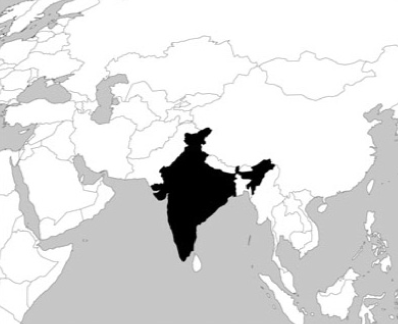
I. The 2001 Gujarat Earthquake
The 26 January 2001 earthquake that struck the state of Gujarat in India measured 6.9 on the Richter Scale(1) and killed between 13,000 and 20,000(2) people. More than one million properties were damaged and some 8,000 villages and 490 towns were damaged or destroyed, leaving more than 1.5 million people homeless. The cost of the damage was more than US$ 3 billion.
The response to the earthquake within India was immediate, with additional support provided by international aid agencies. The Gujarat State Disaster Management Authority (GSDMA) was established to coordinate recovery operations, and in 2003 it was awarded the UN Sasakawa Award for its work.
As with many other national and international non-governmental organizations (NGOs), CARE India was active in the relief efforts and subsequent recovery. CARE India is a member of the International NGO CARE International, globally one of the world’s largest NGOs, and has been operational in India since 1948. CARE’s initial relief activities quickly shifted towards recovery, leading to a range of initiatives, a key one being the construction of houses in earthquake-affected villages. In order to achieve this, CARE partnered with the Federation of Indian Chambers of Commerce and Industry (FICCI), who between them raised US$ 27 million, initially for the reconstruction of 10,000 houses in 30 earthquake-affected villages. Eventually, the FICCI–CARE Gujarat Rehabilitation Programme undertook a wide range of building reconstruction in 23 villages in three of the worst-affected blocks of Bhachau, Anjar and Rapar within Kutch district.(3) Activities eventually comprised the building of 5,554 houses, 15 schools, 11 community centres, 21 crèches, 12 panchayat (village council) buildings, five sub-health centres and water and sanitation infrastructure.
House construction in villages adopted by FICCI–CARE in Kutch district
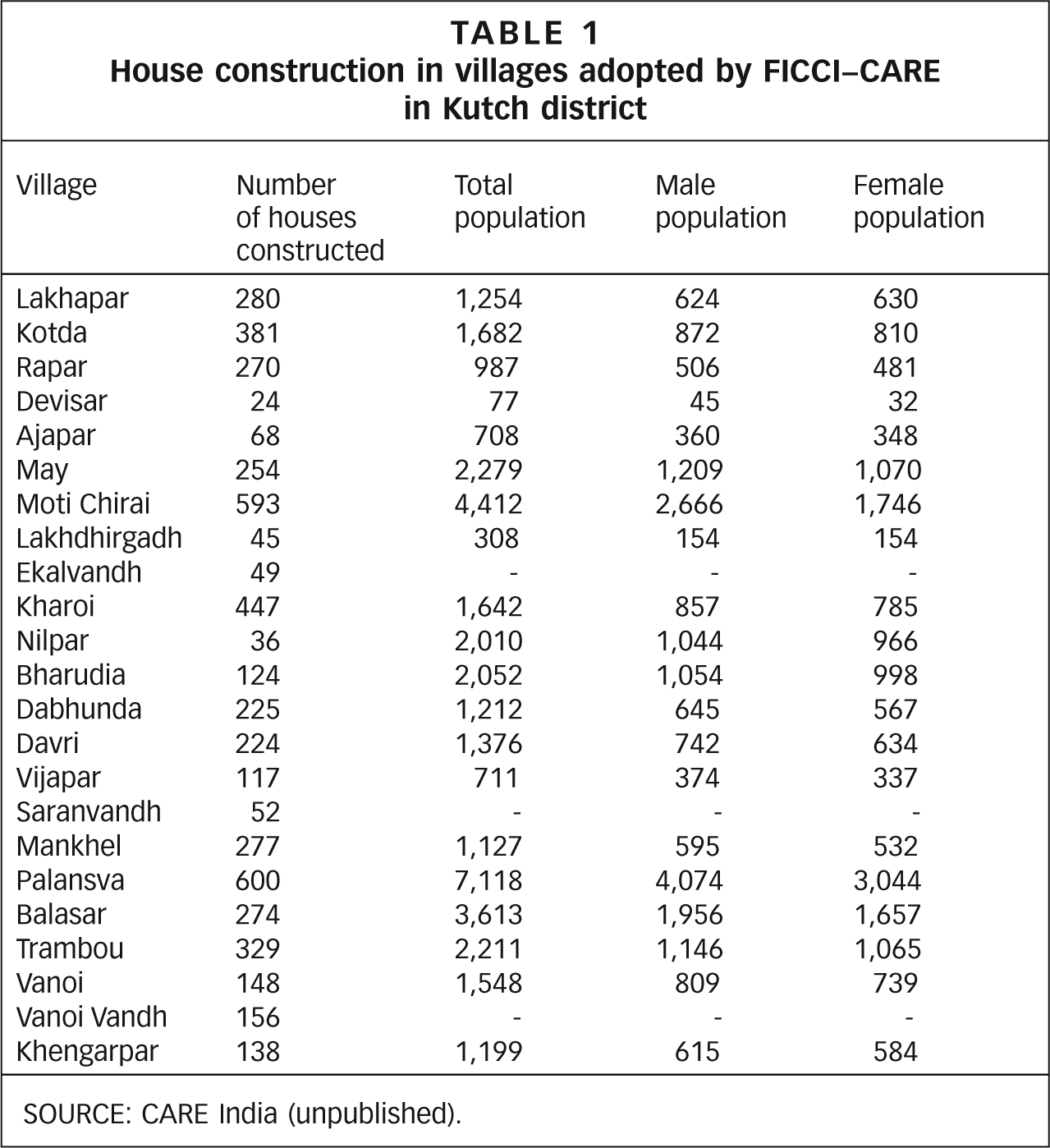
SOURCE: CARE India (unpublished).
FICCI–CARE utilized one house design (Photo 1), with most houses being stand-alone; in some cases houses were “semi-detached”, i.e. they shared one wall. The designs were provided by a Delhi-based Indian earthquake engineer, while construction of the houses was carried out by several building contractors, some of whom were residents of the affected villages. The design was for a single-storey building with a 30-square metre floor area organized into two rooms, with a small verandah at each of the two entrances.(4) The construction consisted of a flat reinforced concrete roof structure, with walls built of solid concrete blocks and plastered externally. Ring beams at plinth and roof level provided additional earthquake protection. Most finished buildings included water supply and electricity, and the houses in some villages were provided with toilets while others were not.
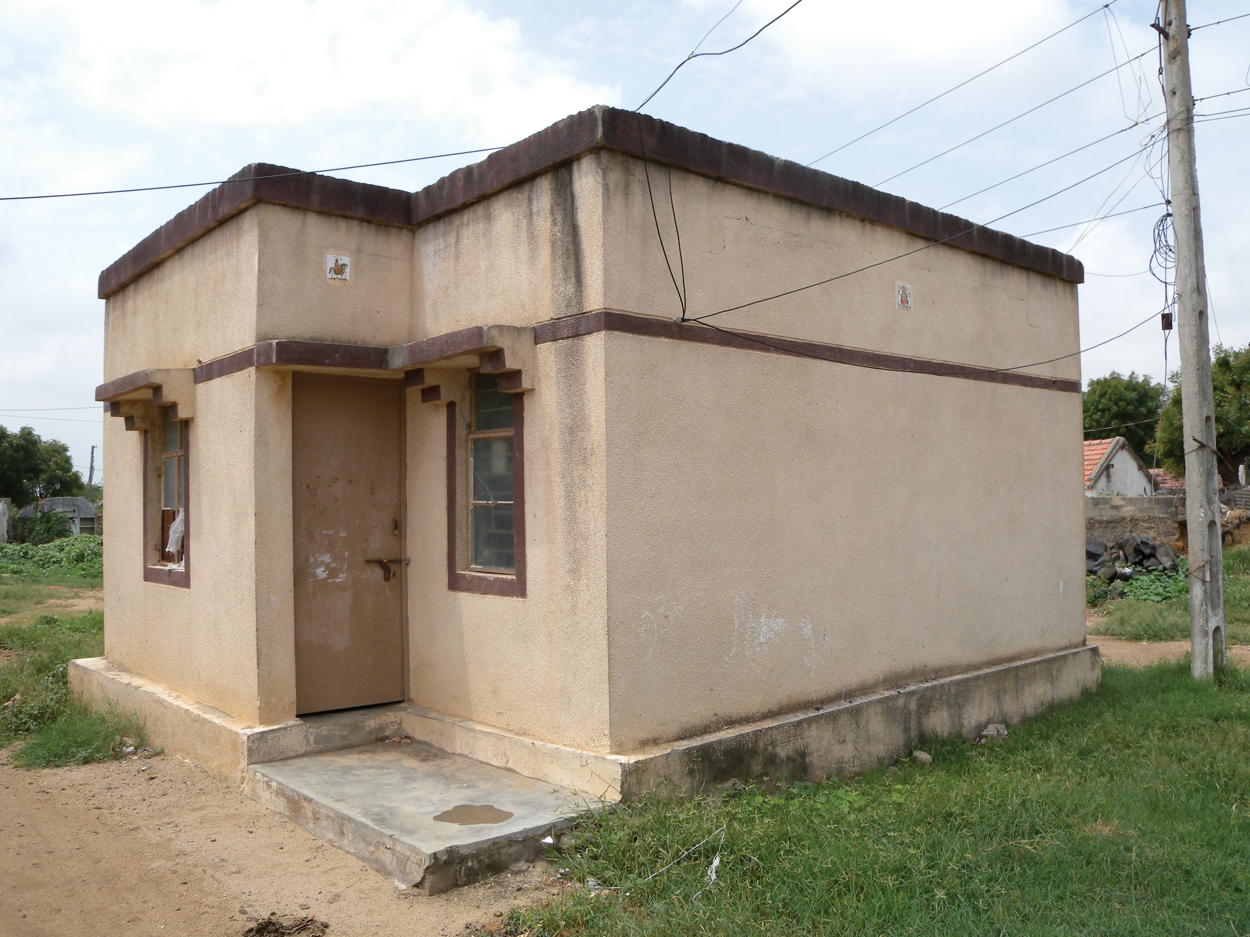
Typical FICCI–CARE house
The cost of the FICCI–CARE houses was Rs 102,000 (about UK£ 1,400) each. Houses were paid for through a combination of government of India (GoI) compensation to earthquake-affected households and aid funds. GoI compensation provided Rs 90,000 (about UK£ 1,200) to a household whose house had been destroyed; for lesser damage, payments were reduced according to a GoI scale of G1 to G5,(5) down to Rs 15,000 (about UK£ 200) for relatively little damage. FICCI–CARE built houses for those who could demonstrate land ownership. Reconstruction took place as one-off rebuilding on original plots within existing villages or as new rows of housing within existing villages or as newly located villages, such as at Moti Chirai.
a. The study approach
The research for this paper is based primarily on visits to 10 villages fully or partially rebuilt by FICCI–CARE in August 2010. The villages were selected at random, and in each village the research team visited several households, also selected at random, and spoke with house dwellers. Meetings were held with village leaders whenever possible, and also where possible with village residents generally. Locked-up houses were observed and enquiries made of neighbours about their status. Three non FICCI–CARE villages were also visited: Patanka, which includes houses built by the Indian NGO, SEEDS India; and Nagavaladia and Bitavaladia villages, where houses had been built by the Indian NGO, EFICOR. Papers relating to the Gujarat earthquake were also reviewed, as well as “grey literature”, such as CARE progress reports and independent evaluations such as the Disaster Emergencies Committee (DEC) interim and final evaluation reports. The authors also relied on their own previous visits to Gujarat since 2001, relating to the earthquake and reconstruction.
Within each village the research line of enquiry focused on five elements: durability, relating to how well the houses had fared physically since completion; adaptability, concerning how easily or otherwise houses could be modified over time; sustainability, relating, for example, to how the houses had contributed towards the livelihoods of their owners; likeability, concerning people’s perceptions of their houses; and liveability, regarding how well or otherwise their houses enabled people to live their lives.
II. Findings
a. Structural condition
All the FICCI–CARE villages that were visited comprised houses that had been adequately engineered to withstand tremors. No collapsed buildings were seen nor reported. While empty buildings were seen in several villages (discussed later), no derelict or seemingly abandoned houses were witnessed, i.e. all were owned, according to neighbours, and/or there was evidence of maintenance and/or ownership, e.g. doors were padlocked. Houses were generally perceived by residents to be strong; residents interviewed in all but two villages visited were confident that their homes would withstand an earthquake. A resident in Palansva stated: “There have been many tremors and there is not a single scratch on the surface.” Another woman from the village confirmed that: “There have been many tremors and no damage.”
Nine houses visited across the 10 villages had external cracks or crumbling outer render (these appeared to be minor settlement cracks as opposed to structural cracks). The inhabited houses were usually well maintained, although in most instances this related to whether residents could afford to maintain their properties.
The quality of construction varied between villages. In several, the roof reinforcement bars had become exposed as they had been laid too close to the ceiling shuttering during construction. A persistent problem in all of the houses that were visited was rainwater leaks from the flat roofs, and most houses had damp patches on the walls close to the ceiling as a result of this. Leaks were a source of discontent among many residents, and on several occasions the research team was asked to pursue claims for compensation or repair from FICCI–CARE, whom villagers often referred to as “the company”.
In every village visited, some villagers were unhappy with the quality of construction. In Vijapar village, the wife of a contractor who had built the houses there said that villagers used to visit her regularly to complain about the leaking roofs, the damp and the excessive heat. Her defence was that she also had to live in one of the houses.
In many cases, those who could afford to repair their houses had done so, while those with no funds had not. As one resident in Ajapar village stated: “Only the rich can afford to repair.” A farm labourer from Lakhapar village, who had inherited shelter from his father, said: “I am too poor to change my house.” In Palansva village, all the wooden timber frames and doors had been replaced, at homeowners’ cost, by steel frames and doors because of a large infestation by termites. The problem had been recognized before reconstruction began and could have been avoided through the use of metal frames. Residents of the same village also complained that the plinth levels were too low, given that annual floods meant their houses regularly became flooded.
b. Ring beams
As with some other post-earthquake housing, an innovation in the FICCI–CARE design was to highlight the seismic bands by painting them red. As well as being a low-cost form of decoration (copied on some houses), the main intent was to remind people of the need for good reinforcements, i.e. that the coloured structural part had a purpose. While the use of ring beams has been replicated in some subsequent construction, when asked, no residents within the villages visited were able to say what the bands stood for. Some said: “…decorative, to make the house look better”, while most said they did not know. Groups of children encountered by the team across several villages were also asked, none of whom knew the answer.
c. Summer heat
Almost all of the residents of the FICCI–CARE houses that were visited said that these were too hot in the summer, when temperatures can reach 50°C around May. Those who could afford them had installed electric fans, while others had bought mobile electric coolers. However, in poorer households residents stated that by and large they “…just lived with it.” In several villages, houses had been painted white in an attempt to reflect some sunlight and thus reduce heat gain. One house in Kotda village had tiled the roof with white tiles, which, according to the residents, had reduced heat in the house. In none of the visited houses had an additional window or door been added; one reason for this may be because very heavy building blocks were used in construction, which would prevent most efforts at alteration. In Lakhapar village, a resident on a large plot had built an additional single-storey pitched roof house for him and his family to live in, citing the reason that while useful, the FICCI–CARE house was too hot to live in. The new house makes use of ventilation through a “breathing roof”, and during the research visit it was found to be significantly cooler than the FICCI–CARE house.
The FICCI–CARE house design precludes a number of opportunities for natural ventilation. In addition to having a high thermal mass (taking longer to cool down at night), the design does not appear to have taken into account cross-ventilation when positioning windows and doors – better thought through locations would have greatly improved living conditions. Another missed opportunity concerns the solid flat roof, which reduces air circulation – a traditional design technique in Gujarat involves “breathing pitched roofs”, whereby hot air rises and is circulated through breezes from gaps between roof slates. This technique appears to have been ignored. Furthermore, the roof is very heavy and relatively costly; a lesson that might have been learnt from Gujarat’s traditional approach was to have built lightweight sloping roofs rather than heavy, flat ones.
d. Adaptations
In all of the 10 villages visited, some houses had been adapted (Photo 2). Smaller adaptations included the addition of a staircase to make use of the flat roof, while several households had added an external toilet. In one village, verandah openings had been blocked to increase privacy. There was only one example of where a FICCI–CARE house’s structure had been altered, wherein an extension had been added by cutting into the roof level ring beam, thus weakening the existing building’s structural integrity. When asked, the owner of the house did not recognize that the works carried out had weakened the structure, i.e. that the ring beam was significant.
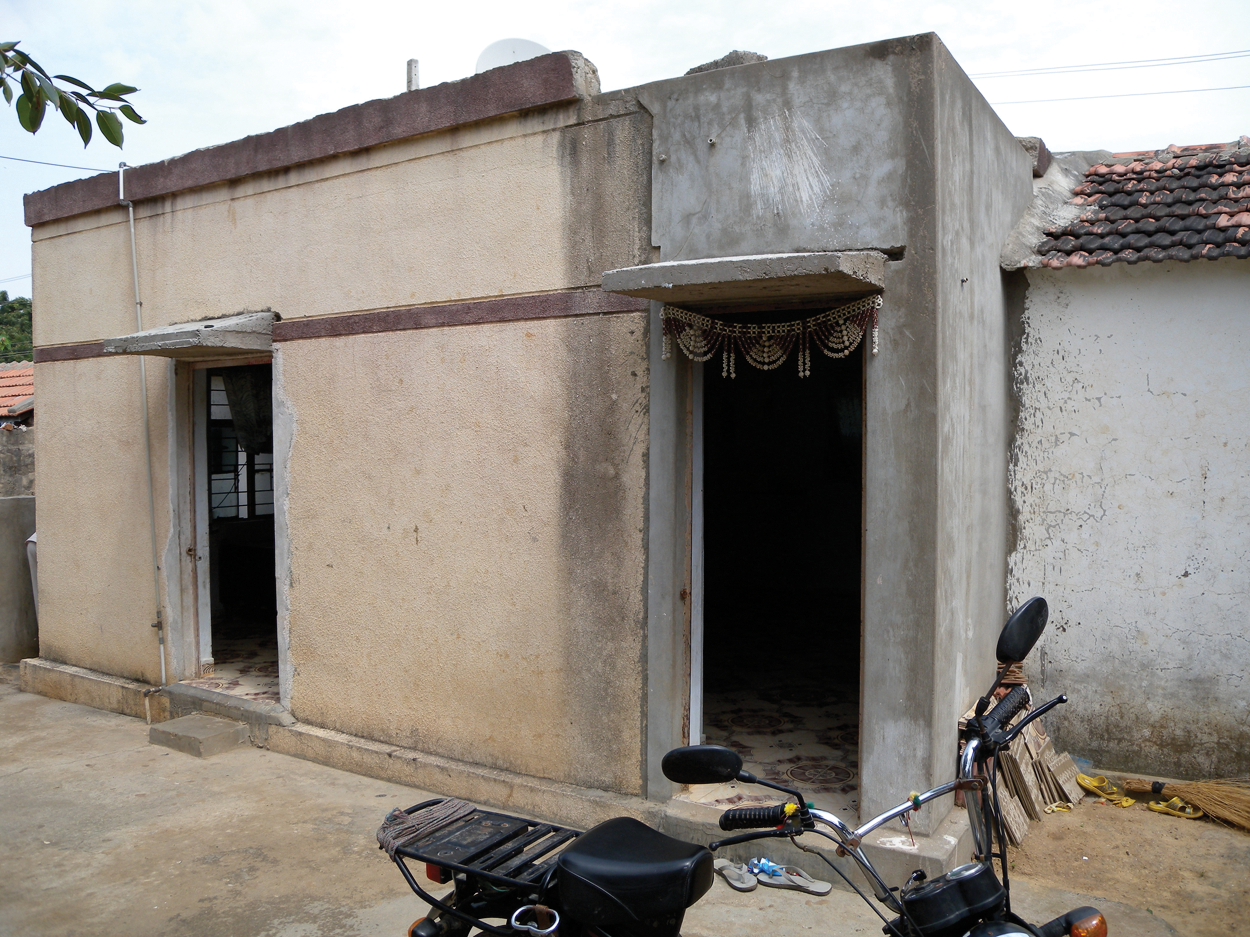
Adapted house
Unsurprisingly, the amount of extension and adaptation also related to affordability. Wealthy residents in the village of Bharudia had extended their houses, all but obliterating their original FICCI–CARE house.(6) In response to a compliment about her house by one of the research team, the owner indignantly stated: “Of course it’s good, I paid for it!” (The owner reported to have paid an additional Rs 300,000 on improvements and additions.) In Moti Chirai village, a wealthy owner had bought the FICCI–CARE house next door to his and had linked the two with a well-built central, two-storey building. While richer people could afford to extend, inevitably for poorer people this was not an option. One male resident of Kharoi village sleeps outside in a makeshift shack to enable his daughter, her husband and their two children to sleep inside. A farm labourer from Mankhel village stated that: “The size is too small for cooking and living.” He has built a separate kitchen outside and uses the shelter for sleeping. In time, he will have to extend the house, as currently it will not accommodate his growing family. Across the villages visited, the greatest number of those interviewed who said they liked their houses belonged to lower castes. Many stated that they were grateful to receive a house. For several of those interviewed, the houses represented an improvement on their original ones, and also a significant asset. One woman from Ajapar village stated: “We do not have any money to change the house; we cannot even mend the broken window. But we like the house and it is better than what we lived in before.”
In Ajapar village, several extensions were underway at the time of the research visit (Photo 3). Construction mimicked the FICCI–CARE design, to include a plinth and roof ring beams. However, in Nilpar village, one extension under construction had no in-built seismic resistance. Similarly, in Kharoi village, a large extension to a FICCI–CARE house included no seismic resistance measures. When asked why not, the owner, a blacksmith, said that the extension would be used only for storage. While this may be the case for now, future owners of the house may adapt this extension (which is larger than the original house) for living in.
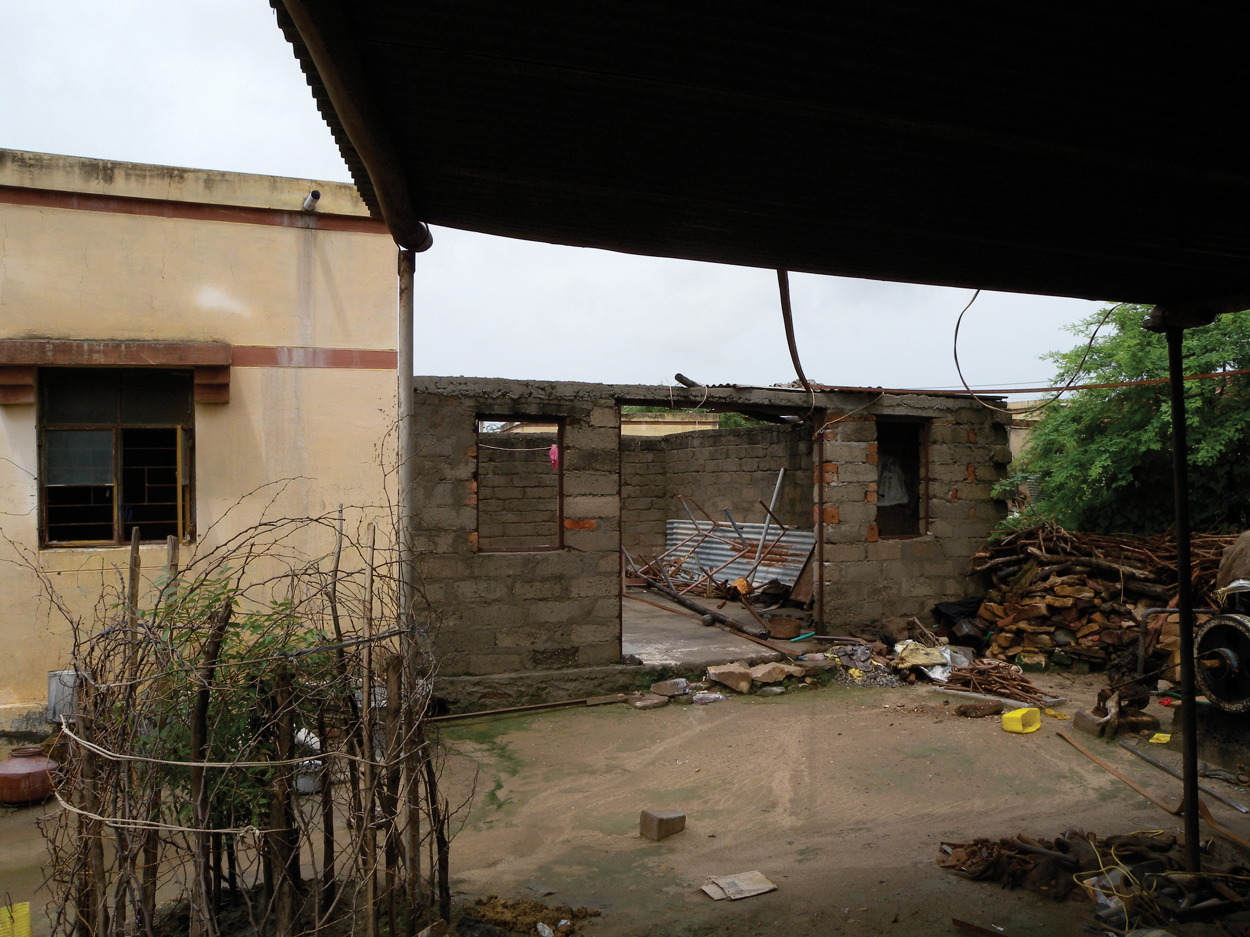
House extension at Ajapar village
e. Choice and involvement in design
Many of the residents interviewed were ambivalent about the design itself, i.e. they did not express either a like or a dislike of the layout. FICCI–CARE provided one design for all the villages visited. When asked about consultation, several village leaders said that before construction started, they had been taken to visit projects underway in other villages to see the designs. Some village leaders noted that choice had been limited – residents from Ajapar village reported that during design consultations they had requested a sloping roof and a verandah, but had been informed that this was not an option.
The village of Moti Chirai, FICCI–CARE’s largest project, involved the construction of a new village close to the location of the original, largely destroyed village. The relocation involved building 593 new houses and amenities following a layout of straight rows of closely packed houses (Photo 4). This was radically different to the original village, which had grown organically, with winding and varied roads and designs. At the time of construction the layout was controversial, and residents were unhappy with the “grid-iron design” proposed by a consultant from Delhi. According to a DEC monitoring report undertaken at the time, “…neither the house designs nor new layout … reflect successful resolution of complex caste and sub-group equations.”(7) The report describes how the design was rejected by the community and they commissioned their own independent design. This led to confusion when:
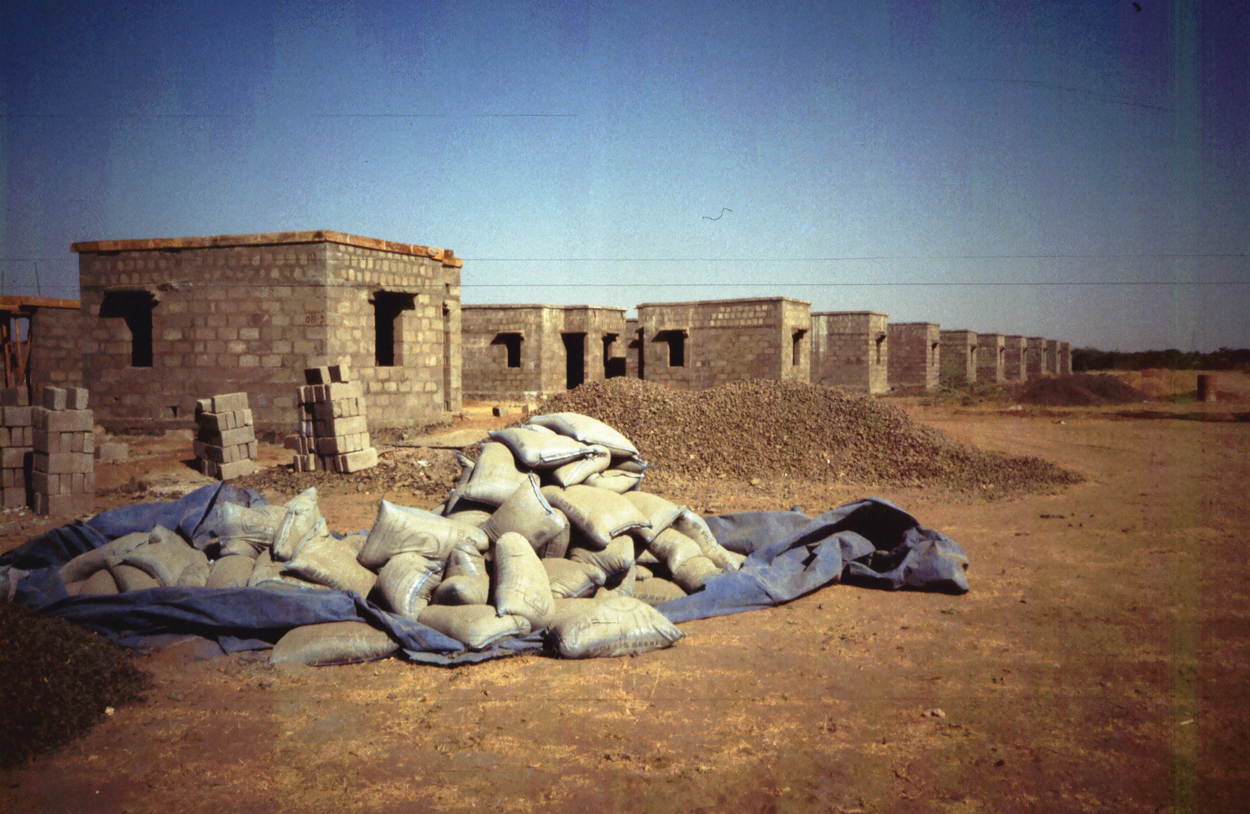
Moti Chirai, 2001
“The contractor was uncertain [on] which plan to follow, did not know at the time of site visit how many houses will be constructed, had not seen the service layout, and did not know who would provide and pay for them.”(8) The report concludes: “Neither the agency, nor contractor, nor community groups reflect confidence in the outcome.”(9)
However, nine years later, the prevailing attitude towards Moti Chirai among all those interviewed was positive. The focus of the village is a large temple built by residents, while the community centre, built by FICCI–CARE, is also used. (This, however, is not the case everywhere. In one village visited the purpose-built derelict health centre was “…not used from day one.”) As a predominantly wealthy village, many of the original houses have been extended and incorporated into newer, larger designs, several of these at great cost and involving hired architects. In nearly all instances, plots have been enclosed by walls and fences, usually up to about two metres high. With regard to perceptions of safety, the prevailing view was also positive: “The FICCI–CARE houses are strong” said one resident, adding “…we are safe.”
Moti Chirai today, however, is very different in planning and layout to the old Moti Chirai. The new village feels enclosed and separate (Photo 5). Not only is each house surrounded by a high boundary wall, cutting it off from the street and neighbouring houses, even the village temple is fenced and gated, in contrast to the open access to temples in other villages found in the region. This new feel to the village did not come about by mistake. During construction in 2001, two of the authors of this paper interviewed the then project manager, a retired military officer, who was certain that the residents would benefit from a “modern urban design”.
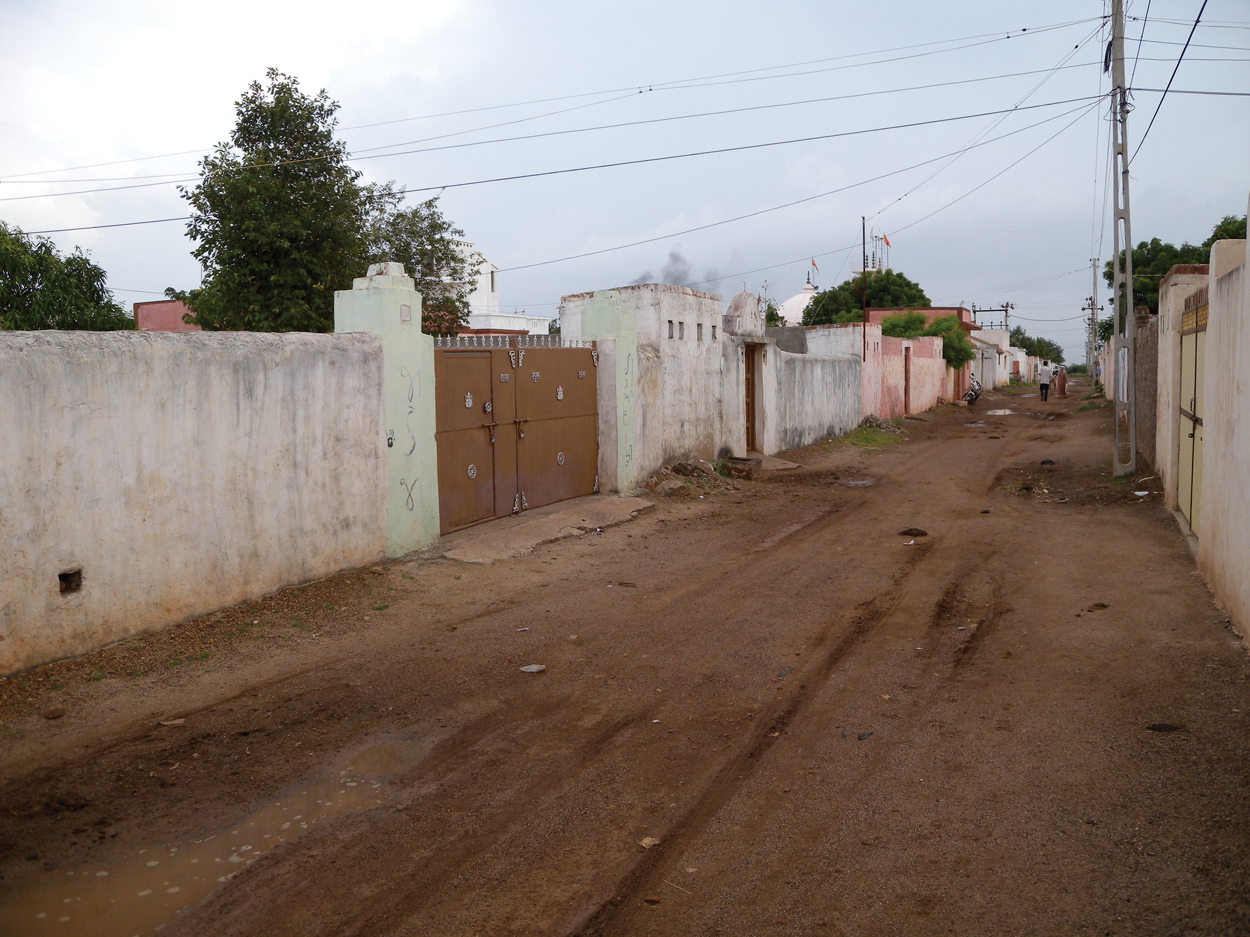
Moti Chirai, 2010
f. House selling
In Palansva village, a number of houses had been sold on by the original owners; in one street, of 12 FICCI–CARE houses, all had been sold (Photo 6). Three neighbouring houses, each with new owners, were visited. The first belonged to a woman who had previously been a tenant. She had bought the house in 2006 for a reported Rs 15,000 (about UK£ 200), and it was well maintained and cared for. The house next door had been bought in 2008 and had been substantially extended, with the overall floor area almost double in size and a staircase to the roof having been built. The third house had been empty since construction and had been bought in May 2010 for a reported Rs 110,000 (about UK£ 1,500). The new owner was in the process of renovating the house, which was in a poor state of repair and had termite damage to the walls.
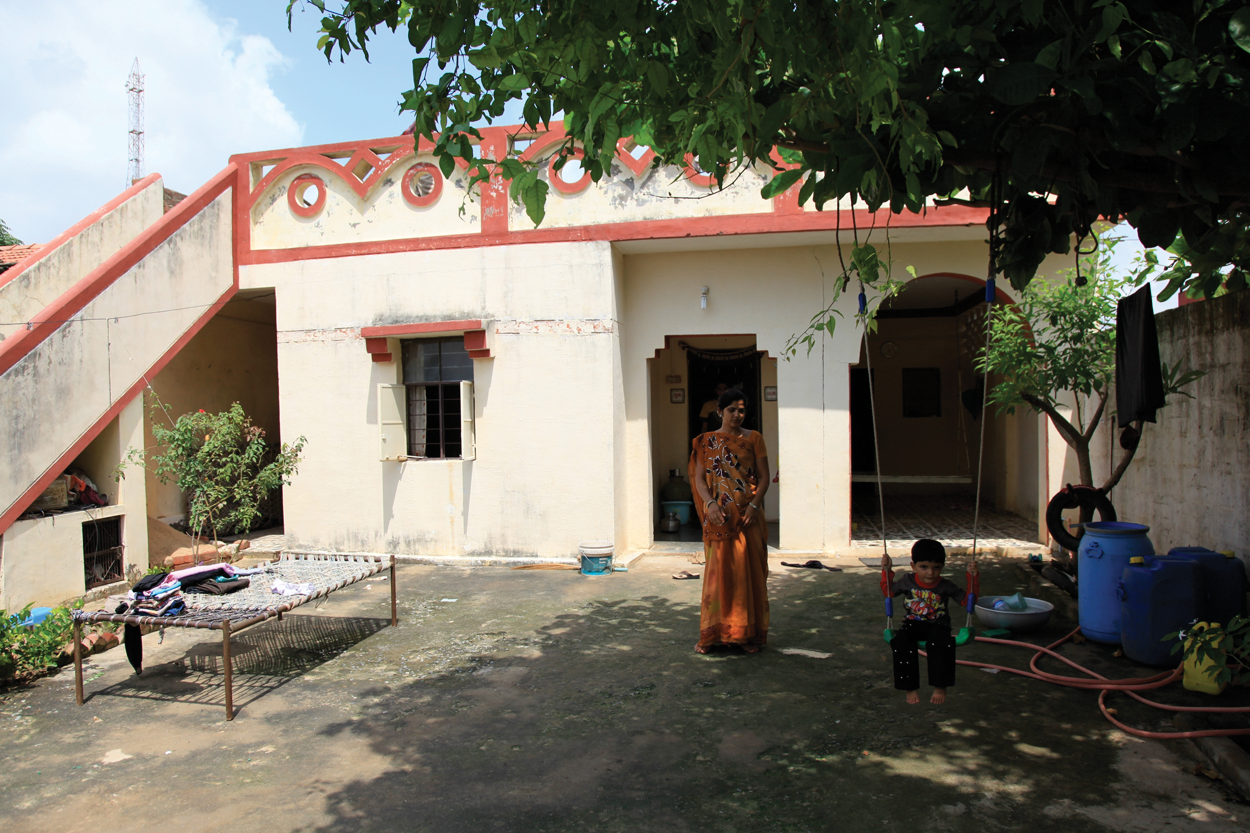
Purchased house, Palansva village, with extension and staircase to roof added by new owners
At the time of building, the possible selling of houses had been considered in an agency report that linked future potential selling to a lack of consideration of existing social structures and urban planning: “The design of the houses built together, outside the villages, [is] not taking into account the social geography of the village where different caste groups don’t want to stay together and therefore [risks] the possibility of some houses remaining vacant or being resold once handed over.”(10)
All the villages visited included several empty houses, which appeared not to have been lived in for some time, if at all. Of the villages visited, Lakhapar had the highest proportion of empty houses and Moti Charai the lowest number. When asked about these empty houses, neighbours often stated that absentee owners were living elsewhere, often in houses they had rebuilt – at their own expense – in the original locations of their previous homes. A resident in Palansva stated: “Many people did up their original houses and sold the new ones.” Such a phenomenon is not unusual across Kutch with, in some instances, an entire village lying empty.(11)
g. Perceptions of safety
Several residents stated that although they might experience discomfort related to heat and space, they were happy because they were “…in a safe house”, i.e. that their discomfort was a price worth paying for safety. Several homeowners, who were present at the home-building and remembered the solid blocks, felt reassured that their walls were “…extra strong.” Many said they knew this because they could not hammer any nails into the walls. Residents of Kotda village, however, were very unhappy about the likelihood of their houses withstanding an earthquake (despite the houses being to the same standard as elsewhere). “They’re rubbish!” said one resident. “There’s not enough mortar to hold the structure together… the roof is no good.” Another resident also mentioned that there was not enough mortar, while others believed that the houses were weak due to an absence of columns.
In several villages, the perception of safety was a concern. A woman in Bharudia village summed up concerns about the appearance of non-structural cracks in the external render of her wall: “We have children, we’re scared.” In Nilpar village, many of the recipients of FICCI–CARE houses said that they were scared. They pointed to cracks in the walls as evidence that the houses were not safe. One resident stated: “If my house cracks at a three (on the Richter Scale), then at a seven it will collapse.” Another resident said: “We feel very afraid when there are tremors.” Others cited leaking roofs as an indicator of overall weakness. Residents also pointed to a school built in the village by FICCI–CARE as part of the rehabilitation project, which had been abandoned due to fears over its safety. When external cracks in the render appeared, residents called in the state Public Works Department, who subsequently condemned the building for demolition. The cracks, however, are non-structural and are due, rather, to a natural process of building settlement. However, the resultant reputational damage to FICCI–CARE and lack of faith in their houses was evident in Nilpar and in the neighbouring village of Bharudia, where more than one resident considered FICCI–CARE “bad” regarding building safety.
Nilpar village is significant for FICCI–CARE, given that houses rebuilt here were the first to be completed and handed over in 2001. Some months after that handover, a monitoring visit found that the first resident to receive a house was sleeping outside and was using the house as a grain store. The reason he gave was that cracks had appeared in the walls and ceiling. Similar fears were observed in many residents, with one ‘lower caste’ woman in Bharudia stating that having seen the devastation of an earthquake once, she could not risk the lives of her children in a house where cracks had shown up both inside and out due to mild tremors in recent times. As one resident stated: “We have had 653 tremors since 2001.”
The point here is that even though the cracks were non-structural, the fear of building collapse was so high among the population that any small cracks would indicate building weakness. Seemingly, no one had explained to residents or users of the school that settlement and non-structural cracks in buildings were to be expected.
III. Discussion
NGO engagement in post-disaster reconstruction has gained more attention since the 2004 Asian tsunami, where in several instances, large-scale international NGO shelter building programmes were found to be weak as a result of poor construction, choice of location and lack of participation.(12) This study concerns the reconstruction of permanent housing by one NGO, which in itself is less common compared to many post-2001 NGO shelter programmes that were involved in building temporary or transitional shelter.(13) The purpose of this study, therefore, is to ask: What lessons can be drawn from the building of permanent houses by FICCI–CARE? Some findings are detailed below.
The domination of a “seismic resistant design”
The aim to “build back better” is the focus of much post-disaster reconstruction. Regarding this project, the desire has been dominated by the need to provide structural durability in the face of future earthquakes. While no one would disagree that this is vital, it appears that this concern has ignored other issues such as comfort, adaptability for improvements and ease of extension, which appear to have been largely sacrificed. This need not have been the case – a wider consideration at the design phase could have accommodated seismic resistance, cultural appropriateness and comfort. This observation is supported by a review of the project, undertaken in 2001, which found that “…somewhere, the purpose for which the activities were to be implemented has got lost. There was no tracking of … whether the houses designed were comfortable to different caste groups and would be habitable.”(14)
Community perceptions and beliefs are important
A well-executed and structurally sound construction project can suffer a loss of confidence from the eventual residents due to the mere appearance of non-structural cracks as a result of settlement, or shoddily executed non-structural elements such as wall plastering or roof waterproofing. This kind of reputational damage to FICCI–CARE was evident in Nilpar, where a structurally sound school was unused and, at the time of writing, was due to be demolished by the government. This is understandable – the visible nature of these cracks causes great distress to local residents who have seen children die in school collapses during an earthquake. The trust deficit thereby created has spilt over to the houses and has generated a belief that they too were poorly built. Perhaps this reputational damage does not even come to the notice of the agency, as it emerges after the completion of the project and project evaluations. The process of engagement, raising awareness among the general public and training of construction workers has therefore either been missing or has been superficial. If there was awareness among the people and skilled local workers were available, there would be greater faith in the seismic resistance features of the houses and less fear would be generated by the settlement cracks.
Look to tradition
A rapid post-disaster assessment of which houses remained standing after the earthquake and why would have helped in the design of culturally and seismically appropriate housing. Traditional housing systems are too often ignored or, worse still, deliberately over-ridden with alien and often inappropriate designs, materials and technologies. In Gujarat, the traditional system that includes house, verandah and courtyard is missing in the FICCI–CARE housing. The traditional construction that leads to “breathing houses”, i.e. that provides modes of ventilation, has also been lost in the shift towards externally imposed systems that have higher construction costs and increased costs of cooling (for those who can afford electricity and coolers). More distressing is that local people may be forced to believe that all that is traditional is passé and should be looked down upon.
Post-disaster housing is a development concern
The houses designed and built provide protection from the elements, but in many ways have proven to be unliveable. The need to see the new structure as a home was voiced by several residents. As one stated: “We need a home, not a shell.” The current tendency of post-disaster housing providers to see the response as an “…emergency response in the shelter sector”, as opposed to the emerging need to view it as a “…housing intervention in an emergency context” represents two different approaches. Adopting the latter would mean a more detailed and thought-out process, with the engagement of house owners, and would definitely require more intensive efforts; but at the same time it would lead to greater success in terms of acceptability through a sense of ownership. A different perspective at the relief/recovery stage might therefore be required, which involves the consideration that houses for poorer people will provide probably their largest asset.
IV. Towards Better Post-Disaster Housing
From this study and from other examples of post-disaster housing reconstruction programmes, similar themes emerge.(15) These concern trade-offs between the ability to withstand future disasters, the future usage of houses in years and decades following a disaster, and the involvement by people themselves in the process and the eventual product, i.e. a home to live in.
Too many post-disaster aid recovery housing programmes do not work well enough. The publication Lessons from Aceh, which documents good practice in rebuilding based on house building lessons from the 2004 Asian tsunami, opens by providing something of a warning to aid agencies: “For a humanitarian agency, the decision to engage in reconstruction – and what type of assistance to provide – needs to be taken cognisant of the complexities.”(16) More recently, lessons emerging from post-disaster rebuilding in Haiti after the January 2010 earthquake point to dissatisfaction with NGO-led shelter building programmes.(17)
Very often, reconstruction is seen as a building project delivering
“Instant housing ‘solutions’ are notoriously inappropriate in layout and technologies, particularly in relationship to habits and lifestyles. Site plans are often overly provided with public and unspecified use. Undifferentiated house types and lot sizes fail to take account of individual family needs or cultural differences, nor of differences of commercial potential related to site location.” (16)
How then can pressed aid agency programme managers strive to improve housing delivery? A contribution to this problem is intended in the equation shown in Figure 1, which proposes that good post-disaster housing is a product of three factors: durability, i.e. it can withstand future shocks and stresses to a reasonable degree; adaptability, considering the wider and longer-term concerns regarding materials used, ownership and usage; and finally, people, i.e. the active engagement and interest of those for whom the houses are intended.
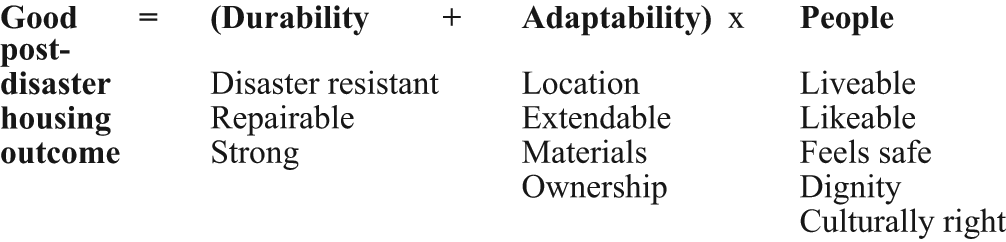
Good post-disaster housing outcome equation
The purpose of the equation is to provide a deliberately simple “aide-memoire” to future NGO house-building managers as a reminder of key elements to consider in a post-disaster housing programme.(19) The equation is written wherein “people” is the multiplier, i.e. if people are not considered, then the end result would be zero and the housing would therefore not be good. The point of this is to emphasize the importance of people’s engagement in process and decision-making, which echoes Turner’s description of housing “as a verb”,(20) i.e. an ongoing process within people’s lives and livelihoods. This concept could – and should – also be extended to post-disaster reconstruction.
This strong focus on people is for three reasons. First, too many post-disaster housing projects that did not adequately involve people have indeed resulted in failure. In Gujarat alone, this can be witnessed by the many “ghost villages” built, which to date remain empty; for example, Vondh, where of the 847 units built, nearly all remained empty several years after completion, with villagers preferring to rebuild their original village rather than shift to a new location.(21) A second reason is to force development-oriented approaches of participation in decision-making. Scope for participation is wide-ranging, from consultation to people building themselves. Evidence from the tsunami points to greater building efficiencies in house building, for example regarding speed of build when people themselves are given greater control over housing processes.(22) A third and final reason is to find resonance with Robert Chambers’ challenging question for NGO practitioners: “Whose reality counts?”(23) Chambers’ question forces the consideration that post-disaster housing is ultimately about those who eventually live in NGO-provided housing long after the recovery arms of many NGOs have departed. To these ends, for good housing to result, the answer to Chambers’ question can only be
Footnotes
1.
As per the Indian Meteorological Department. According to the US Geological Survey it was MW 7.7.
2.
Initial estimates for casualties were closer to 20,000 but were downgraded by the Gujarat State Disaster Management Authority to 13,800 after the completion of compensation processes. Unofficial estimates for casualties remain in excess of 20,000.

5.
The damage assessment format finalized by the Gujarat government was based on a five-point scale ranging from G1 (very little damage) to G5 (complete destruction).
6.
FICCI–CARE’s reconstruction programme related to level of building damage rather than wealth or poverty. As a result, houses were built equally for rich and poorer households.
7.
Shah, K (2001), “Appendix V: Shelter component of the rehabilitation work by DEC partners”, in T Vaux, DEC Gujarat Earthquake Evaluation, London, page 6.
8.
See reference 7.
9.
See reference 7.
11.
Sanderson, D and A Sharma (2008), “Winners and losers from the 2001 Gujarat earthquake”, Environment and Urbanization Vol 20, No 1, April, page 177.
12.
Ruwanpura, K (2009), “Putting houses in place: rebuilding communities in post-tsunami Sri Lanka”, Disasters Vol 33, No 3, pages 436–456.
13.
For papers on transitional shelters see, for example, Leon, E, I Kelman, J Kennedy and J Ashmore (2009), “Capacity-building lessons from a decade of transitional settlement and shelter”, International Journal of Strategic Property Management Vol 13, pages 247–265.
14.
See reference 10, page 13.
15.
Aysan, Y and P Oliver (1987), Housing and Culture after Earthquakes: A Guide for Future Policy-making on Housing in Seismic Areas, Oxford Polytechnic, Oxford.
16.
Da Silva, J (2010), Lessons from Aceh; Key Considerations in Post-disaster Reconstruction, Practical Action Publishing, Rugby, page 12.
17.
Clermont, C, D Sanderson, A Sharma and H Spraus (2011), DEC Study of Member Agencies’ Responses to the Earthquake in Port au Prince, Haiti, Report for the Disasters Emergency Committee (DEC), London, 30 pages.
18.
Lyons, M, T Schilderman and C Boano (editors) (2010), Building Back Better. Delivering People-centred Housing Reconstruction at Scale, Practical Action, Rugby, page ix.
19.
It would be very easy to make the equation far more complicated!
20.
Turner, J (1972), “Housing as a verb”, in J Turner and R Fichter (editors), Freedom to Build: Dweller Control of the Housing Process, Macmillan, New York, pages 148–175.
21.
See reference 11.
22.
23.
Chambers, R (1995), “Poverty and livelihoods: whose reality counts?”, Environment and Urbanization Vol 7, No 1, April, pages 173–204.