



Abstract
A product service system composed of products, services, hardware and software support, and stakeholders enhances the added value and competitiveness of products through resource integration. To reduce the input in servitization and improve feasibility, manufacturers tend to construct a product service system based on existing products to meet the demands of customers, instead of constructing a completely new product service system. Therefore, this article presents a spiral evolutionary design method to construct a product service system based on existing products. With the ultimate goal of the system evolution being the maximization of the use of existing products while satisfying the demands of customers, the system performance will be spirally upgraded under the guidance of the system evolution chain through the operation of the system symbiotic ring. The construction of a mobile fire extinguishing product service system based on existing fire-fighting equipment was used as an example to illustrate the feasibility of this methodology. Finally, a feasibility evaluation system was established to evaluate and compare the previous product service system methodologies with the methodology in this article.
Keywords
Introduction
The competition pressure of homogeneous products, demand for green sustainability, and growing emphasis on user experience have forced manufacturers to transform from the simple design and manufacturing product mode to the total solution (i.e. providing products and services to customers) mode. 1 More precisely, a product service system (PSS) is a concept adopted by manufacturers to adapt to this transformation and thereby improve competitiveness. 2
In the modern global economy, the PSS strategy is increasingly popular among manufacturers, 3 including IBM (from hardware to software supplier and then to service provider), Apple (from personal computer manufacturer to high-end consumer electronics and service provider), and Monetti S.P.A. of Italy (from refrigerator manufacturer to integrated service provider of cold chain logistics based on refrigerator manufacturing). 4 PSSs have significantly improved in utilization, reliability, design, and protection compared with the product. 5 With an increasing number of manufacturers considering a PSS as an important strategy of transformation and development, 6 the previous PSS design methodologies that focused on meeting customer needs could not satisfy manufacturers’ demands for feasibility.
Theoretically, it is a very promising strategy for binding services to products. However, the means of binding services to products cannot necessarily achieve the expected return for an enterprise in reality. 7 For example, some three-dimensional (3D) printer manufacturers provided instant 3D printing services for artists and designers. It did not make a profit although they extend customer value. 8 In addition, the management of a PSS strategy is more complex than that of the conventional method of delivering products. 9 For profitability of the PSS business model, it requires medium long-term investments instead of short-term investments. 10 Many manufacturing enterprises, especially small- and medium-sized enterprises, cannot bear the losses of a PSS project because its implementation requires a large amount of input not only for finance, manpower, and time but also for organization, sale, licensing, and consulting resources. 11 Jiang et al. 12 proposed a concept based on the existing product to reduce the burden of enterprise service transformation.
This article proposes an evolutionary design methodology to construct a PSS based on existing products. The remainder of this article is organized as follows. The “Literature review” section discusses the shortcomings in the enterprise feasibility of parallel PSS design methodologies and evolutionary design methodologies. The “Research methods” section details the spiral evolutionary design methodology (SEDM) for the construction of a PSS based on the existing products. In addition, the spiral evolution design procedures and models of a PSS are proposed; the concept, classification, and weight determination of system performance units (SPUs) are discussed; and a design structure matrix (DSM)–based service module construction methodology is introduced. The section also introduces the construction method of the system evolutionary chain and system symbiotic ring. The section of Evolutionary design example from a mobile fire pump to a mobile fire extinguishing system verifies the feasibility and effectiveness of the SEDM for PSSs (SEDM-PSSs). The “Discussion” section discusses the advantages and contributions of the SEDM-PSS through feasibility comparison with the parallel PSS design methodologies, and discusses the application, limitations, and future work of SEDM-PSS.
Literature review
With increase in the research on PSSs, the mainstream design idea evolved from the design methodologies of product-first-service-later to the parallel design methodologies of synchronizing products and services. Parallel PSS design methodologies are mainly divided into the knowledge- and constraint-based parallel design methodologies. The knowledge-based parallel design methodologies achieve parallel design through integration, coordination, and management of multi-field and multi-disciplinary knowledge. Disagreement among multi-knowledge sources is resolved through an expert system or a blackboard mechanism.13,14 The constraint-based parallel design methodologies express design problems through a constraint network and use search algorithms to determine the optimal solution for all variables satisfying the constraint in the network. 15
However, these PSS design methodologies are more or less deficient from the perspective of enterprise feasibility because of the following two main reasons. (1) Disengagement from manufacturing capacity and service capacity: the transformation and upgrade from a product to a PSS requires the consideration of not only the customer’s needs but also the current production and service capabilities of the manufacturers. The parallel design methodologies often construct the system from scratch based on customer needs, thus lacking the necessary inheritance. As a result, this design ignores the status quo of the manufacturer at the conceptual design stage, and the design results often exceed business capabilities or exceed the investment budget. (2) The design process is long and the evolutionary capability is low: the parallel design methodologies show a vertical jump from conceptualization to implementation, and thus cannot be applied to evaluate the result at each step. In addition, the design results cannot evolve continuously. Once the design goal is met, the system can only be redesigned. These design methodologies do not conform to the objective law that business capability and customer demand gradually increase with the development of technology and society.
Rosenman 16 presented an unconventional design model. They constructed a bottom-up multilayer evolutionary iterative model to achieve the design goal through intersection, splicing, and mutation of elements without a directly applicable design methodology. It was the beginning of early work in the evolutionary design study. Tay and Gu 17 presented an evolutionary design methodology of a product based on functional modules. Maurer and Lindemann 18 and Chen et al. 19 made minor changes to the existing products step by step so as to meet the demands of customers. This progressive design mode is more consistent with the gradual development pattern of manufacturers. Lachmayer et al. 20 presented the concept of technology integration, establishing the technical system of information movement inheritance based on the principle of biological evolution. Boehm 21 proposed a spiral model in the process of software development; the idea was to transform each design activity of demand analysis and software implementation in the design process from the conventional straight-line and sequential process into the spiral curve process with several iteration loops.
In this article, we proposed an SEDM-PSS based on existing product to improve feasibility. Compared with the previous PSS design methodologies, SEDM-PSS mainly has two innovation points. (1) Innovation in design thinking: most of the existing PSS design methodologies are created from the perspective of customers. The ultimate goal of them is meeting customer demand. SEDM-PSS are created from the perspective of enterprise feasibility, with their ultimate goal being the maximization of the use of the existing product module while meeting customer demand, which is the main priority. In addition, the enterprise investment is fundamentally reduced from its conceptualization stage through SEDM-PSS, which is more conducive than the previous design methodologies of reducing the investment and risk of an enterprise’s service-oriented transformation by considering the construction of PSSs based on the existing products and services in the early design stage. The system evolutionary chain of a PSS was established according to the weight sequence of system performance for customer demand. This progressive design mode can directly implement the periodic design results to occupy the market as early as possible; it is convenient for enterprises to verify the design scheme and optimize it timely. (2) Innovation in design process: the total design process of the mainstream parallel design methodologies is demand–objective–solution, which is a one-way linear design process. In the SEDM-PSS, the products and services spirally evolve with the operation of the symbiotic loop of all system levels under the guidance of the system evolutionary chain. Compared with the parallel design methodologies, the scheme obtained in SEDM-PSS can be iteratively optimized by improving the system evolution chain to meet the higher needs of customers and improve the sustainability of design research and product recycling. Moreover, the SEDM-PSS is helpful for reducing the difficulty in the design and improving the design efficiency because the design task is decomposed into a gradual process to meet the system performance of customer demand during the evolution process, making the design task of the stage clearer and more concise.
Research methods
From the customer’s point of view, the characteristics of constant iteration in the evolutionary design methodology can satisfy customer needs in real time. From the perspective of the manufacturer, SEDM-PSS supports enterprise to establish PSSs with adjustment of the current product, organization, and system as few as possible. There are two tasks that need to be completed in the evolutionary process of a product to a PSS. On one hand, some product modules need to be optimized to satisfy the customer requirement for physical layer. On the other hand, service modules need to be introduced to improve system performance, so as to satisfy the use purpose and expectation of customer.
SEDM-PSS
This article presents the SEDM for the construction of a PSS based on an existing product. The specific procedure is as follows:
Determination of the existing product module: the structural module and main components of the existing products are designated as the level 1 system; this is the starting point of the evolution.
Determination of the requirements for system performance: the service evaluation tools 22 are integrated with the generalized comprehensive performance of modern mechanics 23 to determine different customer values corresponding to the SPU.
Determination of the SPU weighting sequence: system performance is broken down into SPUs by using the fuzzy analytic hierarchy process 24 in the hierarchical model. The construction of a fuzzy judgment matrix determines the weight sequence of each SPU.
Service modularization: service modulation division is performed through the analysis of internal information flow of the existing service component and the service component based on the DSM. 25
Construction of a system evolutionary chain: the system evolutionary chain shows the direction of the evolutionary design. To improve the design efficiency, this article constructs the evolutionary chain through the combination of system performance weight sequencing and the sequencing of correlation degree in the descending order of the structural and symbiotic service modules with the SPU.
System symbiotic operation: the gradual incorporation of symbiotic service modules forms a new PSS module based on the evolutionary chain. The operation is complete when the system symbiotic ring satisfies the corresponding SPU.
System spiral upgrade: system performance attains a spiral rise by following the operation of the system symbiotic ring. According to the direction of the evolution, the system receives an upgrade as each SPU is satisfied, and the evolution is complete once the system performance meets the demands of customers.
The existing product is defined as a level 1 system, the system evolutionary chain is regarded as the vertical axis, and the system symbiotic ring is considered as the horizontal axis. The SEDM-PSS (see Figure 1) based on an existing product was constructed according to the spiral rise of characteristics of system performance in the evolution process. Designers can derive the phased evolutionary results based on experience and implement them as program alternatives. With the increase in the development of technology and customer needs, the previous PSS programs obtained from the evolution can be assigned as the level 1 system, and the evolution continues.
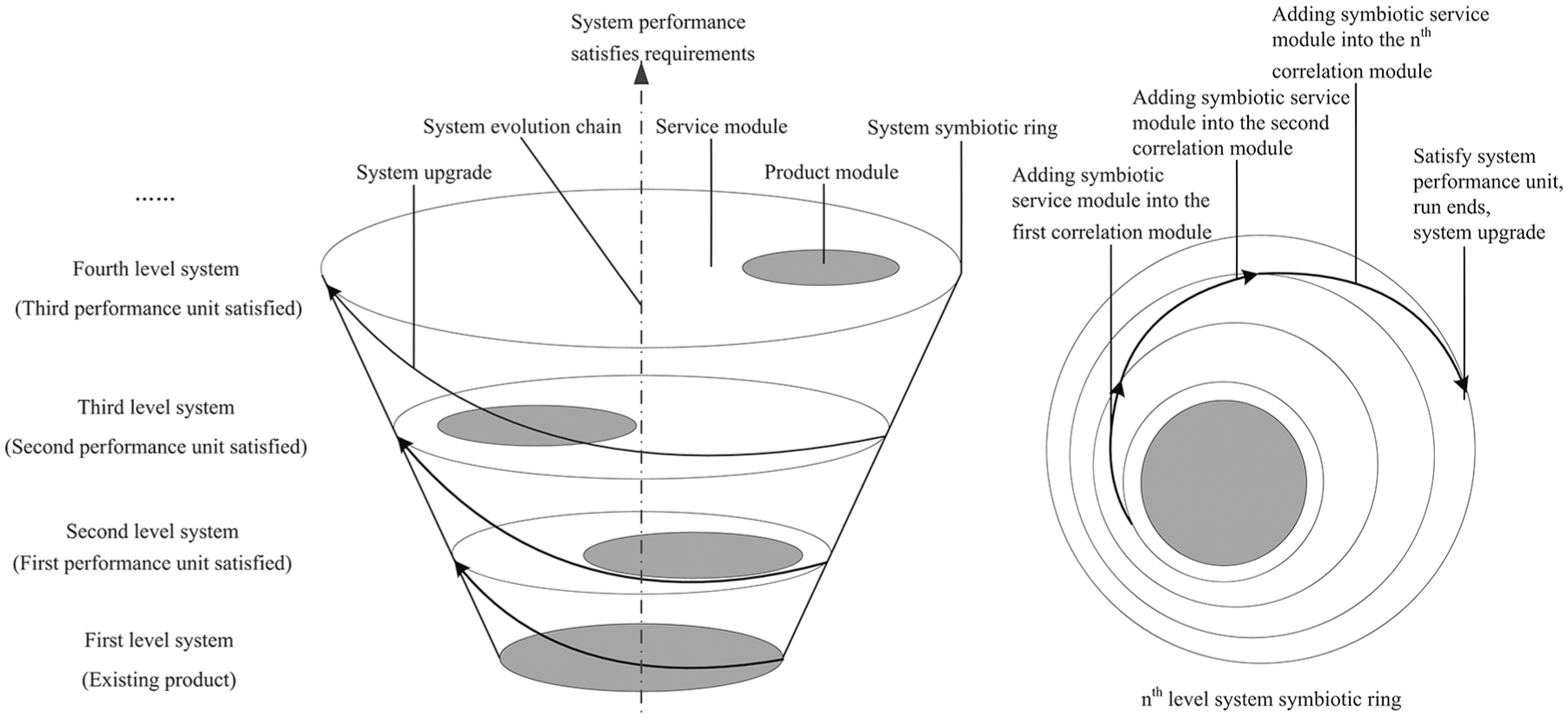
Construction of the spiral evolution design model for a PSS based on an existing product.
The level 1 system in the model is based on an existing product. Existing products and services also can be used as level 1 system if the enterprise which has some service components implemented wants to construct PSSs based on existing products and services. The existing service components can be gradually merged into service modules which will be added in the process of system upgrade.
PSS system performance
In product design, the performance includes the product function and quality that reflect the symbiotic expectation value of the customer for the product function, behavior, structure, and scenario. Performance covers more content than just product function. 26 This article presents the concept of system performance, which includes system function and functional quality that deliver a more complete customer demand value and more accurate objective in the subsequent design. The SPU in a PSS is system oriented and is defined as the single system performance requirement that is broken down to the base of the system.
According to the service evaluation tool 22 and the generalized comprehensive performance of modern mechanics 23 , Customer value can be divided into six category of system performance (reliability, timeliness, credibility, interactivity, social, and economic), which correspond to 25 SPUs, as shown in Table 1.
Customer values and system performance classification.
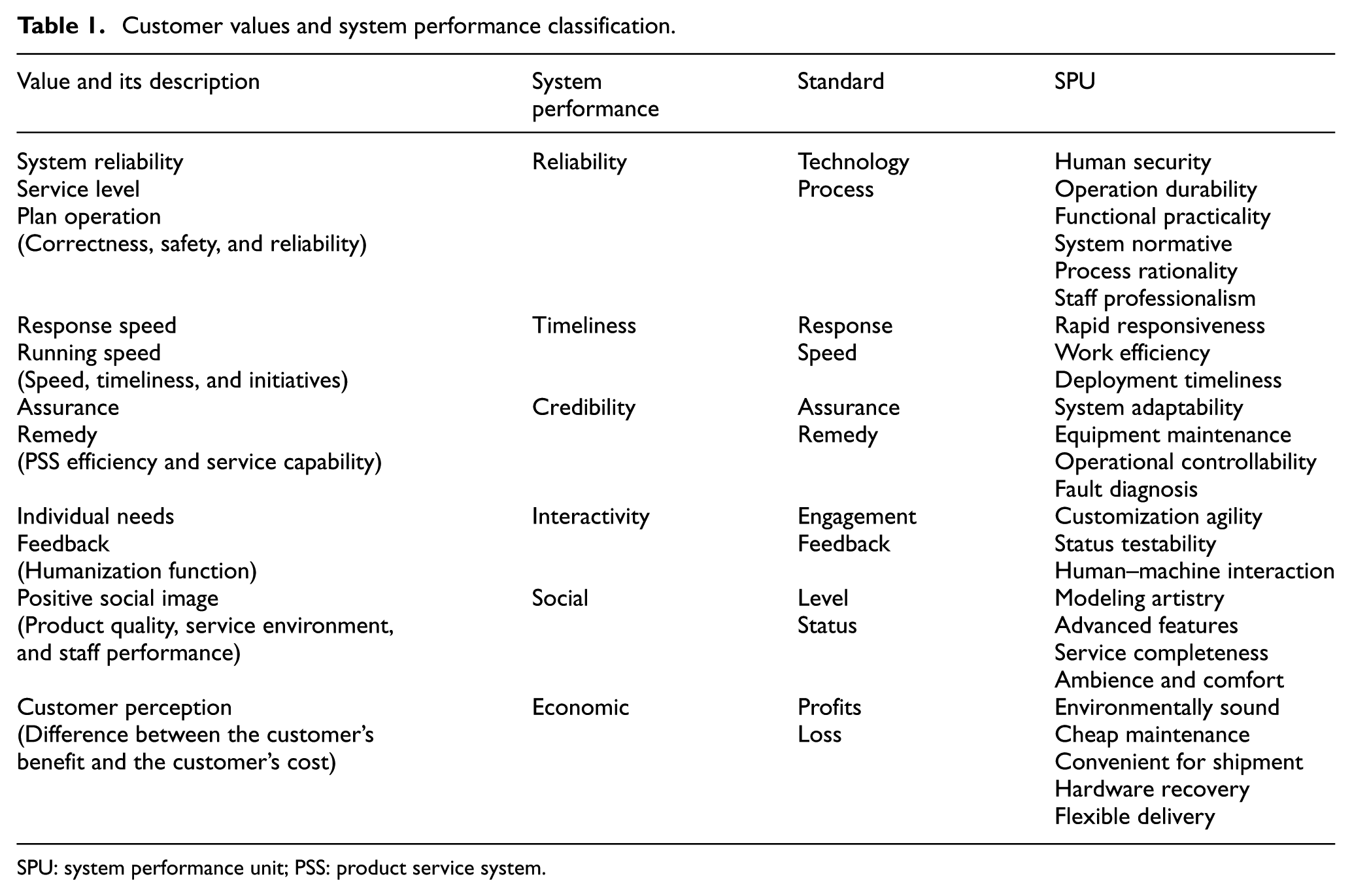
SPU: system performance unit; PSS: product service system.
DSM-based service modularization construction method
Modularization strategies are widely used to break down complex tasks into relatively simple activities, thereby improving design efficiency. 27 The use of a DSM is flexible for application to the modeling, mapping, relational construction, and interaction of elements within complex systems. 25 The existing and planned service processes are built into the service module by using three procedures: 28
Relation between service components: the relation between service components is divided into three categories: independent, one-way dependence, and two-way interaction. If the information is an input from service component A to service component B, then it is labeled “A points to B.”
Construction of matrix: if service component A points to service component B, then the Bth row and Ath column of the matrix is 1. If the interdependent relation between service components A and B does not exist, then the matrix value is denoted as 0. The diagonal line of the matrix represents a black box, which is meaningless.
Matrix partition: the service components are clustered by rearranging the matrix according to the partitioning algorithm. 29
System evolutionary chain and system symbiotic ring
SPU weight sequencing in an evolutionary chain constructs a matrix by calculating the weight determination by using a fuzzy analytic hierarchical process (FAHP), which is a weight determination method based on the fuzzy consistent judgment matrix 21 that can catch the uncertainty of human thinking. 28 First, the hierarchical model of the system performance was established by dividing the weight analysis system into the highest level (target level), intermediate level (criterion level), and lowest level (performance level) performance units. The relative importance of SPU pair comparison in the base layer is denoted as v, and for n number of SPUs, the weight judgment matrix can be obtained according to the aforementioned scales
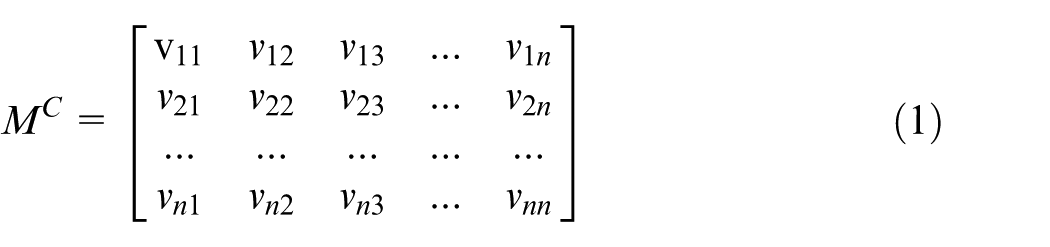
The formula that solves the judgment matrix is as follows 30

Weight W B of the intermediate layer can also be obtained according to the above-mentioned steps; then, the total weight of the SPU is calculated as

The product module and SPU correlation sequencing in the evolutionary chain were calculated by summing the degree of correlation between the component and SPU in the module. The symbiotic service module and SPU correlation sequencing were indirectly calculated using the correlation sequencing, relevant product module, and SPU correlation sequencing of the product module, along with the comprehensive symbiotic service module. Assume that the SPU has n number of relevant structural modules; then, the degree of correlation for all symbiotic service modules of the jth relevant structural module is

If the service module is related to the
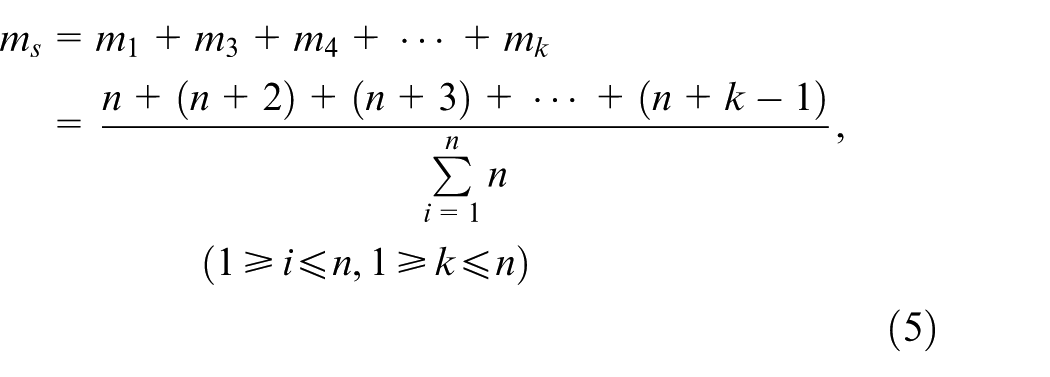
According to the structural module, symbiotic service module, and the SPU degree of correlation in the descending order in the evolutionary chain, the gradual introduction of the service module into the system symbiotic ring results in the spiral rise of the SPU. When the operation of the system symbiotic ring corresponding to the SPU meets the demand, the system receives an upgrade.
Evolutionary design example from a mobile fire pump to a mobile fire extinguishing system
A certain firefighting-equipment-manufacturing company hoped to construct a mobile fire extinguishing system based on the structure of an existing mobile fire pump. The PSS scheme must be considered throughout the product life cycle because manufacturing companies offer through-life support for products to guarantee their performance, 31 and product modular divisions are oriented according to the life cycle of the segmentation approach. Therefore, products were divided based on the following six indices to establish the modular product classification principles: functional relationship, spatial position relationship, connection relationship, lifetime relationship, material compatibility, and recyclability.
First, all structural components of the mobile fire pump were built into a matrix and divided into product modules. The pump contained 7 product modules and 22 components, as shown in Figure 2.
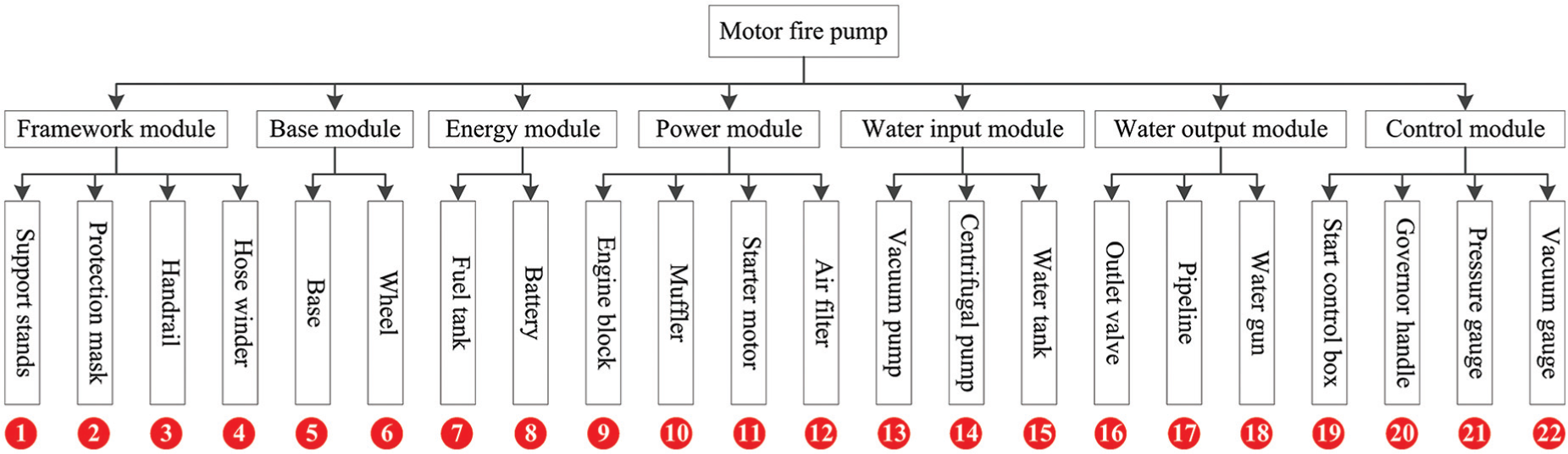
Product structure of an existing mobile fire pump.
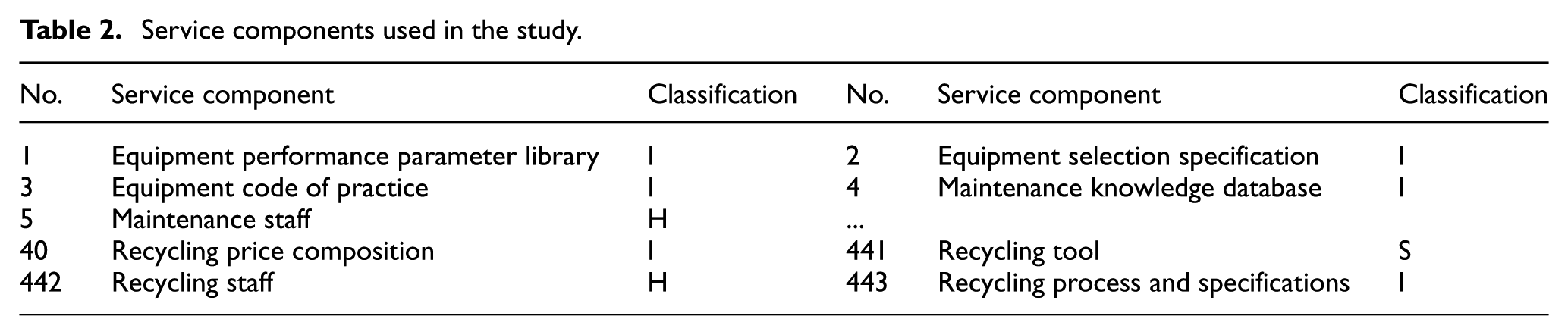
Second, the customer demand for the SPU was determined by combining a user survey with the customer demand value in Table 2 to create the hierarchical model of the system performance for the mobile fire extinguishing system. Then, the weight judgment matrix was obtained using FAHP. By using equations (1)–(3), the SPU weight sequence was obtained, as shown in Figure 3.
Service components used in the study.
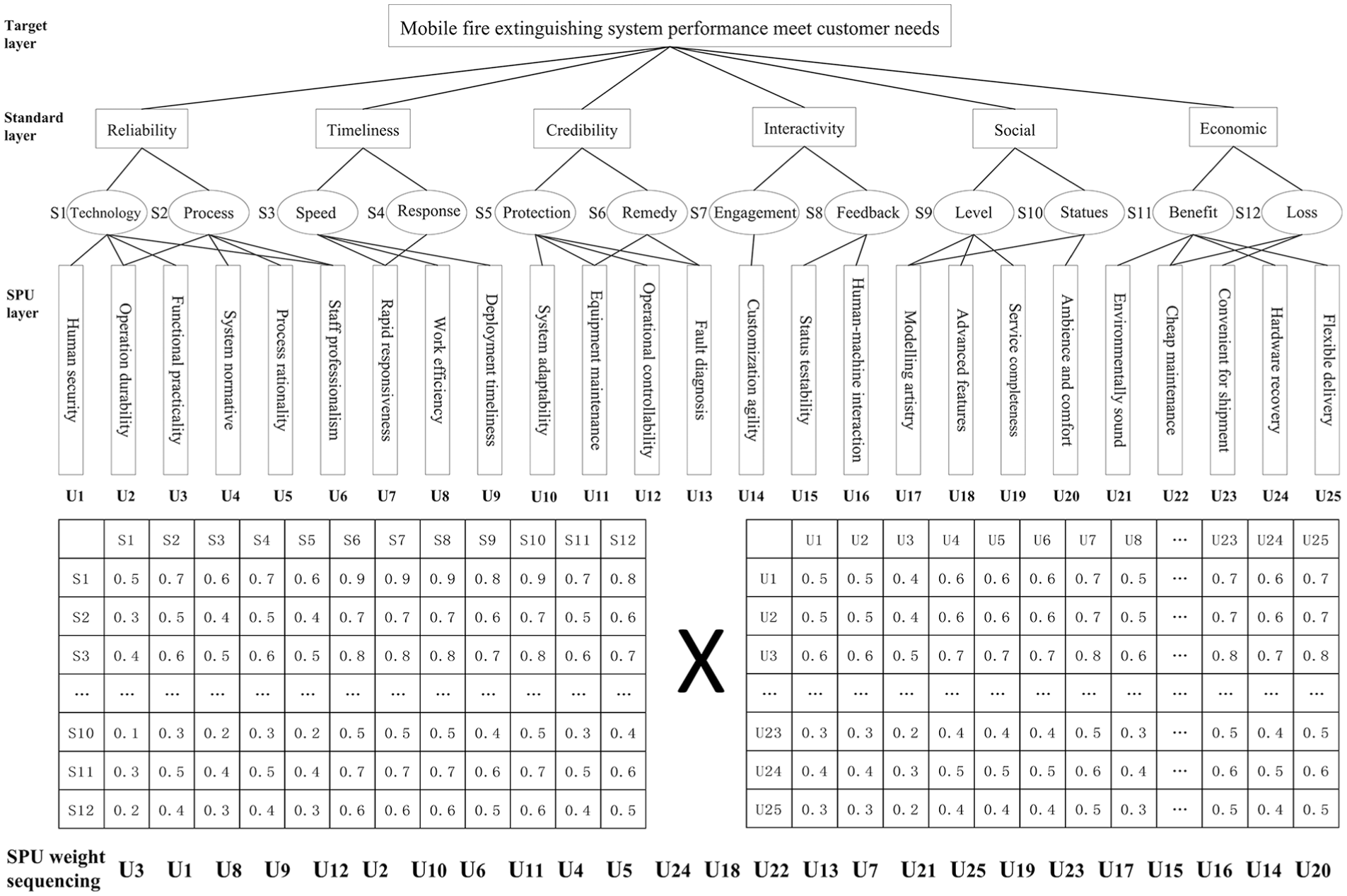
SPU weight sequencing for a mobile fire extinguishing system.
Third, the existing service components and service components that the manufacturer plans to add were modularized through DSM. The existing service components and 44 service components to be added were determined, and then divided into information (I), equipment (S), and personnel (H) classes, as shown in Table 2. The constructed matrix underwent matrix partition that formed training, spare parts supply, routine maintenance, troubleshooting, delivery distribution, field service, factory service, and scrap recycling, as shown in Figure 4.
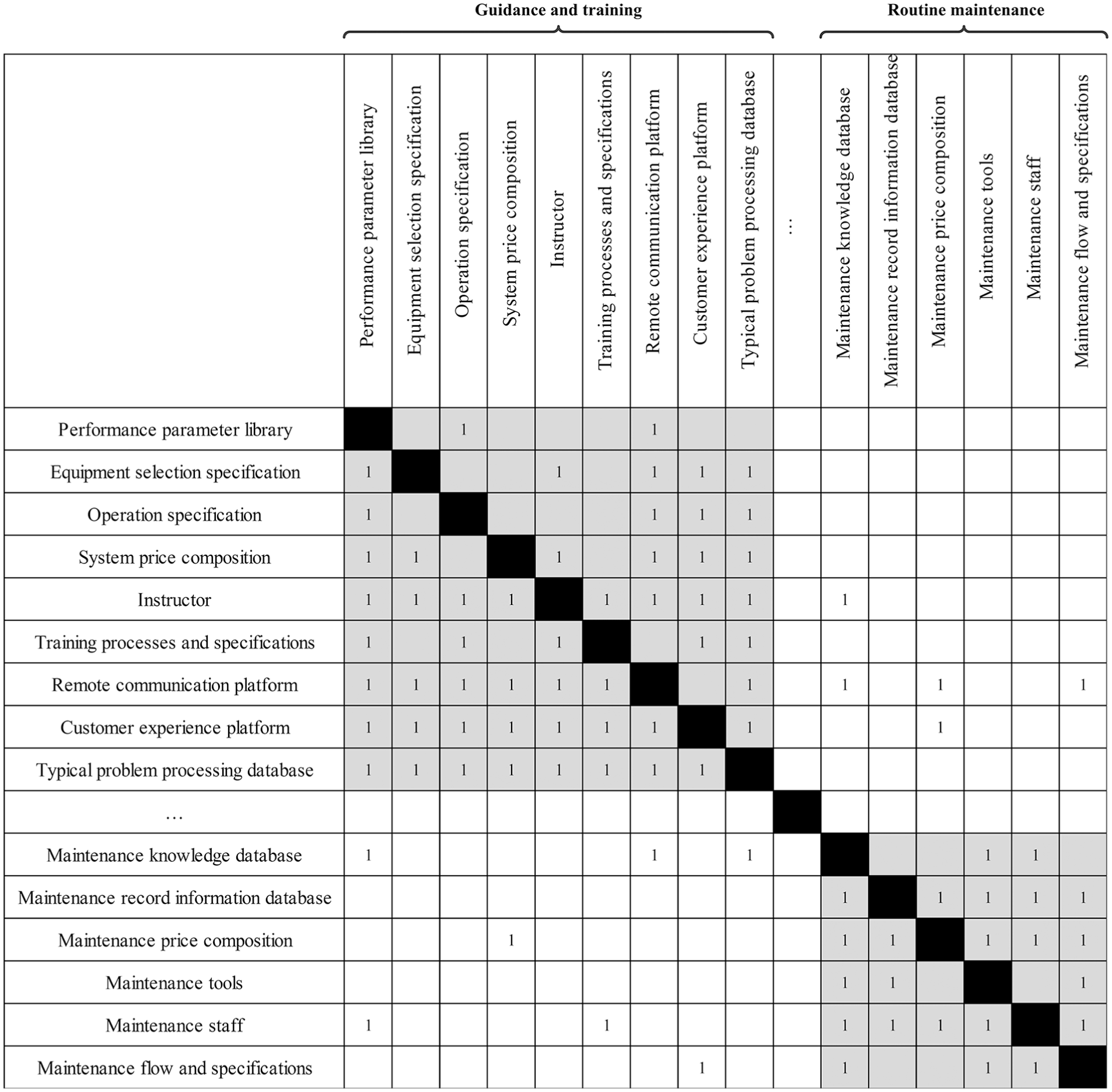
Matrix partitioning of the service component module for a mobile fire extinguishing system.
Fourth, the evolutionary chain of the mobile fire extinguishing system was constructed based on the SPU weight sequencing of the system as well as the SPU degree of correlation sequencing for the existing product module of the mobile fire pump and symbiotic service module. The structural module and SPU degree of correlation were calculated by summing the degree of correlation for the components and performance in each module. The service module and SPU degree of correlation sequencing were calculated using equation (5). The descending sequence was denoted by number. The maximum degree of correlation between the module and SPU was numbered as 1, as shown in Figure 5.
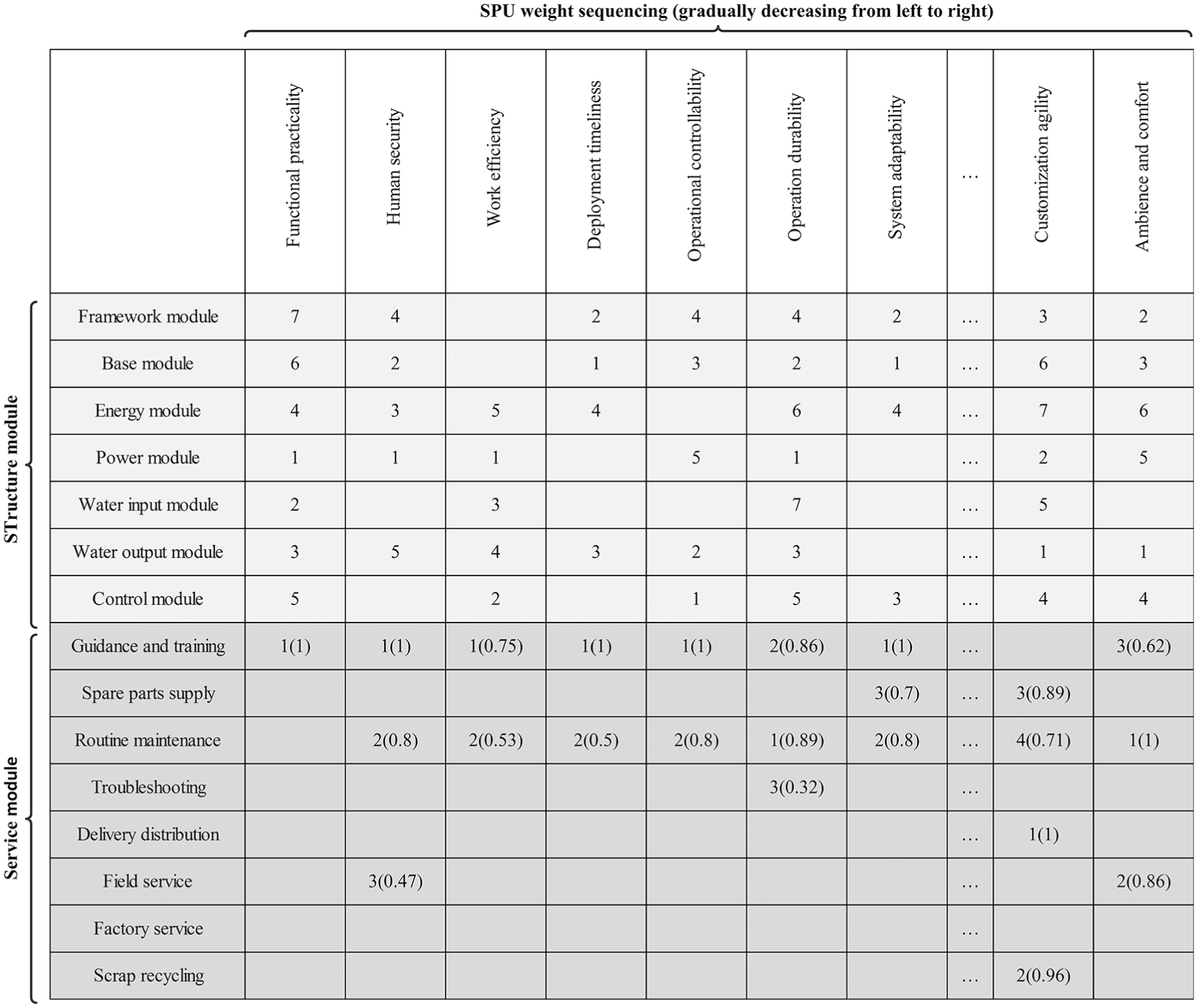
Evolutionary chain of a mobile fire extinguishing system.
In the scheme-generation process, designers combined product and service modules under the guidance of the system evolutionary chain to satisfy system performance for customer demand. Designers and enterprise managers must consider improving the existing products or adding new services when existing products and services do not meet system performance for customer demand. A number of alternative schemes are generated during this period, which should be reviewed by designers and enterprise managers, and then selected according to their situations and feasibility. For example, in the process of satisfying the work-efficient performance unit, the small size of the wheels in the existing base module could not be satisfied. Designers and enterprise managers should select and replace the wheel according to the existing assembly level and cost to increase the obstacle avoidance ability of the mobile fire extinguishing system by enlarging the front wheel so as to meet the work-efficient performance unit.
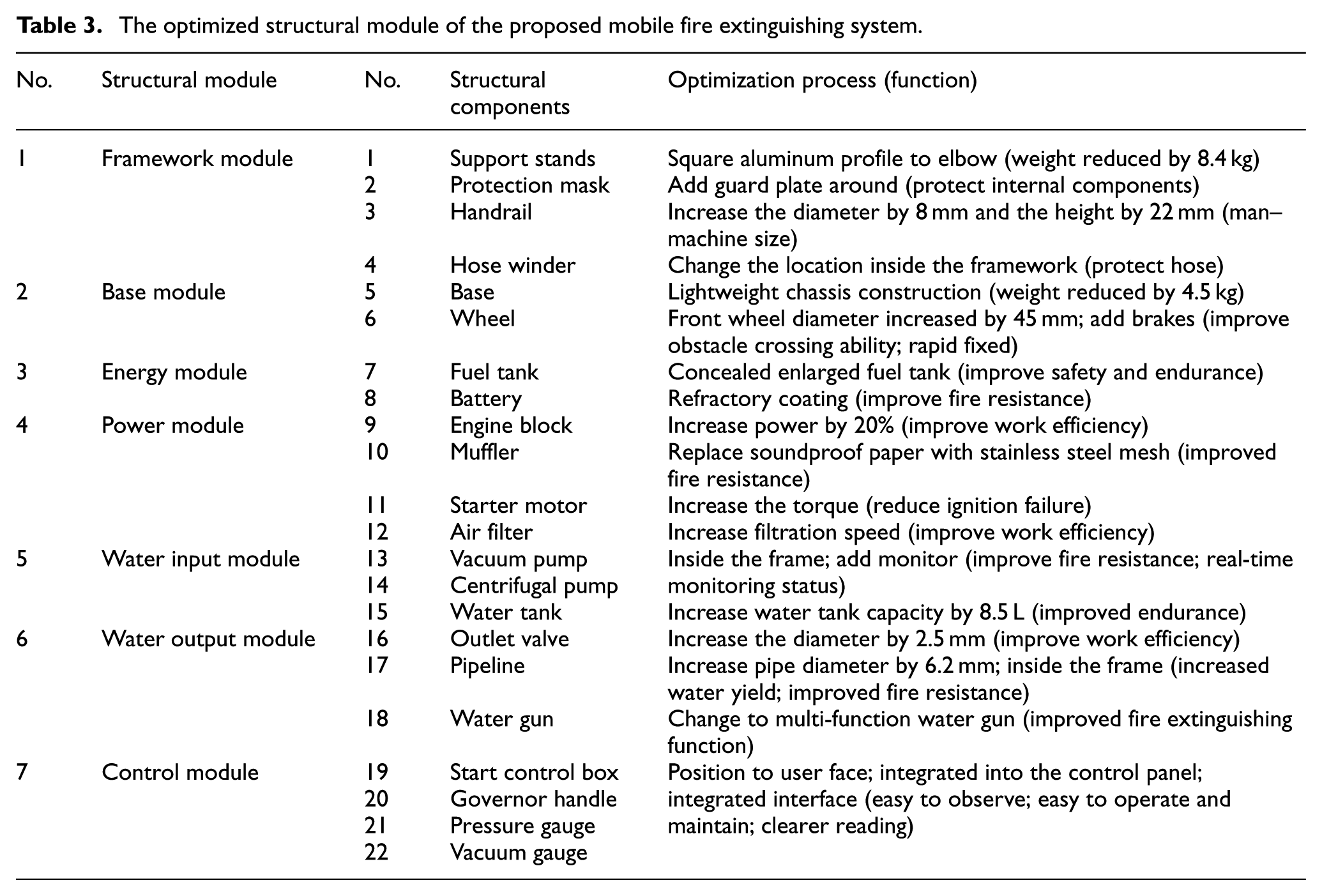
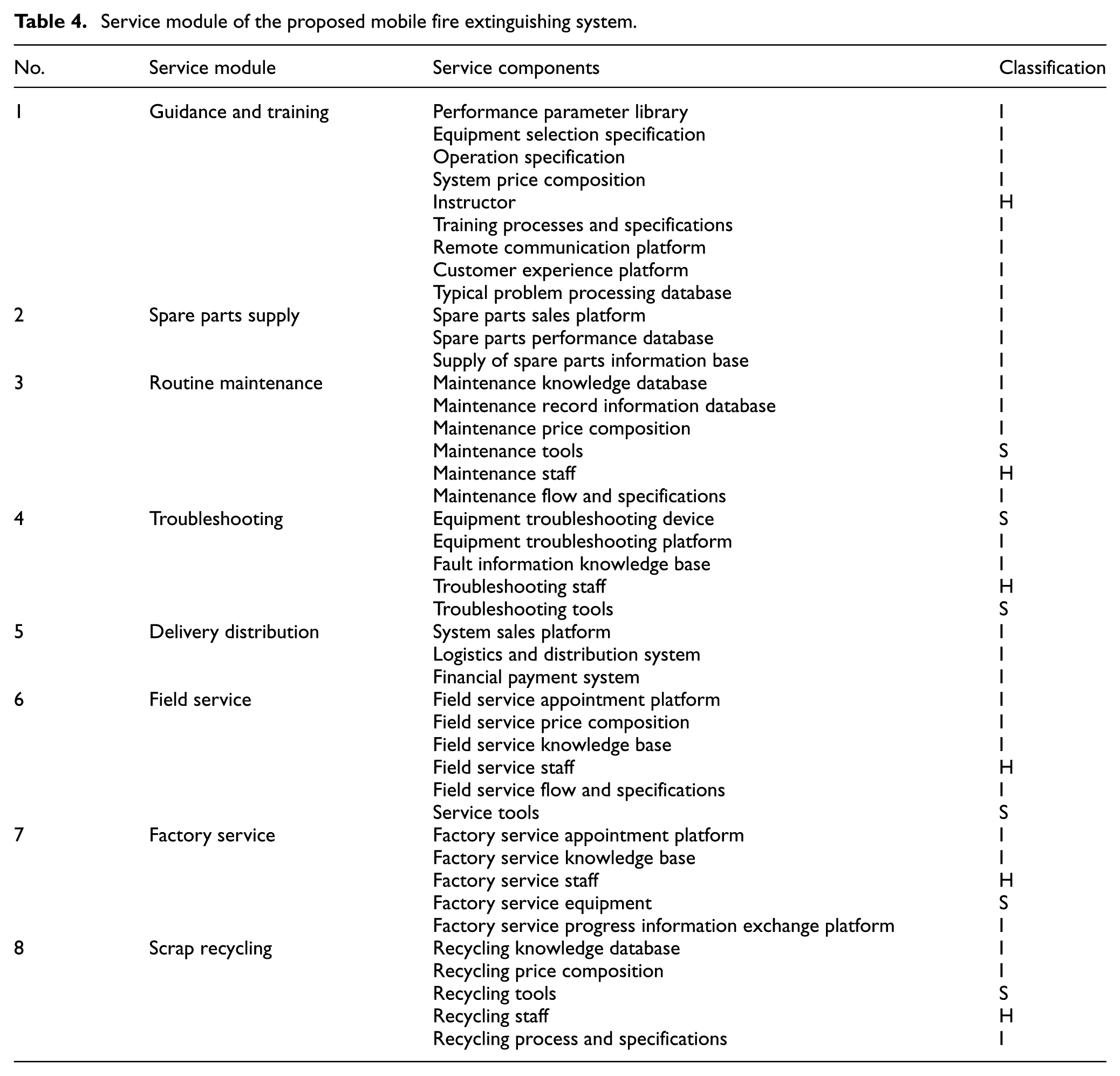
Finally, the mobile fire extinguishing system with a high servitization level met the customer demand for 25 SPUs after 25 system upgrades, as shown in Figure 6. The system contains the main structural components (marked in red) of the mobile fire pump corresponding to that in Figure 2. The structural components of the modules were optimized as shown in Table 3. Table 4 lists the eight modules and their components: training, spare parts supply, routine maintenance, troubleshooting, delivery distribution, field service, factory service, and scrap recycling. The 17th version of the system was launched in the market at a small scale for testing the SPU of human–computer interaction after the 16th evolution. The system entered into 17th evolution after optimization and pragmatic verification.
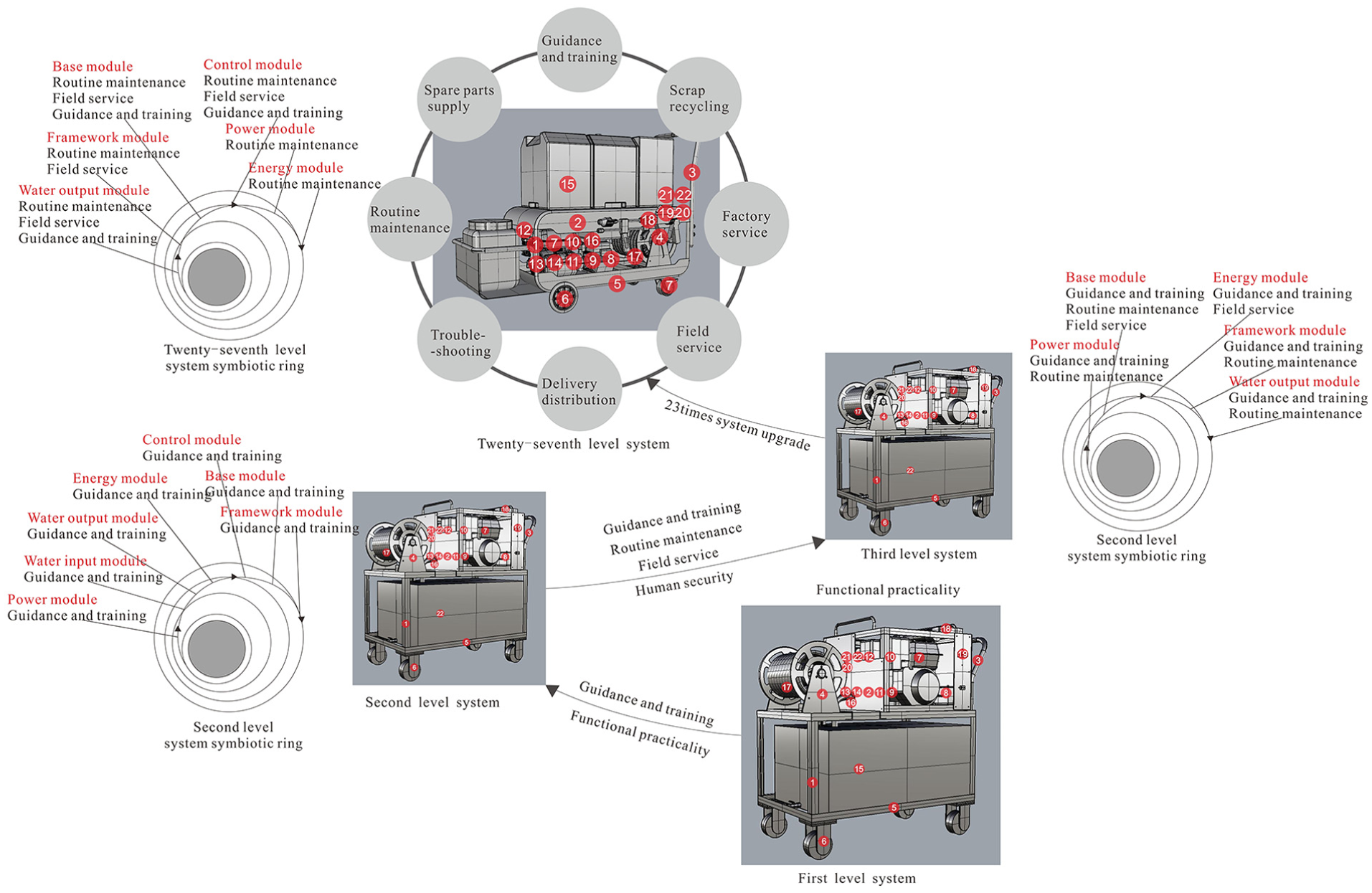
Evolution process of a mobile fire extinguishing system.
The optimized structural module of the proposed mobile fire extinguishing system.
Service module of the proposed mobile fire extinguishing system.
The evolution of the mobile fire extinguishing system based on the mobile fire pump not only improved the overall system performance by combining it with service modules, significantly increasing customer satisfaction, but also maximized the utilization of the existing products and reduced the costs of design and production in the manufacturing industry. The enterprise could subsequently use the resultant mobile fire extinguishing system as the level 1 system for further upgrades to meet the customer’s demands for higher system performance.
The above evolutionary design example takes the existing product (mobile fire pump) as a level 1 system. If both the existing products and the implemented service components were considered to be the base of a PSS, the level 1 system should include existing products and service. For example, the mobile fire pump and existing maintenance service components (including maintenance record information database, maintenance tools, and maintenance staff) were considered as level 1 systems. Maintenance knowledge database, maintenance price composition, and maintenance flow and specifications would be added in the second evolution. The six service components made up the routine maintenance service module.
Discussion
This article presented the specific steps of the SEDM based on the existing products to construct PSSs, and the important steps were elaborated. After modularizing the existing products, manufacturing enterprises regard them as a level 1 system and gradually evolve them according to the system evolutionary chain. By comprehensively considering the enterprise and market, appropriate stage results can be implemented to quickly capture the return and feedback of the market to reduce the overall investment, as shown in Figure 7. Manufacturing enterprises in different industries can gradually construct PSSs based on their existing products under the guidance of these steps.
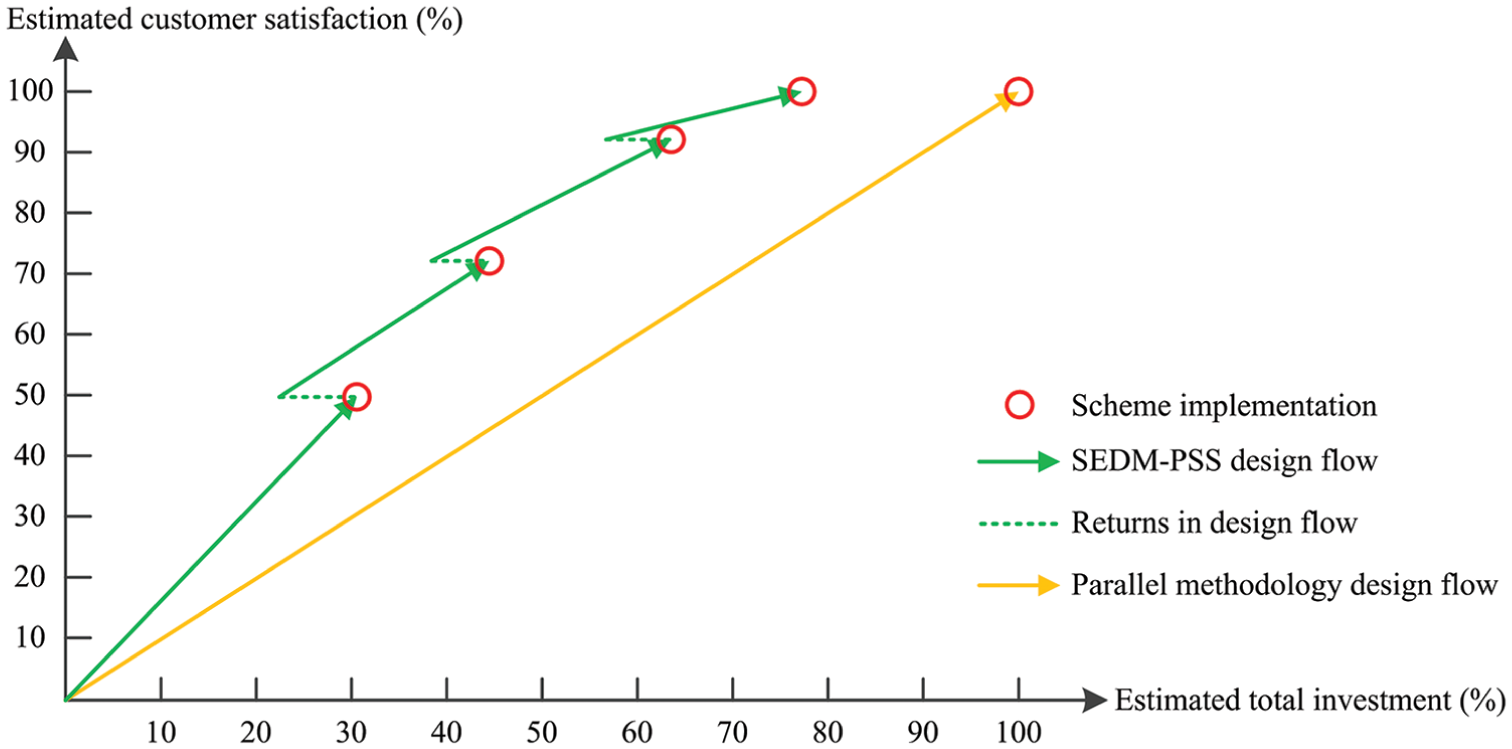
Investment comparison between the design processes.
To clearly prove the specific advantages and key contributions of SEDM-PSS, the authors considered 13 previous PSS design methodologies and evaluated their feasibility from the perspective of enterprises for comparison with SEDM-PSS. First, in-depth interviews were conducted with entrepreneurs, whose enterprises produce an annual output value of approximately 100 million RMB. Moreover, they all want to transform their businesses from products manufacturing to PSSs providing. Second, the interview data were collected for collation and analysis to determine the influencing factors and their weights from the perspective of enterprise feasibility. Four main influencing factors were determined: resource utilization, which refers to the efficiency of new PSS design schemes in the use of existing products and service resources; design flexibility, which refers to the flexibility of implementation and modification of periodic results in the design process; sustainability, which refers to the difficulty in recycling and optimizing the existing products; and design efficiency, which refers to the difficulty and design cycle of the scheme. Third, an evaluation system was established for enterprise feasibility of PSS methodologies, as shown in Table 5. Finally, the feasibility score of all PSS design methodologies was obtained by entrepreneurs based on the evaluation system for the enterprise feasibility, as shown in Table 6.
Evaluation system for enterprise-oriented feasibility.
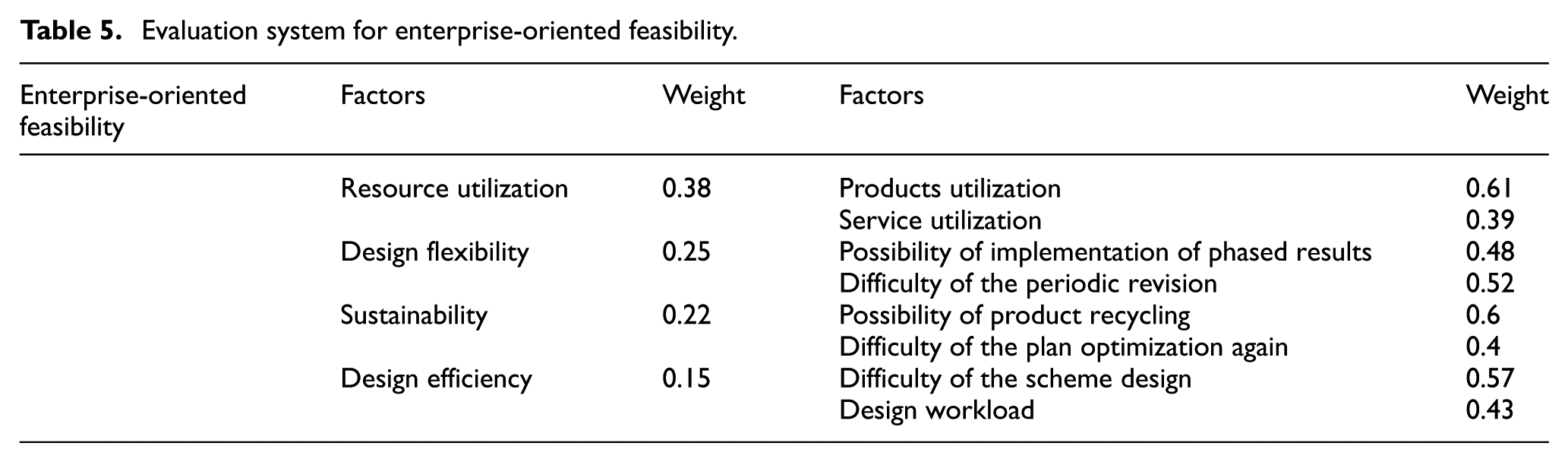
PSS design methodology and evaluation.
PSS: product service system; SEDM-PSS: spiral evolutionary design methodology for PSSs.
As shown in Table 5 and the above-mentioned evolutionary design example, the SEDM-PSS has four advantages and contributions compared with the existing methodology:
Advancement of resource utilization: SEDM-PSS is considered to maximize the use of existing products and services in the early stage to meet customer needs in the early design stage. Compared with the previous PSS design idea that initiated from customer needs, the SEDM-PSS is more conducive to reducing the input and risk of enterprise service–oriented transformation.
Advancement of design flexibility: system evolutionary chain was established according to the weighted order of system performance for customer demand. Compared with the previous methodology that jumped from demand directly to the completion of the scheme, the results obtained from individual stages can be put in use as early as possible in the progressive design mode; this is advantageous for the enterprise to validate the design, modification, and optimization in a timely manner.
Advancement of sustainability: the system evolutionary chain can be constantly improved to evolve again based on the existing PSSs with respect to the change of market and customer requirements. Compared with the straight-line design process of most PSS design methodologies, the spiral design process is more conducive to enterprises to reduce the difficulty in recycling and optimizing the existing products. Higher requirements of customers can be met by iteratively improving the existing PSS.
Advancement of design efficiency: under the guidance of the system evolutionary chain, the design task is decomposed into a gradual process to meet SPU step by step. Compared with the previous PSS design methodologies, which proposed a disposable solution and scheme, the progressive design makes the design task clearer and helps reduce the difficulty in the design and improve design efficiency.
An increasing number of small- and medium-sized enterprises will try to construct PSSs to gain greater competitiveness. Owing to limited resources, such manufacturing enterprises greatly focus on feasibility factors, such as resource utilization, design flexibility, sustainability, and design efficiency, in the transformation from products to PSSs. The SEDM-PSS can help them maximize the use of existing products to construct a PSS rapidly, thus reducing the input and risk. Therefore, this method is more helpful for small- and medium-sized manufacturing enterprises to construct a PSS.
On one hand, the development and implementation of advanced information and communication technologies (e.g. Internet-of-Things, cloud technology, cyber-physical system) enabled the prevailing tendency of manufacturing value proposition toward a service-oriented manner through smart connected product and various e-services. 45 On the other hand, increasing product variants and individualized demands requires more flexible and sustainable production systems. However, traditional production systems cannot meet it because of low efficiency and clumsy responses. 46 In the future, manufacturing enterprises, driven by Big Data, will focus on customer-oriented service and value creation. 47 The digitalized product and physical one has the ability to communicate through digital twin. 48 In this context, Big Data need to be collected and analyzed effectively in the whole life cycle (e.g. manufacturing, using, maintenance, recycling), rather than just design phase. The establishment of virtual and physical data models during spiral evolution is helpful for accurate detection, cost reduction, and efficiency improvement.
Conclusion and future work
The transformation of products to PSSs is difficult for many enterprises. The main reasons are complex design process, difficult scheme implementation, and high risk of transformation because of the limitations of resources and costs. The previous PSS design methodologies usually developed a new PSS scheme that initiated from the customer demands; however, the scheme from such a methodology is difficult for manufacturers to directly implement.
This article proposed a novel PSS design methodology that uses existing product structural module as the level 1 system. Gradual evolution occurred according to the SPU weight sequencing and the sequencing of the correlation degree of the product module and symbiotic service module with the SPU. Designers can implement the phased design results of the proposed methodology to verify feasibility and market acceptance. Compared with the previous PSS design methodologies, in the SEDM-PSS, a balance is achieved between customer satisfaction and enterprise feasibility; this balance can reduce the input required in PSS construction.
However, it is an extremely complicated task to comprehensively consider a manufacturer’s production capability, service capability, and customer demand. SEDM-PSS has the following limitations. First, as the starting point of evolution is the level 1 system, that is, the existing product module, the proposed method is only applicable to manufacturing enterprises. Second, the limitation of the modularization method makes it more suitable for manufacturing enterprises of mass production because the construction of the system evolutionary chain involves the modularization of products and services. If the output is small, the spiral evolution cost could be higher than that of the complete innovative design. Finally, the relationship between products and services is not simply superimposed in the process of spiral evolution; a competitive and symbiotic relationship exists. At present, the review of alternative schemes by designers and enterprise managers according to their own situations and feasibility has reduced the design efficiency.
As the design methodology of PSSs is closely related to the implementation of enterprise, the future work mainly focuses on the following two points. First, input analysis may be added to ensure that the scheme based on the existing product modules requires lesser investment than a scheme based on new modules. Second, an evaluation system must be established for products and services aiming at the complex relationship between product-and-service symbiosis and competition in the system symbiosis ring. Appropriate products and services must be selected to achieve the ideal symbiosis so as to meet system performance for customer demand with minimum input. In summary, SEDM-PSS is proposed to help enterprises, especially small- and medium-sized, to transform from a manufacturing enterprise to a service enterprise. This study, which closely combined with the actual development of enterprises, could be implemented in various manufacturing enterprises and improved continuously.
Footnotes
Declaration of conflicting interests
The author(s) declared no potential conflicts of interest with respect to the research, authorship, and/or publication of this article.
Funding
The author(s) disclosed receipt of the following financial support for the research, authorship, and/or publication of this article: This research was supported by the National Natural Science Foundation of China (Grant Number 51375451) and Zhejiang Provincial Natural Science Foundation of China (Grant Number LY20E050020).
